
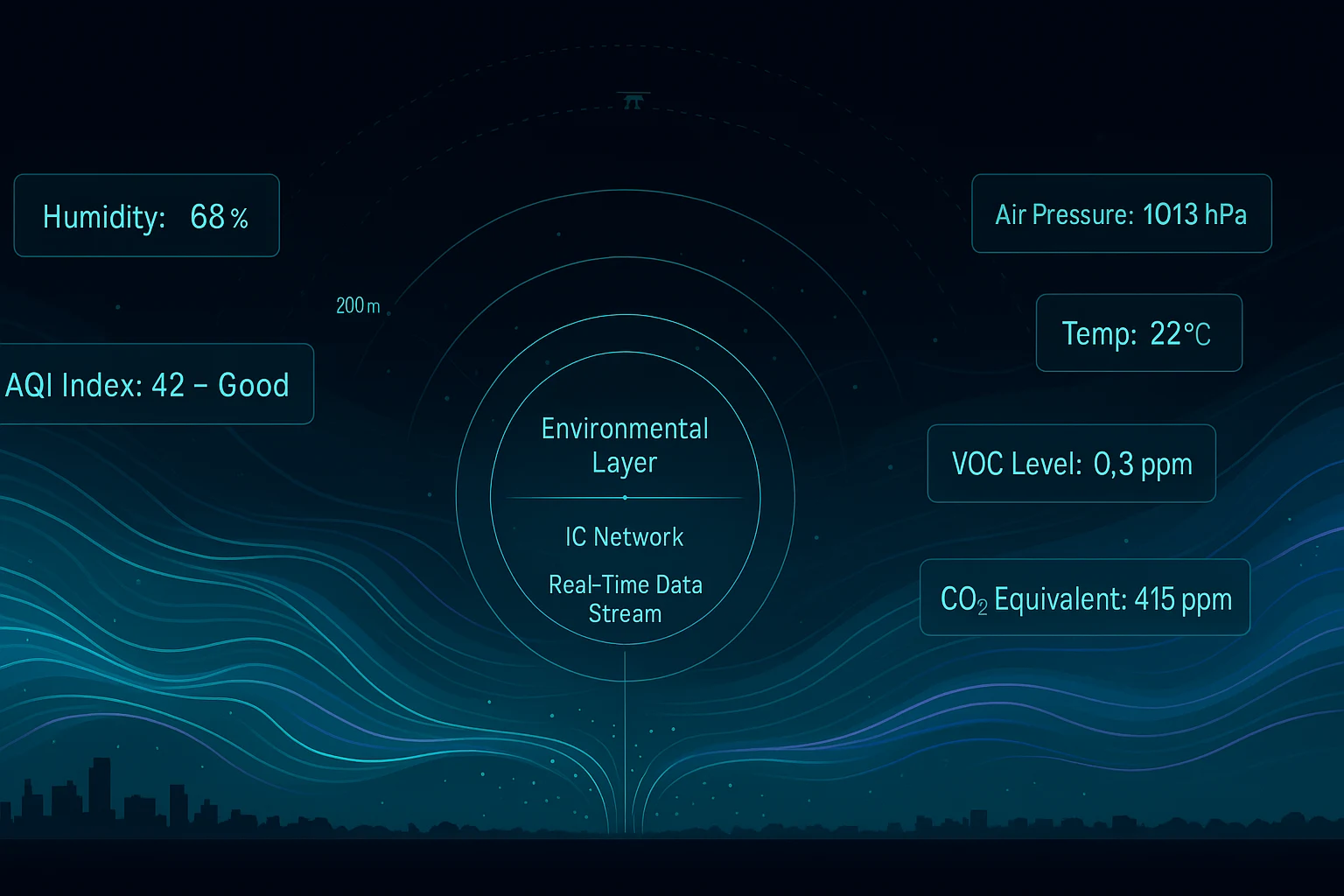
Air Quality Monitoring IoT Module: The Complete Builder's Guide to the MultiNav Pro+™ Sensors Module
RFOXiA Integrated Sensors Module
Why Your Next Project Needs a Real Air Quality Monitoring IoT Module
Most developers building drones, robots, or environmental monitoring systems face the same frustrating problem: they need data from multiple sensors, but sourcing, wiring, and coding each one separately turns a weekend build into a month-long integration nightmare. Temperature here, air pressure there, a separate board for motion, another breakout for air quality — by the time you've duct-taped it all together, you've spent more on shipping and debugging than on the actual project.
There is a better way. The MultiNav Pro+™ Sensors Module from RFOXiA puts seven professional-grade sensors on a single 24mm × 18mm board, connected over a single I2C line, shipping today for $39. It is the most complete air quality monitoring IoT module available at this price point — and that is not marketing language. It is a spec sheet fact.
This guide covers everything you need to know: which sensors are on the board, why those specific components were chosen, how the I2C architecture works, which applications benefit most, how the module plugs into the broader RFOXiA ecosystem, and how you can turn your deployment into a source of passive income through the RFOXiA data network.
What Is the MultiNav Pro+™ Sensors Module?
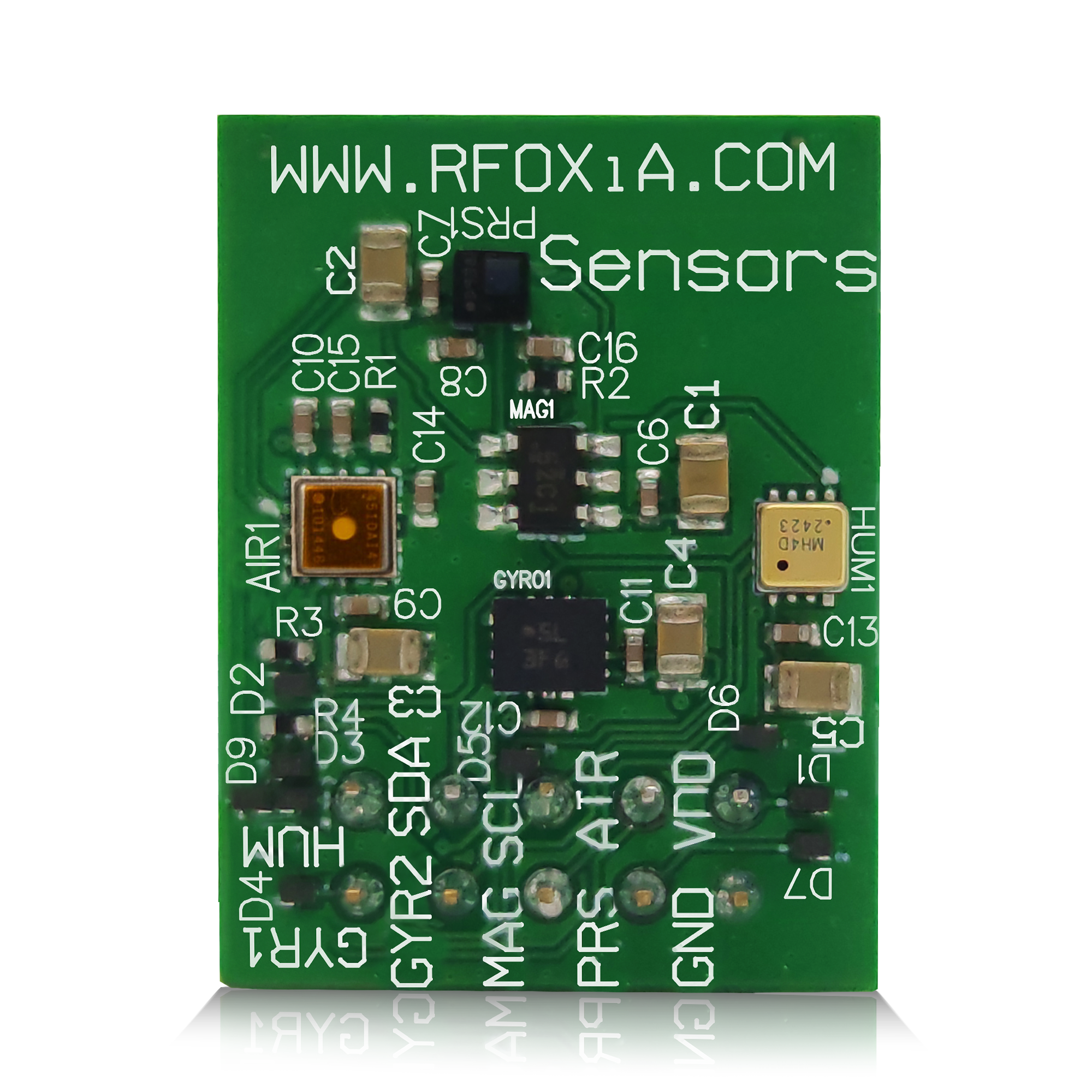
The MultiNav Pro+ Sensors Module is a compact, FCC-certified sensor array designed for professional makers, drone builders, embedded developers, and IoT researchers who need accurate environmental and motion data without building a custom sensing stack from scratch.
At its core, this is an air quality monitoring IoT module that goes well beyond air quality. It combines:
- Motion sensing (accelerometer, gyroscope, magnetometer)
- Environmental sensing (temperature, humidity, barometric pressure, air quality)
All seven sensors coexist on a single board, share a single I2C bus with unique addresses, and are sourced from industry-leading component manufacturers — Bosch Sensortec, Texas Instruments, STMicroelectronics, MEMSVision, and RENESAS.
This is not a hobbyist breakout board with a cheap generic AQI chip glued to a temperature sensor. Every component was deliberately chosen for precision, reliability, and performance in demanding applications like high-speed drones, field-deployed environmental stations, and industrial IoT nodes.
The Seven Sensors: What They Are and Why They Matter
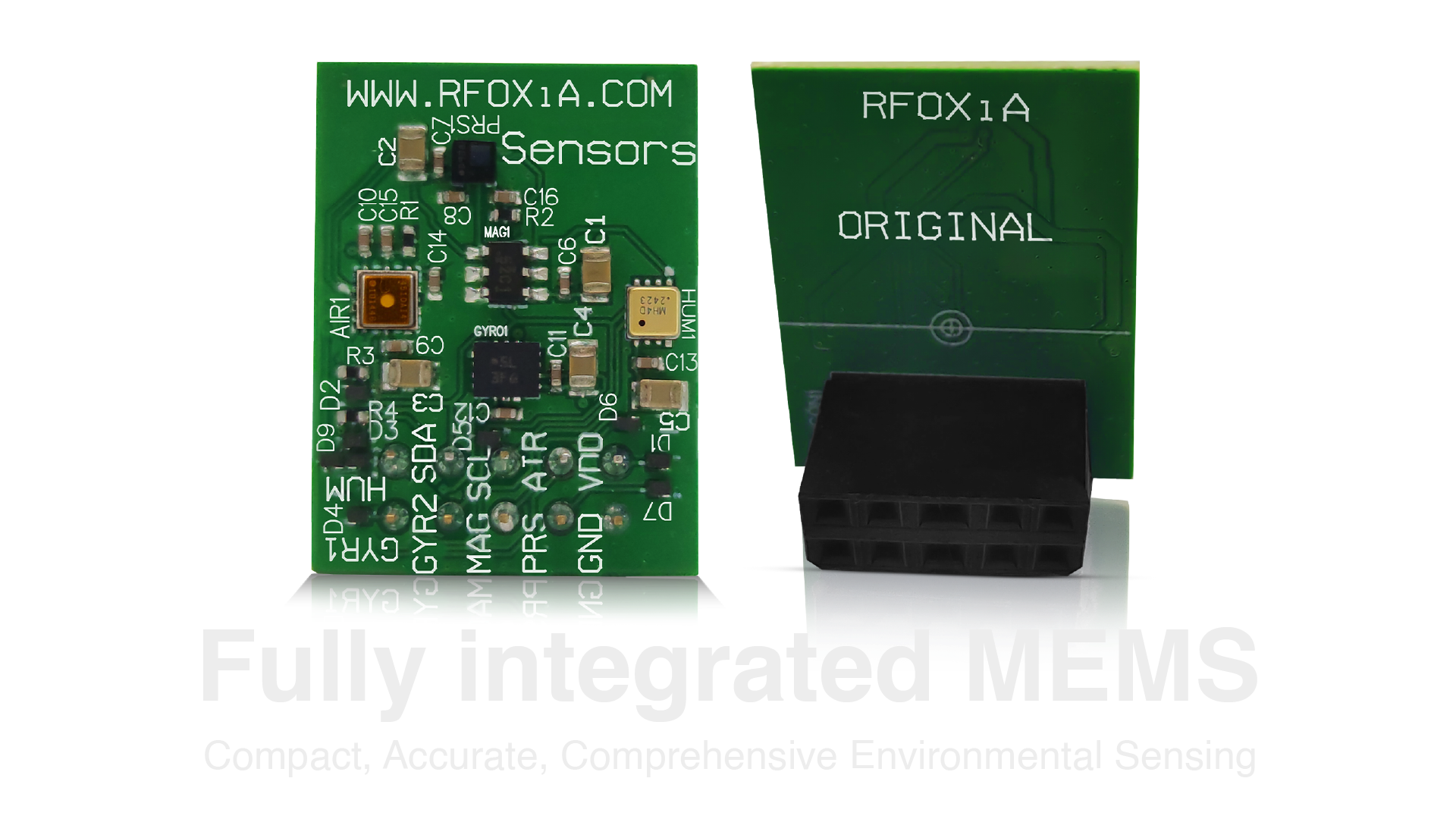
Let's break down each sensor, the specific component used, and what it enables for your project.
1 & 2. Accelerometer and Gyroscope — BMI270 (Bosch Sensortec)
The BMI270 is a flagship inertial measurement unit (IMU) from Bosch Sensortec, widely used in professional drone flight controllers, smartwatches, and industrial robotics. It delivers 6-axis motion data (3-axis acceleration, 3-axis angular velocity) with exceptional noise characteristics and built-in interrupt features for gesture and activity recognition.
For drone builders, this matters enormously. Flight stability depends on rapid, low-noise IMU data. The BMI270 is not a budget chip — it is the same class of sensor used in professional autopilot systems. Having it integrated into your air quality monitoring IoT module means you can simultaneously track flight dynamics and environmental conditions from one board.
3. Magnetometer — TMAG5273C1QDBVR (Texas Instruments)
The TMAG5273 from Texas Instruments is a 3-axis linear Hall-effect sensor with I2C interface and configurable magnetic range. Used as a magnetometer, it provides compass heading data essential for autonomous navigation — drones, rovers, autonomous vehicles, or any system that needs absolute orientation in 3D space.
Combined with the BMI270 accelerometer and gyroscope, you have a complete 9-axis IMU capable of full attitude determination — pitch, roll, and yaw, with compass heading correction for long-duration missions.
4. Barometric Pressure — LPS22HHTR (STMicroelectronics)
The LPS22HH from STMicroelectronics is a MEMS absolute pressure sensor with a measurement range of 260–1260 hPa and a typical RMS noise of 0.55 Pa — enabling altitude resolution of approximately 5 centimeters. This makes it useful not just for weather monitoring but for precision altitude hold in drone applications.
For environmental deployments, barometric pressure is a critical input for weather modeling, storm prediction, and micro-climate analysis — one of the five verified data points required to earn rewards on the RFOXiA data network.
5 & 6. Humidity and Temperature — MVH4003D (MEMSVision)
The MVH4003D from MEMSVision is a digital relative humidity and temperature sensor with high accuracy and fast response time. Temperature and humidity are the two most universally requested environmental data points — from precision agriculture to server room monitoring to wearable comfort sensing.
In the context of an air quality monitoring IoT module, temperature and humidity also serve as correction inputs for other sensors. Air quality and pressure readings drift with temperature; having both on the same board enables better calibration and data quality.
7. Air Quality — ZMOD4510AI4R (RENESAS)
This is the component that elevates the MultiNav Pro+ from a good IMU board to a genuine air quality monitoring IoT module. The ZMOD4510 from RENESAS is a solid-state MOX (metal oxide) gas sensor designed specifically for outdoor air quality monitoring — detecting ozone (O₃) and nitrogen dioxide (NO₂), the two primary pollutants in EPA AQI calculations.
Unlike cheaper VOC sensors that measure indoor air quality proxies, the ZMOD4510 is engineered for outdoor deployment. It includes an integrated microheater controlled by an onboard ASIC, producing stable and calibrated readings without requiring a separate heater driver circuit. This is the level of engineering you would expect in a professional air quality station — available here in a module smaller than a postage stamp.
Precision Motion and Environmental Sensing in One Package
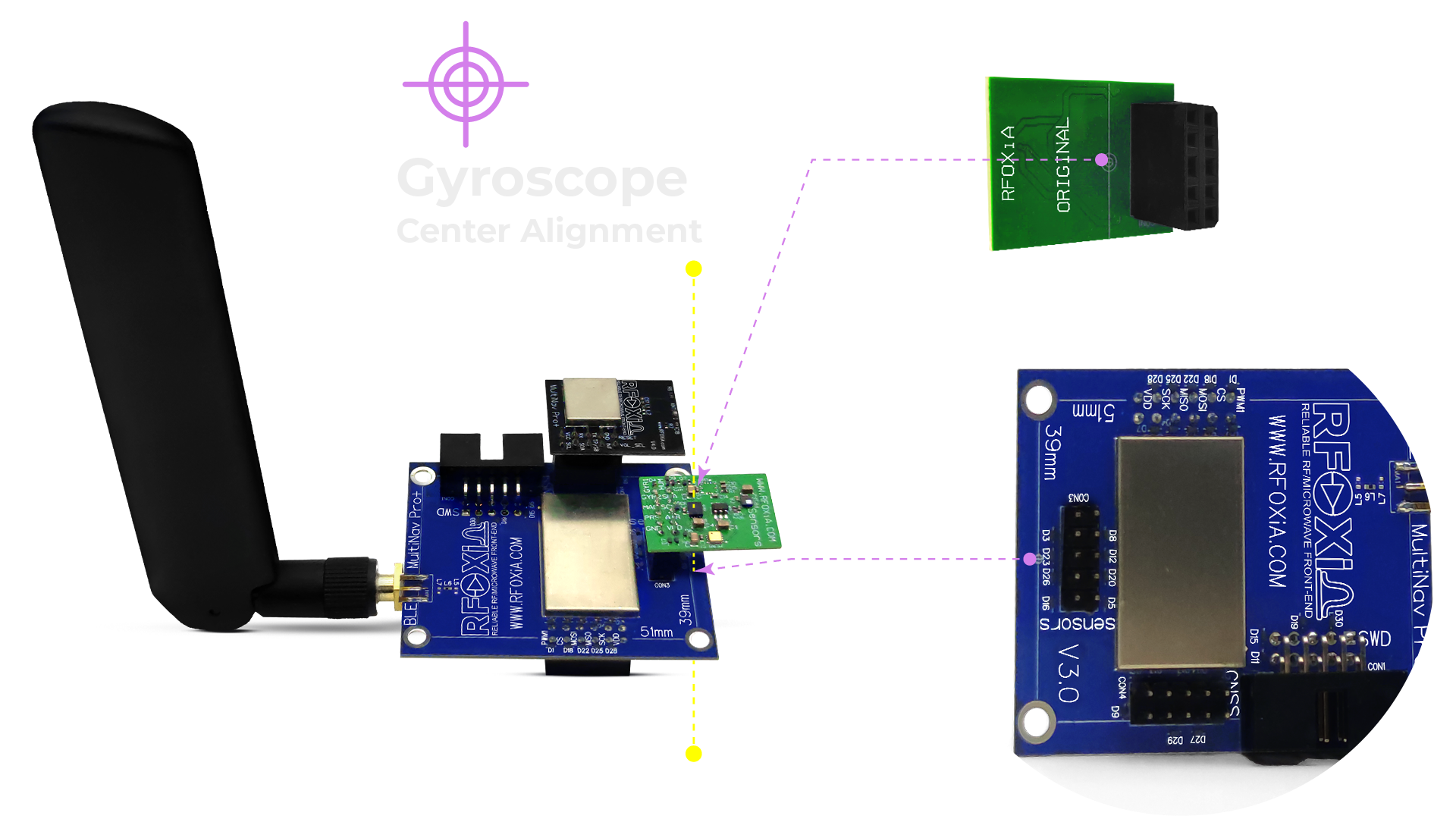
The value of combining motion and environmental sensors on one board goes beyond convenience. In professional applications, these data streams interact:
- Drone attitude + air pressure → precision altitude hold and terrain following
- IMU data + air quality → correlate pollution levels with flight path and altitude
- Temperature + humidity + pressure → full atmospheric state for weather station applications
- Magnetometer + GPS (via GNSS Module) → full navigation solution with compass correction
When you pair the Sensors Module with the RFOXiA GNSS Module and BLE Module, you get a complete airborne sensing and telemetry platform — all sourced from a single ecosystem, all integrated with the RFOXiA Connect app and Club dashboard.
The Sensors Behind the Module
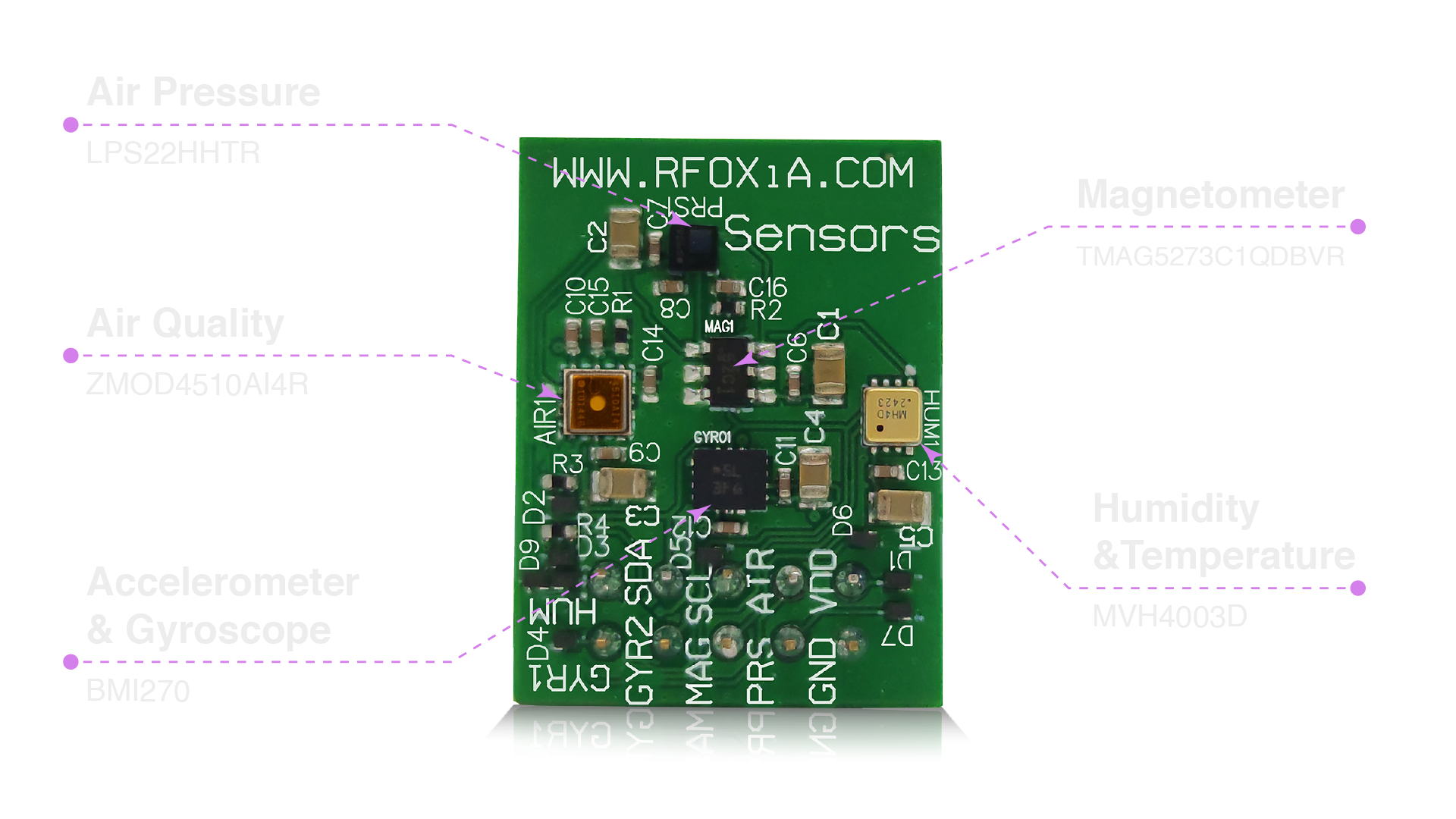
To summarize the hardware pedigree:
| Sensor | Component | Manufacturer |
|---|---|---|
| Accelerometer & Gyroscope | BMI270 | Bosch Sensortec |
| Magnetometer | TMAG5273C1QDBVR | Texas Instruments |
| Barometric Pressure | LPS22HHTR | STMicroelectronics |
| Humidity & Temperature | MVH4003D | MEMSVision |
| Air Quality | ZMOD4510AI4R | RENESAS |
Every component is from a tier-one semiconductor manufacturer. This is not a reference design with compromised component choices — it is engineered to perform in field conditions where cheap sensors fail.
I2C Architecture: One Line, Seven Sensors, Zero Conflicts
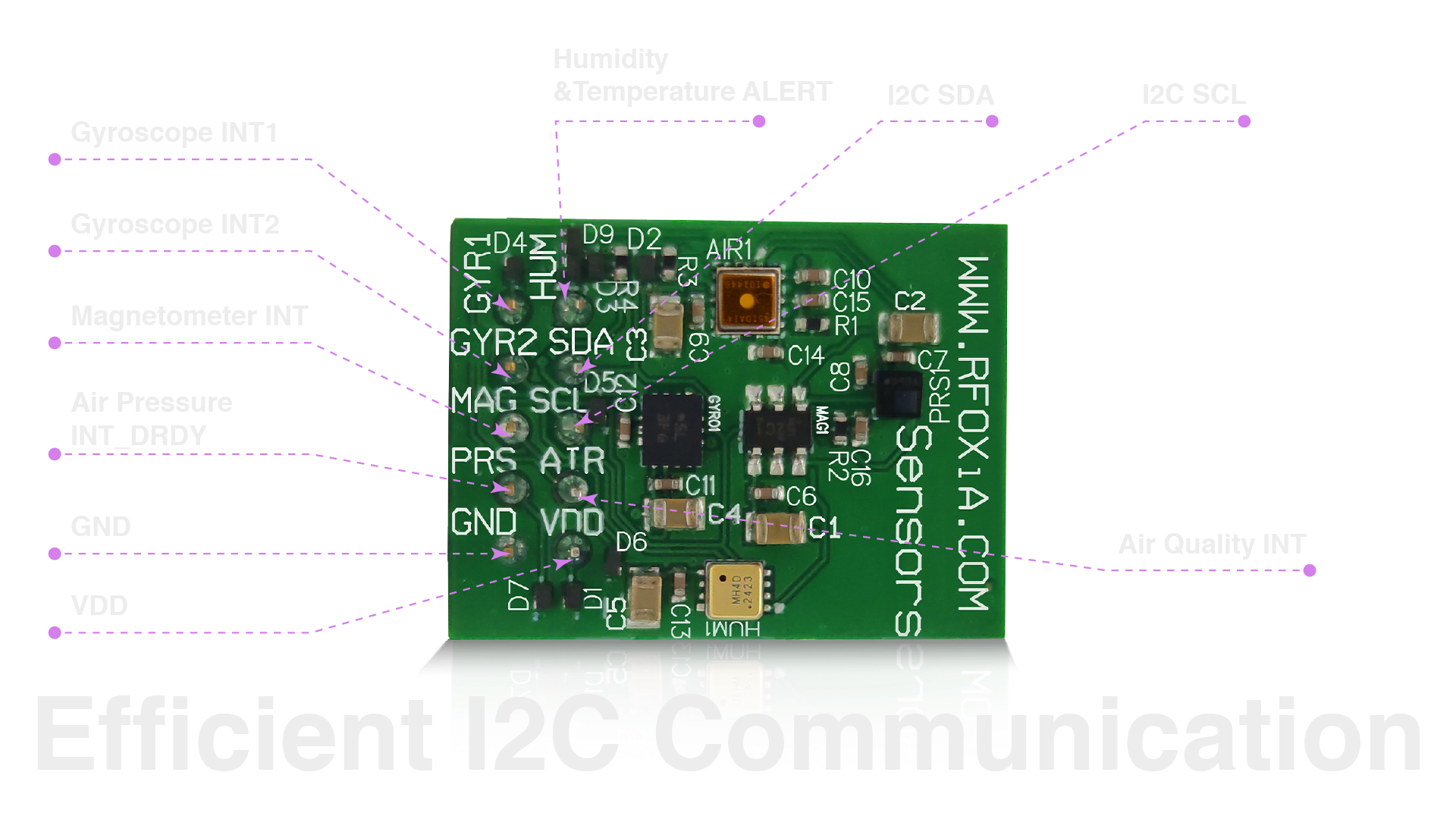
One of the less glamorous but critically important design decisions on the MultiNav Pro+ Sensors Module is the I2C bus architecture. All seven sensors share a single I2C line, each assigned a unique 7-bit I2C address. This means:
- Two wires total (SDA + SCL) to access all seven sensors from your microcontroller
- No SPI conflicts, no GPIO expansion, no multiplexers
- No data collisions — each sensor answers only to its own address
- Compatible with any I2C-capable microcontroller — STM32, ESP32, Arduino, Raspberry Pi, nRF52, and more
For developers integrating this air quality monitoring IoT module into a larger system, this architecture is a gift. You are not dedicating four SPI chip selects, three interrupt lines, and two UART ports to your sensor stack. It is two wires and a library call.
The RFOXiA ecosystem pairs naturally with the STM32WB series microcontrollers (as used in the BLE Module), and the AI Firmware Builder on RFOXiA Club can generate complete sensor-reading firmware for the Sensors Module in minutes — describe your application in plain language and receive production-ready code.
Compact Design Built for the Real World
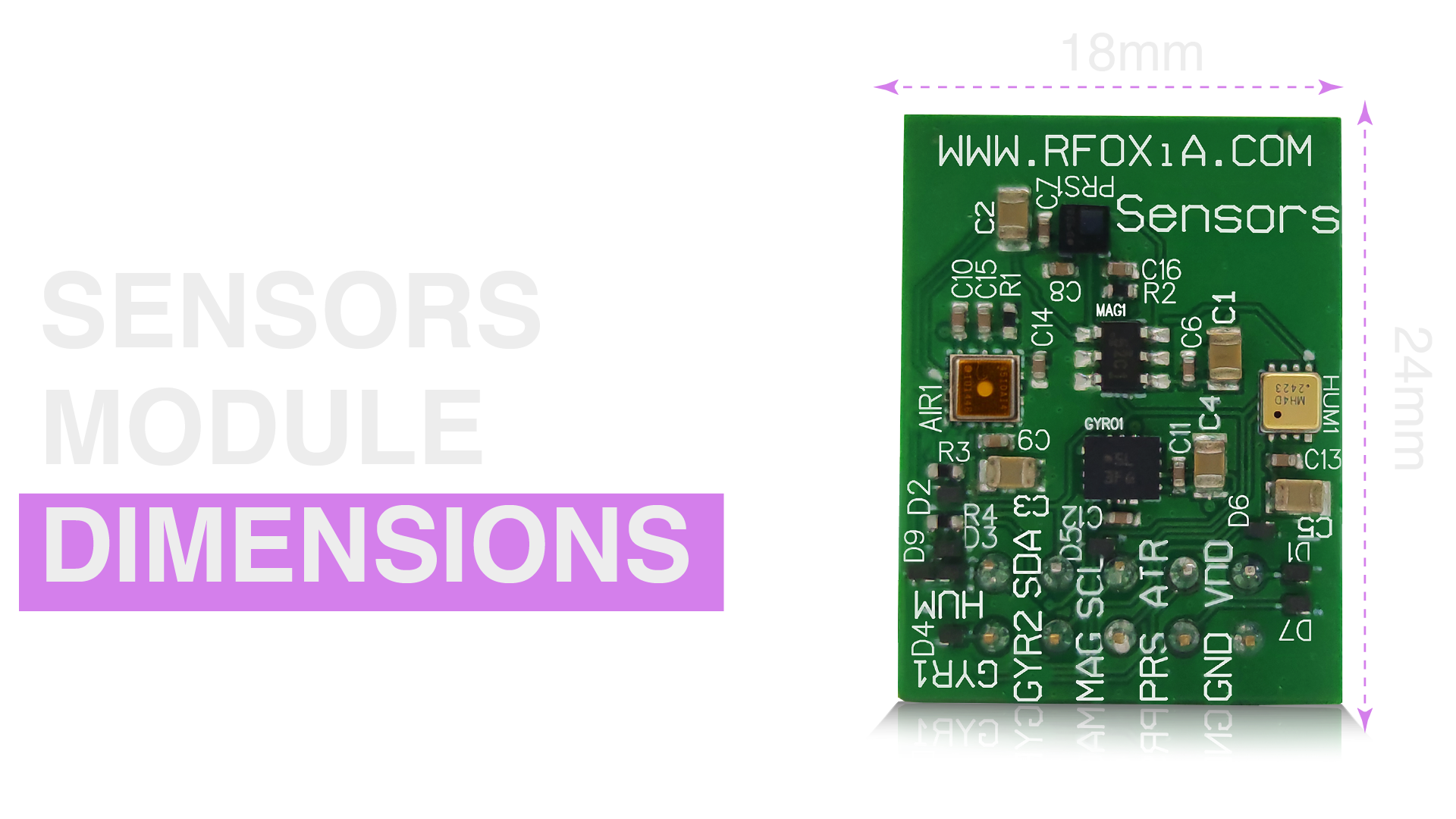
At 24mm × 18mm, the MultiNav Pro+ Sensors Module is genuinely small. To put that in perspective, it is roughly the size of a SD card. Yet it contains seven sensors from five manufacturers, a complete I2C bus, and level-shifting circuitry.
This size matters for:
- Drone builds — every gram and every cubic centimeter of payload capacity counts
- Wearable devices — body-worn sensors need to be unobtrusive
- Compact IoT enclosures — when your deployment case is a weatherproof IP67 box the size of a fist
- Embedded in vehicles — automotive, UAV, UGV, USV — size constraints are universal
The FCC certification on this module is not a checkbox item — it means the RF emissions from the board have been independently verified to meet federal standards. For commercial deployment or any application where regulatory compliance matters, this certification is the difference between a prototype and a shipping product.
Real-Time Environmental Data at Your Fingertips
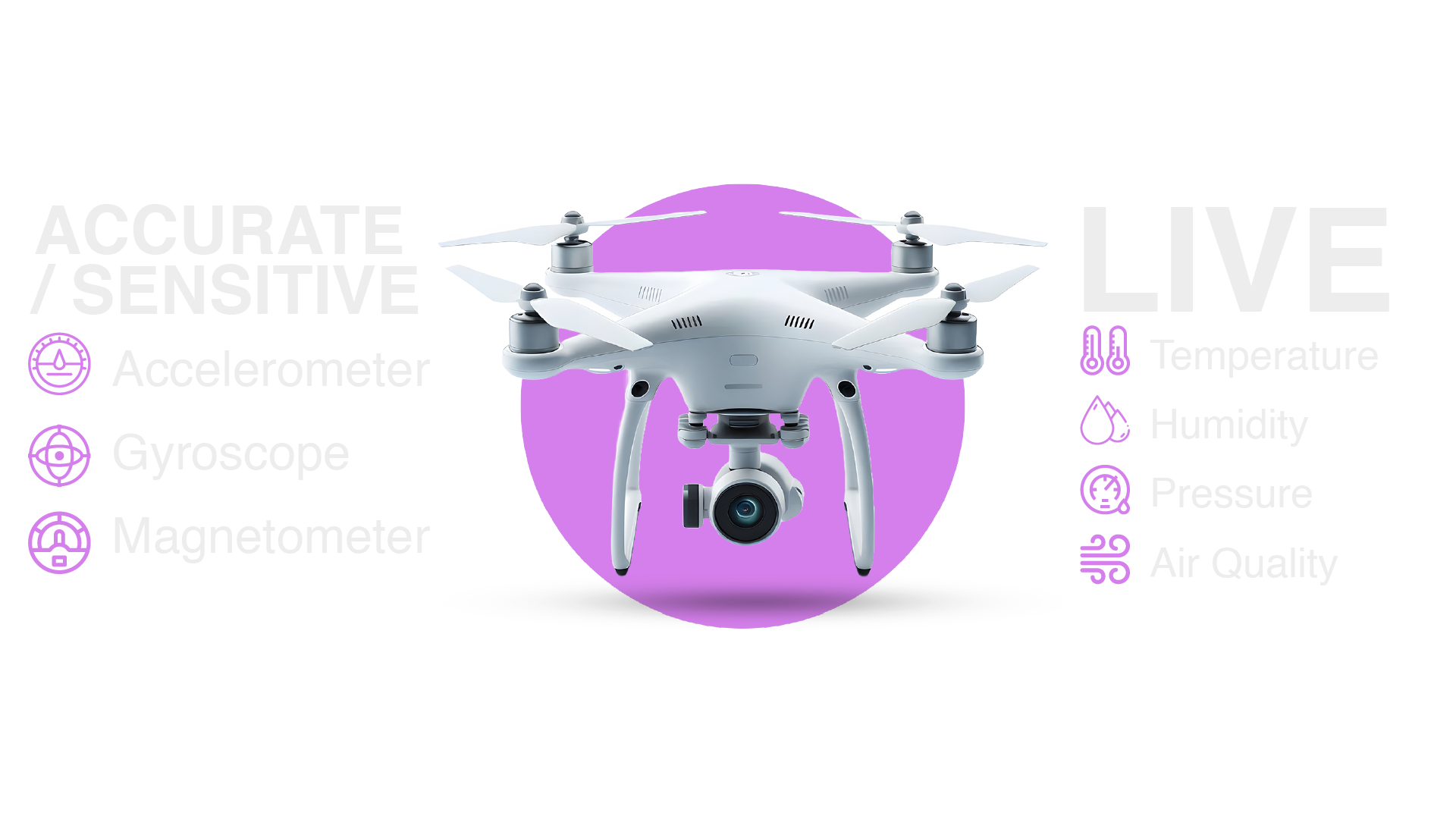
The MultiNav Pro+ Sensors Module is not designed to log data to an SD card and be analyzed later. It is built for real-time streaming.
When paired with the RFOXiA BLE Module (5km ground-to-ground range, up to 20km man-to-drone), your sensor data streams live to the RFOXiA Connect app on your phone. The app displays:
- Live temperature, humidity, and pressure readouts
- Air quality index in real time
- IMU attitude data — pitch, roll, heading
- GPS position overlay (with GNSS Module)
All of this works completely without internet. The BLE Module carries the data directly from your deployment to your phone over long-range Bluetooth. No router. No cloud. No latency from a cellular uplink. Just data, live, from wherever you are.
For developers building autonomous systems, this real-time feedback loop is what separates a system that reacts from one that just records. An autonomous drone that knows air quality is degrading at altitude can adjust its flight path. A field station that detects a pressure drop can trigger an alert. Real-time environmental data is not a luxury — it is the foundation of intelligent autonomous behavior.
You can explore the full ecosystem and get started with the RFOXiA Integrated Sensors Module today.
Applications: Where This Module Belongs
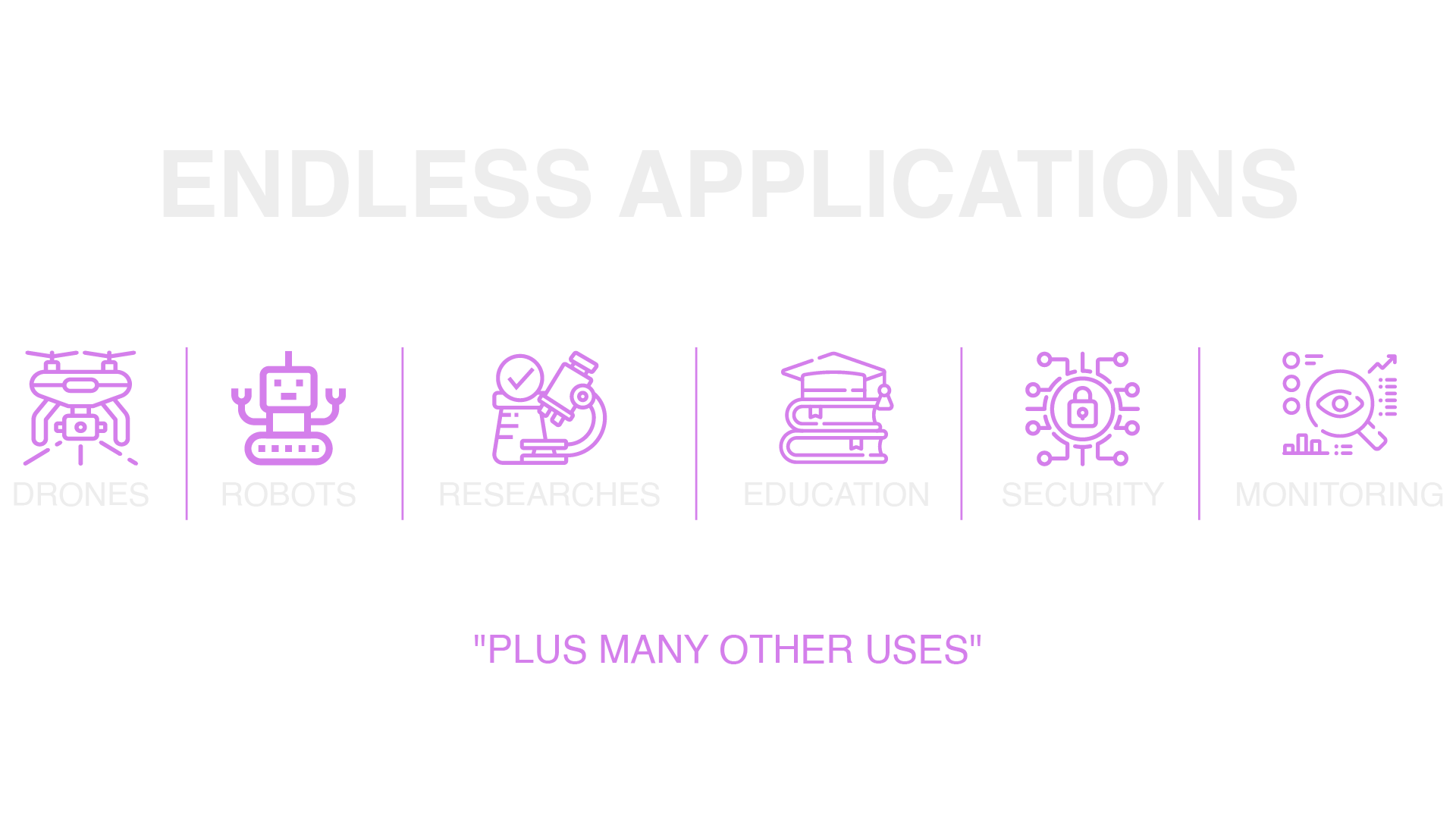
The combination of motion and environmental sensing in a single compact air quality monitoring IoT module opens doors across a remarkably wide range of applications.
Drone and UAV Applications
- Environmental survey drones mapping air quality gradients across a city, agricultural field, or industrial site
- Inspection drones monitoring air quality around industrial facilities, construction sites, or wildfire perimeters
- Search and rescue UAVs assessing atmospheric conditions before deploying human responders
- Agricultural spray drones using wind, humidity, and temperature data to optimize spray timing and drift control
- Precision altitude hold using barometric pressure combined with GNSS for dual-input altitude estimation
Fixed Environmental Monitoring Stations
Deploy the Sensors Module outdoors with the Power/Program Kit (5-minute charge, 24-hour runtime) and the BLE Module for long-range data relay. You now have a professional-grade environmental monitoring station that:
- Streams verified air quality, temperature, humidity, and pressure data
- Earns daily rewards through the RFOXiA data network ($0.08–$0.40/day depending on location and tier)
- Requires no internet connectivity at the sensor node
- Can relay data across multiple BLE mesh hops to a central gateway
Robotics and Autonomous Vehicles
Ground robots, autonomous vehicles, and underwater ROVs all benefit from 9-axis IMU data combined with environmental awareness. The Sensors Module provides the full motion sensing stack needed for SLAM (Simultaneous Localization and Mapping), attitude control, and collision avoidance, while simultaneously monitoring the operating environment.
Smart City and Infrastructure Monitoring
City planners, universities, and environmental agencies need hyper-local air quality data at street level — not the averaged readings from a weather station ten kilometers away. A network of MultiNav Pro+ nodes, each streaming verified GPS-located air quality data, creates the kind of high-resolution environmental dataset that currently costs hundreds of thousands of dollars to collect with traditional methods.
Research and Academia
Universities and research institutions running field studies in ecology, atmospheric science, urban planning, or public health need reliable, calibrated, field-deployable sensors. The MultiNav Pro+ provides research-grade components (Bosch, TI, ST, RENESAS) in a form factor that field researchers can actually carry and deploy.
Wearables and Personal Environmental Monitors
Personal air quality monitors, fitness trackers with environmental awareness, occupational health monitors for workers in hazardous environments — the 24mm × 18mm footprint makes integration into wearable form factors genuinely practical.
The RFOXiA Data Network: Turn Your Sensor into Passive Income
This is where the MultiNav Pro+ Sensors Module becomes something no other sensor board on the market offers: a revenue-generating asset.
The RFOXiA data network pays users for streaming verified environmental data from their deployed Sensors Module. The verification process requires all five environmental data points (temperature, humidity, pressure, air quality, GPS location), GPS confirmation of outdoor deployment, and cross-validation against reference data sources to ensure data integrity.
Verified contributors earn:
- $0.08–$0.25/day at standard rates
- Up to $0.40/day for nodes in data-sparse locations or with high uptime
- Pioneer rates locked in for early network contributors — higher rates that do not decrease as the network grows
- Scarcity bonuses for nodes in geographic areas with few other contributors
RFOXiA aggregates and sells this hyper-local, GPS-verified, second-level temporal resolution data to agricultural technology companies, insurance firms, smart city operators, logistics companies, and research institutions. These buyers cannot get this data from public weather APIs — the resolution is simply not there. They pay for the difference.
Your $39 sensor module, deployed outdoors with the Power/Program Kit, earns while you sleep. Over the course of a year, a well-positioned node at pioneer rates could return significantly more than its purchase price — while also serving whatever primary application you deployed it for.
How the MultiNav Pro+ Fits the Full RFOXiA Ecosystem
The Sensors Module is designed to work standalone via I2C with any compatible microcontroller, but its full potential is unlocked within the RFOXiA ecosystem:
- BLE Module — streams sensor data wirelessly up to 5km (ground) or 20km (drone), completely without internet
- GNSS Module — provides GPS location for navigation, geofencing, and data network verification
- Power/Program Kit — 5-minute charge supercapacitor system powers the complete module stack for 24 hours in the field
- Developer Bundle — all four modules together for $199, the fastest path to a complete wireless sensing platform
- RFOXiA Connect App — iOS and Android app with live sensor display, GPS map overlay, and drone/robot controller
- AI Firmware Builder — generate complete sensor-reading and data-streaming firmware in minutes from plain language descriptions
- RFOXiA Club — the community platform where you share projects, access documentation, and manage your data network node
The RFOXiA Integrated Sensors Module is the environmental intelligence layer of a complete wireless development ecosystem — not a standalone component that leaves you to figure out the rest.
Technical Specifications Summary
| Specification | Detail |
|---|---|
| Form Factor | 24mm × 18mm |
| Communication | I2C (single shared bus, unique addresses per sensor) |
| Accelerometer / Gyroscope | BMI270 — Bosch Sensortec |
| Magnetometer | TMAG5273C1QDBVR — Texas Instruments |
| Barometric Pressure | LPS22HHTR — STMicroelectronics |
| Humidity & Temperature | MVH4003D — MEMSVision |
| Air Quality | ZMOD4510AI4R — RENESAS |
| Certification | FCC Certified |
| Ecosystem Compatibility | RFOXiA BLE Module, GNSS Module, Power/Program Kit, Connect App |
| Price | $39 |
Frequently Asked Questions
Is this a true outdoor air quality monitoring IoT module?
Yes. The ZMOD4510AI4R from RENESAS is specifically engineered for outdoor air quality monitoring — detecting ozone and nitrogen dioxide, the primary pollutants in EPA-standard AQI calculations. This is not an indoor VOC proxy sensor repurposed for outdoor use.
Does the module work with Arduino and ESP32?
Yes. Any microcontroller with an I2C interface and 3.3V or 5V logic compatibility can communicate with the MultiNav Pro+ Sensors Module. The RFOXiA ecosystem is built around STM32WB, but the Sensors Module communicates via standard I2C and is not limited to any specific host controller.
Do I need the full RFOXiA ecosystem to use this module?
No. The Sensors Module works independently with any I2C host. The full ecosystem unlocks wireless data streaming, long-range telemetry, GPS overlay, the Connect app, and data network participation — but none of that is required to start reading sensor data.
How do I generate firmware for this module?
Sign up for RFOXiA Club (free, $10 welcome credit), navigate to the AI Firmware Builder in the Dev Hub, and describe your application. The AI generates production-ready firmware for the Sensors Module — typically in minutes rather than days.
Can I earn money from this module?
Yes, if deployed as a data network node with outdoor GPS verification. Early network contributors lock in pioneer rates. The daily reward varies by location, data quality, and uptime.
Conclusion: The Air Quality Monitoring IoT Module That Does Everything Else Too
The MultiNav Pro+™ Sensors Module is the most complete air quality monitoring IoT module available to independent developers, researchers, and builders at any price approaching its $39 retail. It combines outdoor-grade air quality sensing (RENESAS ZMOD4510), professional IMU (Bosch BMI270), precision magnetometer (Texas Instruments TMAG5273), barometric pressure (STMicroelectronics LPS22HH), and accurate humidity and temperature sensing (MEMSVision MVH4003D) — all on a 24mm × 18mm FCC-certified board, communicating over a single I2C line.
For drone builders, robotics engineers, environmental researchers, smart city developers, and IoT professionals who are tired of building sensor stacks from scratch, the MultiNav Pro+ removes months of integration work and replaces it with two wires and a library call.
And for those who deploy it as a data network node, it pays them back.
Explore the full specifications, order information, and ecosystem compatibility at the RFOXiA Integrated Sensors Module product page. New RFOXiA Club members receive a $10 welcome credit toward their first purchase — sign up free at rfoxia.com.
Written by: Moamen Mohamed LinkedIn