
All in One Sensor Module IoT: Meet the MultiNav Pro+ Sensors Module
RFOXiA Integrated Sensors Module
The All in One Sensor Module IoT Developers Have Been Waiting For
Every hardware developer eventually hits the same wall. You need motion data. You need environmental data. You need air quality readings, pressure altitude, orientation — and you need all of it on a single platform that fits inside a drone frame, a wearable enclosure, or a compact IoT node. So you start stacking breakout boards. One for the IMU. One for magnetometer compensation. Another for barometric pressure. A separate humidity sensor. Then an air quality chip on yet another board. Before long, your PCB is a mess of I2C conflicts, mismatched voltages, fragile ribbon connectors, and firmware written in three different styles by three different manufacturers.
The MultiNav Pro+ Sensors Module was built to eliminate that problem entirely.
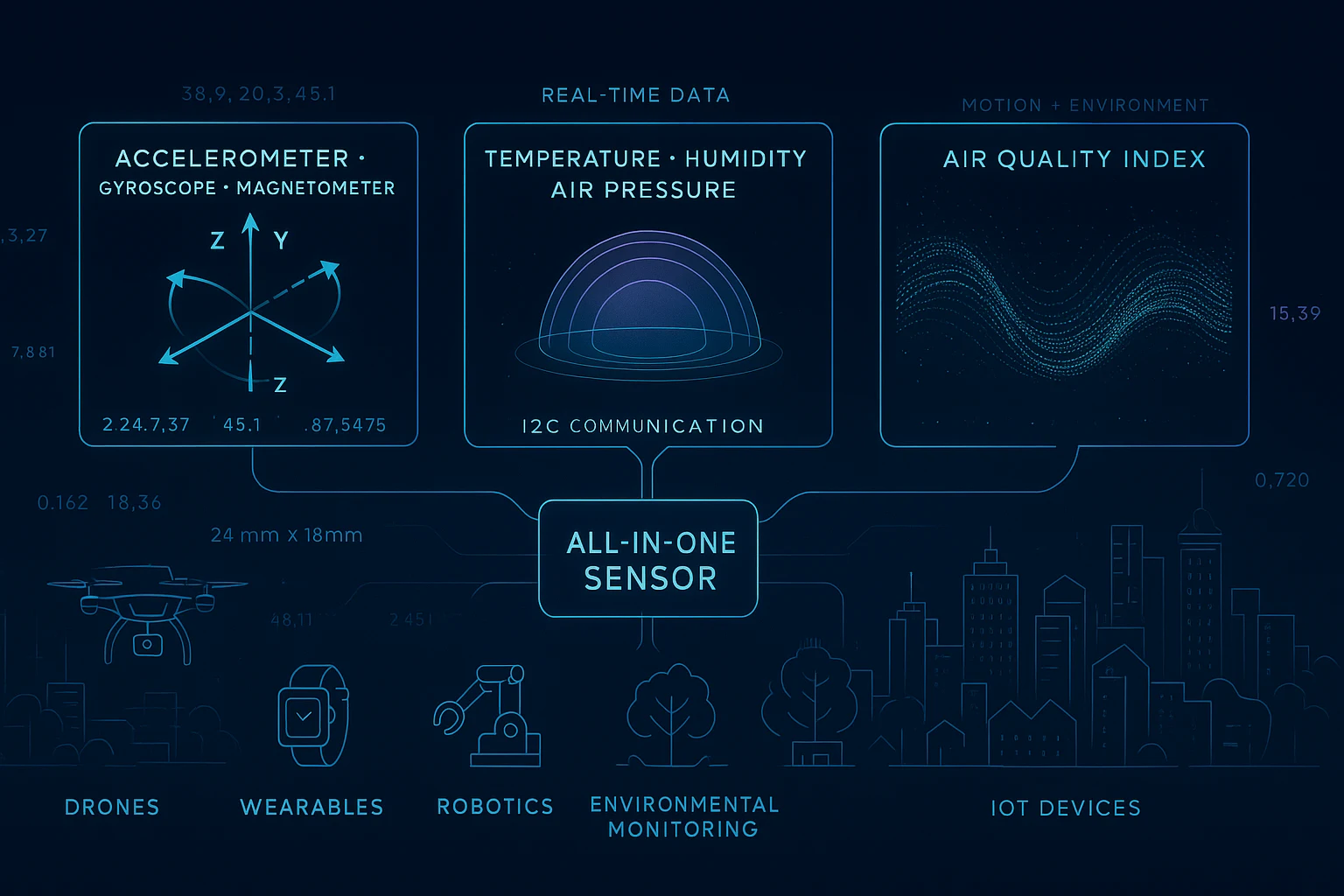
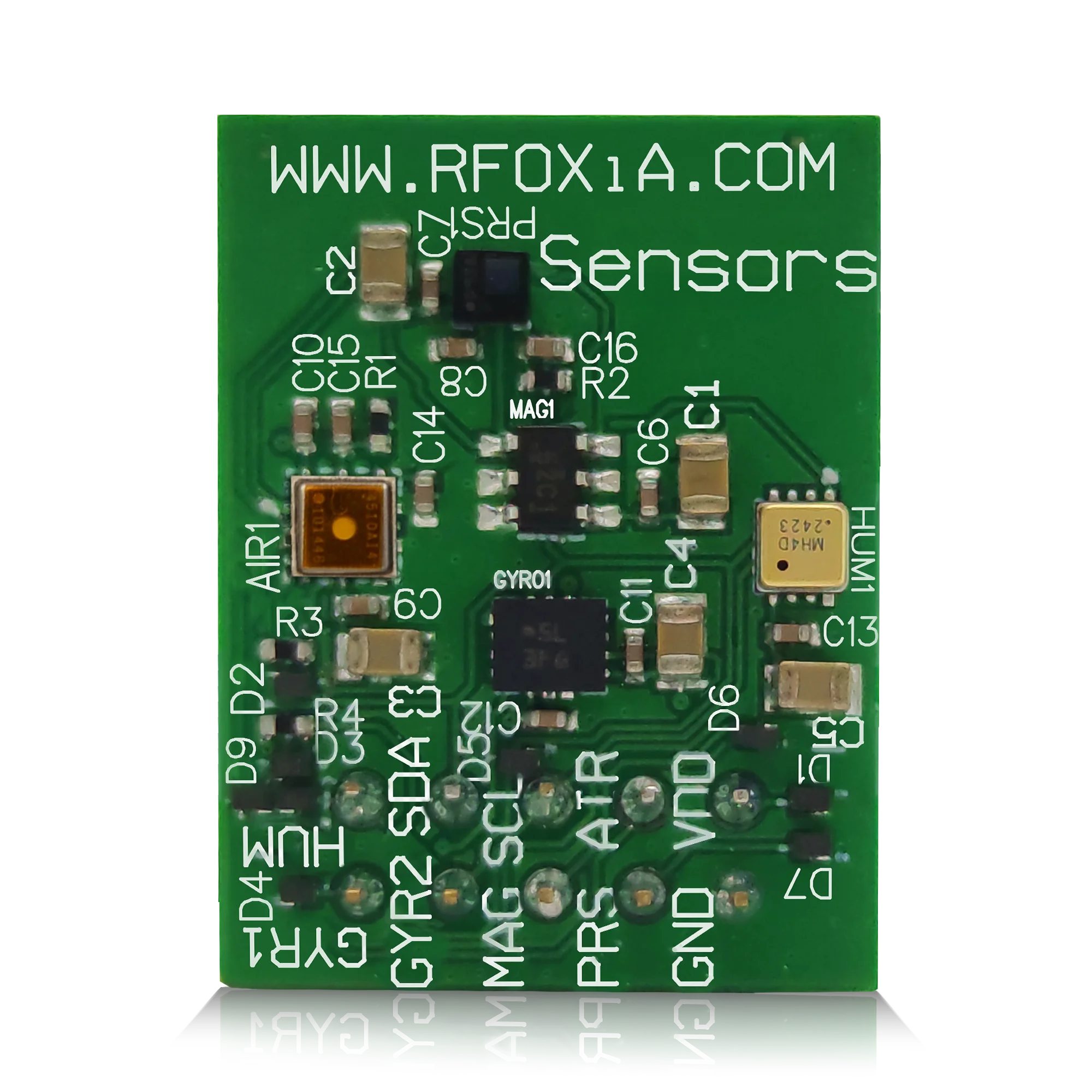
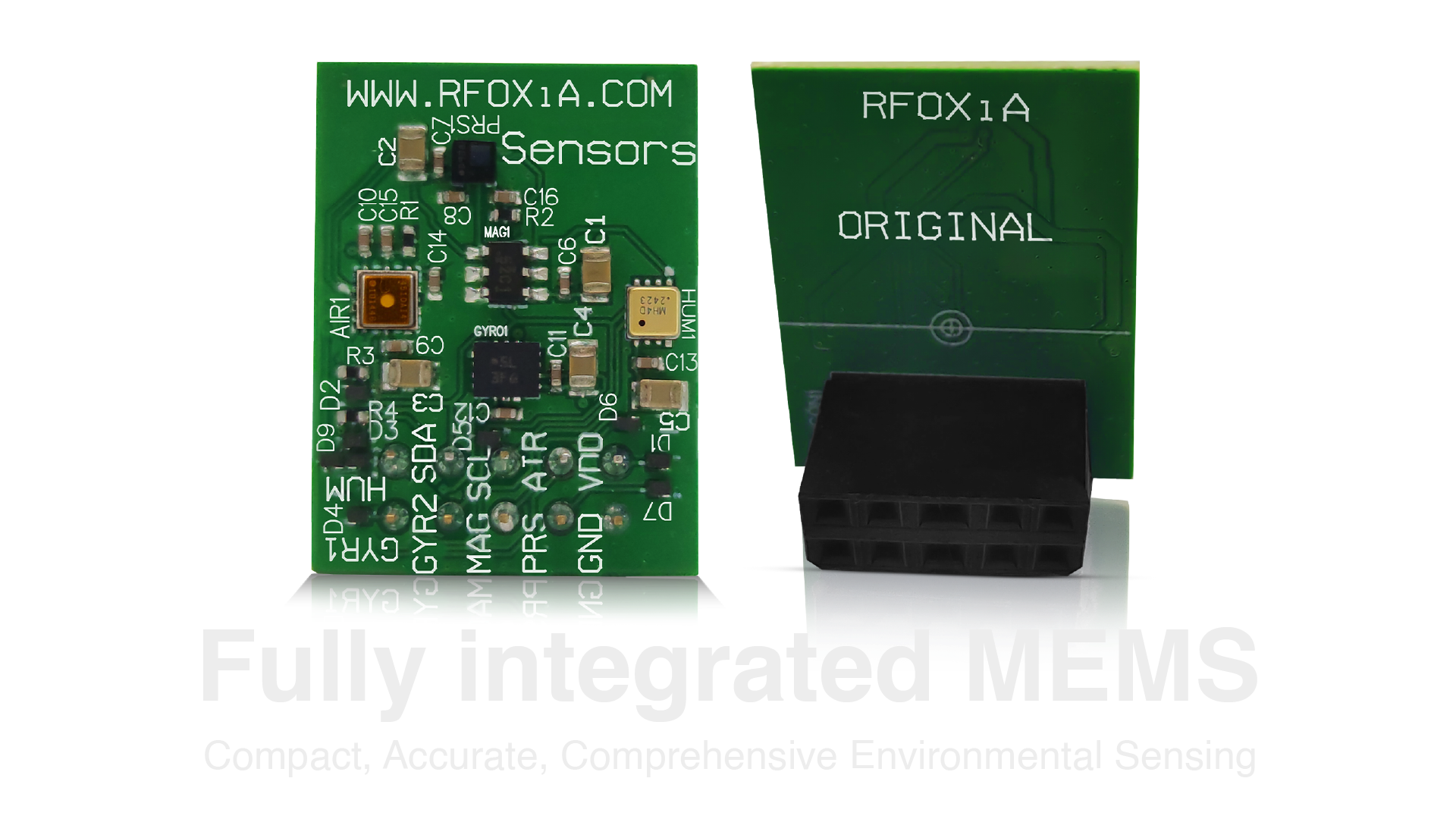
At just 24mm × 18mm, it integrates seven professional-grade sensors from four of the most respected sensor manufacturers in the world — all on a single board, all sharing a clean I2C bus, all pre-validated and FCC certified — into one truly complete all in one sensor module IoT platform. Whether you are building a professional drone, a field environmental monitor, a precision agriculture node, or a smart city data contributor, this module delivers everything you need from a single hardware footprint.
This is not a hobbyist breakout board. This is a production-grade sensing platform built to professional standards, priced for the maker and developer community.
Why the "All in One" Approach Changes Everything
The conventional approach to multi-sensor IoT projects involves sourcing, integrating, and firmware-supporting four to seven separate modules. This creates real problems at every stage of a project:
Hardware integration complexity increases exponentially with each additional board. Address conflicts on shared I2C buses are common, particularly when working with sensors from different manufacturers who may use the same default address. Voltage level mismatches require additional logic shifting circuitry. Physical board stacking creates fragile mechanical connections.
Firmware complexity multiplies. Each sensor manufacturer ships their own SDK, their own initialization sequence, their own register map, and their own data sheet quirks. Writing production-ready firmware that reliably reads seven sensors from four manufacturers is a multi-week engineering task — minimum.
Space and weight constraints become critical the moment your project leaves the desk. A drone payload budget is measured in grams. A wearable enclosure is measured in cubic millimeters. A compact IoT node has strict dimensional limits. Stacked breakout boards simply do not fit.
Certification overhead multiplies. Every additional board in your design potentially requires individual evaluation during FCC certification — adding cost and time to the path to market.
The MultiNav Pro+ Sensors Module solves all of these problems in one engineered package. Seven sensors. One board. One I2C bus. One FCC certification. One initialization sequence. One hardware footprint that fits almost anywhere.
For serious IoT developers, the all in one sensor module IoT approach is not a convenience — it is a professional engineering decision.
The Seven Sensors: Component-Level Excellence
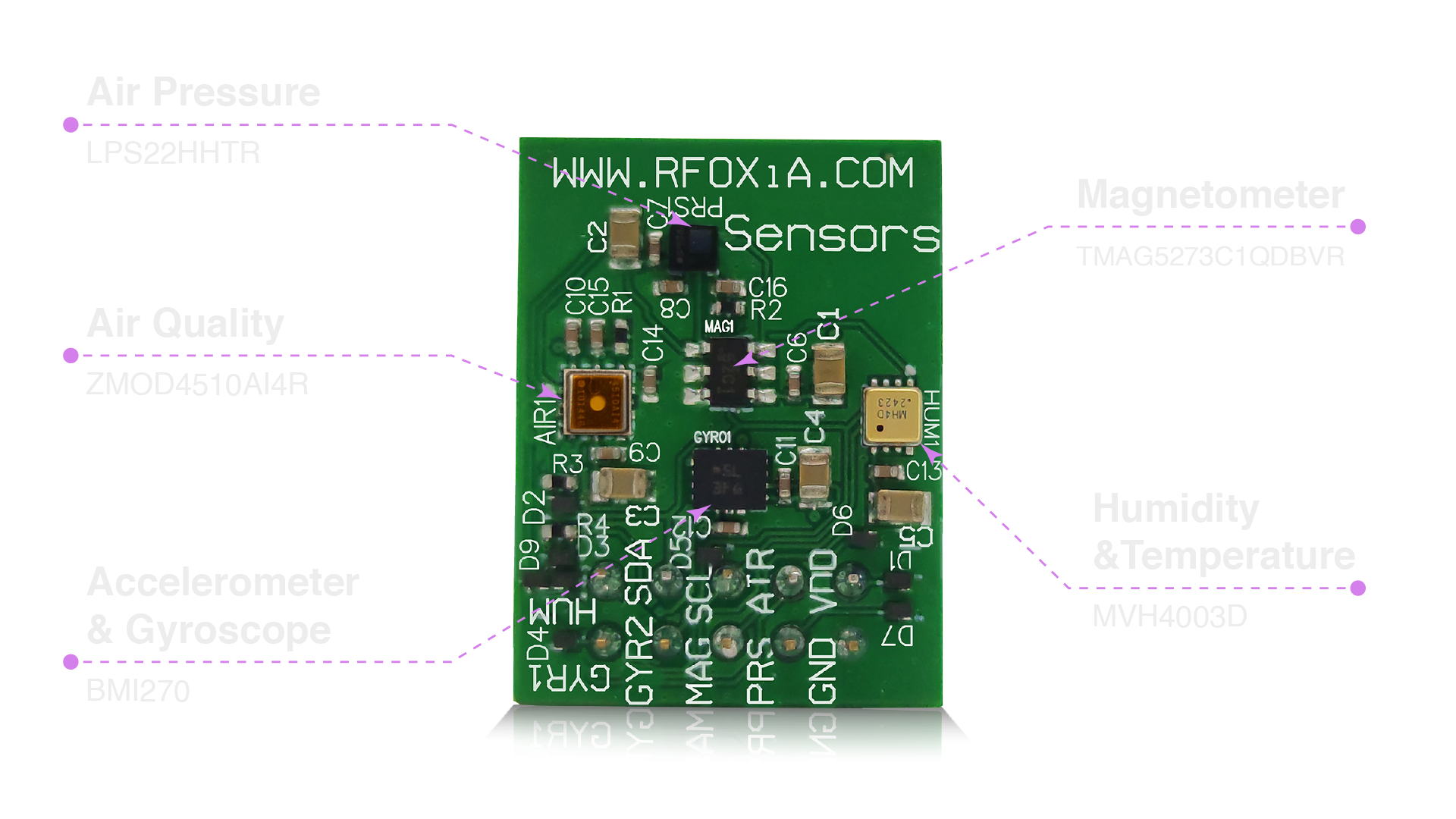
RFOXiA did not compromise on sensor selection. Each of the seven sensors in the MultiNav Pro+ was chosen from the leading manufacturer in its category. Here is what is inside:
Accelerometer & Gyroscope: BMI270 — Bosch Sensortec
The BMI270 is Bosch Sensortec's premium inertial measurement unit, designed explicitly for demanding motion-tracking applications. It delivers low-noise, high-stability accelerometer and gyroscope data with built-in advanced power management modes. The BMI270 is used in professional drones, industrial robotics, and automotive-grade applications. When your platform is moving fast and you need reliable orientation and motion data in real time, the BMI270 delivers.
Key capabilities include configurable output data rates, hardware-level interrupt support for gesture and motion detection, and a compact package that contributes minimally to the overall board footprint.
Magnetometer: TMAG5273C1QDBVR — Texas Instruments
Texas Instruments' TMAG5273 is a high-accuracy 3D Hall-effect magnetic field sensor. In the MultiNav Pro+, it provides the magnetometer axis required for full 9-DOF sensor fusion — enabling true compass heading and orientation data that the IMU alone cannot deliver.
The TMAG5273 is a precision industrial-grade device, not a commodity magnetometer. It offers excellent temperature stability, configurable measurement ranges, and an I2C interface with a unique address that plays cleanly on the shared bus.
Air Pressure: LPS22HHTR — STMicroelectronics
STMicroelectronics' LPS22HH is a high-performance MEMS absolute pressure sensor with a measurement range of 260–1260 hPa. For drone applications, barometric altitude is an essential flight parameter — and the LPS22HH delivers the resolution and noise performance required for reliable altitude hold and altitude change detection.
For environmental monitoring applications, the LPS22HH provides accurate atmospheric pressure data at second-level temporal resolution — a key input for weather modeling, micro-climate analysis, and environmental dataset quality.
Humidity & Temperature: MVH4003D — MEMSVision
MEMSVision's MVH4003D is a combined humidity and temperature sensor optimized for low-power, high-accuracy environmental sensing. Temperature and humidity are the two most universally requested data points in environmental IoT applications — from agricultural microclimate monitoring to indoor air quality baselines to industrial condition tracking.
The MVH4003D delivers reliable readings with fast response times, ensuring your environmental data reflects actual conditions rather than a lagging average.
Air Quality: ZMOD4510AI4R — Renesas
The ZMOD4510 from Renesas is an outdoor air quality sensor module designed specifically for ambient ozone and NO2 detection — the pollutants most associated with vehicle emissions, industrial activity, and urban air quality degradation. This is not a generic VOC sensor. The ZMOD4510 is calibrated for outdoor deployment and delivers data that correlates with professional air quality index standards.
For projects contributing to the RFOXiA data network, the ZMOD4510's outdoor-optimized air quality readings are a core verified data point. For smart city applications, environmental research, and precision agriculture, this sensor provides the air quality dimension that most IoT sensor packages completely omit.
Precision Motion and Environmental Sensing — Together
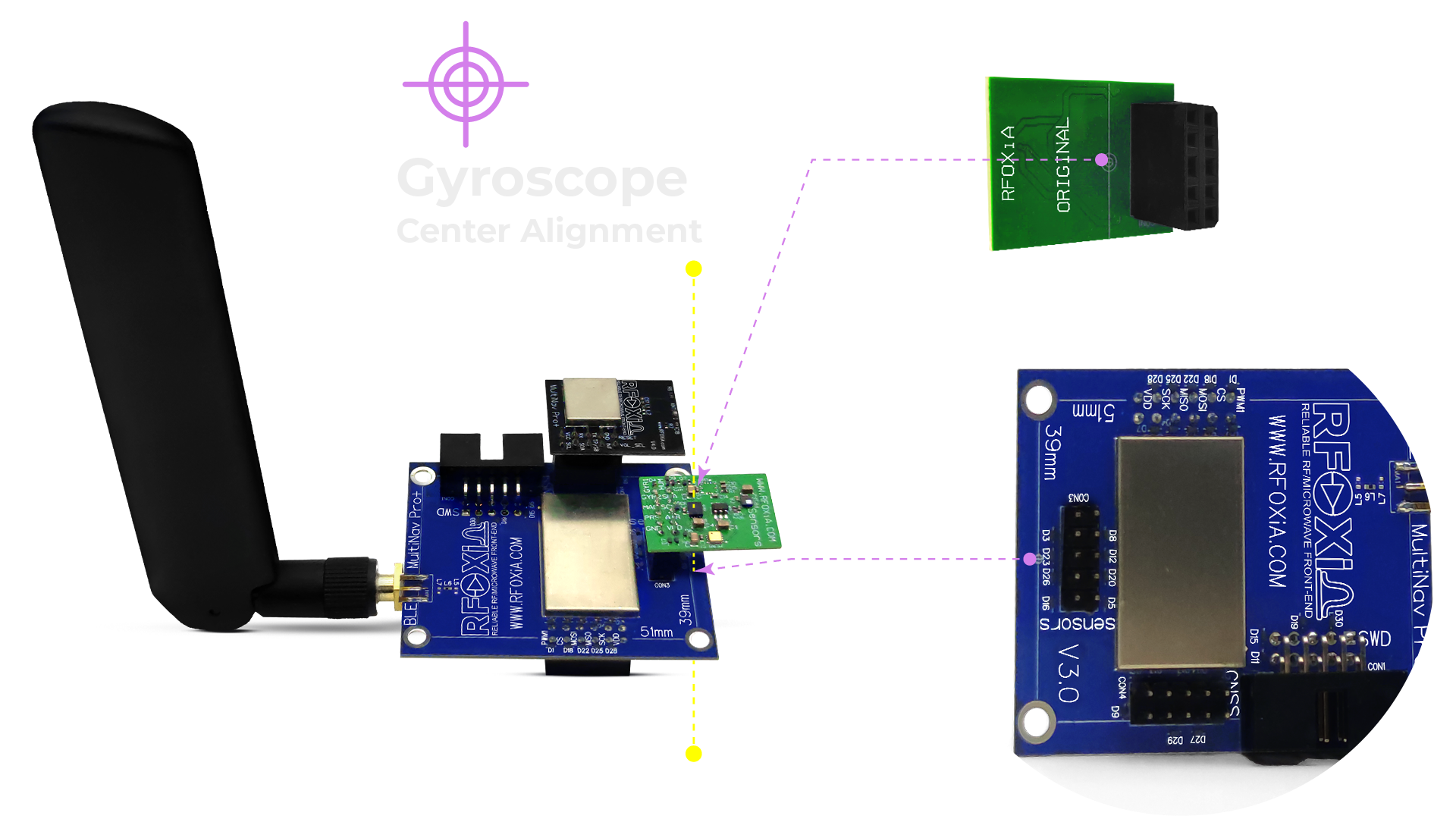
Most sensor boards choose a lane. They are either a motion sensing platform — IMU, magnetometer, maybe a barometer — or an environmental sensing platform — temperature, humidity, gas, light. The division exists because the use cases are historically separate.
But real-world applications are not that simple.
A drone needs both. It needs the BMI270 for stabilization and the LPS22HH for barometric altitude — but it also needs temperature and humidity to compensate motor performance and battery efficiency in field conditions. A search-and-rescue drone operating in a wildfire environment needs real-time air quality data as much as it needs orientation data.
An environmental monitoring node needs temperature, humidity, pressure, and air quality as its primary outputs — but it also benefits from the magnetometer and accelerometer to detect tampering, physical displacement, or orientation changes that might indicate the node has been moved from its calibrated outdoor deployment position.
A wearable health and environment monitor needs motion context to interpret environmental readings accurately — you do not log the same air quality reading when running through a park as when sitting at a desk.
The MultiNav Pro+ is the hardware platform that serves all of these converged use cases. Precision motion sensing and precision environmental sensing, in one all in one sensor module IoT package, at a price point that makes professional projects viable.
I2C Architecture: Clean Bus, Zero Conflicts
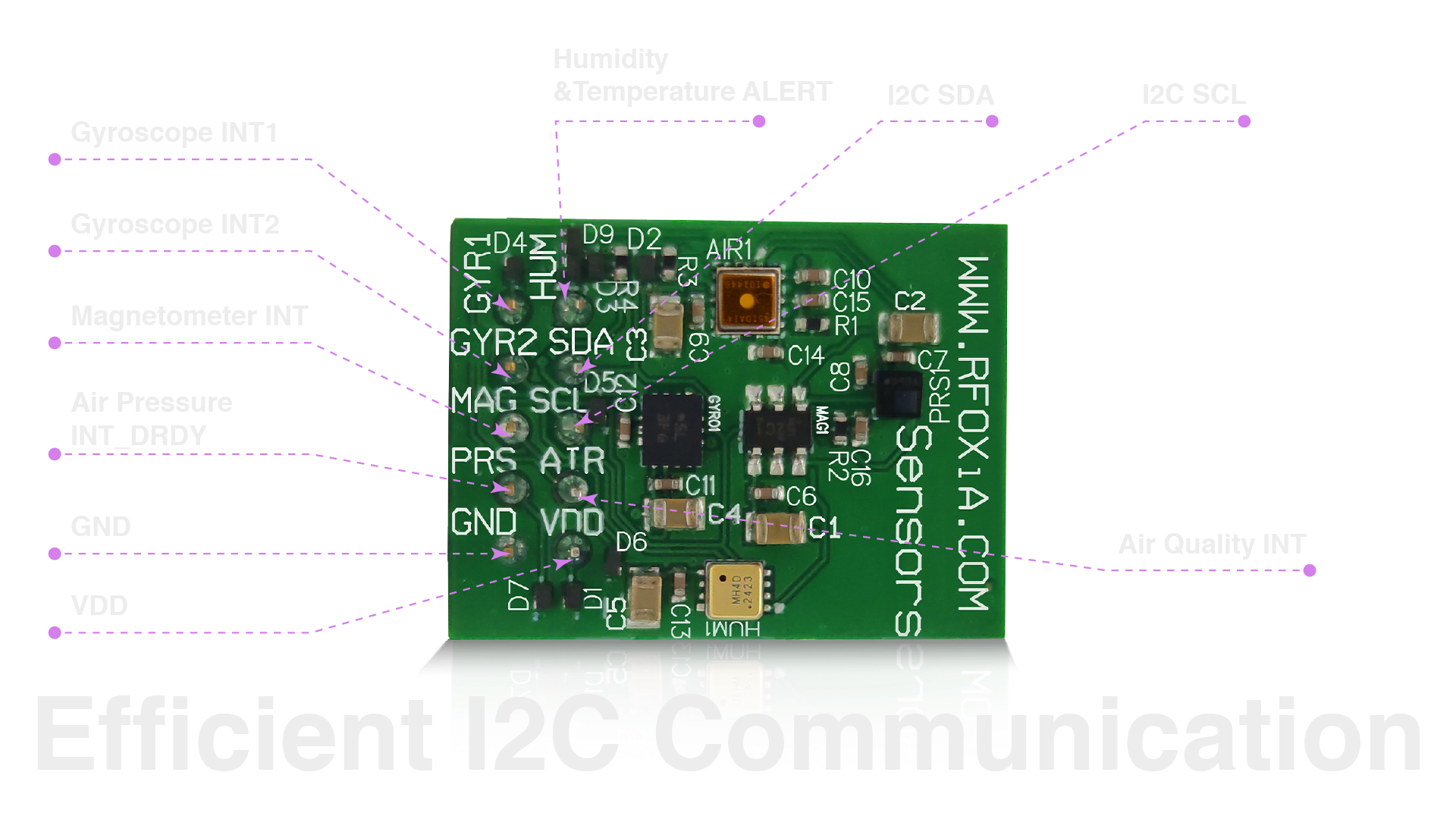
One of the most underappreciated engineering decisions in the MultiNav Pro+ is the I2C bus architecture.
Integrating seven sensors from four manufacturers onto a single I2C bus without address conflicts is a non-trivial hardware design challenge. Default I2C addresses from different manufacturers frequently collide. Resolution typically requires hardware address configuration pins, I2C multiplexers, or compromises in sensor selection.
RFOXiA solved this problem at the hardware level. All seven sensors share a single I2C line, each with a unique dedicated address. No multiplexers. No address jumpers. No firmware workarounds. The entire sensor array initializes cleanly from a single I2C host interface.
For developers, this means:
- Single interface connection — one SDA, one SCL, one power rail
- Simplified firmware — standard I2C reads from known addresses, no bus switching overhead
- Reliable multi-sensor operation — no data collisions, no bus contention, no missed reads
- Easier integration — into existing I2C ecosystems, microcontroller platforms, and SBC environments
The clean I2C architecture is the difference between a sensor array that works reliably in production and a collection of breakout boards that works on your desk but fails in the field.
Compact Design: 24mm × 18mm
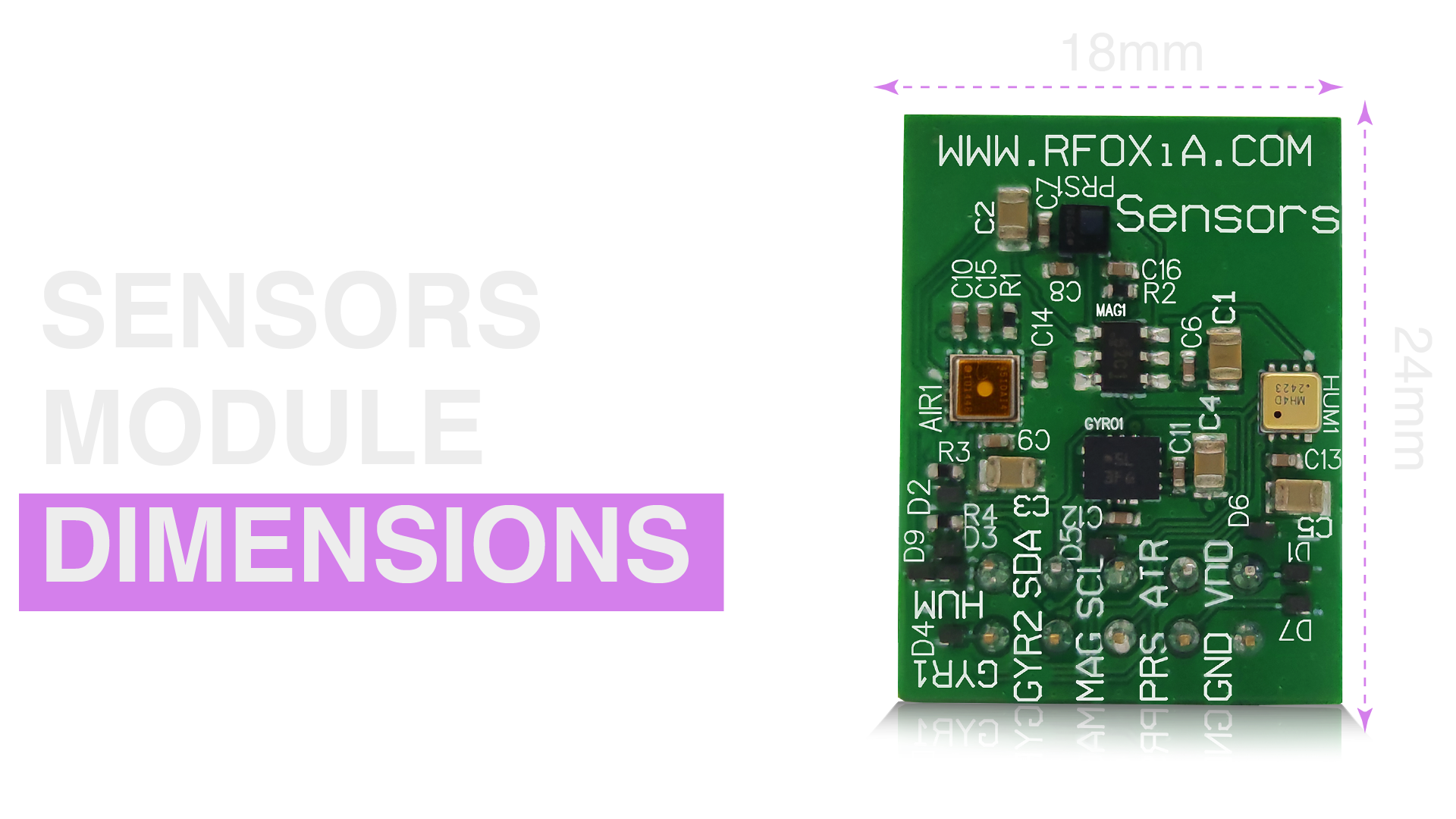
At 24mm × 18mm, the MultiNav Pro+ Sensors Module fits into virtually any project enclosure. To put that in context:
- It fits on a 3-inch drone frame with space to spare
- It integrates into a standard project enclosure with room for your microcontroller and power management
- It is small enough for wearable device integration without dominating the PCB layout
- It fits onto a compact outdoor IoT node housing alongside a battery, BLE module, and GNSS module
Packing seven sensors from four manufacturers into 432 square millimeters of PCB real estate requires careful component placement, optimized routing, and disciplined PCB stackup design. This is the kind of hardware engineering that takes experience and tools — and it is exactly what RFOXiA's in-house hardware design capability delivers.
For developers who have previously tried to achieve similar sensor coverage with discrete breakout boards, the MultiNav Pro+ footprint will feel like a revelation. Everything you need. None of the bulk.
Real-Time Environmental Data for Applications That Matter
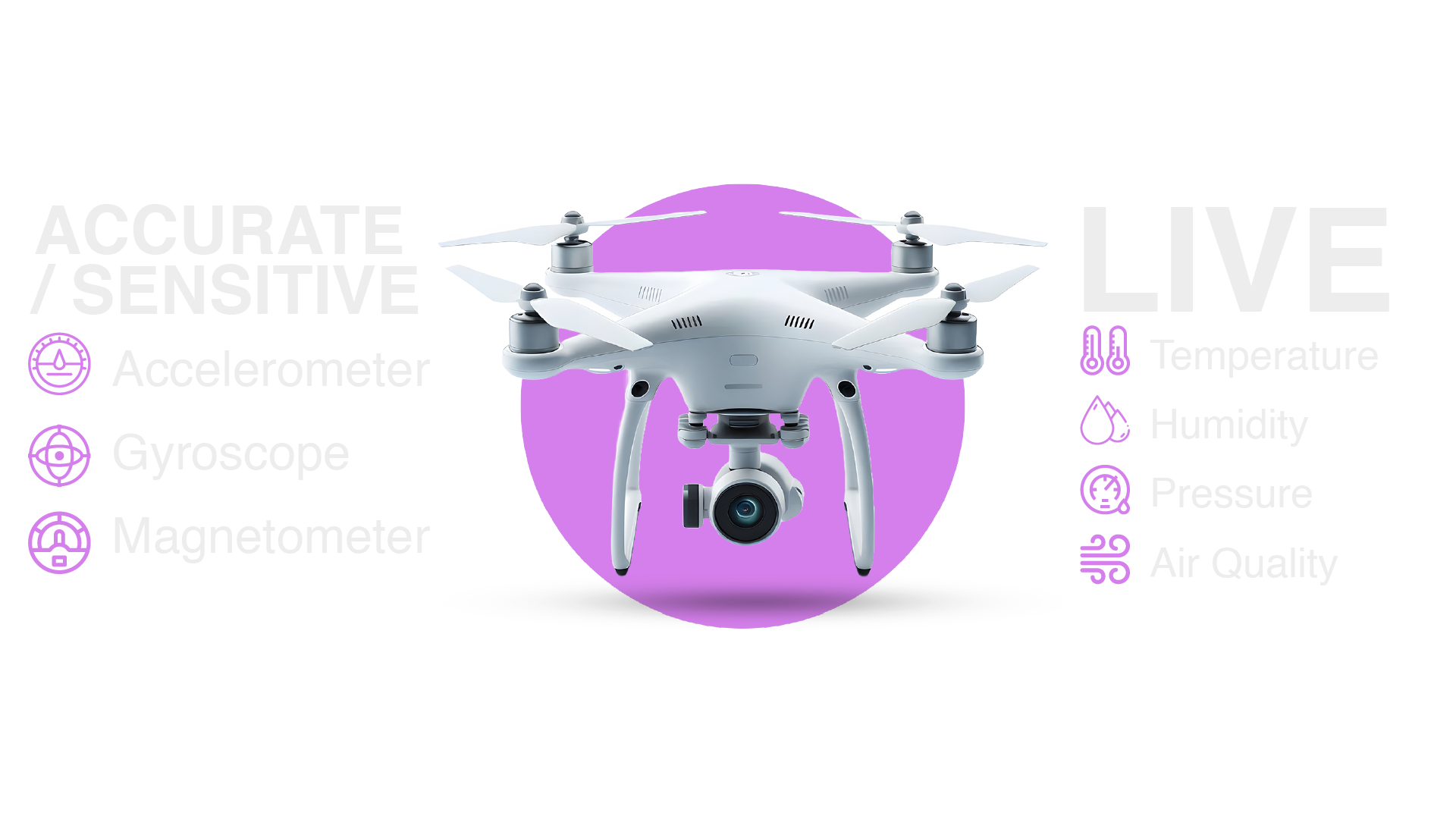
Real-time environmental data is not a feature — it is the foundation of a category of applications that is growing rapidly as the world demands higher-resolution situational awareness.
Consider what real-time, hyper-local environmental data enables:
Precision agriculture: Micro-climate variation within a single field can mean the difference between a healthy crop and crop stress. Temperature, humidity, and air pressure at second-level resolution, at field level, gives agricultural operators the data to act — not just observe.
Smart city infrastructure: City-wide environmental sensor networks built on nodes like the MultiNav Pro+ can provide block-level air quality mapping, heat island detection, and real-time pollution event tracking that regional weather stations simply cannot deliver.
Industrial safety monitoring: Temperature spikes, pressure changes, humidity excursions, and air quality events in industrial environments are early warning signs of equipment failures, chemical events, and personnel hazards. A sensor array that catches these in real time protects both equipment and people.
Disaster response: First responders entering hazardous environments need real-time atmospheric data. A drone equipped with the MultiNav Pro+ can characterize the atmospheric conditions of a fire, chemical spill, or structural collapse before personnel are committed.
Research and academic applications: Environmental researchers deploying distributed sensor networks need reliable, calibrated, multi-parameter data. The MultiNav Pro+ provides a standardized, validated data package that reduces the overhead of data quality management.
The RFOXiA Integrated Sensors Module is already deployed in the RFOXiA data network, where users earn daily rewards for streaming verified environmental data from outdoor nodes. The five verified data points required for network participation — temperature, humidity, air pressure, air quality, and GPS location — map directly to the MultiNav Pro+ sensor suite. Deploying this module as a data network node converts a hardware purchase into a passive income stream.
Endless Applications Across Industries

The MultiNav Pro+ Sensors Module is purpose-built for the broadest range of professional IoT and embedded applications. Here is a non-exhaustive list of the use cases this module directly enables:
Drone and UAV platforms:
- 9-DOF sensor fusion for advanced flight stabilization
- Barometric altitude hold and altitude change detection
- In-flight environmental characterization
- Payload sensing for agricultural spray drones
- Air quality mapping missions
Robotics and autonomous systems:
- Orientation and motion tracking for ground robots
- Environmental awareness for indoor navigation
- Terrain and atmospheric compensation
Environmental monitoring networks:
- Distributed outdoor sensor nodes
- Agricultural microclimate monitoring
- Urban air quality grids
- Research station data logging
Wearable and personal devices:
- Activity tracking with environmental context
- Personal air quality monitors
- Outdoor adventure instrumentation
Industrial IoT:
- Condition monitoring in manufacturing environments
- Cold chain environmental logging
- Safety monitoring in hazardous environments
Smart building and infrastructure:
- Indoor environmental quality monitoring
- HVAC optimization data
- Occupancy pattern analysis via motion sensing
The common thread across all of these applications is the need for a compact, reliable, comprehensive sensor platform that a developer can integrate once and trust in production. The MultiNav Pro+ was built to be that platform.
The RFOXiA Ecosystem Advantage
The MultiNav Pro+ Sensors Module is not just a standalone product. It is a core component of the RFOXiA ecosystem — a vertically integrated wireless development platform that includes the MultiNav Pro+ BLE Module (up to 50km range), the GNSS Module (1.5m accuracy, 18Hz fix rate), the Power/Program Kit (5-minute charge, 24-hour runtime), and the full Developer Bundle that brings all four modules together.
When paired with the BLE Module, sensor data from the MultiNav Pro+ can be transmitted wirelessly over distances that no commodity BLE solution can match — enabling environmental monitoring from platforms operating at range, drone-based atmospheric surveys without ground control tethering, and distributed sensor networks without infrastructure dependencies.
When deployed with GNSS validation, the MultiNav Pro+ becomes a verified network node contributing GPS-tagged environmental data to the RFOXiA data network, earning daily rewards for every verified complete data session.
All of this is managed through the RFOXiA Club platform — a full developer ERP including live device control, the AI Firmware Builder, community project sharing, and the credits and rewards dashboard. The AI Firmware Builder alone can take the firmware development work for a new MultiNav Pro+ application from weeks to hours — describe your application in plain language, receive production-ready STM32-compatible firmware with full source code.
For developers evaluating the RFOXiA Integrated Sensors Module, the question is not just what this module can do in isolation. It is what becomes possible when this sensor array is combined with long-range wireless communication, precision location, professional power management, AI-assisted firmware development, and a live data monetization network.
The answer is: almost anything.
Technical Specifications Summary
| Specification | Detail |
|---|---|
| Sensors | 7 total: Accelerometer, Gyroscope, Magnetometer, Temperature, Humidity, Air Pressure, Air Quality |
| Accelerometer/Gyroscope | BMI270 — Bosch Sensortec |
| Magnetometer | TMAG5273C1QDBVR — Texas Instruments |
| Air Pressure | LPS22HHTR — STMicroelectronics |
| Humidity & Temperature | MVH4003D — MEMSVision |
| Air Quality | ZMOD4510AI4R — Renesas |
| Communication | I2C (single bus, dedicated addresses per sensor) |
| Module Dimensions | 24mm × 18mm |
| Certification | FCC Certified |
| Price | $39 |
| Ecosystem | Compatible with RFOXiA BLE Module, GNSS Module, Power/Program Kit, Developer Bundle |
Who Should Buy the MultiNav Pro+ Sensors Module
If you are a drone builder who needs reliable 9-DOF data plus real-time atmospheric sensing on your platform — this is your module.
If you are an IoT developer deploying environmental monitoring nodes and you are tired of integrating and debugging four separate breakout boards — this is your module.
If you are a researcher building a distributed sensor network and you need a standardized, validated, FCC-certified sensing package that you can deploy reliably at scale — this is your module.
If you are a maker who wants a single hardware platform that handles motion, orientation, environment, and air quality without a month of integration work — this is your module.
And if you want your hardware to pay you back — by contributing verified environmental data to the RFOXiA network while you sleep — this module, combined with the RFOXiA ecosystem, makes that possible.
Get the MultiNav Pro+ Sensors Module
At $39, the MultiNav Pro+ Sensors Module delivers a level of sensor integration, component quality, and ecosystem compatibility that no other product at this price point can match. FCC certified. Ready to ship. Fully compatible with the complete RFOXiA hardware ecosystem.
This is what a professional all in one sensor module IoT platform looks like when it is built by engineers who actually use the hardware they design.
Explore the full specifications, ecosystem integrations, and ordering options at the RFOXiA Integrated Sensors Module product page. Join RFOXiA Club free and receive a $10 welcome credit toward your first order — no hardware required to get started.
Build something worth sensing.
Written by: Moamen Mohamed LinkedIn