
All in One Sensor vs Separate Sensors: Why Integration Wins
RFOXiA Integrated Sensors Module
The Real Cost of Building With Separate Sensors — and What You Gain by Going All-in-One
Every hardware developer eventually faces the same architectural decision: do you source individual sensors for each measurement type, or do you adopt an all-in-one integrated sensor module that handles everything on a single compact board?
On the surface, it seems like a simple component-selection question. In practice, it shapes your wiring complexity, your firmware architecture, your PCB layout, your debugging time, your BOM cost, and ultimately whether your project ships on time or dies on the bench.
This post breaks down the all in one sensor vs separate sensors debate with real engineering depth — covering integration complexity, I2C bus management, power consumption, form factor constraints, and the practical reality of building professional-grade systems for drones, robots, environmental monitors, and IoT deployments.
By the end, you will have a clear framework for making the right choice for your application — and you will understand exactly why the RFOXiA Integrated Sensors Module was engineered the way it was.
What Does "All in One" Actually Mean in Sensor Design?
Before comparing architectures, it helps to define terms precisely.
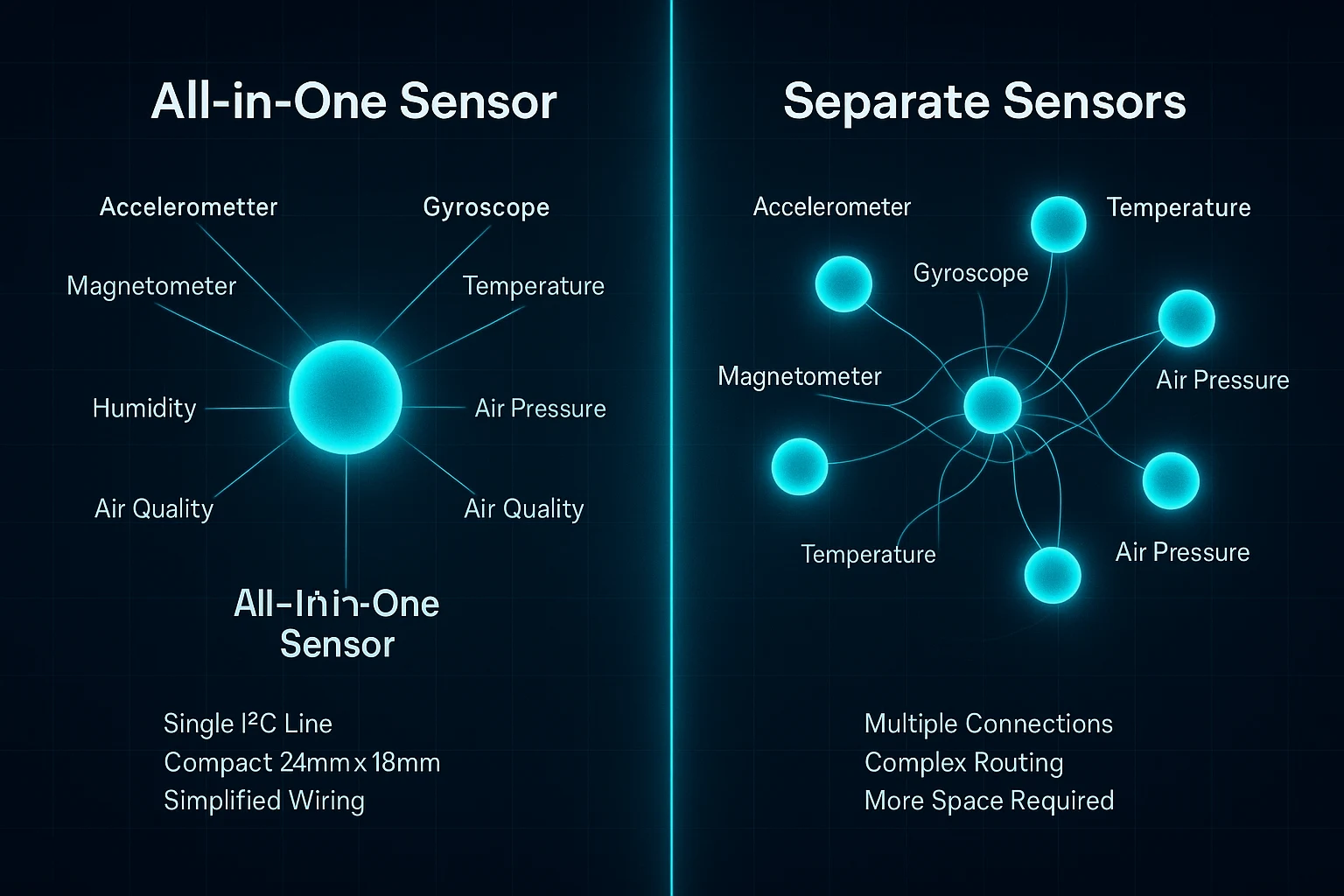
A separate sensor approach means you source individual ICs or breakout modules for each measurement axis — one chip for accelerometer and gyroscope, another for magnetometer, another for barometric pressure, another for humidity and temperature, and another for air quality. Each device typically lives on its own breakout board or requires its own footprint in your PCB layout.
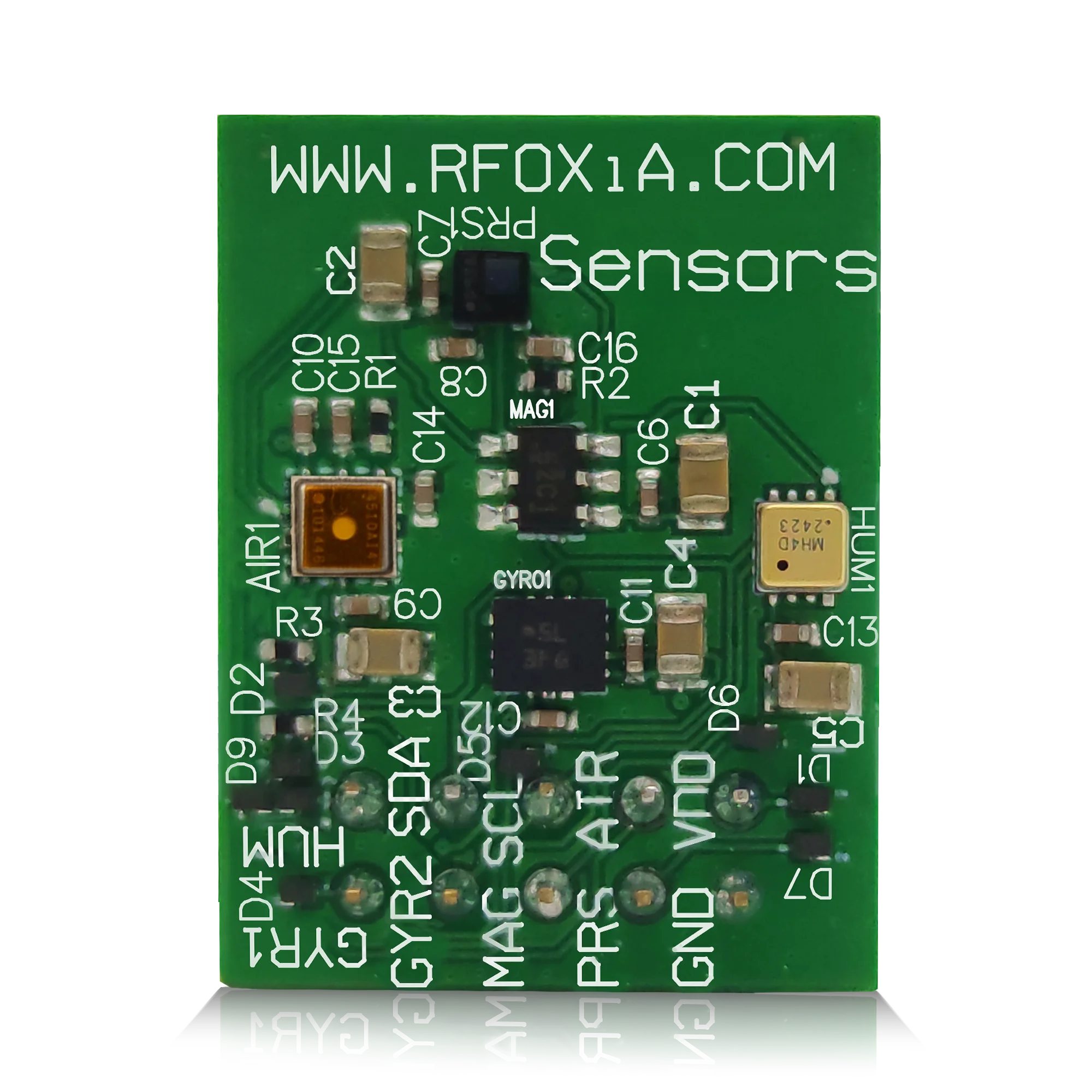
An all-in-one sensor module integrates all of these sensing functions onto a single pre-tested PCB with a unified connection interface. You connect one module to your microcontroller, and you have access to every measurement type through a common bus.
The distinction matters because the engineering tradeoffs cascade through every layer of your project — hardware, firmware, mechanical, and operational.
The All in One Sensor vs Separate Sensors Breakdown: Six Critical Dimensions
1. Wiring Complexity and Connection Overhead
When you source separate sensors, every additional device adds connection overhead. Even on an I2C bus — which is designed for multi-device communication — each sensor needs power, ground, SDA, and SCL routed to it. If you are using breakout boards, you are managing jumper wires, breadboard real estate, or connector routing on a custom PCB.
For a full environmental and motion sensing stack — accelerometer, gyroscope, magnetometer, barometer, humidity/temperature, and air quality — you are managing six discrete components, six power domains to consider, and six points of potential connection failure in the field.
With an all-in-one module, you route a single I2C line and power pair. One connector. One harness. One point of mechanical interface to get wrong.
For drone builds in particular, where vibration stress-tests every solder joint and connector over hundreds of flight cycles, minimizing connection points is not just a convenience — it is a reliability engineering decision.
2. I2C Bus Management and Address Conflicts
This is where the all in one sensor vs separate sensors comparison gets technically interesting.
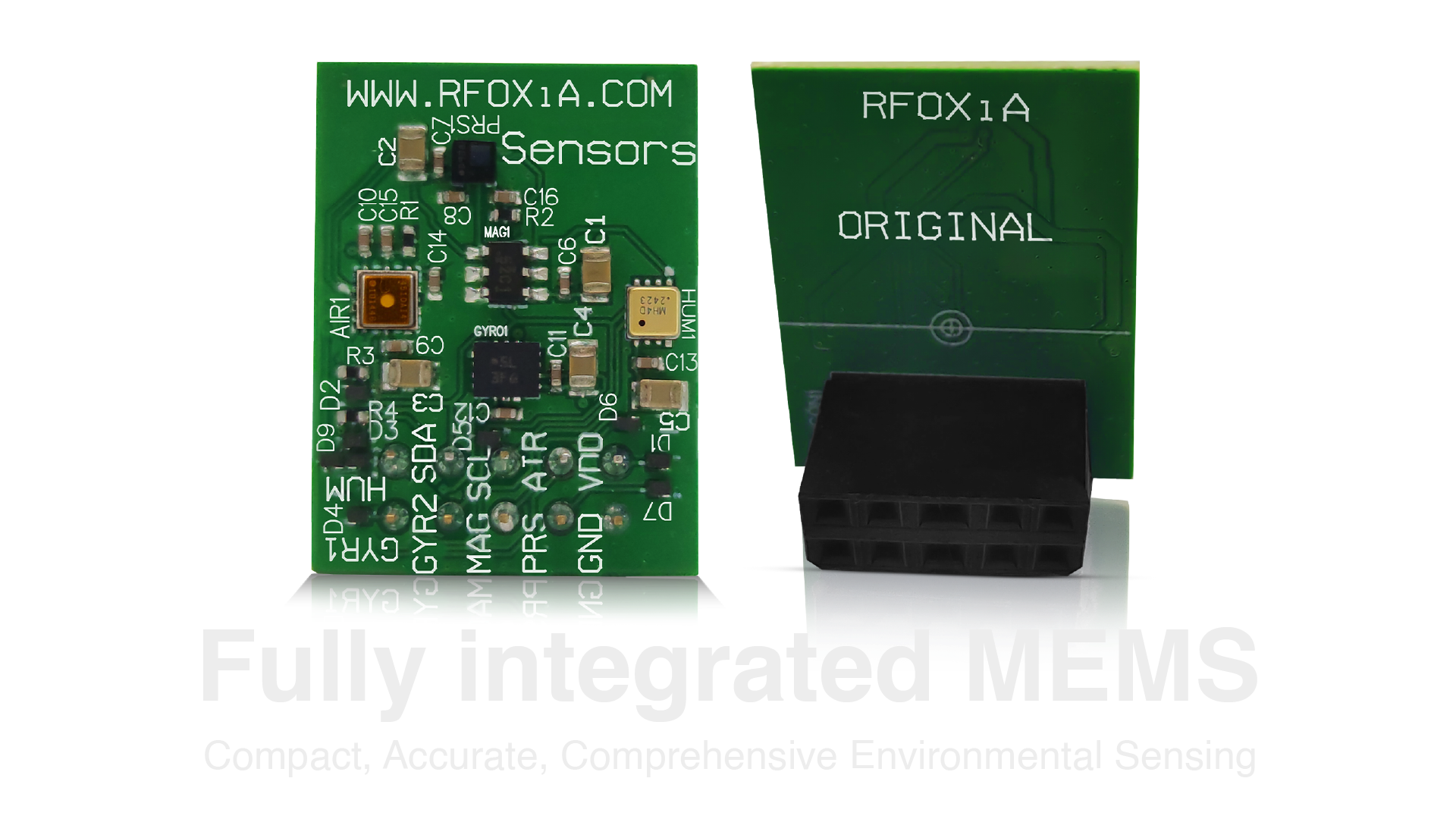
I2C supports multiple devices on the same two-wire bus, but each device must have a unique 7-bit address. Many low-cost sensor breakout boards use fixed addresses with no option for reconfiguration. If you need two of the same sensor type — or if two sensors from different manufacturers happen to share the same default address — you face an address conflict that requires either a hardware I2C multiplexer (adding another component and firmware complexity) or software workarounds.
A well-designed all-in-one module handles address assignment during the hardware design phase. The manufacturer selects sensors with compatible address spaces and validates the complete bus behavior across all operating conditions before the module ships.
The MultiNav Pro+ Sensors Module takes this seriously: all seven sensors share a single I2C line, each pre-assigned a dedicated address with no conflicts. Address management is solved at the hardware level, not at your firmware level.
3. Component Selection and Sensor Quality
When you source separate sensors, you control component selection — which is either an advantage or a liability depending on your familiarity with the sensor IC landscape.
The honest reality for most developers is that sensor IC selection requires deep evaluation of noise density, cross-axis sensitivity, temperature drift, long-term stability, and silicon quality across manufacturers. Getting it wrong means building a product that reads accurately at room temperature on your bench and drifts badly in a 45-degree field environment.
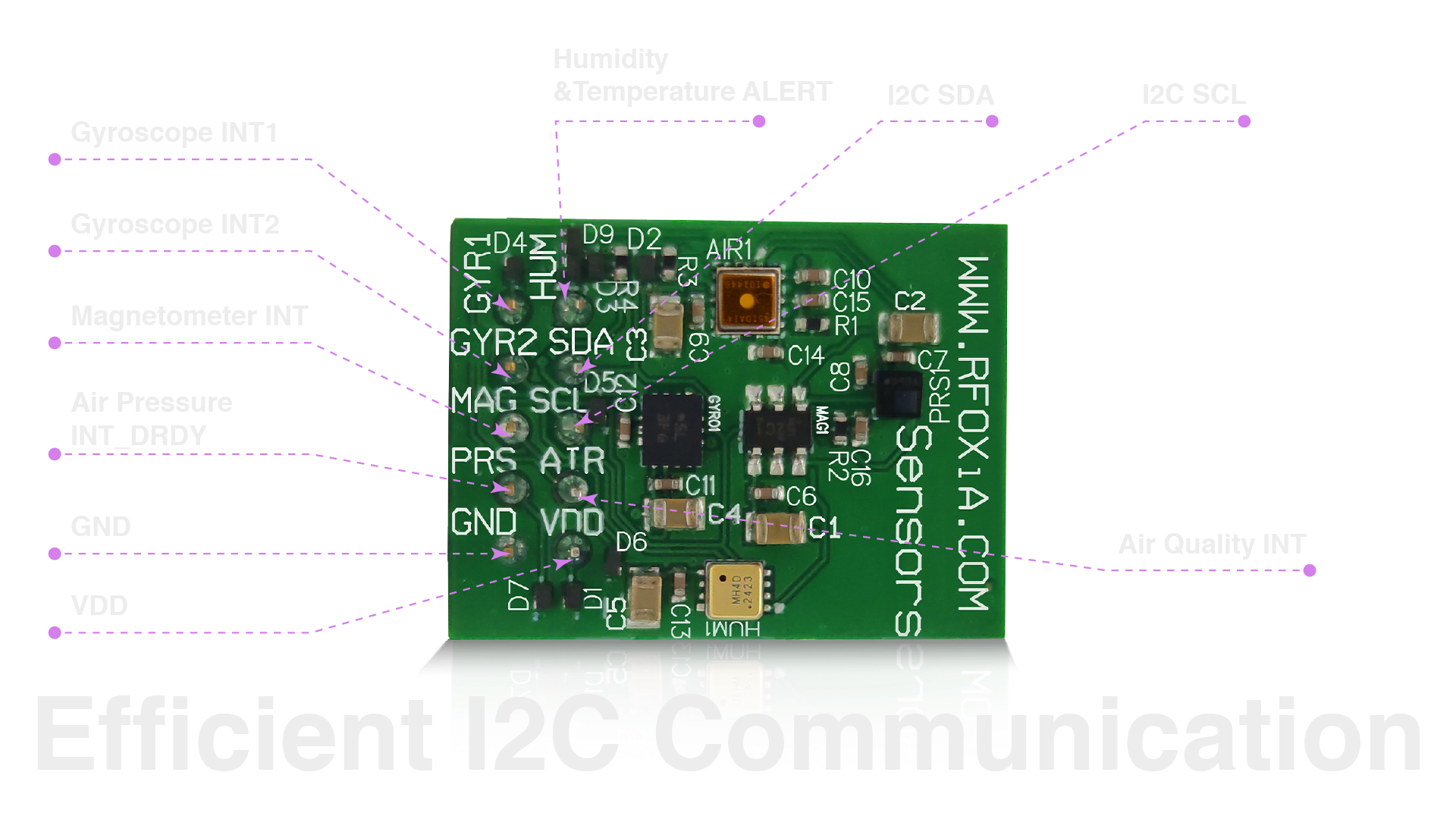
RFOXiA built the MultiNav Pro+ around sensors selected for professional-grade applications:
- BMI270 (Bosch Sensortec) — Accelerometer and Gyroscope. This is the same IMU class used in professional drone flight controllers. Low noise, high update rate, robust vibration handling.
- TMAG5273C1QDBVR (Texas Instruments) — Magnetometer. High-accuracy magnetic field sensing with integrated temperature compensation.
- LPS22HHTR (STMicroelectronics) — Air Pressure. 24-bit ADC resolution, 0.005 hPa RMS noise, suitable for altitude estimation at sub-meter resolution.
- MVH4003D (MEMSVision) — Humidity and Temperature. High-accuracy MEMS sensing with fast response time.
- ZMOD4510AI4R (RENESAS) — Air Quality. OAQ (Outdoor Air Quality) optimized, capable of detecting ozone and NOx compounds relevant to real environmental monitoring.
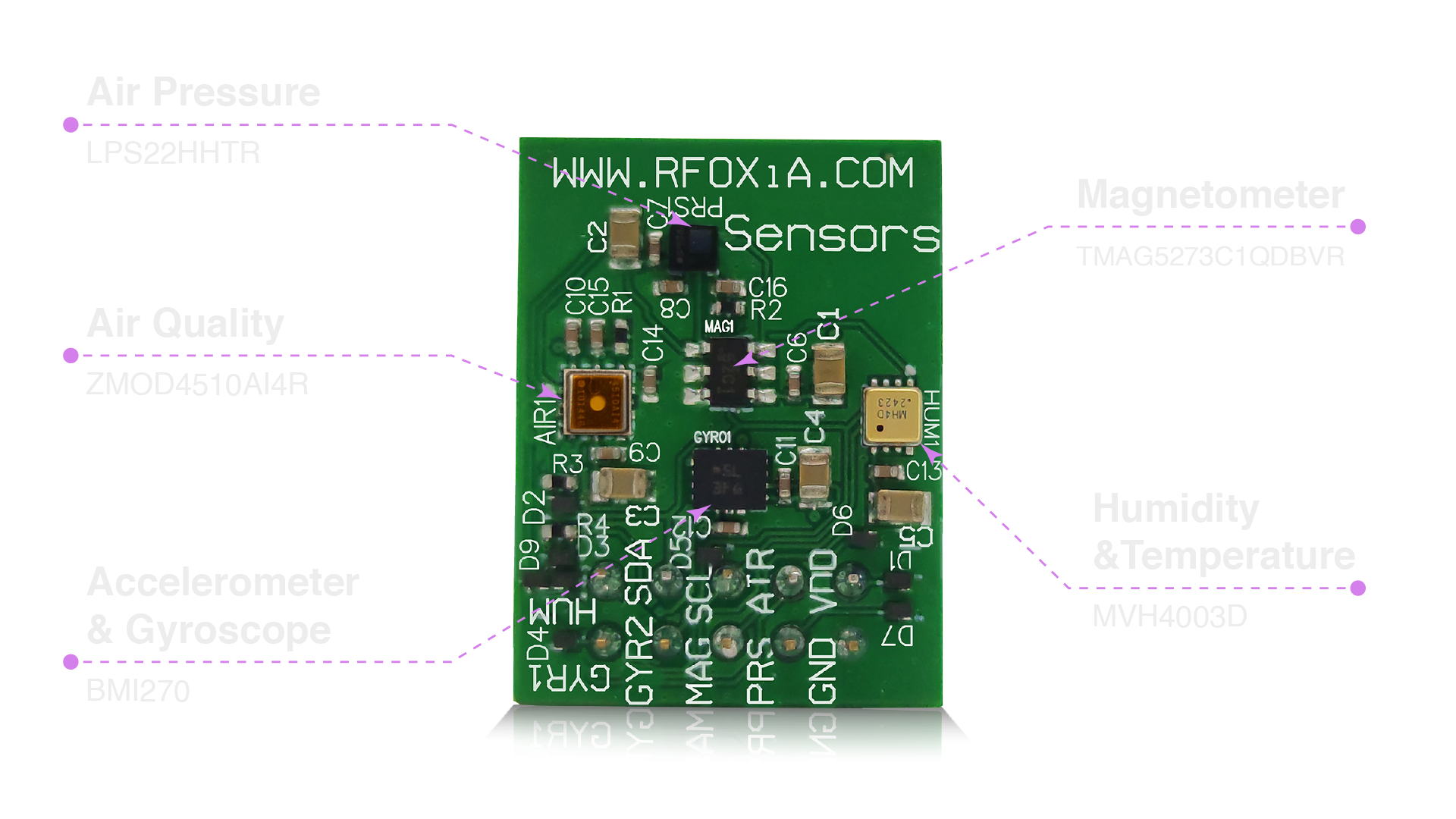
Sourcing each of these components individually, validating them, and integrating them yourself is a multi-month engineering effort. The all-in-one module delivers this validated stack ready to connect.
4. Form Factor and Space Constraints
Modern embedded applications are not forgiving about space. Drone payloads have strict gram budgets. Wearable devices have centimeter-scale PCB envelopes. Industrial IoT nodes need to fit inside enclosures designed before your sensor stack was specified.
A separate sensor approach with six discrete breakout boards is physically incompatible with space-constrained applications. Even if you design a custom PCB consolidating all six ICs, you are committing to a PCB layout project that requires component placement, routing, decoupling capacitor placement, and thermal management for each sensor simultaneously.
The MultiNav Pro+ Sensors Module measures 24mm × 18mm — smaller than a US quarter. It delivers the full seven-sensor stack in a footprint that fits inside virtually any application.
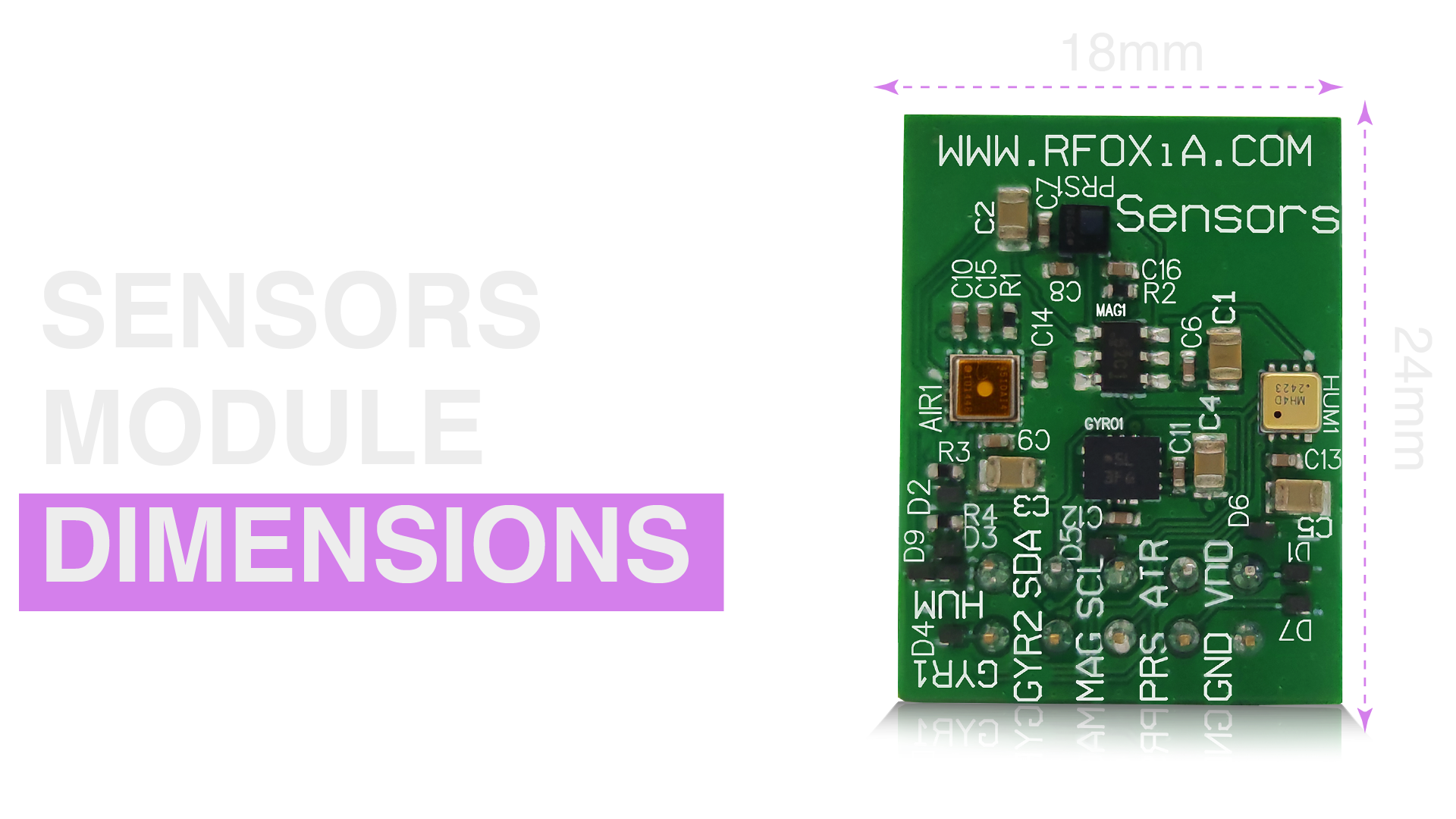
For drone builders specifically, this form factor means mounting options that simply do not exist with separate sensors — including vibration-isolated mounting on a dedicated daughterboard, tucked inside an airframe with millimeters to spare.
5. Precision and Real-Time Data Quality
One of the less obvious arguments in the all in one sensor vs separate sensors comparison is how integration affects data quality at the system level.
When sensors are sourced separately and operate asynchronously, achieving synchronized multi-sensor data capture requires explicit firmware coordination — querying each sensor at precisely timed intervals, managing the latency differences between sensor types, and handling the edge cases when one sensor update is delayed by I2C bus contention.
An all-in-one module designed with a coherent firmware interface simplifies this dramatically. The MultiNav Pro+ is designed for real-time environmental and motion data delivery — with motion sensors delivering highly responsive updates suitable for flight controller feedback loops, and environmental sensors providing live readings that reflect actual field conditions rather than lagged or interpolated data.
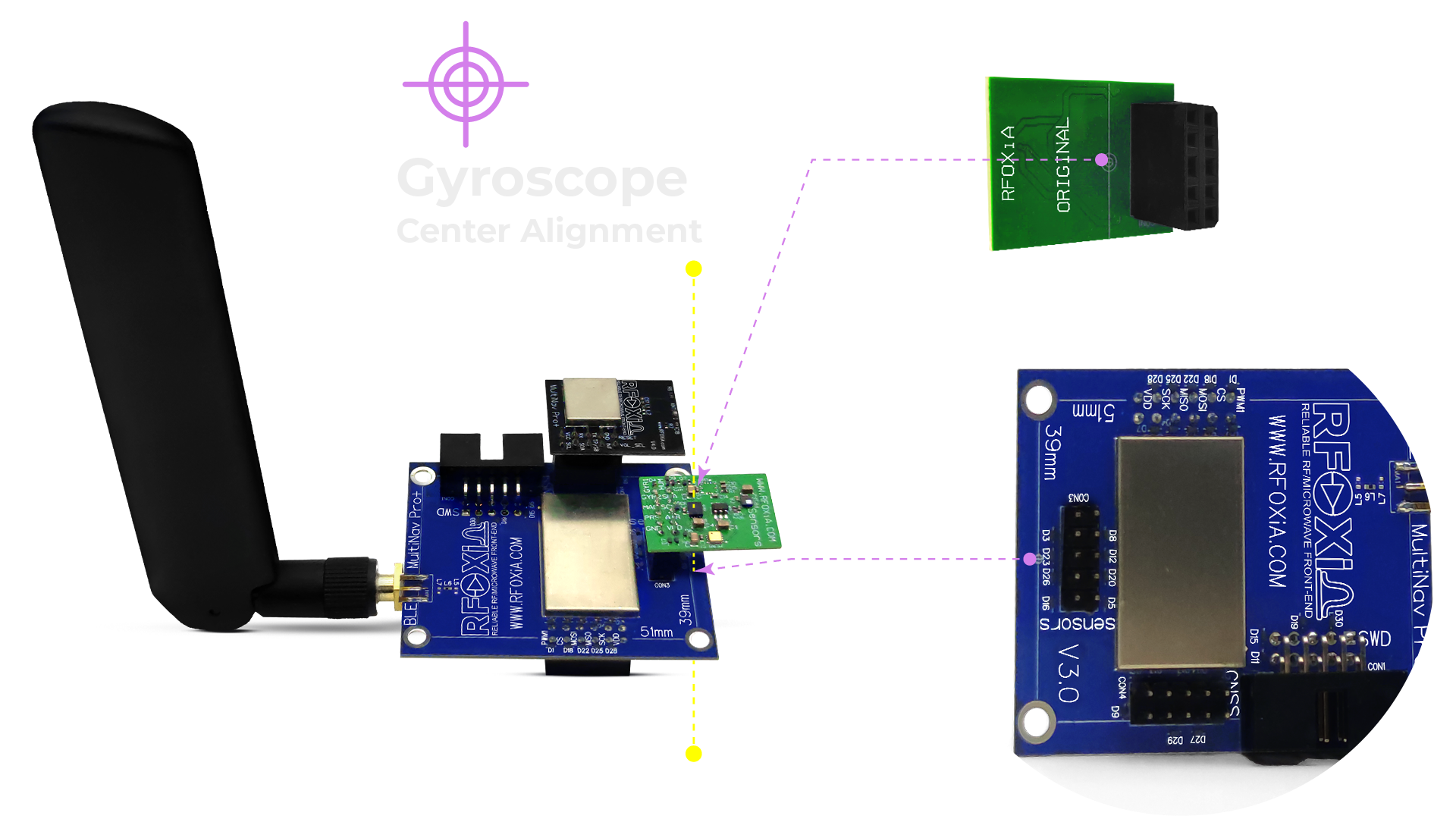
For applications like altitude hold, attitude estimation, or environmental logging tied to a GPS timestamp, this real-time coherence is not optional — it is a core requirement.
6. Cost: BOM Reality vs Sticker Price
Separate sensors appear cheaper at the component level. A breakout board for each sensor might run $3-12 per sensor, and sourcing bare ICs directly can push those numbers lower.
But BOM cost is not project cost.
Project cost includes:
- PCB layout time (hours per sensor IC added)
- Firmware development time per sensor driver
- Debug and validation time per sensor integration
- Connector and harness cost per sensor breakout
- Rework and re-spin cost when the first layout has a noise or routing problem
- Risk cost — the probability that one of your six separate sensors has a production batch quality issue
When you account for developer time, the economics of the all in one sensor vs separate sensors comparison shifts sharply toward integration. A $39 fully validated, pre-tested, FCC-certified sensor module that works on day one represents a dramatically better total cost of ownership than six separate components that require weeks of integration work.
Real-World Applications Where Integration Delivers a Decisive Advantage
Drone Systems
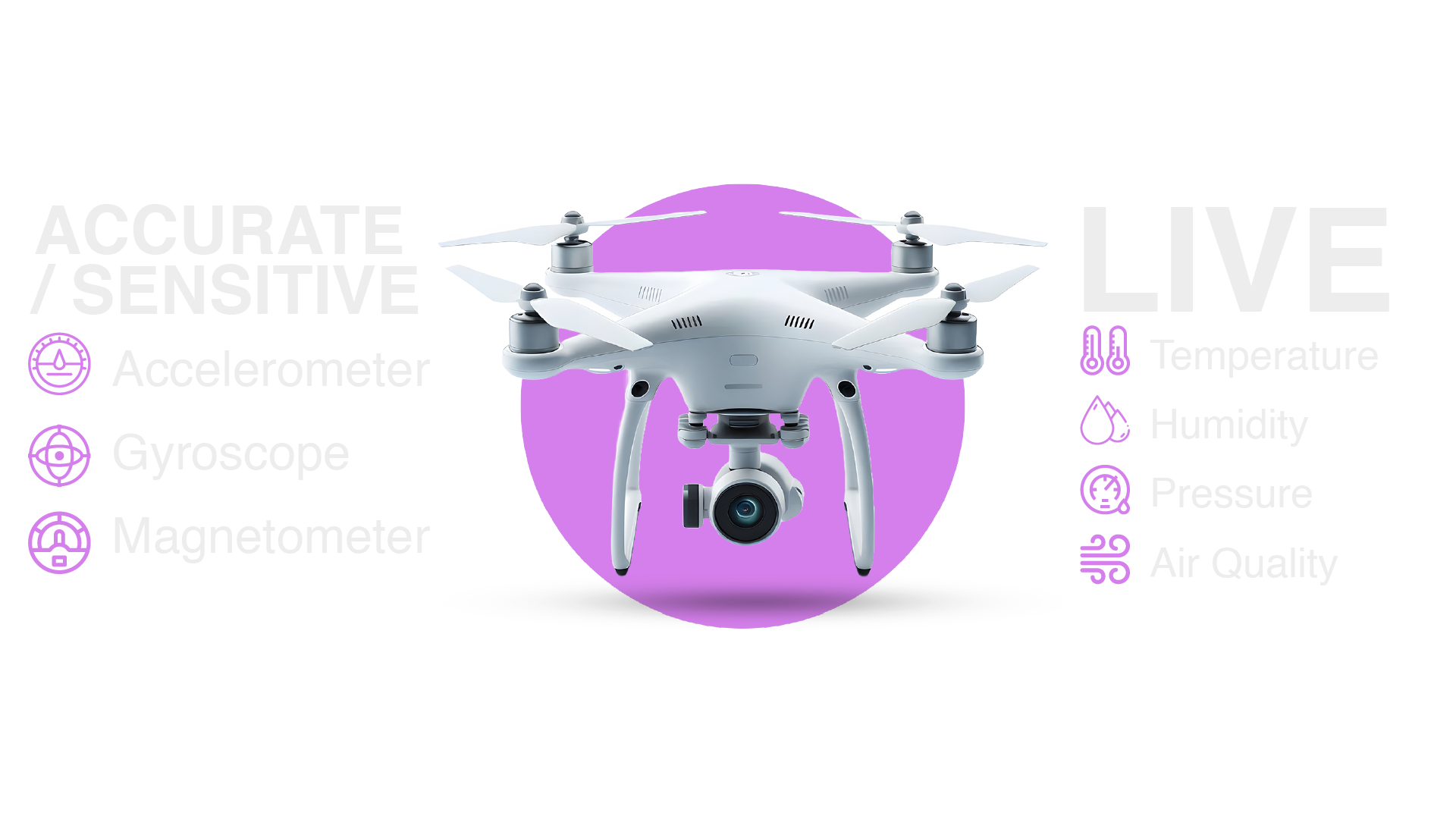
A professional drone needs attitude estimation (IMU), altitude hold (barometer), heading reference (magnetometer), and increasingly, environmental awareness for operations in regulatory compliance zones. Integrating all of these on a single 24mm × 18mm module that mounts cleanly inside an airframe — and connects with a single I2C harness — is not a marginal improvement over separate sensors. It is a fundamentally different build experience.
Environmental Monitoring Networks
Deploying sensor nodes across a geographic area for air quality, temperature, pressure, and humidity monitoring requires nodes that are cheap to build, reliable in the field, and compact enough to deploy in varied locations. All-in-one sensor modules make this economically viable at scale. Each node needs one module, one microcontroller, one power source, and a communication interface.
This is exactly how the RFOXiA data network operates. Users deploy the RFOXiA Integrated Sensors Module as part of their hardware stack, stream verified environmental data to RFOXiA servers, and earn daily rewards for contributing to the network — a real-world application where integration density directly enables the deployment economics.
Robotics
Robots need motion sensing, orientation awareness, and increasingly, environmental context. A robot operating in an industrial environment that monitors air quality alongside its positional state requires all of these sensor types in a package that does not add meaningful weight or volume to the platform. An all-in-one module solves this cleanly.
Wearables and Compact IoT
Any application where PCB space is measured in square millimeters — wearable health devices, industrial badges, asset trackers, smart agricultural sensors — benefits from the extreme compactness of integrated modules. The 24mm × 18mm form factor of the MultiNav Pro+ Sensors Module opens design possibilities that simply do not exist with separate sensors.
When Separate Sensors Still Make Sense
This post would be incomplete without acknowledging the cases where separate sensors are genuinely the better choice.
Custom silicon selection for niche applications: If you need a very specific IMU with ultra-low noise for seismic sensing, or a pressure sensor rated for extreme depth, the all-in-one option may not match your specification. Specialized applications justify the integration work.
High-volume production with full PCB ownership: At 100,000+ unit production volumes with a mature, stable design, integrating sensor ICs directly onto your main PCB (rather than using a module) reduces per-unit cost meaningfully. This is the correct choice when you are manufacturing at scale and your design is frozen.
Single-sensor applications: If your project needs only a barometer and nothing else, an all-in-one module with seven sensors is overspecified. Use the right tool for the application.
For everything else — prototyping, professional development, field deployment, small-to-medium production, drone systems, robotics, environmental monitoring — the all in one sensor vs separate sensors comparison favors integration by a wide margin.
The RFOXiA Ecosystem Advantage
The MultiNav Pro+ Sensors Module is not a standalone product — it is one node in a vertically integrated development ecosystem.
When you pair the Sensors Module with the RFOXiA BLE Module, you get long-range wireless transmission of live sensor data — up to 5km ground-to-ground, 15-20km man-to-drone — without any internet infrastructure. When you add the GNSS Module, every sensor reading is GPS-tagged with 1.5-meter accuracy at 18Hz. When you add the Power/Program Kit, your entire sensor stack runs for 24 hours on a 5-minute supercapacitor charge.
The RFOXiA Club platform provides AI-assisted firmware generation — describe your sensing application in plain language, receive production-ready firmware — eliminating the months of driver development that separate sensor approaches require.
And for users who deploy their sensor nodes outdoors in the data network configuration, the module's air quality, temperature, humidity, and pressure readings become a revenue source — earning daily rewards for contributing verified environmental data to enterprise buyers who need hyper-local, high-resolution environmental datasets.

This is the full picture of what integration enables — not just simpler wiring, but access to an entire platform that multiplies the value of every sensor reading your module produces.
Specifications Summary: MultiNav Pro+ Sensors Module
| Specification | Value |
|---|---|
| Sensors | 7 (Accel, Gyro, Mag, Temp, Humidity, Pressure, Air Quality) |
| IMU | BMI270 — Bosch Sensortec |
| Magnetometer | TMAG5273C1QDBVR — Texas Instruments |
| Barometer | LPS22HHTR — STMicroelectronics |
| Humidity/Temperature | MVH4003D — MEMSVision |
| Air Quality | ZMOD4510AI4R — RENESAS |
| Communication | I2C (single bus, dedicated addresses) |
| Form Factor | 24mm × 18mm |
| Certification | FCC Certified |
| Price | $39 |
Final Verdict: All in One Sensor vs Separate Sensors
The answer depends on your context — but for the vast majority of professional embedded development applications, the all-in-one integrated module wins on every dimension that matters in the real world: build time, connection reliability, space efficiency, firmware complexity, and total cost of ownership.
Separate sensors are the right choice when your application demands silicon that no integrated module provides, or when you are manufacturing at volumes where per-unit BOM optimization justifies the engineering investment.
For drone builders, robotics engineers, IoT developers, environmental researchers, and anyone building professional wireless hardware — the RFOXiA Integrated Sensors Module delivers a fully validated, FCC-certified, seven-sensor stack in a 24mm × 18mm form factor at $39. That is the result of the component selection, bus architecture, and mechanical engineering work already done — so you can focus on building what only you can build.
Ready to add professional-grade environmental and motion sensing to your next build? The MultiNav Pro+ Sensors Module ships as a standalone product or as part of the complete RFOXiA Developer Bundle — including BLE Module, GNSS Module, Power/Program Kit, and full platform access. Visit rfoxia.com to learn more.
Written by: Moamen Mohamed LinkedIn