
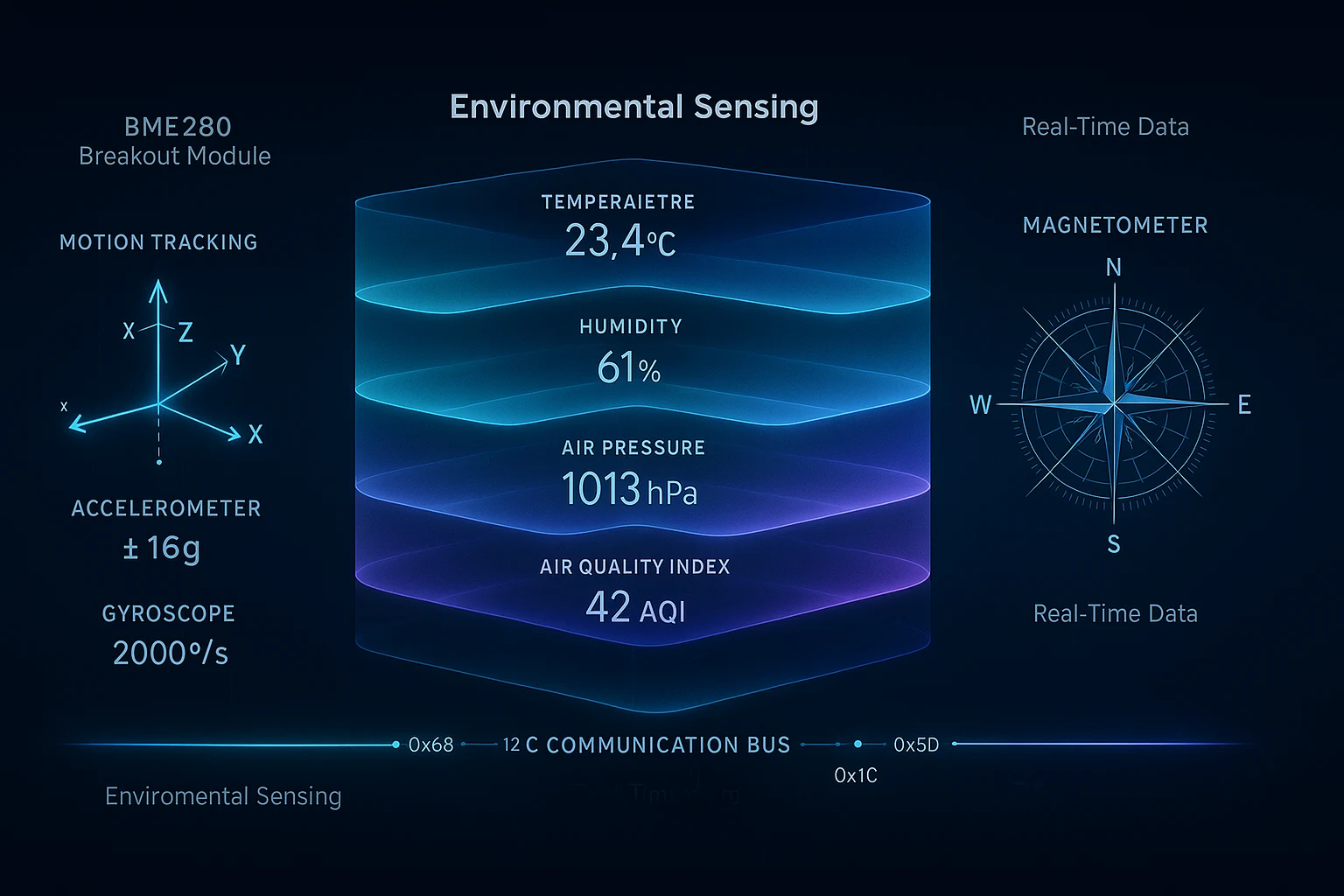
BME280 Breakout Module: Why Makers Are Upgrading to a 7-Sensor All-in-One Alternative
RFOXiA Integrated Sensors Module
The BME280 Breakout Module Has Been the Default — But the Default Is Holding You Back
If you have spent any time in the maker, robotics, or IoT space, you already know the BME280 breakout module. It is everywhere. Temperature, humidity, and air pressure on a tiny board for a few dollars — it became the default environmental sensor for a generation of embedded developers. It works. It is supported by nearly every microcontroller framework in existence. There is documentation for it in every language and on every platform.
But here is the honest truth that most tutorials will not tell you: the BME280 breakout module was designed for simple, static applications. A weather station sitting on a desk. A home automation sensor mounted on a wall. A classroom exercise in reading I2C data.
The moment your project starts moving — mounted on a drone, attached to a field robot, deployed in a compact IoT node that needs to understand both its environment and its own orientation — the BME280 breakout module starts showing its limits. You need motion data. You need air quality. You need magnetometer readings for heading. And suddenly you are wiring together four or five separate modules, managing address conflicts on your I2C bus, writing glue code for five different sensor libraries, and hoping your power budget survives the chaos.
There is a better way. And it fits on a board measuring 24mm × 18mm.
What the BME280 Breakout Module Does — and Where It Stops
Let us be precise about what the BME280 actually delivers, because this matters when you are evaluating alternatives.
The BME280 from Bosch Sensortec provides:
- Temperature measurement with ±1°C accuracy in typical conditions
- Relative humidity measurement with ±3% RH accuracy
- Barometric air pressure with ±1 hPa absolute accuracy
For a $3–$8 breakout board, that is genuinely impressive. It communicates over I2C or SPI, it draws minimal current, and it fits into nearly any design. For a beginner project or a simple deployed sensor node, you cannot argue with the value proposition.
But the BME280 breakout module gives you exactly three data streams. It tells you nothing about:
- Motion — is your platform stable, vibrating, tilting, spinning?
- Heading — which direction is your drone or robot pointing?
- Air quality — is the environment safe, polluted, chemically contaminated?
For consumer weather stations, none of that matters. For professional drones, field robots, environmental research deployments, and data network nodes that need to earn verified rewards — every one of those missing data points is a gap in your capability.
Introducing the MultiNav Pro+ Sensors Module: Seven Sensors, One Board
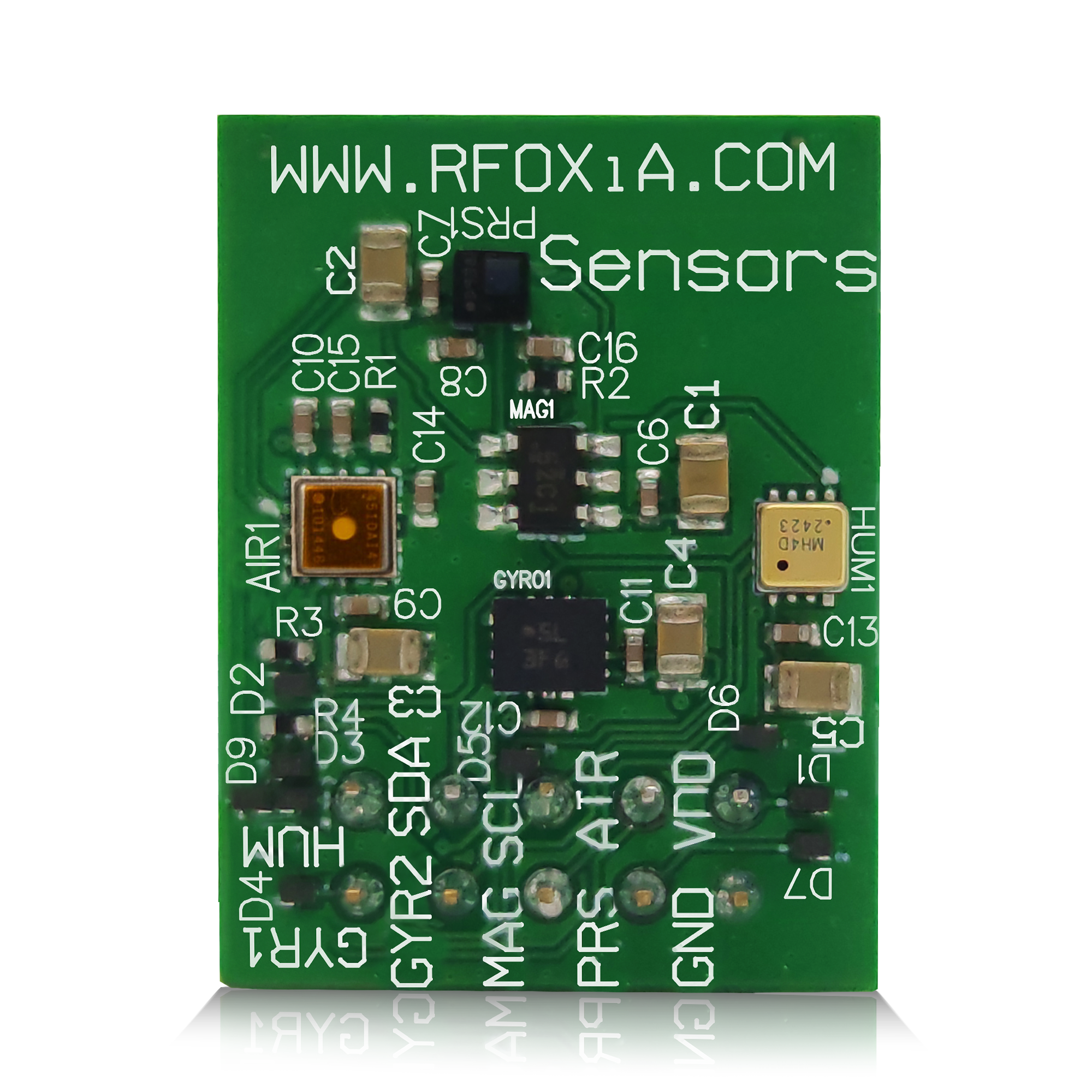
The RFOXiA Integrated Sensors Module was built specifically to solve the problem that every serious embedded developer eventually runs into: you need more than three sensors, but you do not want three separate boards.
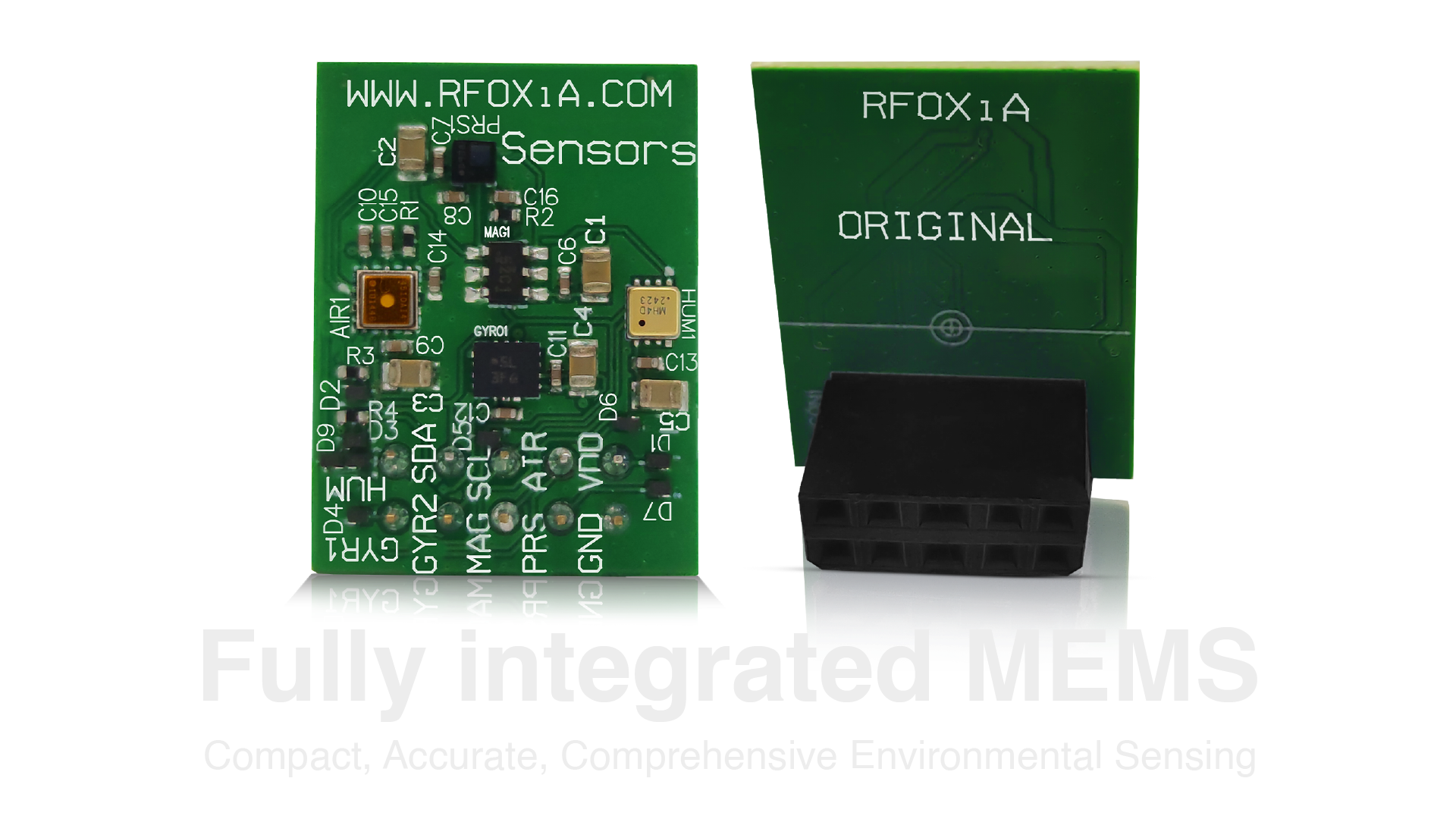
The MultiNav Pro+ Sensors Module integrates seven fully operational sensors onto a single 24mm × 18mm PCB:
- Accelerometer — 3-axis, high-resolution inertial measurement
- Gyroscope — 3-axis angular rate sensing for rotation and stability
- Magnetometer — 3-axis magnetic field sensing for compass heading
- Air Temperature — ambient environmental temperature
- Air Pressure — barometric pressure with altitude derivation capability
- Humidity — relative humidity for environmental characterization
- Air Quality — gas-phase pollutant detection for outdoor and indoor environments
This is not a module that squeezed seven sensors onto one board by cutting corners on the sensor selection. Every component was chosen from professional-grade suppliers. Every sensor is fully addressable over I2C. And the entire module carries FCC certification — the credential that separates hardware you can actually ship and deploy from prototype-grade components.
The Sensor Lineup: Professional Components, Not Hobby Compromises
When you move beyond the BME280 breakout module, component quality matters. Here is exactly what is inside the MultiNav Pro+ Sensors Module.
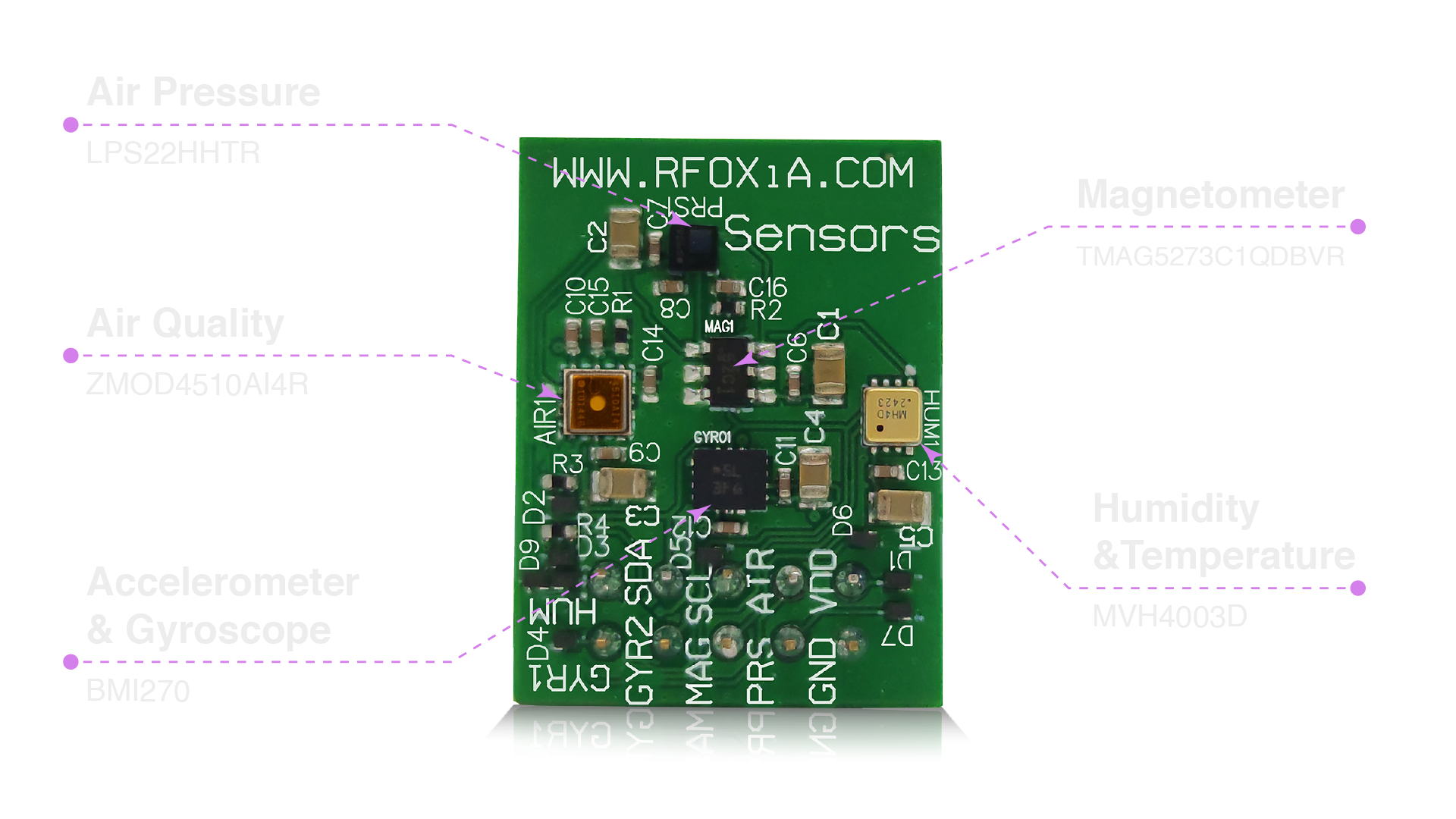
BMI270 — Bosch Sensortec (Accelerometer & Gyroscope)
The BMI270 is the same IMU family used in professional consumer electronics and demanding robotics applications. It delivers ultra-low noise performance across its full range, making it suitable for stabilization algorithms, gesture recognition, and vibration analysis on moving platforms. This is not a $1 clone accelerometer — it is the same Bosch Sensortec engineering behind professional-grade wearables and drones.
TMAG5273C1QDBVR — Texas Instruments (Magnetometer)
Texas Instruments designed the TMAG5273 for applications that demand precise, low-power magnetic sensing. In the MultiNav Pro+, it provides 3-axis magnetic field measurements that enable heading computation, motor position sensing, and navigation support. For drone builders and robotics developers, this is the sensor that answers the question: which way is forward?
LPS22HHTR — STMicroelectronics (Air Pressure)
STMicroelectronics builds the LPS22HHTR for applications where size and precision both matter. It delivers absolute pressure measurements with 260–1260 hPa range and noise performance suitable for altitude tracking on fast-moving platforms. On a drone, this feeds altitude hold algorithms. In a deployed environmental node, it contributes barometric pressure data to your data stream.
MVH4003D — MEMSVision (Humidity & Temperature)
The MEMSVision MVH4003D delivers high-accuracy relative humidity and temperature sensing in a compact MEMS package. In environmental monitoring applications — particularly in outdoor deployments where conditions vary widely — accurate humidity and temperature data is foundational.
ZMOD4510AI4R — Renesas (Air Quality)
This is the sensor that makes the MultiNav Pro+ genuinely unique in the maker ecosystem. The Renesas ZMOD4510 is a gas-phase pollutant sensor designed specifically for outdoor air quality monitoring. It detects ozone and nitrogen dioxide — the compounds that define outdoor air quality standards — using Renesas's proprietary metal oxide semiconductor technology. No BME280 breakout module or basic environmental sensor board comes close to this capability.
I2C Communication: Engineered for Simplicity
One of the most common frustrations when building multi-sensor systems is I2C address management. Stack several modules together and you quickly encounter address conflicts — two sensors trying to speak on the same address, requiring you to modify hardware jumpers, add address translation chips, or split your sensor bus into multiple channels.
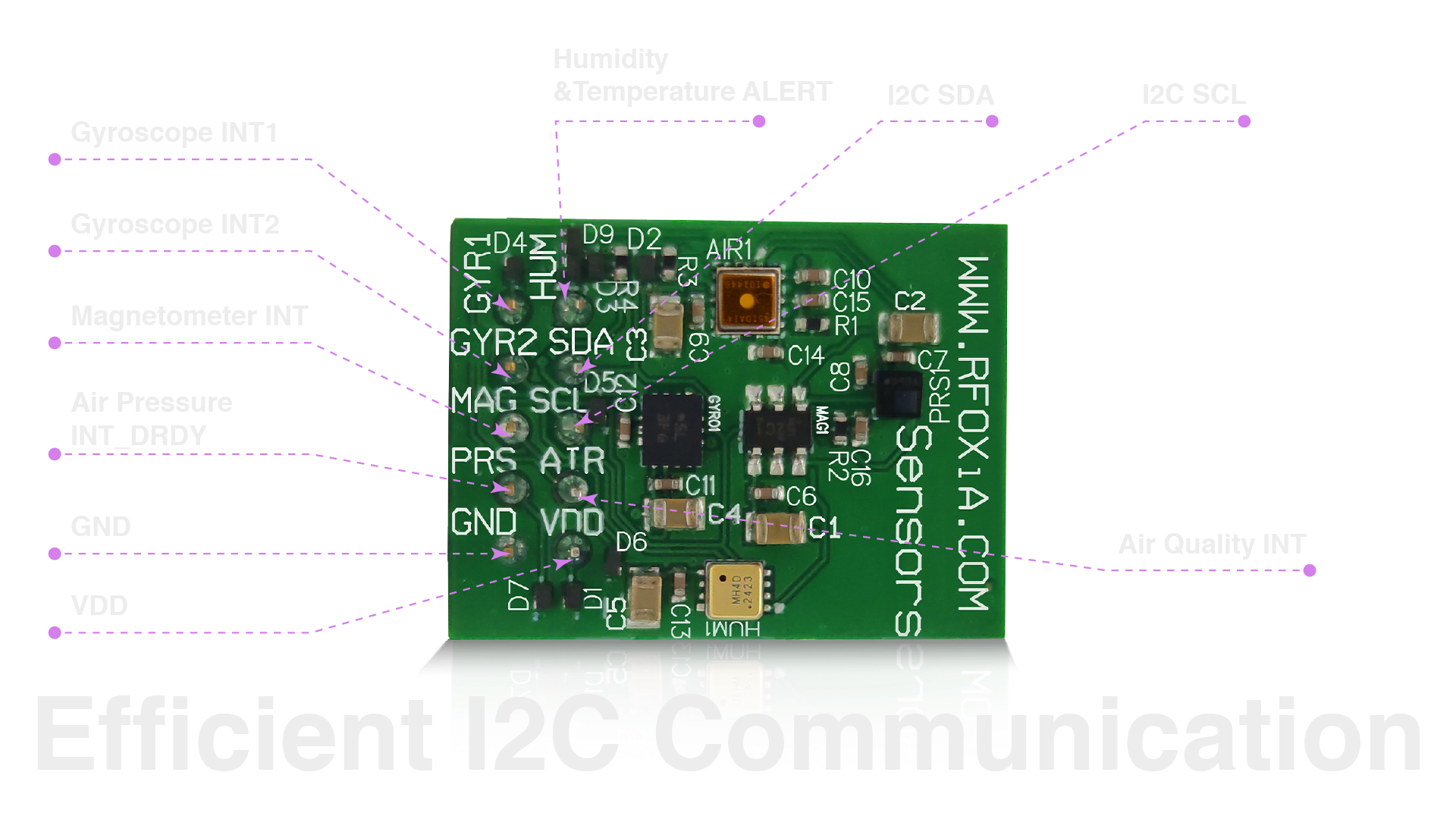
The MultiNav Pro+ Sensors Module was designed to eliminate this problem entirely. All seven sensors share a single I2C line, with each sensor assigned a dedicated, non-conflicting address. The result:
- One cable runs from your microcontroller to the sensor module
- No address conflicts between sensors on the same bus
- No additional hardware required for bus management
- Simplified firmware — one I2C peripheral handles all seven sensors
- Clean integration into any microcontroller platform that supports standard I2C
For developers who have spent hours debugging I2C address conflicts across separate breakout boards, this design decision alone is worth the upgrade from a piecemeal BME280 breakout module setup.
Compact Form Factor: Built for Real Applications
Measuring 24mm × 18mm, the MultiNav Pro+ Sensors Module was designed with real deployment constraints in mind.
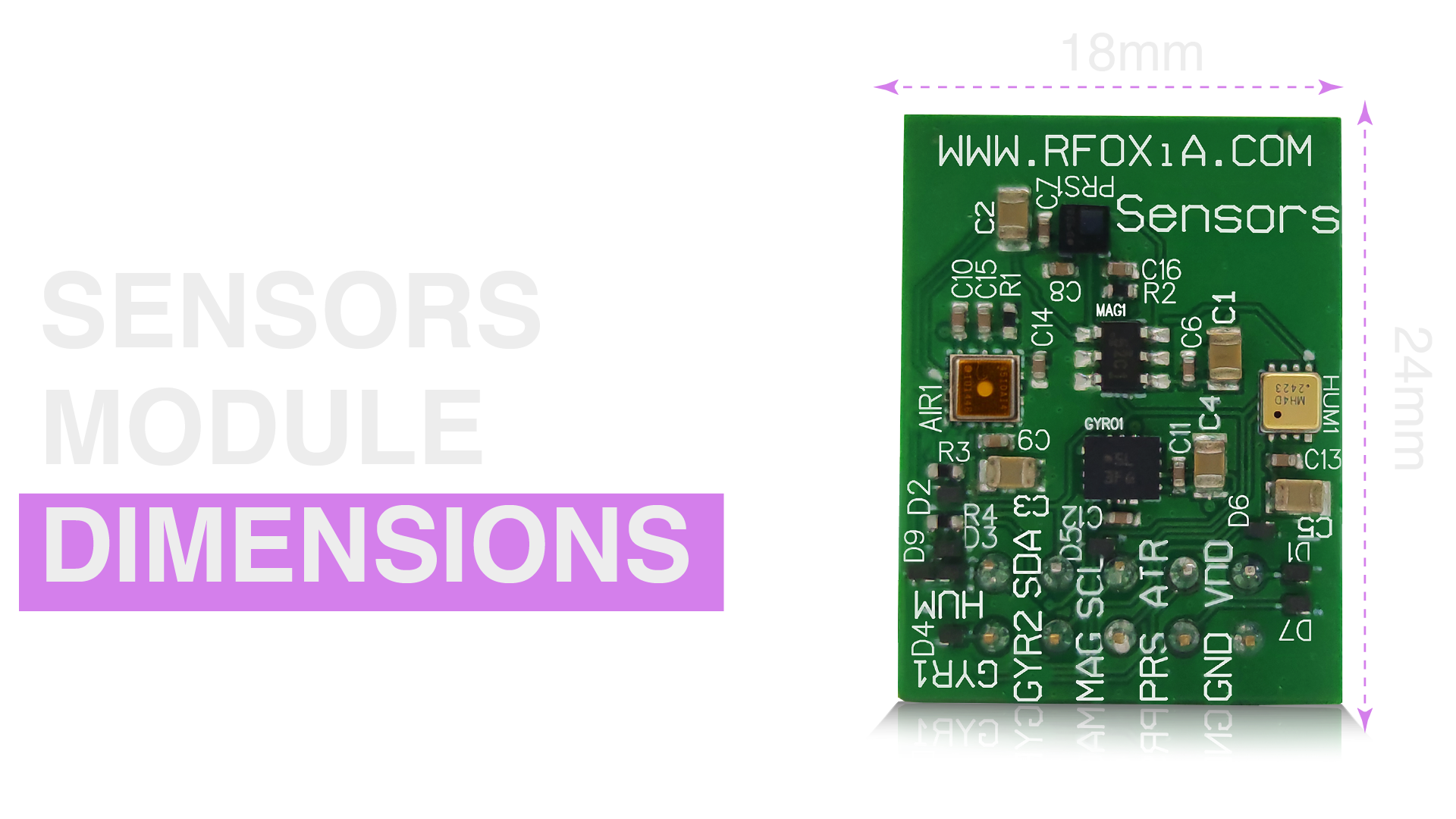
For context: a typical drone frame has extremely limited space for electronics. A compact IoT enclosure designed for outdoor deployment cannot accommodate a stack of separate breakout boards with their associated wiring. Wearable devices are constrained by definition.
At 24mm × 18mm, the MultiNav Pro+ Sensors Module is smaller than a standard postage stamp. It delivers seven professional-grade sensors in a footprint that actually fits into the projects where those sensors are most useful.
Compare this to assembling equivalent capability from individual BME280 breakout module boards plus separate IMU, magnetometer, and air quality breakouts: you are looking at five separate boards, five sets of header pins, and a wiring harness that will fail long before your project does.
Real-Time Environmental Data for Live Applications
The MultiNav Pro+ Sensors Module was built for applications that need data now — not buffered, not averaged over long intervals, not sampled once per minute.
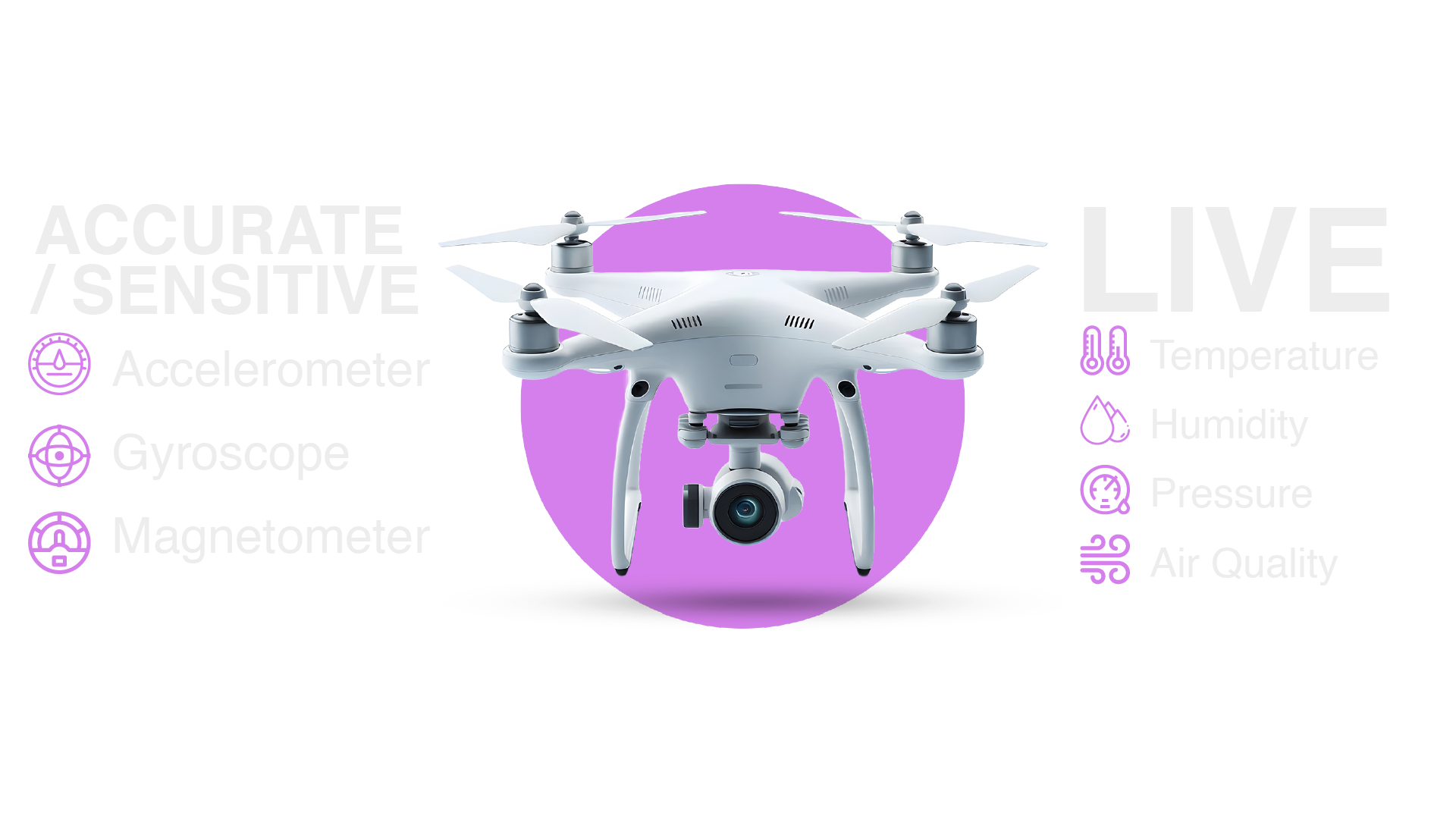
For drone stabilization, your flight controller needs IMU data at hundreds of Hz. For environmental monitoring nodes contributing to the RFOXiA data network, real-time sensor streams are what earn verified daily rewards. For robotics applications, real-time environmental awareness — combined with motion sensing — enables reactive behavior that a static BME280 breakout module reading simply cannot support.
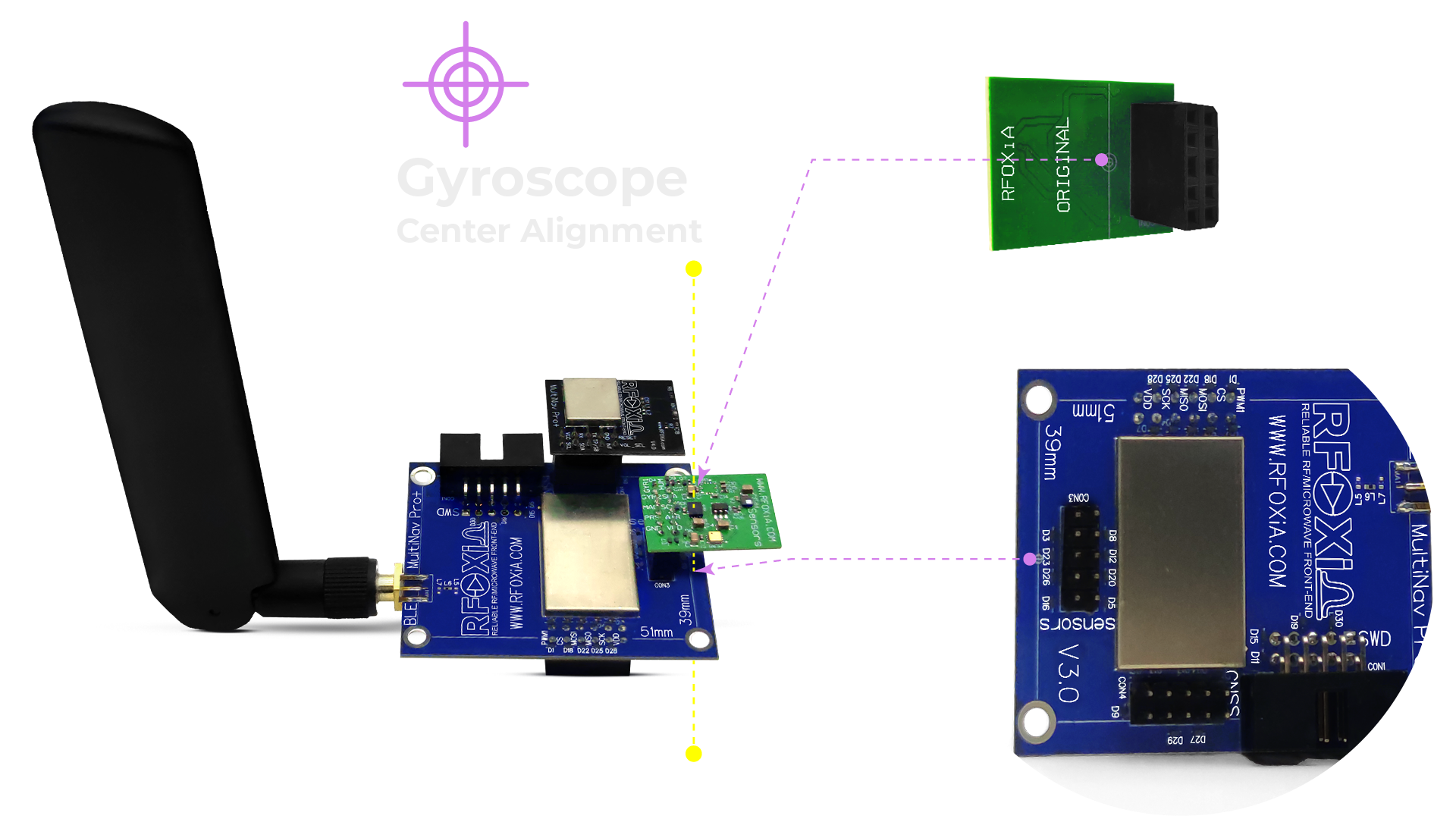
When paired with the full RFOXiA ecosystem — including the MultiNav Pro+ BLE Module for 5km ground-to-ground or 20km man-to-drone wireless communication — your sensor node becomes a live-streaming environmental monitoring platform with real-world range.
Applications: Where the MultiNav Pro+ Sensors Module Belongs

Professional Drone Development
Drone builders need IMU data for stabilization, magnetometer data for heading, barometric data for altitude hold, and environmental data for payload applications. The MultiNav Pro+ delivers all of it on one module that fits in the tightest airframe.
Environmental Research and Field Monitoring
Researchers deploying sensor networks in the field cannot afford to manage five separate breakout boards per node. A compact, integrated module with air quality, humidity, temperature, pressure, and motion sensing in one package dramatically simplifies node design, deployment, and maintenance.
RFOXiA Data Network Contribution
The RFOXiA data network rewards verified environmental data contributors with up to $0.40 per day per node. The data network requires five verified data points — temperature, humidity, pressure, air quality, and GPS location — all of which the MultiNav Pro+ Sensors Module provides (with the GNSS Module handling location verification). Pioneer network members lock in higher reward rates for contributing early.
Industrial IoT
Industrial environments benefit from integrated motion and environmental sensing for equipment monitoring, predictive maintenance, and safety applications. The FCC certification on the MultiNav Pro+ Sensors Module means it can be incorporated into commercial products without additional certification effort.
Smart City and Urban Monitoring
Smart city deployments require distributed sensor nodes that can characterize environmental conditions at street level — the kind of hyper-local resolution that weather stations and public APIs cannot provide. The MultiNav Pro+ Sensors Module, deployed in quantity, creates the dense sensing network that enterprise data buyers are actively looking to source.
Wearable Technology
At 24mm × 18mm, the module is suitable for wearable applications requiring environmental awareness combined with motion tracking. Industrial safety wearables, sports performance monitors, and research instrumentation all benefit from integrated sensing at this form factor.
The Complete RFOXiA Ecosystem Advantage
The MultiNav Pro+ Sensors Module is designed to operate as part of the broader RFOXiA ecosystem — and that ecosystem is what separates it from any standalone BME280 breakout module alternative.
RFOXiA Club provides the developer platform around your hardware: AI firmware generation that turns a plain-language description of your application into production-ready code, a developer community, documentation, and a command center for live device control and data streaming sessions.
RFOXiA Connect (Android live, iOS pending) gives you a mobile interface for live sensor data visualization, GPS tracking, and drone/robot control — all without an internet connection, over the BLE module's 20km range.
The Developer Bundle packages the Sensors Module together with the BLE Module (5–20km wireless range), GNSS Module (1.5m accuracy, 18Hz fix rate), and Power/Program Kit (5-minute charge, 24-hour runtime) into a complete wireless sensing platform for $199.
No collection of BME280 breakout module boards, wireless modules from different manufacturers, and separately sourced power solutions can match the integration, the range, or the ecosystem support of the RFOXiA Developer Bundle.
Pricing and Availability
The MultiNav Pro+ Sensors Module is available at $39 — a price point that would be remarkable for any single professional-grade sensor, let alone seven integrated onto a certified module.
For developers ready to move beyond the limitations of the BME280 breakout module and build systems that are actually deployment-ready, the RFOXiA Integrated Sensors Module is available now with 150 units in stock.
New RFOXiA Club members receive a $10 welcome credit on signup — applicable toward any hardware purchase, including the Sensors Module.
Frequently Asked Questions
Is the MultiNav Pro+ Sensors Module compatible with Arduino and Raspberry Pi?
Yes. The module communicates over standard I2C, which is supported by virtually every microcontroller and single-board computer platform. Each of the seven sensors has established library support for Arduino, MicroPython, and other common embedded frameworks.
How does it compare to using a BME280 breakout module with a separate IMU board?
A BME280 breakout module combined with a separate IMU, magnetometer, and air quality sensor gives you equivalent sensor coverage — but at the cost of four separate boards, multiple wiring connections, potential I2C address conflicts, significantly larger footprint, and no FCC certification on the combined assembly. The MultiNav Pro+ Sensors Module resolves all of those problems in one integrated, certified package.
Can I use the Sensors Module with the RFOXiA data network to earn rewards?
Yes. Deploying the Sensors Module as an outdoor environmental monitoring node — with GNSS Module location verification — qualifies you for RFOXiA data network rewards of up to $0.40 per verified complete data session per day. Early contributors earn Pioneer rates that are locked in permanently.
Is the module FCC certified?
Yes. The MultiNav Pro+ Sensors Module carries FCC certification, enabling incorporation into commercial products and deployment in the United States without additional regulatory work.
What microcontroller does the module require?
The Sensors Module is microcontroller-agnostic. Any platform with an I2C peripheral can communicate with the module. It integrates directly with the RFOXiA BLE Module and the full Developer Bundle hardware stack.
The Bottom Line: Move Beyond the BME280 Breakout Module
The BME280 breakout module served a generation of makers well. For simple environmental sensing on static platforms, it remains a solid, affordable choice.
But if your project moves, if it needs heading data, if it operates outdoors where air quality matters, if you want to contribute to a data network that pays you back, or if you simply want to stop wiring together five separate boards — the BME280 breakout module is not the right tool.
The MultiNav Pro+ Sensors Module delivers professional-grade sensing across all seven environmental and motion dimensions, in a 24mm × 18mm FCC-certified package, on a single I2C line, for $39.
That is not an incremental upgrade. That is a different category of hardware entirely.
Explore the RFOXiA Integrated Sensors Module and claim your $10 welcome credit when you join RFOXiA Club — free access, no hardware required to get started.
Written by: Moamen Mohamed LinkedIn