

Cheap High Accuracy GPS Module That Actually Delivers: The MultiNav Pro+ GNSS Module Review
The Best Cheap High Accuracy GPS Module for Builders, Drone Pilots, and IoT Developers
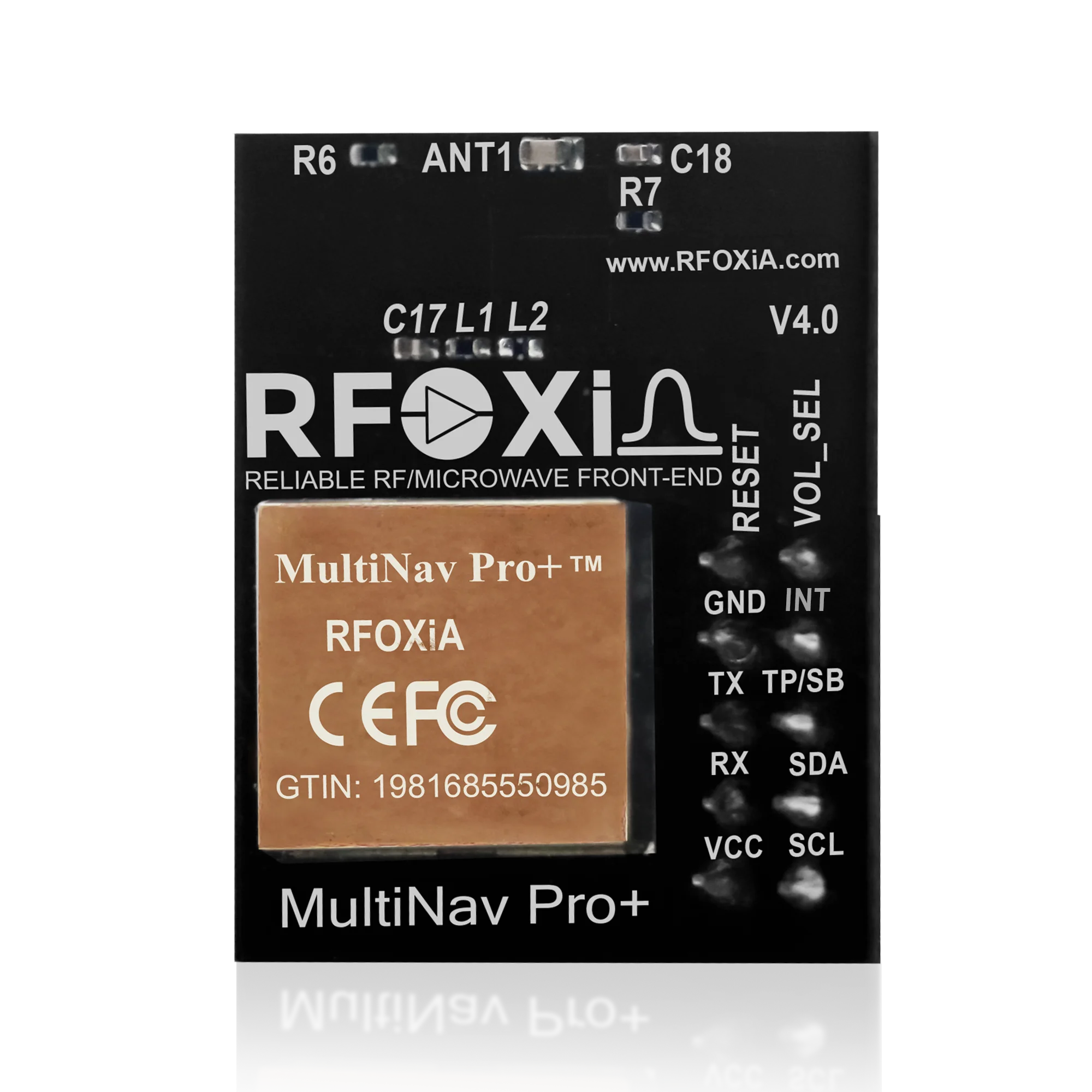
For years, hardware developers and drone builders have faced an uncomfortable trade-off: either accept the mediocre 3–10 meter accuracy of budget GPS modules, or spend hundreds — sometimes thousands — of dollars on professional-grade GNSS solutions. The middle ground barely existed.
That gap is exactly where the RFOXiA MultiNav Pro+ steps in.
At just $49, the MultiNav Pro+ delivers 1.5-meter accuracy, an 18Hz fix rate, and concurrent support for all four major satellite constellations — GPS, Galileo, GLONASS, and BeiDou. It is, without question, the most capable cheap high accuracy GPS module available to makers, engineers, and developers today.
This article breaks down exactly what makes the MultiNav Pro+ exceptional, who it's built for, how it compares to the alternatives, and why choosing the right GNSS module can make or break your next project.
Why Most Budget GPS Modules Fall Short
Before we dive into the MultiNav Pro+'s specs, it's worth understanding the landscape.
The vast majority of affordable GPS modules in the $5–$20 range are built around older chipsets with significant limitations:
- Accuracy: 3–10 meters under ideal conditions, far worse in urban environments or under tree canopy
- Fix rate: 1Hz–5Hz — completely inadequate for fast-moving platforms like drones, RC aircraft, or vehicles
- Constellation support: Often GPS-only, or GPS + GLONASS at best
- First fix time: 30 seconds to several minutes in cold start conditions
- Filtering: Minimal RF filtering, highly susceptible to interference from onboard electronics
For a stationary IoT sensor that just needs to log a location once per hour, these limitations are manageable. But for precision agriculture, drone navigation, high-speed tracking, robotics, or any application where position accuracy and update rate actually matter — budget modules are a liability.
The professional-grade alternatives — u-blox ZED-F9P modules, Trimble boards, Novatel receivers — solve these problems, but at prices ranging from $150 to several thousand dollars. That's out of reach for most independent developers, small teams, and research projects.
The MultiNav Pro+ was designed specifically to fill this gap.
MultiNav Pro+ GNSS Module: Full Specification Breakdown
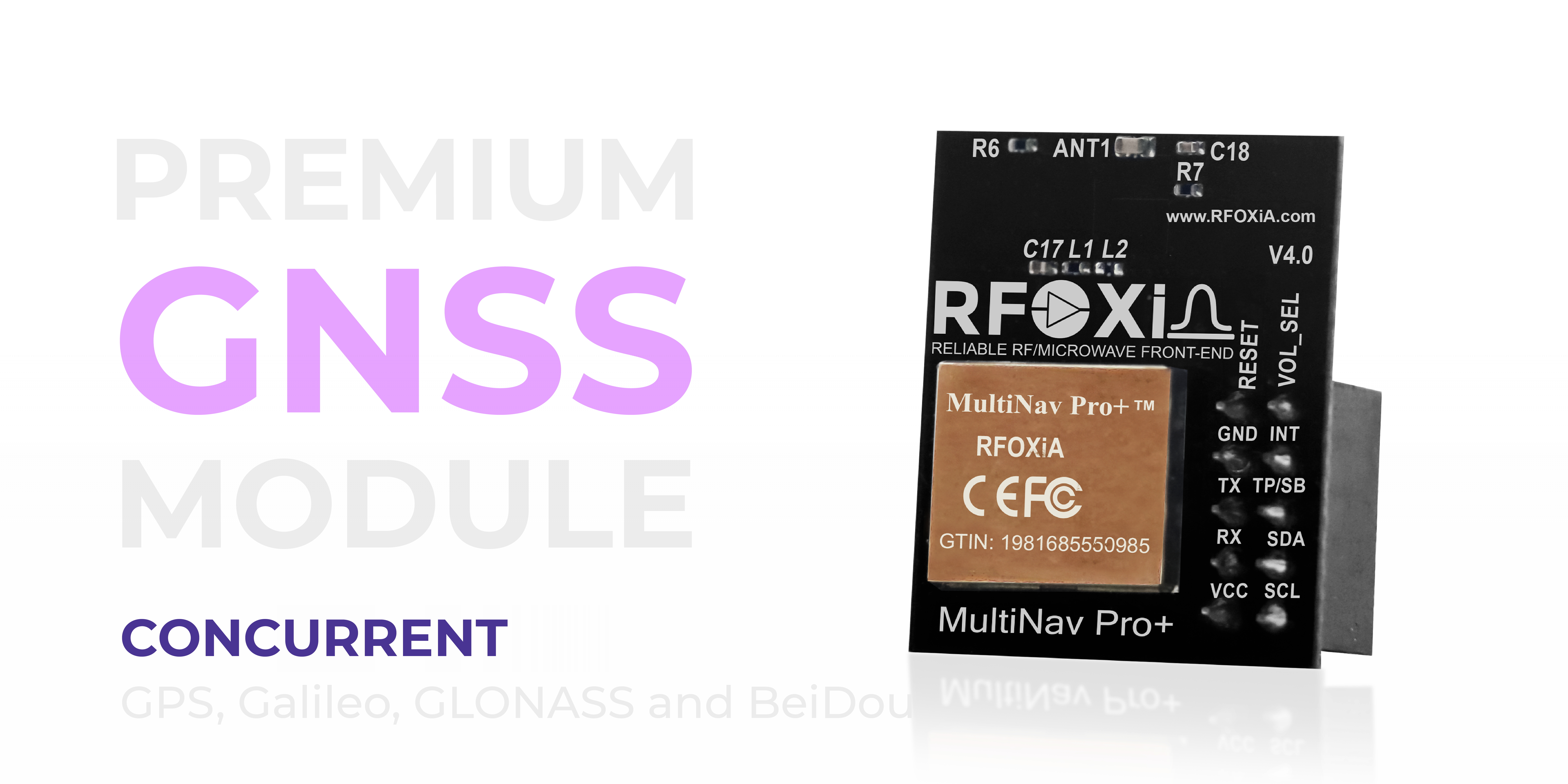
The MultiNav Pro+ is built around the u-blox MIA-M10Q, one of the newest and most capable GNSS chips available at this price tier. Here's what that means in practice:
Accuracy: 1.5 Meters
A 1.5-meter CEP (Circular Error Probable) accuracy means that 50% of your position readings will fall within 1.5 meters of your true location. In practical terms, this is the kind of precision that makes the difference between a drone landing on a pad or 3 meters away from it. It's the difference between a tracked asset appearing on the correct side of a road or in a neighboring property.
This level of accuracy typically requires either SBAS correction signals or high-quality antenna design and RF filtering. The MultiNav Pro+ achieves it through both — integrated antenna optimization and RFOXiA's proprietary RF/microwave microstrip filter technology.
Fix Rate: 18Hz

This is arguably the specification that separates the MultiNav Pro+ most dramatically from competing budget modules.
An 18Hz fix rate means the module is updating your position 18 times per second. A standard 1Hz GPS module updates once per second — which means a drone traveling at 50 km/h moves nearly 14 meters between position updates. At 18Hz, that same drone moves less than 0.8 meters between updates. For any kind of trajectory control, collision avoidance, precision landing, or real-time path following, this matters enormously.
For wearables, sports tracking, vehicle telematics, and autonomous robotics, the 18Hz fix rate is equally critical. It's what makes the difference between smooth, accurate tracking and the jagged, laggy position trails that plague cheaper modules.
First fix time is also worth calling out: 1 second in hot start conditions. Even cold start performance on the MIA-M10Q is dramatically improved over older chipsets.
Concurrent Four-Constellation Support
The MultiNav Pro+ connects simultaneously to:
- GPS — the original US-operated constellation (31 active satellites)
- Galileo — the European constellation (24 satellites, exceptional accuracy)
- GLONASS — the Russian constellation (24 satellites, excellent polar coverage)
- BeiDou — the Chinese constellation (35 satellites, extensive Asian coverage)
Why does simultaneous multi-constellation matter? Two reasons: more satellites in view and redundancy.
With access to all four constellations, the MultiNav Pro+ typically has 20–30 satellites in view at any given time, compared to 8–12 for a GPS-only module. More satellites means better geometry (DOP — dilution of precision) and more robust performance in challenging environments like urban canyons, dense forests, or mountainous terrain.
When individual satellites are obscured or experiencing signal issues, the multi-constellation architecture maintains lock using the remaining systems. For mission-critical applications, this resilience is not optional.
Hardware Design: Compact, Efficient, and Integration-Ready
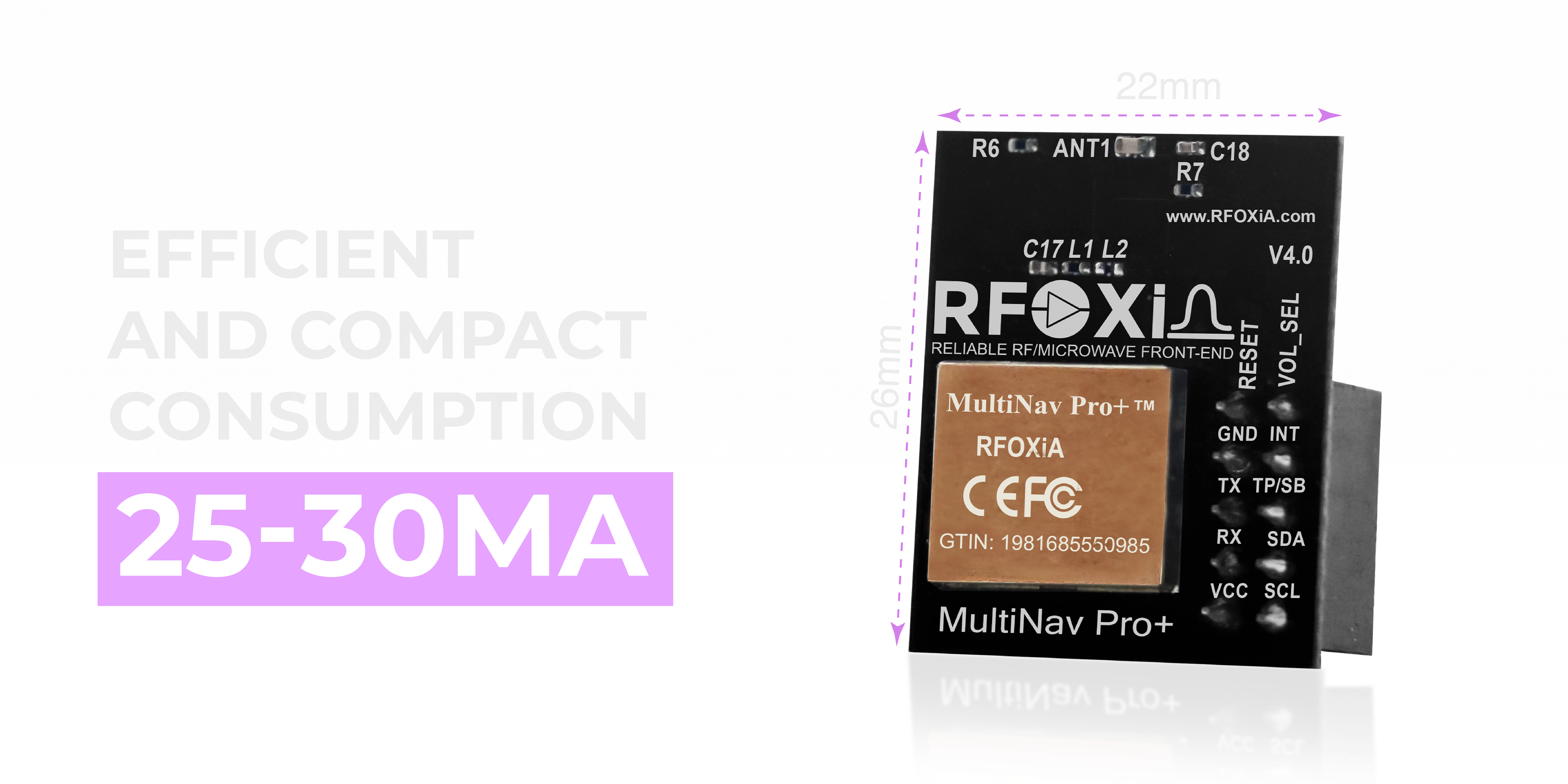
The MultiNav Pro+ measures just 26mm × 22mm — small enough to integrate into wearables, embed in tight drone frames, or mount on compact IoT nodes without dominating the board real estate.
Despite running a four-constellation GNSS engine continuously, the module draws only 25–30mA during active tracking. This is genuinely power-efficient for what the chip is doing, and it means the MultiNav Pro+ can run for extended periods on small batteries or alongside other power-sensitive components without becoming a drain bottleneck.
The integrated high-gain chip antenna means you don't need to design an external antenna into your system — though an external antenna connector is available for installations where the module is enclosed or needs directional sensitivity.
Work voltage is flexible: 1.8V and 3.3V both supported, making the module compatible with essentially every modern microcontroller platform without level-shifting headaches.
Connectivity and Interface Options
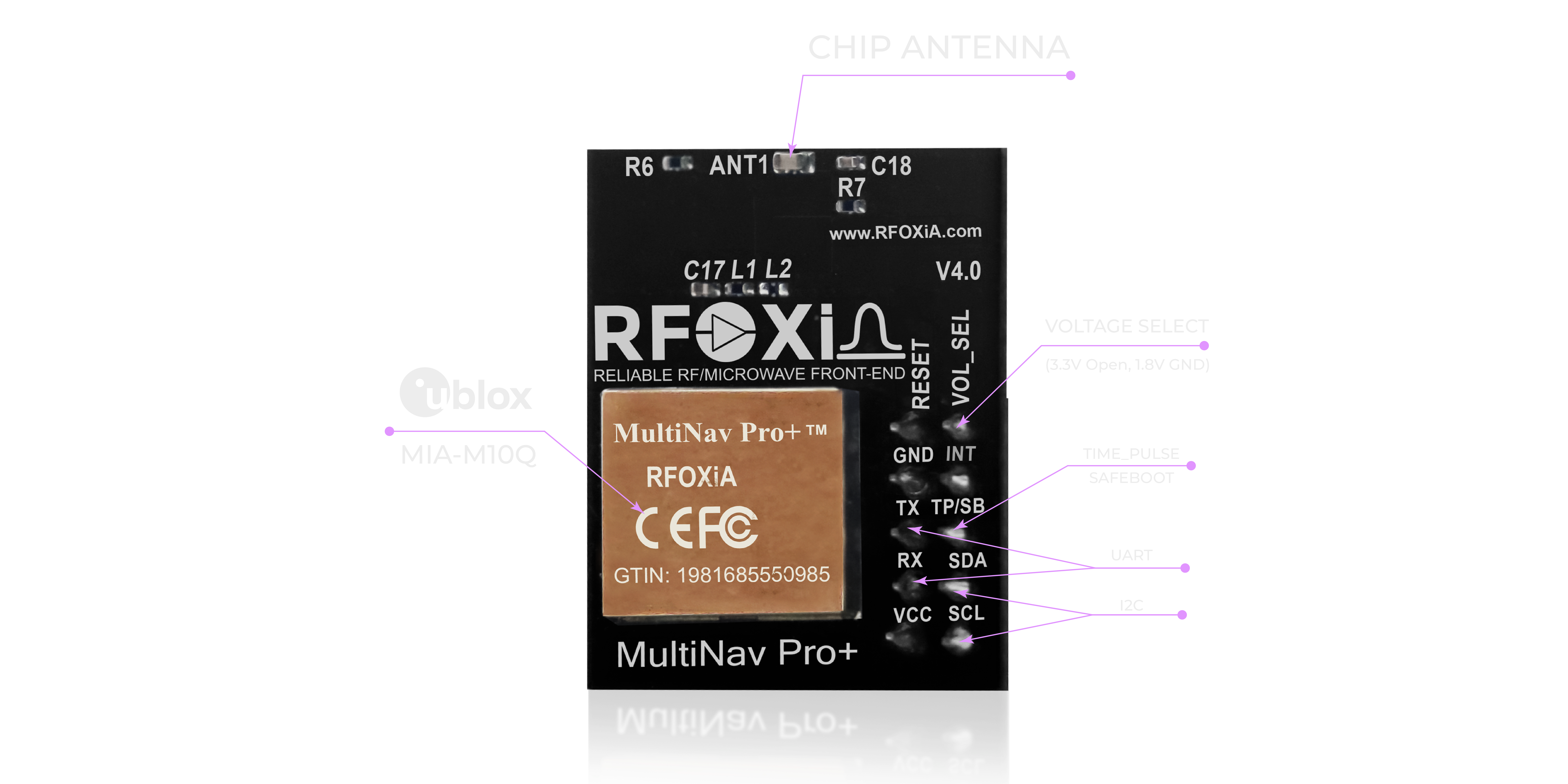
The MultiNav Pro+ supports two standard interfaces:
UART (TX/RX): The most common interface for GPS modules. Works natively with Arduino, STM32, ESP32, Raspberry Pi, and virtually every other development platform. NMEA 0183 sentences (GGA, RMC, VTG, GSA, GSV) are output by default, making the module plug-and-play with any GPS-aware software.
I2C (SCL/SDA): For projects where UART pins are already occupied or where you want to daisy-chain multiple devices on a single bus, I2C support provides real flexibility. This is particularly useful in complex sensor fusion applications where the GNSS module is one of several peripherals sharing a communication bus.
Both interfaces are available simultaneously on the header pins, giving you the option to use whichever suits your application without any configuration jumpers or hardware modifications.
Open Source Driver and Software Ecosystem
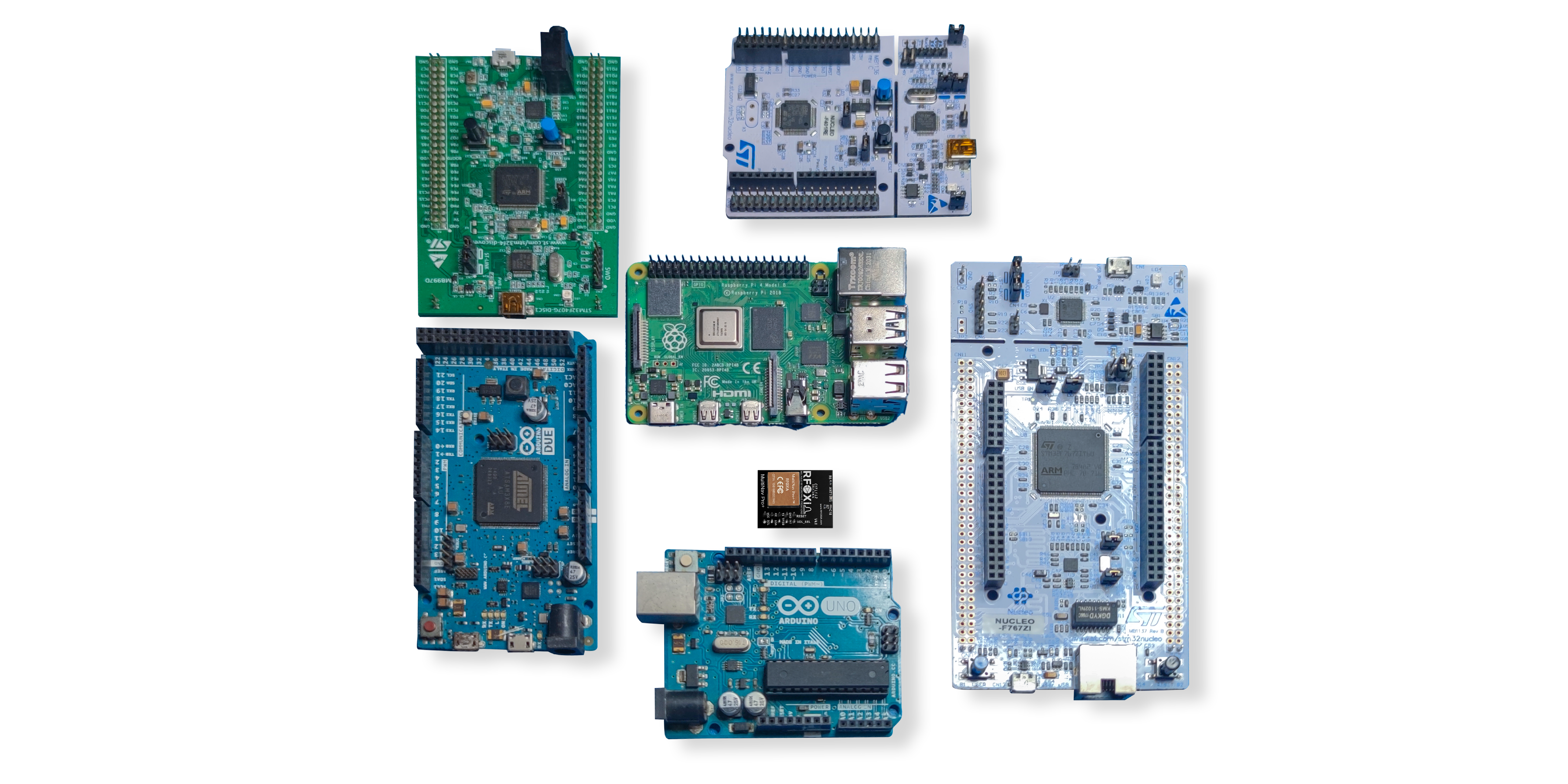
One of the practical advantages of choosing the MultiNav Pro+ over no-name budget modules is the complete open-source software library.
RFOXiA provides a fully open-source C language library that implements the complete NMEA standard protocol command set. The library is structured for easy import into Arduino IDE with no dependency management issues, and works equally well in PlatformIO, STM32CubeIDE, or any other embedded toolchain.
For developers building commercial products, the open-source nature of the driver means you can inspect every line of code, modify behavior, and integrate it into your own firmware without black-box dependencies or licensing concerns.
The library handles:
- NMEA sentence parsing (GGA, RMC, GSA, GSV, VTG)
- Satellite count and signal strength extraction
- Speed, heading, and altitude parsing
- Configuration command generation for power modes and output rate
- I2C and UART abstraction layer
For developers who want to get to a working GPS fix in an afternoon rather than spending days fighting protocol parsers, this library is the difference between a productive session and a frustrating one.
U-Center Software Integration
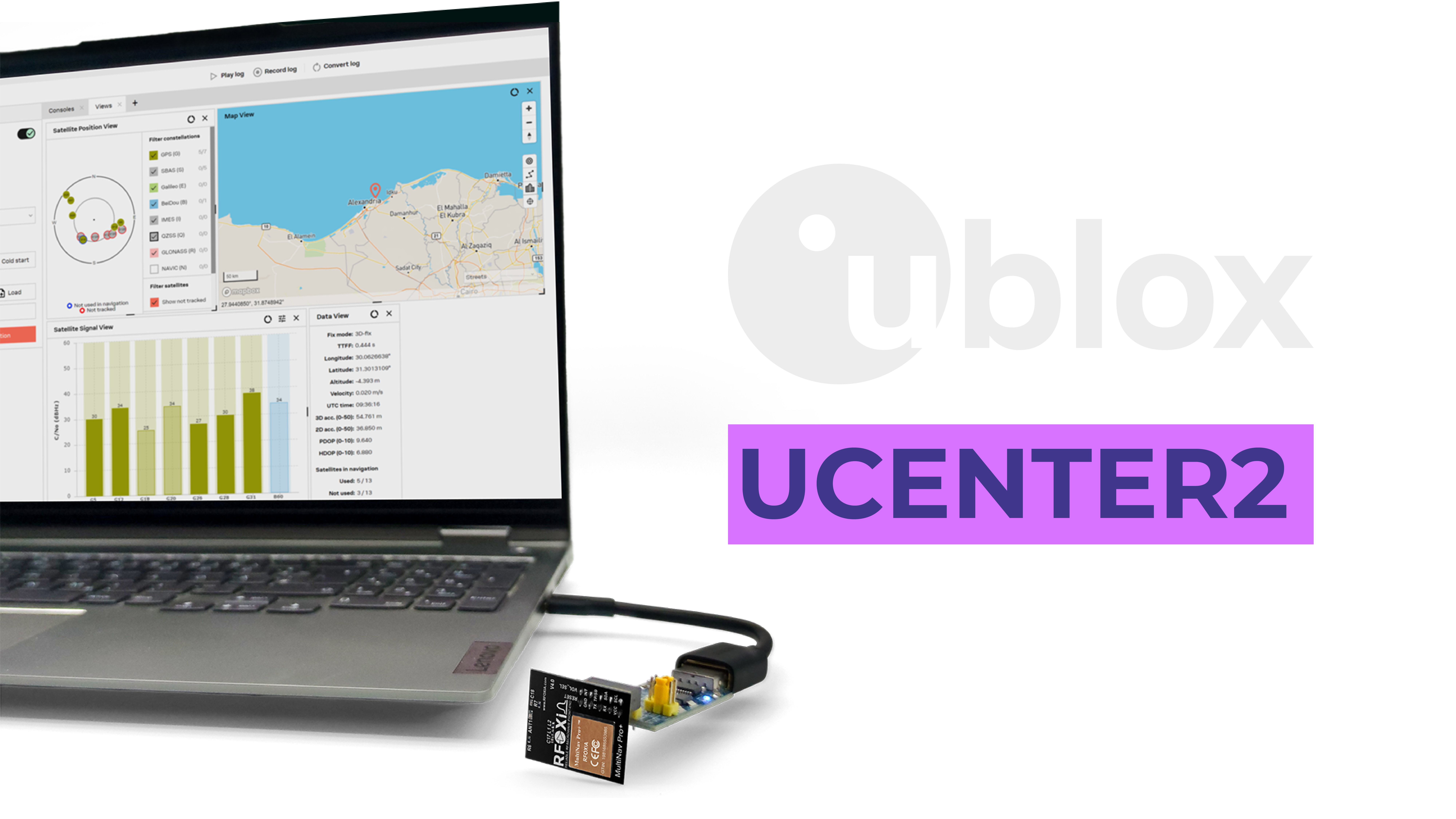
Because the MultiNav Pro+ is built on the u-blox MIA-M10Q, it is fully compatible with u-center — u-blox's professional GNSS evaluation software.
u-center provides a GUI for:
- Satellite sky plot visualization — see exactly which satellites are in view and their signal strength in real time
- Position tracking on a live map — watch your location update at 18Hz with a visual trail
- Configuration — adjust GNSS constellations, output rate, power modes, and NMEA sentence selection
- Data logging — record raw NMEA data and position logs for later analysis
- Spectrum analysis — evaluate the RF environment and identify interference sources
For developers evaluating performance, tuning antenna placement, or troubleshooting positioning issues in a specific environment, u-center is an invaluable tool. The fact that the MultiNav Pro+ unlocks this professional software ecosystem — which u-blox typically reserves for their evaluation kits costing much more — is a meaningful advantage.
Use Cases: What Can You Build With the MultiNav Pro+?

The combination of 1.5m accuracy, 18Hz update rate, and low power consumption makes the MultiNav Pro+ appropriate for a remarkably wide range of applications:
Drone Navigation and Autonomous Flight
The 18Hz fix rate is the critical spec here. Drone flight controllers typically run attitude control loops at 500Hz–1000Hz, and position control loops at 50Hz–100Hz. A 1Hz GPS module is a bottleneck at every layer. The MultiNav Pro+ at 18Hz provides position updates fast enough to support aggressive autonomous maneuvers, precision landing sequences, and accurate waypoint navigation.
Precision Agriculture
Field mapping, variable-rate application guidance, and crop row following all benefit from sub-2-meter accuracy. The MultiNav Pro+ delivers this at a price point that makes sense for small-farm operators and agricultural drone builders who can't justify $500+ RTK modules for every platform.
Asset and Vehicle Tracking
Real-time vehicle tracking, fleet management systems, and asset monitoring nodes all work better with accurate, fast-updating position data. The MultiNav Pro+'s low power draw also makes it viable for battery-powered tracking devices with long field life.
Wearables and Personal Tracking
Sports performance tracking, hiking navigation computers, personal safety devices, and search-and-rescue beacons all benefit from the compact form factor and high fix rate.
IoT and Smart City Applications
Environmental sensor nodes that need verified geographic coordinates, weather monitoring stations, and smart infrastructure sensors all benefit from having accurate, reliable positioning data as part of their data payload.
Research and Education
University research projects, citizen science data collection, and educational platforms all benefit from professional-grade hardware at accessible prices. The open-source driver and u-center compatibility make the MultiNav Pro+ particularly well-suited for academic environments.
The RFOXiA Ecosystem Advantage
The MultiNav Pro+ doesn't exist in isolation. It's part of the broader RFOXiA wireless developer ecosystem, which includes:
- MultiNav Pro+ BLE Module — 5km ground-to-ground, 20km man-to-drone long-range Bluetooth communication
- Sensors Module — 7-sensor environmental monitoring (temperature, humidity, pressure, air quality, IMU, magnetometer)
- Power/Program Kit — supercapacitor-based power with 5-minute charge for 24-hour runtime
- RFOXiA Connect App — iOS and Android mobile control with live GPS map and sensor data display
- RFOXiA Club — developer platform with AI firmware generation, documentation, and community
- Data Network — deploy your sensors and earn passive income from verified data contributions
The Developer Bundle combines all four modules at $199, giving you a complete wireless sensor and communication platform that would cost 5–10x more sourced from separate vendors.
If you're building a drone platform that needs both long-range control and precision navigation, pairing the RFOXiA Accurate GNSS Module with the BLE module gives you a communication and positioning stack that simply doesn't exist elsewhere at this price point.
MultiNav Pro+ vs. Competing GNSS Modules
| Feature | Budget GPS Modules | MultiNav Pro+ | Professional RTK Modules |
|---|---|---|---|
| Accuracy | 3–10m | 1.5m | 1–2cm |
| Fix Rate | 1–5Hz | 18Hz | 5–20Hz |
| Constellations | GPS only | GPS+Galileo+GLONASS+BeiDou | GPS+Galileo+GLONASS+BeiDou |
| First Fix | 30–120s | 1 second | 5–30s |
| Price | $5–$15 | $49 | $150–$2,000+ |
| Open Source Driver | Rarely | Yes | Varies |
| FCC Certified | Often not | Yes | Yes |
| Ecosystem | None | Full RFOXiA ecosystem | None |
The MultiNav Pro+ occupies a position that genuinely didn't exist before: professional performance at maker prices. It delivers accuracy and update rates that rival modules costing 3–4x more, in a compact package with full open-source software support.
For developers who need more than a hobby GPS module but can't justify RTK-grade pricing for every node in their system, the RFOXiA Accurate GNSS Module is the obvious choice.
FCC Certification: Why It Matters for Your Project
One detail worth highlighting explicitly: the MultiNav Pro+ is FCC certified.
This matters for several reasons:
For commercial products: If you're integrating the MultiNav Pro+ into a device you plan to sell in the United States, using an FCC-certified module significantly simplifies your own compliance path. You can often leverage the module's existing certification rather than testing the complete system from scratch.
For professional credibility: FCC certification requires the device to pass conducted and radiated emissions testing. A certified module has been verified to operate without causing interference to other radio systems — important for drone applications operating near other RF equipment.
For distributor and retail channel access: Many professional distributors require FCC certification as a minimum qualification. The MultiNav Pro+'s certification opens doors to distribution channels that uncertified modules simply cannot access.
Getting Started: Quick Integration Guide
Integrating the MultiNav Pro+ into your project is designed to be genuinely fast:
- Connect power: 3.3V and GND to the labeled pins
- Select interface: Connect TX/RX for UART or SCL/SDA for I2C
- Import the library: Download the open-source driver from the RFOXiA resources, import into your IDE
- Initialize: Call the begin() function with your chosen interface and baud rate
- Read data: Access latitude, longitude, altitude, speed, heading, and satellite count through the library's data structures
- Visualize (optional): Connect via USB-UART adapter and open u-center for real-time satellite visualization and configuration
For most standard Arduino or STM32-based projects, you can go from an unboxed module to a working GPS fix in under 30 minutes.
The package includes the MultiNav Pro+ module and a Quick Start Guide with pinout diagrams, interface wiring tables, and sample code to get you running immediately.
Pricing and Where to Buy
The MultiNav Pro+ GNSS Module is priced at $49 — a price that reflects a deliberate commitment to making professional-grade navigation hardware accessible to independent developers, students, small teams, and commercial product builders who can't absorb enterprise hardware costs.
For context: standalone u-blox evaluation kits for the MIA-M10Q chip cost $100–$150 and don't include the open-source driver library, integrated antenna design optimization, or ecosystem compatibility.
At $49, the MultiNav Pro+ is not just a cheap high accuracy GPS module — it's a professional tool priced for the maker community.
You can order the MultiNav Pro+ directly through RFOXiA's product page, where you'll also find full documentation, the open-source library download, and access to the RFOXiA Club developer platform.
New RFOXiA Club members receive $10 in welcome credits on signup — applicable toward any hardware purchase including the MultiNav Pro+.
Final Verdict
If you've been searching for a cheap high accuracy GPS module that doesn't force you to compromise on the specifications that actually matter — accuracy, update rate, constellation support, and software ecosystem — the MultiNav Pro+ is the answer.
1.5-meter accuracy. 18Hz. Four constellations. $49. FCC certified. Open source driver. Ships now.
There is no other module on the market at this price point that delivers this combination. Whether you're building a precision drone, a field research node, a wearable tracker, or a commercial IoT product, the MultiNav Pro+ gives you the positioning performance you need without the budget pain you've come to expect from professional GNSS hardware.
Order the RFOXiA Accurate GNSS Module today and see what 1.5-meter precision actually feels like in your project.
Written by: Moamen Mohamed LinkedIn