
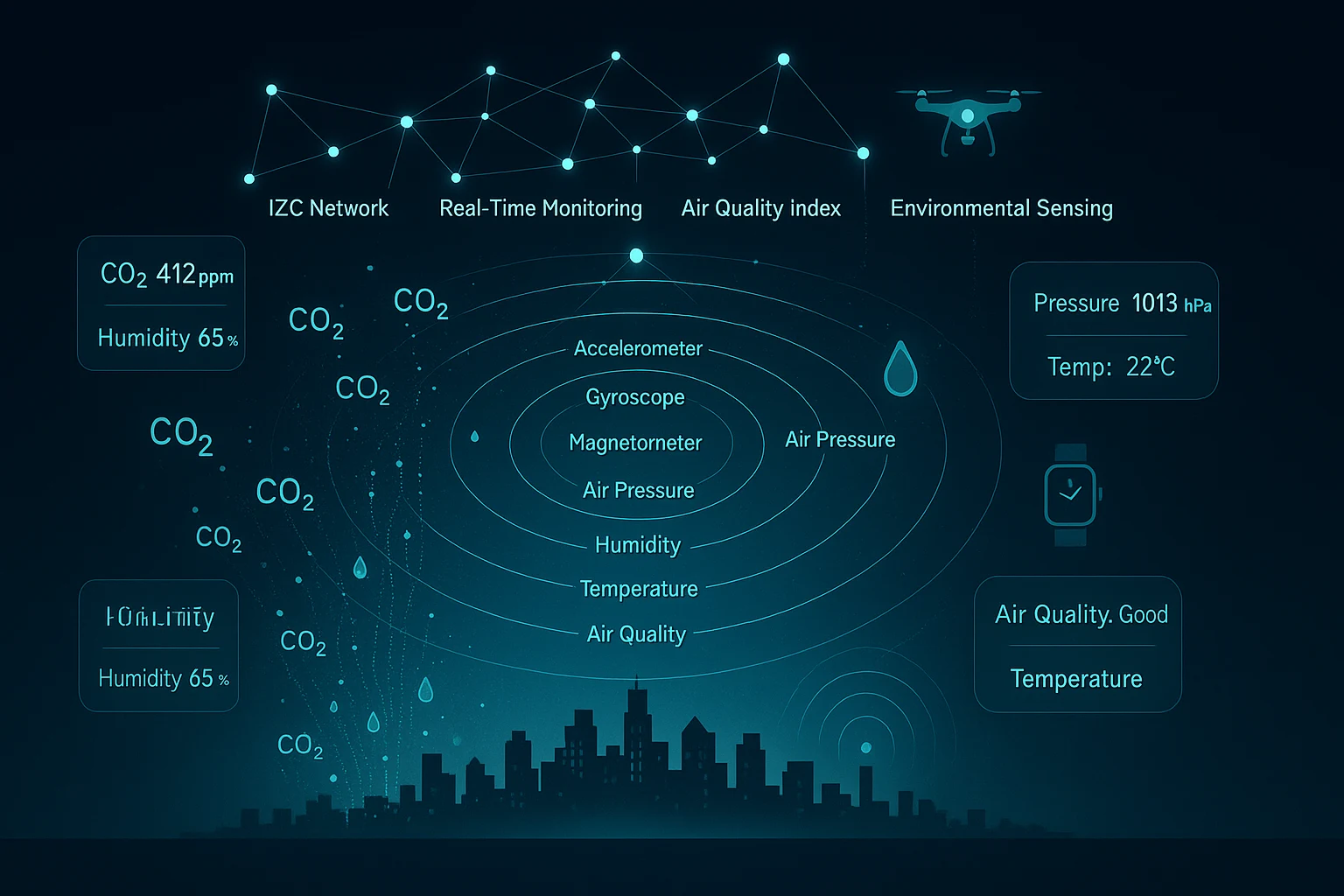
CO2 Sensor Module IoT: Why the MultiNav Pro+ Sensors Module Is the Developer Standard
RFOXiA Integrated Sensors Module
The Complete CO2 Sensor Module IoT Solution for Builders Who Refuse to Compromise
If you have been searching for a CO2 sensor module IoT solution that does not force you to cobble together five different boards, wire up a rats nest of I2C addresses, and debug sensor conflicts for three weekends — you are in the right place.
The RFOXiA MultiNav Pro+ Sensors Module was built specifically to solve that problem. Seven professional-grade sensors. One compact 24mm × 18mm board. A single I2C line. FCC certified. Ready to drop into your drone, your environmental monitoring node, your robotics platform, or your data network deployment.
This guide covers everything you need to know: what the module includes, why the component choices matter, how it integrates into the broader RFOXiA ecosystem, and why it has become the go-to sensor platform for developers who want real data, not toy-grade approximations.
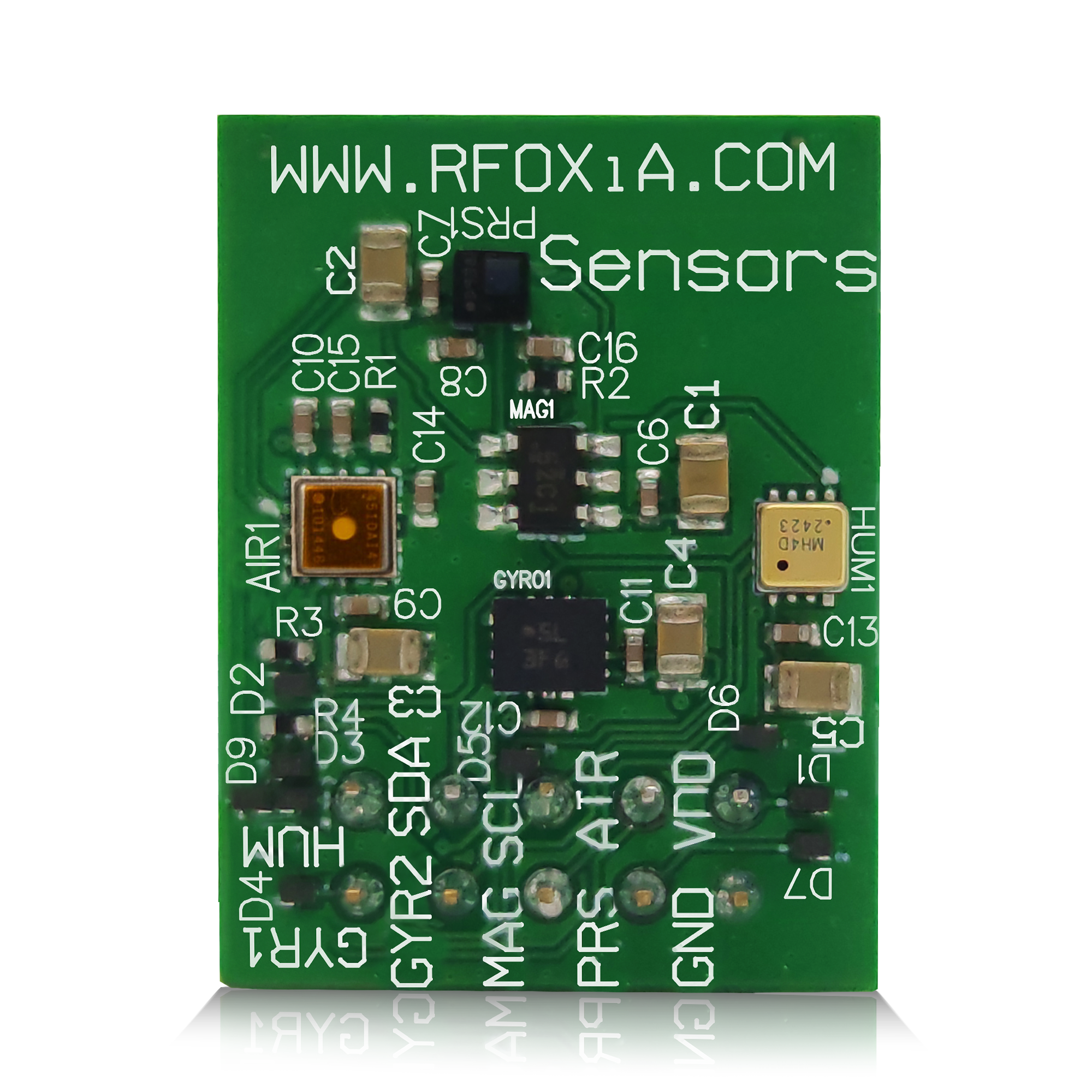
What Is the MultiNav Pro+ Sensors Module?
The MultiNav Pro+ Sensors Module is RFOXiA's all-in-one environmental and motion sensing board. It packs seven individual sensors from industry-leading manufacturers — Bosch Sensortec, Texas Instruments, STMicroelectronics, MEMSVision, and RENESAS — onto a single PCB optimized for space-constrained deployments.
Where most IoT sensor modules give you one or two measurement types, the MultiNav Pro+ gives you the full picture:
- Motion sensing: Accelerometer, gyroscope, magnetometer
- Environmental sensing: Temperature, humidity, air pressure, air quality (including CO2 and VOC)
This is not a dev board loaded with cheap sensors for prototyping. Every component was selected for production-grade performance in demanding real-world applications — drones flying at altitude, environmental monitoring nodes deployed in the field, robotics platforms operating in variable conditions.
And at $39, it sits in a price category that should be occupied by a single-sensor breakout board from a generic supplier.
The Seven Sensors: What They Are and Why They Matter
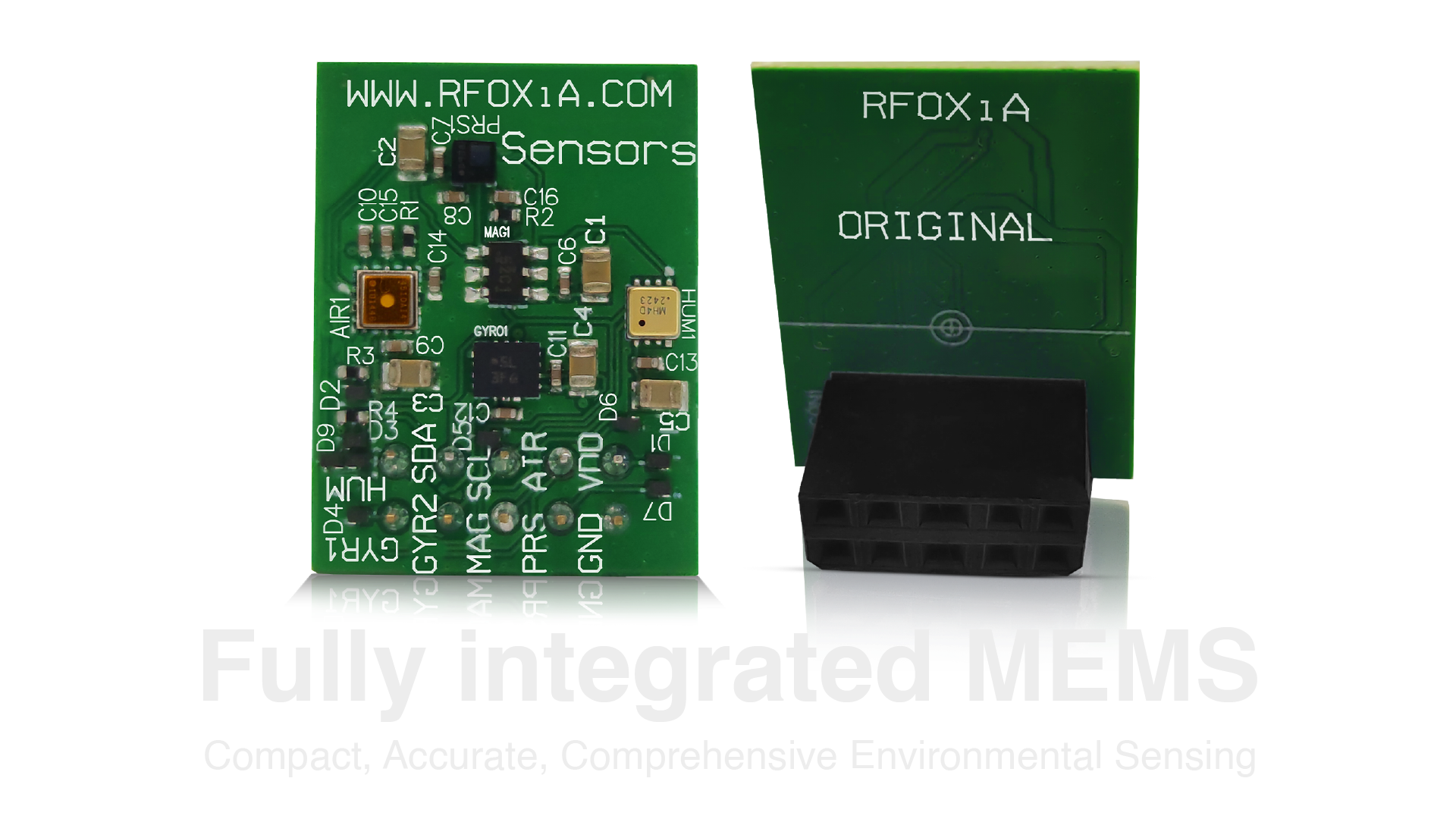
Let's break down each sensor on the board and explain the engineering decision behind each one.
1 & 2. Accelerometer and Gyroscope — BMI270 (Bosch Sensortec)
The BMI270 is not a beginner sensor. It is the same IMU family used in professional drone flight controllers and premium wearables. Bosch's 6-axis inertial measurement unit delivers:
- Accelerometer range: ±2g to ±16g (configurable)
- Gyroscope range: ±125°/s to ±2000°/s (configurable)
- Ultra-low power consumption — critical for battery-powered deployments
- Built-in hardware interrupts for motion detection and step counting
- Anti-aliasing filters for clean data in high-vibration environments
For drone applications, this matters enormously. Consumer-grade IMUs produce noisy data under motor vibration. The BMI270 is engineered to reject that noise, which is why it appears in products where flight stability is non-negotiable.
3. Magnetometer — TMAG5273C1QDBVR (Texas Instruments)
Texas Instruments' TMAG5273 is a 3-axis linear Hall-effect sensor with I2C output. It provides heading data for compass applications and magnetic field sensing for orientation-aware systems.
For robotics and drone navigation, a quality magnetometer closes the loop on full 9-DOF orientation. Paired with the BMI270, you have everything needed for a complete AHRS (Attitude and Heading Reference System) implementation.
4. Air Pressure — LPS22HHTR (STMicroelectronics)
STMicroelectronics' LPS22HH is a high-performance MEMS absolute pressure sensor with:
- Pressure range: 260 to 1260 hPa
- Absolute accuracy: ±0.5 hPa
- Output data rate: up to 200Hz
For drones, barometric pressure is used for altitude hold — it is the primary altitude reference in every serious flight controller. The LPS22HH's accuracy and update rate make it suitable for precision altitude applications, not just coarse altitude estimation.
For environmental monitoring, barometric pressure data adds critical context to temperature and humidity readings and is a required data point for weather-quality environmental datasets.
5. Humidity and Temperature — MVH4003D (MEMSVision)
MEMSVision's MVH4003D is a MEMS-based humidity and temperature sensor with a polymer sensing element optimized for long-term stability and fast response time. Key characteristics:
- Temperature accuracy: ±0.2°C typical
- Humidity accuracy: ±2% RH typical
- Response time: fast enough for mobile platforms
For the RFOXiA data network, temperature and humidity are two of the five required verified data points. The MVH4003D's accuracy ensures that data contributed to the network meets the quality threshold required for enterprise data buyers — agricultural technology companies, logistics operators, insurance companies — who need reliable micro-climate data at street level.
6. Air Quality (CO2 / VOC) — ZMOD4510AI4R (RENESAS)
This is where the MultiNav Pro+ becomes the most capable CO2 sensor module IoT solution at this price point.
The RENESAS ZMOD4510 is a metal-oxide semiconductor (MOX) gas sensor specifically designed for outdoor air quality monitoring. Unlike many low-cost air quality sensors that only detect indoor VOCs, the ZMOD4510 is calibrated for outdoor applications, detecting:
- Ozone (O₃)
- Nitrogen dioxide (NO₂)
- Total VOC (TVOC)
- Equivalent CO2 (eCO2) — a derived air quality index
This distinction is critical. Indoor air quality sensors (like many CCS811-based modules) are not calibrated for outdoor deployment and produce unreliable data when exposed to outdoor air composition. The ZMOD4510 was engineered from the ground up for outdoor environments — exactly the deployment scenario for IoT environmental monitoring nodes, smart city sensors, and agricultural air quality monitoring.
For developers building a CO2 sensor module IoT deployment that actually produces meaningful data in the field, this sensor choice changes everything.
Precision Motion and Environmental Sensing: Built for Real Applications
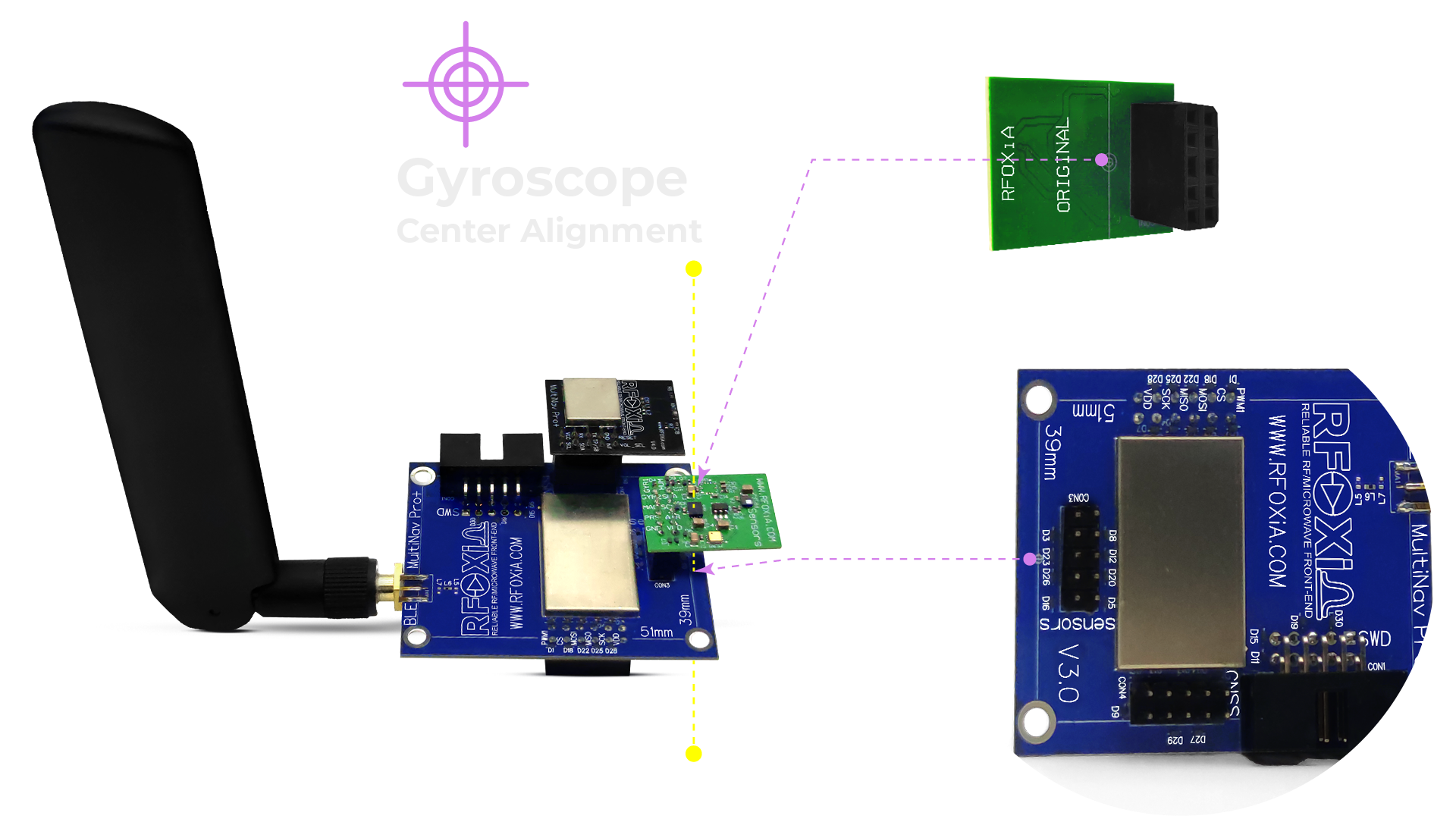
The combination of motion and environmental sensing on a single board is not a marketing decision — it is a practical engineering decision for the applications where this module gets deployed.
Consider a drone carrying a sensor payload for agricultural monitoring. You need:
- Altitude (barometric pressure)
- Orientation and stability data (IMU)
- Heading (magnetometer)
- Environmental data at the point of measurement (temperature, humidity, air quality)
Previously, that meant four separate modules, four separate power rails to manage, four separate I2C addresses to coordinate, and four separate firmware drivers to integrate and debug.
The MultiNav Pro+ collapses that entire stack onto one board.
The Component Pedigree: Why Manufacturer Selection Matters
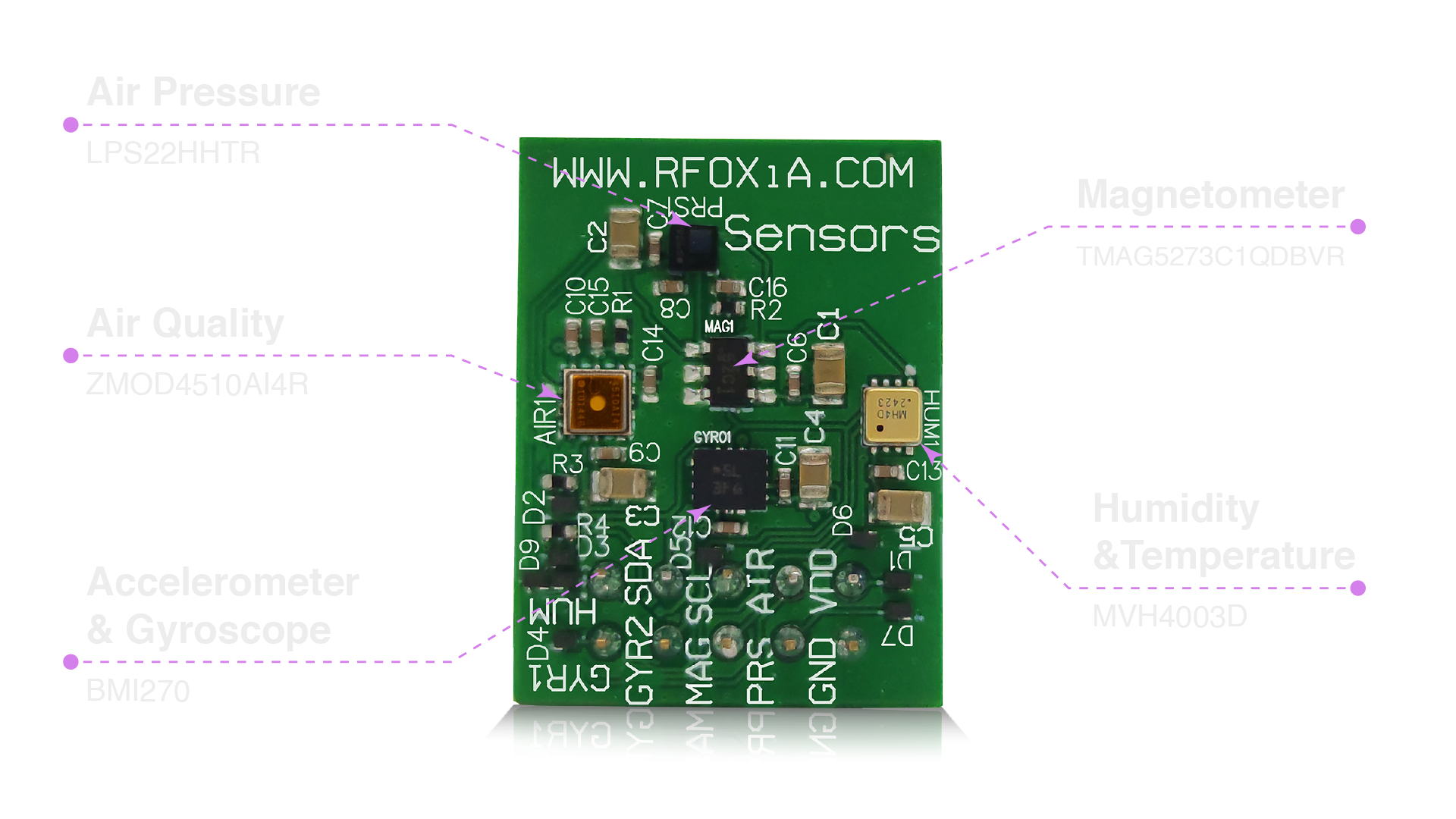
Hardware developers who have shipped products at scale know that sensor manufacturer selection is not a cosmetic decision. The component choices in the MultiNav Pro+ reflect production engineering priorities:
| Sensor | Manufacturer | Why It Matters |
|---|---|---|
| Accelerometer & Gyroscope | Bosch Sensortec (BMI270) | Production-grade IMU with vibration rejection |
| Magnetometer | Texas Instruments (TMAG5273) | Precise Hall-effect sensing with low noise floor |
| Air Pressure | STMicroelectronics (LPS22HH) | 200Hz output rate, ±0.5 hPa accuracy |
| Humidity & Temperature | MEMSVision (MVH4003D) | Fast response, long-term stability |
| Air Quality / CO2 | RENESAS (ZMOD4510) | Outdoor-calibrated MOX sensor for field deployment |
Every one of these is a named manufacturer part with a public datasheet and a track record in professional products. No generic Chinese MEMS parts with undocumented calibration. No sensors sourced from unknown vendors with no support path.
This is the kind of component discipline that separates a module you can ship in a product from a module that works in your lab and fails in the field.
I2C Architecture: Clean Integration, No Conflicts
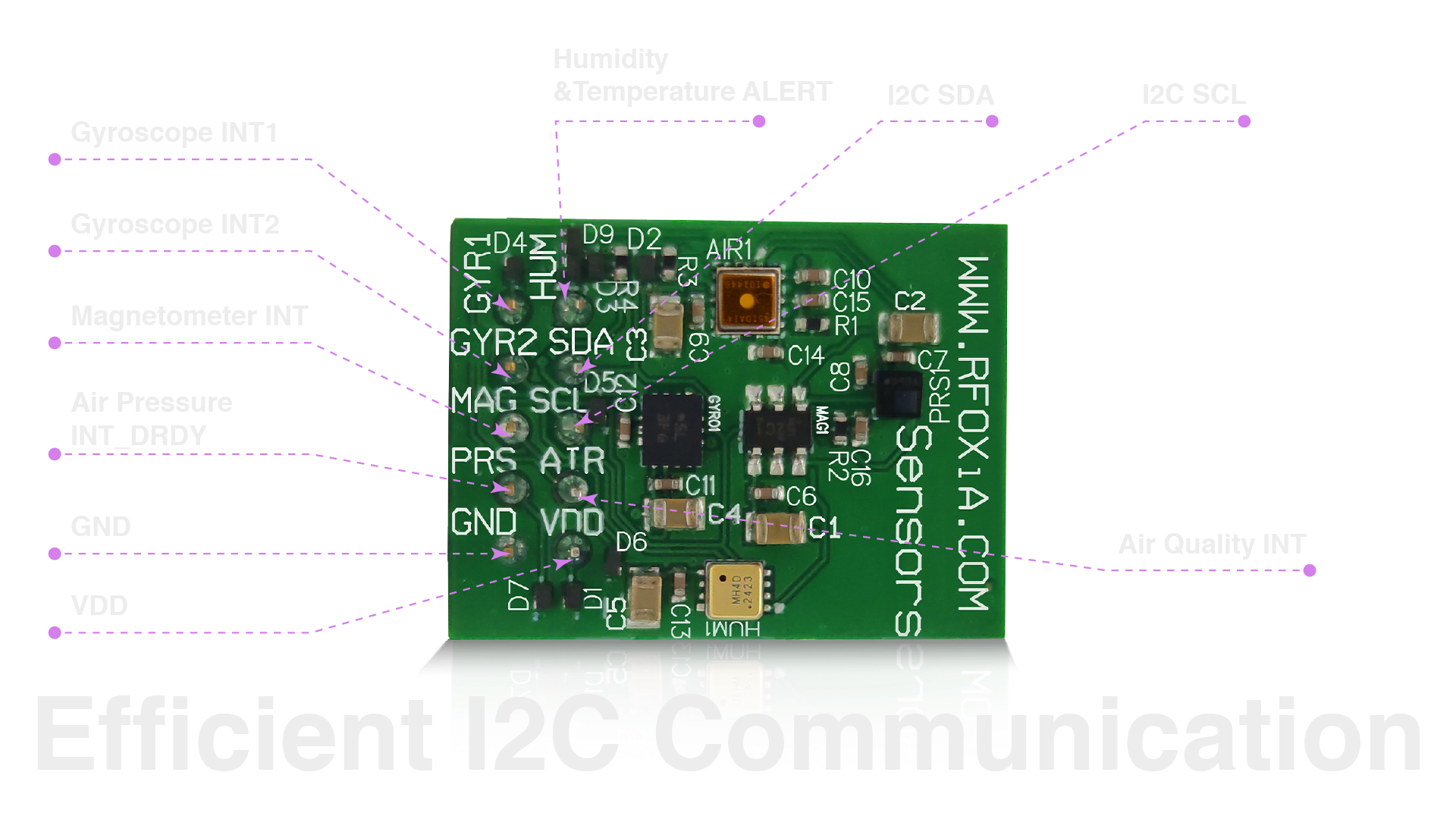
One of the most common pain points when integrating multiple sensors into a single design is I2C bus management. When every sensor has a fixed I2C address and you are pulling data from five or six sensors simultaneously, address conflicts are a real engineering challenge.
The MultiNav Pro+ Sensors Module was designed with clean I2C architecture from the start:
- All seven sensors share a single I2C bus
- Each sensor has a dedicated unique address — no address conflicts by design
- Single cable connection to your microcontroller or host system
- No multiplexers required
- Simplified firmware integration — one bus to initialize, one bus to poll
For developers working on time-sensitive applications where firmware complexity needs to stay manageable, this matters. Fewer buses means fewer potential failure points, cleaner interrupt handling, and faster development cycles.
The AI Firmware Builder integrated into RFOXiA Club can generate complete, production-ready firmware for the MultiNav Pro+ Sensors Module — describe your application in plain English, and the AI generates the sensor initialization, polling logic, data formatting, and transmission code. What used to take days of driver integration takes hours.
Compact Enough for Any Platform
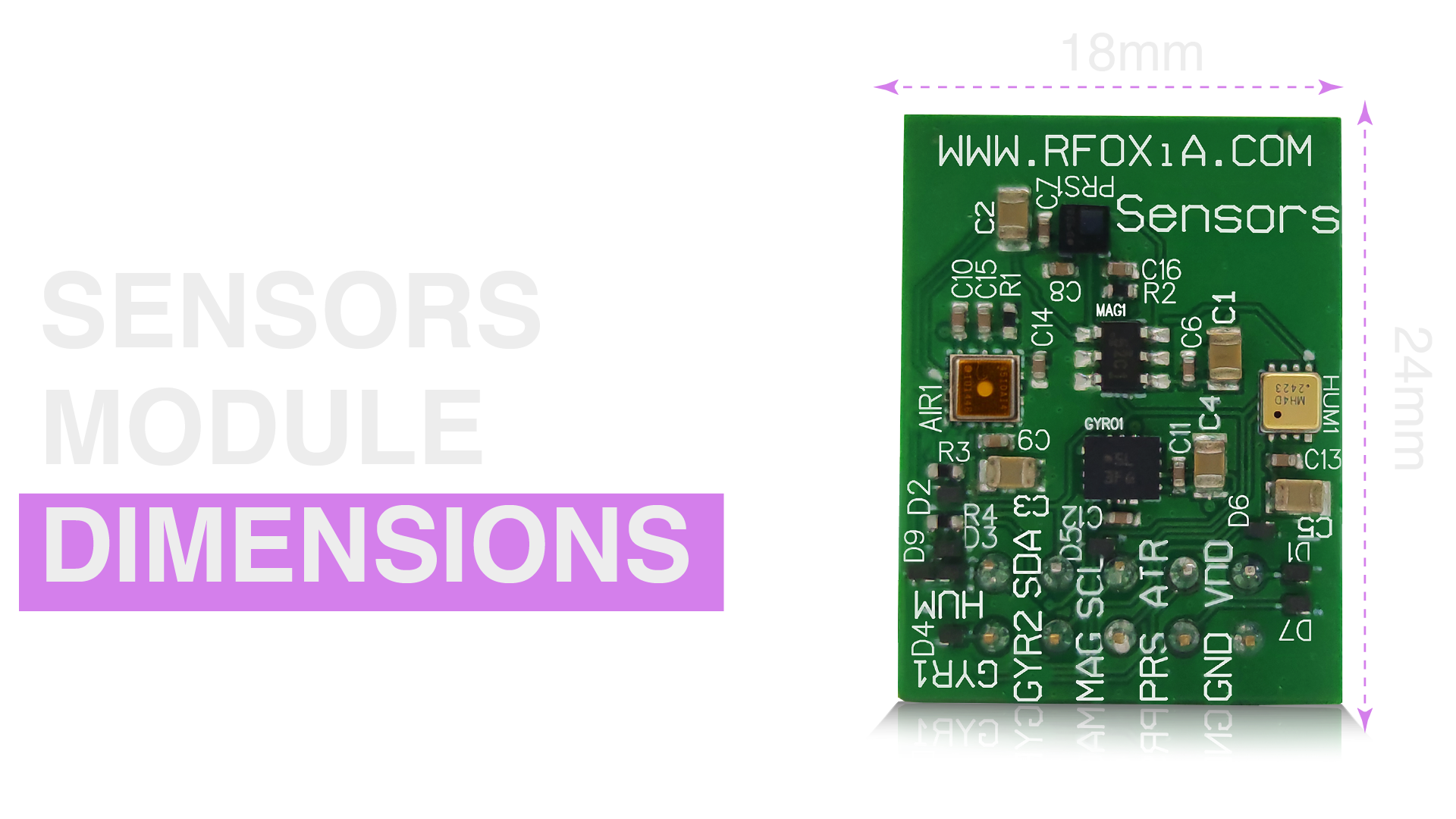
At 24mm × 18mm, the MultiNav Pro+ Sensors Module is smaller than a standard postage stamp.
For context, that is smaller than many single-sensor breakout boards. You are getting seven production-grade sensors with a full I2C interface in a form factor that fits into:
- Drone frames with tight payload bays
- Wearable devices where every millimeter matters
- Compact IoT enclosures for outdoor deployment
- Robotic platforms with constrained PCB real estate
- Research instruments requiring minimal physical footprint
The module is designed to work as part of the full RFOXiA ecosystem — pairing directly with the BLE Module for wireless data transmission, the GNSS Module for GPS-tagged data, and the Power/Program Kit for field deployments that need 24-hour runtime from a 5-minute charge cycle.
That stack — BLE + GNSS + Sensors + Power — fits in the palm of your hand and gives you capabilities that previously required custom industrial hardware costing tens of thousands of dollars.
Explore the full module and how it integrates with the RFOXiA ecosystem at the RFOXiA Integrated Sensors Module product page.
Real-Time Environmental Data: What You Can Actually Do With It
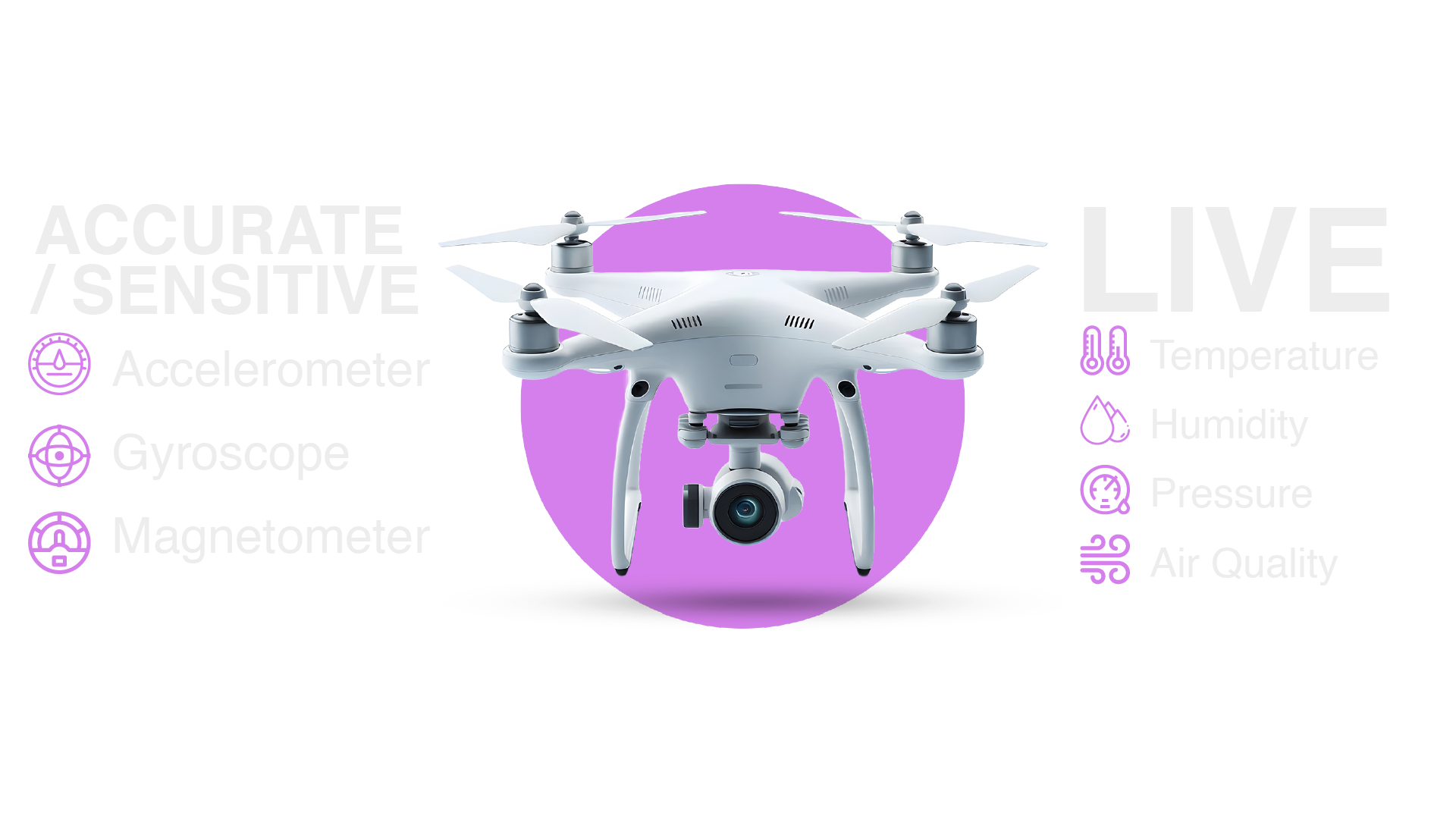
The value of a CO2 sensor module IoT deployment is not the hardware — it is what you do with the data it produces. Here are the real-world applications where the MultiNav Pro+ Sensors Module delivers immediate, practical value:
Drone-Based Environmental Surveys
Mount the Sensors Module on a survey drone alongside the GNSS Module. As the drone flies a grid pattern, it logs GPS-tagged environmental data — temperature, humidity, pressure, air quality, and eCO2 readings — at every waypoint. The result is a high-resolution geo-referenced environmental map of any area, generated in a single flight.
Agricultural technology companies pay significant sums for this kind of micro-climate data. With the RFOXiA data network, you can contribute that data and earn daily rewards.
Smart City Air Quality Monitoring
Deploy a grid of MultiNav Pro+ nodes across an urban area. Each node streams verified outdoor air quality data — including eCO2, ozone, and NO₂ from the ZMOD4510 — back to a central server via the BLE Module's mesh network. The result is a street-level air quality map with second-resolution temporal data.
This is precisely the kind of data that smart city operators and environmental regulators need — and precisely what they cannot get from sparse municipal weather station networks.
Industrial and Agricultural Monitoring
In controlled agriculture environments — greenhouses, vertical farms, precision crop management — CO2 concentration is a critical variable for plant growth optimization. The MultiNav Pro+ provides CO2/air quality monitoring alongside temperature, humidity, and pressure in a single, easy-to-deploy module.
Robotics and Autonomous Systems
For ground robots and UAVs operating in GPS-denied environments, the full 9-DOF motion sensing capability of the MultiNav Pro+ provides the orientation data needed for dead-reckoning navigation and attitude estimation. Pair with the GNSS Module for GPS-augmented positioning when sky view is available.
Research and Data Collection
Researchers in environmental science, climate monitoring, air quality studies, and atmospheric research can deploy networks of MultiNav Pro+ nodes at a fraction of the cost of traditional research-grade instrumentation — while accessing the RFOXiA data platform for aggregation, visualization, and analysis.
The RFOXiA Data Network: Your Sensors Work While You Sleep
One of the most compelling aspects of the MultiNav Pro+ Sensors Module is its integration with the RFOXiA data network — a live ecosystem where sensor data becomes a revenue stream.
Here is how it works:
- Deploy the Sensors Module outdoors with GNSS validation active
- The module streams verified environmental data — temperature, humidity, pressure, air quality, GPS location — to RFOXiA servers
- Data is verified: all five required data points must be present, GPS confirms outdoor deployment, and incoming data is cross-referenced against external sources for anomaly detection
- You earn daily rewards for every verified complete streaming session
- RFOXiA aggregates and sells the resulting dataset to enterprise buyers — agricultural technology companies, logistics operators, insurance companies, smart city operators, climate research institutions
Base reward rates range from $0.08 to $0.25 per day, with early/pioneer contributors locking in higher rates. Nodes in data-sparse locations earn scarcity bonuses. Consistent uptime earns additional rewards.
For a developer who would have been running these sensors anyway — for a drone project, a research deployment, or an environmental monitoring application — the data network turns passive hardware into a passive income stream.
This is what makes the MultiNav Pro+ more than a CO2 sensor module IoT component. It is a node in a growing network that has real commercial value.
Applications Across Industries

The MultiNav Pro+ Sensors Module has been deployed and tested across a wide range of application domains:
Drone and UAV
- Altitude hold via barometric pressure
- Attitude estimation via IMU
- Heading reference via magnetometer
- Environmental payload for survey missions
- Air quality monitoring during inspection flights
Robotics
- Full 9-DOF orientation for mobile robots
- Environmental awareness for autonomous navigation
- Indoor/outdoor transition detection via pressure and air quality
- Vibration monitoring for predictive maintenance
Environmental Monitoring
- Distributed outdoor air quality networks
- Agricultural micro-climate monitoring
- Industrial facility perimeter monitoring
- Research-grade atmospheric data collection
Wearable and Personal Devices
- Personal air quality monitors
- Outdoor activity trackers with environmental context
- Sports performance devices with altitude and motion data
- Safety equipment for hazardous environment workers
Smart Infrastructure
- Building automation and HVAC optimization
- Smart city sensor nodes
- Industrial process monitoring
- Supply chain environmental logging
Technical Specifications Summary
| Specification | Detail |
|---|---|
| Sensors | 7 total (Accel, Gyro, Mag, Temp, Humidity, Pressure, Air Quality) |
| Communication | I2C (single bus, dedicated addresses) |
| IMU | Bosch BMI270 (6-axis) |
| Magnetometer | TI TMAG5273C1QDBVR (3-axis) |
| Pressure | STMicro LPS22HHTR (260-1260 hPa) |
| Humidity/Temp | MEMSVision MVH4003D |
| Air Quality | RENESAS ZMOD4510AI4R (outdoor-calibrated) |
| Module Size | 24mm × 18mm |
| Certification | FCC certified |
| Price | $39 |
| Ecosystem | Compatible with BLE Module, GNSS Module, Power/Program Kit |
How the MultiNav Pro+ Fits Into the Complete RFOXiA Ecosystem
The MultiNav Pro+ Sensors Module is designed to work in isolation — but it reaches its full potential as part of the complete RFOXiA ecosystem.
Pair it with the BLE Module (5km ground-to-ground, 15-20km man-to-drone range) and your sensor data streams wirelessly over distances that commodity BLE modules cannot approach. Pair it with the GNSS Module (1.5m accuracy, 18Hz fix rate) and every environmental reading is GPS-tagged with precise location and timestamp.
Add the Power/Program Kit — with supercapacitor technology that delivers 24-hour runtime from a 5-minute charge cycle — and you have a complete field-deployable environmental sensing platform that runs all day without battery anxiety.
All four components together form the Developer Bundle ($199), the fastest path to a complete wireless sensing ecosystem. The Developer Bundle is supported by the RFOXiA Club platform — with live device control, AI firmware generation, data streaming visualization, and community resources — and the RFOXiA Connect app for iOS and Android, giving you PS5-style drone control, live GPS tracking, and real-time sensor data display, all without requiring an internet connection.
If you are building anything that needs to sense, communicate, and move data wirelessly — the Developer Bundle built around the MultiNav Pro+ Sensors Module is the place to start.
Get the full details and pick up your MultiNav Pro+ at the RFOXiA Integrated Sensors Module page.
Why FCC Certification Changes the Equation
Every module in the RFOXiA product line — including the MultiNav Pro+ Sensors Module — is FCC certified.
For hardware developers, this is not a minor detail. FCC certification means:
- Legal deployment in the United States without additional regulatory work
- Acceptance by major distributors (DigiKey, Mouser, SparkFun) who require FCC cert for listing
- Credibility for commercial and enterprise procurement
- Regulatory compliance for products built on the MultiNav Pro+ platform
Certifying a module through FCC testing is a significant investment in time, testing fees, and engineering effort. That investment is already done. When you build on the MultiNav Pro+, you inherit that certification status.
Getting Started: Your Path From Module to Deployment
The fastest path from hardware to working deployment with the MultiNav Pro+ Sensors Module:
Step 1: Order the module at $39 from the RFOXiA Integrated Sensors Module product page.
Step 2: Sign up for RFOXiA Club (free) and collect your $10 welcome credit. Access the Dev Hub for documentation, firmware examples, and SDK resources.
Step 3: Use the AI Firmware Builder to generate your application firmware. Describe what you want to build — environmental monitoring node, drone sensor payload, robotics IMU integration — and the AI generates complete, production-ready code.
Step 4: Flash your firmware using the Power/Program Kit's integrated STLink programmer interface.
Step 5: Deploy. Pair with the BLE Module for wireless data transmission. Connect the GNSS Module for GPS-tagged data. Enroll in the RFOXiA data network to start earning daily rewards from your sensor deployment.
The full path from "I want to build a CO2 sensor module IoT deployment" to a live, earning environmental monitoring node — with professional-grade hardware, AI-generated firmware, and a data monetization backend already built — has never been more accessible.
Conclusion: The CO2 Sensor Module IoT Standard for Serious Builders
The MultiNav Pro+ Sensors Module is not the cheapest sensor board on the market. It is the most capable sensor board at its price point — built with production-grade components from Bosch, Texas Instruments, STMicroelectronics, MEMSVision, and RENESAS, designed for real field deployments, FCC certified, and backed by a complete development ecosystem that reduces the time from idea to deployed hardware.
For developers building anything that requires environmental sensing, motion sensing, or a CO2 sensor module IoT capability — whether that is a drone payload, a smart city node, an agricultural monitoring system, or a research instrument — the MultiNav Pro+ delivers the specs, the integration simplicity, and the ecosystem support that serious builders need.
At $39, there is nothing else like it.
Explore the full product, specifications, and ordering at the RFOXiA Integrated Sensors Module product page — and join the RFOXiA Club to access free firmware tools, a $10 welcome credit, and the developer community building on this platform every day.
Written by: Moamen Mohamed LinkedIn