
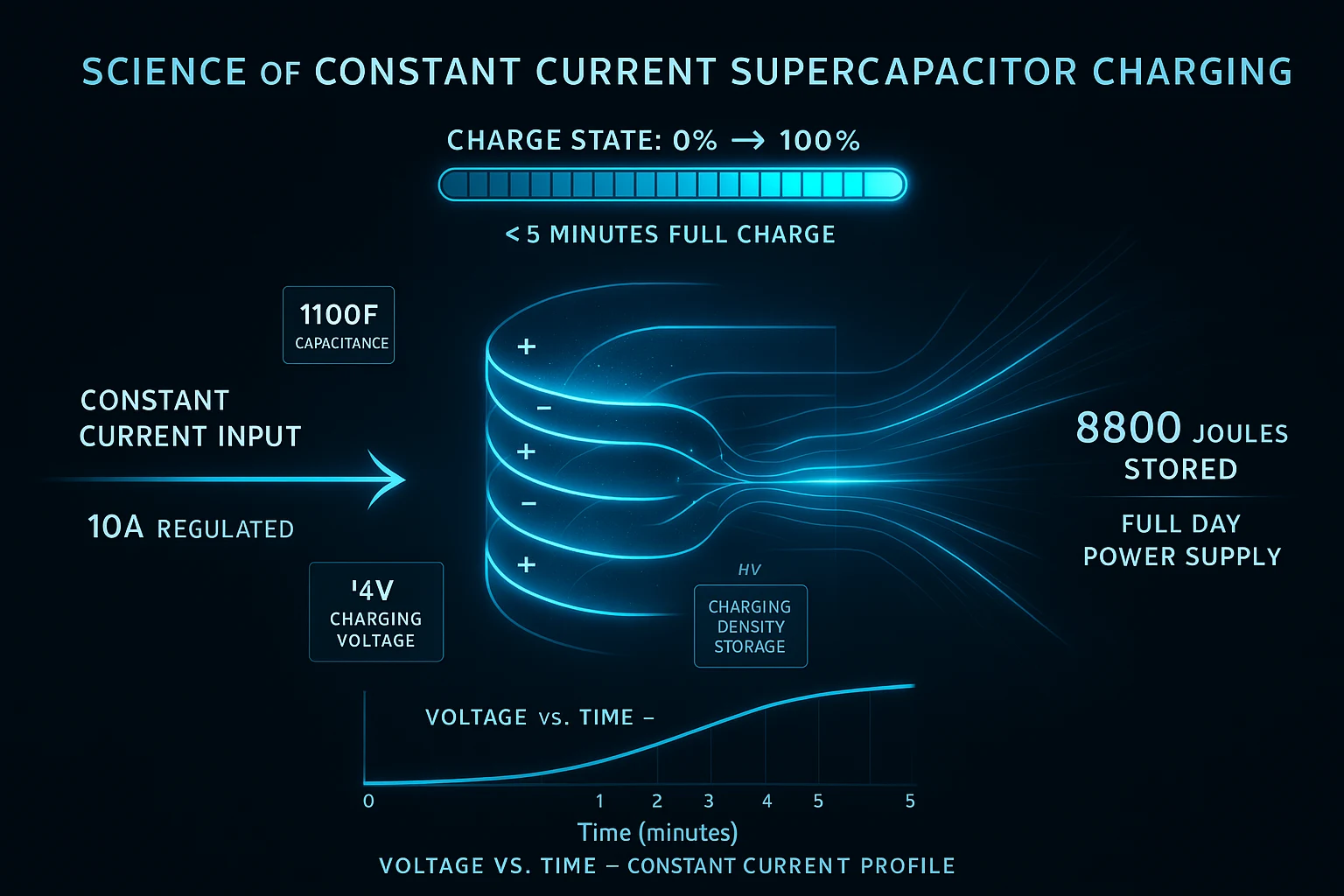
Constant Current Supercapacitor Charger: The Smarter Way to Power Long-Range Wireless Projects
RFOXiA SuperCapacitor Battery and Programmer Kit
Why Your Power Solution Is Holding Your Build Back
You spent weeks dialing in your firmware. Your antenna placement is perfect. Your BLE module locks onto a signal at distances commodity hardware cannot dream of. And then — mid-session, mid-flight, mid-data-stream — your battery dies.
This is the unglamorous reality of serious wireless development: the hardware usually outperforms the power strategy. Engineers obsess over range, data rate, and receiver sensitivity, then strap a generic LiPo to the build and wonder why their uptime is inconsistent.
The MultiNav Pro+ Power/Program Kit from RFOXiA was built to close that gap permanently. At its core is a constant current supercapacitor charger system that redefines what field-ready power looks like for IoT developers, drone builders, and embedded systems engineers. Charge in under five minutes. Run for a full working day. Never touch a lithium cell again.
This post breaks down exactly how the technology works, why it matters for your application, and what makes this kit different from anything else on the market at this price point.
What Is a Constant Current Supercapacitor Charger — and Why Does It Matter?
To understand why this matters, you need to understand how supercapacitors charge differently from lithium-based batteries.
A standard lithium-ion or LiPo battery charger uses a CC/CV (constant current / constant voltage) profile. You push current in at a fixed rate until the voltage climbs to a threshold, then you reduce current and hold voltage steady as the cell tops off. The entire process is electrochemical — ions physically migrate between electrodes — and that migration has a speed limit. Charge a LiPo too fast and you generate heat, stress the chemistry, and accelerate capacity degradation.
Supercapacitors — also called ultracapacitors or electrochemical double-layer capacitors — store energy electrostatically rather than chemically. There is no ion migration. There is no electrochemical reaction. Energy is stored at the electrode surface in an electric double layer, and it can be deposited or withdrawn almost instantaneously compared to a battery.
This means a constant current supercapacitor charger can push far more current into the storage system in far less time, without generating the heat or degradation that would destroy a lithium cell under the same conditions. The charging profile is fundamentally simpler and the physics are far more forgiving.
For field developers, this translates to one thing: you stop waiting for your power system.
The 1100F Super-Capacitor System: Engineering the Numbers
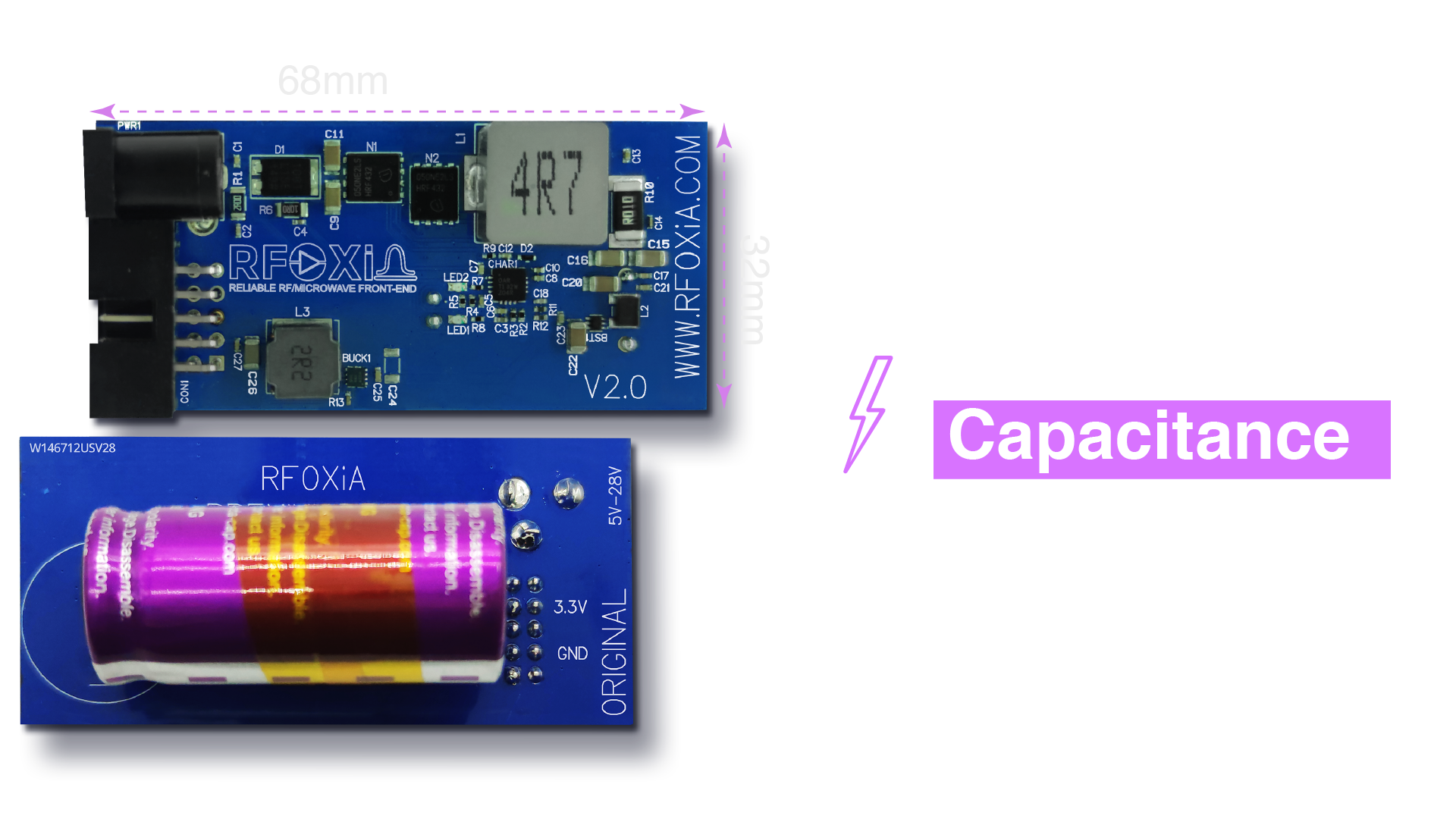
The Power/Program Kit is built around an 1100 Farad supercapacitor system storing 8,800 Joules of energy. Let's put that in context.
A Joule is a watt-second. 8,800 Joules means this system can deliver, for example, 1 watt continuously for 8,800 seconds — roughly two and a half hours. Scale the math to the actual power draw of the MultiNav Pro+ module stack (BLE module, GNSS module, sensors module operating simultaneously) and you arrive at the kit's headline claim: 24 hours of continuous runtime.
This is not a marketing estimate padded for the spec sheet. It is the result of matching capacitor energy density to the actual measured draw of the MultiNav Pro+ ecosystem.
Now consider the charge side. The constant current supercapacitor charger in this kit accepts a 12V 5A input from the included high-power adapter and converts that to a 4V 10A charging current delivered directly to the supercapacitor bank. At 40 watts of charging power into a system that needs 8,800 Joules, the math works out to a theoretical charge time of approximately 220 seconds — well under the five-minute figure quoted in the specs, with margin for conversion efficiency and the charge profile taper as the capacitor bank approaches full voltage.
The practical result: you plug in for five minutes and get a full day of runtime. No trickle charging overnight. No babysitting a charger. No thermal runaway anxiety.
The High-Power Charging Adapter: Designed for the Charger, Not the Other Way Around
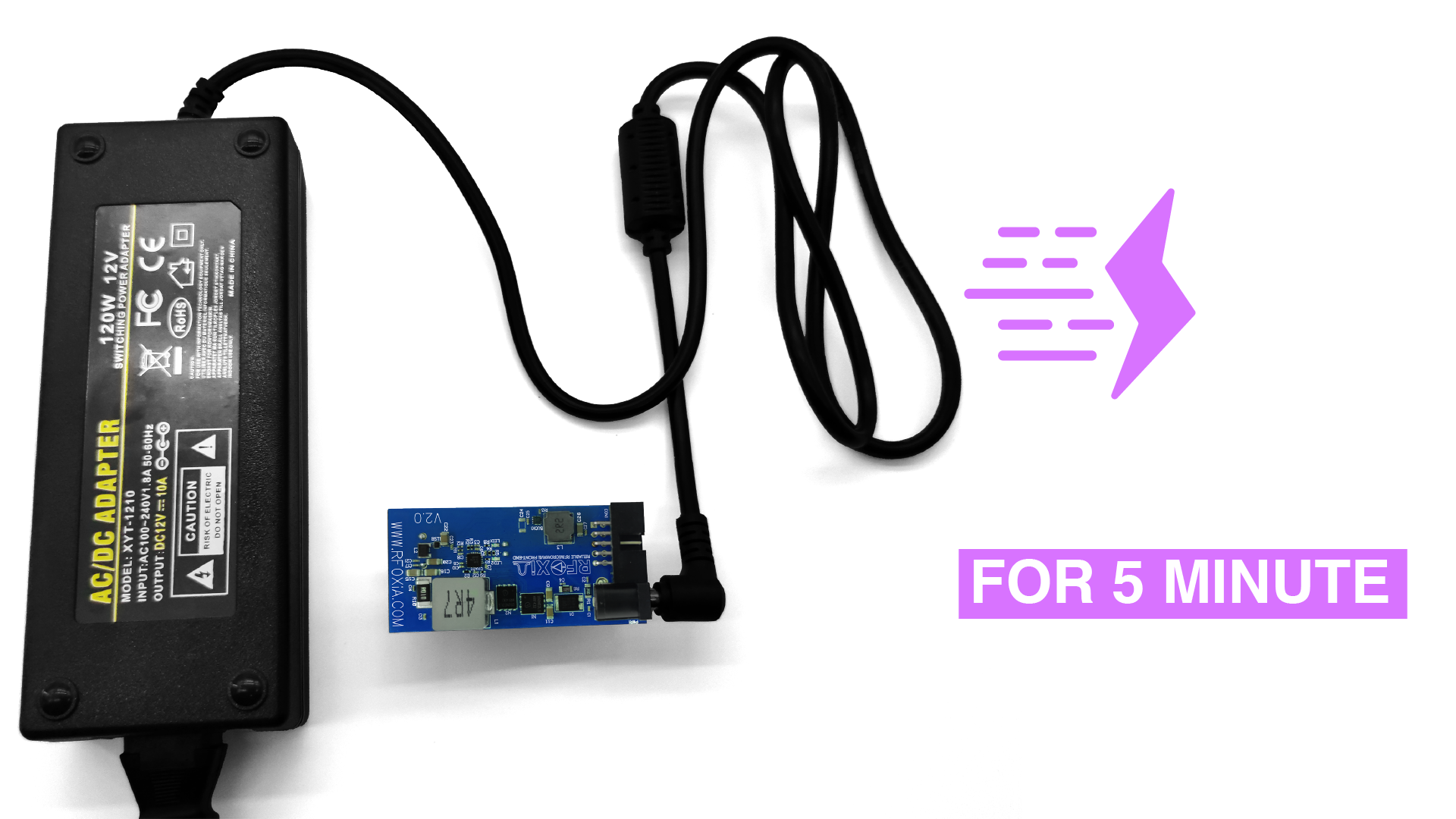
Most power kits ship with a charger selected for cost, not performance. The included adapter is a 5V 1A USB brick that takes six hours to restore a battery that drains in three. That math does not work in the field.
The MultiNav Pro+ Power/Program Kit ships with a dedicated 12V 5A high-power charging adapter matched to the constant current supercapacitor charger circuit. The adapter provides enough input headroom to drive the 4V 10A output stage efficiently, and the entire charging chain — from wall socket to supercapacitor terminal — is optimized for the five-minute charge window.
This matters for real field deployment scenarios. A drone pilot doing a survey has a window between flights. A researcher monitoring a remote environmental station needs to swap power units quickly. A developer iterating on firmware needs to test, charge, and test again without building downtime into the iteration loop. A purpose-built high-power adapter means the limiting factor in your workflow is no longer the charger.
Full-Day Power for the Complete MultiNav Pro+ Module Stack
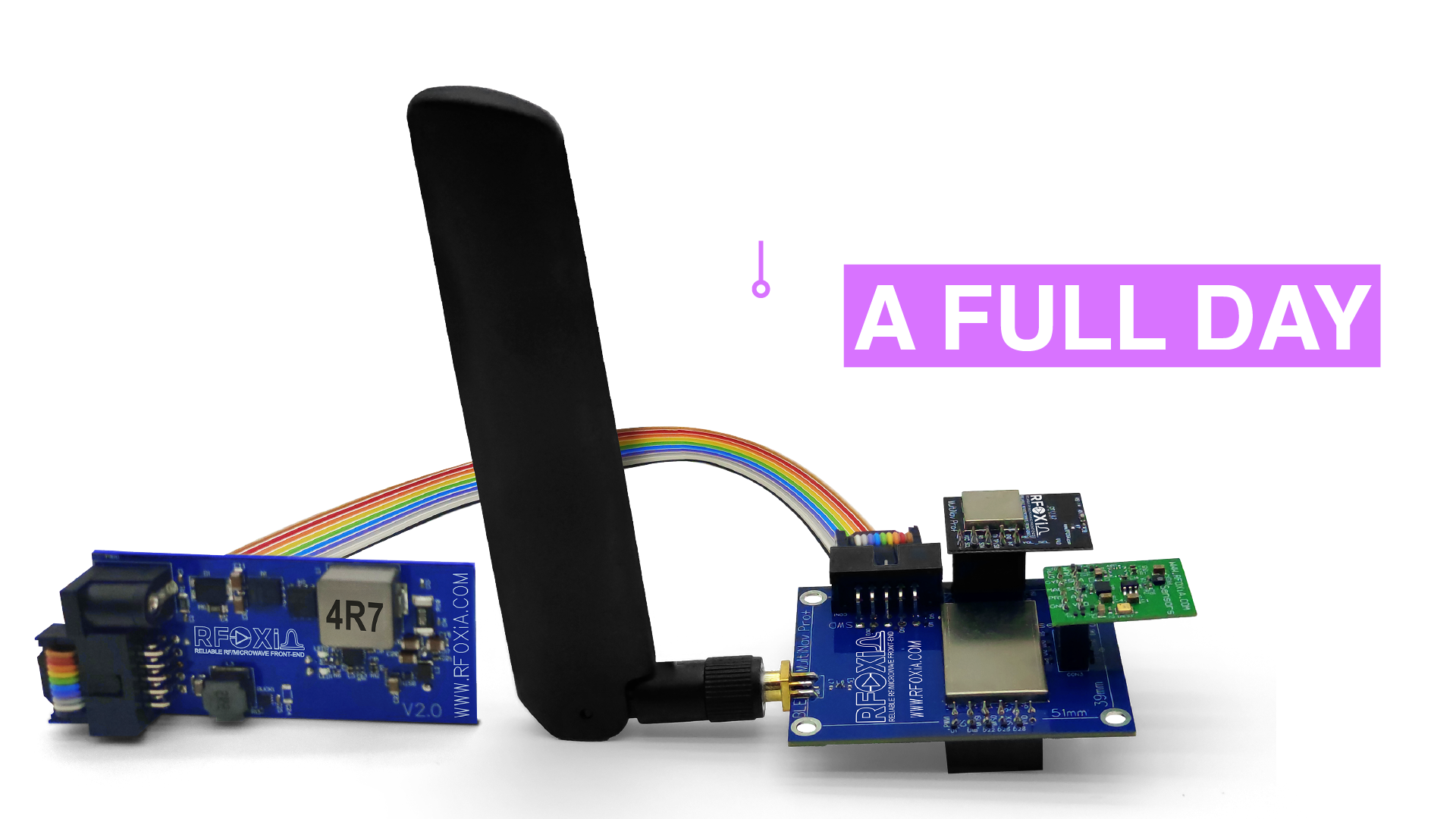
The Power/Program Kit is not sized for a single module. It is designed to run the complete MultiNav Pro+ ecosystem — the BLE Module, GNSS Module, and Sensors Module — simultaneously for a full working day.
This is the critical detail that separates this kit from generic supercapacitor power banks. It is not a USB power brick with a large capacitor glued to the output. The power architecture is matched to the specific voltage and current requirements of the MultiNav Pro+ module stack, with clean regulated output that does not sag under combined load.
For developers building data-streaming nodes — capturing GPS-verified environmental data and streaming it through the BLE module to the RFOXiA data network — this means uninterrupted sessions from power-on to natural end of deployment. The RFOXiA SuperCapacitor Battery and Programmer Kit keeps every module in the stack alive and delivering data without the dropout events that corrupt sessions and reduce earned rewards on the network.
For drone builders integrating the MultiNav Pro+ stack into an airborne platform, the constant current supercapacitor charger's rapid recharge capability means ground time between flights can be used productively. Land, plug in, debrief, and the power system is ready before you are.
The STLink Programmer: Closing the Firmware Loop Without Extra Hardware
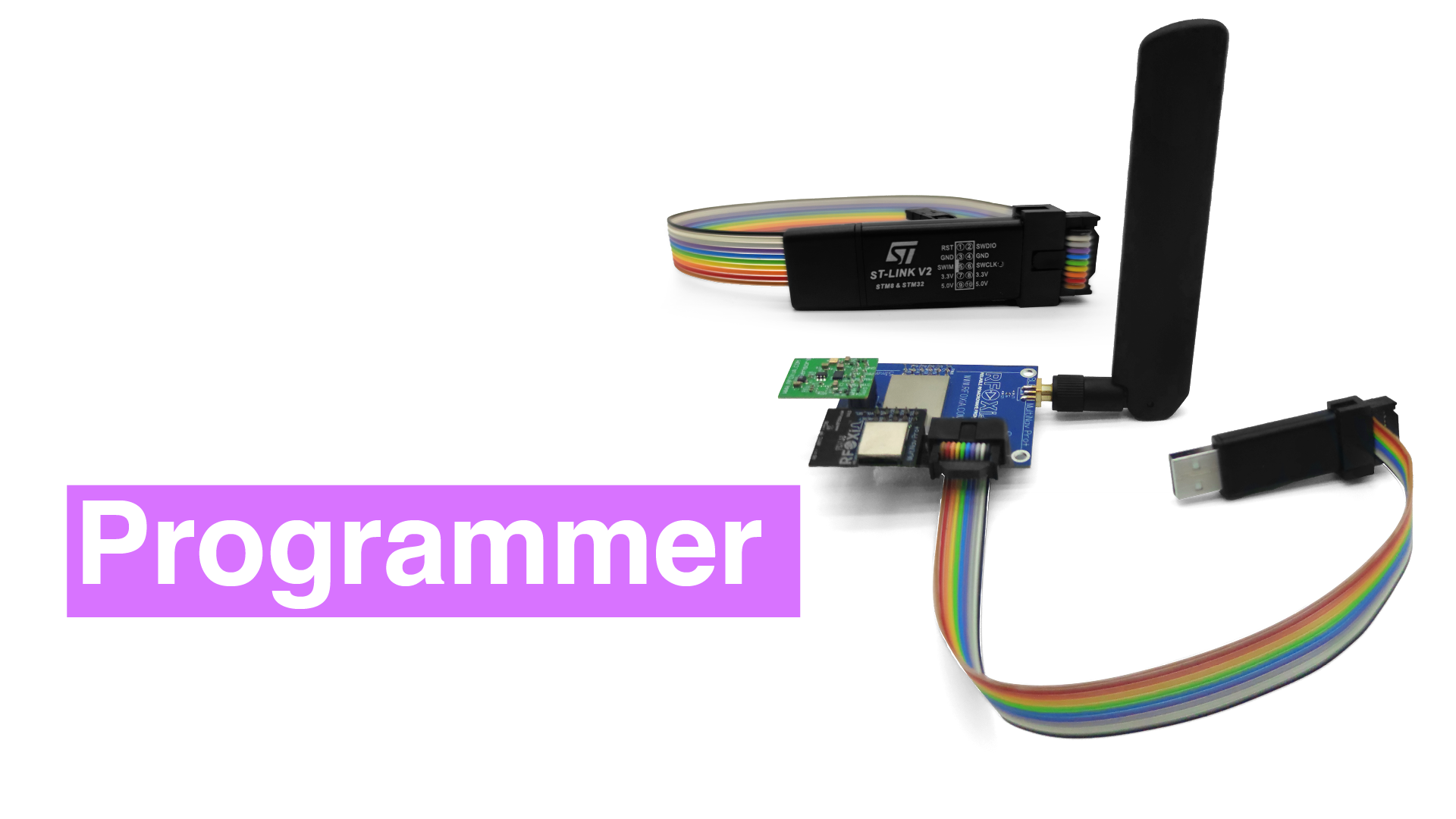
The second major component of the Power/Program Kit is the integrated STLink programmer.
The MultiNav Pro+ BLE Module is built on the STM32WB07 — a dual-core wireless microcontroller from STMicroelectronics combining an Arm Cortex-M0+ application processor with a dedicated Bluetooth LE radio subsystem. Programming the STM32WB07 requires an STLink interface, and until now, sourcing and wiring a separate programmer was an additional step that added friction to the development workflow.
The Power/Program Kit eliminates that friction by bundling the STLink directly into the kit. Flash new firmware, debug over SWD, iterate on your application — all from the same piece of hardware that is already powering your module. The programmer connects to the BLE module through the included flat ribbon cables, making the physical connection clean and repeatable.
For developers using the RFOXiA Club's AI Firmware Builder — which generates production-ready STM32WB07 firmware from plain-language application descriptions — the workflow becomes genuinely seamless. Describe your application, receive complete source code, compile, and flash directly to the BLE module through the STLink in the Power/Program Kit. The GitHub repository at github.com/RFOXiA/MultiNav-Pro-Long-Range-BLE-Module-Firmware-STM32WB07 contains the base firmware and examples to get you started immediately.
The Complete Connectivity Kit: No Hunting for Cables
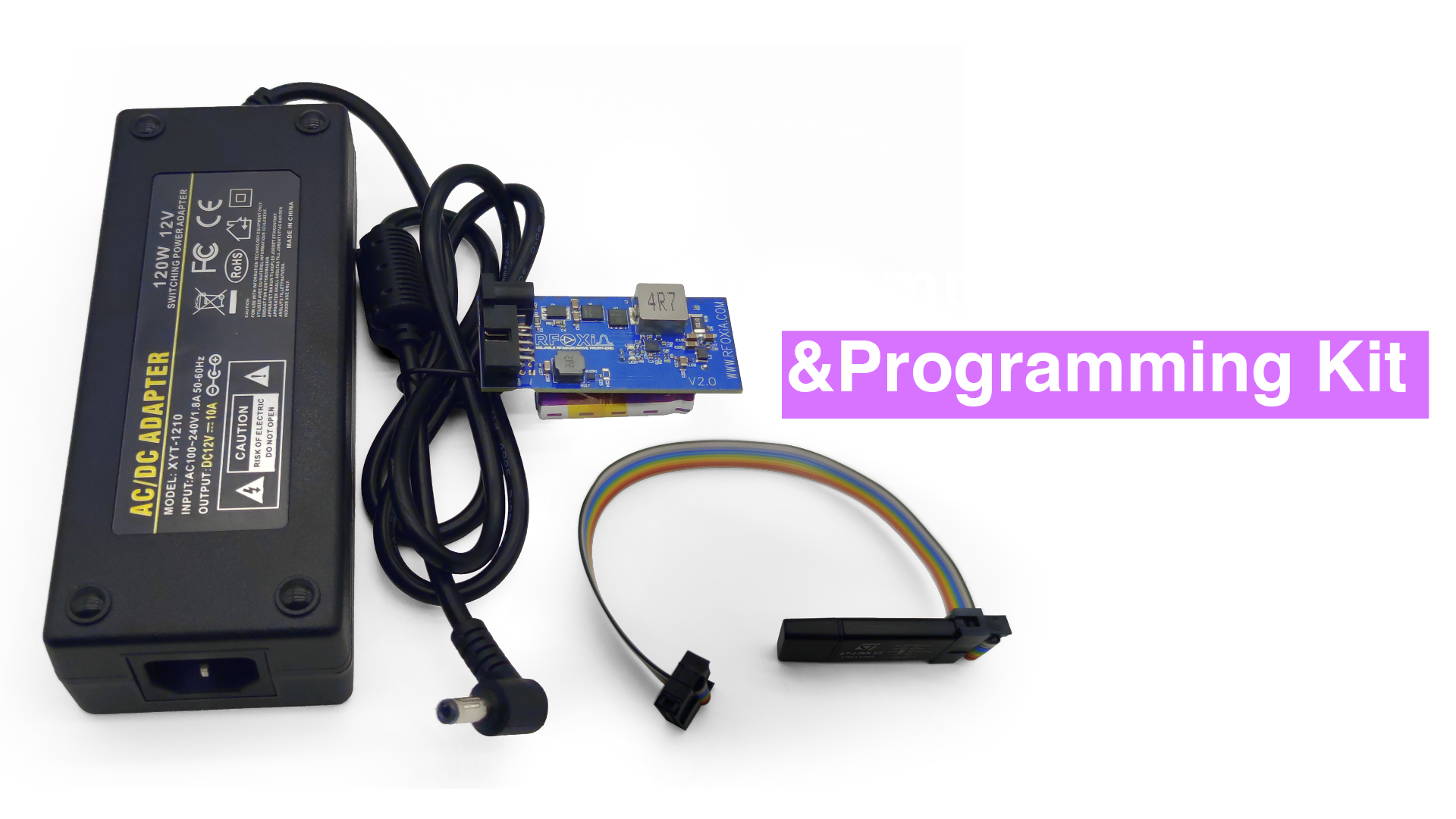
Every cable the kit requires ships with the kit.
This sounds obvious. It is not, in practice. Anyone who has received a development kit with a proprietary connector and no included cable — or who has spent an afternoon searching for a specific ribbon cable pitch — understands why this detail matters.
The Power/Program Kit includes flat ribbon cables for:
- BLE Module to Power Module connection
- STLink Programmer to BLE Module connection
The ribbon cable format keeps the assembly compact and the connections secure, which matters for airborne and field deployments where vibration and connector stress are real failure modes. Open the kit, connect the modules, plug in the charging adapter, and you are operational. There is no hidden hardware cost, no compatibility hunt, and no assembly ambiguity.
Who This Kit Is Built For
The MultiNav Pro+ Power/Program Kit with its constant current supercapacitor charger is engineered for developers who are serious about what they build and unwilling to accept power and programming as afterthoughts.
Drone builders and FPV pilots running the MultiNav Pro+ BLE Module for long-range telemetry and control at distances up to 20km man-to-drone need a power system that keeps pace with their flight schedule. Five-minute charges between flights mean the power kit is never the reason you are grounded.
IoT and field researchers deploying environmental sensor nodes need uptime, not battery anxiety. The 24-hour runtime on a single charge means a node deployed at sunrise is still streaming verified data at midnight, contributing continuously to the RFOXiA data network and earning daily rewards throughout the session.
Embedded systems developers iterating on STM32WB07 firmware need to flash and test rapidly without juggling multiple pieces of hardware. The integrated STLink programmer with included cables means the test bench stays clean and the iteration loop stays tight.
Anyone building with the complete MultiNav Pro+ ecosystem — combining the BLE Module, GNSS Module, and Sensors Module — needs a power solution sized for the full stack. The Power/Program Kit is the only power solution specifically engineered for this purpose.
Supercapacitor vs. Battery: The Case for Capacitive Storage in Field Hardware
The choice to build the MultiNav Pro+ Power/Program Kit around supercapacitors rather than lithium chemistry is deliberate and worth understanding.
Cycle life: A quality lithium-ion cell degrades meaningfully over 500-1,000 charge cycles. A supercapacitor routinely handles 100,000 to 1,000,000 cycles with negligible capacity loss. For a device that gets charged multiple times daily — exactly the use pattern the five-minute charge time enables — lithium chemistry would degrade noticeably within months of heavy use. The supercapacitor bank in this kit will outlast the rest of your hardware.
Temperature performance: Lithium cells lose significant capacity in cold environments. Drone operations at altitude, environmental monitoring in winter conditions, and field deployments in challenging climates all stress lithium chemistry. Supercapacitors maintain more consistent performance across a wider temperature range, making the power system more predictable in exactly the conditions where reliability matters most.
Charge rate tolerance: A lithium cell being pushed at 2-3C charge rates generates heat and stress. The constant current supercapacitor charger in this kit delivers current at a rate that would damage a lithium pack — and the supercapacitor bank accepts it without concern. This is the physical basis for the five-minute charge time.
Safety profile: Lithium cells can enter thermal runaway under fault conditions. Supercapacitors cannot. For enclosed builds, airborne platforms, and applications where a power fault could cause serious problems, the supercapacitor's fundamentally safer failure mode is a meaningful engineering advantage.
The tradeoff is energy density. Supercapacitors store less energy per gram than lithium chemistry, which is why the 1100F bank in this kit is physically larger than an equivalent-runtime LiPo. For applications where runtime and charge speed matter more than weight — ground stations, stationary sensor nodes, bench development — this is a favorable trade. For airborne applications where every gram counts, the five-minute recharge capability often outweighs the weight penalty by eliminating the need to carry multiple battery packs.
Specifications Summary
| Specification | Value |
|---|---|
| Supercapacitor Capacity | 1,100 Farads |
| Energy Stored | 8,800 Joules |
| Charge Time | Under 5 minutes |
| Runtime (full module stack) | 24 hours |
| Charging Input | 12V 5A |
| Charging Output to Capacitor | 4V 10A |
| Programmer Interface | STLink (SWD) |
| Compatible Modules | MultiNav Pro+ BLE, GNSS, Sensors |
| Included Cables | Flat ribbon — power + programmer |
| FCC Certification | Yes |
| Price | $119 |
The Complete MultiNav Pro+ Ecosystem
The Power/Program Kit is one component of a vertically integrated wireless development ecosystem. RFOXiA's full product lineup — the long-range BLE Module (5km ground-to-ground, up to 20km man-to-drone), the 18Hz GNSS Module, the 7-sensor environmental Sensors Module, and the Power/Program Kit — can be acquired together as the Developer Bundle at $199, giving serious builders the complete stack at a fraction of what comparable capability costs elsewhere.
The RFOXiA Club platform — available free at rfoxia.com — provides AI firmware generation, live device control, data streaming visualization, and access to the data network reward system. New members receive a $10 welcome credit toward their first purchase. Developers who progress through the platform funnel accumulate $50 in credits applicable toward a Developer Bundle.
For the developer who wants the complete picture: long-range wireless connectivity, precision GPS, full environmental sensing, professional power management, AI-assisted firmware development, a mobile control app with a 20km range, and a passive income stream from your deployed sensor data — the entire stack is available today, FCC certified, and ready to ship.
Ready to Build Without Power Constraints?
The MultiNav Pro+ Power/Program Kit with its integrated constant current supercapacitor charger is available now at $119. Every kit ships with the 1100F supercapacitor bank, the 12V 5A high-power charging adapter, the integrated STLink programmer, and all required flat ribbon cables.
Stop designing around your power system's limitations. Charge in five minutes, build for twenty-four hours, and iterate as fast as your ideas arrive.
Explore the full specifications and order directly at the RFOXiA SuperCapacitor Battery and Programmer Kit product page. Join RFOXiA Club free to access the AI Firmware Builder, collect your $10 welcome credit, and connect with a community of builders pushing wireless hardware to its real limits.
Written by: Moamen Mohamed LinkedIn