
Embedded Programmer Comparison 2026: Which Kit Actually Belongs on Your Bench?
RFOXiA SuperCapacitor Battery and Programmer Kit
The Embedded Programmer Comparison 2026 Every Hardware Developer Needs to Read
If you spend serious time doing embedded development — flashing firmware, debugging hardware in the field, running long test sessions — you already know that your programmer and your power supply are not accessories. They are the foundation of your workflow. A slow programmer costs you hours. A dead battery in the middle of a test session costs you data, context, and momentum.
In 2026, the embedded programmer landscape has expanded significantly. You have everything from $3 USB dongles that corrupt flash at random intervals to $800 professional J-Links that do everything except make coffee. But there is a new category of tool that the embedded development community has been increasingly gravitating toward: the integrated programmer-plus-power kit. One device. One cable. Reliable power and reliable programming in the same form factor.
This embedded programmer comparison 2026 guide breaks down the options on the market, what actually matters when choosing a programmer for real hardware work, and why the RFOXiA SuperCapacitor Battery and Programmer Kit is earning serious attention from drone builders, IoT engineers, and embedded developers who work outside the comfort of a lab bench.
What Makes a Good Embedded Programmer in 2026?
Before comparing specific tools, it helps to define what "good" actually means for the embedded developer workflow in 2026. The requirements have shifted. Developers are not just building prototypes at a desk — they are deploying hardware in fields, on drones, in environmental monitoring stations, and in remote locations where a USB cable to a laptop is not an option.
Here are the criteria that matter:
1. Programming Reliability
This should be obvious, but it is not always guaranteed. A programmer that drops connections, corrupts flash, or fails to recognize targets under voltage fluctuation is worse than useless — it introduces doubt into your entire development process. You need deterministic behavior every time.
2. Protocol Support
SWD (Serial Wire Debug) is the dominant interface for ARM Cortex-M targets. JTAG support matters for older or more complex targets. Most modern embedded developers working with STM32, nRF, or similar microcontrollers need solid SWD support above everything else.
3. Integrated Power Management
This is where the 2026 embedded programmer comparison gets genuinely interesting. Standalone programmers require a separate power supply. When you are deploying hardware in the field — or even just running extended test sessions at your bench — carrying and managing a separate power solution adds friction and failure points. Integrated power changes that calculus entirely.
4. Field Portability
A tool that only works tethered to a laptop is a tool that only works in one context. The best embedded development setups in 2026 are portable — capable of flashing and debugging hardware wherever that hardware actually operates.
5. Ecosystem Integration
A programmer that integrates with your target platform's firmware toolchain, IDE support, and version control workflow is worth significantly more than one that requires workarounds at every step.
The Embedded Programmer Landscape in 2026: A Category Breakdown
Budget USB Programmers ($3–$20)
The ST-Link v2 clone category. These are cheap Chinese clones of the original STMicroelectronics ST-Link hardware, available in bulk quantities for almost nothing. They work — sometimes. The connection is unreliable under load. Many do not support all SWD targets correctly. Firmware is often outdated. They are useful for initial bring-up of simple projects but introduce enough unreliability that most professional developers abandon them quickly.
Best for: Students, first-time embedded projects, one-off prototyping where the target is well-characterized. Not suitable for: Field deployment, production flashing, complex debugging sessions, or any situation where reliability matters.
Mid-Range Programmers ($50–$200)
This category includes tools like the genuine STLink-V3, the Black Magic Probe, and similar GDB-server-capable programmers. These are significantly more reliable than budget clones and support proper SWD and JTAG with consistent behavior. The STLink-V3 in particular is excellent for STM32-based development — fast flash writes, solid GDB integration, and official firmware support from STMicroelectronics.
Best for: Professional embedded development in a lab environment. Not suitable for: Field work without additional power management hardware, developers who need an integrated portable power solution.
High-End J-Link and Trace-Capable Tools ($300–$800+)
SEGGER J-Link, Lauterbach, and similar professional debug probes represent the high end of the embedded programmer market. These tools support ETM trace, unlimited flash breakpoints, multi-core debugging, and virtually every embedded target on the market. They are excellent. They are also expensive, bulky, and entirely overkill for the vast majority of embedded developers working on wireless IoT hardware, drone controllers, and sensor nodes.
Best for: Complex SoC development, RTOS debugging, automotive and aerospace embedded systems. Not suitable for: Cost-sensitive development, field deployment, maker-level hardware projects.
Integrated Programmer-Power Kits (Emerging Category)
This is the category that is genuinely changing the embedded development workflow in 2026. Rather than treating the programmer and the power supply as separate concerns, integrated kits solve both problems simultaneously. You get a reliable programmer, a managed power system, and often cable management and ecosystem integration in a single solution.
This is where the RFOXiA Power/Program Kit lives — and it is doing something that no other product in this category currently does.
RFOXiA MultiNav Pro+ Power/Program Kit: The Integrated Kit Redefining the Category
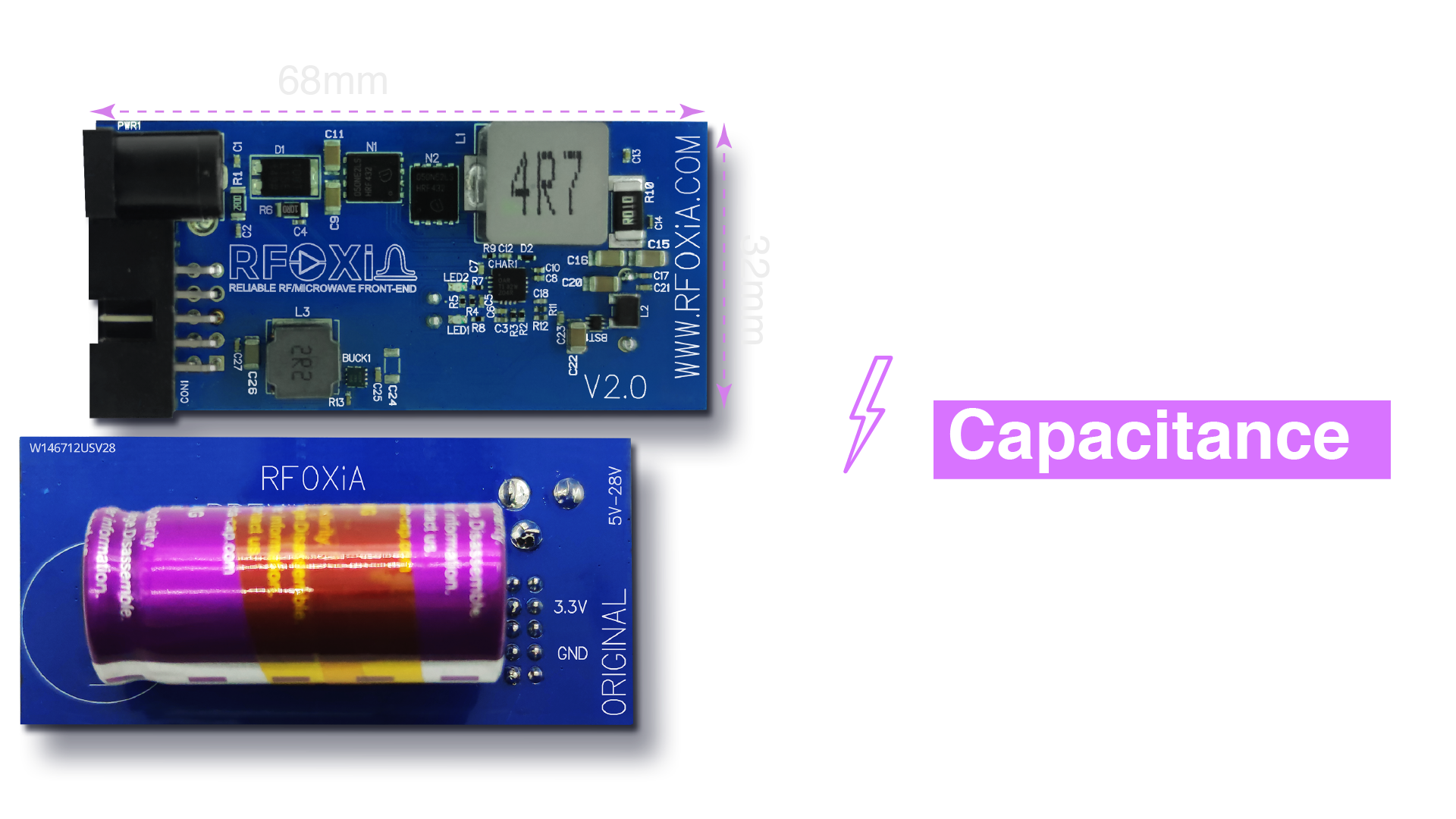
The RFOXiA MultiNav Pro+ Power/Program Kit was designed from the ground up to solve two problems that embedded developers working on wireless hardware face constantly: unreliable power in field environments, and the friction of managing power and programming as separate workflows.
The kit pairs a 1100F supercapacitor energy storage system with an integrated STLink programmer, all cabled and ready to work with the MultiNav Pro+ BLE Module ecosystem. It is priced at $119 — which, when you consider what it replaces, is a genuinely competitive number.
The Supercapacitor Advantage: Why This Is Not Just Another Battery Pack
The power system in this kit is not a lithium battery. It is a 1100F supercapacitor bank storing 8800 Joules of energy. This distinction matters enormously for embedded development workflows.
Supercapacitors charge at rates that lithium chemistry cannot approach. The kit charges fully in under 5 minutes using the included 12V 5A adapter — the supercapacitor bank accepts charge at 4V 10A. That 5-minute charge window delivers a full working day of runtime for your complete MultiNav Pro+ module stack.
Think about what that means in practice. You arrive at a field test location. Your power system is depleted from the previous session. Five minutes. Fully charged. You do not wait an hour. You do not carry multiple battery packs. You do not skip tests because you did not charge the night before. Five minutes and you are operating at full capacity for the rest of the day.
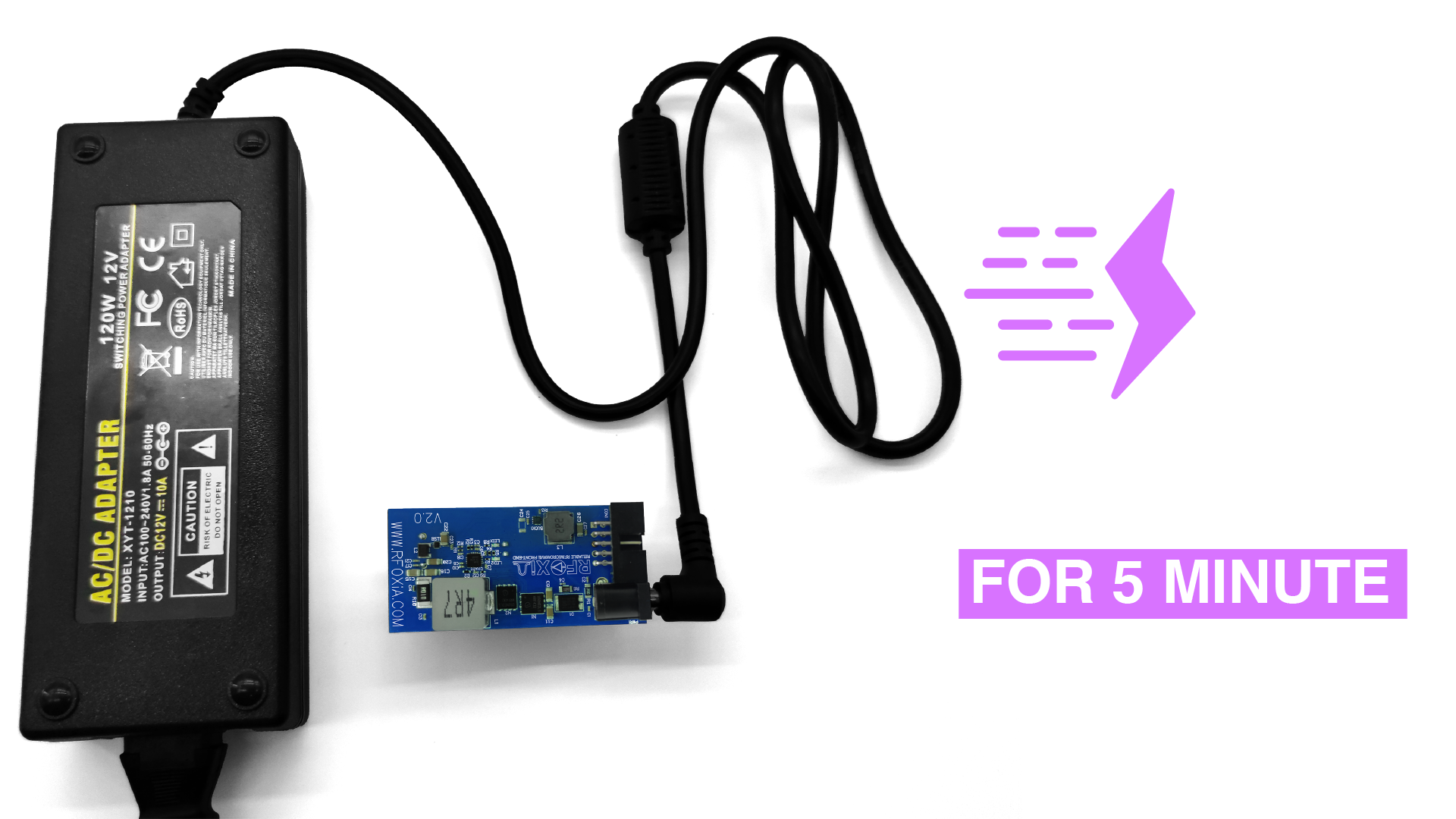
For comparison: a standard 10,000mAh lithium power bank at the same energy capacity takes 3–4 hours to charge. A LiPo battery pack degrades over charge cycles and carries thermal risk. Neither option is acceptable for professional field work.
Supercapacitors also have effectively unlimited charge cycles — no degradation, no capacity fade, no thermal runaway risk. The power system in this kit will outlast the project it powers by a wide margin.
Full-Day Power for the Complete Module Stack
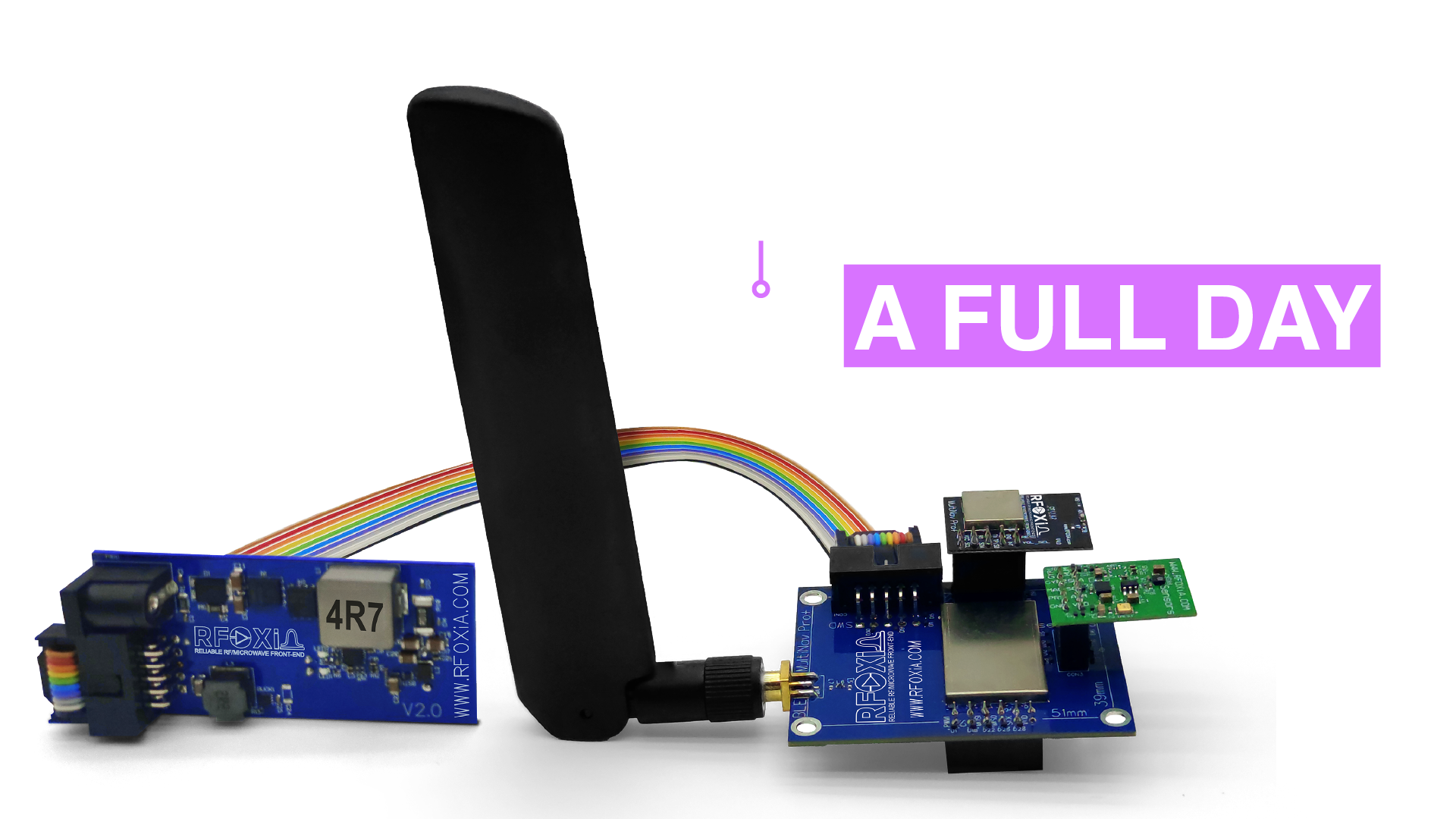
The 8800 Joule capacity is not just for the BLE module in isolation. The Power/Program Kit is capable of powering the entire MultiNav Pro+ module ecosystem for a full working day — that means BLE Module, GNSS Module, and Sensors Module running simultaneously, continuously, from a single charge.
For developers building integrated wireless sensor platforms — which is exactly what the MultiNav Pro+ ecosystem is designed to support — this is a meaningful specification. You are not rationing runtime between modules. You are not calculating power budgets to squeeze a few extra hours out of a depleted battery. You power on, you work, and you charge in 5 minutes when the session ends.
The Integrated STLink Programmer
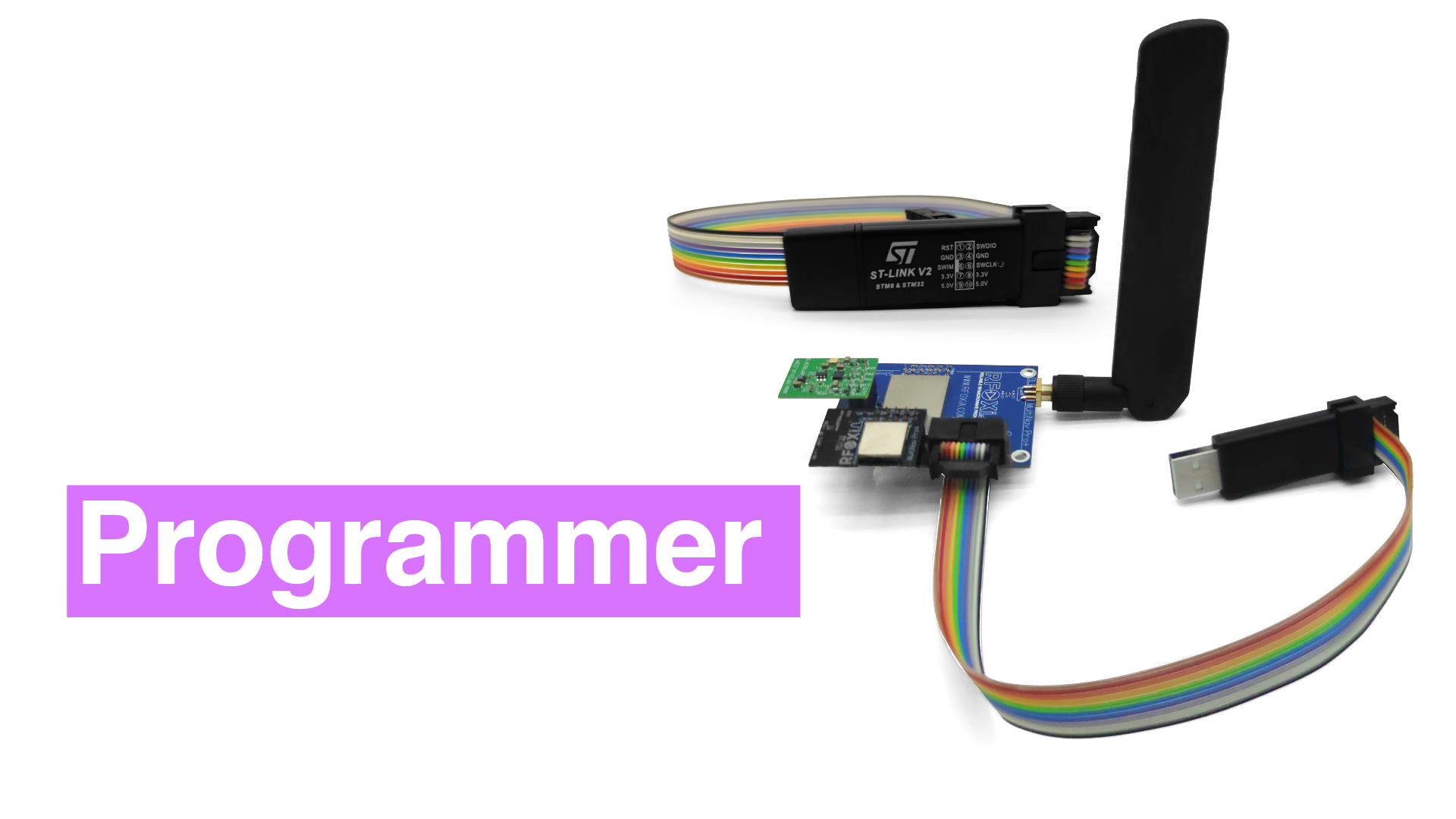
The Power/Program Kit includes an integrated STLink programmer specifically matched to the MultiNav Pro+ BLE Module, which is built on the STM32WB07 microcontroller. This is not an afterthought — it is a core part of the kit's value proposition.
In this embedded programmer comparison 2026, the STLink integration here deserves specific attention:
- Target compatibility: Optimized for the STM32WB07 at the core of the MultiNav Pro+ BLE Module, with full SWD interface support
- GDB server support: Works with standard ARM toolchain and IDE integrations including VS Code, STM32CubeIDE, and command-line GDB workflows
- Firmware flashing: Fast, reliable flash writes with proper verification — no partial flashes, no silent failures
- Debug capability: Full debug session support including breakpoints, register inspection, and memory watch
- Flat ribbon cable interface: The kit includes dedicated flat ribbon cables for connecting the programmer to the BLE module — no hunting for the right cable or making improvised connections
For developers working with the AI Firmware Builder in RFOXiA Club — which generates production-ready STM32WB07 firmware from plain-language descriptions — having a reliable programmer that speaks directly to that target is the final link in the chain from AI-generated code to deployed hardware.
Complete Connectivity Without the Cable Hunt
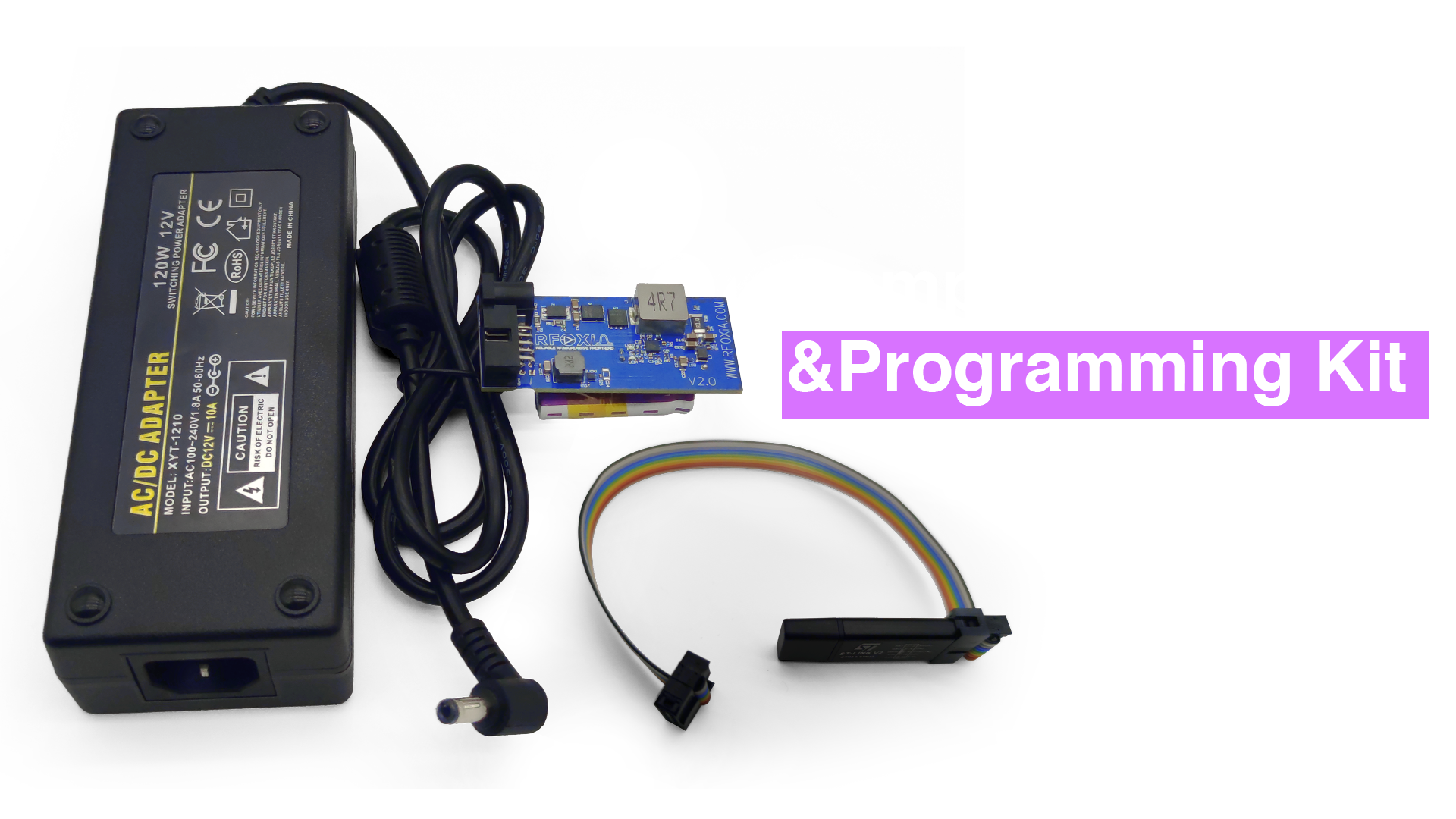
Anyone who has done serious embedded development has experienced the cable drawer problem. You have twelve cables and none of them are quite right for today's setup. You spend 20 minutes making a 15-minute connection work.
The RFOXiA Power/Program Kit ships with every cable you need. Flat ribbon cables for BLE module to power module. Flat ribbon cables for programmer to BLE module. Nothing improvised, nothing adapted. The physical integration is as intentional as the electrical design.
This is a small thing that makes a large difference when you are working in the field, on a bench that is also your kitchen table, or inside the cramped airframe of a drone.
Head-to-Head: Embedded Programmer Comparison 2026 Table
| Feature | Budget Clone ($10) | STLink-V3 ($30) | J-Link EDU ($80) | RFOXiA Kit ($119) |
|---|---|---|---|---|
| Programming reliability | Low | High | Very High | High |
| SWD support | Partial | Full | Full | Full (STM32WB07) |
| Integrated power system | No | No | No | Yes — 1100F supercap |
| Charge time | N/A | N/A | N/A | < 5 minutes |
| Full-day runtime | No | No | No | Yes — 8800J |
| Field portable | Limited | Limited | Limited | Yes |
| Ecosystem integration | None | Partial | Partial | Full MultiNav Pro+ |
| Cable kit included | No | No | No | Yes |
| FCC certified hardware | No | No | No | Yes |
The embedded programmer comparison 2026 makes clear that the RFOXiA kit is not competing purely on programming performance — it is competing on total embedded development workflow value. No other tool at or near this price point combines reliable programming, integrated field power, supercapacitor fast-charge, full-day runtime, and ecosystem-matched cabling.
Who Should Buy the RFOXiA Power/Program Kit?
Drone Builders and FPV Developers
If you are building custom drone firmware on STM32-based hardware — which describes a large and growing segment of the FPV and autonomous drone community — having a programmer that also powers your module stack for a full day is genuinely useful. You are not carrying a programmer, a power supply, a battery pack, and a tangle of cables. You are carrying one kit.
IoT and Wireless Sensor Developers
The MultiNav Pro+ ecosystem was built for exactly this audience. Long-range BLE, GNSS, multi-sensor environmental monitoring — all powered and programmable from a single portable kit. Field deployment of wireless sensor nodes becomes dramatically simpler when your power and programming solution fits in a single enclosure.
Researchers and Environmental Monitoring Teams
For research applications where the hardware needs to run for a full day in the field — data collection, environmental monitoring, precision agriculture — the 8800J supercapacitor system is a compelling power solution. Five minutes to charge at base camp. Full day of operation at the survey site.
Embedded Developers Moving from Lab to Field
If your hardware development has historically been bench-bound and you are moving into field deployment, the Power/Program Kit solves the power portability problem that is otherwise expensive and complicated to solve. It is the lowest-friction path from bench prototype to field-deployed hardware for the MultiNav Pro+ platform.
The RFOXiA Ecosystem Context
The Power/Program Kit does not exist in isolation. It is one piece of the RFOXiA hardware ecosystem — and understanding that context makes the kit significantly more valuable.
The MultiNav Pro+ BLE Module achieves ranges of 5km ground-to-ground, 15–20km man-to-drone, and up to 50km drone-to-drone. The GNSS Module provides 1.5-meter accuracy at 18Hz. The Sensors Module delivers seven environmental sensors in one board. The RFOXiA Connect app provides a PS5-style drone control interface and long-range mesh communication — completely internet-independent.
All of that hardware — the complete Developer Bundle — runs off the Power/Program Kit for a full day on a single 5-minute charge. That is a complete wireless development platform, powered and programmable, deployed anywhere.
And through RFOXiA Club, developers working with this hardware have access to an AI Firmware Builder that generates production-ready STM32WB07 firmware from plain-language descriptions. Write what you want the hardware to do. Get complete firmware. Flash it with the integrated STLink in the Power/Program Kit. Deploy it anywhere with the supercapacitor power system. This is what a modern embedded development workflow looks like in 2026.
For developers ready to build with the full ecosystem, the RFOXiA SuperCapacitor Battery and Programmer Kit is the essential starting point.
Final Verdict: Embedded Programmer Comparison 2026
The right embedded programmer for you in 2026 depends on your context. If you are doing complex multi-core SoC debugging in a controlled lab environment, a J-Link with trace support is the right tool. If you are a student doing first-time microcontroller work, an STLink clone is fine.
But if you are a drone builder, IoT developer, wireless hardware engineer, or field researcher working with the MultiNav Pro+ ecosystem — or building any hardware that needs to operate reliably in the real world, not just on a bench — the embedded programmer comparison 2026 lands clearly.
The RFOXiA Power/Program Kit is the only tool in this comparison that solves power and programming simultaneously, charges in 5 minutes, runs all day, and integrates completely with its target hardware platform. At $119, it is not the cheapest option. It is the most complete option.
No other product on the market at this price point combines 1100F supercapacitor power storage, 8800J runtime, 5-minute charging, integrated STLink programming, and a complete cable kit matched to a long-range wireless development platform.
If you are serious about your embedded development workflow in 2026, the RFOXiA SuperCapacitor Battery and Programmer Kit belongs on your bench — and in your field kit.
Ready to upgrade your embedded development setup? Explore the full RFOXiA ecosystem at rfoxia.com and join RFOXiA Club for $10 in welcome credits toward your first hardware order.
Written by: Moamen Mohamed LinkedIn