
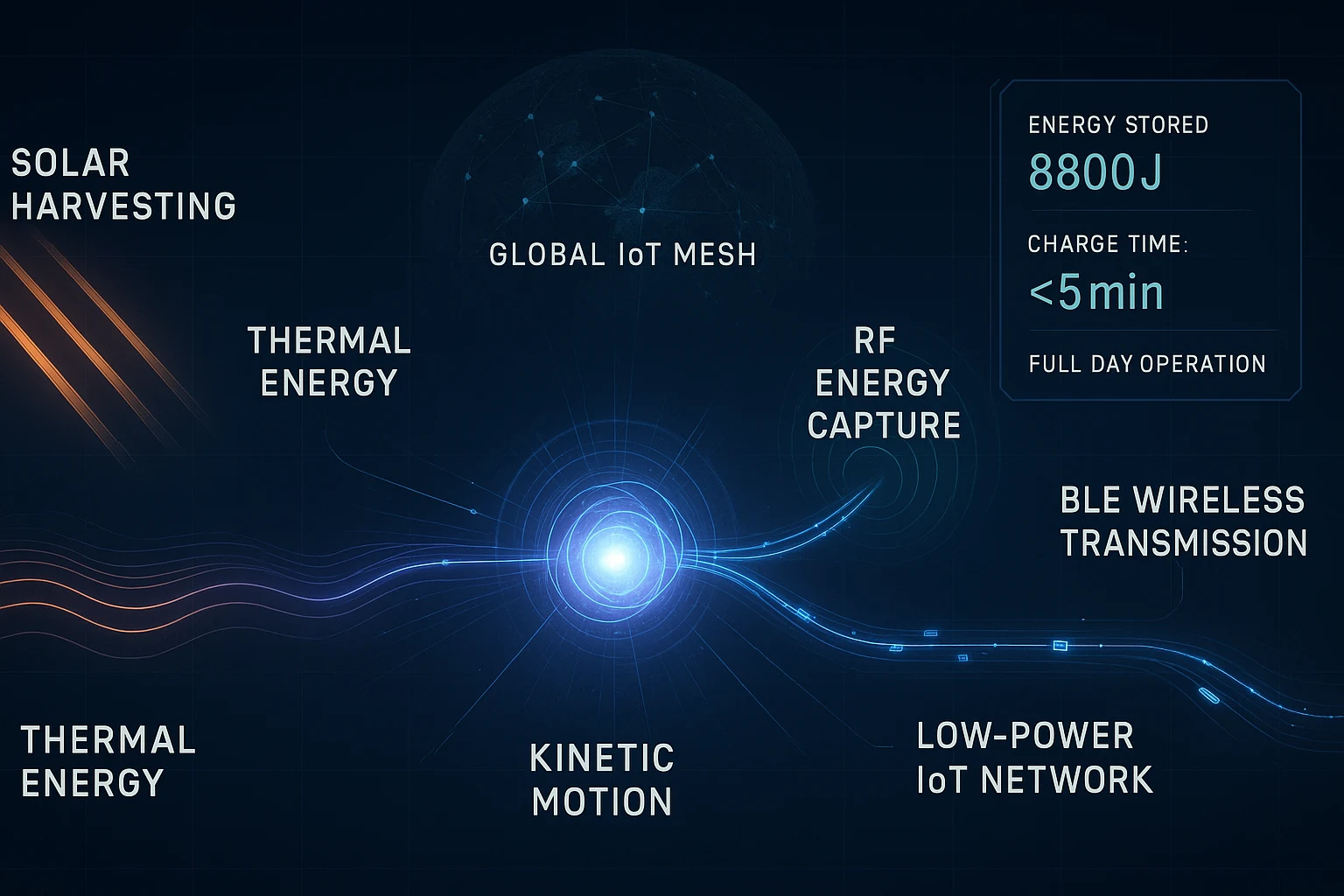
Energy Harvesting IoT Module: The MultiNav Pro+ Power/Program Kit That Changes Everything
RFOXiA SuperCapacitor Battery and Programmer Kit
Why Every Serious IoT Developer Needs a True Energy Harvesting IoT Module
Power is the silent killer of IoT projects. You design the perfect wireless node. You nail the firmware. You mount it in the field. And then, 48 hours later, it's dead — a flat lithium cell sitting in the sun, doing nothing. The problem isn't your code. It's the energy architecture underneath it.
The IoT industry has been wrestling with this for years. Batteries are heavy, slow to charge, limited in cycle count, and increasingly restricted by shipping regulations. Solar panels add bulk and cost. And traditional supercapacitor implementations have historically fallen short on energy density — until now.
The MultiNav Pro+ Power/Program Kit from RFOXiA is purpose-built to solve exactly this problem. It combines a professional-grade 1100F supercapacitor battery system with an integrated STLink programmer into one compact, field-ready kit. The result is an energy harvesting IoT module companion that charges in under five minutes and runs your entire MultiNav Pro+ module stack for a full 24-hour working day.
This is not a hobbyist power bank. This is professional energy infrastructure for wireless developers who take their deployments seriously.
The Problem With Conventional IoT Power Solutions
Before we dive into what makes this kit extraordinary, it's worth understanding what it replaces.
Lithium Batteries: The Default That Fails in the Field
Most IoT developers default to lithium-ion or lithium-polymer cells. They're energy-dense and cheap. But in real-world field deployments, they create serious operational problems:
- Charge time: A 3,000mAh LiPo typically takes 2–3 hours to charge from flat. If you're running a field station that needs to be live during daylight hours, that's dead time you can't afford.
- Cycle life: Consumer-grade lithium cells degrade noticeably after 300–500 cycles. For a node running 365 days a year, you're looking at annual battery replacement.
- Temperature sensitivity: Lithium cells lose significant capacity below 0°C and can be dangerous above 60°C. Field deployments in extreme climates become reliability nightmares.
- Shipping restrictions: Lithium battery shipping regulations are increasingly restrictive, adding friction to hardware distribution.
Supercapacitors: The Professional Alternative
Supercapacitors — also called ultracapacitors or electrochemical double-layer capacitors — operate on entirely different principles than chemical batteries. They store charge electrostatically rather than through chemical reactions. The practical consequences are significant:
- Near-unlimited cycle life (100,000+ cycles vs. 500 for lithium)
- Extremely rapid charge and discharge
- No chemical degradation over time
- Wide operating temperature range
- No fire or explosion risk
The historical limitation of supercapacitors has been energy density — they store less energy per gram than lithium. But the MultiNav Pro+ Power/Program Kit uses an 1100F supercapacitor system storing 8,800 Joules — enough to power the full MultiNav Pro+ module ecosystem for an entire working day. That's the engineering breakthrough that makes this kit genuinely useful for real IoT deployments.
Inside the MultiNav Pro+ Power/Program Kit
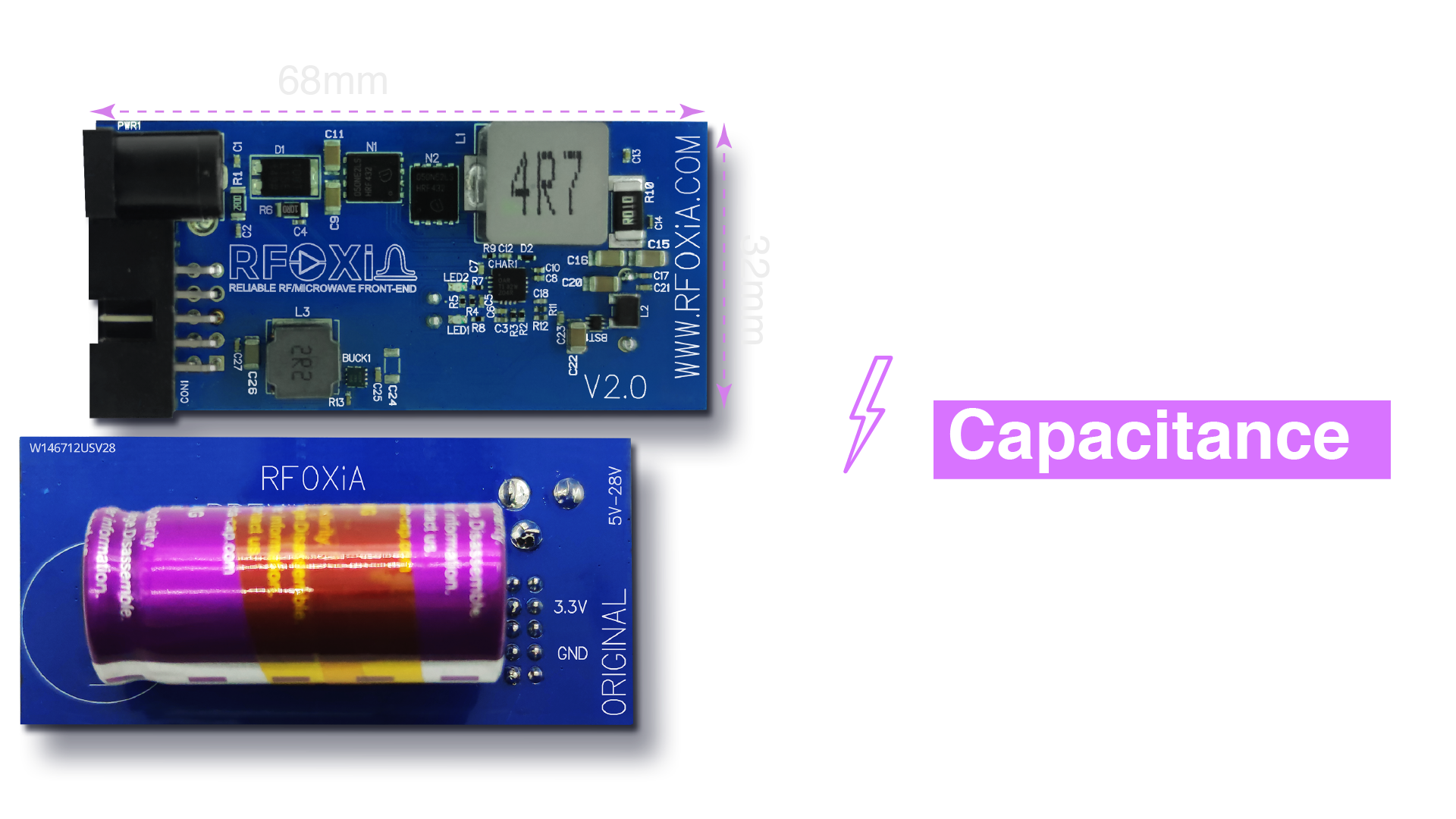
1. The 1100F Supercapacitor Battery System
The heart of the kit is its supercapacitor energy storage system — 1100 farads storing 8,800 joules of usable energy. Let's put that number in context.
The MultiNav Pro+ BLE Module, GNSS Module, and Sensors Module together represent a complete wireless sensing and communication stack. Running all three simultaneously in active operation is a demanding load by IoT standards. The 8,800 joule capacity of this supercapacitor system handles that combined load for a full 24-hour cycle.
Key specifications:
- Capacitance: 1100F
- Energy storage: 8,800 Joules
- Runtime on full MultiNav Pro+ stack: 24 hours
- Charge time: Under 5 minutes
- Cycle life: 100,000+ cycles
The sub-5-minute charge time is the specification that most surprises developers when they first encounter this kit. Charging a system capable of 24 hours of runtime in less time than it takes to make a cup of coffee is a genuinely different operational reality. Field technicians can top up between deployments without waiting. Researchers can run multiple sessions per day without planning around charge cycles.
This is what positions this kit as a legitimate energy harvesting IoT module solution — the rapid charge capability means it can pair effectively with small solar panels or other intermittent energy sources. Even a brief period of solar exposure during the day can fully restore the supercapacitor, creating a true set-and-forget deployment scenario.
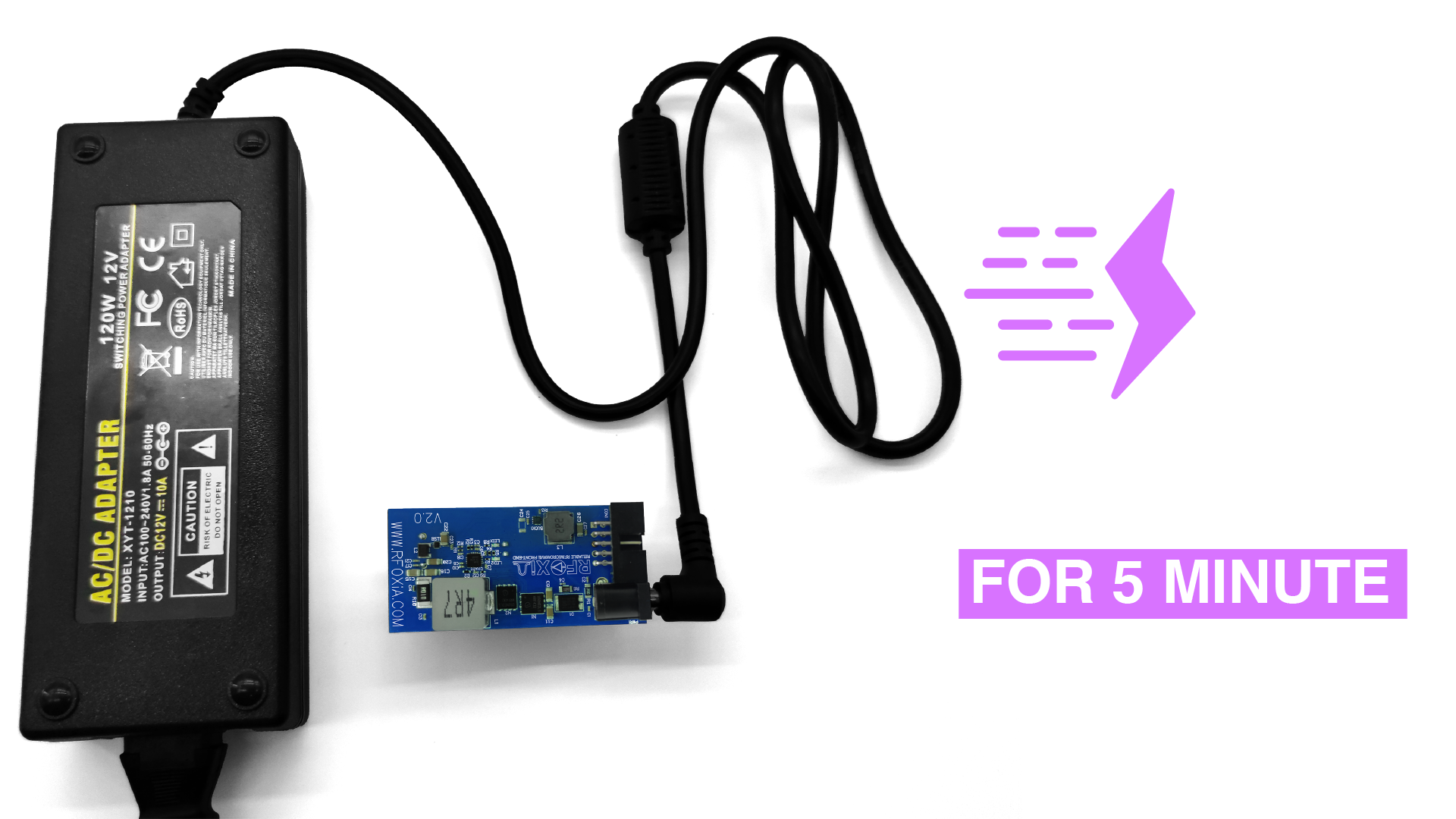
2. High-Power Charging Adapter
Achieving a sub-5-minute charge on an 1100F supercapacitor system requires a charging source capable of delivering serious current. The included 12V 5A adapter delivers power at 4V 10A into the supercapacitor system — that's 40 watts of charging power.
This charging architecture is engineered specifically for the supercapacitor's characteristics. Unlike lithium batteries, which require careful constant-current/constant-voltage charging profiles to avoid damage, supercapacitors accept high-current charging naturally. The dedicated adapter takes advantage of this to deliver the fastest possible charge time safely.
The practical implication: If you're running a research deployment and need to swap out a node mid-session, you can pull the kit, charge it fully in under five minutes while you review the morning's data, and redeploy before your coffee's cold. This is the operational cadence that was never possible with lithium-based power systems.
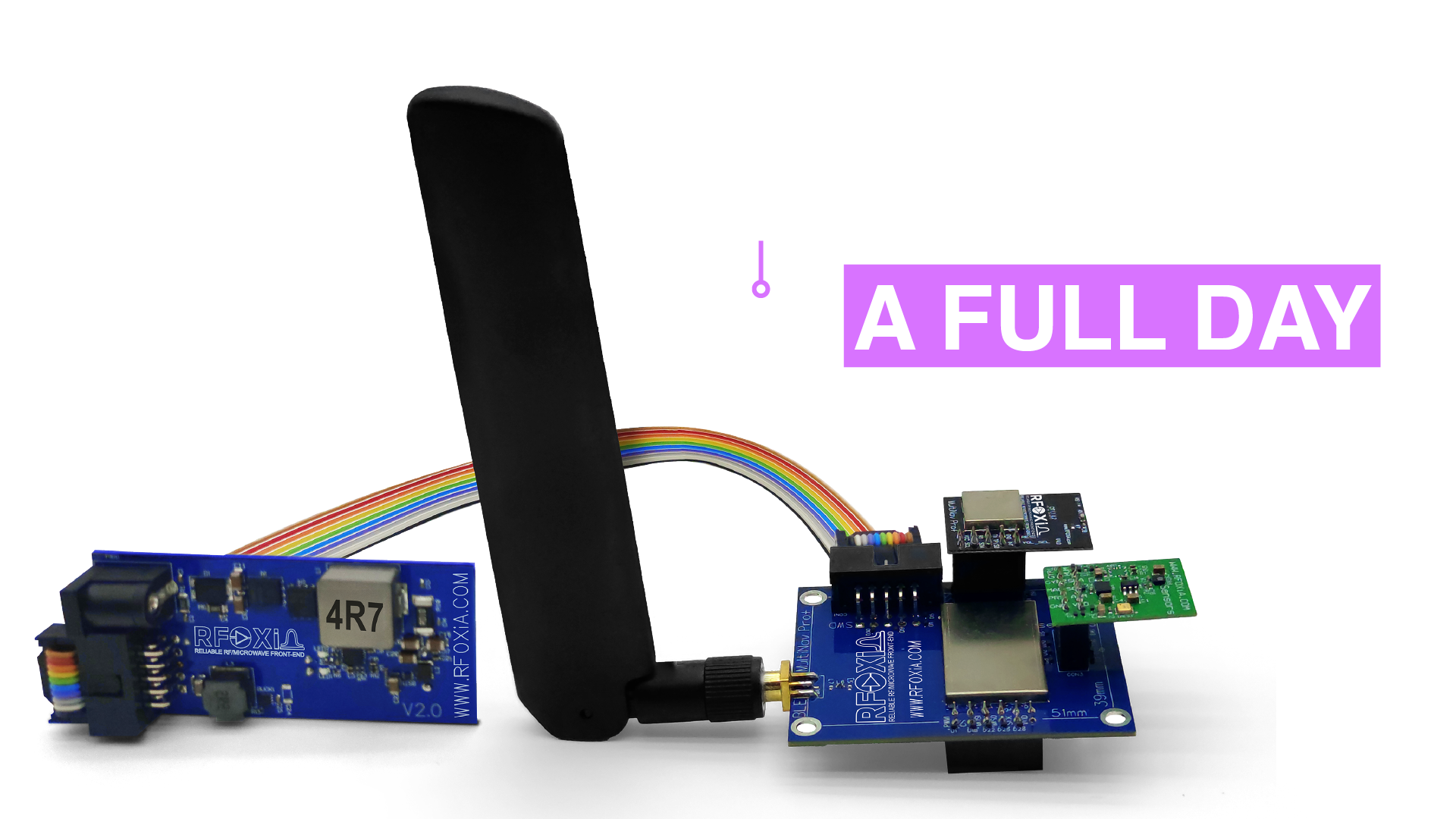
3. Full-Day Power for the Complete Module Stack
The Power/Program Kit isn't designed to power just one module in isolation. It's engineered to power the entire MultiNav Pro+ module ecosystem simultaneously for a full working day:
- MultiNav Pro+ BLE Module (long-range Bluetooth — up to 20km man-to-drone)
- MultiNav Pro+ GNSS Module (18Hz fix rate, 1.5m accuracy)
- MultiNav Pro+ Sensors Module (7 sensors: temperature, humidity, pressure, air quality, accelerometer, gyroscope, magnetometer)
Running all three together in an active field deployment — BLE transmitting data, GNSS acquiring fixes at 18Hz, sensors streaming environmental data — and getting a full 24 hours is the design target. For RFOXiA's data network contributors, this means one charge in the morning and continuous verified data streaming throughout the day, earning daily rewards without interruption.
For drone operators and field researchers using the BLE Module for long-range communication, the kit provides the bench power and field power management infrastructure to keep the base station live throughout extended operations.
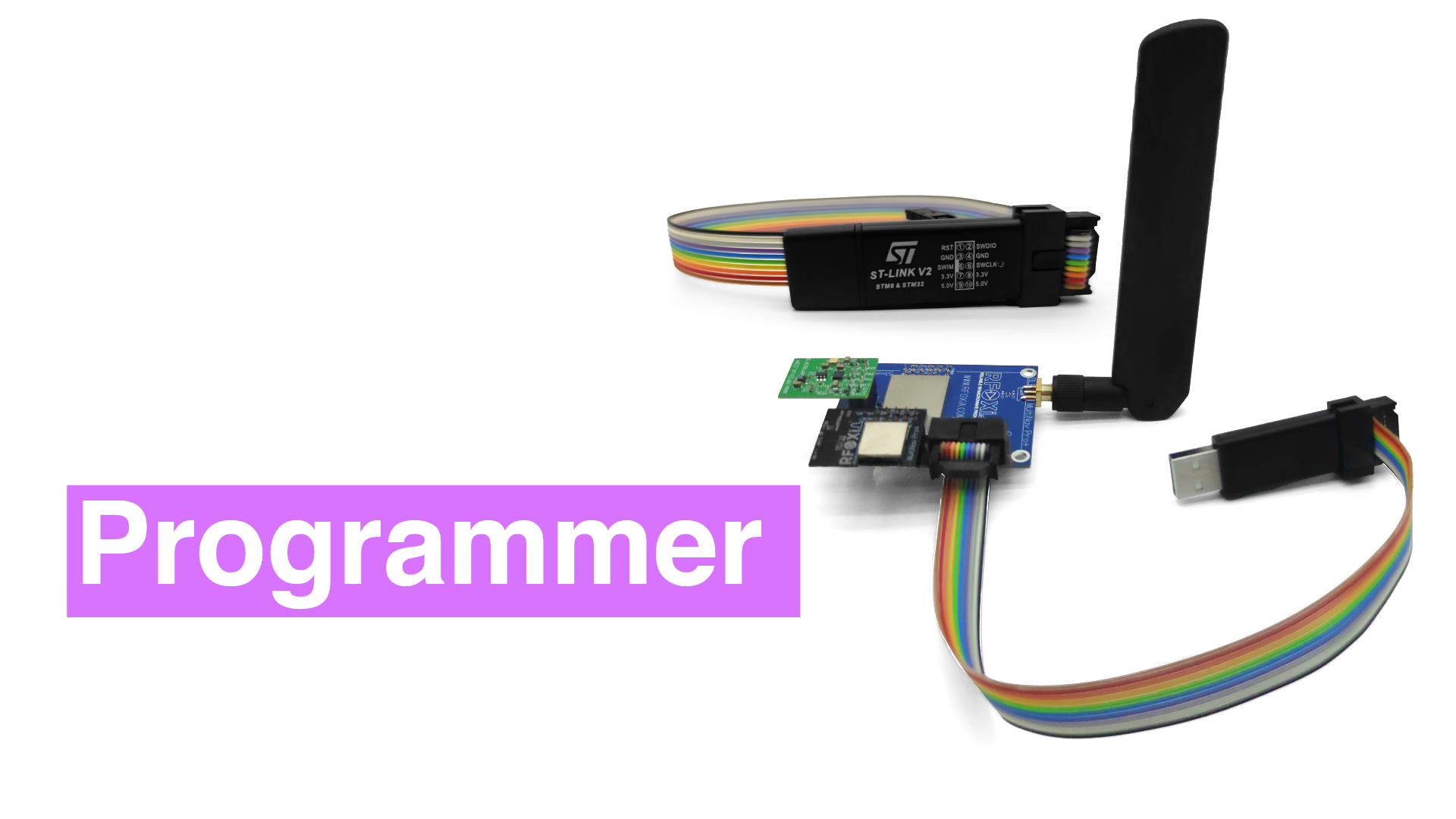
4. Integrated STLink Programmer
The Power/Program Kit earns the second half of its name through the included STLink programmer interface — the standard programming and debugging tool for STM32-based microcontrollers, including the STM32WB07 at the heart of the MultiNav Pro+ BLE Module.
For hardware developers, the STLink integration is significant. It means:
- Direct firmware flashing from your development environment to the BLE Module without external programmers
- Real-time debugging via SWD (Serial Wire Debug) — set breakpoints, inspect registers, trace execution
- Firmware updates in the field without specialized equipment — just the kit and a laptop
- Custom firmware development supported by RFOXiA's AI Firmware Builder and the open-source firmware repository on GitHub
The MultiNav Pro+ BLE Module firmware is fully open source at github.com/RFOXiA/MultiNav-Pro-Long-Range-BLE-Module-Firmware-STM32WB07. Combined with RFOXiA Club's AI Firmware Builder — which generates production-ready firmware from plain-language descriptions — the STLink programmer in this kit gives you the complete development loop: describe your application, generate firmware, flash it, debug it, deploy it.
This is the infrastructure stack that separates serious hardware developers from hobbyists patching together breakout boards.
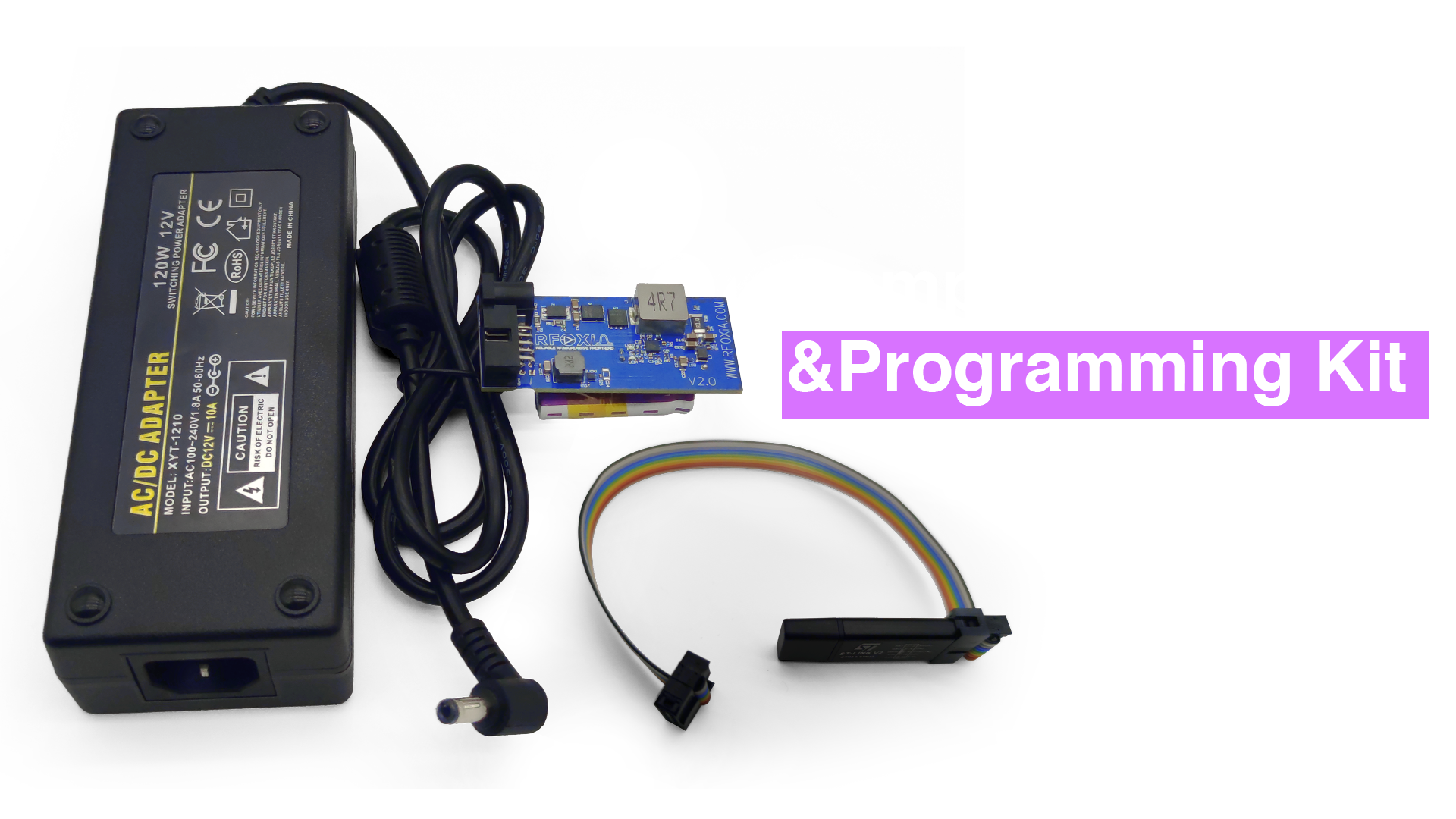
5. Complete Connectivity Kit
Every cable you need is included. No hunting for the right connector. No ordering ribbon cables separately and waiting another week.
The connectivity kit includes:
- Flat ribbon cables connecting the BLE Module to the Power/Program Kit
- Programmer interface cables connecting the STLink to the BLE Module
- All necessary adapters for a complete, immediate setup
This matters more than it might sound. In hardware development, time lost to connector hunting, pinout mismatches, and cable compatibility issues is a real productivity drain. The complete connectivity kit means you unbox, connect, and start working — no detours.
Who Is This Kit For?
The MultiNav Pro+ Power/Program Kit is designed for a specific category of developer: someone who takes their wireless hardware projects seriously enough to need professional-grade infrastructure.
Drone Operators and FPV Builders
Long-range drone operations using the MultiNav Pro+ BLE Module (up to 20km man-to-drone range) need a reliable base station power source. The Power/Program Kit provides all-day power for the ground station BLE Module, eliminating mid-operation battery swaps. Combined with the RFOXiA Connect app's PS5-style controller interface and live GPS tracking, this creates a complete long-range drone control ecosystem.
Field Researchers and Environmental Scientists
Deploying sensor nodes in remote locations means power reliability is non-negotiable. The supercapacitor system's wide temperature tolerance, rapid charge capability, and all-day runtime make it ideal for field stations where access is limited and downtime is expensive. The data streaming capability — with the Sensors Module feeding verified environmental data to RFOXiA's network — can generate daily rewards that help offset research costs.
IoT Developers and Engineers
For developers building custom IoT applications on the MultiNav Pro+ platform, the integrated STLink programmer is the tool that closes the development loop. Flash firmware, debug in real time, iterate rapidly. The AI Firmware Builder in RFOXiA Club handles the heavy lifting of code generation; the STLink programmer handles the hardware side of the loop.
Data Network Contributors
RFOXiA's data monetization network rewards users who deploy verified sensor nodes and stream environmental data. The Power/Program Kit enables continuous 24-hour data sessions — the foundation for maximizing daily reward rates. A fully charged kit in the morning means a full day of verified data, translating to the maximum daily reward rate on the network.
Why Supercapacitor Technology Is the Future of Energy Harvesting IoT Modules
The shift toward energy harvesting IoT module architectures — where devices harvest energy from their environment rather than relying on periodic battery replacement — is one of the most important trends in embedded systems design.
Supercapacitors are central to this shift for a simple reason: they can absorb intermittent energy bursts that chemical batteries cannot handle efficiently. A solar cell producing a brief surge of power during a cloud break can fully charge an 1100F supercapacitor in minutes. That same power burst into a lithium cell requires a charge management circuit, generates heat, and provides only marginal capacity recovery.
The rapid charge/discharge characteristics of supercapacitors align naturally with the intermittent nature of harvested energy sources:
- Solar: Brief windows of direct sun can fully charge the system
- Vibration harvesting: Piezoelectric elements generate burst energy — ideal for supercapacitor storage
- RF harvesting: Ambient RF energy harvested over time can top up a supercapacitor between active transmission periods
- Thermoelectric: Temperature differential energy converted and stored in supercapacitors for burst transmission
For IoT deployments targeting true long-term autonomy — months or years in the field without human intervention — the combination of an energy harvesting IoT module design with supercapacitor storage is the architecture that makes it achievable.
The MultiNav Pro+ Power/Program Kit is not positioned as a harvesting module itself — it's the power infrastructure that enables the MultiNav Pro+ ecosystem to participate in energy harvesting architectures. Pair it with a small solar panel and a charging circuit, and you have a complete self-sustaining wireless node capable of indefinite field deployment.
Technical Specifications Summary
| Specification | Value |
|---|---|
| Supercapacitor Capacitance | 1100F |
| Energy Storage | 8,800 Joules |
| Charge Time | < 5 minutes |
| Runtime (Full Module Stack) | 24 hours |
| Charging Adapter Input | 12V 5A |
| Supercapacitor Charge Rate | 4V 10A |
| Programmer Interface | STLink (SWD) |
| Compatible Modules | All MultiNav Pro+ Modules |
| Included Cables | Ribbon cables, programmer cables |
| Certification | FCC Certified |
| Price | $119 |
Integration With the RFOXiA Ecosystem
The Power/Program Kit is most powerful when understood as part of the complete RFOXiA ecosystem rather than a standalone product.
The full ecosystem comprises:
- MultiNav Pro+ BLE Module — up to 20km man-to-drone long-range Bluetooth communication
- GNSS Module — 1.5m accuracy, 18Hz fix rate precision location
- Sensors Module — 7 environmental sensors in one board
- Power/Program Kit — supercapacitor power and STLink programming
- RFOXiA Connect App — iOS and Android control and monitoring
- RFOXiA Club — developer platform, AI firmware builder, data network, community
The Developer Bundle packages the BLE Module, GNSS Module, Sensors Module, and Power/Program Kit together at a combined price of $199 (after credits). For developers who want the complete stack, the bundle is the most efficient entry point.
For developers who already have the MultiNav Pro+ modules and need the power and programming infrastructure, the RFOXiA SuperCapacitor Battery and Programmer Kit at $119 is the targeted upgrade.
RFOXiA Club membership is free and includes $10 welcome credit on signup, access to the AI Firmware Builder, the developer community, documentation, and the data network reward program. Every hardware purchase integrates with the Club platform for firmware management, data streaming, and community support.
Getting Started: From Unboxing to Deployed in Minutes
The Power/Program Kit is designed for immediate deployment. The complete connectivity kit means no additional hardware is needed.
Setup sequence:
- Connect the supercapacitor module to the charging adapter
- Charge to full in under 5 minutes
- Connect MultiNav Pro+ modules via included ribbon cables
- Connect STLink programmer to BLE Module via included programmer cables
- Open RFOXiA Club on your laptop — access AI Firmware Builder
- Flash your firmware via STLink
- Deploy your node
For first-time users, RFOXiA Club's Resources section provides step-by-step documentation, firmware examples, and video tutorials covering the complete setup process. The AI Firmware Builder handles firmware generation for custom applications — describe what you want your node to do in plain language, and the AI generates production-ready code ready to flash via the STLink programmer included in this kit.
Conclusion: Professional Power Infrastructure for Serious Wireless Development
The MultiNav Pro+ Power/Program Kit solves two of the most frustrating problems in IoT hardware development simultaneously: unreliable field power and friction-filled firmware development workflows.
The 1100F supercapacitor system — with its sub-5-minute charge time and 24-hour runtime on the full module stack — represents a genuine advance over lithium-based power solutions for field IoT deployments. The integrated STLink programmer closes the development loop, enabling rapid firmware iteration from the same kit that powers your hardware.
As an energy harvesting IoT module companion, the supercapacitor architecture opens the door to genuinely autonomous long-term deployments when paired with intermittent energy sources like solar — the rapid charge capability means even brief energy harvesting windows can restore full operational capacity.
For drone operators, field researchers, IoT engineers, and data network contributors building on the MultiNav Pro+ platform, this kit is the professional power and development infrastructure the ecosystem was designed around.
Ready to eliminate power and programming friction from your wireless development workflow? Explore the RFOXiA SuperCapacitor Battery and Programmer Kit and join RFOXiA Club free — your $10 welcome credit is waiting.
MultiNav Pro+ Power/Program Kit — $119. FCC Certified. In stock and ready to ship.
Written by: Moamen Mohamed LinkedIn