
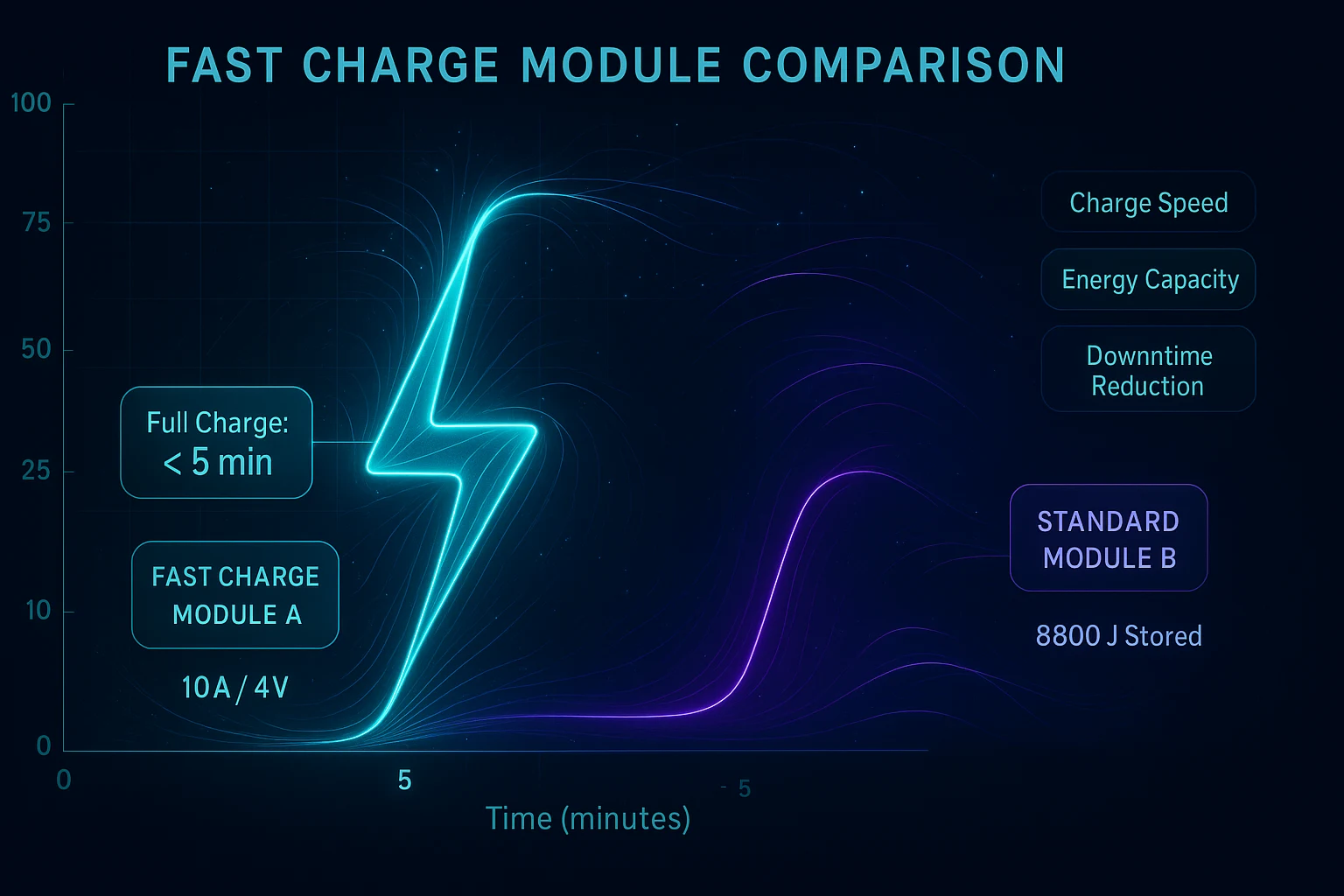
Fast Charge Module Comparison: Supercapacitors vs. Li-Ion for Hardware Developers
RFOXiA SuperCapacitor Battery and Programmer Kit
Fast Charge Module Comparison — Why Your Power Choice Defines Your Project
If you have ever spent 45 minutes waiting for a lithium battery pack to recharge in the middle of a field test, you already understand the pain this article is about to address. Power management is one of the most overlooked disciplines in hardware development — most makers spend months selecting the perfect microcontroller, days tuning RF performance, and approximately ten minutes thinking about how their device is actually going to stay powered in the real world.
This fast charge module comparison is different. Instead of comparing specs on a datasheet in a vacuum, we are going to walk through what different power technologies actually mean for drone builders, IoT engineers, and wireless hardware developers working with professional-grade embedded systems. We are going to look at Li-ion, LiPo, lithium iron phosphate, and supercapacitors — and then explain in detail why the RFOXiA MultiNav Pro+ Power/Program Kit is purpose-built to solve problems that other power solutions simply do not address.
By the end of this article, you will understand not just which technology charges fastest, but which approach makes sense for the specific demands of long-range wireless development and field-deployed IoT hardware.
The Real Cost of Slow Charging in the Field
Before we get into specifications, let us frame the problem correctly. When you are doing field testing with a long-range BLE module, a GNSS receiver, and a sensor array, downtime is not measured in inconvenience. It is measured in lost data, missed test windows, and development hours wasted sitting next to a charging cable.
Consider a typical drone developer testing a 15km communication link. The test window might be two hours in the morning before wind picks up. If your power module takes 90 minutes to charge, you are spending that entire window on standby instead of in the air. Now multiply that across a week of development iterations, and the productivity loss becomes significant.
This is why a serious fast charge module comparison has to start not with peak milliamp ratings, but with total workflow impact.
Fast Charge Module Comparison: Technology Overview
Li-Ion and LiPo Batteries
Lithium-ion and lithium polymer batteries dominate the portable electronics and drone markets for obvious reasons: they offer high energy density, relatively low self-discharge, and a mature supply chain. For consumer electronics, they are nearly always the right choice.
However, for development and field testing workflows specifically, they carry several serious limitations:
Charge time: A standard 10,000mAh Li-ion pack charged at 1C takes approximately 90 minutes to two hours. Even aggressive fast charging at 2C or 3C pushes this to 45-60 minutes — and doing so repeatedly degrades cycle life dramatically.
Cycle life: Li-ion typically supports 500-1,000 full charge cycles before capacity degrades below 80%. For a developer charging daily, that is one to three years before replacement.
Temperature sensitivity: Li-ion charges poorly below 5°C and is unsafe to charge above 45°C. Field environments frequently fall outside this window.
BMS complexity: Proper battery management system integration adds design complexity, cost, and potential failure points.
LiFePO4 (Lithium Iron Phosphate)
LiFePO4 has become popular in applications requiring long cycle life and improved thermal stability. It tolerates higher temperatures than standard Li-ion, survives more charge cycles (typically 2,000-3,000), and is considered significantly safer from a thermal runaway perspective.
However, it offers lower energy density than Li-ion (approximately 120-160 Wh/kg versus 150-265 Wh/kg for Li-ion), and charge times are similar — still measured in tens of minutes to hours.
For a fast charge module comparison focused on development speed, LiFePO4 is an improvement in longevity but does not solve the core problem.
USB Power Banks and DC Bench Supplies
Many developers use standard USB power banks or bench supplies for field work. These work until they do not — meaning until you are somewhere without a power outlet and realize your power bank takes four hours to recharge from a car adapter.
Bench supplies offer excellent current control and are ideal for lab work, but they are not portable. The gap between lab and field is exactly where most development projects lose momentum.
Supercapacitors: The Physics-First Approach
Supercapacitors (also called ultracapacitors or EDLCs — electrochemical double-layer capacitors) operate on fundamentally different physics than batteries. Where batteries store energy through chemical reactions, supercapacitors store charge electrostatically at the interface between an electrode and an electrolyte.
This has profound implications:
Charge time: Because no chemical reaction is required, supercapacitors charge at rates limited primarily by the current your charging circuit can deliver — not by the storage medium itself. This enables charge times measured in minutes rather than hours.
Cycle life: Supercapacitors typically survive 500,000 to 1,000,000 charge/discharge cycles with minimal degradation. In a daily-use development context, this is effectively unlimited.
Temperature range: Supercapacitors operate across much wider temperature ranges than Li-ion, typically -40°C to +65°C or beyond.
Safety: No chemical decomposition, no thermal runaway risk. The failure modes of supercapacitors are far more benign than those of lithium chemistries.
The traditional knock against supercapacitors has been energy density — they store less energy per kilogram than batteries. But in the context of powering a wireless development module for a full working day, the question is not whether supercapacitors can store enough energy. It is whether the system is engineered to store the right amount efficiently.
The RFOXiA MultiNav Pro+ Power/Program Kit: Engineering the Right Answer
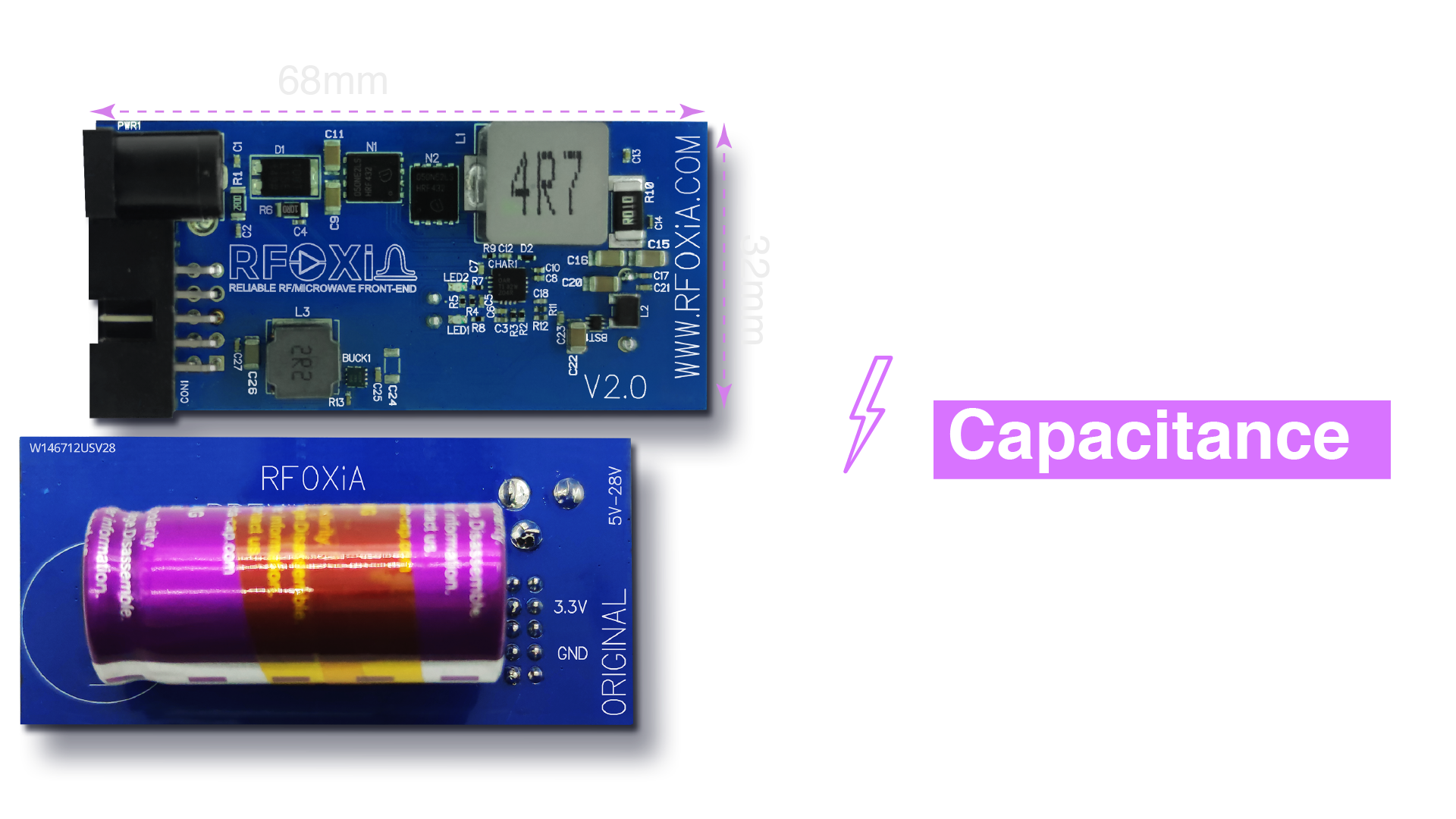
The MultiNav Pro+ Power/Program Kit is built around an 1100F supercapacitor system storing 8,800 Joules of energy. To put that in context: 8,800 Joules is sufficient to power the complete MultiNav Pro+ module stack — BLE module, GNSS receiver, sensors array — for a full working day.
The critical number in this fast charge module comparison is the charge time: under five minutes from empty to full.
Five minutes. Not 45 minutes. Not 90 minutes. Five minutes.
This changes the entire development workflow. You can discharge completely during a test session, plug in, make notes, review your data, and be fully charged again before you are ready for the next run. Downtime becomes negligible.
The Charging System
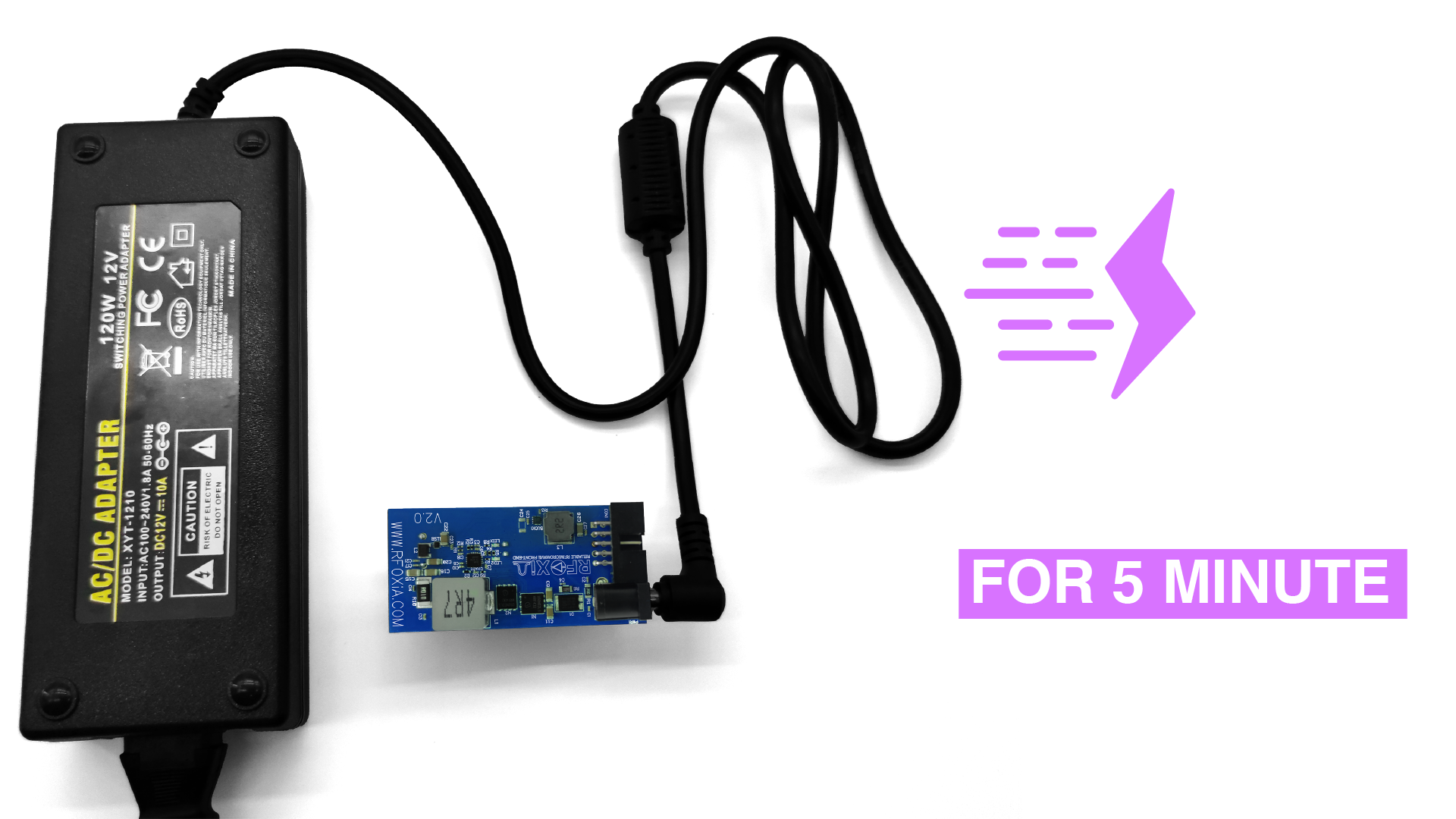
The kit includes a 12V 5A high-power charging adapter that drives the supercapacitor bank at 4V and 10A. This high-current input is what enables the sub-5-minute charge time. The adapter is purpose-designed for this system — it is not a generic USB charger retrofitted to a supercapacitor bank. The engineering is intentional and the performance is repeatable.
For field use, this means a vehicle power outlet (or a small 12V solar panel with adequate output) can fully recharge the system in the field in under five minutes. The dependency on wall power disappears entirely once you are operating in the field.
All-Day Power for the Complete Module Stack
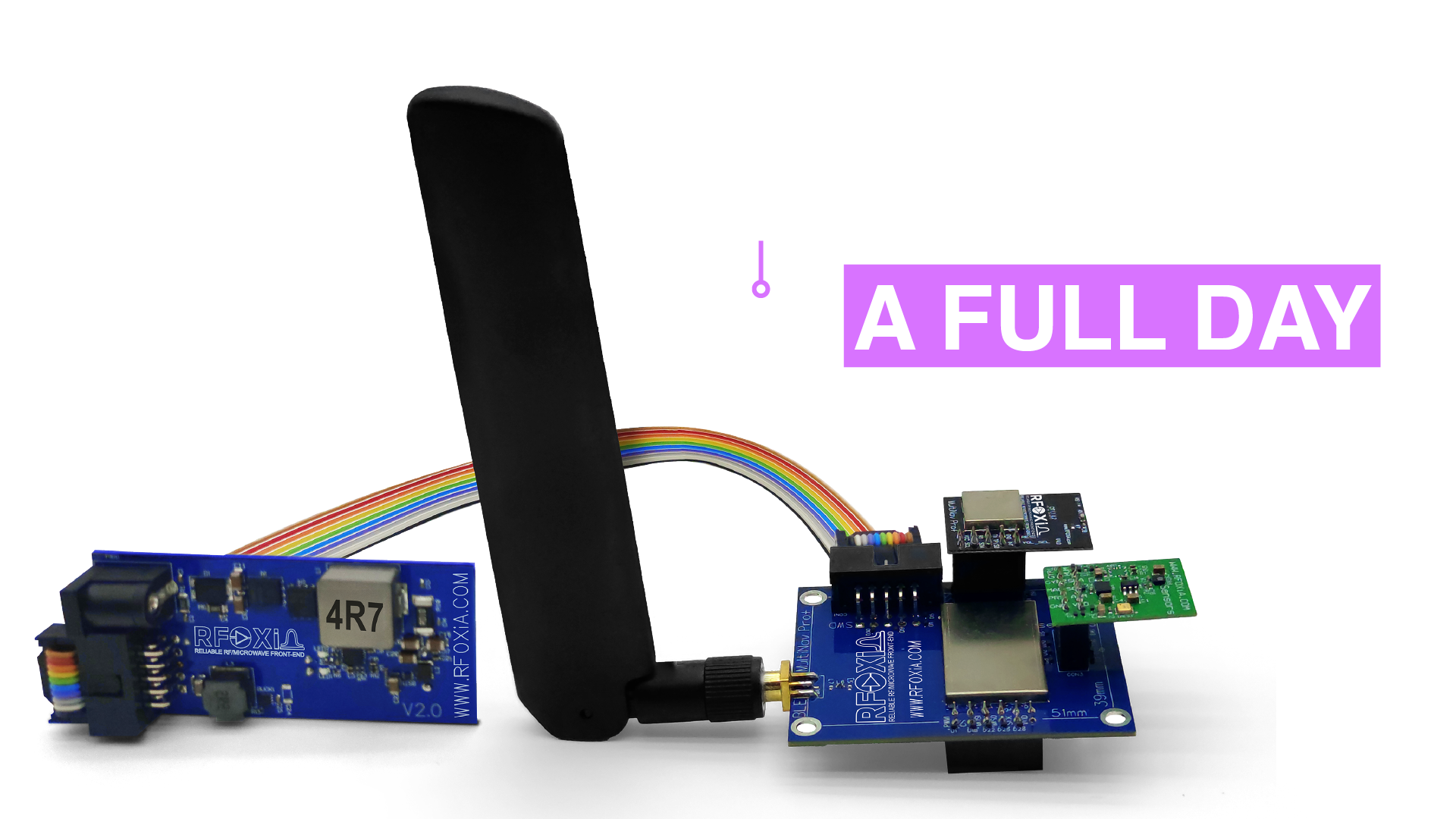
The 8,800 Joule capacity of the supercapacitor system is not just for the BLE module in isolation. The Power/Program Kit is designed to run the entire MultiNav Pro+ ecosystem simultaneously — BLE module, GNSS module, sensors module — for a full working day on a single charge.
This matters enormously for developers who are testing the complete stack rather than individual components. Many power solutions are rated for a single module but struggle to sustain the combined draw of a multi-module system over extended periods. The RFOXiA kit is engineered for the full system load from the outset.
The Programmer Integration: Solving a Second Problem Simultaneously
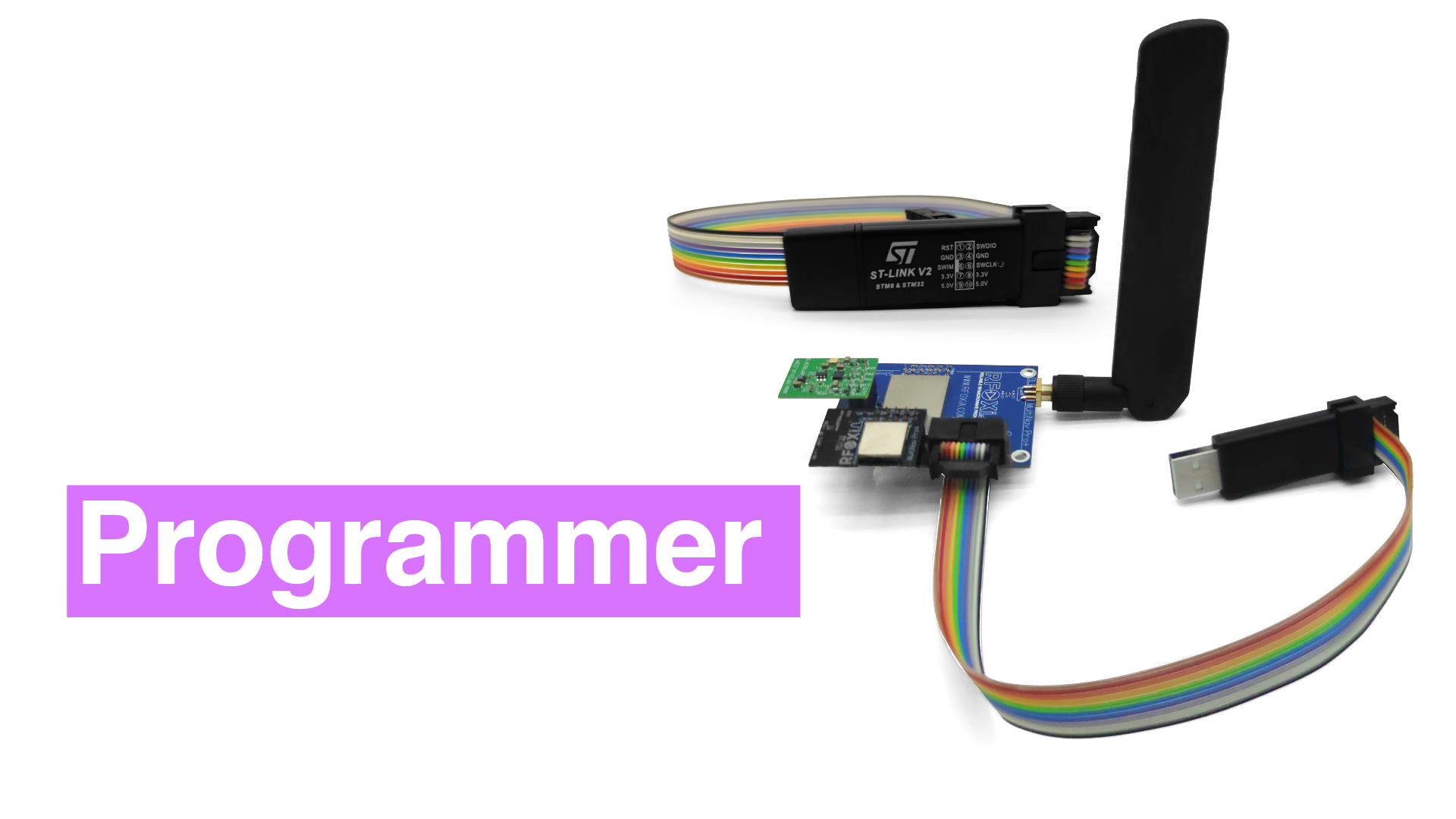
Most power solutions for development hardware stop at power delivery. The MultiNav Pro+ Power/Program Kit goes further by integrating a full STLink programmer interface directly into the kit.
This means that the same device that powers your BLE module also programs it. Firmware updates, debugging sessions, and custom firmware deployment all happen through the same compact unit. For developers iterating on firmware builds — which is most embedded developers most of the time — eliminating a separate programmer from the workflow reduces cable clutter, reduces connection points that can fail, and reduces the cognitive overhead of managing multiple tools simultaneously.
The STLink interface supports the STM32WB07 at the core of the MultiNav Pro+ BLE module, and the RFOXiA SuperCapacitor Battery and Programmer Kit is fully compatible with the open-source firmware repository available on GitHub, enabling complete customization of the module's behavior.
Complete Connectivity Kit
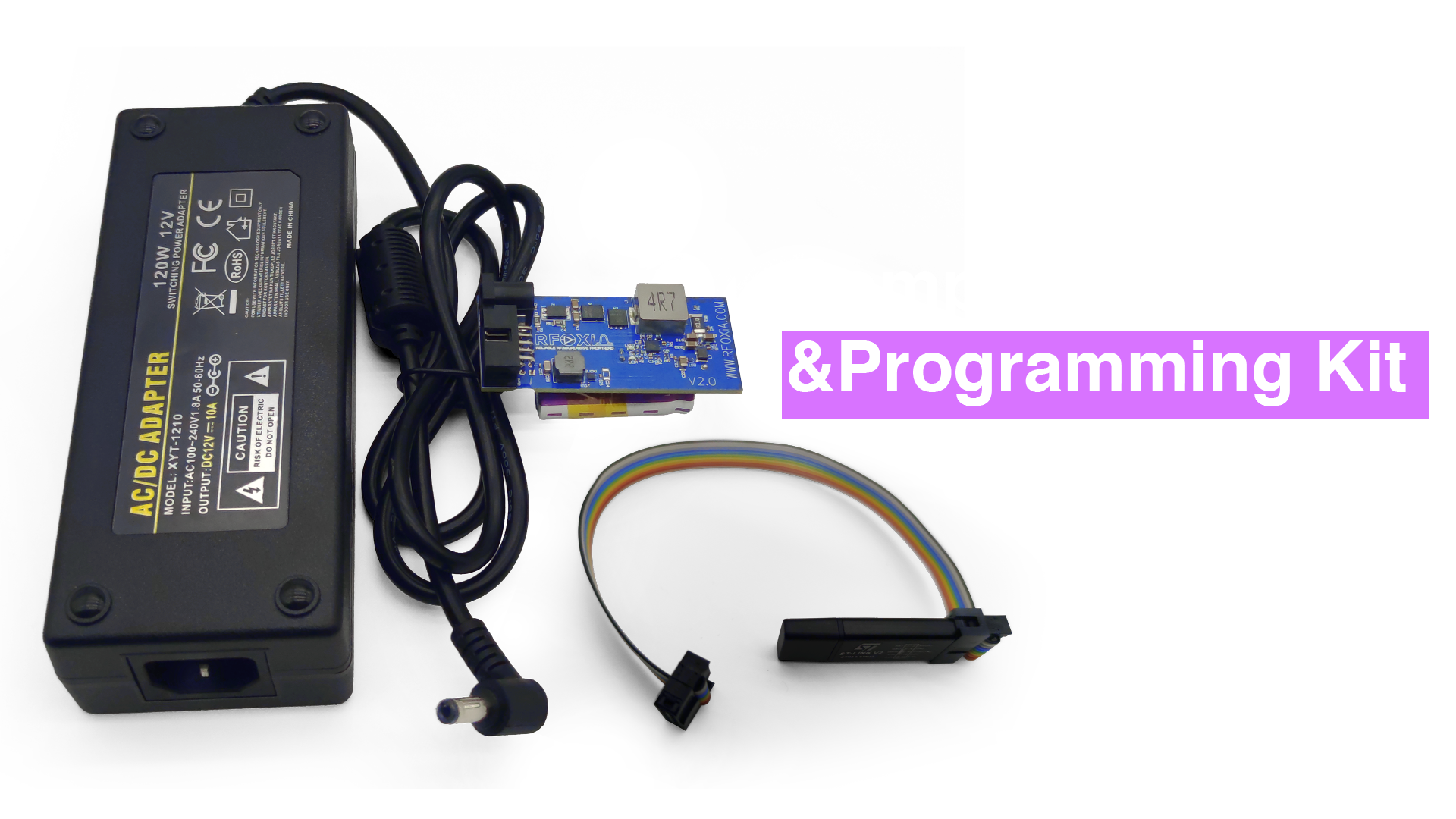
The kit ships with all cables required to connect the system — flat ribbon cables for module-to-power and module-to-programmer connections. This is a detail that matters more than it sounds. Generic development kits frequently ship without the specific cable configurations needed for their hardware, requiring developers to source or fabricate cables before they can use the equipment. The MultiNav Pro+ Power/Program Kit is ready to use out of the box.
Fast Charge Module Comparison: Side-by-Side Summary
To make this fast charge module comparison concrete, here is a direct comparison of power solution types across the metrics that matter most for hardware developers:
Charge Time
- Standard Li-Ion (10,000mAh at 1C): 90-120 minutes
- Fast-charge Li-Ion (at 2-3C): 45-60 minutes
- LiFePO4 (standard): 60-90 minutes
- USB Power Bank (QC 3.0): 60-90 minutes
- RFOXiA Supercapacitor System: Under 5 minutes
Cycle Life
- Standard Li-Ion: 500-1,000 cycles
- LiFePO4: 2,000-3,000 cycles
- Supercapacitor: 500,000-1,000,000 cycles
Temperature Range for Charging
- Li-Ion: 5°C to 45°C
- LiFePO4: 0°C to 55°C
- Supercapacitor: -40°C to 65°C
Safety Profile
- Li-Ion: Thermal runaway risk, requires BMS
- LiFePO4: Improved, still requires BMS
- Supercapacitor: No thermal runaway, no chemical decomposition
Programmer Integration
- Standard power solutions: None
- RFOXiA Power/Program Kit: STLink programmer included
All-Day Runtime for Multi-Module Stack
- Generic power bank: Variable and often insufficient
- RFOXiA Supercapacitor System: Verified for full MultiNav Pro+ stack
The picture that emerges from this fast charge module comparison is not subtle. For developers who need to move fast, iterate frequently, and operate in field conditions, the supercapacitor approach offers advantages in nearly every category that matters.
Who This Kit Is Built For
The MultiNav Pro+ Power/Program Kit is not a general-purpose power solution. It is engineered specifically for developers working with the MultiNav Pro+ module ecosystem. That means:
Drone and FPV builders who are field-testing long-range communication links and cannot afford to wait 90 minutes between test runs.
IoT and robotics engineers who iterate on firmware daily and need programming, power, and connectivity in one compact solution.
Environmental researchers deploying sensor nodes in remote locations where reliable, fast-charging power is a logistical requirement rather than a convenience.
Data network contributors running the RFOXiA sensors module continuously to earn rewards from the RFOXiA data monetization network — where uptime directly correlates to earnings.
For any of these users, the productivity math of the RFOXiA SuperCapacitor Battery and Programmer Kit is straightforward. Faster charging means more test cycles per day. More test cycles means faster development. Faster development means faster deployment and faster return on your hardware investment.
Integration With the RFOXiA Ecosystem
The Power/Program Kit does not exist in isolation — it is designed as the enabling infrastructure layer for the entire MultiNav Pro+ development ecosystem. When paired with the BLE module, GNSS module, and sensors module (available as the complete Developer Bundle), the Power/Program Kit ensures that none of your other hardware ever becomes the bottleneck.
Developers using the RFOXiA Connect app for drone control and mesh communication, or building custom firmware with the AI Firmware Builder on RFOXiA Club, depend on consistent, reliable power delivery to make their testing sessions productive. A 5-minute recharge time means the development loop never stops for power.
The STLink programmer integration becomes especially valuable when combined with the AI Firmware Builder — generate firmware in the Club Dev Hub, download it, flash it through the Power/Program Kit, and be testing within minutes. The iteration cycle that used to take hours now takes minutes.
Technical Specifications Summary
Supercapacitor System:
- Capacitance: 1,100F
- Energy storage: 8,800 Joules
- Charge time: Under 5 minutes
- Runtime: Full working day (complete MultiNav Pro+ module stack)
Charging Adapter:
- Input: Standard AC mains
- Output: 12V, 5A
- Supercapacitor charge rate: 4V, 10A
Programmer:
- Interface: STLink
- Compatible: MultiNav Pro+ BLE Module (STM32WB07)
- Functions: Firmware flashing, debugging
Connectivity:
- Flat ribbon cables included
- BLE module to power module connection
- Programmer to BLE module connection
Price: $119 FCC Certified: Yes
The Bottom Line on This Fast Charge Module Comparison
Every fast charge module comparison ultimately comes down to a simple question: what does this technology enable you to do that you could not do before?
For the RFOXiA MultiNav Pro+ Power/Program Kit, the answer is straightforward. It enables you to run a complete wireless development stack — long-range BLE, precision GNSS, multi-sensor environmental monitoring — all day long, with a five-minute recharge window when you need it, and integrated firmware programming when you are ready to push your next build.
No other solution in this category combines supercapacitor fast charging, all-day multi-module runtime, and STLink programmer integration in a single unit at this price point. If you are serious about professional wireless hardware development and tired of spending your testing windows waiting for batteries to charge, this is the upgrade your workflow needs.
Explore the full specifications and order your kit directly from the RFOXiA SuperCapacitor Battery and Programmer Kit product page. The kit is FCC certified, ready to ship, and backed by the same engineering team that built the MultiNav Pro+ BLE module — the only long-range BLE solution on the market achieving 20km man-to-drone range at a maker-accessible price.
Your development workflow is only as fast as your slowest component. Stop letting your power supply be that component.
Written by: Moamen Mohamed LinkedIn