
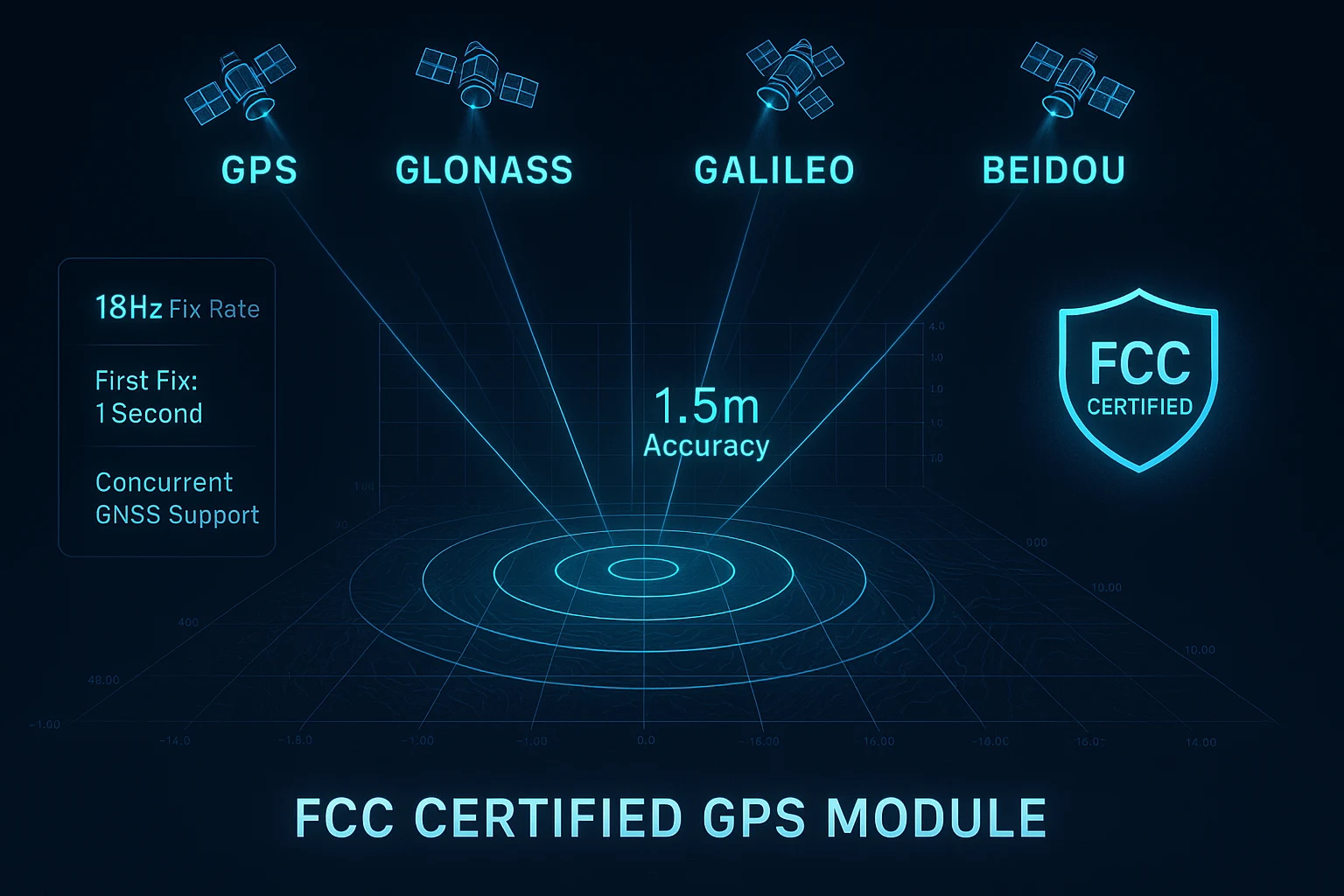
FCC Certified GPS Module That Redefines Precision Navigation
The FCC Certified GPS Module Built for Builders Who Demand More
When your project depends on knowing exactly where it is — not approximately, not close enough, but exactly — the module you choose makes or breaks everything. Whether you are guiding an autonomous drone through a complex flight path, tracking fast-moving assets in real time, building a precision agriculture system, or developing a next-generation wearable device, your GNSS module is the foundation your entire application rests on.
The MultiNav Pro+™ Accurate GNSS Module from RFOXiA is the FCC certified GPS module engineered for that standard. With 1.5-meter accuracy, an 18Hz fix rate, concurrent multi-constellation support, and a compact form factor of just 26mm x 22mm, this module delivers professional-grade navigation performance at a price point accessible to every serious developer.
This guide covers everything you need to know about the MultiNav Pro+ — what it does, how it works, who it is built for, and why it stands apart from every other option in its class.
Why FCC Certification Matters More Than You Think
Before diving into specifications, it is worth understanding why FCC certification is not just a bureaucratic checkbox — it is a meaningful technical and commercial credential.
The Federal Communications Commission (FCC) tests and certifies RF-emitting devices to ensure they operate within defined frequency bands, at defined power levels, without causing harmful interference to other devices or infrastructure. A module that carries FCC certification has been through independent laboratory testing and has passed a rigorous review process.
For developers and engineers, FCC certification means:
- Legal deployment in the United States — non-certified modules cannot legally be incorporated into commercial products sold in the US market
- Interference compliance — the module will not disrupt other electronics in close proximity, which is critical in multi-sensor systems like the RFOXiA ecosystem
- Distributor eligibility — major distributors including DigiKey and Mouser require FCC certification for marketplace listing
- Customer confidence — enterprise buyers, academic institutions, and commercial operators require certified components
- Integration safety — in drone and robotics applications, interference from uncertified modules can cause catastrophic failure
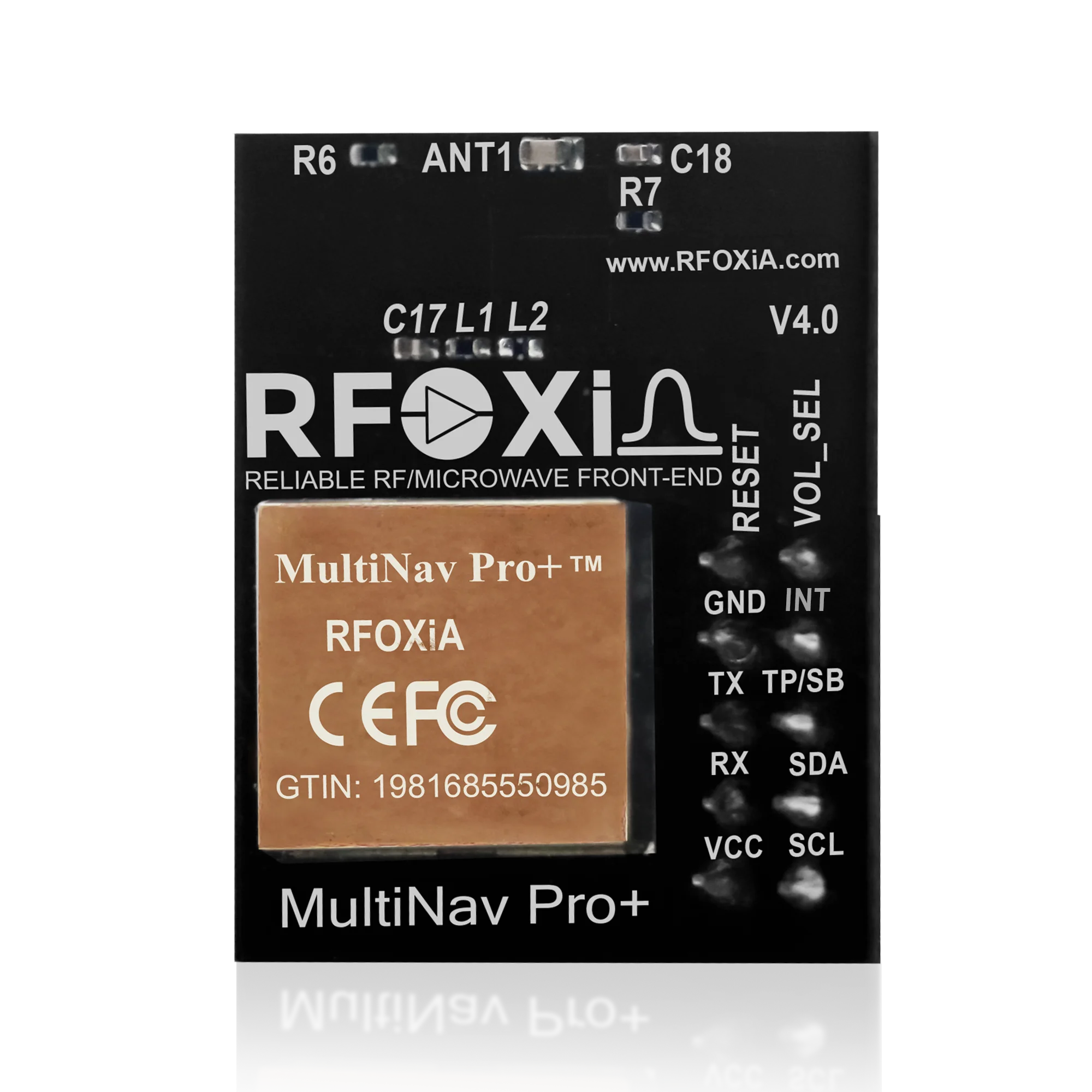
The MultiNav Pro+ carries FCC certification, making it one of the few high-performance FCC certified GPS modules available at this price point with these specifications. Every module in the RFOXiA product line carries FCC certification — a deliberate choice that reflects the company's commitment to professional-grade hardware accessible to every builder.
MultiNav Pro+™ Specifications: What the Numbers Mean
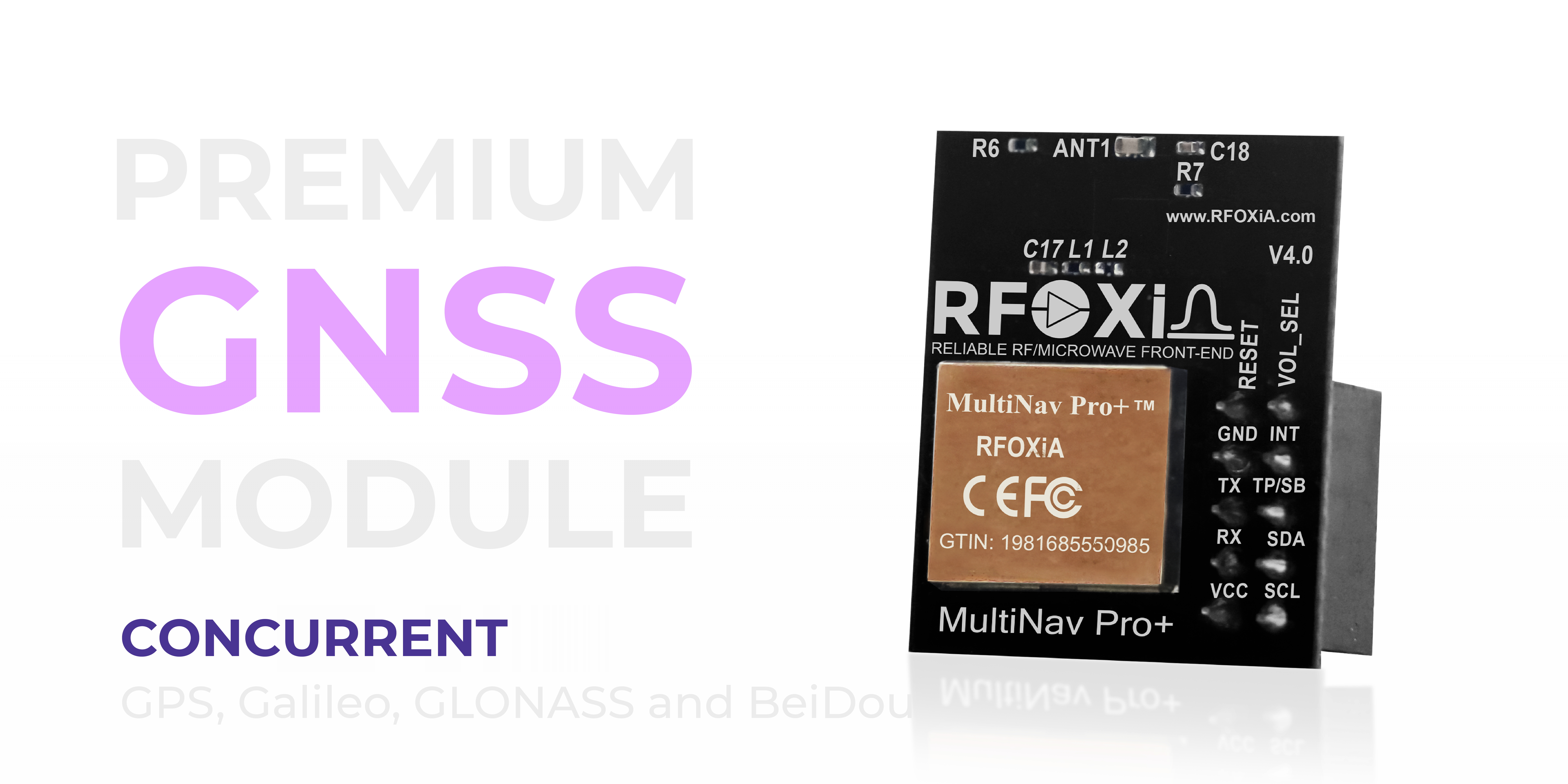
The MultiNav Pro+ is powered by the u-blox MIA-M10Q — one of the most capable GNSS chipsets available for embedded applications. Here is what the core specifications actually mean for your project.
1.5-Meter Accuracy
Most low-cost GPS modules advertise accuracy in the 2.5 to 5-meter range. In practice, under real-world sky conditions with multipath interference, that number climbs to 5 to 10 meters or more. The MultiNav Pro+ achieves a consistent 1.5-meter CEP (Circular Error Probable) — meaning 50% of position readings fall within 1.5 meters of the true location, and the distribution is tight enough for demanding applications.
For drone navigation, autonomous vehicle guidance, precision mapping, or asset tracking, that difference between 1.5 meters and 5 meters is the difference between a usable system and an unreliable one.

18Hz Fix Rate
Standard GPS modules update their position output at 1Hz — once per second. Higher-end modules offer 5Hz or 10Hz. The MultiNav Pro+ delivers up to 18Hz — eighteen position updates per second.
Why does this matter? For any fast-moving platform — a racing drone, an FPV aircraft, a ground vehicle, a high-speed tracking application — a 1Hz update rate means your system is navigating on data that is already a full second old. At 30 meters per second (a moderate drone speed), that is 30 meters of stale data. At 18Hz, you are working with position data less than 56 milliseconds old.
This fix rate is what makes the MultiNav Pro+ genuinely useful for dynamic applications that commodity modules simply cannot serve.
First Fix in 1 Second
TTFF — Time to First Fix — determines how long your system waits at power-on before it has a valid position. Many modules require 30 seconds to several minutes for cold start acquisition. The MultiNav Pro+ achieves first fix in approximately 1 second under good sky conditions, dramatically reducing the startup delay in deployed systems.
Concurrent Multi-Constellation GNSS: Why It Matters
GPS is one satellite navigation system. It is also an American system, which means its satellite geometry is optimized for coverage over North America and may offer fewer visible satellites in other regions. Real-world GNSS environments are not ideal — buildings, terrain, and atmospheric conditions all affect satellite signal availability.
The MultiNav Pro+ simultaneously receives signals from four independent satellite constellations:
- GPS — US system, 31 operational satellites
- GLONASS — Russian system, 24 operational satellites
- Galileo — European system, 30+ operational satellites
- BeiDou — Chinese system, 35+ operational satellites
Combined, this gives the MultiNav Pro+ access to over 120 navigation satellites at any given moment. More satellites in view means better geometric diversity (DOP — Dilution of Precision), which directly translates to better positional accuracy and reliability.
In urban canyons, partially obstructed environments, or challenging terrain where only a subset of satellites are visible, multi-constellation support is the difference between getting a fix and getting nothing.
Compact Design Without Compromise
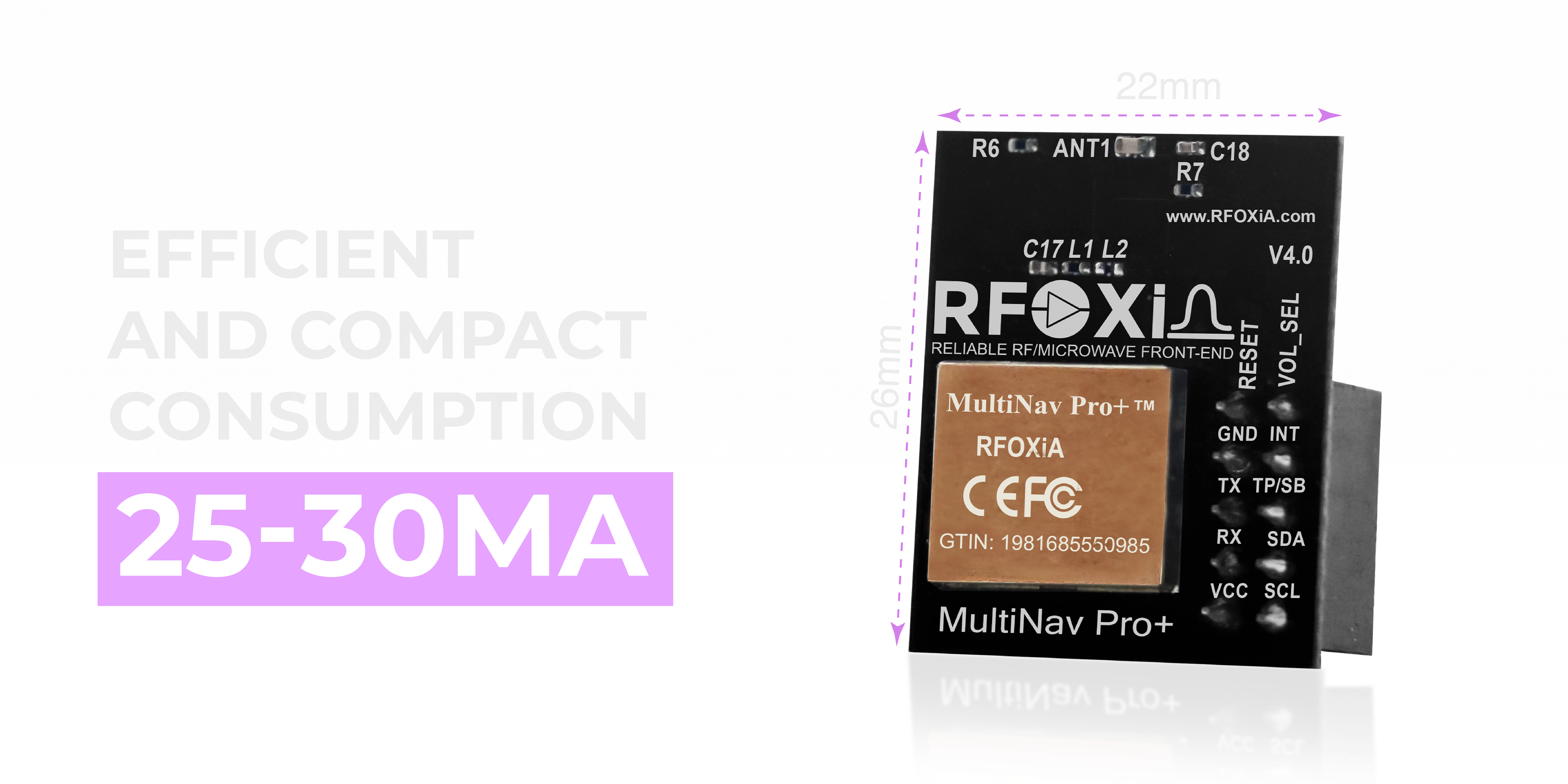
At 26mm x 22mm, the MultiNav Pro+ is engineered to integrate into space-constrained applications without requiring external antennas or complex RF layout work. The integrated chip antenna provides optimal signal reception within this compact footprint.
Power consumption is 25-30mA during active tracking — efficient enough for battery-powered systems and deployments where power budget is a constraint. This makes the MultiNav Pro+ viable for wearables, field research instruments, small autonomous vehicles, and sensor nodes where every milliamp matters.
The combination of compact size and low power draw makes this module genuinely deployable across a broader range of applications than larger, power-hungry alternatives.
Interface Flexibility: UART and I2C
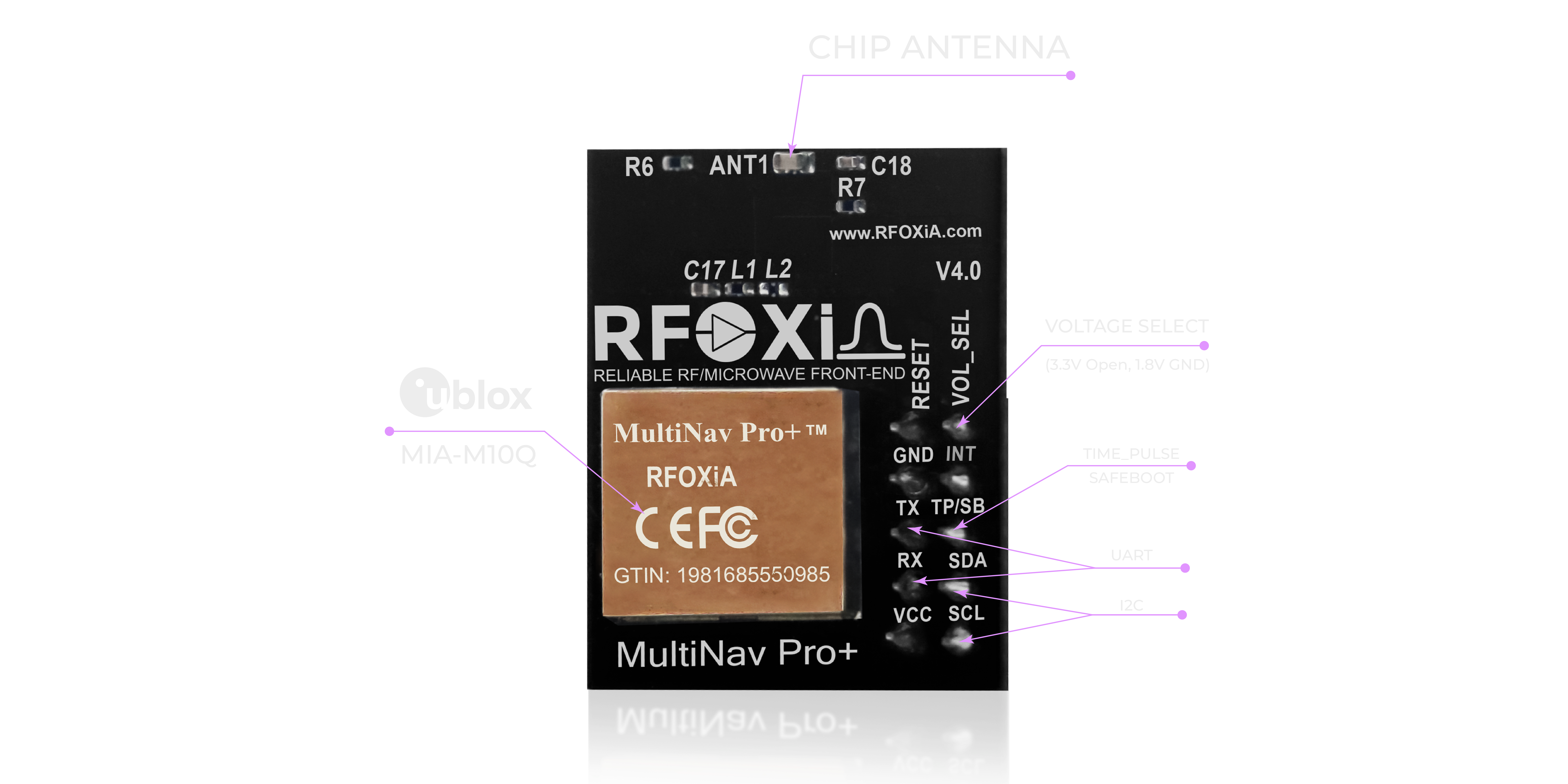
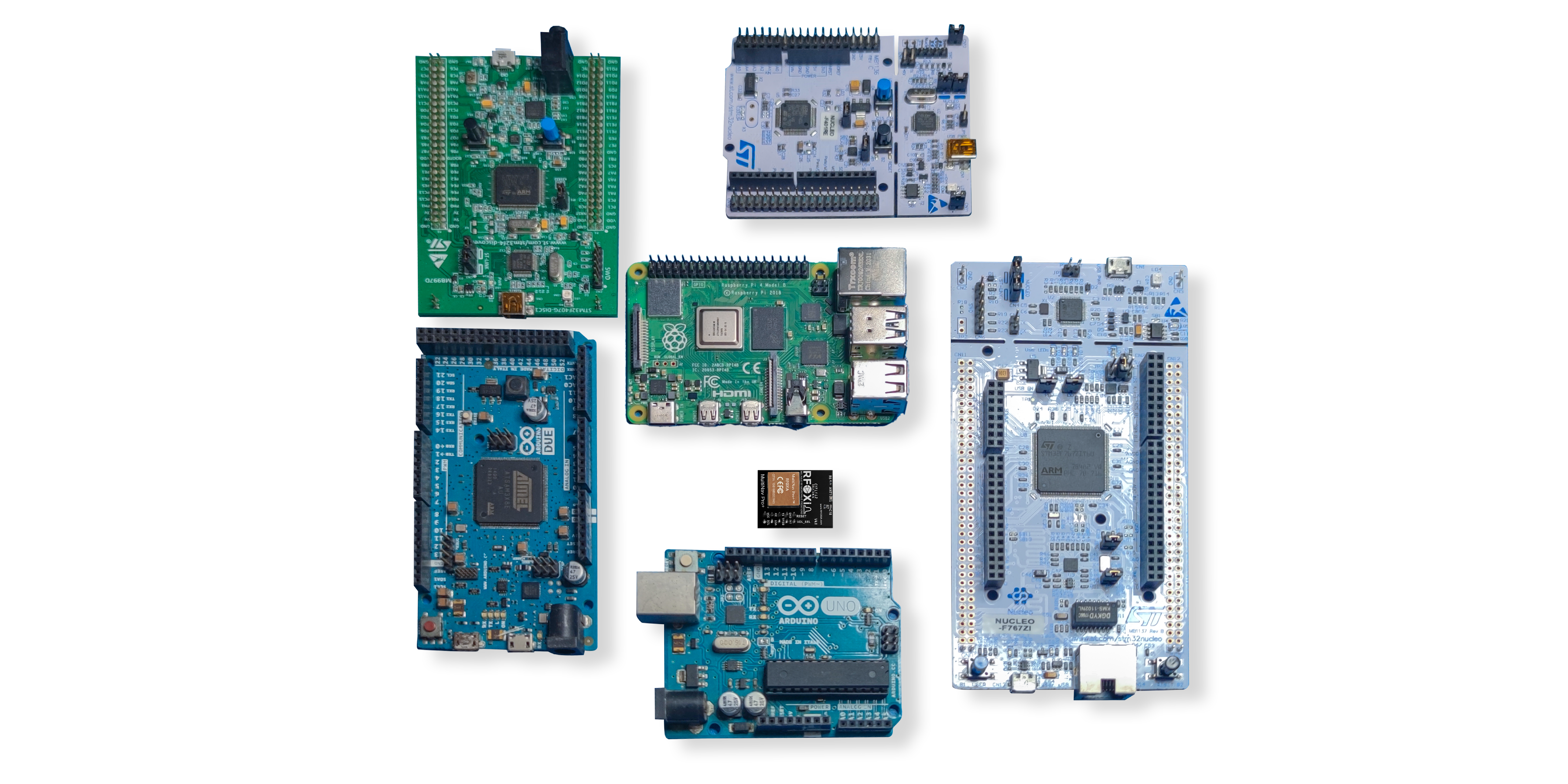
The MultiNav Pro+ supports both UART (TX/RX) and I2C (SCL/SDA) interfaces, covering the two most common embedded communication protocols. This means integration with virtually any microcontroller, SBC, or development platform — STM32, ESP32, Arduino, Raspberry Pi, Teensy, Nordic nRF series — requires no adapter hardware or custom interface circuitry.
Voltage compatibility spans 1.8V and 3.3V logic levels, eliminating the need for level shifters in most modern embedded designs.
Open Source Driver: Firmware Development Without the Pain
One of the most underrated aspects of the MultiNav Pro+ is the fully open-source C language driver library included with the module. The library implements the NMEA standard protocol — the universal language of GNSS data — and is structured for immediate import into Arduino IDE or any modern IDE toolchain.
For developers who want to go further, RFOXiA's AI Firmware Builder platform (integrated into RFOXiA Club) allows you to describe your GNSS application in plain language and receive production-ready firmware with complete source code. Projects that would have taken weeks of driver development and protocol parsing can be up and running in hours.
This is not just a module — it is a module with an ecosystem behind it. Check out the RFOXiA Accurate GNSS Module product page to explore the full documentation and resources available.
U-Center Software: Professional Visualization and Configuration

Because the MultiNav Pro+ is powered by the u-blox MIA-M10Q, it is fully compatible with u-center — u-blox's professional GNSS evaluation and configuration software.
u-center provides:
- Satellite visualization — see every satellite the module is tracking, with signal strength, elevation, and azimuth
- Real-time position tracking — live map display of position fixes
- Configuration interface — adjust fix rate, output protocols, power modes, and constellation selection without writing a line of code
- Data logging — record raw GNSS data for post-processing and analysis
- Protocol analyzer — inspect raw NMEA and UBX protocol output
For research applications, system characterization, and production testing, u-center access turns the MultiNav Pro+ into a complete professional GNSS development environment. This is a capability set normally associated with GNSS evaluation kits costing several times the price of this module.
Advanced RF Signal Filtering
One feature that separates professional GNSS modules from commodity hardware is RF front-end quality. GNSS signals are inherently weak — they arrive at Earth's surface with a power level far below the noise floor in typical urban electromagnetic environments. Any interference in the signal path degrades accuracy and can cause complete loss of fix.
The MultiNav Pro+ incorporates proprietary RF/microwave microstrip filter technology that attenuates out-of-band interference before it reaches the GNSS receiver core. The result is cleaner signal acquisition, better sensitivity, and more reliable fix maintenance in challenging RF environments — near cellular towers, WiFi infrastructure, industrial equipment, or other wireless systems.
This filtering is designed into the PCB layout at the RF level — it is not a software correction or post-processing fix. It is real hardware performance that shows up in real-world deployments.
Who Is the MultiNav Pro+ Built For?

The MultiNav Pro+ is designed for any application where location accuracy, update speed, and reliable signal acquisition are non-negotiable. Core use cases include:
Drone and UAV Systems The 18Hz fix rate and 1.5-meter accuracy make the MultiNav Pro+ one of the most capable GNSS modules available for drone navigation. Fast-moving platforms demand fast position updates — this module delivers. Combined with RFOXiA's long-range BLE module and the RFOXiA Connect app, it enables complete autonomous drone systems with live GPS tracking on a PS5-style controller interface.
FPV and Racing Applications High-speed FPV platforms need position data that keeps up with the aircraft. At 18Hz, the MultiNav Pro+ provides position updates fast enough for real-time guidance systems on even the fastest FPV builds.
IoT Asset Tracking From logistics fleet management to equipment tracking in remote environments, the MultiNav Pro+ offers the accuracy and global constellation coverage needed for real-world tracking deployments.
Precision Agriculture Agricultural applications demand consistent sub-2-meter accuracy for row guidance, field mapping, and autonomous vehicle navigation. The MultiNav Pro+ meets this requirement at a cost that makes large-scale deployment economically viable.
Wearable and Personal Devices The compact 26mm x 22mm form factor and low 25-30mA power consumption make this module viable for wearable applications where size and battery life are primary constraints.
Research and Academic Projects Universities and research institutions working on navigation, positioning, autonomous systems, or environmental monitoring will find the MultiNav Pro+ offers professional performance with accessible pricing and comprehensive software support.
Smart City and Environmental Monitoring GPS-verified location data is a core requirement of RFOXiA's distributed data network. The MultiNav Pro+ is the positioning backbone for sensor nodes contributing verified hyper-local environmental data to the network — and earning daily rewards for doing so.
Automotive and Ground Vehicles Ground vehicle navigation, autonomous driving research, and fleet telematics all benefit from the update rate and accuracy the MultiNav Pro+ delivers.
The RFOXiA Ecosystem Advantage
The MultiNav Pro+ is a powerful standalone module. But its real value multiplies when deployed within the RFOXiA ecosystem.
RFOXiA's Developer Bundle combines the MultiNav Pro+ with the long-range BLE Module (5km ground-to-ground, 20km man-to-drone range), the 7-sensor environmental module, and the supercapacitor Power/Program Kit into a single integrated development platform. The entire bundle is FCC certified and ships ready to deploy.
The RFOXiA Club platform — free to join — provides access to the AI Firmware Builder, Dev Hub community, live data visualization, and the data monetization network. Developers who deploy the Sensors Module with GNSS verification earn daily rewards for contributing verified environmental data.
This is what separates RFOXiA from every other module vendor: a complete ecosystem that converts your hardware investment into ongoing capability — and ongoing returns.
If you are building something that demands precise, reliable, fast positioning, the RFOXiA Accurate GNSS Module is the professional-grade FCC certified GPS module your project needs.
Technical Specifications Summary
| Specification | MultiNav Pro+ Value |
|---|---|
| GNSS Chip | u-blox MIA-M10Q |
| Accuracy | < 1.5 meters CEP |
| Fix Rate | Up to 18Hz |
| Time to First Fix | ~1 second |
| Constellations | GPS, GLONASS, Galileo, BeiDou |
| Interface | UART (TX/RX), I2C (SCL/SDA) |
| Operating Voltage | 1.8V / 3.3V |
| Current Consumption | 25-30mA |
| Dimensions | 26mm x 22mm |
| Antenna | Integrated chip antenna |
| FCC Certification | Yes |
| Software | Open-source C library, u-center compatible |
| Price | $49 |
Frequently Asked Questions
Is the MultiNav Pro+ compatible with Arduino? Yes. The open-source C library is designed for straightforward import into Arduino IDE. UART and I2C interfaces are standard on all Arduino-family boards.
Can I use this module in a commercial product? Yes. FCC certification means the MultiNav Pro+ can be legally incorporated into commercial products sold in the United States market. Always verify any additional certification requirements specific to your product category.
What is the difference between 1Hz and 18Hz fix rate in practice? At a drone speed of 20 m/s, a 1Hz update means 20 meters of positional uncertainty between readings. At 18Hz, that drops to approximately 1.1 meters between updates — a fundamental difference in navigation quality for any dynamic application.
Does the module work indoors? GNSS systems require line-of-sight or near-line-of-sight to satellites. Indoor performance depends on signal penetration through the building structure. For outdoor-primary applications, the MultiNav Pro+ performs as specified. Indoor applications typically require supplemental positioning (IMU fusion, WiFi positioning, etc.).
Can I use this module with RFOXiA's data network? Yes. The MultiNav Pro+ provides the GPS verification required for RFOXiA's data network reward system. Outdoor deployment verified by GNSS fix is one of the qualification criteria for earning daily data rewards.
Get Started with the MultiNav Pro+
The MultiNav Pro+ is available now for $49, in stock and ready to ship. It is the most capable FCC certified GPS module at this price point — combining professional accuracy, high update rate, multi-constellation support, and complete software ecosystem into a compact, power-efficient package.
Whether you are building your first GPS-enabled project or adding precision navigation to a professional system, the MultiNav Pro+ has the performance, the certification, and the ecosystem support to take your project further.
Explore full specifications, documentation, and ordering information at the RFOXiA Accurate GNSS Module product page.
Join RFOXiA Club free — your first $10 credit is waiting.
Written by: Moamen Mohamed LinkedIn