
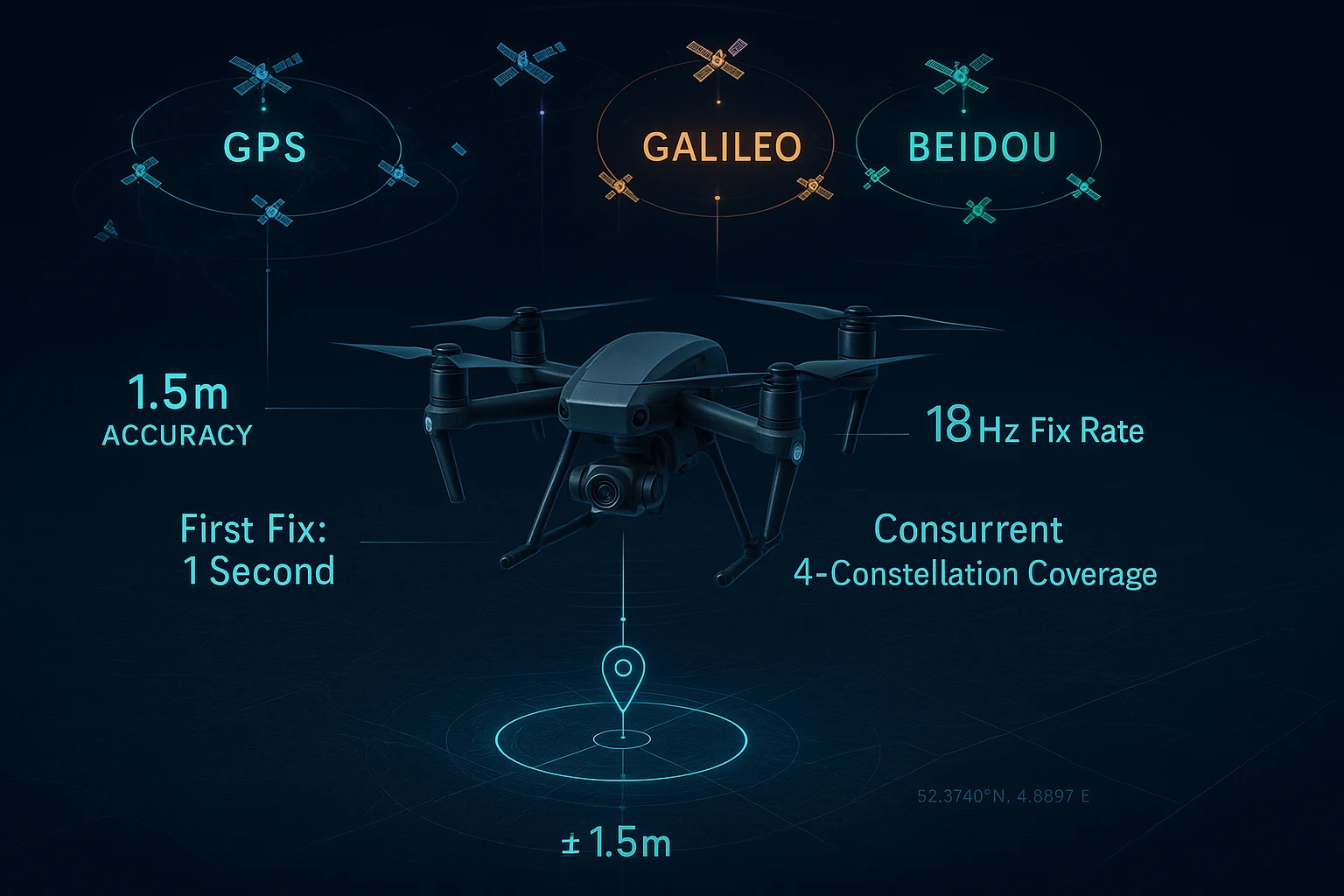
GNSS Module for Drones: Why 1.5m Accuracy and 18Hz Fix Rate Changes Everything
The Best GNSS Module for Drones Is Here — and It Ships Ready to Build
Every drone builder hits the same wall eventually. You have the frame dialed in. The motors are tuned. The flight controller is configured. And then you reach for a GPS module — and realize most of the options on the market were designed for applications that move at walking speed, not at 100km/h through the air.
A standard GPS module giving you a 1Hz or 5Hz fix rate is acceptable if you're tracking a delivery truck. It is not acceptable when your drone is banking hard at speed and you need your autopilot to know — right now — exactly where it is in three-dimensional space.
That is the problem the MultiNav Pro+™ GNSS Module from RFOXiA was built to solve. This is not a repackaged off-the-shelf component. It is a purpose-engineered precision navigation module designed specifically for the demands of fast-moving platforms like drones, high-speed robotics, and precision tracking systems — all in a compact 26mm × 22mm form factor that integrates cleanly into any build.
If you are looking for the most capable and developer-ready GNSS module for drones available at this price point, read every word of this breakdown.
What Makes a GNSS Module Right for Drone Applications?
Before diving into the specifications, it is worth understanding what separates a drone-grade GNSS module from a general-purpose one. The differences are significant and they directly impact how your platform performs in the field.
Fix Rate Is Everything at Speed
Fix rate is how many times per second the module reports a new position. A 1Hz module tells you where your drone was one second ago. For a drone moving at 20 meters per second, that is a 20-meter position lag — which is catastrophic for autonomous navigation, precision landing, or any geofencing application.
The MultiNav Pro+ delivers an 18Hz fix rate. That means 18 fresh position reports every second. At 20 meters per second ground speed, your position lag drops to just over one meter. That is the difference between a drone that knows where it is and one that is always guessing.
Accuracy That Matters in the Real World
Specification sheets for consumer GPS modules often cite accuracy figures measured under ideal open-sky conditions with strong signal and no interference. Real-world accuracy is frequently much worse.
The MultiNav Pro+ achieves 1.5-meter accuracy — backed by the u-blox MIA-M10Q GNSS chip, which is among the most respected GNSS silicon available to the professional market. This level of accuracy is achievable in real operational environments, not just in a test chamber.
Multi-Constellation Support Is Non-Negotiable
Relying on GPS alone means relying on a single constellation of approximately 31 satellites. In challenging environments — urban canyons, dense forests, or anywhere with partial sky obstruction — that can mean poor geometry and degraded accuracy.
The MultiNav Pro+ connects concurrently to GPS, GLONASS, Galileo, and BeiDou — four separate satellite constellations operating simultaneously. More satellites in view means better geometry, faster first fix, and more robust performance when conditions are less than perfect.
MultiNav Pro+™ Full Specifications
Here is the complete technical profile of the module:
- Accuracy: 1.5 meters CEP
- Fix Rate: 18Hz
- First Fix: 1 second (hot start)
- Constellations: GPS, GLONASS, Galileo, BeiDou — concurrent
- GNSS Chip: u-blox MIA-M10Q
- Antenna: Integrated high-gain chip antenna
- Interface: UART (TX/RX) and I2C (SCL/SDA)
- Supply Voltage: 1.8V and 3.3V
- Form Factor: 26mm × 22mm
- Certification: FCC certified
- Price: $49
Every specification here is relevant to real drone and robotics applications. This is not a spec sheet padded with numbers that do not affect real-world performance. This is what you will experience when you actually fly this module.
Versatile Connectivity Built for Developers
One of the first questions any developer asks about a new module is: how do I actually talk to this thing?
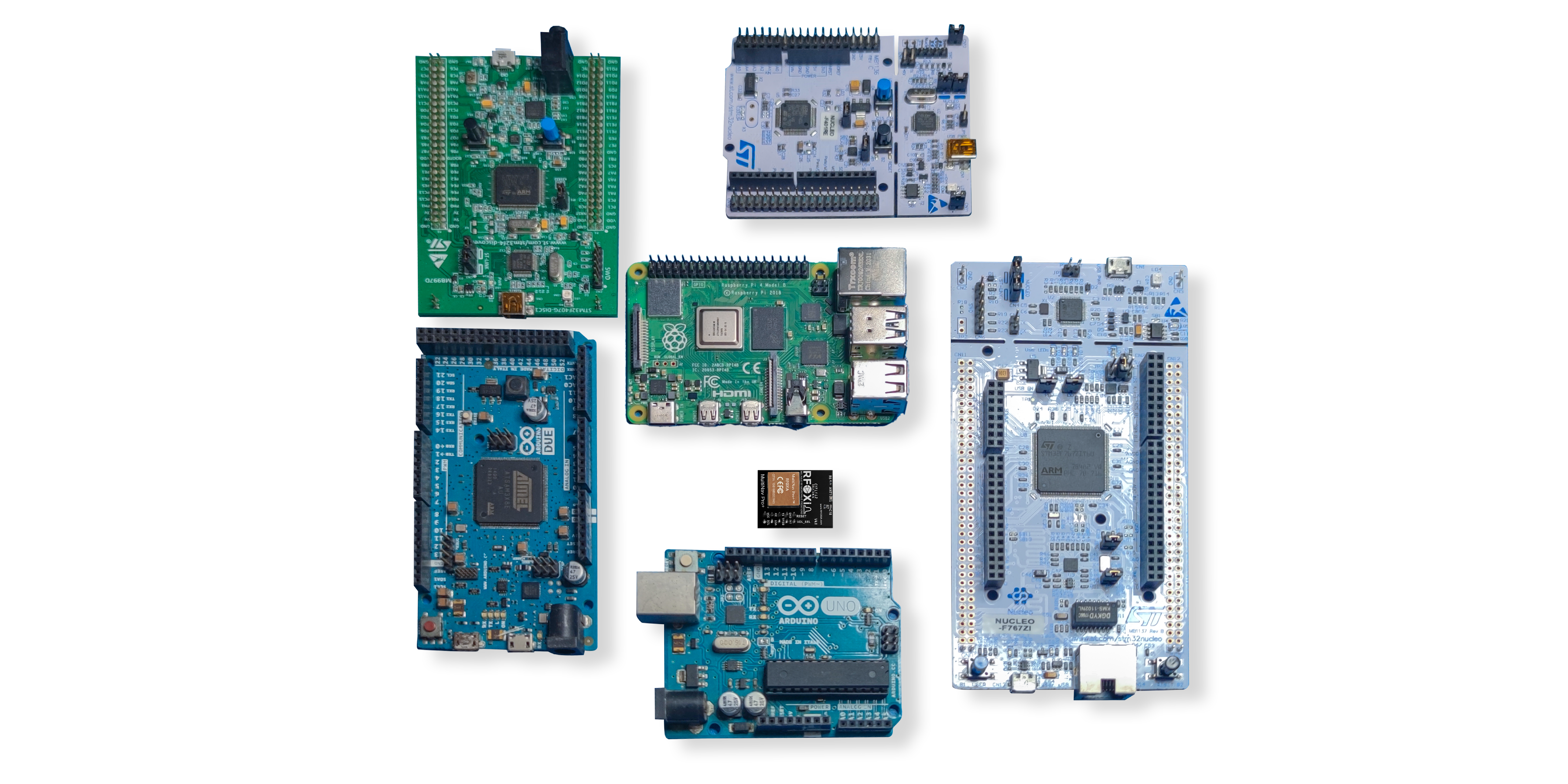
The MultiNav Pro+ answers that question with flexibility. The module supports both UART and I2C interfaces, which covers the vast majority of microcontrollers, single-board computers, and flight controllers in active use today. Whether you are connecting to an STM32, an ESP32, a Raspberry Pi, a Pixhawk-based flight controller, or a custom PCB, the MultiNav Pro+ speaks your language.
Voltage compatibility is equally flexible. The module operates at both 1.8V and 3.3V, meaning you can integrate it directly into modern low-voltage embedded systems without level shifting hardware adding complexity and failure points to your design.
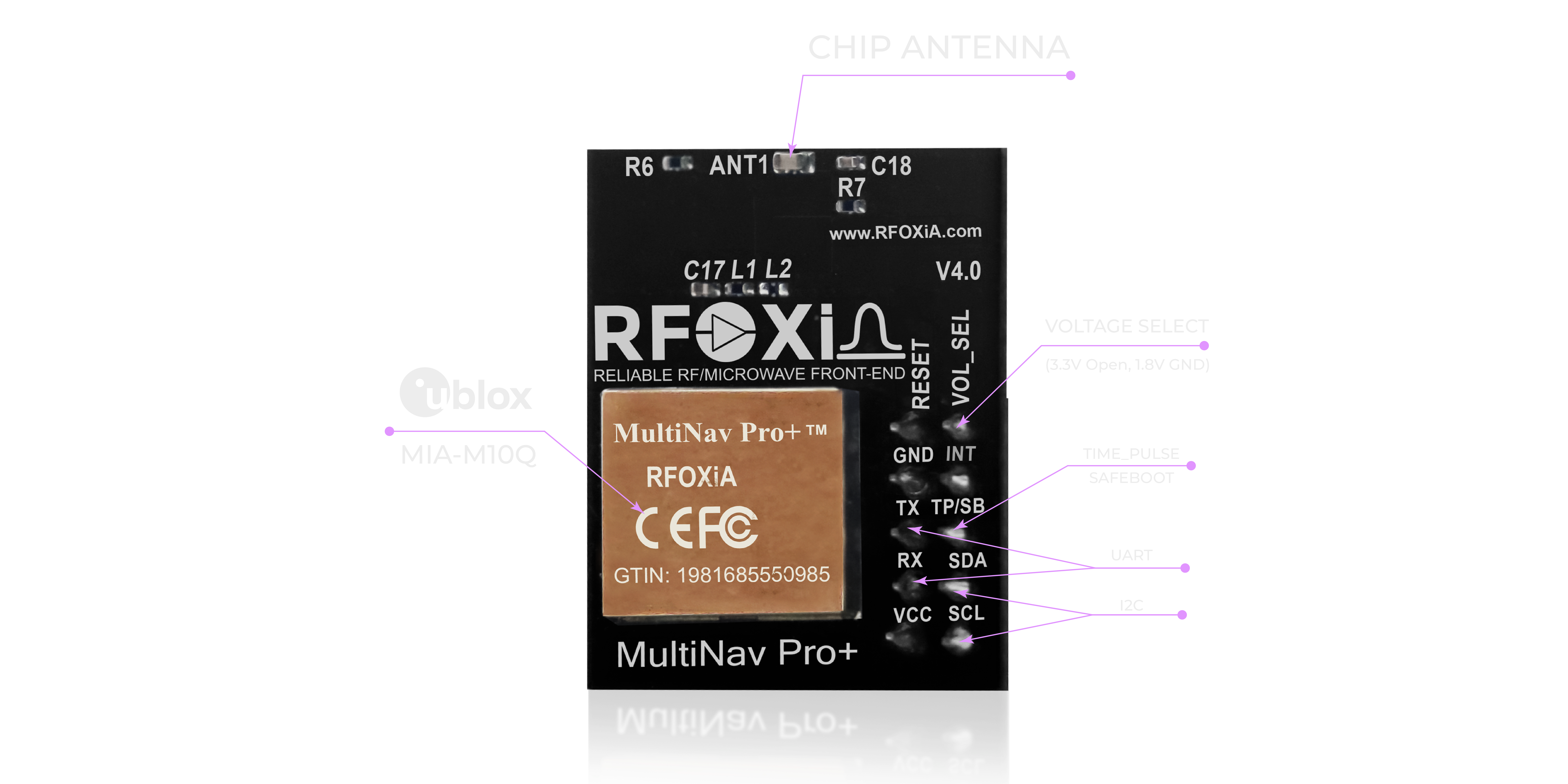
This level of interface flexibility is rarely found at this price point. Most budget GNSS modules force you to commit to one interface and one voltage level. The MultiNav Pro+ removes those constraints entirely.
Open Source Driver — From Module to Working Code in Minutes
Hardware is only as useful as your ability to integrate it. RFOXiA ships the MultiNav Pro+ with a fully open-source C language driver library that implements the complete NMEA standard protocol.
NMEA is the industry standard data format for GNSS output — a protocol understood by virtually every GNSS-aware piece of software on the planet, from flight controllers to GIS applications to custom tracking dashboards. By shipping a complete, ready-to-use implementation, RFOXiA eliminates the most time-consuming part of GNSS module integration: parsing raw serial data into usable location information.
The library imports directly into Arduino IDE and is compatible with any standard C/C++ toolchain. If you are already working in PlatformIO, STM32CubeIDE, or any other embedded development environment, you can drop this library in and have your first position fix reading in your serial monitor within minutes of power-on.
For teams using the RFOXiA AI Firmware Builder inside RFOXiA Club, GNSS integration is even more streamlined. Describe your navigation application in plain language and the AI generates production-ready firmware that includes GNSS data handling — a task that previously required hours of reading datasheets compressed into minutes.
u-center Software: Professional Evaluation and Configuration
Some GNSS modules ship with no configuration tooling at all. You get the hardware and a datasheet and you are on your own. The MultiNav Pro+, powered by the u-blox MIA-M10Q chip, gives you access to u-center — u-blox's professional GUI for GNSS module evaluation and configuration.
u-center is the tool that professional GNSS engineers use to:
- Visualize satellite positions in real time — see exactly which satellites your module can see and their signal strength
- Track movement — watch your position trace in real time on a live map view
- Configure module behavior — adjust fix rates, output messages, power modes, and interface settings without writing a single line of code
- Log data — capture complete GNSS sessions for post-mission analysis
- Evaluate accuracy — compare reported positions against known reference points to verify real-world performance
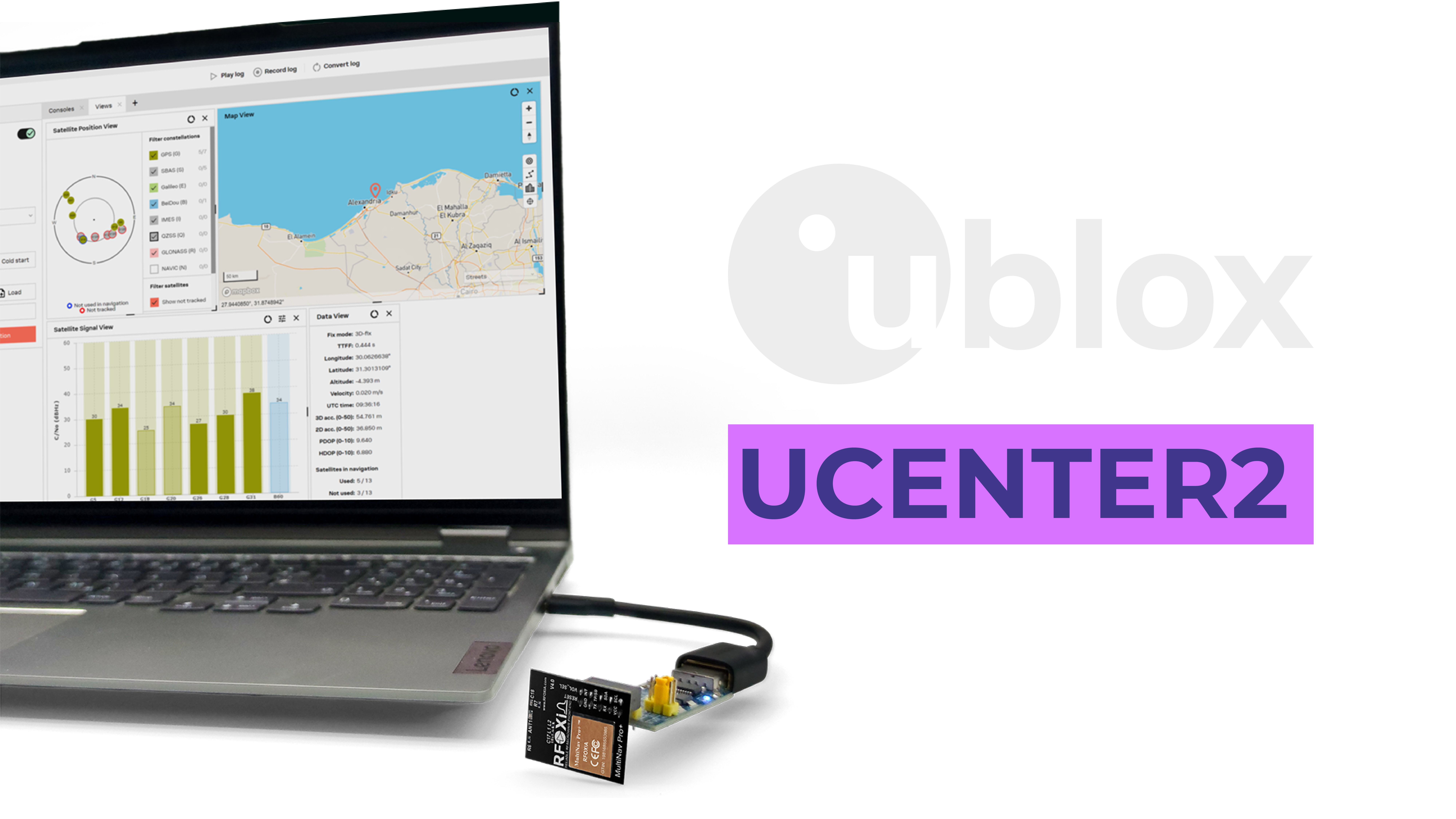
For drone builders, this means you can verify your module's performance on the bench before it ever leaves the ground. You can confirm satellite lock, check your fix accuracy, and tune the output rate — all with a visual interface that makes GNSS debugging accessible to engineers at any level of experience.
Where the MultiNav Pro+ Fits: Use Cases Across Industries
The MultiNav Pro+ was designed with drones as the primary use case, but the combination of 18Hz fix rate, 1.5m accuracy, and compact form factor makes it the right GNSS module for drones and far beyond.
Drone Platforms
Autopilot systems, autonomous waypoint navigation, precision landing, geofencing, follow-me modes, aerial survey, and FPV long-range operations all benefit from high fix rate and multi-constellation support. This module integrates cleanly with Pixhawk and ArduPilot-based flight controllers.
Robotics and Ground Vehicles
Outdoor ground robots and autonomous vehicles need the same qualities as drones — fast updates and reliable accuracy in variable sky conditions. The MultiNav Pro+ provides both at a weight and size that fits even compact robot platforms.
IoT Tracking Systems
Asset tracking, fleet monitoring, cold chain logistics, and equipment tracking deployments require GNSS modules that reliably acquire position in real-world environments. Multi-constellation support makes the MultiNav Pro+ far more resilient than single-constellation trackers.
Wearable and Personal Devices
The 26mm × 22mm form factor and 1.8V operation make this module compatible with wearable development where size and power are constrained. Research institutions building wearable GPS loggers for athlete performance or wildlife tracking will find this module performs where larger modules cannot fit.
Precision Agriculture
Row guidance, field mapping, spray boundary tracking, and yield monitoring all benefit from 1.5m accuracy. Agricultural applications often operate in partially obstructed environments where multi-constellation support provides the satellite geometry needed to maintain accuracy.
Research and Education
Universities and research institutions building experimental platforms need GNSS modules they can trust and customize. The open-source driver, u-center compatibility, and FCC certification make the MultiNav Pro+ a serious research tool at an accessible price.

Why the u-blox MIA-M10Q Is the Right Choice
Not all GNSS silicon is equal. The u-blox MIA-M10Q is u-blox's latest generation compact GNSS receiver, engineered specifically for applications that require fast acquisition, concurrent multi-constellation operation, and reliable performance in real-world RF environments.
Key advantages of the MIA-M10Q over older or lower-tier GNSS chips:
- Superior acquisition sensitivity — acquires satellites faster, especially in challenging environments
- Lower power consumption — critical for battery-powered drone and IoT applications
- Concurrent multi-band operation — processes signals from all four major constellations simultaneously without degraded performance on any individual signal
- Proven supply chain and long-term availability — u-blox is a Tier 1 GNSS supplier with long-term product support commitments
RFOXiA chose the MIA-M10Q specifically because the combination of performance, power, and proven reliability matches what professional developers building drone and IoT products actually need in the field.
The RFOXiA Ecosystem: GNSS as Part of Something Larger
The MultiNav Pro+ is a powerful standalone module. But its full potential is unlocked when used as part of the RFOXiA wireless development ecosystem.
Pair it with the BLE Module — RFOXiA's flagship long-range wireless module with 5km ground-to-ground range and up to 20km man-to-drone range — and you have a complete drone telemetry and control platform. The RFOXiA Connect app displays live GPS position from the GNSS module on a real-time map, streamed wirelessly over the BLE module's long-range link. No internet connection required. No ground station infrastructure. Just your phone and your drone.
Add the Sensors Module — which packs temperature, humidity, air pressure, air quality, accelerometer, gyroscope, and magnetometer into a single board — and your drone becomes an environmental monitoring platform. Every flight becomes a data collection mission. And through RFOXiA's data monetization network, that environmental data has real commercial value that you can earn from directly.
The Developer Bundle brings all four modules together at $199 — including the GNSS module, BLE module, Sensors module, and Power/Program Kit — making it the most capable complete wireless development kit available at this price point.
For drone builders who want a GNSS module for drones that plugs into a complete ecosystem with AI-assisted firmware development, a mobile control app, and a community of professional developers, the path forward is clear.
👉 RFOXiA Accurate GNSS Module — Order the MultiNav Pro+ for $49 and start your first precision navigation build today.
FCC Certification: Professional Grade, Not Just Maker Grade
One detail that separates the MultiNav Pro+ from many maker-market GNSS modules deserves explicit attention: it is FCC certified.
FCC certification means the module has been tested by an accredited laboratory and confirmed to comply with United States Federal Communications Commission regulations for intentional and unintentional radio frequency emissions. This matters for three reasons:
- Legal compliance — deploying uncertified radio-emitting devices in the United States is a regulatory violation, regardless of whether the device is for personal or commercial use
- Distributor qualification — retailers like DigiKey, Mouser, and similar professional distributors require FCC certification before stocking a product
- Professional credibility — if you are building a product for commercial sale that incorporates a GNSS module, your end product's certification process is significantly simplified when the modules inside it are already certified
For professional drone builders, product developers, and anyone building a system intended for real-world commercial deployment, FCC certification is not optional. The MultiNav Pro+ has it.
Integrated Chip Antenna: Compact Without Compromise
External patch antennas provide excellent performance but they add height, weight, and mechanical complexity to a build. For drone applications where every gram matters and PCB real estate is constrained, this trade-off is often unacceptable.
The MultiNav Pro+ integrates a high-gain chip antenna directly on the 26mm × 22mm module. This antenna has been engineered and characterized as part of the module's RF design — not as an afterthought. The result is optimal signal reception in the minimum possible form factor.
For drone builders designing compact airframes, the MultiNav Pro+ installs cleanly without the mechanical integration challenges of an external antenna. The module sits flat, connects via UART or I2C, and gets out of the way of the rest of your design.
Getting Started with the MultiNav Pro+
Every MultiNav Pro+ ships with a Quick Start Guide covering:
- Physical installation and connector pinout
- First connection and interface configuration
- Driver library installation in Arduino IDE
- Reading your first position fix
- Connecting to u-center for evaluation and configuration
For developers who want to go further, the RFOXiA Club platform provides:
- Complete documentation and reference designs
- Community Dev Hub with GNSS integration examples and project showcases
- AI Firmware Builder for generating custom navigation firmware from plain-language descriptions
- Technical support from RFOXiA engineers and the broader developer community
Join RFOXiA Club free and claim your $10 welcome credit — then apply it toward your MultiNav Pro+ order.
👉 RFOXiA Accurate GNSS Module — Get the MultiNav Pro+ for $49 with free Club membership and $10 credit toward your next purchase.
Comparison: MultiNav Pro+ vs. Standard GPS Modules
| Feature | Typical Budget GPS Module | MultiNav Pro+ |
|---|---|---|
| Fix Rate | 1–5Hz | 18Hz |
| Accuracy | 2.5–5m | 1.5m |
| Constellations | GPS only | GPS + GLONASS + Galileo + BeiDou |
| GNSS Chip | Generic / undisclosed | u-blox MIA-M10Q |
| Interface | UART only | UART + I2C |
| Voltage | 3.3V or 5V | 1.8V and 3.3V |
| Open Source Driver | Rarely | Yes — full C library |
| Configuration Tool | None | u-center GUI |
| FCC Certified | Rarely | Yes |
| Ecosystem Integration | None | Full RFOXiA ecosystem |
| Price | $10–$30 | $49 |
The performance gap between generic budget GPS modules and the MultiNav Pro+ is not marginal. For any application where fix rate and accuracy actually matter — which includes virtually every drone application — the MultiNav Pro+ is not just better, it is in a different category.
Final Verdict: The Right GNSS Module for Drone Builders
If you build drones, robots, IoT trackers, or any fast-moving wireless platform, the GNSS module you choose will define the ceiling on what your system can actually do. A slow, single-constellation module creates limitations that no amount of flight controller tuning can overcome.
The MultiNav Pro+ removes those limitations. 18Hz fix rate. 1.5-meter accuracy. Concurrent four-constellation support. u-blox MIA-M10Q. Open source driver. FCC certified. $49.
This is the GNSS module for drones that professional builders have been waiting for at a price point that makes it accessible to every developer — from the student building their first autonomous quadcopter to the engineer designing the next generation of commercial inspection platforms.
👉 RFOXiA Accurate GNSS Module — The MultiNav Pro+ is in stock and ships now. Order yours today and build your first precision navigation system this week.
RFOXiA is a Delaware-based hardware technology company building a vertically integrated wireless development ecosystem. All RFOXiA modules are FCC certified and ship with full developer support through RFOXiA Club.
Written by: Moamen Mohamed LinkedIn