
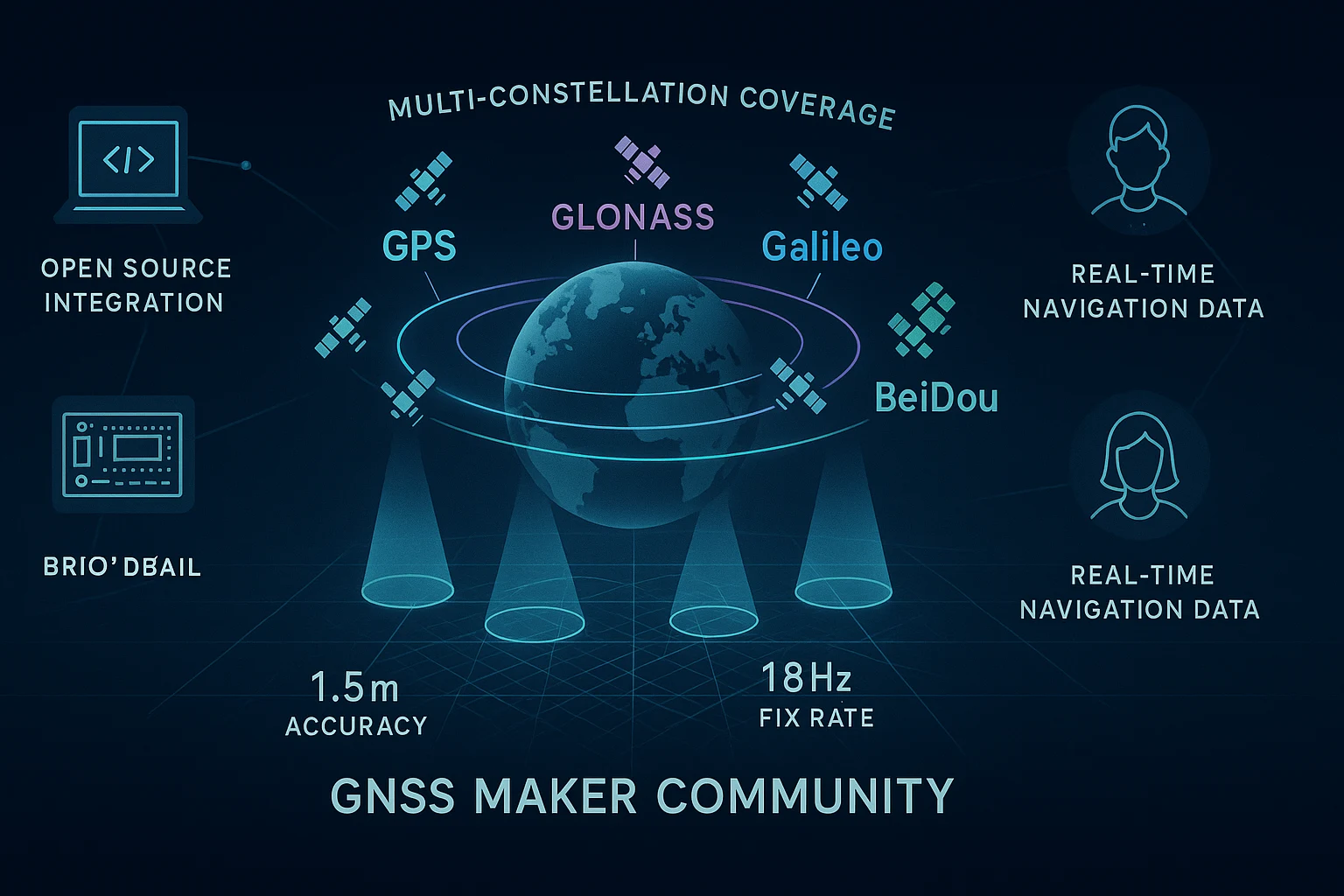
GNSS Module Maker Community: The Complete Guide to Precision Navigation with MultiNav Pro+
Why the GNSS Module Maker Community Deserves Better Hardware
If you have spent any time in the maker community trying to add precise location data to a drone, a rover, a wearable, or an IoT tracker, you already know the frustration. Most GNSS modules available at maker-friendly prices come with painful compromises: slow fix rates, poor accuracy in dynamic environments, limited satellite constellation support, or firmware libraries that feel like archaeology projects from 2012.
The GNSS module maker community has grown enormously over the last five years. Drones are more accessible, robotics platforms have matured, precision agriculture is now within reach of small operators, and IoT deployments are no longer the exclusive domain of enterprise engineering teams. Builders at every level are integrating location data into increasingly ambitious projects — and the hardware available to them has not always kept pace with those ambitions.
That gap is exactly what RFOXiA built the MultiNav Pro+™ to close.
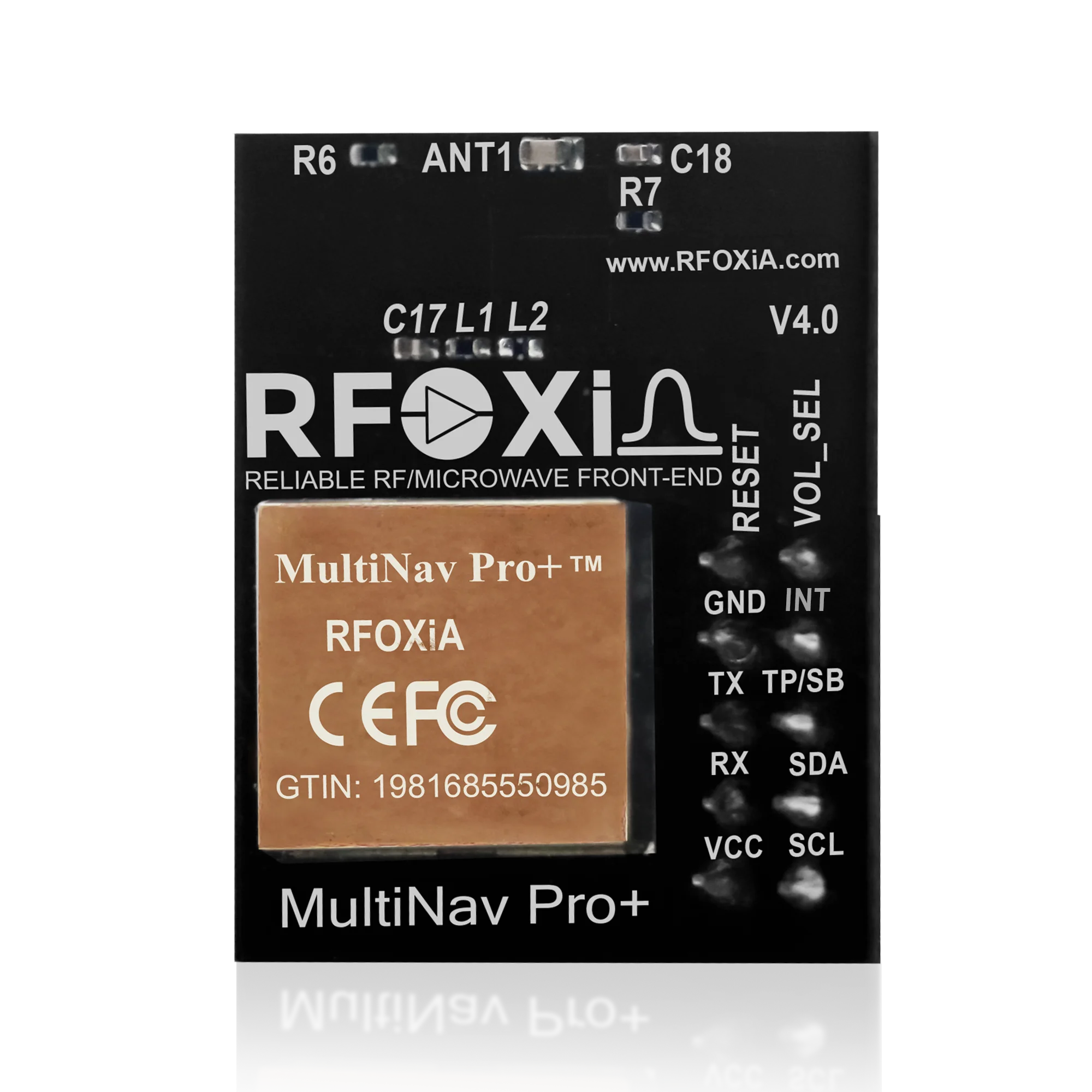
This is not a repackaged commodity module with a new silkscreen. The MultiNav Pro+ is a purpose-engineered precision GNSS module built around the u-blox MIA-M10Q chip, featuring a 1.5-meter accuracy specification, an 18Hz fix rate, concurrent multi-constellation support, an integrated high-gain chip antenna, and a fully open-source C library that drops into Arduino IDE or any standard toolchain in minutes. It is FCC certified and ships ready to integrate.
This guide covers everything the maker community needs to know: what makes this module technically exceptional, how to integrate it into real projects, what use cases it unlocks, and why it belongs at the center of any serious location-aware build.
Understanding What Makes a GNSS Module Great for Makers
Before diving into the MultiNav Pro+ specifics, it is worth establishing what actually matters when selecting a GNSS module for maker and developer projects. Not all specs are created equal, and marketing numbers can obscure what matters in the field.
Accuracy: CEP vs. Real-World Performance
Most consumer-grade GNSS modules advertise accuracy figures in the 2.5-meter to 5-meter range under ideal open-sky conditions. The MultiNav Pro+ achieves sub-1.5-meter accuracy — a meaningful improvement that becomes critical when your application involves drone precision landing, geofencing, asset tracking, or survey-grade data collection. At sub-1.5 meters, you are in a different performance category than off-the-shelf commodity modules.
Fix Rate: Why 18Hz Changes Everything
A 1Hz fix rate means your system gets one location update per second. For a static sensor node, that is fine. For a drone flying at 60 km/h, a rover navigating terrain, or a wearable tracking athletic movement, 1Hz is essentially useless — you are interpolating position between updates and hoping nothing critical happened in between.
The MultiNav Pro+ delivers an 18Hz fix rate. Eighteen position updates per second. That is the difference between tracking motion and guessing at it. For the drone builder community in particular, this specification is non-negotiable for any application that requires responsive, real-time flight data.
Constellation Support: More Satellites Means More Reliability
Single-constellation modules (GPS only) are at the mercy of satellite geometry and local obstructions. The MultiNav Pro+ supports GPS, GLONASS, Galileo, and BeiDou simultaneously. With all four constellations active concurrently, the module has access to a dramatically larger pool of visible satellites at any given time and location — which translates directly to faster first fix, better accuracy in urban canyons or partially obstructed environments, and more reliable performance globally.
MultiNav Pro+ Technical Deep Dive
The u-blox MIA-M10Q Core
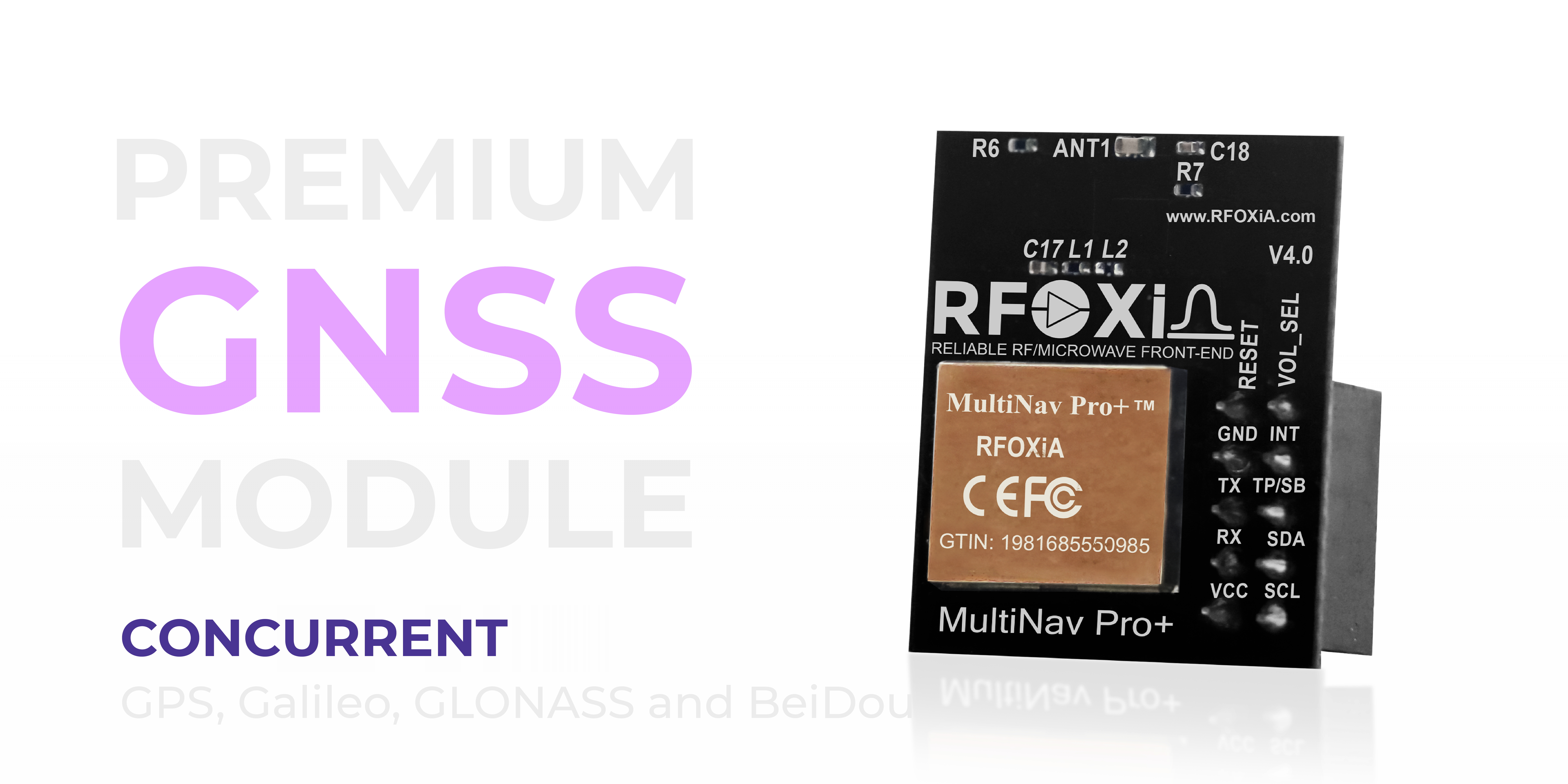
At the heart of the MultiNav Pro+ is the u-blox MIA-M10Q — one of the most advanced compact GNSS chips currently available for embedded integration. u-blox is the gold standard in professional GNSS silicon, and the MIA-M10Q represents their latest generation of high-performance, low-power GNSS technology. Choosing this chipset was a deliberate decision: when the maker community needs professional-grade performance, they need professional-grade silicon underneath it.
The MIA-M10Q brings u-blox's advanced signal processing architecture to a form factor and price point that makes it viable for maker applications — something that simply was not possible with previous generations of professional GNSS chips.
Accuracy and Fix Rate Specifications
The headline numbers: sub-1.5 meter CEP accuracy, 18Hz maximum fix rate, and a first fix time of just 1 second under good signal conditions. That last figure — 1-second first fix — deserves emphasis. Many modules take 30 seconds to 2 minutes to achieve first lock, which creates operational friction in any application where startup time matters. A drone waiting on GNSS lock before it can arm. A tracker that misses the first minute of a run. A delivery vehicle that cannot dispatch until the module acquires position. The MultiNav Pro+ eliminates that bottleneck.
These are not theoretical specifications from a datasheet best-case scenario. These are the performance targets the module is designed and validated to achieve in real-world deployment.
Compact and Power-Efficient Design
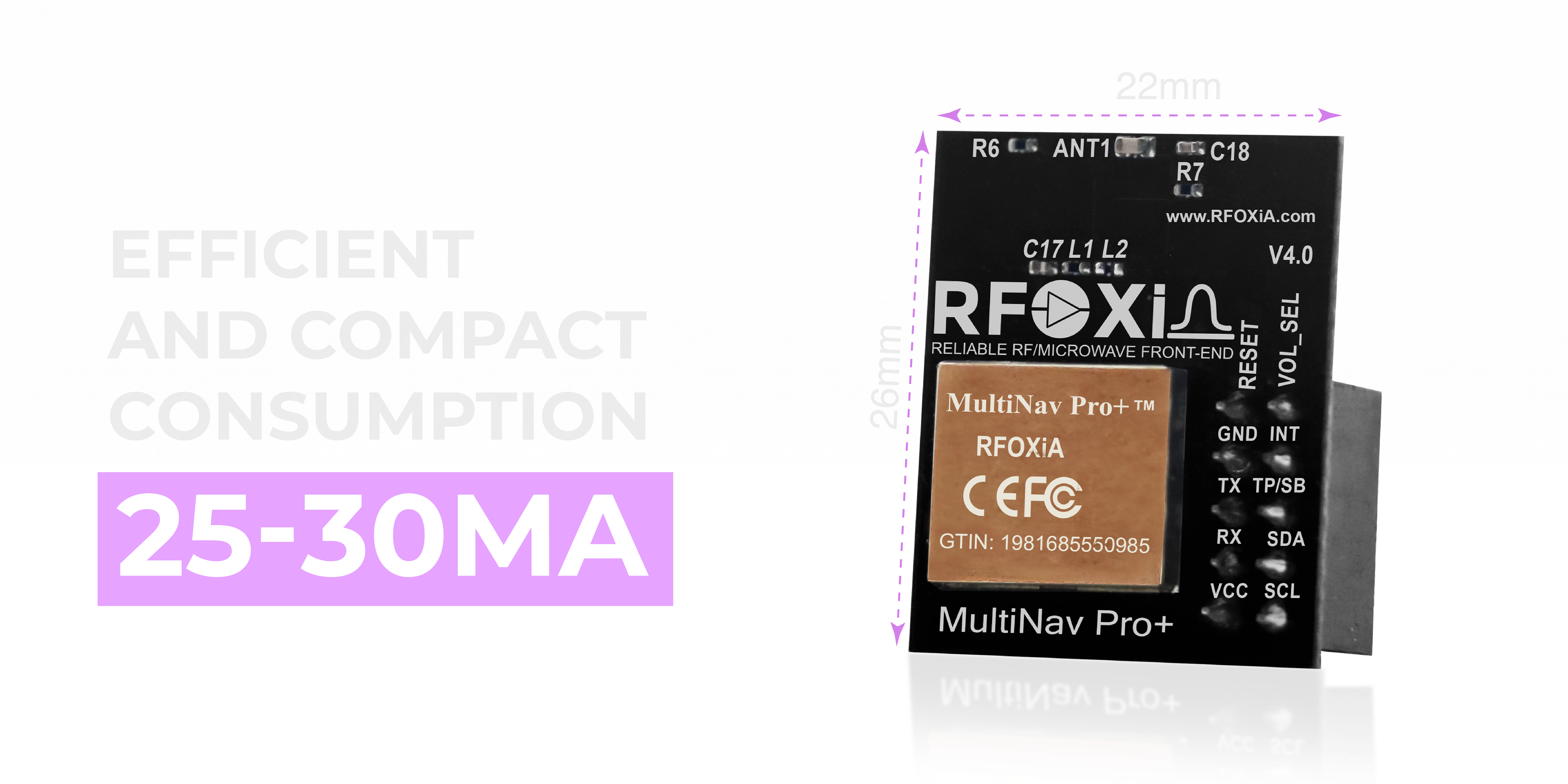
At 26mm × 22mm, the MultiNav Pro+ occupies a footprint that integrates comfortably into even compact builds. A typical drone flight controller stack. A wearable form factor. A small autonomous rover. A tracking module that needs to fit inside a hard case.
Power consumption runs 25-30mA during active tracking — a figure that is competitive with modules offering significantly lower performance. The multi-constellation architecture actually contributes to power efficiency in practice: because the module acquires lock faster and maintains it more reliably, the system spends less total energy in acquisition mode searching for satellites.
For battery-powered deployments — which describes the majority of maker applications — this matters enormously. Less time hunting for lock means more mission time on the same charge.
Interface and Voltage Flexibility
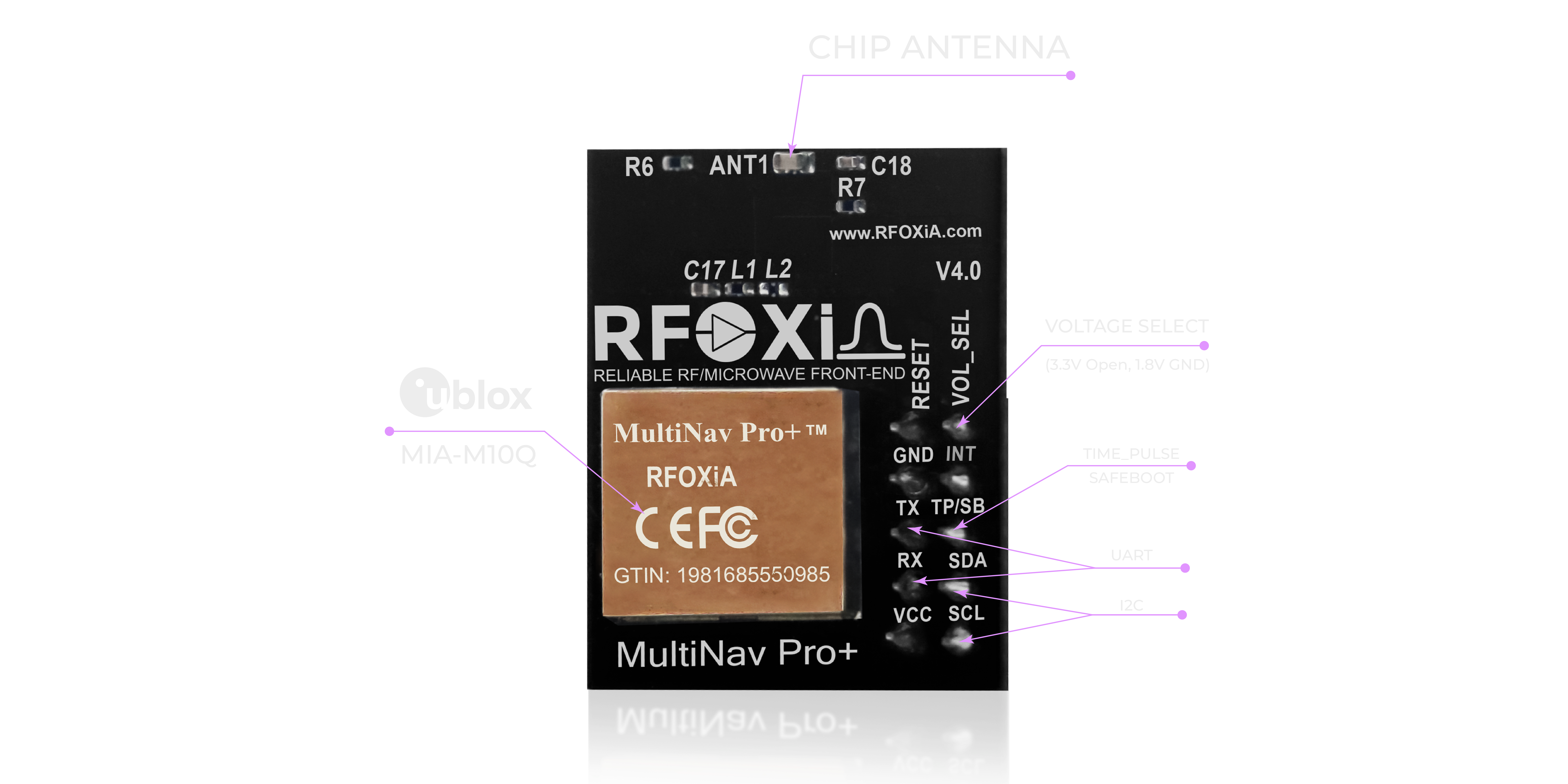
The MultiNav Pro+ supports both UART (TX/RX) and I2C (SCL/SDA) interfaces — meaning it connects directly to virtually every microcontroller platform in common use: STM32 families, ESP32, Arduino, Raspberry Pi, Nordic nRF series, and custom PCB designs. You are not locked into a specific interface or forced to add level-shifting hardware for most common use cases.
Operating voltage flexibility (1.8V and 3.3V) extends this compatibility further, ensuring direct integration with both modern low-power microcontrollers running at 1.8V and the broad ecosystem of 3.3V-native platforms.
Open Source Software Ecosystem
The Open Source Driver
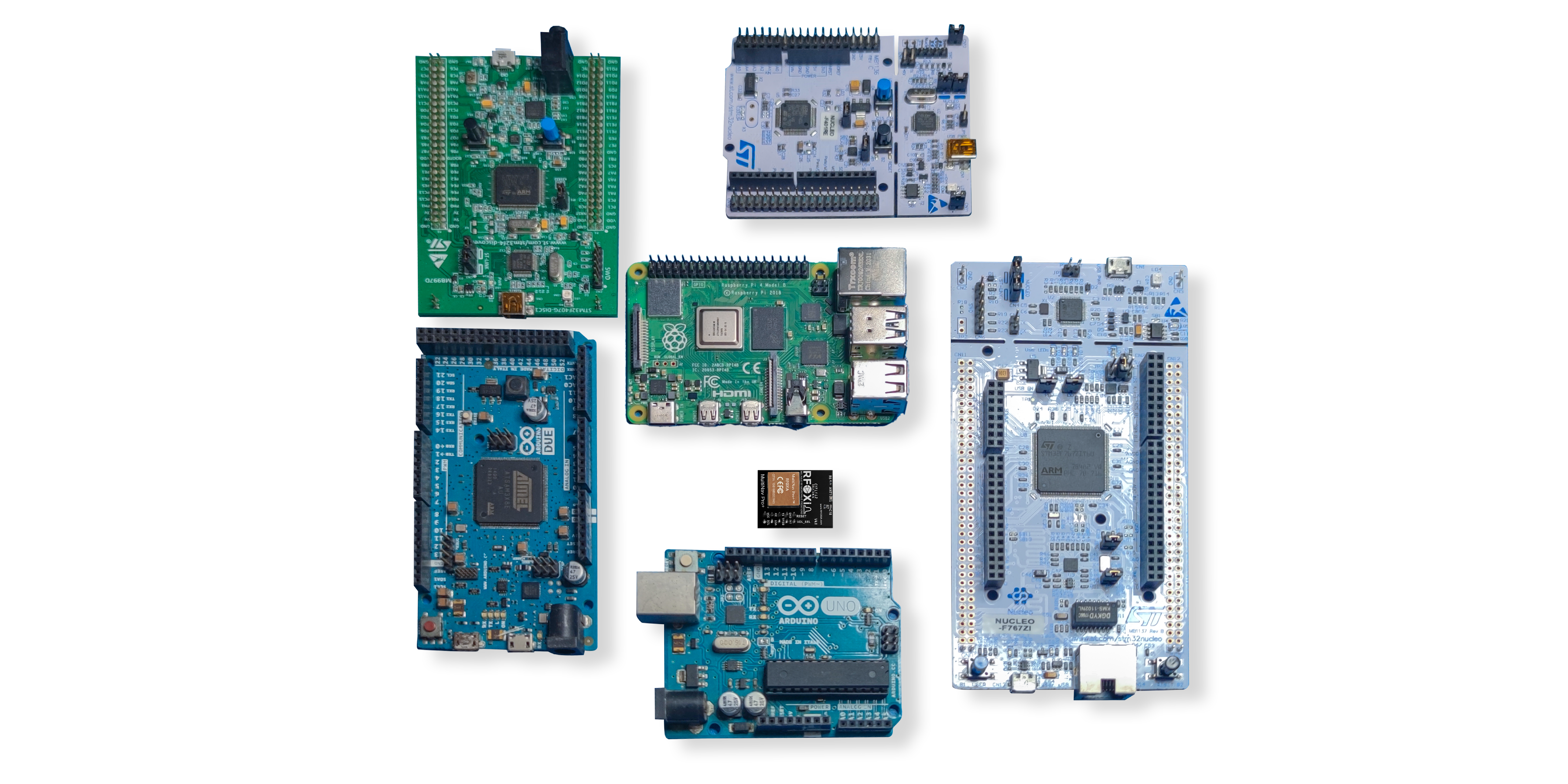
Hardware is only half the story. The MultiNav Pro+ ships with a fully open-source C language library that implements NMEA standard protocol commands — the universal language of GNSS data. This is not a closed binary blob or a proprietary SDK that locks you into specific tools. The full source is available, readable, and modifiable.
Importing the library into Arduino IDE is straightforward enough for a first-time maker. Adapting it to a custom embedded C environment is straightforward enough for a professional firmware engineer. That span — from beginner to professional — reflects exactly who the GNSS module maker community includes, and the MultiNav Pro+ serves both ends of that spectrum without compromise.
For makers already working within the RFOXiA ecosystem, the firmware AI builder integrated into RFOXiA Club can accelerate GNSS integration further: describe your application in plain language and receive production-ready firmware that already incorporates the MultiNav Pro+ library. What would normally take days of integration work can be reduced to hours.
U-Center Software Compatibility
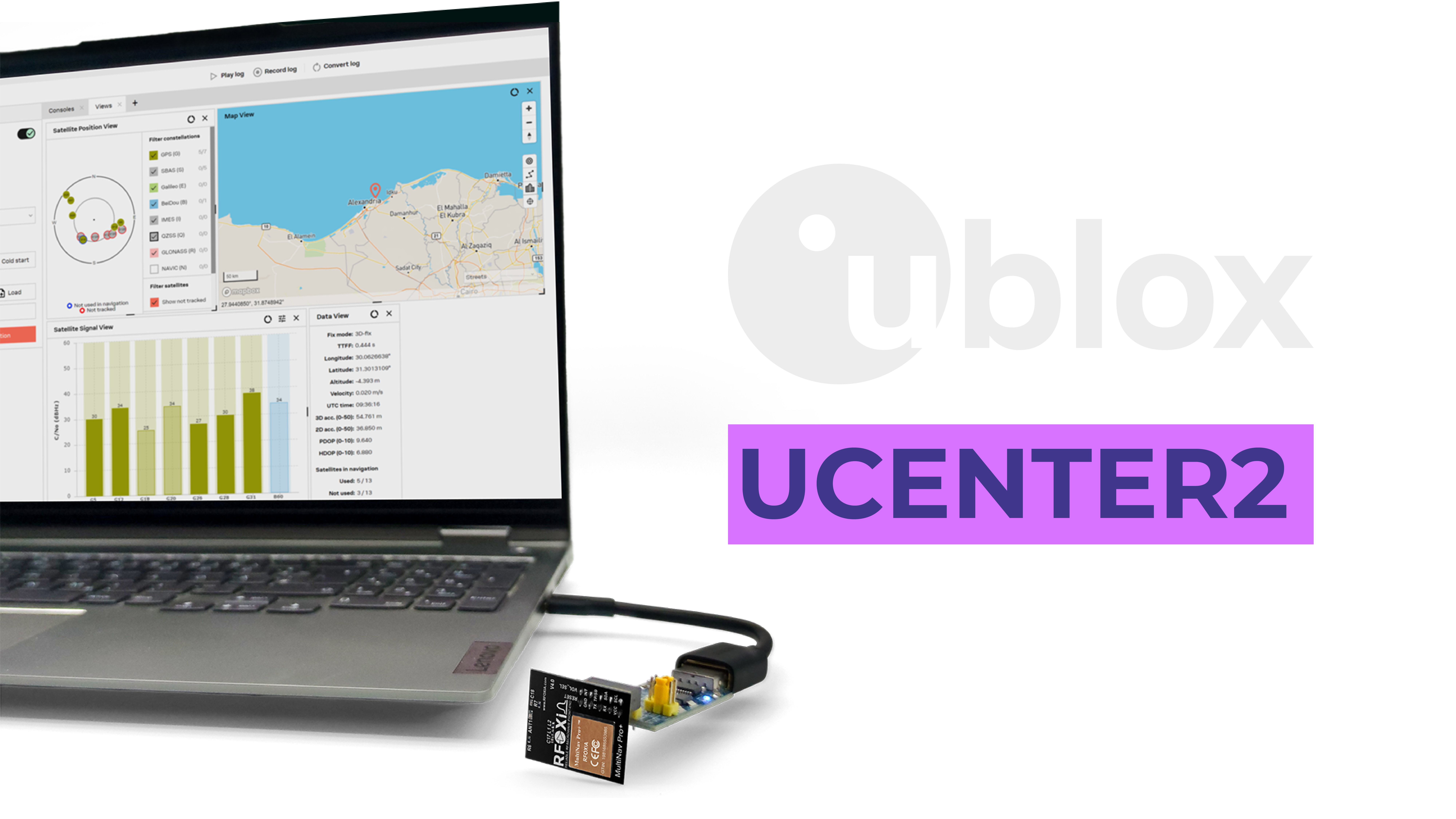
Because the MultiNav Pro+ is built on genuine u-blox silicon, it is fully compatible with u-center — u-blox's professional desktop software for GNSS evaluation, configuration, and debugging. u-center provides a visual satellite constellation view, real-time position tracking on a map, full configuration access to module parameters, powerful logging tools, and compatibility with u-blox's full suite of augmentation services.
This is the same software used by professional engineers evaluating u-blox modules in automotive, industrial, and aerospace applications. The maker community now has access to the same toolchain — without needing to pay for an industrial evaluation kit.
Advanced RF Signal Architecture
One of the less-visible differentiators of the MultiNav Pro+ is the RF signal path design. RFOXiA's background is RF engineering — it is literally in the company name — and that expertise shows in how the MultiNav Pro+ handles its antenna and signal processing.
The module incorporates a proprietary RF/microwave microstrip filter technology that minimizes interference across the signal path. GNSS signals are inherently weak (received at power levels around -130 dBm), and interference from nearby electronics, power regulators, or other RF sources can degrade performance significantly on poorly designed modules. The MultiNav Pro+'s filter architecture preserves signal integrity even in electrically noisy environments — which is exactly where most maker projects live.
The integrated high-gain chip antenna is optimized for the full multi-constellation frequency range, providing reliable reception without requiring an external antenna for most applications. For installations where the module is shielded or needs extended range to clear a ground plane, an external antenna can be connected — providing flexibility for advanced integration scenarios.
The RFOXiA Accurate GNSS Module is the result of applying professional RF engineering discipline to a maker-accessible product — a combination that is genuinely rare in this market segment.
Real-World Use Cases Across the Maker Community

The applications that the GNSS module maker community builds are remarkably diverse. The MultiNav Pro+ serves all of them:
Drone Builders and FPV Pilots The 18Hz fix rate and sub-1.5 meter accuracy make the MultiNav Pro+ a natural fit for drone applications requiring real-time, high-fidelity position data. GPS-assisted flight modes, precision landing, waypoint navigation, geofencing, and return-to-home all benefit directly from faster fix rates and better accuracy. When paired with the RFOXiA BLE module and Connect app, drone operators get a complete wireless control and location system that works without internet or cellular infrastructure — at ranges up to 20km.
Autonomous Rovers and Ground Robots Ground vehicles navigating outdoor terrain need reliable position updates to execute path planning and obstacle avoidance. The combination of 18Hz fix rate and multi-constellation reliability means the rover always knows where it is, even when the trajectory is dynamic and the terrain is complex.
IoT Environmental Monitoring When combined with the RFOXiA Sensors Module, the MultiNav Pro+ enables GPS-verified environmental data collection. This is the foundation of the RFOXiA data network — where sensor nodes stream verified hyper-local environmental data and contributors earn daily rewards. GPS validation is what separates genuine outdoor sensor data from spoofed or indoor readings, and 1.5-meter accuracy ensures each data point is precisely located on the map.
Wearables and Personal Tracking Athletics, outdoor recreation, research, personal safety — any wearable application that needs precise, real-time location data. The compact 26mm × 22mm footprint and low power consumption make integration into wearable designs practical.
Precision Agriculture Small-scale precision agriculture operators — exactly the segment of the maker community applying technology to farming — need location accuracy that commodity modules cannot reliably provide. Sub-1.5 meter accuracy enables meaningful field mapping, equipment tracking, and geo-referenced data collection at a price point accessible to individual operators.
Research and Education University labs, research institutions, and engineering programs use the MultiNav Pro+ for projects ranging from atmospheric research platforms to wildlife tracking systems. The open-source library, u-center compatibility, and professional-grade specs make it appropriate for academic publication-quality work.
The RFOXiA Ecosystem Advantage
The MultiNav Pro+ is designed to operate as a standalone module — but it is also the precision location layer of a complete wireless developer ecosystem. When combined with other RFOXiA hardware, the capabilities expand significantly.
MultiNav Pro+ + BLE Module: Real-time GPS tracking streamed wirelessly to the RFOXiA Connect app. The Control Screen displays live position on a map with up to 20km range (man-to-drone configuration). No internet. No cellular. Just hardware talking to hardware.
MultiNav Pro+ + Sensors Module + BLE Module: A complete mobile environmental monitoring node — temperature, humidity, pressure, air quality, and GPS-verified location — streaming live data to a connected phone or base station. The foundation of a field research platform or precision agriculture sensor array.
Complete Developer Bundle: MultiNav Pro+ + BLE Module + Sensors Module + Power/Program Kit in one integrated package. The Power/Program Kit's supercapacitor system charges in 5 minutes and powers the full stack for 24 hours — enabling field deployments without battery anxiety.
RFOXiA Club members also gain access to the AI Firmware Builder, which can generate integration firmware for any combination of modules based on a plain-language description of the application. For makers who want to go from concept to working code without weeks of firmware development, this is a genuine force multiplier.
Specifications at a Glance
| Parameter | Specification |
|---|---|
| GNSS Chip | u-blox MIA-M10Q |
| Accuracy | < 1.5 meters CEP |
| Fix Rate | Up to 18Hz |
| First Fix Time | 1 second (hot start) |
| Constellations | GPS, GLONASS, Galileo, BeiDou (concurrent) |
| Interfaces | UART (TX/RX), I2C (SCL/SDA) |
| Operating Voltage | 1.8V, 3.3V |
| Current Consumption | 25-30mA |
| Dimensions | 26 × 22mm |
| Antenna | Integrated high-gain chip antenna |
| Certification | FCC |
| Software | Open-source C library, u-center compatible |
| Price | $49 |
Why FCC Certification Matters for the Maker Community
A detail that often goes unmentioned in maker hardware discussions is certification. The MultiNav Pro+ is FCC certified — and for anyone building a product that will be sold, deployed in regulated environments, or used commercially, this is not a minor footnote.
FCC certification means the module has been independently tested and verified to comply with US electromagnetic emissions regulations. It means you can integrate the module into a product you intend to commercialize without triggering a complete re-certification of the RF emissions — in many cases, the module's existing certification can be leveraged. It means deploying in professional or regulated contexts is legally straightforward.
For the portion of the maker community that is building products — not just prototypes — this distinction separates modules you can use professionally from modules you can only use in a lab.
Getting Started with the MultiNav Pro+
Getting the MultiNav Pro+ into your project is designed to be as friction-free as possible:
- Connect — Wire UART or I2C to your microcontroller. The module operates at 1.8V or 3.3V, matching your system directly.
- Import the library — Drop the open-source C library into Arduino IDE or your preferred toolchain. NMEA parsing is handled for you.
- Visualize — Connect to u-center for satellite visualization, configuration, and logging during development.
- Deploy — 1-second first fix, 18Hz updates, sub-1.5 meter accuracy, multi-constellation reliability from the first outdoor test.
For makers integrating into the broader RFOXiA ecosystem, RFOXiA Club provides documentation, firmware examples, community support, and the AI Firmware Builder to accelerate every stage of development.
The RFOXiA Accurate GNSS Module is available now at $49, with the Developer Bundle combining the full hardware stack available at $199.
Conclusion: Precision Navigation Is No Longer a Compromise for the GNSS Module Maker Community
The GNSS module maker community has operated for too long with a binary choice: accept the limitations of cheap commodity modules, or spend thousands on professional systems designed for enterprise deployments. The MultiNav Pro+ rejects that compromise.
Sub-1.5 meter accuracy. 18Hz fix rate. 1-second first fix. Concurrent quad-constellation support. Integrated high-gain antenna. Open-source library. u-center compatible. FCC certified. $49.
This is what professional-grade GNSS looks like when it is built for the maker community by engineers who are part of that community. Every specification was chosen deliberately. Every feature exists because real builders asked for it.
If your project involves location — whether it flies, rolls, floats, or sits in a field collecting data — the MultiNav Pro+ is the module the GNSS module maker community has been waiting for.
Ready to add precision navigation to your next build? Explore the RFOXiA Accurate GNSS Module and join the RFOXiA Club for $10 welcome credit, AI firmware tools, and a community of builders pushing wireless technology further than anyone thought possible.
Written by: Moamen Mohamed LinkedIn