
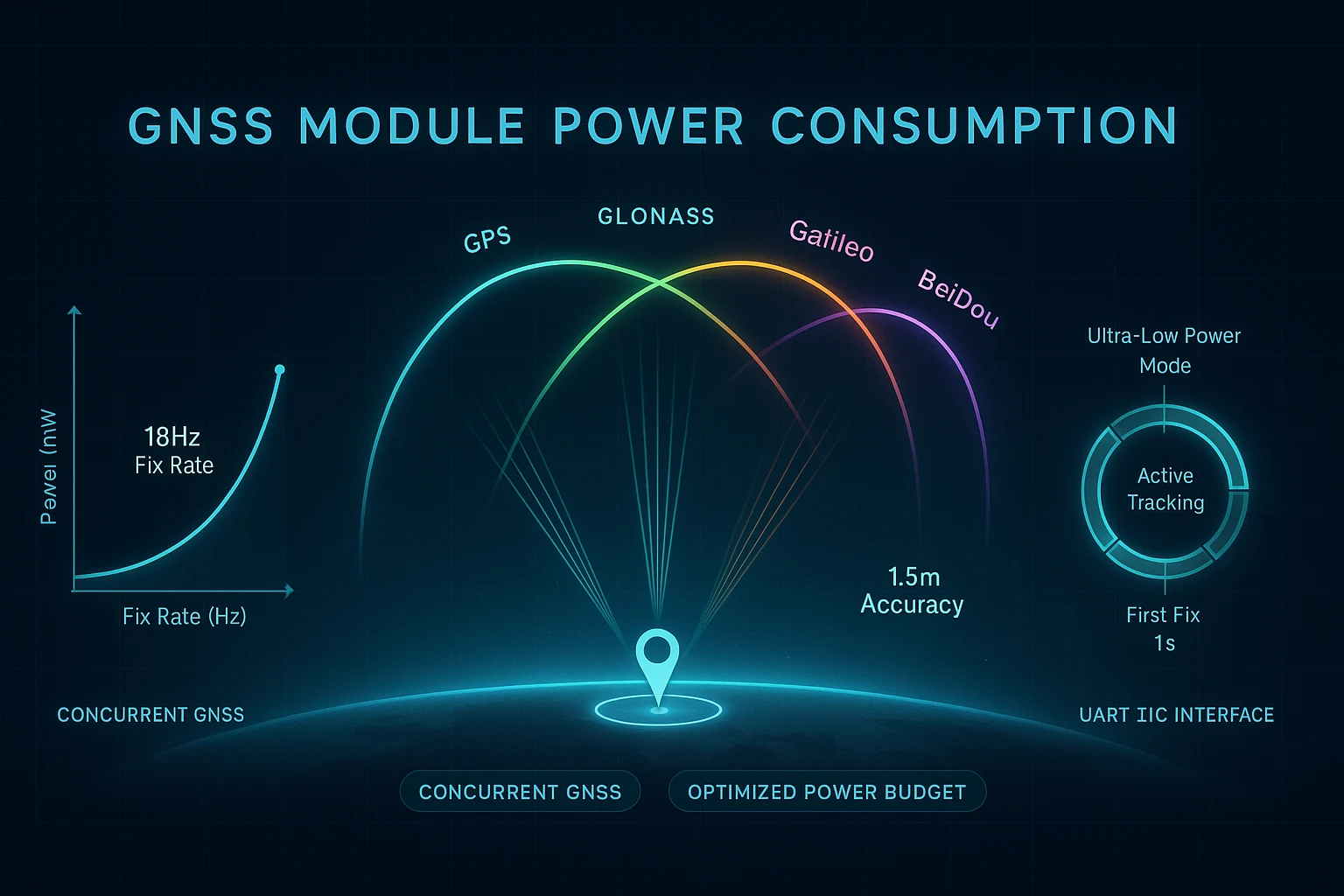
GNSS Module Power Consumption: Everything Builders Need to Know
Why GNSS Module Power Consumption Defines Your Project's Success
If you've ever deployed a GPS-enabled device in the field — a drone, a tracker, a remote sensor node — you already know that GNSS module power consumption isn't a footnote in the datasheet. It's the difference between a system that runs all day and one that dies before noon.
Most GNSS modules force you to choose. Either you get high accuracy and pay for it in milliamps, or you get low power draw and sacrifice fix rate, accuracy, or satellite coverage. For builders who need both — precision and endurance — that trade-off has always felt like a dead end.
The RFOXiA MultiNav Pro+™ was designed to break that trade-off entirely. At 25–30mA operating current, it delivers 1.5-meter accuracy, an 18Hz fix rate, concurrent quad-constellation support, and a first fix in just 1 second. This guide walks through every dimension of that achievement — what drives GNSS power consumption, how the MultiNav Pro+ handles it, and why it matters for your specific application.
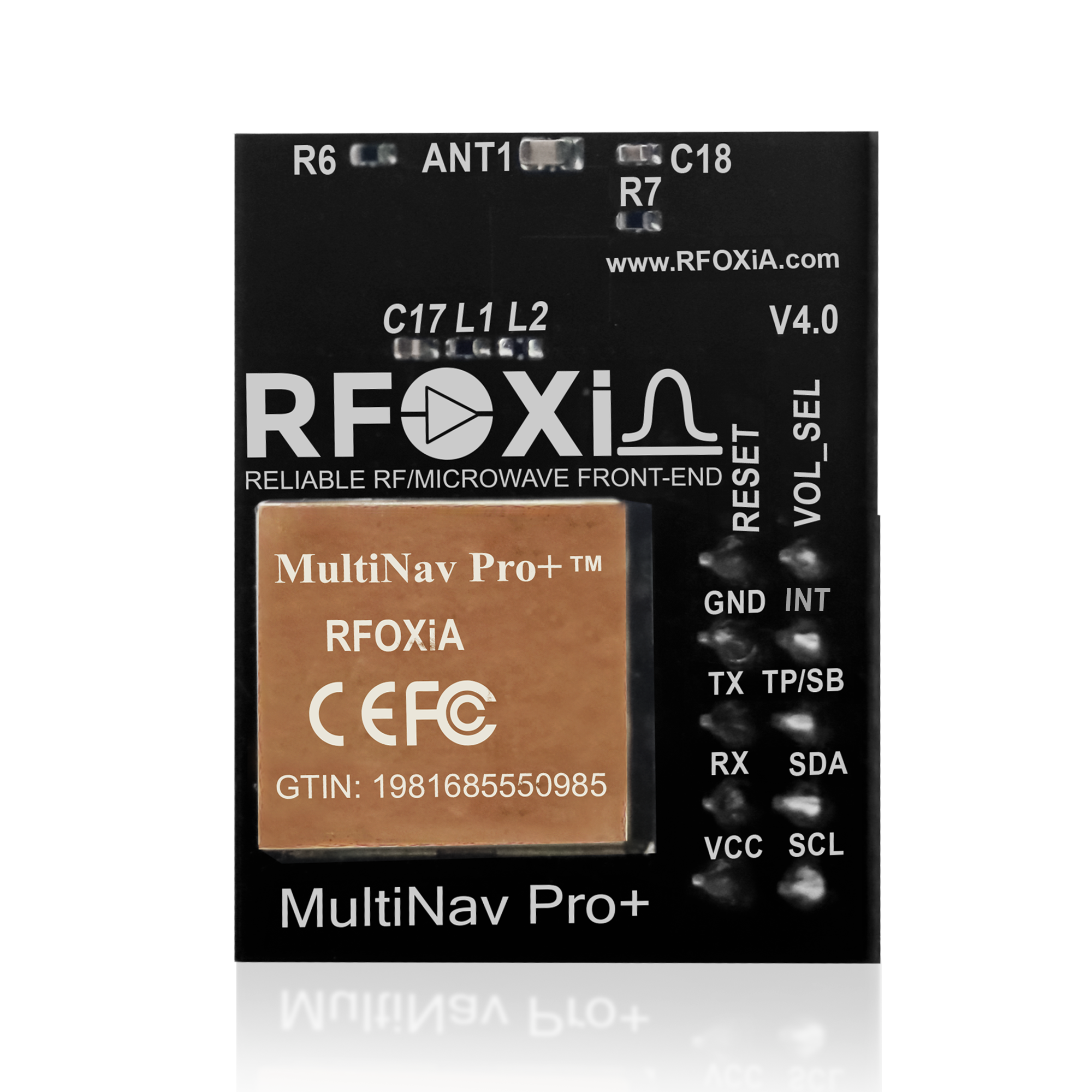
What Drives GNSS Module Power Consumption in the First Place?
To understand why 25–30mA is genuinely impressive, you need to understand what a GNSS receiver is actually doing when it's running.
A GNSS receiver must continuously:
- Track multiple satellite signals simultaneously — each requiring its own correlator channel
- Run the RF front end — low-noise amplifier, mixer, and analog-to-digital converter
- Execute navigation algorithms — computing position from pseudorange measurements in real time
- Maintain timing and oscillator stability — required for accurate fix
- Communicate position data — over UART or I2C to the host system
Each of these tasks draws current. The more constellations you track, the more channels you need. The higher your fix rate, the more frequently the processor runs position computations. The better your accuracy, the more sophisticated the filtering and error correction algorithms.
This is why many high-accuracy, high-update-rate GNSS modules consume 60–100mA or more. The MultiNav Pro+ achieves its 25–30mA operating figure because the u-blox MIA-M10Q at its core was architected from the ground up for ultra-low-power multi-constellation tracking — not bolted together from legacy chipsets.
The u-blox MIA-M10Q: The Engine Behind the Efficiency
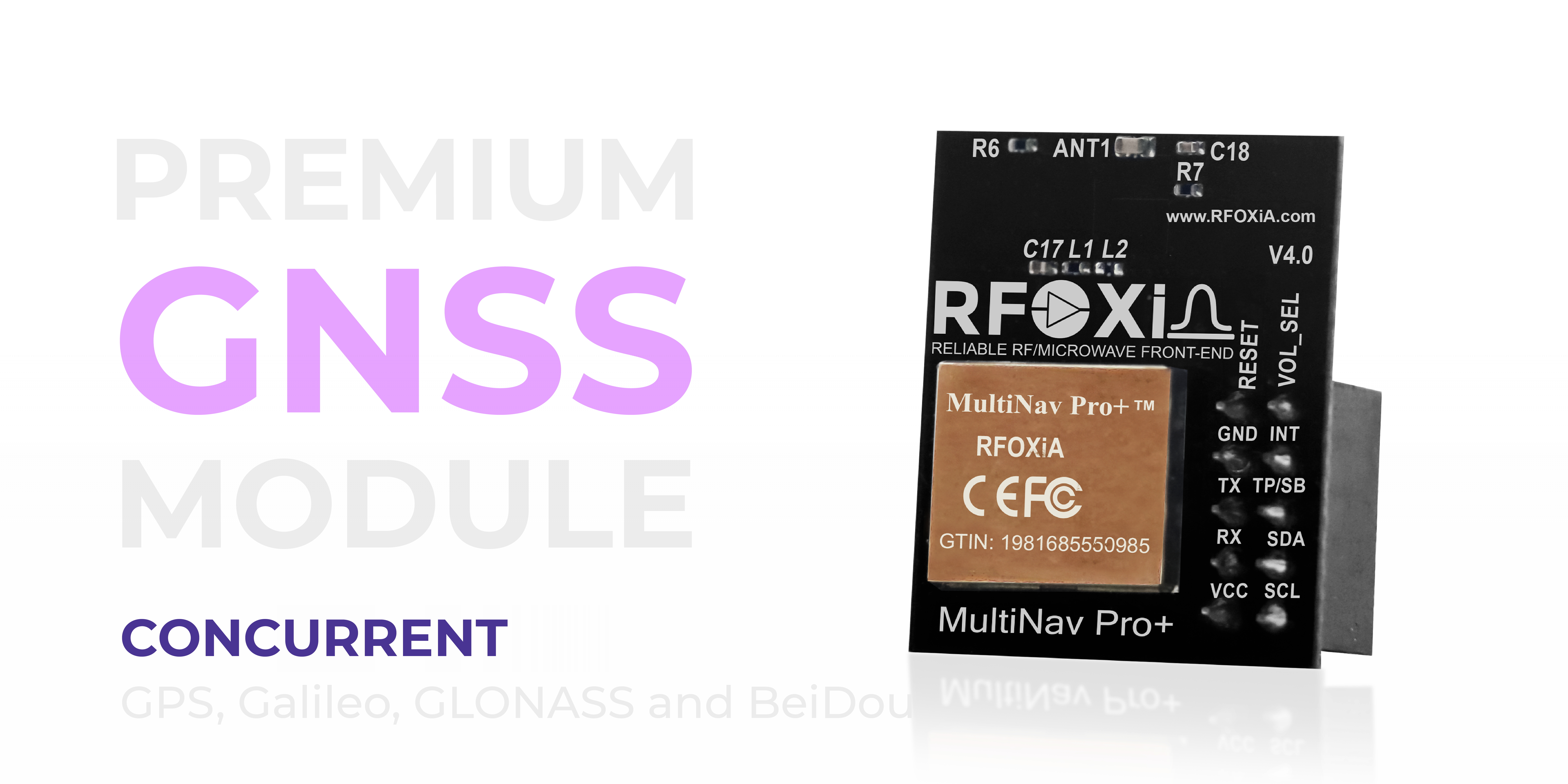
The u-blox MIA-M10Q is the latest generation of u-blox's ultra-low-power GNSS platform. It is not a cost-cut version of an older chip — it is purpose-built for applications where power budget and performance must coexist.
Key architectural advantages of the MIA-M10Q include:
- Concurrent quad-constellation tracking — GPS, GLONASS, Galileo, and BeiDou simultaneously, without additional power penalty versus single-constellation operation at this tier
- Integrated ADC and RF front end — reduces external component count and eliminates the power overhead of external RF chips
- Hardware acceleration for navigation processing — reduces CPU load and associated current draw
- Low-power acquisition modes — aggressive duty cycling during satellite search before switching to continuous tracking
The result is a chip that pulls the MultiNav Pro+ into that 25–30mA window without compromising on the specs that actually matter for field deployment.
Accuracy You Can Actually Build On
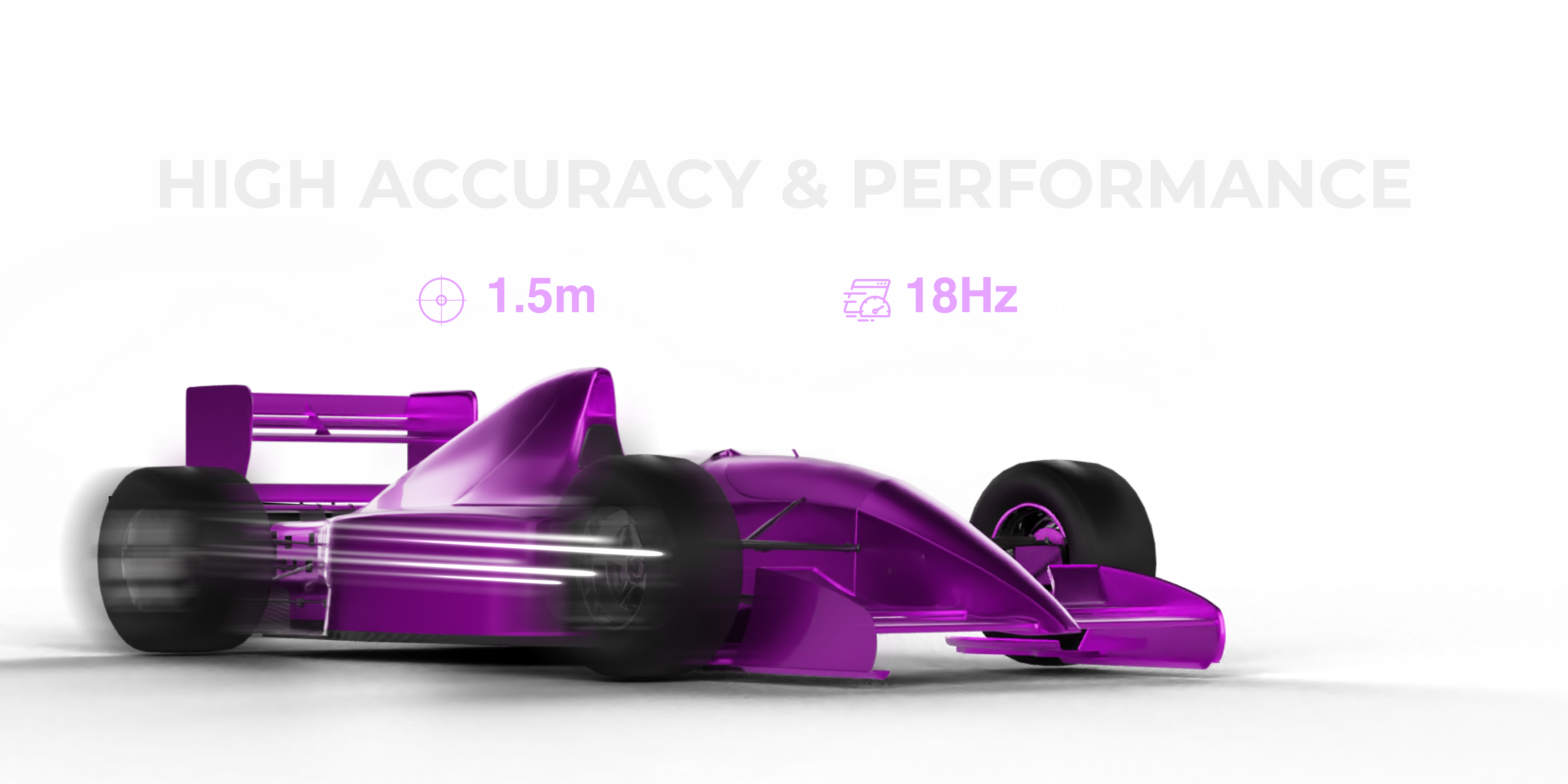
Let's talk about what 1.5-meter accuracy actually means in practice.
For drone navigation, 1.5 meters is the difference between a waypoint mission that lands where you programmed it and one that drifts into obstacles. For precision agriculture, it means your spray path repeats accurately pass after pass. For asset tracking, it means you know which side of a road a vehicle is on.
The MultiNav Pro+ achieves this through a combination of:
- Quad-constellation coverage — more visible satellites means better geometry (lower PDOP), which directly improves position accuracy
- Proprietary RF/microwave microstrip filter technology — reduces multipath interference that degrades accuracy in real-world environments
- Advanced receiver sensitivity — the module can maintain lock on weaker signals, keeping accuracy stable when you move through partial obstructions
Combine this with an 18Hz fix rate — position updates 18 times per second — and you have a GNSS module that can track fast-moving platforms accurately. Standard consumer GNSS modules typically offer 1–5Hz. For a drone traveling at 60km/h, the difference between 5Hz and 18Hz updates is 3.3 meters of potential position lag per update cycle versus 0.9 meters. For autonomous systems, that margin is mission-critical.
And the 1-second first fix time means your system is operational almost immediately after power-on — no waiting through long cold-start acquisition sequences while your drone sits on the pad.
Form Factor and Integration: Compact Without Compromise
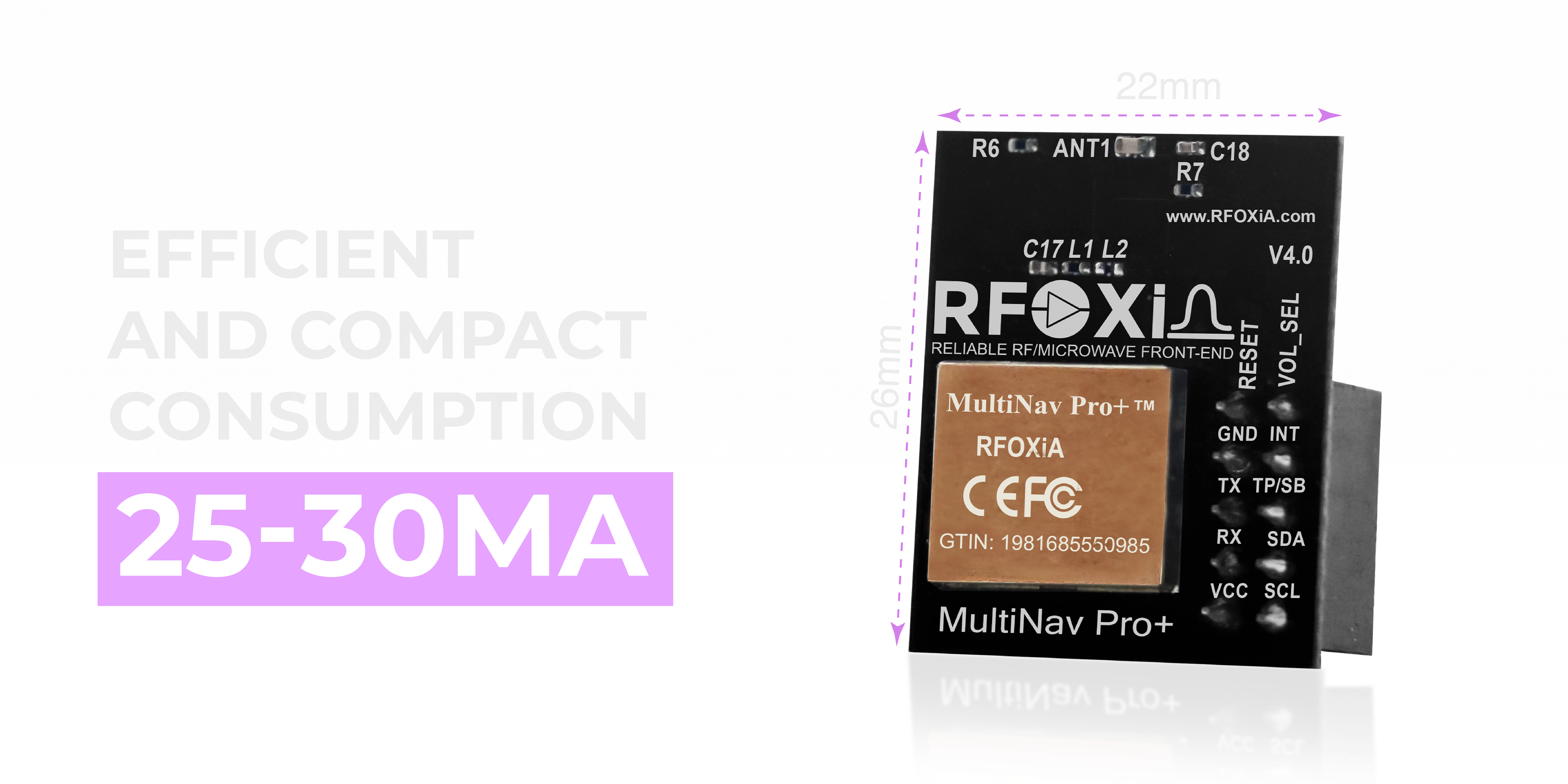
The MultiNav Pro+ measures 26mm × 22mm. For context, a US postage stamp is 25mm × 21mm. This is a module that disappears into your PCB design rather than dominating it.
Despite this footprint, the module integrates:
- The full MIA-M10Q chipset with all supporting passive components
- An integrated high-gain chip antenna — no external antenna or u.FL connector required unless you need one
- All RF filtering circuitry
- Power regulation
- UART and I2C interface conditioning
The integrated chip antenna deserves specific mention. Many GNSS modules at this price point either omit antenna integration (requiring you to source, tune, and mount an external antenna) or include a basic patch that underperforms in real environments. The MultiNav Pro+'s antenna is optimized for the module's specific ground plane geometry and provides consistent gain across all four supported constellations.
For drone builders, this matters because antenna placement on carbon fiber airframes is genuinely challenging. A well-integrated chip antenna on a compact module gives you more placement flexibility than a bulky external patch.
Interface Options That Fit Any Design
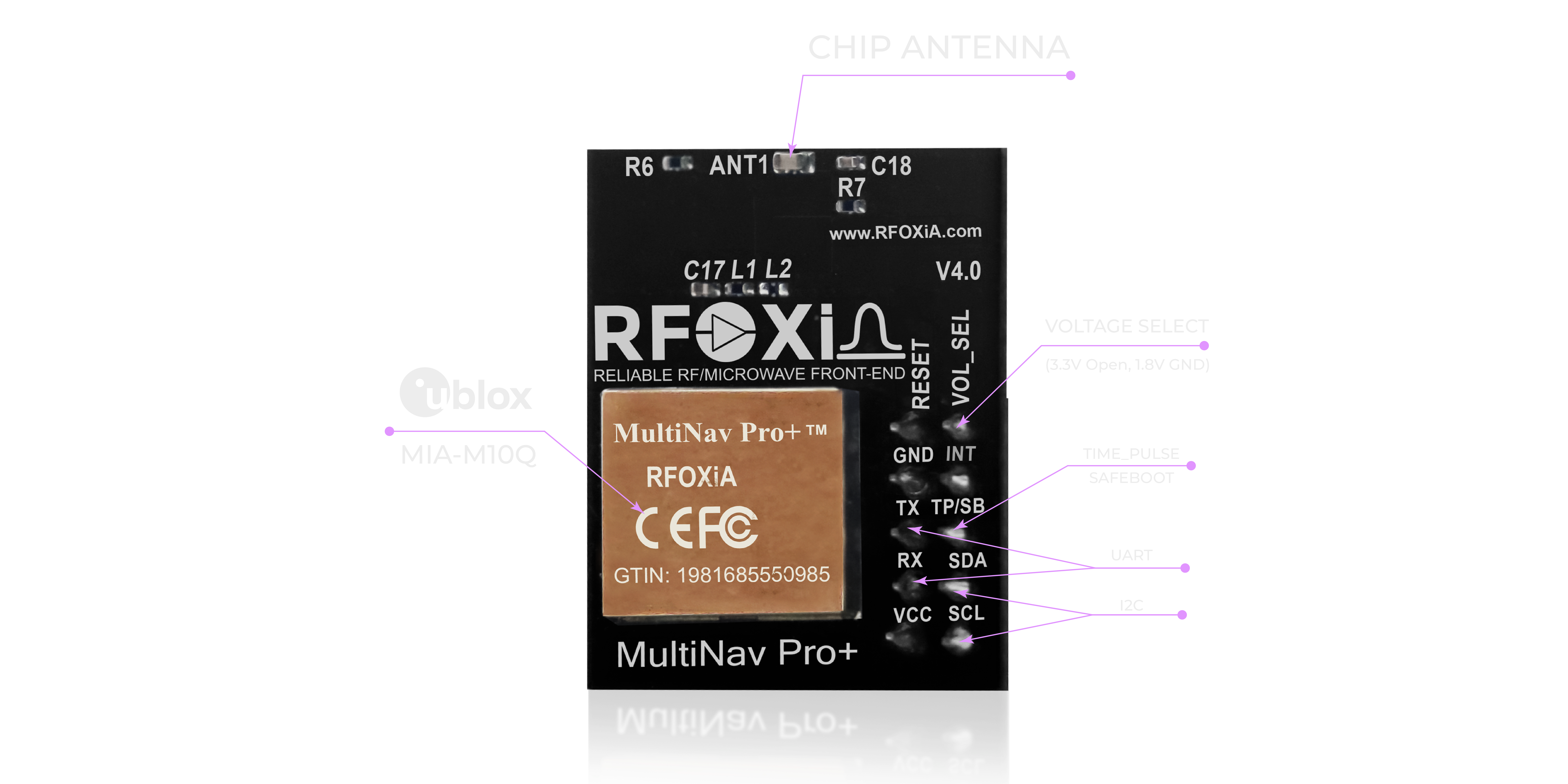
The MultiNav Pro+ supports both UART (TX/RX) and I2C (SCL/SDA) interfaces, with voltage compatibility at both 1.8V and 3.3V.
This matters more than it might seem:
UART is the standard for flight controllers, microcontrollers with dedicated serial peripherals, and any design where you want a dedicated GPS port with minimal latency. Most drone autopilots (ArduPilot, PX4, Betaflight with GPS support) expect UART-connected GPS modules.
I2C is the choice when you're already using an I2C bus for other sensors and want to add GPS without consuming another UART peripheral. It's common in IoT nodes and wearable designs where pin count is precious.
The dual-voltage support (1.8V and 3.3V) means the MultiNav Pro+ integrates cleanly with both modern low-power SoCs that run at 1.8V logic and the broader 3.3V Arduino/STM32/ESP32 ecosystem. No level-shifting required in most designs.
This is the kind of integration detail that saves hours of debugging and eliminates a category of BOM components entirely.
Open-Source Driver: From Datasheet to Working Code in Minutes
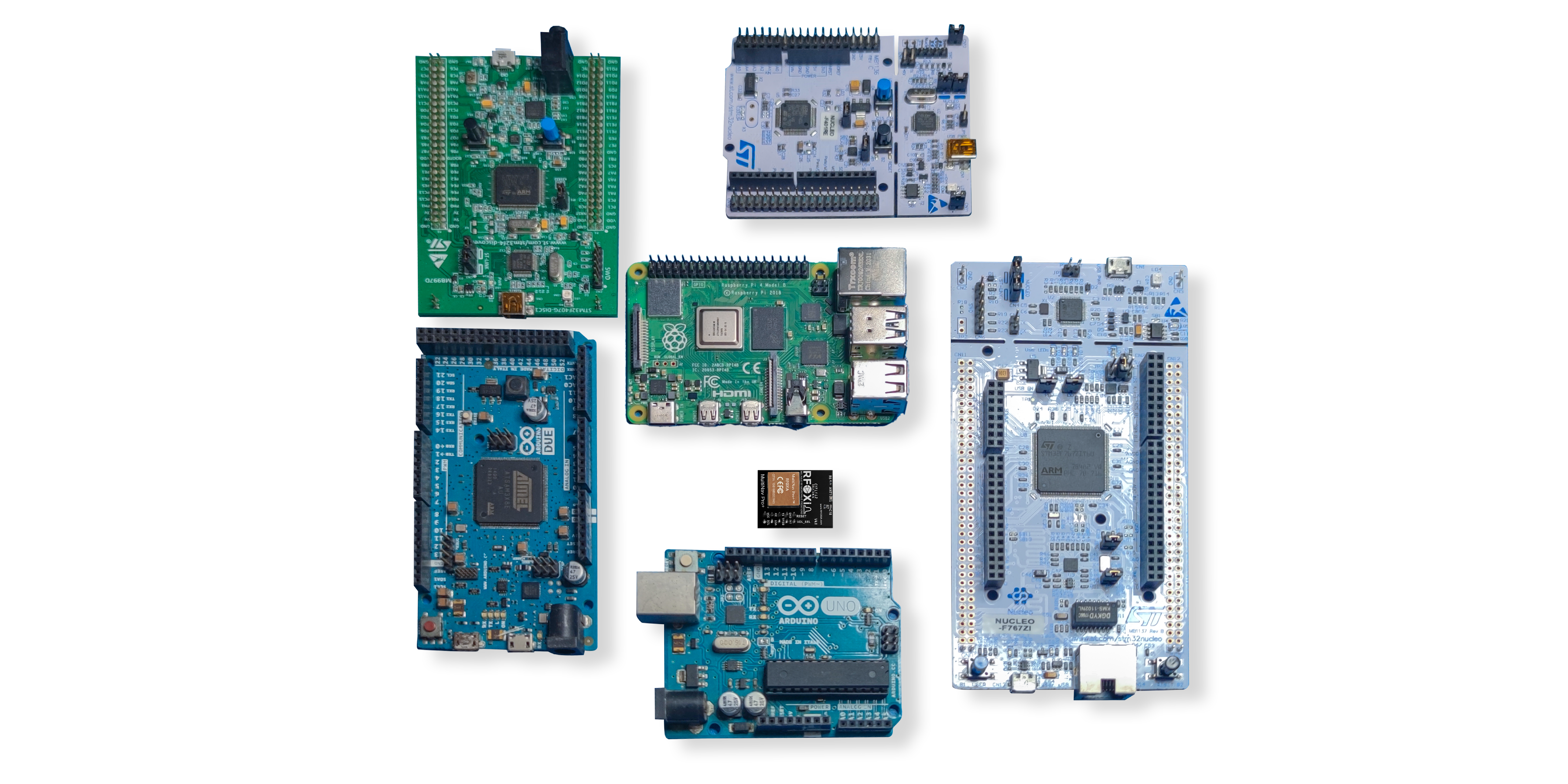
Hardware is only half the integration story. The MultiNav Pro+ ships with a fully open-source C language library that implements the NMEA standard protocol commands used to communicate with the module.
This library is designed to import cleanly into Arduino IDE or any standard IDE toolchain — PlatformIO, STM32CubeIDE, ESP-IDF, and others. You don't need to parse raw NMEA sentences from scratch, implement your own checksum validation, or reverse-engineer the module's configuration command set.
For teams using the RFOXiA Accurate GNSS Module alongside other RFOXiA hardware — the BLE Module, Sensors Module, or Power/Program Kit — the open-source library accelerates the path from individual module evaluation to integrated system prototype significantly. The AI Firmware Builder on RFOXiA Club can also generate production-ready firmware that incorporates the GNSS library automatically, reducing integration time from days to hours.
U-Center Software: Professional Visualization Without Extra Cost
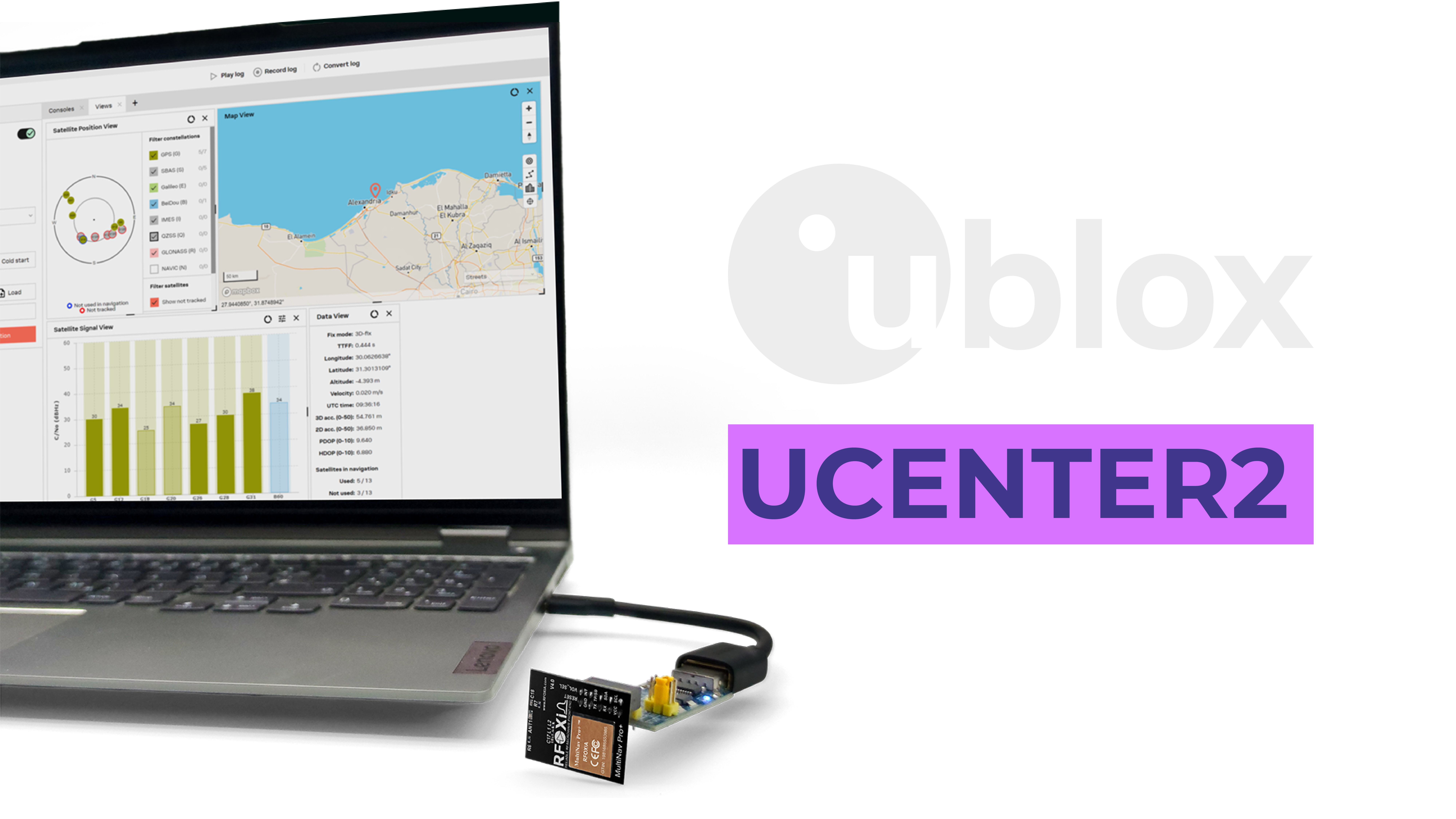
Because the MultiNav Pro+ is built on the u-blox MIA-M10Q, it is fully compatible with u-center — u-blox's professional GNSS evaluation and configuration software.
u-center gives you:
- Satellite sky plot — see exactly which satellites are visible and their signal strength in real time
- Position accuracy visualization — watch HDOP and position error in real time as the fix converges
- Movement tracking — live map view of position history
- Configuration management — adjust update rate, constellation selection, power modes, and message output configuration through a GUI rather than manual UBX command construction
- Data logging — record sessions for post-processing and analysis
For professional developers, u-center transforms the evaluation phase. Instead of writing test firmware to verify your hardware is working correctly, you connect to u-center and know within 60 seconds whether your antenna placement is adequate, what your actual accuracy is in your specific deployment environment, and whether any interference sources are present.
This is professional-grade tooling that comes for free with the module — no additional license required.
Use Cases: Where This Module Belongs

The combination of low GNSS module power consumption, high fix rate, precision accuracy, and compact size makes the MultiNav Pro+ the right choice across a wide range of applications:
Autonomous Drones and UAVs
The 18Hz update rate and 1.5m accuracy are the specifications drone autopilots require for reliable waypoint navigation and position hold. The compact form factor and low current draw preserve flight time. The 1-second first fix means your pre-flight sequence doesn't stall waiting for GPS lock.
IoT Tracking Nodes
At 25–30mA, the MultiNav Pro+ is practical for battery-powered tracking applications. Combined with duty cycling — powering down between fixes — you can achieve multi-day runtimes on modest battery capacity while still reporting precise location every few minutes.
Precision Agriculture
High-accuracy location combined with the RFOXiA Sensors Module creates a powerful environmental monitoring platform. Know exactly where your temperature, humidity, and air quality readings were collected — down to 1.5 meters.
Research and Scientific Applications
The 18Hz fix rate and precise accuracy make the MultiNav Pro+ suitable for kinematic research applications — tracking fast-moving experimental platforms, wildlife with GPS tags, or environmental phenomena that move at vehicular or flight speeds.
Wearables and Personal Trackers
The 26mm × 22mm footprint and 1.8V/3.3V compatibility make the MultiNav Pro+ genuinely suitable for wearable applications — not just a theoretical use case.
Smart City Infrastructure
Deployed as part of a fixed monitoring node, the MultiNav Pro+'s GPS output provides verified location metadata that makes sensor data trustworthy and audit-able — a requirement for smart city data platforms including the RFOXiA data network.
GNSS Module Power Consumption: Comparing the MultiNav Pro+ in Context
To put the 25–30mA figure in perspective:
| Module Type | Typical Current | Fix Rate | Accuracy | Constellations |
|---|---|---|---|---|
| Basic single-constellation GPS | 20–30mA | 1–5Hz | 2.5–5m | GPS only |
| Mid-range multi-constellation | 40–70mA | 5–10Hz | 2–3m | GPS + 1-2 others |
| MultiNav Pro+ (MIA-M10Q) | 25–30mA | 18Hz | 1.5m | GPS + GLONASS + Galileo + BeiDou |
| High-precision RTK modules | 60–150mA | 5–20Hz | <0.1m | Multi |
The MultiNav Pro+ occupies a genuinely distinctive position: quad-constellation, 18Hz, 1.5m accuracy at single-constellation power levels. This is not a marketing claim — it's a direct consequence of the MIA-M10Q architecture and the engineering decisions RFOXiA made in the surrounding hardware design.
For battery-powered systems where GNSS module power consumption is a design constraint, the MultiNav Pro+ eliminates the typical accuracy-vs-power trade-off that forces engineers to compromise their requirements.
Complete Package: What's Included
Every MultiNav Pro+ order includes:
- MultiNav Pro+™ GNSS Module — fully assembled, tested, and ready to integrate
- Quick Start Guide — step-by-step setup for common platforms including Arduino IDE
- Access to the open-source C library — downloadable from RFOXiA Club
- u-center compatibility — immediate access to professional evaluation software
For builders who want the full wireless development ecosystem, the MultiNav Pro+ is included in the RFOXiA Developer Bundle — combining the BLE Module (5km ground-to-ground range, 20km man-to-drone), Sensors Module (7 environmental sensors), GNSS Module, and Power/Program Kit in one integrated package. The Developer Bundle also integrates with the RFOXiA Connect app for live GPS tracking on a mobile map view, and qualifies you for the RFOXiA data network — where your sensor node earns daily rewards for verified environmental data contributions.
Why RFOXiA
RFOXiA is not a module vendor. It's a hardware ecosystem company. The MultiNav Pro+ is FCC certified, built on proven u-blox silicon, tested in real-world drone and IoT deployments, and supported by a platform — RFOXiA Club — that gives you AI-assisted firmware development, an active developer community, and direct access to technical documentation and source code.
Four completed Kickstarter campaigns. 250+ customers. A "Project We Love" designation from Kickstarter. Manufacturing infrastructure in China with rapid iteration capability. These aren't credentials assembled for a pitch deck — they're the operational reality behind every module that ships.
If precise location with low GNSS module power consumption is a requirement for what you're building, the MultiNav Pro+ is the right hardware. Everything else — the ecosystem, the platform, the community — is what makes it the right choice beyond the datasheet.
Ready to Build?
The MultiNav Pro+ is available now at $49 per unit, with inventory in stock and ready to ship. Whether you're equipping a single prototype or planning a deployment, the RFOXiA Accurate GNSS Module delivers the accuracy, update rate, and power efficiency your project demands.
Visit rfoxia.com/premium-gnss-module/ to order, or join RFOXiA Club to access documentation, the AI Firmware Builder, and a $10 welcome credit toward your first purchase.
Build precisely. Build efficiently. Build with RFOXiA.
Written by: Moamen Mohamed LinkedIn