
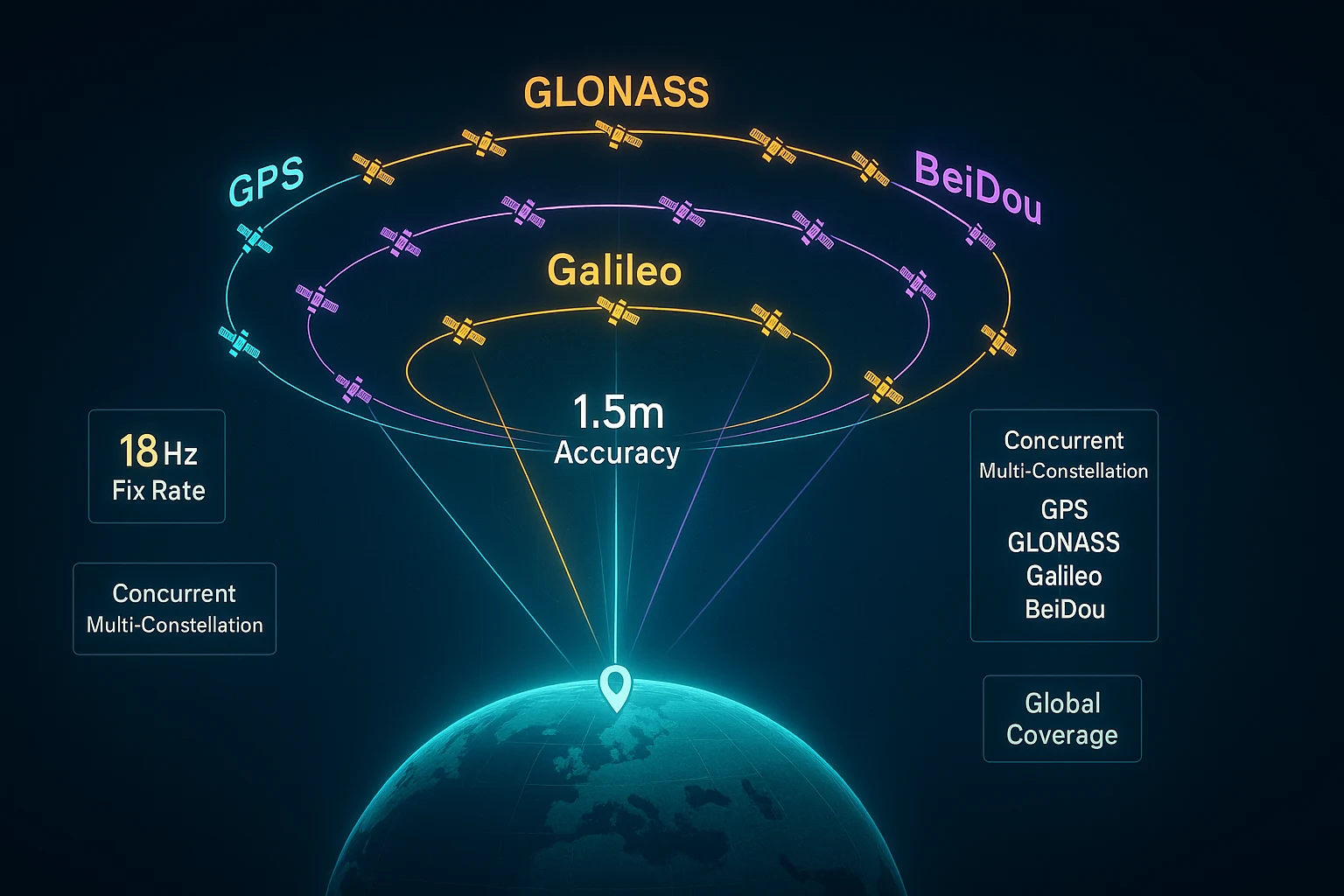
GPS GLONASS Galileo Module: The Complete Guide to MultiNav Pro+ Precision Navigation
Why Your Next Project Deserves a True GPS GLONASS Galileo Module
Location data is the backbone of modern hardware projects. Whether you are building an autonomous drone, a precision agriculture tracker, a wearable device, or an industrial IoT node, the quality of your GNSS module determines the quality of everything downstream. A slow fix, a weak signal, or an inaccurate position reading does not just create inconvenience — it breaks your application at the most critical moment.
The problem most builders run into is a familiar one: commodity GNSS modules are cheap, but they cut corners in ways that matter. Single-constellation receivers that lose lock in urban canyons. Fix rates so slow that fast-moving platforms like drones outrun the data. Accuracy specifications measured under ideal lab conditions that bear no resemblance to real-world field performance.
The MultiNav Pro+ was built to solve exactly this problem. It is a professional-grade GPS GLONASS Galileo module engineered for developers who need real accuracy, real speed, and real global coverage — at a price point that does not require an enterprise budget.
This guide covers everything you need to know: the technology behind it, the specifications that matter, the use cases it unlocks, and why it occupies a category of its own in the GNSS module market.
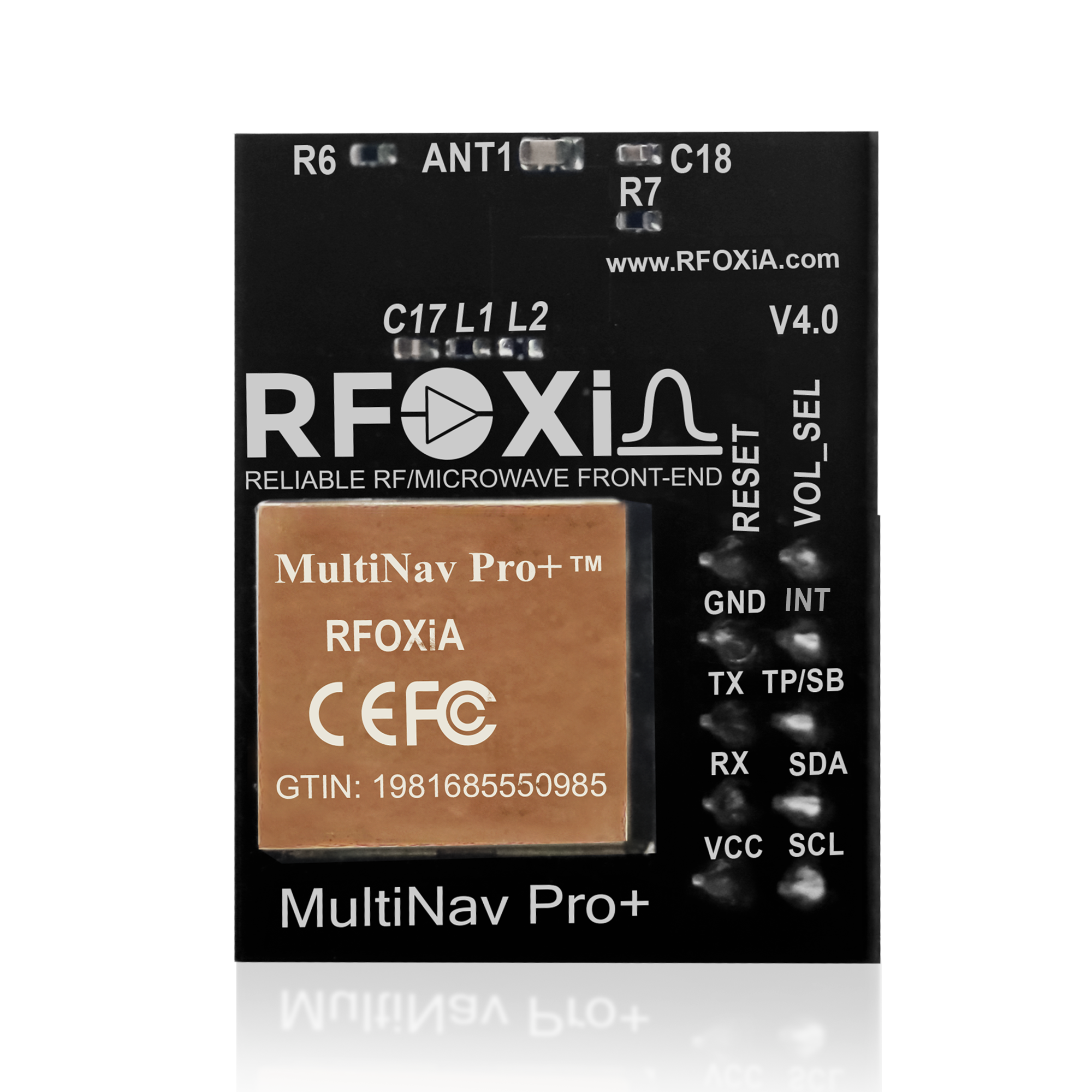
What Is a Multi-Constellation GNSS Module and Why Does It Matter?
GNSS stands for Global Navigation Satellite System. GPS (United States), GLONASS (Russia), Galileo (European Union), and BeiDou (China) are the four major satellite constellations currently operational. Each constellation operates on different frequencies, different orbital parameters, and different signal protocols.
A single-constellation GPS receiver can see, at most, the satellites in one network. In open sky conditions, this is often sufficient. But the moment you move into a city, under tree cover, near tall structures, or into any environment where a portion of the sky is obscured, the number of visible satellites drops — and your fix quality degrades with it.
A true GPS GLONASS Galileo module with BeiDou support changes this equation entirely. Instead of querying one constellation, it queries all four simultaneously. In practice, this means:
- More satellites in view at any time — often 30 or more compared to 8-12 from GPS alone
- Faster initial fix — more signals means the receiver triangulates position in seconds, not minutes
- Better accuracy under obstruction — urban canyons, forests, and complex environments stop degrading your data
- Higher reliability — if one constellation has interference or signal issues, the others compensate
For drone builders and field researchers, this is not a nice-to-have. It is a fundamental capability difference.
Introducing the MultiNav Pro+: Professional GNSS at Developer Prices
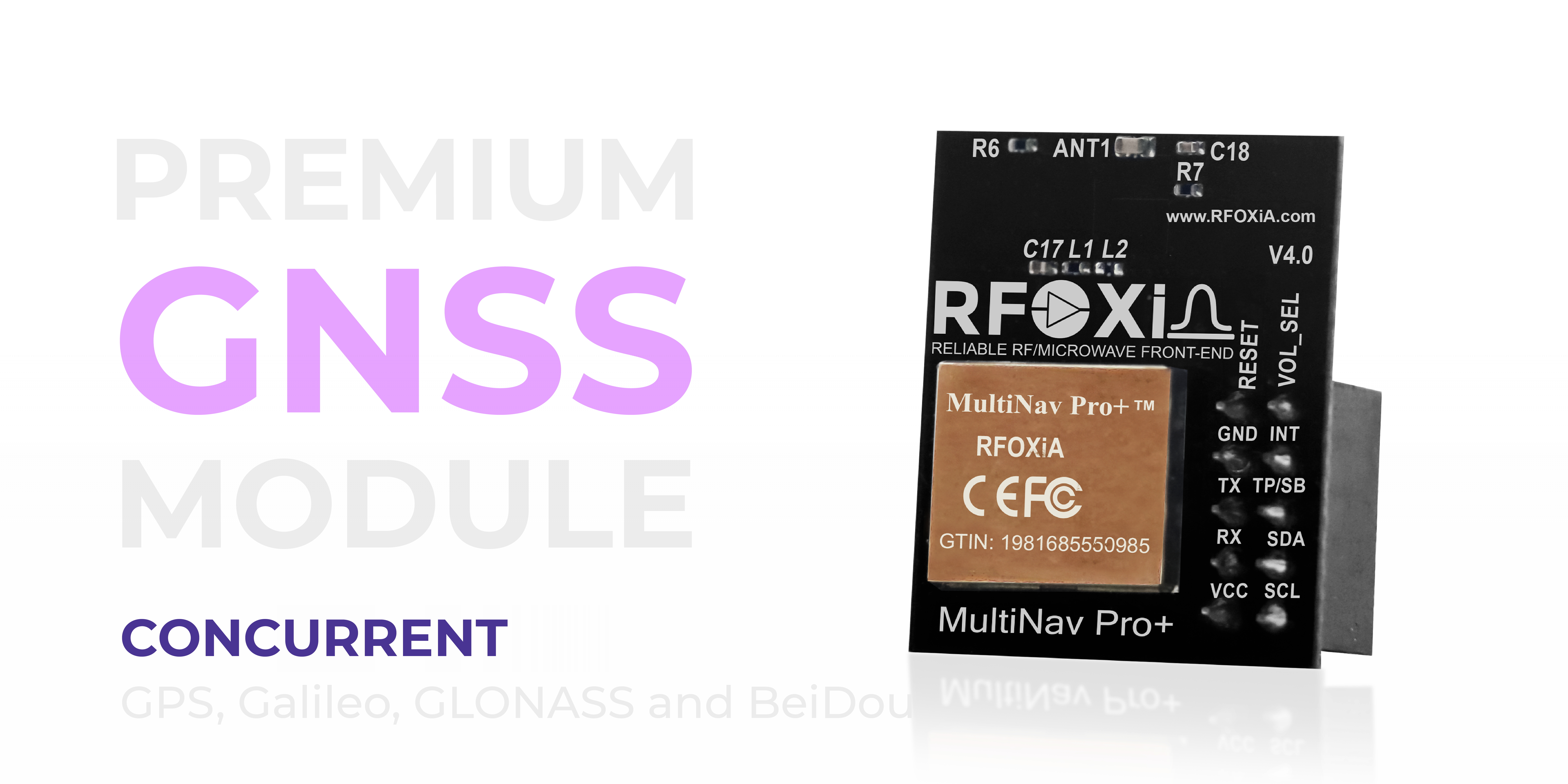
The MultiNav Pro+ is RFOXiA's precision navigation module, built around the u-blox MIA-M10Q — one of the most advanced GNSS chipsets available for compact embedded applications. It supports concurrent operation across GPS, Galileo, GLONASS, and BeiDou, delivers sub-1.5-meter accuracy, and achieves an 18Hz fix rate that keeps pace with the fastest-moving platforms you will deploy it on.
At $49, it is priced for the developer and maker community. But the specifications are anything but entry-level.
Core Specifications
| Parameter | Specification |
|---|---|
| Accuracy | < 1.5 meters CEP |
| Fix Rate | Up to 18Hz |
| Time to First Fix | 1 second (hot start) |
| Constellations | GPS, Galileo, GLONASS, BeiDou (concurrent) |
| GNSS Chip | u-blox MIA-M10Q |
| Antenna | Integrated high-gain chip antenna |
| Interface | UART (TX/RX) and I2C (SCL/SDA) |
| Operating Voltage | 1.8V and 3.3V |
| Current Draw | 25-30mA |
| Dimensions | 26mm x 22mm |
| Certification | FCC certified |
Performance Deep Dive: The Numbers That Actually Matter
1.5-Meter Accuracy: What It Really Means in the Field
Accuracy in GNSS modules is typically specified as CEP — Circular Error Probable. A 1.5-meter CEP means 50% of your position readings will fall within 1.5 meters of your actual location. For a professional module, real-world performance under multi-constellation operation regularly exceeds this figure.
To put this in context: standard GPS-only receivers commonly achieve 3-5 meter accuracy under good conditions. In challenging environments, that number can degrade to 10+ meters. The MultiNav Pro+ maintains sub-1.5-meter performance because it is pulling from all four constellations simultaneously, giving the receiver vastly more data to compute a precise fix.
For drone surveying, precision agriculture, research data collection, and any application where location accuracy translates directly to output quality, this difference is enormous.
18Hz Fix Rate: Tracking Fast-Moving Platforms
Most GNSS modules operate at 1Hz — one position update per second. Some higher-end modules reach 5Hz or 10Hz. The MultiNav Pro+ delivers 18Hz, meaning your application receives 18 fresh position coordinates every second.
Why does this matter? Consider a drone traveling at 60 km/h. At 1Hz, it has traveled 16.7 meters between position updates. At 18Hz, it has traveled less than 1 meter. For flight control, autonomous navigation, and live tracking, the difference between 1Hz and 18Hz is the difference between a smooth trajectory and a jerky, unreliable one.
This is the specification that makes the MultiNav Pro+ specifically well-suited for drone applications. It was designed with fast-moving platforms in mind.
1-Second First Fix: Ready When You Are
In the field, startup time matters. Nobody wants to wait three minutes for a GNSS module to acquire satellites before a flight or a research session. The MultiNav Pro+ achieves a hot start first fix in approximately 1 second, getting your system operational immediately.
Hardware Design: Compact, Efficient, and Thoughtfully Engineered
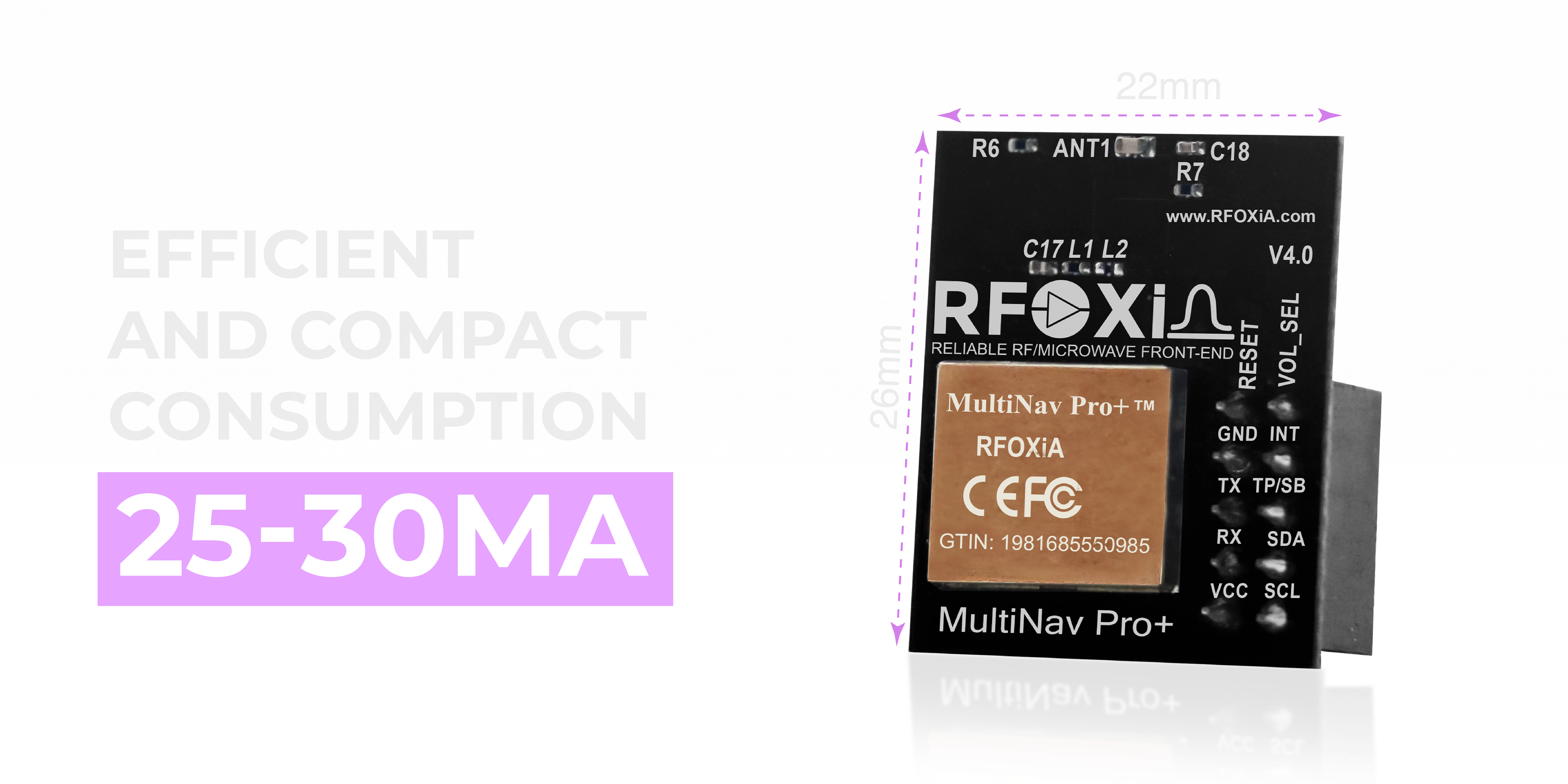
The MultiNav Pro+ measures 26mm x 22mm. This is a deliberate design choice. GNSS modules frequently become integration bottlenecks in compact systems — a large module forces larger PCB layouts and limits placement options.
At 26 x 22mm, the MultiNav Pro+ fits cleanly into drone frames, wearable devices, compact IoT nodes, and tight automotive enclosures. The integrated high-gain chip antenna eliminates the need for an external antenna in most applications, further reducing the integration footprint and complexity.
Power consumption of 25-30mA during active tracking is efficient enough for battery-powered deployments. When combined with the RFOXiA Power/Program Kit — which delivers 24-hour runtime from a 5-minute supercapacitor charge — the MultiNav Pro+ enables extended field deployments without power management concerns.
Connectivity and Interface: Built for Real-World Integration
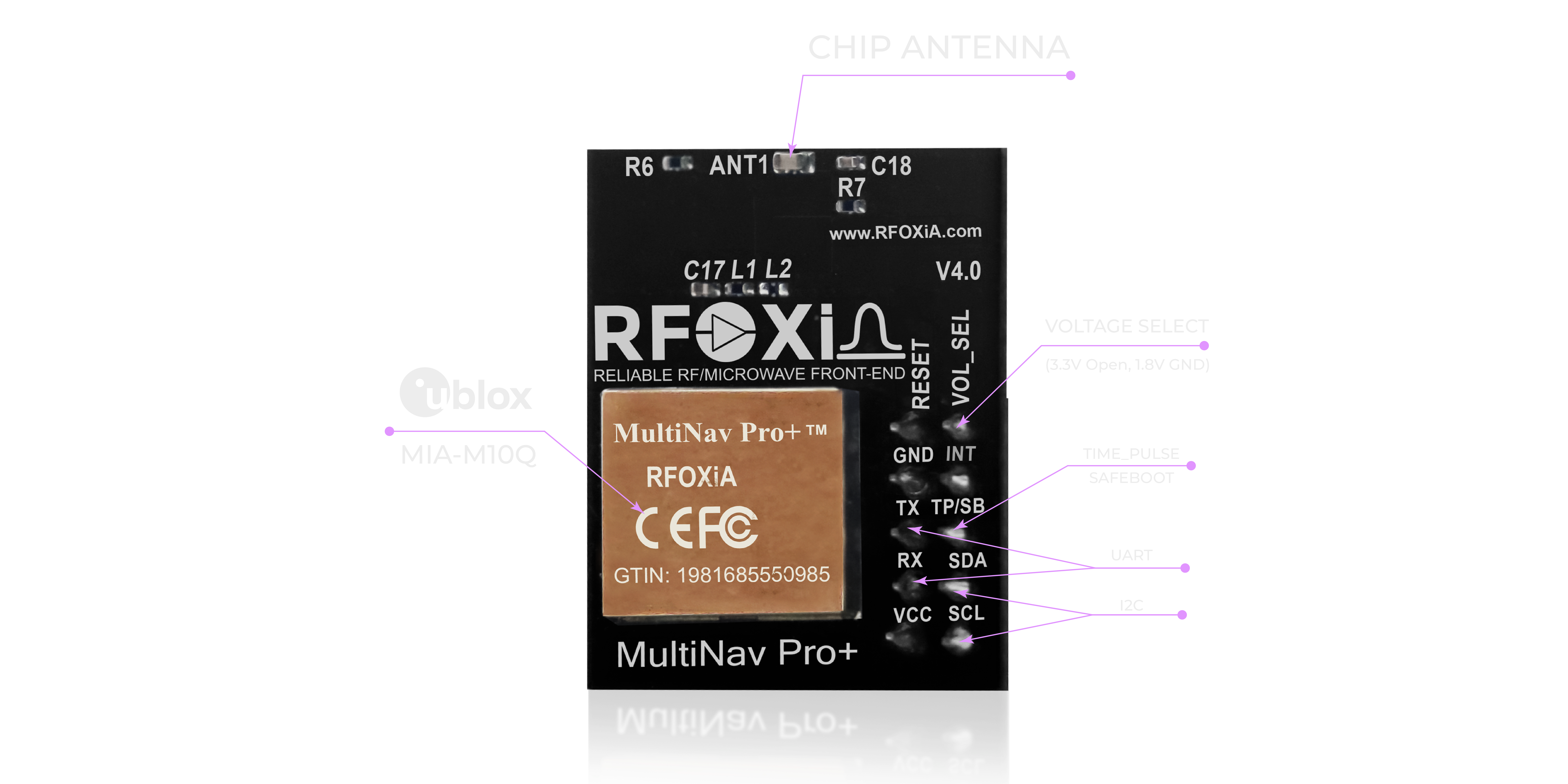
One of the common frustrations with precision GNSS modules is interface compatibility. You find a module with great specs, then discover it only supports one interface that does not match your microcontroller setup, or the voltage levels require additional level shifting circuitry.
The MultiNav Pro+ supports both UART (TX/RX) and I2C (SCL/SDA) out of the box. It operates at both 1.8V and 3.3V, covering virtually every common microcontroller and development board in use today — STM32, ESP32, Arduino, Raspberry Pi, and beyond.
This is plug-and-play in the literal sense. Connect the appropriate interface, apply power, and you are receiving NMEA data within seconds.
Software Ecosystem: Open Source from Day One
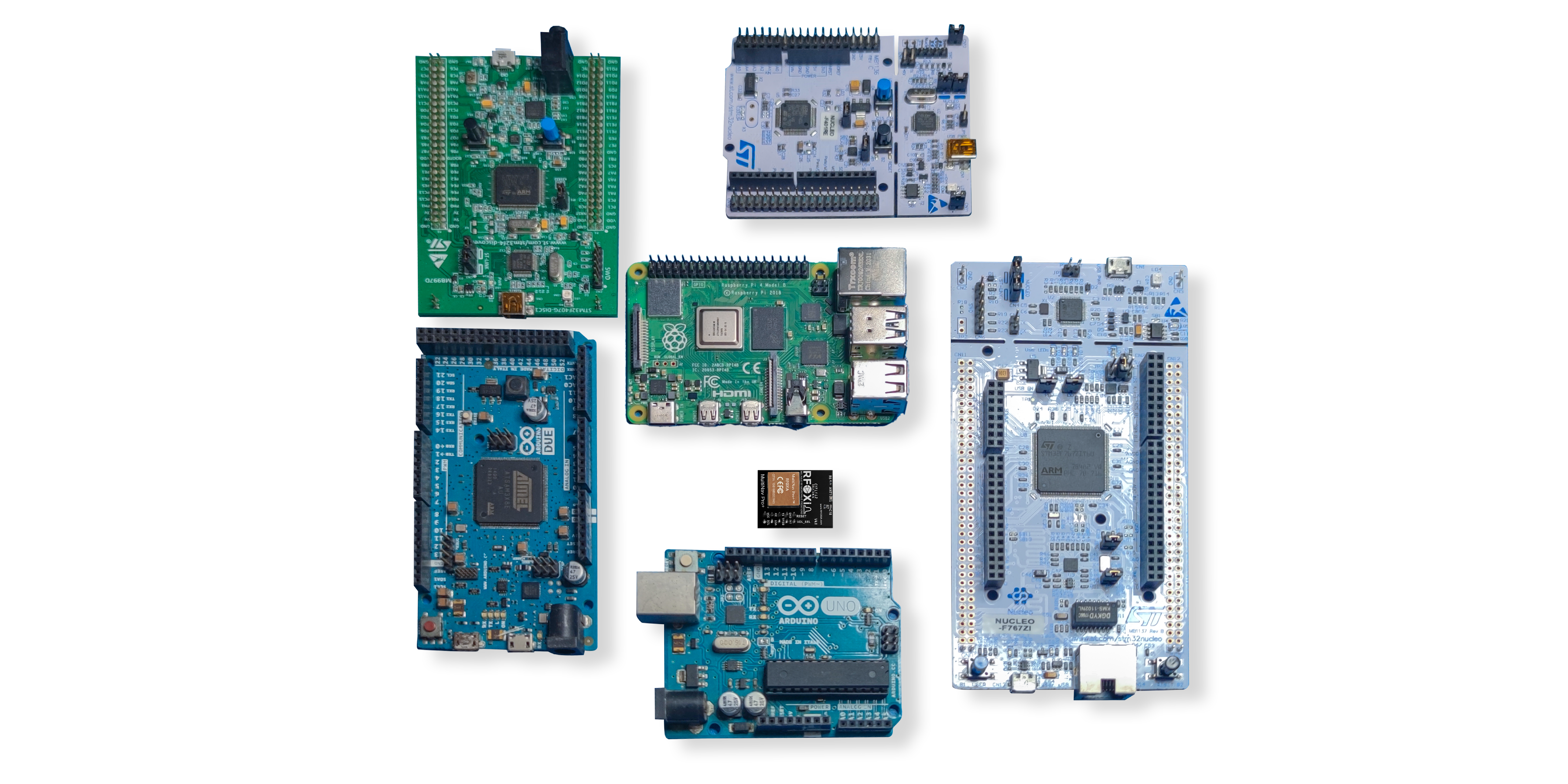
Hardware is only as useful as its software support. RFOXiA ships the MultiNav Pro+ with a fully open-source C language driver library that implements NMEA standard protocol commands. The library is designed for direct import into Arduino IDE and is compatible with any standard IDE toolchain.
For developers working in more advanced environments, the NMEA standard compliance means the MultiNav Pro+ integrates with existing geolocation software stacks without modification. Parse latitude, longitude, altitude, velocity, heading, and satellite count directly from standard NMEA sentences.
The open-source approach also means the developer community can extend, modify, and improve the library over time. This is the RFOXiA philosophy in practice: professional tools with community-accessible software.
Beyond the driver library, the MultiNav Pro+ is also compatible with the RFOXiA Club AI Firmware Builder. Describe your navigation application in plain language — autonomous waypoint following, geofence alerting, precision landing, real-time tracking — and the AI generates production-ready firmware incorporating the MultiNav Pro+ library. What might take days of development compresses into hours.
Explore the MultiNav Pro+ and the full RFOXiA ecosystem at rfoxia.com
u-center Software: Professional Configuration and Evaluation
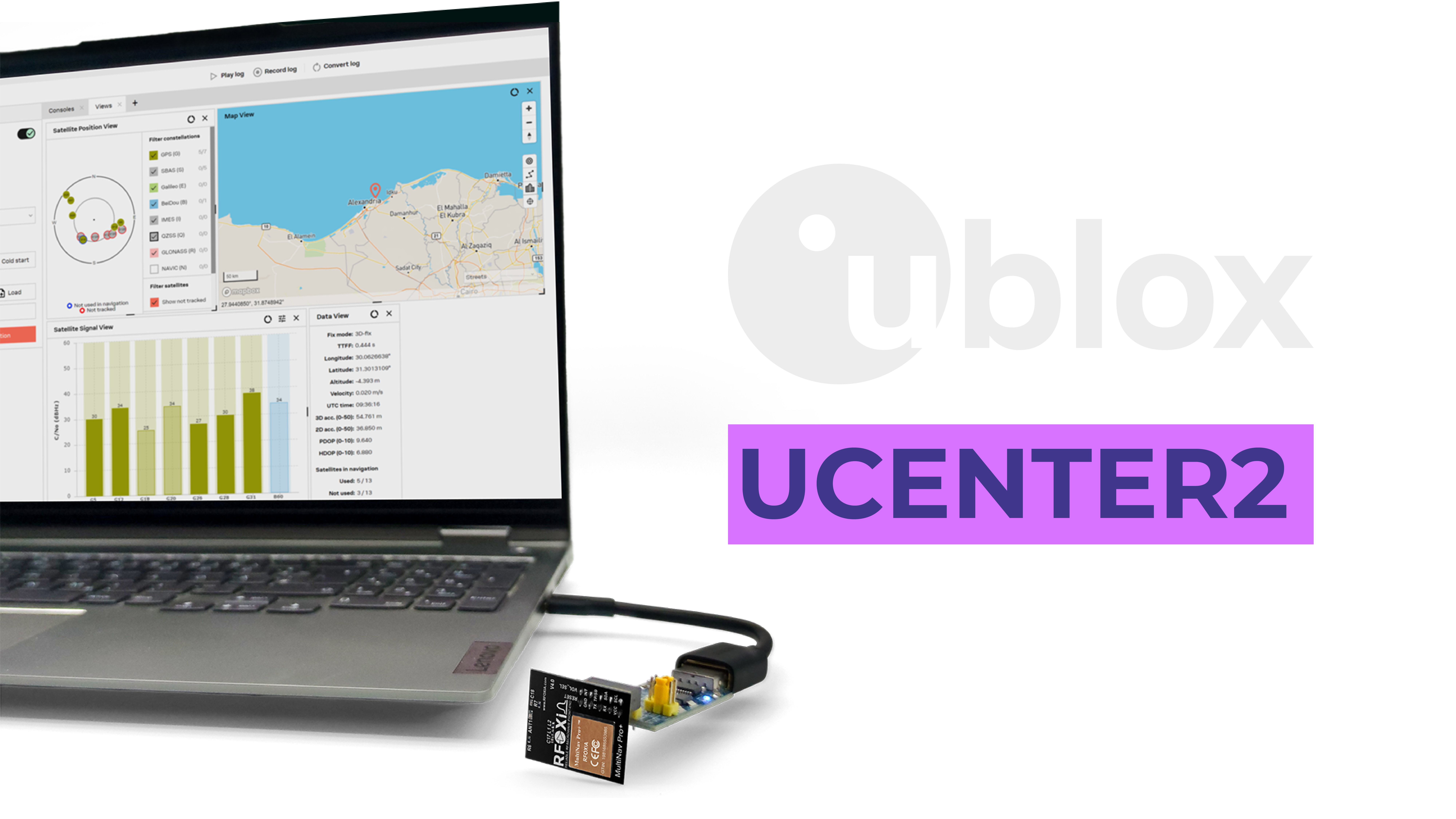
Because the MultiNav Pro+ is built on the u-blox MIA-M10Q, it is compatible with u-blox's professional u-center software — a powerful desktop application for GNSS module configuration and evaluation.
u-center provides:
- Satellite visualization — see exactly which satellites are in view and their signal strengths
- Real-time position tracking — plot your movement on a live map
- Quick configuration — adjust fix rate, constellation selection, power modes, and output protocol
- Flexible logging — record position data to file for post-processing or analysis
- Constellation management — enable or disable specific constellations for testing
For developers who need to tune the module for a specific application, validate accuracy in a new deployment environment, or troubleshoot positioning issues, u-center provides professional-grade tools at no additional cost.
This is the advantage of building on u-blox silicon: decades of professional software tooling come with it.
Use Cases: Where the MultiNav Pro+ GPS GLONASS Galileo Module Excels

The combination of multi-constellation support, sub-1.5-meter accuracy, and 18Hz fix rate makes the MultiNav Pro+ appropriate for an exceptionally wide range of applications.
Drone Navigation and Autonomous Flight
For drone builders, the 18Hz fix rate is the defining specification. Autonomous flight controllers need frequent position updates to hold position, execute waypoints, and land precisely. The MultiNav Pro+ provides the position data quality that professional drone applications demand. Combined with the RFOXiA BLE Module for 20km control range, the MultiNav Pro+ enables fully featured autonomous drone systems built entirely from the RFOXiA ecosystem.
Precision Agriculture
Crop monitoring, soil sampling, and precision spray systems all depend on accurate position data to produce meaningful results. A 5-meter positional error in an autonomous sprayer wastes inputs and damages yield. The MultiNav Pro+ delivers the sub-1.5-meter accuracy that precision agriculture applications require.
IoT Environmental Monitoring and Data Networks
When deployed with the RFOXiA Sensors Module and connected to the RFOXiA data network, GNSS data serves a second critical function: GPS verification of outdoor deployment. The data monetization network requires verified outdoor sensor placement to validate data quality. The MultiNav Pro+ provides this verification automatically, enabling users to earn passive daily rewards while contributing verified, GPS-authenticated environmental data to enterprise buyers.
Research and Survey Applications
University researchers, environmental scientists, and field surveyors need location data that holds up to scrutiny. The MultiNav Pro+'s multi-constellation architecture and documented accuracy specifications provide the defensible precision that research applications require.
Wearable and Personal Tracking
At 26 x 22mm and 25-30mA power consumption, the MultiNav Pro+ integrates cleanly into wearable form factors. Sports performance tracking, personal safety devices, and outdoor navigation wearables all benefit from the combination of compact size and professional accuracy.
Automotive and Logistics
Vehicle tracking systems, fleet management, and cold chain monitoring all require reliable position data across diverse environments — urban corridors, highway stretches, tunnels, and underground parking. The multi-constellation GPS GLONASS Galileo architecture with BeiDou gives the MultiNav Pro+ the resilience these demanding environments require.
The RFOXiA Ecosystem Advantage
The MultiNav Pro+ does not exist in isolation. It is one component of a vertically integrated hardware ecosystem designed so that every piece amplifies the value of every other piece.
The Developer Bundle combines the MultiNav Pro+ with the BLE Module (20km drone control range), the Sensors Module (7 environmental sensors), and the Power/Program Kit (24-hour runtime from 5-minute charge) into a single integrated toolkit. Together, these four modules enable applications that no single product can deliver alone: long-range autonomous drone systems with real-time environmental monitoring, GPS-verified data collection, and field-deployable power — all controlled through the RFOXiA Connect mobile application.
The RFOXiA Club platform ties everything together. Access the AI Firmware Builder to generate custom firmware for your navigation application. Monitor your devices in real time through the Command Center. Join the developer community to share projects and get support. And if you are contributing sensor data through the network, watch your daily rewards accumulate while your hardware works for you.
All modules are FCC certified. All modules ship ready to deploy.
Order the MultiNav Pro+ GPS GLONASS Galileo module directly from RFOXiA
How the MultiNav Pro+ Compares to Alternatives
The GNSS module market broadly divides into two segments: commodity modules and professional survey-grade equipment.
Commodity GPS modules — the kind found on breakout boards from generic suppliers — typically offer single-constellation GPS only, 1Hz fix rates, accuracy in the 3-5 meter range, and minimal software support. They are inexpensive for a reason.
Professional survey-grade GNSS systems achieve centimeter-level accuracy through RTK corrections and multi-antenna setups. They also cost thousands to tens of thousands of dollars and require significant expertise to operate.
The MultiNav Pro+ occupies the gap between these two segments — and it is a large gap. Sub-1.5-meter accuracy from a multi-constellation GPS GLONASS Galileo module with professional-grade software support, FCC certification, and open-source drivers, available for $49, represents a value proposition that the market has not previously offered at this price point.
For the developer and maker audience, this is the point: professional-grade GNSS capability should not require a professional-grade budget.
Technical Integration Guide
Getting Started with UART
Connect TX on the MultiNav Pro+ to your microcontroller's RX pin. Connect RX on the module to your microcontroller's TX pin. Apply 3.3V to VCC and GND. The module begins outputting NMEA sentences immediately at the default baud rate of 9600 (configurable up to 115200).
Import the open-source RFOXiA GNSS library into your Arduino IDE project, initialize the parser, and you are reading latitude, longitude, altitude, fix quality, and satellite count within minutes of connection.
Getting Started with I2C
Connect SCL and SDA to your microcontroller's I2C bus. The u-blox UBX protocol over I2C allows both configuration and data retrieval over the same two-wire interface. This is particularly useful in designs where UART pins are occupied by other peripherals.
Integration with RFOXiA Ecosystem
If you are building on the full RFOXiA ecosystem, the MultiNav Pro+ interfaces directly with the BLE Module for position data transmission over long-range wireless links, and with the Sensors Module for multi-parameter data collection. The RFOXiA Connect app's live map view displays real-time GPS position data streamed from the MultiNav Pro+ through the BLE Module to your mobile device — no additional coding required for basic deployment.
RF Filter Technology: Signal Integrity Under Real Conditions
One of the less-discussed but critically important aspects of GNSS module performance is RF interference rejection. GNSS signals are extraordinarily weak — they arrive at the receiver after traveling 20,000 kilometers from orbit. Local RF noise from microcontrollers, switching regulators, motor controllers, and other electronics can easily overwhelm these signals if the module's front-end is not properly designed.
The MultiNav Pro+ incorporates advanced RF/microwave microstrip filter technology that attenuates out-of-band interference before it reaches the GNSS receiver. In drone applications, where the module sits near ESCs, power distribution boards, and high-current conductors, this filtering is essential to maintaining consistent fix quality during flight.
This is the kind of engineering detail that separates a module designed for real deployments from one designed for a data sheet.
Frequently Asked Questions
Does the MultiNav Pro+ work in challenging urban environments? Yes. Multi-constellation operation across GPS, Galileo, GLONASS, and BeiDou means the module has access to significantly more satellites in any environment. Urban canyons that would cause a GPS-only receiver to lose fix are handled more reliably by the MultiNav Pro+.
What microcontrollers and platforms is it compatible with? The MultiNav Pro+ works with any microcontroller or single-board computer that supports UART or I2C at 3.3V or 1.8V logic levels. This includes STM32, ESP32, Arduino (with level shifter for 5V boards), Raspberry Pi, BeagleBone, and most other common development platforms.
Is the open-source library maintained? The library is hosted and actively maintained. Updates and improvements from the developer community are incorporated over time. Issues and pull requests are welcome through the RFOXiA Club Dev Hub.
Can I use it with the RFOXiA Developer Bundle? Absolutely — the MultiNav Pro+ is one of the four modules in the Developer Bundle. It is designed to work natively with the BLE Module, Sensors Module, and Power/Program Kit as an integrated ecosystem.
Is the MultiNav Pro+ FCC certified? Yes. The MultiNav Pro+ carries FCC certification, making it deployable in the United States without restriction and qualifying it for distribution through professional electronics channels.
Conclusion: The Right GPS GLONASS Galileo Module for Serious Builders
The MultiNav Pro+ delivers what developers actually need from a GNSS module: genuine multi-constellation support across GPS, GLONASS, Galileo, and BeiDou running concurrently, sub-1.5-meter accuracy in real-world conditions, an 18Hz fix rate that tracks the fastest platforms, a compact and power-efficient design, professional software tooling, and open-source drivers that make integration fast and straightforward.
At $49, it removes the cost barrier that has historically separated commodity modules from professional-grade navigation hardware. It is FCC certified, ships from inventory, and integrates into a complete hardware ecosystem that extends far beyond GNSS alone.
If your project demands position accuracy and fix rate that commodity modules cannot deliver, but a $2,000 survey-grade receiver is not in your budget or your use case, the MultiNav Pro+ was built specifically for you.
Get the MultiNav Pro+ GPS GLONASS Galileo module from RFOXiA — in stock and ready to ship.
Written by: Moamen Mohamed LinkedIn