
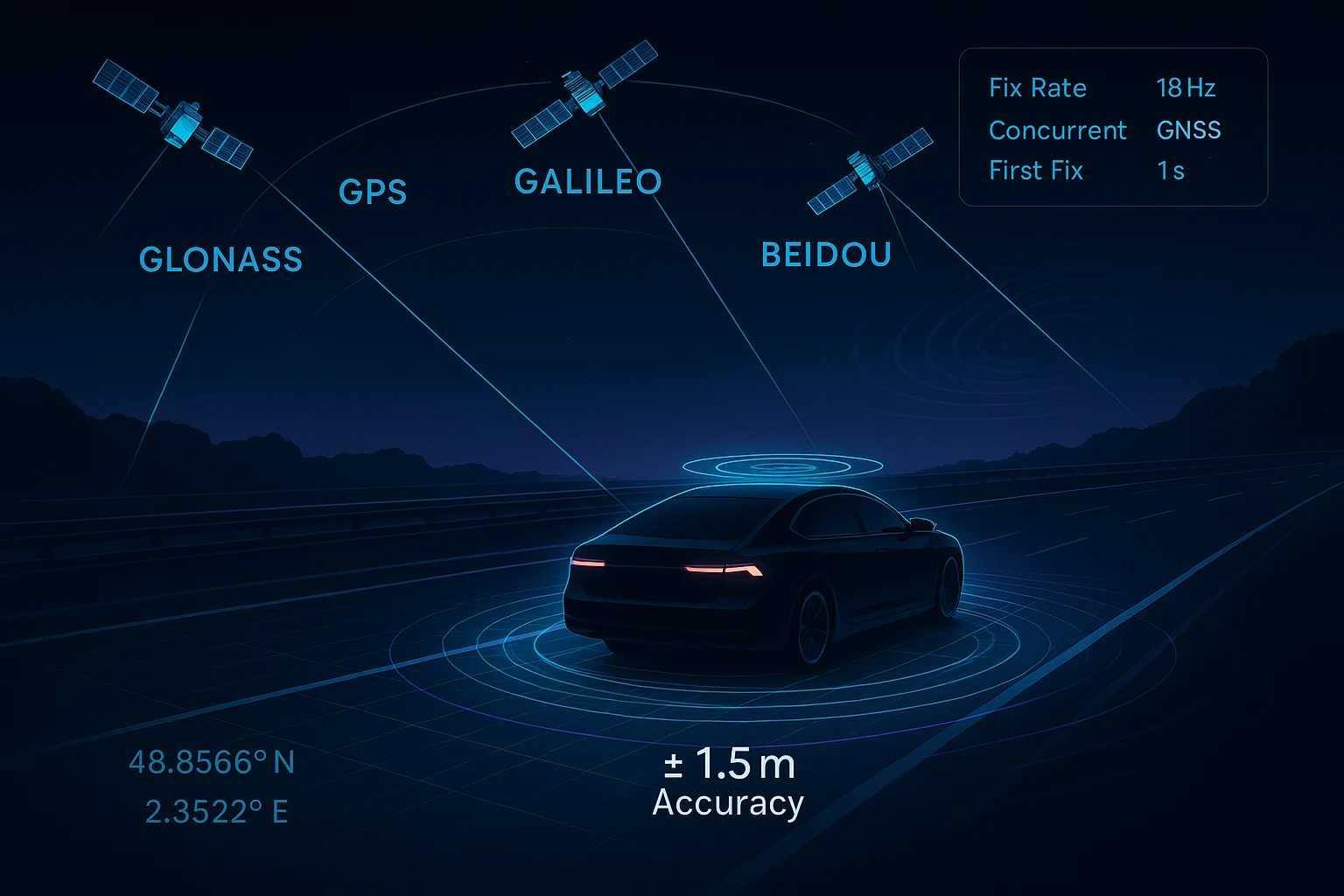
GPS Module Autonomous Vehicle: Why Precision GNSS Changes Everything
The Right GPS Module for Autonomous Vehicle Navigation Starts Here
When you're building an autonomous vehicle — whether it's a self-navigating drone, an unmanned ground vehicle, a precision agriculture robot, or a research platform — the single most critical decision you'll make is choosing the right GPS module for autonomous vehicle operation. Everything else in your system depends on location accuracy, fix speed, and signal reliability under real-world conditions.
Most developers learn this the hard way. They source a cheap GNSS breakout board, prototype their system, and hit a wall the moment they need sub-2-meter precision at update rates fast enough to track a moving platform. Generic commodity GPS modules offer 3-5 meter accuracy at 1-5Hz — acceptable for a hiking app, completely unacceptable for an autonomous system making real-time navigation decisions.
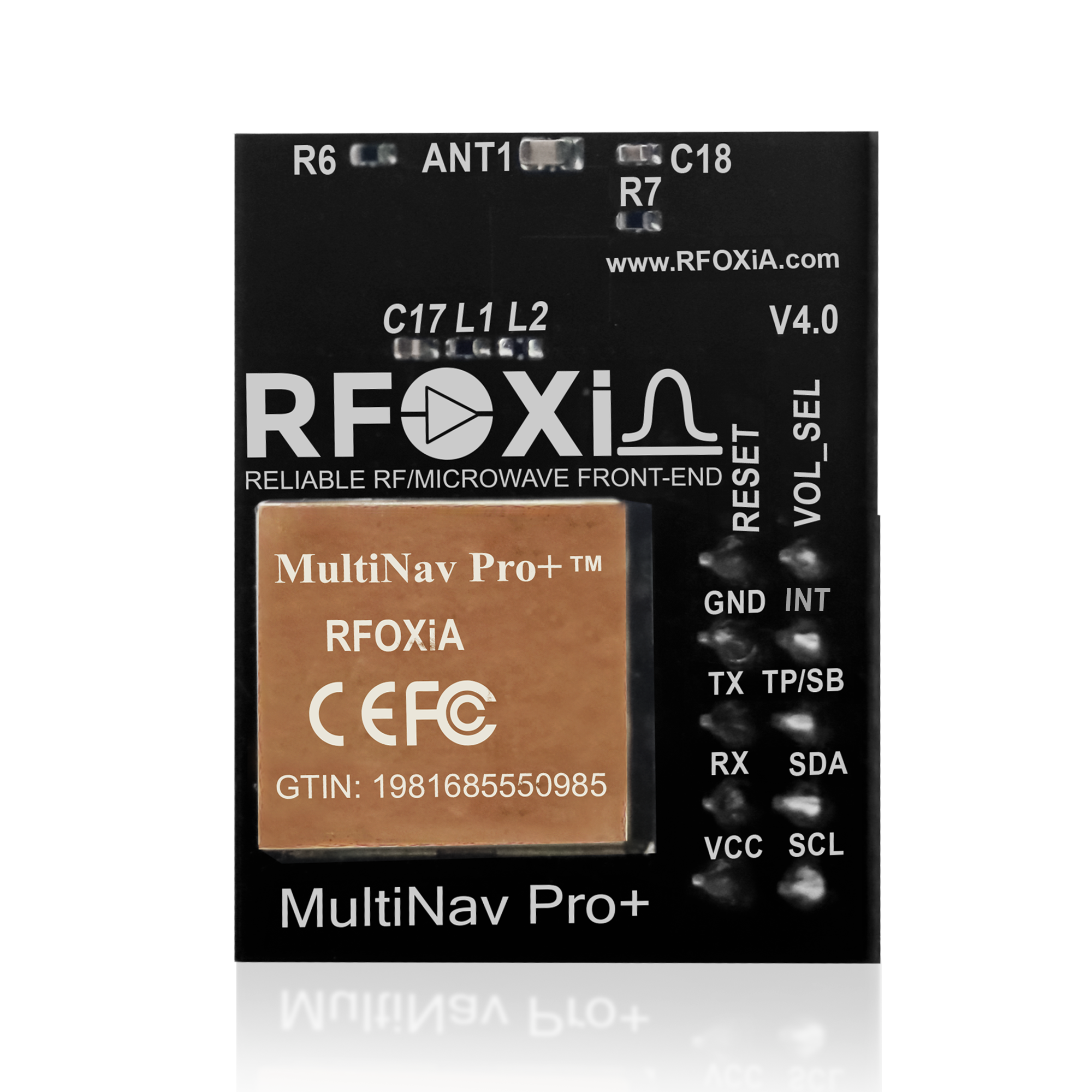
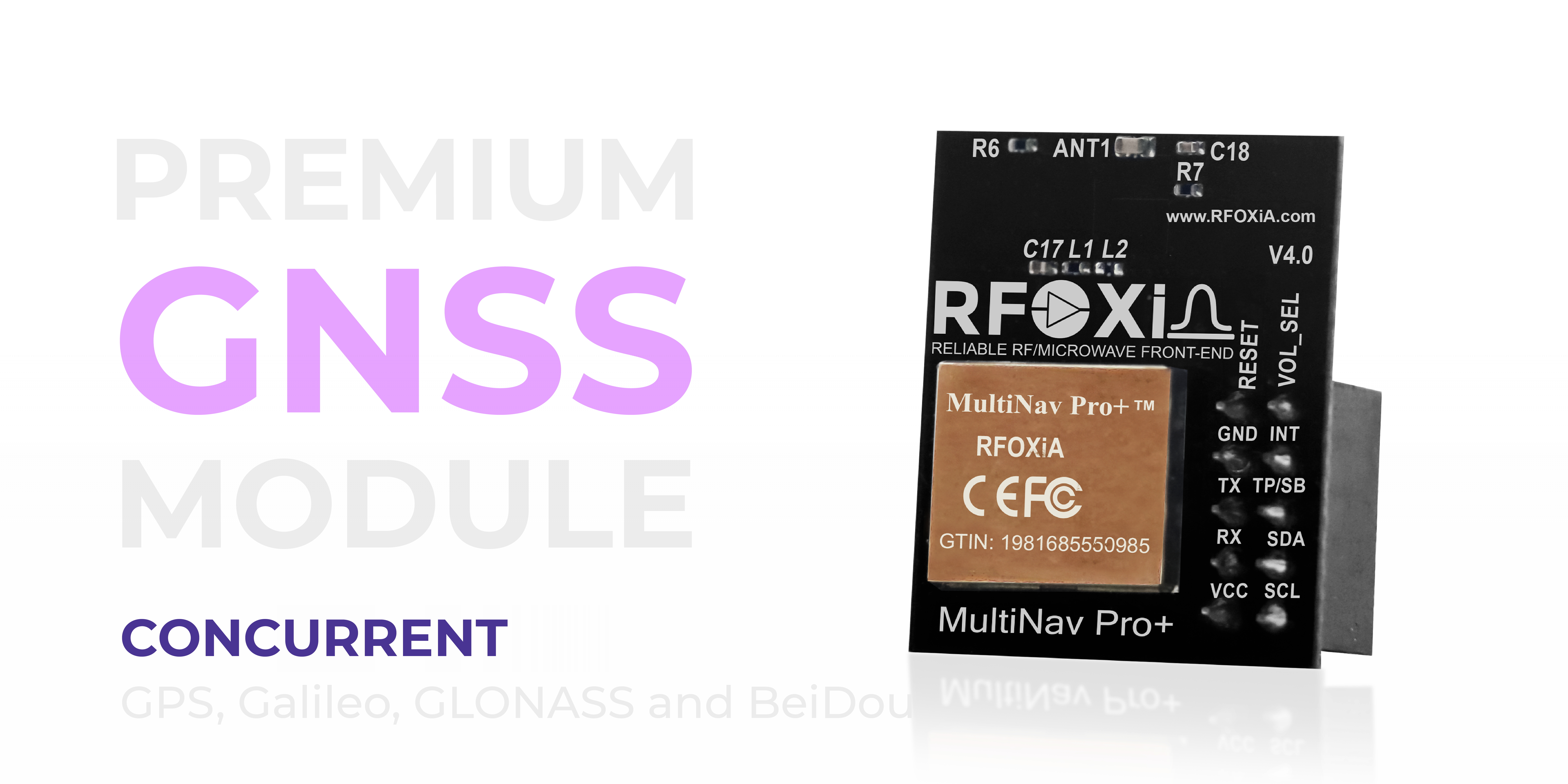
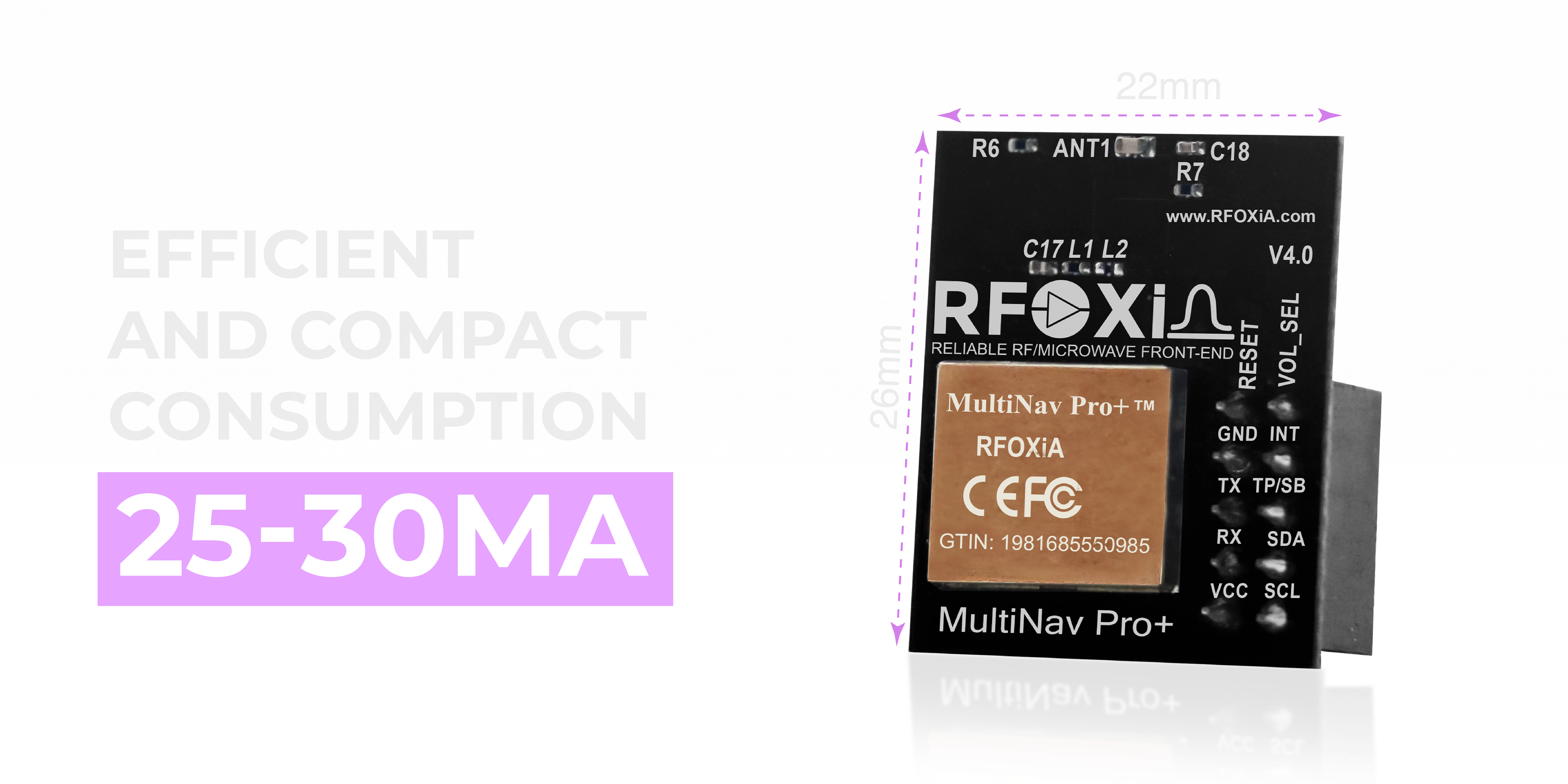
The RFOXiA Accurate GNSS Module — the MultiNav Pro+™ — was built specifically for this gap. Powered by the latest u-blox MIA-M10Q chip, it delivers 1.5-meter accuracy with an 18Hz fix rate and sub-1-second first fix time, all in a 26mm × 22mm compact footprint at $49. This is the GPS module for autonomous vehicle engineers who refuse to compromise on performance.
What Makes a GNSS Module "Autonomous Vehicle Grade"?
Not all GPS modules are created equal, and the difference between a consumer-grade chip and a professional navigation module becomes apparent the moment your platform starts moving at speed. Here's what separates autonomous vehicle-grade GNSS from everything else:
1. Accuracy Below 2 Meters
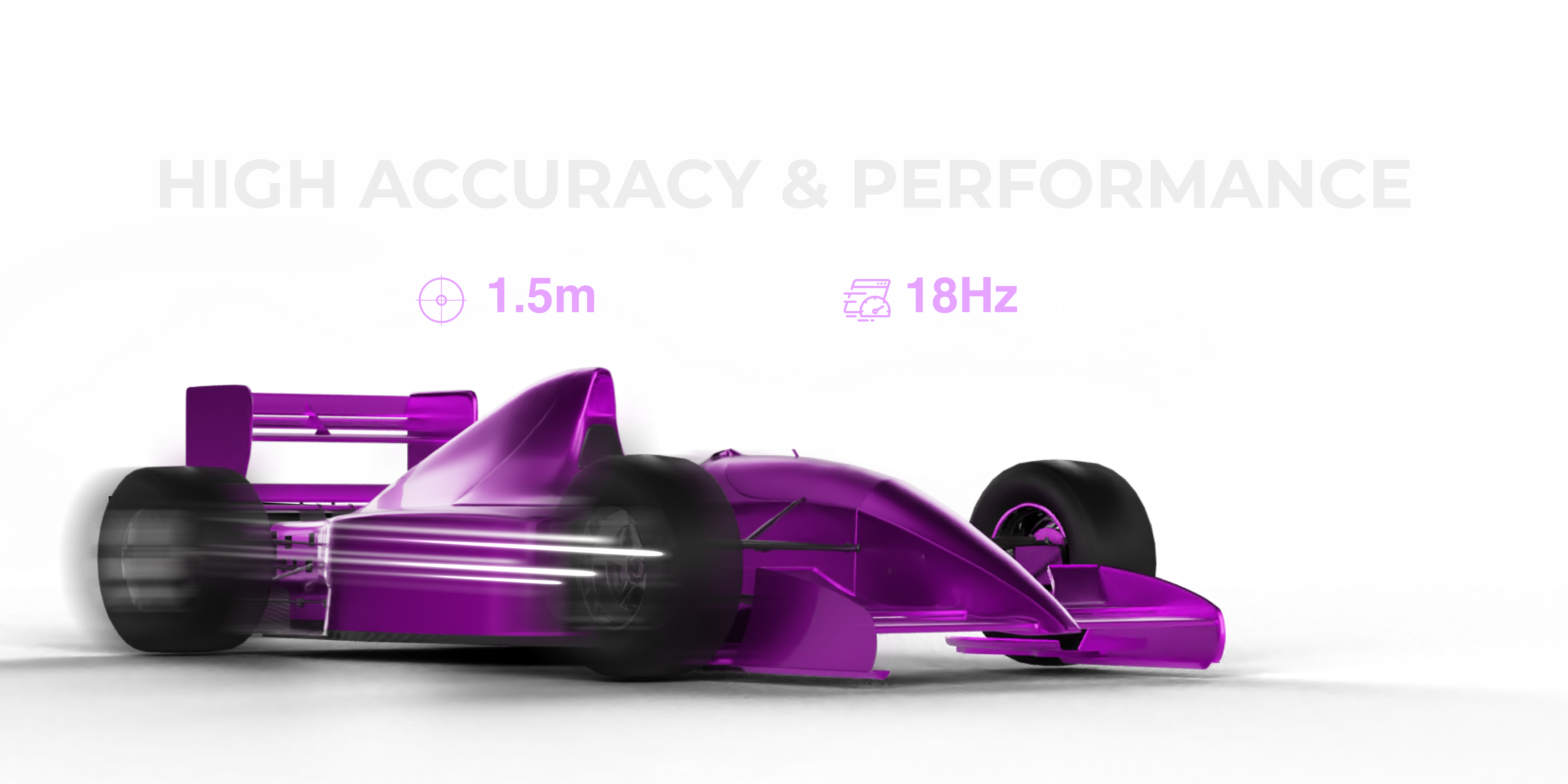
For any autonomous vehicle to make intelligent decisions — lane keeping, obstacle avoidance, waypoint navigation, precision landing — it needs to know exactly where it is. At 3-5 meter accuracy, a drone could drift into a structure. A ground vehicle could miss a turn by a full car length. At 1.5 meters, the MultiNav Pro+ gives your autonomous system the spatial certainty it needs to act decisively.
2. High Fix Rate for Fast-Moving Platforms
A 1Hz GPS update rate gives you one position snapshot per second. At 60km/h, your vehicle has already moved 16.7 meters between updates. At 18Hz, the MultiNav Pro+ gives you 18 position samples per second — a new location fix every 55 milliseconds. For drone flight controllers, autonomous racing vehicles, and high-speed tracking platforms, this is not a luxury. It is a requirement.
3. Multi-Constellation Coverage
Relying on a single satellite constellation (GPS only) means your module has access to roughly 30 satellites at any given time. The MultiNav Pro+ connects concurrently to GPS, Galileo, GLONASS, and BeiDou — four independent global satellite systems — dramatically increasing the number of visible satellites in any location on Earth. More satellites means faster fix acquisition, more robust signal retention in urban canyons, dense forests, or challenging RF environments, and higher overall positioning accuracy.
4. Sub-Second First Fix
Time to first fix (TTFF) matters enormously for autonomous systems. A module that takes 30-45 seconds to acquire satellites creates a dangerous startup delay for any platform that needs immediate navigation capability. The MultiNav Pro+ achieves first fix in under 1 second under nominal conditions, getting your vehicle navigation-ready almost instantly after power-on.
MultiNav Pro+ Technical Specifications Deep Dive
Let's go beyond the marketing summary and look at what these specifications actually mean for your autonomous vehicle project.
u-blox MIA-M10Q: The Core That Matters
The u-blox M10 platform is the latest generation of ultra-low-power, high-performance GNSS technology from one of the most trusted names in precision navigation. The MIA-M10Q specifically is designed for applications where power budget matters — IoT trackers, wearables, embedded vehicle systems — while maintaining professional-grade accuracy. This is not a clone chip or a secondary-tier processor. It is the same silicon trusted by professional navigation system designers worldwide, now accessible to independent hardware developers.
1.5-Meter Accuracy: Real-World Performance
The 1.5-meter CEP (Circular Error Probable) specification means that 50% of all position readings will fall within a 1.5-meter radius of the true position. In practice, with multi-constellation reception and clear sky view, the module frequently performs better. For autonomous vehicle applications, this translates to:
- Precision drone landing within a defined target zone
- Autonomous vehicle lane-level positioning on structured routes
- Geofencing with tight boundary enforcement
- Accurate survey-grade data collection for mapping applications
Power Consumption: 25-30mA Operating Current
For battery-powered autonomous vehicles — the majority of drone and mobile robotics platforms — power efficiency is directly proportional to operational endurance. The MultiNav Pro+ operates at 25-30mA, which is remarkably efficient for a multi-constellation GNSS receiver. Combined with the compact 26mm × 22mm board size, this module integrates cleanly into flight controllers, chassis electronics boards, and embedded vehicle systems without creating thermal or power budget problems.
Interface Options: UART and I2C for Maximum Flexibility
One of the most common friction points when integrating a GPS module for autonomous vehicle development is interface compatibility. Flight controllers, microcontrollers, single-board computers, and custom PCBs all have different preferred communication standards.
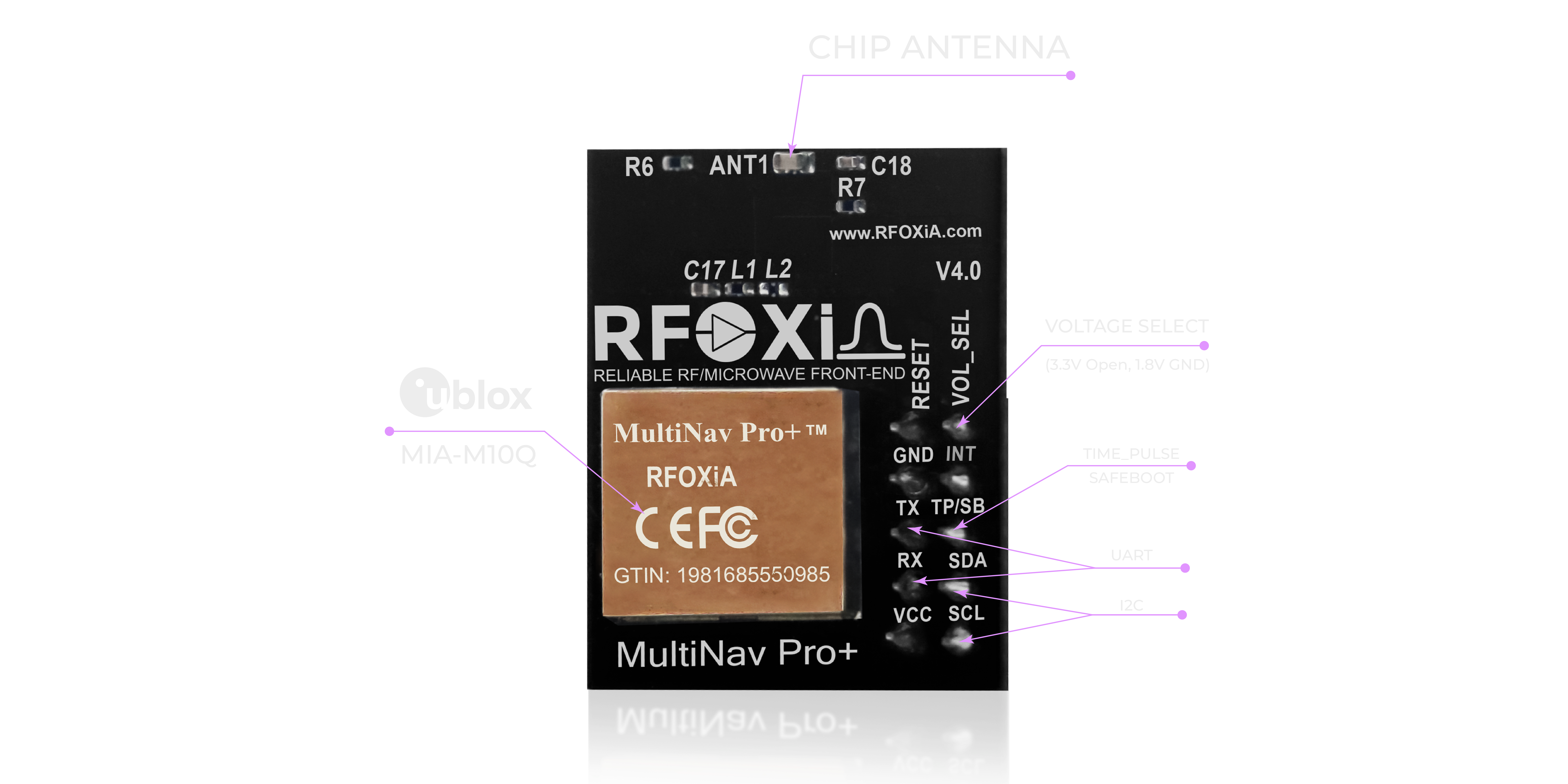
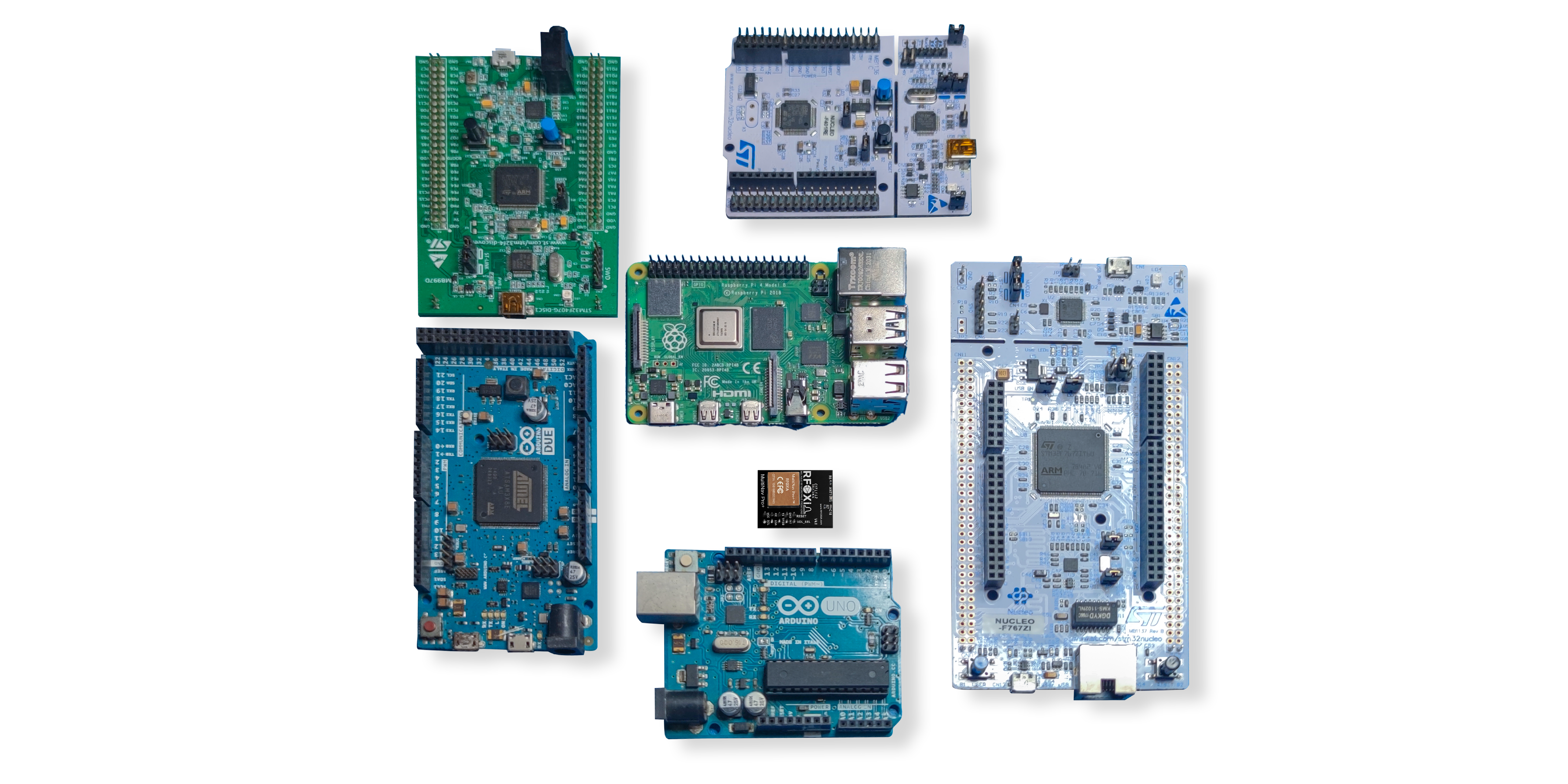
The MultiNav Pro+ removes this friction entirely by supporting both UART (TX/RX) and I2C (SCL/SDA) interfaces. Whether you're connecting to an STM32 microcontroller, an Arduino, a Raspberry Pi, a Pixhawk flight controller, or a custom embedded system, the MultiNav Pro+ speaks your language.
Additionally, the module supports both 1.8V and 3.3V operating voltages, making it compatible with modern low-voltage embedded processors without level shifting headaches.
Open Source Driver: From Unboxing to First Fix in Minutes
Professional hardware means nothing if integration takes weeks. RFOXiA ships the MultiNav Pro+ with a fully open-source C language library that includes NMEA standard protocol commands — the universal language of GPS receivers.
The library is designed to drop directly into Arduino IDE or any professional IDE toolchain. Parse NMEA sentences, extract latitude/longitude/altitude data, handle fix quality indicators, and feed position data into your autonomous navigation stack with minimal boilerplate code. For developers working in ROS, PX4, ArduPilot, or custom embedded firmware environments, the standard NMEA output integrates cleanly with existing navigation middleware.
This is production-ready driver code, not a quick demo sketch. RFOXiA's engineering philosophy is to deliver hardware that is genuinely ready to build on — not hardware that requires reverse engineering to use.
u-center Software: Professional Evaluation and Configuration
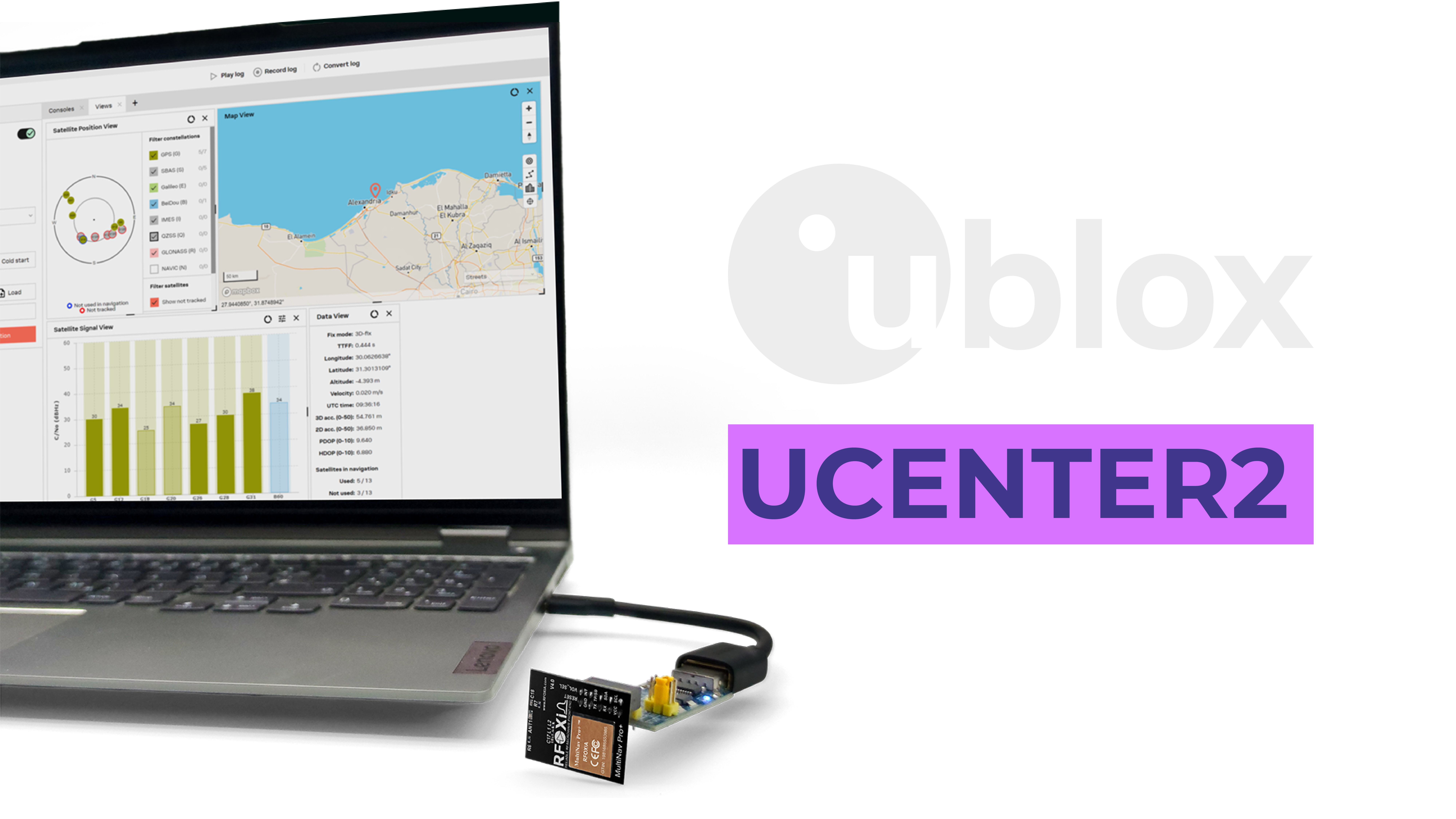
Beyond the embedded driver library, the MultiNav Pro+ is fully compatible with u-blox's professional u-center GUI software. This desktop application gives you:
- Real-time satellite visualization — see exactly which satellites your module is tracking, their signal strength, and elevation angles
- Live position plotting on a map interface with movement tracking
- Full configuration of module parameters — update rate, constellation selection, power mode, NMEA message filtering
- Data logging for post-mission analysis
- Firmware update capability for future u-blox firmware releases
For autonomous vehicle development, u-center is invaluable during the testing and calibration phase. You can verify fix quality in your deployment environment, identify any RF interference sources, and tune the module configuration for your specific operational requirements — all before writing a single line of application code.
Use Cases: Where the MultiNav Pro+ Performs
The honest answer is that any project that needs to know its precise location at speed and in real time is a candidate for the MultiNav Pro+. But let's be specific about the applications where this GPS module for autonomous vehicle and connected platform development delivers the most value:
Autonomous and Semi-Autonomous Drones
Drone navigation systems depend entirely on GNSS quality. Return-to-home accuracy, waypoint precision, geofencing boundary enforcement, and precision landing all require a module that delivers consistent sub-2-meter positioning at update rates fast enough to keep pace with the flight controller's attitude loop. At 18Hz, the MultiNav Pro+ feeds your flight controller fresh position data faster than most commercial autopilot systems require, giving you headroom for your own processing pipeline.
IoT Asset Tracking
For industrial IoT applications — tracking vehicles, containers, equipment, livestock, or personnel — the MultiNav Pro+ provides high-confidence position data with concurrent multi-constellation reception that keeps working in conditions where single-constellation modules lose fix. Pair it with the RFOXiA BLE Module for long-range data telemetry and you have a complete tracking node.
Wearable Navigation Devices
The 26mm × 22mm form factor and 25-30mA power draw make the MultiNav Pro+ genuinely wearable-compatible. Personal navigation devices, fitness trackers for athletes, safety devices for field workers, and augmented reality positioning systems all benefit from the module's compact efficiency.
Precision Agriculture
Autonomous agricultural robots need to navigate between rows, maintain precise spray patterns, and avoid obstacles — all while keeping accurate records of which areas have been treated. Sub-2-meter GPS accuracy with 18Hz updates is the baseline requirement for any serious precision agriculture platform.
Research and Survey Applications
Academic researchers, environmental scientists, and survey teams deploying autonomous vehicles for data collection need position data they can trust. The MultiNav Pro+'s u-blox pedigree, open-source driver, and u-center compatibility make it a legitimate scientific instrument, not a consumer toy.

The RFOXiA Ecosystem Advantage
The MultiNav Pro+ is most powerful when integrated with the full RFOXiA wireless developer ecosystem. Here's what that looks like in practice:
MultiNav Pro+ GNSS Module provides precise real-time position data at 18Hz.
RFOXiA BLE Module transmits that position data wirelessly up to 20km (man-to-drone configuration) or 50km (drone-to-drone) — all over standard Bluetooth Low Energy without requiring cellular networks, internet connectivity, or proprietary radio infrastructure.
RFOXiA Sensors Module adds temperature, humidity, pressure, air quality, accelerometer, gyroscope, and magnetometer data to your autonomous vehicle's sensor fusion stack.
RFOXiA Connect App displays live GPS position on a real-time map directly on your smartphone, with PS5-style control interface — no internet required, range limited only by the BLE module.
RFOXiA Club AI Firmware Builder lets you describe your autonomous navigation application in plain language and generates production-ready firmware — dramatically accelerating the development cycle from concept to deployed system.
This integrated stack means you're not sourcing seven different modules from seven different vendors and writing seven different drivers. You're building on a single cohesive platform designed to work together from day one.
The RFOXiA Accurate GNSS Module is available now for $49, with 45 units currently in stock.
Choosing the Right GPS Module for Autonomous Vehicle Projects: A Decision Framework
Before we close, let's summarize the key decision criteria for developers evaluating GNSS modules for autonomous applications:
| Requirement | Minimum Acceptable | MultiNav Pro+ Spec |
|---|---|---|
| Position Accuracy | < 2.5 meters | 1.5 meters |
| Fix Rate | > 5 Hz | 18 Hz |
| Constellation Support | Dual (GPS + GLONASS) | Quad (GPS + Galileo + GLONASS + BeiDou) |
| First Fix Time | < 30 seconds | < 1 second |
| Interface | UART or SPI | UART + I2C |
| Operating Voltage | 3.3V | 1.8V + 3.3V |
| Operating Current | < 50mA | 25-30mA |
| Form Factor | < 35mm × 35mm | 26mm × 22mm |
| Driver Support | Provided | Open-source C library |
| Configuration Tool | Optional | u-center GUI |
On every single dimension, the MultiNav Pro+ meets or exceeds the minimum requirement for professional autonomous vehicle development — at a price point that puts it within reach of independent developers, university research labs, and startup engineering teams.
Frequently Asked Questions
Q: Is the MultiNav Pro+ compatible with Pixhawk and ArduPilot?
Yes. The module outputs standard NMEA sentences over UART, which is the standard GPS interface for Pixhawk flight controllers running ArduPilot or PX4 firmware. You can also configure the module for UBX binary protocol using u-center for tighter integration with u-blox compatible autopilot software.
Q: Does the module support RTK for centimeter-level accuracy?
The MIA-M10Q platform supports SBAS (WAAS, EGNOS, MSAS) differential correction for improved accuracy in covered regions. Full RTK requires an RTK-capable base station and a compatible receiver — the MIA-M10Q is optimized for standalone precision applications where 1.5m accuracy is the target specification.
Q: Can I use this with the RFOXiA Developer Bundle?
Absolutely. The MultiNav Pro+ is a core component of the Developer Bundle, which also includes the BLE Module, Sensors Module, and Power/Program Kit — everything you need to build a complete autonomous wireless sensing and control platform.
Q: How does the FCC certification affect my project?
FCC certification means the MultiNav Pro+ can be legally deployed and sold as part of commercial products in the United States without additional certification at the module level (in most applications). This is a significant advantage for developers building products for the US market.
Get Your GPS Module for Autonomous Vehicle Development Today
The MultiNav Pro+ represents what professional GNSS hardware should look like at the maker and professional developer level: real specs, real performance, real documentation, and a real ecosystem behind it.
If you're building an autonomous drone, a mobile robot, a precision tracking system, or any platform that depends on accurate real-time positioning, this is the module you've been looking for.
Inventory is limited. The RFOXiA Accurate GNSS Module is available now at $49, and it ships with the open-source driver library, Quick Start Guide, and full access to the RFOXiA developer ecosystem.
Join RFOXiA Club free at rfoxia.com and claim your $10 welcome credit — then apply it toward your first hardware order. Your autonomous vehicle deserves the best GNSS foundation available at this price point. This is it.
Written by: Moamen Mohamed LinkedIn