
GPS Module Cold Start Time: Everything You Need to Know Before Choosing a GNSS Module
Why GPS Module Cold Start Time Is the Spec Most Builders Ignore — Until It Breaks Their Project
When developers compare GNSS modules, they tend to focus on accuracy numbers and satellite system support. Those specs matter. But there is one performance metric that separates a module that works in theory from a module that works in the field: GPS module cold start time.
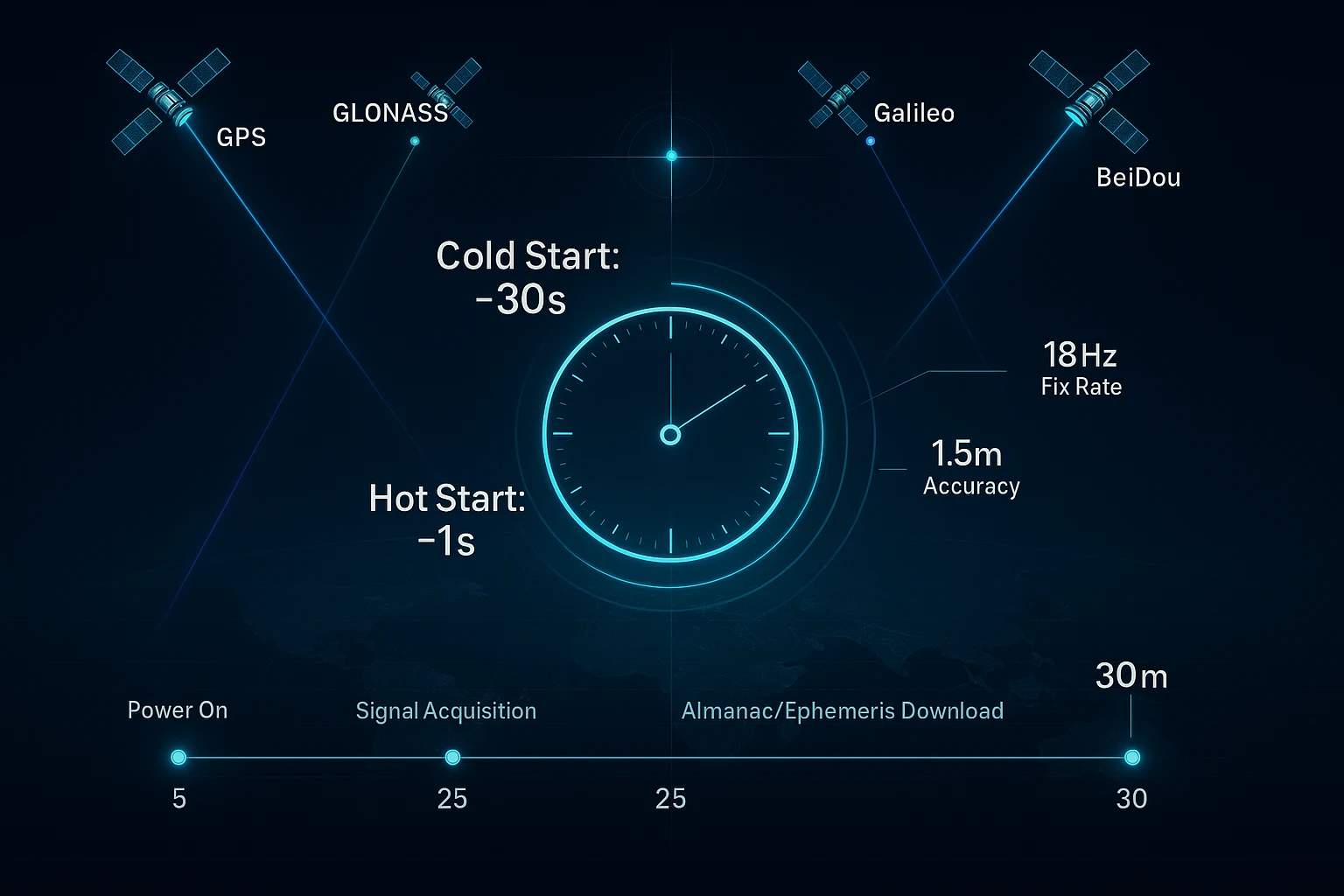
Cold start time is how long your GNSS module takes to acquire a position fix when it has no prior location data, no satellite almanac cached, and no assistance from an external server. It is the hardest test a GNSS receiver faces — and it is exactly the scenario your hardware will encounter every time it powers on cold in a new location.
This guide breaks down what GPS module cold start time actually means, why it has such a large impact on real-world applications, what the technical factors behind it are, and how the RFOXiA MultiNav Pro+ GNSS Module achieves a one-second first fix that puts it ahead of the competition in its class.
What Cold Start Actually Means in GNSS Systems
GNSS receivers can start under three conditions, each with different performance characteristics:
Cold Start
The receiver has no previously stored data. No almanac, no ephemeris, no last known position, no time reference. It must search the entire sky, identify visible satellites, download navigation messages, and compute a full position solution from scratch. This is the baseline test of a GNSS module's real capability.
Warm Start
The receiver has a stored almanac (the rough orbital map of all satellites) but no current ephemeris (the precise orbital data needed for an accurate fix). It knows where to look but still needs to download precise orbital parameters before computing a reliable position.
Hot Start
The receiver has valid ephemeris data cached from a recent session (typically less than two hours old) and a last known position. It can acquire a fix in seconds because most of the computation has already been done.
Manufacturers sometimes advertise hot start times in their marketing because they are the fastest and most impressive-sounding numbers. What actually determines your user experience in real applications is GPS module cold start time — because cold starts happen every time a device ships, every time a battery is replaced, every time a vehicle travels far from its last position, and every time a drone launches after a long delay.
Why Cold Start Time Matters More Than You Think
Drone and UAV Operations
A drone operator in the field cannot wait three minutes for a GPS lock before launching. In commercial drone operations, every minute of delay costs money. In FPV racing or freestyle, a slow GPS lock means a frustrated pilot. For autonomous drone missions, a failed or delayed cold start can cause mission abort or, worse, a position error at launch.
Wearable and Portable Trackers
For personal tracking devices, asset trackers, and wildlife research tags, cold start time directly determines battery life. A tracker that takes 90 seconds to get a fix is consuming power for 90 seconds before it can log a single data point. At scale, across thousands of devices, this becomes a significant energy cost.
IoT Sensor Networks
In a distributed sensor network, nodes often power down between readings to conserve energy. Every time a node wakes up, it must re-acquire its GPS position to verify outdoor deployment and geotag its data. If cold start time is long, you either keep the module continuously powered (killing battery life) or accept long gaps between verified readings.
Emergency and Safety Applications
In search and rescue, emergency beacons, or first responder equipment, a slow GPS module cold start time is not a minor inconvenience — it is a safety risk. First fix in one second versus first fix in 45 seconds is the difference between a system that works when it is needed and one that fails at the critical moment.
The Technical Factors Behind Cold Start Performance
Understanding what drives GPS module cold start time helps you evaluate modules with more than just a single number. Several hardware and firmware factors combine to determine cold start performance.
Receiver Sensitivity
A more sensitive receiver can detect weaker satellite signals and acquire them faster. In urban environments, between buildings, or under light canopy, signal strength varies enormously. A module with poor receiver sensitivity will struggle and take far longer to get a fix — or fail entirely.
Number of Satellite Systems Supported
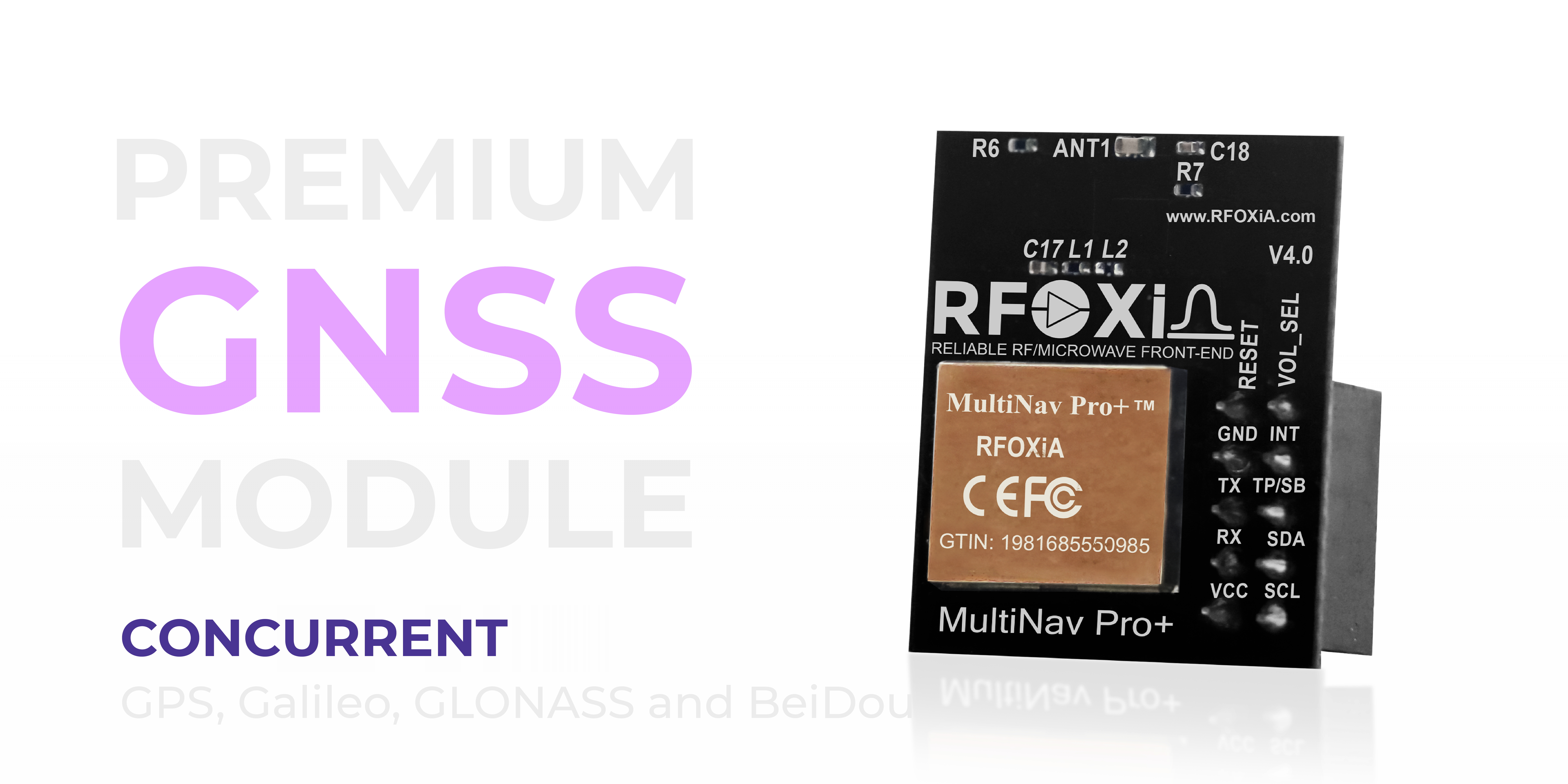
A receiver that only supports GPS is limited to roughly 30 satellites visible globally at any moment. A receiver that concurrently tracks GPS, GLONASS, Galileo, and BeiDou has access to over 100 satellites simultaneously. More visible satellites means faster geometry, faster signal acquisition, and dramatically reduced GPS module cold start time — especially in challenging signal environments.
Parallel Search Channels
Modern GNSS chips use parallel correlation channels to search for multiple satellites simultaneously rather than sequentially. The u-blox MIA-M10Q inside the MultiNav Pro+ supports full parallel search across all four constellations, which is a direct contributor to its one-second first fix capability.
RF Front-End Design
The analog signal chain between the antenna and the digital processor matters enormously. Poor RF design, inadequate filtering, or suboptimal antenna matching can degrade incoming satellite signals before they even reach the receiver. The MultiNav Pro+ uses proprietary RF/microwave microstrip filter technology to minimize interference and maximize signal clarity — a hardware-level decision that directly improves cold start reliability.
Antenna Quality and Placement
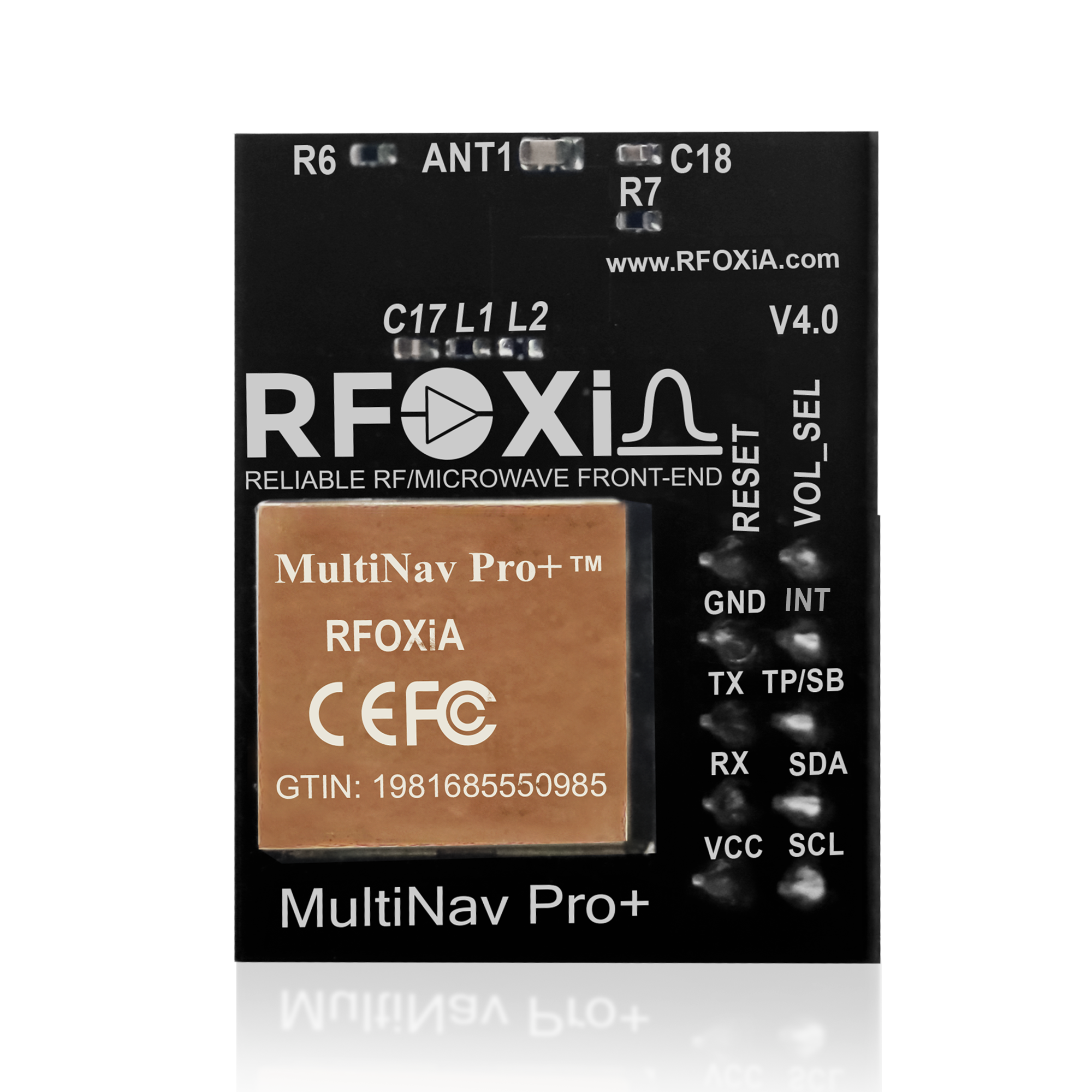
An integrated chip antenna that is properly tuned and impedance-matched to the RF front end will outperform a generic antenna on a budget module. The MultiNav Pro+ integrates a high-gain chip antenna in its 26mm x 22mm footprint — compact enough for tight integrations without sacrificing receive performance.
MultiNav Pro+: One-Second First Fix and 18Hz Update Rate
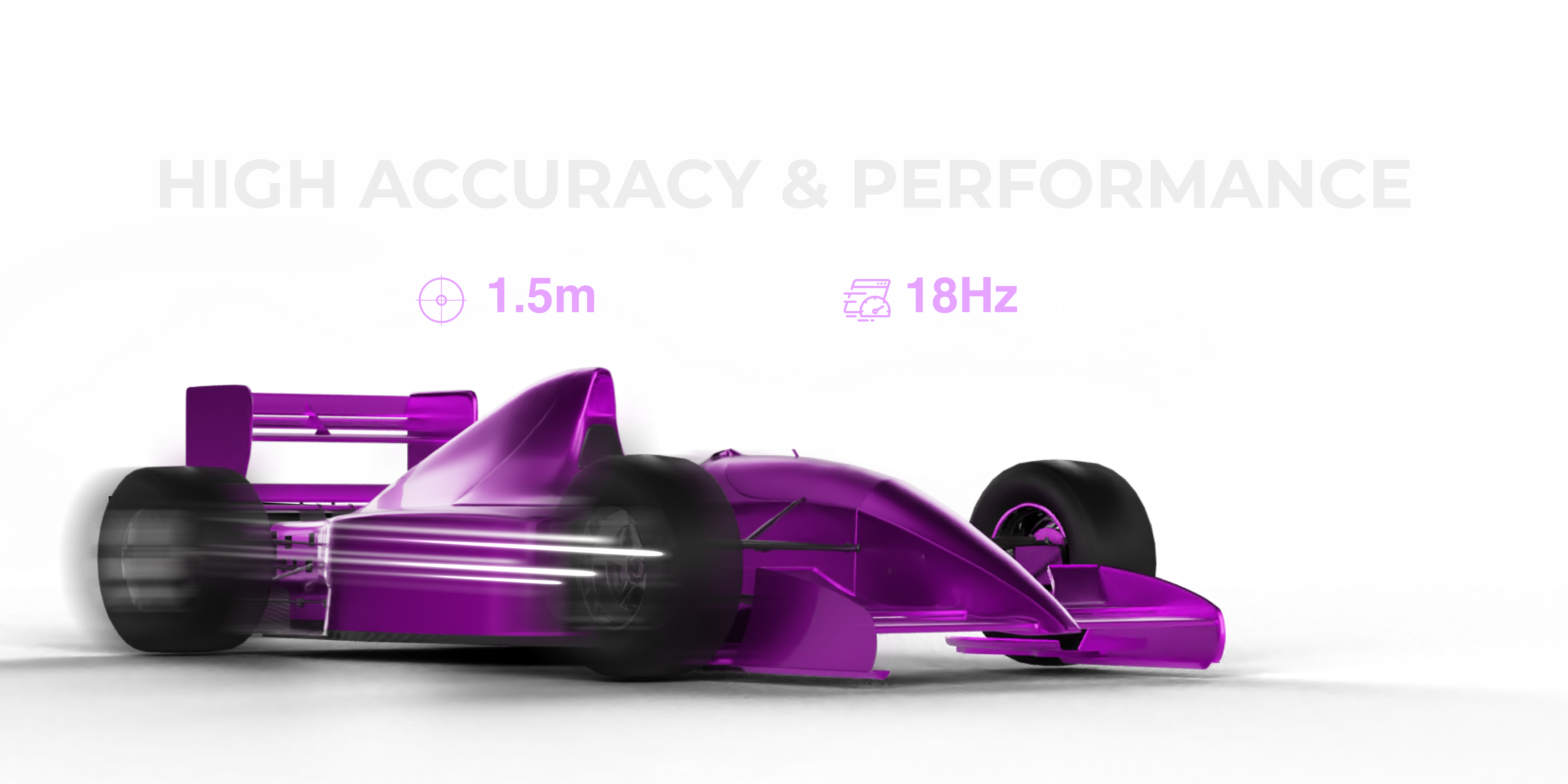
The RFOXiA MultiNav Pro+ GNSS Module achieves a first fix in one second under standard conditions — an exceptional GPS module cold start time that enables the kind of real-world responsiveness that applications actually require.
This is not achieved by cutting corners on accuracy. The MultiNav Pro+ simultaneously delivers:
- 1.5-meter position accuracy — professional-grade precision for drone guidance, precision agriculture, asset tracking, and research applications
- 18Hz fix rate — the update rate is what makes this module exceptional for fast-moving platforms. Most consumer GNSS modules update at 1Hz or 5Hz. At 18Hz, the MultiNav Pro+ delivers 18 fresh position samples every second, enabling smooth tracking of high-speed drones, vehicles, and dynamic platforms
- Concurrent four-constellation support — GPS, GLONASS, Galileo, and BeiDou tracked simultaneously for maximum satellite availability and faster cold start acquisition in any environment
- Powered by u-blox MIA-M10Q — one of the most capable GNSS chips available at this module price point, chosen specifically for its combination of accuracy, fix rate, and power efficiency
This combination — fast cold start, high accuracy, and high fix rate — is rare. Most modules optimize one or two of these dimensions. The MultiNav Pro+ delivers all three.
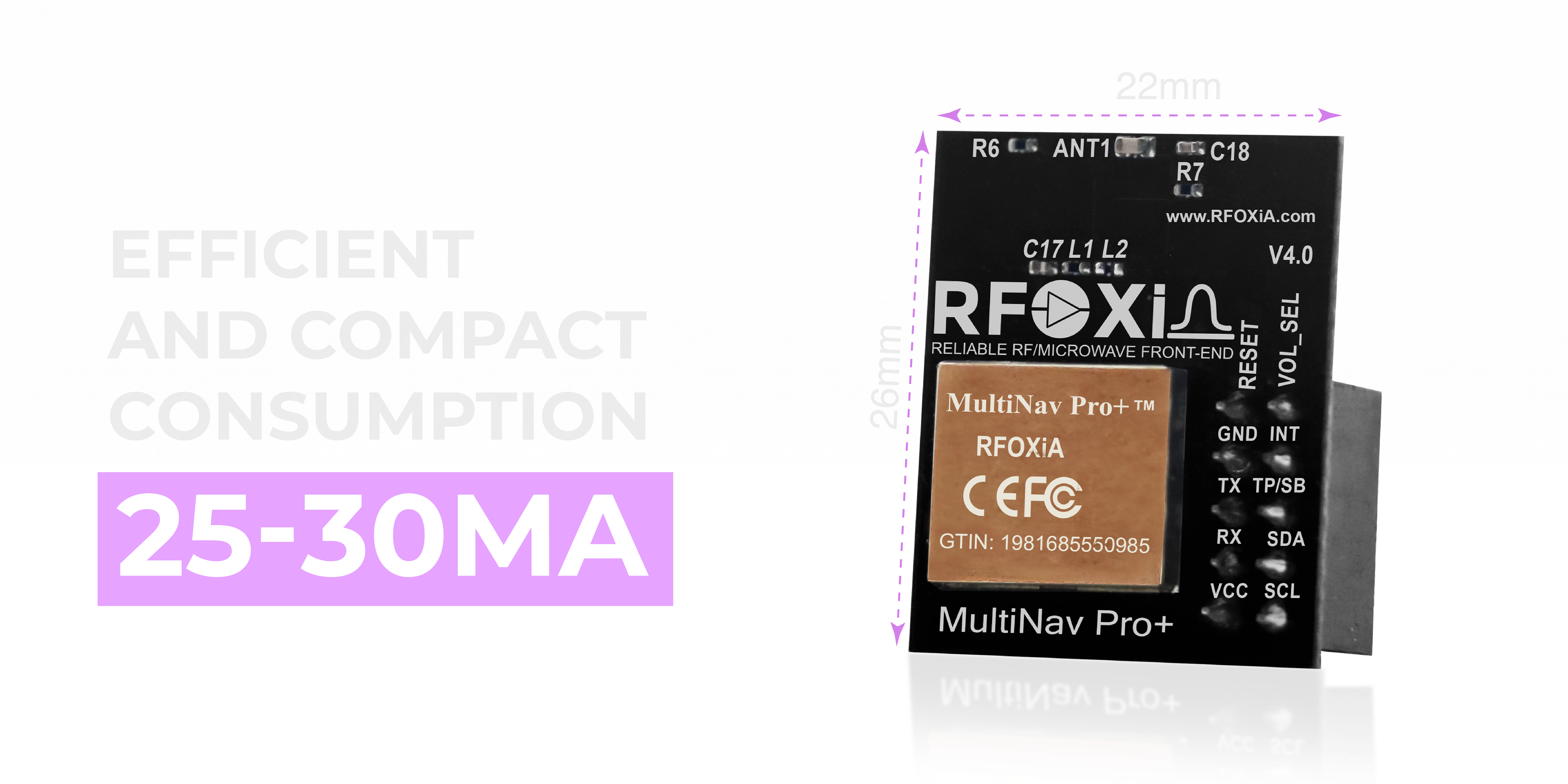
Power Efficiency: 25-30mA for a Full Multi-Constellation System
For battery-powered applications, power consumption during satellite acquisition is a critical spec. The MultiNav Pro+ operates at 25-30mA across its full multi-constellation search mode. For a module that concurrently tracks four satellite systems with a high-gain antenna and RF filtering, this is an efficient power envelope.
Because cold start time is one second, the energy cost of acquiring a fix is negligible even in duty-cycled applications. A module that takes 60 seconds to cold start consumes 60x more energy during acquisition than one that acquires in one second. In IoT deployments with hundreds or thousands of nodes waking up periodically to log position, this difference compounds into meaningful battery life gains.
Interfaces, Voltage Compatibility, and Integration
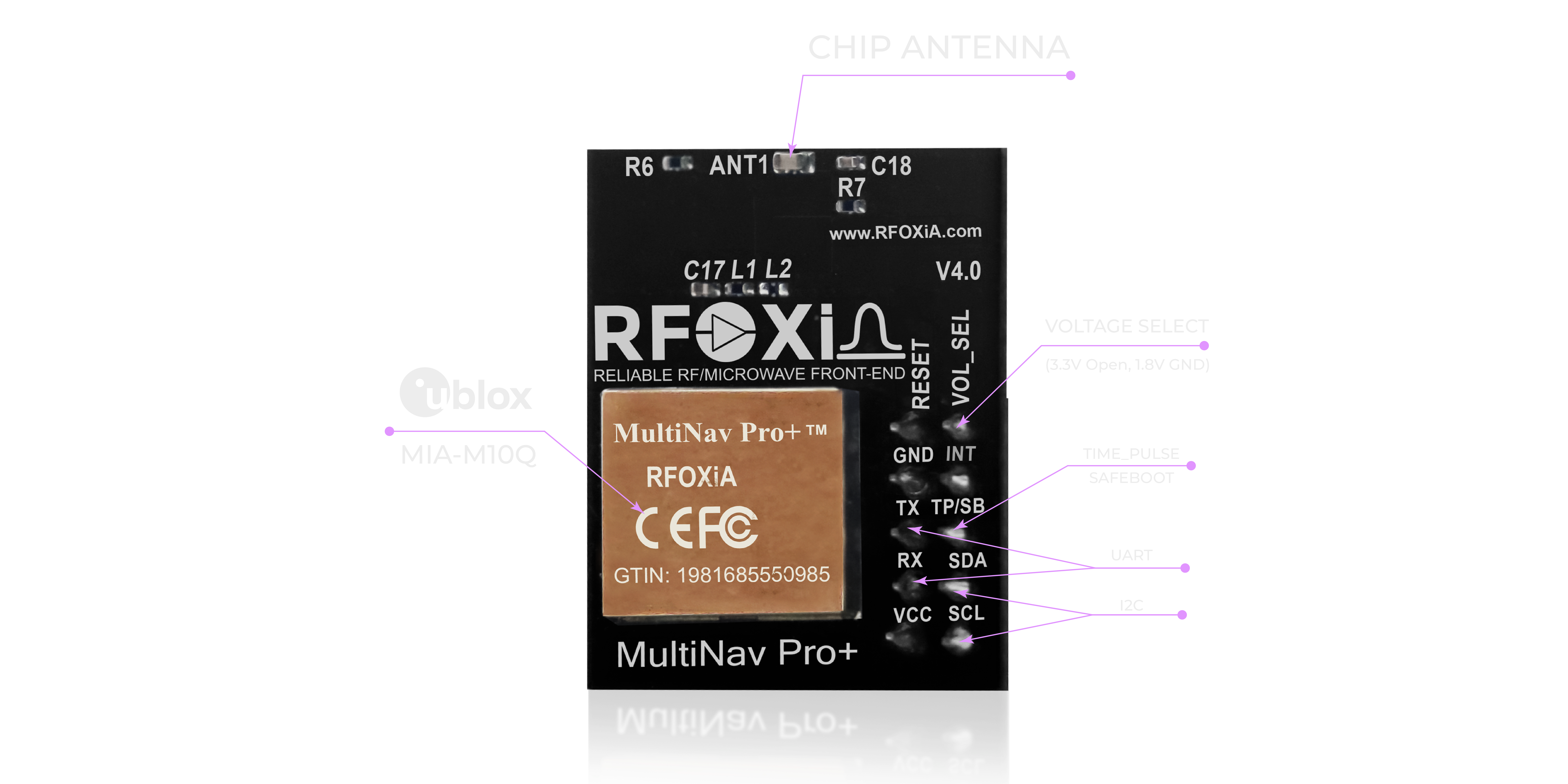
Real-world integration often fails not at the GNSS level but at the interface level. The MultiNav Pro+ removes those obstacles:
- UART interface (TX/RX) for direct serial communication with microcontrollers, single-board computers, and embedded systems
- I2C interface (SCL/SDA) for systems that need shared bus communication or prefer register-based data access
- Dual voltage support: 1.8V and 3.3V logic, making the module compatible with the full range of modern microcontrollers and SoCs without level-shifting hardware
- Compact footprint: 26mm x 22mm fits into handheld devices, drone flight controllers, wearables, and sensor nodes without dominating the board area
This flexibility is deliberate. The MultiNav Pro+ is designed to work with whatever platform you are already building on — not to force you into a specific toolchain or architecture.
Open Source Driver: NMEA Protocol, Arduino-Ready
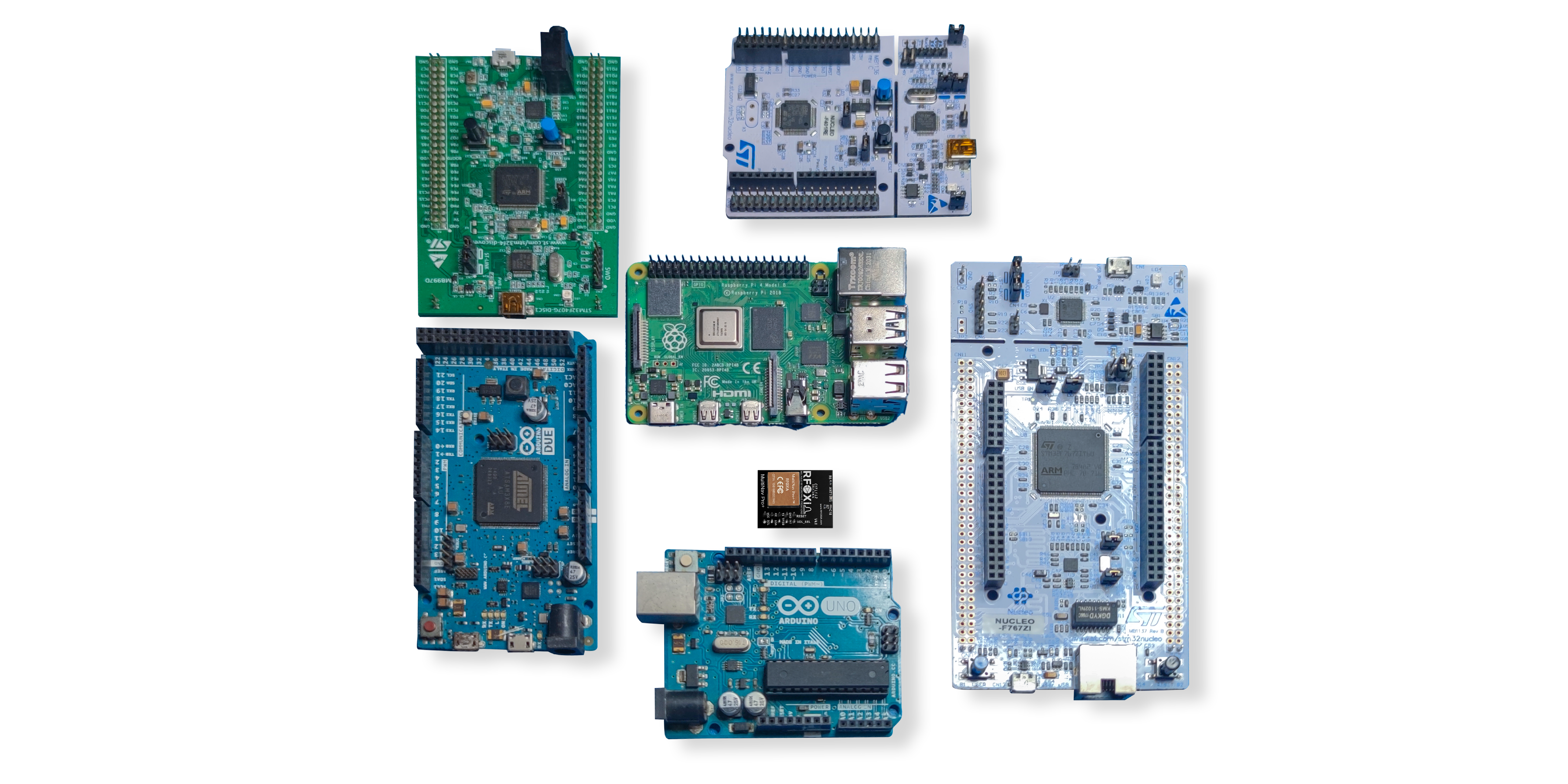
Getting data out of a GNSS module should not require weeks of firmware work. The MultiNav Pro+ ships with a fully open-source C language driver library that implements NMEA standard protocol commands — the most widely supported GNSS data format in embedded development.
- Import directly into Arduino IDE with no modifications
- Compatible with PlatformIO, STM32CubeIDE, ESP-IDF, and any C-based toolchain
- Full source code access — no black-box libraries, no licensing restrictions
- NMEA sentence parsing included for GGA, RMC, VTG, and GSA messages covering position, velocity, altitude, course, and satellite quality
For developers who want to get their GPS module cold start time test running in minutes rather than days, this is the difference between a module that enables rapid development and one that stalls it.
U-Center Software Support
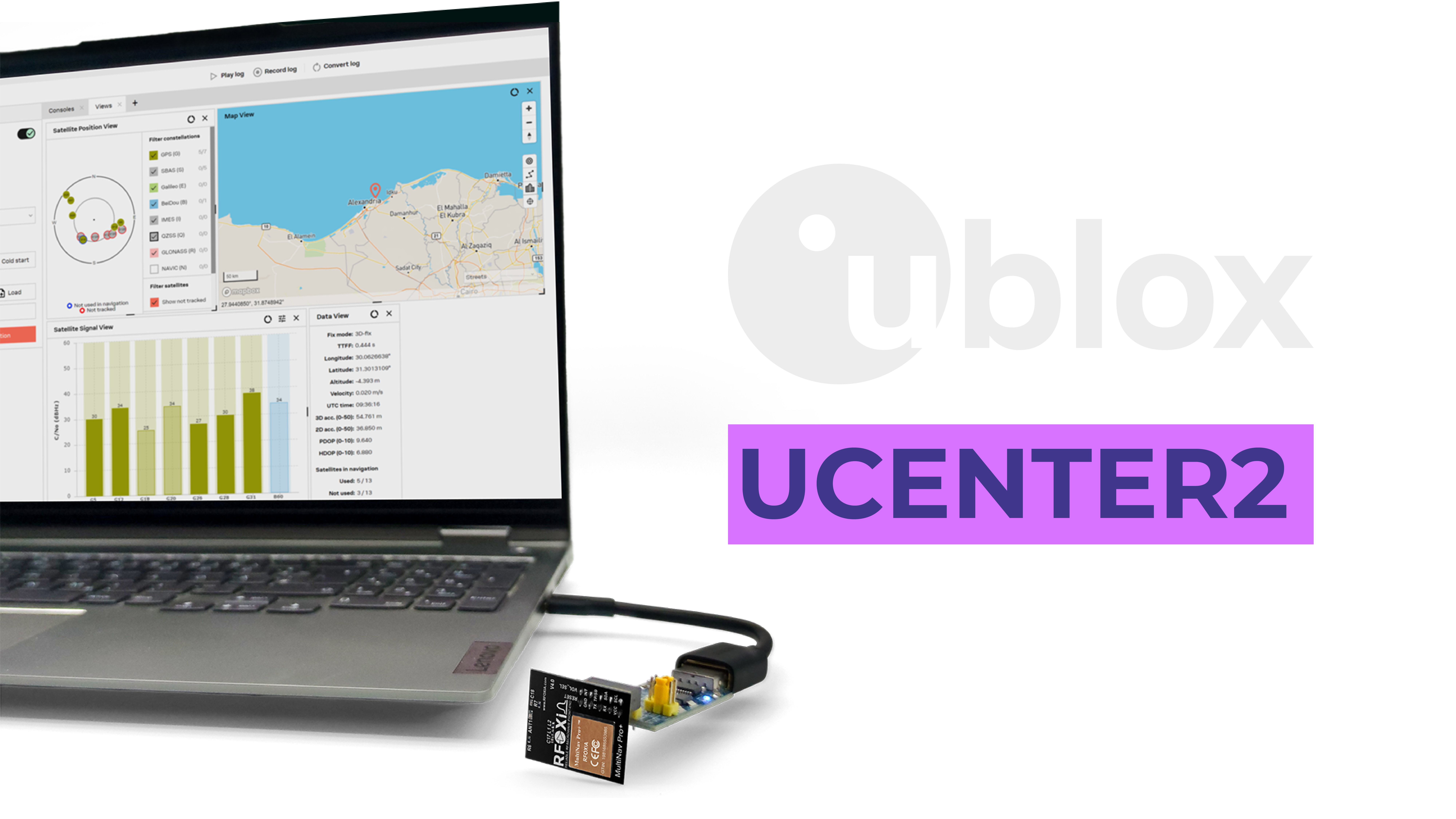
The MultiNav Pro+ is based on the u-blox MIA-M10Q, which means full compatibility with u-blox's u-Center evaluation and configuration software. u-Center provides:
- Sky view visualization — see exactly which satellites are visible and what signal strength you are receiving from each
- Real-time position tracking on a live map
- Fix quality indicators — track HDOP, number of satellites used, and fix type (2D/3D/RTK) in real time
- Configuration management — adjust baud rates, update rates, constellation enable/disable, and power modes
- Data logging — record position data sessions for post-processing and analysis
- Cold start test — u-Center makes it straightforward to force a cold start and measure actual GPS module cold start time on your bench before committing to a design
For developers evaluating GNSS modules, u-Center compatibility is a significant advantage. You can characterize the module's behavior in your specific environment before writing a single line of application code.
Use Cases: Where Fast Cold Start Time Changes Everything

The MultiNav Pro+ is designed for applications where performance in the real world matters more than specs on a datasheet:
Drones and UAVs — 18Hz update rate tracks fast-moving flight paths. One-second cold start means ready-to-fly positioning immediately at power-on. 1.5-meter accuracy supports return-to-home, geofencing, and waypoint navigation.
IoT Sensor Networks — Duty-cycled nodes that wake, fix, log, and sleep benefit enormously from one-second cold start. The RFOXiA MultiNav Pro+ GNSS Module is designed to integrate with the full RFOXiA ecosystem including the Sensors Module for GPS-verified outdoor environmental data collection.
Wearable and Portable Devices — Compact form factor and low power consumption fit handheld and wearable designs. Fast cold start means the device is useful immediately when a user needs it.
Vehicle and Asset Tracking — Automotive and logistics tracking systems benefit from fast re-acquisition after tunnels, parking structures, or extended power-off periods.
Research and Precision Agriculture — 1.5-meter accuracy and 18Hz update rate support detailed spatial data collection for environmental research, yield mapping, and precision application systems.
Education and Maker Projects — Open-source driver, Arduino compatibility, and u-Center GUI support make the MultiNav Pro+ genuinely beginner-accessible without being a beginner-grade component.
How the MultiNav Pro+ Fits Into the RFOXiA Ecosystem
The MultiNav Pro+ is not just a standalone module. It is part of the complete RFOXiA wireless development ecosystem, designed to work alongside:
- RFOXiA BLE Module — 5km ground-to-ground, 15-20km man-to-drone long-range Bluetooth communication
- RFOXiA Sensors Module — seven environmental sensors in one board: temperature, humidity, pressure, air quality, accelerometer, gyroscope, magnetometer
- RFOXiA Power/Program Kit — supercapacitor-based power system with five-minute charge time and 24-hour runtime
- RFOXiA Connect App — iOS and Android mobile app with live GPS map, sensor data display, and PS5-style drone/robot controller
- RFOXiA Club — developer platform with AI firmware builder, community, documentation, and data network access
When the GNSS module is deployed alongside the Sensors Module in the RFOXiA data network, GPS verification ensures that sensor data is genuinely collected outdoors at the claimed location — enabling the verified environmental data streams that enterprise buyers require.
Specifications Summary
| Specification | MultiNav Pro+ |
|---|---|
| Accuracy | Less than 1.5 meters |
| Fix Rate | Up to 18Hz |
| First Fix (Cold Start) | 1 second |
| GNSS Systems | GPS, GLONASS, Galileo, BeiDou (concurrent) |
| GNSS Chip | u-blox MIA-M10Q |
| Interface | UART (TX/RX) and I2C (SCL/SDA) |
| Operating Voltage | 1.8V and 3.3V |
| Current Consumption | 25-30mA |
| Dimensions | 26mm x 22mm |
| Antenna | Integrated high-gain chip antenna |
| Certification | FCC certified |
| Driver | Open-source C library, NMEA protocol |
| Price | $49 |
Final Thoughts: Cold Start Time as a Selection Criterion
GPS module cold start time is one of the most revealing performance metrics in GNSS module selection because it cannot be faked by favorable test conditions. It reflects the true quality of the RF design, the chip selection, the antenna implementation, and the firmware — all in one number.
A one-second first fix is not a marketing claim. It is the result of specific engineering decisions: choosing the u-blox MIA-M10Q for its parallel search capability, implementing proper RF filtering with microstrip technology, integrating a high-gain chip antenna, and supporting all four major satellite constellations concurrently.
For makers, engineers, drone builders, and IoT developers who need a GNSS module that performs in the field — not just in the datasheet — the RFOXiA MultiNav Pro+ delivers professional-grade cold start performance at a price point that makes it accessible for any project.
FCC certified. Open-source driver. 18Hz update rate. 1.5-meter accuracy. One-second cold start.
Ready when you are.
Written by: Moamen Mohamed LinkedIn