
GPS Module Comparison 2026: Which GNSS Module Actually Delivers?
The Definitive GPS Module Comparison 2026 for Builders, Drone Pilots, and IoT Engineers
If you have searched for a GPS module comparison 2026 recently, you already know the problem: the market is flooded with modules making vague claims about accuracy and speed, most of which collapse the moment you push them into a real-world application. A drone tracking a fast-moving subject. A precision agriculture sensor array. A wearable device that needs a fix in under two seconds. These are the situations that expose the gap between spec-sheet promises and genuine performance.
This guide breaks down what actually matters when choosing a GNSS module in 2026, compares the leading options across the metrics that count, and shows you exactly where the RFOXiA Accurate GNSS Module sits in that landscape — and why it has become the go-to choice for serious hardware developers.
Why Your GPS Module Choice Matters More Than Ever in 2026
GNSS technology has matured significantly, but the spread between good and mediocre modules has widened rather than narrowed. Cheap commodity modules still dominate the low end, offering 3-5 meter accuracy at best, fix rates of 1-5Hz, and single-constellation reception that makes them unreliable in dense urban environments or under heavy canopy. At the other end, industrial-grade survey equipment delivers centimeter-level accuracy — but at prices that no maker budget can justify.
The builders who need the most from their GPS modules — drone developers, robotics engineers, IoT researchers, precision agriculture developers — are stuck in the middle. They need better than commodity performance without paying for hardware designed for land surveyors.
That middle ground is exactly where the 2026 GPS module comparison gets interesting.
What to Look for in a GNSS Module: The Six Metrics That Matter
Before diving into individual modules, here are the six performance metrics that should drive any serious GPS module comparison in 2026.
1. Positional Accuracy (CEP)
Accuracy is typically quoted as Circular Error Probable (CEP) — the radius within which 50% of fixes will fall. Consumer modules average 2.5-5 meters CEP. Professional modules target sub-2-meter performance. For drone applications, anything above 2 meters creates real problems for precise landing and waypoint navigation.
2. Fix Rate (Hz)
The fix rate determines how frequently the module outputs a new position. A 1Hz module gives you one position update per second. For a drone flying at 20 m/s, that means 20 meters of travel between updates — completely unacceptable for closed-loop control. High-performance applications need 10Hz minimum. 18Hz is where real-time drone control becomes smooth and responsive.
3. Time to First Fix (TTFF)
How long after power-on until the module delivers a valid position. Cold start times vary wildly. For field deployments, a module that takes 45-60 seconds to get a first fix creates workflow friction. Sub-2-second performance is the threshold for professional-grade hardware.
4. Multi-Constellation Support
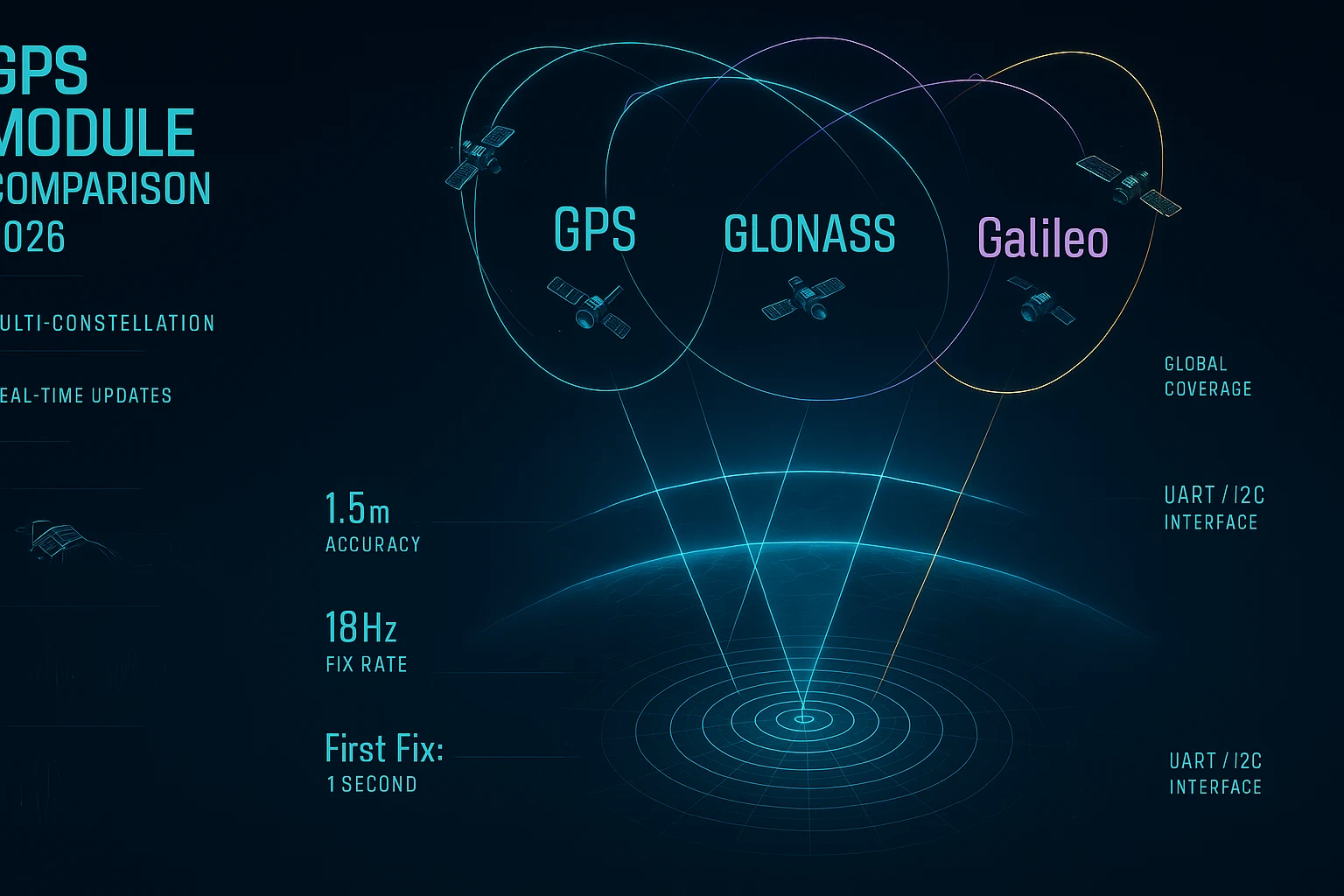
Modules that receive only GPS (the American system) are dependent on approximately 30 satellites. Modules that simultaneously receive GPS, GLONASS (Russian), Galileo (European), and BeiDou (Chinese) have access to 100+ satellites at any time. More satellites means faster fixes, better accuracy in challenging environments, and dramatically better performance in urban canyons or under partial obstruction.
5. Power Consumption
For battery-powered IoT nodes, trackers, and wearables, power draw is a primary constraint. Modules drawing 80-100mA continuously will kill a small battery in hours. Efficient multi-constellation systems operating at 25-30mA represent the current state of the art.
6. Interface and Integration Complexity
A module that requires custom firmware, proprietary protocols, or obscure toolchain support wastes development time. UART and I2C interfaces with open-source libraries and Arduino IDE compatibility dramatically reduce integration effort.
The GPS Module Comparison 2026: Head-to-Head Analysis
Tier 1: Commodity Modules (Under $15)
The majority of GPS modules available on AliExpress, Amazon, and maker electronics retailers fall into this category. They are typically based on older chip architectures, support GPS-only or GPS+GLONASS dual constellation, deliver 3-5 meter accuracy, and max out at 5-10Hz fix rates. TTFF on cold start is typically 30-60 seconds.
These modules are fine for basic projects where you need approximate location. They are not appropriate for drone navigation, precision tracking, or any application where accuracy below 3 meters is required.
Verdict: Functional for prototyping. Inadequate for serious applications.
Tier 2: Prosumer Modules ($20-40)
This tier includes modules based on older u-blox M8 and M9 chips, MediaTek MT3333, and similar architectures. Performance improves meaningfully: multi-constellation support typically covers GPS, GLONASS, and sometimes Galileo. Accuracy reaches 2-2.5 meters CEP. Fix rates reach 10Hz. TTFF improves to 5-10 seconds on hot start.
These modules represent a solid step up for makers who have outgrown commodity hardware. The primary limitations are that they rarely support concurrent four-constellation reception at full fix rate, and many lack open-source libraries or require proprietary configuration software.
Verdict: Solid mid-range choice. Falls short on fix rate and concurrent constellation support.
Tier 3: Professional Compact Modules ($40-60)
This is where the 2026 GPS module comparison gets genuinely interesting — and where the RFOXiA MultiNav Pro+ sits.
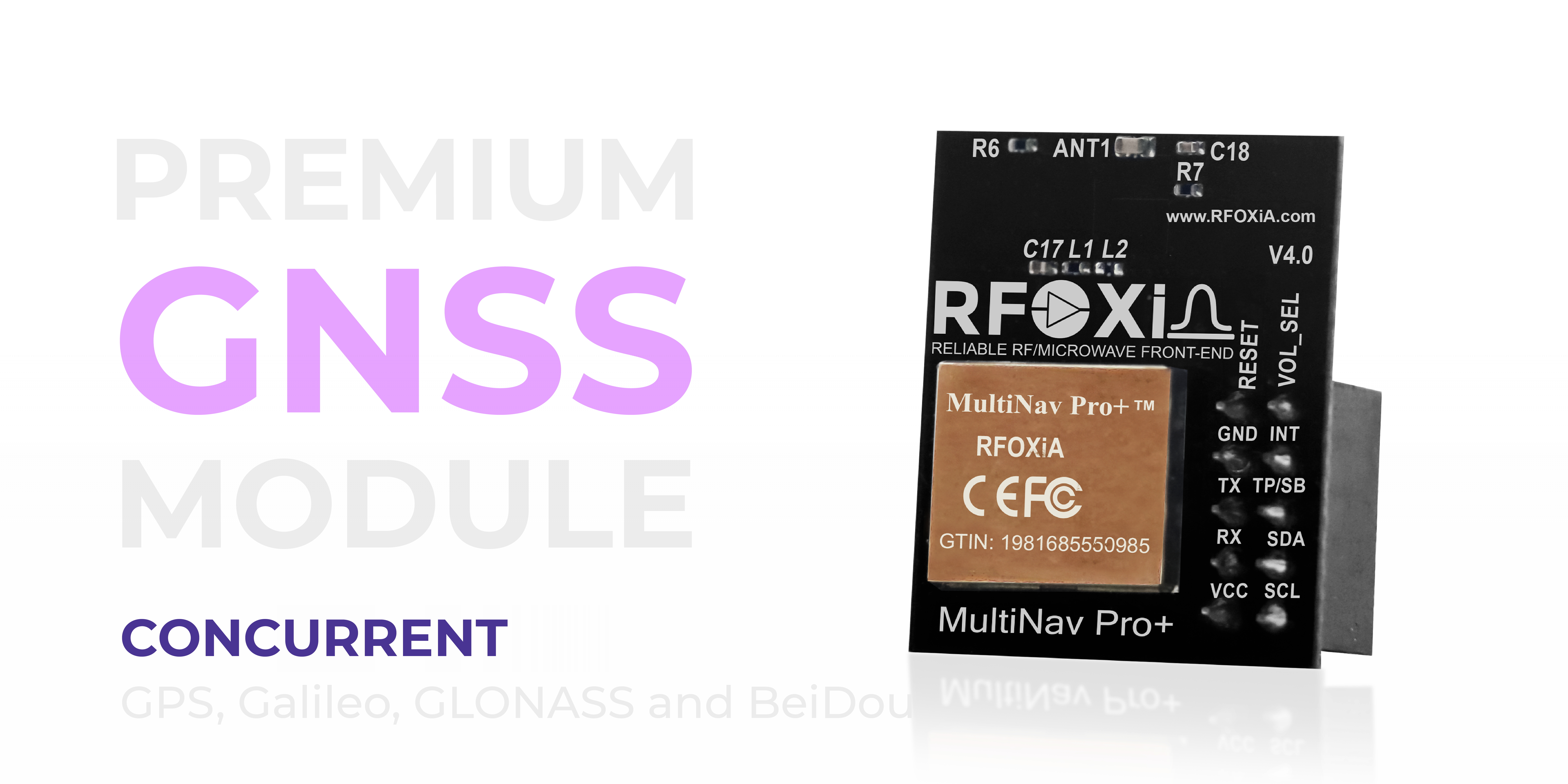
Modules in this tier are built on the latest-generation GNSS chipsets, like the u-blox MIA-M10Q that powers the MultiNav Pro+. They deliver four-constellation concurrent reception, sub-1.5-meter accuracy, fix rates at or above 10Hz, and TTFF under 2 seconds. They combine this performance with compact form factors suitable for integration into drones, compact trackers, and wearables.
The MultiNav Pro+ represents the top of this tier. Here is what sets it apart:
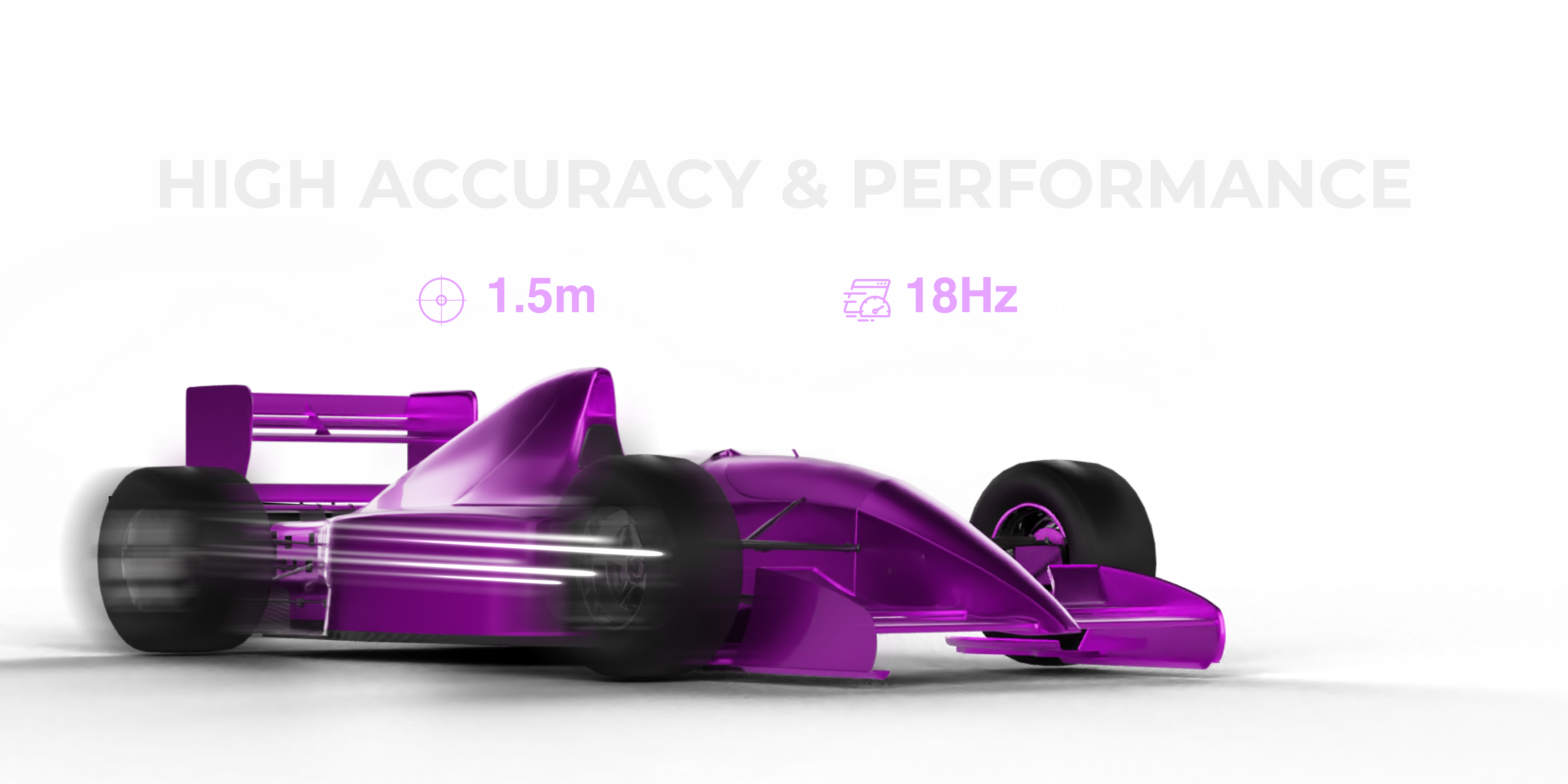
Accuracy: Less than 1.5 meters CEP. Not 2.5 meters. Not 2 meters. Under 1.5 meters, achieved through the combination of the MIA-M10Q chipset and RFOXiA's proprietary RF/microwave microstrip filter technology that eliminates signal interference before it can corrupt the position calculation.
Fix Rate: 18Hz. This is the highest fix rate available in any module at this price point. At 18 updates per second, a drone flying at 20 m/s travels approximately 1.1 meters between position updates — a level of resolution that enables smooth, responsive closed-loop navigation control.
TTFF: 1 second. One second from power-on to valid fix on hot start. This is benchmark performance. Field deployments, rapid redeployment scenarios, and any application where the device powers on and immediately needs to know where it is — this specification matters enormously.
Concurrent Four-Constellation Support. GPS, GLONASS, Galileo, and BeiDou simultaneously. All four major satellite systems contributing to every fix, every time. Not sequential. Not switchable. Concurrent. This is what delivers sub-1.5-meter performance in environments where GPS-only modules struggle to hold a 5-meter fix.
MultiNav Pro+ Design and Integration: Built for Real Hardware Projects
Compact and Power-Efficient by Design
At 26mm x 22mm, the MultiNav Pro+ occupies minimal board space — critical for drone builds where every millimeter and every milligram matters. Power consumption is held to 25-30mA during active tracking, enabling 24+ hours of continuous operation from a modest battery in IoT node configurations.
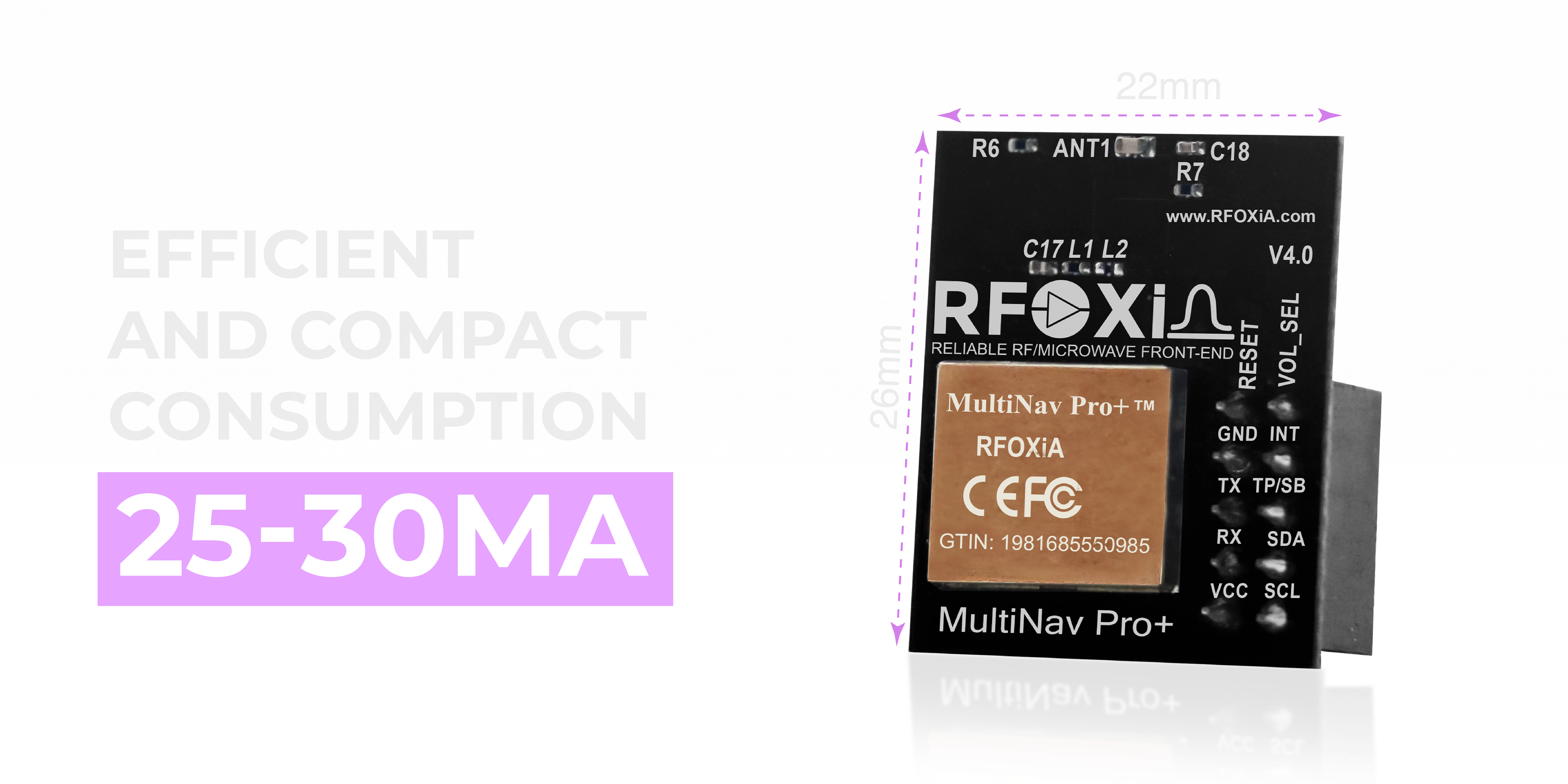
The integrated chip antenna eliminates the external antenna installation step that complicates many high-performance GNSS module integrations. Signal reception is optimized directly on the module without requiring additional hardware.
Flexible Interface: UART and I2C Both Supported
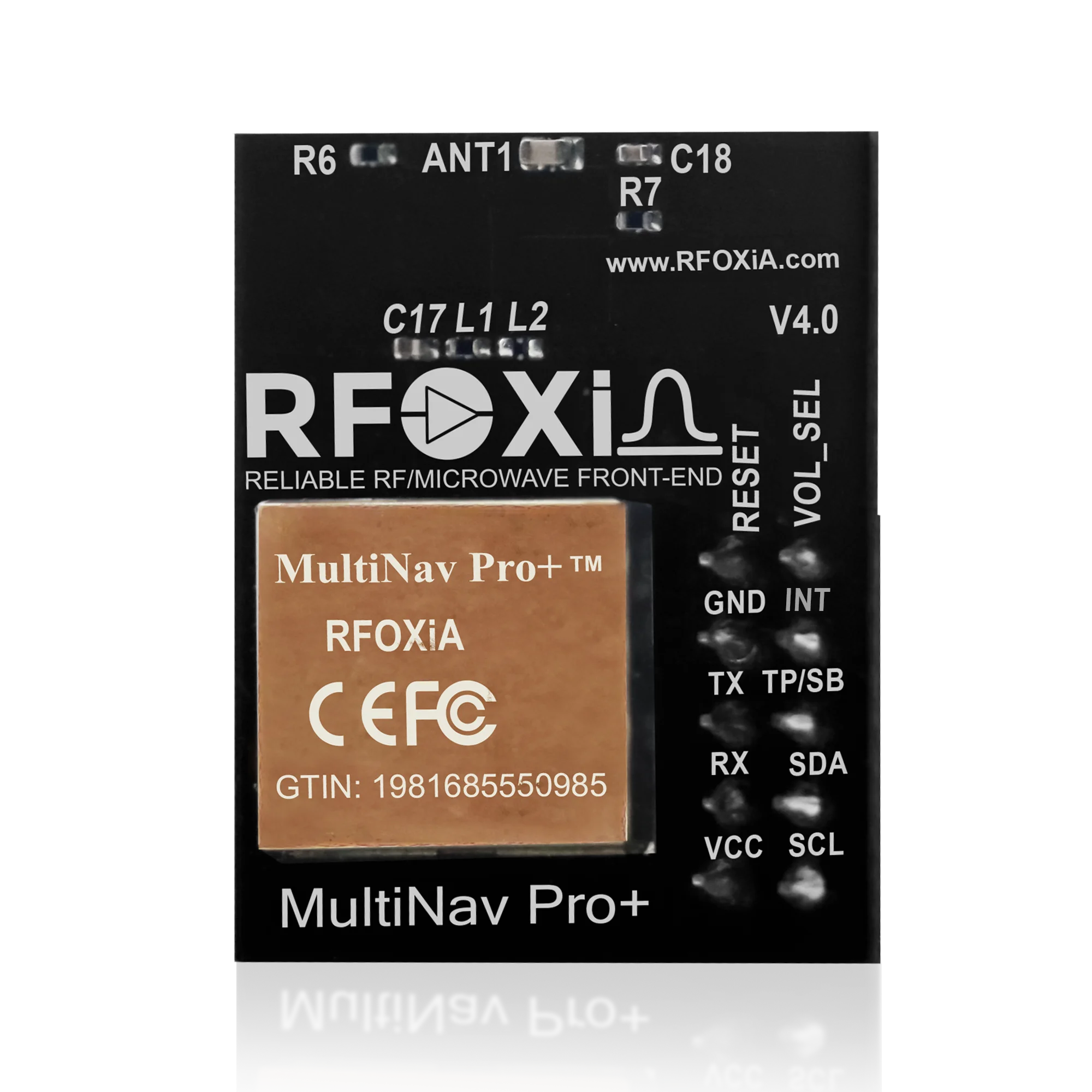
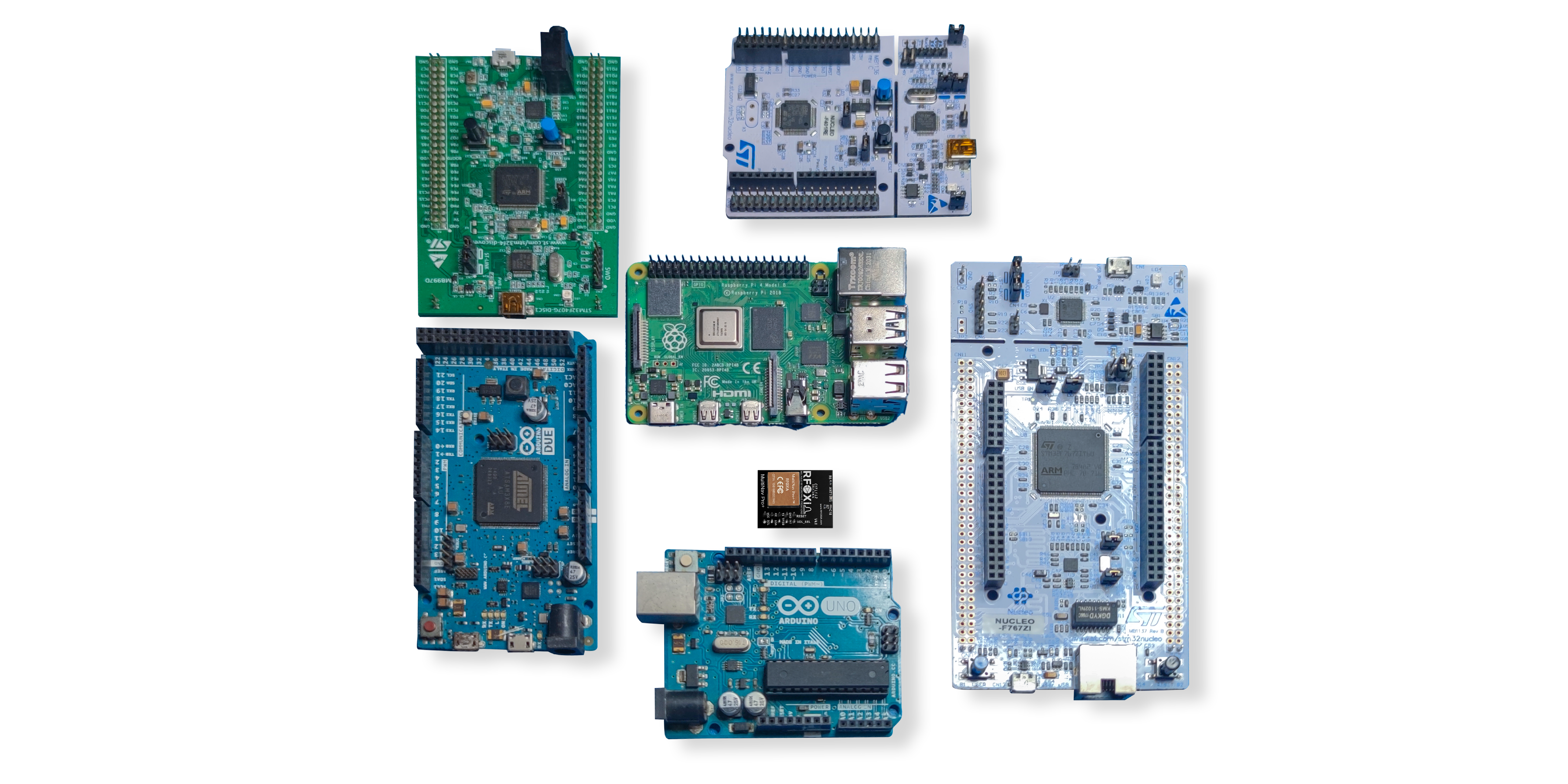
One of the pain points with higher-performance GNSS modules is interface inflexibility. Many professional-grade modules support only one communication protocol, creating design constraints downstream. The MultiNav Pro+ supports both UART (TX/RX) and I2C (SCL/SDA) natively. Voltage compatibility covers both 1.8V and 3.3V systems, making the module drop-in compatible with the widest possible range of microcontrollers and development boards.
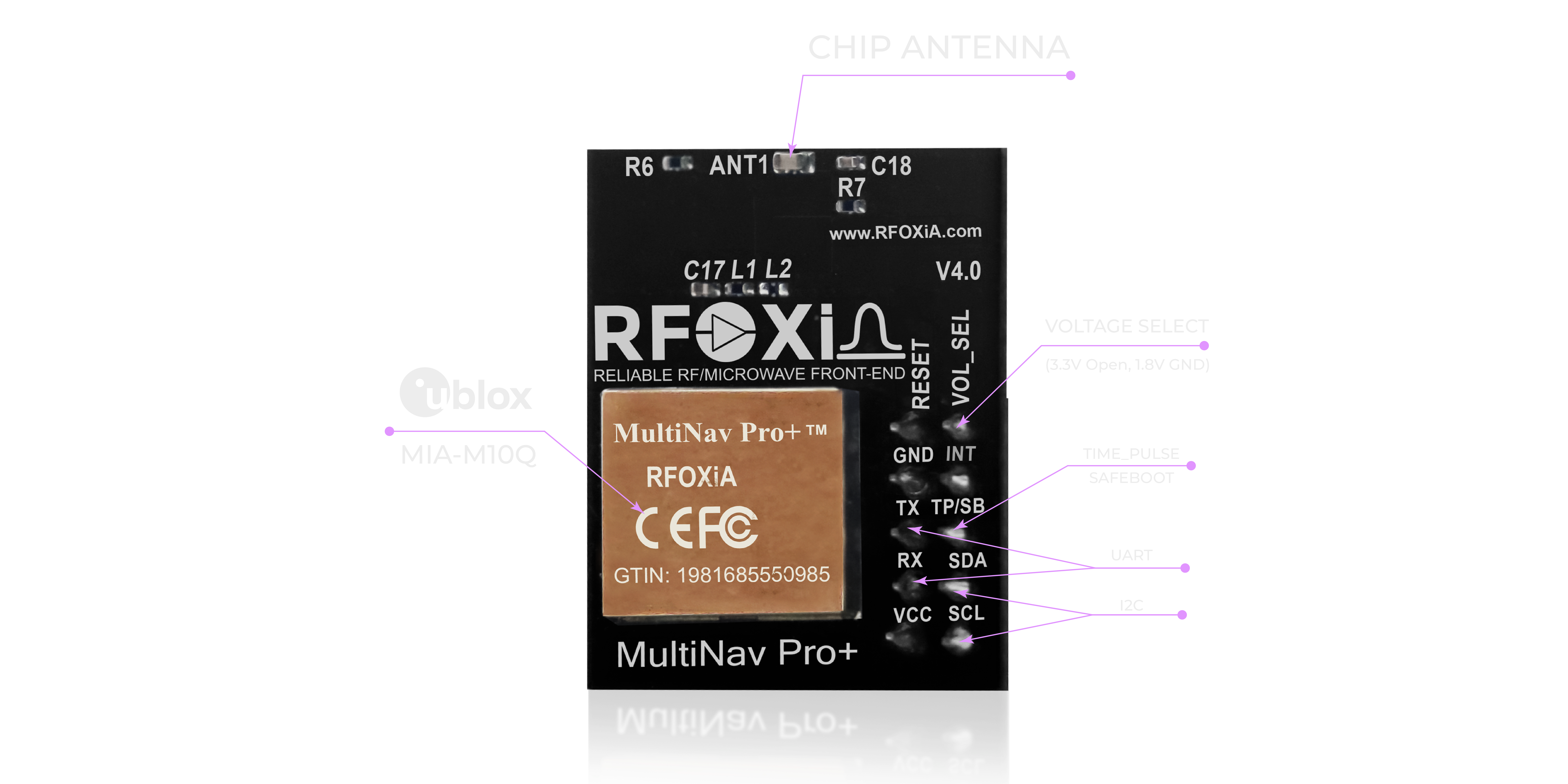
This level of interface flexibility is typically found only in modules costing significantly more. At $49, the MultiNav Pro+ delivers professional interface flexibility at maker-accessible pricing.
Open-Source C Driver Library
The MultiNav Pro+ ships with a fully open-source C language driver library implementing the NMEA standard protocol. The library is structured for direct import into Arduino IDE and compatible with any standard IDE toolchain. Developers who have spent hours wrestling with proprietary GNSS libraries, undocumented register maps, or closed-source binary blobs will appreciate the transparency of working with clean, documented, open-source code.
The open-source approach also means the community can contribute improvements, debug edge cases collaboratively, and adapt the library for specialized applications without waiting for manufacturer updates.
U-Center Software Compatibility
For developers who want to go deeper than the standard library — configuring output messages, adjusting fix rate parameters, analyzing satellite constellation health, or logging raw data — the MultiNav Pro+ is fully compatible with u-blox's U-Center software. U-Center provides a professional GUI for satellite visualization, real-time movement tracking, configuration management, and data logging that would take weeks to replicate with custom tooling.
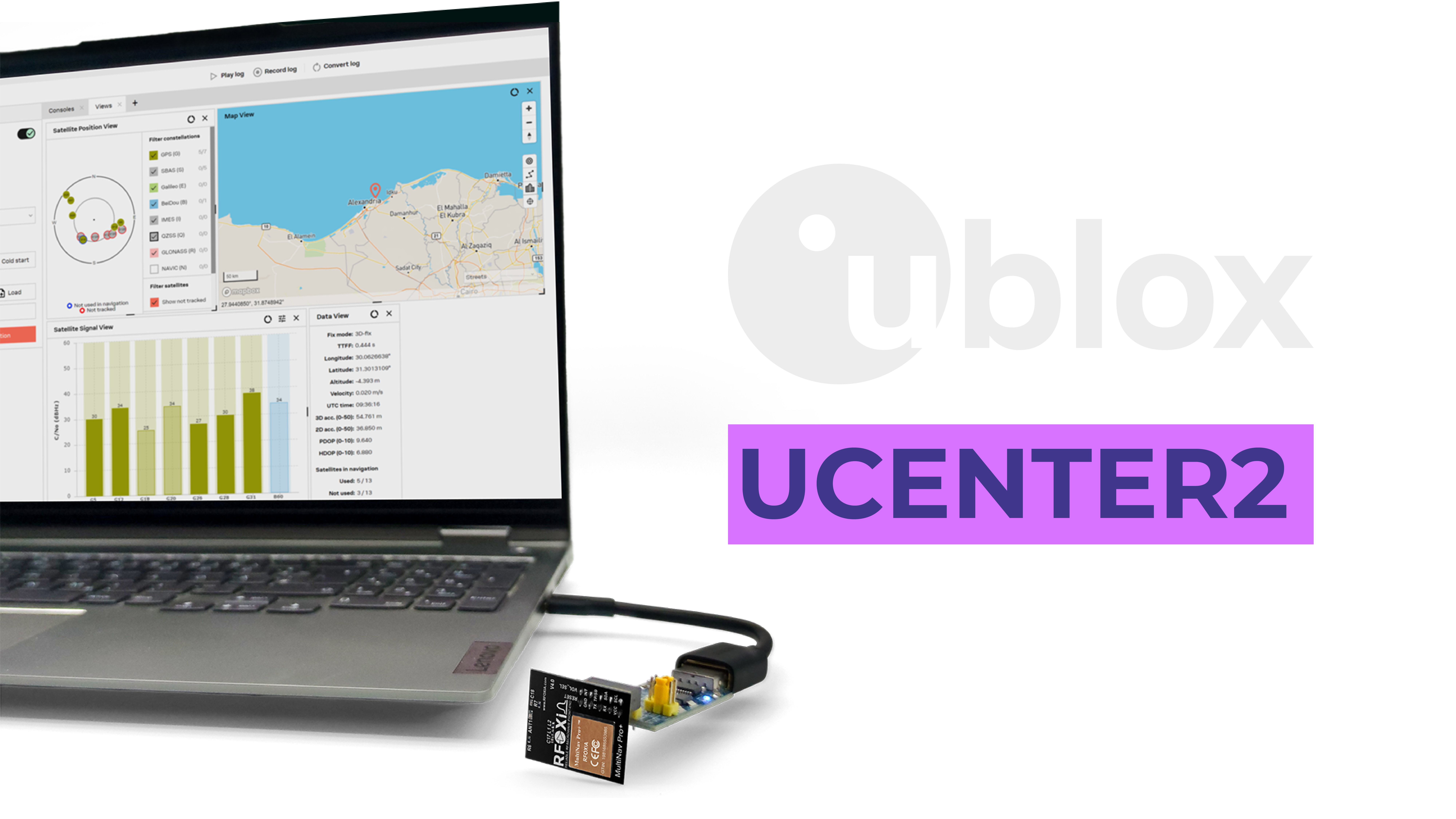
This combination of open-source library for embedded development and U-Center compatibility for analysis and configuration gives developers the full toolkit at every stage of the development process.
Who Is the MultiNav Pro+ Built For?
The honest answer to a GPS module comparison 2026 question is that the best module depends on the application. The MultiNav Pro+ is not the right choice if you need centimeter-level RTK accuracy for professional land surveying — that requires differential GNSS corrections and hardware an order of magnitude more expensive. It is also overkill for a simple asset tracking tag where 5-meter accuracy is acceptable.
For the following applications, the MultiNav Pro+ is the clear choice in 2026:
Drone builders and FPV pilots who need precise position feedback at high update rates for autonomous flight, precise landing, return-to-home, and geofencing.
Robotics engineers building autonomous ground vehicles that need sub-2-meter positioning to navigate defined paths reliably.
IoT developers building outdoor monitoring nodes, environmental sensors, and asset tracking systems where accuracy and power efficiency both matter.
Precision agriculture operators who need accurate field-level sensor positioning without the cost of survey-grade equipment.
Researchers and academics studying environmental data, movement patterns, or any application that benefits from high-temporal-resolution GPS data.
Wearable and portable device developers where the compact form factor and 1.8V compatibility enable integration into space-constrained designs.

If your application appears anywhere in that list, the RFOXiA MultiNav Pro+ GNSS Module is the best-value high-performance choice available in this GPS module comparison 2026.
The RFOXiA Ecosystem Advantage
The MultiNav Pro+ does not exist in isolation. It is one module in a vertically integrated wireless development ecosystem built by RFOXiA. When paired with the RFOXiA BLE Module (5km ground range, 15-20km man-to-drone), the Sensors Module (7 environmental sensors), and the Power/Program Kit (5-minute charge, 24-hour runtime), the GNSS module becomes part of a complete field-ready wireless platform.
RFOXiA Club — the company's developer platform — adds AI-assisted firmware generation, live data visualization, a data monetization network, and a community of builders using this hardware in real applications. For developers who want GPS location data integrated into a broader project without months of firmware development, the ecosystem approach changes the economics entirely.
The RFOXiA Connect mobile app displays live GPS tracking from the GNSS module on a real-time map, paired with live sensor data and drone/robot control — all without an internet connection. The entire system works in the field, off-grid, at range.
GPS Module Comparison 2026: The Summary Verdict
The 2026 GPS module market offers three distinct value propositions:
- Cheap and approximate: Commodity modules for basic projects
- Professional but inaccessible: Survey-grade hardware at prices that exclude maker and small-team budgets
- High-performance and accessible: The MultiNav Pro+ tier — where serious specs meet serious value
For anyone whose application demands accuracy under 1.5 meters, fix rates above 10Hz, first fix in under 2 seconds, and true concurrent four-constellation reception — the MultiNav Pro+ at $49 is the definitive answer to the GPS module comparison 2026 question.
FCC certified. Open-source driver. Arduino compatible. U-Center compatible. UART and I2C. 18Hz. Under 1.5 meters. One second to first fix.
That is not a spec sheet. That is a finished product shipping today.
Explore the full specifications and order the RFOXiA Accurate GNSS Module directly from RFOXiA.
Frequently Asked Questions
Q: Is the MultiNav Pro+ compatible with Raspberry Pi and Arduino? Yes. The open-source C library imports directly into Arduino IDE. I2C and UART interfaces are compatible with Raspberry Pi, ESP32, STM32, and virtually any modern microcontroller.
Q: What is the difference between 18Hz and 10Hz for drone applications? At 20 m/s flight speed, a 10Hz module updates position every 2 meters of travel. An 18Hz module updates every 1.1 meters. For closed-loop navigation control, the higher update rate translates directly to smoother, more responsive flight behavior.
Q: Does the MultiNav Pro+ require an external antenna? No. The integrated chip antenna provides optimized signal reception without any external antenna hardware required.
Q: What voltage does the MultiNav Pro+ operate at? The module supports both 1.8V and 3.3V operating voltages, making it compatible with the full range of modern microcontrollers and SoCs.
Q: Is the MultiNav Pro+ FCC certified? Yes. All RFOXiA modules carry FCC certification, enabling use in commercial products and professional deployments in the United States and countries accepting FCC certification.
Q: Can I use the MultiNav Pro+ with the rest of the RFOXiA ecosystem? Yes. The GNSS module is designed to integrate seamlessly with the RFOXiA BLE Module, Sensors Module, and Power/Program Kit. The Developer Bundle includes all four modules in a single package.
Written by: Moamen Mohamed LinkedIn