
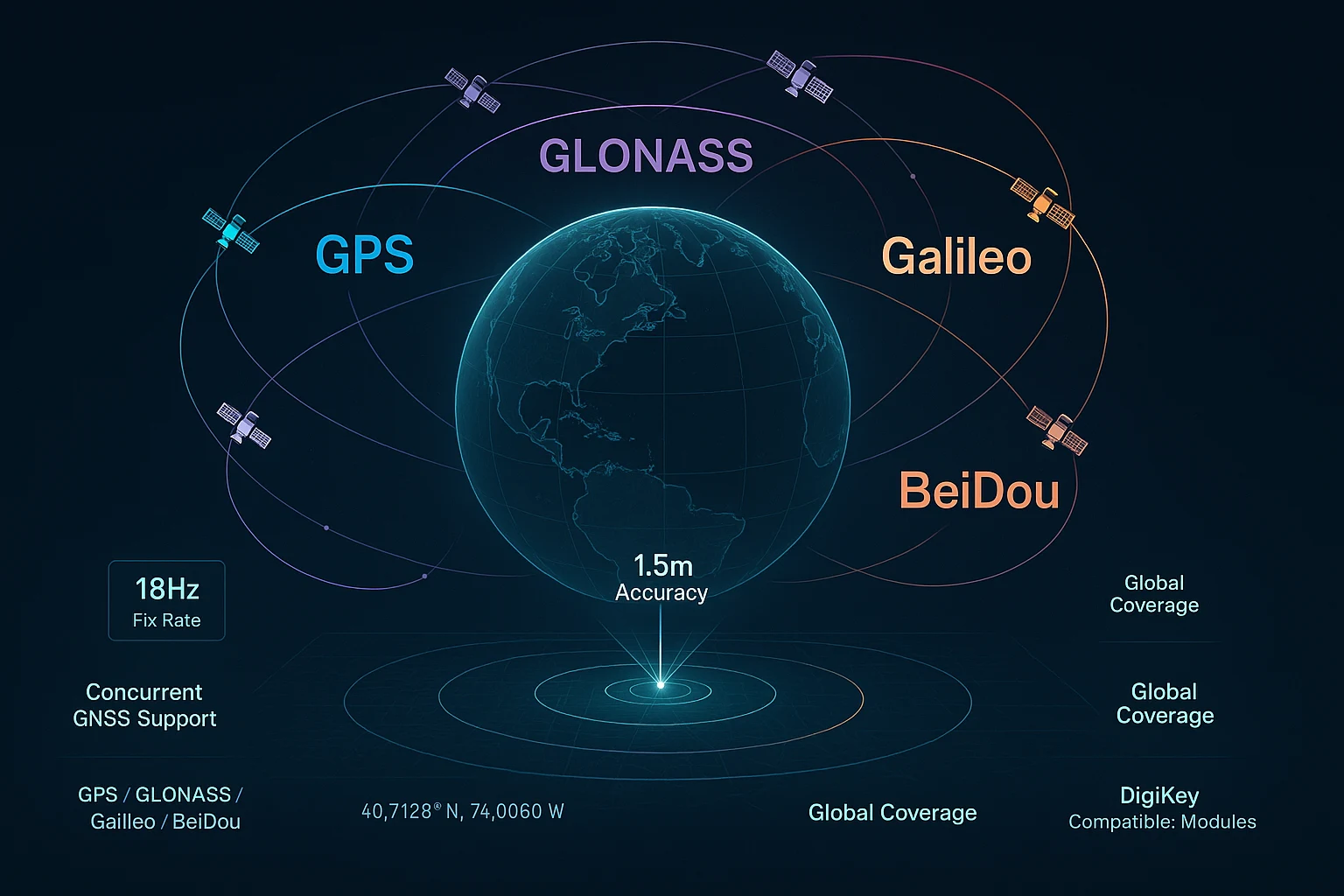
GPS Module DigiKey Buyers Should Know About: The MultiNav Pro+ GNSS Module
The GPS Module DigiKey Listings Don't Tell You About
If you've spent any time searching for a high-performance GPS module on DigiKey, you already know the drill. You filter by accuracy, fix rate, and constellation support, and you end up with a long list of bare chips, reference designs with no software support, and evaluation boards priced like lab equipment. What you rarely find is a fully integrated, plug-and-play GNSS module with open-source firmware, multi-constellation support, and professional-grade accuracy — all in a compact 26mm x 22mm form factor — priced at $49.
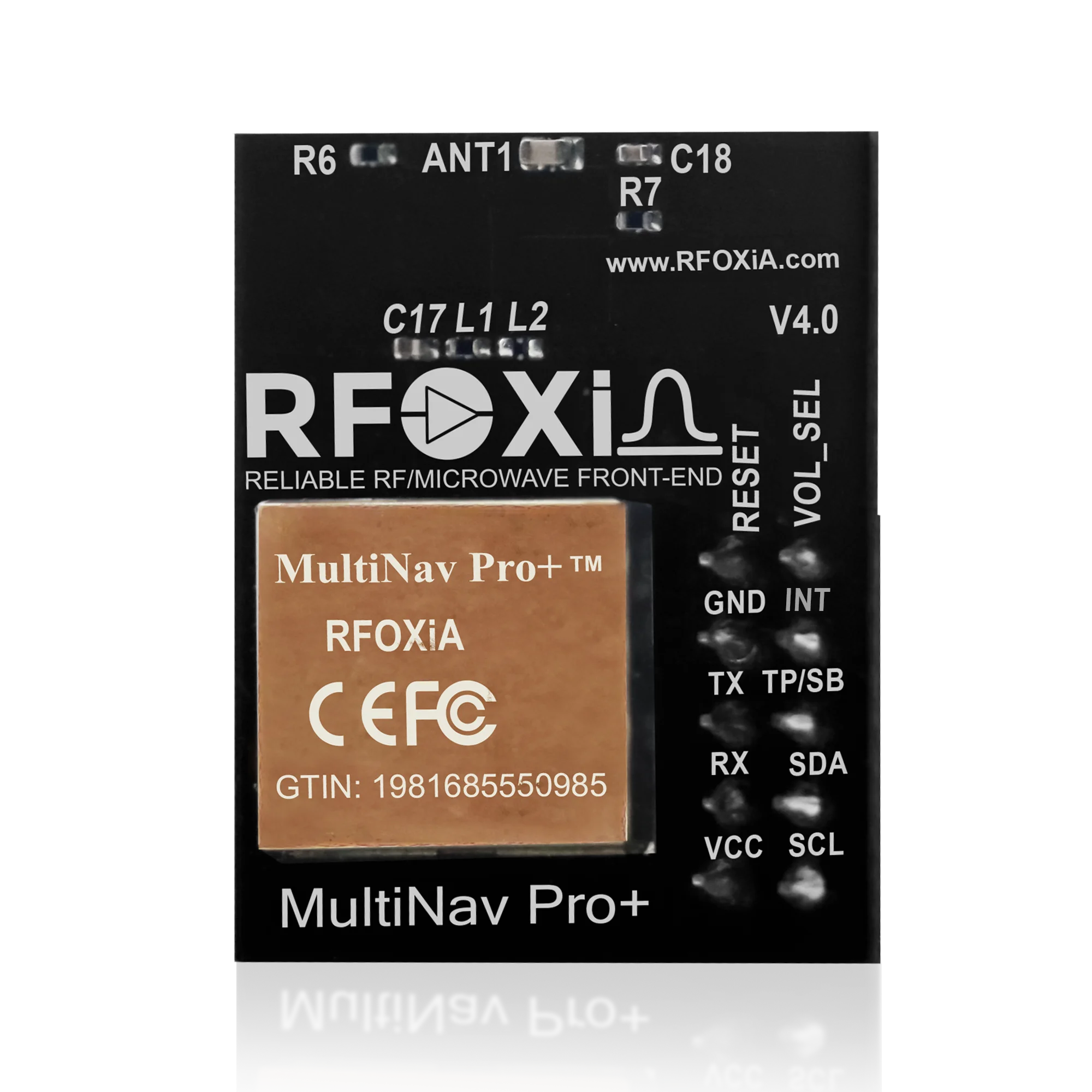
That's exactly what the RFOXiA Accurate GNSS Module delivers. The MultiNav Pro+™ is built for drone builders, embedded developers, researchers, and IoT engineers who need real performance without the friction of sourcing bare chips, designing RF filters, and writing GNSS parsers from scratch.
This post breaks down everything the MultiNav Pro+ offers, why it outperforms most GPS module DigiKey searches for practical applications, and who it's built for.
What Makes a GNSS Module "Professional Grade"?
Before diving into the specs, it's worth establishing what separates a professional-grade GNSS module from a budget positioning chip.
Three things matter most:
- Accuracy — how close the reported position is to the true position under real-world conditions
- Fix rate — how many position updates per second the module delivers (critical for tracking fast-moving platforms)
- Constellation support — how many satellite systems the module can use simultaneously (more constellations = more satellites = faster fix and better accuracy in difficult environments)
Most GNSS modules available through general electronics distributors hit 2.5–5 meter accuracy, max out at 5–10Hz, and support only GPS or GPS + GLONASS. That's adequate for walking navigation and basic asset tracking. It is not adequate for drone waypoint control, precision landing, agricultural mapping, or any application where a 3-meter position error creates a real problem.
The MultiNav Pro+ was designed specifically to close that gap — delivering sub-1.5 meter accuracy with an 18Hz fix rate and simultaneous four-constellation support, in a module any developer can integrate in an afternoon.
MultiNav Pro+™ Core Specifications
| Parameter | Specification |
|---|---|
| Accuracy | < 1.5 meters CEP |
| Fix Rate | Up to 18Hz |
| First Fix Time | 1 second (hot start) |
| GNSS Chip | u-blox MIA-M10Q |
| Constellations | GPS, Galileo, GLONASS, BeiDou (concurrent) |
| Antenna | Integrated high-gain chip antenna |
| Interfaces | UART (TX/RX), I2C (SCL/SDA) |
| Supply Voltage | 1.8V and 3.3V |
| Current Consumption | 25–30mA |
| Dimensions | 26mm x 22mm |
| Certification | FCC Certified |
| Price | $49 |
These numbers are not theoretical maximums pulled from a chip datasheet. They represent the actual performance of the fully assembled module, including RFOXiA's proprietary RF/microwave microstrip filter technology that suppresses interference and preserves signal integrity in electrically noisy environments like drone frames and industrial enclosures.
The u-blox MIA-M10Q: Why the Chip Choice Matters
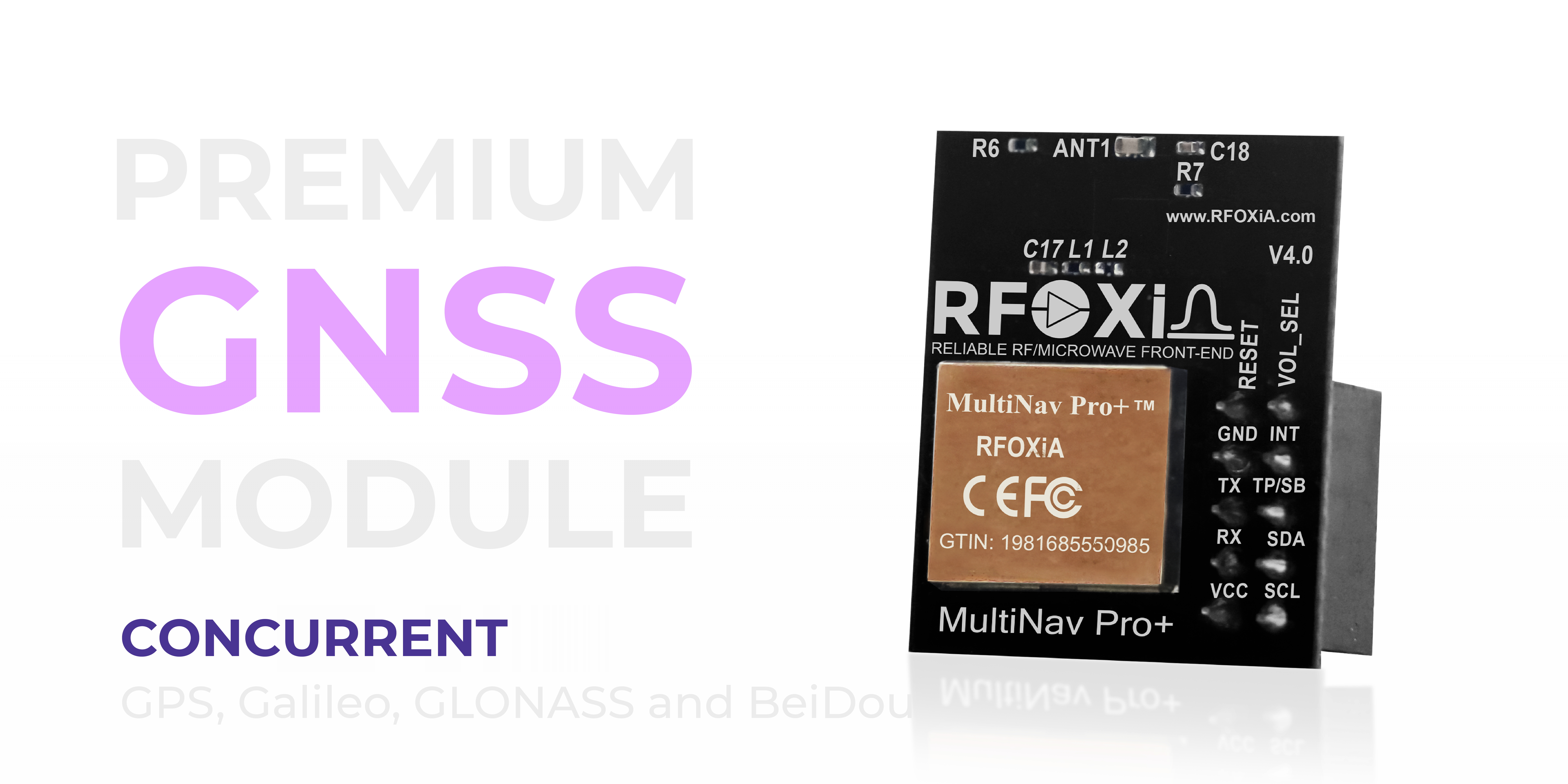
The MultiNav Pro+ is built around the u-blox MIA-M10Q — one of the most capable compact GNSS chips currently available for embedded applications. u-blox is the industry standard reference for professional GNSS design. Their chips power automotive navigation systems, precision agriculture equipment, UAV flight controllers, and maritime positioning systems worldwide.
The MIA-M10Q specifically was engineered for applications that demand both high accuracy and fast dynamic response. Its concurrent four-constellation architecture means the module is tracking GPS, Galileo, GLONASS, and BeiDou satellites simultaneously — not switching between them. This is a critical distinction. Switching architectures trade off between systems to save power. Concurrent tracking means the module always has the maximum number of visible satellites contributing to the position fix, which directly translates to better accuracy and dramatically faster acquisition in challenging environments like urban canyons, tree cover, or cluttered RF environments.
For anyone evaluating a GPS module DigiKey comparison against the MultiNav Pro+, the MIA-M10Q foundation alone places this module in a performance tier that bare-chip listings at similar price points simply cannot reach without significant additional engineering investment.
Accuracy and Fix Rate: The Numbers That Actually Matter

1.5-Meter Accuracy
Sub-1.5 meter CEP (Circular Error Probable) means that 50% of position measurements fall within 1.5 meters of the true position. In practice, under good sky view conditions with multiple constellations available, many users report consistent accuracy well inside this figure.
For drone applications, 1.5-meter accuracy is the threshold between "good enough for general flight" and "accurate enough for precision waypoint navigation, return-to-home reliability, and autonomous survey missions." Anything worse than 3 meters introduces meaningful drift error into autonomous flight paths that compounds over distance.
For ground applications — robotics, precision agriculture, asset tracking, survey reference — 1.5-meter accuracy enables use cases that 5-meter accuracy simply cannot support.
18Hz Fix Rate
The fix rate determines how many times per second the module calculates and outputs a new position. Standard GNSS modules run at 1Hz (one update per second) or 5Hz. Professional drone GNSS modules typically target 10Hz. The MultiNav Pro+ runs at 18Hz.
At 18Hz, the module delivers a new position 18 times every second. For a drone traveling at 15 meters per second (54 km/h), a 1Hz module produces a new position every 15 meters of travel. An 18Hz module produces a new position every 0.83 meters. The difference in the quality of the flight path recorded, and the responsiveness of any position-based control loop, is dramatic.
This fix rate also matters for any application involving vibration or rapid attitude changes, where lower-rate modules can introduce phase errors between the reported position and the true position of a moving platform.
1-Second First Fix
Hot start first fix in one second means the module is delivering valid position data one second after power-on when it has a recent almanac stored. For field applications where operators need to power up and move immediately, this eliminates the frustrating 30–60 second acquisition wait common with lower-tier GNSS modules.
Compact, Power-Efficient Design
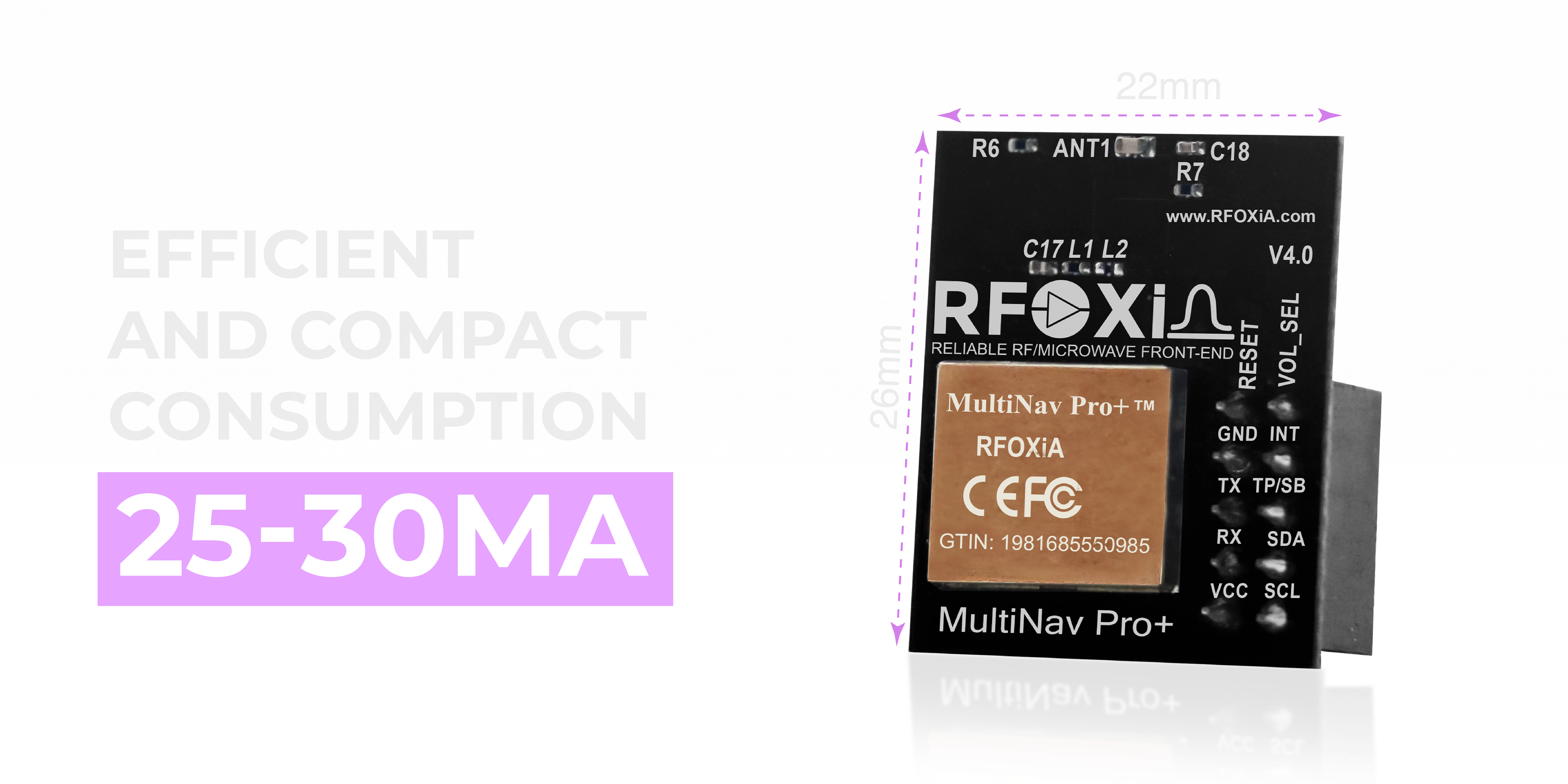
At 26mm x 22mm, the MultiNav Pro+ is designed to fit where other professional GNSS modules won't. The integrated high-gain chip antenna eliminates the need for external antenna design — a significant complexity reduction for developers who are not RF engineers. The antenna placement and ground plane geometry are already optimized on the module PCB. You connect power and a data interface, and it works.
Power consumption of 25–30mA during active tracking is competitive for a concurrent four-constellation module. For battery-powered applications — wearables, field sensors, portable trackers — this is a meaningful specification. The module supports both 1.8V and 3.3V supply voltage, making it compatible with virtually all modern microcontroller families including STM32, Nordic nRF, ESP32, and RP2040 series without level shifting.
Interface Flexibility: UART and I2C
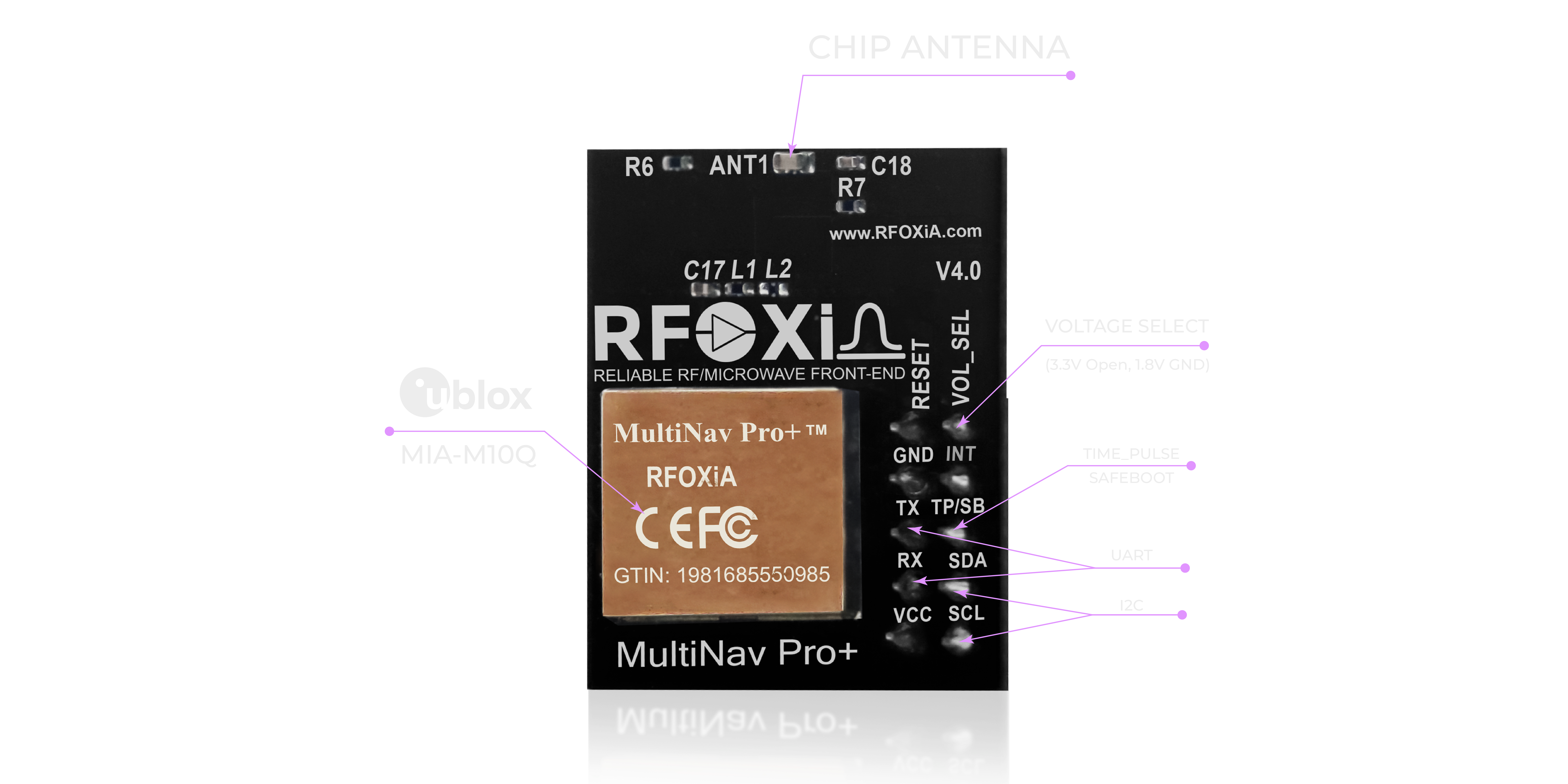
The MultiNav Pro+ exposes both UART and I2C interfaces, giving developers flexibility to choose the bus that best fits their system architecture.
UART is the traditional GNSS interface. The module outputs NMEA sentences at configurable baud rates. This is the easiest path for rapid prototyping and is directly compatible with Arduino, MicroPython, and most embedded RTOS environments.
I2C is the right choice when you're already using I2C for other sensors on a shared bus and want to minimize pin usage. The MIA-M10Q's I2C implementation is clean and well-documented, and RFOXiA's open-source library abstracts the protocol handling.
Both interfaces are fully supported by the included software library, so the choice between them doesn't require any additional development effort.
Open-Source Driver: No Proprietary Black Boxes
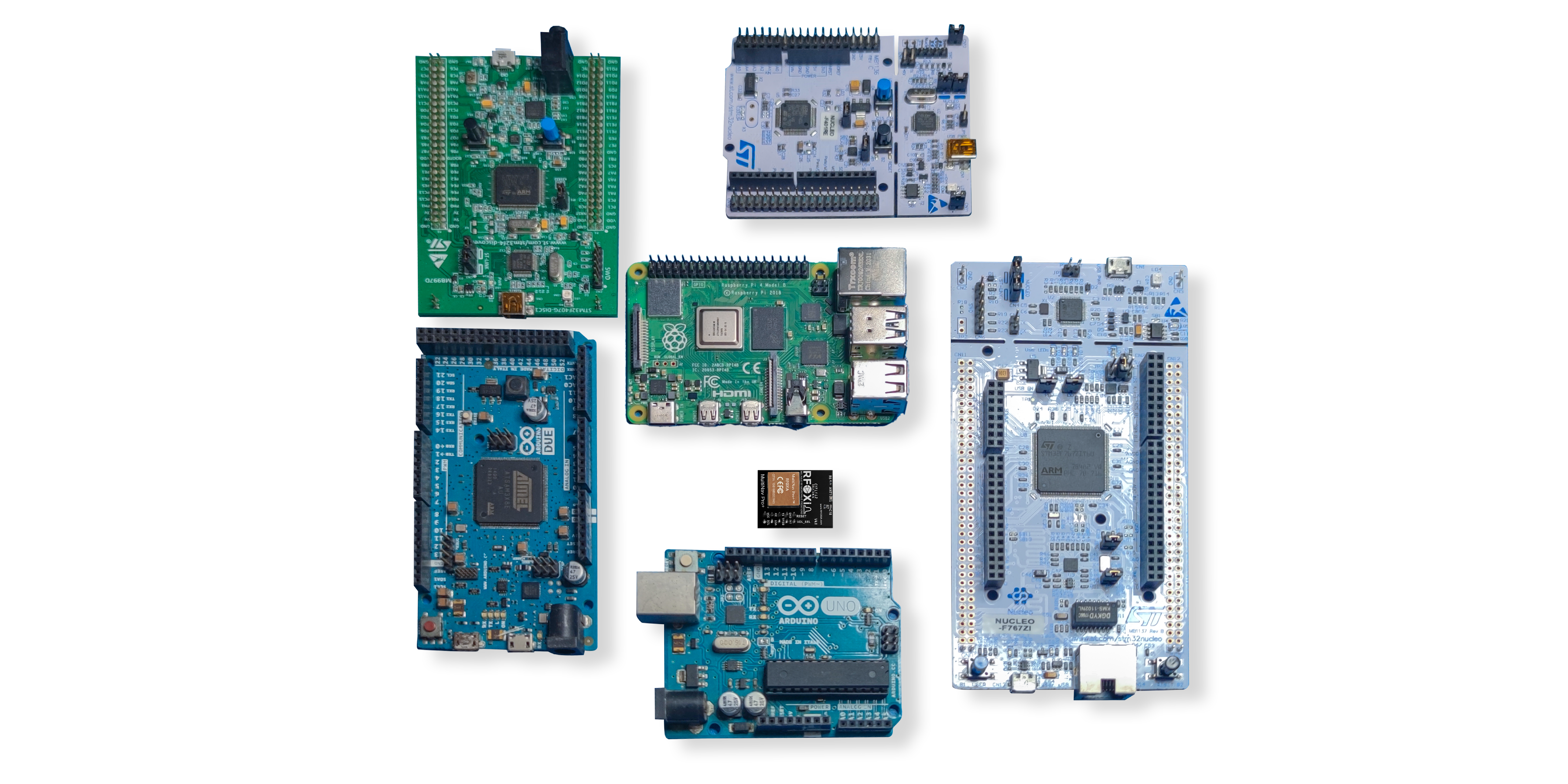
One of the most practically important features of the MultiNav Pro+ is the fully open-source C language driver library. This is not a binary blob. This is not a vendor SDK that requires registration and an NDA. It's a clean, documented C library that implements NMEA standard protocol parsing and exposes a straightforward API for your application code.
The library imports directly into Arduino IDE and is compatible with any GCC-based toolchain, including PlatformIO, STM32CubeIDE, and ESP-IDF. For developers working in Python or MicroPython environments, the NMEA parsing is trivial to implement directly once the hardware is configured.
Open-source drivers matter for several reasons:
- No vendor lock-in — you own your firmware and can modify it freely
- Auditability — you can verify exactly what the module is doing with your data
- Long-term maintainability — if RFOXiA ever changed directions, your codebase doesn't break
- Community contributions — improvements and ports are contributed by users
For engineers evaluating a GPS module DigiKey search for a production design, open-source firmware support is a significant risk reduction factor that bare-chip listings rarely provide at equivalent cost.
u-center Software Integration
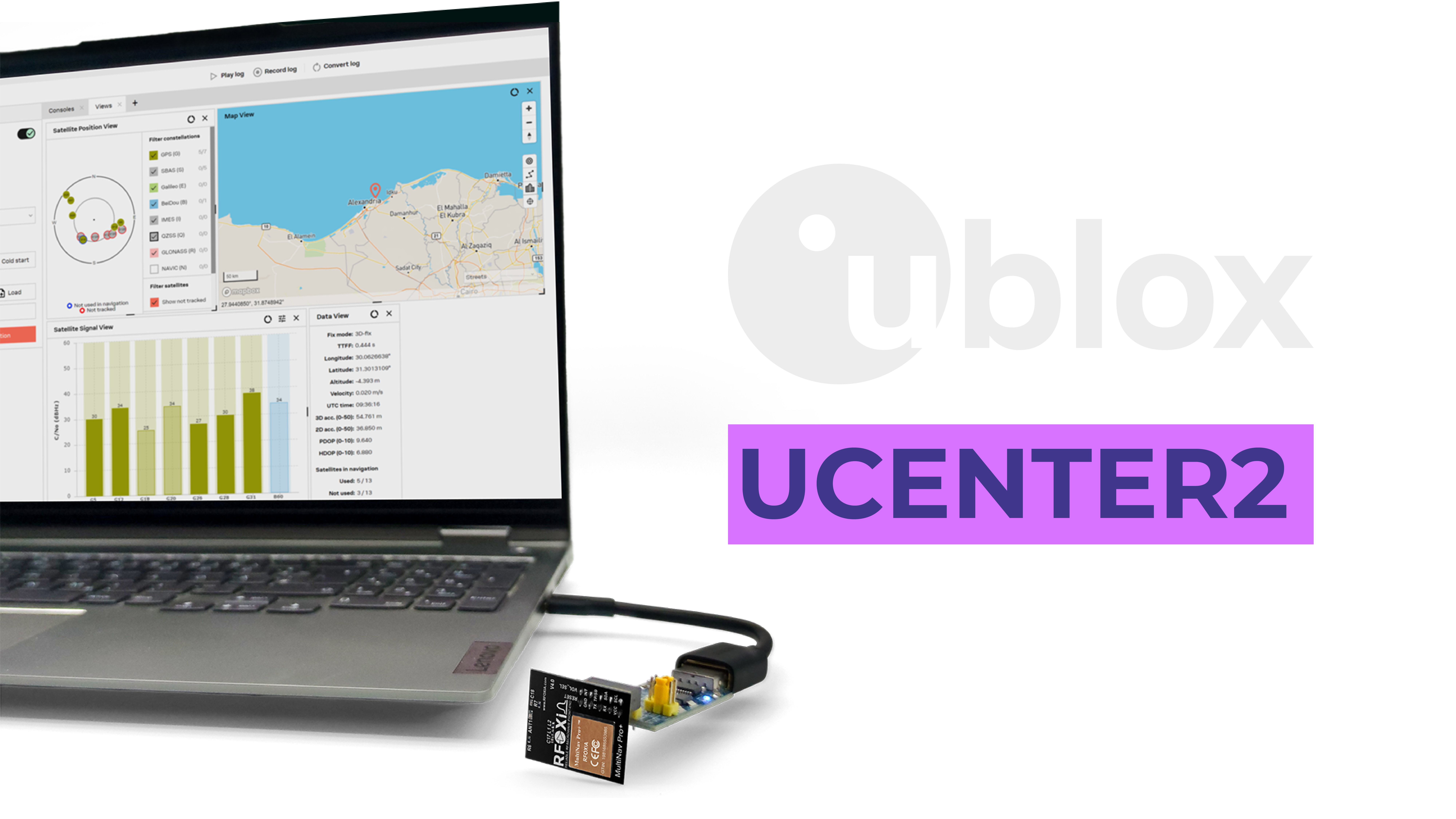
Because the MultiNav Pro+ is built on the u-blox MIA-M10Q, it is fully compatible with u-center — u-blox's free desktop application for GNSS module evaluation, configuration, and diagnostics.
u-center provides:
- Live sky view — visual display of all visible satellites by constellation, with signal strength indicators
- Position plot — real-time map of position track with accuracy circle visualization
- Message inspector — raw NMEA and UBX protocol message monitoring
- Configuration manager — adjust fix rate, power mode, output message selection, and antenna settings through a GUI without writing any code
- Data logging — record position logs for post-processing and analysis
- Firmware update — update the module firmware through the u-blox secure update process
For development and debugging, u-center eliminates hours of parsing log files manually. For production verification, it provides a standardized evaluation methodology. This is professional tooling that comes at no additional cost because RFOXiA chose to build on u-blox silicon.
Use Cases: Where the MultiNav Pro+ Belongs

Drone Navigation and Autonomous UAV Systems
This is the primary design target for the MultiNav Pro+. The 18Hz fix rate, 1.5-meter accuracy, and concurrent constellation support map directly onto the requirements of modern autonomous drone systems. Whether you're building a fixed-wing survey platform, a multirotor photography drone, or a custom FPV racing quad with GPS rescue, the MultiNav Pro+ delivers the position data quality your flight controller needs.
For developers integrating into ArduPilot or PX4-based systems, the UART NMEA output is directly compatible with the standard GNSS driver implementations. u-center allows pre-configuration of the module before installation to match flight controller expectations for fix rate and output messages.
IoT Environmental Monitoring and Data Networks
RFOXiA's own data network uses GNSS validation as a core integrity mechanism. When a Sensors Module streams environmental data to the RFOXiA network, GPS coordinates from the MultiNav Pro+ verify that the sensor is actually deployed outdoors at the reported location — preventing data spoofing and ensuring the dataset's integrity for enterprise buyers.
For any IoT deployment where location-tagged data quality matters — air quality monitoring, precision agriculture, environmental research — the MultiNav Pro+ provides the GNSS layer that makes the data trustworthy.
Precision Agriculture and Survey
Sub-1.5 meter accuracy places the MultiNav Pro+ at the entry threshold for meaningful precision agriculture applications. Row-level crop tracking, equipment path logging, and variable-rate application mapping all become feasible. For survey-grade applications requiring sub-10cm accuracy, an RTK correction source would be needed, but for the wide range of agricultural applications where 1.5 meters is sufficient, the MultiNav Pro+ delivers at a price that makes fleet deployment practical.
Wearables and Personal Tracking
At 26mm x 22mm and 25–30mA, the MultiNav Pro+ fits the envelope of advanced wearable devices. Sports performance monitors, personal GPS trackers, search-and-rescue beacons, and field researcher equipment can all incorporate the module without major size or power compromises. The 1.8V supply compatibility is particularly valuable for wearable designs where battery-direct supply rails are common.
Research and Education
For university labs, research institutions, and engineering education programs evaluating GNSS performance, the combination of u-center integration, open-source firmware, and professional-grade specifications makes the MultiNav Pro+ a credible research instrument. The transparent software stack means researchers can verify exactly what the module is computing and logging, which matters for publication-quality work.
The RFOXiA Ecosystem Advantage
The MultiNav Pro+ doesn't exist in isolation. It's one component of a complete wireless development ecosystem built by RFOXiA. When paired with the MultiNav Pro+ BLE Module (5km ground range, 20km man-to-drone range), the Sensors Module (7 environmental sensors), and the Power/Program Kit (5-minute charge, 24-hour runtime), you have a complete field-deployable wireless sensing and control platform.
The RFOXiA Accurate GNSS Module is the positioning layer of that stack — providing the precise location context that makes all the sensor data and telemetry meaningful.
RFOXiA Club, the company's developer platform, adds AI-assisted firmware development, community project sharing, and the data monetization network where deployed sensor nodes earn daily rewards for contributing verified environmental data. It's a hardware investment that generates passive returns.
FCC Certification: Why It Matters for Your Project
Every RFOXiA module, including the MultiNav Pro+, carries FCC certification. This matters in several ways:
- Legal deployment — FCC-certified modules can be legally incorporated into end products deployed in the United States without requiring the end product to undergo its own FCC testing for the RF functions covered by the module certification
- Distributor qualification — FCC certification is the primary credential required by professional electronics distributors including DigiKey, Mouser, and others
- Buyer confidence — for commercial and institutional buyers, FCC certification is a baseline procurement requirement
For developers evaluating GPS module DigiKey options specifically for compliance-sensitive applications, the MultiNav Pro+'s FCC certification removes a significant project risk that uncertified alternatives introduce.
Pricing and Value: $49 for Professional-Grade GNSS
At $49, the MultiNav Pro+ occupies a position in the market that simply didn't exist before RFOXiA built it. Professional GNSS evaluation modules from major distributors typically start at $80–150 and ship without optimized RF filtering, integrated antennas, or production-ready software support. Bare chips with equivalent specifications require substantial additional engineering investment to deploy.
For makers, the $49 price point is directly accessible. For professional developers, it's a compelling argument for prototype-to-production continuity — the same module you use for development can go directly into your production units without redesign.
Get the MultiNav Pro+ GNSS Module
If you've been searching for a capable, well-supported, FCC-certified GNSS module and finding that GPS module DigiKey results either overshoot your budget or underdeliver on specifications, the MultiNav Pro+ is the module worth evaluating.
$49. 1.5-meter accuracy. 18Hz. Four constellations. Open-source driver. Ships now.
Explore the full specifications, download the datasheet, and order directly from the RFOXiA Accurate GNSS Module product page. Stock is limited — the current inventory of 45 units won't last long given demand.
If you're building a complete wireless development platform, explore the Developer Bundle, which combines the MultiNav Pro+ GNSS module with the long-range BLE module, the 7-sensor environmental module, and the supercapacitor power kit for $199 — the most complete professional wireless development stack available at any price near that range.
Join RFOXiA Club for free and claim your $10 welcome credit toward your first hardware order. The platform includes AI firmware generation, developer community resources, and full documentation for every module in the ecosystem.
MultiNav Pro+™ is an RFOXiA product. All specifications represent tested module performance. FCC certified. Patent pending.
Written by: Moamen Mohamed LinkedIn