
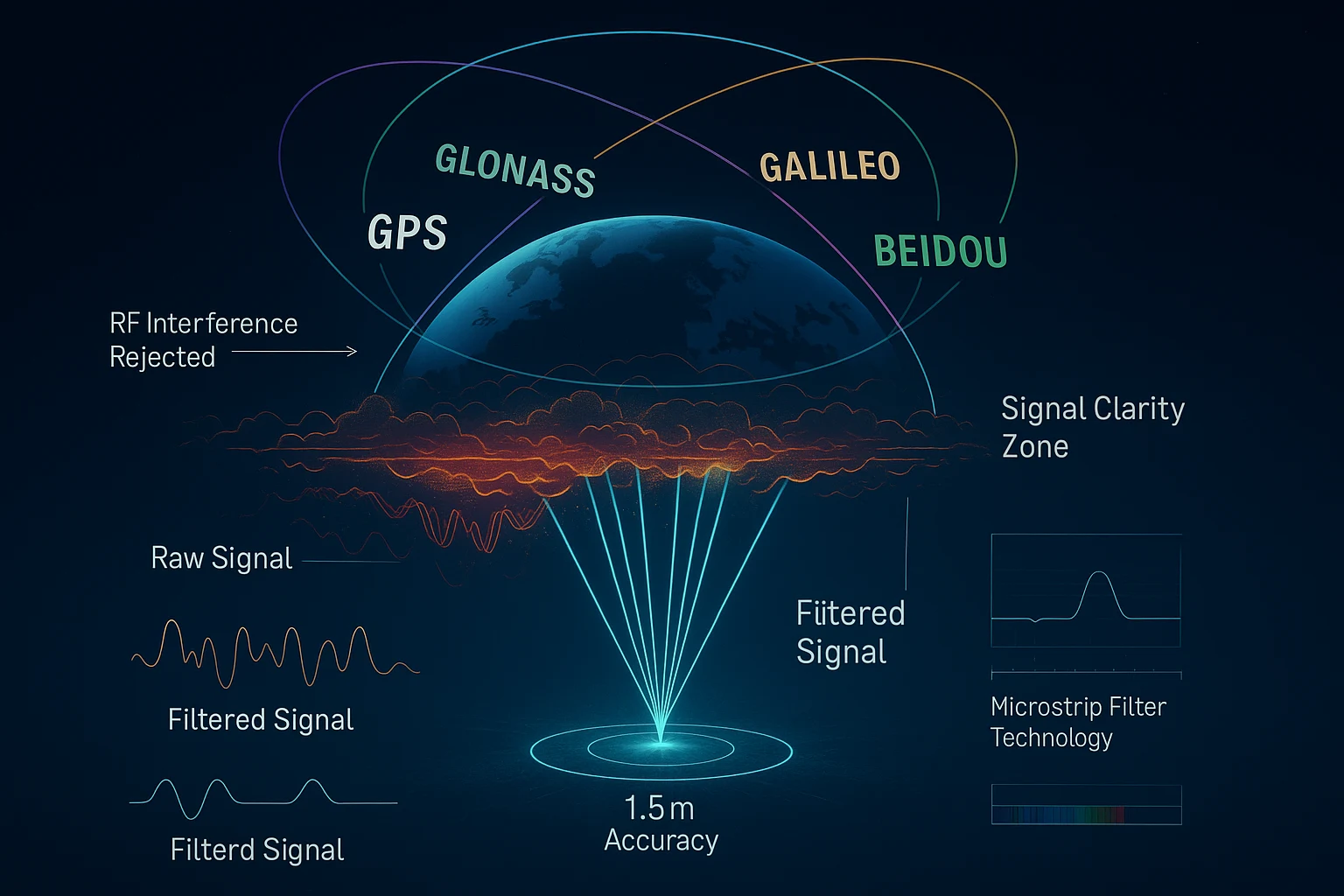
GPS Module Interference Rejection: The Complete Guide to Precision GNSS in Noisy Environments
Why GPS Module Interference Rejection Separates Professional Modules from the Rest
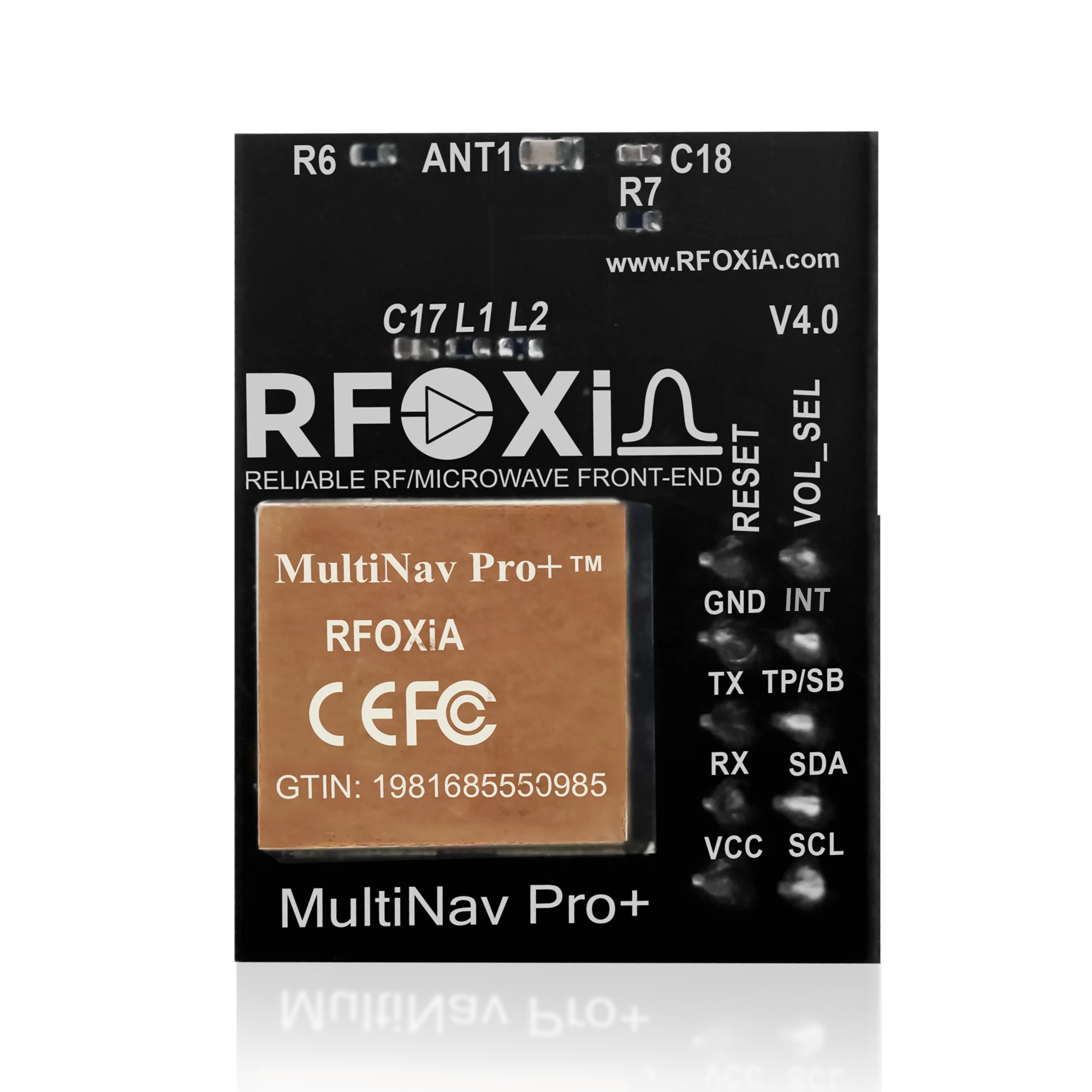
If you have ever deployed a GPS or GNSS module in a real-world project — a drone, a mobile robot, an agricultural sensor platform, or a field research kit — you already know the problem. Clean satellite signals are a luxury. The real world is saturated with RF noise, electromagnetic interference from motors and power regulators, multipath reflections from buildings and terrain, and competing signals across adjacent frequency bands. The result, in most commodity GPS modules, is degraded position accuracy, frequent fix loss, and unstable update rates that make your application unreliable precisely when it matters most.
This is why GPS module interference rejection is not a minor specification footnote. It is the single most important design challenge in precision GNSS hardware, and it is the design challenge that separates a professional-grade module from a commodity breakout board.
The RFOXiA MultiNav Pro+™ was built from the ground up to solve this problem. In this post, we will walk through exactly how interference rejection works in a GNSS module, why most modules fail at it, and how the MultiNav Pro+ delivers sub-1.5-meter accuracy with an 18Hz fix rate even in electromagnetically demanding environments.
Understanding RF Interference in GNSS Systems
GNSS signals — whether GPS, Galileo, GLONASS, or BeiDou — arrive at your antenna from satellites approximately 20,200 kilometers above the Earth's surface. By the time they reach your receiver, those signals are extraordinarily weak. We are talking about signal levels around -130 dBm, which is roughly one tenth of one billionth of one millionth of a watt. At that power level, almost any nearby electromagnetic source can overpower or corrupt the signal.
The most common sources of interference in real-world deployments include:
- Motor and ESC noise in drone and robotics applications — brushless motors and their electronic speed controllers generate broadband RF noise across a wide frequency range
- Switching power regulators — the DC-DC converters that power your microcontroller and peripherals emit RF harmonics that can land directly in the GNSS band near 1.57GHz
- USB and HDMI cables — these are notorious RF noise emitters at harmonic frequencies that overlap L1 GPS
- LTE and cellular signals — especially Band 13 and Band 17 in the US, which sit immediately adjacent to the GPS L1 band
- Wi-Fi and Bluetooth — 2.4GHz signals and their harmonics
- Multipath reflections — signals bouncing off buildings, ground surfaces, or vehicle bodies that arrive at your antenna slightly delayed and create ghost position errors
For a commodity GPS module with a simple antenna and no RF filtering, all of these interference sources translate directly into positioning errors, fix instability, and reduced update rate reliability. This is why many developers report their supposedly accurate GPS modules behaving erratically in real deployments even when they tested fine on a bench.
How GPS Module Interference Rejection Actually Works
RF Filtering Architecture
Effective GPS module interference rejection starts at the antenna and RF front end. Before any signal reaches the GNSS receiver chip, it must pass through filtering stages that attenuate out-of-band signals while preserving the extremely weak GNSS signal.
The MultiNav Pro+ uses proprietary RF/microwave microstrip filter technology — a carefully designed transmission line filter implemented directly in the PCB layout that provides high selectivity around the GNSS bands. Microstrip filters at this frequency range are notoriously difficult to design correctly. The filter geometry, substrate properties, and impedance matching all interact, and a poorly designed filter can actually degrade signal quality rather than improve it.
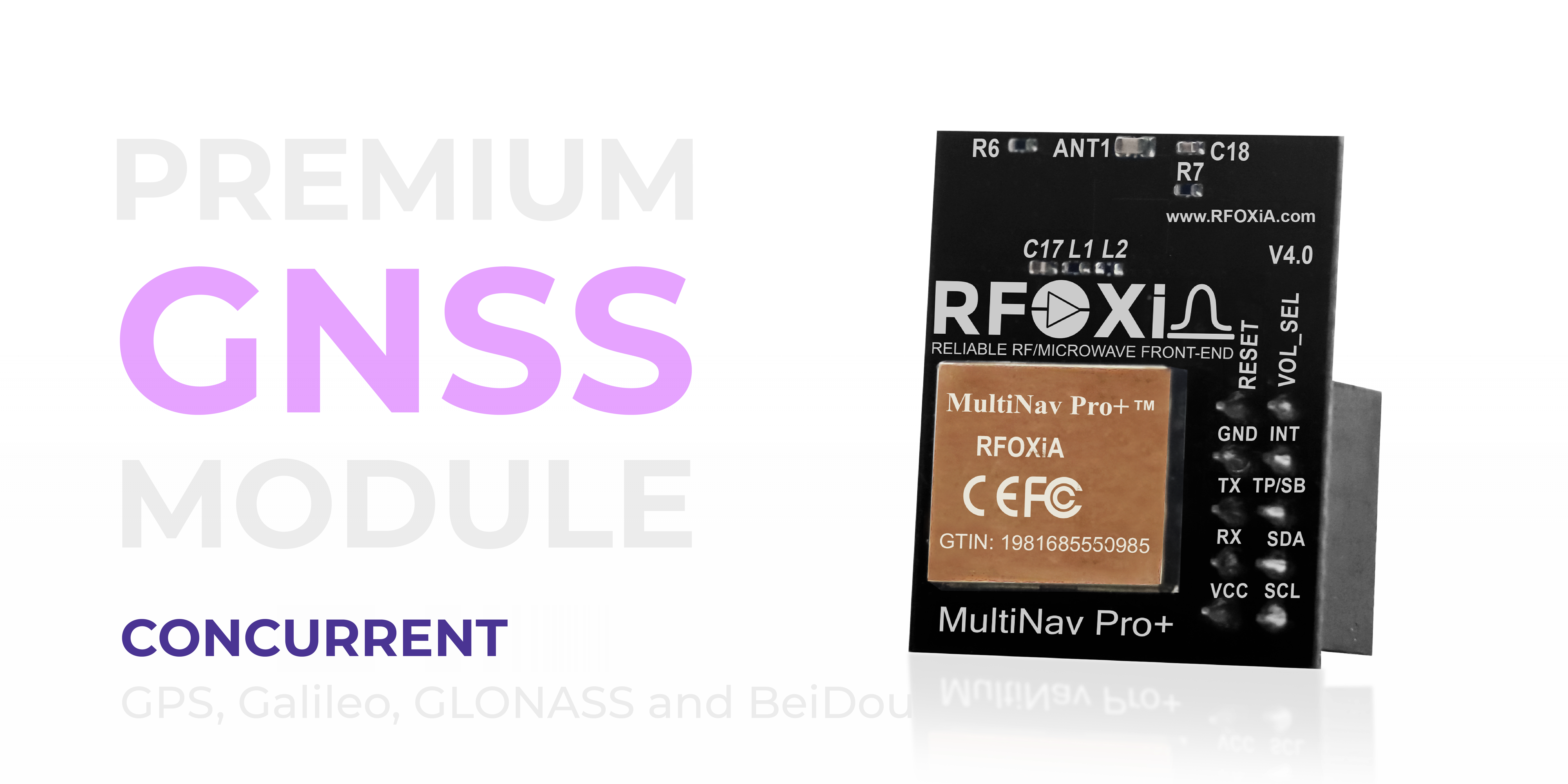
RFOXiA's background in RF engineering — the same expertise that produced long-range BLE modules achieving 5km ground-to-ground range — is directly applied here. The RF filter design on the MultiNav Pro+ is the result of professional RF engineering, not a reference design copy-paste.
The u-blox M10 Platform Advantage
At the silicon level, the MultiNav Pro+ is powered by the u-blox MIA-M10Q, one of the most advanced ultra-low-power GNSS chips available to the professional hardware market. The M10 platform was specifically designed by u-blox with enhanced interference mitigation in mind.
Key interference rejection capabilities built into the M10 platform include:
- Advanced signal processing algorithms that can separate weak GNSS signals from broadband noise floors
- Continuous wave (CW) interference detection and mitigation — the chip can identify narrowband interference sources and apply notch filtering in real time
- Spoofing detection — important for applications where signal integrity is critical
- Multipath mitigation through advanced correlator design that discriminates between direct-path and reflected signals
This silicon-level interference rejection, combined with the MultiNav Pro+'s external RF filter architecture, creates a layered defense system that addresses interference at multiple stages of the signal chain.
Concurrent Multi-Constellation Reception
Another underappreciated aspect of GPS module interference rejection is constellation diversity. When you receive from GPS alone, you are depending on a single satellite network. If interference degrades even a few satellites' signals, your position solution degrades rapidly.
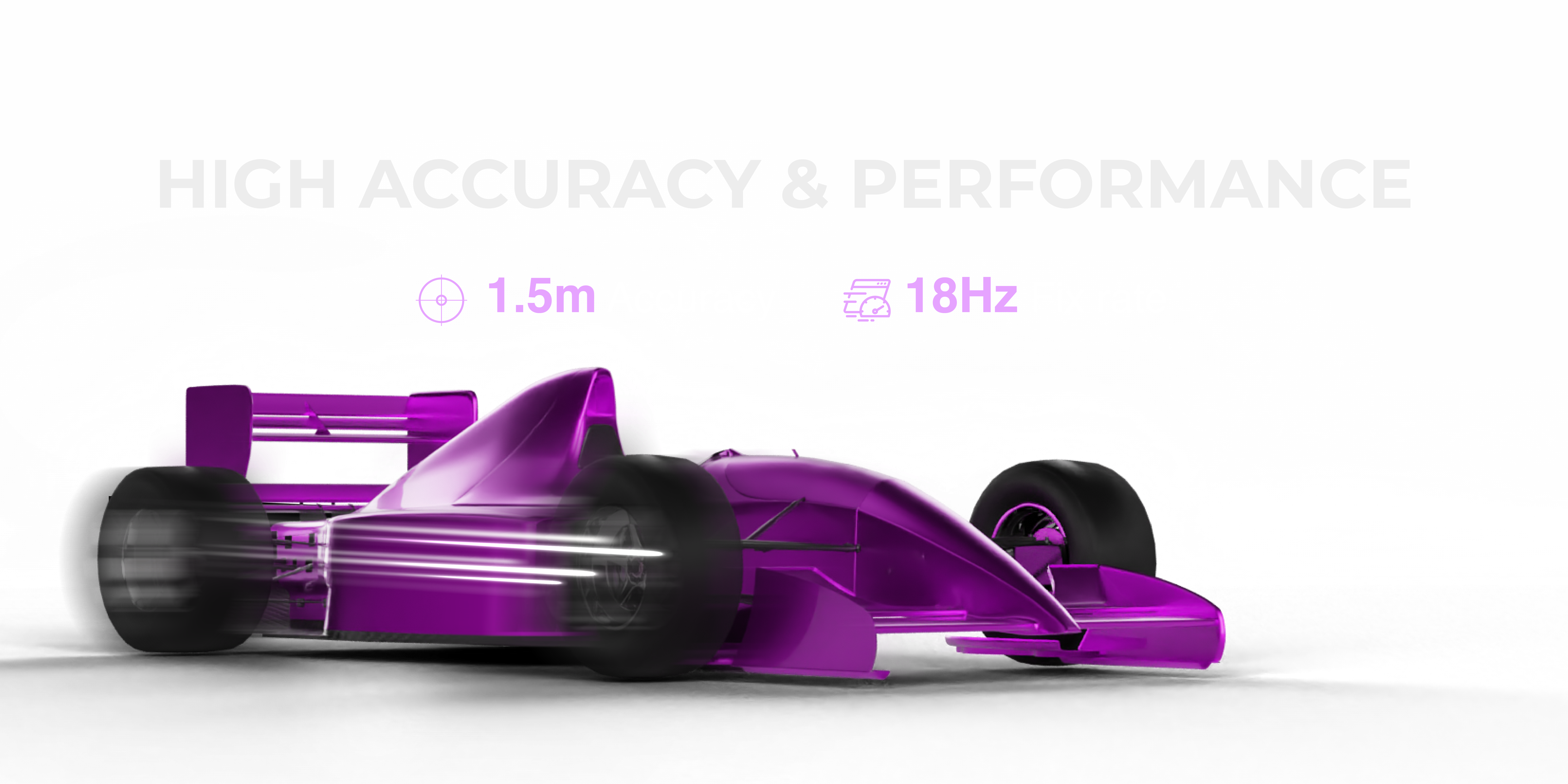
The MultiNav Pro+ receives GPS, Galileo, GLONASS, and BeiDou simultaneously. With 30+ satellites potentially in view across four constellations, the receiver has far more redundancy. Even if interference degrades signals from several satellites, the receiver can maintain a robust position solution using unaffected satellites from other constellations. This constellation diversity is one of the most practical real-world interference rejection techniques available — and it is fully implemented in the MultiNav Pro+.
MultiNav Pro+ Performance Specifications
All of the interference rejection architecture described above serves one purpose: delivering real-world performance numbers you can actually rely on.
1.5-Meter Accuracy
The MultiNav Pro+ achieves less than 1.5 meters CEP (Circular Error Probable) position accuracy in open sky conditions. This is the accuracy figure that matters for applications like drone landing precision, waypoint navigation, asset tracking, and precision agriculture. Commodity GPS modules typically achieve 3-5 meters CEP under ideal conditions — and significantly worse under real-world interference conditions.
18Hz Fix Rate
At 18 position fixes per second, the MultiNav Pro+ provides position updates fast enough for dynamic applications. Drones traveling at high speed, racing vehicles, and fast-moving robotic platforms all require position update rates well above the 1Hz or 5Hz rates common in budget modules. At 18Hz, you have position data fresh enough to feed directly into control loops without introducing latency-driven instability.
1-Second First Fix (Hot Start)
Time to first fix matters enormously in operational contexts. The MultiNav Pro+ achieves a first fix in approximately 1 second on hot start. For a drone waiting on the launchpad or a field device powering up in the morning, this translates directly to operational efficiency.
Power Efficiency
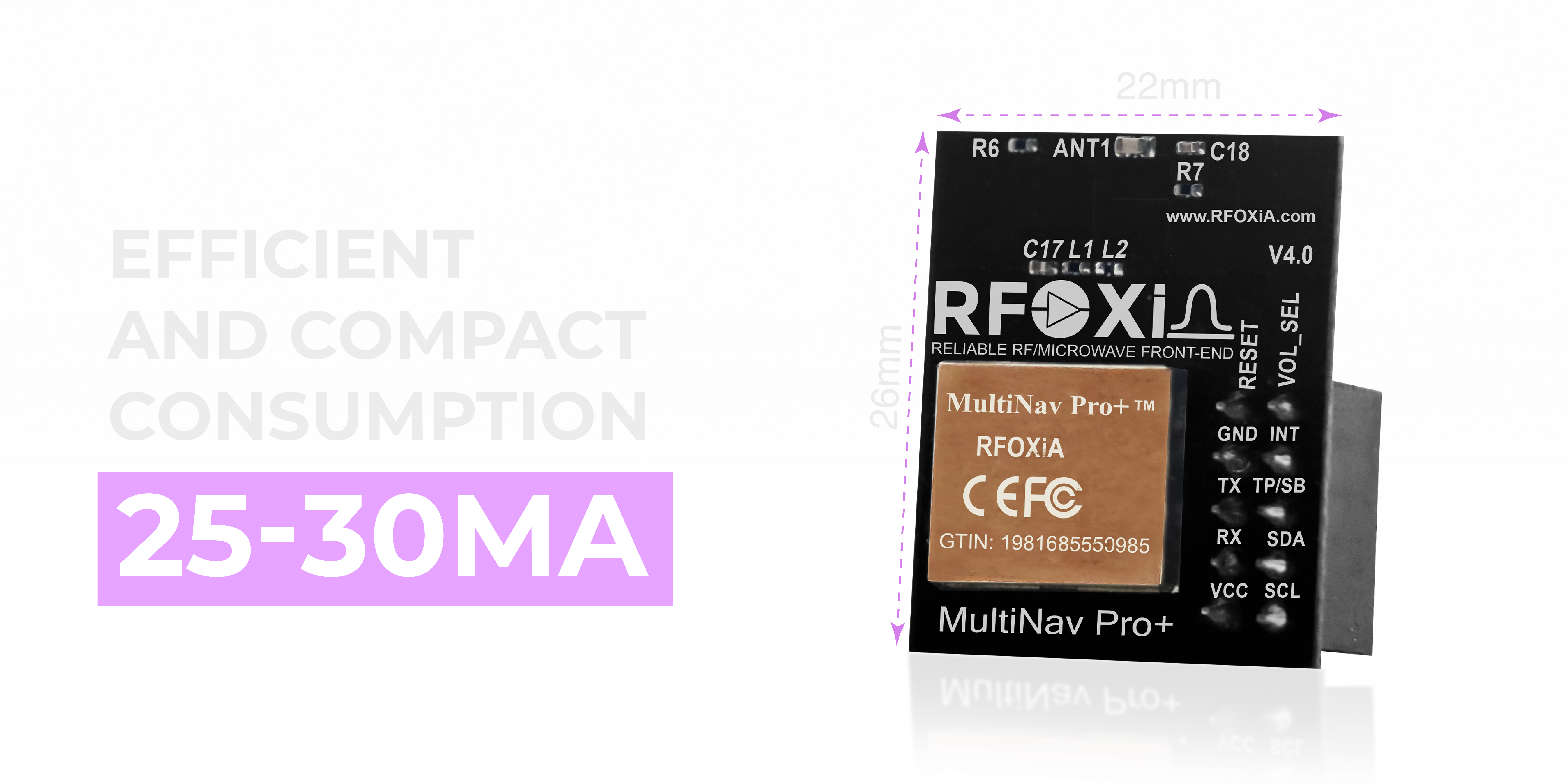
Despite receiving four satellite constellations simultaneously and processing at 18Hz, the MultiNav Pro+ operates at just 25-30mA current draw. For battery-powered applications — drones, wearables, remote sensors — this power efficiency is critical. Compare this to older multi-constellation receivers that could draw 100mA or more.
Ultra-Compact Form Factor
At just 26mm x 22mm, the MultiNav Pro+ fits into virtually any hardware design. The integrated chip antenna eliminates the need for external antenna routing in most applications, further simplifying PCB layout and reducing the interference coupling risk that comes with long antenna traces.
Interface and Integration
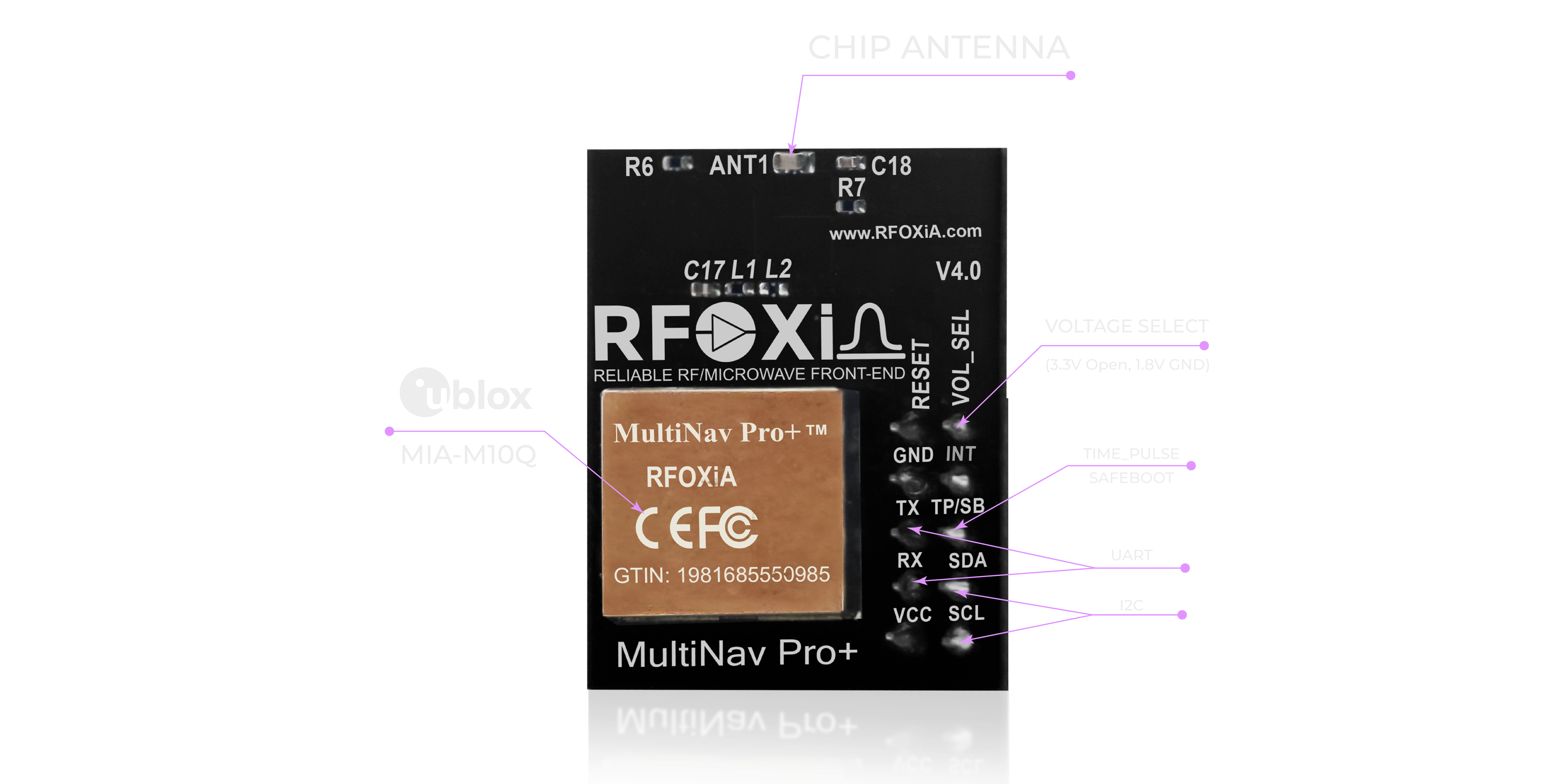
The MultiNav Pro+ supports both UART (TX/RX) and I2C (SCL/SDA) interfaces, making it compatible with the full range of microcontrollers and development platforms used in modern hardware projects — from STM32 and ESP32 to Raspberry Pi and Arduino.
Voltage compatibility covers both 1.8V and 3.3V logic levels, eliminating the need for level shifters in most designs and reducing the number of components (and potential interference sources) in your system.
This dual-interface, dual-voltage design philosophy reflects a core RFOXiA principle: hardware should integrate into your project, not force your project to adapt to the hardware.
Open Source Driver and Developer Ecosystem

Precision hardware is only as useful as the software that drives it. The MultiNav Pro+ ships with a fully open-source C language driver library that implements the complete NMEA standard protocol command set. This library is structured for drop-in import into Arduino IDE, PlatformIO, STM32CubeIDE, or any other toolchain you prefer.
For developers who want to go further, the RFOXiA Accurate GNSS Module integrates with the full RFOXiA Club platform, where the AI Firmware Builder can generate complete production-ready firmware for your specific application. Describe your use case in plain language — drone telemetry logger, precision agriculture node, asset tracker — and the AI generates working firmware with full source code. This capability alone can reduce development time from weeks to hours.
The open-source approach also means you can customize, extend, and contribute back to the driver library. This is not a locked-down black box — it is a foundation you build on.
U-Center Software for Evaluation and Configuration
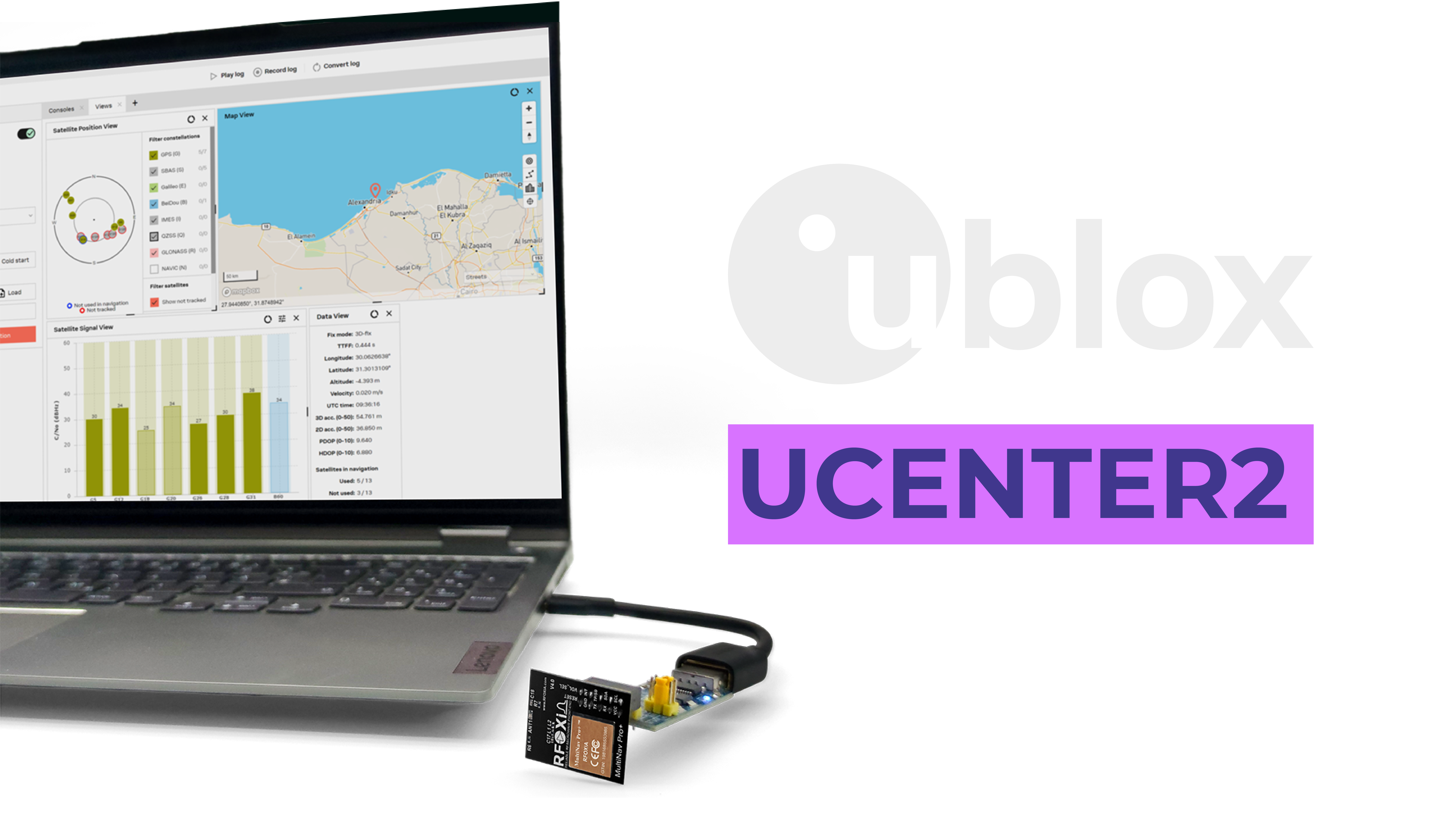
For evaluation, configuration, and debugging, the MultiNav Pro+ is fully compatible with u-blox u-center software — the industry-standard graphical interface for u-blox GNSS modules. u-center provides:
- Real-time satellite visualization with signal strength bars for every satellite in view
- Live map with position tracking
- Full configuration interface for receiver parameters, including interference mitigation settings
- Data logging and playback
- NMEA and UBX protocol message monitoring
For evaluating GPS module interference rejection in your specific deployment environment, u-center's satellite signal strength view is invaluable. You can immediately see which satellites are being degraded, correlate interference events with your system's operating states, and validate that the MultiNav Pro+'s filtering is performing as expected.
Use Cases: Where Interference Rejection Matters Most

The importance of robust GPS module interference rejection varies by application — but in demanding real-world deployments, it is almost always the determining factor between a reliable system and an unreliable one.
Drone and FPV Applications
Drones are arguably the worst interference environment a GNSS module can face. You have multiple high-current brushless motors, high-frequency switching ESCs, video transmitters, RC receivers, and LiPo battery leads — all generating RF noise in close proximity to your GPS module. Without serious interference rejection, GPS hold and return-to-home functions become unreliable. The MultiNav Pro+'s combination of microstrip filtering, M10 CW interference mitigation, and multi-constellation reception makes it the right choice for any serious drone build.
IoT Environmental Monitoring
For IoT nodes deployed in industrial or urban environments, GPS location validation is essential for data integrity. RFOXiA's own data network uses GPS verification to confirm that Sensors Module nodes are genuinely deployed outdoors at their reported locations. A GNSS module that loses fix or drifts inaccurately under urban RF interference would undermine this verification — making interference rejection a direct data quality requirement.
Precision Agriculture
Field equipment and agricultural drones operate far from infrastructure but face interference from their own onboard electronics. 1.5-meter accuracy with stable 18Hz updates is the difference between precise row tracking and accumulated path error.
Research and Surveying
Field researchers deploying mobile measurement platforms need position data they can trust. The MultiNav Pro+'s documented interference rejection architecture gives researchers the confidence to cite their positioning methodology.
Wearables and Asset Tracking
The 25-30mA power draw and compact 26mm x 22mm form factor make the MultiNav Pro+ viable for wearable and miniaturized tracker applications where other high-performance modules are simply too large or too power-hungry.
The RFOXiA Ecosystem Advantage
The MultiNav Pro+ GNSS module is designed to work as a standalone precision positioning solution — but it achieves its full potential as part of the complete RFOXiA hardware ecosystem.
Paired with the RFOXiA BLE Module (5km ground range, 15-20km man-to-drone range), your GPS position data can be transmitted wirelessly over distances that no commodity BLE module can approach. The RFOXiA Connect app displays live GPS tracking on a map, updated in real time, controlled from your smartphone — completely without internet infrastructure.
The Developer Bundle combines the GNSS Module, BLE Module, Sensors Module, and Power/Program Kit into one integrated ecosystem at $199 — everything you need to build a complete long-range, GPS-validated, sensor-equipped wireless platform.
All modules are FCC certified — a credential that matters when you move from prototype to deployment, and a prerequisite for distributor placement that most maker-market modules cannot claim.
To explore the full specification sheet and get your MultiNav Pro+, visit the RFOXiA Accurate GNSS Module product page.
Conclusion: GPS Module Interference Rejection Is Not Optional
In an ideal RF environment, almost any GPS module looks adequate on a spec sheet. The real world is not an ideal RF environment. Motors, power electronics, urban RF congestion, and physical multipath all conspire to degrade the position quality your application depends on.
The RFOXiA MultiNav Pro+™ addresses GPS module interference rejection at every level of the signal chain — from the precision microstrip RF filter at the antenna input, through the u-blox M10's advanced signal processing algorithms, to the multi-constellation satellite diversity that provides redundancy against localized interference events. The result is sub-1.5-meter accuracy and stable 18Hz position updates in real-world conditions, not just on a datasheet.
For drone builders, IoT developers, field researchers, precision agriculture operators, and anyone else who needs GPS position data they can actually trust, the MultiNav Pro+ delivers professional-grade interference rejection at a price point accessible to every serious hardware developer.
Ready to build on a GNSS foundation you can trust? Explore the MultiNav Pro+ and join the RFOXiA Club for $10 in welcome credit toward your first order.
Written by: Moamen Mohamed LinkedIn