
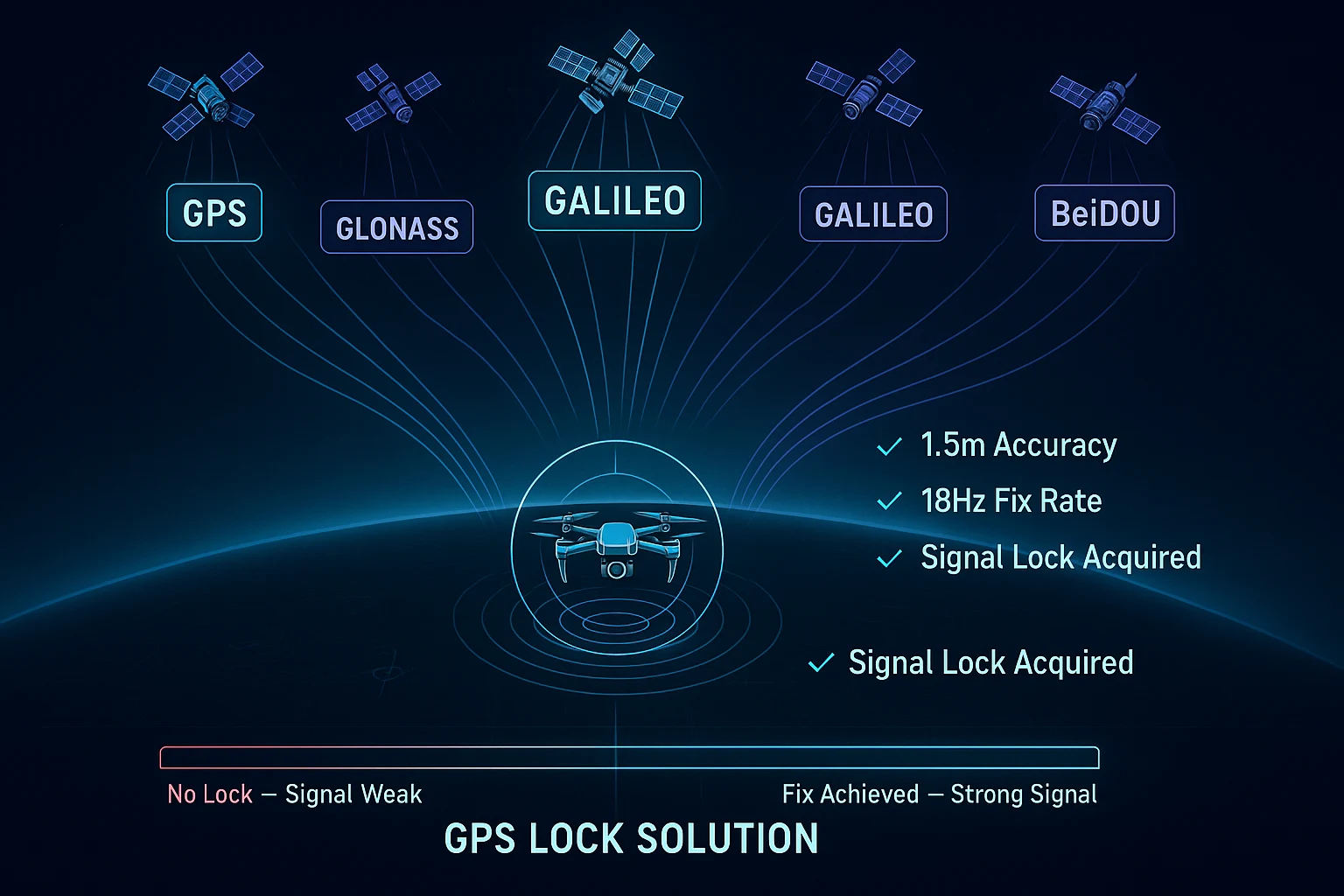
GPS Not Locking Drone Solution: Stop Losing Position Mid-Flight
GPS Not Locking Drone Solution — Why It Happens and How to Fix It for Good
You're on the field. Your drone is armed, props are spinning, and you're ready to fly. But your ground station keeps flashing the same warning: no GPS lock. Minutes pass. You reboot. You reposition. Still nothing. Sound familiar?
A GPS not locking on a drone is one of the most frustrating — and potentially dangerous — issues a pilot can face. Whether you're flying FPV freestyle, running an autonomous mapping mission, or testing a custom-built UAV platform, a failed GPS lock doesn't just delay your flight. It can cost you your aircraft, your payload, and your data.
This guide goes deep on why GPS lock failures happen on drones, what you can actually do about them in the field, and why the root problem for most builders is a fundamentally underpowered GNSS module that was never designed for the demands of aerial platforms.
Let's fix this properly.
Why GPS Not Locking on a Drone Is More Than an Inconvenience
A GPS lock failure on a drone isn't just annoying — it disables critical flight systems. Position hold, return-to-home, waypoint navigation, geofencing, and altitude-assisted hover all depend on a reliable, fast, and accurate GNSS fix. Without it, your autopilot is essentially blind.
For professional operators and serious builders, this isn't acceptable. And the problem compounds quickly:
- No lock = no position hold. Your drone drifts in wind.
- Slow lock = mission delays. You're waiting on a field, burning battery.
- Inaccurate lock = drift errors. Your drone thinks it's 8 meters from where it actually is.
- Lock loss mid-flight = failsafe cascade. Unpredictable behavior, potential crash.
If you're dealing with the GPS not locking drone problem consistently, the issue is almost never the satellites. It's your hardware.
The 7 Most Common Causes of GPS Lock Failure on Drones
1. Electromagnetic Interference (EMI) From the Flight Stack
This is the number one cause of GPS lock failures on custom-built drones. Your ESCs, motors, power distribution board, and flight controller all generate electromagnetic noise. If your GNSS module is mounted too close to these components — or if the module itself lacks proper RF filtering — the noise drowns out the satellite signal.
Solution: Mount your GNSS module on a mast above the frame. Use shielded cables. And critically, choose a module with advanced RF filtering technology built in.
2. Weak or Absent RF Filtering on the GNSS Module Itself
Cheap GNSS modules — particularly those based on older chipsets or designed for low-cost consumer applications — often skip or minimize RF filtering to cut costs. The result is a module that works fine on a bench but fails completely in the noisy RF environment of a flying drone.
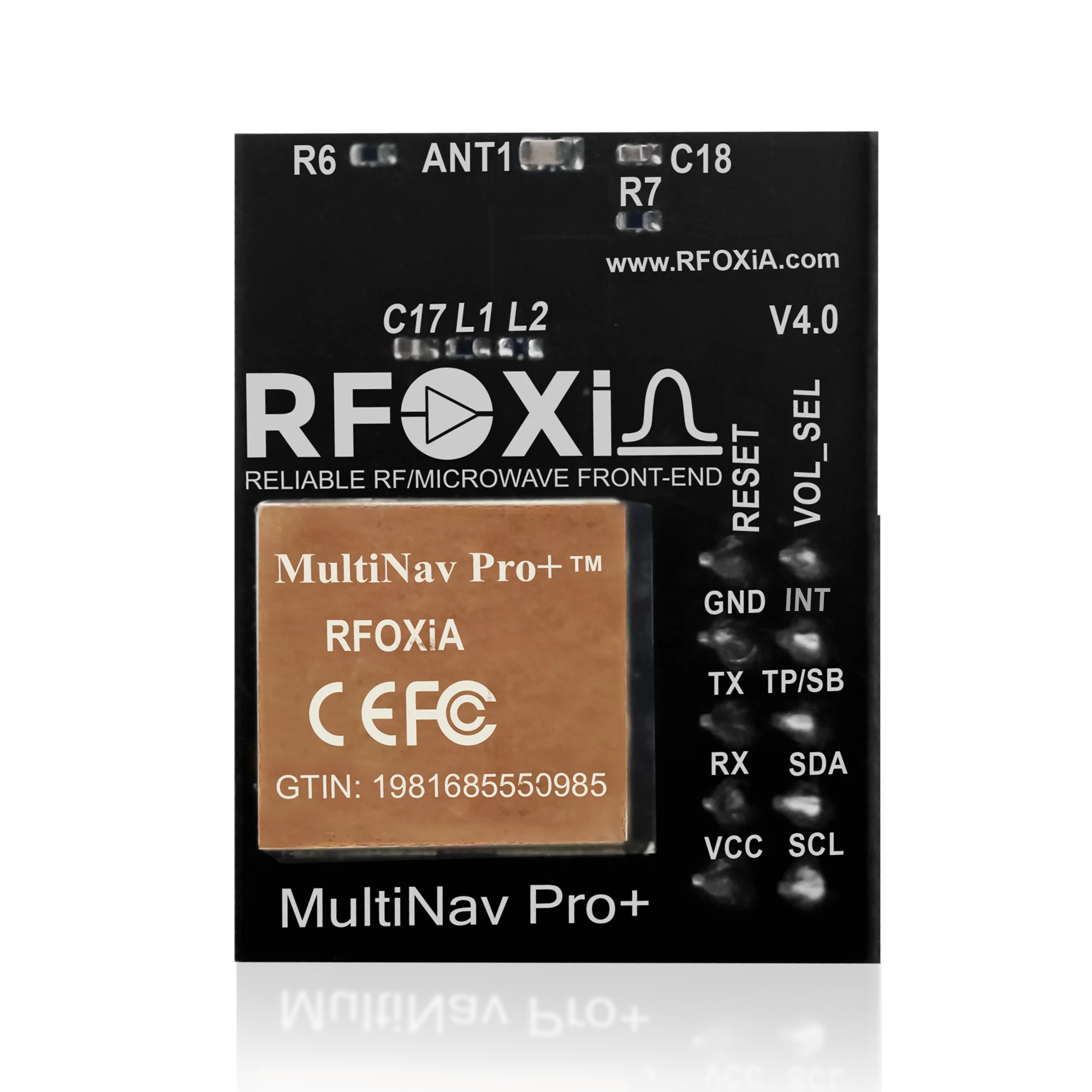
The MultiNav Pro+ from RFOXiA addresses this directly with proprietary RF/microwave microstrip filter technology that actively minimizes interference and maintains crystal-clear satellite signals even in electrically hostile environments.
3. Insufficient Satellite Constellation Support
GPS alone — meaning only the American NAVSTAR constellation — gives you access to roughly 6-12 satellites depending on your location and sky view. That's enough for basic position fixes, but it degrades badly in urban canyons, near tall structures, or at high latitudes.
Modules that support only GPS are fighting with one hand tied behind their back.
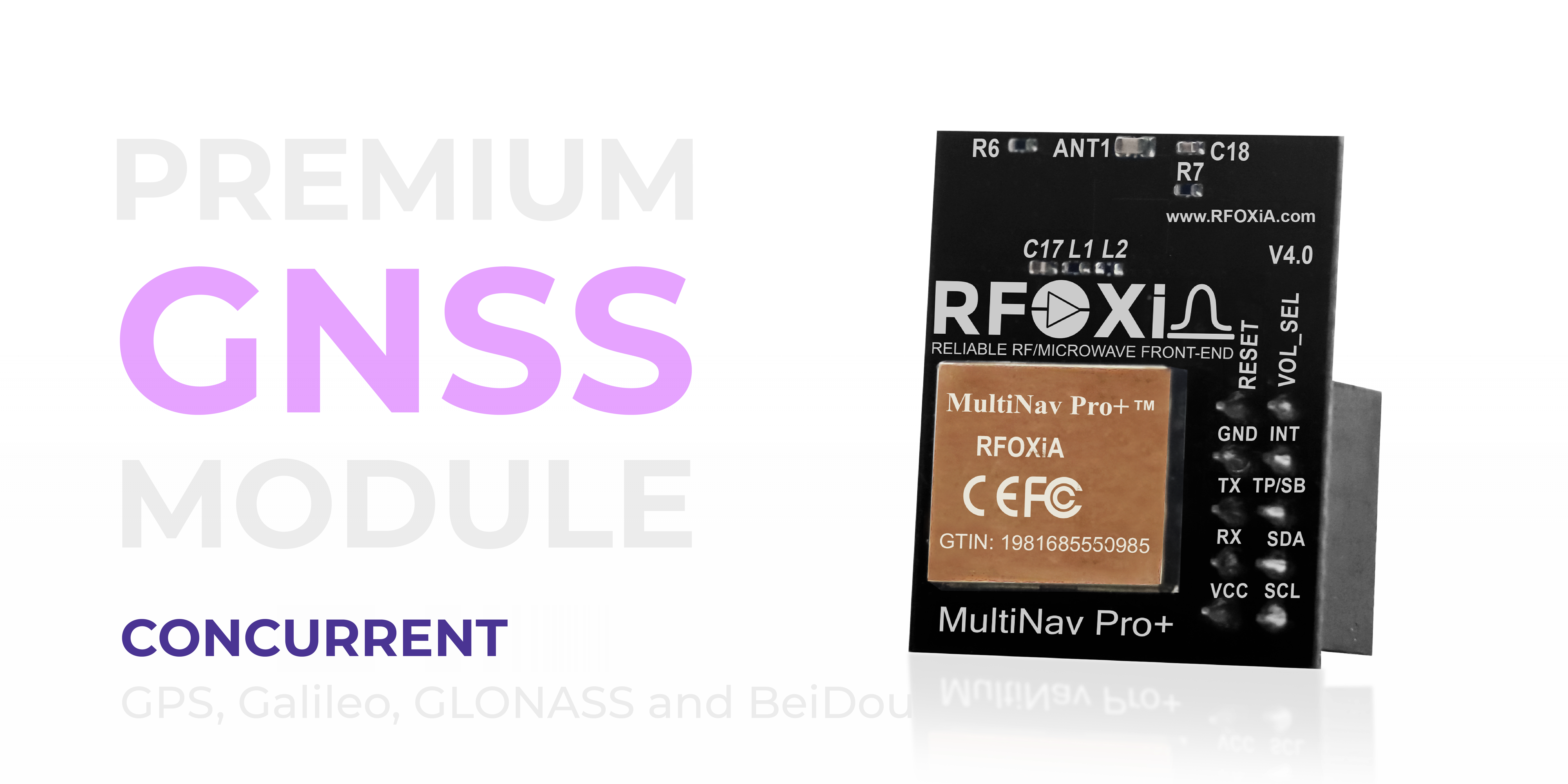
The MultiNav Pro+ supports concurrent GPS, Galileo, GLONASS, and BeiDou simultaneously. That means you're pulling position data from up to 40+ satellites at once. Your time-to-first-fix drops dramatically. Your lock is more robust. And you maintain fix quality in environments where single-constellation modules simply give up.
4. Slow Fix Rate — The Hidden Performance Killer
Most entry-level GNSS modules advertise a fix rate of 1Hz or 5Hz. That means your position updates once every second, or five times per second. For a drone moving at 15-25 m/s, a 1Hz update rate means your autopilot is working with position data that's already 15-25 meters stale by the time the next fix arrives.
This isn't just a GPS lock problem — it's a fundamental tracking accuracy problem that makes autonomous flight unreliable and makes position hold mushy and imprecise.
5. First Fix Time Too Long for Field Operations
Some modules take 30-90 seconds to achieve a first fix after power-on. In professional field operations, that delay compounds. Multiply it across multiple flights per day, add the time lost waiting for lock at the start of each mission, and you're losing significant operational time.
6. Inadequate Antenna Gain and Placement
The antenna is your module's connection to the sky. Integrated chip antennas on low-cost modules are often tuned for handheld consumer devices — not for the sky-facing, unobstructed view that a drone provides. The result is poor signal acquisition even when sky conditions are ideal.
7. Voltage Noise on the Module Power Rail
GNSS receivers are sensitive. Voltage ripple from your BEC or power supply — especially at frequencies that overlap with the GNSS signal chain — can desensitize the receiver and cause lock failures that look random but are actually correlated with motor load changes.
Using a dedicated, filtered power supply for your GNSS module (or a power management solution like the RFOXiA Power/Program Kit) eliminates this class of problem entirely.
The Real GPS Not Locking Drone Solution: Upgrade Your GNSS Hardware
Field fixes like repositioning your module or rebooting your flight controller treat symptoms. The real GPS not locking drone solution is a fundamental hardware upgrade to a module that was actually designed for the demands of aerial platforms.
The RFOXiA MultiNav Pro+ GNSS Module was engineered specifically for this use case:
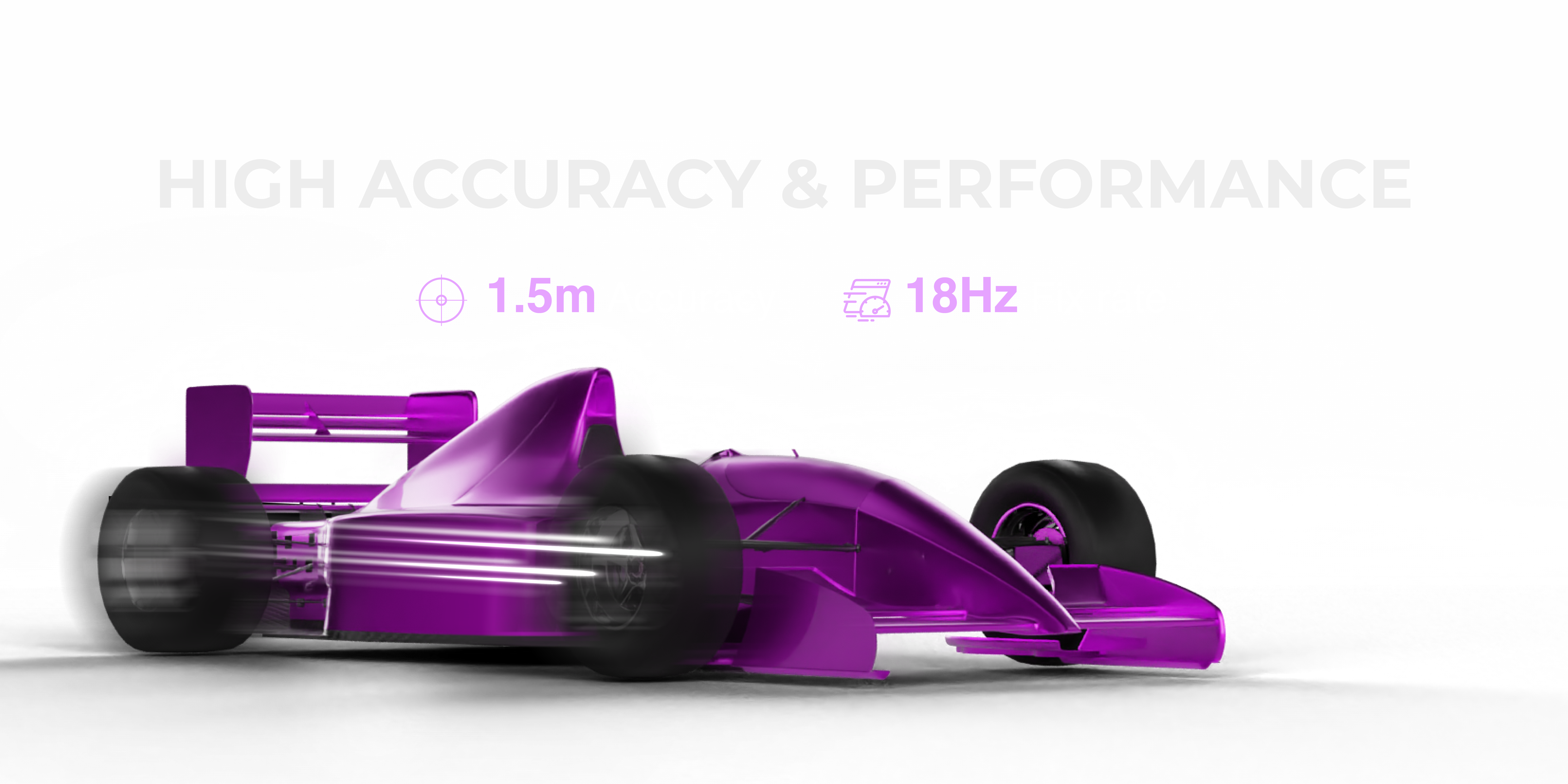
- 1.5-meter accuracy — professional-grade precision for drone positioning, waypoint navigation, and return-to-home reliability
- 18Hz fix rate — position updates 18 times per second, giving your autopilot fresh, accurate data at speeds that actually match drone dynamics
- First fix in 1 second — you arm and fly, you don't wait
- Concurrent GPS + Galileo + GLONASS + BeiDou — maximum satellite visibility from every constellation simultaneously
- u-blox MIA-M10Q chipset — the latest generation GNSS processor from the most trusted name in precision navigation
- Proprietary RF/microwave microstrip filtering — built-in interference rejection that performs in real-world drone EMI environments
This is the difference between a module that was designed for a smartphone navigation app and a module that was designed to track a fast-moving aerial platform at 18 position updates per second.
Size and Power: It Has to Fit the Build
Drone builders don't have unlimited space or power budget. Every gram matters. Every milliamp matters.
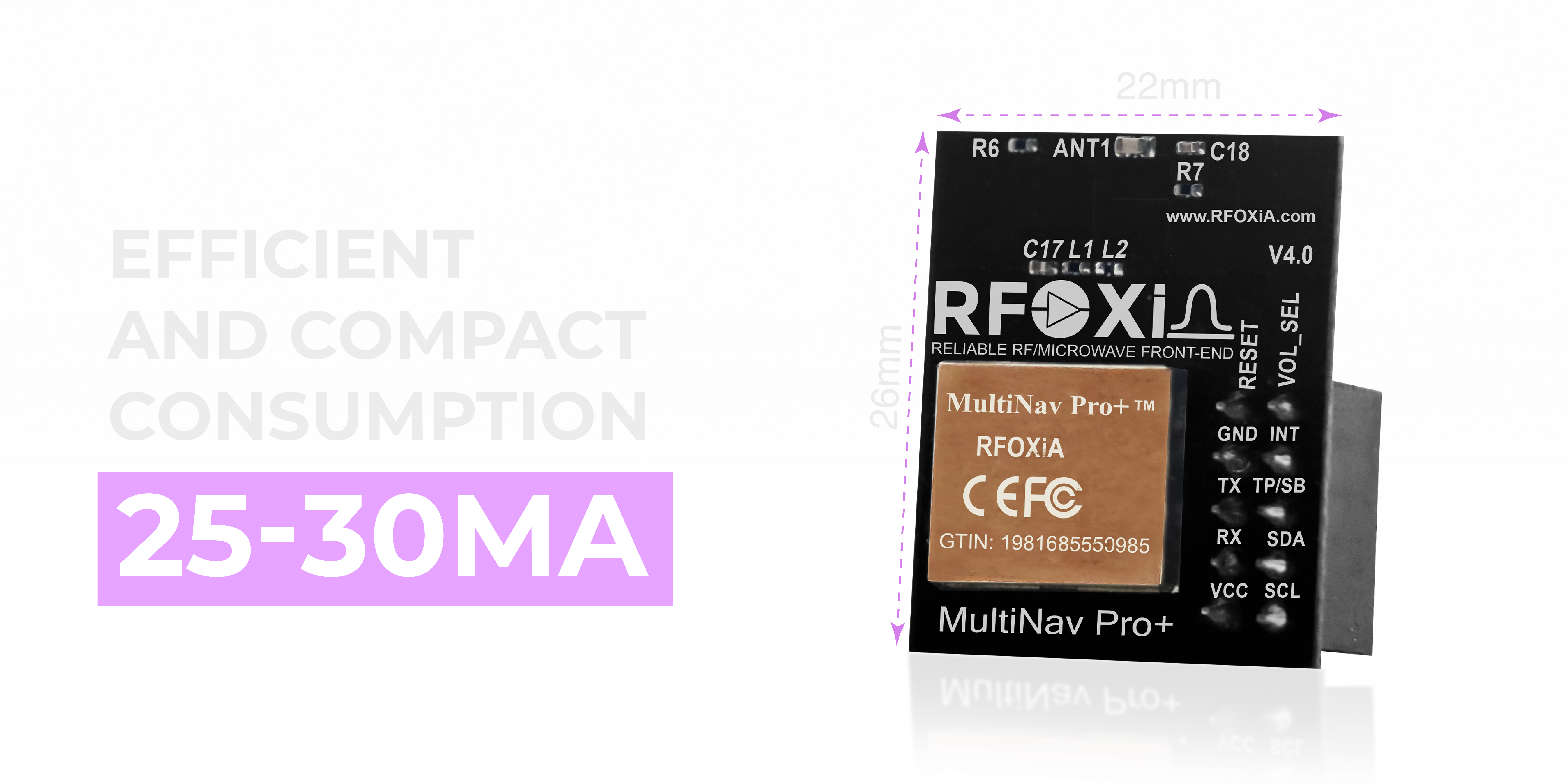
The MultiNav Pro+ solves this with:
- 26mm x 22mm form factor — small enough to fit any build from a 3-inch micro to a large fixed-wing
- 25-30mA operating current — negligible power draw that won't strain your BEC or reduce flight time
- Integrated high-gain chip antenna — no external antenna required, no connector to fail, no cable to route
This is a module that disappears into your build while delivering performance that dominates every spec that actually matters for flight.
Interface Options: Works With Your Existing Stack
One of the biggest friction points when upgrading GNSS hardware is interface compatibility. The MultiNav Pro+ removes that friction completely.
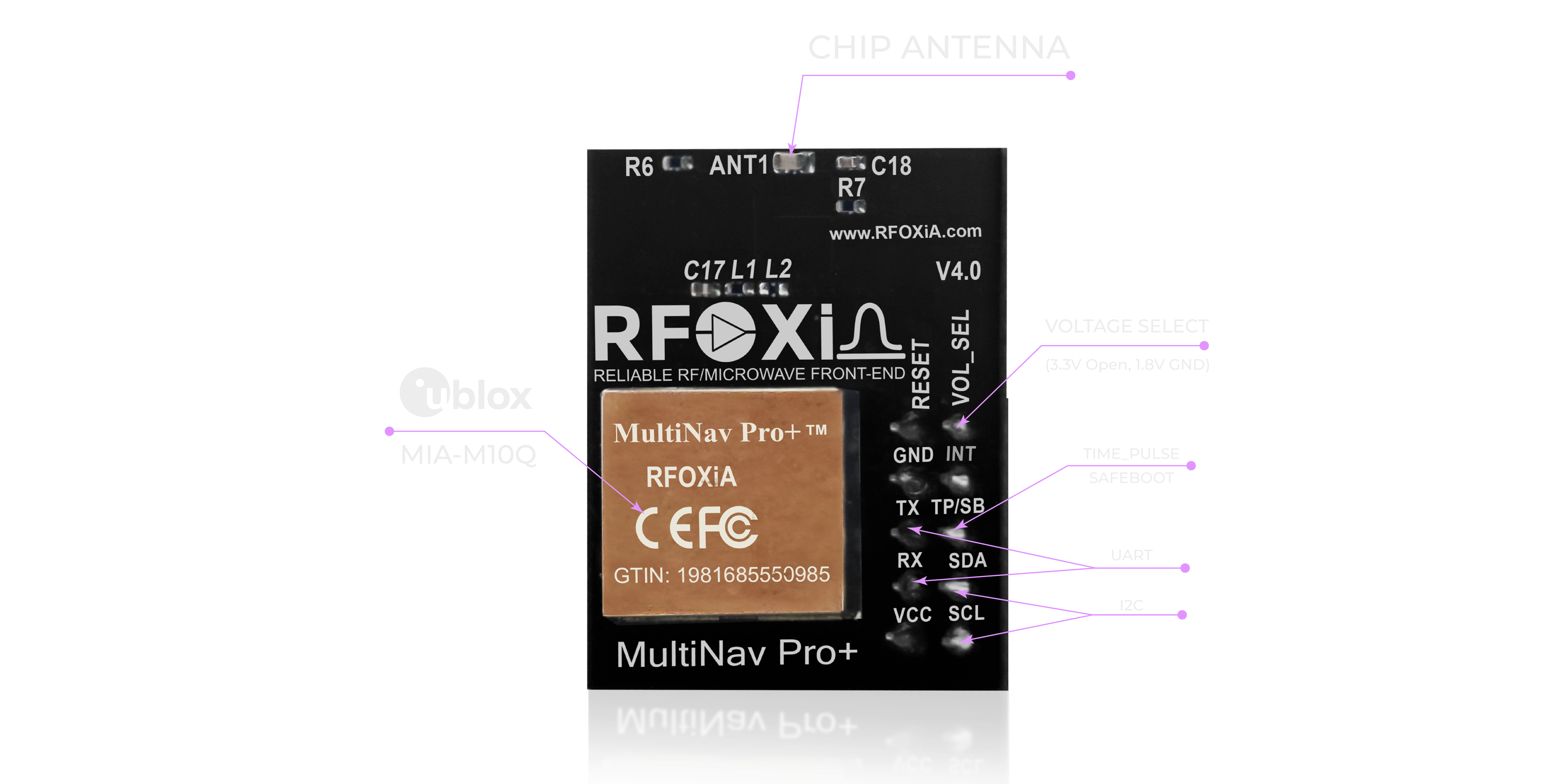
Dual interface support:
- UART (TX/RX) — compatible with virtually every flight controller on the market including Betaflight, ArduPilot, PX4, and iNav targets
- I2C (SCL/SDA) — direct integration with microcontrollers, Raspberry Pi, and custom autopilot builds
Dual voltage support:
- 1.8V and 3.3V — compatible with both 3.3V logic flight controllers and modern low-voltage microcontrollers without level shifting
If you're running ArduPilot on a Pixhawk variant, plug it into your GPS UART port and configure as u-blox. It works. If you're building a custom autopilot on an STM32 or RP2040, use I2C and start reading position data in minutes.
Open-Source Driver: No Proprietary Lock-In

The MultiNav Pro+ ships with a fully open-source C language driver library that includes complete NMEA protocol command support. Import it directly into:
- Arduino IDE — the fastest path to working GNSS code for prototypers
- PlatformIO — for professional embedded development workflows
- Any C/C++ toolchain — direct integration into custom firmware projects
The library handles satellite acquisition, fix quality reporting, position parsing, altitude data, speed over ground, and course over ground — everything you need to build a complete navigation system on top of solid, tested code.
No registration required. No license fees. No proprietary SDK that disappears when the company pivots. Open source, always.
RFOXiA Accurate GNSS Module — get the MultiNav Pro+ with full open-source driver support and start building.
U-Center Software Integration: Professional Evaluation and Configuration
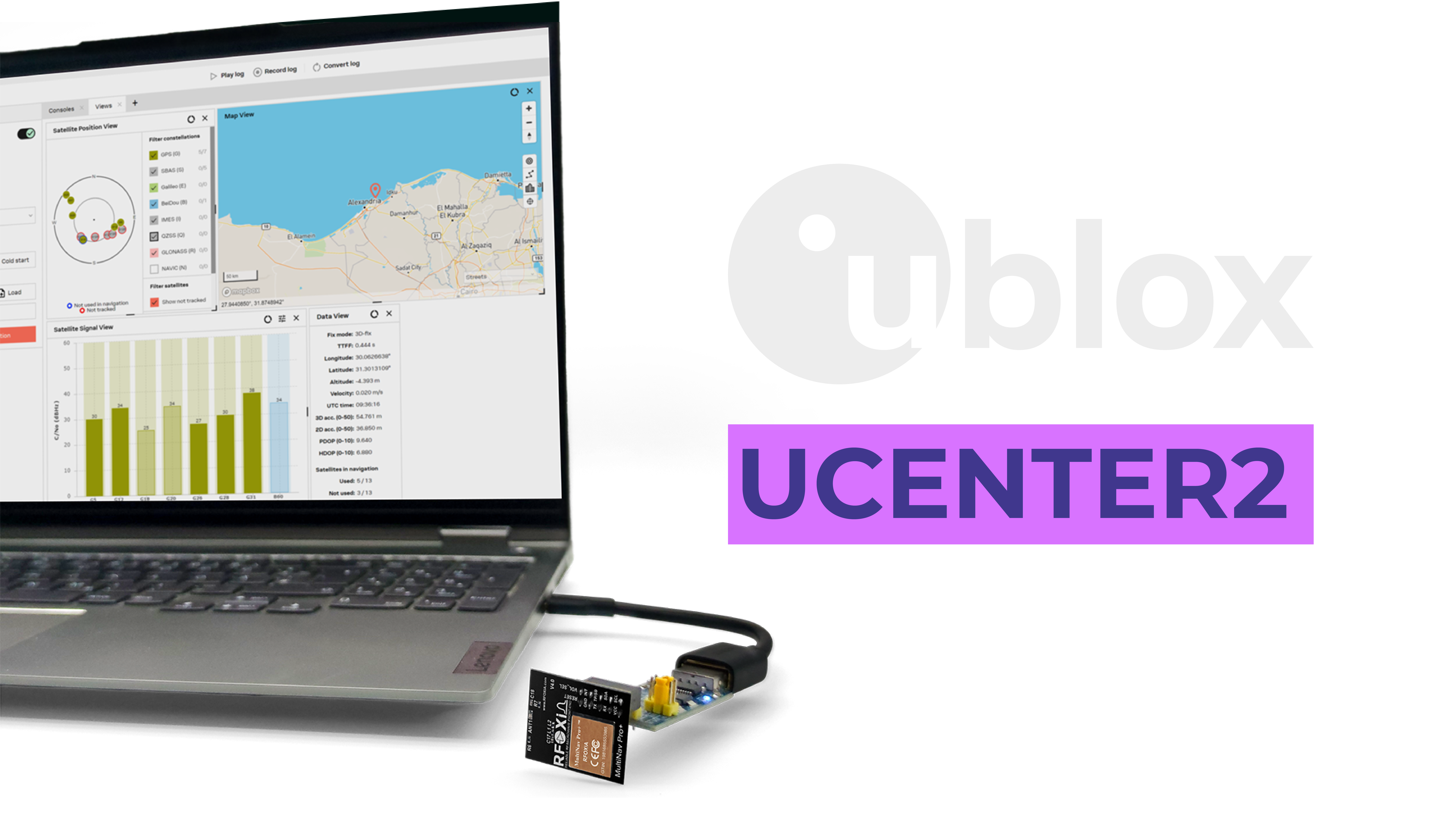
Because the MultiNav Pro+ is built on the u-blox MIA-M10Q, it's fully compatible with u-blox u-center software — the industry standard GUI for GNSS evaluation, configuration, and debugging.
With u-center you can:
- Visualize satellite acquisition — see exactly which satellites are being tracked and their signal strength
- Monitor fix quality in real time — HDOP, PDOP, fix type, and satellite count all visible simultaneously
- Configure update rates — dial in exactly the fix rate your application needs
- Log position data — record complete flight paths for post-mission analysis
- Diagnose interference issues — identify exactly which frequencies are causing problems in your installation
This is a professional evaluation tool that costs nothing extra — it comes with the ecosystem. For any serious builder troubleshooting a GPS not locking drone issue, u-center turns the diagnostic process from guesswork into engineering.
Use Cases: Where the MultiNav Pro+ Performs

The MultiNav Pro+ was designed to serve a wide range of demanding applications:
Drone and UAV Platforms Autonomous waypoint navigation, precision landing, return-to-home reliability, geo-fencing, aerial survey and mapping. The 18Hz fix rate is specifically relevant here — at 18 fixes per second, your autopilot has position data that's less than 56 milliseconds old at any given moment.
FPV and Racing Drones GPS rescue and return-to-home on FPV builds depend on fast, accurate position data. A slow or inaccurate GPS lock means your rescue mode might point your quad in the wrong direction. The MultiNav Pro+ gives FPV pilots the same quality of GPS data that professional platforms use.
Robotics and Ground Vehicles Outdoor autonomous ground vehicles need reliable GNSS that handles EMI from drive motors and motor controllers — exactly the environment the MultiNav Pro+'s RF filtering was designed for.
IoT Asset Tracking High-accuracy, low-power GNSS in a compact 26mm x 22mm package is ideal for asset trackers that need to be small, power-efficient, and accurate across different geographic regions — hence the multi-constellation support.
Research and Data Collection University research teams, environmental monitoring stations, and citizen science projects need GNSS data they can trust. The MultiNav Pro+'s 1.5-meter accuracy and 18Hz sampling rate make it suitable for scientific data collection that low-cost consumer modules can't support.
Wearables and Personal Navigation The low power draw (25-30mA) and compact size make it viable for wearable applications where battery life and form factor are both critical constraints.
The MultiNav Pro+ Inside the RFOXiA Ecosystem
The MultiNav Pro+ is available standalone at $49, but it becomes dramatically more powerful as part of the complete RFOXiA developer ecosystem.
Paired with the RFOXiA BLE Module (5km ground-to-ground, 15-20km man-to-drone range), your GNSS position data transmits over long-range Bluetooth — no internet required, no cellular infrastructure needed. Your drone's GPS position streams directly to the RFOXiA Connect app on your phone, displayed on a live map in real time, at 18 updates per second, at ranges up to 20km.
That's a live GPS tracking system with professional accuracy, operating completely off-grid, for a fraction of what professional telemetry systems cost.
The Developer Bundle — MultiNav Pro+ + BLE Module + Sensors Module + Power/Program Kit — is the complete platform for any serious wireless developer. It's the fastest way to go from idea to flying, sensing, and transmitting hardware.
Explore the RFOXiA Accurate GNSS Module and see how it fits into the complete developer ecosystem.
Quick Field Troubleshooting: GPS Not Locking on Your Drone Right Now
If you're in the field with an immediate GPS not locking drone problem and you need a fix today, here's the rapid diagnostic checklist:
Step 1 — Check satellite count. In your ground station software, how many satellites are visible vs. how many are being used? Less than 6 used satellites means poor sky view or interference.
Step 2 — Check HDOP. Horizontal dilution of precision above 2.0 indicates geometric satellite positioning is poor. Above 4.0 is problematic for navigation.
Step 3 — Reposition the module. If your GNSS module is close to ESCs or a power distribution board, move it. Even 5cm of additional separation on a mast can make a significant difference.
Step 4 — Reduce motor noise. Ferrite beads on motor wires and ESC signal wires reduce high-frequency EMI that can desensitize your GNSS receiver.
Step 5 — Check power supply quality. Use a separate low-noise BEC for your GNSS module. Shared power with noisy components introduces voltage ripple that degrades receiver sensitivity.
Step 6 — Update firmware. Flight controller GPS drivers sometimes have bugs fixed in newer firmware versions. If you're running an old ArduPilot or iNav version, update.
Long-term Step 7 — Upgrade your GNSS module. If you're consistently fighting GPS lock issues, the module is the problem. A module designed for drone use, with proper RF filtering, multi-constellation support, and a fast fix rate, resolves these issues at the hardware level rather than requiring endless workarounds.
Technical Specifications Summary
| Specification | MultiNav Pro+ |
|---|---|
| Accuracy | < 1.5 meters CEP |
| Fix Rate | Up to 18Hz |
| Time to First Fix | 1 second (hot start) |
| Constellations | GPS + Galileo + GLONASS + BeiDou (concurrent) |
| Chipset | u-blox MIA-M10Q |
| Antenna | Integrated high-gain chip antenna |
| Interfaces | UART (TX/RX) + I2C (SCL/SDA) |
| Operating Voltage | 1.8V or 3.3V |
| Current Draw | 25-30mA |
| Form Factor | 26mm x 22mm |
| RF Filtering | Proprietary microstrip filter |
| Certification | FCC certified |
| Price | $49 |
Final Verdict: The GPS Not Locking Drone Solution Is a Hardware Decision
Every troubleshooting guide on the internet will tell you to reposition your module, check your wiring, and update your firmware. That advice isn't wrong — but it's incomplete.
The GPS not locking drone solution for builders who are serious about their platforms is a GNSS module that was actually designed for the job. Not a consumer-grade module repurposed for drone use. Not a bare chipset breakout with no RF filtering. A purpose-built, professionally engineered module with the fix rate, accuracy, constellation support, and interference rejection that aerial platforms actually demand.
The RFOXiA MultiNav Pro+ is that module. At $49, it's accessible to every builder — from the FPV pilot building their first GPS rescue quad to the professional operator running autonomous survey missions.
FCC certified. Open-source driver. u-center compatible. 18Hz. 1.5 meters. First fix in one second.
Stop waiting for lock. Get the RFOXiA MultiNav Pro+ GNSS Module and fly.
Written by: Moamen Mohamed LinkedIn