
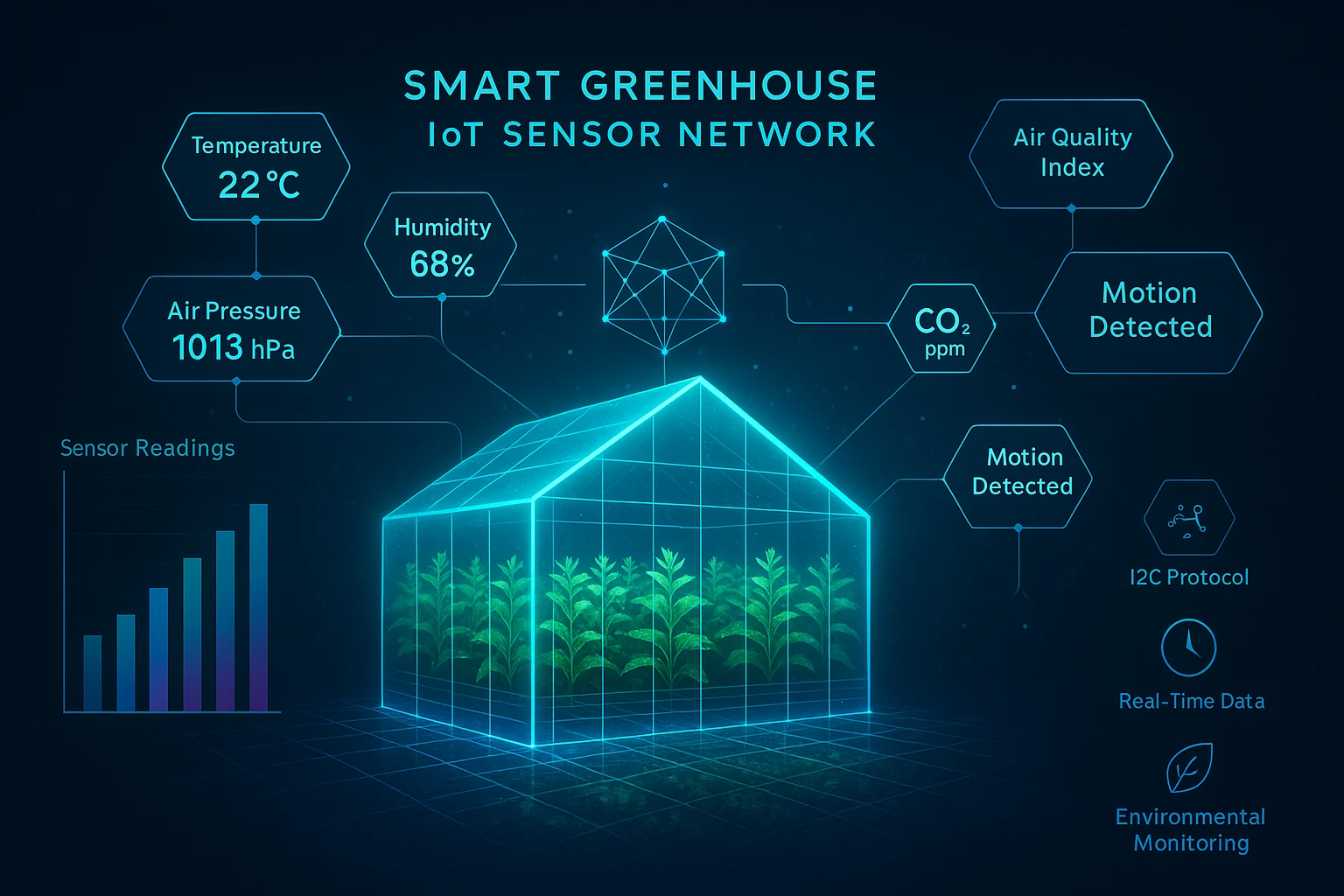
Greenhouse Sensor Module IoT: The Complete Guide to Smarter Growing with the MultiNav Pro+™
RFOXiA Integrated Sensors Module
Why the Right Greenhouse Sensor Module IoT Solution Changes Everything
Growing plants at scale — whether you operate a commercial greenhouse, a vertical farm, a research facility, or a precision agriculture deployment — is fundamentally a data problem. Plants don't tell you when they're stressed. They don't send alerts when humidity spikes at 3am, or when air quality degrades after a pesticide application, or when temperature differentials inside a polytunnel are creating uneven growing conditions across your beds. By the time visible symptoms appear, yield damage has already occurred.
The answer is environmental intelligence. Continuous, real-time, multi-parameter sensing that gives you the complete picture of what your growing environment is actually doing — not what you assume it's doing. That's what a professional greenhouse sensor module IoT deployment delivers.
But here's the problem most growers and developers run into: truly comprehensive environmental sensing has historically meant choosing between systems that are either too expensive for broad deployment, too fragmented to integrate cleanly, or too consumer-grade to trust in demanding applications.
The MultiNav Pro+™ Sensors Module from RFOXiA was built to solve exactly that problem.
What Is the MultiNav Pro+™ Sensors Module?
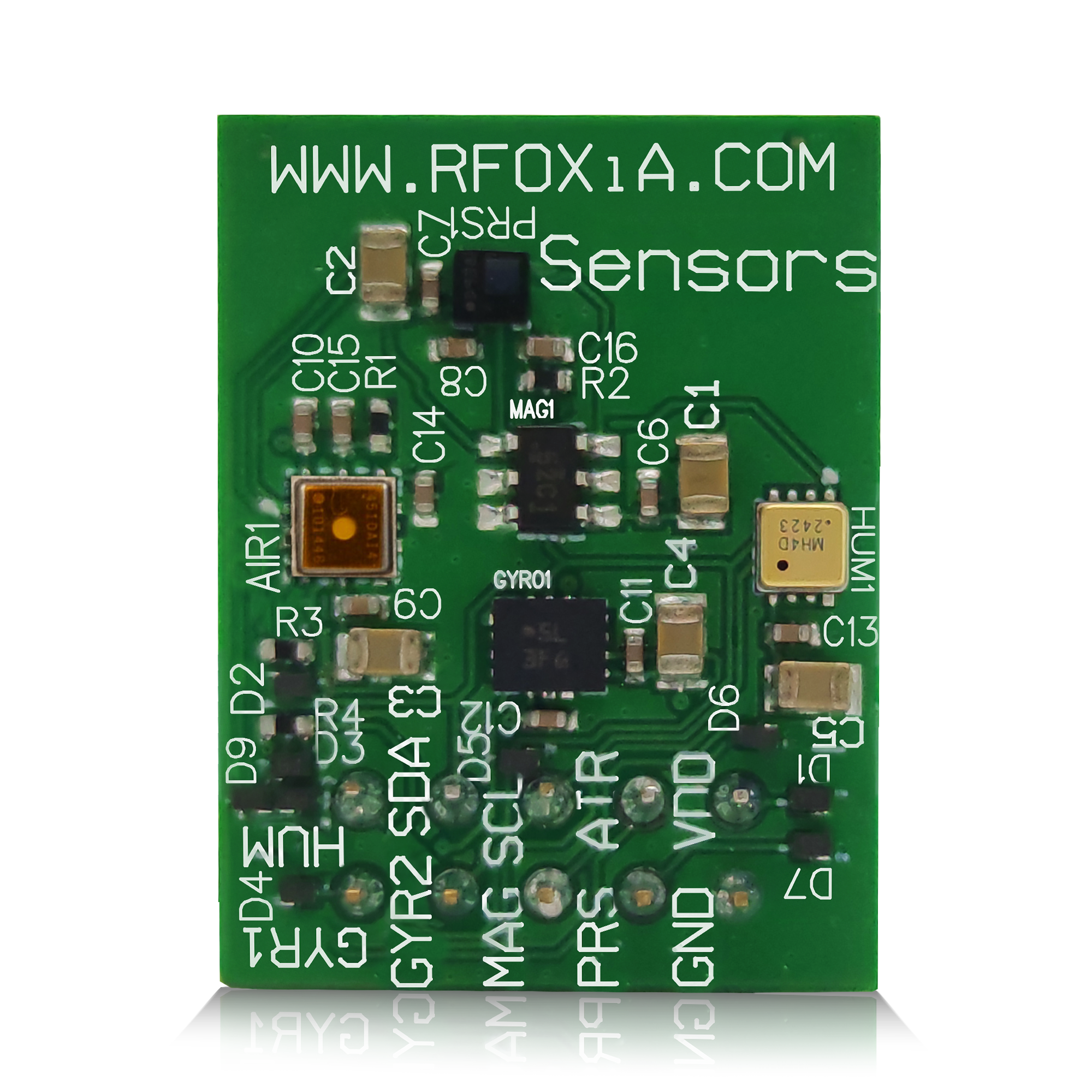
The MultiNav Pro+™ Sensors Module is a compact, FCC-certified multi-sensor board that integrates seven independent sensors into a single 24mm × 18mm module. It captures temperature, humidity, air pressure, air quality, acceleration, angular velocity (gyroscope), and magnetic field — simultaneously, in real time, over a single shared I2C bus.
This is not a consumer weather station. This is professional-grade environmental and motion sensing hardware designed to operate inside the broader RFOXiA wireless ecosystem, where sensor data can be transmitted wirelessly over kilometers using the MultiNav Pro+™ BLE Module, visualized live inside the RFOXiA Connect mobile app, and contributed to the RFOXiA data network in exchange for daily rewards.
At $39 per module with 150 units currently in stock, it is almost certainly the most capable greenhouse sensor module IoT solution available at this price point. Nothing in the commodity IoT sensor market comes close to this level of integration. Nothing at the professional end comes close to this price.
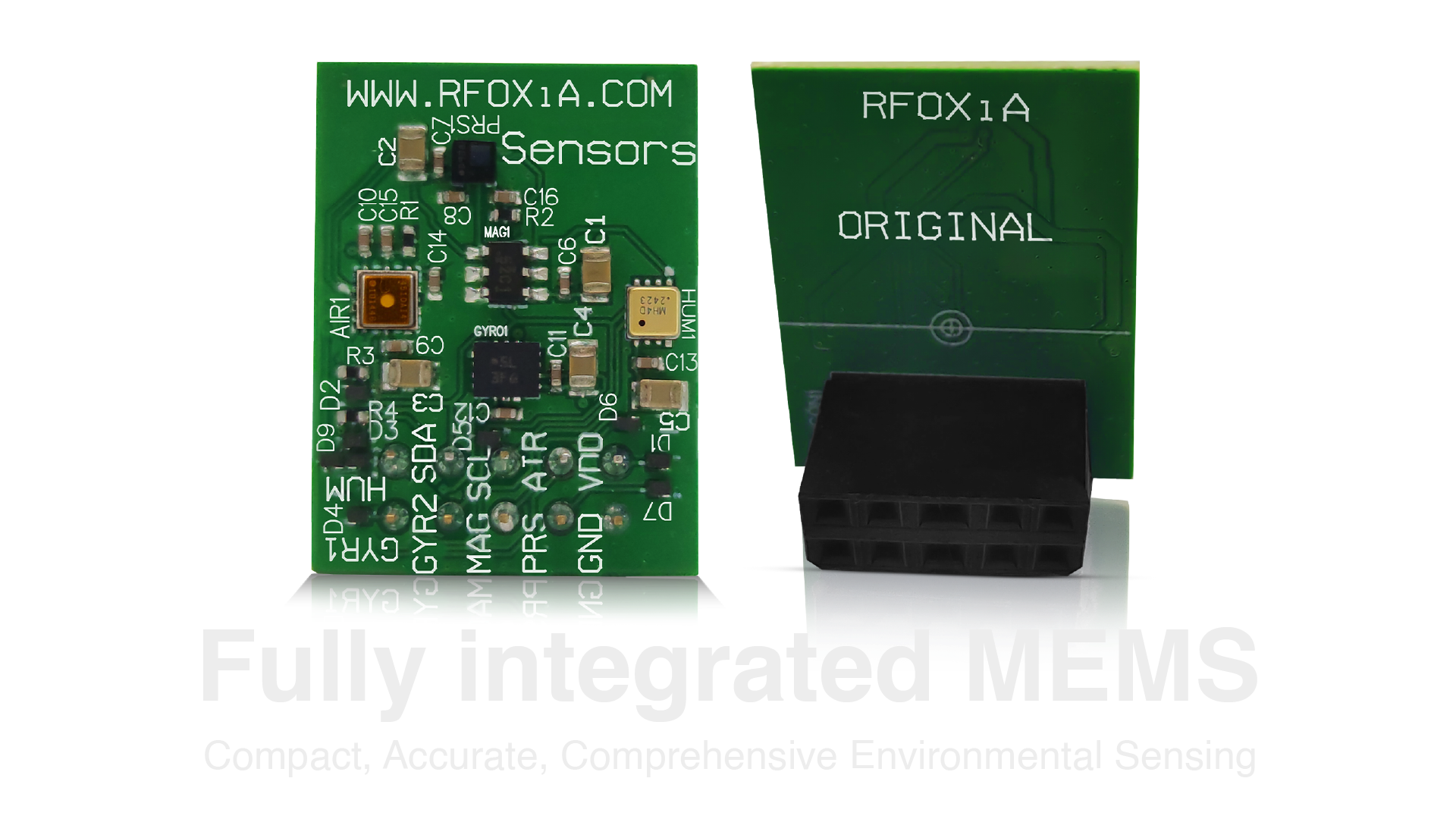
The Seven Sensors: What They Measure and Why It Matters in a Greenhouse
Let's go through each sensor in the array and explain specifically why it matters in a greenhouse or controlled environment agriculture context.
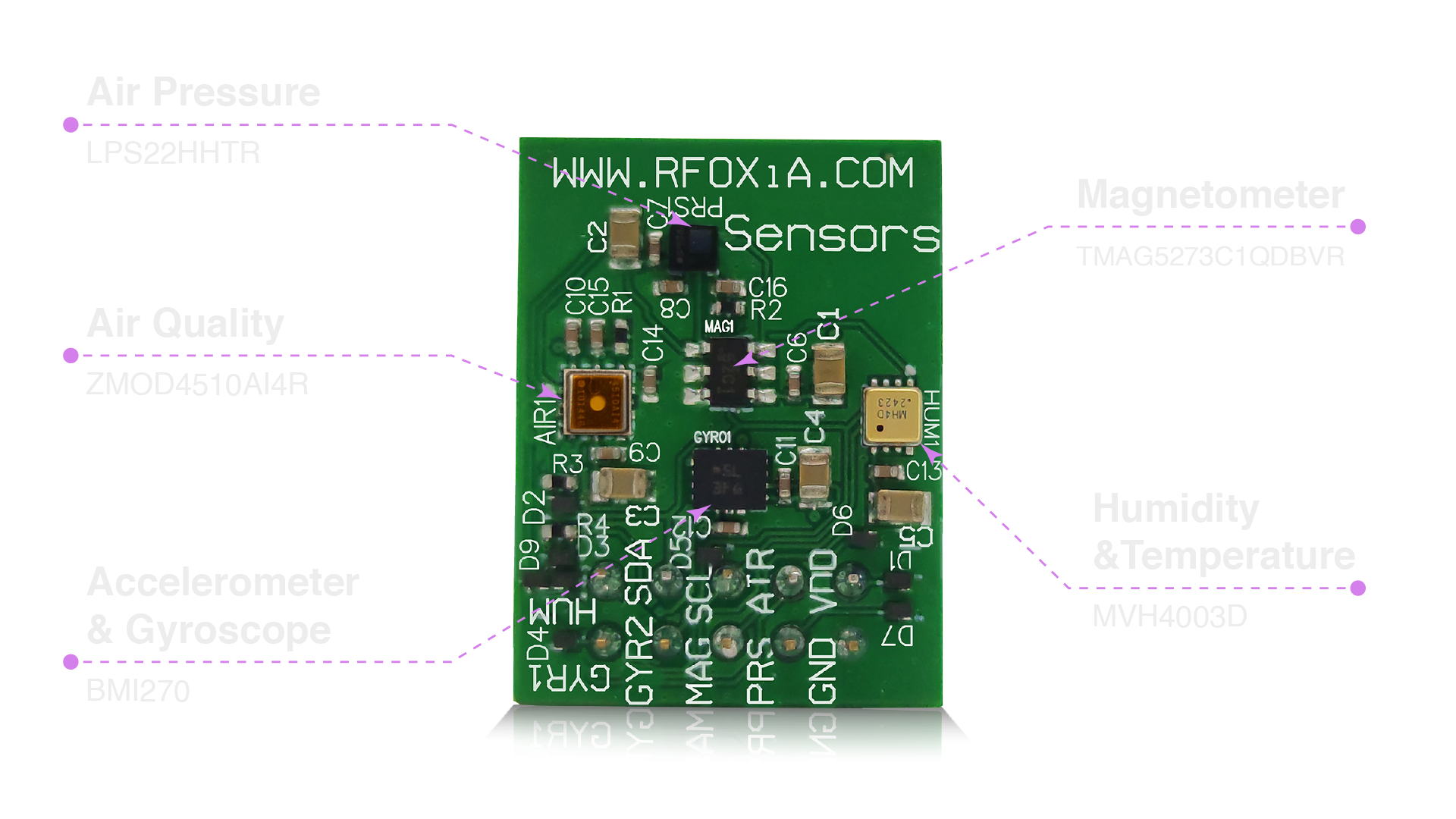
1. Temperature (MVH4003D — MEMSVision)
Temperature is the most fundamental environmental variable in any growing system. But single-point temperature readings are dangerously misleading in large-format greenhouses or multi-zone vertical farms. Deploying multiple Sensors Modules across your facility gives you a spatial temperature map that reveals stratification, hot spots near glazing, cold infiltration points near entry doors, and HVAC dead zones.
Real-time temperature data enables automated ventilation triggers, heating system optimization, and most importantly — early warning before temperature stress affects plant metabolism.
2. Humidity (MVH4003D — MEMSVision)
Humidity directly drives disease risk. Botrytis, powdery mildew, and downy mildew all thrive in high-humidity microclimates. High-temporal-resolution humidity monitoring — not hourly snapshots but continuous streaming data — lets you catch humidity excursions the moment they begin and respond before fungal conditions establish.
The MVH4003D from MEMSVision provides the accuracy and stability needed for agronomic decision-making, not just general indication.
3. Air Pressure (LPS22HHTR — STMicroelectronics)
Barometric pressure monitoring inside a greenhouse serves two purposes. First, it allows correction of other sensor readings that are pressure-dependent (CO2 and humidity sensors both benefit from pressure compensation). Second, in sealed or semi-sealed controlled environment agriculture systems, internal pressure differentials between zones can be used to manage airflow direction and prevent cross-contamination between growing rooms.
4. Air Quality (ZMOD4510AI4R — RENESAS)
This is the sensor that separates the MultiNav Pro+™ from virtually every competing module at this price. The ZMOD4510 from RENESAS is a professional-grade metal oxide semiconductor gas sensor capable of detecting ozone and nitrogen dioxide — two pollutants with direct relevance to plant health and human safety in enclosed growing environments.
For greenhouse operators: air quality monitoring catches CO2 depletion, detects post-fumigation residual chemical presence, and identifies air exchange inefficiencies. For data network contributors: air quality is one of the five verified data points required for full daily reward eligibility on the RFOXiA network.
5. Accelerometer (BMI270 — Bosch Sensortec)
Acceleration sensing inside a greenhouse deployment might seem unexpected — but consider the applications. Structural health monitoring of greenhouse frames under wind load. Vibration analysis of ventilation fans and motors for predictive maintenance. Tamper detection on remote sensor nodes. Measurement of plant canopy sway as a proxy for wind penetration inside large polytunnels.
The BMI270 from Bosch Sensortec is an industrial-grade inertial sensor used in demanding applications far beyond hobbyist motion detection.
6. Gyroscope (BMI270 — Bosch Sensortec)
The gyroscope shares the BMI270 silicon with the accelerometer, providing angular velocity measurement alongside linear acceleration. For agricultural robotics applications — autonomous spray platforms, transplanting robots, inspection UAVs operating inside greenhouse structures — 6-DOF IMU data from the BMI270 is fundamental to stable navigation.
7. Magnetometer (TMAG5273C1QDBVR — Texas Instruments)
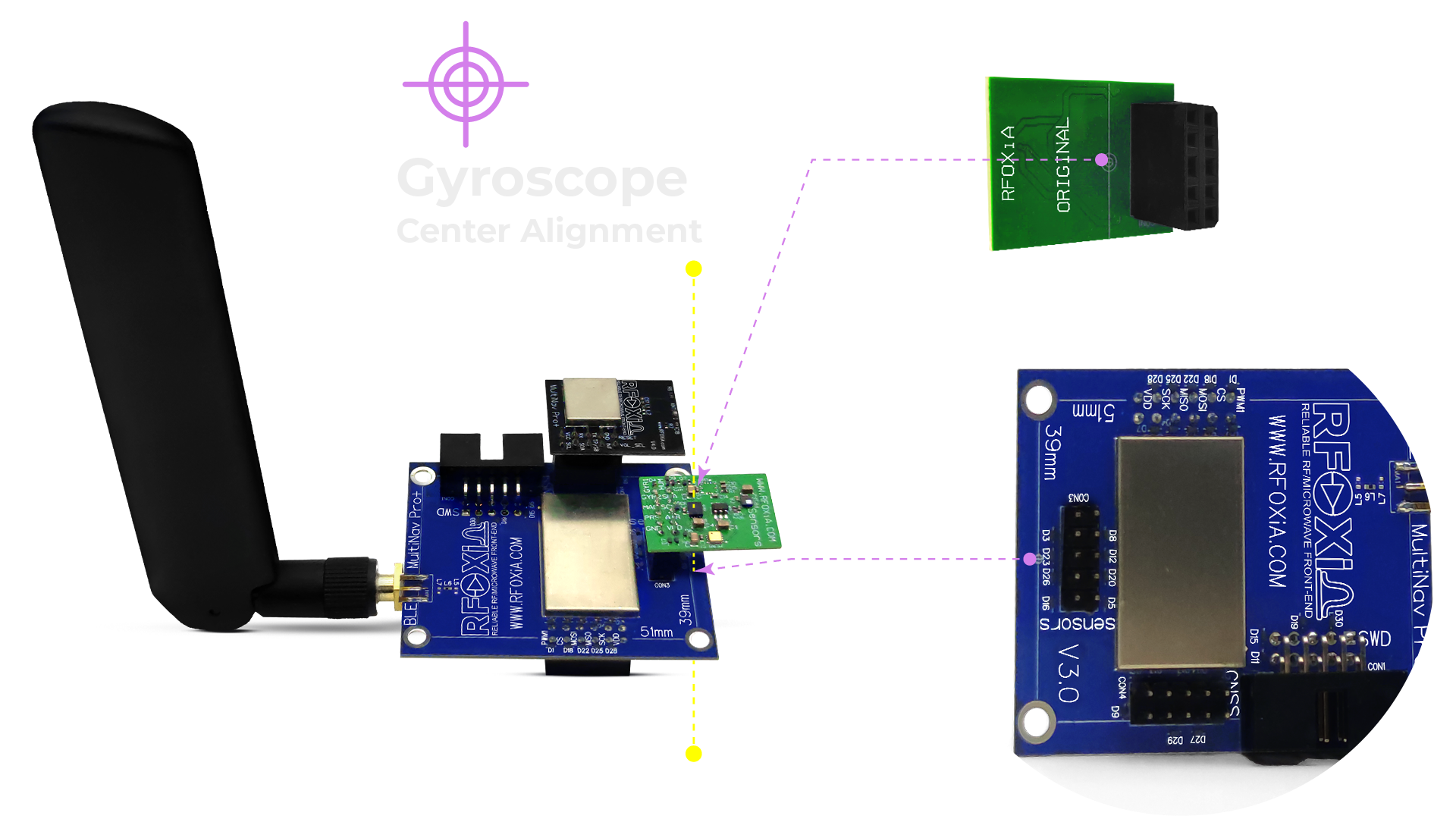
The Texas Instruments TMAG5273 3D Hall-effect magnetic sensor provides absolute orientation reference — the third leg of a complete 9-DOF AHRS (Attitude and Heading Reference System). For any application that needs to know not just how a device is moving but where it is pointed — autonomous vehicles, tracking systems, orientation-sensitive data collection — the magnetometer completes the picture.
The Sensor ICs: Professional Components, Not Commodity Parts
One of the meaningful differentiators of the MultiNav Pro+™ Sensors Module is the choice of sensor ICs. This is not a module populated with generic Chinese commodity sensors from anonymous fabs. Every sensor is sourced from a named, reputable semiconductor manufacturer with published datasheets, industrial temperature ratings, and established support ecosystems.
| Sensor Function | IC | Manufacturer |
|---|---|---|
| Accelerometer & Gyroscope | BMI270 | Bosch Sensortec |
| Magnetometer | TMAG5273C1QDBVR | Texas Instruments |
| Air Pressure | LPS22HHTR | STMicroelectronics |
| Humidity & Temperature | MVH4003D | MEMSVision |
| Air Quality | ZMOD4510AI4R | RENESAS |
This matters enormously for anyone building a production system. When you need to write a datasheet for your product, audit your supply chain, or certify your end device, knowing exactly what silicon is in your sensing subsystem is not optional — it's required.
I2C Architecture: Why Single-Bus Multi-Sensor Design Matters
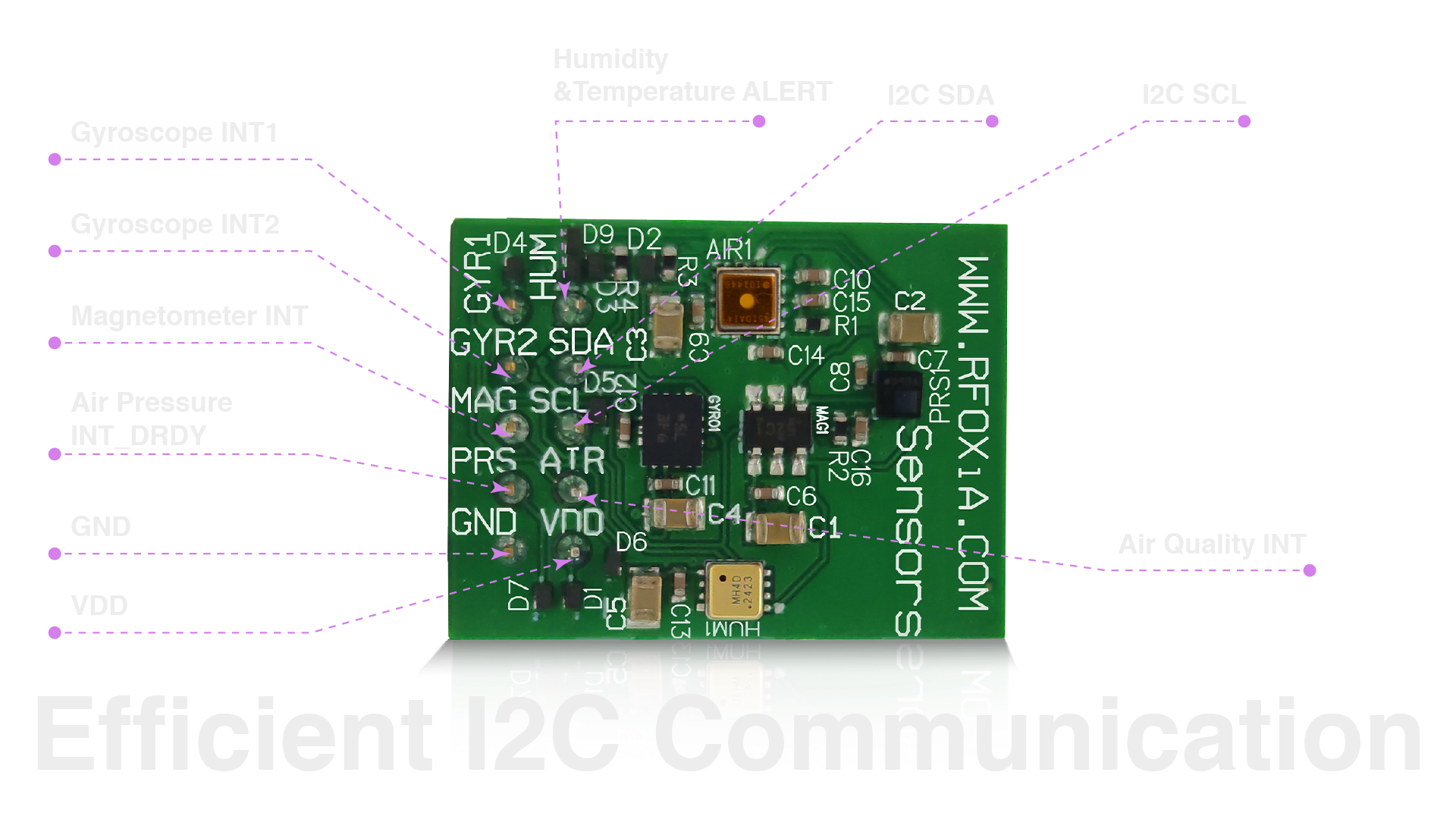
One of the underappreciated engineering decisions in the MultiNav Pro+™ Sensors Module is the I2C bus architecture. All seven sensors share a single I2C line, each assigned a unique I2C address. This approach — called I2C bus sharing or multi-drop I2C — dramatically simplifies integration.
For the developer, this means:
- Two wires total (SDA + SCL) to read all seven sensors
- No SPI bus contention or chip select multiplexing
- No address collisions — each sensor has a dedicated, non-conflicting address
- Simplified PCB routing when integrating into your own design
- Minimal GPIO consumption on the host microcontroller
For a greenhouse sensor module IoT deployment where you may be reading dozens of environmental parameters across multiple nodes, this bus efficiency translates directly into simpler firmware, lower BOM cost on the host board, and faster time to deployment.
The module is designed to connect seamlessly with the MultiNav Pro+™ BLE Module, which handles wireless transmission of the sensor data. Together, they form a complete wireless environmental monitoring node — environmental sensing plus long-range transmission, no additional hardware required.
Form Factor: 24mm × 18mm Is Genuinely Small
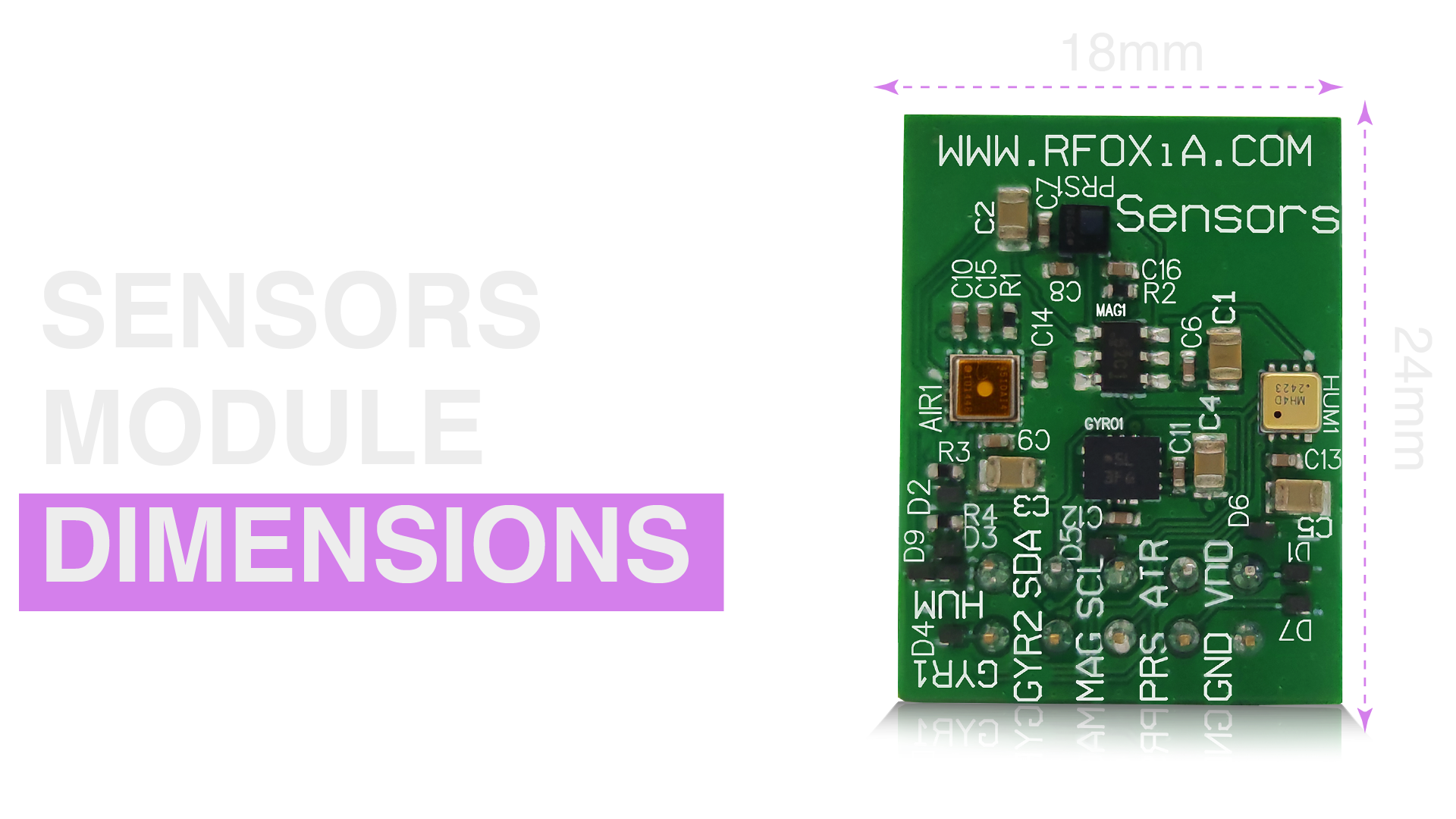
The MultiNav Pro+™ Sensors Module measures 24mm × 18mm. To put that in physical context: it fits comfortably on a business card with room to spare. It is smaller than a standard postage stamp.
For greenhouse IoT applications, this compactness matters in several specific ways:
Deployment density. Small nodes are cheaper to enclosure, cheaper to mount, and less visually intrusive in a growing environment. You can deploy more of them across a large greenhouse footprint without structural modification.
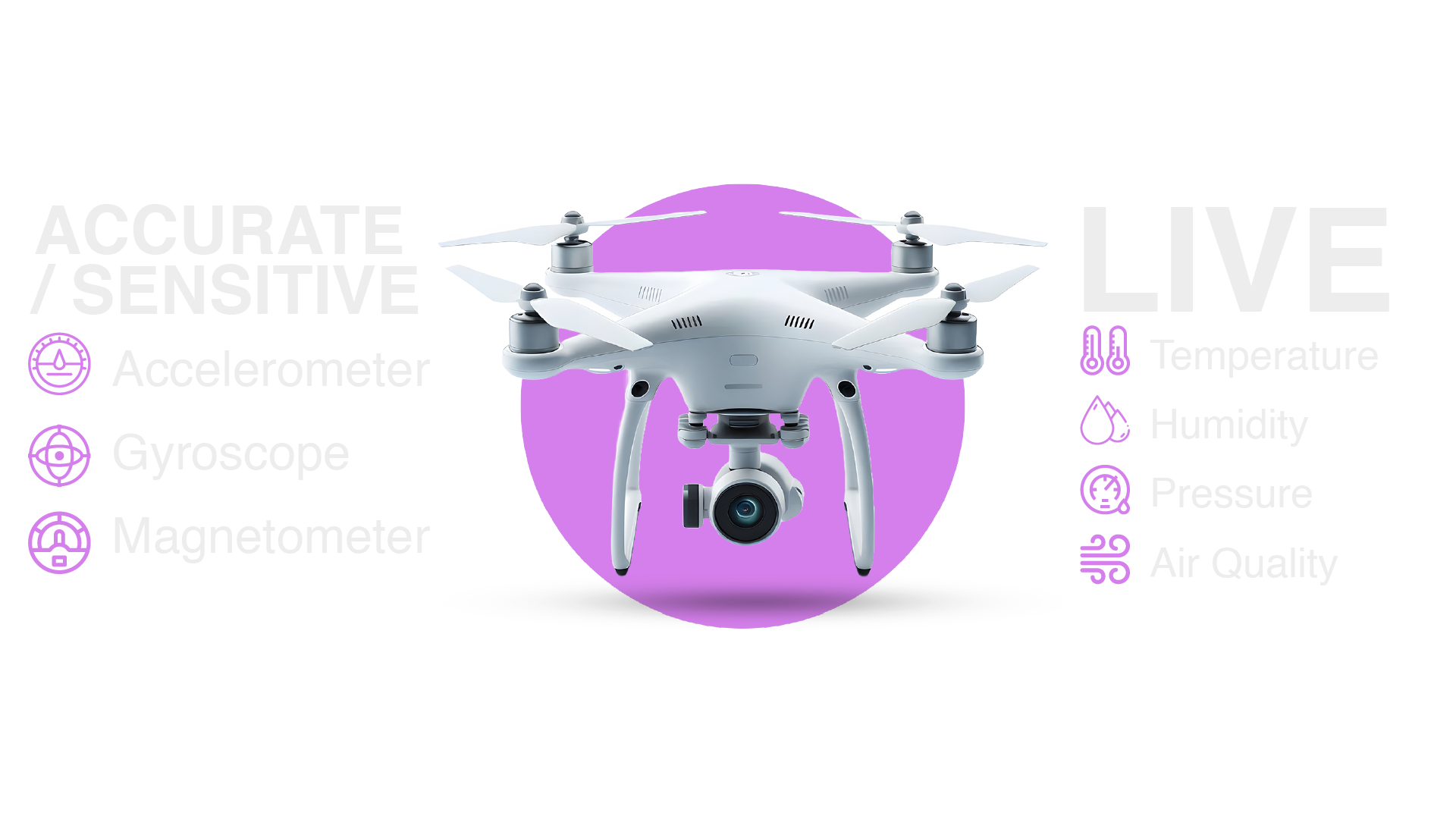
Drone integration. For agricultural drones performing crop scanning or environmental mapping passes over greenhouse structures, a sensor payload needs to add minimal weight and drag. The Sensors Module is light enough to fly on almost any commercial drone frame without payload capacity concerns.
Wearable and handheld form factors. For agronomists performing manual scouting rounds who want to carry environmental sensors, a 24mm × 18mm module integrates into handheld housings easily.
Compact IoT node design. When integrating the Sensors Module into your own PCB design, the small footprint leaves room for power regulation, connectivity, and mechanical mounting features without requiring an oversized enclosure.
Real-Time Data Streaming: From Sensor to Decision in Milliseconds
The MultiNav Pro+™ Sensors Module is engineered for real-time data delivery. When paired with the BLE Module and the RFOXiA Connect app, sensor readings stream live to your mobile device — no cloud latency, no internet dependency, no subscription dashboard with a 60-second refresh rate.
You see what your greenhouse is doing right now. Temperature. Humidity. Air pressure. Air quality. All of it, live, on your phone screen.
For automated control applications — where sensor readings need to trigger actuator responses (open a vent, activate a humidifier, alert an operator) — the low-latency local communication architecture of the RFOXiA ecosystem is a genuine operational advantage over cloud-dependent IoT platforms where a WiFi outage or API rate limit can delay a critical alert by minutes.
The RFOXiA Integrated Sensors Module is the sensing heart of this real-time data architecture.
The RFOXiA Data Network: Get Paid for Your Sensor Data
Here is something no other greenhouse sensor module IoT solution offers: the ability to earn passive income from your sensor deployment.
The RFOXiA Data Network is a verified environmental data marketplace. When you deploy a Sensors Module outdoors with GNSS validation (using the MultiNav Pro+™ GNSS Module), your node streams verified environmental data — temperature, humidity, pressure, air quality, and GPS location — to RFOXiA servers. That data is validated against reference sources, verified for outdoor deployment, and aggregated into a high-resolution dataset that RFOXiA sells to enterprise buyers: agricultural technology companies, insurance and reinsurance firms, smart city operators, logistics companies, and research institutions.
You earn daily rewards for every verified complete data session:
- Base rate: $0.08–$0.25 per day depending on location and network tier
- Pioneer rate: Higher locked-in rate for early contributors
- Scarcity bonus: Nodes in data-sparse geographic areas earn more
- Uptime bonus: Consistent, uninterrupted streaming earns premium rates
- Maximum potential: Up to $0.40/day for fully verified complete data
For a greenhouse operator who would be running sensors continuously anyway, this creates a passive revenue stream from infrastructure you already need. Your sensor investment pays for itself — and eventually pays you.
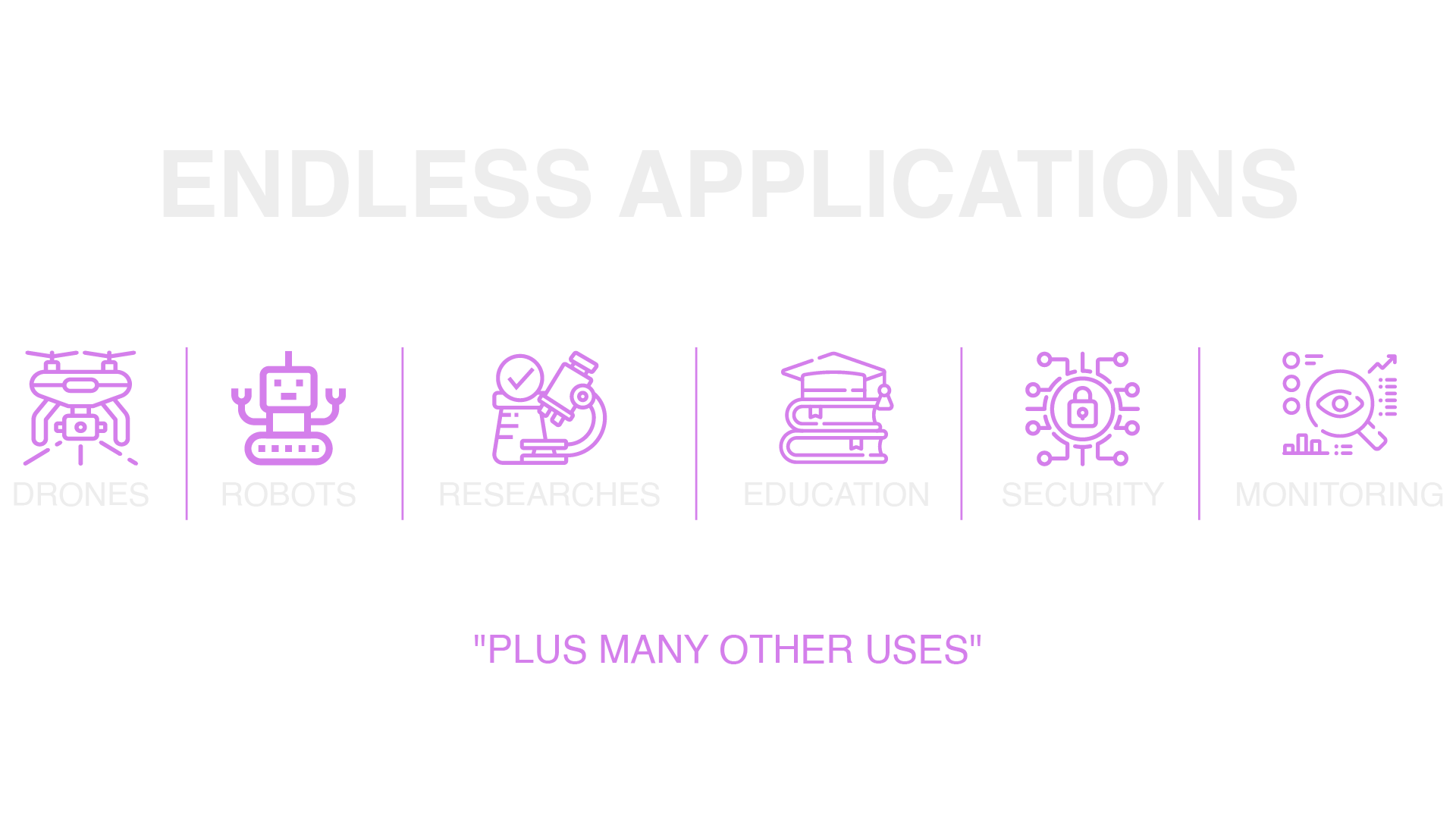
Applications: Where the Sensors Module Delivers Real Value
The breadth of the sensor array means the MultiNav Pro+™ Sensors Module serves a wider range of applications than any single-function environmental sensor.
Precision Agriculture and Greenhouse Monitoring
The primary use case this post has explored in depth. Continuous multi-parameter monitoring of growing environments, spatial mapping of conditions across large facilities, early warning of disease-risk humidity events, and integration with automated climate control systems.
Agricultural Drone Payload
For agricultural UAVs performing environmental mapping passes, the Sensors Module provides a complete aerial sensing payload — environmental data from altitude, plus 9-DOF IMU for flight stabilization and georeferenced data collection when combined with the GNSS Module.
Environmental Research
University researchers and field scientists deploying remote environmental monitoring stations benefit from the module's sensor completeness and compact form. One node captures the full picture. Combined with the supercapacitor-based Power/Program Kit, these nodes can operate in remote locations for extended periods without battery replacement.
Industrial IoT and Smart Buildings
Air quality, temperature, humidity, and pressure monitoring inside industrial facilities, warehouses, and commercial buildings. The I2C interface integrates with any microcontroller ecosystem. The FCC certification means it can be incorporated into commercial products without re-certification of the sensing subsystem.
Robotics and Autonomous Systems
The 9-DOF IMU (accelerometer + gyroscope + magnetometer) from the BMI270 and TMAG5273 provides everything needed for AHRS implementation in ground robots, aerial drones, or any mobile platform requiring orientation awareness. Combined with the GNSS Module for absolute position, you have a complete navigation sensor suite in two compact modules.
Wearable Environmental Monitoring
For occupational health applications — monitoring worker exposure to environmental conditions in agricultural settings, construction, or industrial environments — the compact form factor enables integration into wearable housings that provide continuous personal exposure monitoring.
How the Sensors Module Fits the Complete RFOXiA Ecosystem
The MultiNav Pro+™ Sensors Module is designed as a component of a complete, vertically integrated wireless development ecosystem. Understanding where it sits in that ecosystem helps clarify its full value proposition.
The Sensing Layer — The Sensors Module captures seven streams of environmental and motion data simultaneously.
The Transmission Layer — The MultiNav Pro+™ BLE Module transmits that data wirelessly. At 2Mbps data rate and ranges up to 5km ground-to-ground (and 15–20km man-to-drone), sensor data travels far without WiFi or cellular infrastructure.
The Power Layer — The Power/Program Kit, built on supercapacitor technology, charges in 5 minutes and powers the complete module stack for 24 hours. Remote greenhouse deployments, field stations, and autonomous platforms benefit enormously from this infrastructure-free power model.
The Application Layer — The RFOXiA Connect app (Android live, iOS pending) visualizes sensor data live on your phone, with a real-time map, sensor dashboard, and controller interface — all without internet connectivity.
The Platform Layer — RFOXiA Club provides firmware development tools (including an AI Firmware Builder that generates production-ready code from plain-language descriptions), community resources, documentation, and device management.
The Monetization Layer — The Data Network converts your environmental monitoring infrastructure into a passive income asset.
The RFOXiA Integrated Sensors Module is the environmental intelligence core of this entire stack. Every other layer depends on the quality and completeness of the sensor data it provides.
Technical Specifications Summary
| Parameter | Specification |
|---|---|
| Sensors | 7 (Accelerometer, Gyroscope, Magnetometer, Temperature, Humidity, Air Pressure, Air Quality) |
| Communication Interface | I2C (shared bus, dedicated addresses) |
| Module Dimensions | 24mm × 18mm |
| Accelerometer / Gyroscope IC | BMI270 (Bosch Sensortec) |
| Magnetometer IC | TMAG5273C1QDBVR (Texas Instruments) |
| Air Pressure IC | LPS22HHTR (STMicroelectronics) |
| Humidity & Temperature IC | MVH4003D (MEMSVision) |
| Air Quality IC | ZMOD4510AI4R (RENESAS) |
| Certification | FCC Certified |
| Price | $39 |
| Ecosystem Compatibility | MultiNav Pro+™ BLE Module, GNSS Module, Power/Program Kit, RFOXiA Connect App |
Why FCC Certification Matters for Your Deployment
FCC certification is not a checkbox. It is the legal requirement for operating intentional radiators — devices that emit radio frequency energy — in the United States. The MultiNav Pro+™ Sensors Module carries FCC certification on all four RFOXiA modules.
For commercial greenhouse operators, this matters because deploying uncertified electronic devices in agricultural settings exposes you to regulatory liability. For developers building products that incorporate the Sensors Module, FCC certification of the module subsystem simplifies the path to certifying the end product. For distributors — DigiKey, Mouser, and similar professional channels — FCC certification is a baseline requirement for listing.
RFOXiA has invested in doing this correctly. When you buy from RFOXiA, you are buying hardware that meets the standards required for real commercial deployment.
AI Firmware Development: From Idea to Code Without the Wait
Deployment of a greenhouse sensor module IoT system historically required months of firmware development work — reading sensor datasheets, writing I2C drivers, implementing data parsing, building wireless transmission logic, and debugging across the hardware-software boundary.
RFOXiA Club's AI Firmware Builder changes this entirely. Describe your application in plain language — "I want to read temperature, humidity, and air quality from the Sensors Module every 30 seconds and transmit the data wirelessly to a base station via BLE" — and the AI generates production-ready firmware with full source code, ready to flash to the BLE module using the Power/Program Kit's integrated STLink programmer.
For greenhouse automation developers, this means going from concept to deployed, data-streaming node in hours rather than months. For research teams with limited embedded development resources, it means being able to prototype sensor network configurations rapidly without dedicated firmware engineering staff.
Full source code access means you own the firmware completely. Customize it, extend it, integrate it into your existing systems — the AI Firmware Builder gives you a starting point that would have taken weeks to write from scratch.
Getting Started: Your First Greenhouse IoT Node
Deploying your first greenhouse sensor node with the MultiNav Pro+™ Sensors Module is straightforward:
Order your hardware — Start with the Sensors Module at $39, or consider the Developer Bundle at $199 to get the complete ecosystem (BLE Module + GNSS Module + Sensors Module + Power/Program Kit) in one package.
Sign up for RFOXiA Club — Free access, $10 welcome credit applied automatically on signup. Access documentation, firmware examples, the AI Firmware Builder, and the developer community.
Download RFOXiA Connect — Available now on Android, iOS pending App Store approval. Run the simulation mode to see live sensor data visualization before your hardware arrives.
Flash your firmware — Use the AI Firmware Builder to generate a firmware configuration matched to your specific greenhouse monitoring use case. Flash via the Power/Program Kit's integrated STLink interface.
Deploy your node — Mount the Sensors Module at your target monitoring point. Connect to the BLE Module. Open RFOXiA Connect and watch real-time sensor data stream to your phone.
Join the data network — Once deployed with outdoor GNSS validation, register your node with the RFOXiA Data Network and begin earning daily rewards for your verified environmental data contributions.
The RFOXiA Integrated Sensors Module page has full documentation, technical resources, and ordering information to get you started today.
Conclusion: The Greenhouse Sensor Module IoT Solution Built for Builders
The agriculture industry is in the middle of a data revolution. The growers, researchers, and engineers who will lead the next decade of precision agriculture are the ones who deploy comprehensive, real-time, multi-parameter environmental intelligence — not periodic manual readings, not single-parameter WiFi thermometers, not consumer weather stations that can't survive a growing season.
The MultiNav Pro+™ Sensors Module delivers professional-grade greenhouse sensor module IoT capability — seven sensors, named industrial-grade ICs, I2C bus architecture, FCC certification, a compact 24mm × 18mm form factor, and full integration with a wireless ecosystem that can transmit your data across kilometers without internet infrastructure — at $39.
There is nothing else in this market that does what this module does at this price. If you are serious about environmental monitoring — whether for commercial greenhouse operation, agricultural research, precision farming, or any application where you need to know exactly what your environment is doing in real time — this is the sensor platform to build on.
Explore the full RFOXiA product ecosystem and order the MultiNav Pro+™ Sensors Module at rfoxia.com/premium-sensors-module.
Written by: Moamen Mohamed LinkedIn