
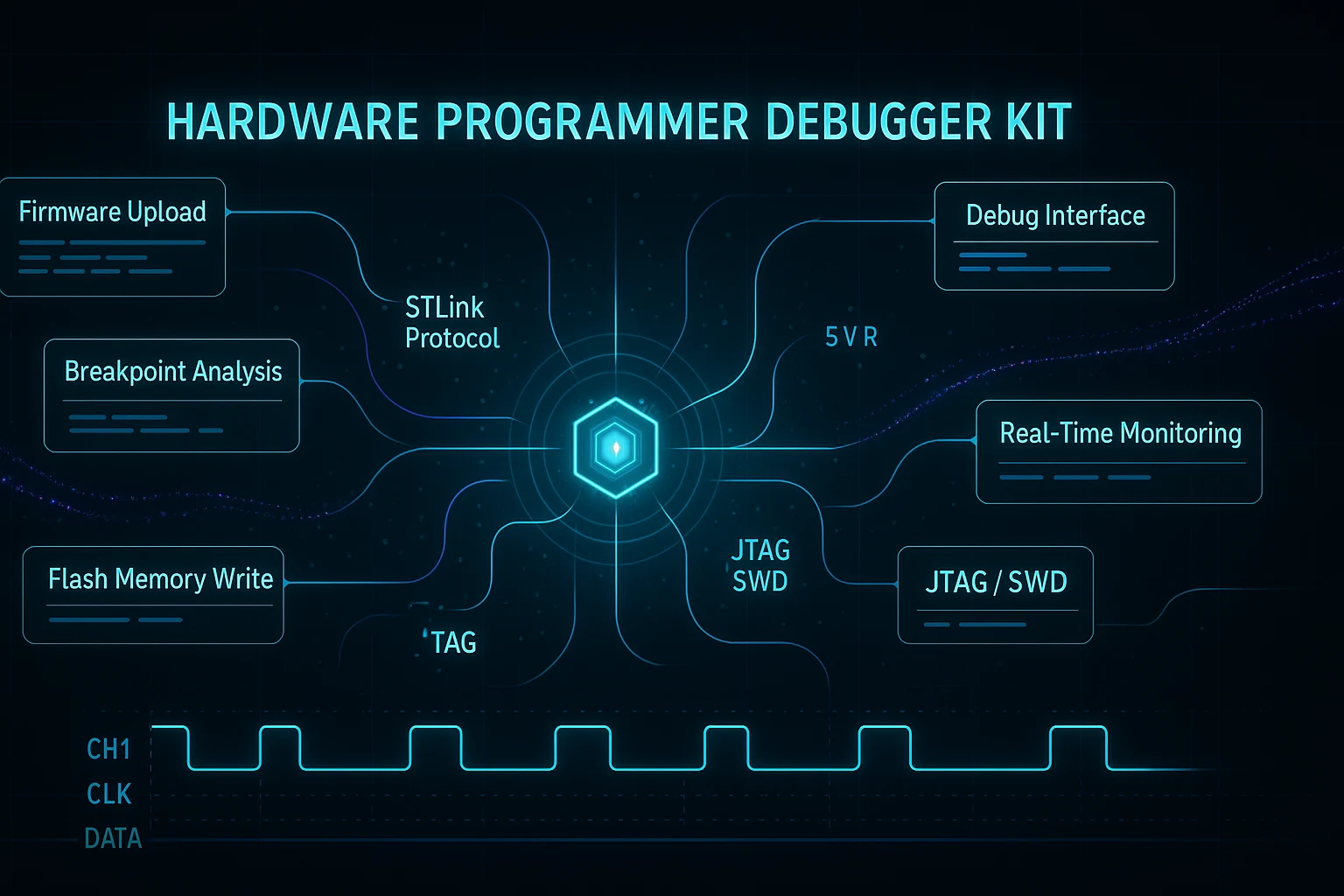
Hardware Programmer Debugger Kit: Power Your Wireless Projects Without Limits
RFOXiA SuperCapacitor Battery and Programmer Kit
The Hardware Programmer Debugger Kit That Changes Everything About Embedded Development
If you have ever been deep in a firmware session — module connected, logic analyzer running, STLink attached — and had your bench supply flicker, your USB hub reset, or your battery pack die mid-flash, you already understand the problem this kit solves. Power instability and programming friction are not minor inconveniences. They are project killers. They corrupt flash, they break debug sessions, they cost hours of re-initialization time. And for developers deploying wireless hardware in the field, the problem is ten times worse.
The MultiNav Pro+ Power/Program Kit from RFOXiA is not just another accessory in the box. It is a precision-engineered hardware programmer debugger kit built specifically to eliminate every power and programming headache that embedded developers face when working with the MultiNav Pro+ BLE Module ecosystem. It replaces unreliable USB power with a professional supercapacitor battery system. It replaces ad-hoc STLink connections with a fully integrated programmer interface. And it does all of this in a single compact kit that ships ready to use.
This post is a deep technical breakdown of what this kit is, why it matters, and why it is the most capable hardware programmer debugger kit available at this price point for wireless embedded development.
The Core Problem: Why Power and Programming Are Inseparable in Embedded Development
Most developers think of power and programming as two separate concerns. They are not. They are deeply coupled — and the quality of your power delivery directly determines the reliability of your programming and debug sessions.
Here is why:
Firmware flashing is a write operation. If power drops or fluctuates during a flash write, you corrupt the firmware. In the worst case, you brick the device. With some microcontrollers, recovery requires a dedicated programming jig and physical access to boot pins. This is not a theoretical risk — it happens constantly in field deployments where battery packs are used as bench power substitutes.
Debug sessions require stable voltage rails. When you are stepping through firmware with a hardware debugger, any power glitch causes the microcontroller to reset. Your breakpoints vanish. Your register state is gone. Your session is dead. You restart from scratch and lose whatever context you had built up over the last hour.
Field deployments cannot use bench supplies. If you are testing a drone flight controller, a remote sensor node, or an outdoor BLE gateway, you are not near a bench supply. You need clean, stable, portable power that can outlast a full day of development and testing without recharging between sessions.
This is the gap the MultiNav Pro+ Power/Program Kit fills. It is a hardware programmer debugger kit that treats power delivery as a first-class engineering problem — not an afterthought.
What Is Inside the MultiNav Pro+ Power/Program Kit
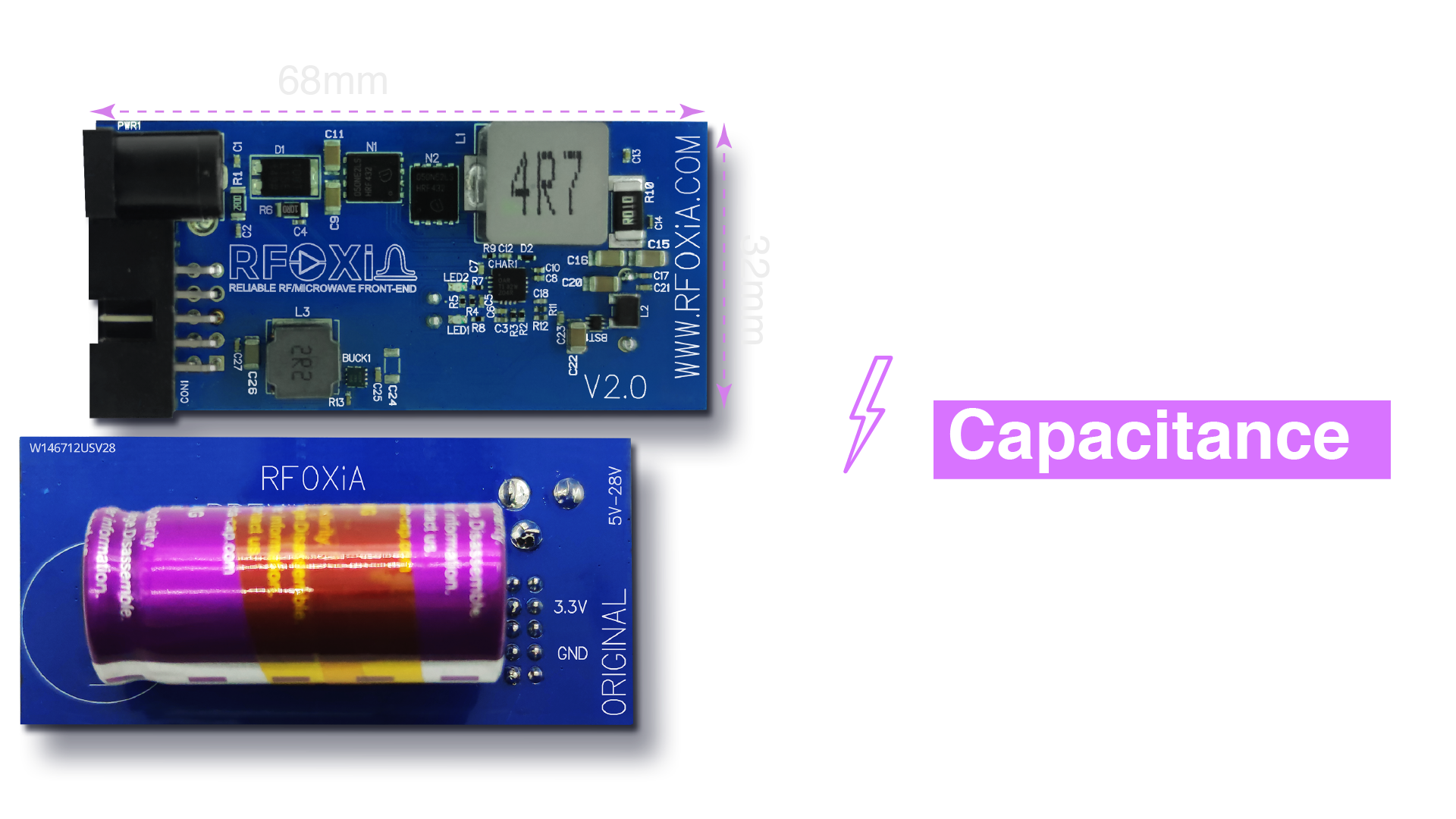
1. 1100F Supercapacitor Battery System
This is the centerpiece of the kit and the technology that sets it apart from every other portable power solution in the embedded development space.
The supercapacitor bank stores 8,800 joules of energy. To put that in concrete terms: that is enough to power the entire MultiNav Pro+ module stack — BLE module, GNSS module, and sensors module running simultaneously — for a full 24-hour working day. You charge it once in the morning and you work all day without thinking about power.
But the real story is not the capacity. It is the charge time.
The 1100F supercapacitor bank charges fully in under 5 minutes.
For comparison: a lithium battery pack of equivalent energy capacity would take 2-4 hours to charge. A developer who runs the battery to zero has to stop work for hours. With the supercapacitor system, you plug in the 12V 5A high-power charging adapter, wait five minutes, and you are back to full charge. In a real development workflow, this is transformative. You never plan around charging time. You never wait for a battery. You just work.
There is also a reliability dimension that matters specifically for the hardware programmer debugger kit use case. Supercapacitors do not degrade in the way lithium batteries do. They do not have charge cycles that wear out the cell chemistry. They do not swell, they do not lose capacity after 500 charges, and they do not create fire risk from overcharge. For a piece of equipment that lives on a development bench and gets charged multiple times a day, this is a significant engineering advantage.
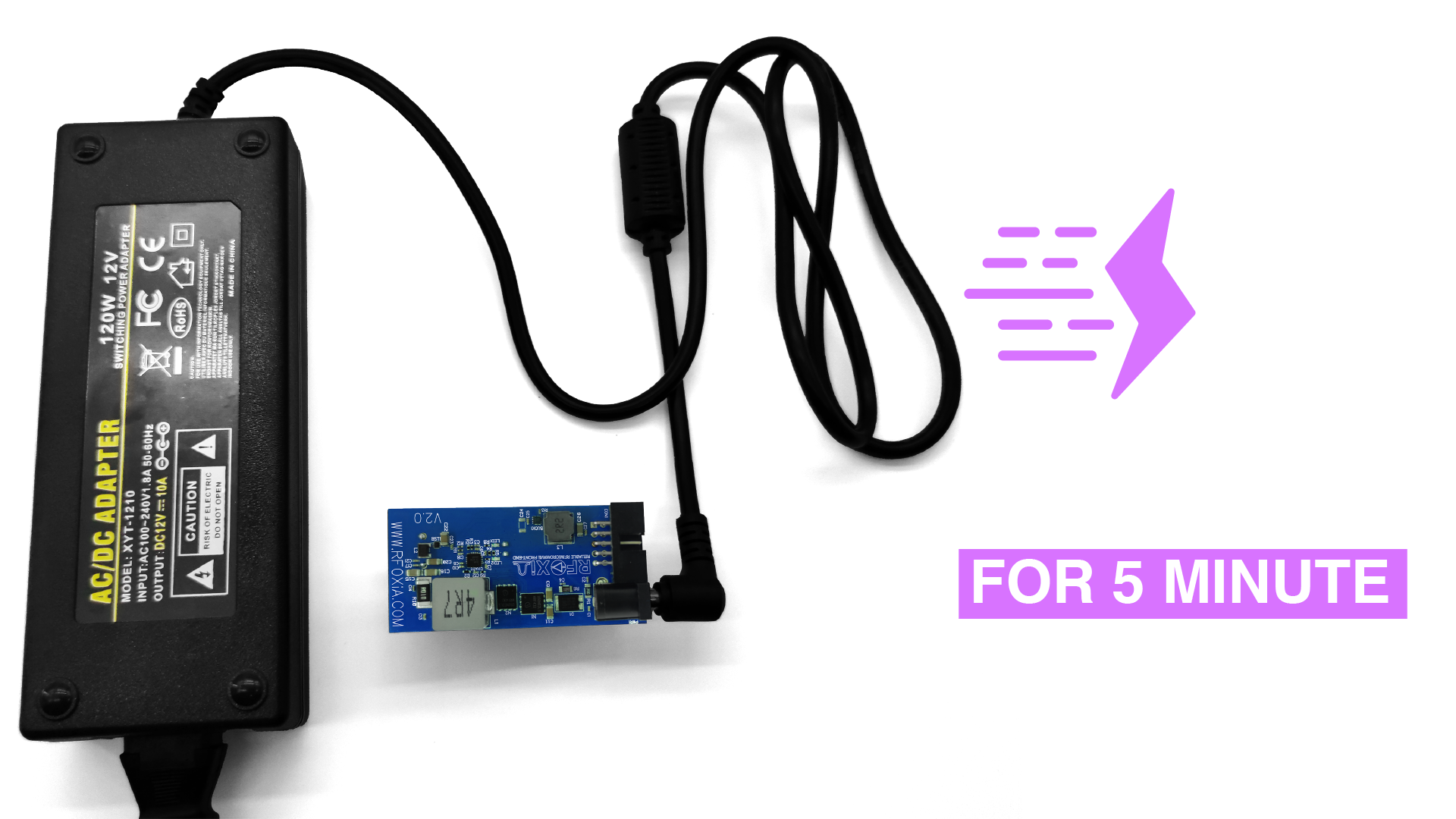
2. High-Power Charging Adapter
The included 12V 5A charging adapter is matched specifically to the supercapacitor system. The supercapacitor charges at 4V 10A, and the adapter is designed to deliver that charge safely and quickly through the kit's integrated charge management circuitry.
This is not a generic wall adapter. It is a matched charging system. Generic adapters with supercapacitor banks can create inrush current problems, voltage regulation issues, or slow the charge time significantly. The included adapter eliminates all of that. You plug it in, the charge management circuit handles the rest, and in under five minutes you have 8,800 joules of clean, stable power ready to deliver to your modules.
For developers working in field locations — a rooftop antenna installation, a drone test field, a remote sensor deployment site — the ability to charge quickly from any 12V source (including a vehicle power socket with an appropriate adapter) means the kit works in real-world conditions, not just on a desk.
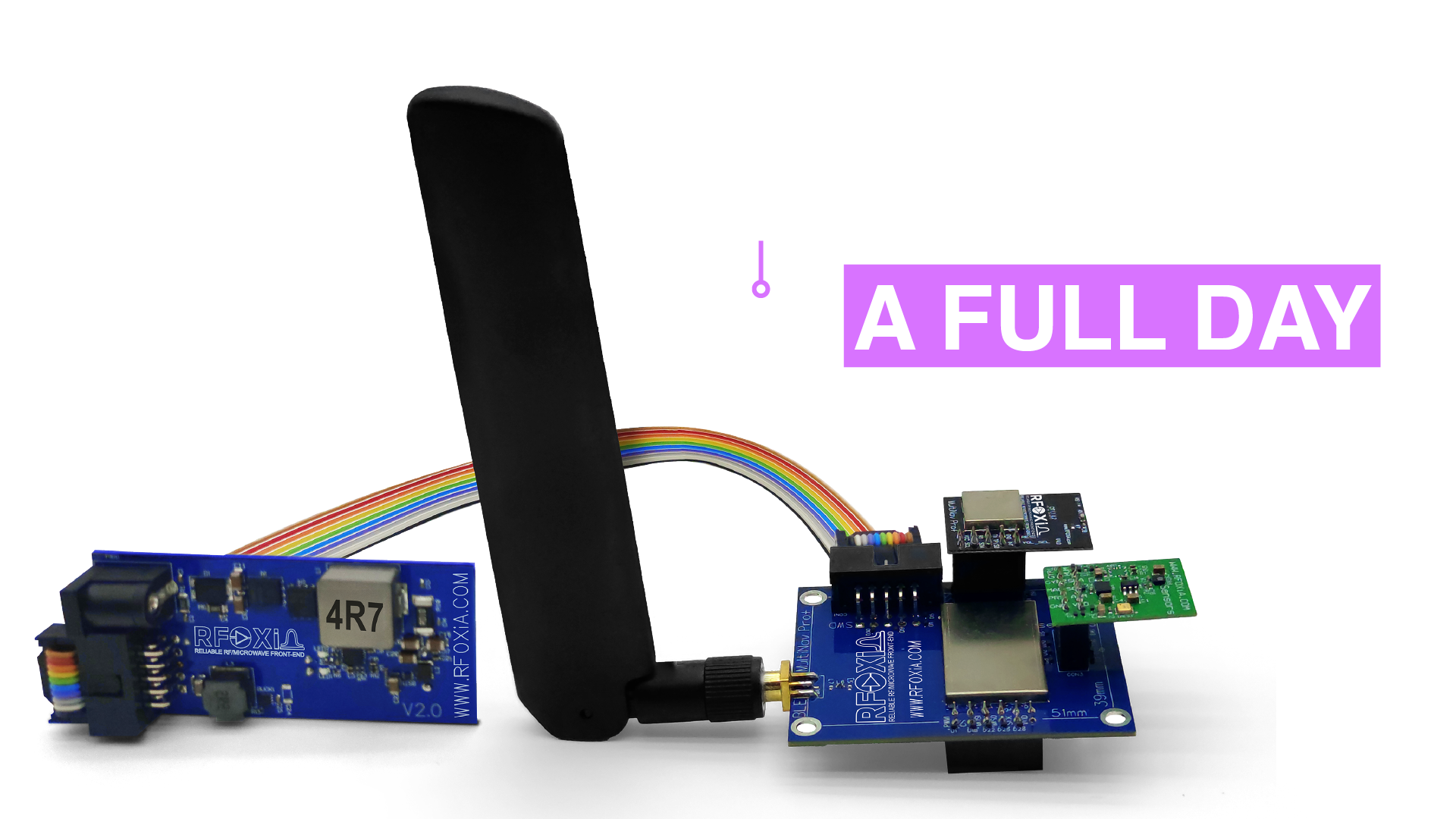
3. Full-Day Power for the Entire MultiNav Pro+ Module Stack
The power output is sized to run not just the BLE module in isolation, but the complete MultiNav Pro+ ecosystem simultaneously. That means:
- MultiNav Pro+ BLE Module — long-range BLE communication, RF front end active
- GNSS Module — 18Hz fix rate, active antenna, full satellite acquisition
- Sensors Module — all seven sensors active: temperature, humidity, air pressure, air quality, accelerometer, gyroscope, magnetometer
All of these modules running at the same time, for a full 24-hour period, from a single 5-minute charge. For developers building complex wireless sensor platforms, drone telemetry systems, or environmental monitoring nodes, this means a single kit powers your entire development rig for an entire day without interruption.
This is the power supply design philosophy that professional embedded development demands. You should not be managing power budgets, swapping batteries, or calculating runtime during a development session. You should be writing firmware and testing it. The Power/Program Kit handles the rest.
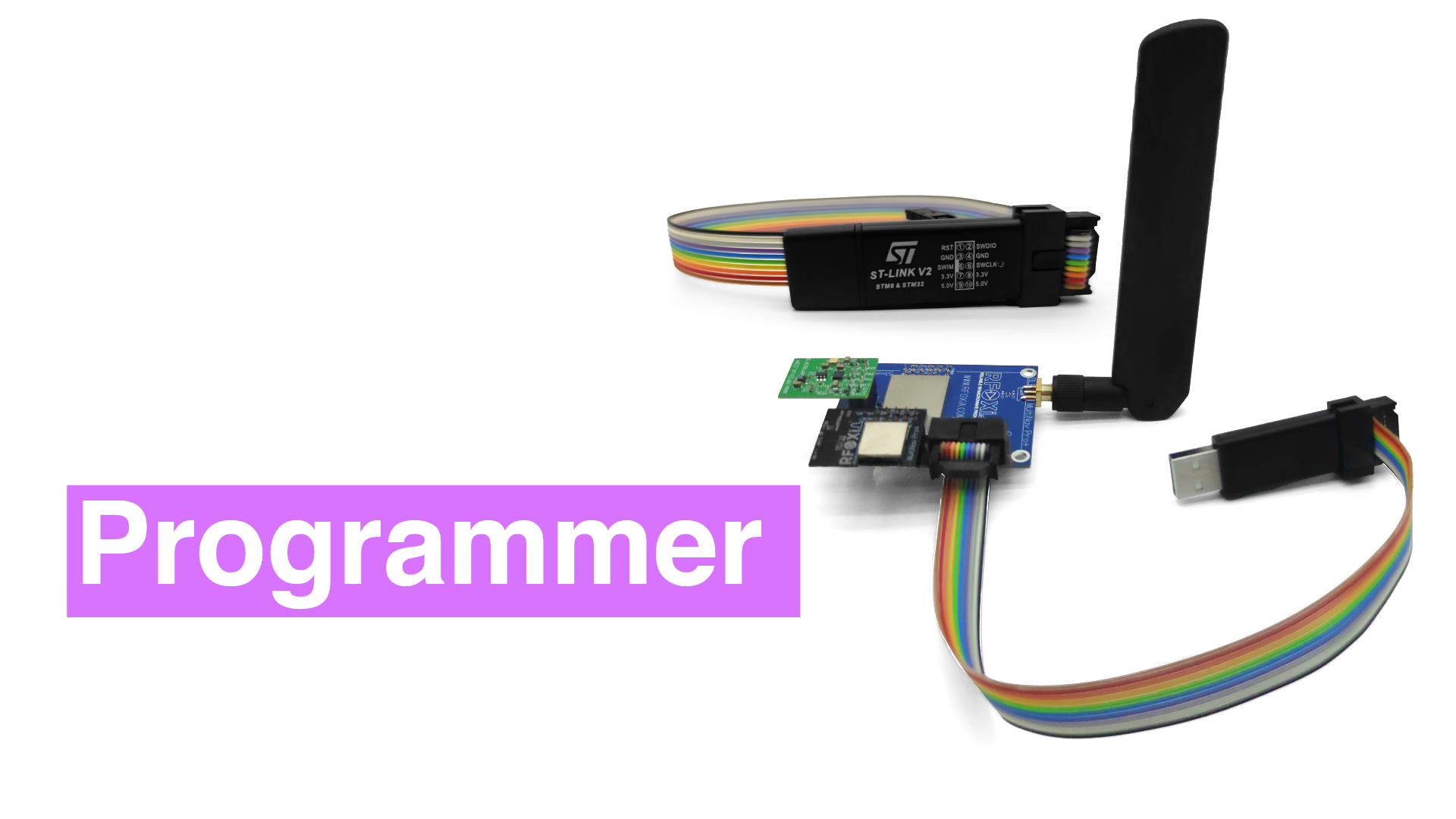
4. Integrated STLink Programmer
The STLink programmer included in this hardware programmer debugger kit is the interface between your development machine and the MultiNav Pro+ BLE Module's STM32WB07 microcontroller.
For developers who have used generic STLink clones from third-party sources, the difference is immediately apparent. Generic clones introduce variable behavior — inconsistent target detection, unreliable SWD clock speeds, firmware versions that conflict with current IDE toolchain expectations. When you are trying to debug a timing-sensitive firmware issue on an RF-intensive microcontroller, the last thing you want is ambiguity about whether a problem is in your code or your programmer.
The included STLink is configured and validated specifically for the MultiNav Pro+ BLE Module. It connects via the kit's flat ribbon cable interface directly to the programming header on the BLE module. No flying wires. No breadboard jumpers. No loose connections that fall out mid-session. A clean, mechanically reliable connection that stays connected while you work.
Supported development environments include:
- STM32CubeIDE — ST's official IDE with full debug and trace support
- VS Code with STM32 extensions — for developers who prefer a modern editor
- OpenOCD — for command-line workflows and CI/CD integration
- RFOXiA AI Firmware Builder — the Club platform's AI-powered firmware generation system that uses the STLink interface for direct flash deployment
The STLink handles both flashing and live debugging. You can set breakpoints, inspect registers, watch variables, and step through execution in real time — all from the same connection. For firmware development on a BLE module with a complex RF state machine, this level of debug access is not optional. It is how professional firmware gets written.
5. Complete Connectivity Package
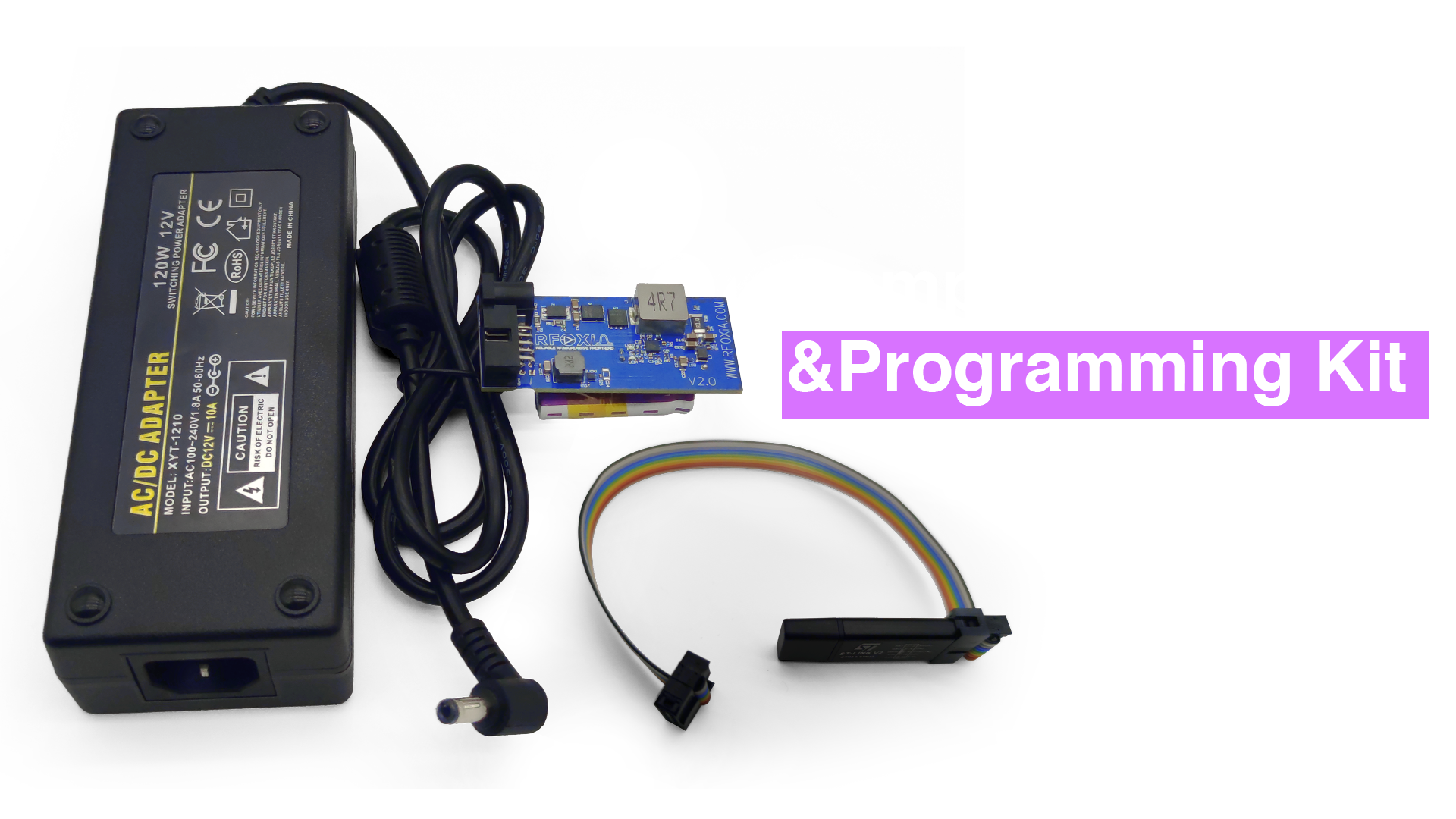
The kit ships with every cable required to connect all components without improvisation. This includes flat ribbon cables for:
- BLE module to power module — clean, low-resistance power delivery path
- STLink programmer to BLE module — reliable SWD debug interface connection
Flat ribbon cables are a deliberate design choice. They do not pull loose under tension the way dupont wires do. They do not create accidental shorts when they contact each other. They route cleanly on a bench or inside an enclosure. For a developer working with an assembled module stack during field testing, ribbon cables are the professional choice.
No sourcing, no crimping, no compatibility research required. The kit arrives complete and connects in minutes.
Who This Kit Is Built For
The MultiNav Pro+ Power/Program Kit is a professional tool. It is not a beginner accessory kit. It is built for developers who are working seriously on wireless embedded systems and who need their tools to perform at a professional level.
Drone builders and FPV pilots who are developing custom telemetry systems, flight controllers, or long-range communication links using the MultiNav Pro+ BLE Module. They test in the field, away from bench power. They need all-day runtime and fast recharge.
Robotics engineers building autonomous systems with embedded sensor fusion, navigation, and wireless communication. They need stable power during extended test runs and reliable firmware deployment when iterations are rapid.
IoT developers deploying remote sensor nodes — environmental monitoring, agricultural sensing, smart city infrastructure — who need a development rig that mirrors field conditions. The Power/Program Kit powers the full module stack exactly as it will run in a deployed node.
Researchers and academics working with wireless sensing platforms, localization systems, or RF propagation studies. They need repeatable test conditions and reliable hardware that does not introduce experimental variables through power instability.
Firmware developers who are using the RFOXiA AI Firmware Builder on the Club platform and need to flash and debug generated firmware directly to hardware. The STLink programmer is the physical bridge between AI-generated code and running silicon.
The RFOXiA Ecosystem Advantage
The Power/Program Kit does not exist in isolation. It is part of the complete RFOXiA wireless development ecosystem — and that ecosystem is what makes this hardware programmer debugger kit genuinely unique in the market.
When you combine the Power/Program Kit with the MultiNav Pro+ BLE Module, GNSS Module, and Sensors Module — the full Developer Bundle — you have a completely self-contained wireless development platform with:
- Up to 20km man-to-drone range over long-range BLE
- 1.5-meter GNSS accuracy at 18Hz fix rate
- Seven integrated environmental sensors for complete situational awareness
- FCC-certified hardware across every module
- AI-powered firmware generation through the RFOXiA Club platform
- Mobile control via RFOXiA Connect — iOS and Android, no internet required
- Data monetization through the RFOXiA live data network
- Full-day stable power with 5-minute recharge
- Integrated STLink programmer for direct firmware development
No other platform on the market combines long-range wireless hardware, AI firmware development, mobile control, environmental sensing, and professional power management at this price point. The Power/Program Kit is the component that makes all of that available for serious field development.
If you are ready to eliminate power and programming friction from your embedded development workflow, the RFOXiA SuperCapacitor Battery and Programmer Kit ships fully assembled and ready to use.
Technical Specifications Summary
| Specification | Value |
|---|---|
| Supercapacitor Capacity | 1100F |
| Energy Storage | 8,800 Joules |
| Charge Time | < 5 minutes |
| Runtime (full module stack) | 24 hours |
| Charging Adapter | 12V 5A |
| Supercapacitor Charge Rate | 4V 10A |
| Programmer Interface | STLink (SWD) |
| Target MCU | STM32WB07 (MultiNav Pro+ BLE Module) |
| Cable Type | Flat ribbon cables |
| Certification | FCC certified |
| Price | $119 |
Why the Supercapacitor Matters for a Hardware Programmer Debugger Kit
It is worth dwelling on why supercapacitor technology specifically is the right choice for a hardware programmer debugger kit — not just for the fast charge time, but for the electrical characteristics that matter during programming operations.
A supercapacitor bank delivers power with extremely low equivalent series resistance (ESR). This means the output voltage remains stable under sudden load changes — for example, when the BLE module's RF amplifier fires, or when the GNSS module's antenna circuit activates. A lithium battery with a poor BMS or a USB power bank with slow regulation response will show voltage droops during these events. Those droops can be large enough to cause a microcontroller brownout reset during a programming operation.
The supercapacitor system in the Power/Program Kit has the current delivery capability to absorb these transient loads without voltage droop. The result is a cleaner power rail during flash operations, more reliable debug sessions, and fewer unexplained resets that interrupt firmware development.
For a developer who has spent an afternoon chasing a mysterious firmware instability that turned out to be a power supply issue, this is not a theoretical benefit. It is the difference between productive development time and wasted debugging time.
Getting Started: What to Expect When Your Kit Arrives
The MultiNav Pro+ Power/Program Kit arrives fully assembled. There is no soldering, no crimping, and no configuration required before use.
Setup takes under ten minutes:
- Connect the 12V 5A adapter to the supercapacitor charging port
- Wait under 5 minutes for full charge
- Connect the BLE module to the power module via the included flat ribbon cable
- Connect the STLink programmer to the BLE module via the included ribbon cable
- Connect the STLink to your development machine via USB
- Open your IDE — STM32CubeIDE, VS Code, or OpenOCD
- Target detection is automatic — the BLE module appears as a recognized ST target
- Flash your firmware and begin debugging
For developers using the RFOXiA Club AI Firmware Builder, the generated firmware package includes a one-click flash configuration pre-configured for the STLink interface. You generate firmware on the platform, download the package, open it in your IDE, and flash directly to hardware.
The complete development workflow — from firmware concept to running code on hardware — takes less than an hour when you use the AI Firmware Builder with the Power/Program Kit.
Pricing and Availability
The MultiNav Pro+ Power/Program Kit is priced at $119. It is available directly through RFOXiA and ships from current inventory.
For developers building out the complete ecosystem, the Developer Bundle combines the BLE Module, GNSS Module, Sensors Module, and Power/Program Kit at a bundled price of $199 (after credits) — representing significant savings over individual module pricing.
New RFOXiA Club members receive a $10 welcome credit on signup, applicable toward any hardware purchase including the Power/Program Kit.
The RFOXiA SuperCapacitor Battery and Programmer Kit is in stock and ready to ship. If you are building wireless systems professionally and need a power and programming solution that matches the quality of your hardware, this is the kit.
Final Thoughts: Professional Tools for Serious Wireless Development
The embedded development community has tolerated power and programming friction for too long. Generic USB power banks with unstable regulation. STLink clones with inconsistent behavior. Flying wires that fall out mid-session. Battery packs that die after two hours and take four hours to recharge.
The MultiNav Pro+ Power/Program Kit is a statement that serious wireless development deserves better infrastructure. A hardware programmer debugger kit that charges in five minutes and runs all day is not a luxury. It is what the work requires. A stable supercapacitor power rail that does not droop under RF transient loads is not overkill. It is the correct engineering choice for reliable firmware development.
RFOXiA built this kit because the MultiNav Pro+ BLE Module deserved a power and programming solution that matched its own engineering standard. The result is a hardware programmer debugger kit that professional wireless developers will find immediately indispensable.
Explore the full kit and order directly at the RFOXiA SuperCapacitor Battery and Programmer Kit product page. Join RFOXiA Club for your $10 welcome credit and access to the full ecosystem — AI firmware builder, community dev hub, and live data network.
Written by: Moamen Mohamed LinkedIn