
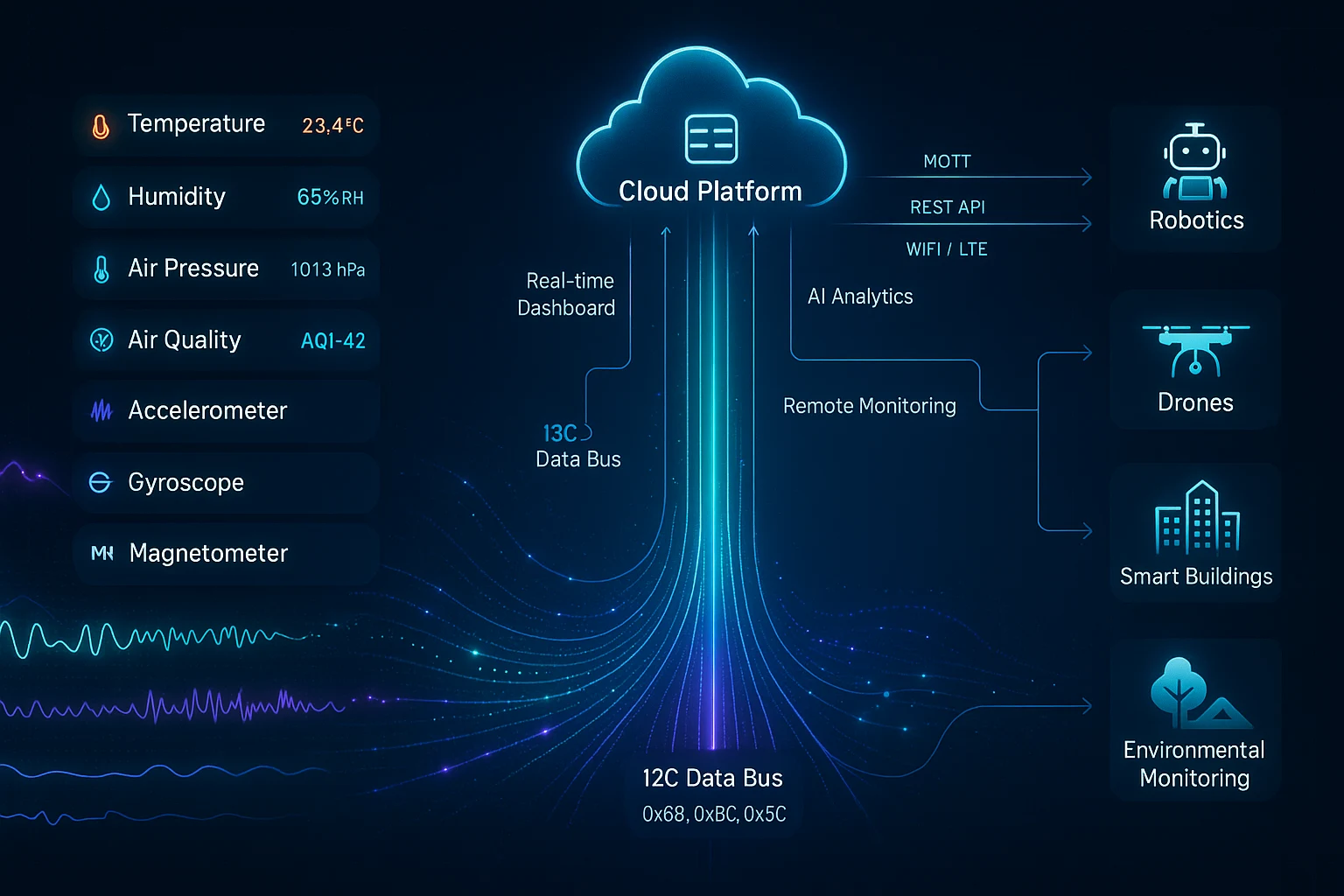
IoT Sensor Data to Cloud Tutorial: Stream 7 Sensors at Once with MultiNav Pro+
RFOXiA Integrated Sensors Module
The Complete IoT Sensor Data to Cloud Tutorial for Hardware Developers Who Build Real Things
If you have spent any time building IoT systems, you already know the pain. You pick a temperature sensor from one manufacturer, a pressure sensor from another, wrestle with conflicting I2C addresses, debug strange voltage incompatibilities, and spend half your development time on glue logic before a single byte of real data ever reaches the cloud. Most IoT sensor data to cloud tutorials online treat these problems as solved. They are not. Not until now.
This guide walks you through a complete, practical IoT sensor data to cloud workflow using the RFOXiA MultiNav Pro+ Sensors Module — a single 24mm × 18mm board that packs seven best-in-class sensors onto one compact PCB, all sharing a single I2C bus with dedicated addresses. No conflicts. No voltage drama. No sourcing five separate breakout boards. One module. Seven data streams. Live in the cloud.
Whether you are building a drone telemetry system, an environmental monitoring node, a smart agriculture sensor, or a search-and-rescue robot, this tutorial gives you everything you need to get real sensor data flowing to your cloud platform in a single afternoon.
What Is the MultiNav Pro+ Sensors Module?
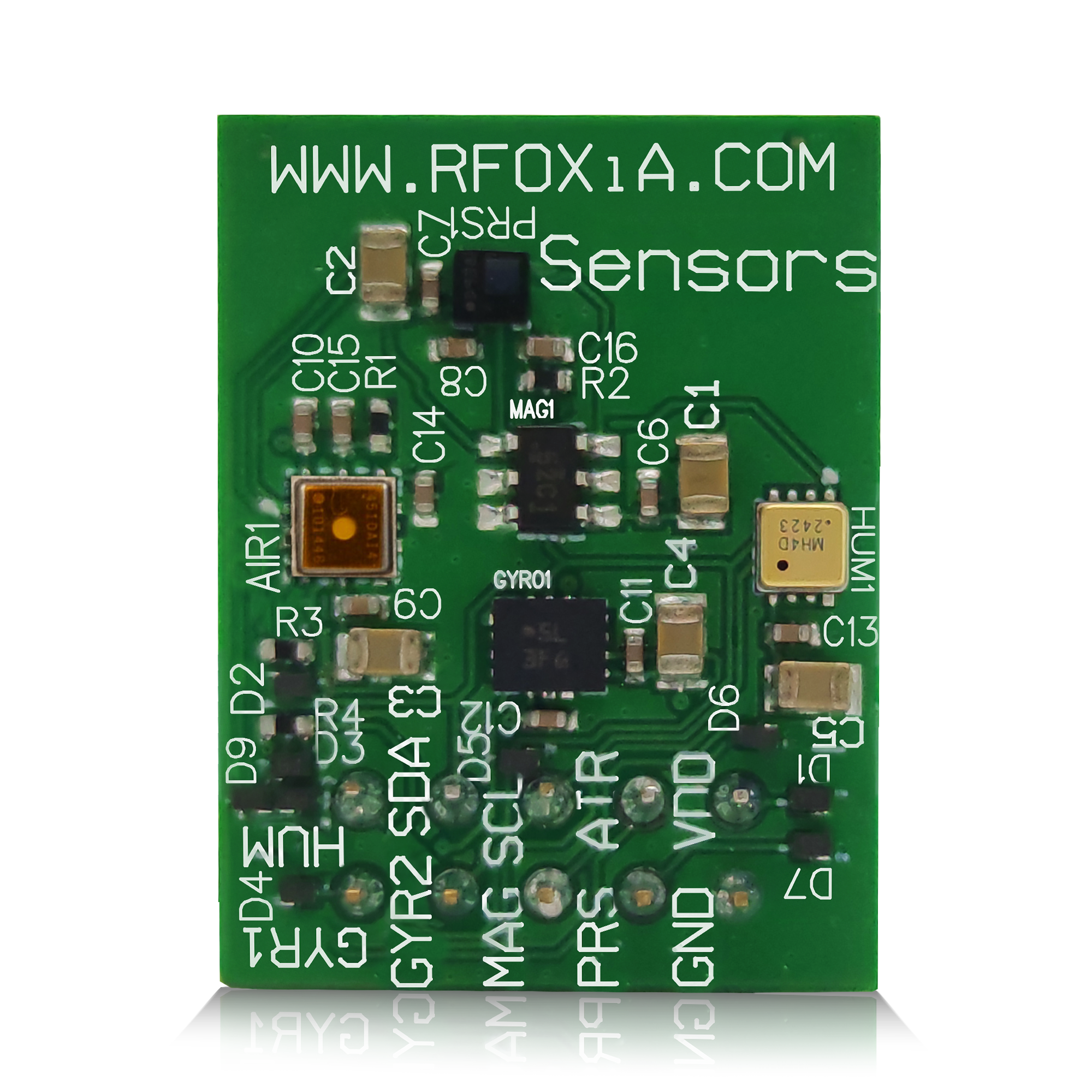
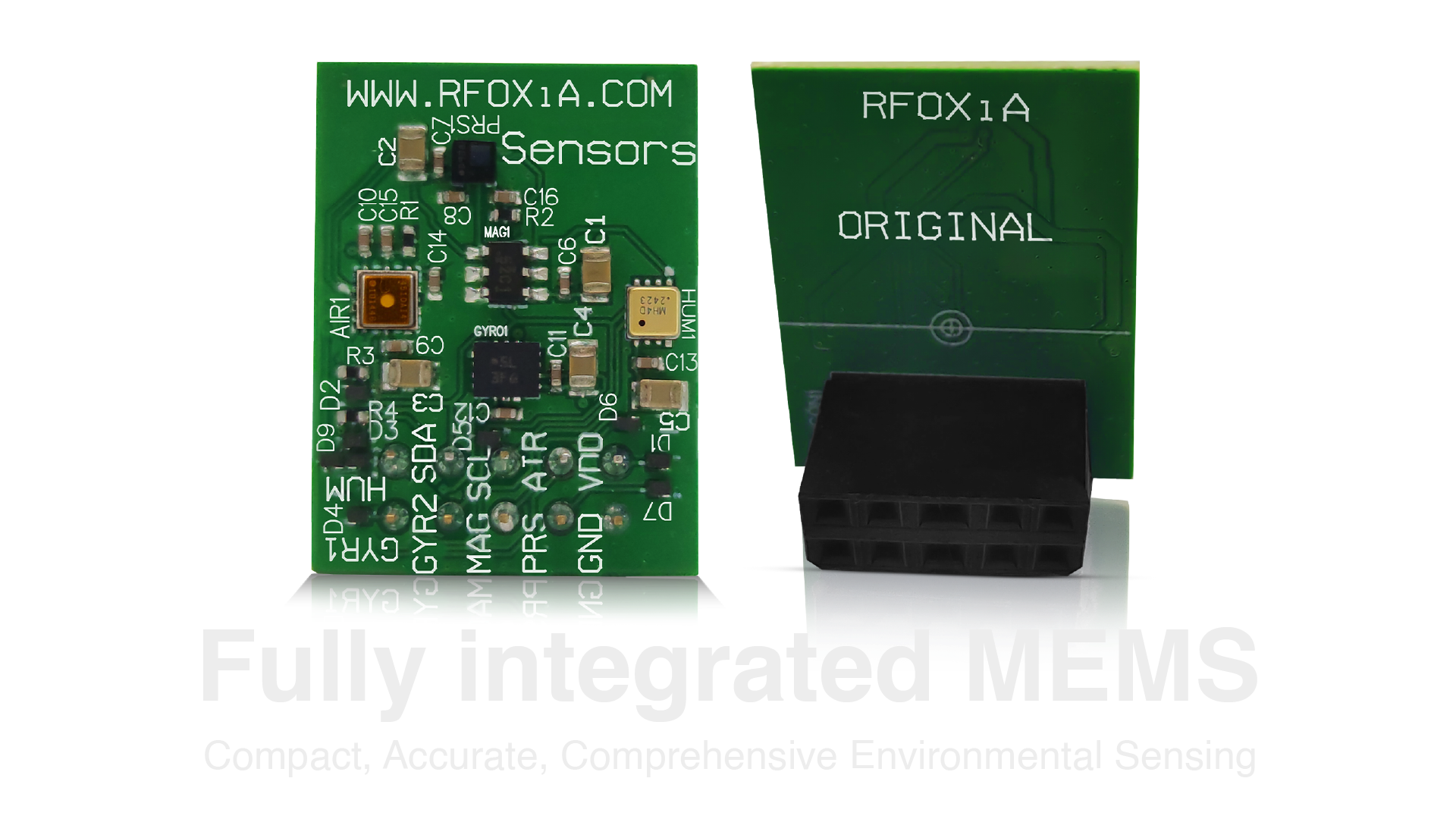
The MultiNav Pro+ Sensors Module is RFOXiA's all-in-one environmental and motion sensing board, designed specifically for developers who need professional-grade sensing in minimal footprint. At 24mm × 18mm, it is compact enough for drone payloads, wearable devices, and compact IoT enclosures while delivering the kind of sensor quality usually reserved for industrial-grade hardware costing ten times as much.
The module integrates seven sensors from five industry-leading manufacturers:
- Accelerometer & Gyroscope: BMI270 from Bosch Sensortec
- Magnetometer: TMAG5273C1QDBVR from Texas Instruments
- Air Pressure: LPS22HHTR from STMicroelectronics
- Humidity & Temperature: MVH4003D from MEMSVision
- Air Quality: ZMOD4510AI4R from RENESAS
These are not generic, no-name sensor dies. These are the same components used in professional aerospace, automotive, and industrial equipment — chosen for accuracy, stability, and long-term availability. Every sensor has a dedicated I2C address and shares a single communication line, dramatically simplifying your wiring and your firmware.
The module ships FCC certified and is designed to integrate natively with the full RFOXiA ecosystem, including the BLE Module for wireless transmission and the RFOXiA Connect app for live visualization. But it also works perfectly as a standalone sensing platform in any I2C-based system.
Why This Matters for IoT Developers
Most IoT sensor data to cloud tutorials start with a single sensor — a DHT11 temperature sensor or a BMP280 pressure module — and call it a day. That is fine for learning the basics. But real-world IoT deployments need multi-dimensional data. A weather monitoring node needs temperature, humidity, pressure, and air quality simultaneously. A drone autopilot needs motion data and environmental awareness together. A precision agriculture system needs to correlate air quality with temperature and humidity at the same timestamp.
Building that multi-sensor stack from scratch means:
- Sourcing five to seven separate breakout boards
- Resolving I2C address conflicts (the biggest hidden headache in multi-sensor systems)
- Debugging power supply noise between sensors
- Writing separate initialization routines for each sensor
- Managing different data update rates across sensors
- Mounting and wiring everything in a space-constrained enclosure
The MultiNav Pro+ Sensors Module eliminates every one of these problems. All seven sensors are pre-integrated, address conflicts are resolved at the hardware level, power supply filtering is handled by the PCB design, and you communicate with all of them over a single four-wire I2C connection. The result is that your IoT sensor data to cloud pipeline goes from a month of hardware integration work to a single afternoon.
The Sensor Stack: What You Are Actually Working With
Motion Sensing: BMI270 from Bosch Sensortec
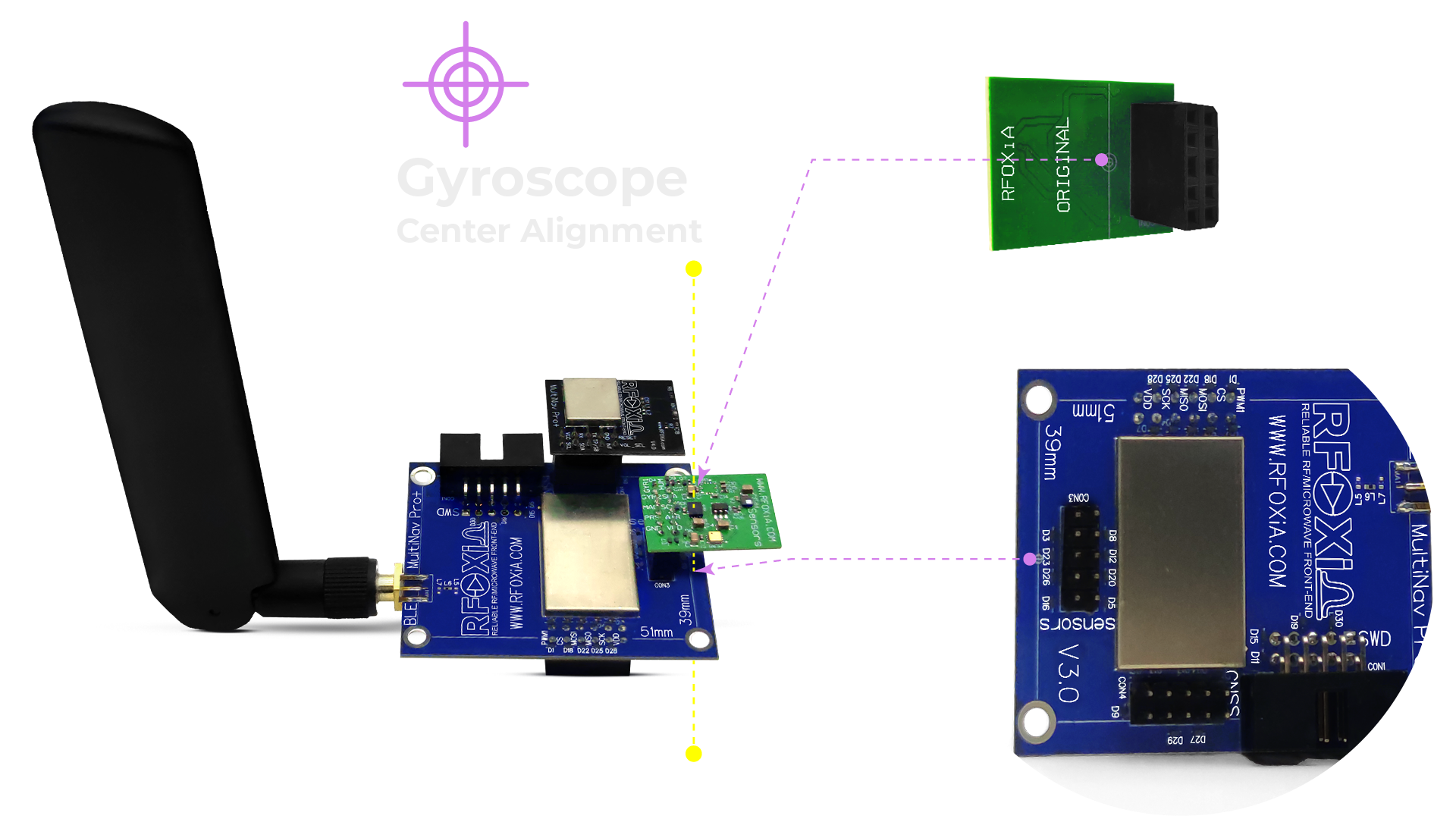
The BMI270 is one of Bosch's flagship inertial measurement units. It combines a 16-bit triaxial accelerometer and a 16-bit triaxial gyroscope in a single package, with integrated step detection, activity recognition, and Bosch's proprietary CRT (Component Retrimming) for best-in-class accuracy after production. It is used in flagship smartphones, professional drones, and robotics platforms where you cannot afford drift or latency.
For IoT applications, the BMI270 means you can detect vibration, orientation, fall events, and precise angular velocity in real time — and stream all of that to the cloud alongside your environmental data for full-context monitoring.
Magnetometer: TMAG5273 from Texas Instruments
The TMAG5273C1QDBVR is Texas Instruments' precision 3D Hall-effect magnetic sensor. It provides true three-axis magnetic field measurement with very low noise and a wide dynamic range, making it ideal for heading estimation, compass applications, and detecting nearby metallic objects or magnetic field anomalies. In drone and robotics applications, it provides the third axis of orientation data to complement the BMI270's accelerometer and gyroscope.
Environmental Sensing: LPS22HH, MVH4003D, and ZMOD4510
The environmental sensing trio covers the four parameters most critical to outdoor IoT deployments:
- LPS22HHTR (STMicroelectronics): Absolute pressure with ±0.1 hPa typical accuracy. Used for altitude estimation, weather monitoring, and HVAC applications.
- MVH4003D (MEMSVision): Combined humidity and temperature sensor with fast response time and calibrated digital output.
- ZMOD4510AI4R (RENESAS): Outdoor air quality sensor specifically designed to measure ozone and NO₂ — the two outdoor pollutants most relevant to urban environmental monitoring, agricultural applications, and public health data collection.
Together, these three sensors give you a complete outdoor environmental profile: temperature, relative humidity, absolute pressure, and air quality index — all verified and timestamped at the same moment.
Hardware Specifications at a Glance
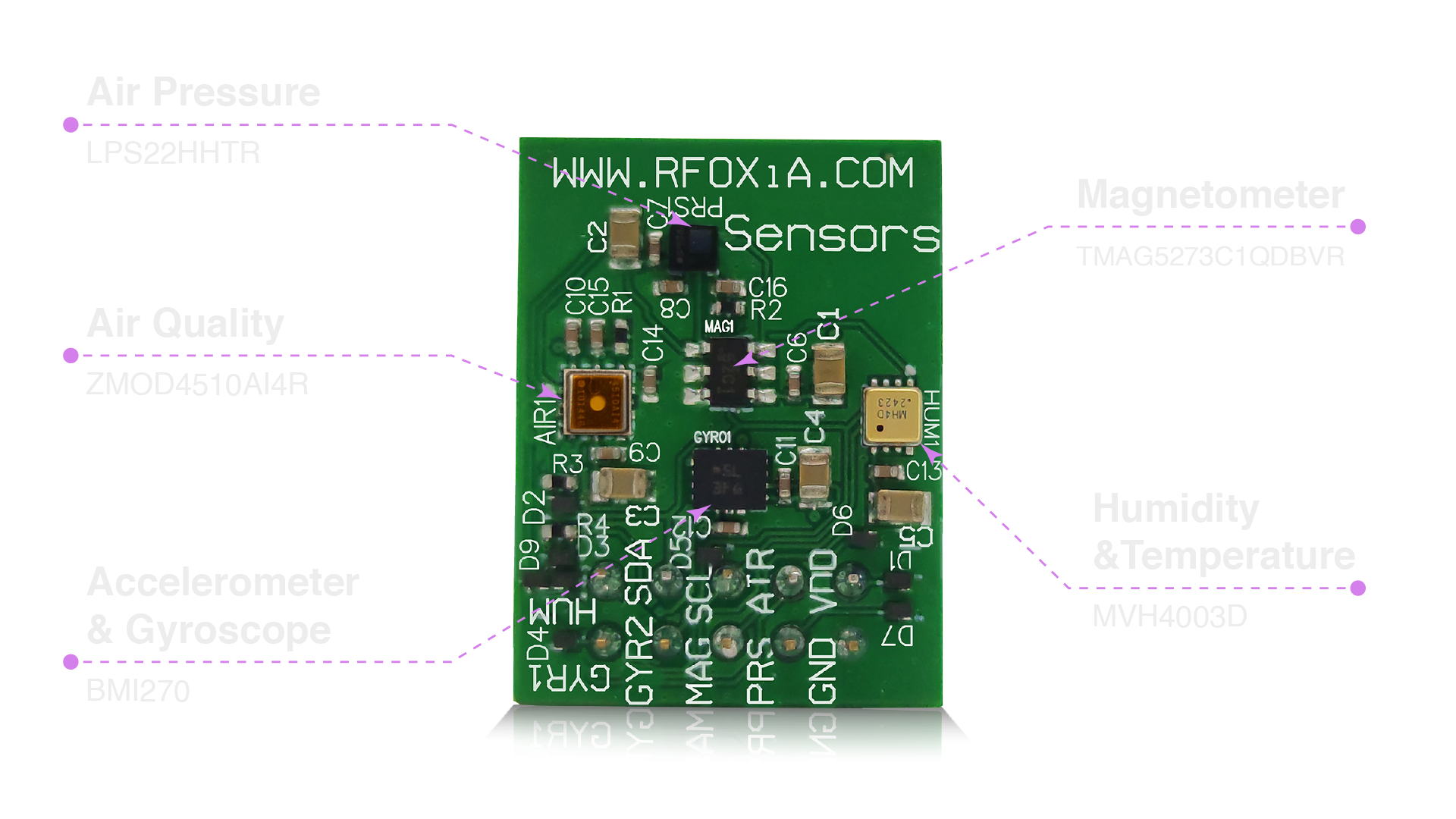
| Sensor | IC | Manufacturer | Parameter |
|---|---|---|---|
| Accelerometer + Gyroscope | BMI270 | Bosch Sensortec | Motion, orientation, vibration |
| Magnetometer | TMAG5273C1QDBVR | Texas Instruments | Heading, magnetic field |
| Air Pressure | LPS22HHTR | STMicroelectronics | Altitude, weather |
| Humidity + Temperature | MVH4003D | MEMSVision | Climate, dew point |
| Air Quality | ZMOD4510AI4R | RENESAS | Ozone, NO₂, AQI |
Module size: 24mm × 18mm Communication: I2C (single bus, dedicated addresses) Certification: FCC certified Price: $39 Ecosystem compatibility: Full RFOXiA stack (BLE Module, Power/Program Kit, Connect App)
I2C Architecture: Why It Matters and How It Works
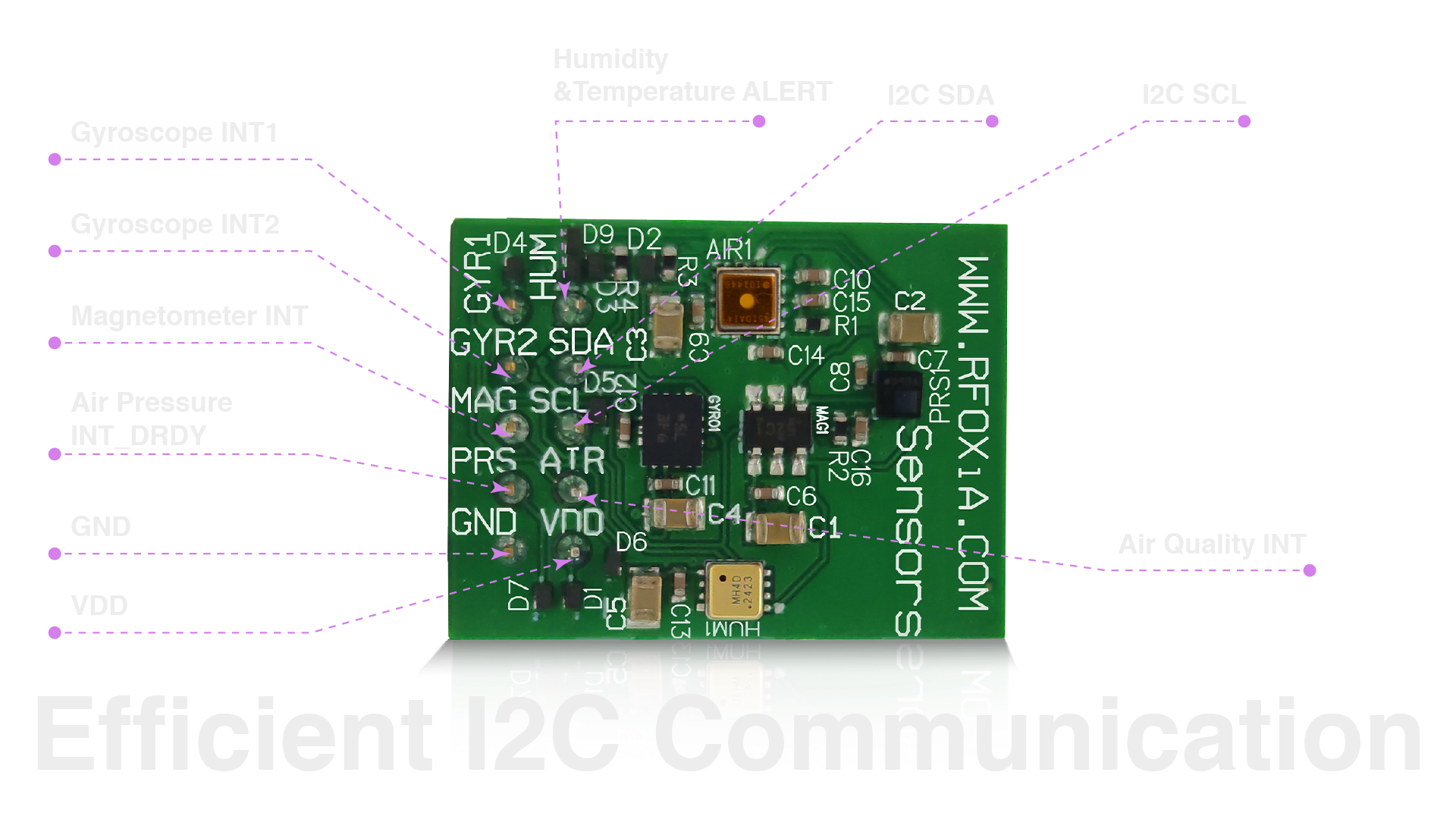
One of the most underappreciated design decisions in the MultiNav Pro+ Sensors Module is how the I2C bus is managed. I2C (Inter-Integrated Circuit) is a two-wire serial communication protocol that allows multiple devices to share a single bus — but each device must have a unique address on that bus. When you are working with seven sensors from five different manufacturers, address conflicts are almost inevitable if you are assembling your own stack.
RFOXiA's hardware team resolved this at the PCB level. Each of the seven sensors has a dedicated, non-conflicting I2C address. You connect four wires — VCC, GND, SDA, SCL — and enumerate all seven devices with a standard I2C scanner. No address remapping in firmware. No address multiplexer ICs. No pull-up resistor calculations across five different datasheets.
This means your firmware initialization for this IoT sensor data to cloud project looks like this in pseudocode:
// Initialize I2C bus
i2c_init(400000); // 400kHz Fast Mode

// All seven sensors are immediately addressable
bmi270_init(I2C_ADDR_BMI270);
tmag5273_init(I2C_ADDR_TMAG);
lps22hh_init(I2C_ADDR_LPS22HH);
mvh4003_init(I2C_ADDR_MVH4003);
zmod4510_init(I2C_ADDR_ZMOD);

// Read all sensors in a single loop
while(1) {
  sensor_data.accel = bmi270_read_accel();
  sensor_data.gyro = bmi270_read_gyro();
  sensor_data.mag = tmag5273_read();
  sensor_data.pressure = lps22hh_read();
  sensor_data.humidity = mvh4003_read_humidity();
  sensor_data.temperature = mvh4003_read_temp();
  sensor_data.aqi = zmod4510_read();
  cloud_publish(sensor_data);
  delay_ms(100); // 10Hz update rate
}
Clean. Readable. Maintainable. No hardware hacks required.
Step-by-Step: IoT Sensor Data to Cloud Tutorial
Step 1: Physical Setup and Wiring
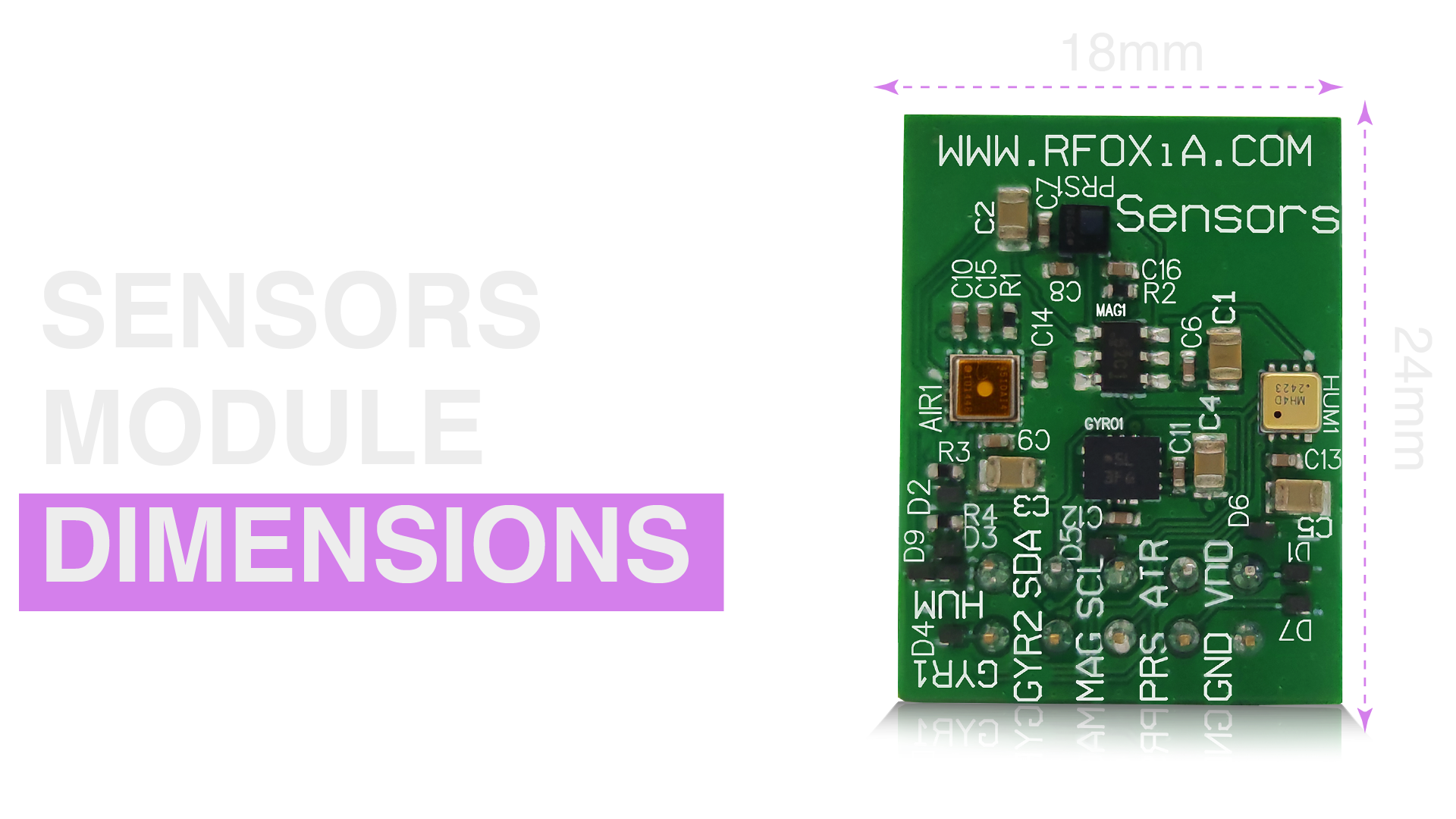
The MultiNav Pro+ Sensors Module exposes a standard 4-pin I2C header. Connect it to your microcontroller or single-board computer as follows:
Wiring Table:
| Module Pin | Connect To |
|---|---|
| VCC | 3.3V supply |
| GND | Ground |
| SDA | MCU I2C SDA |
| SCL | MCU I2C SCL |
The module operates at 3.3V logic, which is compatible with STM32, ESP32, nRF52, Raspberry Pi, and most modern microcontrollers without level shifting. If you are using an Arduino Uno (5V logic), use a bi-directional level shifter on SDA and SCL.
For the best results in mobile deployments (drones, vehicles, wearables), use the RFOXiA Power/Program Kit as your power source. Its supercapacitor-based design provides extremely clean, stable 3.3V with minimal noise — important for analog-sensitive sensors like the ZMOD4510 air quality IC.
Step 2: Firmware Initialization with AI Assistance
RFOXiA's platform includes an AI Firmware Builder in the Dev Hub. Instead of reading five datasheets and writing initialization code from scratch, describe your application in plain language:
"Initialize all seven sensors on the MultiNav Pro+ Sensors Module via I2C, read data at 10Hz, format as JSON, and transmit over UART to an ESP32 for Wi-Fi cloud upload."
The AI Firmware Builder generates production-ready C firmware with full source code, including:
- Sensor initialization sequences with correct timing and configuration registers
- Error handling and retry logic
- JSON serialization of all seven data streams
- UART transmit with handshake
- Power management for extended deployment
This is the fastest path to a working IoT sensor data to cloud pipeline. No weeks of datasheet archaeology. No mysterious I2C timing bugs at 2am. Describe it, generate it, flash it.
Step 3: Structuring Your Data Payload
For cloud transmission, structure your sensor data as a consistent JSON payload with a timestamp. Here is a recommended schema:
{
  "device_id": "rfoxia_node_001",
  "timestamp": "2025-04-26T14:23:11Z",
  "location": {"lat": 25.2048, "lon": 55.2708},
  "motion": {
    "accel_x": 0.02, "accel_y": -0.01, "accel_z": 9.81,
    "gyro_x": 0.001, "gyro_y": 0.000, "gyro_z": -0.002,
    "mag_x": 24.3, "mag_y": -12.1, "mag_z": 41.7
  },
  "environment": {
    "temperature_c": 28.4,
    "humidity_pct": 62.1,
    "pressure_hpa": 1013.2,
    "aqi": 42
  }
}
This payload contains all seven sensor readings plus GPS location (if paired with the RFOXiA GNSS Module) in a single timestamped record. When combined with GNSS data, this becomes the exact verified format used by the RFOXiA Data Network for rewarding contributors.
Step 4: Choosing Your Cloud Backend
For your IoT sensor data to cloud pipeline, common options include:
AWS IoT Core: Use MQTT over TLS to publish your JSON payload to an IoT topic. AWS IoT Rules Engine routes data to DynamoDB, S3, or Kinesis for storage and analysis. Best for production deployments requiring scalability.
Google Cloud IoT / Pub/Sub: Publish via MQTT or HTTP to a Pub/Sub topic, then route to BigQuery for time-series analysis. Google's free tier is generous for prototype deployments.
InfluxDB + Grafana: Self-hosted or cloud-hosted time-series database with real-time Grafana dashboards. Best for developers who want full control and local hosting.
RFOXiA Data Network: If your deployment is outdoors, connect directly to the RFOXiA platform. Verified data streams earn $0.08–$0.40 per day in rewards. The platform handles storage, verification, and monetization automatically.
Step 5: Live Data Visualization
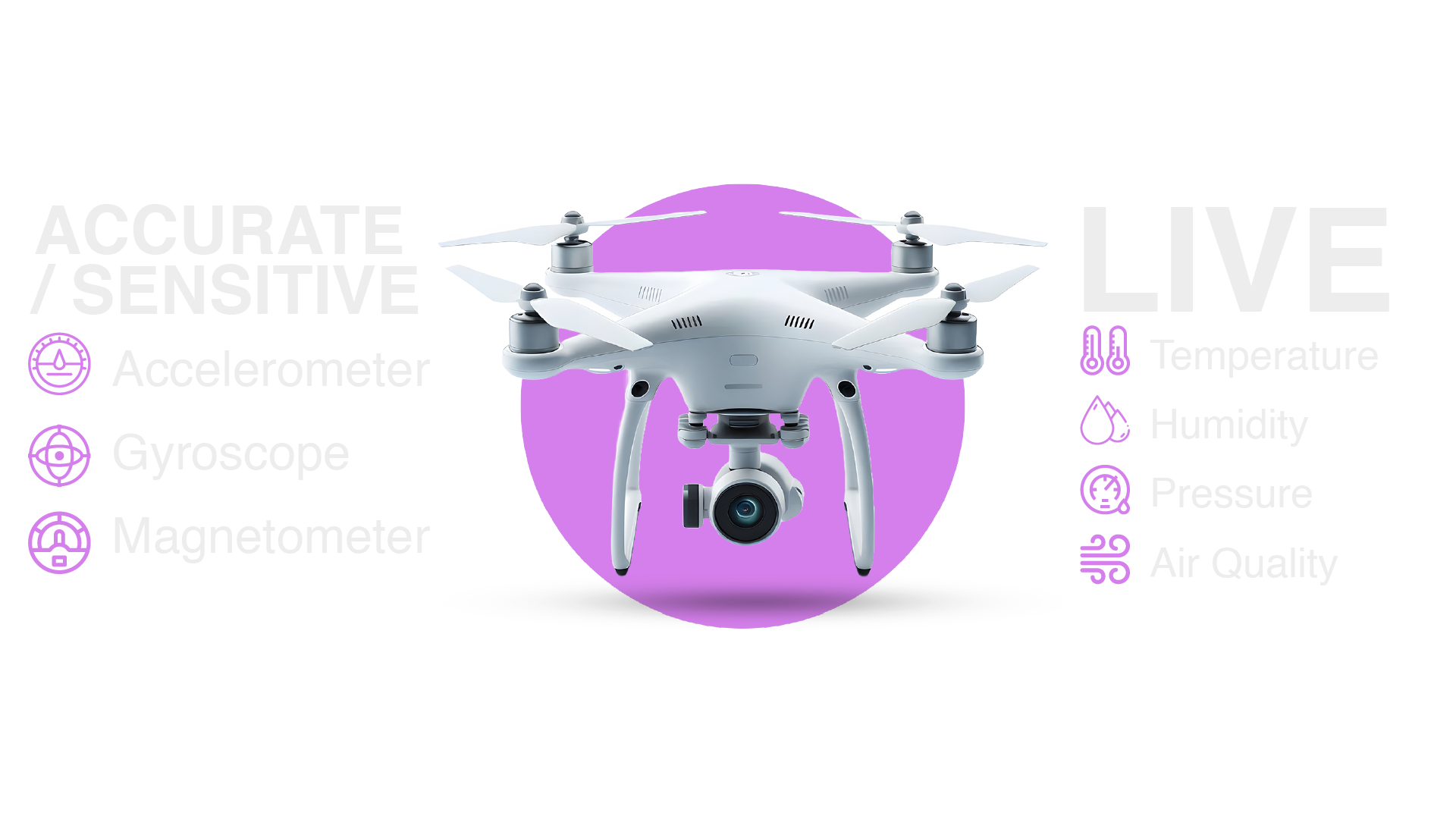
Once your data is flowing to the cloud, visualization closes the loop. The RFOXiA Connect app's Command Center provides live visualization of all sensor streams directly on your mobile device — no custom dashboard required. You can watch temperature, humidity, pressure, and air quality update in real time alongside your motion data and GPS position.
For custom dashboards, the RFOXiA Club platform exposes your device data through a clean API, so you can build Grafana panels, Tableau dashboards, or custom web visualizations against the same data stream that earns you daily rewards.
Real-World Applications
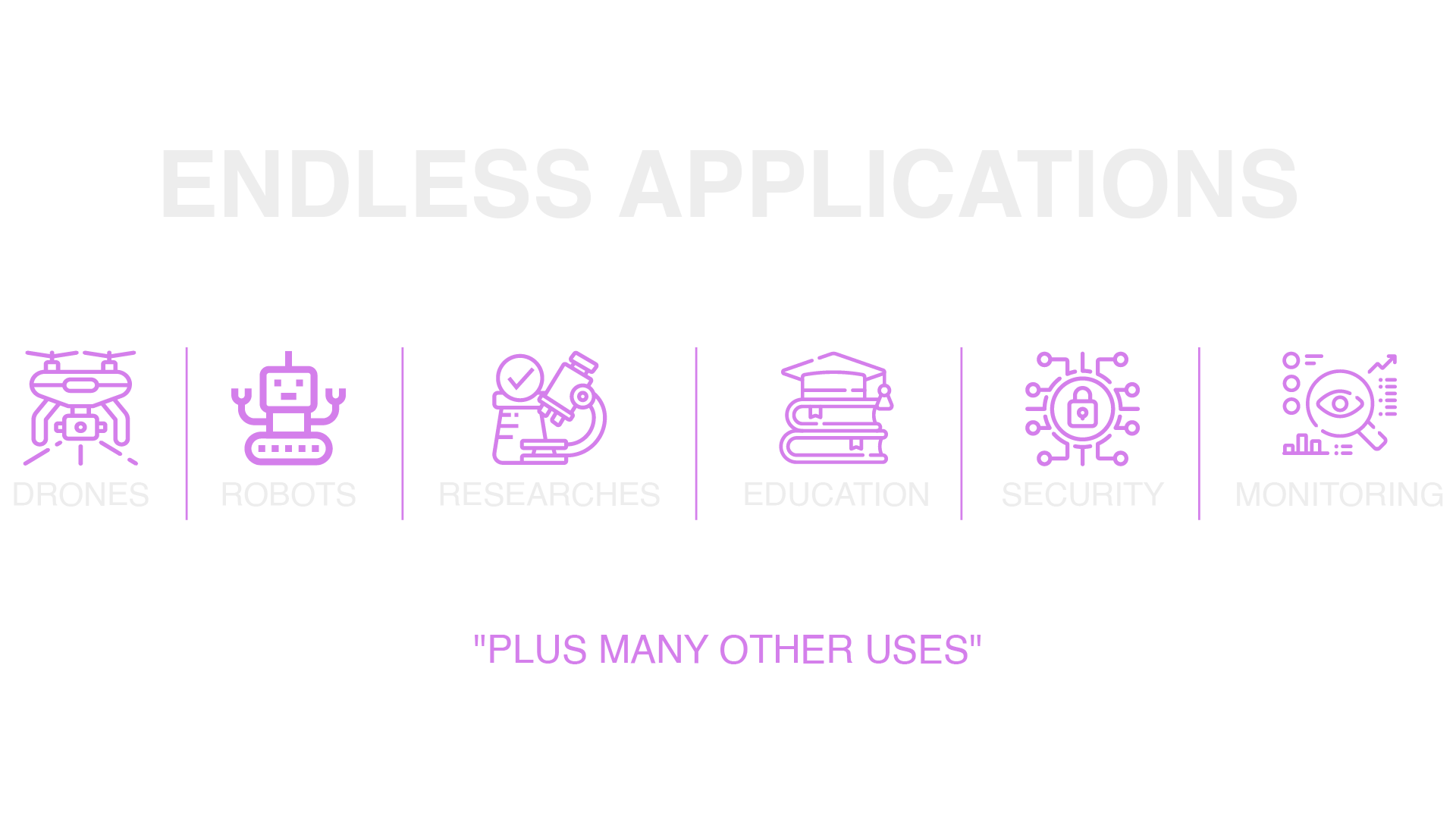
The MultiNav Pro+ Sensors Module is not a single-use component. Its combination of motion, orientation, and environmental sensing covers an unusually wide range of real-world IoT deployments:
Drone Telemetry: Combine orientation data (BMI270 + TMAG5273) with pressure-based altitude (LPS22HH) and air quality (ZMOD4510) for a complete flight environment profile. Know your altitude, your drone's attitude, and the air quality of the airspace simultaneously.
Smart Agriculture: Deploy nodes across a field to build hyper-local micro-climate maps. Temperature, humidity, pressure, and air quality data at second-level temporal resolution gives precision agriculture operators insights no weather API can match.
Urban Environmental Monitoring: Deploy nodes across a city as part of a distributed sensing network. The ZMOD4510's outdoor air quality sensing is specifically designed for urban pollutant detection. Nodes in data-sparse locations earn the highest rewards in the RFOXiA Data Network.
Industrial Equipment Monitoring: Mount on machinery to monitor both environmental conditions and vibration/motion signatures simultaneously. Detect overheating (temperature + humidity), atmospheric pressure changes that indicate weather fronts, and abnormal vibration patterns from the BMI270 — all in one compact sensor payload.
Search and Rescue Robotics: Equip robots with orientation awareness (critical for navigation in debris fields), environmental sensing (temperature and air quality in post-disaster scenarios are safety-critical), and magnetic field detection for locating metallic objects or buried electronics.
Wearable Health and Safety Devices: The compact 24mm × 18mm form factor makes the module viable for wearable applications. Combine motion detection with environmental monitoring for worker safety devices in industrial environments.
The RFOXiA Data Network: Your Sensor Earns While You Deploy
Here is something that most IoT sensor data to cloud tutorials do not cover: what if your sensor node paid you back?
When you deploy the MultiNav Pro+ Sensors Module outdoors with GPS validation (via the RFOXiA GNSS Module), your verified environmental data can be contributed to the RFOXiA Data Network. RFOXiA aggregates hyper-local, GPS-verified sensor data and sells it to enterprise buyers — agricultural technology companies, smart city operators, insurance companies, logistics firms, and research institutions — who need street-level environmental data that public weather APIs simply cannot provide.
As a contributing node, you earn daily rewards for every verified complete data session:
- Base rate: $0.08–$0.25 per day
- Pioneer members earn higher locked-in rates
- Scarcity bonus for nodes in data-sparse locations
- Uptime bonus for consistent streaming
- Maximum potential: up to $0.40 per day per node
At scale — ten nodes across a city, thirty nodes across a farm — this passive income stream offsets hardware costs and creates a self-sustaining IoT deployment model. You build the network. The network pays you back.
Why the MultiNav Pro+ Is the Right Foundation for Your IoT Stack
For developers who take IoT seriously, the RFOXiA MultiNav Pro+ Sensors Module is a genuinely rare thing: professional-grade sensing components, hardware-level integration by engineers who understand multi-sensor I2C systems, and ecosystem support that takes your data from raw bytes to cloud visualization to monetization — all for $39.
The alternative is spending two to three weeks sourcing breakout boards, resolving address conflicts, debugging noise, and writing initialization code before you can write a single line of your actual application logic. The MultiNav Pro+ is the shortcut that does not compromise on quality.
FCC certified. Built with Bosch, TI, ST, MEMSVision, and RENESAS components. Ships from the RFOXiA store. Works out of the box with the complete RFOXiA wireless ecosystem.
Getting Started Today
This IoT sensor data to cloud tutorial has walked you through everything you need:
- What the MultiNav Pro+ Sensors Module is and why its component selection matters
- How the I2C architecture eliminates the most common multi-sensor integration pain points
- Step-by-step wiring, firmware initialization, data payload structuring, and cloud backend options
- Real-world application scenarios across drones, agriculture, urban monitoring, and industrial use
- How to turn your deployed sensor node into a revenue-generating data network contributor
The only remaining step is to build something.
Visit the RFOXiA Integrated Sensors Module page to order your module, explore documentation in the RFOXiA Club Dev Hub, and use the AI Firmware Builder to generate your first complete firmware in minutes — not weeks.
Sign up for RFOXiA Club and claim your $10 welcome credit. Your IoT sensor data to cloud project starts today.
RFOXiA — Democratizing Connectivity and Computing Power.
Written by: Moamen Mohamed LinkedIn