

IoT Sensor Kit Buy: The Complete Guide to the MultiNav Pro+ Sensors Module
RFOXiA Integrated Sensors Module
Why the Right IoT Sensor Kit Buy Decision Changes Everything
Every hardware project starts with the same question: how do I sense what is happening in the real world? Temperature, motion, orientation, air quality, pressure, humidity — these are the raw signals that transform a passive circuit board into an intelligent, responsive system. But sourcing each sensor individually, wiring them up, managing address conflicts on a shared bus, and squeezing everything into a compact form factor is exactly where most projects stall.
That is precisely the problem the MultiNav Pro+ Sensors Module from RFOXiA was built to solve. This is not a general-purpose breakout board collection. It is a precision-engineered, all-in-one sensor array designed for professionals, researchers, drone builders, and serious IoT developers who need complete environmental and motion data from a single, compact, FCC-certified module — without the integration headache.
If you are evaluating your next IoT sensor kit buy, this guide will walk you through everything: what is inside, why the component choices matter, how the hardware integrates into real applications, and how the MultiNav Pro+ connects to a broader ecosystem that actually pays you back for the data you collect.
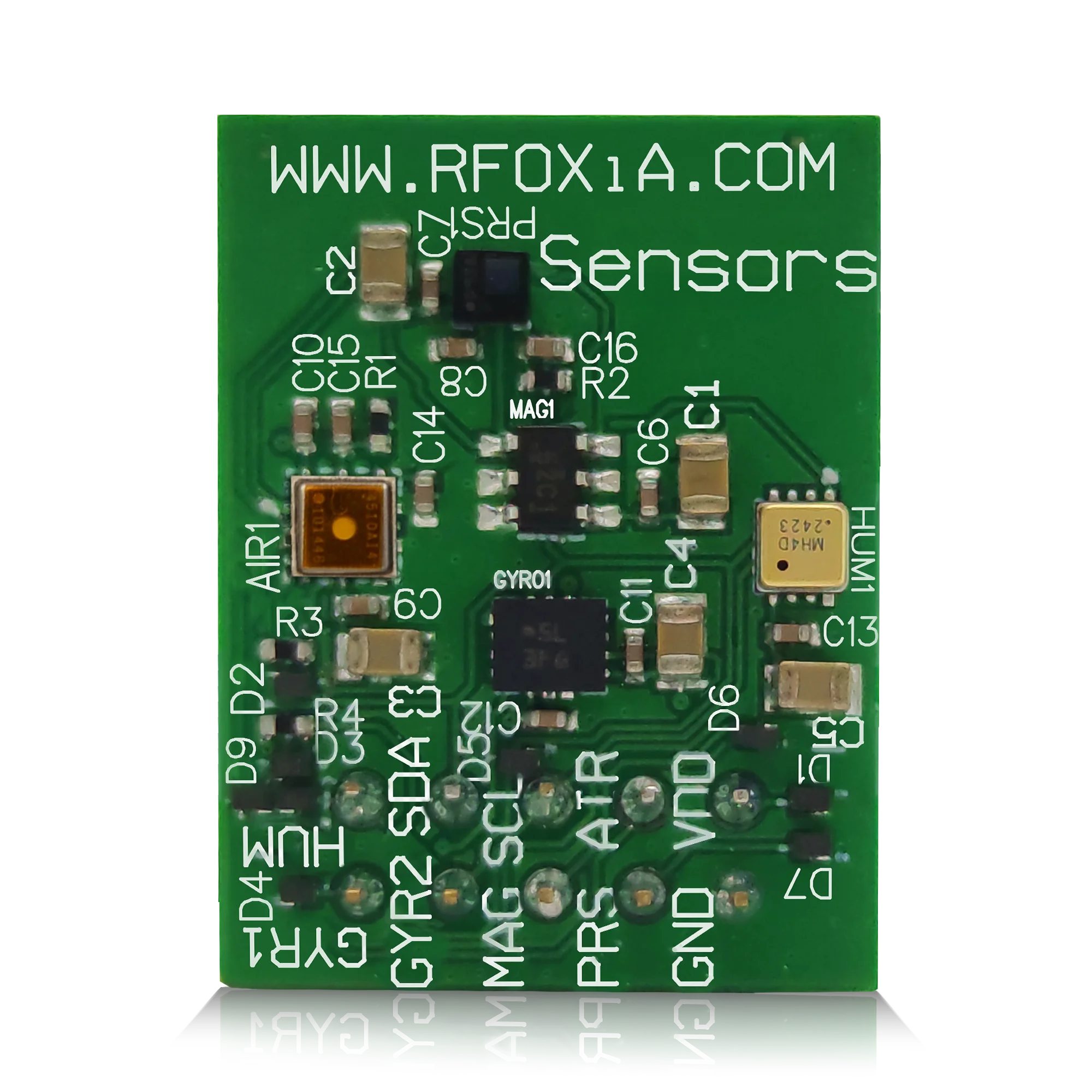
What Is the MultiNav Pro+ Sensors Module?
The MultiNav Pro+ Sensors Module is RFOXiA's all-in-one environmental and motion sensing solution. In a footprint of just 24mm × 18mm, it integrates seven distinct sensors from four of the world's leading sensor manufacturers — Bosch Sensortec, Texas Instruments, STMicroelectronics, MEMSVision, and RENESAS — all communicating over a single I2C bus with dedicated addresses.
At $39, it occupies a price point that makes professional-grade sensing accessible to makers, researchers, and startups who cannot justify enterprise sensor budgets but refuse to compromise on data quality.
The module is FCC certified, making it immediately usable in commercial products and eligible for distribution through professional electronics channels.
The Seven Sensors Inside: A Deep Technical Look
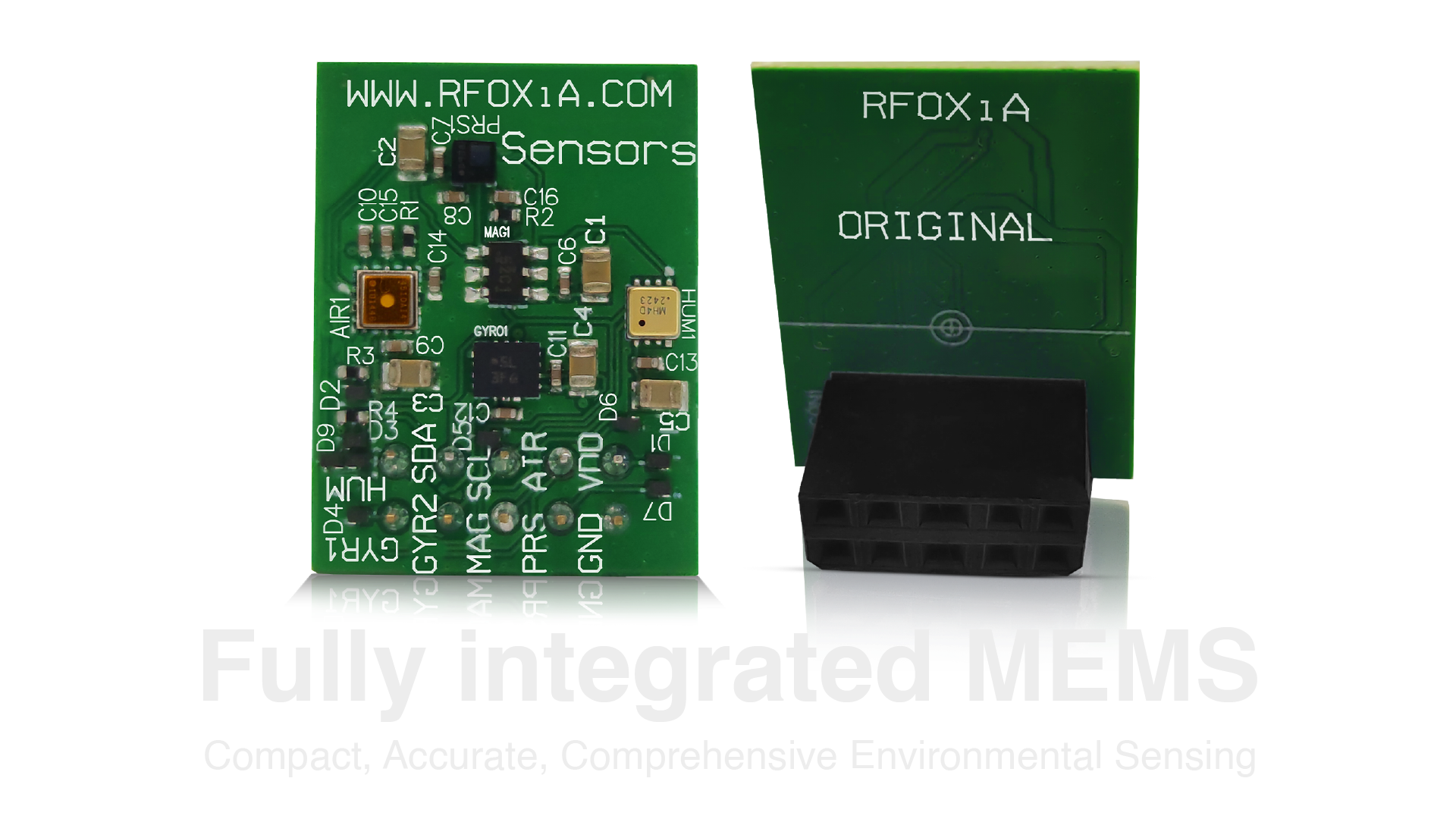
Understanding what makes this IoT sensor kit genuinely superior requires a close look at the individual components selected for it. These are not generic Chinese commodity sensors. Each part was chosen from a tier-one manufacturer for its accuracy, power efficiency, and suitability for the demanding applications RFOXiA targets.
1 & 2. Accelerometer and Gyroscope — BMI270 by Bosch Sensortec
The BMI270 is a professional-grade inertial measurement unit (IMU) used in consumer electronics, wearables, and industrial robotics. It delivers:
- 16-bit resolution on both accelerometer and gyroscope axes
- Programmable measurement ranges — ±2g to ±16g for accelerometer, ±125°/s to ±2000°/s for gyroscope
- Ultra-low noise density for clean motion data even at low speeds
- Built-in step detection, tap detection, and orientation recognition at the hardware level
- Extremely low power consumption — critical for battery-operated drone and wearable deployments
For drone flight controllers, the BMI270 provides the precise angular velocity and linear acceleration data that stabilization algorithms depend on. For robotics, it enables accurate dead-reckoning, gesture recognition, and vibration analysis.
3. Magnetometer — TMAG5273C1QDBVR by Texas Instruments
Texas Instruments' TMAG5273 is a 3D Hall-effect magnetic sensor designed for angle measurement and compass heading with exceptional precision. Key characteristics:
- Ultra-low power operation with selectable measurement modes
- 12-bit resolution for smooth, fine-grained heading data
- I2C interface with configurable device addresses — enabling multiple units on the same bus if needed
- Operating temperature range from -40°C to +125°C — genuinely field-deployable
For navigation applications, the magnetometer completes the 9-DOF (degrees of freedom) sensing stack alongside the accelerometer and gyroscope, enabling accurate compass heading even when GPS signal is weak or unavailable.
4. Barometric Pressure Sensor — LPS22HHTR by STMicroelectronics
STMicroelectronics' LPS22HH is a piezo-resistive absolute pressure sensor widely used in consumer electronics, industrial equipment, and navigation systems.
- Pressure range: 260 to 1260 hPa
- Relative accuracy: ±0.1 hPa — capable of detecting altitude changes of less than 1 meter
- Output data rate: up to 200Hz
- Embedded FIFO buffer for low-power data logging applications
For drones, this translates to reliable altitude hold. For environmental research, it means high-resolution atmospheric pressure logging. For weather station applications, it provides professional-grade barometric data.
5 & 6. Humidity and Temperature — MVH4003D by MEMSVision
MEMSVision's MVH4003D is a digital relative humidity and temperature sensor with fast response time and high accuracy:
- Humidity accuracy: ±3% RH
- Temperature accuracy: ±0.3°C
- Response time: under 8 seconds — significantly faster than many competing sensors
- Low power consumption suitable for continuous data logging applications
For the RFOXiA data network (more on this below), fast response time matters. When your sensor module is contributing verified environmental data to a commercial dataset, the temporal resolution of your readings directly affects your reward eligibility.
7. Air Quality — ZMOD4510AI4R by RENESAS
Perhaps the most sophisticated component on the board, the RENESAS ZMOD4510 is an ultra-low power gas sensor specifically designed for outdoor air quality monitoring.
- Target gases: Ozone (O₃) and nitrogen dioxide (NO₂) — the primary outdoor air quality indicators
- Integrated algorithm: Provides an Air Quality Index (AQI) output without requiring external computation
- Ultra-low power mode designed for continuous always-on operation
- Calibrated output — no complex sensor fusion required by the user
This is the component that sets the MultiNav Pro+ apart from every competing IoT sensor kit buy option on the market. Outdoor air quality sensing at this price point, from a tier-one semiconductor manufacturer, in a module this compact, simply does not exist elsewhere.
Precision Motion and Environmental Sensing Combined
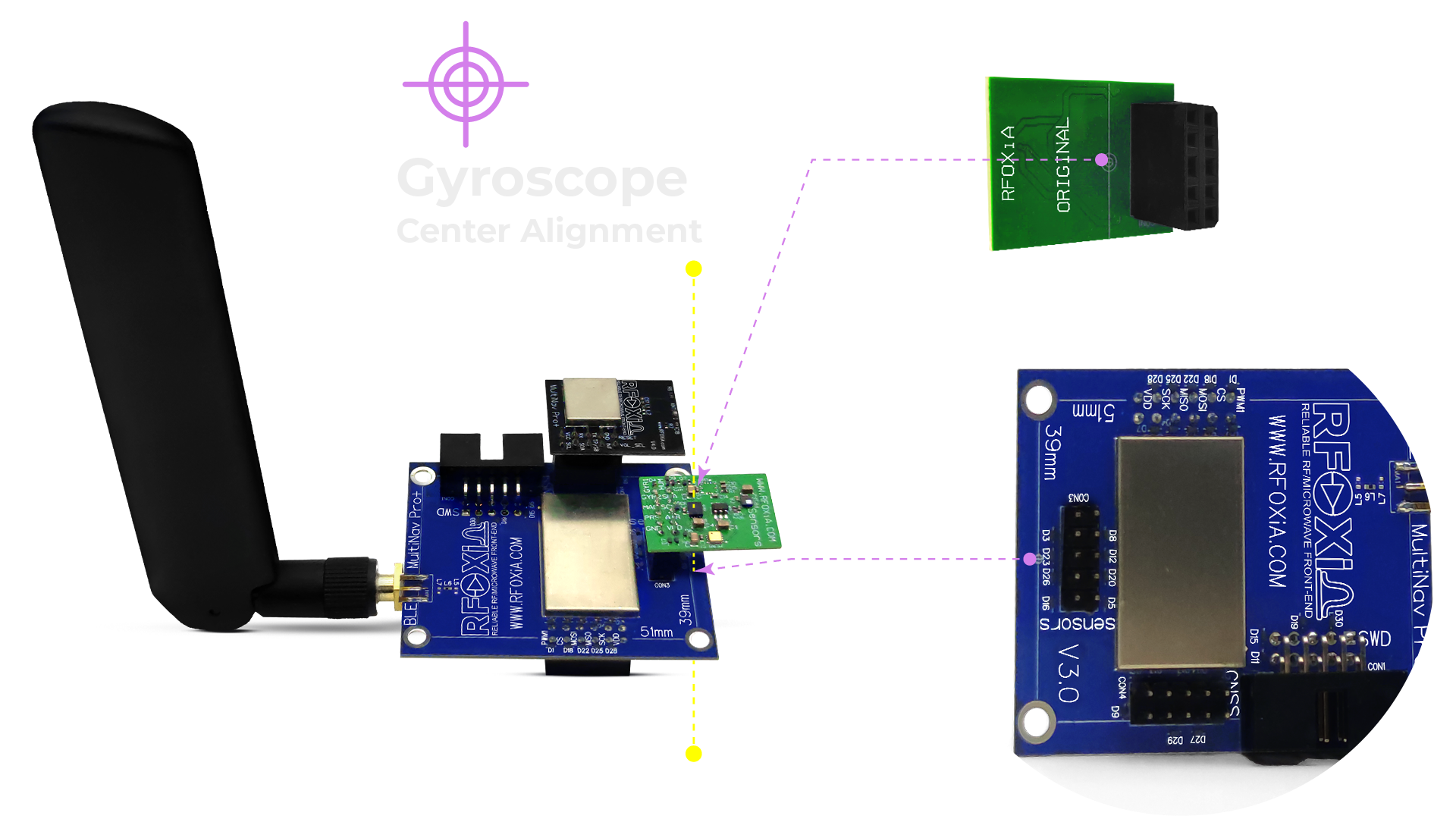
The deliberate combination of motion sensing and environmental sensing on a single board is not a coincidence. It reflects a deep understanding of how real applications actually work.
Consider a drone conducting an agricultural survey. It needs:
- IMU data (accelerometer + gyroscope) for flight stabilization
- Magnetometer for heading during GPS-denied flight
- Barometric pressure for altitude hold
- Temperature and humidity for crop microclimate analysis
- Air quality for pollution monitoring or pesticide drift detection
Previously, achieving this sensor fusion required sourcing five or six separate breakout boards, managing multiple power rails, and resolving I2C address conflicts manually. The MultiNav Pro+ collapses all of that into a single 24mm × 18mm footprint.
The Sensors at a Glance
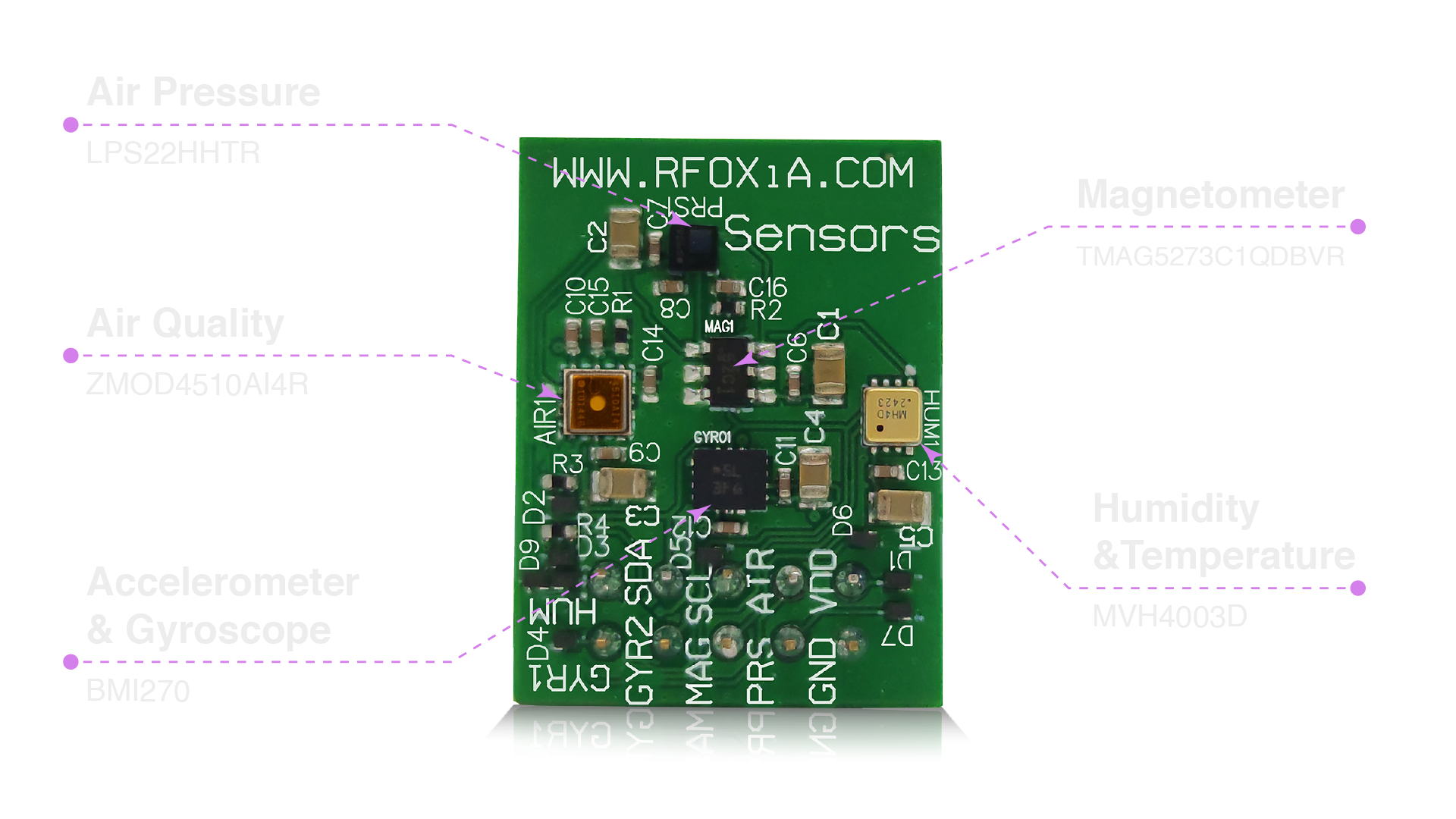
Here is a quick reference summary of every sensor on the module:
| Sensor | Component | Manufacturer |
|---|---|---|
| Accelerometer & Gyroscope | BMI270 | Bosch Sensortec |
| Magnetometer | TMAG5273C1QDBVR | Texas Instruments |
| Air Pressure | LPS22HHTR | STMicroelectronics |
| Humidity & Temperature | MVH4003D | MEMSVision |
| Air Quality | ZMOD4510AI4R | RENESAS |
Five manufacturers. Seven sensors. One FCC-certified board. One I2C bus.
I2C Architecture: Simplicity at the Bus Level
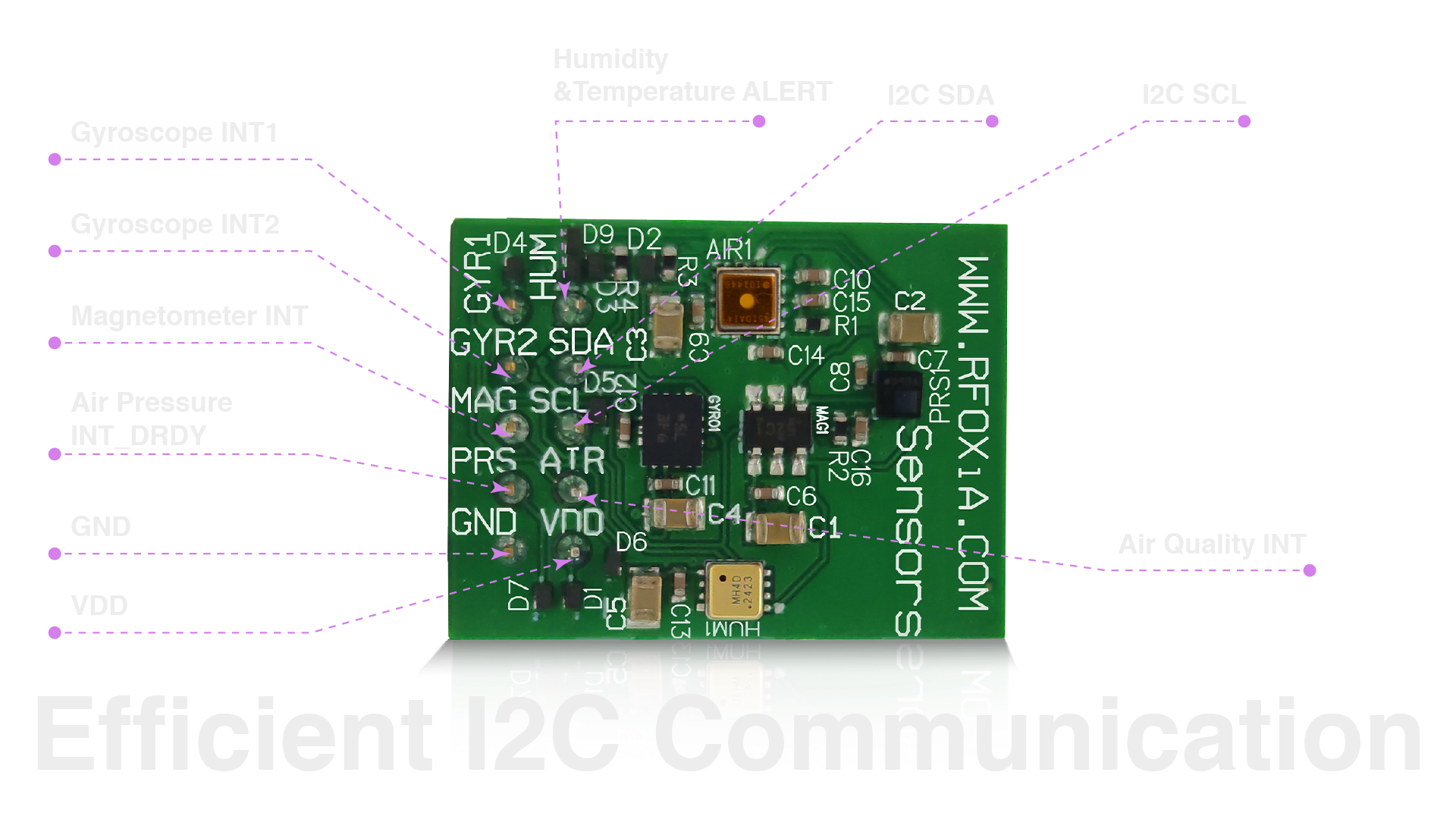
One of the most underappreciated engineering decisions in the MultiNav Pro+ is its I2C bus architecture. All seven sensors share a single I2C line, each pre-assigned to a dedicated address. This means:
- Two wires (SDA and SCL) connect the entire module to your host microcontroller
- No address conflicts — each sensor has its own unique address, pre-configured at the hardware level
- No multiplexers required — a common workaround when integrating multiple sensors with overlapping default addresses
- Simpler firmware — you query each sensor independently using standard I2C read/write operations
- Lower power complexity — single bus power management rather than multiple power domains
For developers building on STM32, ESP32, Arduino, Raspberry Pi, or any I2C-capable platform, integration is straightforward. RFOXiA's AI Firmware Builder — available inside the RFOXiA Club platform — can generate production-ready firmware for the Sensors Module from a plain-language description of your application, reducing integration time from days to hours.
Compact by Design
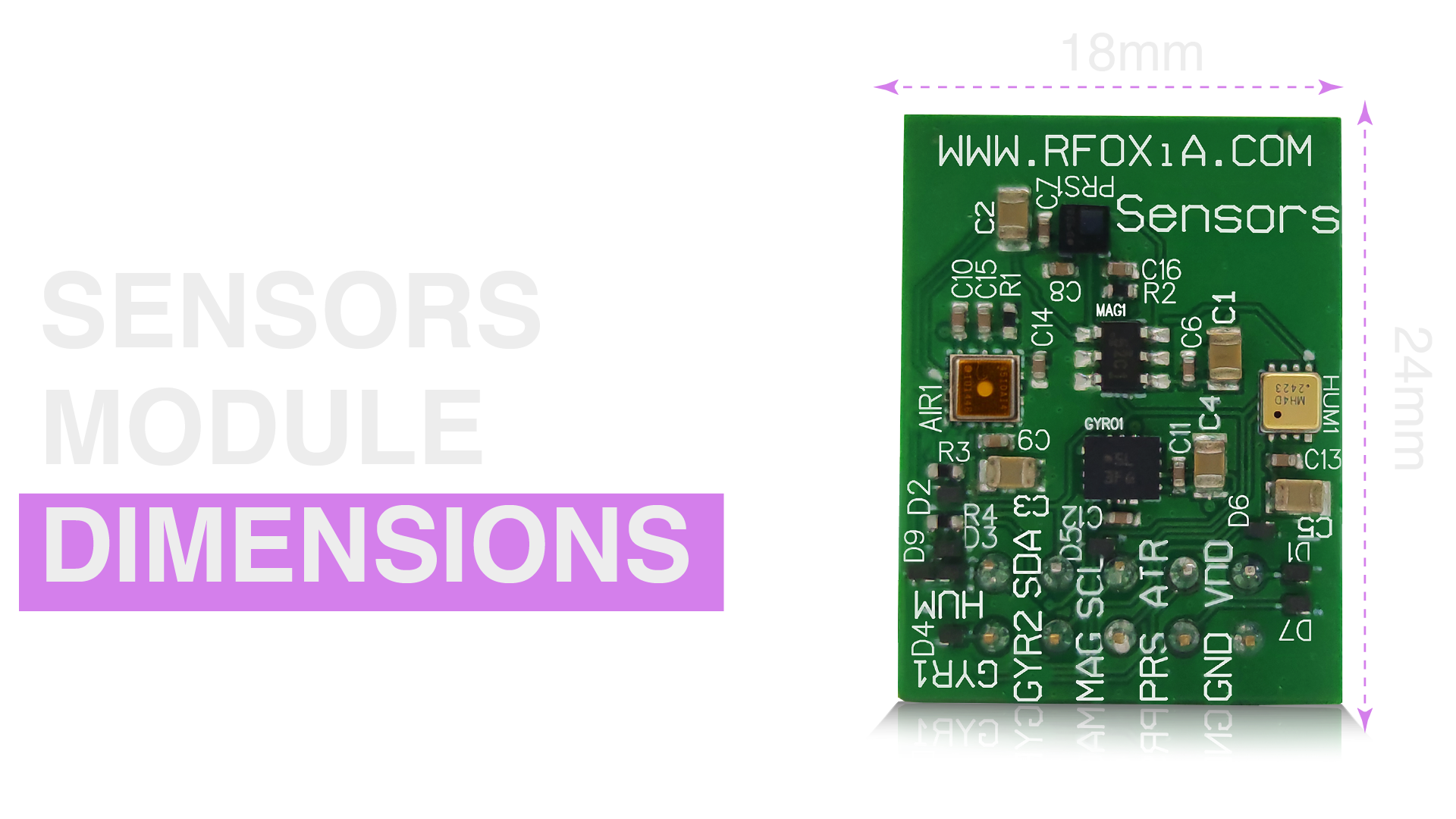
At 24mm × 18mm, the MultiNav Pro+ is small enough to mount directly on a drone frame arm, integrate into a wearable device housing, or embed inside an industrial IoT enclosure without compromising the mechanical design of your project.
For context:
- A standard SD card is 32mm × 24mm
- The MultiNav Pro+ is smaller than an SD card — and carries seven sensors from five manufacturers
This footprint was achieved through careful PCB stackup design and component selection. It is not a coincidence that the module is this small. It required deliberate engineering trade-offs to achieve maximum sensing capability in minimum area without compromising signal integrity between sensors.
The compact form factor makes the MultiNav Pro+ a serious choice for:
- Racing drones and FPV frames where every gram and millimeter matters
- Wearable biosensing devices where comfort and discreteness are critical
- Compact environmental nodes deployable at scale in smart city or agricultural grid applications
- Miniaturized robotics where sensor mass affects mobility and balance
Real-Time Environmental Data in Action
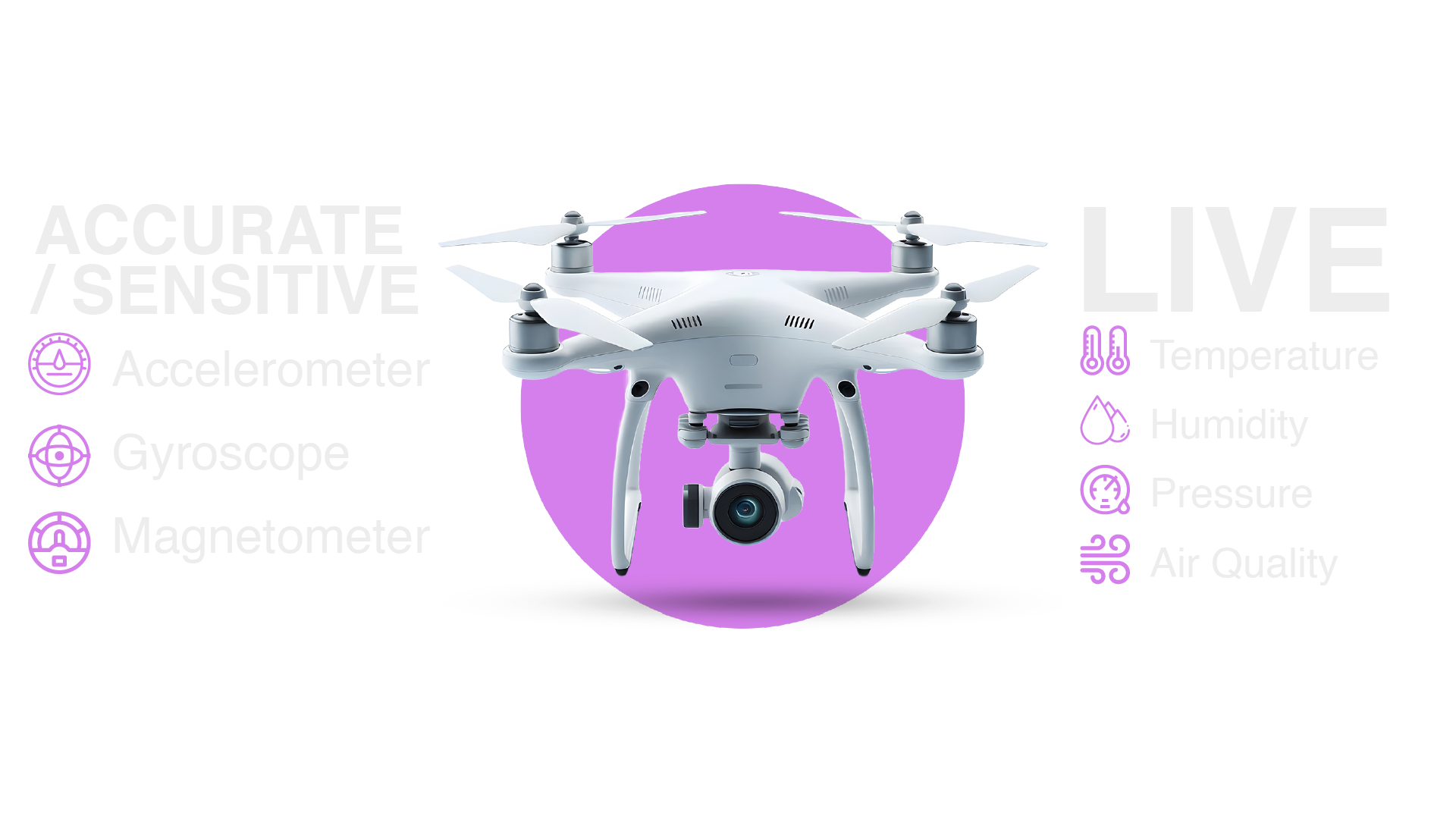
The combination of fast-response sensors and a clean I2C architecture enables true real-time environmental data for applications that demand it.
Consider what real-time means across different use cases:
Drone operations: Barometric altitude updates at up to 200Hz mean your flight controller has current altitude data on every control loop iteration. IMU data from the BMI270 feeds stabilization algorithms with sub-millisecond latency. Combined, these make the difference between a drone that drifts and one that holds position precisely.
Precision agriculture: Temperature and humidity data updated continuously allows variable-rate irrigation systems to respond to actual field conditions rather than scheduled models. Air quality readings flag anomalies — pesticide drift, smoke, industrial pollution — that could affect crop health or require operator alerts.
Smart city deployments: When you deploy sensor nodes across an urban area, second-level temporal resolution (versus the 1-minute or 10-minute intervals of most public APIs) creates a dataset of fundamentally different value. This is exactly the resolution the RFOXiA data network leverages.
Indoor robotics: Pressure sensing enables precise floor-level detection in multi-story buildings. Temperature gradients help thermal mapping of indoor spaces. IMU data is the foundation of all autonomous navigation.
When you make your IoT sensor kit buy decision with the MultiNav Pro+, you are not just buying seven sensors. You are buying a real-time sensing infrastructure ready to serve any of these applications out of the box.
Endless Applications Across Industries

The breadth of sensing capability on the MultiNav Pro+ makes it genuinely cross-industry. Here is a non-exhaustive map of real-world applications:
Drone and Aerial Platforms
- Flight stabilization (IMU)
- Altitude hold (barometric pressure)
- Compass-based navigation (magnetometer)
- Environmental survey missions (temperature, humidity, air quality)
- Agricultural mapping and precision spray guidance
Robotics and Autonomous Vehicles
- Dead reckoning and position estimation
- Gesture recognition and interaction interfaces
- Vibration analysis and fault detection
- Indoor localization without GPS
- Environmental context awareness for adaptive behavior
Environmental Research and Monitoring
- Fixed and mobile weather station deployments
- Urban heat island mapping
- Air quality monitoring networks
- Microclimate data collection for agriculture and ecology
- Industrial emissions monitoring in proximity to point sources
Smart City and Infrastructure
- Street-level environmental nodes contributing to city-wide data grids
- Building automation sensing (HVAC optimization, occupancy inference)
- Traffic and transportation corridor monitoring
- Emergency response environmental mapping
Consumer and Wearable Electronics
- Fitness and sports performance tracking
- Outdoor adventure devices (altitude, weather, orientation)
- Personal air quality monitoring
- Navigation aids for hiking, cycling, and orienteering
Industrial IoT
- Machine health monitoring through vibration signature analysis
- Cold chain monitoring for temperature and humidity compliance
- Hazardous environment air quality alerting
- Asset tracking with environmental logging
For developers building in any of these spaces, the RFOXiA Integrated Sensors Module eliminates weeks of sensor integration work and delivers a production-ready sensing foundation at a price point that makes scaling feasible.
The RFOXiA Ecosystem Advantage
Purchasing the MultiNav Pro+ Sensors Module does not mean buying a standalone component and figuring out the rest yourself. It means entering a complete, vertically integrated developer ecosystem designed to accelerate your project from prototype to deployment.
RFOXiA Club Platform
Every module purchase comes with access to RFOXiA Club — a full developer platform including:
- AI Firmware Builder: Describe your application in plain English. Get production-ready firmware with full source code. Built with Claude AI and GitHub Copilot.
- Dev Hub: Community, project sharing, technical discussions with other builders using the same hardware
- Resources: Complete documentation, SDK access, code examples, and integration guides
- Command Center: Live data streaming and visualization dashboard
The Data Monetization Network
This is where the MultiNav Pro+ becomes something no competing IoT sensor kit buy option on the market can offer: a sensor module that pays you back.
Here is how it works:
- Deploy your Sensors Module outdoors
- Connect it to the RFOXiA data network
- Stream verified environmental data — temperature, humidity, pressure, air quality, GPS-confirmed outdoor location
- Earn daily rewards ranging from $0.08 to $0.40 per day depending on your location's data scarcity and your network tier
RFOXiA aggregates and sells this hyper-local, high-resolution environmental data to agricultural technology companies, insurance firms, logistics operators, smart city operators, and research institutions who need street-level data that public weather APIs cannot provide.
Founders, early contributors, and Pioneer members lock in higher reward rates. The sooner you deploy a node in an underserved location, the more valuable your contribution — and the higher your daily earning potential.
Your $39 sensor module does not just collect data. It becomes an income-generating asset.
RFOXiA Connect Mobile App
The free RFOXiA Connect app (Android live, iOS pending) visualizes live sensor data on your smartphone. No internet connection required. Pair your module via Bluetooth, and your phone becomes a real-time environmental dashboard showing all seven data streams simultaneously.
The Developer Bundle
For developers who want the complete ecosystem — long-range BLE communication, precision GPS tracking, full environmental sensing, and professional power management — all four RFOXiA modules are available together in the Developer Bundle at $199. This includes the MultiNav Pro+ BLE Module, GNSS Module, Sensors Module, and Power/Program Kit in one integrated package.
Technical Specifications Summary
| Parameter | Value |
|---|---|
| Sensors | 7 (Accelerometer, Gyroscope, Magnetometer, Temperature, Humidity, Pressure, Air Quality) |
| Module Size | 24mm × 18mm |
| Communication | I2C (all sensors, dedicated addresses) |
| Certification | FCC Certified |
| Price | $39 |
| Compatibility | Any I2C-capable microcontroller (STM32, ESP32, Arduino, Raspberry Pi, etc.) |
| Key Manufacturers | Bosch Sensortec, Texas Instruments, STMicroelectronics, MEMSVision, RENESAS |
Why the MultiNav Pro+ Wins Every IoT Sensor Kit Buy Comparison
Let us be direct about the competitive landscape.
You can buy individual breakout boards from Adafruit or SparkFun for each of these sensor types. You will spend $15-30 per board, end up with six or seven boards to manage, spend days resolving I2C address conflicts and power rail issues, and still need to design a carrier PCB if you want anything remotely compact.
You can buy commodity sensor modules from AliExpress or LCSC. You will get uncertified components with no documentation, inconsistent quality between batches, and no ecosystem support when you hit integration problems.
Or you can make the IoT sensor kit buy that serious developers make: a single FCC-certified module with tier-one sensors, a clean I2C architecture, a 24mm × 18mm footprint, AI-assisted firmware generation, a data monetization network, and a community of builders using the same hardware.
At $39, the MultiNav Pro+ is not competing on price alone. It is competing on total value — the hours saved, the integration headaches avoided, the certification costs absorbed, and the earning potential unlocked.
Get Started Today
The MultiNav Pro+ Sensors Module is in stock and ready to ship. FCC certified. Backed by a complete ecosystem. Priced at $39.
Whether you are building a drone, deploying an environmental monitoring network, developing a robotics platform, or contributing data to a network that pays you daily, this module is the foundation your project needs.
Visit the RFOXiA Integrated Sensors Module product page to order, explore the full technical documentation, and join RFOXiA Club for your $10 welcome credit toward your first purchase.
The best IoT sensor kit buy decision you make is the one that serves your project for years — not just today's prototype. The MultiNav Pro+ is built for both.
Frequently Asked Questions
Q: Is the MultiNav Pro+ compatible with Arduino? Yes. Any microcontroller with an I2C interface can communicate with the module. Standard Arduino Wire library calls work for all seven sensors.
Q: Do I need all seven sensors active simultaneously? No. Each sensor can be queried independently. You can power down unused sensors through their individual I2C configuration registers to reduce power consumption in applications that only need a subset of the data.
Q: Can I use the Sensors Module as part of the data network without the other RFOXiA modules? The full data network reward verification requires GPS coordinates, which means pairing with the RFOXiA GNSS Module or another GPS source. The Developer Bundle includes everything needed for full data network participation.
Q: What power voltage does the module require? The module is designed to operate at 3.3V, compatible with the vast majority of modern development boards and microcontrollers.
Q: Is firmware available immediately? Yes. RFOXiA provides firmware examples and SDK documentation through the Club platform, and the AI Firmware Builder can generate custom firmware for your specific application within minutes of describing your requirements.
Q: Is the module available for wholesale or bulk ordering? Yes. Contact RFOXiA through the Club platform for bulk pricing discussions. The module is FCC certified and eligible for distribution through professional electronics channels.
Ready to make your next IoT sensor kit buy the right one? Explore the full product details and place your order at the RFOXiA Integrated Sensors Module page and start building with professional-grade sensing today.
Written by: Moamen Mohamed LinkedIn