
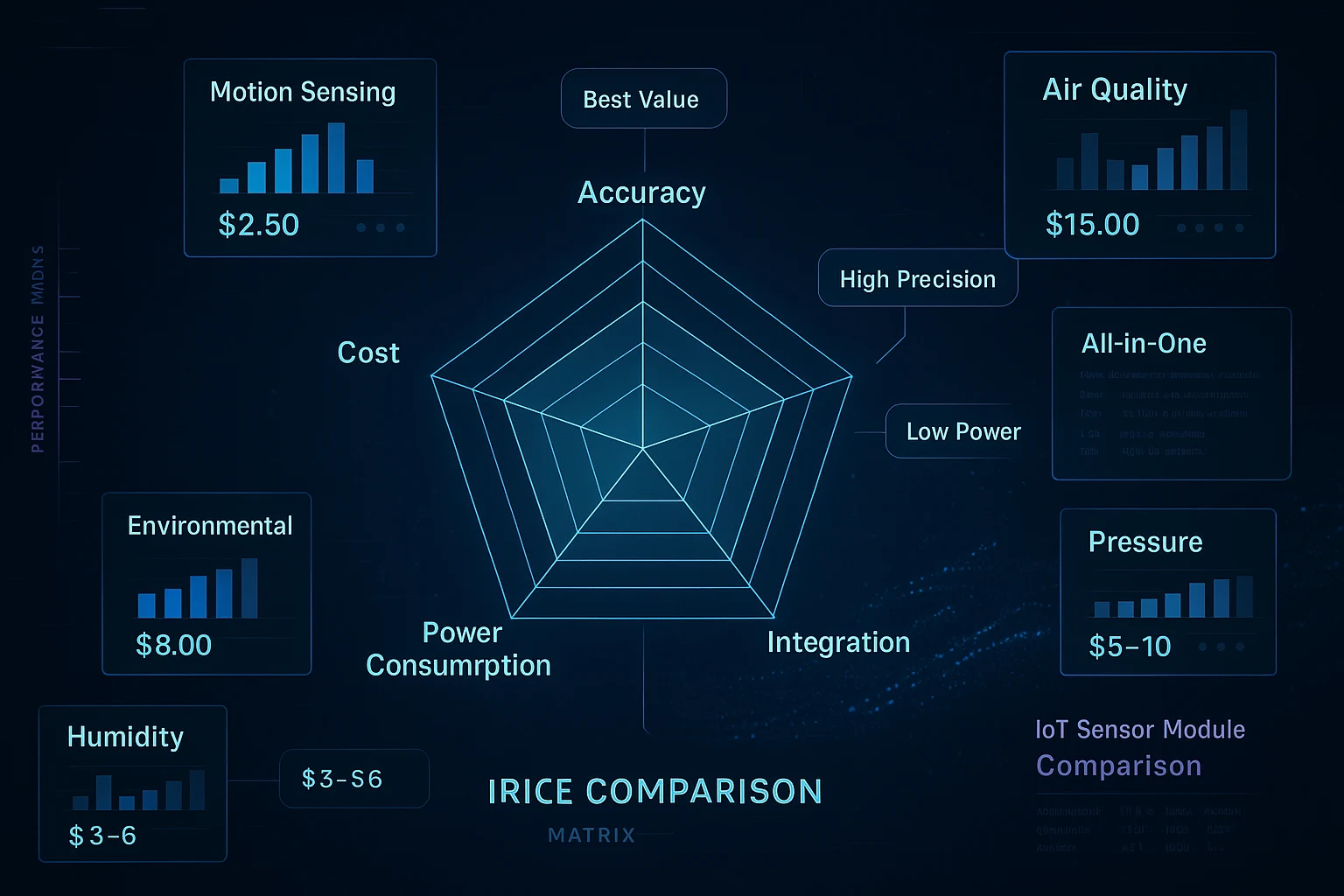
IoT Sensor Module Price Comparison: Where Does the MultiNav Pro+ Stand?
RFOXiA Integrated Sensors Module
The Real IoT Sensor Module Price Comparison Developers Need to Have
If you have ever sourced sensors for a drone, a robotics platform, or an environmental monitoring node, you already know the frustration. You start by picking an accelerometer. Then you need a gyroscope. Then a magnetometer for heading accuracy. Then humidity and temperature for environmental context. Then air pressure. Then air quality. Before long you are juggling six different breakout boards from four different vendors, wrestling with five different I2C addresses that may or may not conflict, and spending more time wiring and debugging than actually building.
This is the hidden cost that almost never shows up in an IoT sensor module price comparison: integration time, board space, wiring complexity, and the cognitive overhead of managing a sensor zoo.
The RFOXiA MultiNav Pro+ Sensors Module was designed to eliminate exactly that problem. Seven professional-grade sensors. One compact 24mm × 18mm board. One I2C bus. $39.
This post breaks down what is inside the module, how it compares against building an equivalent stack from discrete components, what real-world applications it serves, and why the price point is genuinely remarkable once you do the math.
What Is the MultiNav Pro+ Sensors Module?
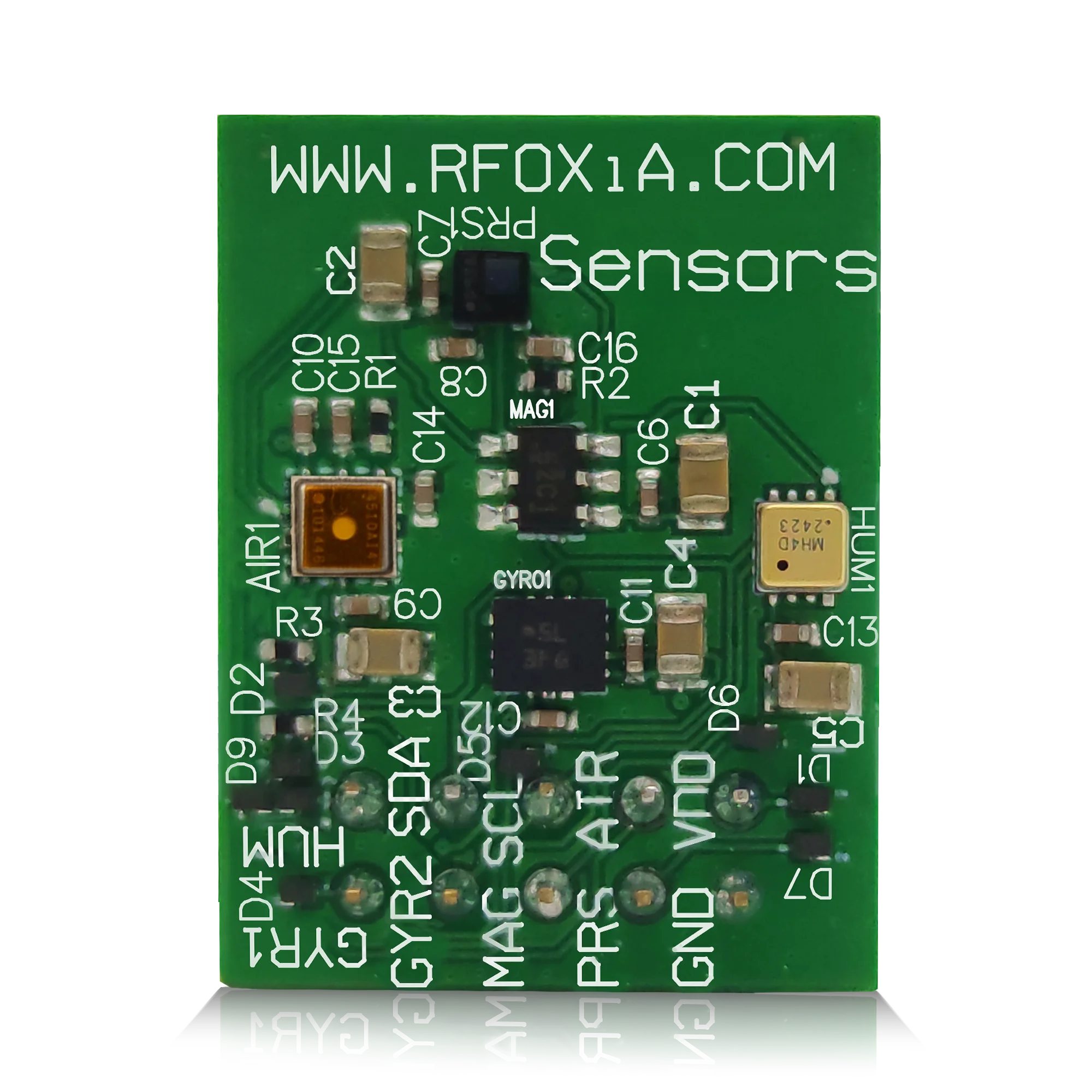
The MultiNav Pro+ Sensors Module is part of RFOXiA's vertically integrated wireless development ecosystem. It is not a hobbyist breakout board with generic sensors soldered onto a carrier. Every sensor was selected from industry-leading silicon vendors, qualified for professional applications, and integrated onto a single compact PCB with a unified I2C communication architecture.
It ships FCC certified, ready to integrate into commercial products, research instruments, and field-deployed IoT nodes without additional regulatory work.
At $39, it is the most affordable path to a complete seven-sensor environmental and motion sensing platform on the market today.
The Seven Sensors: What Is Inside and Why It Matters
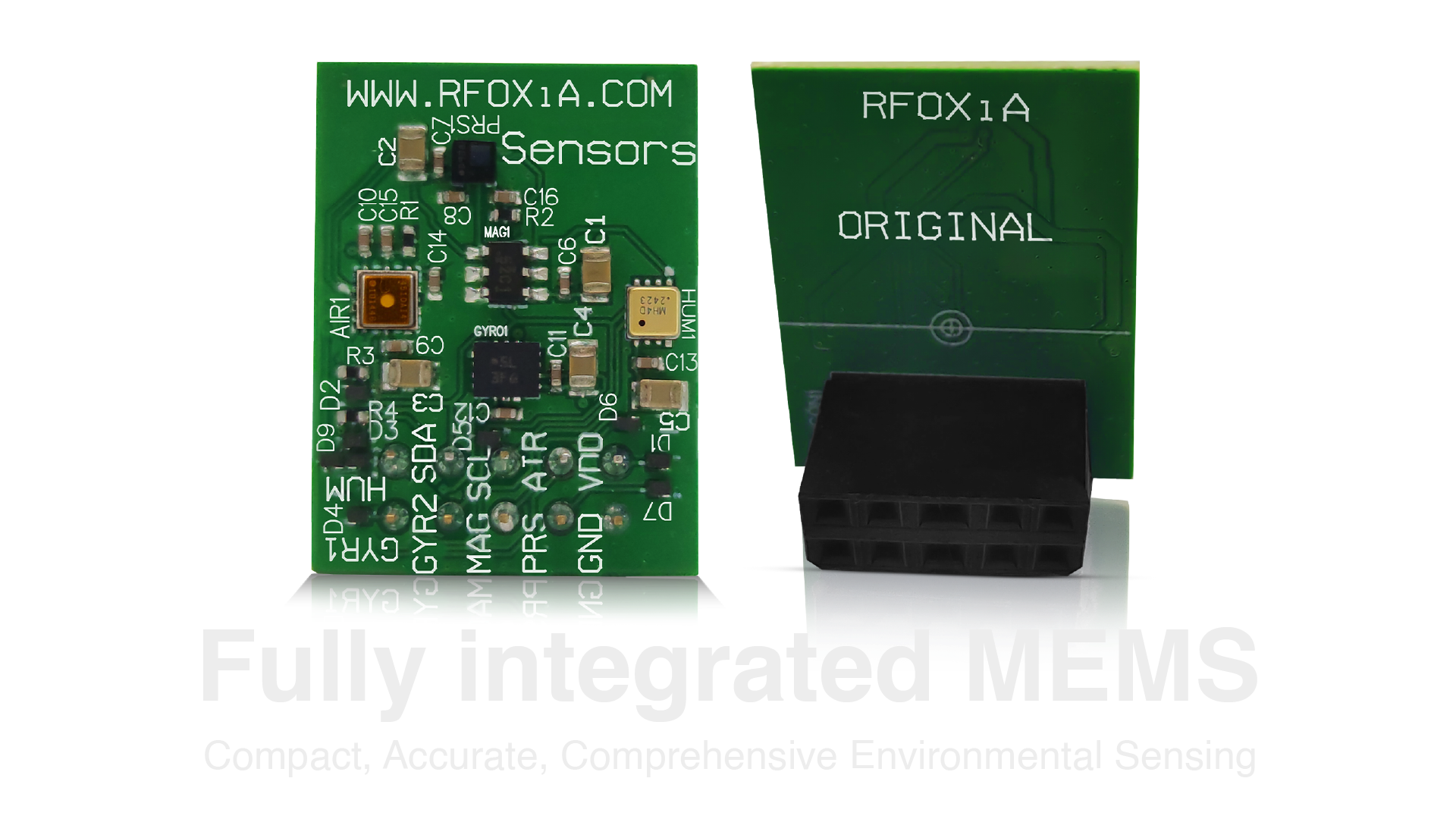
Let's go through each sensor individually, because the component selection here is not generic — it reflects serious engineering choices.
Accelerometer and Gyroscope: BMI270 from Bosch Sensortec
The BMI270 is a 6-axis IMU that Bosch originally developed for wearable and activity tracking applications but which has been widely adopted in drone autopilots, robotics platforms, and industrial motion monitoring. It delivers low noise, low power consumption, and excellent temperature stability — all critical for outdoor deployments where conditions vary.
For drone builders: this is the sensor class that goes into professional autopilot boards, not toy quadcopters. If you are building a custom flight controller or adding stabilization awareness to a payload, the BMI270 gives you the data quality to do it properly.
Magnetometer: TMAG5273C1QDBVR from Texas Instruments
Magnetometers are frequently underspecified in maker hardware. The TMAG5273 from TI is a 3-axis linear Hall-effect sensor with low noise and high sensitivity, enabling accurate heading calculation and magnetic anomaly detection. For navigation-critical applications — autonomous vehicles, surveying drones, precision agriculture equipment — a quality magnetometer is the difference between a system that holds course and one that drifts.
Air Pressure: LPS22HHTR from STMicroelectronics
The LPS22HH is STMicroelectronics' high-performance MEMS pressure sensor, rated for altimetry applications with an output data rate up to 200 Hz. It is used in altimeters, weather stations, and altitude-hold systems in drones. At this price point, you simply do not see sensors of this caliber on competing integrated modules.
Humidity and Temperature: MVH4003D from MEMSVision
Temperature and humidity sensing sounds straightforward until you need accurate, fast-responding data in field conditions. The MVH4003D delivers calibrated readings suitable for environmental monitoring, agricultural applications, and smart building systems — not just rough ambient estimates.
Air Quality: ZMOD4510AI4R from Renesas
This is the sensor that makes the MultiNav Pro+ genuinely unusual in its class. The ZMOD4510 is an outdoor air quality sensor from Renesas designed to detect ozone and nitrogen dioxide — pollutants that indicate outdoor air quality degradation. Including a sensor of this caliber on a $39 module reflects RFOXiA's positioning as an infrastructure component for the emerging distributed environmental data economy.
Motion vs. Environmental: Two Capabilities in One Board
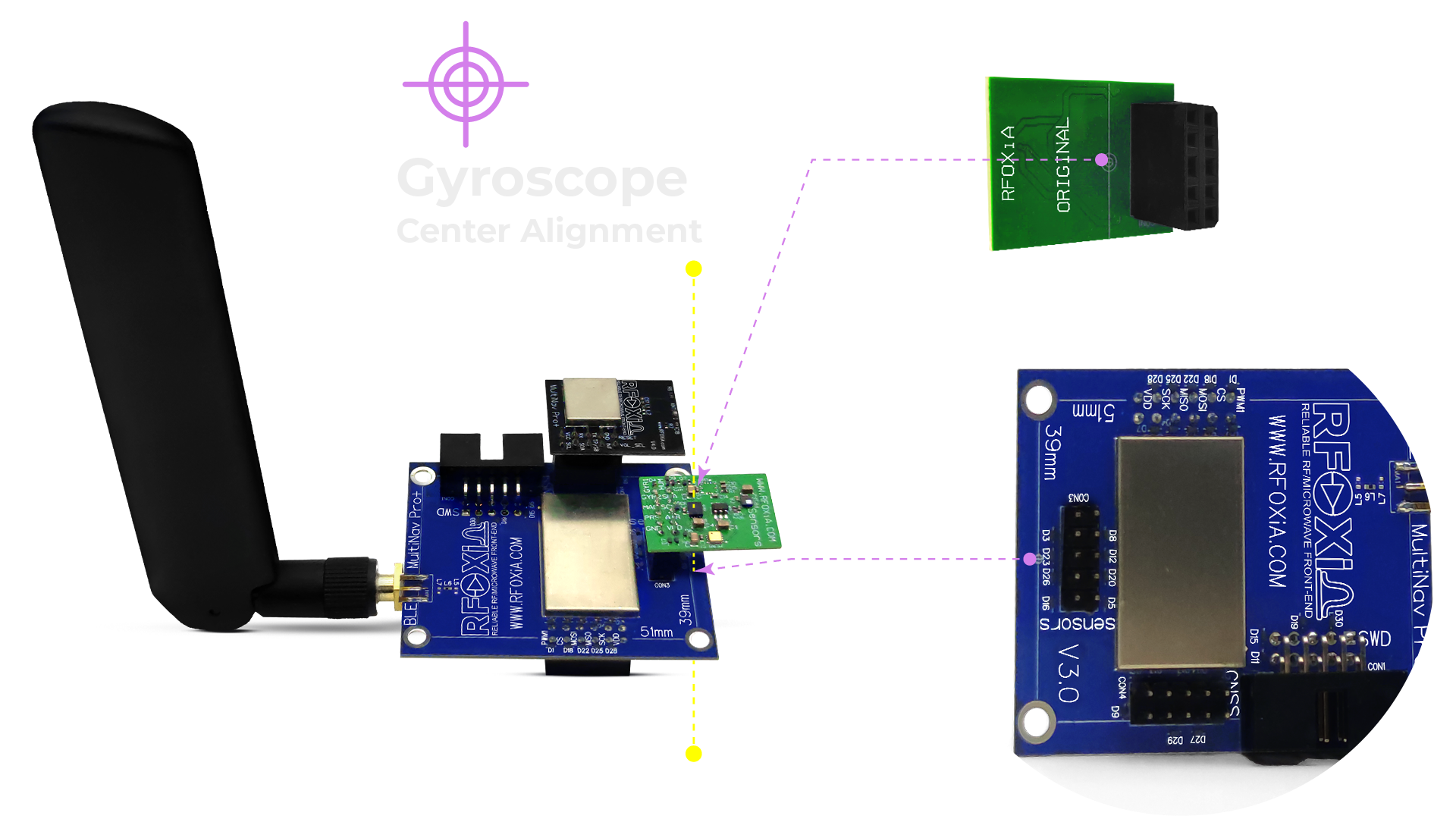
Most sensor modules specialize in one domain or the other. IMU breakout boards give you motion data. Environmental sensor boards give you temperature and humidity. The MultiNav Pro+ is one of the very few products on the market that delivers professional-grade capability in both categories on a single board.
This dual capability matters for several real-world applications:
- Drone payloads that need altitude hold (pressure), heading (magnetometer), stabilization (IMU), and environmental logging (temperature, humidity, air quality) simultaneously
- Field research instruments that capture both motion context and environmental readings in synchronized timestamps
- Smart agriculture nodes monitoring crop micro-climates while also detecting equipment vibration or tilt
- Industrial IoT deployments where a single sensor node needs to serve multiple data streams to reduce per-node cost
The Silicon Behind the Module
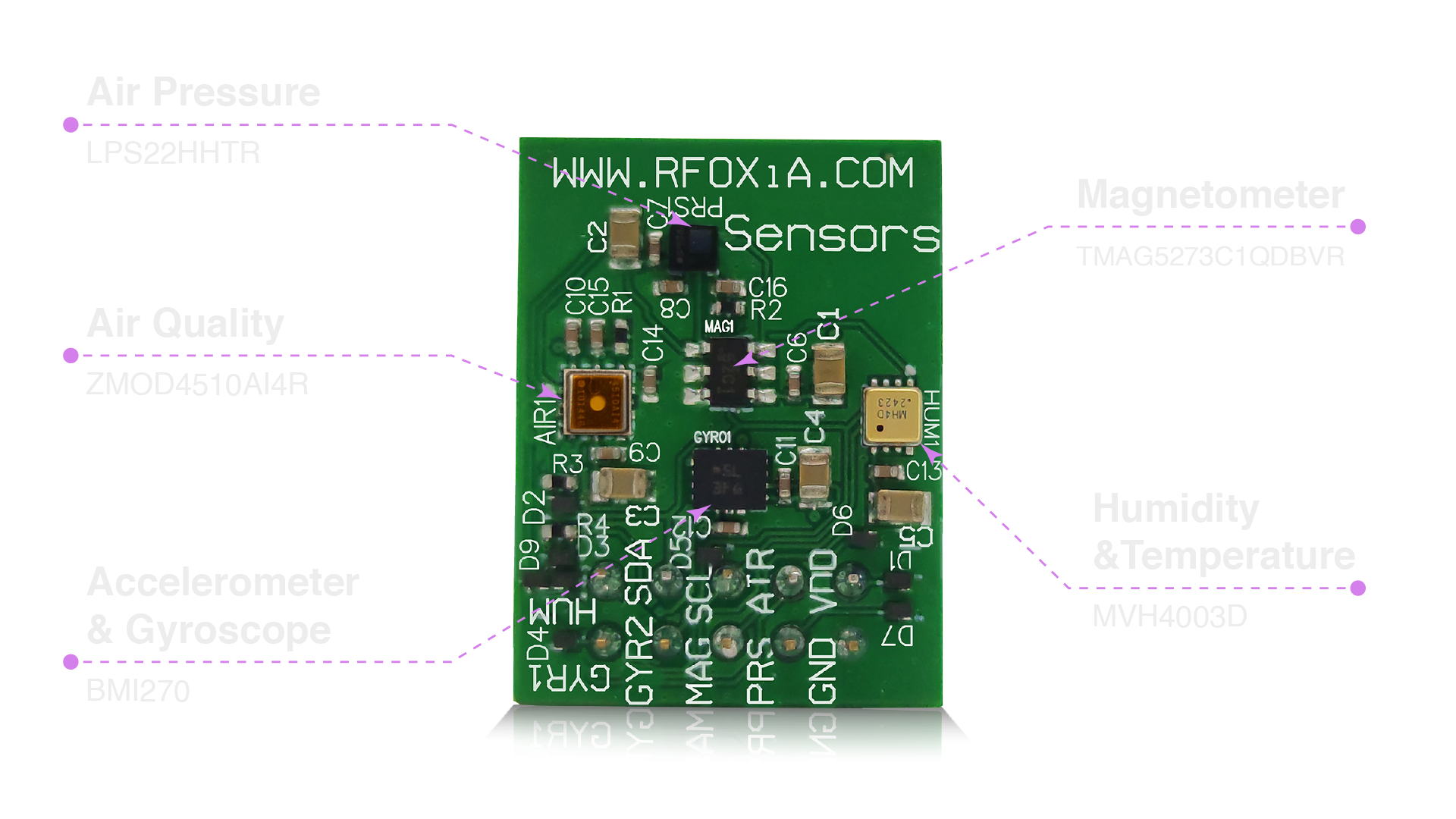
When you do an honest IoT sensor module price comparison, you have to look at the actual silicon, not just the headline spec sheet. Here is what it would cost to source these sensors individually and build an equivalent board yourself:
| Sensor | Component | Typical Unit Price |
|---|---|---|
| Accelerometer + Gyroscope | BMI270 | $3.50 |
| Magnetometer | TMAG5273C1QDBVR | $2.80 |
| Air Pressure | LPS22HHTR | $4.20 |
| Humidity + Temperature | MVH4003D | $3.10 |
| Air Quality | ZMOD4510AI4R | $6.50 |
| PCB fabrication (custom) | — | $8–15 per unit at low volume |
| Assembly + soldering | — | $15–25 at low volume |
| FCC certification | — | $5,000–15,000 (amortized) |
| Integration and testing | — | Hours of your time |
Even at minimum cost estimates, sourcing these components and producing a comparable board yourself would land somewhere between $45 and $65 per unit at low volumes — before FCC certification and before the weeks of engineering time required to design, test, and validate the PCB layout.
At $39, the MultiNav Pro+ is priced below the raw component cost of building an equivalent yourself. That is the honest answer to the IoT sensor module price comparison question.
I2C Architecture: Why Single-Bus Matters
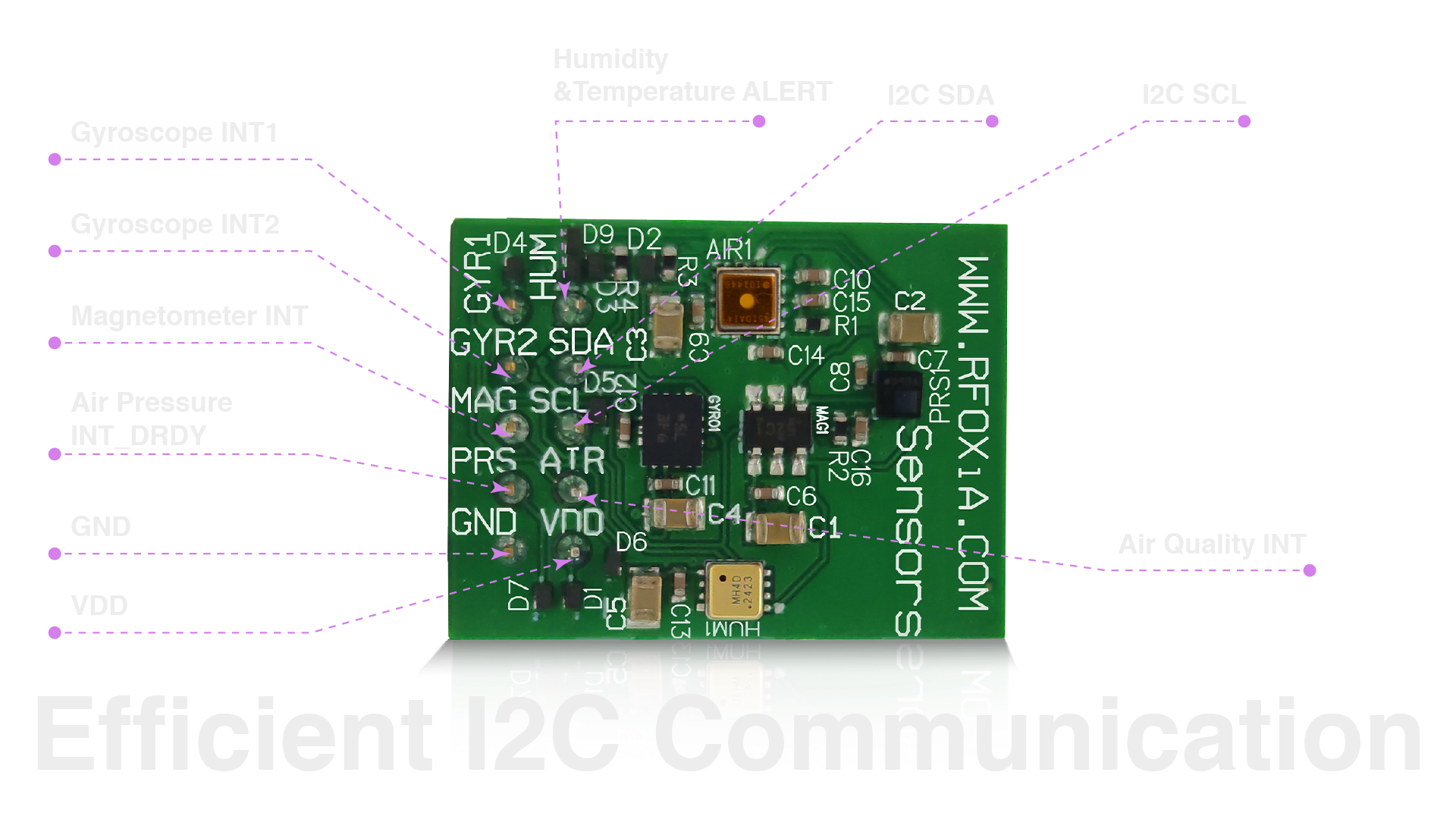
One of the most underappreciated engineering decisions in the MultiNav Pro+ is its I2C bus architecture. All seven sensors are routed to a single I2C line, each assigned a unique dedicated address. This means:
- One wire pair connects your microcontroller to all seven sensors
- No address conflicts — the addresses are fixed and documented
- No multiplexers — no additional hardware required to manage bus contention
- Simpler firmware — a single I2C peripheral handles all sensor reads
- Less board space on your host platform — fewer connectors, fewer traces
For developers working on space-constrained platforms like racing drones, nano-satellites, or compact wearables, this single-wire access to seven sensors is genuinely valuable. Contrast this with building a discrete sensor stack where you may need to use an I2C multiplexer just to avoid address conflicts between sensors from different vendors — adding cost, complexity, and a potential failure point.
Size: 24mm × 18mm
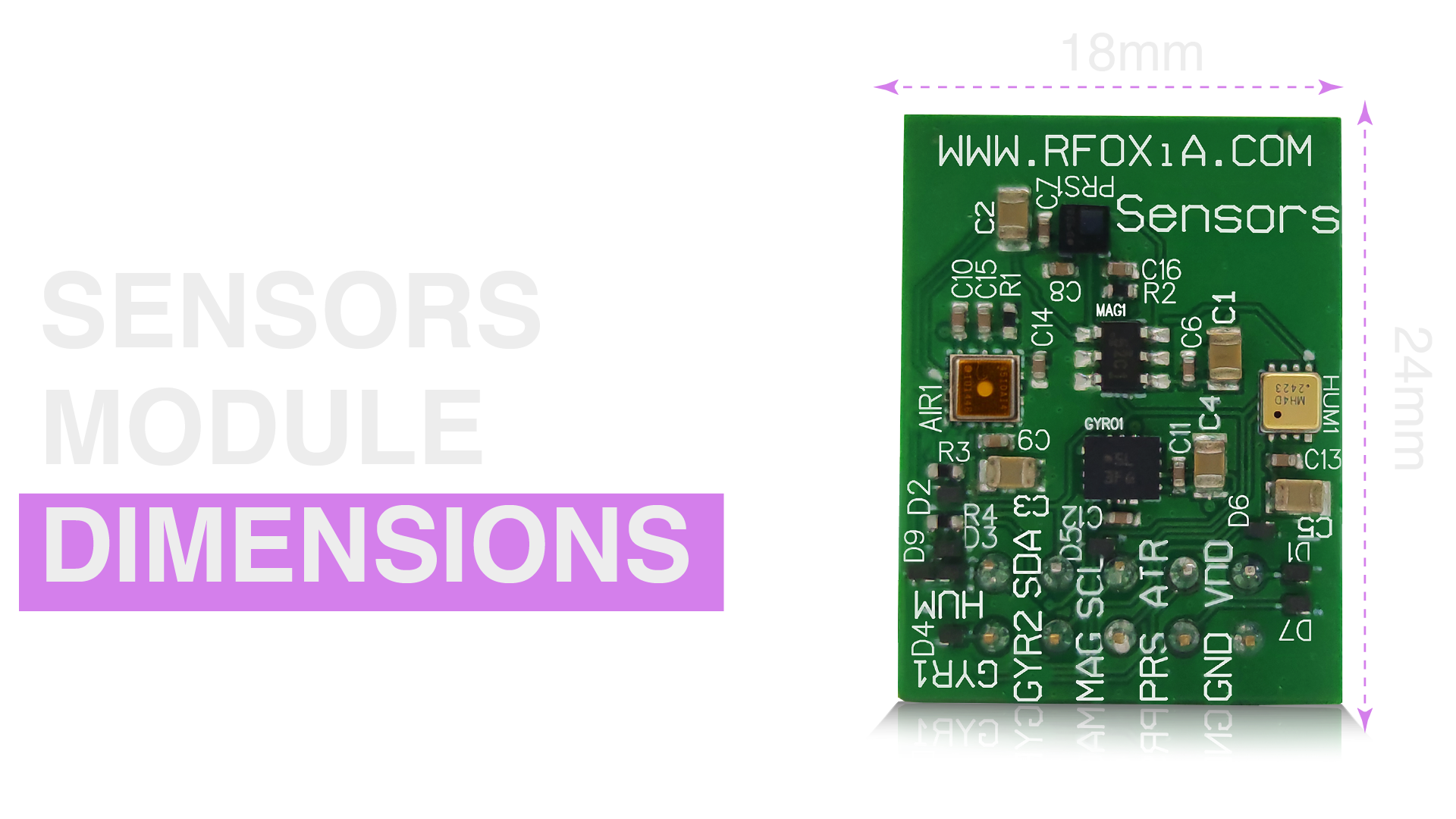
At 24mm × 18mm, the MultiNav Pro+ fits in the palm of your hand with room to spare. For reference, that is smaller than a standard SD card in one dimension. This footprint makes it viable for:
- FPV racing drones where every gram and millimeter is contested
- Wearable health and fitness devices where board real estate is limited
- Compact IoT enclosures designed for outdoor installation
- CubeSat and small satellite payloads where weight and volume are mission-critical constraints
- Handheld instruments that need full sensing capability without bulk
Achieving this footprint with seven sensors from five different vendors requires careful PCB layout optimization. The decoupling network alone — ensuring each sensor gets clean power without interfering with its neighbors' sensitive analog readings — is a non-trivial RF and analog design challenge. RFOXiA's hardware team has handled this so you do not have to.
Real-Time Data: What You Can Do With It
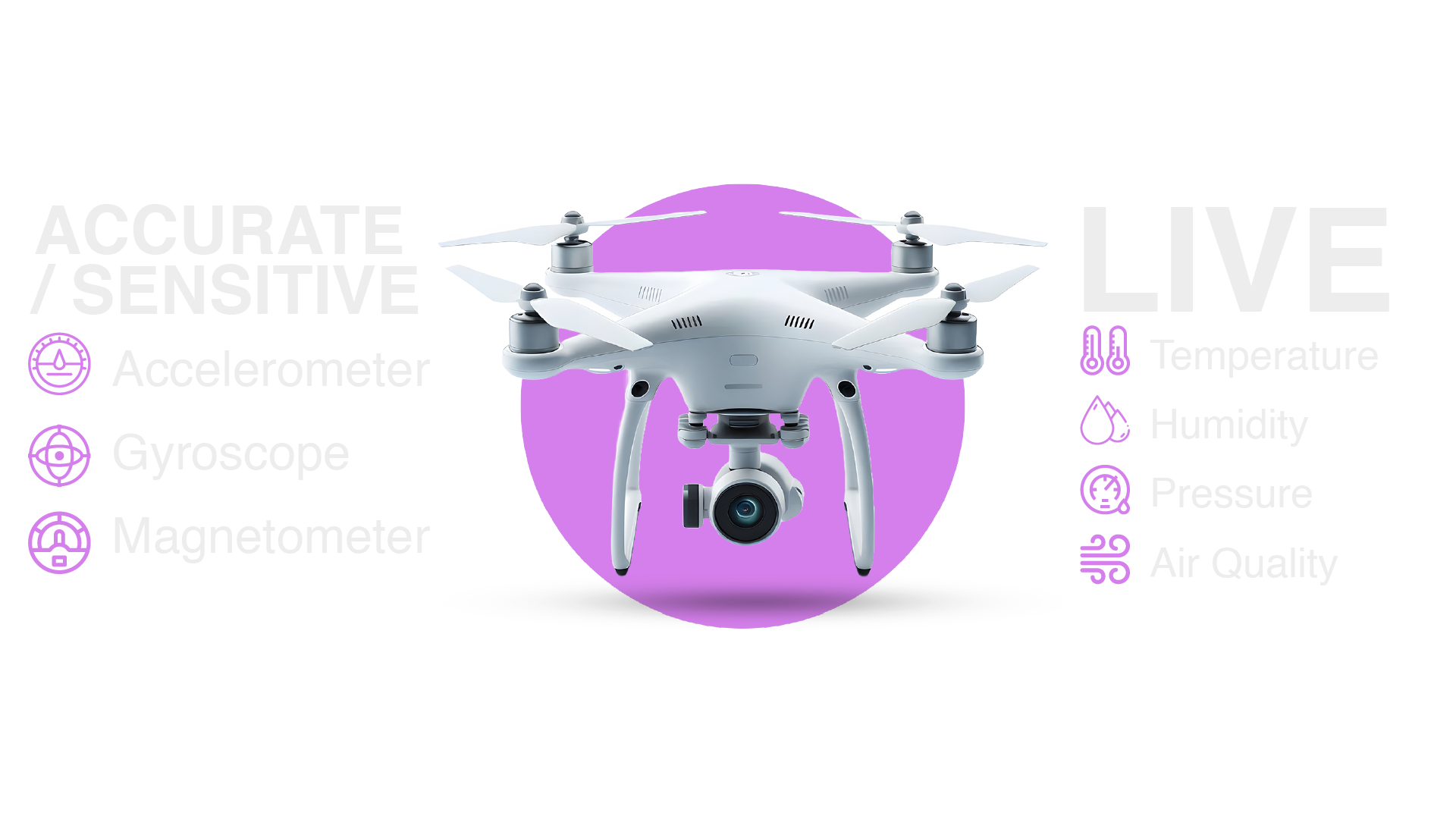
Real-time sensor data is only useful if you can act on it quickly. The MultiNav Pro+ streams live readings continuously, enabling reactive systems that respond to their environment as conditions change — not after a batch upload.
Consider what this enables in practice:
Autonomous drone navigation: Combine pressure altitude, IMU stabilization, and magnetometer heading in a tightly coupled sensor fusion loop. Your flight controller can maintain altitude hold, attitude stabilization, and compass heading simultaneously from a single I2C bus.
Environmental monitoring nodes: Deploy the module outdoors, connect it to the RFOXiA BLE Module for wireless backhaul, and stream verified environmental data to the RFOXiA data network — earning daily rewards while contributing to a distributed sensor grid.
Agricultural microclimate mapping: Mount multiple modules across a field to capture hyper-local temperature, humidity, pressure, and air quality gradients that no weather station network can provide at this resolution.
Industrial predictive maintenance: Monitor equipment vibration (accelerometer), orientation (gyroscope, magnetometer), and ambient environmental conditions simultaneously from a single compact node mounted on machinery.
If you are ready to explore how the MultiNav Pro+ fits into your project, the RFOXiA Integrated Sensors Module product page has full technical documentation, integration guides, and purchase options.
Application Scope: More Than You Might Expect

The MultiNav Pro+ was designed with a deliberately broad application envelope. Here is a non-exhaustive list of the domains where this module delivers real value:
Drone and UAV development
- Payload environmental logging
- Altitude and attitude sensing for custom autopilots
- Geofenced air quality surveys
- Agricultural spray drone guidance
Robotics
- Full 9-DOF motion sensing for navigation and manipulation
- Environmental awareness for indoor/outdoor robots
- Orientation and heading for mobile robots without GPS
Environmental research
- Distributed monitoring networks for climate studies
- Urban heat island mapping
- Wildfire early detection using air quality and temperature anomalies
- Coastal and watershed environmental quality monitoring
Smart agriculture
- Microclimate monitoring at crop canopy level
- Frost prediction and irrigation trigger systems
- Greenhouse automation with real-time humidity and temperature feedback
Wearables and health tech
- Activity tracking with professional-grade IMU
- Outdoor environmental exposure monitoring
- Research-grade physiological context sensing
Smart cities and infrastructure
- Air quality nodes for urban pollution mapping
- Building environmental monitoring systems
- Bridge and structure vibration sensing
The RFOXiA Ecosystem Advantage
No IoT sensor module price comparison is complete without evaluating what happens after you buy. Hardware without software support, community, and integration tools is just a component. The MultiNav Pro+ ships as part of a complete ecosystem:
RFOXiA Connect App: View live sensor data from your module on your phone, with no internet connection required. The Android app is live today; iOS is pending App Store approval.
AI Firmware Builder: Describe your application in plain language inside the RFOXiA Club Dev Hub and receive production-ready firmware. Instead of spending weeks writing I2C drivers and sensor fusion algorithms from scratch, you describe what you want to build and the AI generates working code.
Data Network: Deploy your Sensors Module outdoors, stream verified environmental data to the RFOXiA network, and earn daily rewards — up to $0.40/day for verified complete data sessions in high-scarcity locations. Your hardware investment becomes a passive income stream.
Developer Bundle: The MultiNav Pro+ Sensors Module is available individually at $39, or as part of the Developer Bundle at $199 — which includes the BLE Module (5km ground-to-ground range), GNSS Module (1.5m accuracy, 18Hz fix rate), Power/Program Kit (5-minute charge, 24-hour runtime), and the Sensors Module together.
For any serious project that needs long-range wireless, precision location, environmental sensing, and power management in one integrated system, the Developer Bundle is the most efficient path to a complete platform.
IoT Sensor Module Price Comparison: The Honest Summary
Let's bring the IoT sensor module price comparison back to a clear conclusion.
For $39, the MultiNav Pro+ delivers:
- 7 professional-grade sensors from Bosch, TI, ST, MEMSVision, and Renesas
- FCC certification included — no additional regulatory cost
- Single I2C bus architecture — no multiplexers, no address conflicts
- 24mm × 18mm form factor — fits in the most constrained platforms
- Full ecosystem integration — app, AI firmware, data network, community
- Ecosystem that pays you back through the data network
Building an equivalent from discrete components costs more in silicon alone, before PCB fabrication, assembly, certification, and engineering time. No competing integrated module at this price point includes air quality sensing, a professional-grade IMU, and magnetometer together in a certified, ecosystem-integrated package.
If you are evaluating sensor options for your next project, the decision becomes straightforward once you run the numbers.
Explore the RFOXiA Integrated Sensors Module and see the full technical specifications, integration documentation, and current pricing.
Frequently Asked Questions
What microcontrollers are compatible with the MultiNav Pro+ Sensors Module? Any microcontroller with I2C support is compatible. The module has been tested with STM32 series MCUs and integrates natively with RFOXiA's BLE Module platform. Arduino, ESP32, Raspberry Pi, and other common platforms with I2C peripherals can interface with the module using standard libraries.
Does the module require special drivers? Each sensor uses standard I2C communication with documented register maps. Drivers are available from each sensor manufacturer (Bosch, TI, ST, MEMSVision, Renesas). RFOXiA's AI Firmware Builder in the Club Dev Hub can generate initialization and read routines for the full module automatically.
Can I use the Sensors Module without the rest of the RFOXiA ecosystem? Yes. The Sensors Module is a standalone hardware product and will function with any I2C-capable host system. The ecosystem integration with the BLE Module, GNSS Module, and RFOXiA Connect app is optional but adds significant capability.
Is the module suitable for outdoor deployment? Yes. The ZMOD4510 air quality sensor is specifically designed for outdoor environmental sensing. The module is used in RFOXiA's data network as an outdoor environmental node when GPS-verified outdoor deployment is confirmed.
How do I join the RFOXiA data network and start earning? Sign up for RFOXiA Club at rfoxia.com (free, with a $10 welcome credit), deploy your Sensors Module outdoors with GPS verification, and activate your node through the Command Center dashboard. Daily rewards begin accumulating once your first verified complete data session is confirmed.
The MultiNav Pro+ Sensors Module is in stock and ships from the United States. Order yours at the RFOXiA Integrated Sensors Module page and join the growing network of developers building, sensing, and earning with RFOXiA.
Written by: Moamen Mohamed LinkedIn