
IoT Sensor Node Module: The MultiNav Pro+ Sensors Module That Changes Everything
RFOXiA Integrated Sensors Module
The Most Complete IoT Sensor Node Module for Builders Who Demand More
When engineers and makers search for the ideal IoT sensor node module, they rarely find one that delivers everything they need in a single compact package. Most solutions force a compromise: either you get motion sensing or environmental sensing, but rarely both — and almost never from premium silicon at a price that makes sense for real-world deployment. The MultiNav Pro+ Sensors Module from RFOXiA is built to end that compromise entirely.
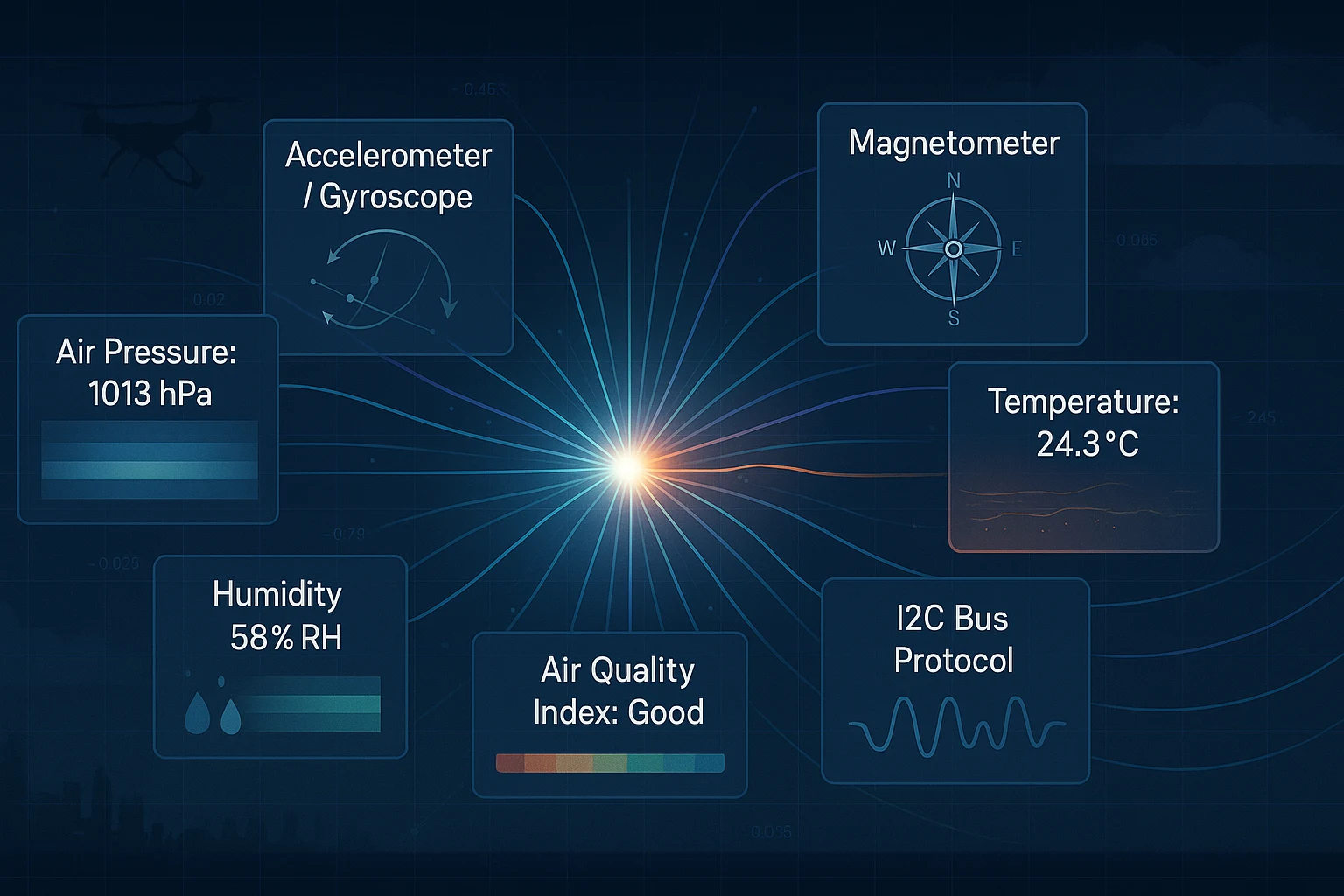
Packed with seven distinct sensors across motion and environmental domains, all sharing a single I2C communication line, the MultiNav Pro+ is engineered for professional-grade applications including autonomous drones, environmental research, industrial IoT, smart agriculture, and wearable devices. At 24mm × 18mm, it delivers an almost absurd density of sensing capability in a form factor that fits virtually anywhere.
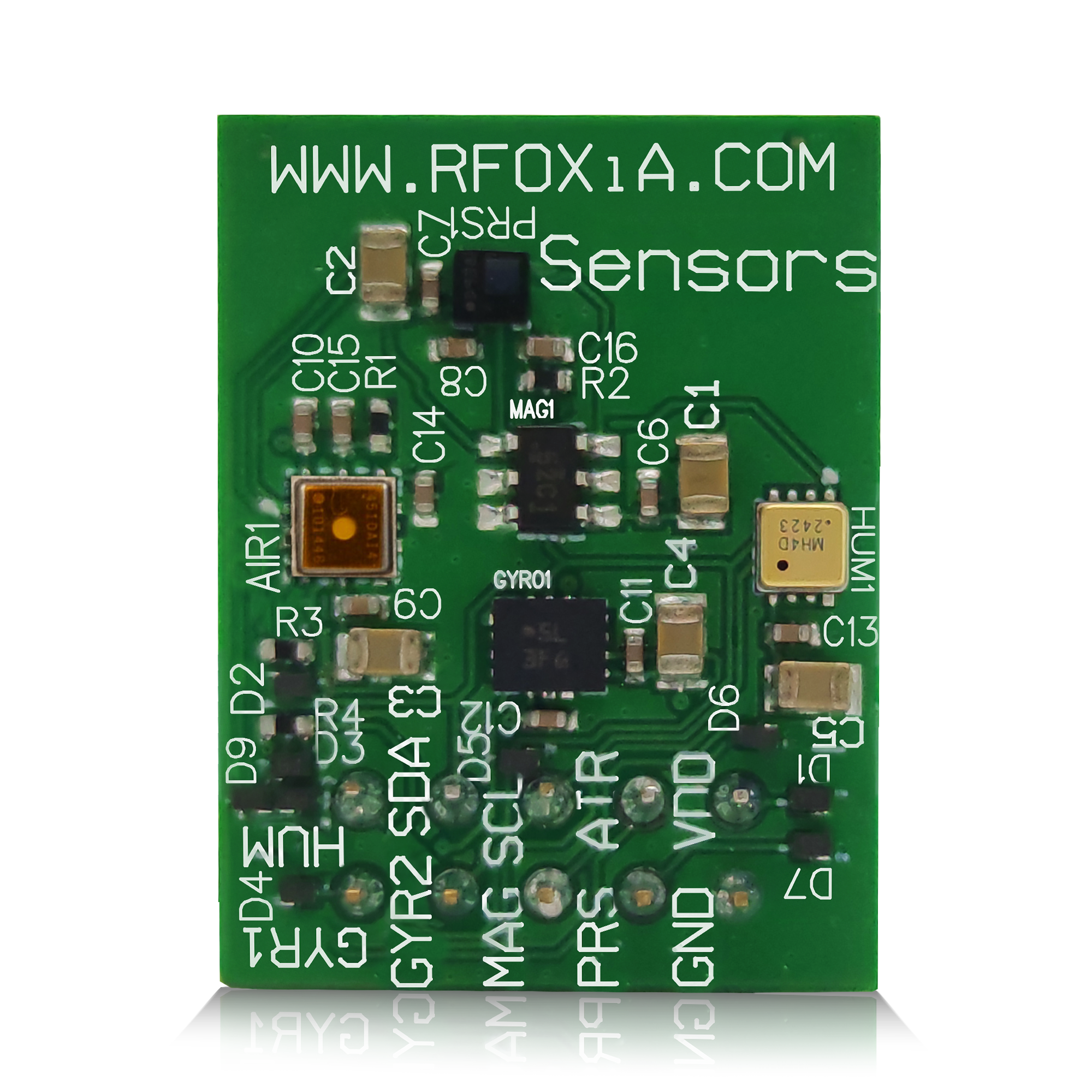
This post covers everything you need to know about this module: what it contains, how each sensor performs, why the hardware choices matter, and how the MultiNav Pro+ fits into the broader RFOXiA ecosystem that turns your sensor data into something genuinely valuable.
Why Most IoT Sensor Node Modules Fall Short
The embedded hardware market is full of sensor breakout boards. You can find a BME280 temperature and humidity board for a few dollars. You can find an MPU-6050 accelerometer/gyroscope module for less. And if you're patient with sourcing, you can assemble a collection of modules that, together, cover most sensing needs.
But that approach has real costs:
- Board space: Multiple breakouts mean multiple PCBs to mount, cable, and secure.
- I2C address conflicts: Many common sensors share default I2C addresses, requiring hardware modifications or software workarounds.
- Integration time: Combining datasheets from five different manufacturers and writing drivers for each is weeks of work.
- Reliability: More connectors and cables mean more failure points in vibration-heavy applications like drones.
- Power management: Each board has its own power rail requirements and decoupling needs.
The MultiNav Pro+ resolves every one of these problems by integrating all seven sensors onto a single, professionally designed PCB with dedicated I2C addresses, shared power architecture, and a footprint small enough for any platform.
What's Inside: All Seven Sensors Explained
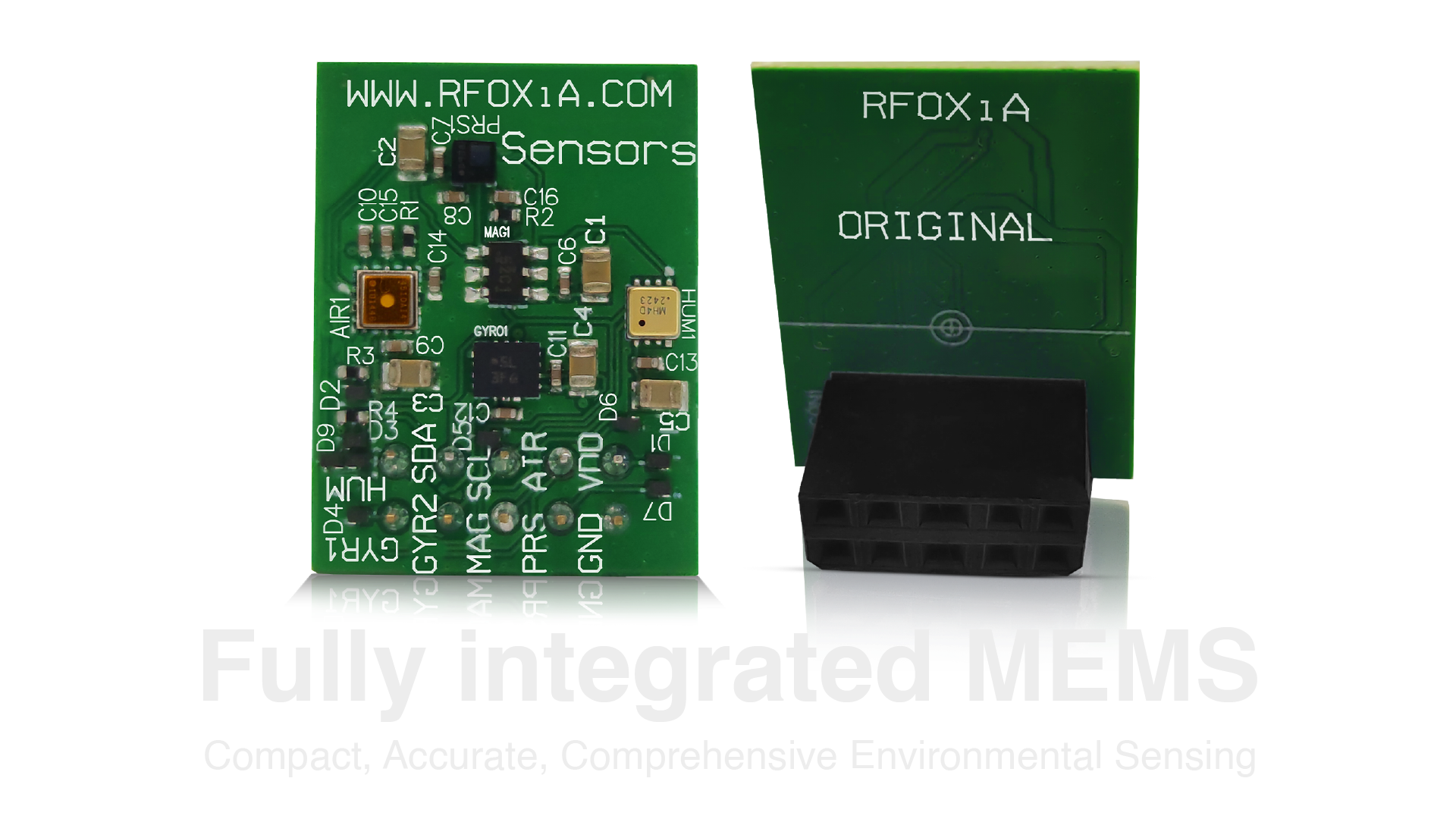
The MultiNav Pro+ is not a collection of generic sensors. Every component was selected from leading semiconductor manufacturers based on performance, power efficiency, and reliability in demanding environments. Here is exactly what you get:
1. Accelerometer & Gyroscope — BMI270 (Bosch Sensortec)
The BMI270 is Bosch Sensortec's flagship IMU for professional motion applications. It delivers a 16-bit accelerometer and a 16-bit gyroscope with ultra-low noise density and an integrated context-recognition engine. In drone applications, the BMI270 is the sensor of choice for flight controllers that need fast, accurate orientation data. Its built-in interrupts and hardware FIFO buffer make it ideal for real-time applications where every microsecond counts.
2. Magnetometer — TMAG5273C1QDBVR (Texas Instruments)
Texas Instruments' TMAG5273 is a 3D Hall-effect sensor with 12-bit magnetic field resolution across X, Y, and Z axes. Unlike older magnetometer chips that require careful calibration and are sensitive to temperature drift, the TMAG5273 includes on-chip temperature compensation and offers a configurable sensitivity range. For heading determination in drone navigation, robotic orientation, and vehicle tracking, this sensor provides the compass accuracy that serious applications require.
3. Air Pressure — LPS22HHTR (STMicroelectronics)
ST's LPS22HH is an absolute pressure sensor with a measurement range of 260 to 1260 hPa and a relative accuracy of ±0.1 hPa. In drone applications, barometric altitude hold depends entirely on the quality of this reading. The LPS22HH offers a 200Hz output data rate, making it fast enough to respond to rapid altitude changes. For environmental monitoring applications, the LPS22HH's low-noise performance enables accurate weather data logging and indoor/outdoor air pressure differential measurement.
4. Humidity & Temperature — MVH4003D (MEMSVision)
MEMSVision's MVH4003D is a digital humidity and temperature sensor using capacitive sensing technology for humidity measurement and a bandgap reference for temperature. It offers ±3% RH humidity accuracy and ±0.5°C temperature accuracy across the operating range. These specifications make the MVH4003D suitable not just for environmental logging but for applications where dew point calculation, equipment thermal management, and HVAC control depend on precise local conditions.
5. Air Quality — ZMOD4510AI4R (RENESAS)
The RENESAS ZMOD4510 is a metal oxide semiconductor (MOS) gas sensor designed specifically for outdoor air quality monitoring. It detects ozone and nitrogen dioxide — the primary urban air pollutants regulated by environmental agencies worldwide. The ZMOD4510 includes an integrated microheater and RENESAS's proprietary signal processing algorithm, enabling calibrated air quality index (AQI) output directly from the sensor. This is the component that enables the RFOXiA data network to collect verifiable, enterprise-grade air quality data from distributed nodes.
Precision Motion and Environmental Sensing in One Package
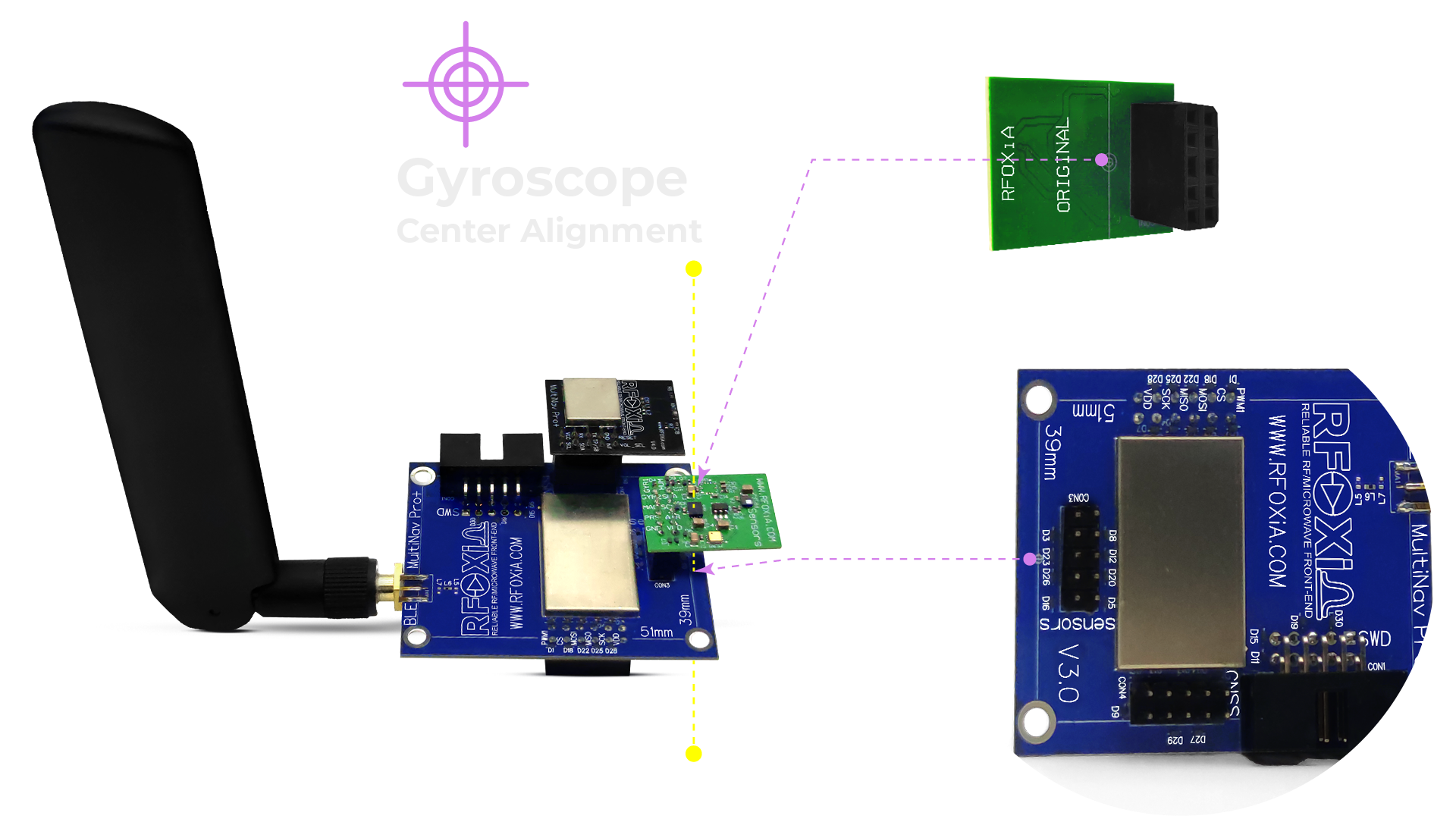
The combination of motion and environmental sensors in a single module is not accidental. In real-world deployments, these two sensing domains are almost always needed together:
- A drone needs IMU data for stable flight and barometric pressure for altitude hold and air quality data if it's part of an environmental survey mission.
- A weather station needs temperature, humidity, and pressure and an accelerometer to detect if the station has been disturbed or tilted.
- An industrial IoT node needs environmental conditions and vibration data from the accelerometer to detect machine anomalies.
By providing both motion and environmental sensing in one IoT sensor node module, the MultiNav Pro+ dramatically simplifies hardware design for these multi-domain applications.
The Sensors Behind the Module
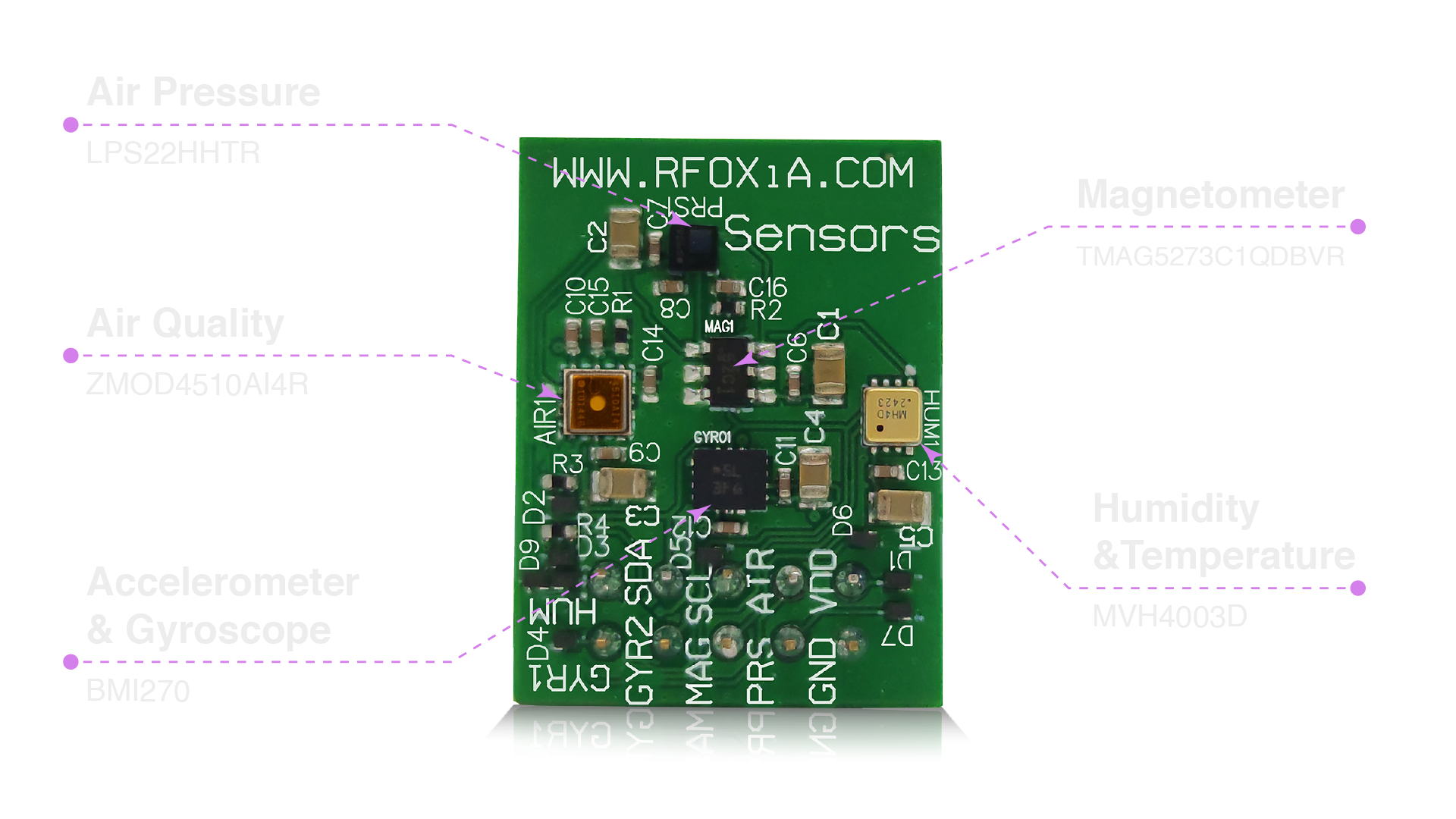
Every sensor on the MultiNav Pro+ is sourced from a Tier-1 semiconductor manufacturer: Bosch Sensortec, Texas Instruments, STMicroelectronics, MEMSVision, and RENESAS. These are not generic or second-source components — they are the same parts used in professional industrial, automotive, and aerospace sensing applications. When you deploy a MultiNav Pro+, you are deploying the same silicon quality used in systems that cost orders of magnitude more.
I2C Architecture: Engineered for Clean Integration
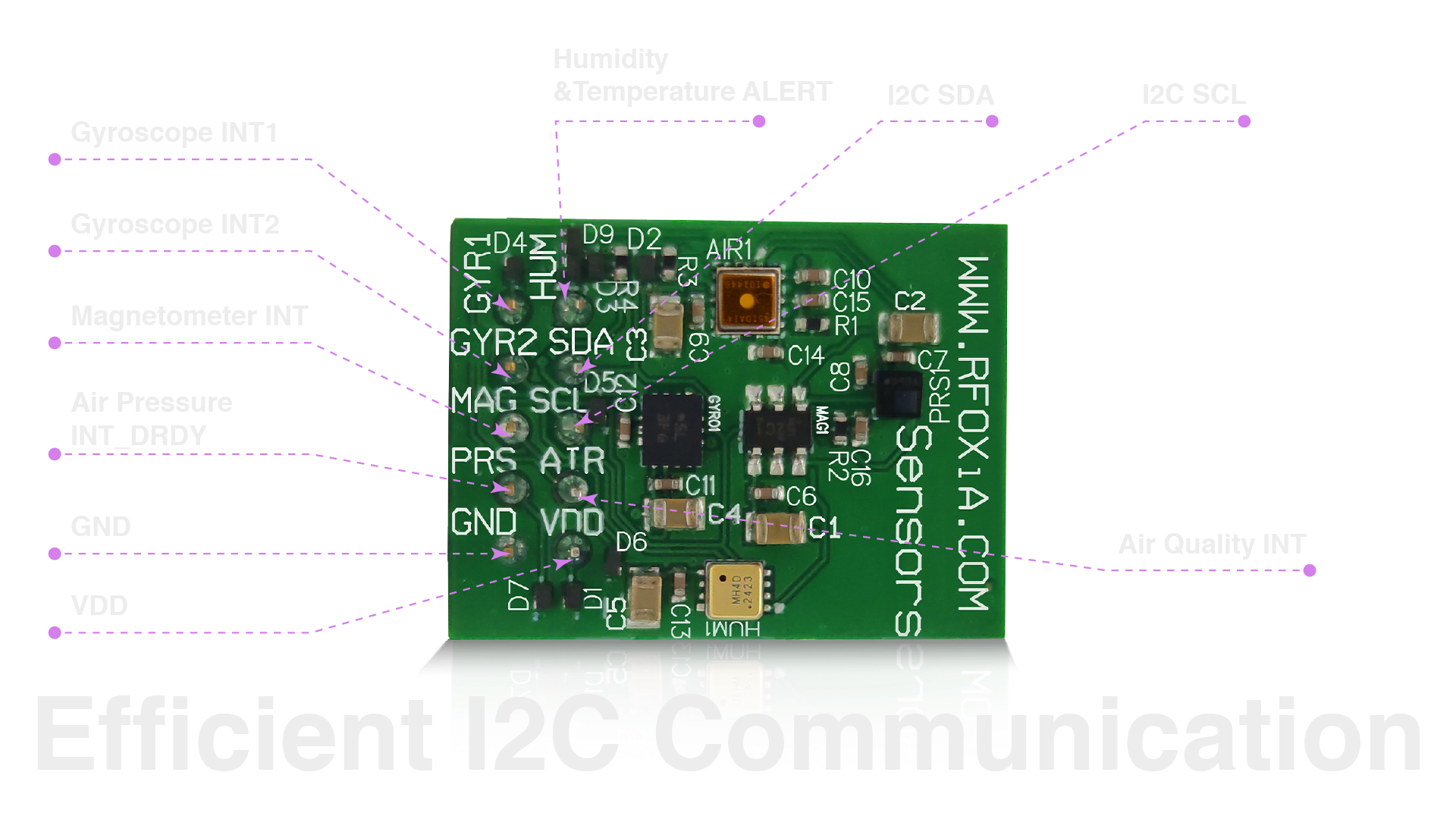
One of the most underappreciated engineering decisions in the MultiNav Pro+ is its I2C bus architecture. All seven sensors are wired to a single I2C line, each assigned a unique, non-conflicting I2C address. This means:
- One two-wire connection (SDA + SCL) to your microcontroller handles all seven sensors.
- No address conflicts — no need for I2C multiplexers or hardware address selection pins.
- No data collisions — clean bus arbitration with dedicated addresses.
- Simplified firmware — your driver library only needs one bus instance to access all sensors.
For developers using the RFOXiA AI Firmware Builder, the single-bus architecture means the AI can generate clean, production-ready code that initializes and reads all seven sensors with minimal boilerplate. For developers writing their own code, the architecture eliminates an entire class of debugging headaches.
Compact Design: 24mm × 18mm for Any Platform
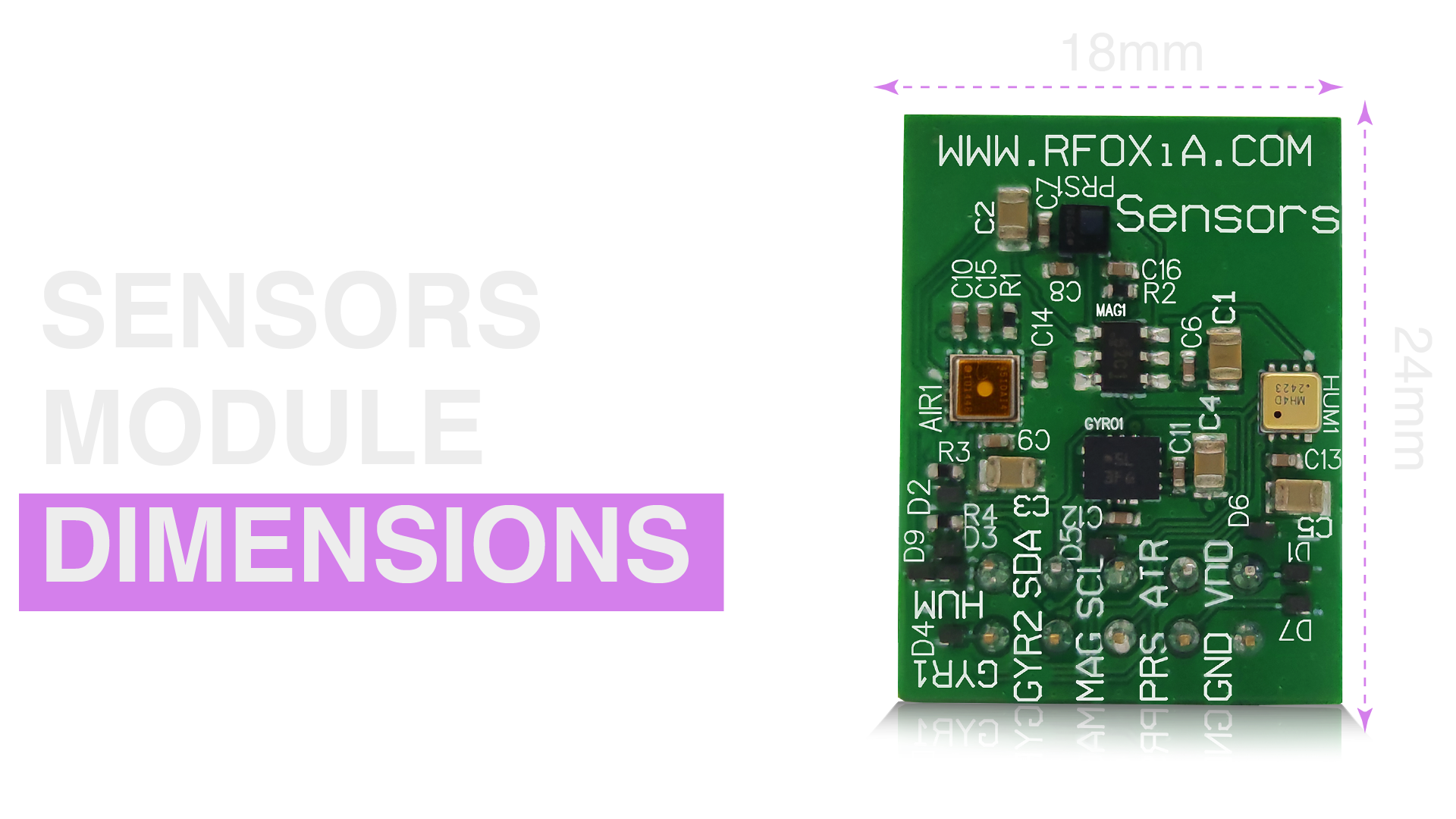
At 24mm × 18mm, the MultiNav Pro+ is small enough to mount inside a 3-inch FPV drone frame, integrate into a wearable enclosure, or embed in a compact IoT node enclosure. Despite this small footprint, it carries all seven sensors, proper power decoupling, and the I2C bus routing needed for reliable operation.
The compact design is not just about fitting into tight spaces — it also means lower parasitic capacitance on the I2C bus, shorter trace lengths for the analog sensor elements, and better thermal coupling between the temperature sensor and the actual environment being measured.
For drone builders in particular, the 24mm × 18mm footprint means the MultiNav Pro+ can be mounted directly to a flight controller stack using standard 20mm or 25.5mm mounting patterns with an appropriate adapter, keeping the entire sensor payload integrated cleanly into the airframe.
Real-Time Environmental Data for Every Application
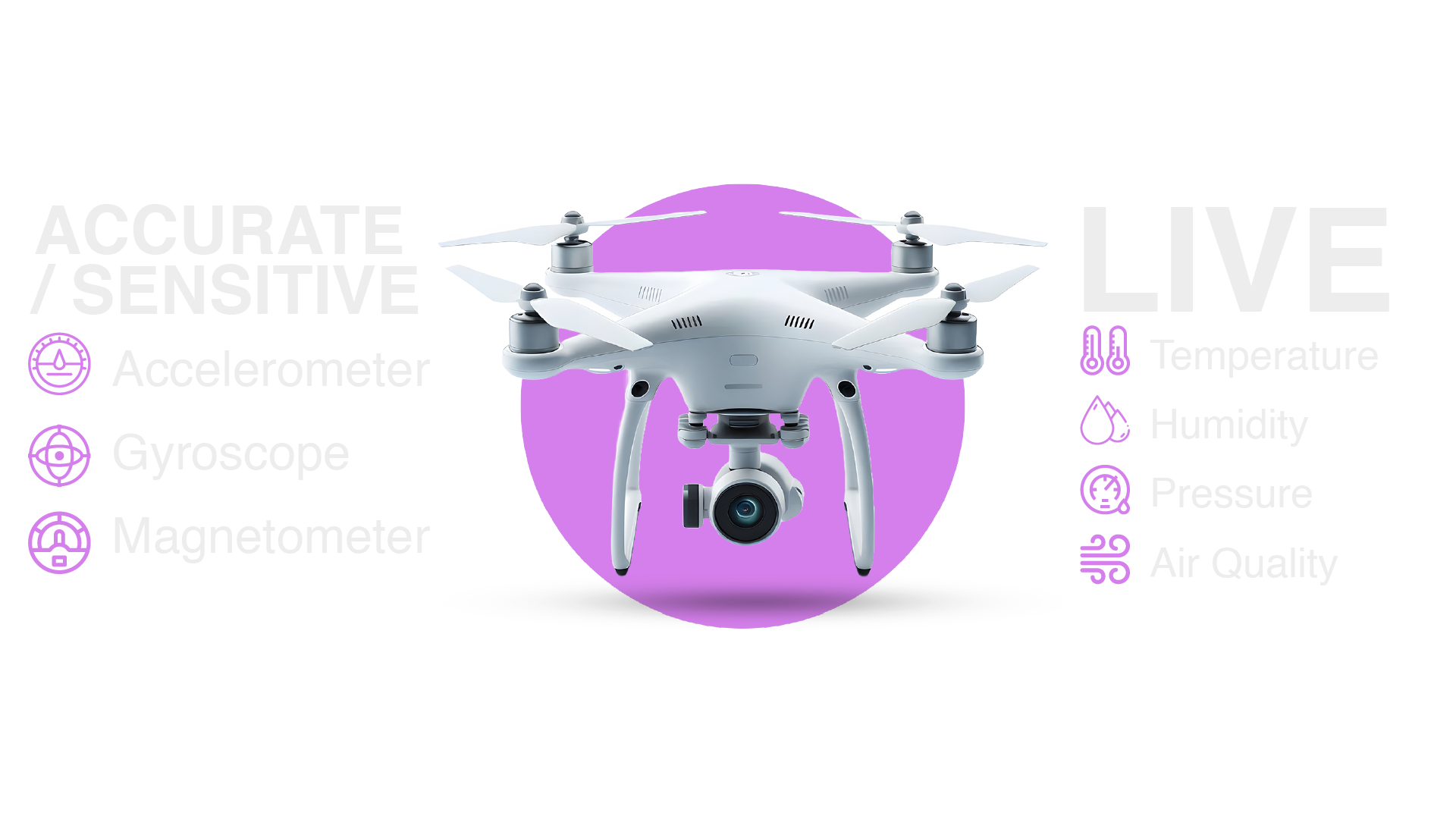
The value of real-time environmental data extends far beyond logging numbers to a file. When your system can continuously monitor temperature, humidity, air pressure, and air quality, it gains the ability to:
- Adapt operations to conditions: An autonomous drone can detect rising temperature or pressure changes indicating weather shifts and return to base before conditions deteriorate.
- Protect equipment: Industrial systems can alert operators when temperature or humidity exceeds safe operating limits before damage occurs.
- Contribute to data networks: As part of the RFOXiA data network, your deployed MultiNav Pro+ can earn daily rewards by contributing verified environmental data to enterprise buyers who need street-level, high-resolution datasets that public weather APIs cannot provide.
- Enable machine learning: A continuous stream of real-world sensor data from the MultiNav Pro+ feeds the kind of edge ML models that enable predictive maintenance, anomaly detection, and autonomous decision-making.
For developers building applications that need to respond to the physical world in real time, this module provides the sensing foundation that makes it possible. Explore the full capability of this RFOXiA Integrated Sensors Module and see how it fits your application.
Applications: Where the MultiNav Pro+ Performs

The MultiNav Pro+ Sensors Module is designed for real deployments across a wide range of domains. Here are the primary application categories where this module delivers the most value:
Autonomous and FPV Drones
The combination of BMI270 IMU for attitude control, LPS22HH barometric altimeter for altitude hold, and TMAG5273 magnetometer for heading makes the MultiNav Pro+ a complete navigation sensor stack for drone platforms. Add air quality and environmental sensors and you have a drone that can simultaneously fly and collect atmospheric data.
Ground Robotics and Vehicles
For wheeled robots and autonomous ground vehicles, the 9-DOF motion sensing (accelerometer + gyroscope + magnetometer) provides dead-reckoning capability between GPS fixes, while environmental sensors enable context-aware navigation and obstacle assessment.
Environmental Monitoring Networks
Deployed outdoors with GPS validation, the MultiNav Pro+ forms the sensing core of an environmental node that can contribute to the RFOXiA data network. Each node earning daily rewards while contributing to a growing dataset of hyper-local environmental conditions is exactly the passive income model that makes IoT infrastructure economically viable for individuals.
Smart Agriculture
Precision agriculture depends on micro-climate data that regional weather stations cannot provide. A network of MultiNav Pro+ nodes across a farm field provides temperature, humidity, and air pressure readings at the resolution needed for irrigation decisions, frost alerts, and crop disease prediction models.
Wearable and Personal Devices
The compact form factor and low power consumption of the sensor array makes the MultiNav Pro+ suitable for wearable health monitoring, activity tracking, and personal environmental exposure logging.
Industrial IoT and Predictive Maintenance
In industrial environments, the combination of vibration data (accelerometer), ambient conditions (temperature, humidity, pressure), and air quality (gas detection) provides a multi-dimensional view of equipment health and operating environment that single-parameter sensors cannot match.
Research and Education
For university labs, research institutions, and educational programs, the MultiNav Pro+ provides a single-board platform covering IMU, environmental, and air quality sensing — replacing a collection of individual breakout boards with one professionally integrated solution that includes complete documentation and FCC certification.
FCC Certified and Ready to Deploy
The MultiNav Pro+ Sensors Module carries FCC certification — the same certification required by major electronics distributors including DigiKey, Mouser, and Newark. This is not a prototype or a hobby board. It is a professionally certified product that meets the regulatory requirements for commercial deployment in the United States and satisfies the documentation requirements for distribution through professional electronics channels.
For organizations deploying IoT sensor node modules at scale, FCC certification eliminates a significant compliance risk. You are not responsible for certifying an uncertified module; the certification burden has been handled at the manufacturing stage.
Part of the Complete RFOXiA Ecosystem
The MultiNav Pro+ Sensors Module is not a standalone product — it is one component of the complete RFOXiA wireless development ecosystem. When paired with the BLE Module (5km ground range, 20km man-to-drone range), the GNSS Module (1.5m accuracy, 18Hz fix rate), and the Power/Program Kit (5-minute charge, 24-hour runtime), you have a complete long-range wireless sensing platform that can transmit, locate, sense, and power itself anywhere.
The RFOXiA Connect mobile app displays live sensor data from the MultiNav Pro+ in real time, on the same screen as your GPS position and drone control interface. The RFOXiA Club platform aggregates your data, tracks your earning rewards, and provides the AI Firmware Builder to generate custom firmware for your specific application without months of embedded development work.
The Developer Bundle — which includes all four modules together — is the fastest path to a fully operational long-range IoT sensor node. If you are serious about building wireless systems that go further and sense more than anything else at this price point, the RFOXiA Integrated Sensors Module is your starting point.
Technical Specifications Summary
| Parameter | Specification |
|---|---|
| Module Size | 24mm × 18mm |
| Communication | I2C (all sensors, dedicated addresses) |
| Accelerometer & Gyroscope | BMI270 — Bosch Sensortec |
| Magnetometer | TMAG5273C1QDBVR — Texas Instruments |
| Air Pressure | LPS22HHTR — STMicroelectronics |
| Humidity & Temperature | MVH4003D — MEMSVision |
| Air Quality | ZMOD4510AI4R — RENESAS |
| Certification | FCC Certified |
| Price | $39 |
| Ecosystem Compatibility | Full RFOXiA ecosystem |
Why This Is the IoT Sensor Node Module Builders Have Been Waiting For
The embedded hardware ecosystem has needed a professionally engineered, multi-domain IoT sensor node module at maker-accessible pricing for a long time. The MultiNav Pro+ fills that gap with precision silicon from Tier-1 manufacturers, a clean I2C architecture, FCC certification, and tight integration with a complete wireless development ecosystem that includes AI firmware generation, mobile app control, and a data monetization network.
At $39, the MultiNav Pro+ costs less than sourcing and assembling the individual sensor breakouts separately — and it ships as a tested, certified module with documentation, firmware support, and a growing community of developers building with the same hardware.
Whether you are building a drone that surveys air quality over urban environments, a research node that contributes to climate science, an agricultural sensor network that earns passive income, or an industrial IoT system that protects equipment and people, the MultiNav Pro+ provides the sensing foundation you need.
Ready to build? Get your RFOXiA Integrated Sensors Module and start sensing the world at the resolution it actually deserves.
The MultiNav Pro+ Sensors Module is part of the RFOXiA hardware ecosystem. Visit rfoxia.com to explore the full product line, join RFOXiA Club for $10 in welcome credits, and discover how your hardware can earn while you build.
Written by: Moamen Mohamed LinkedIn