
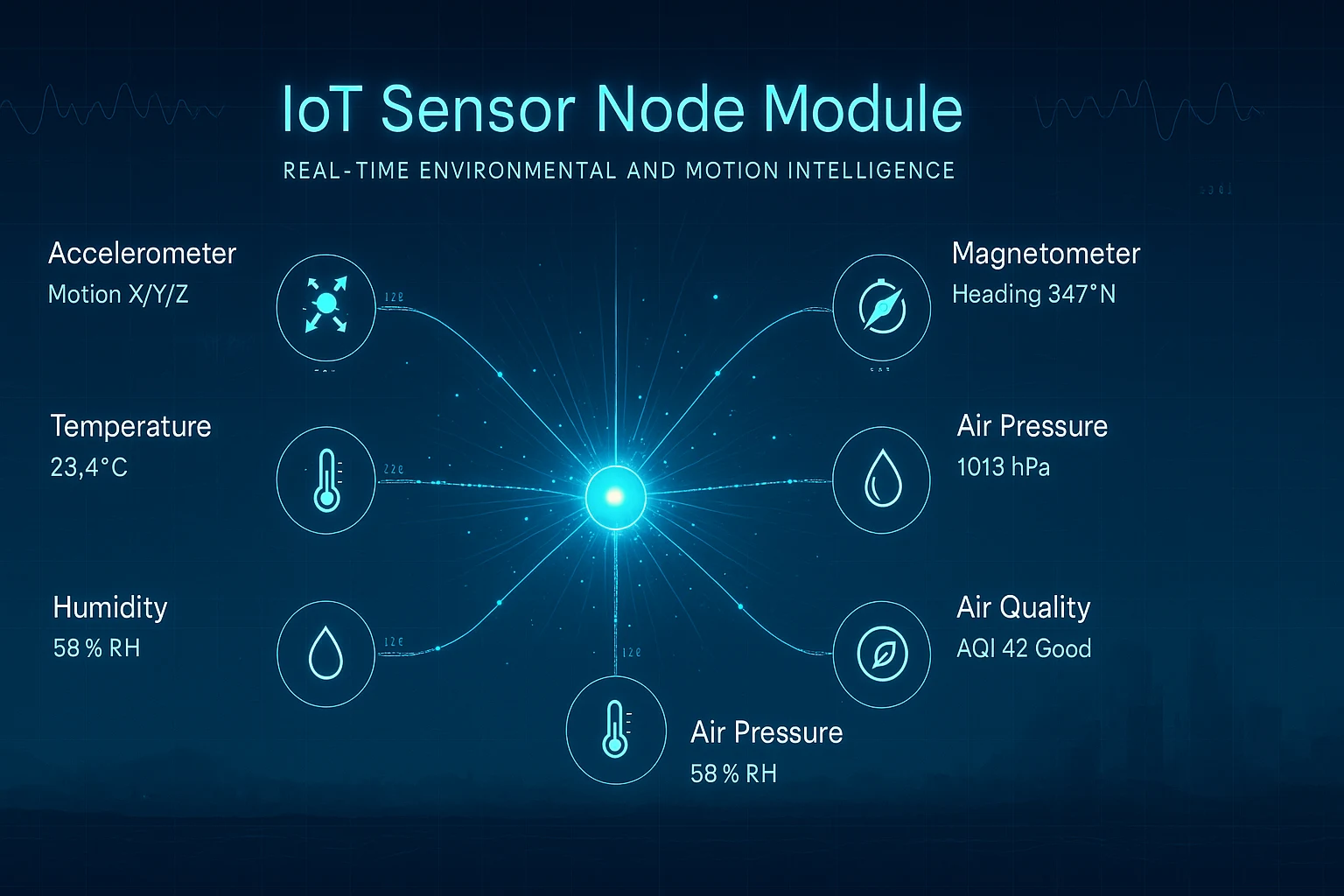
IoT Sensor Node Module: The MultiNav Pro+ Sensors Module That Changes Everything
RFOXiA Integrated Sensors Module
The Most Complete IoT Sensor Node Module for Drone Builders, Researchers, and Embedded Developers
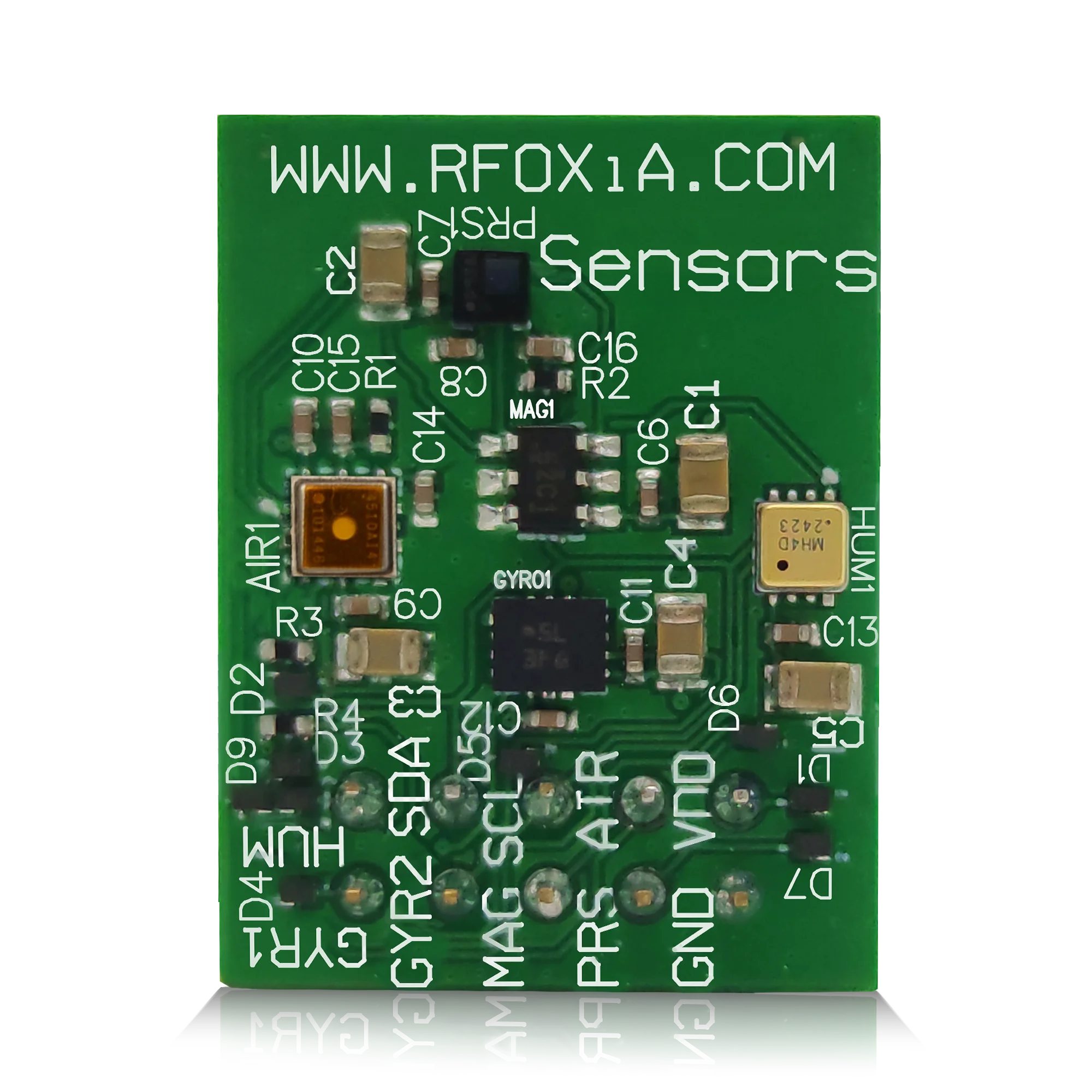
If you have ever tried to build a serious IoT project — one that actually needs to sense the environment, track motion, and stream real-time data reliably — you already know the pain. You source an accelerometer from one vendor, a humidity sensor from another, glue together a magnetometer from a third datasheet, and spend three weekends debugging I2C address conflicts before a single byte of useful data reaches your microcontroller.
That fragmented, frustrating experience is exactly what the MultiNav Pro+™ Sensors Module from RFOXiA is designed to eliminate.
This is not a breakout board with a single sensor and a pull-up resistor. This is a professionally engineered, FCC-certified IoT sensor node module that integrates seven industry-leading sensors onto a single 24mm × 18mm PCB — purpose-built for drone builders, robotics engineers, environmental researchers, and anyone who needs complete, accurate, real-time sensing in a compact and deployable form factor.
At $39, it sits in a market position that simply did not exist before: professional-grade sensor integration at a maker-accessible price point.
Let's go deep on what it is, how it works, who it's built for, and why it belongs in every serious hardware developer's toolkit.
What Is the MultiNav Pro+ Sensors Module?
The MultiNav Pro+ Sensors Module is part of the broader RFOXiA wireless development ecosystem — a vertically integrated platform combining long-range BLE communication, precision GNSS, environmental sensing, professional power management, an AI firmware development environment, a mobile control app, and a live data monetization network.
The Sensors Module is the environmental and motion intelligence layer of that stack. It answers the question: What is happening in the physical world around my device right now?
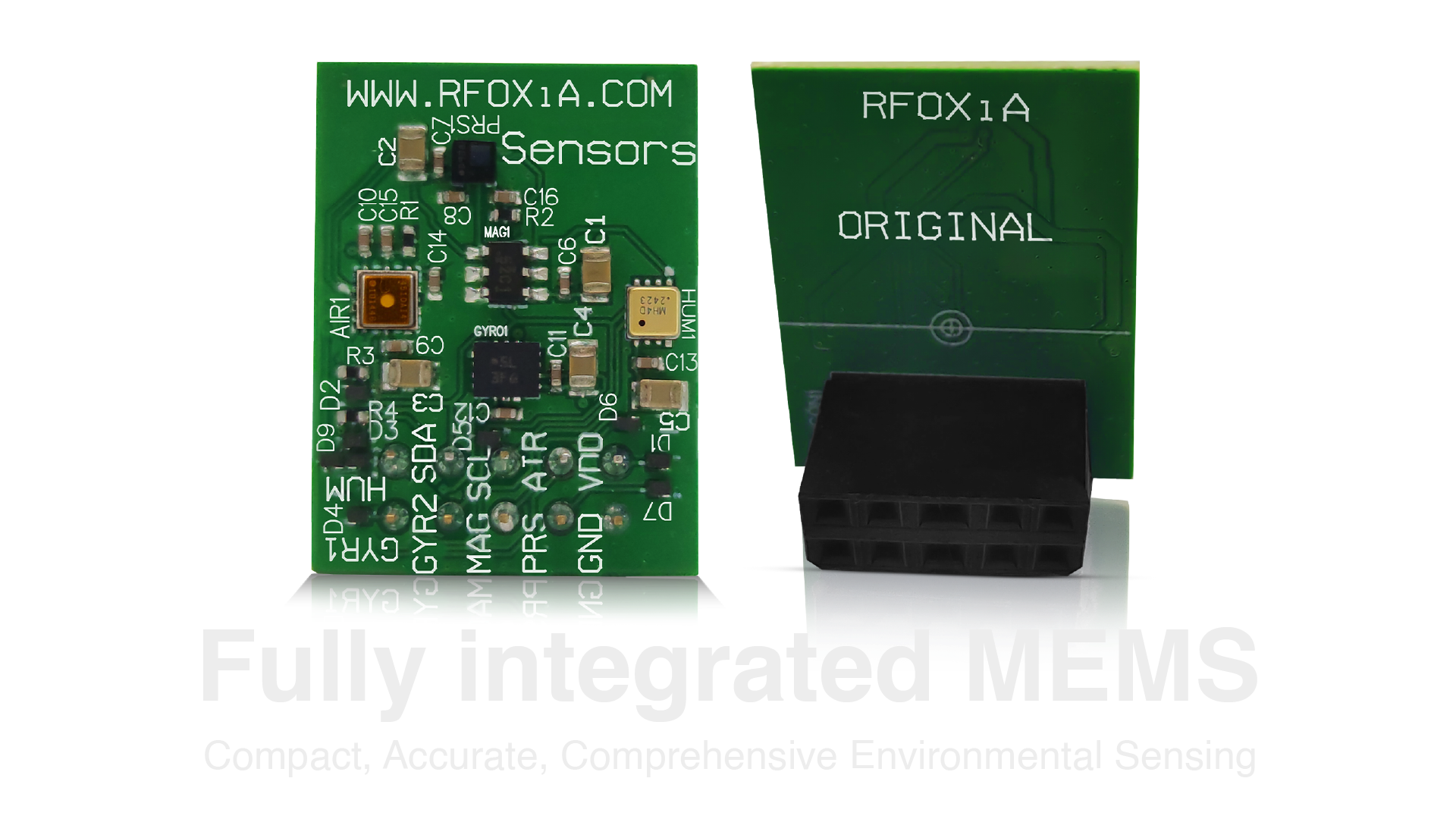
Seven sensors. One module. One I2C bus. One clean integration.
The Seven Sensors at a Glance
| Sensor Type | Parameter Measured | Chip Used |
|---|---|---|
| Accelerometer | Linear acceleration (X, Y, Z) | BMI270 — Bosch Sensortec |
| Gyroscope | Angular velocity (X, Y, Z) | BMI270 — Bosch Sensortec |
| Magnetometer | Magnetic field / heading | TMAG5273C1QDBVR — Texas Instruments |
| Air Pressure | Barometric pressure / altitude | LPS22HHTR — STMicroelectronics |
| Humidity | Relative humidity | MVH4003D — MEMSVision |
| Temperature | Ambient temperature | MVH4003D — MEMSVision |
| Air Quality | VOC / environmental gas index | ZMOD4510AI4R — RENESAS |
These are not generic or commodity sensor chips. Every component is sourced from a recognized industry leader — Bosch, Texas Instruments, STMicroelectronics, MEMSVision, and RENESAS — chosen specifically for accuracy, reliability, and performance in demanding real-world applications.
Precision Motion and Environmental Sensing: Going Deeper
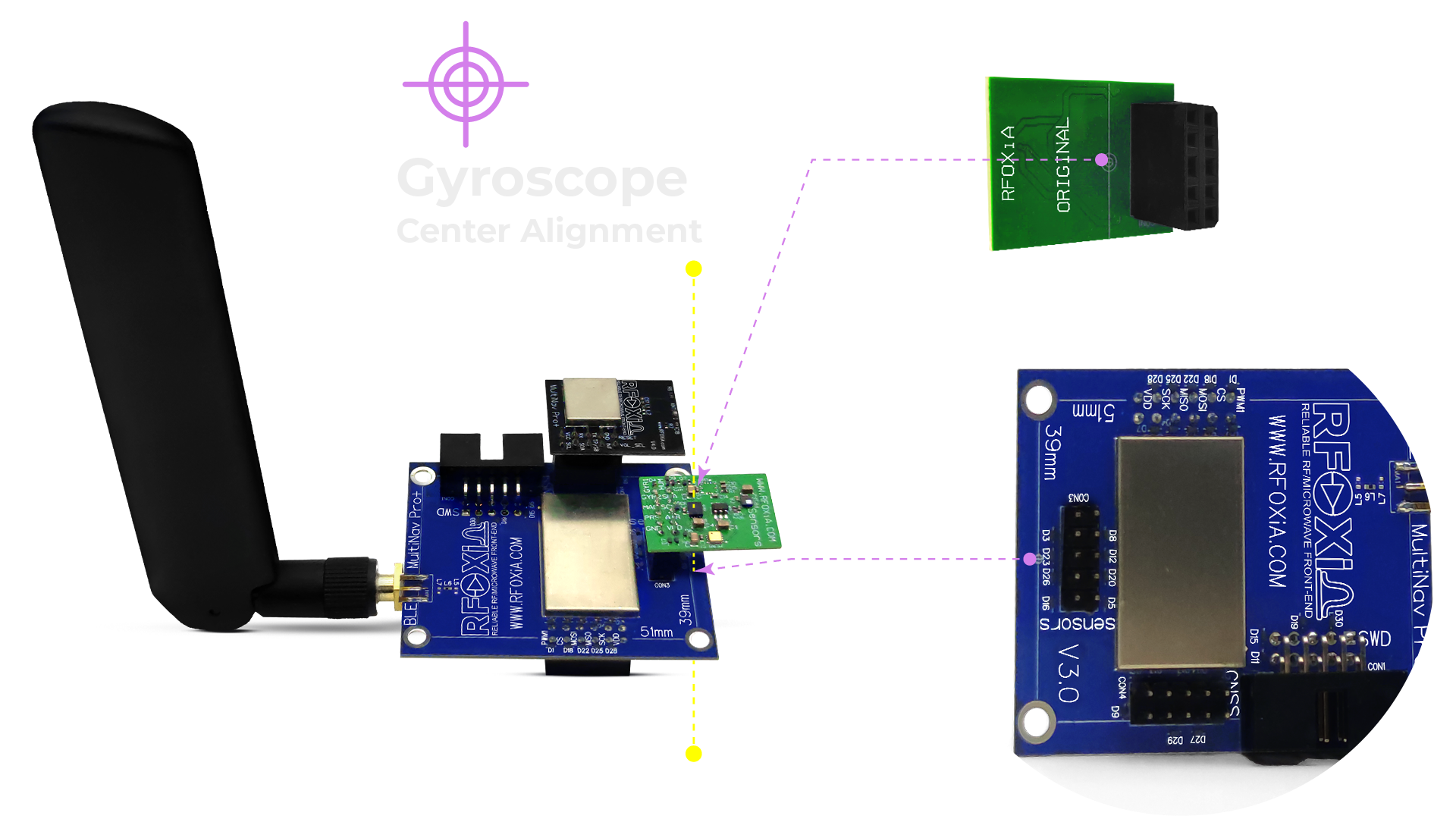
Motion Sensing Layer: BMI270 + TMAG5273
The BMI270 from Bosch Sensortec is widely regarded as one of the best IMU chips available for applications that require low-noise, high-frequency motion data. Originally designed for wearables and mobile applications where power consumption and noise floor both matter enormously, the BMI270 delivers accelerometer and gyroscope data at a quality level that the commodity IMU market cannot match.
For drone builders, this matters directly. Stable flight control loops depend on clean, low-latency gyroscope data. Vibration artifacts, noise, and latency in the IMU chain translate directly into unstable flight, poor attitude hold, and degraded performance in precision maneuvers. The BMI270's low noise density and configurable digital filtering make it a professional-grade choice that belongs in serious builds — not just benchwork experiments.
Paired with the TMAG5273 from Texas Instruments, the magnetometer provides accurate heading data for compass-assisted navigation, orientation locking, and any application that needs to know which way is north. The TMAG5273 is a 3D linear Hall-effect sensor with I2C interface — it integrates cleanly with the rest of the module's I2C stack and provides the magnetic field data that completes a full 9-axis orientation solution when fused with accelerometer and gyroscope readings.
Together, the three motion sensors form a complete inertial measurement unit capable of supporting demanding applications: drone stabilization, robotics attitude control, vehicle tracking, wearable activity recognition, and platform orientation logging.
Environmental Sensing Layer: LPS22HH + MVH4003D + ZMOD4510
The environmental side of the module is equally deliberate in its component selection.
The LPS22HHTR from STMicroelectronics is an absolute pressure sensor with a typical pressure noise of just 0.0075 hPa RMS in low-power mode. That level of precision enables altitude estimation accurate enough for drone applications — combined with GNSS altitude data from the RFOXiA GNSS Module, barometric altitude provides a fast-update-rate altitude reference that GPS alone cannot deliver at high frame rates.
The MVH4003D from MEMSVision handles both relative humidity and temperature in a single package. This combination sensor provides the paired readings necessary for accurate environmental characterization — temperature alone is insufficient for many real-world sensing applications where humidity dramatically affects atmospheric and material behavior.
The ZMOD4510AI4R from RENESAS rounds out the environmental layer with outdoor air quality monitoring. The ZMOD4510 is specifically optimized for outdoor air quality measurement, capable of detecting ozone and nitrogen dioxide concentrations that characterize urban pollution environments. This is not a basic VOC sensor — it is a purpose-designed outdoor air quality chip from one of the world's leading semiconductor companies, providing data that has genuine value for smart city applications, agricultural monitoring, and environmental research.
The Component Lineup: Industry-Standard Silicon
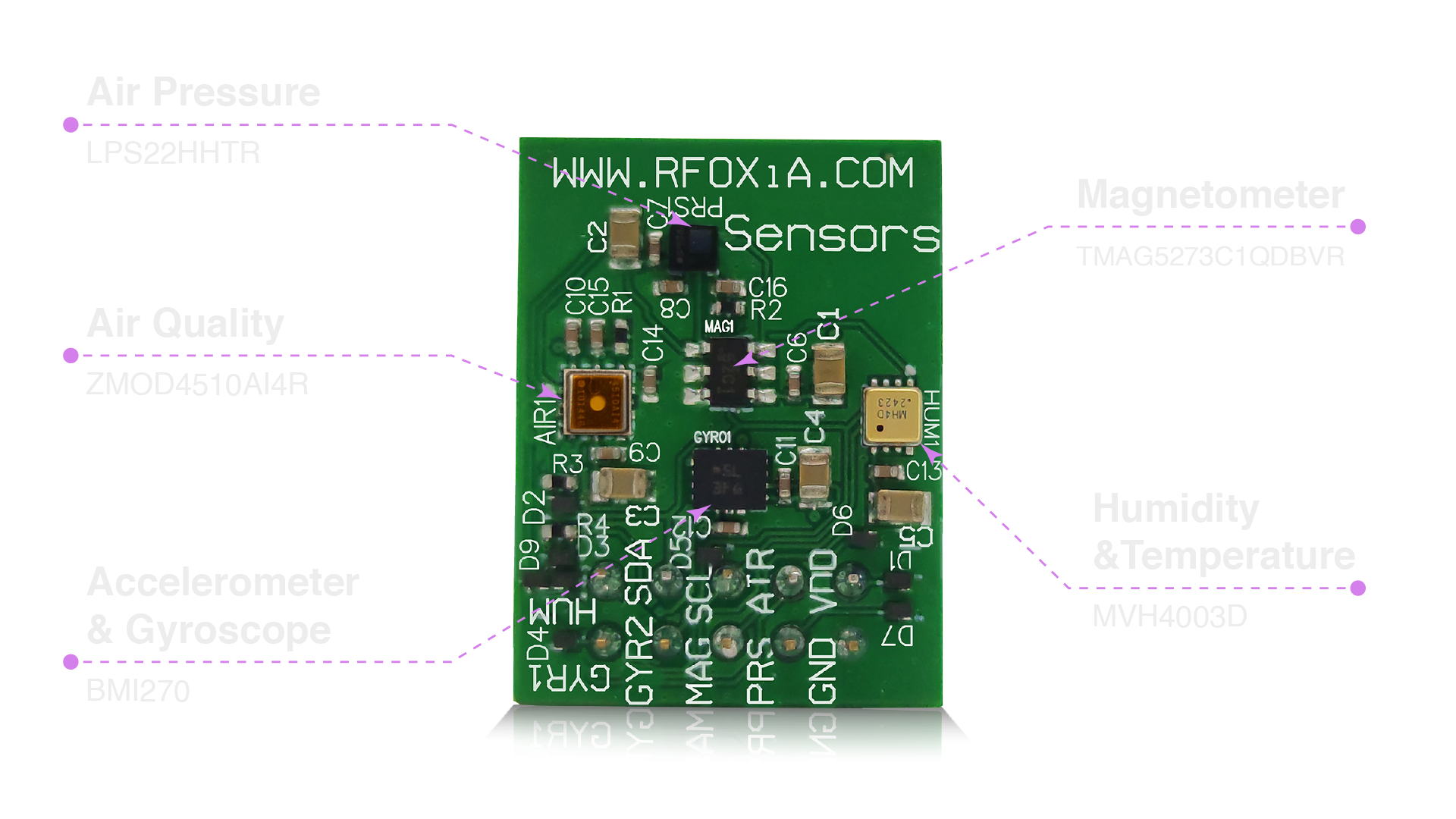
The decision to use named, datasheet-documented components from Bosch, TI, ST, MEMSVision, and RENESAS rather than generic or undocumented alternatives is a fundamental engineering philosophy at RFOXiA. It means:
- Datasheets exist — you can verify every claimed specification independently
- Drivers exist — BSP and library support is available across Arduino, STM32, and ESP32 platforms
- Long-term availability — these are production components from established manufacturers, not mystery chips that disappear from the supply chain
- Known performance — years of community usage means noise characteristics, failure modes, and integration quirks are well understood
This matters especially for any application where the sensor data drives real decisions — drone navigation, environmental reporting, data monetization, research publication.
The MultiNav Pro+ Sensors Module is not a black box. It is a transparent, documented, professional IoT sensor node module built on silicon you can trust.
I2C Architecture: Elegant Simplicity at the Bus Level
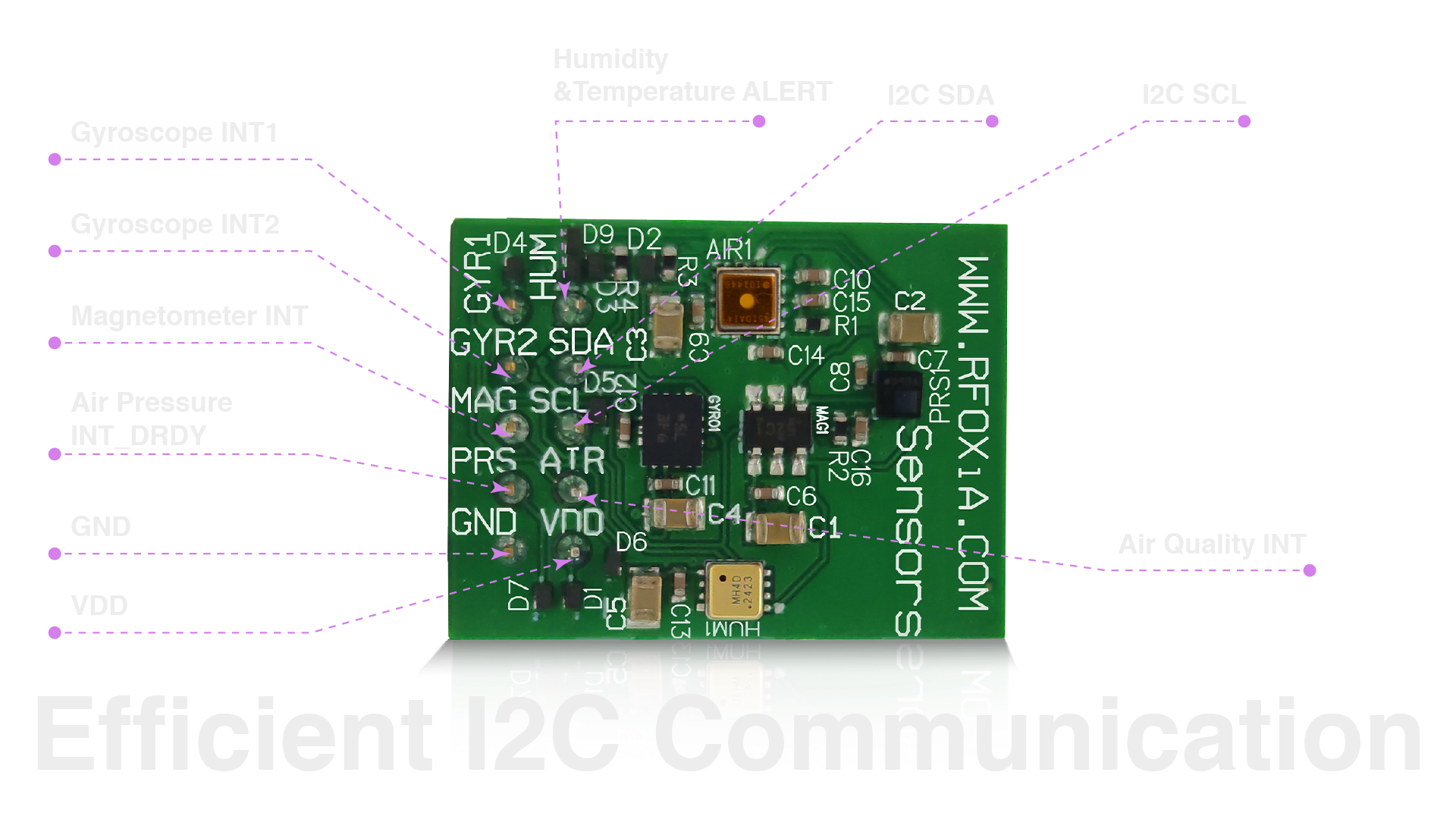
One of the most practically significant design choices in the MultiNav Pro+ Sensors Module is how it handles sensor communication.
All seven sensors share a single I2C bus, each assigned a unique I2C address. This means your microcontroller connects to the module with just two wires — SDA and SCL — and can address and read from all seven sensors independently, without any bus contention or address collisions.
For hardware developers, this is a significant quality-of-life improvement. A common failure mode when building multi-sensor systems is I2C address conflicts — many sensor chips come with fixed addresses or only one or two address options via hardware pins, making it challenging to run multiple sensors of the same type on the same bus. The MultiNav Pro+ has resolved this at the board level. The integration work has been done. You plug it in, scan the bus, and every sensor responds on its own address.
This clean I2C implementation also means the module is drop-in compatible with any I2C-capable microcontroller platform: STM32, ESP32, Arduino, Raspberry Pi, nRF5x, and virtually any embedded Linux board. No SPI lines to dedicate, no chip selects to manage, no UART parsing to implement.
For developers integrating this as an IoT sensor node module into a larger system — perhaps alongside a long-range BLE radio, a GNSS receiver, and a power management layer — the single-bus architecture minimizes GPIO consumption and simplifies board design at the system level.
Compact Design: 24mm × 18mm for Every Form Factor
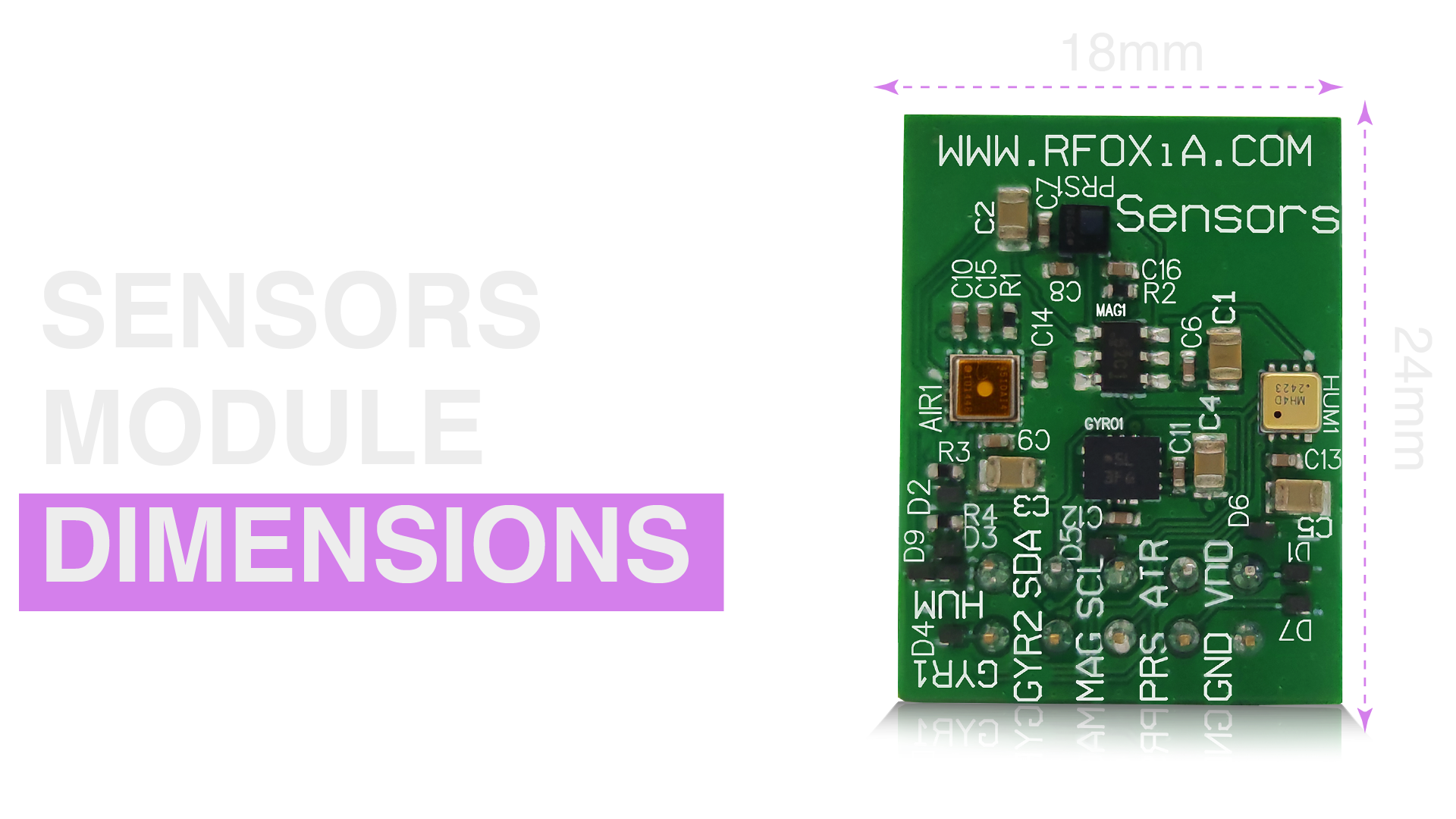
The MultiNav Pro+ Sensors Module measures 24mm × 18mm. That is a footprint smaller than a postage stamp, containing seven sensors from five different manufacturers, all pre-integrated, pre-tested, and ready to deploy.
This physical compactness is not accidental. RFOXiA designs its modules for deployment scenarios where space is genuinely constrained:
- Drones and FPV builds — every gram and every millimeter of stack height matters
- Wearable sensing — body-worn devices have strict dimensional limits
- Compact IoT enclosures — field-deployed nodes often live in weather-resistant enclosures where PCB real estate is at a premium
- Robot chassis integration — mobile robots have structured mounting points that rarely accommodate large PCBs
- UAV payload bays — research-grade UAVs often have payload compartments sized for specific module dimensions
At 24mm × 18mm, the Sensors Module slots into all of these applications without demanding a board redesign. It can sit on top of your existing stack, mount to a dedicated pad on your custom PCB, or integrate into a 3D-printed enclosure designed for compact node deployment.
The module is also fully compatible with the rest of the RFOXiA ecosystem — designed to pair with the BLE Module, GNSS Module, and Power/Program Kit in a unified stack that delivers complete sensing, location, communication, and power management in a form factor small enough to fly, wear, or bury in a field deployment.
Real-Time Environmental Data: What It Looks Like in Practice
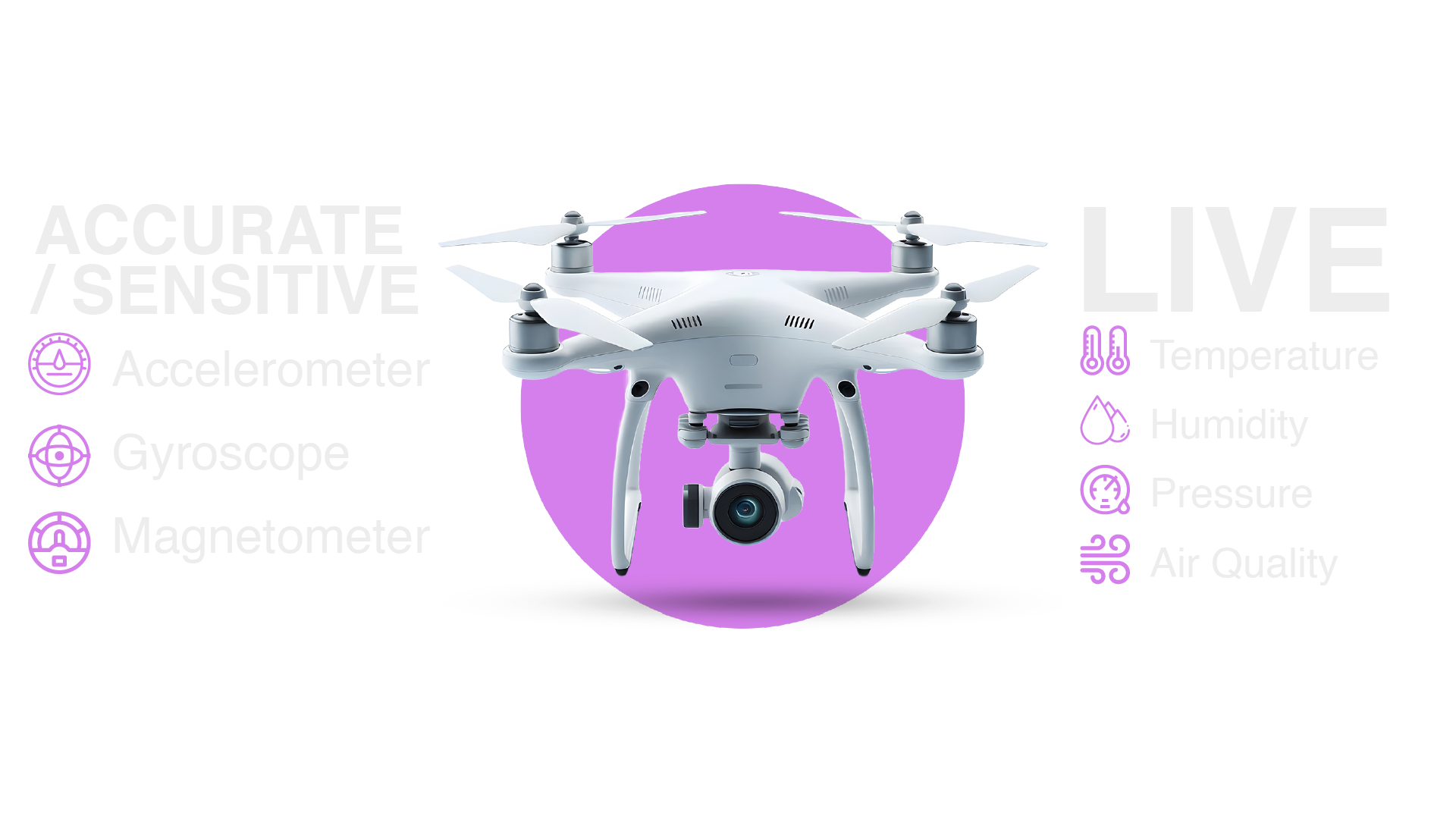
The phrase "real-time environmental data" gets used loosely in the IoT industry. For the MultiNav Pro+ Sensors Module, it has a specific and meaningful definition.
All seven sensors update continuously and independently. Motion data from the BMI270 can be sampled at high rates appropriate for flight control applications. Environmental data from the pressure, humidity, temperature, and air quality sensors streams at rates appropriate for atmospheric monitoring — fast enough to detect meaningful changes, not so fast that you are oversampling static measurements.
When paired with the RFOXiA Connect mobile app, this data flows directly to your smartphone screen in real time: live altitude from the pressure sensor, live heading from the magnetometer, live temperature and humidity, live air quality index — all visible on your device without any custom firmware required to get started.
When paired with the RFOXiA BLE Module and deployed outdoors with GNSS validation, this same data can be streamed to RFOXiA's data network — where it becomes a verified, timestamped, GPS-located environmental data record with genuine commercial value. RFOXiA pays contributors daily rewards for verified data sessions, creating a passive income stream from hardware you have already deployed.
This is what it means to be part of an ecosystem rather than just a component. The Sensors Module is not just a sensor — it is a node in a growing network of real-world environmental intelligence.
Explore the full RFOXiA Integrated Sensors Module to understand how it fits into the broader platform.
Endless Applications: Where Builders Are Deploying This

The breadth of the MultiNav Pro+ Sensors Module's sensor suite means it finds utility across an unusually wide range of applications. Below are the primary use cases where developers are deploying this IoT sensor node module today:
Drone Platforms
Flight controllers benefit from high-quality IMU data. Researchers and advanced builders running custom flight stacks — or supplementing existing autopilots with additional sensor feeds — use the BMI270 accelerometer and gyroscope for attitude estimation, vibration logging, and flight data analysis. The barometric pressure sensor provides fast-update-rate altitude reference. The GPS-independent magnetic heading from the TMAG5273 supports navigation in GNSS-degraded environments.
Environmental Research and Field Science
University researchers and citizen science contributors deploy the module for atmospheric data collection: temperature gradients, humidity mapping, pressure field characterization, and air quality index monitoring across geographic areas. Paired with the GNSS Module for location tagging and the BLE Module for long-range data transmission, a full environmental monitoring node can be deployed in remote locations with no cellular coverage.
Smart Agriculture
Micro-climate data at the field level — temperature, humidity, pressure, air quality — directly informs precision irrigation, pest management, and harvest timing decisions. The compact form factor and low power consumption of the RFOXiA ecosystem makes it practical to deploy multiple nodes across a large agricultural area, creating a local mesh of environmental intelligence.
Robotics and Ground Vehicles
Mobile robots need orientation data, heading reference, and environmental awareness. The full 9-axis motion sensing capability of the Sensors Module — accelerometer, gyroscope, magnetometer — provides the IMU foundation for robot localization, obstacle detection algorithms that incorporate environmental factors, and autonomous navigation systems.
Wearable and Personal Sensing Devices
The 24mm × 18mm footprint makes this module viable for wearable integrations: activity trackers, environmental exposure monitors, research wearables collecting motion and environmental data simultaneously from human subjects.
Industrial IoT and Smart City Infrastructure
Fixed-installation sensor nodes monitoring factory floors, building environments, urban outdoor spaces, and critical infrastructure deployments all benefit from a module that integrates motion (vibration monitoring), environmental (HVAC optimization, outdoor air quality), and atmospheric (altitude, pressure) sensing in a single certified package.
Data Network Contributors
RFOXiA's data monetization network specifically rewards users who deploy Sensors Modules outdoors with GPS validation and stream verified environmental data. For developers who want their hardware to generate passive income while contributing to a growing dataset that serves enterprise buyers — agricultural tech companies, smart city operators, insurance firms, logistics providers — the Sensors Module is the gateway to that earning potential.
FCC Certification: Professional Deployment, No Exceptions
The MultiNav Pro+ Sensors Module carries FCC certification — the same regulatory credential that governs commercial electronic devices sold in the United States. This is not a nice-to-have detail. It is the credential that:
- Permits commercial sale through established distributor channels (DigiKey, Mouser, Adafruit, SparkFun)
- Satisfies procurement requirements for institutional and enterprise buyers
- Demonstrates that the module has been independently tested and verified to meet electromagnetic interference standards
- Protects end users from spectrum interference issues in sensitive RF environments
For serious hardware developers — particularly those deploying in professional contexts, selling their own products that incorporate this module, or contributing to research with publication requirements — FCC certification on every component in the stack matters.
All four RFOXiA modules carry this certification. It is a non-negotiable baseline in RFOXiA's product philosophy.
Pricing and Value: $39 for the Complete Sensor Stack
The MultiNav Pro+ Sensors Module is priced at $39.
To put that in context: sourcing the BMI270, TMAG5273, LPS22HH, MVH4003D, and ZMOD4510 as individual components, designing a PCB that integrates all five chips correctly on a single I2C bus, managing the layout for electromagnetic compatibility between the air quality sensor and the IMU, testing and debugging the assembly — that is a multi-week engineering project before you have written a single line of firmware.
For $39, that entire hardware integration work is done. The module is assembled, tested, FCC certified, and ready to plug into your I2C bus and read.
For developers who want the complete RFOXiA ecosystem — BLE Module, GNSS Module, Sensors Module, and Power/Program Kit — the Developer Bundle packages everything together at $199 (after credits), representing the most cost-effective entry point into the full platform.
If you are building a serious IoT application and need a battle-tested IoT sensor node module that integrates seven professional-grade sensors in a compact, certified, and ecosystem-ready form factor, the MultiNav Pro+ Sensors Module is the most direct path to that goal. Get yours directly from the RFOXiA Integrated Sensors Module product page.
AI Firmware Development: From Hardware to Running Code in Hours
One of the most significant barriers to deploying a new sensor module — even a well-documented one — is firmware. Reading from five different sensor chips, across two different manufacturers' I2C register maps, implementing sensor fusion for the motion sensors, parsing the ZMOD4510's air quality algorithm output — this is not trivial embedded work.
RFOXiA eliminates this barrier through the AI Firmware Builder integrated into RFOXiA Club. Describe your application in plain English — "read temperature and humidity every 30 seconds and transmit over BLE when a threshold is exceeded" — and the AI generates complete, production-ready firmware with full source code that you can compile, flash, and customize.
This capability dramatically compresses the time from hardware in hand to working prototype. Instead of weeks studying register maps and debugging I2C transactions, developers can reach first data in hours and focus their engineering time on the application logic that actually differentiates their project.
The AI Firmware Builder is available to all RFOXiA Club members — free to join, with a $10 welcome credit applied on signup.
Join the RFOXiA Ecosystem
The MultiNav Pro+ Sensors Module is not a standalone product. It is one layer of a vertically integrated hardware ecosystem designed to give builders everything they need: sensing, location, communication, power, firmware, control, and monetization.
RFOXiA Club provides the platform: firmware generation, device control, live data visualization, developer community, and the data network reward program. The Connect app provides the mobile interface: real-time sensor display, live GPS map, and long-range mesh communication — completely without internet.
Builders who want to sense the world, transmit data across kilometers, track location with 1.5-meter accuracy, power their deployment for 24 hours on a 5-minute charge, control their platform from a phone, and get paid for the environmental data they collect — RFOXiA has built every piece of that stack.
The Sensors Module is where you start sensing. Everything else is ready when you are.
Visit the RFOXiA Integrated Sensors Module page to learn more, check current availability, and add the module to your next build.
Specifications Summary
| Specification | Detail |
|---|---|
| Sensors | 7 (Accelerometer, Gyroscope, Magnetometer, Temperature, Humidity, Air Pressure, Air Quality) |
| IMU | BMI270 — Bosch Sensortec |
| Magnetometer | TMAG5273C1QDBVR — Texas Instruments |
| Pressure | LPS22HHTR — STMicroelectronics |
| Humidity & Temperature | MVH4003D — MEMSVision |
| Air Quality | ZMOD4510AI4R — RENESAS |
| Communication Interface | I2C (single bus, unique addresses per sensor) |
| Module Dimensions | 24mm × 18mm |
| Certification | FCC Certified |
| Price | $39 |
| Ecosystem Compatibility | BLE Module, GNSS Module, Power/Program Kit, RFOXiA Connect App, AI Firmware Builder |
RFOXiA — Democratizing Connectivity and Computing Power.
Written by: Moamen Mohamed LinkedIn