
L1 L2 GNSS Module Built for Precision: MultiNav Pro+ Reviewed
The L1 L2 GNSS Module That Redefines What's Possible at This Price Point
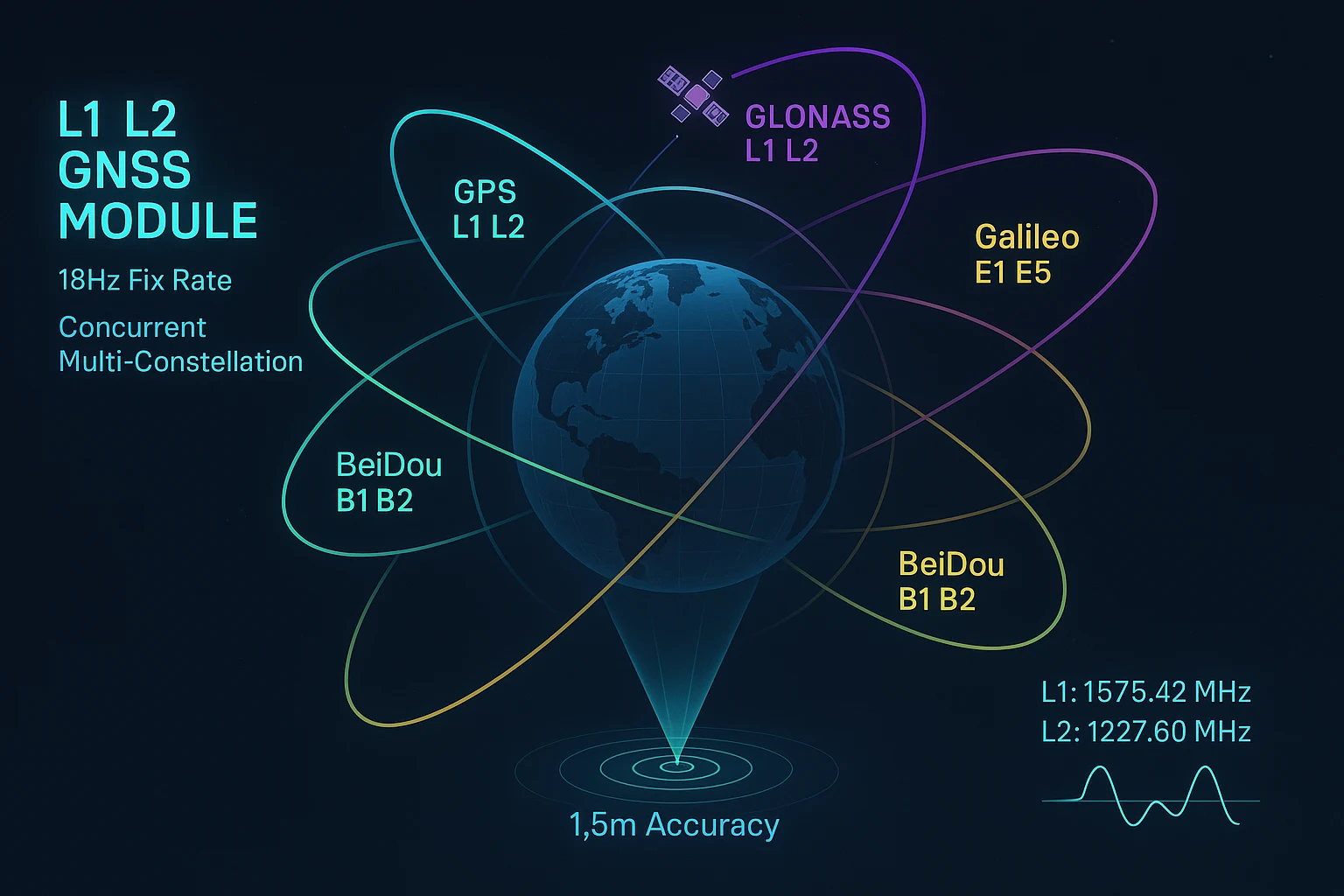
If you've been searching for a professional-grade L1 L2 GNSS module that doesn't cost a fortune, your search ends here. The RFOXiA MultiNav Pro+™ delivers 1.5-meter accuracy, an 18Hz fix rate, and concurrent multi-constellation support — all packed into a compact 26mm x 22mm board that integrates seamlessly into drones, robotics, IoT devices, wearables, and research platforms.
This isn't a hobbyist GPS breakout. This is a precision navigation module engineered for builders who demand real performance in the field.
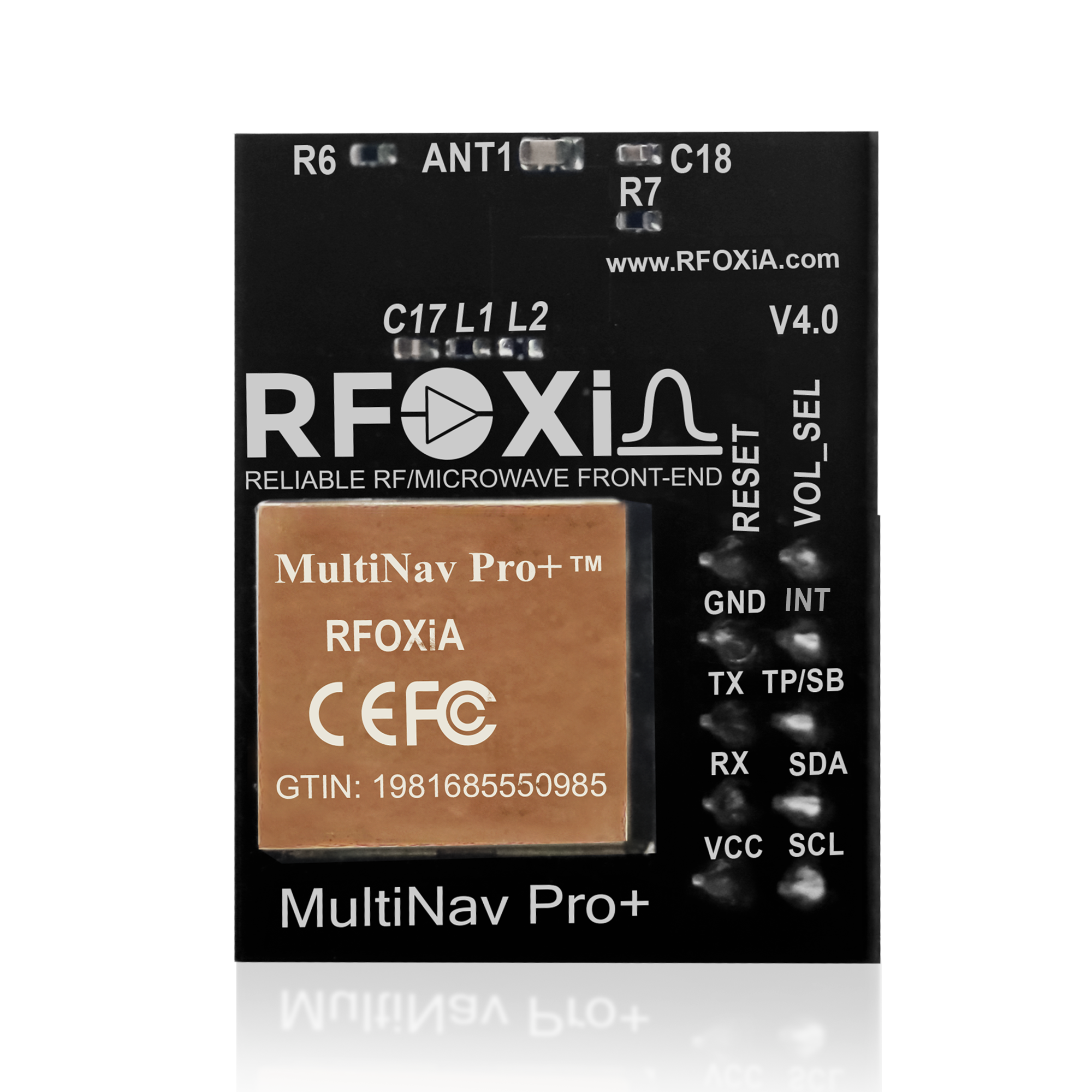
In this post, we'll break down everything you need to know about the MultiNav Pro+ — its specs, its advantages over competing modules, the real-world use cases it unlocks, and why it belongs in your next serious hardware project.
What Is an L1 L2 GNSS Module and Why Does It Matter?
GNSS stands for Global Navigation Satellite System — the umbrella term for all satellite-based positioning networks, including GPS (USA), GLONASS (Russia), Galileo (EU), and BeiDou (China). A GNSS module is the hardware component in your device that communicates with those satellites to determine precise location, velocity, and time.
The terms L1 and L2 refer to radio frequency bands used by satellite navigation systems:
- L1 band (~1575 MHz): The primary civilian frequency. Used by GPS, Galileo, GLONASS, and BeiDou. Most consumer and entry-level GNSS modules operate on L1 only.
- L2 band (~1227 MHz): A secondary frequency primarily used for dual-frequency corrections. Dual-frequency (L1/L2) receivers can compute ionospheric corrections in real time, dramatically improving accuracy.
For applications where sub-2-meter accuracy is critical — drone surveying, precision agriculture, autonomous vehicle navigation, robotics — understanding which bands your GNSS module supports is foundational.
The MultiNav Pro+ is engineered around the u-blox MIA-M10Q, one of the most capable compact GNSS chipsets available, delivering the kind of accuracy and fix speed that professional applications require.
MultiNav Pro+ Key Specifications at a Glance
Before diving deep, here's a quick snapshot of what you're working with:
| Specification | Value |
|---|---|
| Accuracy | < 1.5 meters CEP |
| Fix Rate | 18Hz |
| First Fix | 1 second |
| Constellations | GPS, Galileo, GLONASS, BeiDou |
| GNSS Chip | u-blox MIA-M10Q |
| Interfaces | UART (TX/RX), I2C (SCL/SDA) |
| Operating Voltage | 1.8V and 3.3V |
| Current Draw | 25–30mA |
| Dimensions | 26mm x 22mm |
| Antenna | Integrated high-gain chip antenna |
| Certification | FCC certified |
| Price | $49 |
Premium Hardware: Built Around the u-blox MIA-M10Q
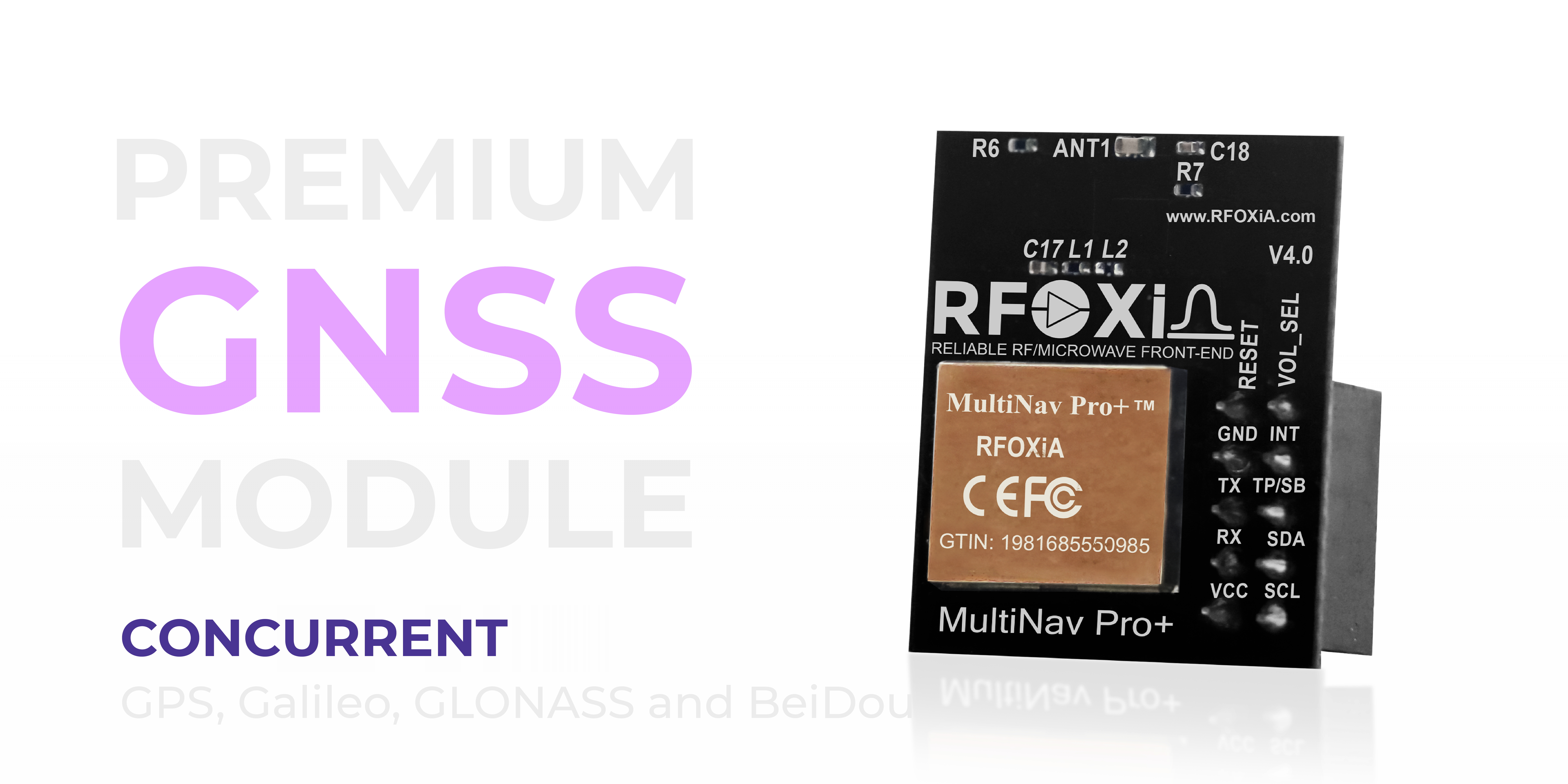
The heart of the MultiNav Pro+ is the u-blox MIA-M10Q — a state-of-the-art GNSS chip engineered for high-performance concurrent multi-constellation operation. u-blox is the industry standard for professional GNSS solutions, used in everything from commercial drones and surveying equipment to automotive systems and industrial IoT.
By building around this chipset, RFOXiA inherits decades of satellite navigation engineering maturity. You get:
- Proven receiver architecture optimized for fast, reliable satellite acquisition
- Low power consumption (25–30mA) suitable for battery-operated field deployments
- Advanced signal processing for superior performance in challenging environments (urban canyons, partial sky obstructions, high-vibration platforms)
- Compatibility with u-center, u-blox's professional GUI for visualization, configuration, and evaluation
This isn't a generic Chinese GNSS chip resold with a breakout board. This is professional-grade silicon from the world's leading GNSS component manufacturer.
Accuracy and Fix Rate: Why 1.5m and 18Hz Are Game-Changers

Let's talk numbers, because in GNSS, the numbers tell the whole story.
1.5-Meter Accuracy
Consumer GPS chips — the kind inside your phone — typically deliver 3–5 meter accuracy under ideal conditions, and can degrade to 10+ meters in real-world environments. For casual navigation, that's fine. For autonomous drone waypoint missions, precision agriculture field mapping, or research-grade data collection, that error margin is completely unacceptable.
The MultiNav Pro+'s sub-1.5 meter CEP accuracy means your application knows where it is. Not approximately. Not within a city block. Within 1.5 meters. That's the difference between landing a drone on a target and missing it by three car lengths.
18Hz Fix Rate
Fix rate refers to how many times per second the module calculates and outputs a new position. Standard GPS modules output at 1Hz — one position update per second. Many professional modules operate at 5Hz or 10Hz.
The MultiNav Pro+ delivers 18Hz — 18 complete position updates every second.
Why does this matter? Because drones move fast. Robots move fast. At 10 m/s flight speed, a 1Hz GPS update means your system is working with position data that's already 10 meters stale. At 18Hz, that staleness shrinks to under 0.6 meters. For flight controllers, autopilots, and tracking algorithms, this is the difference between smooth, precise operation and jerky, unreliable behavior.
1-Second First Fix
Cold start time — how long the module takes to acquire satellites from a powered-off state — is often overlooked. The MultiNav Pro+ achieves first fix in 1 second. For any application where time-to-ready matters (rapid deployment, emergency response, time-critical missions), this is significant.
Concurrent Multi-Constellation Support: Why More Satellites = Better Results
The MultiNav Pro+ simultaneously receives signals from all four major GNSS constellations:
- GPS — 31 operational satellites (USA)
- Galileo — 30 operational satellites (European Union)
- GLONASS — 24 operational satellites (Russia)
- BeiDou — 50+ operational satellites (China)
Simultaneous multi-constellation reception means the module can see more satellites at any given time, from any location on Earth. More satellites visible means:
- Faster acquisition (more signals to lock onto)
- Better accuracy (more data points for position calculation)
- Greater reliability in challenging environments (urban environments, valleys, dense forests where some constellations may be partially blocked)
- Redundancy — if one constellation has an outage or degraded signal, others compensate
For an L1 L2 GNSS module designed for global deployment, multi-constellation isn't a nice-to-have — it's a requirement.
Compact and Power-Efficient: Designed for Real Integration
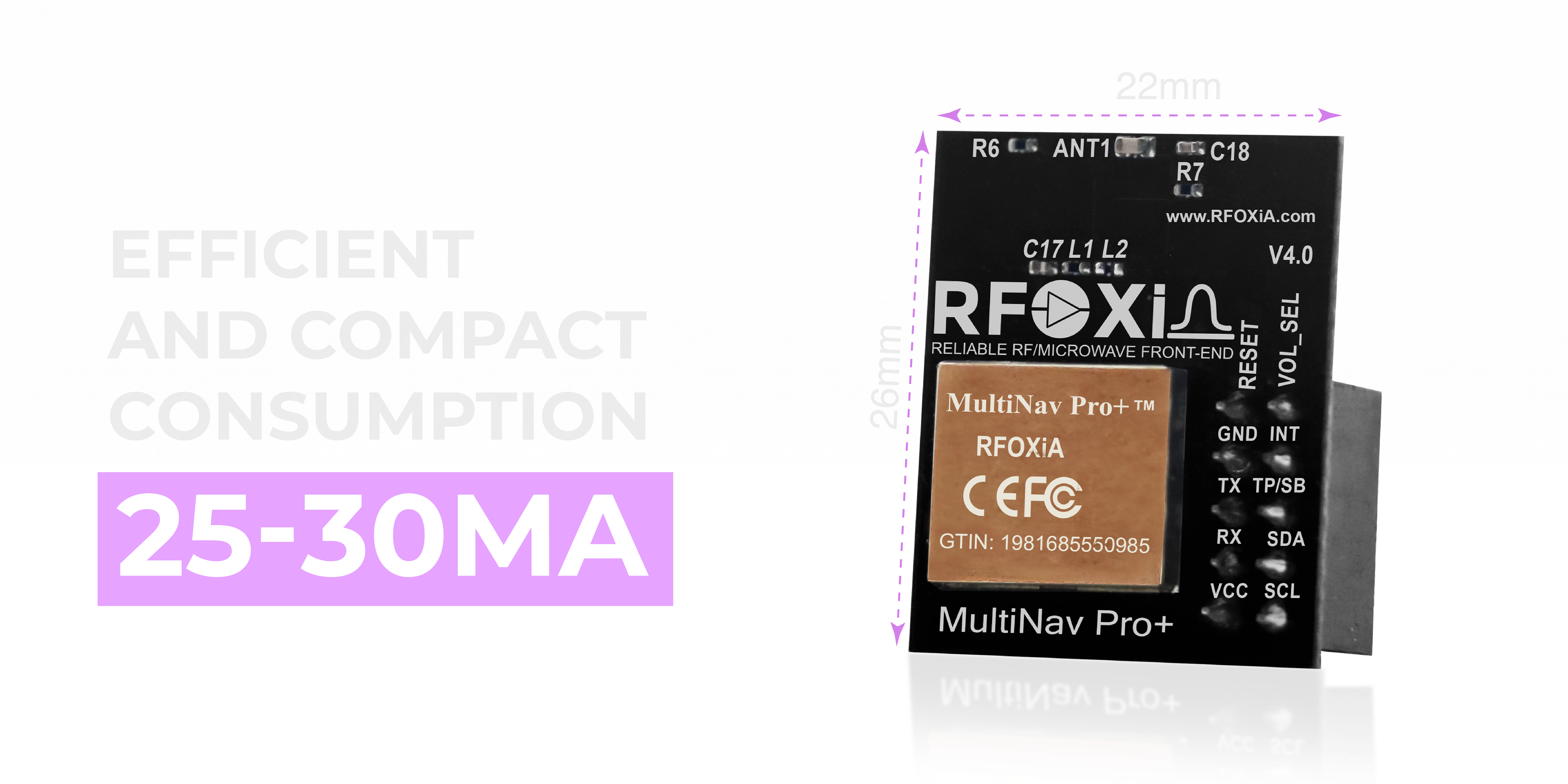
At 26mm x 22mm, the MultiNav Pro+ is compact enough to integrate into virtually any hardware design without consuming valuable board space. Compare this to external antenna GNSS systems that require patch antennas, coaxial cables, and dedicated mounting provisions — the integrated chip antenna on the MultiNav Pro+ eliminates all of that complexity.
The 25–30mA operating current makes it practical for battery-powered applications:
- Small autonomous drones where gram-level weight and milliwatt-level power matter
- Wearable devices requiring all-day battery life
- Remote IoT sensor nodes operating on solar or battery power for extended periods
- Portable research instruments with limited power budgets
For drone applications in particular, every milliamp saved is flight time extended. The MultiNav Pro+'s power efficiency is an engineering decision that directly benefits the end application.
Flexible Interface: UART and I2C Support
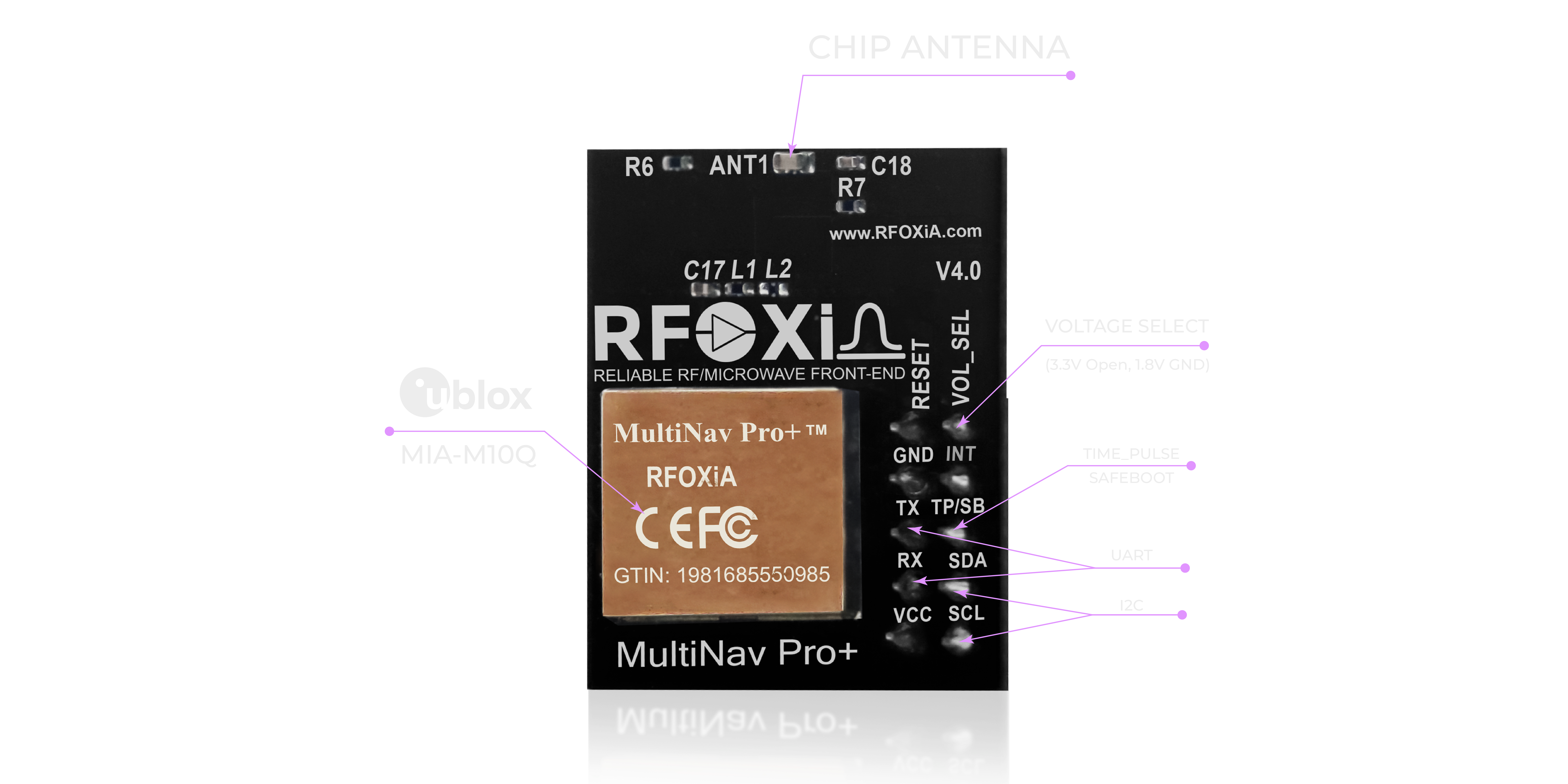
Integration flexibility is critical when you're designing hardware that needs to communicate with diverse microcontrollers, flight controllers, and development platforms. The MultiNav Pro+ supports both:
- UART (TX/RX): The standard serial interface used by virtually every flight controller (ArduPilot, PX4, iNav), most microcontrollers, and development boards. Simple, low-pin-count, universally compatible.
- I2C (SCL/SDA): The two-wire bus protocol used when multiple devices need to share a communication channel. Ideal for compact designs where GPIO pins are at a premium.
Additionally, the module supports both 1.8V and 3.3V operating voltages, making it compatible with modern low-voltage microcontrollers (ESP32, nRF52840, STM32) as well as 3.3V systems like Arduino, Raspberry Pi, and virtually every development board in the maker ecosystem.
You choose the interface that fits your project. No adapters, no level shifters, no compromise.
Open Source Driver: Start Building in Minutes
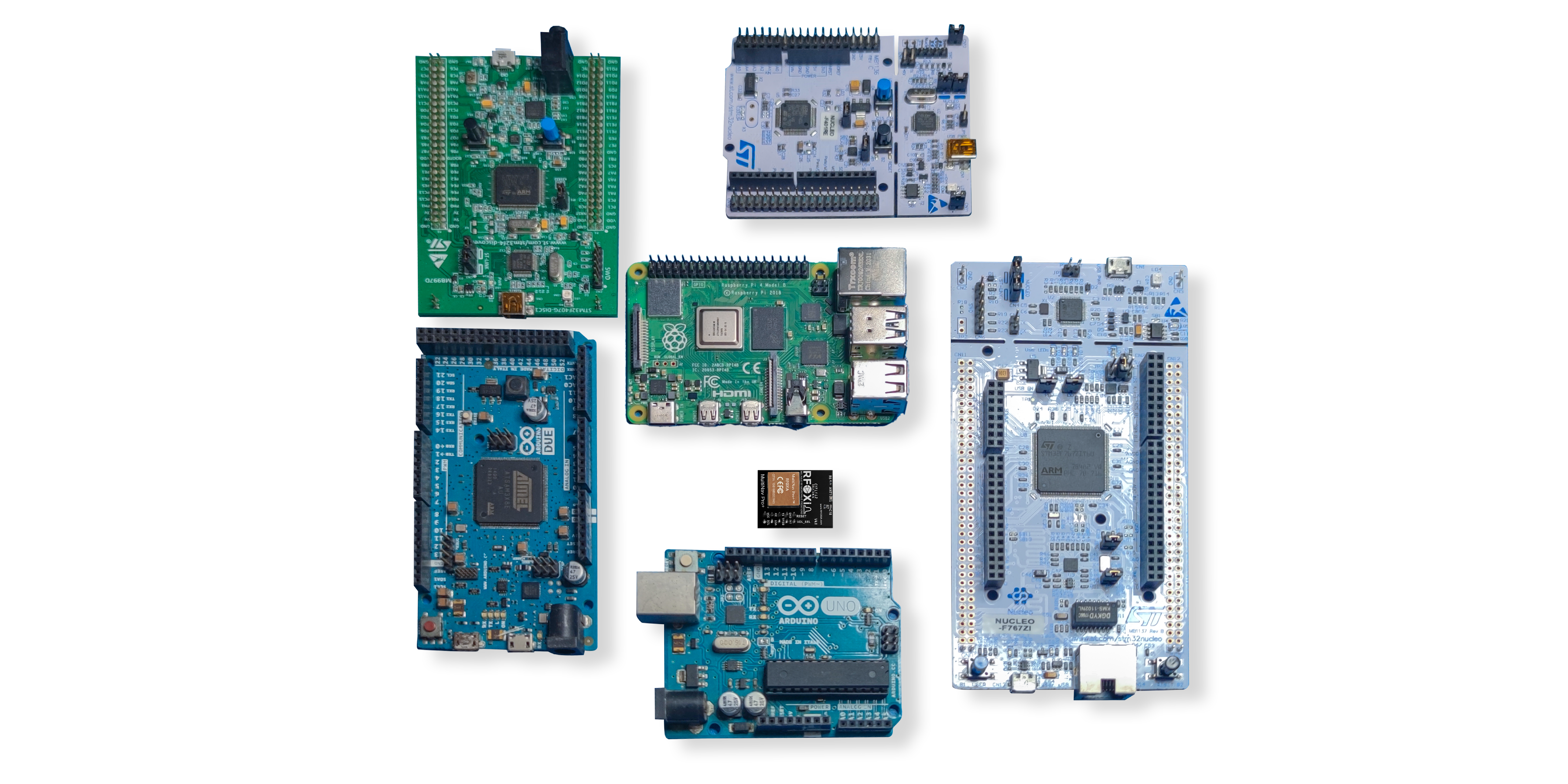
One of the biggest hidden costs in hardware development is integration time. A module with poor documentation, proprietary protocols, or no library support can cost you days of reverse-engineering and debugging before you've written a single line of application code.
The MultiNav Pro+ ships with a fully open-source C language driver library that includes:
- Complete NMEA standard protocol command implementations
- Arduino IDE compatible library structure — import and start parsing GPS data in under 5 minutes
- Compatibility with any toolchain that supports standard C (PlatformIO, STM32CubeIDE, ESP-IDF, and more)
- Clean, well-commented code that's easy to modify for custom applications
For developers using the RFOXiA AI Firmware Builder on RFOXiA Club, integration is even faster — describe your application in plain language and the AI generates complete, production-ready firmware that includes full MultiNav Pro+ driver integration. What would normally take hours of library research and integration work happens in minutes.
u-center Software Compatibility: Professional Evaluation Tool
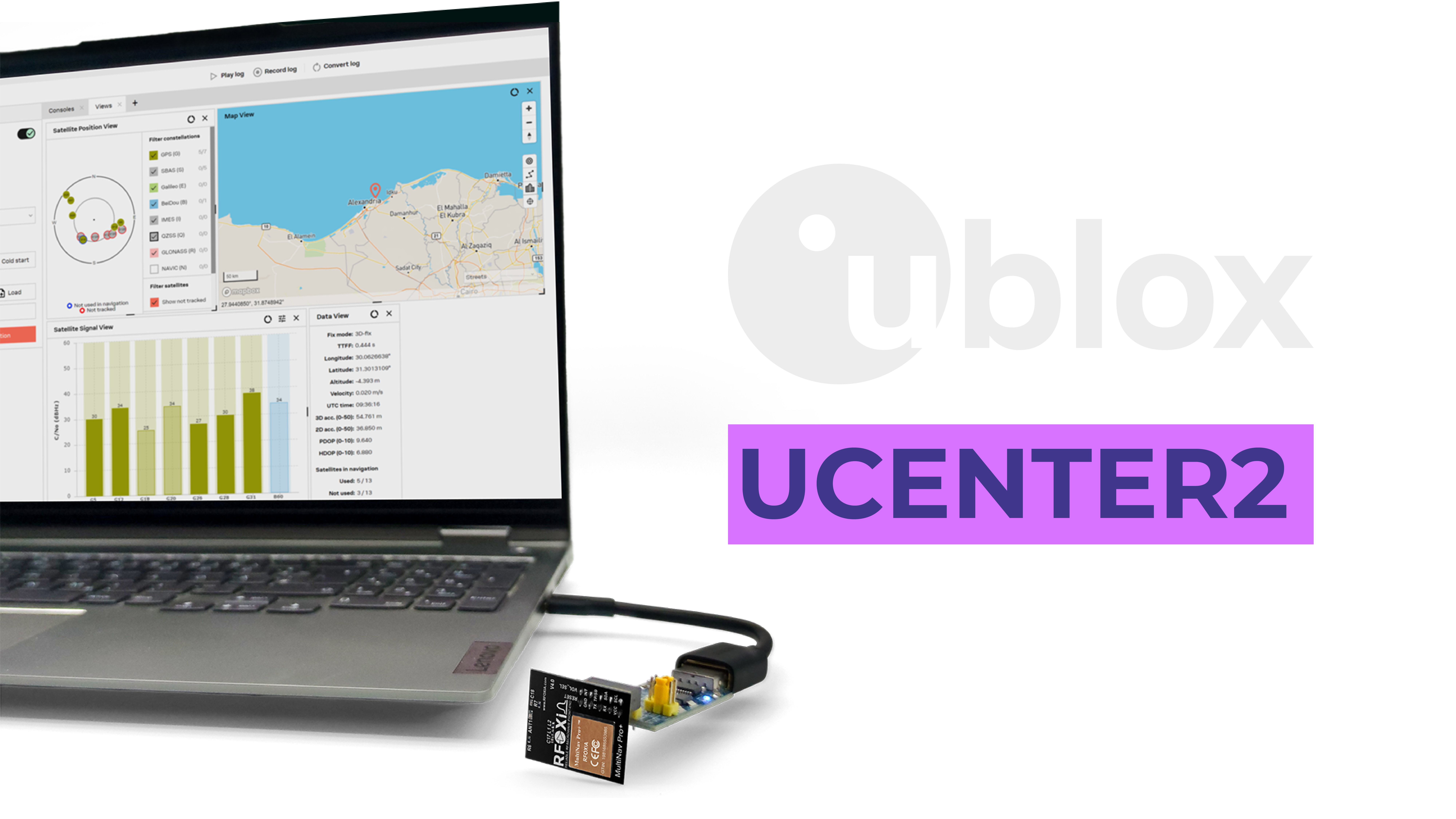
Because the MultiNav Pro+ is built on the u-blox MIA-M10Q, it's fully compatible with u-center — u-blox's professional GNSS evaluation and configuration software.
u-center provides:
- Real-time satellite visualization — see exactly which satellites your module has acquired, their signal strength, and elevation angles
- Live position tracking — watch your location update on a map at the full 18Hz rate
- Configuration interface — adjust output rates, enable/disable constellations, configure NMEA message types
- Data logging — record complete GNSS sessions for post-processing analysis
- Signal quality analysis — diagnose interference, antenna placement issues, and multi-path problems
For researchers, engineers, and developers who need to characterize module performance or configure advanced parameters, u-center is an invaluable tool — and the MultiNav Pro+ works with it out of the box.
Use Cases: Where This L1 L2 GNSS Module Excels

The combination of 1.5m accuracy, 18Hz fix rate, multi-constellation reception, and compact form factor makes the MultiNav Pro+ genuinely useful across a wide range of serious applications:
Drone and UAV Applications
The 18Hz fix rate is specifically designed for fast-moving platforms. Drone flight controllers require high-frequency, high-accuracy GPS data to maintain stable position holds, execute precise waypoint missions, and enable safe autonomous operation. The MultiNav Pro+ delivers professional autopilot-grade positioning at a price point accessible to custom drone builders.
IoT and Remote Sensor Networks
For IoT deployments where asset tracking, geofencing, or location-stamped data collection is required, the MultiNav Pro+'s low power consumption and compact size make it ideal. When paired with the RFOXiA Sensors Module and BLE Module, it forms the location layer of a complete wireless data collection node.
In fact, the MultiNav Pro+ is a core component of the RFOXiA data network — GPS validation is used to verify that Sensors Module nodes are deployed outdoors in legitimate locations, ensuring data integrity for the enterprise buyers who purchase the network's environmental data stream.
Wearables and Personal Tracking
At 26mm x 22mm and 25–30mA, this module fits comfortably in wearable form factors. Applications include athlete performance tracking, personal safety devices, pet trackers, and adventure sport electronics.
Research and Field Science
For academic researchers who need GPS-stamped environmental data, survey-grade positioning for ecological studies, or precise platform tracking for experiments, the MultiNav Pro+ delivers research-quality location data at a price that doesn't require a grant application.
Automotive and Ground Robotics
Autonomous ground vehicles, agricultural robots, and research rovers all benefit from high-frequency, high-accuracy positioning. The MultiNav Pro+'s 18Hz update rate ensures that navigation algorithms always have fresh, accurate position data to work with.
Precision Agriculture
Mapping field boundaries, tracking equipment passes, and logging treatment application locations all require sub-2-meter accuracy. The MultiNav Pro+ provides the precision needed for modern agricultural data collection workflows.
How the MultiNav Pro+ Fits Into the RFOXiA Ecosystem
The MultiNav Pro+ isn't just a standalone GNSS module — it's designed as a native component of the complete RFOXiA wireless developer ecosystem.
When combined with the RFOXiA BLE Module (5km ground range, 20km man-to-drone range), the Sensors Module (7-sensor environmental monitoring), and the Power/Program Kit (5-minute charge, 24-hour runtime), the MultiNav Pro+ becomes the precision location layer of a complete, professional-grade wireless data system.
The Developer Bundle packages all four modules together — and represents the most cost-effective way to acquire the complete ecosystem, including the MultiNav Pro+. For builders who want everything working together from day one, the bundle is the obvious choice.
For those ready to add precision GNSS to their current projects, you can grab the RFOXiA Accurate GNSS Module individually for $49 — an exceptional price for a module of this specification.
Advanced RF Filtering: Crystal-Clear Signals in Noisy Environments
One aspect of the MultiNav Pro+ that deserves special mention is its proprietary RF/microwave microstrip filter technology.
GNSS signals arriving from satellites are extraordinarily weak — they've traveled 20,000+ kilometers through space. In real-world deployment environments, these already-weak signals compete with interference from nearby electronics, motors, power systems, and RF noise generated by the host platform itself.
A drone, for example, generates significant RF interference from its ESCs, motors, video transmitters, and flight controller. Without careful RF filtering, this noise can corrupt GNSS signal reception and degrade accuracy.
RFOXiA's microstrip filter design minimizes interference at the antenna input, ensuring that the u-blox chipset receives the cleanest possible signal regardless of deployment environment. This is RF engineering that matters in practice — not just on paper.
FCC Certified: Ready for Commercial Deployment
Every RFOXiA module, including the MultiNav Pro+, carries FCC certification. This isn't a detail — it's a prerequisite for commercial deployment in the United States and a strong signal of product maturity.
FCC certification means:
- The module has been independently tested and verified to comply with electromagnetic interference regulations
- It is legally deployable in commercial products sold in the US market
- Major distributors (DigiKey, Mouser, etc.) will list it — they won't carry non-certified RF products
- Enterprise and institutional customers can procure it without regulatory concerns
For hardware developers building commercial products, integrating an FCC-certified module means your end product has a clearer path through its own regulatory compliance process.
Why the MultiNav Pro+ Beats Generic Alternatives
The market is flooded with cheap GNSS breakout boards. Here's why the MultiNav Pro+ is worth choosing:
vs. Generic NEO-6M/NEO-M8N boards ($5–15): Older chipsets, lower accuracy (2.5–5m), lower fix rates (1–10Hz), no u-center compatibility on all models, no FCC certification, no open-source driver support, no ecosystem integration. The MultiNav Pro+ is faster, more accurate, better supported, and certified.
vs. High-end survey GNSS receivers ($500–5000+): Professional survey receivers add RTK correction capabilities for centimeter-level accuracy — at a price that's completely inaccessible for most developers. For applications where 1.5m accuracy is sufficient (drones, IoT, tracking, most robotics), paying 10–100x more provides marginal real-world benefit.
The MultiNav Pro+ occupies the sweet spot: professional specifications, accessible price, FCC certified, ecosystem-integrated.
If you're ready to add precision navigation to your next project, explore the RFOXiA Accurate GNSS Module and see how it fits your application.
Package Contents and Getting Started
Every MultiNav Pro+ purchase includes:
- 1x MultiNav Pro+ GNSS Module — fully assembled and tested
- Quick Start Guide — hardware connection, library installation, first fix walkthrough
With the open-source driver library, Arduino IDE compatibility, and Quick Start Guide, most developers achieve their first GPS fix within minutes of unboxing. For more complex firmware integration, the RFOXiA Club's AI Firmware Builder can generate complete application firmware incorporating the MultiNav Pro+ in seconds.
Technical Summary: The MultiNav Pro+ Is the Right L1 L2 GNSS Module for Serious Builders
The RFOXiA MultiNav Pro+™ represents the ideal intersection of professional GNSS performance and maker-accessible design. Built on the u-blox MIA-M10Q chipset, it delivers 1.5-meter accuracy, 18Hz fix rate, concurrent multi-constellation reception, dual-interface connectivity, and FCC certification — all in a 26mm x 22mm board at $49.
For drone builders who need reliable autopilot positioning, IoT engineers building location-aware networks, researchers collecting GPS-stamped field data, and hardware developers who simply want the best available L1 L2 GNSS module at a reasonable price — the MultiNav Pro+ delivers without compromise.
This is precision navigation hardware built for builders who refuse to accept the gap between "cheap and inaccurate" and "accurate and unaffordable."
Ready to add professional-grade GNSS to your next project?
Get the RFOXiA Accurate GNSS Module for $49 →
RFOXiA is a Delaware-based hardware technology company building a vertically integrated wireless development ecosystem. All modules are FCC certified and ship from stock.
Written by: Moamen Mohamed LinkedIn