
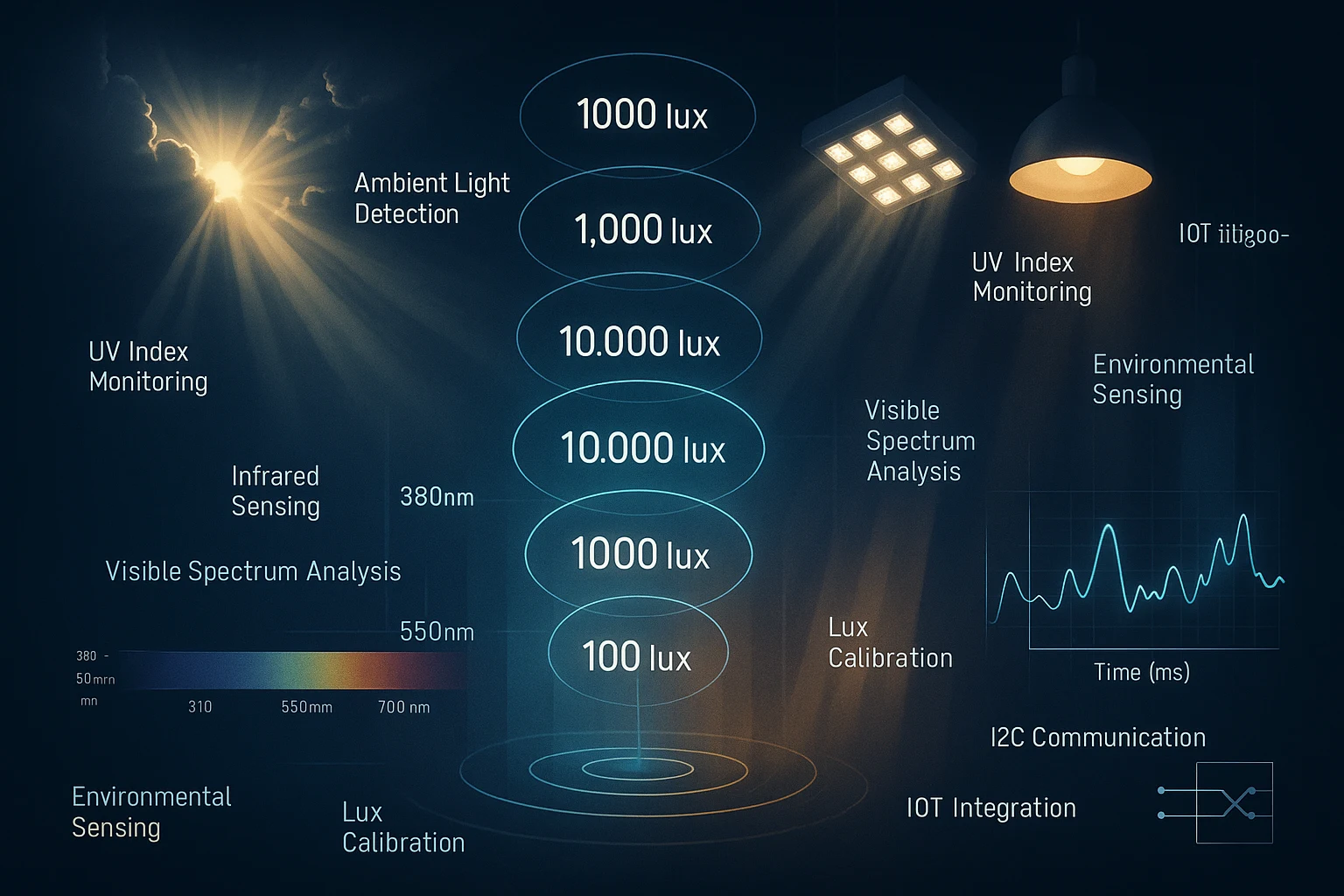
Light Intensity Sensor Module: Why Serious Builders Need More Than Just Light
RFOXiA Integrated Sensors Module
The Light Intensity Sensor Module Is Just the Beginning — Here's What a Complete Sensor Stack Looks Like
When most developers start searching for a light intensity sensor module, they have a specific goal in mind: measure ambient light, detect brightness changes, automate a relay, or trigger a camera. That's a valid and useful starting point. But if you're building anything serious — a drone payload, an environmental monitoring node, a robotics platform, or an IoT data network — relying on a single-axis sensor is like navigating a city with only a compass.
The real question isn't "which light intensity sensor module should I buy?" The real question is: what does your project actually need to understand about its environment?
This guide breaks down the limitations of single-sensor approaches, explains what a professional-grade sensor architecture looks like, and introduces the RFOXiA Integrated Sensors Module — a 7-sensor all-in-one platform built specifically for developers who don't want to compromise.
Why Developers Search for a Light Intensity Sensor Module
Light sensing is one of the most common requirements in embedded development. Applications include:
- Automatic display brightness control in wearables and handhelds
- Solar panel orientation systems for energy harvesting drones
- Greenhouse automation — adjusting grow lights based on natural light levels
- Security systems — detecting day/night transitions to activate cameras or alarms
- Drone landing assistance — detecting runway or pad illumination
- Environmental data logging — recording solar irradiance over time
All of these are legitimate use cases. But here's what the search result usually gives you: a bare ambient light sensor IC, a breakout board, or a cheap module with a single LDR and no ecosystem around it.
You get the light reading. You get nothing else.
For a hobbyist weekend project, that's fine. For professional-grade work — drone systems, precision agriculture, field research, industrial IoT — that's a serious constraint.
The Problem With Single-Sensor Modules in Professional Applications
Let's talk about what you actually lose when you build around a single light intensity sensor module without a broader sensing stack.
Context-Free Data
A lux reading without environmental context is difficult to interpret accurately. Is that low light reading caused by cloud cover, fog, dust in the air, or sensor obstruction? Without air pressure, humidity, and air quality data alongside it, you can't know. Environmental sensors are most powerful when correlated.
No Motion Awareness
In drone and robotics applications, sensor readings are only meaningful when you know the orientation and motion state of the platform. A light sensor mounted on a tilting drone will give wildly different readings depending on pitch and roll. Without an accelerometer and gyroscope, that data is nearly unusable for calibrated applications.
Integration Overhead
Every sensor you add from a different vendor means another datasheet, another communication protocol to wrangle, another power supply consideration, another physical footprint on your PCB. Sourcing five sensors from five different manufacturers and integrating them into a coherent firmware stack takes weeks — if not months — of development time.
No Path to Monetization
Single-purpose sensor modules deliver data to your local system and stop there. They have no connection to a broader network, no mechanism for contributing to a commercial data marketplace, and no way to generate passive revenue from your deployment.
This is the gap the RFOXiA Integrated Sensors Module was designed to fill.
Introducing the MultiNav Pro+™ Sensors Module
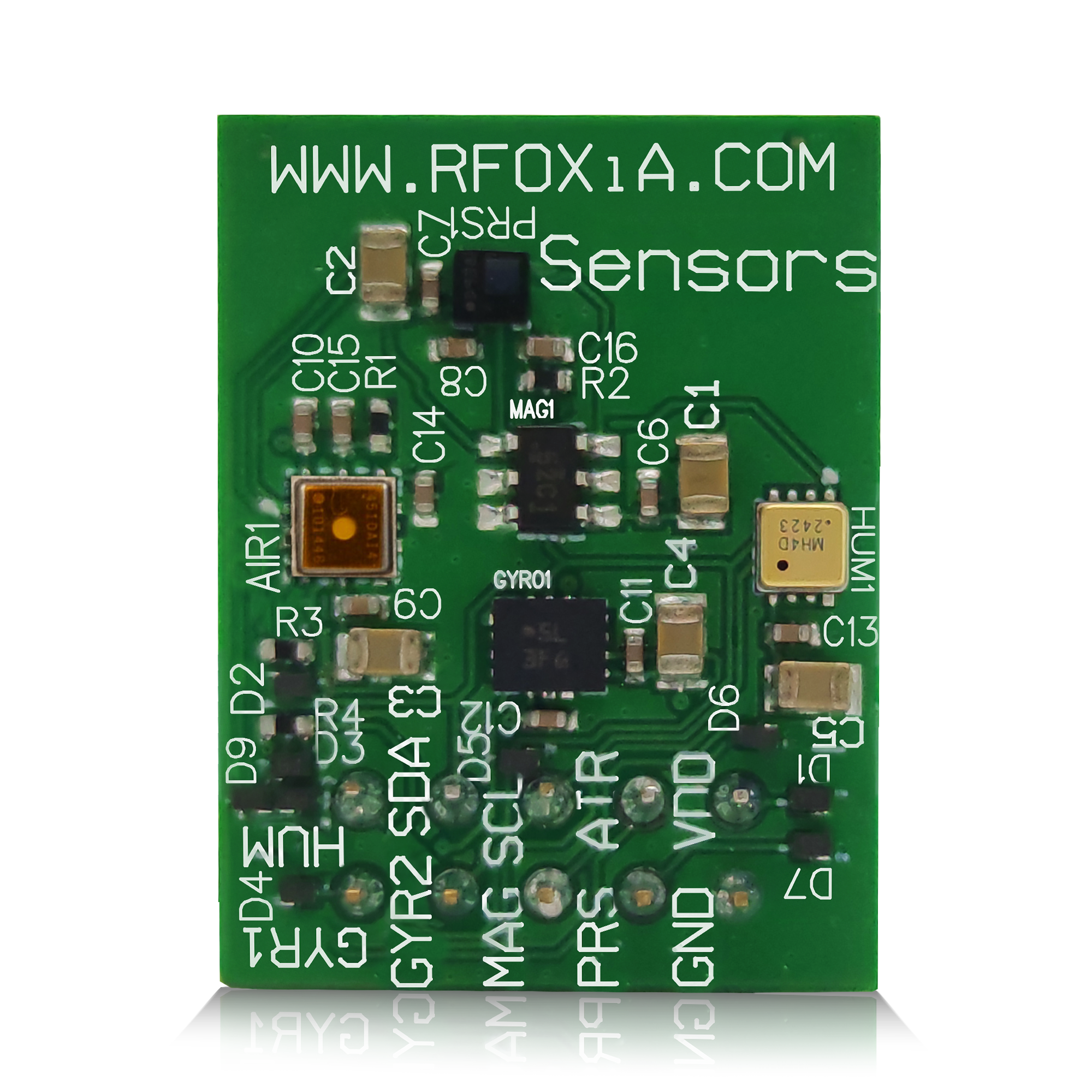
RFOXiA's MultiNav Pro+™ Sensors Module is a compact, FCC-certified, professionally engineered sensor array that combines seven independent sensors into a single 24mm × 18mm board. It's designed to give developers complete environmental and motion awareness in one integration — instead of seven.
This is not a light intensity sensor module. It's the platform that makes a light intensity sensor module look like a component in a much larger and more capable system.
All Seven Sensors — In One Module
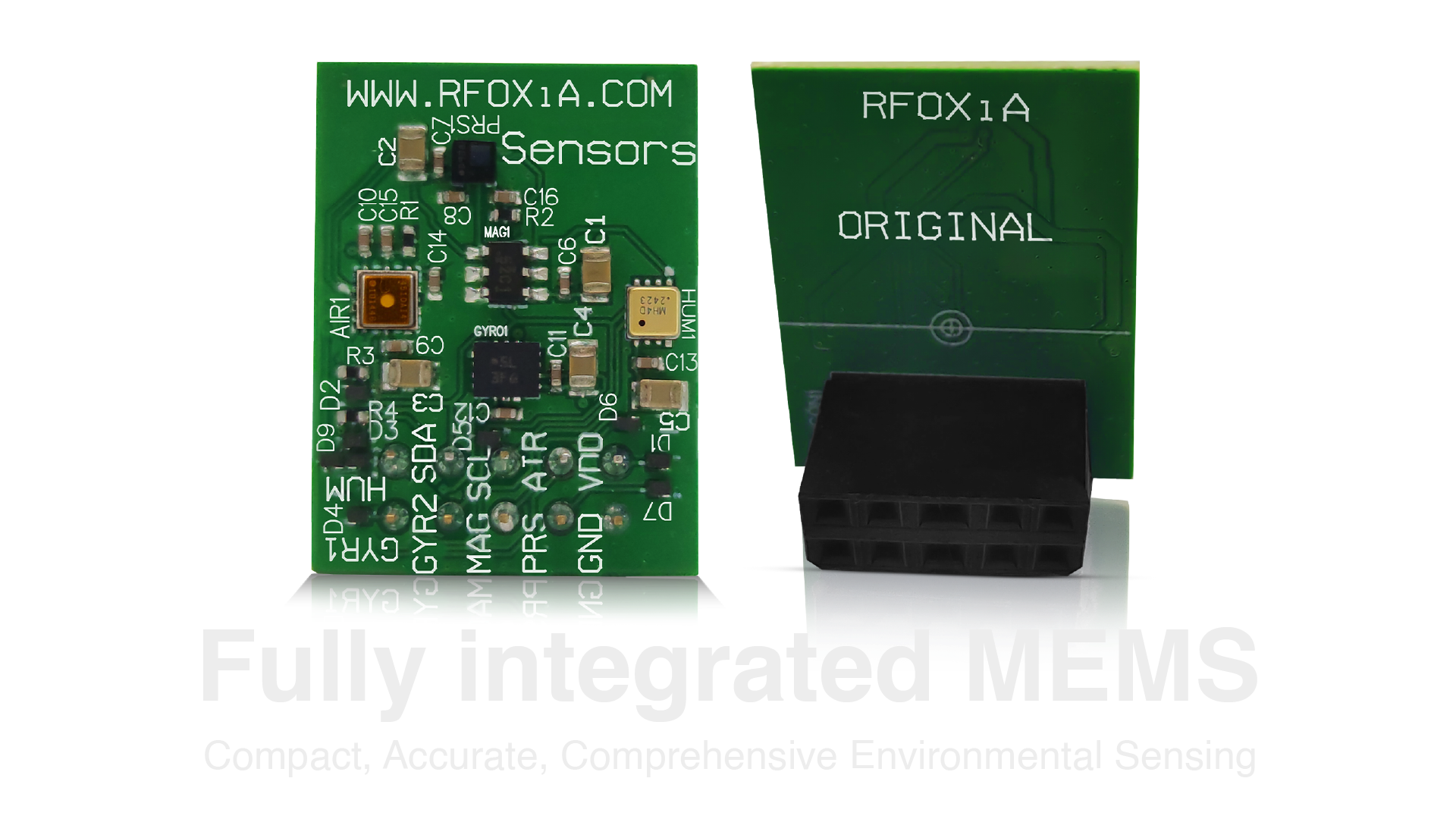
Here's what you get in a single module at $39:
| Sensor | Function |
|---|---|
| Accelerometer | Linear acceleration on X, Y, Z axes |
| Gyroscope | Rotational rate measurement |
| Magnetometer | Magnetic field / compass heading |
| Temperature | Ambient temperature |
| Air Pressure | Barometric pressure / altitude estimation |
| Humidity | Relative humidity |
| Air Quality | VOC and environmental air quality index |
Seven sensors. One I2C bus. One module.
For developers who have spent hours sourcing individual components, writing register-level drivers for each IC, and debugging address conflicts on a shared bus — this is a fundamentally different experience.
Precision Motion and Environmental Sensing — Together
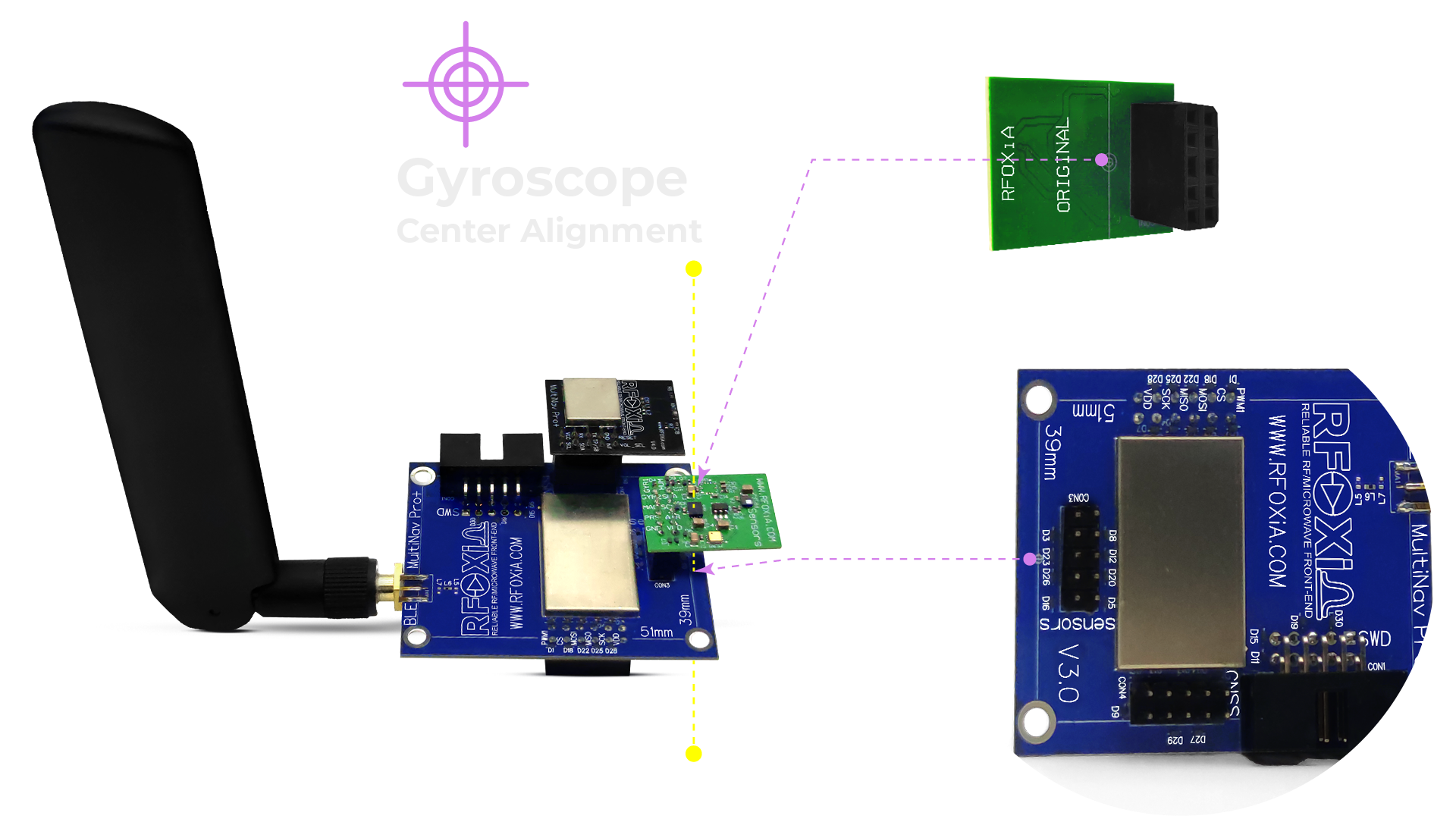
The key engineering decision in the MultiNav Pro+™ is combining motion sensing and environmental sensing on the same platform. These two categories of data are more powerful together than either is alone.
Motion Sensing Stack
Accelerometer + Gyroscope (BMI270, Bosch Sensortec) The BMI270 is a professional-grade IMU used in demanding applications including consumer electronics, drones, and industrial equipment. It provides high-resolution linear acceleration and angular velocity data with excellent noise characteristics. This is the sensor class that makes stable drone flight controllers possible.
Magnetometer (TMAG5273C1QDBVR, Texas Instruments) The TI magnetometer provides three-axis magnetic field measurement, enabling accurate compass heading. Combined with the accelerometer and gyroscope, this gives you a full 9-DOF IMU — the foundation of any serious attitude and heading reference system (AHRS).
Environmental Sensing Stack
Air Pressure (LPS22HHTR, STMicroelectronics) Barometric pressure from STMicro's LPS22HH enables altitude estimation and weather change detection. For drones, this feeds directly into altitude hold algorithms. For environmental monitoring, it provides a continuous barometric record that correlates with weather events.
Humidity + Temperature (MVH4003D, MEMSVision) Dual temperature and humidity sensing provides the core environmental data set. Temperature affects everything from battery performance to chemical reaction rates in industrial monitoring. Humidity is critical for agricultural applications, HVAC optimization, and indoor air quality systems.
Air Quality (ZMOD4510AI4R, RENESAS) The Renesas ZMOD4510 detects outdoor air quality by measuring ozone and nitrogen dioxide — two key pollutants in urban environments. This is not a generic MQ-series gas sensor. It's a calibrated IC designed specifically for outdoor environmental monitoring applications.
Component-Level Engineering: The Sensors Inside
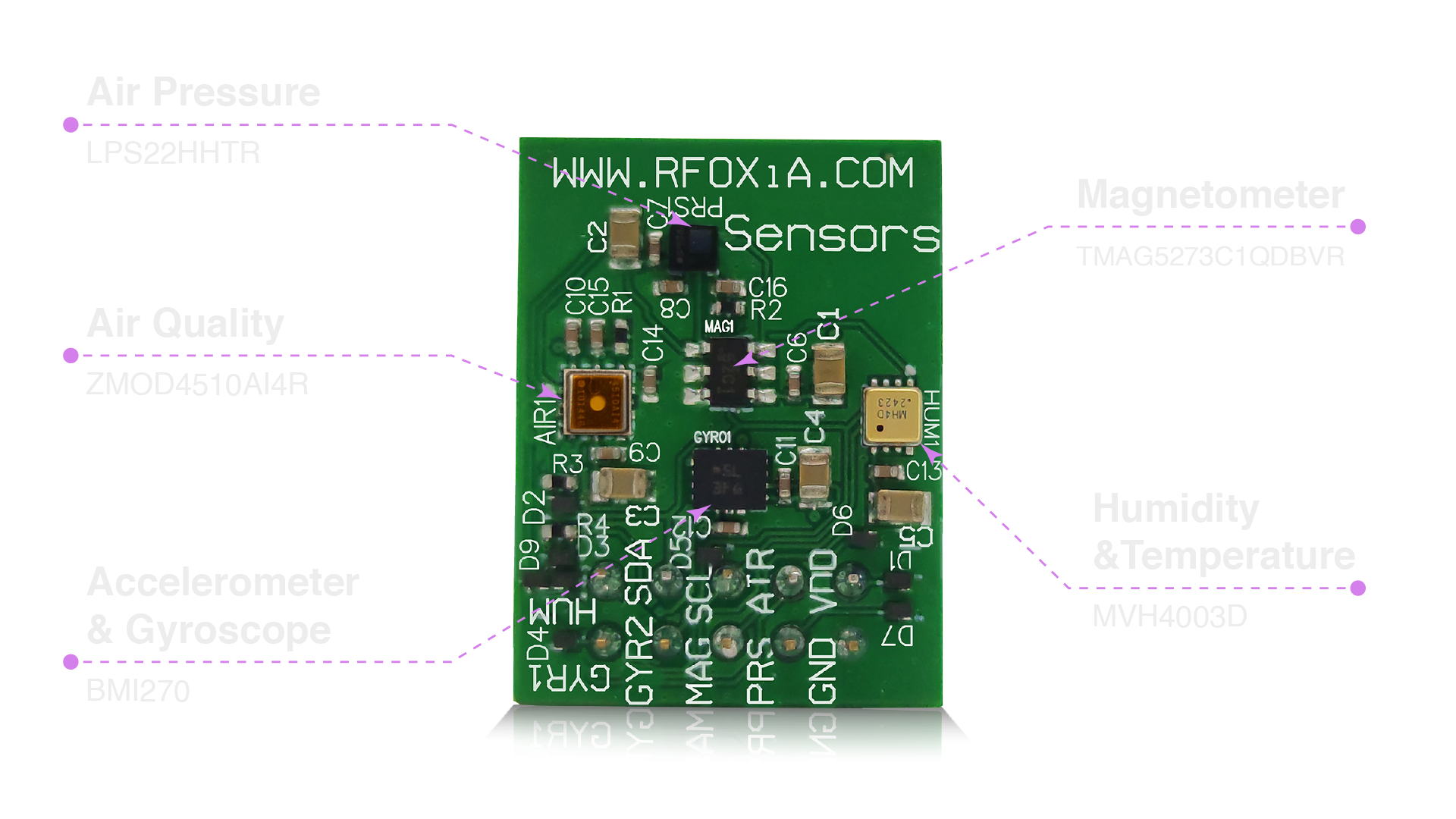
RFOXiA doesn't source generic sensor ICs. Every component in the MultiNav Pro+™ is a professional-tier part from a tier-1 semiconductor manufacturer:
- BMI270 — Bosch Sensortec. Used in flagship smartphones and professional drones. Supports advanced power modes, FIFO buffering, and hardware interrupt generation.
- TMAG5273C1QDBVR — Texas Instruments. Hall-effect 3D magnetic sensor with I2C interface and high dynamic range.
- LPS22HHTR — STMicroelectronics. Absolute pressure sensor with 24-bit ADC resolution and ±0.1 hPa accuracy over temperature.
- MVH4003D — MEMSVision. Capacitive humidity and temperature sensor with digital I2C output.
- ZMOD4510AI4R — RENESAS. Dedicated outdoor air quality sensor with on-chip signal processing for NOx and ozone detection.
This is the component lineup of a professional instrument — not a hobbyist breakout board.
I2C Architecture: Simplified Integration by Design
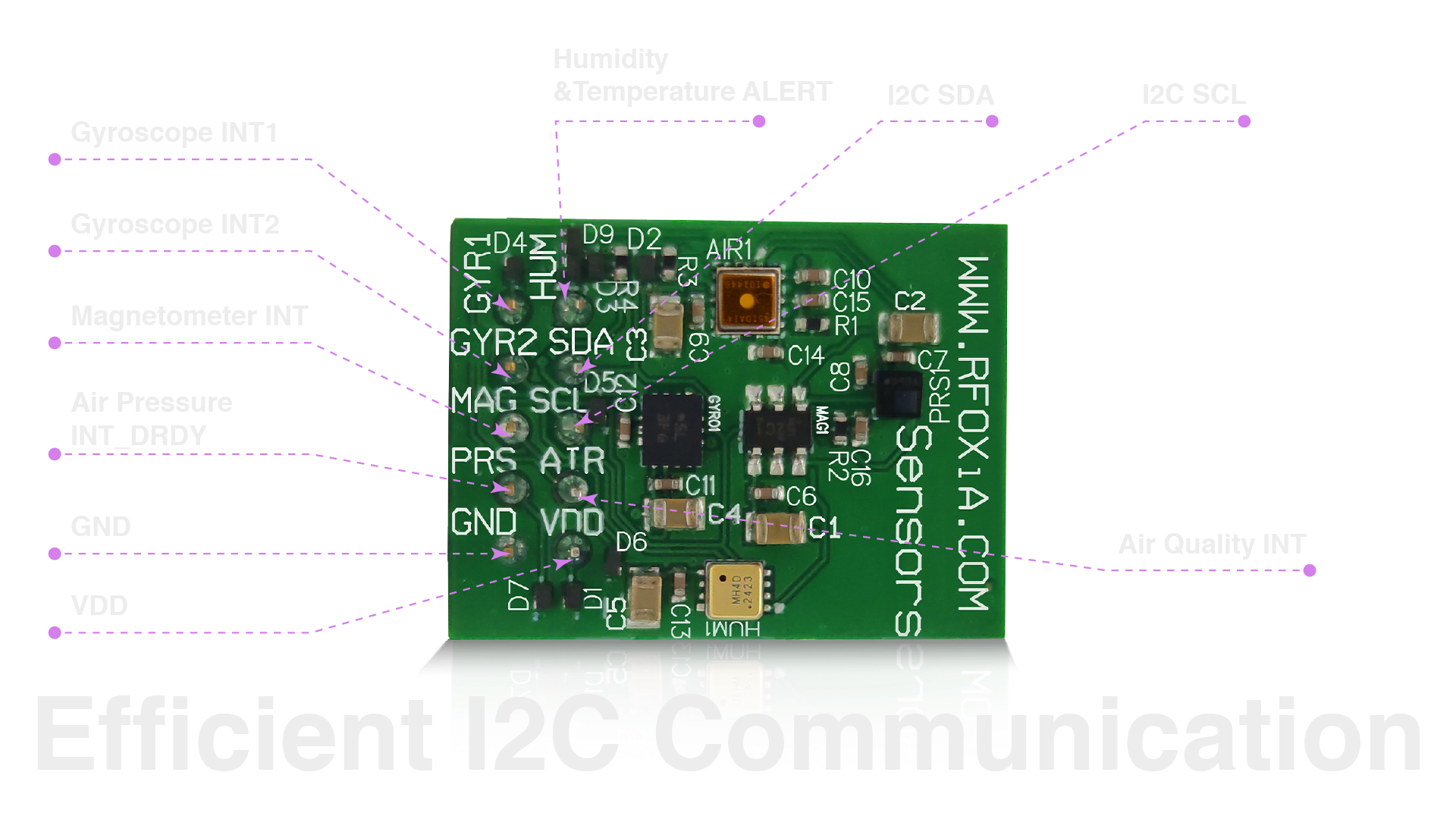
One of the most underappreciated engineering decisions in the MultiNav Pro+™ is the I2C architecture.
All seven sensors share a single I2C bus, each assigned a unique I2C address. This means:
- Two wires (SDA + SCL) connect the entire module to your microcontroller
- No SPI conflicts, no multiplexers, no address collision debugging
- Standard I2C library compatibility across Arduino, STM32, ESP32, Raspberry Pi, and any platform with I2C support
- Minimal GPIO consumption — critical for resource-constrained embedded systems
- Clean firmware architecture — each sensor addressed independently on one bus
For developers building on tight timelines or porting firmware across platforms, this is a significant advantage. You're not managing seven separate communication interfaces. You're managing one.
The RFOXiA firmware library handles address assignment and bus management transparently, so your application code works at the data level — not the register level.
Compact Design for Real-World Deployment
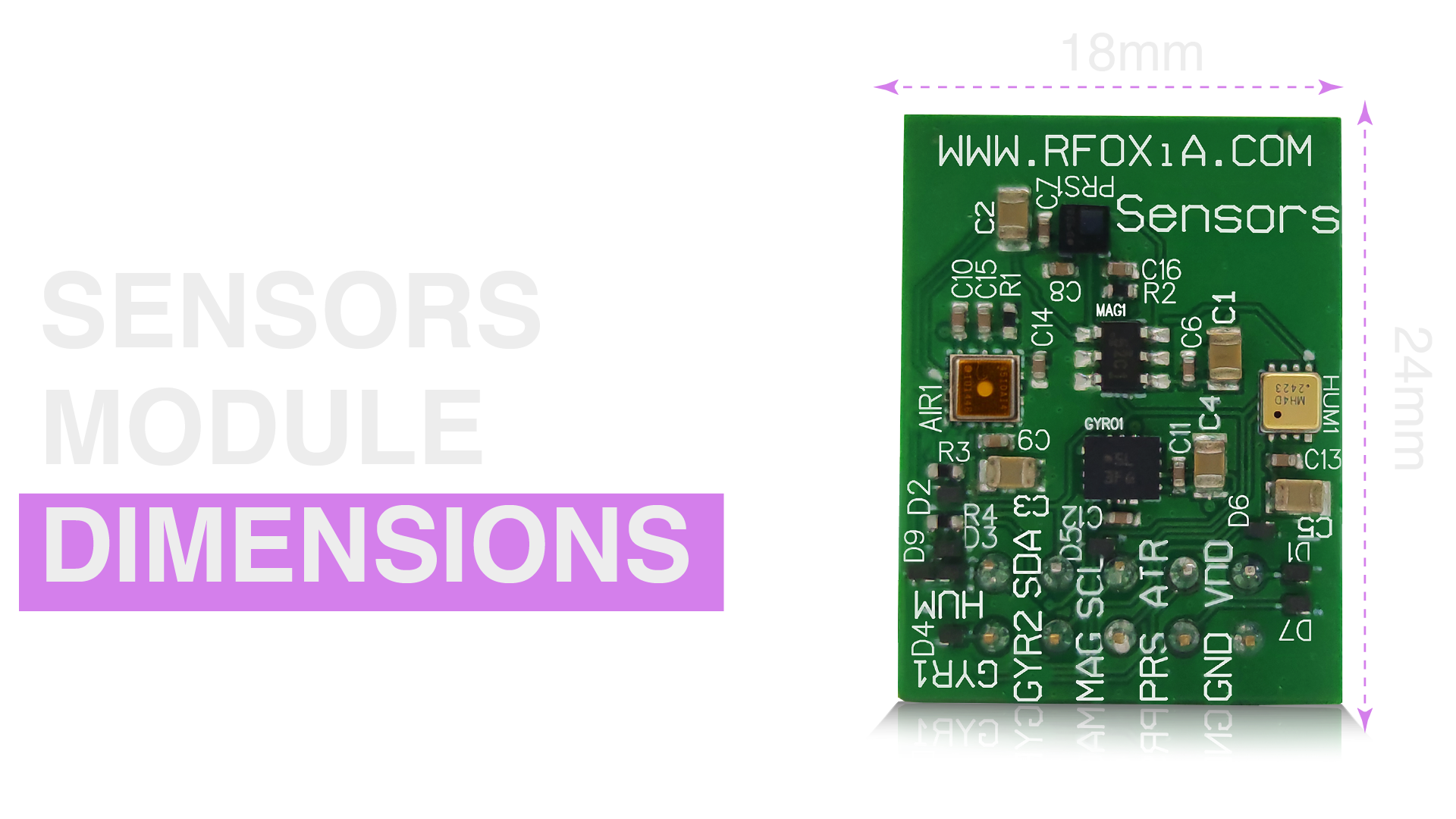
At 24mm × 18mm, the MultiNav Pro+™ Sensors Module is engineered for the form factors that matter in real deployments:
- Drone frames — every gram and millimeter counts when you're optimizing for flight time and airframe balance
- Wearable devices — body-worn sensors for health monitoring, industrial PPE, or research platforms require extreme miniaturization
- Compact IoT nodes — outdoor sensor stations, precision agriculture sensors, and smart city infrastructure nodes benefit from minimal footprint
- Robotics — mobile platforms where PCB real estate competes with structural components, batteries, and actuators
This is not a development board designed for a breadboard on a desk. It's designed for the field.
Real-Time Environmental Data — Live and Verified
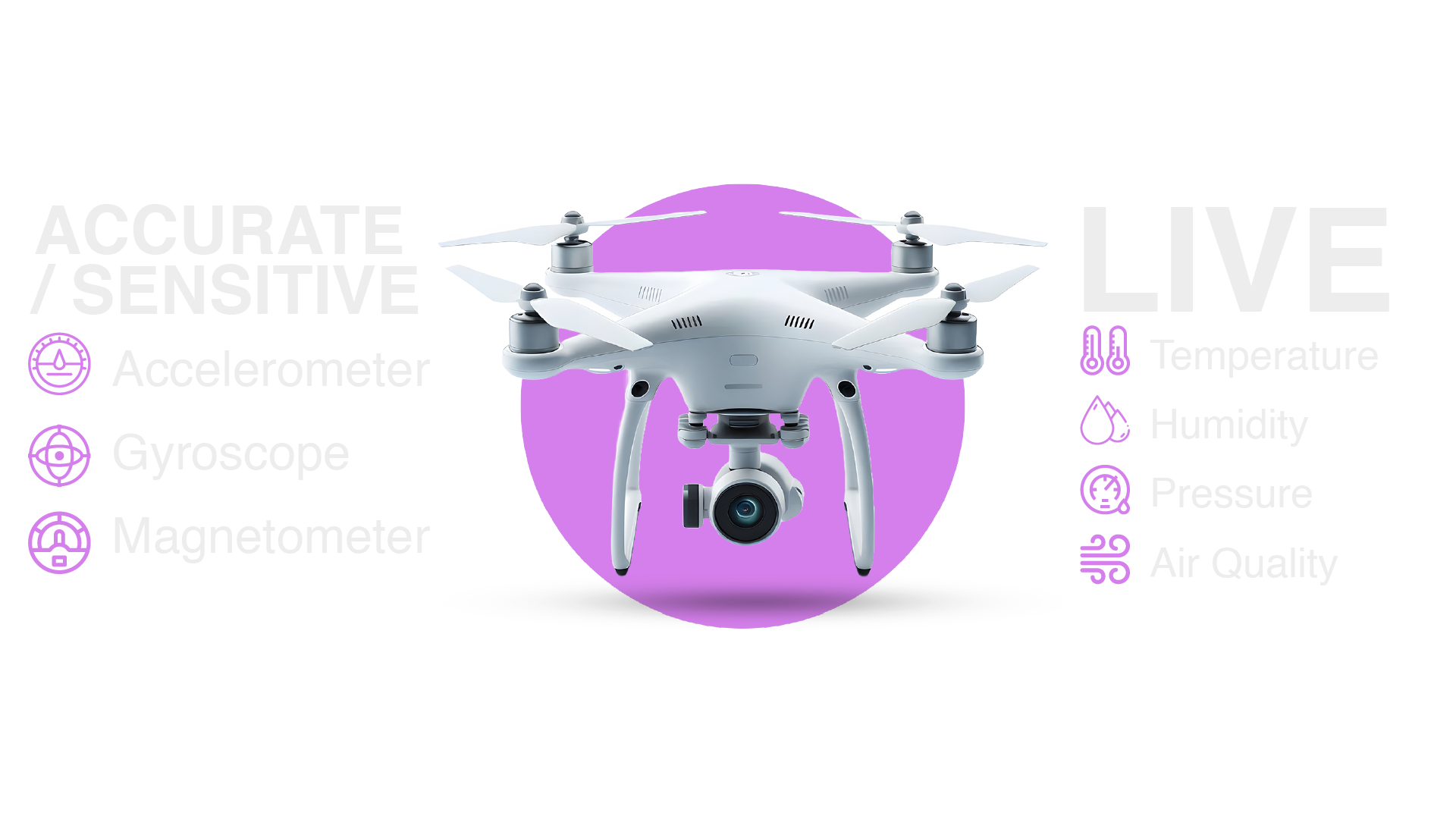
The MultiNav Pro+™ streams all seven sensor outputs simultaneously in real time. When paired with RFOXiA Connect (iOS and Android), you see:
- Live temperature, humidity, pressure readings on your phone
- Air quality index updating continuously
- Motion data streaming to the app dashboard
- GPS-stamped data when paired with the GNSS Module
When paired with the BLE Module, this data can be transmitted at ranges up to 5km ground-to-ground and 20km man-to-drone — completely without internet, towers, or infrastructure. That's a capability no standalone light intensity sensor module or environmental sensor breakout board can offer.
For field researchers, this means you can monitor your sensor node from 5km away. For drone operators, you can log environmental conditions throughout the flight envelope in real time. For industrial deployments, you can verify sensor health from outside the building.
Data Network: Your Sensor Module Pays You Back
Here's what makes the RFOXiA ecosystem categorically different from any sensor module on the market — including any light intensity sensor module you'll find at a distributor.
When you deploy the MultiNav Pro+™ outdoors and connect it to the RFOXiA data network:
- Your module streams verified environmental data to RFOXiA's servers
- GPS location validates outdoor deployment and eliminates spoofing
- All five environmental data points are verified against reference sources
- You earn $0.08 to $0.40 per day for every verified complete data session
- RFOXiA aggregates this data and sells it to enterprise buyers — agricultural tech companies, insurance firms, smart city operators, logistics companies, and research institutions
This is passive hardware revenue. Your sensor node works while you sleep, and earns while it works.
Early network contributors lock in higher base rates. Nodes in data-sparse locations earn scarcity bonuses. High-uptime nodes earn consistency bonuses.
No other sensor module on the market — light intensity, environmental, or otherwise — offers this kind of return on hardware investment.
Applications Across Industries

The MultiNav Pro+™ Sensors Module serves a wide range of professional applications:
Drone and UAV Development
Flight controller sensor fusion, altitude hold, attitude estimation, in-flight environmental logging, payload monitoring. The 9-DOF IMU (accelerometer + gyroscope + magnetometer) combined with barometric altitude makes this the core sensing package for any serious drone build.
Precision Agriculture
Micro-climate monitoring at field level. Temperature, humidity, air pressure, and air quality data at GPS-verified locations — the exact dataset that agricultural tech platforms pay for. Deploy a network of nodes across a farm and generate both operational data and data network revenue simultaneously.
Environmental Research
Long-duration outdoor deployments with continuous environmental logging. Paired with the Power/Program Kit's supercapacitor system (5-minute charge, 24-hour runtime), field deployments require minimal maintenance.
Robotics and Autonomous Vehicles
Full 9-DOF motion sensing for navigation and stability. Environmental awareness for adaptive behavior — temperature compensation for motor controllers, humidity awareness for electrical safety systems, air quality monitoring for confined-space robots.
Smart City Infrastructure
Hyper-local environmental monitoring at street level. Air quality, temperature, humidity, and pressure at second-level temporal resolution — the data resolution that city operators actually need but public weather APIs cannot provide.
Wearable and Personal Devices
Compact form factor and low power I2C interface make this ideal for body-worn applications. Environmental exposure monitoring, activity tracking with 9-DOF IMU, personal air quality logging.
Industrial IoT
Asset condition monitoring, facility environmental compliance, predictive maintenance through environmental correlation. FCC certification ensures legal deployment in commercial environments.
How the MultiNav Pro+™ Fits the RFOXiA Ecosystem
The Sensors Module doesn't exist in isolation. It's one component of a vertically integrated wireless development ecosystem:
- BLE Module — 5km ground range, 20km man-to-drone, wirelessly transmits sensor data
- GNSS Module — 1.5m accuracy, 18Hz fix rate, GPS-validates sensor location
- Sensors Module — 7 sensors, complete environmental and motion awareness
- Power/Program Kit — supercapacitor system, 5-minute charge, 24-hour runtime
- RFOXiA Connect App — live visualization on iOS and Android
- RFOXiA Club — AI firmware builder, data streaming dashboard, community
- Data Network — passive revenue from verified sensor data
The Developer Bundle combines all four hardware modules at $199. For builders who want everything — range, precision location, complete sensing, and professional power — it's the most capable wireless development kit available at any price near this range.
Specifications Summary
| Parameter | Specification |
|---|---|
| Sensors | 7 (Accel, Gyro, Mag, Temp, Pressure, Humidity, Air Quality) |
| Communication | I2C (single bus, dedicated addresses) |
| Module Size | 24mm × 18mm |
| Certification | FCC Certified |
| Price | $39 |
| Ecosystem | RFOXiA Connect App, Club, Data Network |
| Accel/Gyro IC | BMI270 — Bosch Sensortec |
| Magnetometer IC | TMAG5273C1QDBVR — Texas Instruments |
| Pressure IC | LPS22HHTR — STMicroelectronics |
| Humidity/Temp IC | MVH4003D — MEMSVision |
| Air Quality IC | ZMOD4510AI4R — RENESAS |
Why the MultiNav Pro+™ Outperforms Any Standalone Light Intensity Sensor Module
Let's be direct about the comparison. If you're looking for a light intensity sensor module because you need a single lux reading for a simple project, a $3 breakout board will serve you. There's no argument against that for basic applications.
But if you're building anything that operates outdoors, moves through space, needs to understand its environment in multiple dimensions, or has any commercial deployment scenario — a single light intensity sensor module is a starting point, not a solution.
The MultiNav Pro+™ gives you:
- More data — seven parameters simultaneously vs. one
- Better ICs — tier-1 semiconductor manufacturers vs. commodity parts
- Simpler integration — one I2C bus vs. seven separate interfaces
- Smaller footprint — 24mm × 18mm for seven sensors vs. seven separate boards
- Ecosystem support — app, firmware AI, data network vs. a datasheet and a breakout header
- Revenue potential — data network earnings vs. zero return on hardware
- FCC certification — legal for commercial deployment vs. uncertified
This is the difference between a component and a platform.
Get the MultiNav Pro+™ Sensors Module
The MultiNav Pro+™ Sensors Module is available now at $39 with FCC certification and 150 units in stock.
For builders who want the complete ecosystem — BLE module, GNSS module, sensors module, and power kit — the Developer Bundle at $199 is the most complete wireless development platform in this price category.
New RFOXiA Club members receive a $10 welcome credit on signup, with additional credits earned through platform milestones. A $50 coupon is issued toward the Developer Bundle at funnel stage 5.
If your project demands real environmental intelligence — not just a single light intensity sensor module reading — the RFOXiA Integrated Sensors Module is built for exactly that.
Build more. Sense everything. Get paid for it.
Explore the MultiNav Pro+™ Sensors Module at RFOXiA →
FCC certified. Ships from stock. Compatible with Arduino, STM32, ESP32, Raspberry Pi, and all I2C-capable platforms.
Written by: Moamen Mohamed LinkedIn