
Multi-Band GNSS Module: The Ultimate Precision Navigation Solution
Why Your Next Project Demands a True Multi-Band GNSS Module
If you've ever built a drone that drifted two meters off its hover point, watched a robot wander past its waypoint, or lost confidence in a tracker because the GPS was updating once a second, you already know the problem. Generic single-constellation GPS modules — the kind that cost four dollars on every marketplace — were designed for consumer use cases where five meters of error and a one-hertz update rate are acceptable. For serious hardware developers, researchers, FPV builders, and precision agriculture operators, those tolerances are not acceptable. They are project-breaking.
The answer isn't a $2,000 survey-grade receiver. The answer is the RFOXiA MultiNav Pro+ — a professional-grade multi-band GNSS module engineered for the demands of real development work, priced for the maker and engineering community, and built on one of the most capable GNSS chipsets on the planet.
This guide covers everything you need to know: the technology behind concurrent multi-constellation reception, why fix rate matters more than most developers realize, how the MultiNav Pro+ compares to alternatives, and exactly which use cases this module was built to serve.
What Is a Multi-Band GNSS Module and Why Does It Matter?
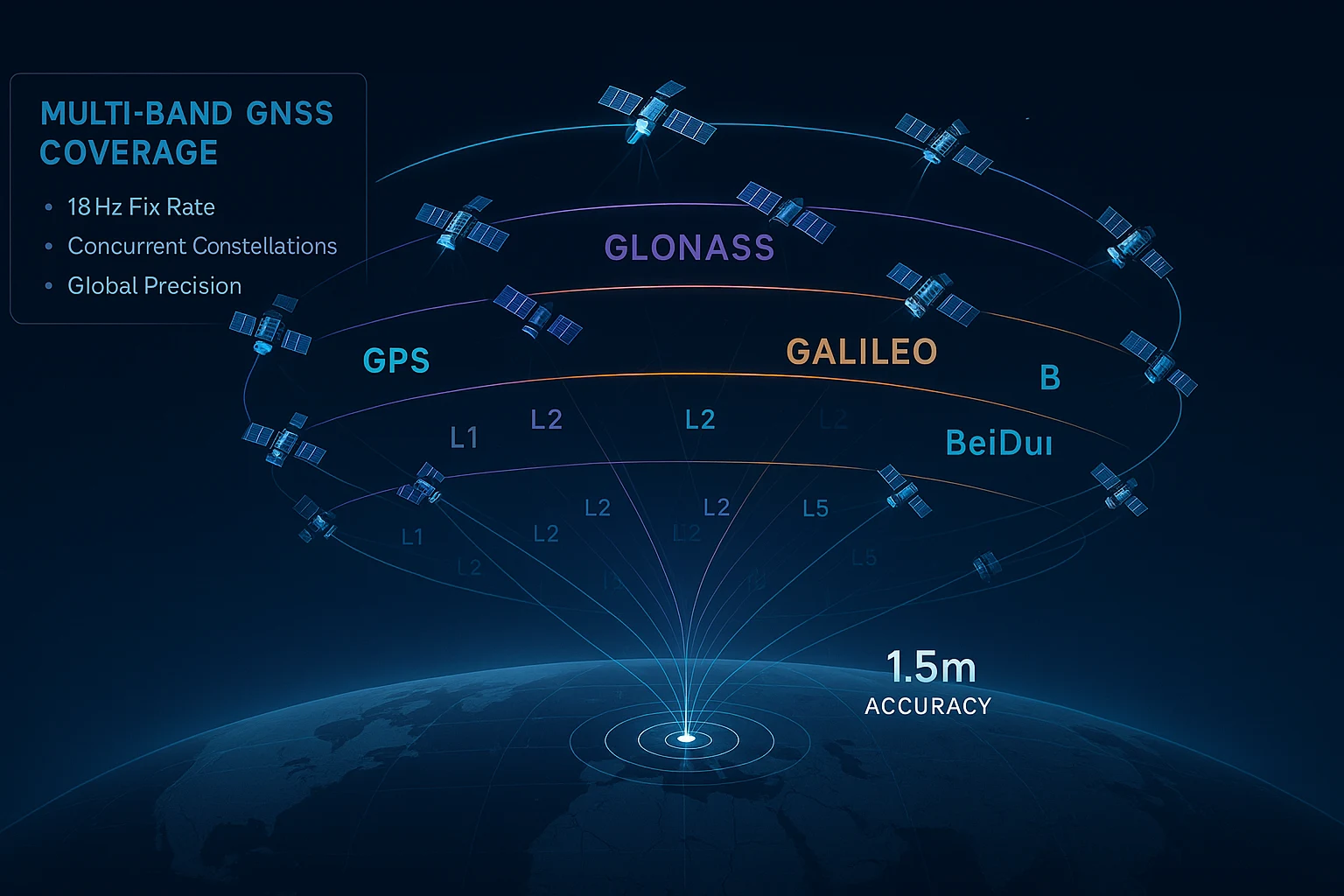
The term "GNSS" stands for Global Navigation Satellite System — the umbrella that covers GPS (United States), GLONASS (Russia), Galileo (European Union), and BeiDou (China). A single-constellation module locks onto only one of these systems. A multi-constellation module — sometimes called a multi-band GNSS module — receives signals from all four simultaneously.
This distinction matters for three reasons:
1. More satellites mean better geometry. Positioning accuracy is fundamentally limited by the number and geometric spread of visible satellites. A GPS-only receiver in an urban canyon or under dense tree cover might see four satellites — barely enough for a 3D fix. A module receiving from GPS, Galileo, GLONASS, and BeiDou simultaneously might see sixteen or more, resulting in dramatically better positional dilution of precision (PDOP) and a far more reliable fix.
2. Redundancy protects against outages. If a GPS satellite experiences a signal anomaly or a regional interference event affects one constellation, a multi-constellation receiver keeps tracking on the others without interruption. For autonomous systems, this redundancy is not a luxury — it's a safety feature.
3. Faster first fix. With four constellations broadcasting simultaneously, the receiver finds its first fix faster because the probability of having enough visible satellites at startup is dramatically higher. The MultiNav Pro+ achieves first fix in approximately one second in open-sky conditions.
MultiNav Pro+: Built on the u-blox MIA-M10Q
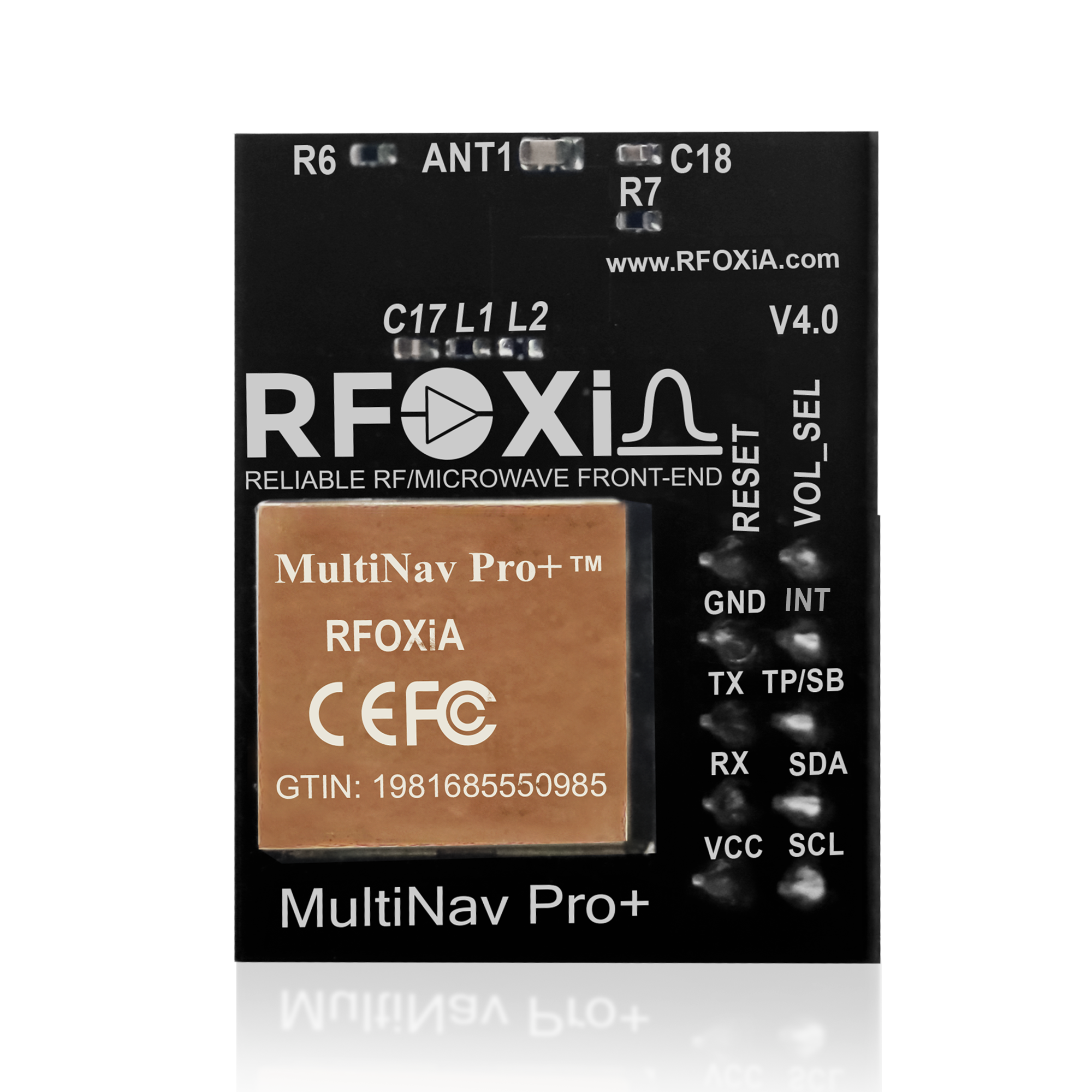
The MultiNav Pro+ is powered by the u-blox MIA-M10Q — one of the most advanced low-power GNSS chips available to the development community. u-blox is the global leader in professional GNSS silicon, supplying chipsets to automotive manufacturers, defense contractors, precision agriculture companies, and industrial IoT platform builders. When RFOXiA selected this chip for the MultiNav Pro+, the goal was simple: bring chipset-level professional performance into a module that any developer can integrate.
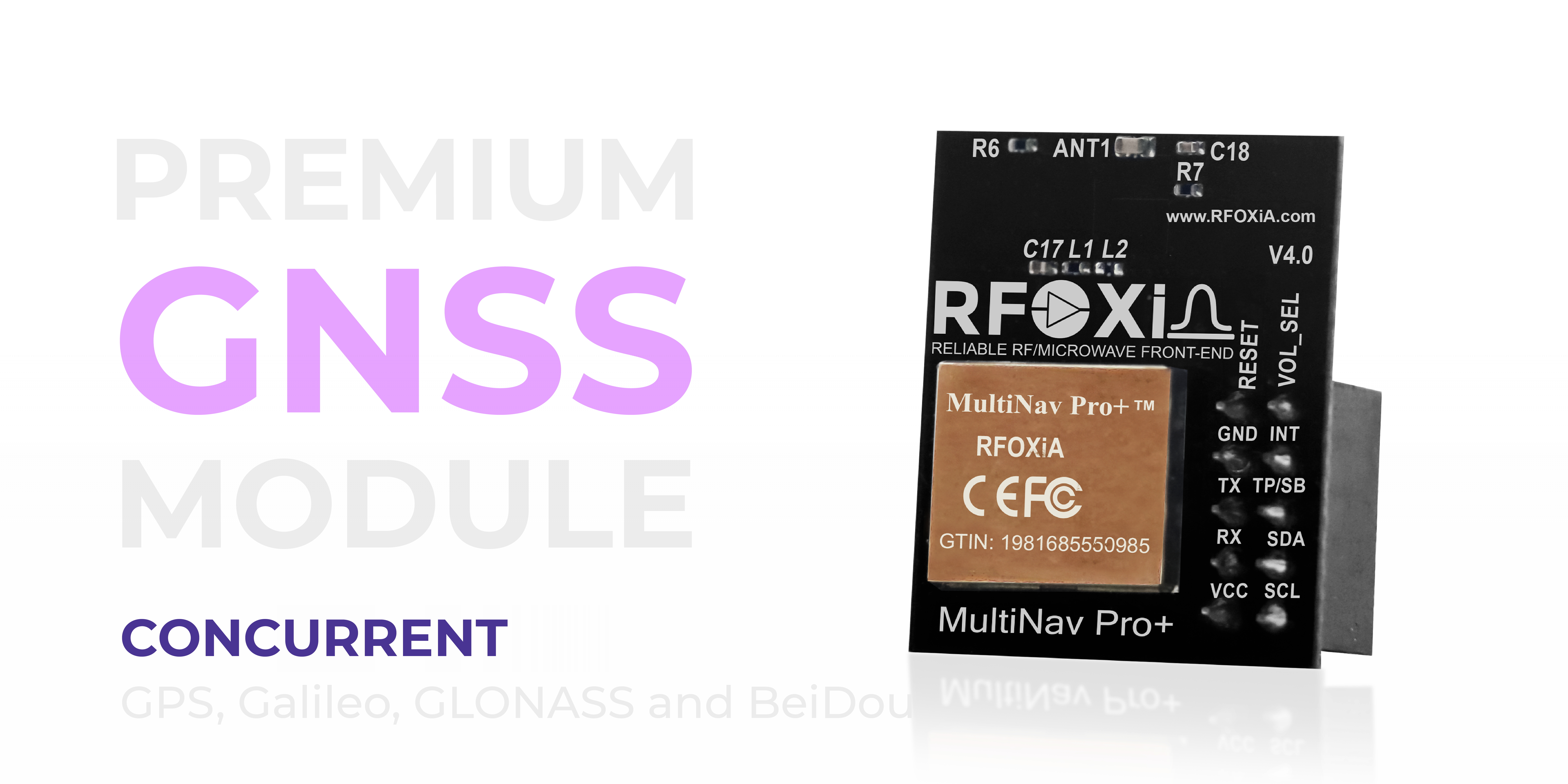
The MIA-M10Q supports concurrent reception from all four major constellations — GPS, Galileo, GLONASS, and BeiDou — without switching between them. This is true simultaneous multi-constellation processing, not time-division multiplexing. Every constellation contributes to every position fix, every update cycle.
Backed by RFOXiA's legacy in RF engineering and antenna design, the module wraps this chipset with hardware-level optimizations that push performance beyond what the chip achieves in a basic breakout configuration.
Accuracy and Fix Rate: The Numbers That Define Professional Navigation

Two specifications separate professional GNSS modules from consumer-grade units: accuracy and fix rate.
1.5-Meter Accuracy
The MultiNav Pro+ achieves a 1.5-meter CEP (Circular Error Probable) under open-sky conditions. This means that in 50% of measurements, the reported position is within 1.5 meters of the true position. In practical terms, this is the precision that enables:
- Drone return-to-home landings within arm's reach of the launch point
- Precision agriculture passes that don't overlap or leave gaps
- Asset tracking systems that distinguish which side of a building a tag is on
- Survey-assist workflows where GNSS is one input among several sensors
18Hz Fix Rate
Fix rate — the number of position updates per second — is often overlooked by developers focused on accuracy. But for any moving platform, fix rate determines how well the system tracks actual motion.
A 1Hz GPS module gives you one position per second. At 10 meters per second (36 km/h), that's 10 meters of travel between updates — which means your control system is reacting to where the vehicle was, not where it is.
The MultiNav Pro+ updates at 18 times per second. At the same speed, the interval between updates shrinks to 0.56 meters. For drone flight controllers, autonomous ground vehicles, and high-speed tracking applications, this difference is the margin between stable control and dangerous lag.
Engineered for Efficiency: Power and Form Factor
For battery-powered and drone applications, power consumption is not a secondary concern. Every milliamp saved extends flight time and field operation windows.
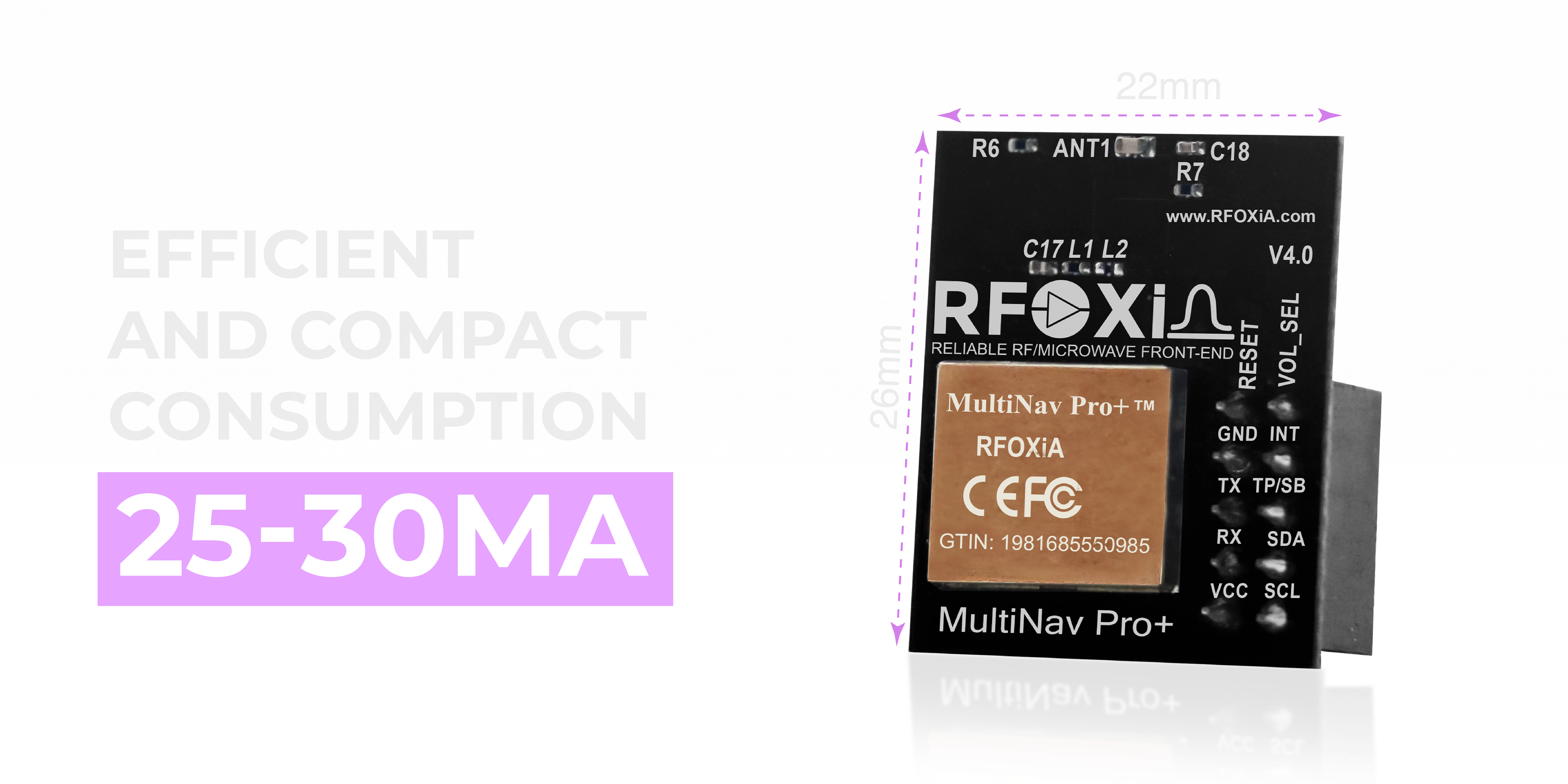
The MultiNav Pro+ operates at 25–30mA during active multi-constellation tracking — competitive with single-constellation modules that achieve inferior performance. The power budget reflects the MIA-M10Q's architecture, which was designed from the ground up for low-power IoT and mobile applications.
Physically, the module measures 26mm × 22mm. This compact footprint fits comfortably on a drone flight stack, inside a wearable enclosure, on a custom PCB alongside other sensors, or in any space-constrained deployment. The integrated chip antenna eliminates the need for an external antenna connector and associated cable routing in most deployment scenarios, further simplifying mechanical integration.
For developers who need to minimize both weight and board area — drone builders especially — the combination of 26×22mm footprint and sub-30mA consumption is genuinely useful rather than merely adequate.
Interface Options: UART and I2C for Universal Compatibility
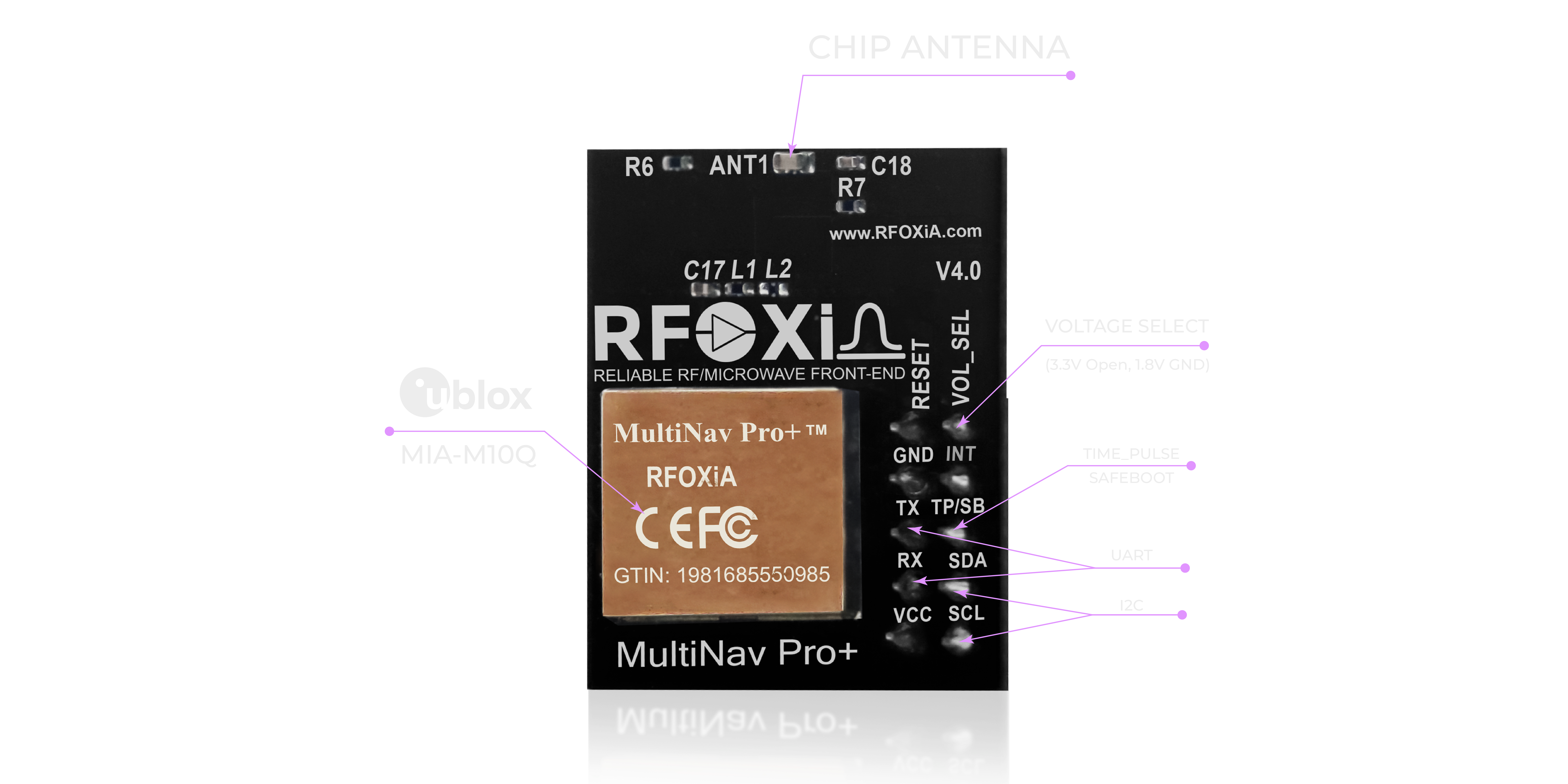
The MultiNav Pro+ supports two industry-standard interface protocols:
UART (TX/RX) — The traditional interface for GNSS modules. Compatible with virtually every microcontroller, single-board computer, and flight controller on the market. NMEA sentences stream out at configurable baud rates, readable by any serial parser.
I2C (SCL/SDA) — For designs where UART pins are already allocated or where a bus topology makes more sense. I2C allows the MultiNav Pro+ to share a two-wire bus with other sensors, reducing pin count and wiring complexity in dense sensor arrays.
Voltage compatibility covers both 1.8V and 3.3V logic levels, making the module directly compatible with modern low-voltage microcontrollers and systems-on-chip without level shifters.
For developers integrating this module alongside the RFOXiA Sensors Module — which carries temperature, humidity, pressure, air quality, accelerometer, gyroscope, and magnetometer — the I2C option enables a clean, minimal-wire multi-sensor bus on a single board design.
If you're building a complete wireless development stack, the RFOXiA Accurate GNSS Module pairs directly with the BLE Module, Sensors Module, and Power/Program Kit as part of the full Developer Bundle ecosystem.
Open-Source Driver: From Unboxing to First Fix in Minutes
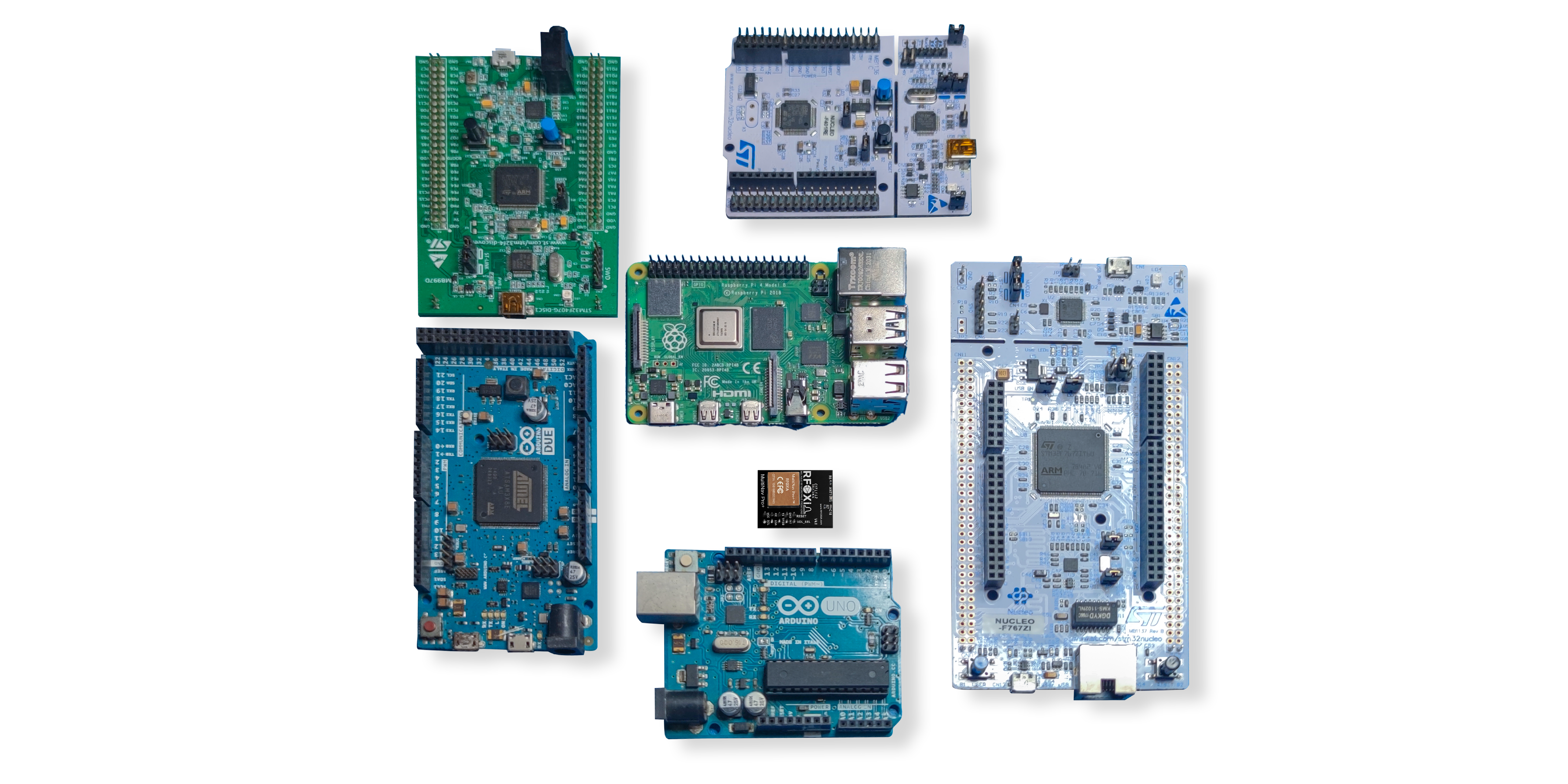
Hardware capability means nothing if getting to a working prototype takes three days of driver debugging. RFOXiA ships the MultiNav Pro+ with a fully open-source C language library that implements NMEA standard protocol parsing across all common sentence types.
The library imports directly into Arduino IDE with no modification — add the library folder, include the header, call the initialization function, and you're reading position data. The same library works in PlatformIO, STM32CubeIDE, ESP-IDF, and any other toolchain that can compile C.
Developers who want to go deeper have full source access to inspect, modify, and extend the library for custom applications. The NMEA standard means the raw output is also compatible with virtually every mapping, logging, and telemetry platform that accepts GPS data.
For users on the RFOXiA Club platform, the AI Firmware Builder can generate complete firmware projects targeting the MultiNav Pro+ — describe your application in plain language, receive production-ready embedded code with the GNSS library already integrated.
u-center Software: Professional Visualization and Configuration

Beyond the embedded library, the MultiNav Pro+ is fully compatible with u-center — u-blox's professional desktop GNSS evaluation and configuration software. u-center provides:
- Sky view visualization — see exactly which satellites from which constellations are being tracked, their signal strength, and their geometric distribution
- Real-time position tracking — watch the module's reported position update on a live map at full 18Hz rate
- Signal quality analysis — carrier-to-noise ratio (C/N0) graphs for every tracked satellite, useful for antenna placement optimization and interference diagnosis
- Module configuration — adjust update rate, enable or disable specific constellations, configure power modes, set baud rate and interface settings, all through a point-and-click interface
- Data logging — record raw GNSS data for post-processing, accuracy analysis, or regulatory documentation
For engineers doing serious development work — validating antenna placement, characterizing module performance in different environments, or preparing technical documentation — u-center transforms the MultiNav Pro+ from a module into a complete GNSS evaluation platform.
Use Cases: Where the MultiNav Pro+ Performs

The multi-band GNSS module architecture of the MultiNav Pro+ makes it applicable across an unusually wide range of applications:
Drone and UAV Systems
The 18Hz fix rate is essential for flight controller integration. Modern autopilot systems (ArduPilot, PX4, Betaflight GPS rescue) require high-rate position updates for stable flight, accurate waypoint navigation, and reliable return-to-home. The 1.5m accuracy enables precision landing and tight autonomous flight paths.
Precision Agriculture
Row guidance systems, variable-rate application controllers, and field mapping applications all benefit from sub-2-meter accuracy and reliable fix maintenance across constellation changes. The low power draw supports solar-powered field nodes.
Asset and Vehicle Tracking
High fix rate enables accurate speed calculation from GNSS alone, without additional dead reckoning. Multi-constellation support ensures reliable tracking in partially obstructed environments — parking structures, loading docks, urban canyons.
Robotics and Autonomous Ground Vehicles
Outdoor robot navigation requires continuous, reliable position updates. The MultiNav Pro+ provides the position data layer that complements IMU-based dead reckoning, enabling GPS-assisted localization in ROS and similar robotics frameworks.
Environmental Monitoring and IoT Nodes
When paired with the RFOXiA Sensors Module, the MultiNav Pro+ provides GPS-verified location stamps for environmental data — exactly the outdoor deployment verification required for the RFOXiA data network reward program. Location-verified sensor data is significantly more valuable to enterprise buyers than unverified streams.
Wearables and Personal Tracking
The compact form factor and low power consumption make this module viable for wearable applications — expedition trackers, personal safety devices, sports performance monitors — where both size and battery life are constrained.
Research and Education
For university research groups, the combination of professional-grade performance, open-source drivers, u-center compatibility, and accessible pricing ($49) makes the MultiNav Pro+ the most cost-effective way to add serious GNSS capability to a research platform. The full data transparency — raw NMEA, configurable output, u-center logging — supports rigorous experimental documentation.
Integration with the RFOXiA Ecosystem
The MultiNav Pro+ was designed as part of a complete wireless development ecosystem, not as a standalone module. When combined with other RFOXiA hardware, it becomes part of something more capable than any individual component:
BLE Module (MultiNav Pro+ BLE): Transmits GNSS position data wirelessly over ranges up to 20km (man-to-drone) using the RFOXiA long-range BLE module. Live GPS tracking in the RFOXiA Connect app shows real-time position on a map during flight operations — no internet connection required.
Sensors Module: Adds environmental context to position data. Temperature, humidity, pressure, air quality, and IMU data alongside GPS coordinates creates the kind of rich, multi-parameter dataset that environmental researchers and smart city operators pay for.
Power/Program Kit: The supercapacitor-based power system charges in five minutes and runs the complete module stack — including the GNSS module — for 24 hours. For field deployments where power access is limited, this combination enables full-day continuous operation from a brief charge.
Developer Bundle: All four modules together, priced at $199 after credits, represent the most complete professional-grade wireless development kit available at this price point in any market.
Explore the complete ecosystem and order the RFOXiA Accurate GNSS Module alongside the full Developer Bundle to unlock the complete RFOXiA platform.
Technical Specifications Summary
| Parameter | Specification |
|---|---|
| GNSS Chip | u-blox MIA-M10Q |
| Constellations | GPS, Galileo, GLONASS, BeiDou (concurrent) |
| Accuracy (CEP) | < 1.5 meters |
| Fix Rate | Up to 18Hz |
| Time to First Fix | ~1 second (hot start) |
| Interface | UART (TX/RX) + I2C (SCL/SDA) |
| Voltage | 1.8V and 3.3V |
| Current Draw | 25–30mA |
| Antenna | Integrated chip antenna |
| Dimensions | 26mm × 22mm |
| Certification | FCC certified |
| Price | $49 |
Certification, Compliance, and Production Readiness
The MultiNav Pro+ carries FCC certification — the credential that matters most for developers who intend to deploy in the United States, sell finished products, or integrate into systems subject to regulatory review. FCC certification means the RF emissions have been measured and verified by an accredited test laboratory against Part 15 requirements.
For professional developers, FCC certification on the module simplifies the compliance pathway for finished products that incorporate it. For distributors and marketplace listings, FCC certification is the primary qualification criterion. For customers who simply want assurance that the hardware meets a recognized performance and compliance standard, it provides that assurance without any additional qualification work.
This is hardware that exists, ships, and performs. Not a crowdfunding concept. Not a prototype. In stock. FCC certified. Ready to ship.
Why RFOXiA Builds Hardware This Way
RFOXiA was founded on a specific belief: that professional-grade wireless and navigation hardware has been artificially gatekept at prices that only large organizations can afford, while the developers who most need these capabilities — drone builders, robotics engineers, field researchers, IoT product developers — have been left with commodity components that can't meet their real requirements.
The MultiNav Pro+ is the direct expression of that belief applied to GNSS. There is no technical reason why a developer spending $49 should have to accept 5-meter accuracy and 1Hz update rates when the silicon to do dramatically better exists, costs a modest premium, and is available to anyone willing to design around it correctly.
RFOXiA designs around it correctly. The result is the MultiNav Pro+ — a true multi-band GNSS module that competes on specification with modules costing five to ten times more, wrapped in an open-source software ecosystem, FCC certified, and available today.
Get the MultiNav Pro+ GNSS Module
The MultiNav Pro+ is available individually at $49 or as part of the Developer Bundle. Current inventory is in stock and ships immediately.
If you're building a system that demands real position accuracy, real update rates, and real multi-constellation reliability — not consumer-grade approximations — this is the module for your stack.
Visit the RFOXiA Accurate GNSS Module product page to order, review full documentation, and access the open-source driver library.
Join RFOXiA Club for free — new members receive a $10 welcome credit toward their first purchase, access to the AI Firmware Builder, and full Dev Hub community resources. Link in bio.
RFOXiA — Democratizing Connectivity and Computing Power.
Written by: Moamen Mohamed LinkedIn