
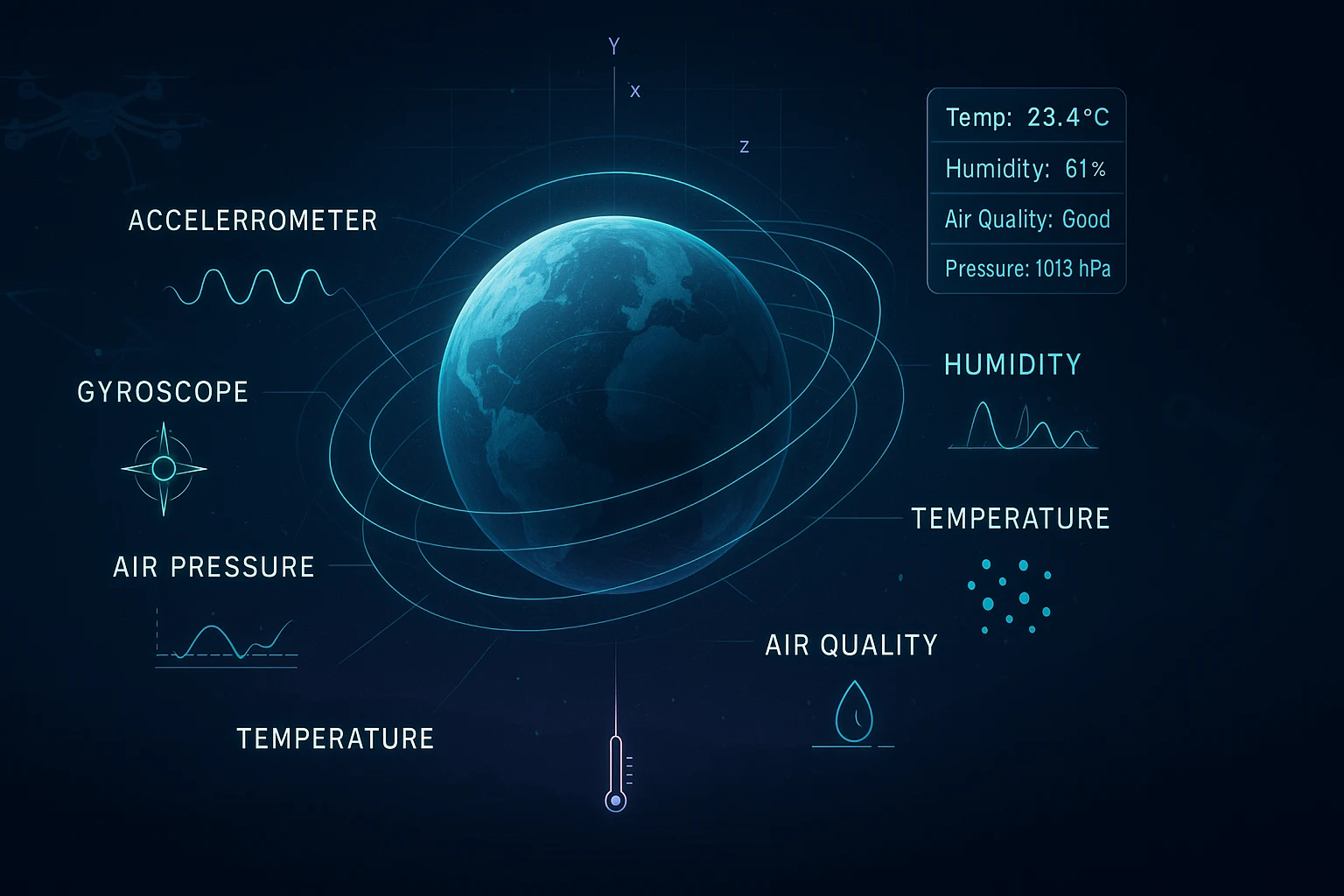
Multi Sensor Development Board: The Complete Guide to the RFOXiA MultiNav Pro+ Sensors Module
RFOXiA Integrated Sensors Module
Why the Right Multi Sensor Development Board Changes Everything
If you've spent any time building drones, robotics systems, or IoT deployments, you already know the frustration. You need motion data. You need environmental data. You need air quality. You need it all to work together, on a single interface, without consuming half your PCB real estate or your entire integration budget. The typical solution involves sourcing five or six separate breakout boards, wrestling with address conflicts, debugging I2C bus collisions, and hoping that everything fits inside your enclosure.
There is a better way.
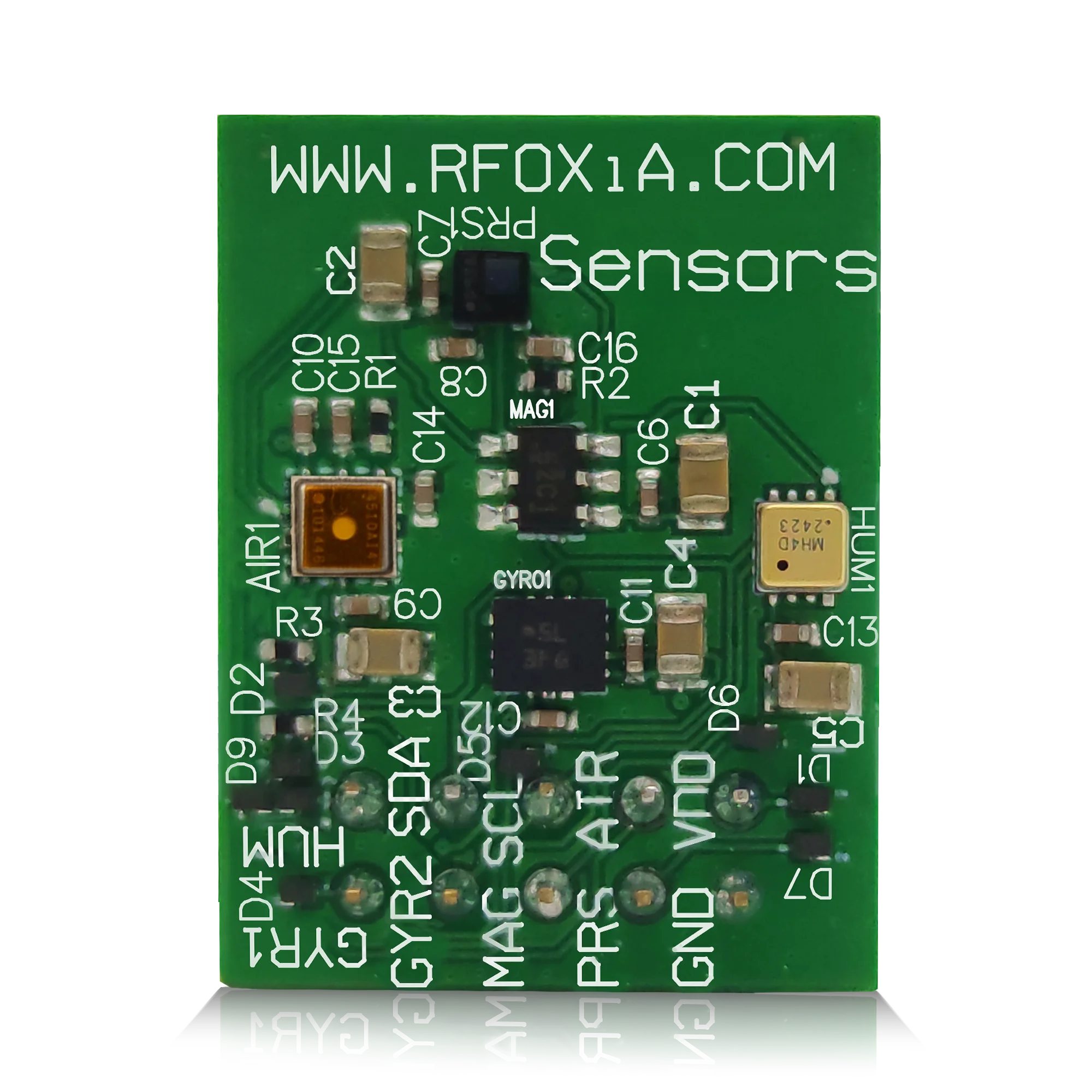
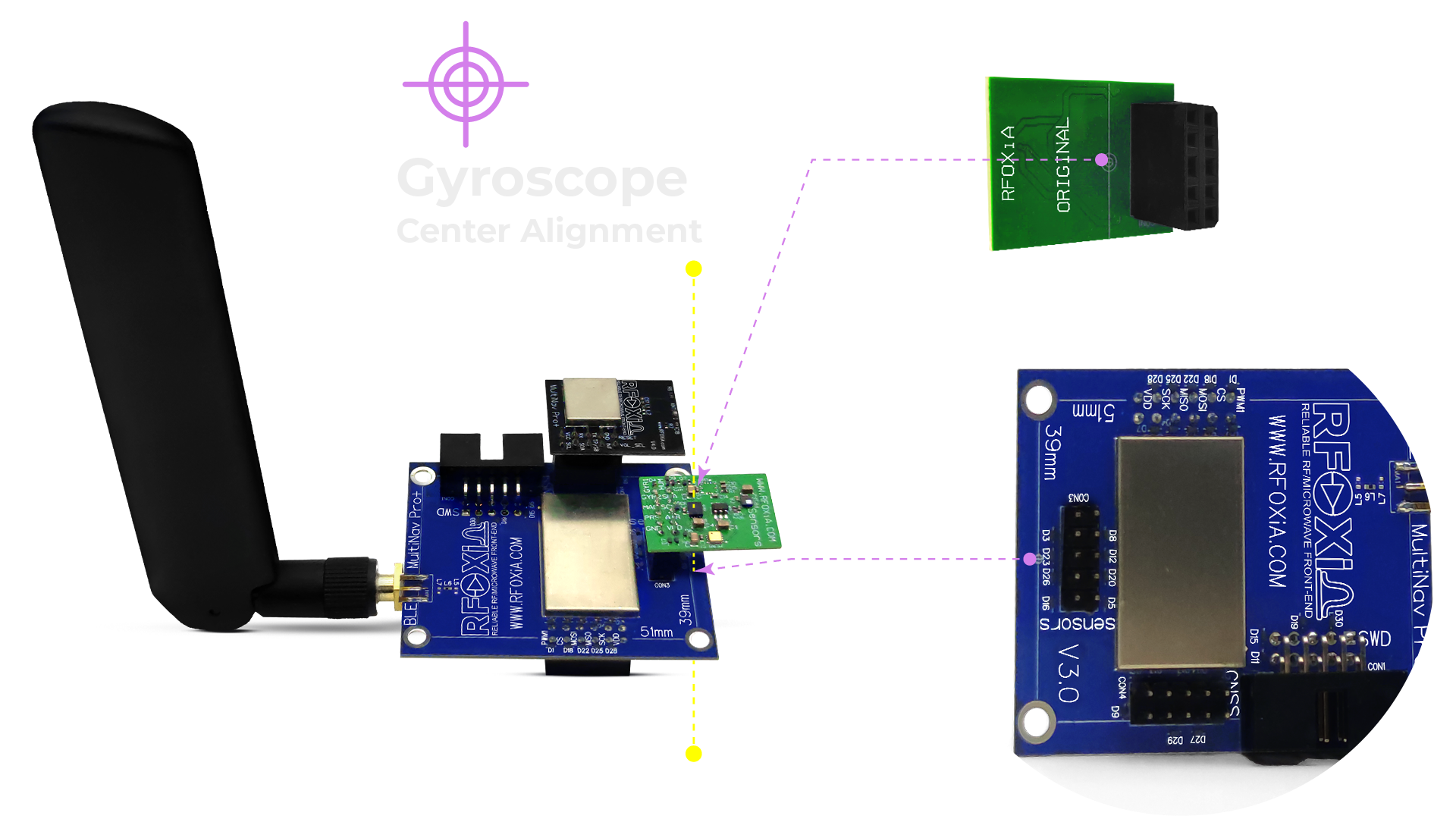
The RFOXiA MultiNav Pro+ Sensors Module is a purpose-built multi sensor development board that consolidates seven professional-grade sensors into a single 24mm × 18mm module — with unified I2C communication, FCC certification, and deep integration into the RFOXiA wireless ecosystem. Whether you are building a precision drone, a field-deployable environmental monitor, a smart city node, or a wearable device, this is the sensor platform that professionals have been waiting for at a price that makers can actually afford.
This guide covers everything: what sensors are included, which silicon powers them, how the I2C architecture works, what applications this board unlocks, and how it fits into the broader RFOXiA ecosystem — including the data monetization network that can make your sensor node pay for itself.
What Makes a Multi Sensor Development Board Worth Using
Not all sensor boards are created equal. The difference between a useful multi sensor development board and a frustrating one comes down to four factors: sensor quality, communication architecture, physical footprint, and ecosystem integration.
Sensor quality means the underlying silicon matters. Cheap clones of popular sensors can have calibration drift, poor temperature compensation, and unreliable factory calibration. The MultiNav Pro+ uses components from Bosch Sensortec, Texas Instruments, STMicroelectronics, MEMSVision, and RENESAS — names that appear in aerospace-grade equipment, automotive systems, and industrial instrumentation. These are not generic modules.
Communication architecture determines how clean your integration will be. A board that forces you to manage separate SPI buses, manually toggle chip selects, or work around hard-coded I2C address conflicts wastes your development time. The MultiNav Pro+ routes all seven sensors through a single I2C line with distinct addresses — one bus, zero collisions.
Physical footprint is critical for any deployment where space is limited. At 24mm × 18mm, this board fits inside FPV drone frames, inside wearable enclosures, and alongside other modules on a compact carrier board without compromise.
Ecosystem integration is where RFOXiA separates itself from every standalone breakout board on the market. This is not just a sensor module. It is a node in a connected ecosystem that includes long-range wireless communication, AI firmware generation, a mobile control application, and a live data monetization network.
All Seven Sensors: What They Are and Why They Matter
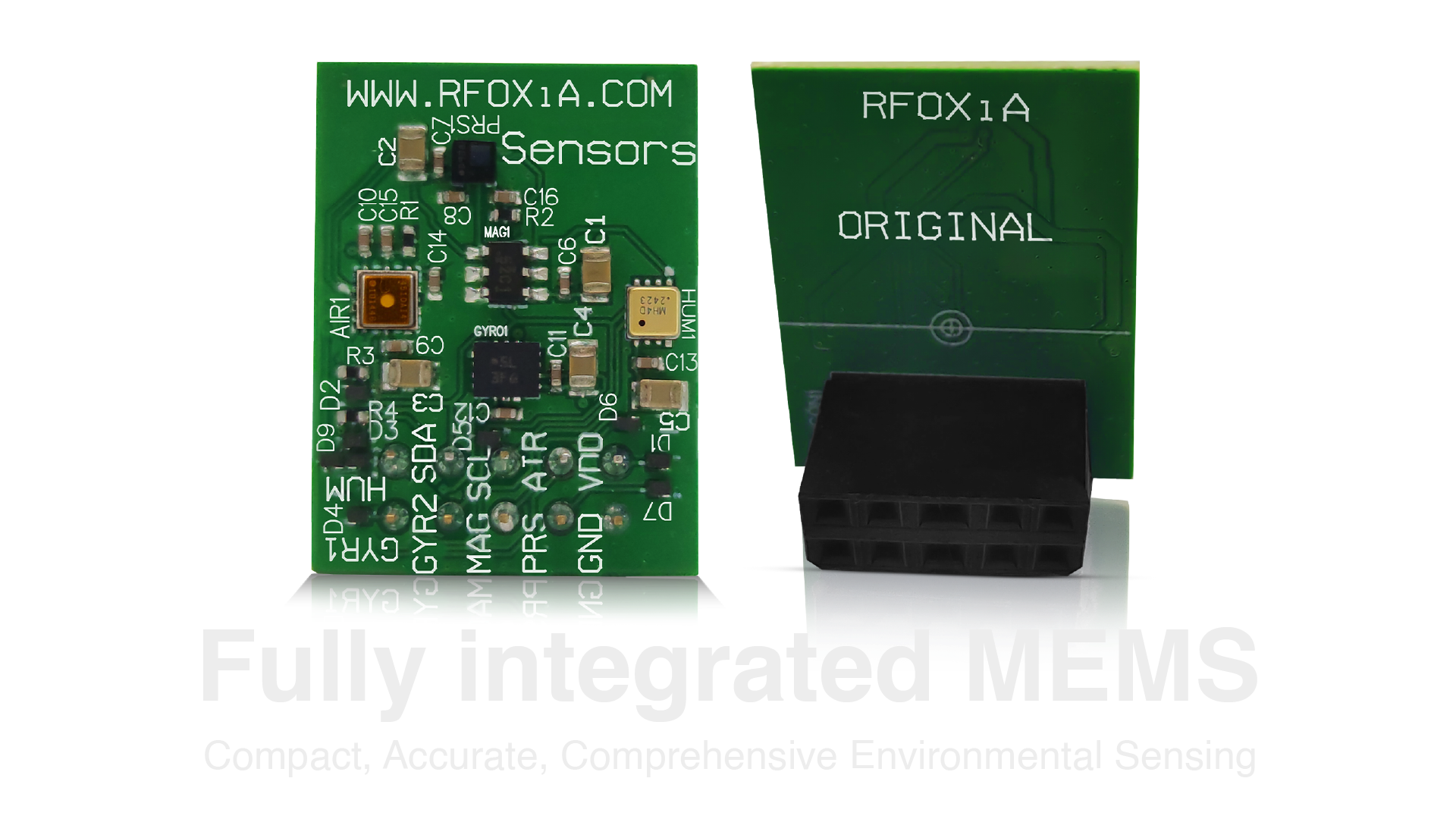
The MultiNav Pro+ Sensors Module ships with seven discrete sensing capabilities integrated onto a single board. Here is a detailed breakdown of each sensor and the specific chip powering it.
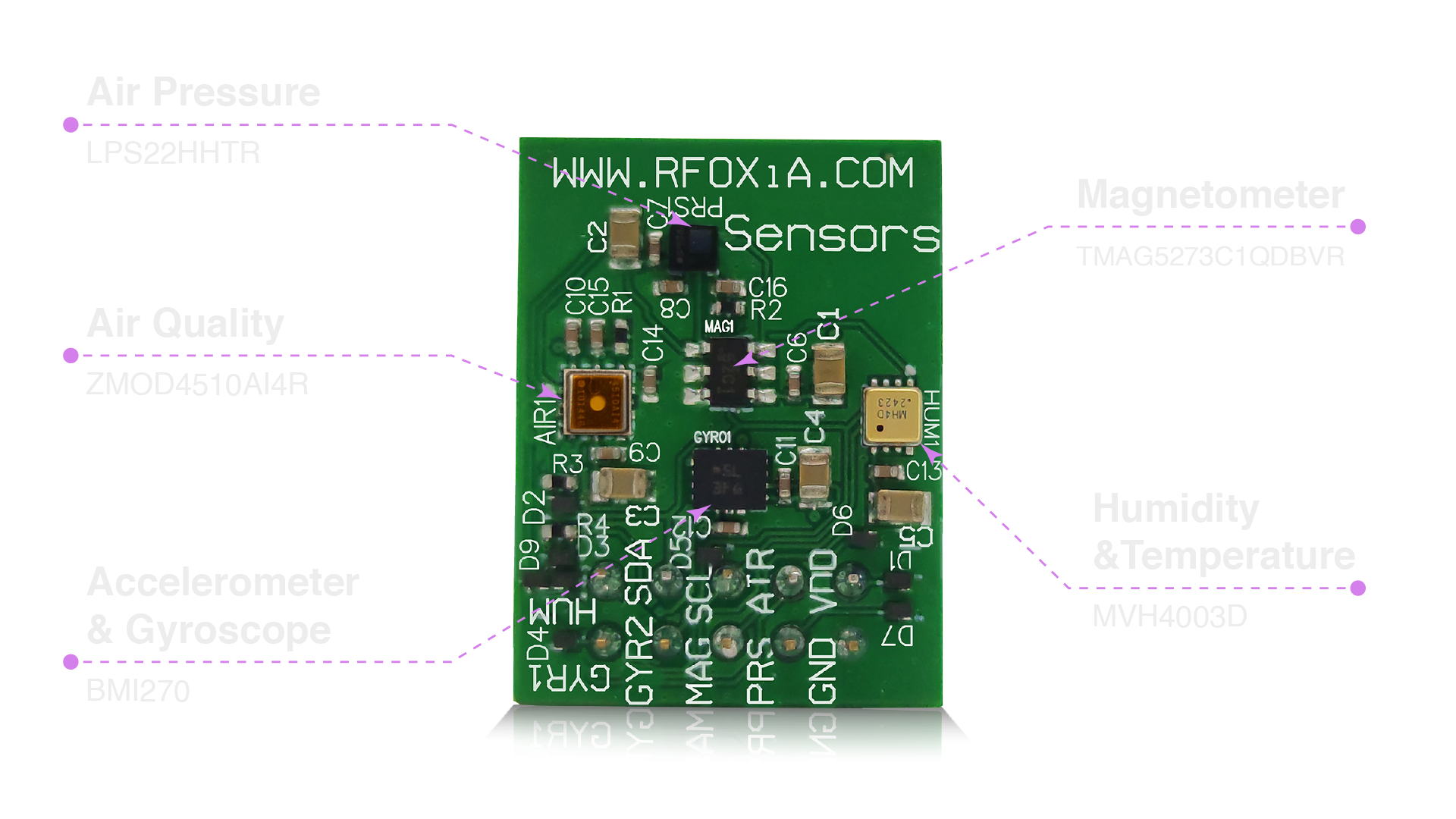
1. Accelerometer — BMI270 (Bosch Sensortec)
The BMI270 is a 6-axis inertial measurement unit from Bosch Sensortec, widely used in premium consumer electronics and demanding industrial applications. It delivers triaxial acceleration data with low noise density and a configurable measurement range. For drone applications, this means reliable attitude estimation even during aggressive maneuvers. For robotics, it provides clean data for odometry, collision detection, and vibration analysis.
2. Gyroscope — BMI270 (Bosch Sensortec)
Paired with the accelerometer on the same BMI270 silicon, the gyroscope delivers angular rate data across three axes. The BMI270's advanced digital filtering and programmable performance modes make it particularly well suited for flight controllers and stabilization systems where latency and noise floor are critical parameters.
3. Magnetometer — TMAG5273C1QDBVR (Texas Instruments)
The TMAG5273 from Texas Instruments is a low-power 3D Hall-effect sensor with factory calibration and high-resolution output. It enables heading reference, compass bearing, and magnetic anomaly detection. For autonomous navigation, this is the sensor that tells your system which direction is north — even when GPS is temporarily unavailable or unreliable in urban canyons.
4. Air Pressure — LPS22HHTR (STMicroelectronics)
The LPS22HH is an absolute pressure sensor from STMicroelectronics with a measurement range of 260 to 1260 hPa and rms noise of 0.4 Pa. At altitude, barometric pressure data provides a secondary altitude reference independent of GPS — useful for hold altitude commands, terrain following, and pressure-sealed system monitoring. For environmental applications, it contributes to local weather modeling and atmospheric condition analysis.
5. Humidity — MVH4003D (MEMSVision)
The MVH4003D from MEMSVision is a capacitive relative humidity sensor with integrated temperature compensation. Humidity data has direct applications in agricultural monitoring, HVAC control, cold-chain logistics, and any deployment where condensation or moisture content affects operations or product quality.
6. Temperature — MVH4003D (MEMSVision)
Temperature sensing shares the MVH4003D silicon with humidity, providing a tightly coupled measurement pair. Ambient temperature data is relevant across virtually every application domain — from thermal management of battery systems to environmental logging to agriculture.
7. Air Quality — ZMOD4510AI4R (RENESAS)
The ZMOD4510 from RENESAS is an outdoor air quality sensor designed specifically for outdoor ozone and NO2 detection applications. It is optimized for ambient air monitoring in smart city deployments, environmental research, and personal exposure tracking. This is not a generic VOC sensor — it is purpose-built for the kind of hyper-local air quality data that urban planners, agricultural operators, and environmental researchers actually need.
Precision Motion and Environmental Sensing in One Package
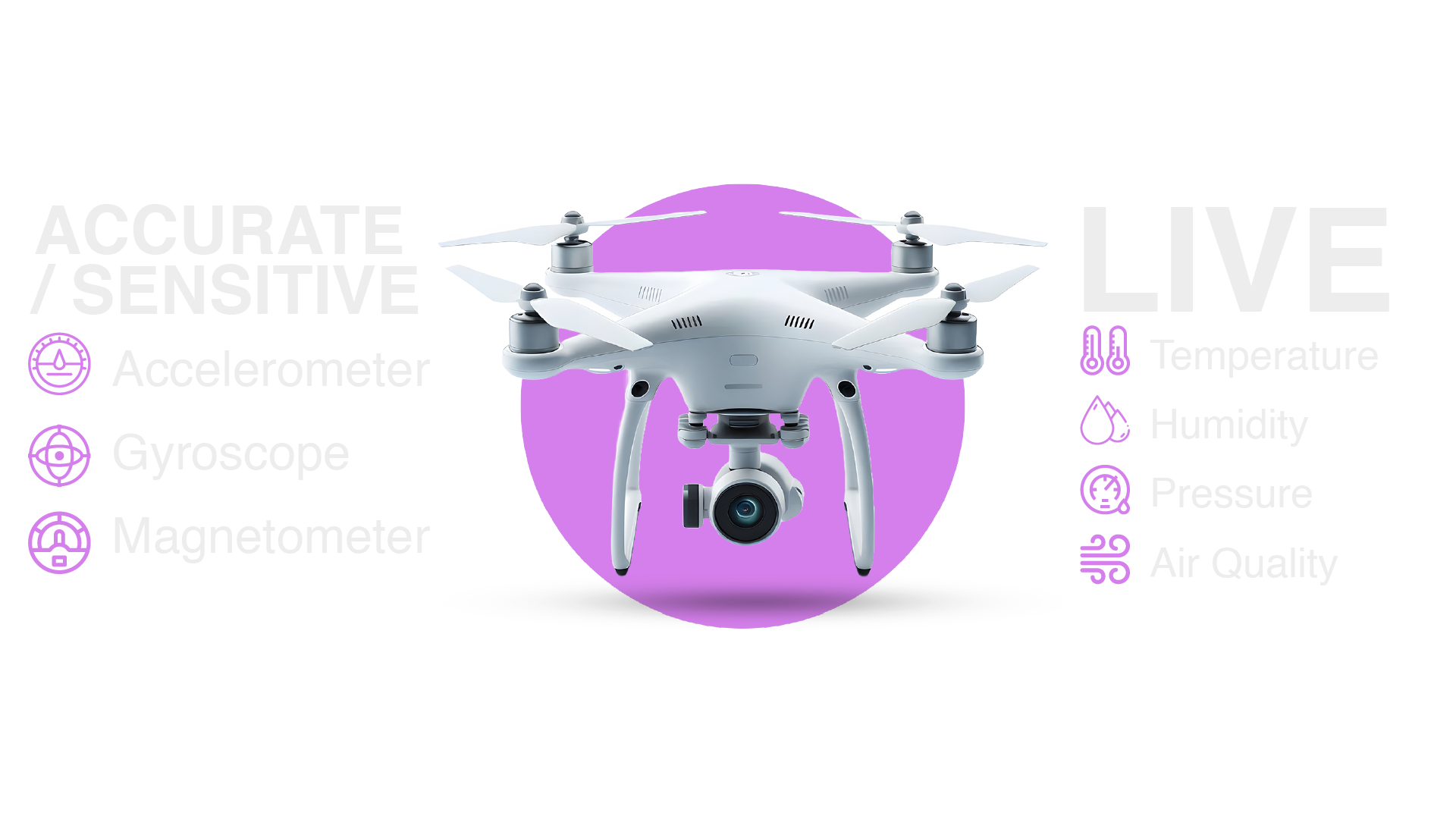
The seven sensors aboard the MultiNav Pro+ divide naturally into two functional groups that serve complementary roles in any sophisticated system.
Motion sensing — the accelerometer, gyroscope, and magnetometer — provides the real-time kinematic awareness that your system needs to know what it is doing in 3D space. These are the sensors that stabilize your drone, orient your robot, and give your wearable device a sense of direction and movement. They operate at high sample rates, deliver low-latency data, and are calibrated from the factory so your firmware does not have to compensate for systematic errors.
Environmental sensing — temperature, humidity, air pressure, and air quality — provides the contextual awareness that your system needs to understand where it is operating and what conditions surround it. These sensors enable adaptive behavior (a drone that adjusts hover thrust as air density changes with altitude and temperature), data collection (a field node recording micro-climate conditions at 5-minute intervals), and monetization (a network contributor earning daily rewards by streaming verified environmental data to the RFOXiA data network).
The combination of both groups on a single multi sensor development board is what makes this module genuinely unusual. Most boards specialize in one or the other. The MultiNav Pro+ does both, at professional quality, for $39.
I2C Communication Architecture: One Bus, Seven Sensors, Zero Collisions
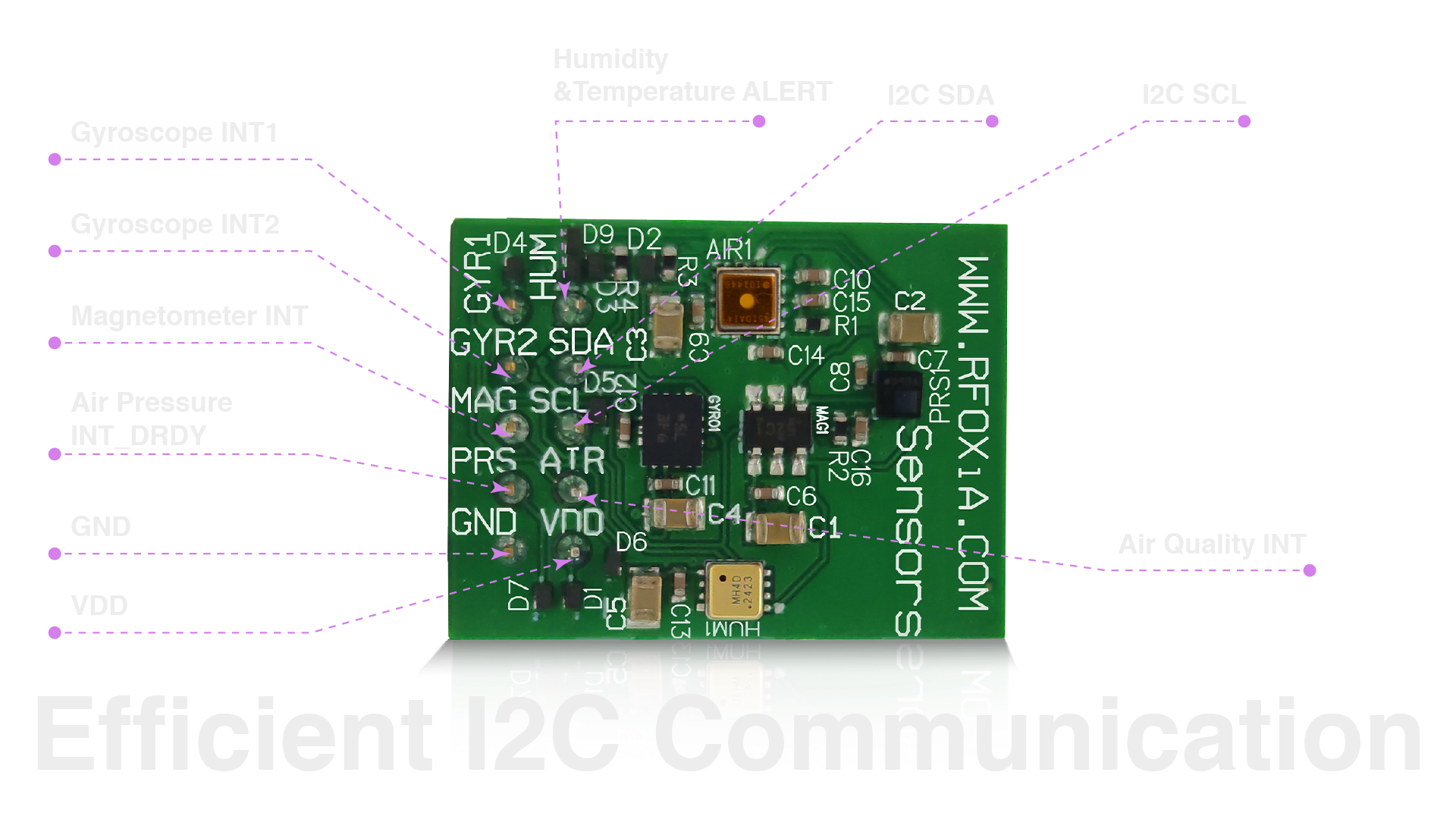
One of the most underappreciated engineering decisions in the MultiNav Pro+ design is the I2C communication architecture. Each of the seven sensors sits on a single I2C bus, with a factory-assigned and board-level-verified unique address. Your microcontroller connects to one pair of lines — SDA and SCL — and has full access to all seven sensors through standard I2C read and write operations.
This matters more than it sounds. Many multi-sensor board designs use multiple buses, hardware address selection jumpers, or software I2C bit-banging to work around address conflicts. Each of these adds complexity to your firmware, consumes additional GPIO pins, and introduces potential failure points. The MultiNav Pro+'s unified single-bus approach means:
- Simpler wiring — two signal lines connect your MCU to all seven sensors
- Fewer GPIO pins consumed — critical when you are already using most of your port for other functions
- Cleaner firmware — standard I2C library calls with no multiplexer logic
- Easier debugging — one bus to monitor with a logic analyzer
- Better compatibility — works with virtually every microcontroller and single-board computer that supports I2C
For developers integrating the MultiNav Pro+ with the RFOXiA BLE Module, GNSS Module, or third-party microcontrollers, this architecture dramatically reduces the integration effort and time to first working prototype.
Compact Design: 24mm × 18mm for the Tightest Builds
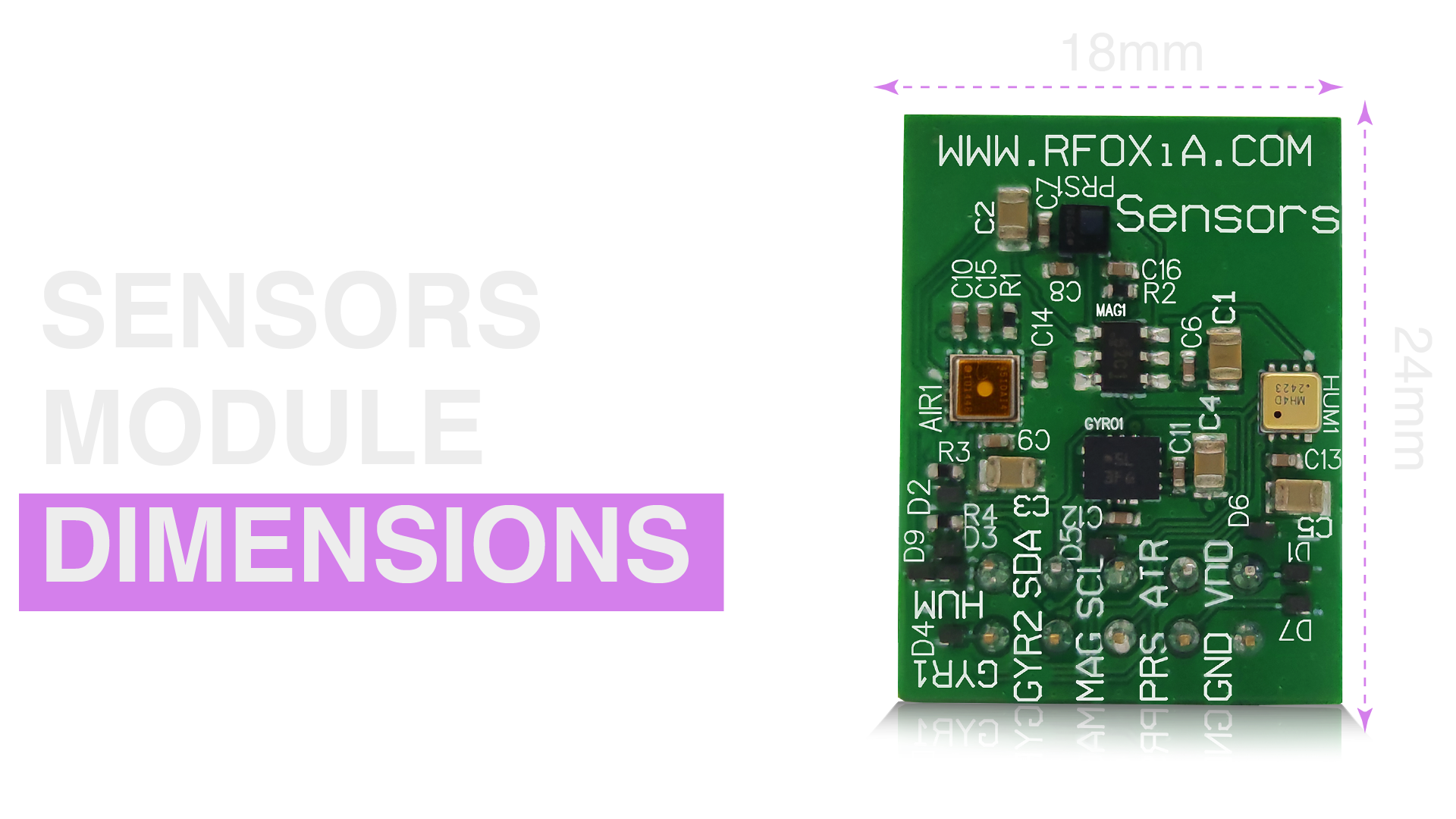
At 24mm × 18mm, the MultiNav Pro+ Sensors Module is smaller than a standard postage stamp. This is not an accident — it is a deliberate design constraint that reflects the real-world demands of the platforms this board is built for.
Consider the physical constraints of a 3" FPV racing drone. The entire frame might span 120mm diagonal. Every millimeter of real estate on the main stack is contested. A sensor board that takes up significant space forces tradeoffs — larger frame, fewer features, or a more complex multi-layer stack.
The MultiNav Pro+ fits comfortably on any standard 20mm or 30.5mm stack with room to spare. It is light enough to mount on the lightest freestyle builds. It is small enough to integrate into wearable enclosures, compact field instruments, and space-constrained industrial sensors. And because all seven sensors are already on this one board, you do not need to add additional breakouts that would quickly consume the space you saved.
Real-Time Environmental Data: What It Enables
Real-time sensor data is not just useful for feedback loops inside your system — it is commercially valuable data that organizations around the world are actively seeking and willing to pay for.
Consider what the MultiNav Pro+ streams when deployed outdoors:
- Temperature and humidity — micro-climate data at the street level, not the weather station level. Agricultural technology companies, insurance underwriters, and logistics operators need this data at spatial resolutions that existing infrastructure cannot provide.
- Air pressure — barometric trends at hyper-local resolution enable micro-scale weather prediction and anomaly detection.
- Air quality — outdoor ozone and NO2 levels vary dramatically at the city block scale. Smart city operators, public health agencies, and environmental researchers pay for this data.
- GPS-verified location — when combined with the RFOXiA GNSS Module, every data point carries a verified geographic coordinate, eliminating data spoofing and validating outdoor deployment.
The RFOXiA Integrated Sensors Module is designed from the ground up to participate in the RFOXiA data network — a live environmental data monetization system where contributors earn daily rewards for streaming verified sensor data from real-world outdoor deployments. The base reward rate ranges from $0.08 to $0.25 per day, with scarcity bonuses for nodes in data-sparse locations and uptime bonuses for consistent contributors.
This transforms your multi sensor development board from a project component into a revenue-generating asset.
Applications Across Industries

The breadth of sensing capability on the MultiNav Pro+ makes it relevant across a wide range of professional and research applications. Here are the most compelling use cases.
Professional Drone Systems
Flight controllers benefit directly from the BMI270's accelerometer and gyroscope. Altitude hold loops benefit from the LPS22HH barometric pressure sensor. Navigation confidence improves with magnetometer heading reference. Payload specialists deploying environmental sensors on survey drones get the complete picture — motion state and environmental conditions — from one board.
FPV and Racing Drones
The compact footprint and lightweight profile make the MultiNav Pro+ viable on even the most stripped-down freestyle builds. IMU data from the BMI270 feeds directly into Betaflight or ArduPilot-compatible flight controller firmware, enabling gyro-based stabilization and blackbox logging.
Robotics and Autonomous Vehicles
Ground robots benefit from full 9-DOF motion sensing for dead reckoning, orientation maintenance, and collision characterization. Environmental sensors enable adaptive behavior in industrial settings — robots that detect temperature anomalies or air quality exceedances and trigger alerts or modified routing.
Smart City and Infrastructure Monitoring
Fixed-position deployments of the MultiNav Pro+ paired with the RFOXiA BLE Module create a distributed sensor network that feeds real-time, street-level environmental data to city management platforms. Air quality, temperature gradients, and pressure trends at neighborhood resolution give urban planners data that was previously unavailable at any price.
Agricultural Technology
Precision agriculture depends on micro-climate data — soil moisture correlates with humidity, frost risk correlates with temperature and pressure trends, pest pressure correlates with temperature ranges. Distributed nodes across a farm field provide the spatial resolution that commercial weather stations cannot.
Environmental Research
University and institutional researchers deploying sensor arrays in the field need reliable, calibrated, compact hardware that can run for extended periods on minimal power. The MultiNav Pro+'s professional-grade silicon, combined with the RFOXiA Power/Program Kit's 24-hour runtime on a 5-minute charge, creates field-deployable sensor nodes that actually survive a full research day.
Wearable and Personal Monitoring Devices
The 24mm × 18mm footprint and low power consumption make the MultiNav Pro+ viable in wearable form factors. Personal air quality monitoring, athlete motion analysis, and outdoor adventure logging all benefit from the complete sensor suite in a package small enough to wear.
Integration with the RFOXiA Ecosystem
The MultiNav Pro+ Sensors Module is not a standalone product — it is a node in a vertically integrated wireless development ecosystem that includes hardware, firmware, a mobile application, and a live data network.
With the RFOXiA BLE Module: Sensor data streams wirelessly over long-range Bluetooth, reaching up to 5km ground-to-ground and 15-20km man-to-drone. Your sensor node reports in from the field without any wired connection or cellular infrastructure.
With the RFOXiA GNSS Module: Every sensor reading gets a GPS timestamp and coordinate, enabling geospatial data logging and network participation with location verification.
With the RFOXiA Power/Program Kit: Your complete sensor stack runs for 24 hours on a 5-minute supercapacitor charge, making extended field deployments viable without the risk of battery degradation or the downtime of traditional charging.
With the RFOXiA Connect App: Live sensor data appears on your phone in real time via the app's sensor display panel — temperature, humidity, pressure, air quality, and motion data, visualized clearly without writing a single line of display code.
With AI Firmware Builder in RFOXiA Club: Describe your sensor application in plain language. The AI generates production-ready firmware that reads all seven sensors, formats the output, and handles the I2C bus — in hours rather than weeks.
The Developer Bundle packages the Sensors Module alongside the BLE Module, GNSS Module, and Power/Program Kit for $199 after credits — giving you the complete ecosystem in one order.
Technical Specifications Summary
| Parameter | Specification |
|---|---|
| Sensors | 7 total: Accelerometer, Gyroscope, Magnetometer, Air Pressure, Humidity, Temperature, Air Quality |
| IMU Silicon | BMI270 (Bosch Sensortec) |
| Magnetometer Silicon | TMAG5273C1QDBVR (Texas Instruments) |
| Pressure Silicon | LPS22HHTR (STMicroelectronics) |
| Humidity/Temperature Silicon | MVH4003D (MEMSVision) |
| Air Quality Silicon | ZMOD4510AI4R (RENESAS) |
| Communication | I2C (single bus, dedicated addresses per sensor) |
| Module Size | 24mm × 18mm |
| Certification | FCC Certified |
| Price | $39 |
| Ecosystem | RFOXiA BLE Module, GNSS Module, Power/Program Kit, Connect App, Club Platform |
Why This Multi Sensor Development Board Is Different
There are other sensor breakout boards on the market. Most of them do one thing — they expose a single sensor with a basic I2C or SPI interface and leave all integration work to you. The few that combine multiple sensors typically mix consumer-grade silicon with no thought for application fit, no ecosystem integration, and no path to value beyond the board itself.
The MultiNav Pro+ is built differently. Every sensor was chosen for a specific reason — professional-grade silicon from brands that appear in industrial and aerospace applications, in a form factor that fits the real-world constraints of the platforms it targets, with an I2C architecture that minimizes your integration burden, and inside an ecosystem that makes your data valuable beyond your own project.
At $39, it is priced for maker accessibility. At the spec level it delivers, it belongs in professional deployments.
If you are serious about building sensor-enabled systems — whether that is a drone, a robot, a field instrument, a smart city node, or a wearable device — the RFOXiA Integrated Sensors Module is the most capable multi sensor development board available at this price point, backed by FCC certification and a complete wireless development ecosystem.
Get Started
The MultiNav Pro+ Sensors Module is in stock and ready to ship. It is available standalone at $39, or as part of the Developer Bundle at $199 after credits — combining every RFOXiA module into one complete ecosystem package.
New members of RFOXiA Club receive a $10 welcome credit on signup, with additional credits available through the platform funnel that can bring the effective Developer Bundle price down to $150.
Explore the full specifications, compatibility details, and ordering options at the RFOXiA Integrated Sensors Module product page and start building with the sensor platform that professional developers actually trust.
Written by: Moamen Mohamed LinkedIn