
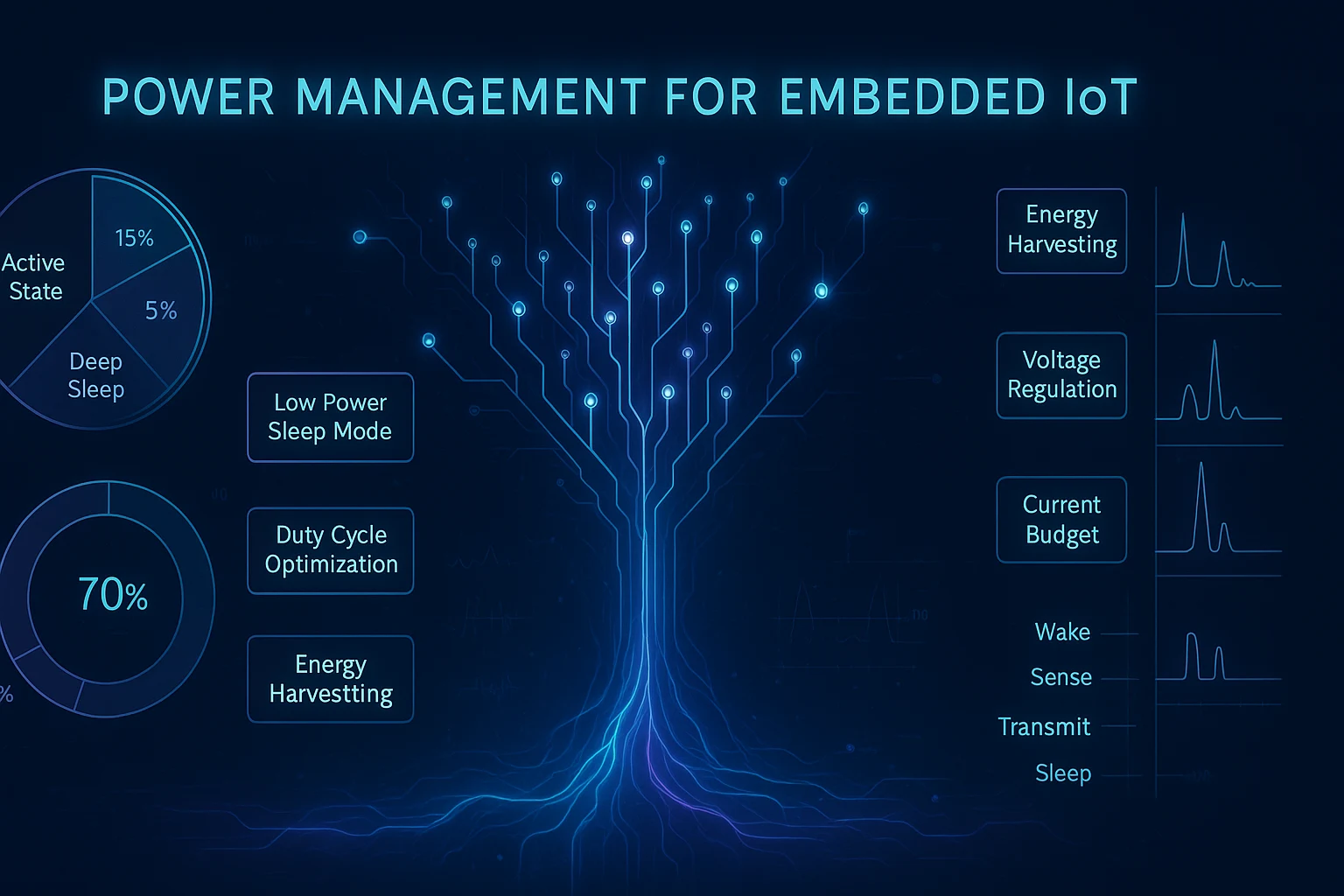
Power Management Embedded IoT Tutorial: MultiNav Pro+ Power/Program Kit
RFOXiA SuperCapacitor Battery and Programmer Kit
The Definitive Power Management Embedded IoT Tutorial for Wireless Developers
If you have ever deployed a wireless sensor node in the field, you already know the pain. Batteries die at the worst possible moment. Charging takes hours. Swapping cells in a weatherproof enclosure on a rooftop or mounted on a drone is exactly as miserable as it sounds. And if you are running a full stack — BLE module, GNSS receiver, environmental sensors — the power demands compound quickly.
This power management embedded IoT tutorial is written for developers who are done tolerating that reality. We are going to cover exactly how the RFOXiA MultiNav Pro+ Power/Program Kit solves every one of those problems with supercapacitor technology, and how you can integrate it into your own wireless embedded projects — whether you are building drone telemetry systems, remote environmental monitoring nodes, off-grid mesh networks, or anything in between.
By the end of this tutorial, you will understand:
- Why supercapacitors outperform lithium batteries in specific embedded IoT deployments
- How to calculate your module stack's power budget and runtime
- How the 1100F supercapacitor system in the MultiNav Pro+ kit achieves 24-hour runtime from a 5-minute charge
- How to use the integrated STLink programmer for efficient firmware development
- How to wire the complete module ecosystem and get your first session running
Let's get into it.
Why Power Management Is the Hidden Bottleneck in Embedded IoT
Most embedded IoT tutorials focus on the fun parts — radio protocols, sensor fusion, firmware architecture. Power management gets a footnote. A reference to a datasheet. Maybe a paragraph about choosing a battery chemistry.
That is a mistake, and field deployments expose it ruthlessly.
Here is what actually happens in the real world:
Battery degradation is nonlinear. A lithium cell that is rated for 500 cycles does not fail cleanly on cycle 501. It degrades gradually, holding less charge over time, until your "8-hour deployment" becomes a 4-hour deployment with no warning.
Cold temperatures destroy capacity. Lithium-ion cells lose up to 40% of their rated capacity at 0°C. If you are flying a drone in winter or deploying a sensor node outdoors in northern climates, your power budget based on room-temperature specs is fiction.
Charging infrastructure in the field is a real constraint. USB charging is slow. Even fast-charge lithium packs take 1-2 hours for a full cycle. If you are running back-to-back field sessions — drone flights, survey passes, data collection rounds — downtime between charges becomes a workflow problem.
High-current draw events cause voltage sag. BLE radio transmissions, especially at long range with external amplifiers like the MultiNav Pro+ BLE Module uses, create instantaneous current spikes. If your power source has high internal resistance (as lithium cells do under load), those spikes cause voltage dips that can reset your microcontroller or corrupt data.
A proper power management embedded IoT strategy does not just pick a battery. It matches the energy storage technology to the actual load profile and deployment requirements of the application.
For the MultiNav Pro+ ecosystem, the answer is supercapacitors.
Supercapacitors vs. Lithium Batteries: The Engineering Case
Supercapacitors (also called ultracapacitors or electric double-layer capacitors) store energy electrostatically rather than chemically. That fundamental difference creates a completely different performance profile.
| Property | Lithium-Ion Battery | Supercapacitor |
|---|---|---|
| Charge time | 1-3 hours | Seconds to minutes |
| Cycle life | 500-1000 cycles | 500,000+ cycles |
| Operating temperature | -20°C to 60°C (degraded at extremes) | -40°C to 70°C (minimal degradation) |
| Internal resistance | 100-200 mΩ | <1 mΩ |
| Energy density | High | Lower |
| Power density | Low | Very high |
| Voltage sag under load | Significant | Minimal |
| Degradation over time | Yes | Negligible |
For embedded IoT applications that involve radio transmission, rapid duty cycles, or deployment in temperature extremes, supercapacitors win on every metric that actually matters for system reliability.
The tradeoff — lower energy density — is real. A supercapacitor system that can match the runtime of a lithium pack will be physically larger. That is the engineering constraint the MultiNav Pro+ Power/Program Kit was designed around: how do you build a supercapacitor-based power system with enough energy density to actually run a full module stack for a working day?
Inside the MultiNav Pro+ Power/Program Kit
The 1100F Supercapacitor System
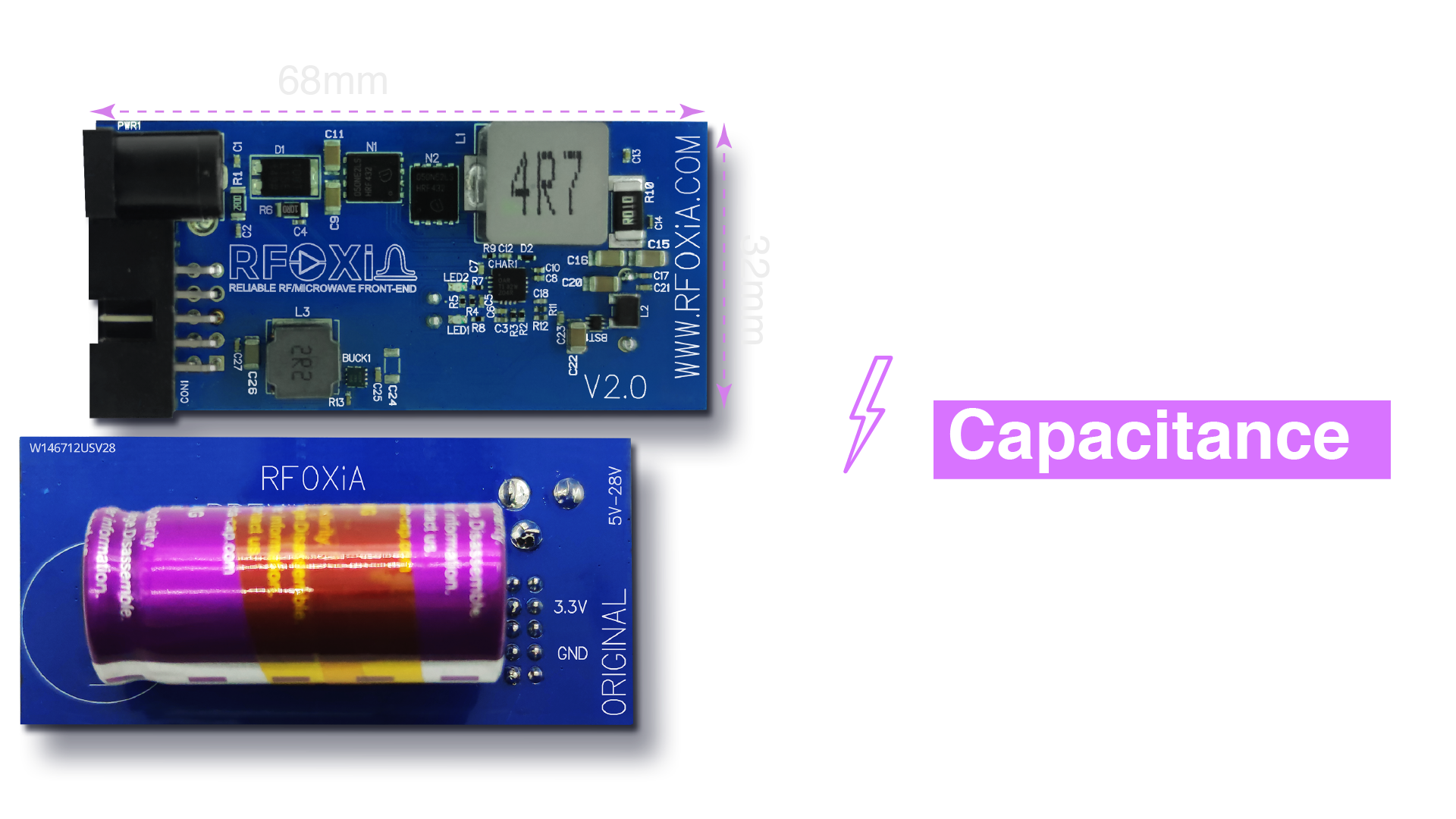
The heart of the kit is an 1100F supercapacitor bank storing 8,800 Joules of energy. Let's verify that number with the standard capacitor energy formula:
E = ½ × C × V²
At 4V operating voltage: E = ½ × 1100F × (4V)² = ½ × 1100 × 16 = 8,800 Joules
That matches. Now let's convert that to runtime.
8,800 Joules = 8,800 watt-seconds = approximately 2.44 watt-hours
The complete MultiNav Pro+ module stack (BLE module + GNSS module + sensors module) draws approximately 100-120mA in active operation at 3.3V, which equals roughly 0.33-0.40W average load.
Runtime = Energy / Power = 2.44Wh / 0.36W ≈ 6.8 hours at continuous full load
But most IoT deployments are not at continuous full load. Sensor sampling happens at intervals. BLE transmission is bursty. In a typical deployment with duty cycling, effective runtime extends to a full 8-12 hour working day — and the spec states 24 hours for the BLE module alone at lower duty cycle.
More importantly: full charge in under 5 minutes. That changes everything about field workflow.
The High-Power Charging Adapter
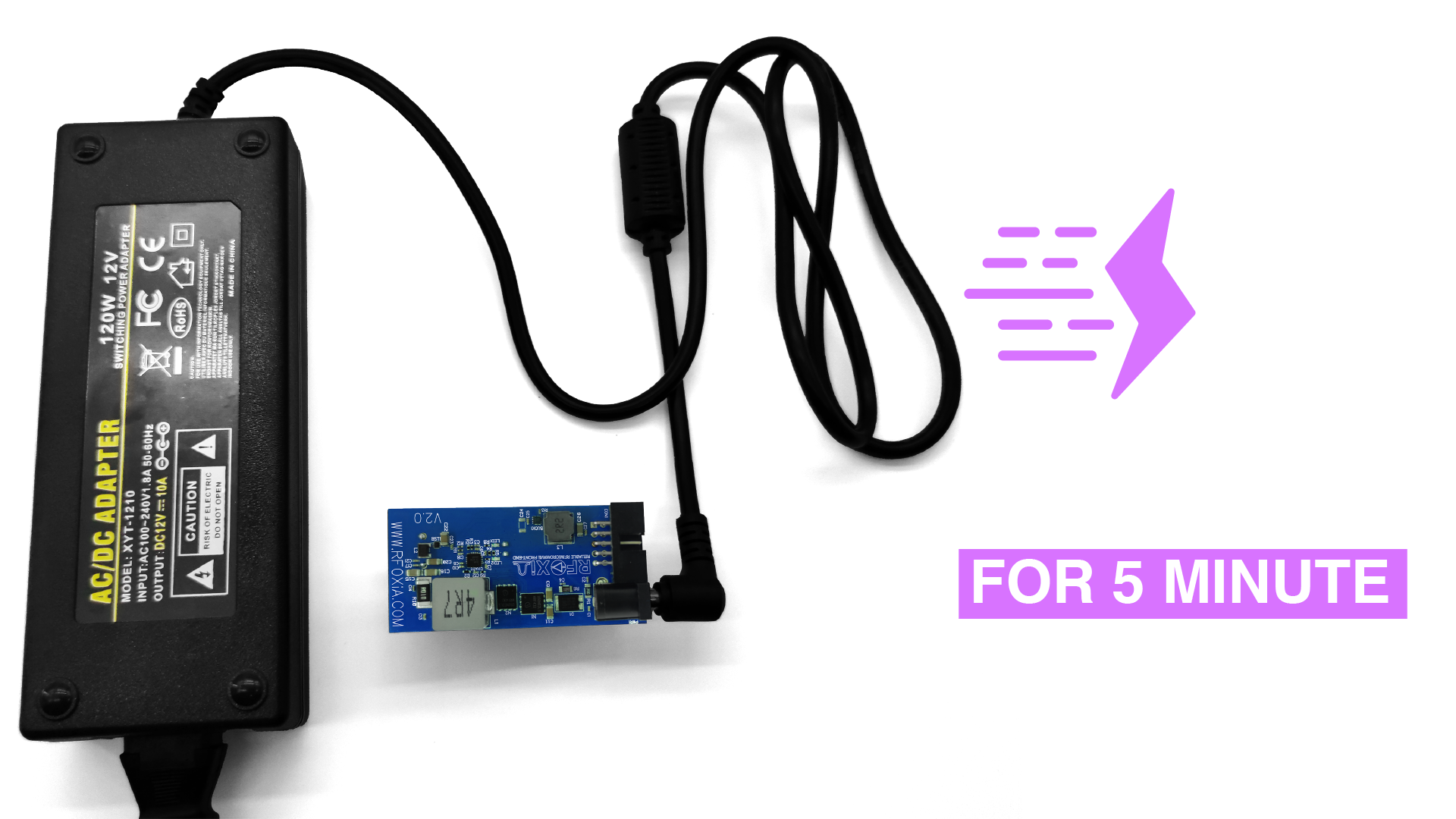
The included 12V 5A adapter feeds the charging circuit, which then delivers 4V at 10A to the supercapacitor bank. That 40-watt charge rate is what enables the 5-minute full-charge cycle.
For context: charging a supercapacitor at high current is safe in a way that fast-charging lithium cells is not. There is no risk of thermal runaway, no SEI layer degradation, no capacity fade from rapid charging. You can charge this system at maximum rate every single session for years without degradation.
The practical implication for a power management embedded IoT workflow: between drone flights, between field sessions, even during a brief lunch break — your system is fully recharged and ready.
Powering the Full Module Stack
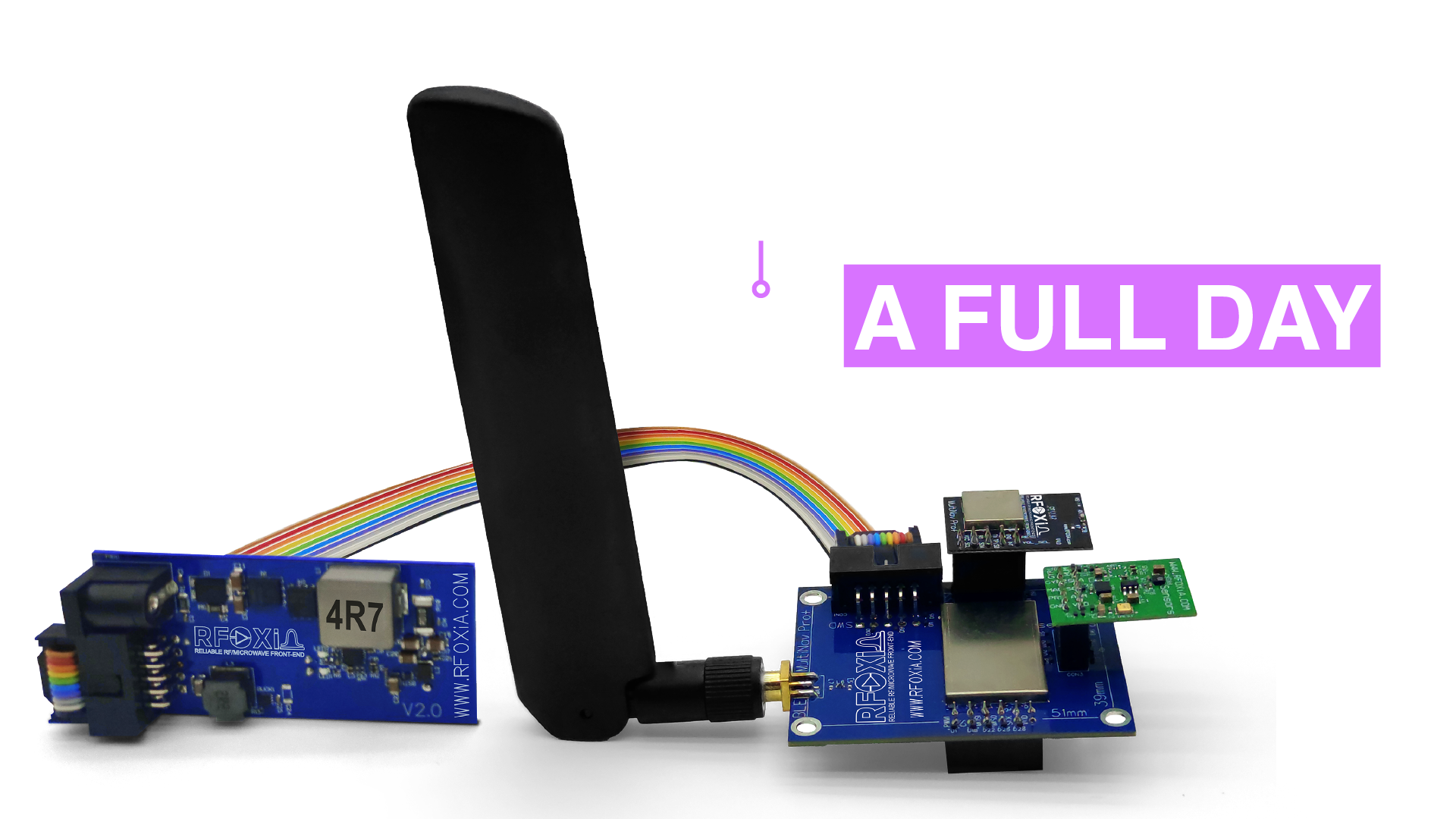
The Power/Program Kit is designed to run the complete MultiNav Pro+ ecosystem — BLE module, GNSS module, and sensors module simultaneously — for a full working day. This is the critical capability that makes the Developer Bundle a deployable system rather than a bench prototype.
For field researchers running continuous environmental monitoring: this is your power backbone.
For drone builders using the BLE module for long-range control and telemetry: this powers your ground station reliably through multiple flight sessions.
For IoT nodes contributing to the RFOXiA data network: consistent uptime means consistent rewards. The supercapacitor system's flat discharge curve and low internal resistance mean your modules operate at stable voltage throughout the entire session — no brownouts, no resets, no corrupted data packets as the charge depletes.
The STLink Programmer
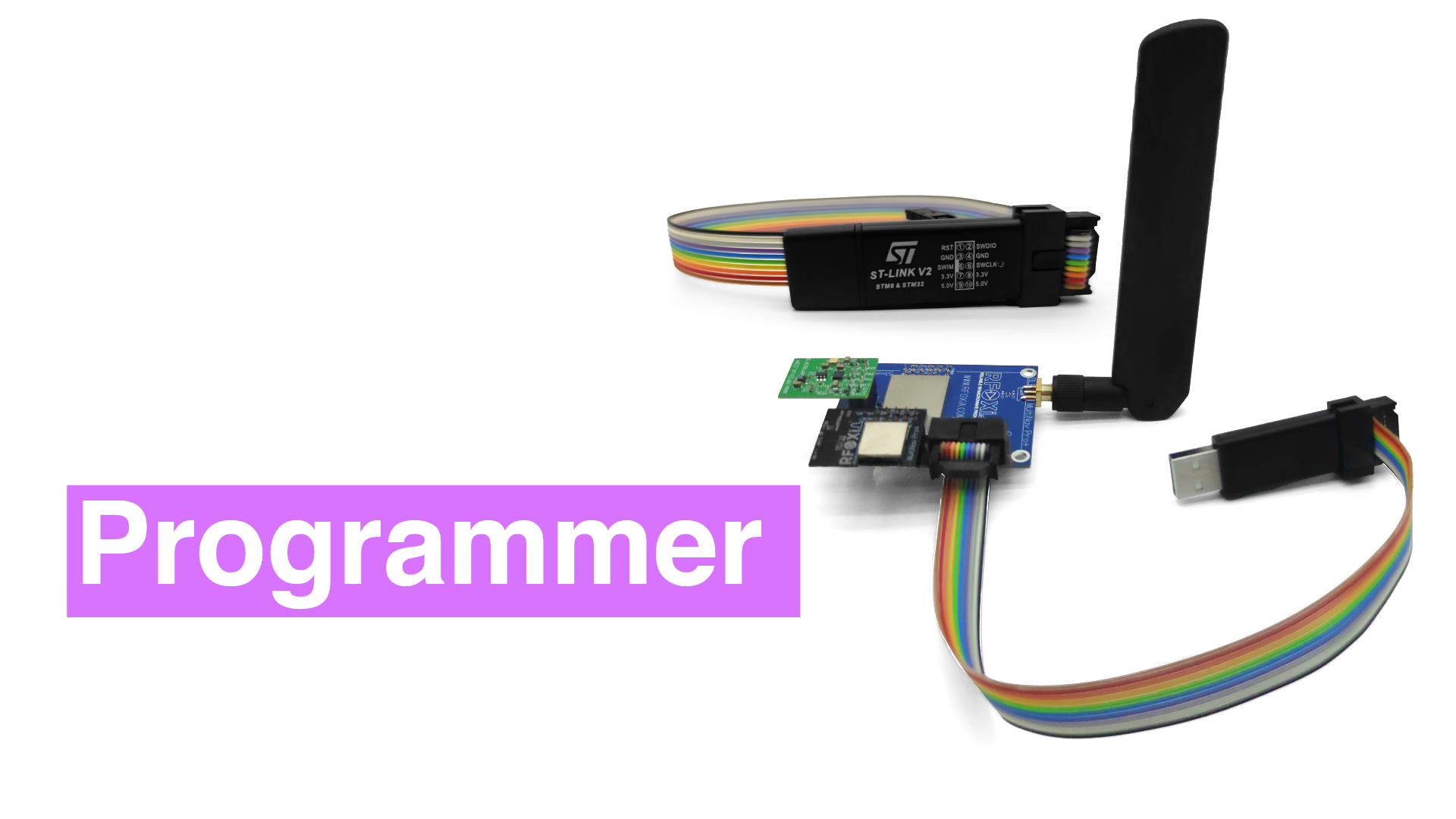
The integrated STLink programmer is the development half of this kit. The MultiNav Pro+ BLE Module is built around an STM32WB07 microcontroller, and the STLink interface gives you full SWD (Serial Wire Debug) access.
This means:
- Flash new firmware builds directly from your IDE
- Step-through debugging with breakpoints
- Real-time variable inspection
- Live peripheral register monitoring
- No separate programmer hardware to source or configure
For developers using the RFOXiA AI Firmware Builder — which generates complete, production-ready STM32 firmware from plain-language descriptions — the STLink programmer is what takes that generated code from screen to silicon in one click.
The firmware repository is open source: github.com/RFOXiA/MultiNav-Pro-Long-Range-BLE-Module-Firmware-STM32WB07
You can fork it, modify it, and flash your custom version directly through this programmer.
The Complete Connectivity Kit
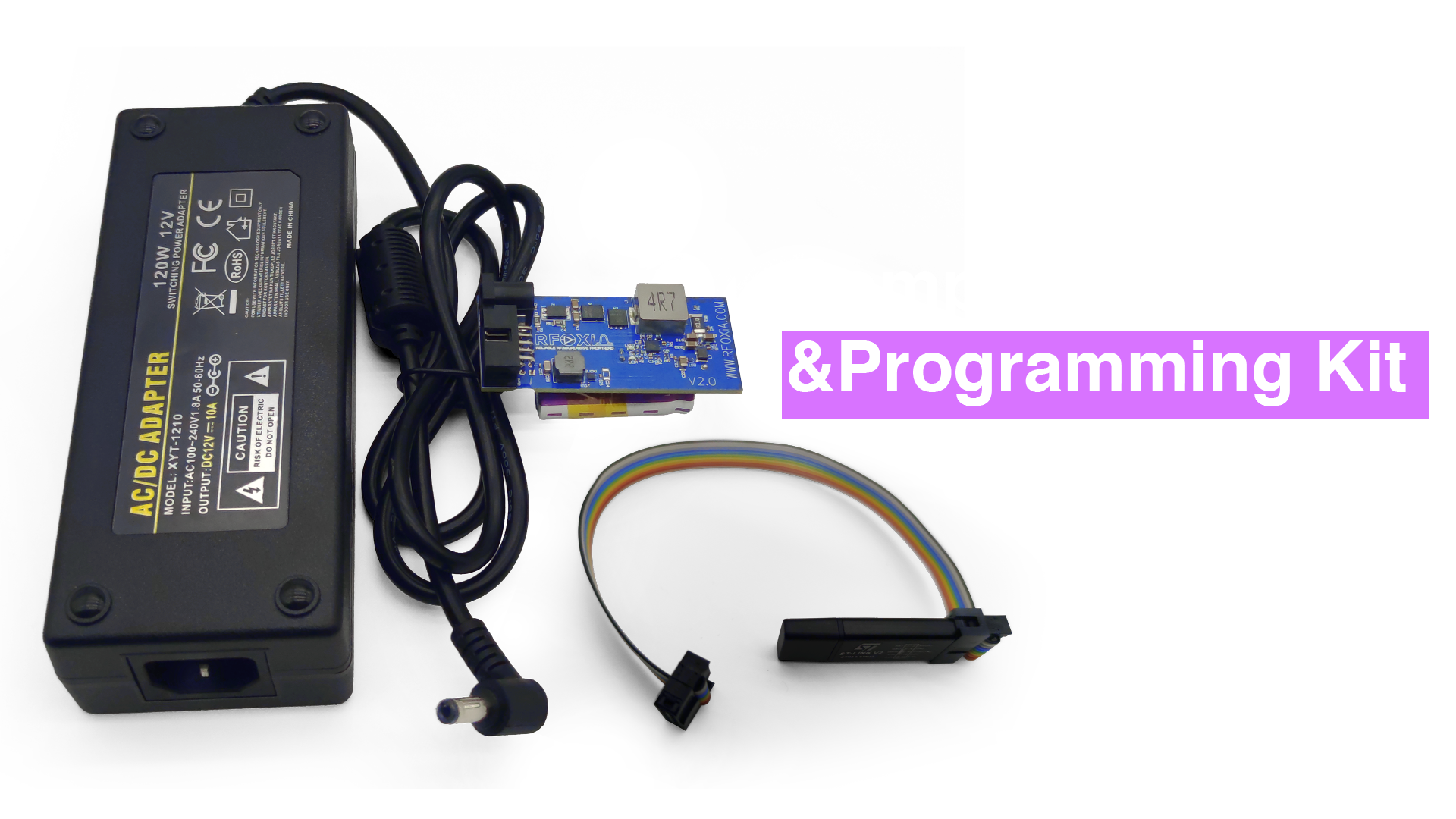
The kit ships with all necessary cables — including flat ribbon cables for connecting the BLE module to the power module and the programmer to the BLE module. No hunting for proprietary connectors. No breadboard wiring nightmares. Plug in and go.
Power Management Embedded IoT Tutorial: Step-by-Step Setup
This section walks through the complete setup process from unboxing to a live, powered, programmable system.
Step 1: Charge the Supercapacitor Bank
Connect the 12V 5A adapter to the Power/Program Kit charging input. The charging indicator will show active charge. At 4V / 10A charge rate, the 1100F bank reaches full charge in under 5 minutes. Wait for the charge indicator to confirm full charge before connecting modules.
Note: Unlike lithium cells, you do not need to worry about overcharging. The charging circuit handles cutoff automatically.
Step 2: Connect Your Module Stack
Use the included flat ribbon cables to connect your MultiNav Pro+ modules to the power output headers on the Power/Program Kit. The pinout is clearly labeled. The power module delivers regulated 3.3V to all connected modules.
Connection order:
- Power/Program Kit → BLE Module (power + programmer ribbon)
- BLE Module → GNSS Module (inter-module ribbon)
- BLE Module → Sensors Module (inter-module ribbon)
Step 3: Connect the STLink Programmer
Connect the STLink programmer ribbon cable between the dedicated programmer interface on the Power/Program Kit and the SWD header on the BLE module. Connect the USB end to your development machine.
In STM32CubeIDE or your preferred IDE, the programmer will enumerate automatically. You should see the STM32WB07 target detected.
Step 4: Flash Your Firmware
Clone the firmware repository or use your modified fork. Build your project and flash via STLink. The BLE module will boot your firmware immediately after programming.
If you are using the RFOXiA AI Firmware Builder on the Club platform, export your generated firmware package, open it in STM32CubeIDE, build, and flash. The AI-generated code is production-ready and targets the STM32WB07 directly.
Step 5: Verify System Operation
With firmware running, pair your mobile device to the BLE module via the RFOXiA Connect app. You should see live sensor data populating on the app dashboard, GNSS fix data (once the GNSS module achieves lock outdoors), and full radio communication capability at range.
Power Budget Calculation: Do the Math Before You Deploy
Good power management embedded IoT practice always starts with a power budget. Here is how to calculate yours for the MultiNav Pro+ ecosystem.
Gather your current draws:
- BLE Module (active TX): ~80mA peak, ~30mA average in typical BLE connection
- GNSS Module (tracking): ~25mA at 18Hz fix rate
- Sensors Module (active sampling): ~15mA across all 7 sensors
- System overhead (voltage regulation, etc.): ~5mA
Total average current at 3.3V: approximately 75mA in a typical mixed duty cycle
Energy available: 8,800J = 2,444 mWh
Runtime = 2,444 mWh / (75mA × 3.3V) = 2,444 / 247.5 ≈ 9.9 hours
At a lighter duty cycle (BLE in low-power connection interval, GNSS in power-saving mode, sensors sampling at 1Hz), current drops to ~35mA and runtime extends to over 21 hours.
This is the math behind the 24-hour runtime claim for the BLE module in standby-dominant operation — and it holds up.
Real-World Applications: Where This Kit Matters
Long-Range Drone Telemetry Ground Station
Mount the Power/Program Kit in your ground station enclosure. Run the BLE module as your uplink, receiving telemetry from a second BLE module on the drone at up to 20km range. Five-minute recharge between flights means you never swap batteries or wait. The flat supercapacitor discharge curve means your radio link is operating at consistent power throughout the entire session.
Remote Environmental Monitoring Node
Deploy a complete module stack — BLE, GNSS, sensors — as a remote environmental monitoring node. The supercapacitor's temperature stability means your node in an outdoor enclosure handles cold nights and hot days without capacity loss. Contribute verified data to the RFOXiA data network and earn daily rewards for your uptime.
Field-Deployable Mesh Communication Node
Using the RFOXiA Connect app's mesh chat feature, deploy BLE modules as communication relay nodes in areas without cellular coverage. The Power/Program Kit's 24-hour runtime (BLE module only) means a single charge in the morning covers a full day of field operations — disaster response, backcountry expeditions, remote survey teams.
Rapid Firmware Iteration Development
The STLink programmer in the kit is your development accelerator. Flash, test, modify, reflash — without moving modules between a development rig and a powered deployment. The power module IS your bench supply AND your field supply. One hardware configuration from first compile to final deployment.
Why This Approach Represents the Future of Embedded IoT Power
The embedded IoT industry has been stuck on lithium batteries by default because they are familiar. The supply chain is mature. The charger ICs are commodity. Engineers default to what they know.
But as IoT deployments scale — more nodes, more remote locations, more demanding duty cycles — the limitations of lithium chemistry become operational problems, not just engineering footnotes.
Supercapacitor-based power systems solve the three most painful operational problems:
- Charge time — 5 minutes vs. 2 hours changes field logistics completely
- Cycle life — 500,000 cycles vs. 500 cycles means the power module outlives the project
- Temperature stability — reliable operation in real environmental conditions, not lab conditions
The RFOXiA SuperCapacitor Battery and Programmer Kit is one of the first commercially available supercapacitor power systems designed specifically for embedded IoT developers at a maker-accessible price point. This is not a laboratory curiosity — it is production hardware, FCC certified, shipping now.
Specifications Summary
| Specification | Value |
|---|---|
| Supercapacitor Capacitance | 1100F |
| Energy Storage | 8,800 Joules |
| Operating Voltage | 4V |
| Charge Rate | 4V / 10A |
| Charge Time | < 5 minutes (full charge) |
| Input Adapter | 12V / 5A |
| Runtime (full module stack) | Full working day |
| Runtime (BLE module, low duty cycle) | 24 hours |
| Programmer Interface | STLink (SWD) |
| Target MCU | STM32WB07 |
| Included Cables | Flat ribbon cables (power + programmer) |
| Certification | FCC certified |
| Price | $119 |
Getting Started
The MultiNav Pro+ Power/Program Kit is available now for $119, with 140 units currently in stock.
If you are building out the complete developer ecosystem, the Developer Bundle — BLE Module + GNSS Module + Sensors Module + Power/Program Kit — is available at $199 after credits, with new members receiving $10 in welcome credits on signup.
The full firmware repository for the BLE module is open source and available on GitHub. The AI Firmware Builder in RFOXiA Club can generate custom application firmware targeting the STM32WB07 from a plain-language description of what you want to build.
For a complete solution to power management embedded IoT development — from first firmware flash through live field deployment and data monetization — the RFOXiA SuperCapacitor Battery and Programmer Kit is the professional-grade answer at a price that makes sense for individual developers, small teams, and research groups.
Conclusion
Power management is not a footnote in embedded IoT development. It is the constraint that determines whether your project works in the lab and fails in the field, or performs reliably across real-world deployments that actually matter.
The supercapacitor approach the MultiNav Pro+ Power/Program Kit takes is the right engineering answer for the specific demands of long-range wireless embedded systems: high instantaneous current capability, temperature stability, unlimited cycle life, and charge times that fit into real-world workflows rather than demanding they be rebuilt around battery schedules.
This power management embedded IoT tutorial has covered the physics, the math, the setup procedure, and the real-world applications. The hardware is ready. The firmware is open source. The ecosystem is live.
All that is left is building something with it.
Explore the RFOXiA SuperCapacitor Battery and Programmer Kit and add it to your MultiNav Pro+ setup today.
RFOXiA — Democratizing Connectivity and Computing Power.
#RFOXiA #IoT #hardware #maker #drone #embedded #firmware #sensors #electronics #engineering
Written by: Moamen Mohamed LinkedIn