
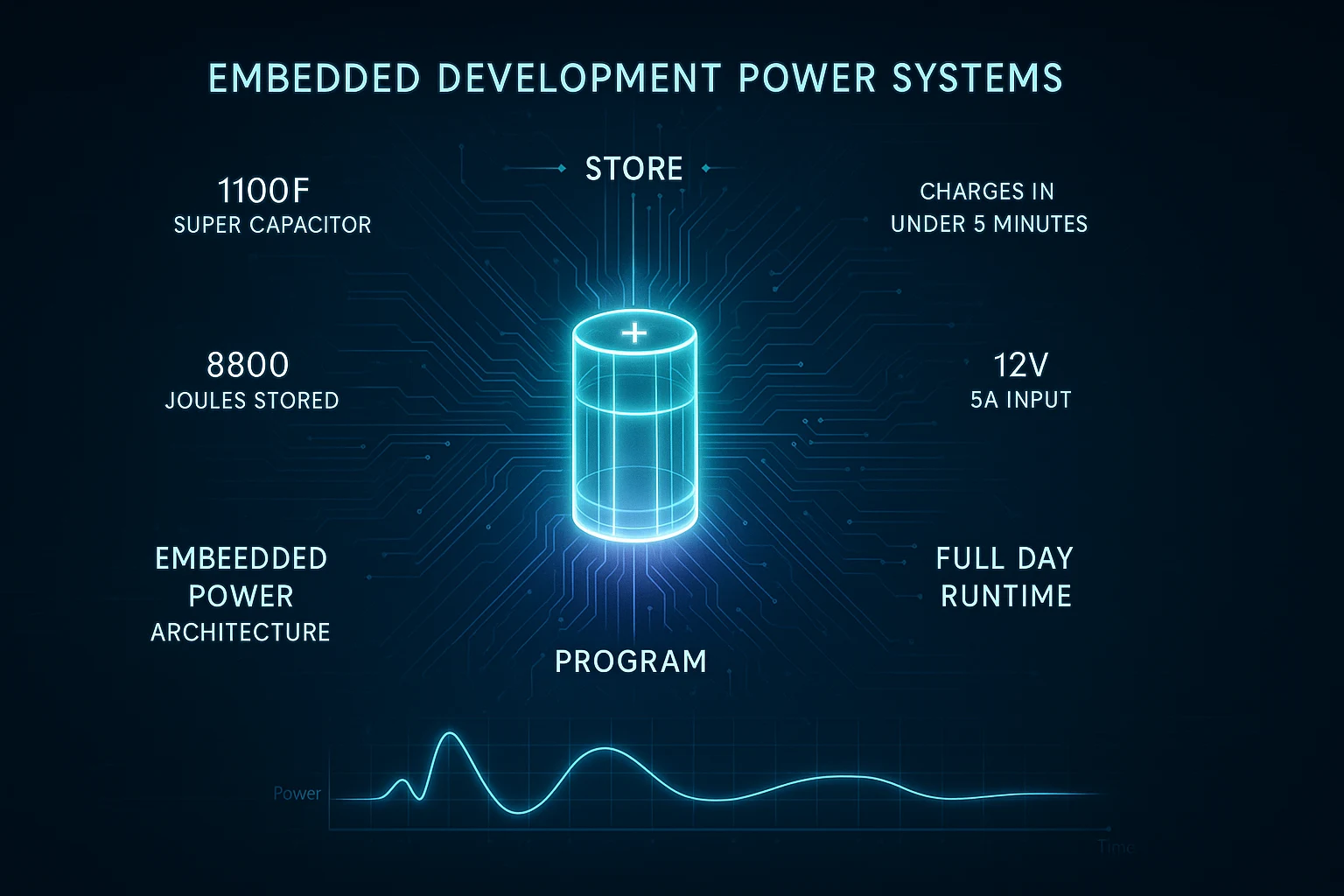
Power Module Embedded Development: The SuperCap Kit That Changes Everything
RFOXiA SuperCapacitor Battery and Programmer Kit
Redefining Power Module Embedded Development for Serious Builders
If you have spent any real time doing power module embedded development in the field — whether that means deploying wireless sensor nodes, running drone telemetry systems, or iterating on firmware during a long prototyping session — you already know the problem intimately. Power is the bottleneck that no one wants to talk about.
Lithium batteries take hours to charge. Capacity degrades with every cycle. Cold environments kill runtime. And when you are 20km into a field deployment and your module dies mid-session, there is no graceful recovery. You pack up, you go home, you charge overnight, and you lose half a day.
The MultiNav Pro+ Power/Program Kit from RFOXiA was built to eliminate that problem entirely. Not to reduce it. Not to manage it better. To eliminate it.
This is not a battery pack with a USB port. This is a professional-grade supercapacitor power system paired with an integrated STLink programmer — purpose-built for the MultiNav Pro+ ecosystem and designed to match the ambitions of the developers who use it.
Why Power Module Embedded Development Has Always Been Frustrating
Let's be honest about the conventional workflow. You design a wireless embedded system. You test it on the bench with a bench supply. When you move to field deployment or extended testing, you reach for a LiPo battery or a USB power bank. Then the compromises begin.
The charge time problem. A standard 10,000mAh LiPo pack takes 3-5 hours to charge from flat. If you are running two or three development sessions per day — firmware iteration, range testing, sensor calibration — you spend more time waiting for your power source than you do actually building.
The cycle degradation problem. Lithium chemistry degrades with every charge cycle. After 300-500 cycles, capacity can drop to 70-80% of original. For a developer who charges daily, that means visible performance degradation within a year. You are constantly working with a system whose energy budget is quietly shrinking.
The thermal problem. LiPo batteries lose significant capacity at low temperatures. At 0°C, you can expect 20-30% capacity loss. At -20°C, that becomes 40-50%. If you are doing outdoor deployments in winter climates, your battery-based power system is already compromised before you start.
The programmer problem. Beyond power, embedded development requires programming. And the typical workflow — dig out the programmer, find the right cable, connect it correctly, open the IDE — adds friction to every firmware iteration. That friction does not sound like much until you are on your fifteenth debug cycle and every connection sequence feels like it is costing you creative momentum.
The RFOXiA SuperCapacitor Battery and Programmer Kit addresses all of these problems in a single integrated package. Here is how.
The 1100F Supercapacitor System: Why Capacitors Beat Batteries for Development
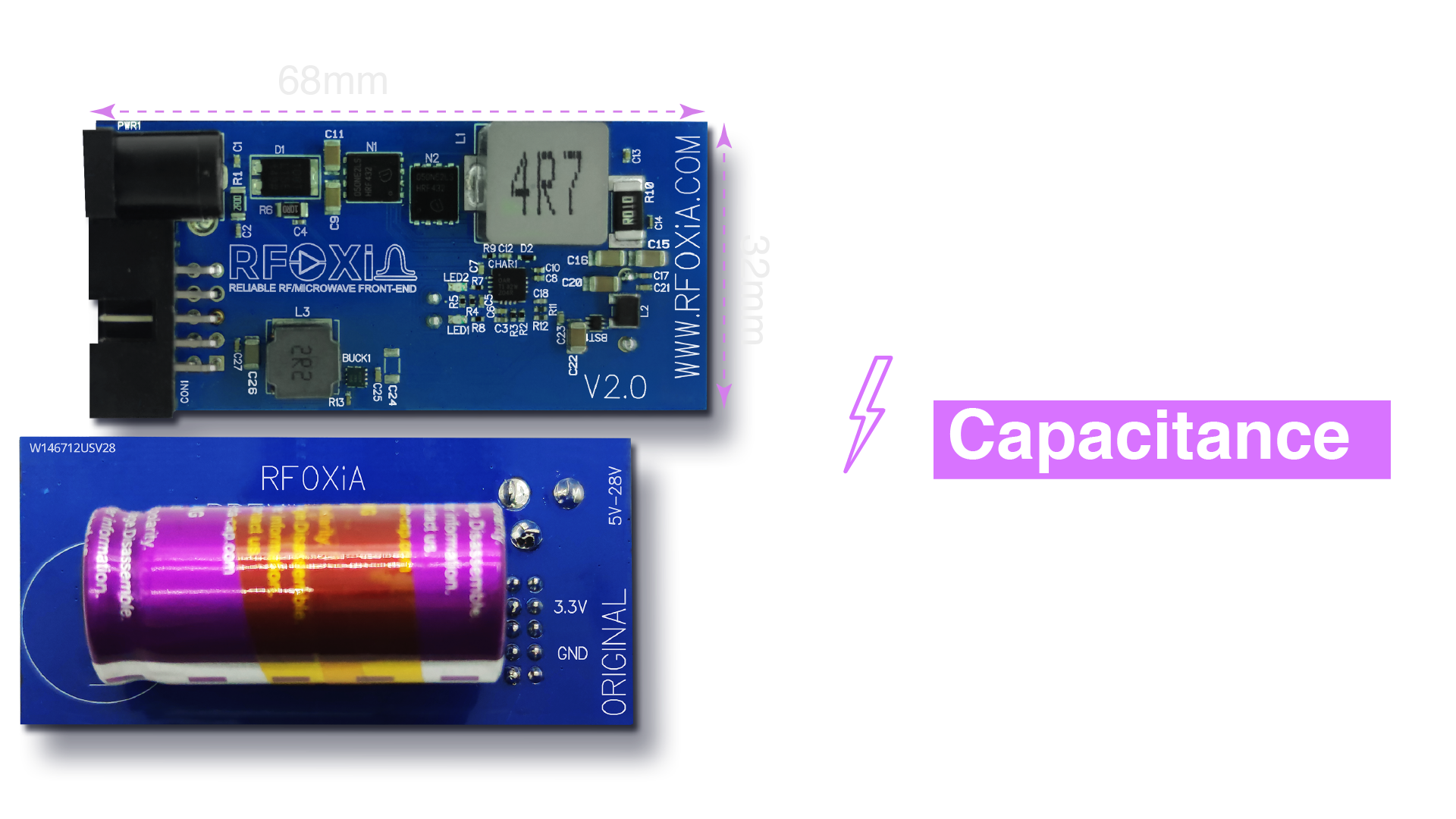
The heart of this kit is an 1100F supercapacitor system — and if you have not worked with supercapacitors before, the performance difference compared to lithium batteries is genuinely striking.
Supercapacitors store energy electrostatically rather than chemically. This has several profound implications for power module embedded development:
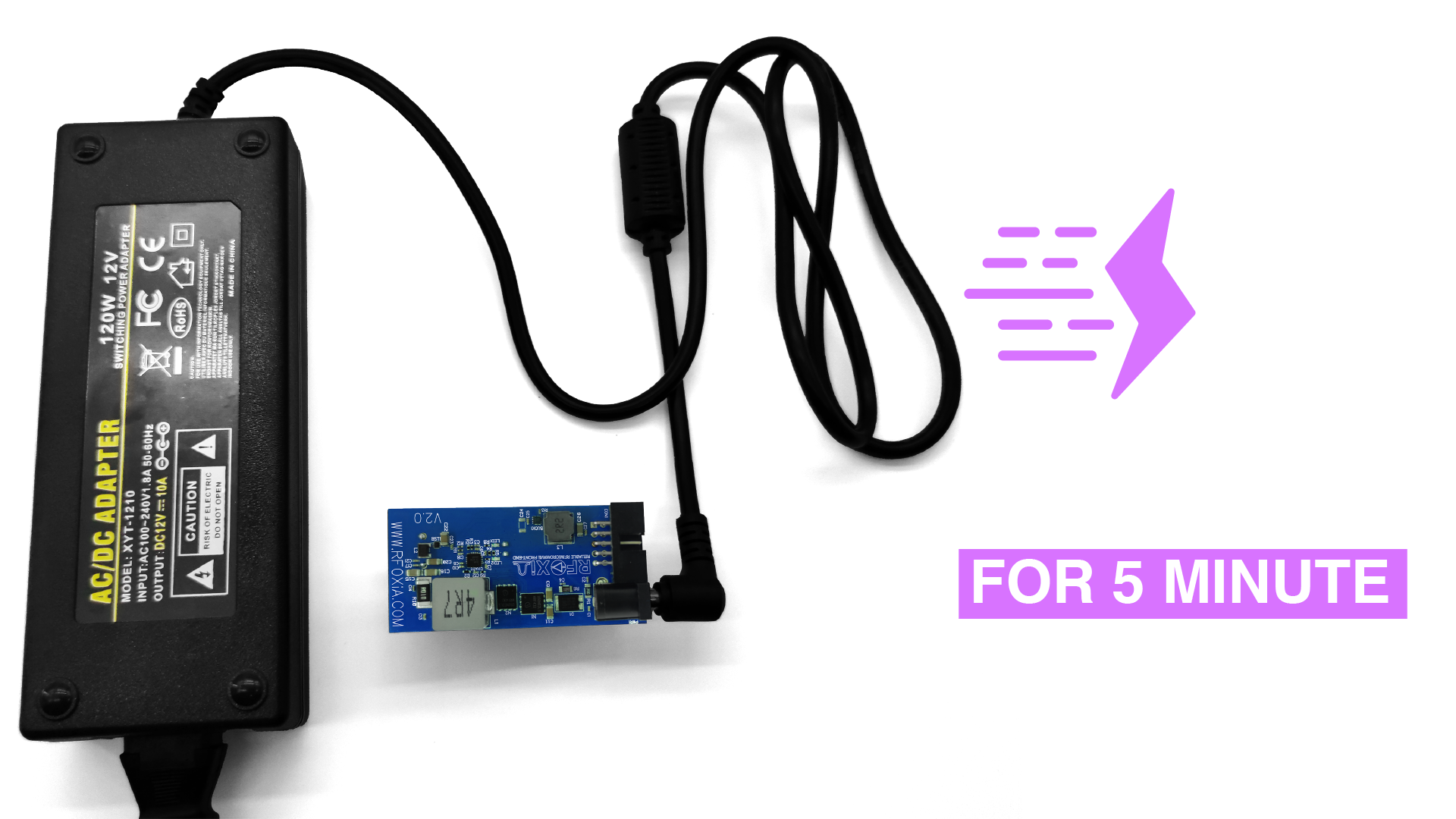
Charge time is measured in minutes, not hours. The 1100F system in this kit reaches full charge in under 5 minutes using the included 12V 5A adapter, which delivers 4V at 10A to the supercapacitor bank. In practical terms: you arrive at your test site, plug in for five minutes while you set up your equipment, and you have a full day of runtime available before you even begin.
Cycle life is effectively unlimited. Supercapacitors are rated for hundreds of thousands of charge cycles with negligible degradation. The unit you buy today will deliver the same performance in five years of daily use. This is not a consumable component — it is infrastructure.
Energy delivery is consistent across temperature. Unlike lithium chemistry, supercapacitors maintain their performance characteristics across a wide temperature range. Cold weather deployments do not come with a hidden energy tax.
The numbers are real. 1100F at the operating voltage stores 8800 Joules of energy. That is enough to power the complete MultiNav Pro+ module stack — BLE Module, GNSS Module, Sensors Module — for a full working day. Not a few hours. A full day.
5-Minute Charge. 24-Hour Runtime. Do the Math.
For context on why this matters in practice, consider what a typical power module embedded development day looks like with conventional power:
- Morning: Begin testing with freshly charged battery
- Midday: Battery at 40%, performance beginning to degrade
- Afternoon: Battery dead, work stops for 3-5 hour recharge
- Total productive time: ~6 hours
With the SuperCap kit:
- Morning: Arrive, charge for 5 minutes, begin testing
- Midday: Full runtime remaining, no degradation
- Afternoon: Continue working uninterrupted
- End of day: Plug in for 5 minutes, fully restored for tomorrow
- Total productive time: Full working day, every day
The arithmetic on productivity improvement is straightforward. This is not a marginal upgrade — it is a fundamentally different development experience.
High-Power Charging Adapter: Engineered for Speed
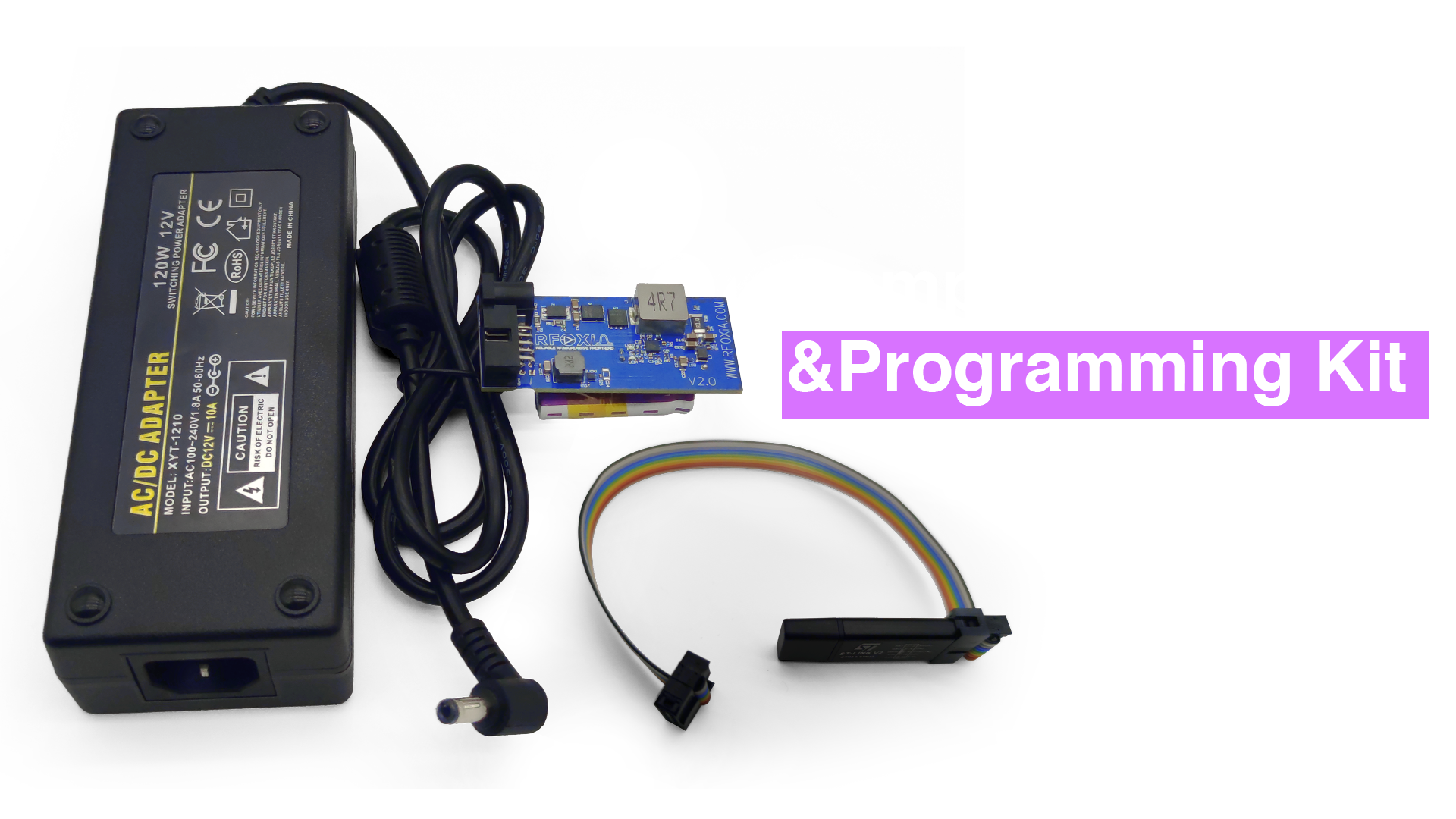
The charging adapter included with the kit is not an afterthought. Delivering 12V at 5A input, it steps down to charge the supercapacitor bank at 4V and 10A — a charging rate that makes the 5-minute full charge possible.
The adapter is matched to the supercapacitor system's characteristics. Supercapacitors can accept charge current far higher than lithium batteries can safely absorb, and the included adapter takes full advantage of that capability. You are not leaving performance on the table with an undersized charger — you are getting the full fast-charge capability the system was designed for.
For field use, the adapter runs on standard AC power. Plug it in at your base camp, your vehicle, or your workspace. Five minutes later, disconnect and deploy.
Power the Entire MultiNav Pro+ Ecosystem
One of the most important practical details of this kit is its ability to power not just the BLE Module but the entire MultiNav Pro+ module stack simultaneously.
This means you can run:
- BLE Module — long-range wireless communication at up to 5km ground-to-ground, 20km man-to-drone
- GNSS Module — 18Hz precision GPS at 1.5m accuracy
- Sensors Module — all seven environmental sensors streaming simultaneously
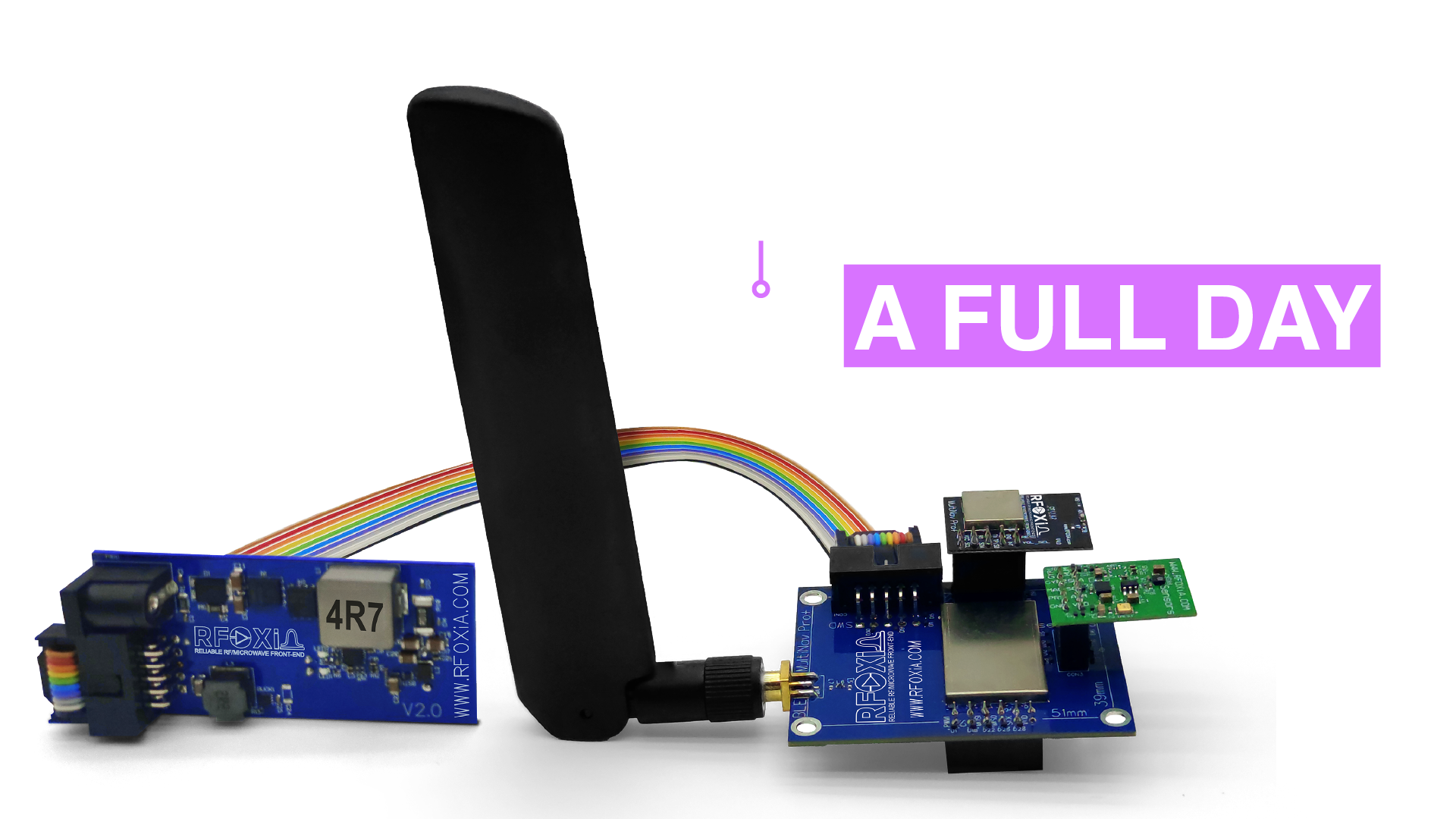
All of this, powered continuously for a full working day from a single 5-minute charge.
For developers building complete IoT deployment systems, drone telemetry platforms, or environmental monitoring networks, this eliminates the need to manage separate power sources for each module. One kit. One charge. Everything runs.
Integrated STLink Programmer: Eliminating Firmware Iteration Friction
The second major component of this kit — and one that sets it apart from any pure power solution — is the integrated STLink programmer.
For anyone doing active power module embedded development, firmware iteration is constant. You are adjusting power management routines, tuning sleep modes, optimizing duty cycles, testing interrupt handlers. Every iteration requires a programming cycle. And every programming cycle with a separate, manually connected programmer adds small but accumulating friction to your workflow.
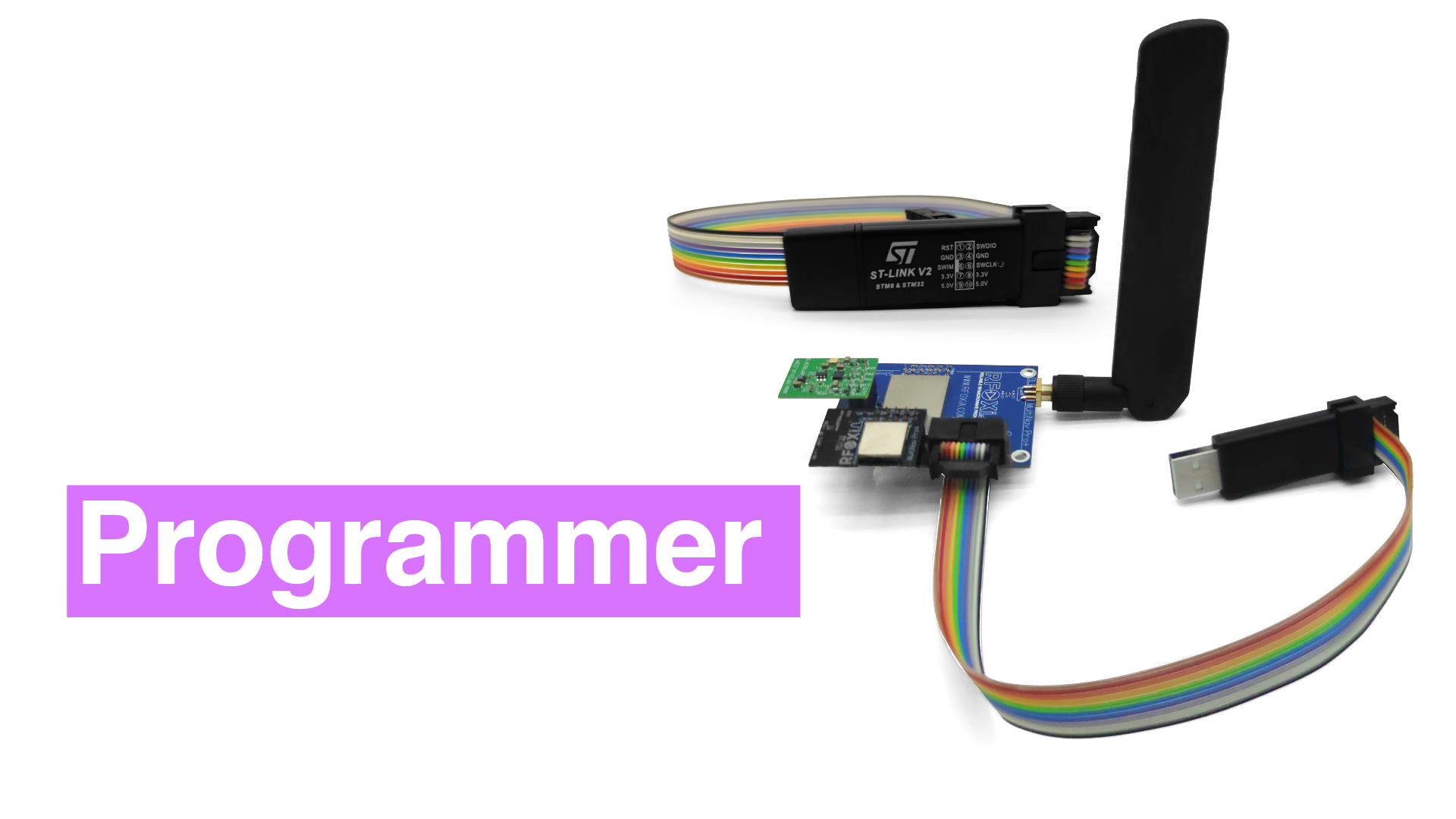
The STLink programmer in this kit is integrated into the power module itself. Your BLE Module connects via flat ribbon cable to both the power system and the programmer simultaneously. When you need to push new firmware, you do not reconfigure your hardware — you just program. When you need to debug, you do not search for a separate tool — it is already connected.
This integration is not just about convenience. It is about maintaining flow state during development. The developers who build serious embedded systems know that the ability to iterate quickly without interruption is what separates productive sessions from frustrating ones. Removing even small physical setup tasks from the firmware cycle adds up to meaningful time savings across a full development sprint.
Complete Connectivity Included: Zero Setup Hunting
Every cable you need is in the box.
Flat ribbon cables connect the BLE Module to the power module. A separate ribbon cable connects the programmer to the BLE Module's programming interface. The charging adapter connects to the supercapacitor bank.
There is no component hunting, no compatibility checking, no trip to the cable drawer. Open the kit, connect the cables as labeled, and your development environment is ready.
This matters more than it sounds. Embedded hardware developers lose measurable time to cable and connector management — wrong pinouts, missing adapters, incompatible connectors. The MultiNav Pro+ Power/Program Kit ships as a complete, tested, integrated system. Every connection point has a cable. Every cable has a purpose. Nothing is missing.
Technical Specifications at a Glance
| Feature | Specification |
|---|---|
| Supercapacitor Capacity | 1100F |
| Energy Storage | 8800 Joules |
| Charge Time | Under 5 minutes |
| Runtime (Full Module Stack) | 24 hours |
| Charging Input | 12V, 5A |
| Charging Rate to SuperCap | 4V, 10A |
| Programmer Type | STLink |
| Compatible Modules | Full MultiNav Pro+ ecosystem |
| Certification | FCC Certified |
| Price | $119 |
Who This Kit Is Built For
The MultiNav Pro+ Power/Program Kit is not a casual accessory. It is a professional tool for serious embedded development work. It is built for:
Field researchers and scientists who deploy wireless sensor networks in remote locations and cannot afford to manage battery logistics. Set up your node, charge the supercapacitor before deployment, and walk away knowing your system will run all day.
Drone builders and FPV developers who need reliable power for telemetry and control systems during long build-and-test sessions. The ability to recharge in 5 minutes between flight sessions eliminates the power bottleneck from your development cycle.
Embedded firmware developers who iterate frequently and need their programming environment immediately available. The integrated STLink eliminates setup overhead from every firmware cycle.
IoT system integrators building deployments that combine BLE communication, GPS tracking, and environmental sensing. Power the complete module stack from one source, all day, with no compromise.
Anyone building on the RFOXiA ecosystem who wants their power and programming infrastructure to match the capability of their hardware.
The RFOXiA Ecosystem: More Than a Power Kit
The Power/Program Kit is one component of a broader ecosystem that RFOXiA has built for professional wireless embedded development. When you pair this kit with the full Developer Bundle — which includes the BLE Module, GNSS Module, Sensors Module, and Power/Program Kit — you have a complete platform for building, testing, and deploying long-range wireless systems at a price point that has no equivalent in the market.
The ecosystem extends beyond hardware. RFOXiA Club provides AI-assisted firmware development, live data streaming dashboards, device command and control, and a developer community. The RFOXiA Connect mobile app gives you a PS5-style controller interface, live GPS mapping, and sensor data visualization — all operating without internet dependency, using the BLE module's long-range wireless link.
For developers who want to go further, the RFOXiA Data Network allows Sensors Module deployments to contribute verified environmental data to an enterprise data marketplace — earning daily rewards while your hardware runs in the field.
The RFOXiA SuperCapacitor Battery and Programmer Kit is the foundation that keeps all of this running. Without reliable, professional-grade power, none of the rest matters. With it, your entire development workflow — firmware iteration, field testing, long-duration deployment — becomes faster, more reliable, and more productive.
Why Supercapacitors Are the Future of Embedded Development Power
The embedded development community has been slow to adopt supercapacitors as primary power sources, largely because early supercapacitor technology had energy density too low to be practical for extended runtime applications. That limitation has been progressively eliminated as supercapacitor technology has matured.
The 1100F system in the Power/Program Kit represents the state of the art in practical supercapacitor deployment for embedded systems. The combination of energy density sufficient for full-day runtime, charge time measured in minutes rather than hours, and cycle life that exceeds any lithium chemistry by orders of magnitude makes supercapacitors the technically superior choice for professional embedded development power — not a niche alternative, but the right answer.
As embedded systems become more power-intensive — running more sensors, more wireless links, more compute — the case for supercapacitor power only strengthens. A power module designed for the demands of modern multi-sensor wireless development needs technology that can keep up. The MultiNav Pro+ Power/Program Kit delivers that.
Frequently Asked Questions
Can I use the Power/Program Kit with only the BLE Module, without the full stack? Yes. The kit powers the BLE Module independently. Runtime with only the BLE Module will exceed 24 hours.
Is the STLink programmer compatible with standard ARM development environments? Yes. The integrated STLink interface is compatible with standard ARM development toolchains, including STM32CubeIDE and open-source alternatives.
How does the supercapacitor perform in cold environments? Significantly better than lithium chemistry. Supercapacitors maintain their performance characteristics across a wide temperature range, making them well-suited for outdoor deployments in cold climates where battery performance would be degraded.
What happens if the supercapacitor bank is completely discharged? Unlike lithium batteries, supercapacitors are not damaged by deep discharge. Connect the charger, wait under 5 minutes, and you are at full capacity again.
Is the Power/Program Kit FCC certified? Yes. All RFOXiA hardware, including the Power/Program Kit, carries FCC certification.
The Bottom Line
Serious power module embedded development demands serious power infrastructure. The five-minute charge and twenty-four-hour runtime of the MultiNav Pro+ Power/Program Kit are not marketing claims — they are the direct result of supercapacitor technology applied to a real development problem.
For $119, you get a supercapacitor power system that will outlast any battery-based alternative by years of daily use, a high-speed charger that eliminates downtime, an integrated STLink programmer that removes friction from every firmware iteration, and every cable needed to connect it all.
If you are building serious wireless embedded systems on the MultiNav Pro+ platform, this is not optional equipment. It is the power foundation your development workflow has been missing.
Explore the full specifications and order the RFOXiA SuperCapacitor Battery and Programmer Kit today — and stop letting power management slow down what you are building.
Written by: Moamen Mohamed LinkedIn