
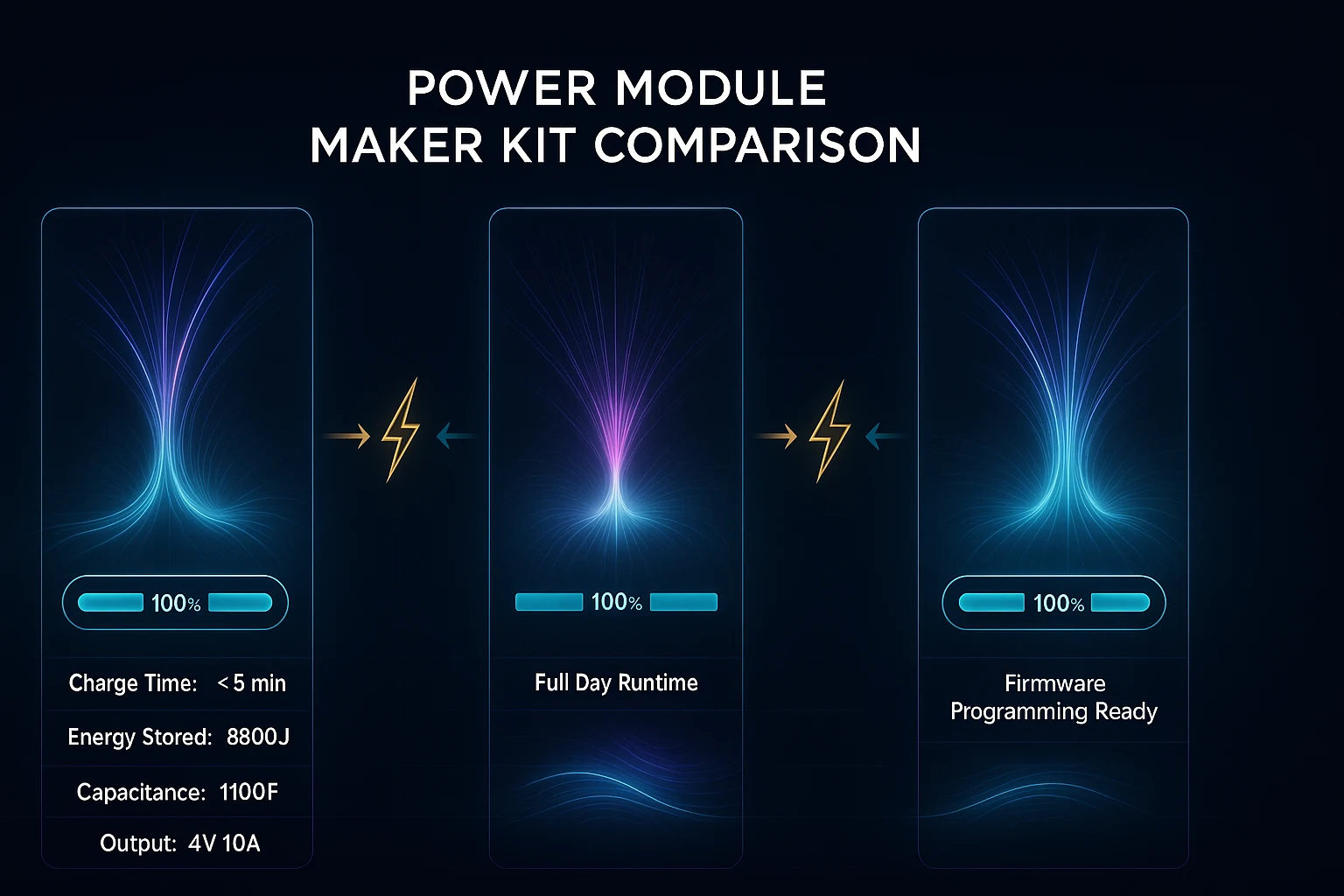
Power Module Maker Kit Comparison: Why SuperCap Technology Changes Everything
RFOXiA SuperCapacitor Battery and Programmer Kit
The Ultimate Power Module Maker Kit Comparison for Serious Hardware Developers
If you have spent any serious time in hardware development, you already know the pain. You are mid-session, your LiPo battery is drained, your firmware flash is incomplete, and your field deployment is on hold for the next two hours while you wait for a charge cycle to finish. Power management is one of the most underestimated bottlenecks in embedded systems development — and the maker community has been tolerating mediocre solutions for too long.
This post is a thorough power module maker kit comparison that goes beyond surface-level specs. We are going to examine what actually matters when you are powering a professional wireless development stack in the field or on the bench, and why the RFOXiA SuperCapacitor Battery and Programmer Kit represents a genuine engineering leap over everything else available at this price point.
Whether you are a drone builder, a field researcher, a robotics engineer, or an IoT developer pushing hardware into remote environments, this comparison is written for you.
Why Power Management Matters More Than Most Makers Realize
Power is not a peripheral concern. It is the foundation of every wireless project. Your RF performance, your sensor accuracy, your firmware stability, and your deployment reliability all depend on the quality and consistency of your power supply. Voltage sag under load corrupts data. Incomplete charge cycles kill productivity. Unreliable power rails corrupt flash operations and brick modules.
Yet most maker-oriented power solutions are afterthoughts — USB power banks designed for phones, LiPo packs borrowed from RC vehicles, or bench supplies too large to take into the field. None of them were designed specifically for the demands of long-range wireless module stacks.
The MultiNav Pro+ Power/Program Kit was designed from the ground up to solve exactly this problem — and it uses a technology category that most makers have never had access to at this price: supercapacitor-based energy storage.
What Is in a Power Module Maker Kit? The Baseline Standard
Before diving into the comparison, let us define what a complete power module maker kit should include for a professional wireless development workflow:
- Energy storage — sufficient capacity for a full working session without recharging
- Fast recharge capability — because field time is valuable and charge downtime is waste
- Stable power output — clean regulated voltage across the full discharge curve
- Programming interface — for firmware development, debugging, and updates
- Compatibility — physical and electrical compatibility with your module stack
- Connectivity — all cables and adapters included, nothing to source separately
- Portability — compact enough for field deployment
Most solutions on the market satisfy three or four of these requirements. The RFOXiA Power/Program Kit satisfies all seven.
Power Module Maker Kit Comparison: The Main Categories
Category 1 — USB Power Banks
Who uses them: Casual makers, first-time IoT experimenters Typical capacity: 10,000–20,000 mAh Charge time: 3–6 hours Programmer included: No Output stability: Poor to moderate — most use boost converters that introduce noise Field reliability: Moderate — designed for phones, not electronics development Price range: $15–$40
USB power banks are the most common improvised solution in the maker community. They are cheap, widely available, and already in most people's homes. But they were designed for consumer electronics, not hardware development. The output voltage is often noisy, which can cause instability in sensitive RF and sensor circuits. They do not include any programming interface. And their charge times — often measured in hours — make them impractical for field workflows where you need to top up between sessions quickly.
For casual breadboard prototyping, a USB power bank is fine. For field deployment of a professional wireless stack, it is not the right tool.
Category 2 — LiPo Battery Packs (RC-Style)
Who uses them: FPV pilots, drone builders, robotics engineers Typical capacity: 2,000–6,000 mAh depending on cell count Charge time: 45 minutes to 2 hours Programmer included: No Output stability: Good when matched to load, but degrades significantly as battery ages Field reliability: High for short sessions, problematic for all-day deployments Price range: $20–$60 for battery + charger combination
LiPo packs offer better performance than USB power banks for electronics use. The energy density is excellent, discharge rates can be matched to application requirements, and the maker community knows them well. But LiPos come with real costs: they degrade over charge cycles, they require careful storage and handling, they are restricted on commercial aircraft, and their charge times — even with fast chargers — rarely drop below 45 minutes for a meaningful capacity pack.
More critically for development workflows: you still need a separate programmer. Your power and programming workflows remain disconnected, which adds complexity and cable management overhead.
Category 3 — Bench Power Supplies with Separate Programmers
Who uses them: Experienced embedded developers, professional labs Typical setup cost: $80–$300+ for supply + $20–$80 for STLink or J-Link programmer Charge time: Not applicable — mains powered Programmer included: Separate purchase required Output stability: Excellent Field reliability: None — these are bench tools Price range: $100–$400 combined
Bench supplies are the gold standard for stable power delivery in development environments. But they are not portable, they do not solve the field deployment problem, and assembling a complete setup requires multiple separate purchases and significant desk real estate. For dedicated lab work, they are the right choice. For a developer who needs to move between bench and field, they leave a capability gap that needs to be filled with a separate field solution.
Category 4 — Integrated Developer Power and Programming Kits (Rare)
This is where the market gap becomes obvious. Very few products attempt to integrate both power management and programming capability into a single portable unit designed specifically for a wireless module stack. Those that exist are typically manufacturer-specific evaluation boards with limited battery capacity and slow USB charging — not solutions designed for real field deployment.
The RFOXiA MultiNav Pro+ Power/Program Kit is specifically built to fill this gap, and it uses technology that no other maker-priced solution has brought to this category.
Deep Dive: The RFOXiA MultiNav Pro+ Power/Program Kit
The Supercapacitor Advantage
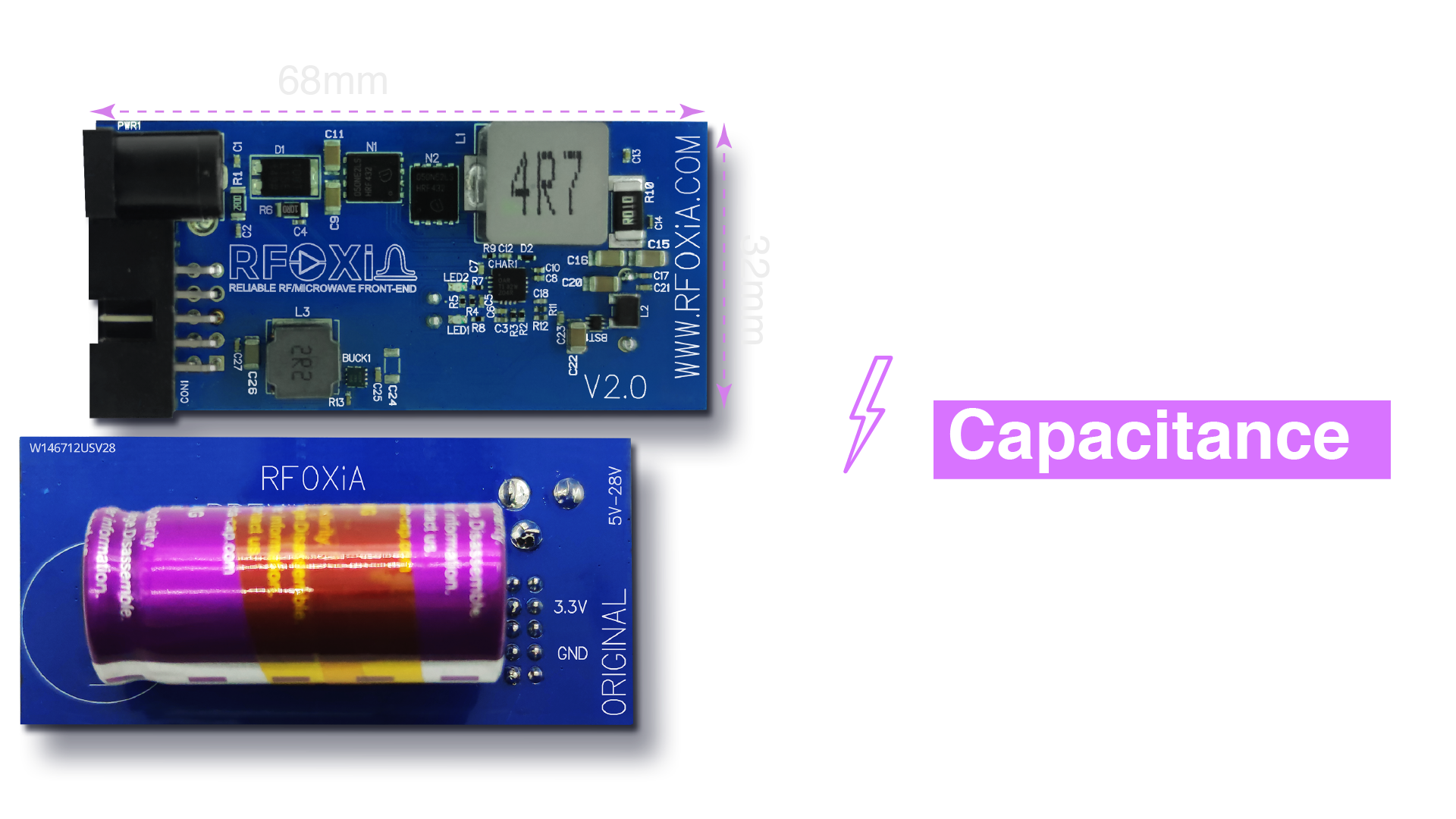
The core technology differentiation in this kit is the supercapacitor-based energy storage system. This is not a marketing term — it is a fundamentally different approach to storing and delivering energy.
Conventional batteries — whether LiPo, Li-Ion, or NiMH — store energy through electrochemical reactions. These reactions are inherently time-limited in both charge and discharge rates, they degrade over cycles as the chemistry changes, and they are sensitive to temperature extremes. A LiPo that was rated for 1,000 charge cycles will typically show significant capacity degradation by cycle 500 in real-world conditions.
Supercapacitors store energy electrostatically, not chemically. This means:
- No degradation over charge cycles — supercapacitors can handle hundreds of thousands of charge cycles with minimal capacity loss
- Extreme charge rate capability — electrochemical reactions are not the limiting factor, so charge rates can be much higher
- Consistent output voltage — supercapacitors maintain a flatter discharge curve than batteries, delivering more stable voltage to your electronics
- Temperature tolerance — supercapacitors perform in temperature ranges that would damage conventional batteries
- No memory effect — charge them from any state without penalty
The RFOXiA kit's 1100F supercapacitor system stores 8,800 Joules of energy. That is enough to power the complete MultiNav Pro+ module stack — BLE module, GNSS module, and sensors module running simultaneously — for a full working day. You are not managing partial charges or estimating remaining runtime. You charge it, you deploy it, it runs all day.
5-Minute Charge Time: What This Actually Means in Practice
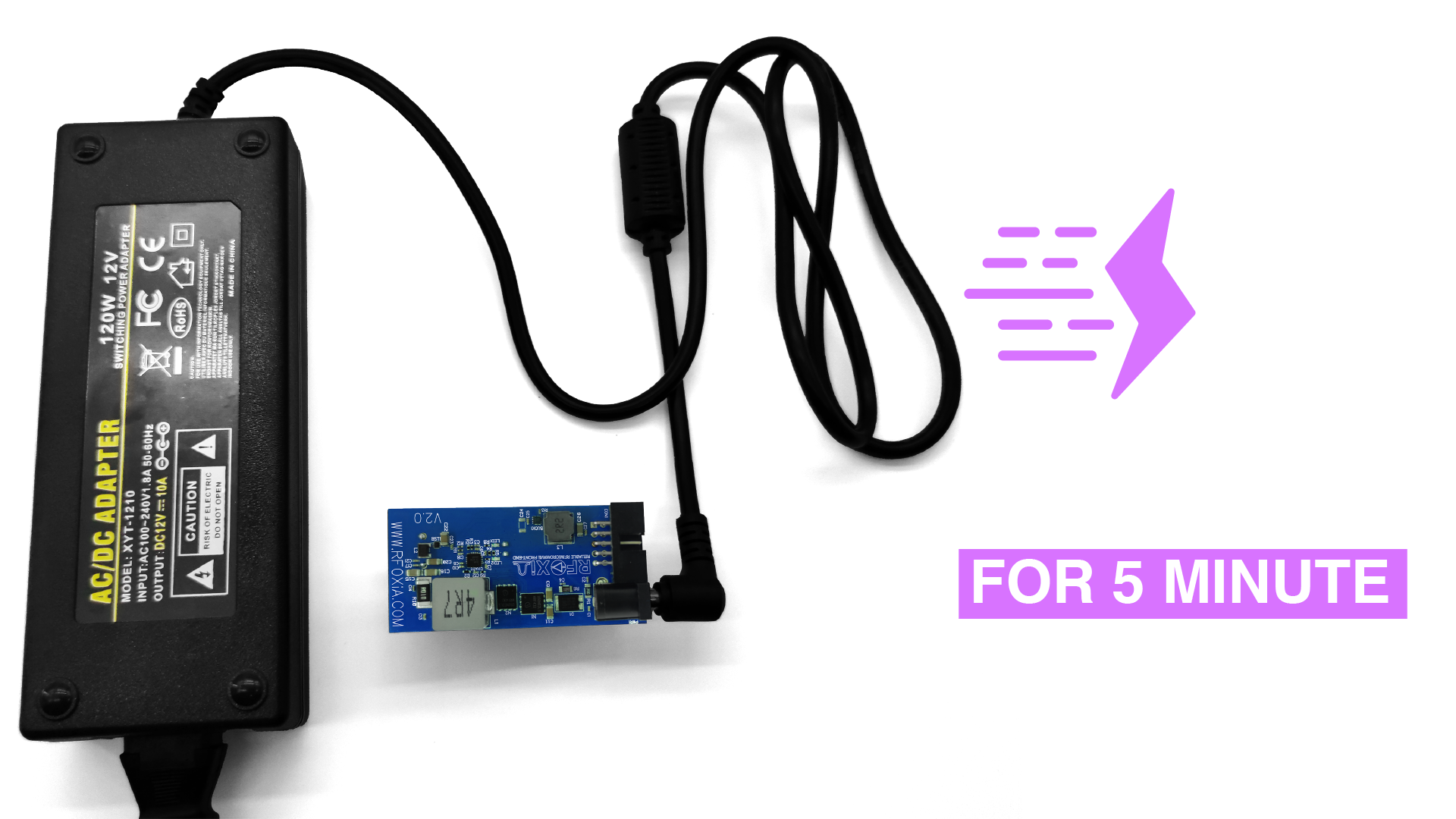
The included 12V 5A high-power charging adapter delivers power to the supercapacitor bank at 4V 10A — a charge rate that fills the 1100F system in under 5 minutes from fully depleted.
Compare this directly to your alternatives:
| Power Solution | Charge Time (Full) | Runtime (Module Stack) |
|---|---|---|
| USB Power Bank (20,000 mAh) | 4–6 hours | 8–12 hours (estimated) |
| LiPo Pack (5000 mAh, 2C charger) | 30–45 minutes | 6–10 hours |
| RFOXiA SuperCap Kit (1100F) | < 5 minutes | Full working day |
Five minutes. That is a coffee break between field sessions. That is not a wait — it is a workflow. For anyone running repeated deployments, iterating on field tests, or working in environments where charge infrastructure is limited, this is a genuine operational advantage that no LiPo-based solution can match.
All-Day Power for the Full Module Stack
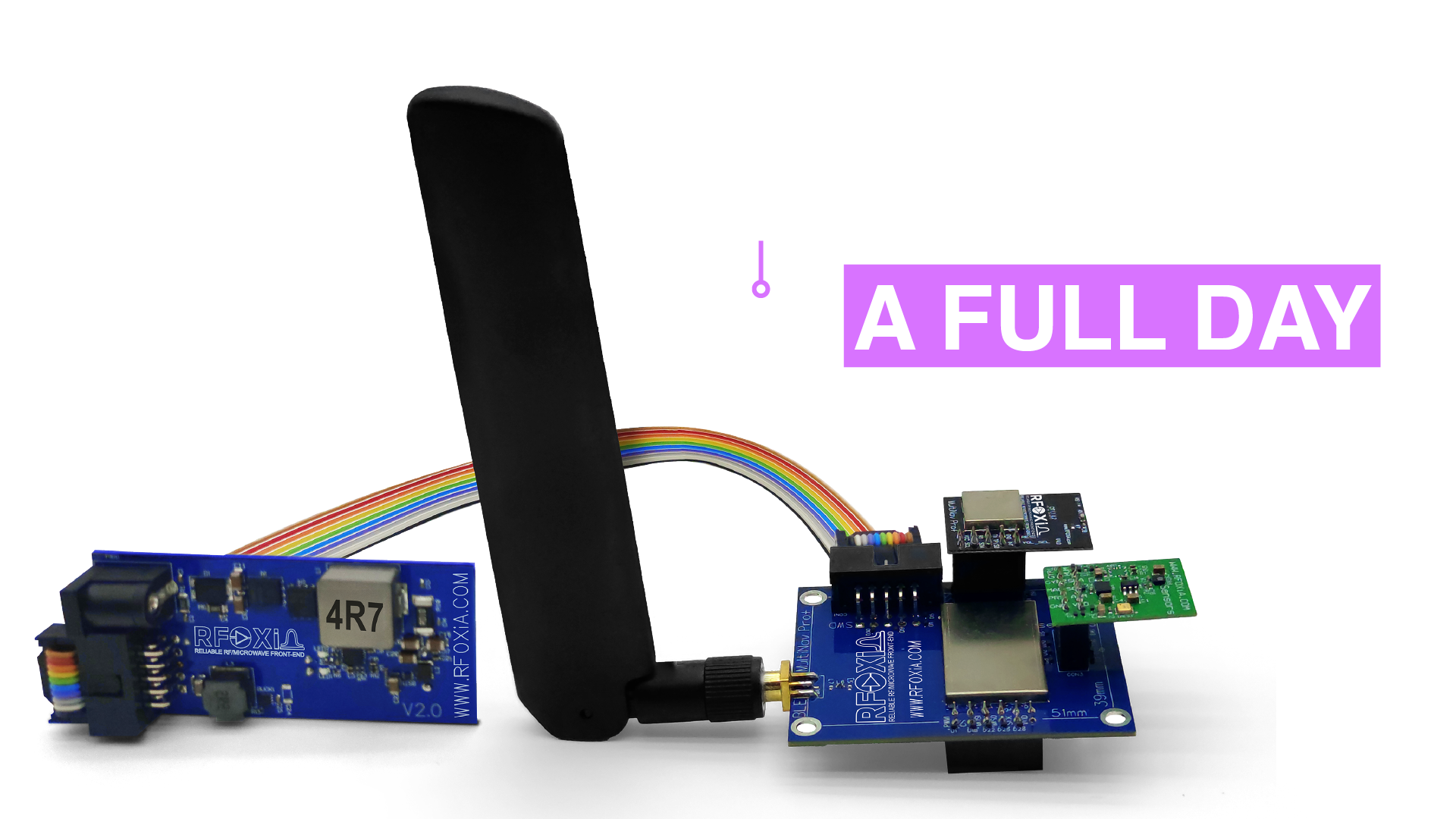
The Power/Program Kit is not just designed to power the BLE module in isolation. It is engineered to handle the complete MultiNav Pro+ ecosystem simultaneously:
- MultiNav Pro+ BLE Module — long-range wireless communication, external amplifiers active
- GNSS Module — 18Hz fix rate, continuous satellite acquisition
- Sensors Module — all 7 sensors streaming simultaneously
Running this full stack at continuous operation draws real current. Most improvised power solutions struggle to maintain clean, stable voltage across all three modules simultaneously, especially as battery voltage sags under combined load. The supercapacitor system's flat discharge curve means the voltage your modules see at hour 8 is nearly the same as at hour 1 — consistent performance across the full deployment window.
For drone builders deploying the full sensor and communication stack on a long-range mission, this is not a convenience feature. It is a reliability requirement.
Integrated STLink Programmer: Your Development Workflow, Unified
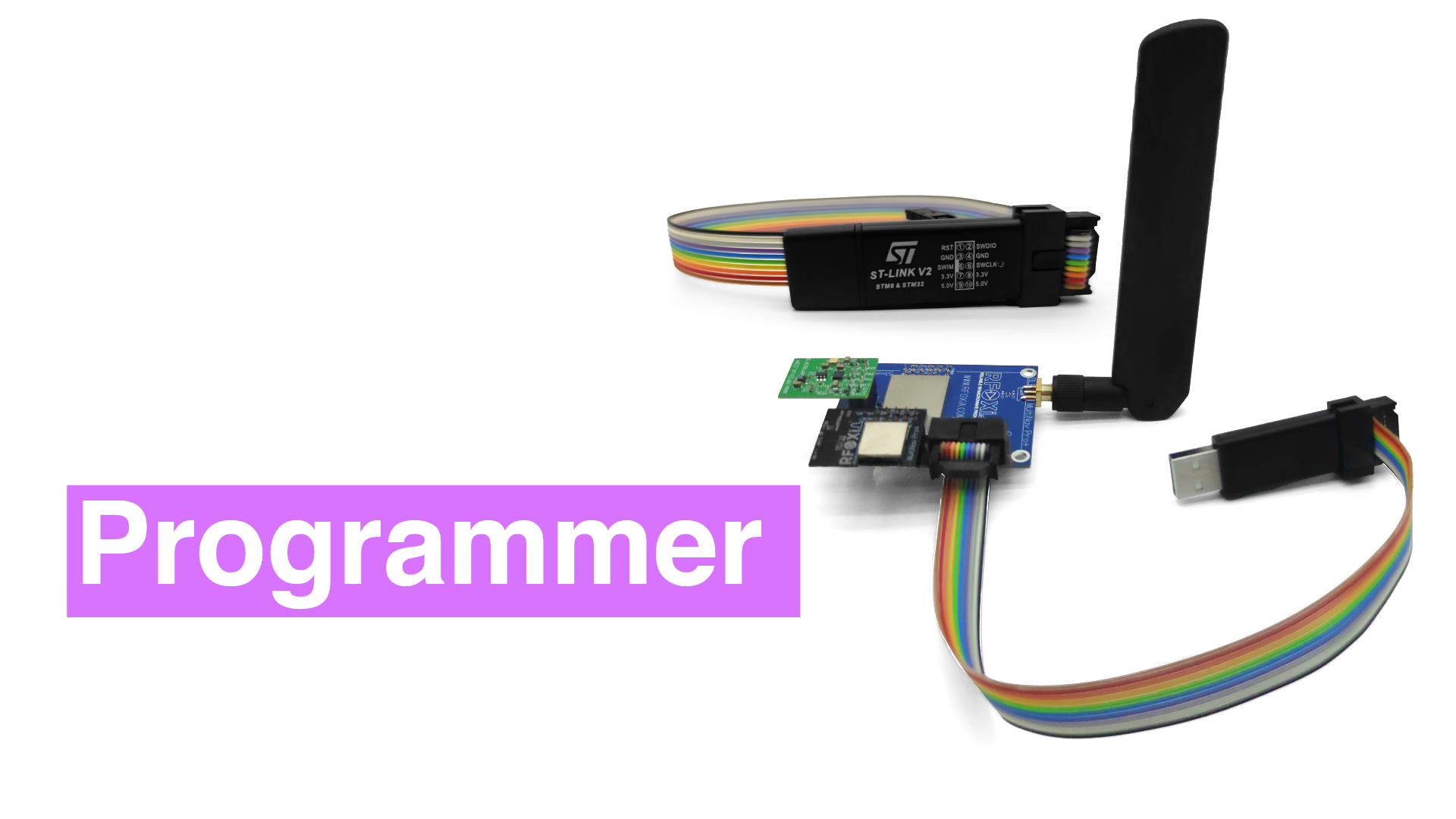
Every serious embedded developer has experienced the frustration of juggling a separate programmer, separate cables, and separate power supply during active firmware development. Each additional piece of hardware in your workflow is another point of failure, another cable to manage, another device to carry.
The MultiNav Pro+ Power/Program Kit integrates a full STLink programmer directly into the same unit that handles power. Connect to your PC for firmware flashing and debugging. Switch to field mode for deployment. One device, two critical functions.
The STLink interface provides:
- Full firmware flashing capability for the MultiNav Pro+ BLE Module
- SWD debugging interface for real-time inspection and breakpoint debugging
- Reliable high-speed connection for rapid iteration during firmware development
- Compatibility with the RFOXiA AI Firmware Builder — generate firmware in the Club Dev Hub, flash it directly from the kit
For developers using the RFOXiA AI Firmware Builder to generate production-ready firmware in minutes, having the programmer integrated with the power kit closes the loop on the entire development workflow: generate → flash → power → deploy, without swapping hardware between steps.
Complete Connectivity: Nothing to Source Separately
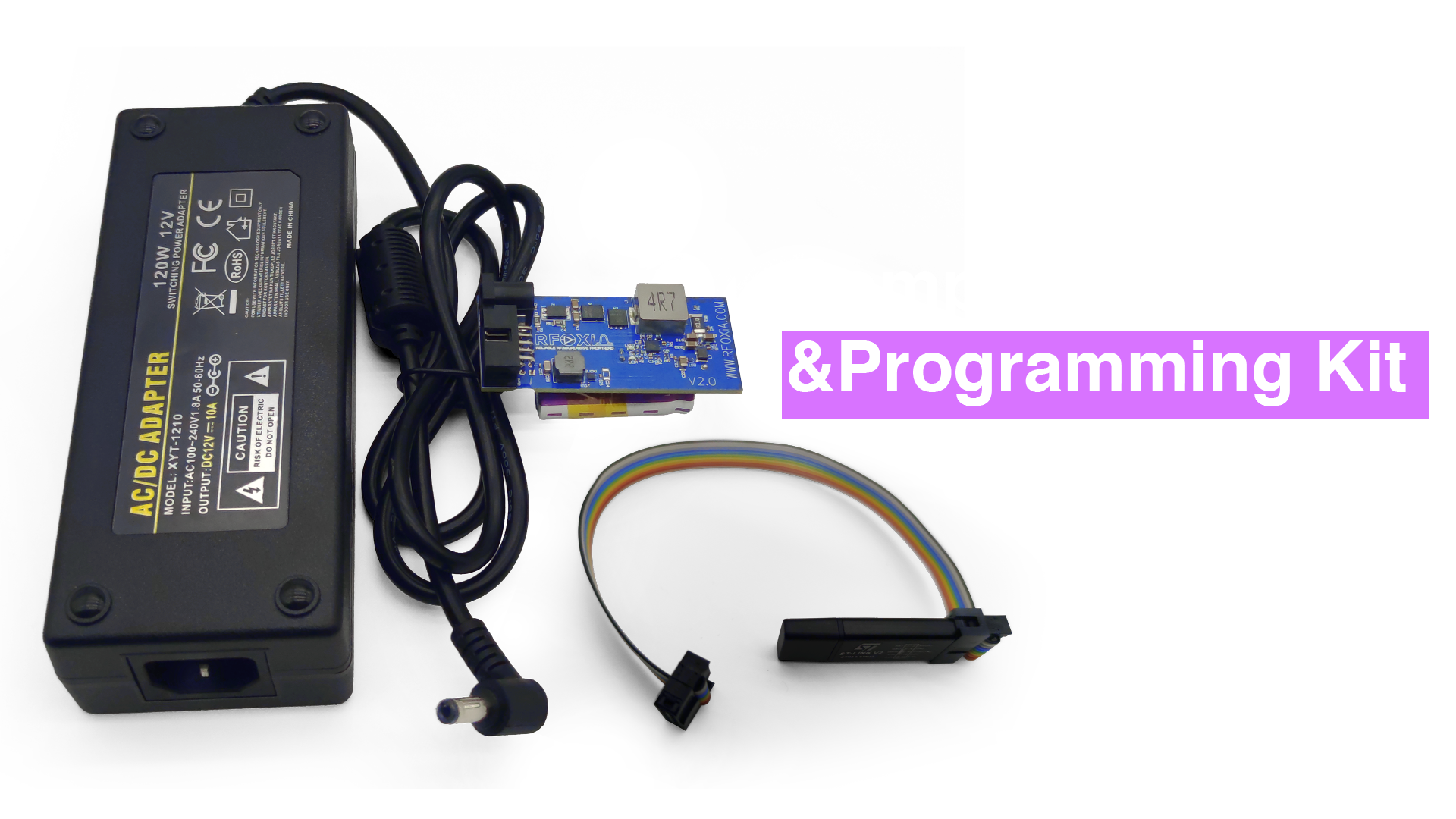
One of the most common frustrations with hardware kits is discovering that the cables you need are not included. The Power/Program Kit ships with everything required for immediate operation:
- High-power 12V 5A charging adapter
- Flat ribbon cables connecting the BLE module to the power module
- Flat ribbon cables connecting the programmer interface to the BLE module
- All necessary connectors for the full MultiNav Pro+ module stack
Open the box. Connect the modules. You are operational. This is what a complete maker kit actually means.
The Complete Power Module Maker Kit Comparison: Summary Table
| Feature | USB Power Bank | LiPo Pack + Separate Programmer | RFOXiA Power/Program Kit |
|---|---|---|---|
| Charge time | 4–6 hours | 30–60 minutes | < 5 minutes |
| Full-day runtime | Possible | Possible | Guaranteed |
| Output stability | Poor-Moderate | Good (degrades with age) | Excellent (flat curve) |
| Programmer included | No | No | Yes (STLink integrated) |
| Cycle life | 500–1,000 | 300–800 | 100,000+ |
| Module stack compatibility | Generic | Generic | Native MultiNav Pro+ |
| Cables included | Partial | No | Yes (complete kit) |
| Field portability | Good | Good | Good |
| FCC certified system | N/A | N/A | Yes |
| Price (complete setup) | $15–$80 combined | $80–$160 combined | $119 complete |
When you run this comparison honestly, the value proposition of the RFOXiA SuperCapacitor Battery and Programmer Kit becomes clear. At $119, you are getting a complete, integrated solution with technology advantages that no other maker-priced product offers — and you are eliminating the time cost of slow charge cycles that compound across every development session.
Who Should Buy This Kit
This power module maker kit comparison ultimately comes down to matching the right tool to the right application. Here is who the MultiNav Pro+ Power/Program Kit is built for:
Drone builders and FPV pilots deploying wireless sensor and communication stacks on long-range missions who cannot afford to bring a dead module back from a multi-hour flight.
Field researchers working in remote locations without reliable mains power access, where the ability to recharge from a vehicle or solar source in 5 minutes between data collection sessions is operationally critical.
IoT developers building prototypes and iterating rapidly, who want power and programming in one device to reduce bench complexity and accelerate the develop-flash-test cycle.
Robotics engineers running extended autonomous missions where sensor and communication reliability across the full operational window is a hard requirement.
Data network contributors deploying the RFOXiA Sensors Module as a node in the data monetization network, who need all-day uptime to maximize verified data sessions and daily rewards.
Integration with the Full RFOXiA Ecosystem
The Power/Program Kit is not a standalone product — it is the power and programming foundation for the entire MultiNav Pro+ module ecosystem. When combined with the Developer Bundle (BLE Module + GNSS Module + Sensors Module + Power/Program Kit), you have a complete professional wireless development platform:
- Long-range wireless communication up to 20km man-to-drone
- 1.5-meter precision GNSS at 18Hz fix rate
- 7-sensor environmental monitoring for data network contribution
- Supercapacitor power for all-day operation
- Integrated STLink programmer for rapid firmware iteration
- RFOXiA Connect app for live control, GPS tracking, and sensor visualization
- AI Firmware Builder for generating production firmware from natural language descriptions
- Data monetization network for earning daily rewards from deployed sensor nodes
The Power/Program Kit makes the entire stack deployable and field-ready. It is the component that takes your MultiNav Pro+ ecosystem from bench prototype to genuine field instrument.
Final Verdict: The Power Module Maker Kit Comparison Conclusion
If you are doing serious work with wireless hardware — drone builds, field research, IoT deployment, robotics — the question is not whether you need a proper power and programming solution. The question is whether you are going to keep cobbling together improvised setups, or invest in something designed specifically for your workflow.
The supercapacitor technology in the MultiNav Pro+ Power/Program Kit is not an incremental improvement over LiPo. It is a different category of solution. Five-minute charge time. Full-day runtime. Integrated STLink programmer. Native module compatibility. All cables included. FCC certified. $119.
In this power module maker kit comparison, no other solution at this price delivers all of these capabilities in a single integrated package.
If you are building with the MultiNav Pro+ ecosystem — or planning to — the Power/Program Kit is not optional equipment. It is the foundation that makes everything else work reliably in the real world.
Ready to upgrade your development workflow? The RFOXiA SuperCapacitor Battery and Programmer Kit is in stock and ships immediately.
Questions about compatibility with your specific project? Join the RFOXiA Club Dev Hub — free access, active community of hardware developers, and direct access to the engineering team building these modules.
Written by: Moamen Mohamed LinkedIn