
RFOXiA GNSS Module Buy: The Complete MultiNav Pro+ Guide for Builders and Engineers
Why the RFOXiA GNSS Module Buy Decision Is One of the Best You'll Make in 2026
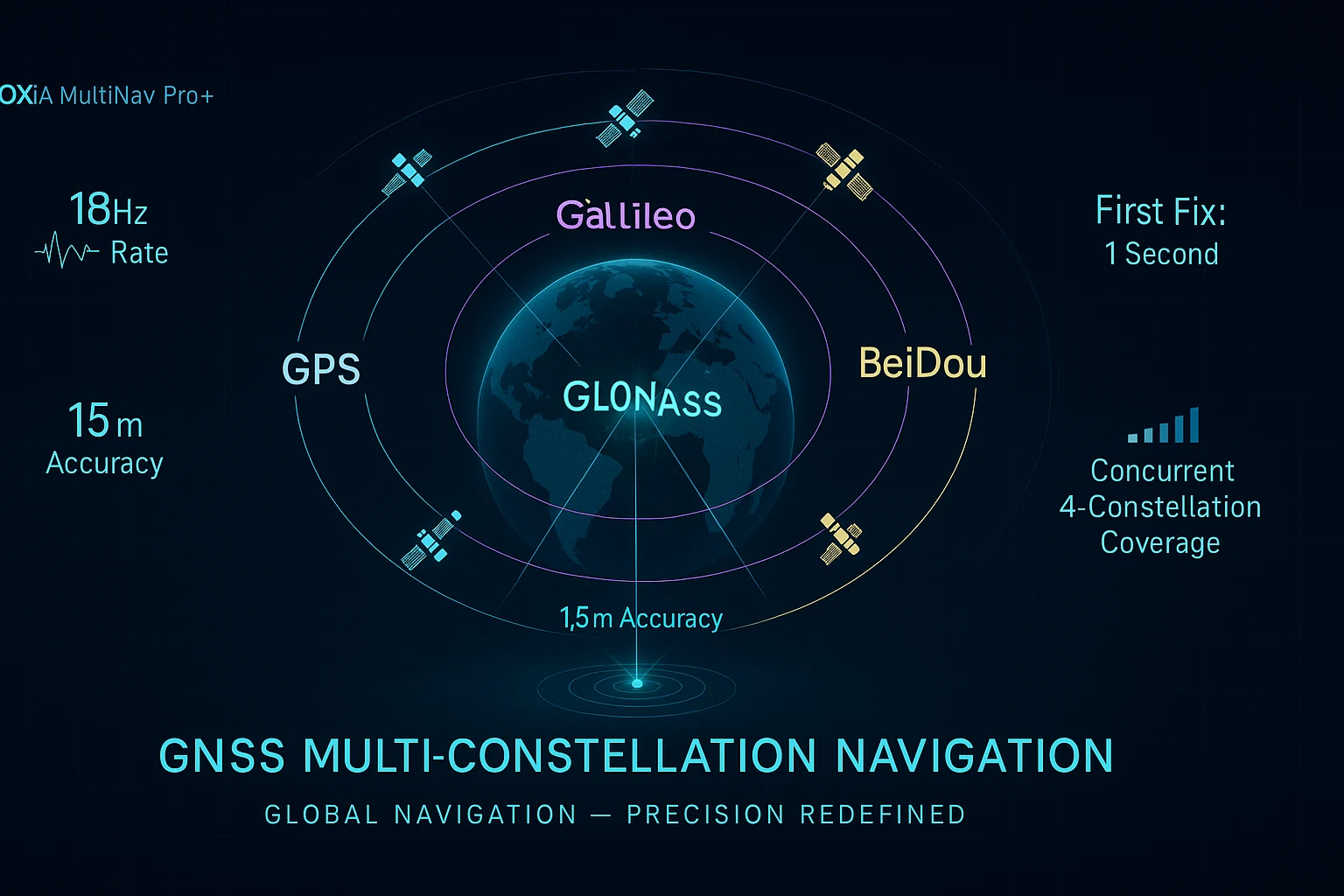
If you've been searching for a compact, high-accuracy GNSS module that doesn't force you to choose between performance and price, your search ends here. The MultiNav Pro+™ Accurate GNSS Module from RFOXiA delivers professional-grade navigation precision — sub-1.5-meter accuracy, an 18Hz fix rate, and concurrent multi-constellation support — in a form factor smaller than a postage stamp, at a price that won't wreck your project budget.
Whether you're building an autonomous drone, a precision agriculture sensor network, a wearable tracker, or a research-grade IoT deployment, this module was engineered for you. In this guide, we break down everything you need to know before you make the RFOXiA GNSS module buy decision: the technical specifications, the real-world use cases, the software ecosystem, and why this module sits in a league of its own at the $49 price point.
What Is the MultiNav Pro+™ GNSS Module?
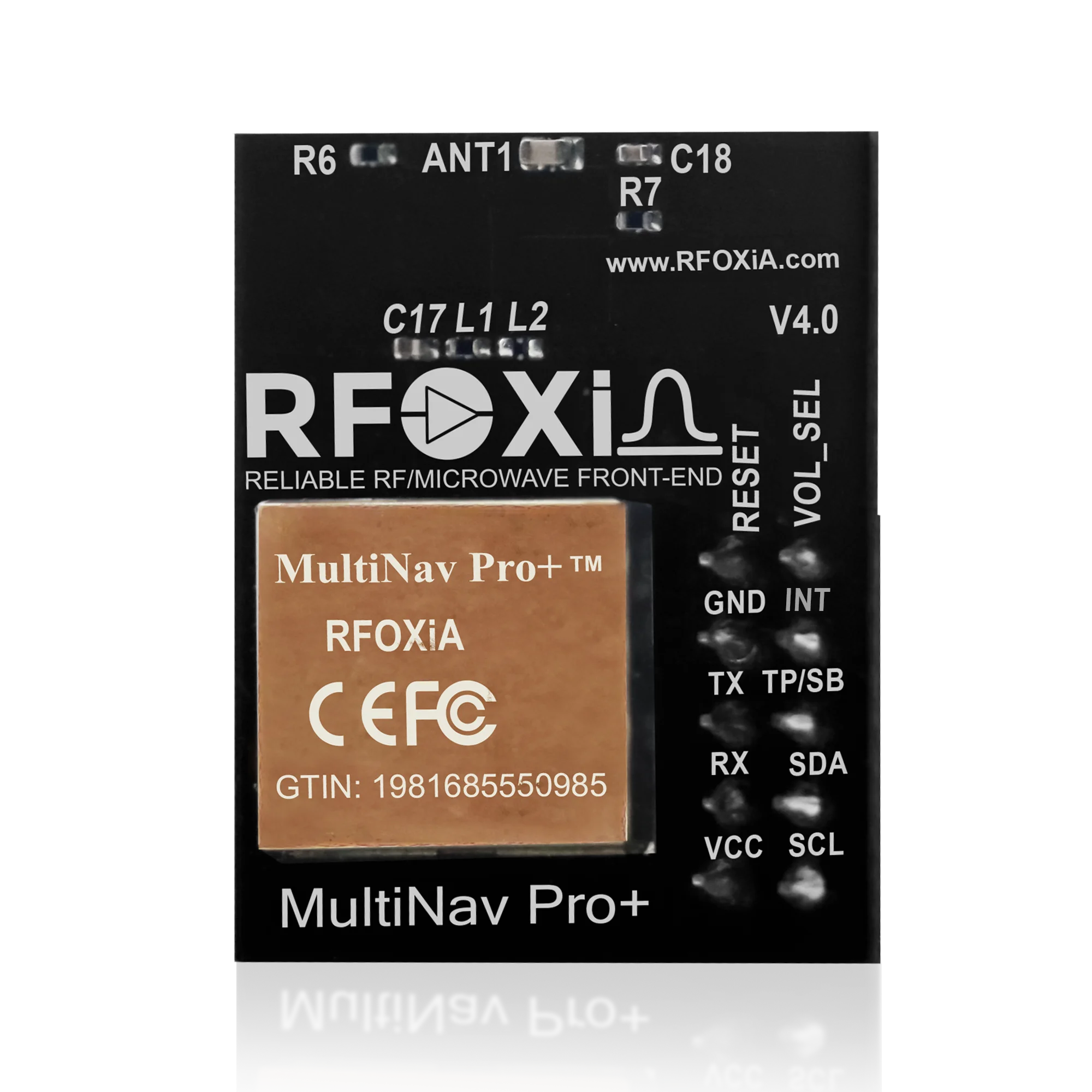
The MultiNav Pro+™ is RFOXiA's precision location module, purpose-built for applications where accuracy, update speed, and reliability are non-negotiable. At its core is the u-blox MIA-M10Q — one of the most advanced GNSS chipsets currently available to the commercial hardware market. This isn't a hobbyist GPS breakout board. This is a professionally designed, FCC-certified module built on a chipset trusted by aerospace engineers, automotive manufacturers, and precision agriculture companies worldwide.
But RFOXiA didn't just slap a u-blox chip on a board and call it a day. The MultiNav Pro+ wraps the MIA-M10Q in a purpose-designed PCB with integrated RF/microwave microstrip filter technology, an optimized chip antenna, and a library-ready firmware interface — making it immediately deployable in your project without weeks of RF tuning or driver development.
Core Specifications at a Glance
Before diving into the details, here's a quick snapshot of what makes the MultiNav Pro+ stand out:
- Accuracy: Less than 1.5 meters CEP
- Fix Rate: Up to 18Hz
- First Fix Time: 1 second (hot start)
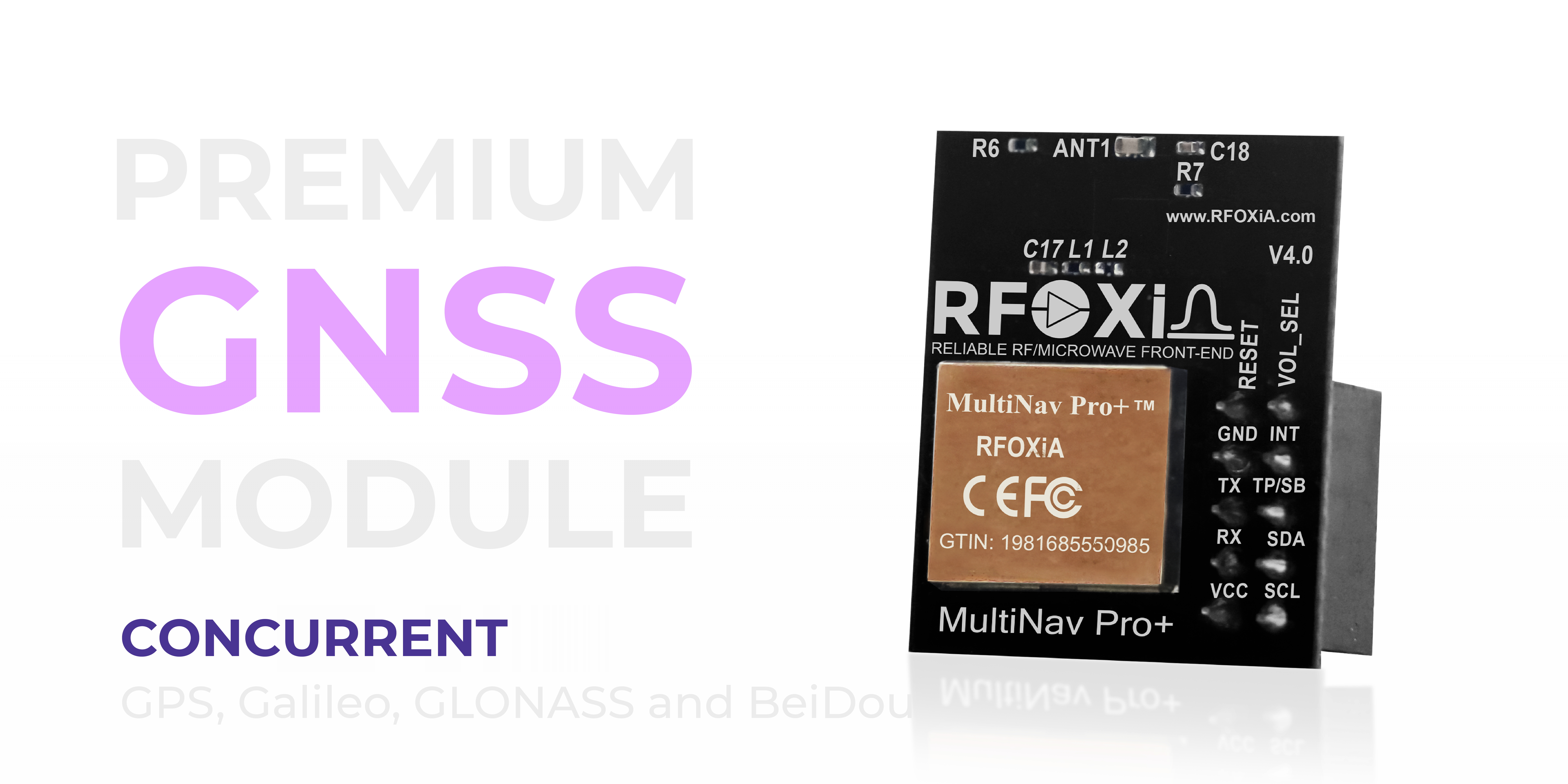
- Satellite Systems: GPS, GLONASS, Galileo, BeiDou (concurrent)
- Chipset: u-blox MIA-M10Q
- Antenna: Integrated high-gain chip antenna
- Interface: UART (TX/RX) and I2C (SCL/SDA)
- Operating Voltage: 1.8V and 3.3V
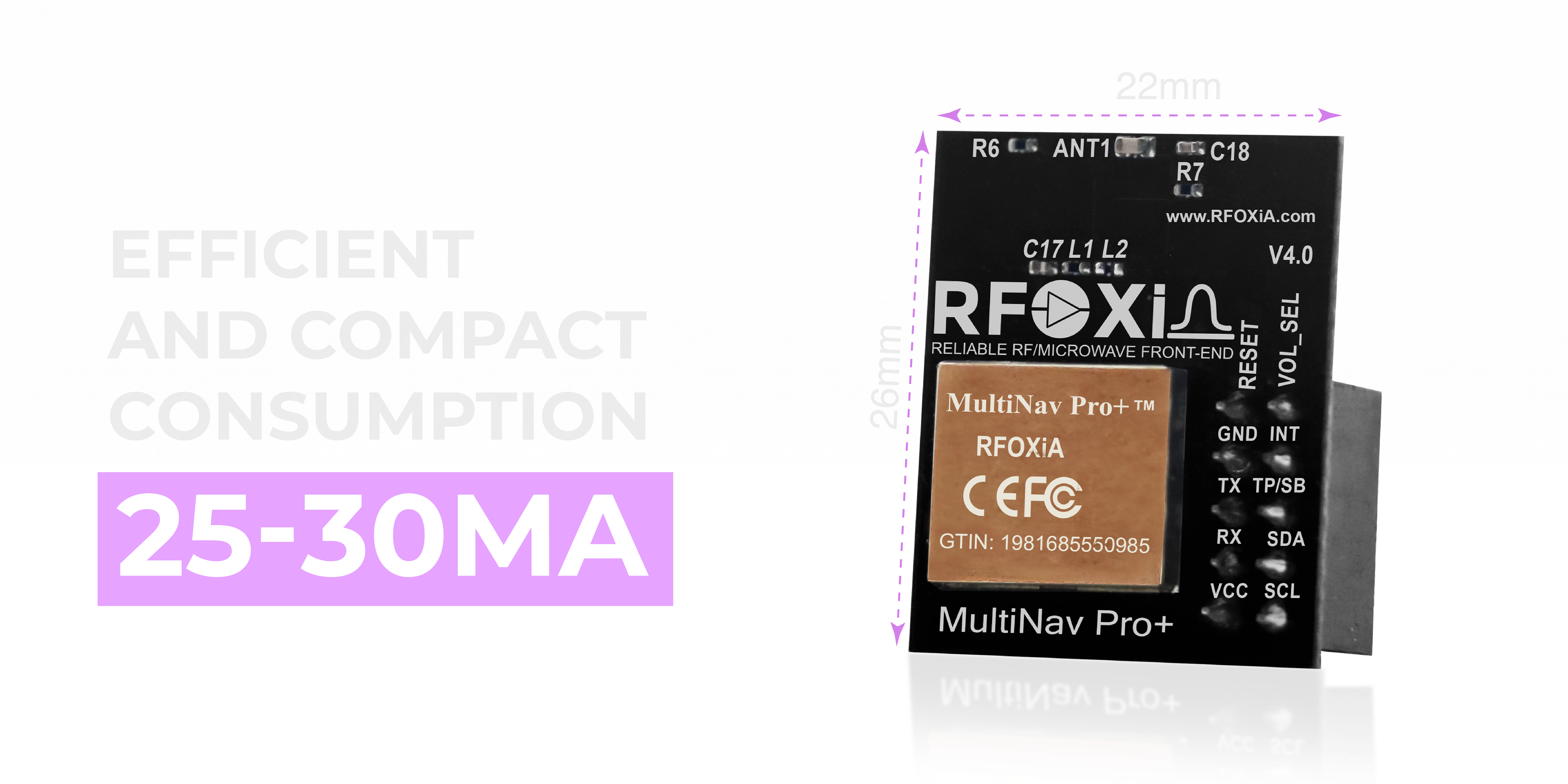
- Current Draw: 25–30mA
- Module Size: 26mm × 22mm
- Certification: FCC certified
- Price: $49
These aren't marketing numbers. These are the actual specs of the u-blox MIA-M10Q platform, realized in a ready-to-deploy module with all the RF design work already done for you.
Pinpoint Accuracy: Sub-1.5 Meter CEP Explained
When a GNSS datasheet says "1.5-meter accuracy," what does that actually mean in practice? CEP (Circular Error Probable) of 1.5 meters means that 50% of position readings will fall within a 1.5-meter radius of the true position. In real-world conditions — clear sky, good satellite geometry — the MultiNav Pro+ consistently achieves this figure.
For comparison, consumer-grade GPS modules in the $10–$20 range typically deliver 3–5 meter accuracy on a good day, and significantly worse in urban environments or when signal conditions degrade. The MultiNav Pro+'s advanced signal processing, combined with concurrent multi-constellation reception, dramatically improves fix quality even in marginal conditions.

Why this matters for drones: At 1.5-meter accuracy with an 18Hz fix rate, the MultiNav Pro+ can track a drone moving at high speed and update its position 18 times per second with sub-meter-class precision. This is the kind of performance that enables precise waypoint following, accurate return-to-home, and reliable geofencing — functions that break down completely with low-cost, slow-update GPS modules.
18Hz Fix Rate: Why Update Speed Is Everything
Most GNSS modules on the market offer 1Hz or at best 5Hz update rates. The MultiNav Pro+ runs at up to 18Hz — meaning it delivers a fresh position solution 18 times every second.
For slow-moving applications like handheld trackers or static IoT nodes, 1Hz might be sufficient. But for any platform that moves — drones, autonomous vehicles, fast-moving ground robots, wearable activity monitors — the fix rate becomes a hard engineering constraint. At 1Hz, a drone flying at 15 m/s travels 15 meters between position updates. At 18Hz, that gap shrinks to less than 1 meter.
The 18Hz fix rate of the MultiNav Pro+ puts it in the same tier as modules costing several times more. Combined with the sub-second first-fix capability (1 second to first fix on a hot start), the module is ready to deliver navigation data almost immediately after power-on — critical for applications where startup time matters.
Compact and Power-Efficient Design
At 26mm × 22mm, the MultiNav Pro+ is genuinely miniature. It fits on a fingernail, integrates cleanly into dense PCB layouts, and adds minimal mass to weight-sensitive platforms like micro drones and wearables.
Power consumption of 25–30mA during active tracking is also well-managed for a multi-constellation module of this performance class. It supports both 1.8V and 3.3V operating voltages, making it compatible with modern low-power microcontroller platforms without level-shifting headaches.
The integrated chip antenna is a particularly thoughtful design choice. External patch antennas offer slightly higher gain in ideal conditions, but they add connectors, cables, and mechanical complexity. The integrated antenna in the MultiNav Pro+ delivers excellent real-world performance while keeping the module self-contained and integration-ready.
Concurrent Multi-Constellation GNSS: Global Coverage Without Compromise
The MultiNav Pro+ doesn't pick one satellite system and hope for the best. It simultaneously tracks GPS (USA), GLONASS (Russia), Galileo (Europe), and BeiDou (China) — all four major global navigation satellite systems, all at the same time.
Why does this matter? More satellites in view means better position geometry, faster first fixes, and more resilient tracking in challenging environments — urban canyons, partial sky obstruction, high-latitude locations where certain constellations have fewer visible satellites. Running all four constellations concurrently is the difference between a module that works when conditions are ideal and one that works when your project actually needs it.
Versatile Connectivity: UART and I2C Support
The MultiNav Pro+ speaks two of the most widely used hardware communication protocols in embedded development:
- UART (TX/RX) — the classic serial interface, compatible with virtually every microcontroller, single-board computer, and development board on the market
- I2C (SCL/SDA) — the two-wire bus interface, ideal for multi-device setups where pin count is limited
Both interfaces are supported simultaneously, giving you flexibility in how you integrate the module into your system. Whether you're prototyping on an Arduino Nano, building a production design around an STM32, or integrating into a Raspberry Pi data logging system, the MultiNav Pro+ connects without adaptation.
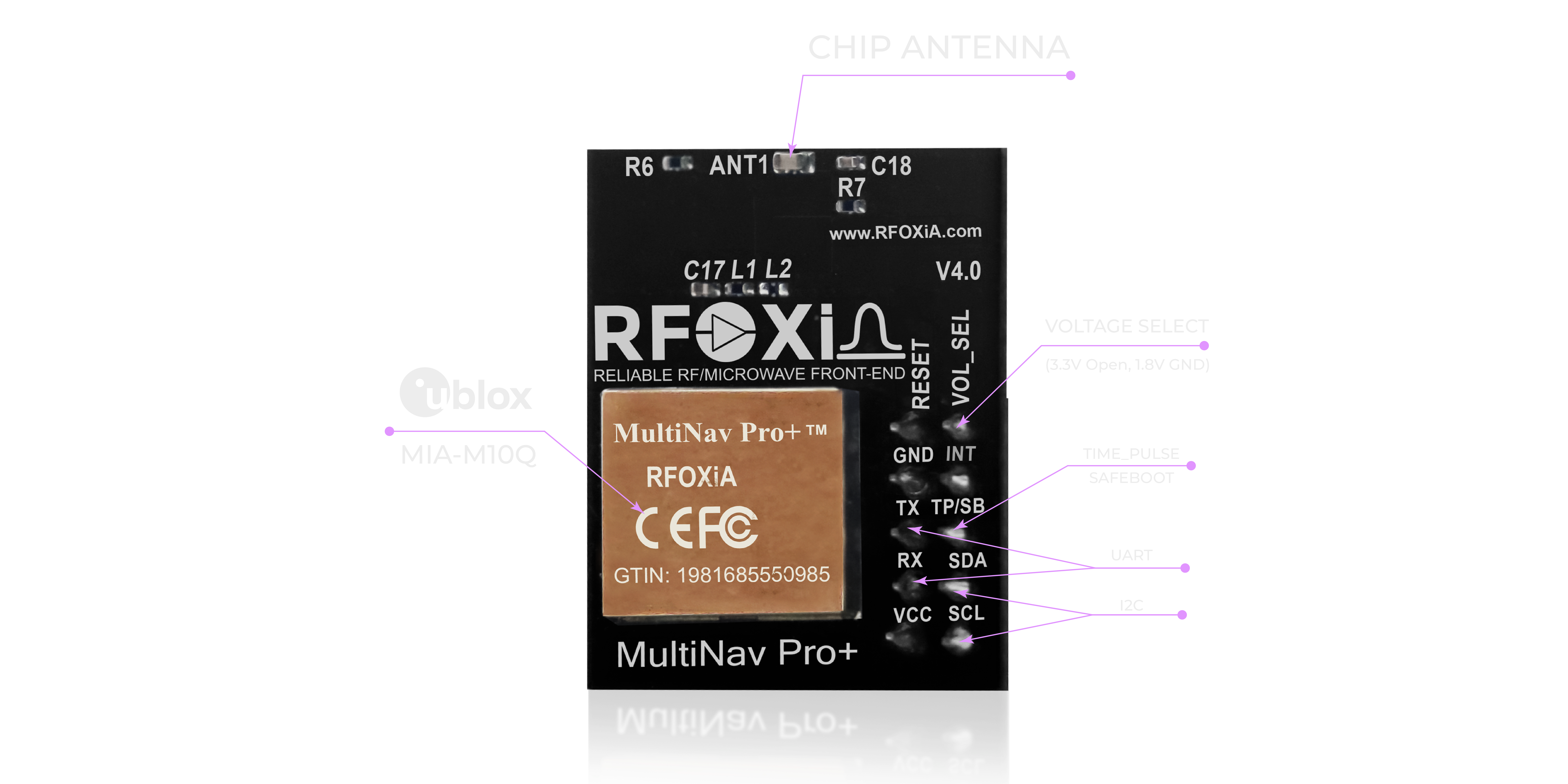
The dual-voltage support (1.8V and 3.3V) extends this compatibility to the full spectrum of modern embedded platforms, from ultra-low-power Nordic nRF series devices running at 1.8V to standard 3.3V Arduino-class boards.
Open-Source Driver: From Module to Running Code in Minutes
One of the most underrated advantages of the MultiNav Pro+ is what comes with it in software: a fully open-source C language library that speaks the NMEA standard protocol. This library is clean, well-structured, and designed to import directly into Arduino IDE or any IDE toolchain with minimal friction.
For developers, this means:
- No reverse-engineering proprietary protocols
- No writing NMEA parsers from scratch
- No fighting with undocumented registers
- No dependency on closed-source vendor SDKs
You clone the library, include it in your project, call the initialization function, and start reading latitude, longitude, altitude, speed, heading, and satellite count — all parsed and ready to use.
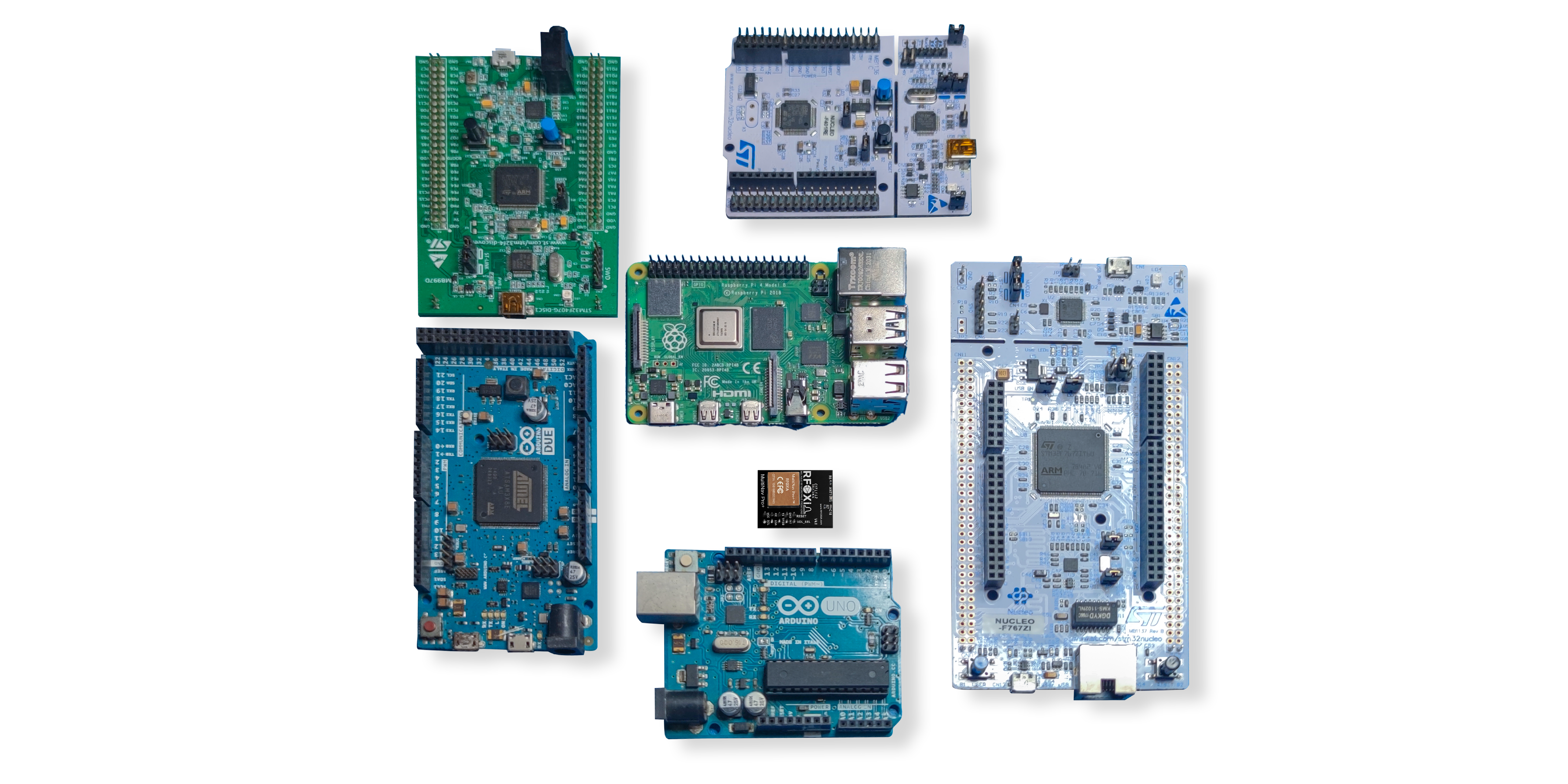
The NMEA standard also means the MultiNav Pro+ is compatible with a vast ecosystem of third-party tools, mapping libraries, and GIS software that already understand the standard sentence formats. Your data is portable and interoperable from day one.
U-Center Software: Professional Configuration and Evaluation
For users who want to go deeper — evaluating satellite reception quality, fine-tuning module configuration, logging raw GNSS data for post-processing, or running firmware updates — the MultiNav Pro+ is fully compatible with u-blox u-center, the industry-standard GNSS evaluation and configuration software.
u-center provides:
- Real-time satellite visualization — see exactly which satellites are in view, their signal strength, and their position in the sky
- Position tracking — watch your module's reported position update on a live map
- Configuration management — adjust output rates, enable/disable constellations, configure power modes
- Data logging — record raw GNSS data for offline analysis
- Firmware update — keep your module on the latest u-blox firmware
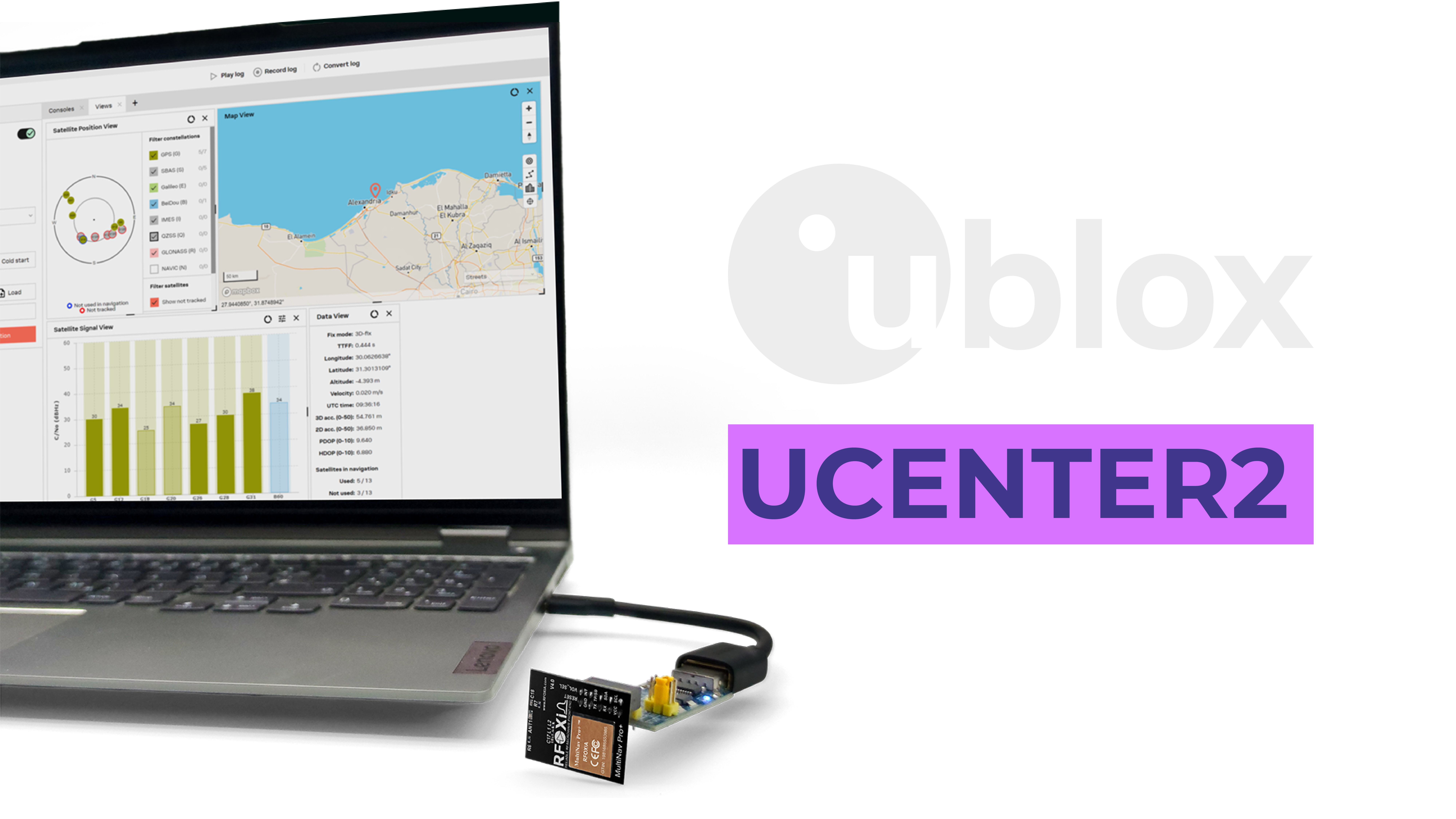
This professional toolchain is included at no additional cost — it's part of what you get when you build on u-blox technology through the MultiNav Pro+. For researchers, engineers doing field testing, or developers who need to validate module performance before shipping a product, u-center is an invaluable resource.
Advanced RF Design: Proprietary Microstrip Filter Technology
GNSS signals are extraordinarily weak by the time they reach Earth's surface — on the order of -130 dBm. At that signal level, interference from other electronics on your board or in the environment can completely overwhelm the receiver. This is why RF design quality is the hidden differentiator between GNSS modules that perform identically on paper but very differently in the field.
RFOXiA's team applied proprietary RF/microwave microstrip filter technology to the MultiNav Pro+ PCB design. This filtering suppresses out-of-band interference before it reaches the GNSS chipset, improving signal-to-noise ratio and maintaining tracking reliability in electrically noisy environments — close to motors, switching power supplies, LTE modems, and other RF sources that are common companions in drone and IoT deployments.
This is the kind of engineering detail that separates a module designed by RF engineers from a module designed by software engineers who happen to be routing a PCB.
Real-World Use Cases for the MultiNav Pro+
The MultiNav Pro+ was designed to serve a wide range of applications. Here are the use cases where its combination of accuracy, update rate, and form factor delivers the most impact:
Autonomous Drones and UAVs
High fix rate and sub-1.5m accuracy enable precise waypoint navigation, loiter hold, return-to-home, and geofence enforcement. The compact form factor adds minimal weight to small frames.
FPV Racing and Long-Range FPV
Paired with RFOXiA's long-range BLE module (up to 20km man-to-drone), the MultiNav Pro+ provides live GPS tracking on the RFOXiA Connect app — pilot always knows where the aircraft is, even beyond visual range.
Precision Agriculture
High-accuracy position data enables precise field mapping, automated spray coverage, and yield correlation with specific field locations.
Environmental Monitoring and Data Networks
The MultiNav Pro+ is the position backbone of RFOXiA's data monetization network. Sensors deployed with GPS-verified outdoor positions earn daily rewards for contributing verified environmental data to the network — and the GNSS module provides that verification.
Wearable Tracking
Compact size, low power draw, and 1.8V support make the MultiNav Pro+ ideal for wearable devices — personal trackers, athlete monitoring systems, search and rescue beacons.
Research and Scientific Instruments
High fix rate and accurate positioning enable data correlation with precise timestamps and locations — essential for environmental sampling, atmospheric research, and field studies.
Automotive and Ground Robotics
18Hz updates enable real-time navigation for ground vehicles moving at speed, where 1Hz GPS would leave navigation systems blind between updates.

The RFOXiA Ecosystem Advantage
The MultiNav Pro+ is powerful as a standalone module, but it becomes transformative as part of the complete RFOXiA hardware ecosystem. When paired with:
- The BLE Module (MultiNav Pro+™ Long-Range BLE) — you get live GPS position streaming over up to 20km of wireless range, with no internet connection required
- The Sensors Module — you get a complete environmental sensing and positioning platform that can contribute to the RFOXiA data network and earn daily rewards
- The Power/Program Kit — you get supercapacitor-backed 24-hour runtime for field-deployed GNSS nodes, with 5-minute recharge time
- RFOXiA Connect App — your GNSS position appears on a live map in the app, updated in real time over the BLE link
The Developer Bundle ($199) brings all four modules together in one package — and it's the fastest path to a fully functional wireless + navigation + sensing + power system for serious projects.
Ready to order? Visit the RFOXiA Accurate GNSS Module page and get yours for $49, FCC-certified and ready to ship.
FCC Certification: Why It Matters for Your Project
Every RFOXiA module, including the MultiNav Pro+, is FCC certified. For builders and engineers, this certification matters for several reasons:
- Legal compliance — FCC certification means the module meets US radio frequency emission standards. Using uncertified modules in commercial products can expose you to significant legal liability.
- Distribution — FCC-certified components are accepted by major distributors like DigiKey and Mouser. If you're building a product for sale, your component certifications matter.
- Signal quality assurance — the certification process validates that the module doesn't interfere with other radio systems. A module that passes FCC testing is a module whose RF design was done correctly.
- International reciprocity — FCC certification is recognized or reciprocated in many international markets, simplifying your path to global distribution.
For a $49 module to carry FCC certification is unusual. It reflects RFOXiA's commitment to building hardware that meets professional standards, not just maker community tolerances.
How to Get Started: From Unboxing to First Fix in Under 5 Minutes
The MultiNav Pro+ ships with a Quick Start Guide that walks you through the complete setup process. Here's the general flow:
- Power the module — connect VCC to your 3.3V (or 1.8V) rail and GND to ground
- Connect your interface — wire UART TX/RX to your microcontroller's RX/TX pins, or connect I2C SCL/SDA
- Install the library — download the open-source C library from the RFOXiA resources and import into your IDE
- Initialize and read — call the library init function, then start reading parsed NMEA data
- First fix — with clear sky view, expect a first fix within 1 second (hot start) or up to 30 seconds (cold start in a new location)
For more advanced configuration, connect via UART to u-center on your PC and explore the full configuration interface. The module's settings are persistent in flash, so you can pre-configure your fix rate, output sentences, and power mode before deploying.
Comparing the MultiNav Pro+ to Alternatives
Let's be direct about the competitive landscape:
| Feature | Budget GPS ($5–$15) | MultiNav Pro+ ($49) | Professional Modules ($100–$300) |
|---|---|---|---|
| Accuracy | 3–5m | <1.5m | <1.5m |
| Fix Rate | 1–5Hz | 18Hz | 10–25Hz |
| Constellations | GPS only or dual | GPS+GLO+GAL+BDS | GPS+GLO+GAL+BDS |
| RF Design | Basic | Advanced filtering | Advanced filtering |
| Open-source library | Rare | Yes | Varies |
| FCC Certified | Sometimes | Yes | Usually |
| Ecosystem integration | None | Full RFOXiA ecosystem | None |
The MultiNav Pro+ occupies a clear sweet spot: professional specifications at a price point that's accessible to individual builders, researchers, and small teams. If you need better than 1.5m accuracy, you're into RTK territory (and prices starting around $200–$500 per module). If you can accept 3–5m accuracy and 1Hz updates, cheaper options exist. But for the large middle ground of applications where 1.5m at 18Hz is the right spec, the MultiNav Pro+ has no real competitors at $49.
Join the RFOXiA Club: Build More, Earn More
Every MultiNav Pro+ purchase comes with access to the RFOXiA Club — the company's full developer platform with Dev Hub community, AI Firmware Builder, documentation resources, and the data network earnings dashboard.
New signups receive a $10 welcome credit toward their first purchase. The AI Firmware Builder lets you describe your GNSS application in plain language and receive production-ready firmware — dramatically accelerating the path from module in hand to working project.
For builders who want to earn from their hardware: deploy the MultiNav Pro+ alongside the Sensors Module and contribute verified outdoor environmental data to the RFOXiA data network. Your GNSS position data validates the outdoor deployment, unlocking daily rewards of up to $0.40 per day. Over a full year, a single deployed node generates meaningful passive income while contributing to a growing dataset purchased by agricultural tech companies, smart city operators, insurance companies, and research institutions.
Ready to Make the RFOXiA GNSS Module Buy?
The MultiNav Pro+™ is in stock and shipping now. At $49 for a FCC-certified, u-blox MIA-M10Q-based module with 1.5m accuracy, 18Hz fix rate, concurrent quad-constellation support, open-source library, and full RFOXiA ecosystem integration, it represents one of the strongest value propositions in the precision navigation hardware market today.
This is professional-grade GNSS performance at a price that fits any project budget — and it's backed by a company with four completed Kickstarter campaigns, an established manufacturing infrastructure, and a team of engineers who use this hardware in their own builds.
Order your RFOXiA Accurate GNSS Module today and get precise navigation into your next project faster than you thought possible.
Frequently Asked Questions
Q: Is the MultiNav Pro+ compatible with Arduino? Yes. The open-source C library imports directly into Arduino IDE. UART connection to any Arduino board works out of the box with the included Quick Start Guide.
Q: Can I use the MultiNav Pro+ with a Raspberry Pi? Absolutely. Connect via UART to any serial-capable GPIO pin, or use the I2C interface. Standard Linux serial tools (gpsd, minicom) and the open-source library both work on Linux-based single-board computers.
Q: What is the cold start time? Cold start (new location, no almanac cached) typically takes 25–35 seconds for first fix in open sky. Hot start (cached almanac, same location) achieves first fix in approximately 1 second.
Q: Does the module support PPS (Pulse Per Second) output? The u-blox MIA-M10Q platform supports timepulse output. Refer to the u-blox datasheet and u-center configuration tool for enabling this feature.
Q: Is the MultiNav Pro+ suitable for indoor use? GNSS systems in general require sky view to receive satellite signals. The MultiNav Pro+ will not achieve its rated accuracy indoors. For indoor positioning, consider pairing it with the RFOXiA BLE Module for indoor proximity applications.
Q: What does FCC certification mean for international users? FCC certification validates the module's RF emissions meet US standards. Many international markets accept FCC certification or have reciprocal agreements. Check your local jurisdiction's requirements for your specific application.
Q: Can I use this module in a commercial product? Yes. FCC certification on the module level simplifies your path to commercial deployment. Consult with a certified test laboratory regarding your end-product requirements.
The RFOXiA GNSS module buy decision is straightforward for any serious builder: professional specifications, maker-accessible pricing, open-source software, FCC certification, and an ecosystem that grows with your project. The MultiNav Pro+ is available now — visit RFOXiA Accurate GNSS Module and start building with precision.
Written by: Moamen Mohamed LinkedIn