

RTK GPS Module Affordable: Meet the MultiNav Pro+ GNSS Module
The Most Affordable RTK GPS Module for Serious Builders and Engineers
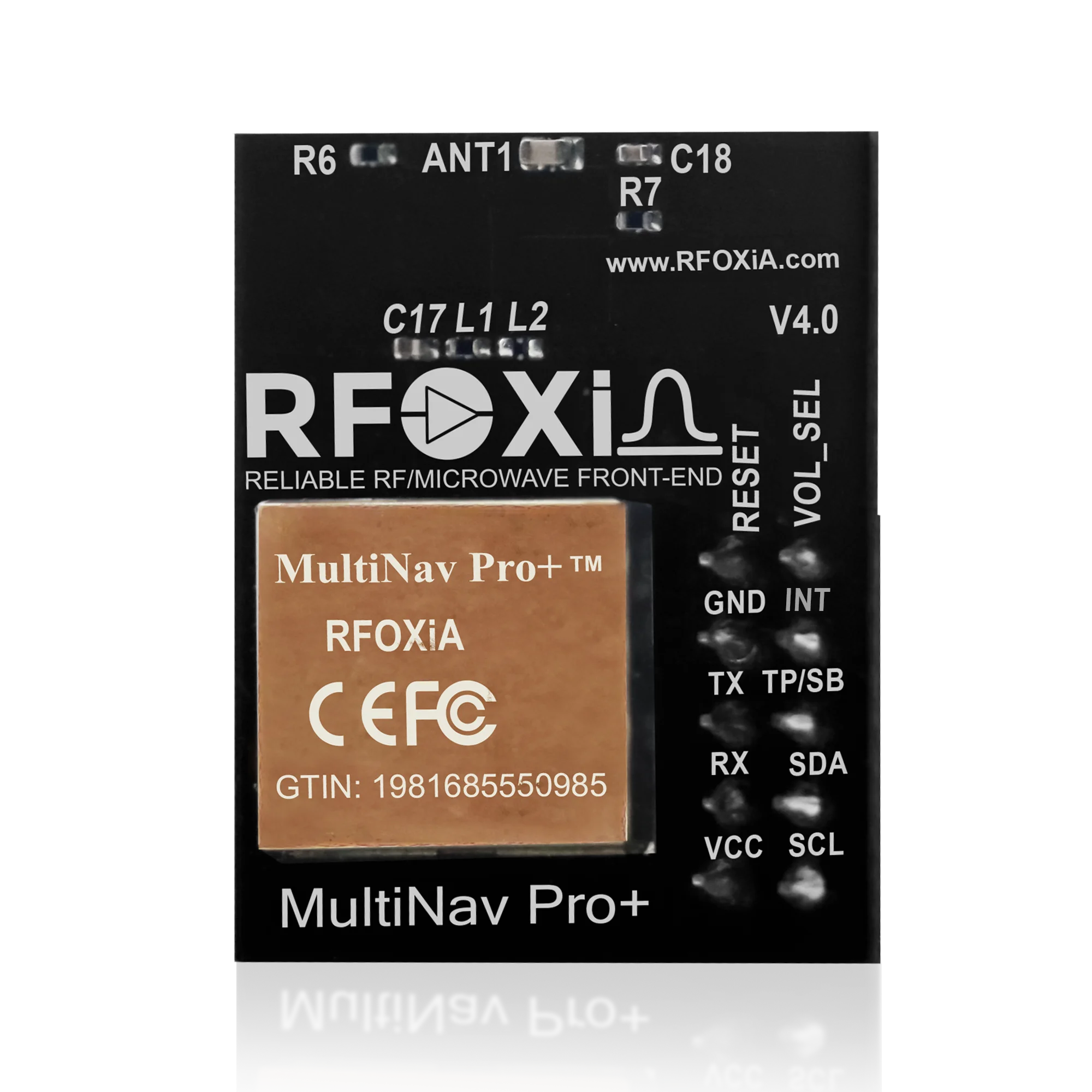
For years, precision GPS has been locked behind expensive paygrade walls. RTK GPS modules capable of sub-2-meter accuracy, fast fix rates, and multi-constellation satellite support used to cost hundreds — sometimes thousands — of dollars. Professional surveyors, aerospace engineers, and military contractors had access to this level of precision. Hobbyist drone builders, independent researchers, and IoT developers were left choosing between cheap inaccurate modules or breaking their entire project budget on a single component.
That era is over.
The MultiNav Pro+ GNSS Module from RFOXiA redefines what an affordable RTK GPS module can deliver. With 1.5-meter accuracy, an 18Hz fix rate, concurrent support for all four major satellite constellations, and a compact 26mm x 22mm footprint, this module brings professional-grade navigation to every builder at a price point that doesn't require a grant application.
This post covers everything you need to know: the specs, the technology behind them, the software stack, the use cases, and why the MultiNav Pro+ stands apart from anything else in its price class.
Why Affordable RTK GPS Modules Matter Right Now
The explosion of autonomous systems — drones, rovers, precision agriculture equipment, smart wearables, and IoT sensor networks — has created enormous demand for accurate, fast, and reliable positioning hardware. Applications that once required a dedicated GPS specialist and a $3,000 module now need to run on a $49 component that a developer can integrate in an afternoon.
The problem with most affordable GNSS modules on the market is the word "affordable" comes at a direct cost to performance. Accuracy drops to 3-5 meters. Fix rates fall to 1Hz or 5Hz. Single-constellation support means signal dropout in urban canyons or challenging environments. No open-source drivers means weeks of integration work instead of hours.
The MultiNav Pro+ was built to break that tradeoff entirely. It is not a compromise. It is a professional module that happens to be priced for the builder market.
Core Technology: The u-blox MIA-M10Q
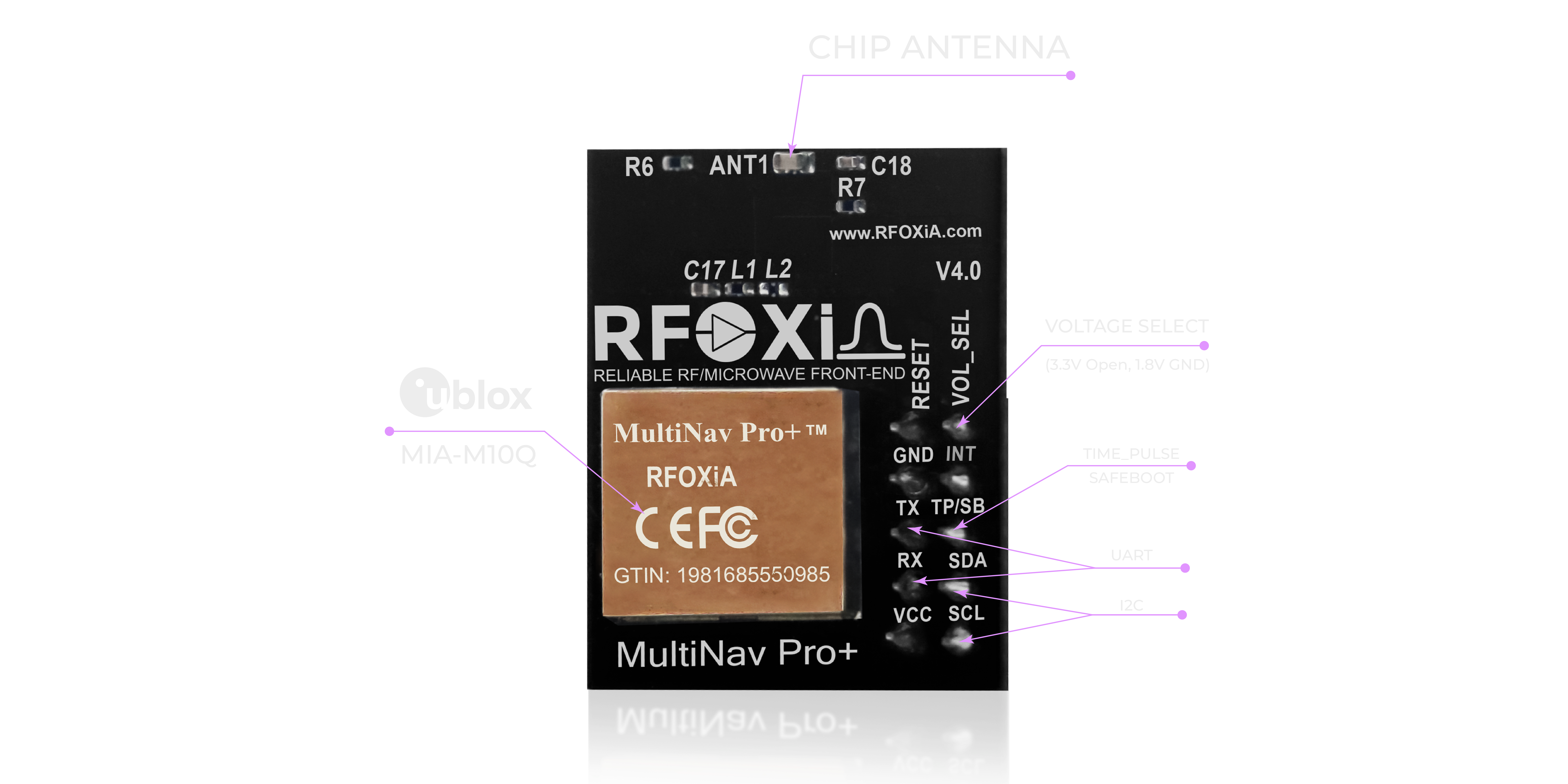
At the heart of the MultiNav Pro+ is the u-blox MIA-M10Q, one of the most advanced GNSS chipsets available for compact module design. u-blox is the gold standard in precision navigation silicon — the same brand trusted by automotive manufacturers, aerospace integrators, and precision agriculture systems worldwide.
Choosing the MIA-M10Q wasn't a marketing decision. It was an engineering decision. The chip delivers:
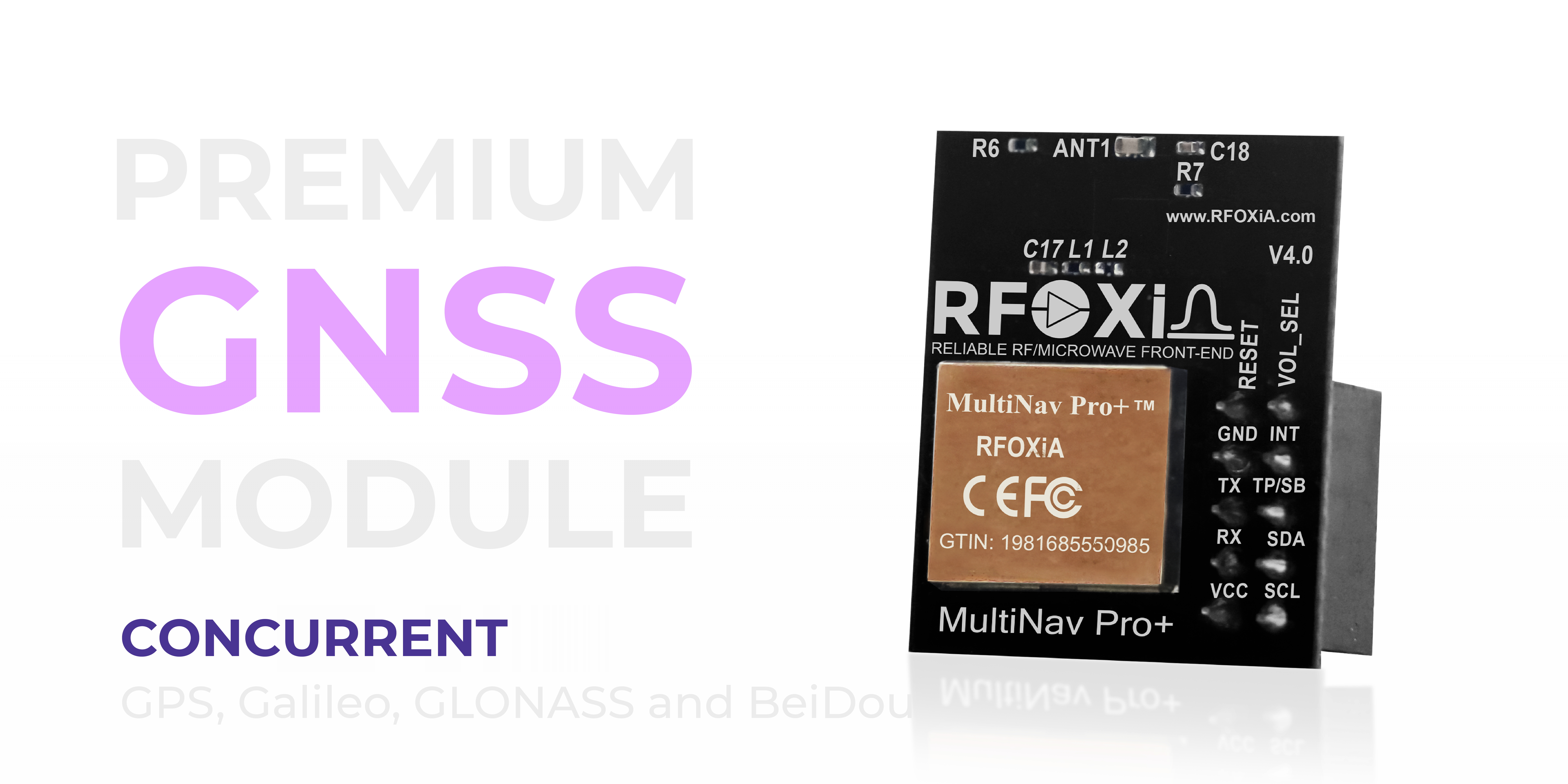
- Concurrent multi-constellation tracking — GPS, Galileo, GLONASS, and BeiDou all operating simultaneously, not sequentially
- Extremely low time-to-first-fix — down to 1 second in hot start conditions
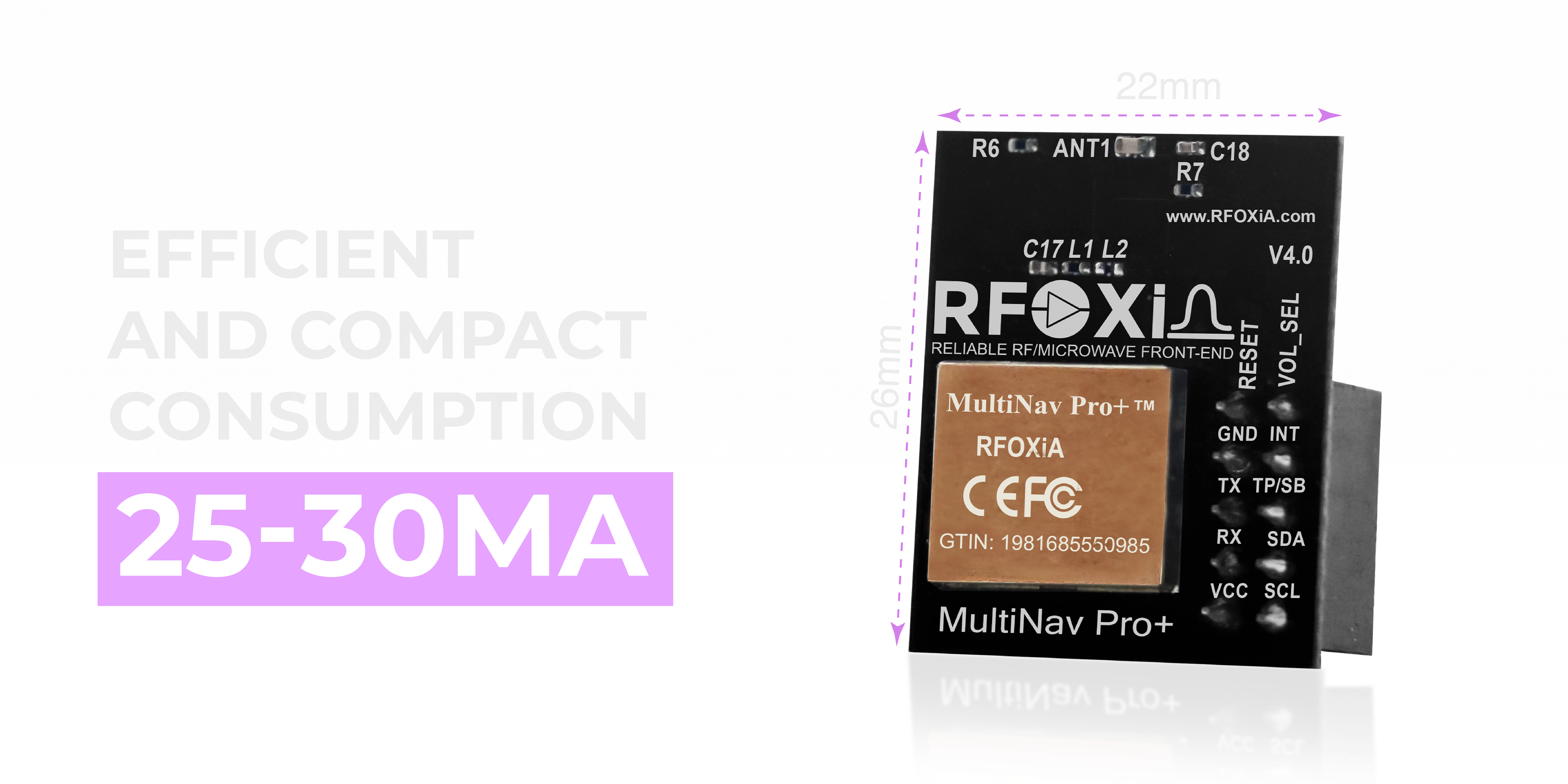
- Power-efficient architecture — operating at just 25-30mA, suitable for battery-powered and solar-powered deployments
- High sensitivity receiver — maintains lock in challenging RF environments
When you search for an RTK GPS module affordable enough for a maker project but capable enough for a commercial deployment, the chipset underneath matters more than almost any other specification. The MIA-M10Q is the reason the MultiNav Pro+ can truthfully claim professional-grade performance.

Specifications Deep Dive
Accuracy: 1.5 Meters
This is the number that stops people. Sub-2-meter accuracy at this price point is not something that existed in this market segment before. For context:
- Consumer smartphone GPS: 3-5 meters on a good day, 10+ meters indoors or in dense environments
- Cheap GNSS breakout boards: 2.5-5 meters typical
- MultiNav Pro+: less than 1.5 meters
For drone precision landing, precision agriculture waypoint execution, asset tracking in dense environments, or any application where "close enough" isn't good enough — 1.5 meters is the threshold that separates useful from unreliable.
Fix Rate: 18Hz
Fix rate is often overlooked by developers who focus exclusively on accuracy. It shouldn't be. Fix rate determines how many position updates your system receives per second. At 1Hz, you get one location reading every second — workable for slow-moving assets, unusable for fast-moving platforms.
At 18Hz, the MultiNav Pro+ delivers 18 position updates every second. This is why it was specifically designed for drone integration. A drone traveling at speed needs a GNSS module that can keep up. At 18Hz, the position data refreshes 18 times per second — enabling real-time flight path correction, precise geofencing enforcement, and smooth autonomous navigation even at high velocities.
Multi-Constellation: GPS + Galileo + GLONASS + BeiDou
The ability to track all four major satellite constellations simultaneously — not switching between them, but tracking all at once — dramatically improves fix reliability and accuracy in challenging environments.
Here's why this matters: each satellite constellation has different orbital coverage, different elevation angles, and different signal characteristics. In an urban canyon or dense forest, some satellites are blocked by obstacles. When your module is only tracking one constellation, signal dropout means position loss. When tracking all four simultaneously, the module maintains lock by pulling from whichever satellites have the clearest line of sight at any given moment.
The result is more reliable positioning in the real world — not just in open-sky lab testing conditions.
Hardware Design: Compact, Clean, and Interference-Resistant
Form Factor: 26mm x 22mm
At 26 x 22 millimeters, the MultiNav Pro+ occupies minimal board real estate. This is critical for applications where space is a constraint — drone frames, compact wearables, embedded tracking devices, and miniaturized sensor nodes all benefit from a module this small.
Despite the compact footprint, nothing was sacrificed. The full multi-constellation receiver, the integrated chip antenna, the RF filtering circuitry, and the interface electronics all fit within this footprint.
Integrated High-Gain Chip Antenna
One of the most common failure points in GNSS module integration is the antenna. External patch antennas add size and cost, create mechanical fragility, and introduce connector reliability concerns. The MultiNav Pro+ uses an integrated high-gain chip antenna — built directly onto the module, no external antenna required.
The chip antenna is tuned to maximize signal reception across all four satellite constellations simultaneously. It eliminates the integration complexity of antenna selection, connector selection, and ground plane design that external-antenna modules demand.
RF/Microwave Microstrip Filter Technology
RFOXiA's background is RF engineering, and it shows. The MultiNav Pro+ incorporates proprietary RF/microwave microstrip filter technology specifically designed to minimize electromagnetic interference from nearby electronics — motor controllers, radio transmitters, power electronics — all common in the environments where this module is deployed.
For a drone builder, this is non-trivial. A GNSS module mounted on a drone frame is surrounded by noisy RF sources: ESCs switching at high frequency, video transmitters, RC receivers, power cables carrying high-current pulses. Lesser modules experience degraded accuracy or signal dropout in these environments. The MultiNav Pro+ is engineered for exactly this kind of electrical battlefield.
Interface and Integration
Dual Interface: UART and I2C
The MultiNav Pro+ supports both UART (TX/RX) and I2C (SCL/SDA) communication interfaces. This is not a minor convenience — it's a fundamental integration flexibility that saves developers from redesigning their hardware when their microcontroller architecture changes.
- UART is preferred for high-throughput applications and is the standard interface for most flight controllers and embedded Linux systems
- I2C is preferred when you're already sharing a bus with other peripherals and want to minimize pin count on your microcontroller
Both interfaces operate at both 1.8V and 3.3V logic levels — covering modern low-voltage microcontrollers and traditional 3.3V systems without level shifters.
Plug-and-Play Compatibility
The module is designed for rapid integration. Physical connections are minimal and clearly labeled. The software library handles the protocol complexity. A developer with basic embedded experience can have their first GNSS fix within an afternoon of receiving the hardware.
This is what "affordable RTK GPS module" should actually mean — not just affordable to purchase, but affordable in engineering time and integration effort.
Software Stack: Open Source, Flexible, and Powerful
Open-Source C Language Driver Library
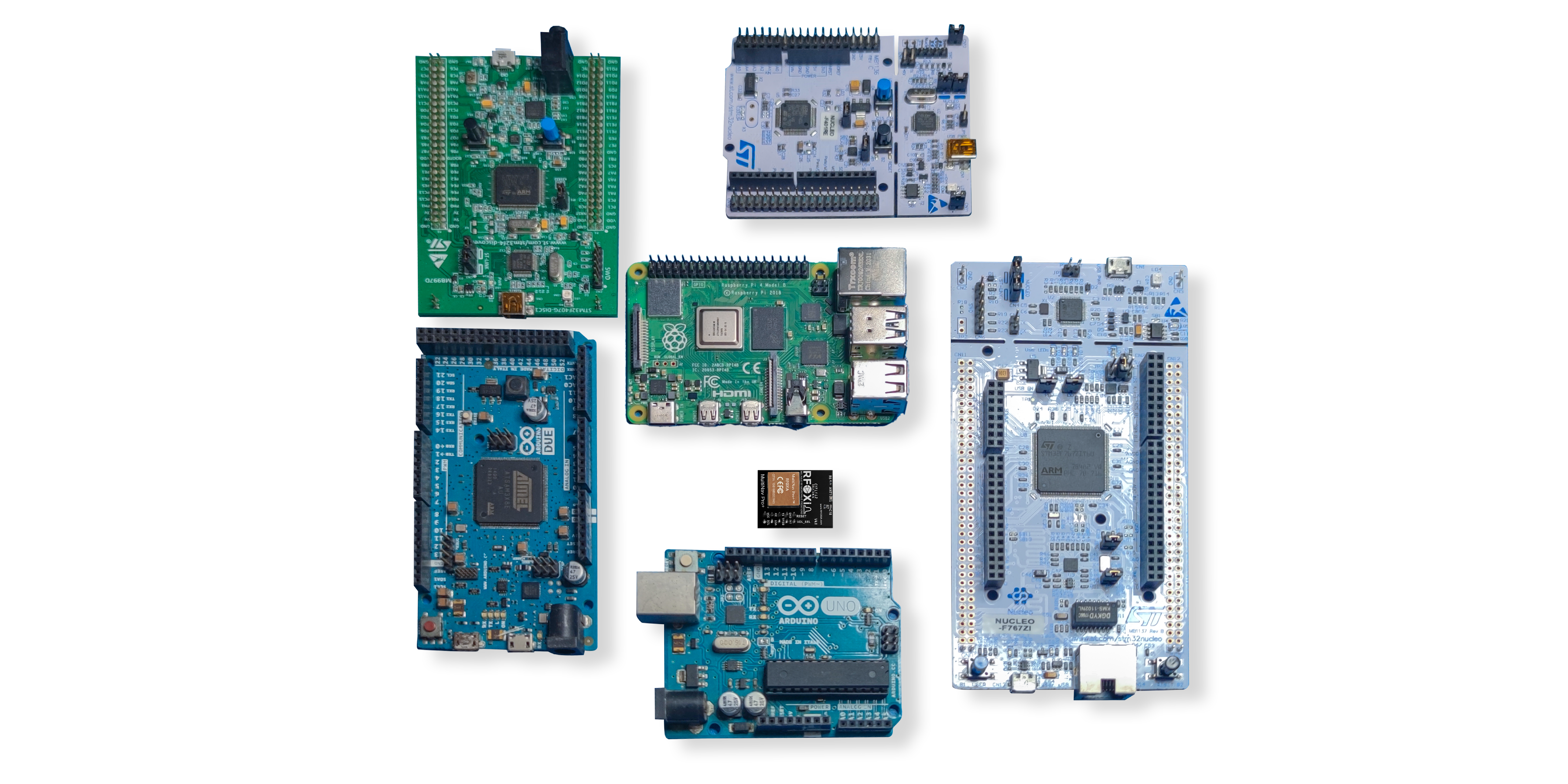
The MultiNav Pro+ ships with a fully open-source C language driver library that handles all NMEA protocol communication. The library includes:
- Complete NMEA sentence parsing (GGA, RMC, VTG, GSA, GSV, and more)
- Configurable output rate settings
- Power mode control
- Geofencing command support
- Clean API for extracting latitude, longitude, altitude, speed, heading, and fix quality
The library is designed to drop directly into Arduino IDE with no modification. It also integrates cleanly into any professional toolchain — STM32CubeIDE, PlatformIO, Zephyr RTOS, ESP-IDF, or any GCC-based embedded toolchain.
Open source means you own your firmware. You can inspect every line of code, modify it to fit your specific application, contribute improvements back to the community, or build proprietary products on top of it. No locked-down binary blobs, no license fees, no dependency on a third-party SDK that might disappear.
u-Center Software
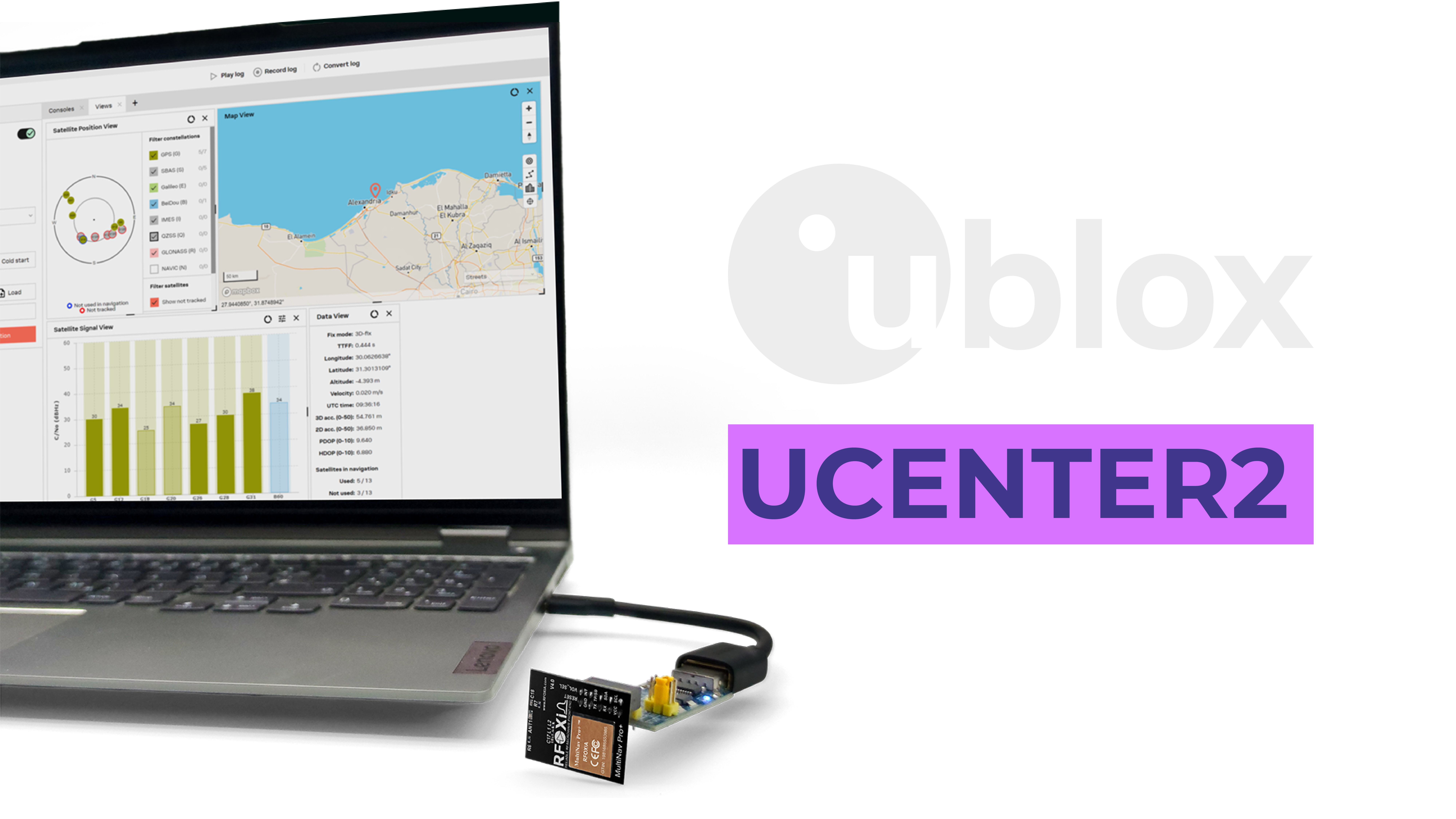
Because the MultiNav Pro+ is built on the u-blox MIA-M10Q, it is fully compatible with u-Center — u-blox's professional GNSS evaluation and configuration software.
u-Center provides:
- Satellite visualization — real-time view of every satellite in view, signal strength per satellite, constellation breakdown
- Position tracking — live map view of your position with historical track logging
- Quick configuration — graphical interface for setting update rate, constellation selection, power mode, and interface parameters
- Data logging — log raw NMEA data for post-processing and analysis
- Evaluation tools — accuracy assessment, signal quality metrics, and performance benchmarking
For developers who want to understand exactly what their GNSS module is doing before committing it to a production design, u-Center is an invaluable tool. The fact that the MultiNav Pro+ supports it fully — at this price point — is a significant advantage over competitor modules using proprietary or lesser-known chipsets.
Use Cases: Where the MultiNav Pro+ Excels

The combination of 1.5-meter accuracy, 18Hz update rate, multi-constellation tracking, compact form factor, and dual interface opens the module to an exceptionally broad application space.
Autonomous Drones and UAVs
This is the primary use case the MultiNav Pro+ was optimized for. Drone navigation demands exactly what this module delivers: fast fix rate for real-time position updates, high accuracy for precise waypoint execution and landing, multi-constellation support for reliable lock in varied environments, and interference resistance for noisy electrical environments.
Paired with the RFOXiA BLE Module and the RFOXiA Connect app, the MultiNav Pro+ enables live GPS position display on a mobile device at ranges up to 20km — a complete long-range drone tracking and control ecosystem.
Precision Agriculture
Modern agricultural automation — variable rate application, autonomous tractors, precision planting — requires sub-2-meter field accuracy for economically meaningful results. The 1.5-meter accuracy of the MultiNav Pro+ is the threshold where precision agriculture applications begin to deliver real yield improvements.
IoT Sensor Networks and Asset Tracking
For IoT deployments where devices need to report location as part of their data payload — environmental sensor nodes, wildlife tracking collars, logistics containers, construction equipment — the MultiNav Pro+ provides accurate, reliable positioning without the power and cost overhead of full RTK correction systems.
Combined with RFOXiA's data network, GNSS-verified outdoor sensor nodes earn higher reward rates because the GPS data confirms legitimate outdoor deployment — a feature built specifically around the MultiNav Pro+'s location output.
Research and Education
Universities, independent researchers, and engineering students need access to professional-grade instrumentation at prices that fit academic budgets. The MultiNav Pro+ — as a genuine RTK GPS module affordable enough for student project budgets — fills a gap that has forced researchers to either over-pay for professional equipment or compromise on data quality.
Wearables and Personal Tracking
The 26 x 22mm form factor and 25-30mA power draw make the MultiNav Pro+ suitable for wearable integration — personal safety devices, sports performance trackers, search-and-rescue beacons, and outdoor navigation wearables.
Robotics and Ground Vehicles
Ground robots and autonomous vehicles navigating outdoor environments benefit from the high fix rate and accuracy combination. At 18Hz, the robot's position controller receives updates 18 times per second — enabling smooth, responsive trajectory following even at higher speeds.
The RFOXiA Ecosystem Advantage
The MultiNav Pro+ is a powerful standalone module. It becomes significantly more powerful as part of the complete RFOXiA hardware ecosystem.
The Developer Bundle combines the MultiNav Pro+ GNSS Module with the MultiNav Pro+ BLE Module (5km ground-to-ground, 20km man-to-drone range), the Sensors Module (7 integrated environmental sensors), and the Power/Program Kit (supercapacitor-based, 5-minute charge for 24-hour runtime) — all for $199.
This complete kit is the only product on the market combining professional long-range wireless communication, precision GNSS navigation, multi-axis environmental sensing, and professional power management in one integrated, FCC-certified package.
For developers serious about building autonomous wireless systems, the bundle is the obvious starting point. For those who specifically need GNSS precision, the RFOXiA Accurate GNSS Module is available standalone at $49.
FCC Certification: Built for Real Deployment
Every module in the RFOXiA product line — including the MultiNav Pro+ GNSS Module — carries FCC certification. This is not a minor administrative detail. FCC certification means:
- The module has been tested and verified for electromagnetic emissions compliance
- It can be legally deployed in the United States and imported into most international markets
- Commercial products integrating this module have a clear path to their own FCC certification
- Distributors and retailers can stock and sell it without compliance risk
For a module at this price point to carry full FCC certification is unusual. Most ultra-affordable GNSS modules either avoid the U.S. market or operate in a compliance gray area. The MultiNav Pro+ is fully certified and legally deployable.
Pricing and Value Analysis
At $49, the MultiNav Pro+ occupies a pricing position that has no direct competitor.
- Below $49: Modules with lesser chipsets, single-constellation support, lower fix rates, no open-source drivers, no certification
- $49 — MultiNav Pro+: 1.5m accuracy, 18Hz, quad-constellation, u-blox MIA-M10Q, open-source driver, FCC certified
- $200-500: Entry-level professional GNSS modules from traditional industrial suppliers — same or lesser specs, no maker ecosystem
- $1,000+: Full RTK systems with base station corrections — higher accuracy but orders of magnitude more expensive and complex
If you need sub-centimeter RTK accuracy with base station corrections, this module is not the right tool — and neither is anything near this price point. But for the vast majority of applications that need professional-grade precision, fast updates, and reliable multi-constellation support, the MultiNav Pro+ is not just competitive — it is the best RTK GPS module affordable option on the market today.
RFOXiA Club: Development Platform Access
Every MultiNav Pro+ purchase comes with access to the RFOXiA Club development platform — including the AI Firmware Builder, which allows you to describe your application in plain language and receive production-ready firmware for the complete module ecosystem.
New signups receive a $10 welcome credit toward hardware purchases. The Club platform includes documentation, tutorials, a developer community, and live firmware development examples — everything needed to take your project from prototype to production.
Technical Specifications Summary
| Specification | Value |
|---|---|
| GNSS Chipset | u-blox MIA-M10Q |
| Position Accuracy | < 1.5 meters |
| Fix Rate | Up to 18Hz |
| Time to First Fix | 1 second (hot start) |
| Constellations | GPS, Galileo, GLONASS, BeiDou (concurrent) |
| Antenna | Integrated high-gain chip antenna |
| Interface | UART (TX/RX) and I2C (SCL/SDA) |
| Logic Voltage | 1.8V and 3.3V |
| Current Draw | 25-30mA |
| Dimensions | 26mm x 22mm |
| Certification | FCC |
| Price | $49 |
| Software | Open-source C library + u-Center compatible |
Conclusion: The RTK GPS Module Affordable Option That Doesn't Compromise
The search for an RTK GPS module affordable enough for real-world maker and engineering projects — without sacrificing the accuracy, fix rate, and reliability that professional applications demand — ends with the MultiNav Pro+.
1.5-meter accuracy. 18Hz update rate. Quad-constellation simultaneous tracking. u-blox MIA-M10Q at the core. Compact enough for drones and wearables. Open-source driver. FCC certified. $49.
This is not a compromise. This is professional navigation hardware brought to the price point where builders actually build.
Ready to integrate precision positioning into your next project? Explore the RFOXiA Accurate GNSS Module and get started today — or go further with the complete Developer Bundle that pairs it with long-range wireless, environmental sensing, and professional power management in one kit.
Join RFOXiA Club — free access, $10 welcome credit, and an AI firmware builder that turns your application description into production-ready code. The infrastructure to build serious hardware is already there. Your next project is one module away.
Get the MultiNav Pro+ GNSS Module — $49. FCC certified. Ships now.
Written by: Moamen Mohamed LinkedIn