
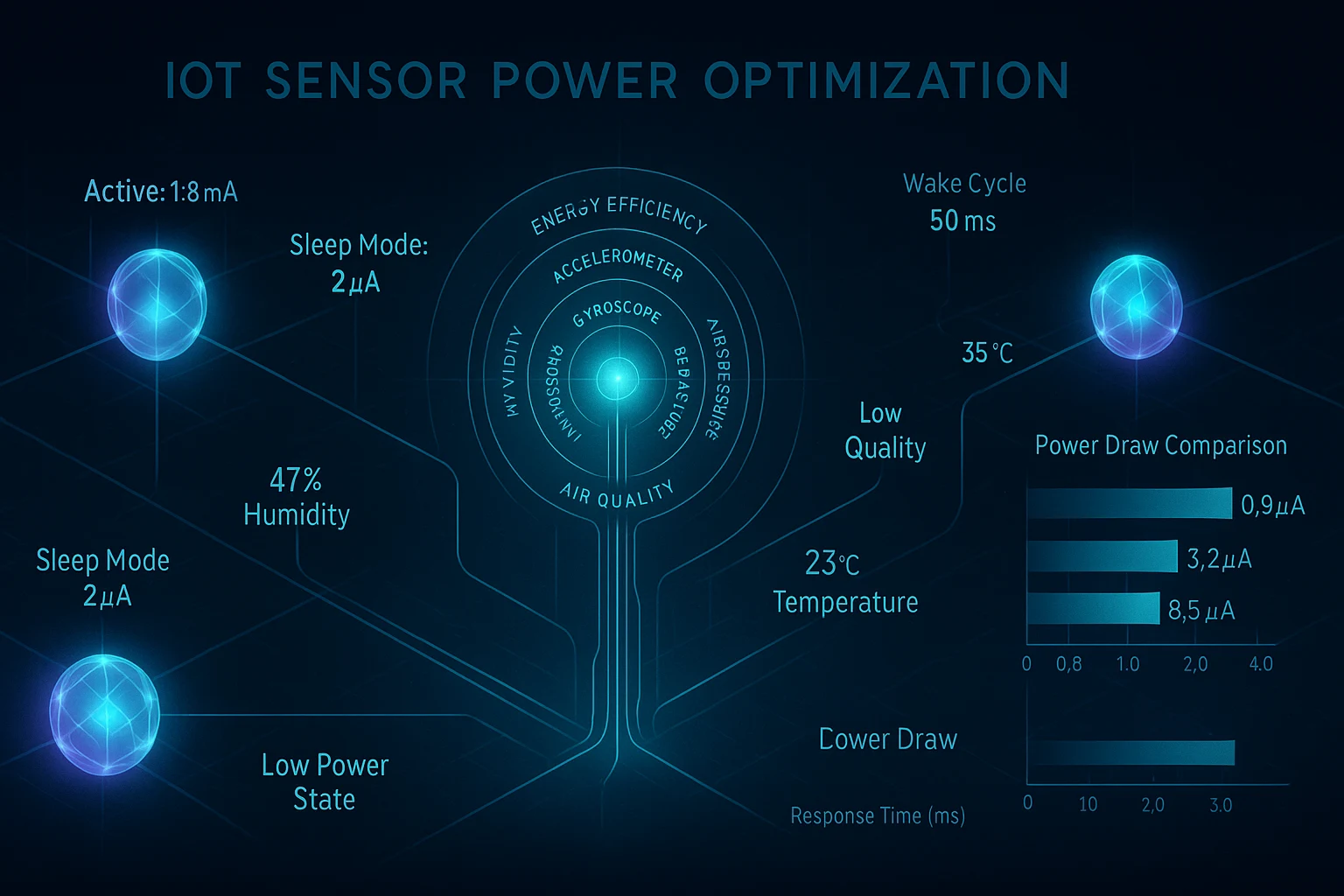
Sensor Module Power Optimization IoT: The Complete Guide to the MultiNav Pro+™ Sensors Module
RFOXiA Integrated Sensors Module
How Sensor Module Power Optimization IoT Changes Everything About What You Build
Every serious IoT developer eventually runs into the same wall. You need motion data. You need environmental data. You need it all running on a compact board that doesn't drain your battery pack in three hours. And you need it to be clean — no I2C address conflicts, no rats' nest of breakout boards wired together with jumper cables, no firmware headaches from trying to make five different manufacturer libraries coexist.
Sensor module power optimization IoT is not just a technical buzzword. It's the discipline that separates projects that actually ship and stay deployed in the field from projects that live on your desk forever. And it's the core design philosophy behind the RFOXiA MultiNav Pro+™ Sensors Module.
This post breaks down exactly how the MultiNav Pro+ was designed, why its architecture makes it one of the most efficient multi-sensor solutions available at any price point, and how you can put it to work in your next drone, environmental monitor, robotics platform, or data network node.
What the MultiNav Pro+™ Sensors Module Actually Is
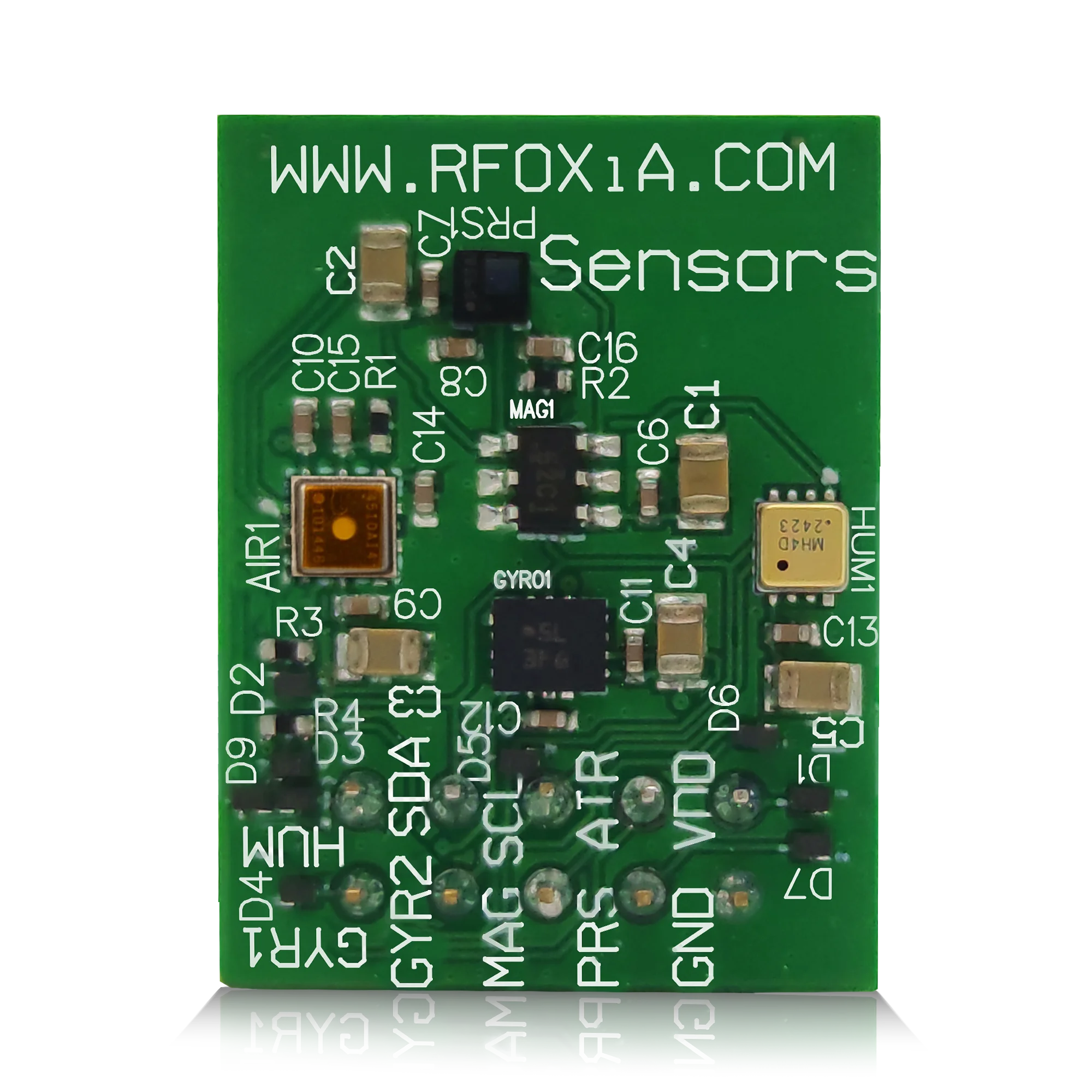
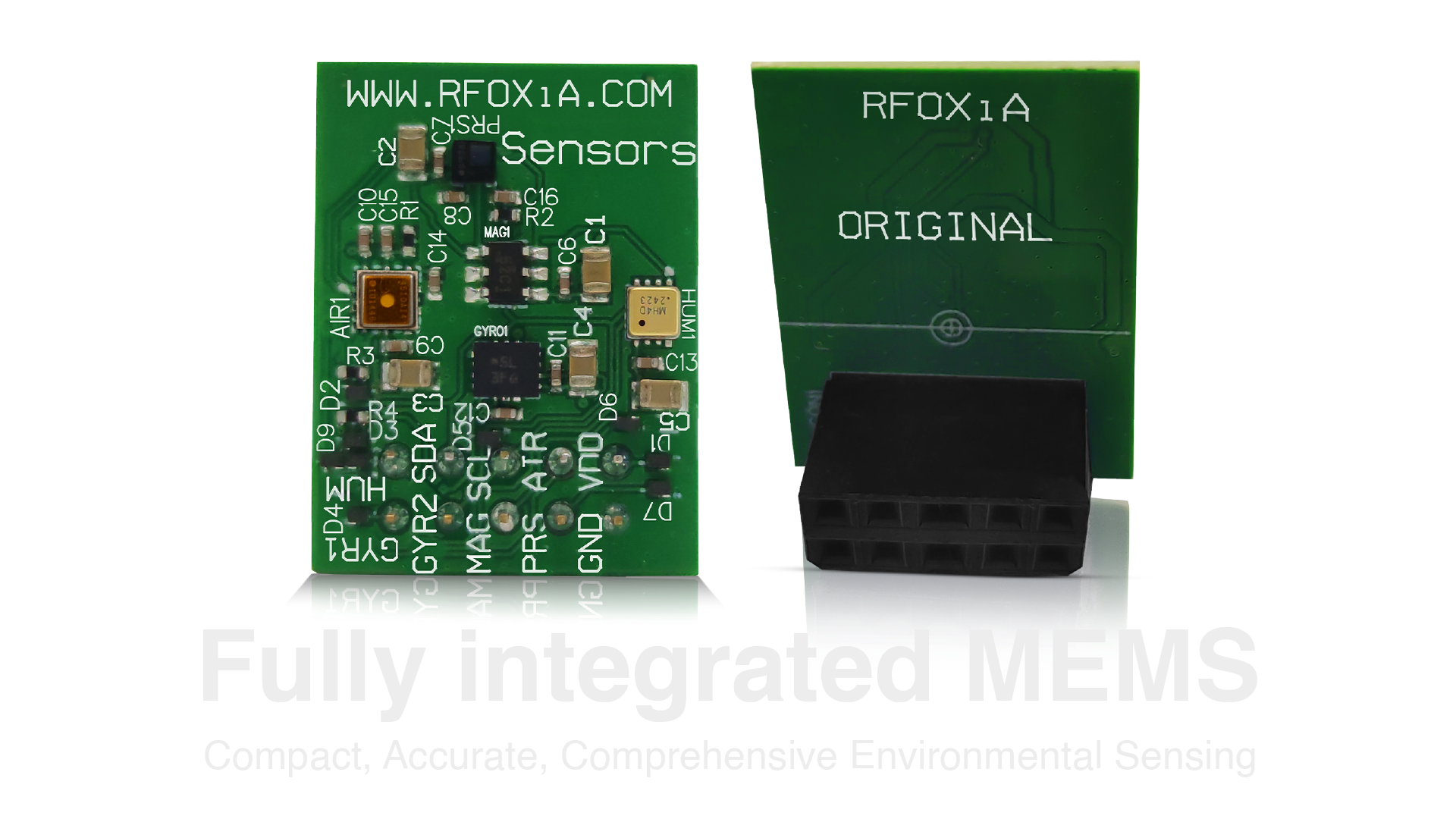
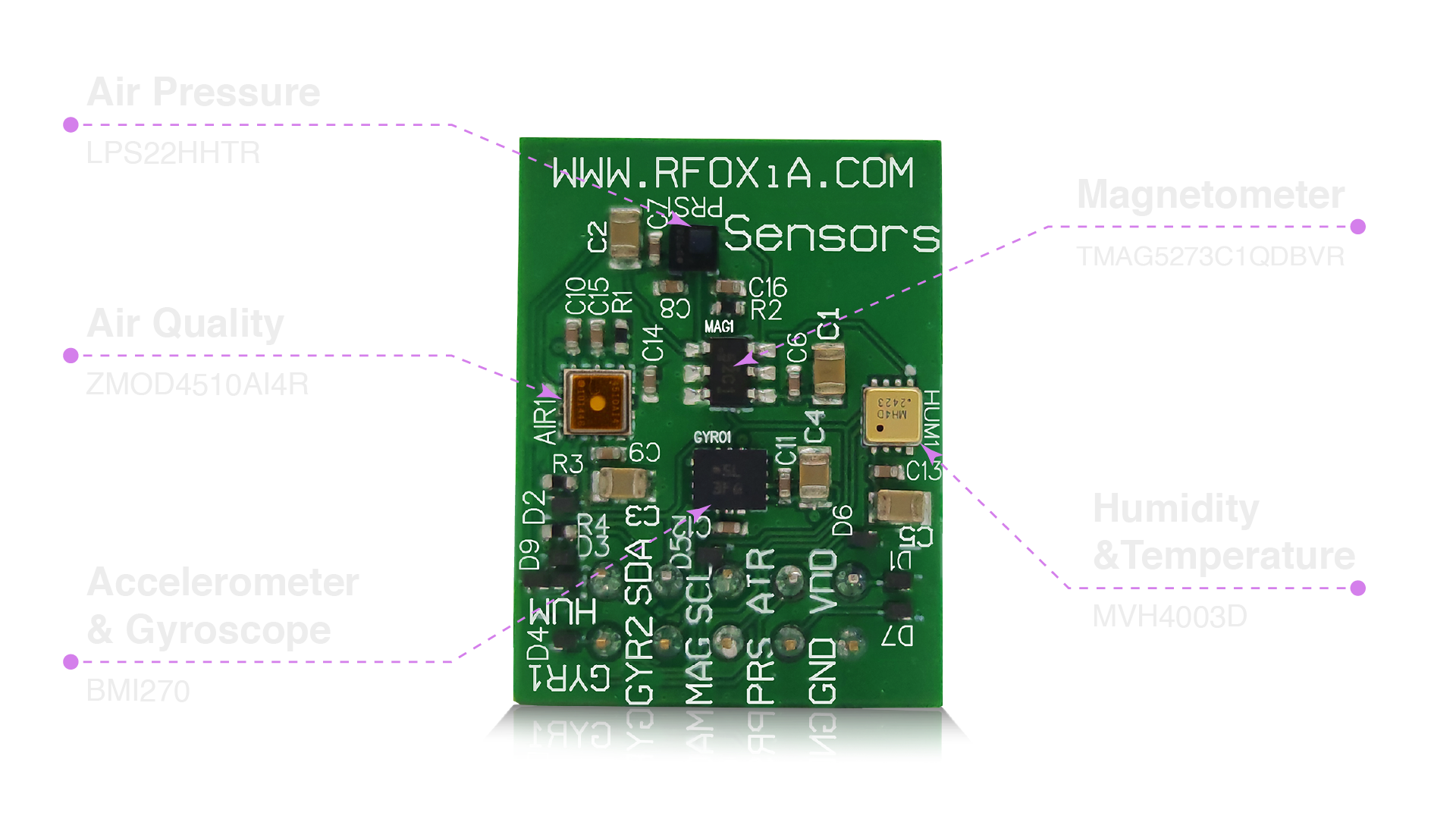
The MultiNav Pro+™ Sensors Module is a 24mm × 18mm FCC-certified board that integrates seven discrete sensors onto a single module with a unified I2C interface. At $39, it occupies a position that doesn't really exist anywhere else: professional-grade sensor fusion hardware priced for makers, researchers, and embedded developers who don't have enterprise procurement budgets.
Here's what's packed onto that tiny board:
- Accelerometer & Gyroscope — BMI270 from Bosch Sensortec
- Magnetometer — TMAG5273C1QDBVR from Texas Instruments
- Air Pressure — LPS22HHTR from STMicroelectronics
- Humidity & Temperature — MVH4003D from MEMSVision
- Air Quality — ZMOD4510AI4R from RENESAS
Seven sensors. Seven industry-leading ICs from five of the most respected sensor manufacturers in the world. One I2C bus. One compact module. That's the MultiNav Pro+.
Why Sensor Selection Matters for Power Optimization
Before we go deep on the architecture, let's be direct about something most sensor module marketing glosses over: not all sensors draw the same power, and the IC you choose defines your power budget ceiling.
RFOXiA selected each sensor IC deliberately. The BMI270 from Bosch Sensortec, for example, is widely recognized in the embedded and drone community as one of the most power-efficient IMUs available — it's the same IMU used in many high-end flight controllers precisely because it delivers exceptional performance per milliwatt. The LPS22HHTR pressure sensor from STMicroelectronics draws microamps in one-shot mode, making it ideal for duty-cycled IoT deployments where the sensor only wakes to take a reading.
This matters enormously when you're building a field-deployed environmental node that needs to run for days or weeks on battery or supercapacitor power. Choosing premium, power-aware ICs at the component selection stage is the first and most important layer of sensor module power optimization IoT strategy — and it's a layer that's already done for you with the MultiNav Pro+.
The Sensor ICs: A Closer Look
BMI270 — Bosch Sensortec (Accelerometer & Gyroscope)
The BMI270 is purpose-built for wearables and drone applications where power draw and motion detection performance are both critical. It supports advanced power modes including suspend, low-power, and normal mode, and features a built-in hardware interrupt system that can wake your host MCU only when meaningful motion is detected. This allows you to run your processor in deep sleep and let the IMU do the work of deciding when to wake the system — a fundamental sensor module power optimization IoT technique.
TMAG5273C1QDBVR — Texas Instruments (Magnetometer)
Texas Instruments' TMAG5273 is a 3D Hall-effect magnetic sensor with I2C interface and low-power standby mode. It's a precision magnetometer ideal for compass heading, position detection, and orientation applications. Its standby current draw is measured in microamps, making it a non-event in any power budget.
LPS22HHTR — STMicroelectronics (Air Pressure)
The LPS22HH is a 260-1260 hPa absolute pressure sensor from ST's MEMS family. It supports one-shot mode for duty-cycled measurements — take a reading, power down, repeat. In applications where pressure readings are needed every 10–60 seconds rather than continuously, this sensor effectively consumes near-zero average power.
MVH4003D — MEMSVision (Humidity & Temperature)
MEMSVision's humidity and temperature sensor is designed for high-accuracy environmental monitoring in compact form factors. Combined with the LPS22HH, the MultiNav Pro+ can deliver full environmental awareness — pressure, humidity, and temperature — that makes it suitable for weather monitoring, precision agriculture, HVAC, and indoor air quality applications.
ZMOD4510AI4R — RENESAS (Air Quality)
The ZMOD4510 from RENESAS is one of the most sophisticated air quality sensors available in a surface-mount package. It detects ozone and nitrogen dioxide — key outdoor air quality indicators — and provides an AI-computed outdoor air quality index. This is not a basic VOC sensor. It's a gas sensor designed specifically for outdoor deployment, which aligns perfectly with RFOXiA's data network use case where modules are deployed outside to collect verified environmental data.
I2C Architecture: The Backbone of Efficient Multi-Sensor Design
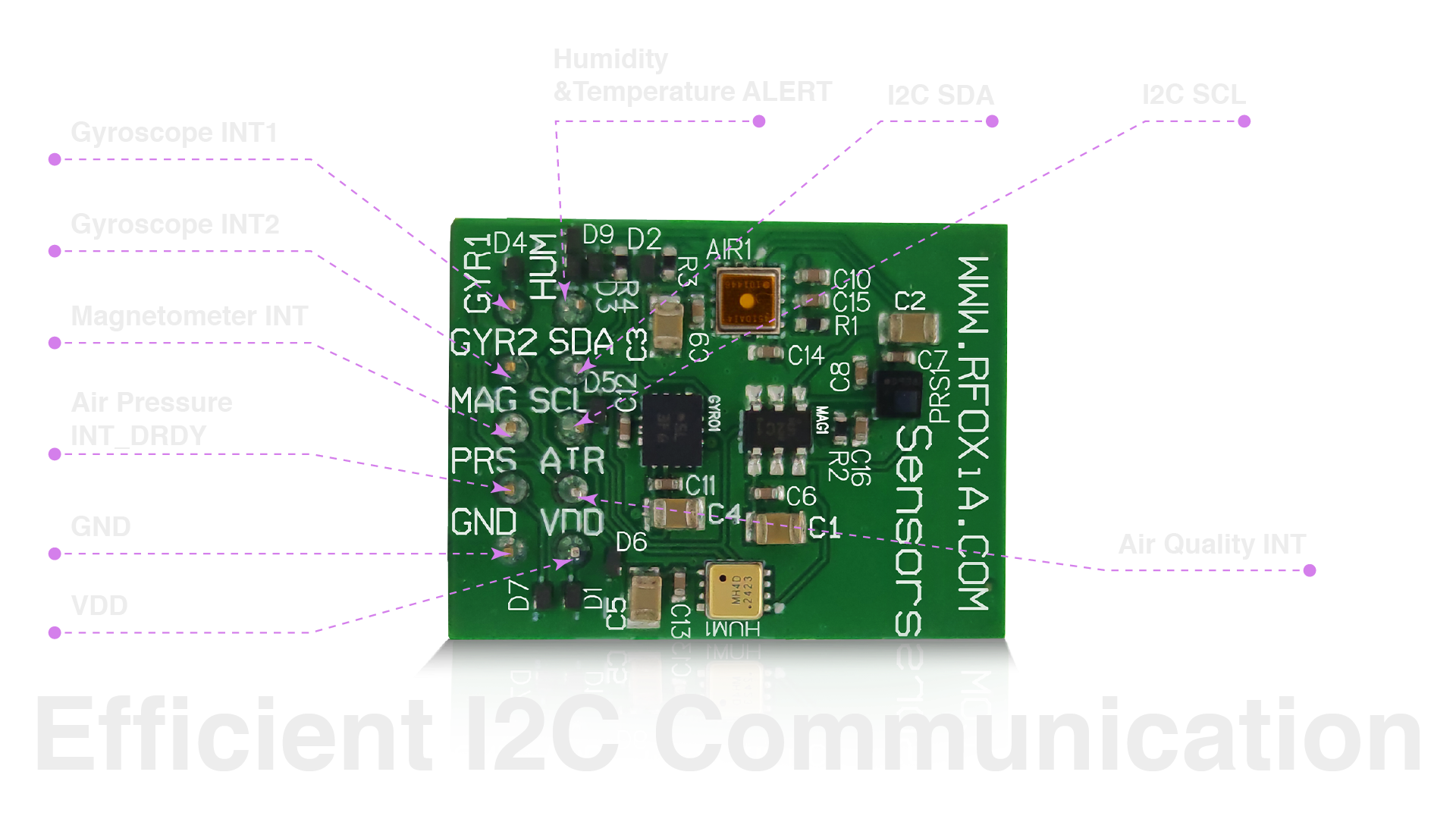
Here is where the MultiNav Pro+ makes a smart engineering choice that many hobbyist multi-sensor boards get wrong: all seven sensors share a single I2C bus, each with a dedicated address, rather than requiring separate SPI lines, GPIO pins, or multiplexer chips for each sensor.
Why does this matter for sensor module power optimization IoT?
Fewer signal lines = fewer GPIO pins consumed on your MCU. This lets you use smaller, lower-power microcontrollers in your design. A smaller MCU with fewer peripherals active draws less current.
I2C supports clock stretching and multi-master configurations that make power-managed firmware design significantly easier. Your MCU can issue a read command, allow the sensor to stretch the clock while it wakes and prepares data, and then process the result — all in a single transaction without busy-waiting.
Single bus means single pull-up resistor set, reducing component count and board space while also slightly reducing static current consumption compared to multiple separate buses.
Each sensor retains its own I2C address, so there are no address conflicts and no need for an I2C multiplexer chip — which itself draws power and adds latency. The address allocation is handled at the hardware level, meaning your firmware can address any sensor directly without additional bus management overhead.
For developers building firmware with the RFOXiA AI Firmware Builder — the platform's integrated AI tool that generates production-ready firmware from plain language descriptions — this clean I2C architecture means the AI can generate optimized sensor polling routines, interrupt-driven wake patterns, and duty-cycle schedules without fighting complex bus configurations.
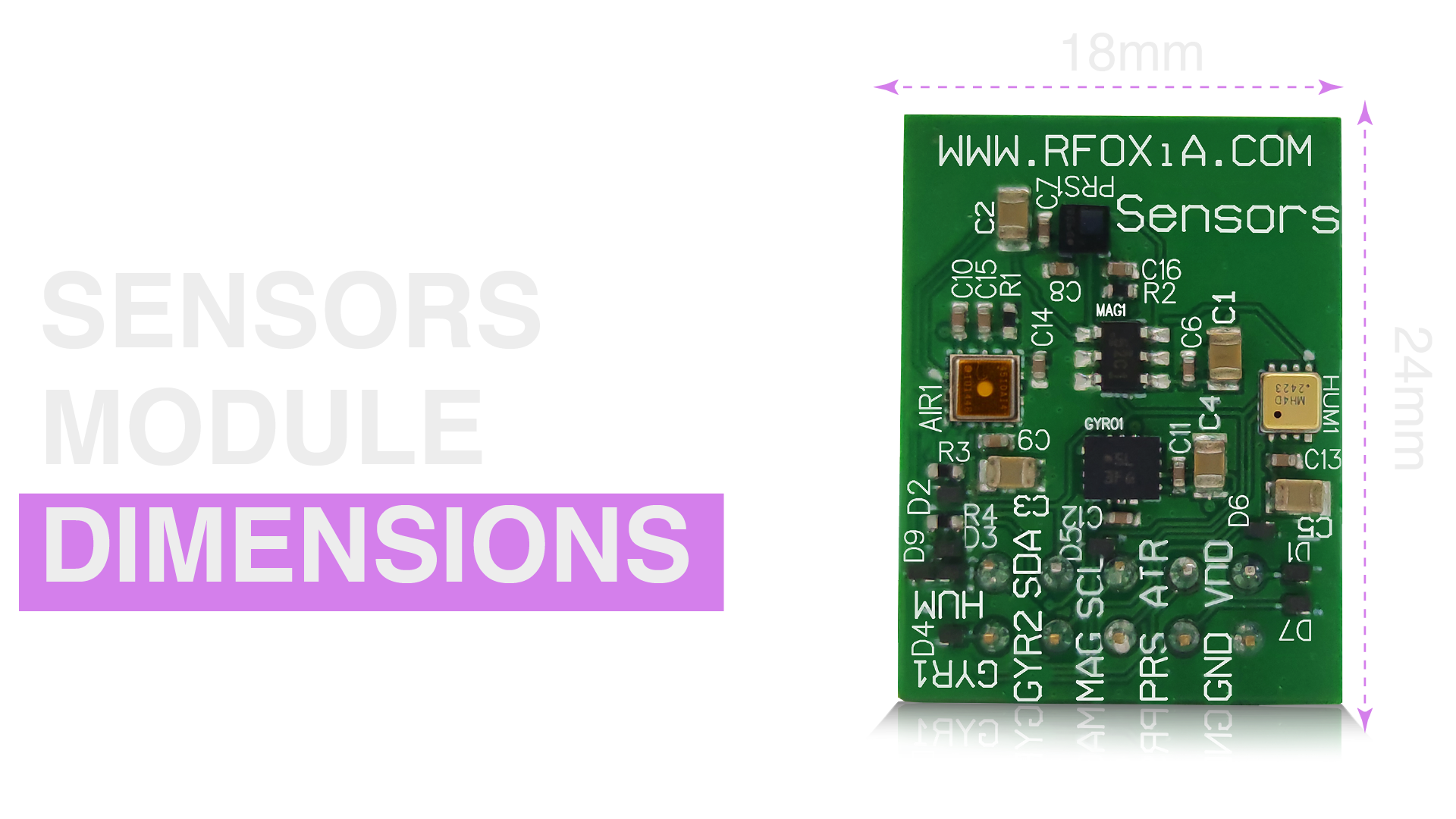
Compact Design: Why 24mm × 18mm Is a Serious Specification
Size is often treated as a cosmetic feature. It isn't. In embedded systems design, board size directly affects thermal management, weight (critical for drones), mounting options, and — critically — how many modules can be integrated into a single enclosure or chassis.
At 24mm × 18mm, the MultiNav Pro+™ is smaller than a standard postage stamp. It fits on an FPV racing drone frame without modifying the stack. It fits inside a compact weather station enclosure. It fits on the arm of a robotic manipulator. It can be embedded in a wearable device without being the largest component on the board.
Compact design also influences power optimization indirectly: shorter PCB traces between the MCU connector and each sensor IC reduce parasitic capacitance on the I2C bus, which allows the bus to run at higher speeds with lower pull-up resistor values, reducing I2C bus current during active transmission cycles.
Real-Time Environmental Data: What You Can Actually Do With It
Let's move from architecture to application. What does it mean in practice to have all seven of these data streams available simultaneously?
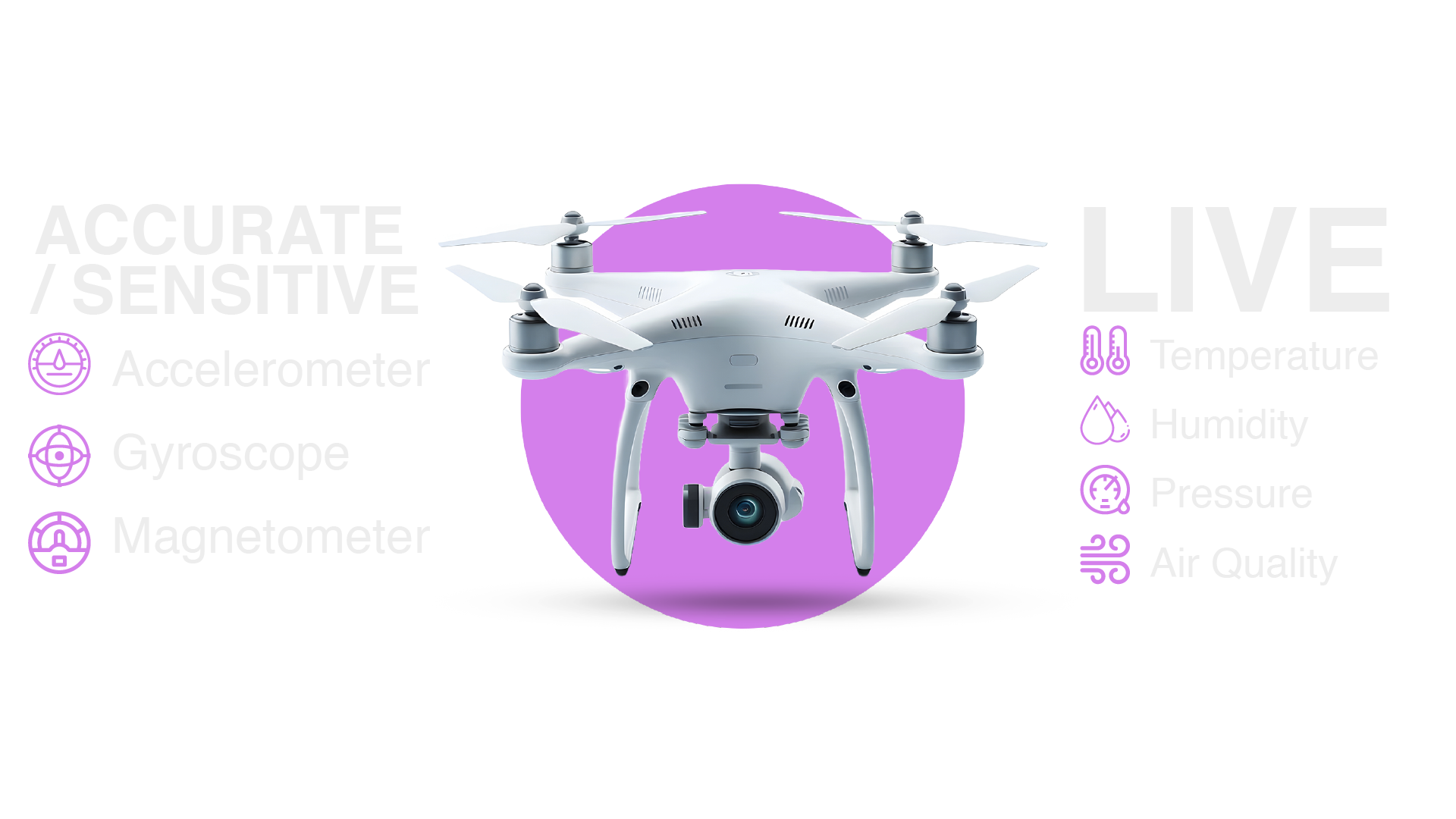
For drone operators: The IMU data from the BMI270 feeds directly into flight controller attitude estimation. The barometric pressure from the LPS22HH provides altitude hold and return-to-home altitude locking. The magnetometer provides compass-stabilized heading. All three working together — from a single 24mm module — gives you the sensor fusion stack you need for stable autonomous flight.
For environmental researchers: Temperature, humidity, pressure, and air quality data collected simultaneously from the same physical location eliminates the correlation errors you get when combining data from geographically separated sensors. You know exactly what the air quality, pressure, humidity, and temperature were at the same point in space at the same moment in time.
For RFOXiA data network contributors: The Sensors Module is the hardware that enables you to contribute to RFOXiA's commercial environmental data network and earn daily rewards of $0.08–$0.40 per day. The network requires all five environmental data points to be present and GPS-verified — and the MultiNav Pro+ provides all of them. Your node works while you sleep.
For robotics engineers: The combination of accelerometer, gyroscope, and magnetometer gives you a complete 9-DOF (degrees of freedom) orientation solution. Add air quality and environmental data and you have a robot that can not only navigate but also understand and react to its environment.
If you're ready to start building, the RFOXiA Integrated Sensors Module is available now at $39 with 150 units in stock.
Sensor Module Power Optimization IoT: Practical Firmware Strategies
Owning a power-efficient sensor module is only half the equation. Your firmware strategy determines whether you achieve the full potential of what the hardware offers. Here are the core techniques for maximizing battery life when deploying the MultiNav Pro+ in field IoT applications:
1. Interrupt-Driven Wake on Motion
The BMI270 supports hardware interrupt output that can be connected to a GPIO on your host MCU configured as an external interrupt wake source. Set the IMU to low-power mode with a motion detection threshold configured. When motion is detected, the IMU pulls the interrupt line, the MCU wakes from deep sleep, processes data, and returns to sleep. In static deployments like a fixed environmental monitoring node, this means the MCU stays asleep 99% of the time.
2. One-Shot Mode for Environmental Sensors
Configure the LPS22HH pressure sensor and the MVH4003D humidity/temperature sensor in one-shot mode. Your MCU wakes on a timer interrupt (every 30 seconds, for example), issues a one-shot measurement command to each sensor over I2C, waits the minimum conversion time (typically 1-10ms), reads the result, logs or transmits it, and returns to deep sleep. Average current for a system running at 30-second intervals can be reduced by 90%+ compared to continuous measurement mode.
3. Air Quality Sensor Duty Cycling
The ZMOD4510 gas sensor requires a preheat period before stable readings are available — this is characteristic of metal oxide gas sensors. For power-optimized deployments, schedule the ZMOD4510 to power up for its required measurement sequence (typically every few minutes), take a reading, and power down. Most IoT environmental applications don't need sub-minute air quality resolution, so duty cycling this sensor to 1-5 minute intervals can dramatically reduce its contribution to average system power draw.
4. I2C Clock Speed Optimization
For ultra-low-power deployments where the I2C bus is only active for short bursts, use standard mode (100 kHz) rather than fast mode (400 kHz). While counterintuitive — slower clock means longer bus active time per transaction — the difference in total energy consumed per transaction can favor standard mode in systems with high bus capacitance or long cable runs. Profile your specific hardware configuration to determine which mode is optimal for your power budget.
5. Power Rail Gating
For applications where sensors will be completely idle for extended periods (hours rather than seconds), consider gating the sensor power rail entirely through a low-power load switch IC controlled by an MCU GPIO. When the sensor group is off, even their standby currents are eliminated. This technique is most effective when combined with RFOXiA's AI Firmware Builder — describe your duty cycle requirements in plain language and let the AI generate the power-gating firmware logic.
The RFOXiA Ecosystem Advantage
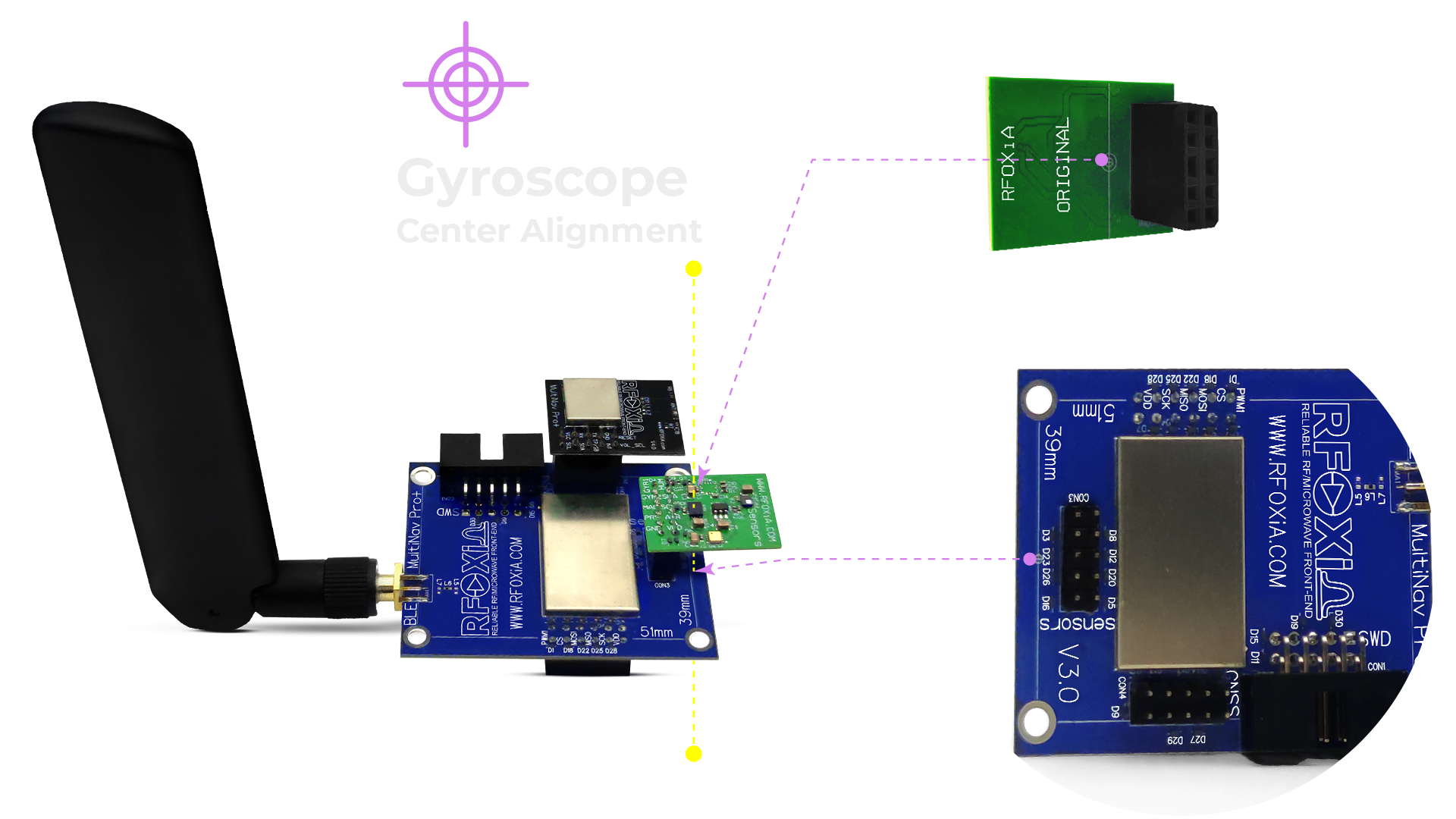
The MultiNav Pro+™ Sensors Module doesn't exist in isolation. It's one piece of a vertically integrated ecosystem designed from the ground up so that every component works together with minimum integration friction.
Pair it with the MultiNav Pro+™ BLE Module — the long-range Bluetooth module that achieves 5km ground-to-ground and 15–20km man-to-drone range — and you have a sensor node that can transmit environmental and motion data over distances that commodity BLE modules can't approach. No gateway infrastructure needed. No LoRa network subscription. Just direct wireless communication to your phone or another node.
Add the GNSS Module (1.5-meter accuracy, 18Hz fix rate) and your sensor node becomes GPS-tagged, enabling the geographic verification required for RFOXiA data network participation and for any precision environmental mapping application.
Power the entire stack with the Power/Program Kit — the supercapacitor-based power solution that charges in 5 minutes and runs the complete module stack for 24 hours. No battery degradation, no lithium chemistry safety concerns, no waiting 2 hours for a charge. True field-deployable endurance.
This is the Developer Bundle: BLE Module + GNSS Module + Sensors Module + Power/Program Kit for $199. It's the only product on the market that combines long-range wireless, precision location, comprehensive environmental sensing, and professional power management in a single kit at a maker-accessible price.
For any serious developer working on sensor module power optimization IoT projects, the RFOXiA Integrated Sensors Module is the foundation — and the full Developer Bundle is where the ecosystem comes together.

Applications at a Glance
To summarize the breadth of what this module enables:
Drone and aerospace: IMU + barometric altitude + compass + GPS (paired with GNSS Module) = complete autopilot sensor stack.
Environmental monitoring stations: Temperature + humidity + pressure + air quality + GPS verification = data network node that earns daily rewards.
Precision agriculture: Micro-climate data (temperature, humidity, pressure) at field resolution for irrigation optimization, frost prediction, and yield modeling.
Smart city infrastructure: Air quality + environmental sensors deployed across urban areas for pollution mapping and public health monitoring.
Wearable technology: Motion (accelerometer + gyroscope + magnetometer) + environmental awareness in a 24mm × 18mm module small enough for any wearable form factor.
Robotics: Full 9-DOF motion sensing + environmental awareness enables robots that navigate their environment and respond to real-world conditions.
Industrial IoT: Equipment monitoring (vibration via accelerometer, environmental conditions) with long-range wireless reporting via the BLE Module.
FCC Certification: Why It Matters for Your Project
The MultiNav Pro+™ Sensors Module is FCC certified — as are all four RFOXiA modules. For professional developers, researchers, and commercial IoT operators, this isn't a nice-to-have. It's a requirement.
FCC certification means the module meets federal radio frequency emissions standards, which matters even for a wired I2C sensor board because the board's digital switching can generate RF emissions that affect nearby wireless systems. Certified modules can be integrated into commercial products without triggering the need for full system-level FCC testing in many configurations — a significant reduction in time-to-market and certification cost for commercial developers.
For distributor qualification on platforms like DigiKey, Mouser, or Newark/Element14, FCC certification is a baseline requirement. The MultiNav Pro+ meets that bar.
How to Get Started
The path from zero to deployed sensor node with the MultiNav Pro+™ is straightforward:
Order the module — $39, 150 units in stock, ships from Delaware. If you want the full ecosystem, the Developer Bundle at $199 gives you everything.
Join RFOXiA Club free — you get $10 welcome credit immediately, access to the AI Firmware Builder, full documentation, and the developer community.
Use the AI Firmware Builder — describe what you want to build in plain language. The AI generates production-ready firmware for the BMI270, LPS22HH, TMAG5273, MVH4003D, and ZMOD4510 using the I2C interface. No hunting for libraries. No compatibility debugging.
Deploy your node — pair with the BLE Module for wireless data transmission, add the GNSS Module for GPS tagging, and plug into the Power/Program Kit for all-day runtime.
Activate data network participation — connect your outdoor-deployed node to the RFOXiA data network and start earning daily rewards for verified environmental data.
Sensor module power optimization IoT is ultimately about making hardware that works in the real world — deployed in the field, running on limited power, sending meaningful data reliably over time. The MultiNav Pro+™ Sensors Module was designed with exactly that goal from the component level up.
Explore the full specs and order your module at the RFOXiA Integrated Sensors Module product page. 150 units available. Get yours before they're gone.
RFOXiA — Democratizing Connectivity and Computing Power.
Written by: Moamen Mohamed LinkedIn