
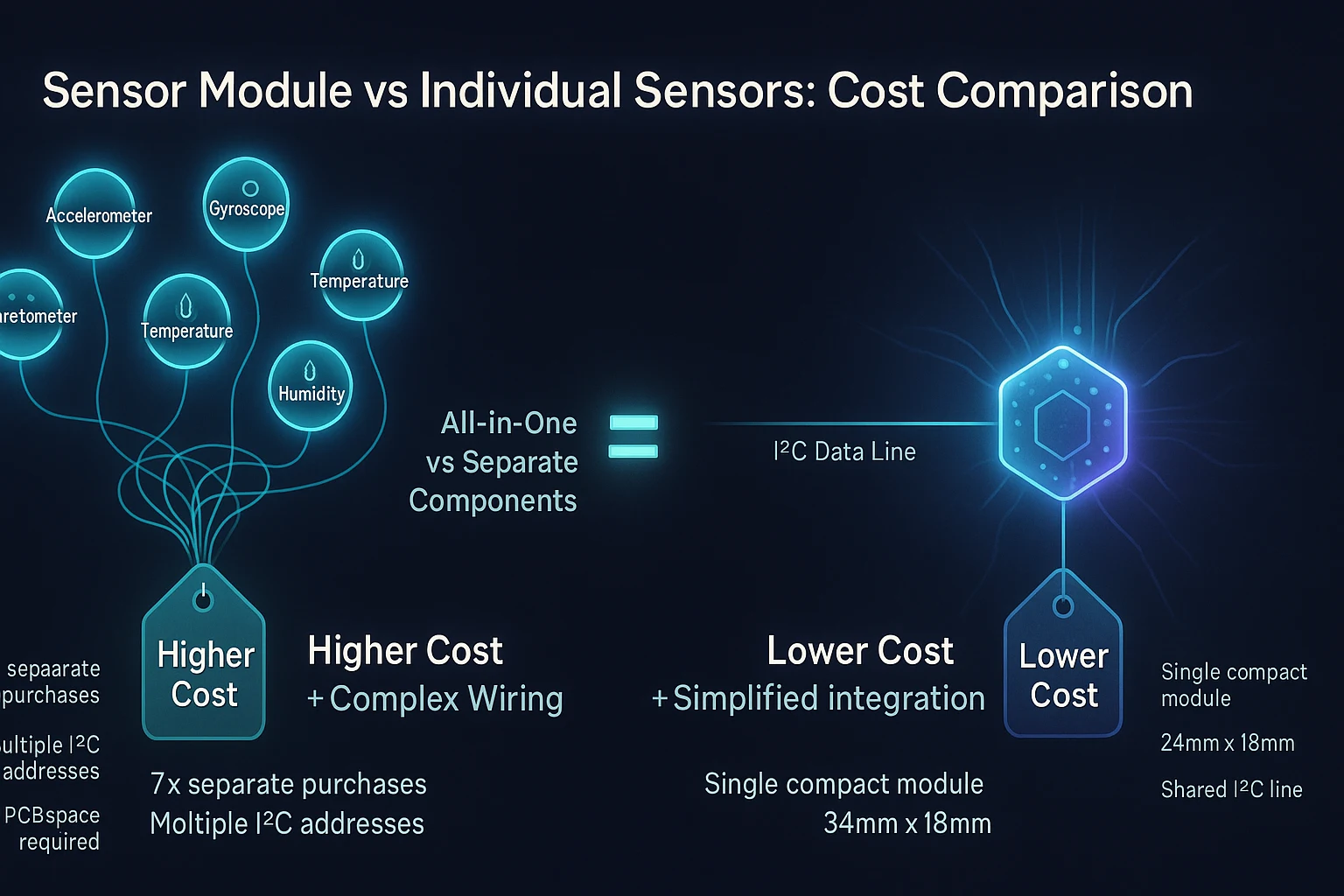
Sensor Module vs Individual Sensors Cost: Why Integration Always Wins
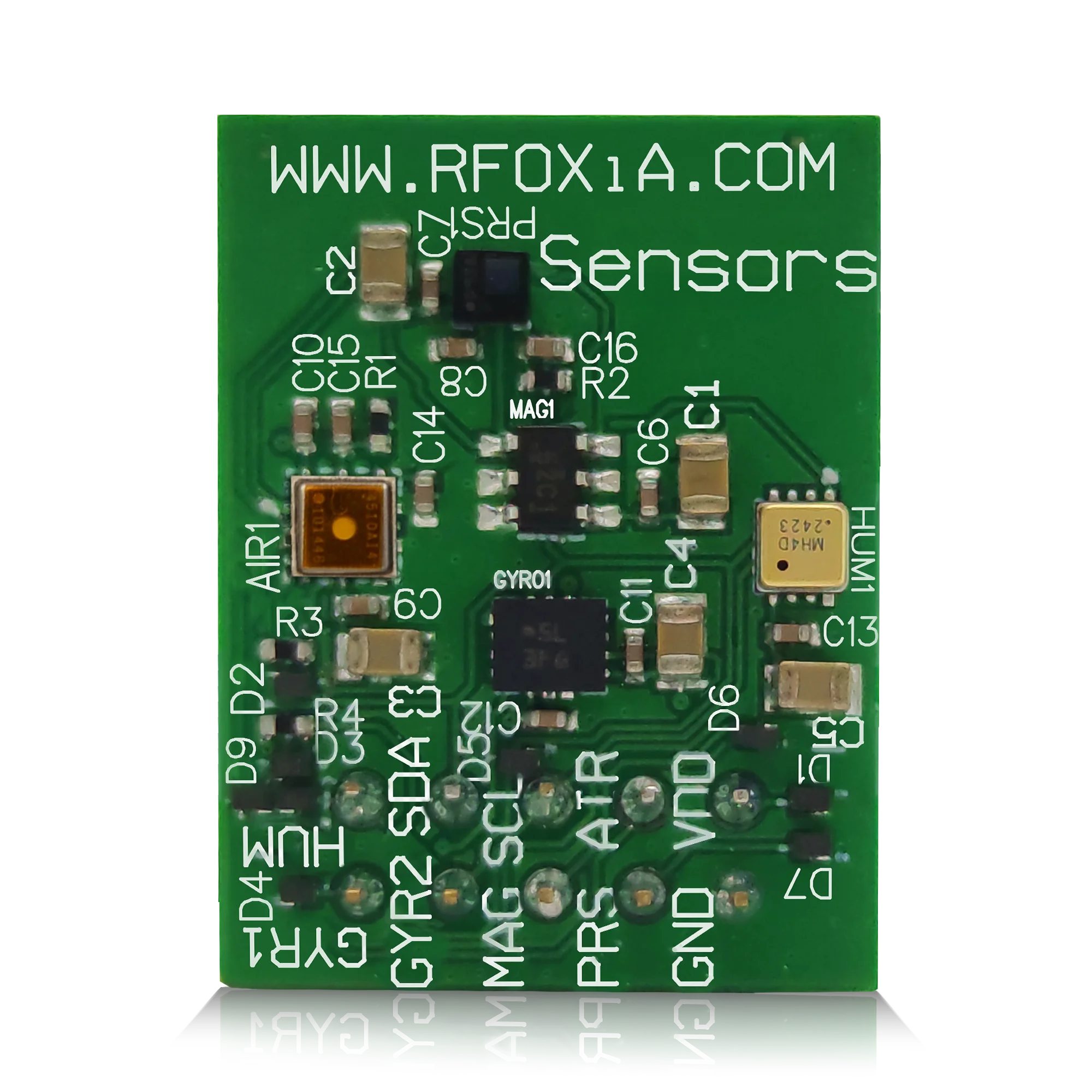
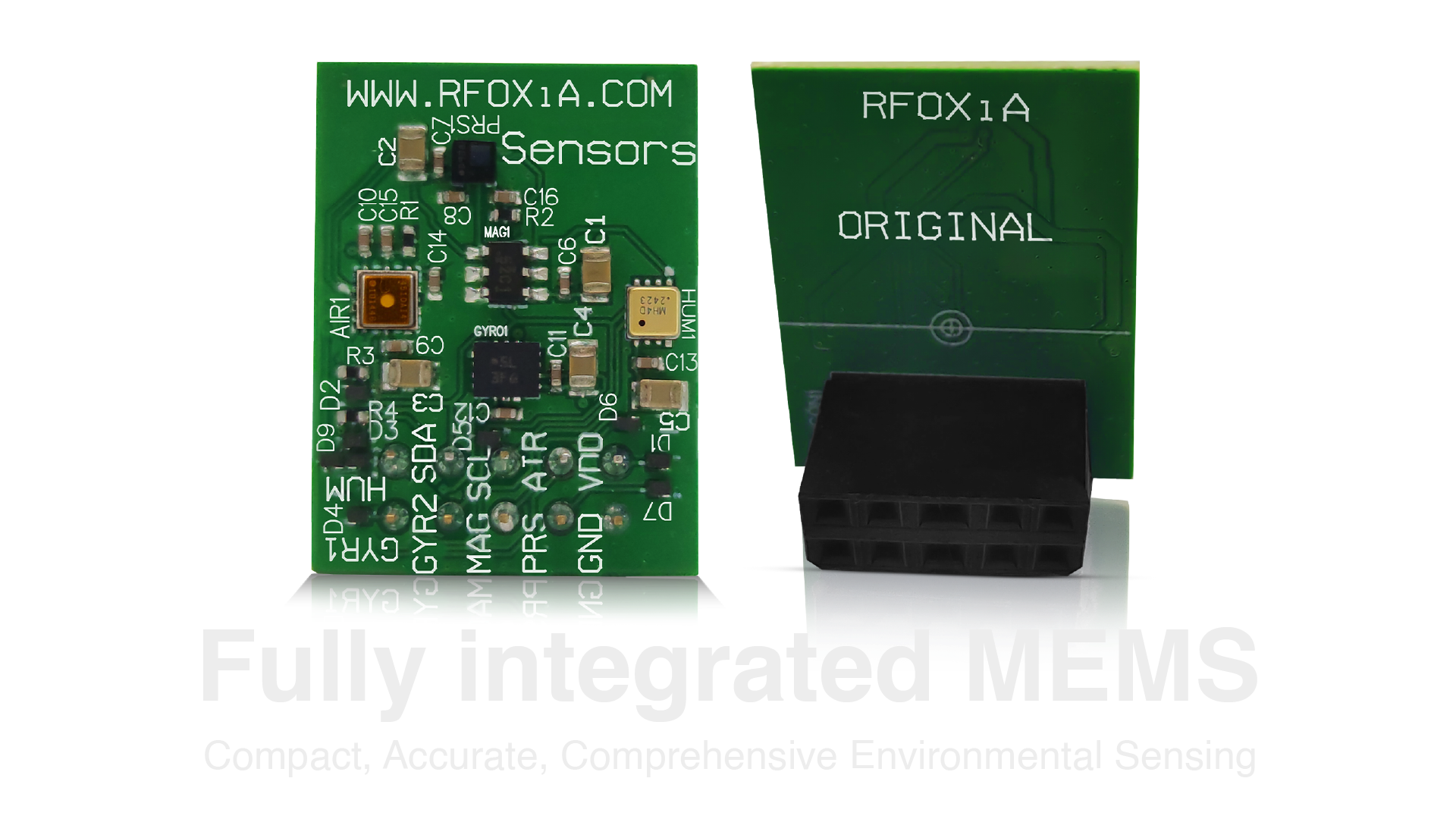
RFOXiA Integrated Sensors Module
Sensor Module vs Individual Sensors Cost — The Real Numbers Every Builder Needs to See
If you've ever designed a hardware project that needed motion tracking, environmental monitoring, and orientation sensing simultaneously, you've faced the same decision: do you source individual sensors and build your own circuit, or do you invest in an integrated sensor module that packages everything together?
The answer seems obvious until you start adding up the real costs — not just the component price tags, but the engineering hours, the PCB revisions, the debugging sessions, and the bill of materials complexity that comes with going the DIY route. This article breaks down the full picture so you can make an informed decision for your next build.
And at the end, we'll show you exactly what a purpose-built, professionally integrated solution looks like — the RFOXiA Integrated Sensors Module, engineered for serious builders who can't afford to waste time or money on avoidable problems.
What We're Actually Comparing
Before diving into cost analysis, let's define what "individual sensors" means in this context. A typical hardware project requiring full environmental and motion awareness needs at minimum:
- An accelerometer and gyroscope — for motion, tilt, vibration, and orientation data
- A magnetometer — for compass heading and magnetic field detection
- An air pressure sensor — for altitude estimation and weather monitoring
- A humidity and temperature sensor — for environmental awareness
- An air quality sensor — for detecting VOCs, ozone, and pollution levels
That's seven distinct sensing functions across six sensor categories. Each one, sourced individually, brings its own footprint, power requirements, communication protocol quirks, and integration headaches.
Now let's look at what it actually costs to do this yourself versus buying an integrated module.
The True Cost of Sourcing Individual Sensors
1. Component Costs
Let's build a realistic BOM for a DIY seven-sensor array using quality components:
| Sensor Function | Example Component | Unit Cost (1-10 pcs) |
|---|---|---|
| Accelerometer + Gyroscope | BMI270 (Bosch) | $4.50–$6.00 |
| Magnetometer | TMAG5273 (Texas Instruments) | $2.00–$3.50 |
| Air Pressure | LPS22HH (STMicro) | $3.00–$4.50 |
| Humidity + Temperature | High-accuracy MEMS sensor | $3.50–$5.00 |
| Air Quality | ZMOD4510 (Renesas) | $5.00–$8.00 |
| Passive components (caps, resistors, pull-ups) | Various | $2.00–$4.00 |
| PCB fabrication (2-layer, small run) | JLC or equivalent | $8.00–$15.00 |
| Stencil and assembly (if not hand-soldering) | Various | $15.00–$30.00 |
Total DIY component and fabrication cost: approximately $43 to $76 per unit at low quantities.
And that's before a single hour of engineering time is accounted for.
2. Engineering Time Costs
This is where the sensor module vs individual sensors cost calculation gets brutal for DIY builds.
Schematic design for seven sensors on a shared I2C bus with proper pull-up resistors, decoupling capacitors, and address conflict resolution: 4–8 hours for an experienced engineer.
PCB layout optimized for RF sensitivity, thermal isolation between the air quality sensor and the temperature sensor, and compact footprint: 6–12 hours.
Firmware development — writing drivers for seven different sensors from five different manufacturers, each with their own register maps and initialization sequences: 20–40 hours minimum.
Debugging I2C address conflicts, noise issues, sensor cross-contamination, and power sequencing problems: 8–20 hours (conservative estimate).
If your time is worth even $25/hour — well below market rate for embedded systems work — you're looking at $950 to $2,000 in engineering time for a first-pass DIY sensor array. For a professional contractor, that number doubles or triples.
3. Revision Costs
First-spin PCBs almost never work perfectly. Budget for at least one revision:
- New PCB fabrication: $8–$15
- New stencil: $10–$20
- New components (including any damaged during debug): $20–$40
- Additional engineering time: $200–$500
Realistic first-working-prototype cost for a DIY 7-sensor array: $1,200 to $2,600+
What an Integrated Sensor Module Actually Costs
The RFOXiA Integrated Sensors Module is priced at $39.
It ships today. It works out of the box. Every sensor is already calibrated, addressed, and accessible over a single I2C line. The firmware drivers are available through the RFOXiA platform. There are no PCB revisions, no component sourcing headaches, no I2C address conflicts to untangle.
The cost comparison isn't even close.
But cost isn't the only reason integrated wins. Let's look at the technical case.
The Technical Case for Integration
Precision Motion and Environmental Sensing
When you're building a system that needs both motion data and environmental data simultaneously — say, a drone that needs to know its orientation and the air quality at altitude — the quality of each sensor matters as much as the quantity.
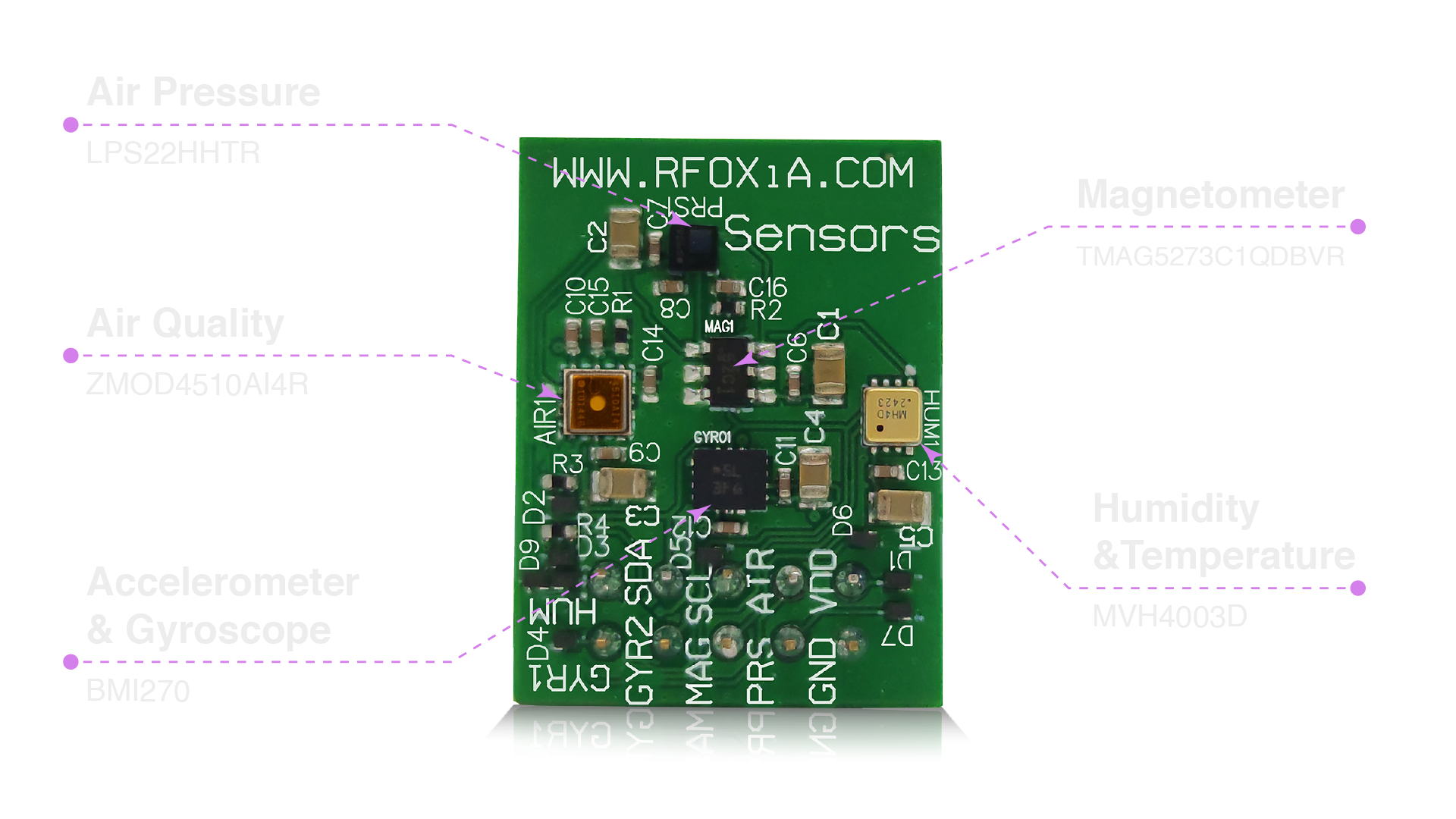
The MultiNav Pro+ Sensors Module doesn't use generic or low-grade components. Every sensor was selected for professional-grade performance:
- BMI270 from Bosch Sensortec — one of the highest-performing IMUs available for consumer and professional applications, used in flagship smartphones and professional drones
- TMAG5273C1QDBVR from Texas Instruments — a precision magnetometer with industry-leading noise performance
- LPS22HHTR from STMicroelectronics — a barometric pressure sensor with ±0.1 hPa accuracy, suitable for altitude tracking
- MVH4003D from MEMSVision — high-accuracy humidity and temperature sensing
- ZMOD4510AI4R from Renesas — a dedicated outdoor air quality sensor capable of detecting ozone and nitrogen dioxide
This is not a collection of whatever-was-cheapest sensors. This is a curated ensemble of best-in-class components from major semiconductor manufacturers.
The I2C Architecture Advantage
One of the most underappreciated benefits of a purpose-built sensor module is the I2C architecture design.
When you source sensors individually, I2C address management becomes a genuine engineering problem. Many sensors have fixed or limited address options. If two sensors share the same address — and this happens more often than you'd like — you either need separate I2C buses, address translators, or you redesign your BOM around a different component.
The MultiNav Pro+ Sensors Module solves this at the design stage. All seven sensors share a single I2C line, each with a unique dedicated address, with proper pull-up resistors and decoupling capacitors already in place. No conflicts. No additional hardware. No bus multiplexers.
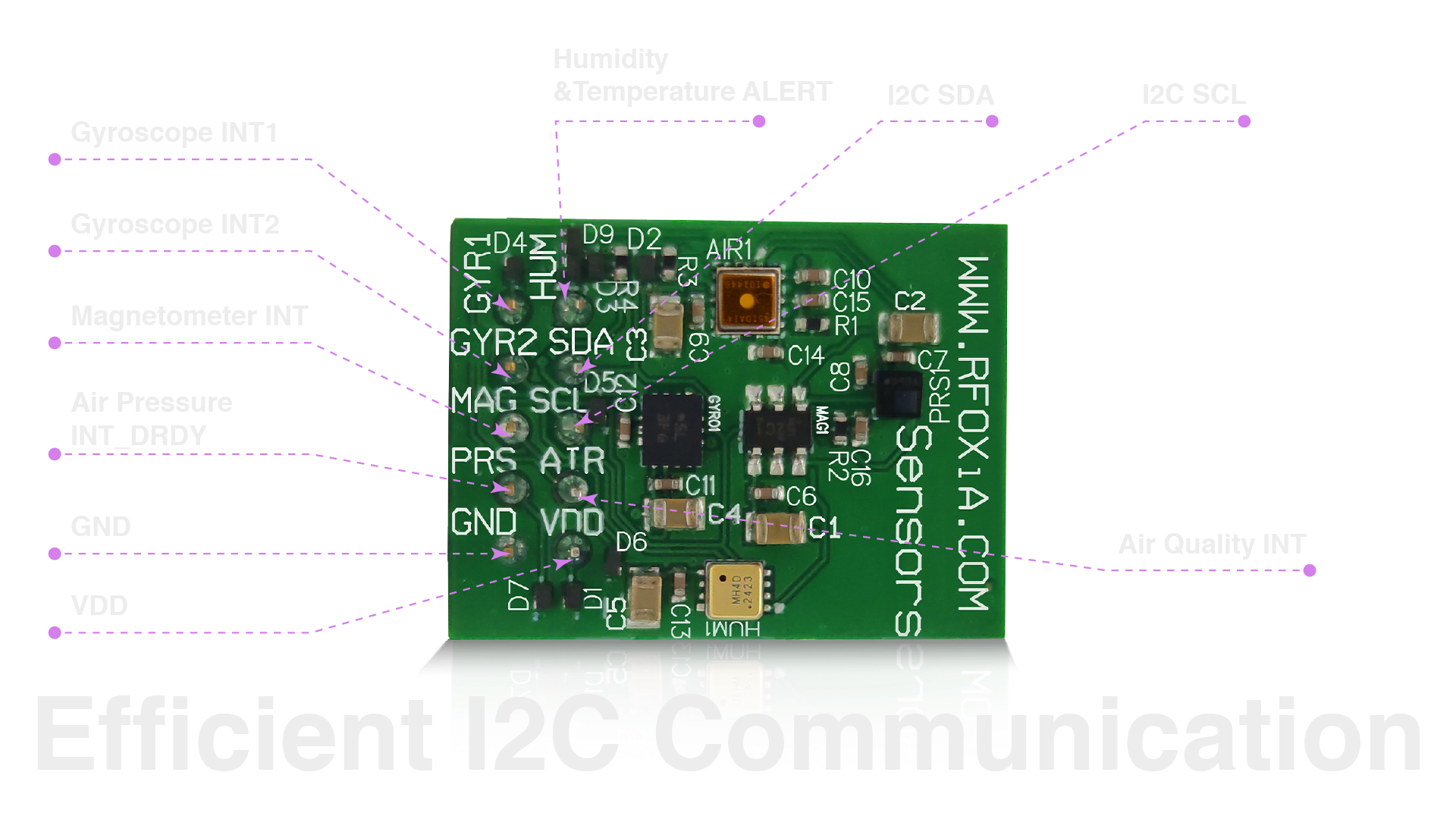
For a builder connecting this module to a microcontroller, this means a two-wire interface — SDA and SCL — is all you need to access seven sensors simultaneously. That simplicity has a real value that doesn't show up directly in the sensor module vs individual sensors cost comparison but absolutely shows up in your project timeline.
The Space Problem
For any project where form factor matters — and it matters for drones, wearables, compact IoT nodes, and field instruments — physical board size is a hard constraint.
Seven individual sensors, even in the smallest available packages, require significant board area. You need:
- Pads and routing for each component
- Decoupling capacitors per sensor (typically 1–3 caps each)
- Pull-up resistors for I2C lines
- Thermal isolation between heat-generating components and temperature-sensitive sensors
- Test points for debugging
A competent layout can probably fit all this into 30mm × 25mm on a 4-layer board. On a 2-layer board, expect larger.
The MultiNav Pro+ Sensors Module does it in 24mm × 18mm on a fully professional PCB with impedance-controlled traces, proper thermal management, and production-quality assembly.
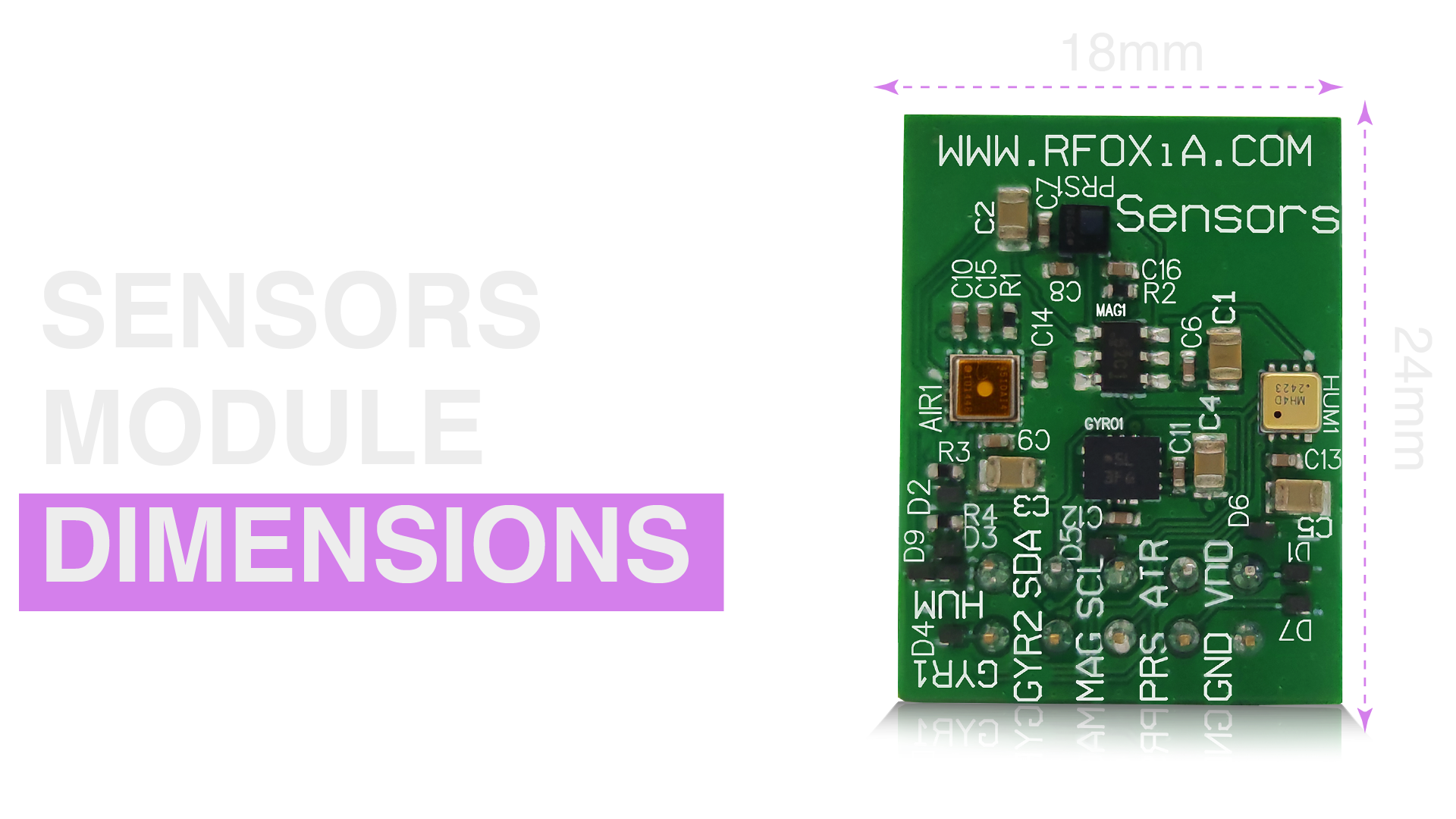
That's smaller than a postage stamp. It fits on a drone without affecting flight dynamics. It fits in a wearable enclosure. It fits in a compact IoT node where every cubic millimeter counts.
Real-Time Data — What It Actually Enables
The practical value of having all seven sensors working simultaneously and reliably goes beyond the spec sheet.
Consider a drone application. You need:
- IMU data (accelerometer + gyroscope) at high sample rates for flight stabilization
- Magnetometer data for heading reference
- Barometric pressure for altitude hold
- Temperature for battery performance estimation and motor thermal management
- Air quality if the platform is being used for environmental monitoring missions
With individual sensors, you're managing five separate initialization sequences, five separate read routines, and five separate calibration workflows in your firmware. With the MultiNav Pro+, this is a unified data stream — all sensors accessible through a single bus, all data timestamped and ready for fusion.
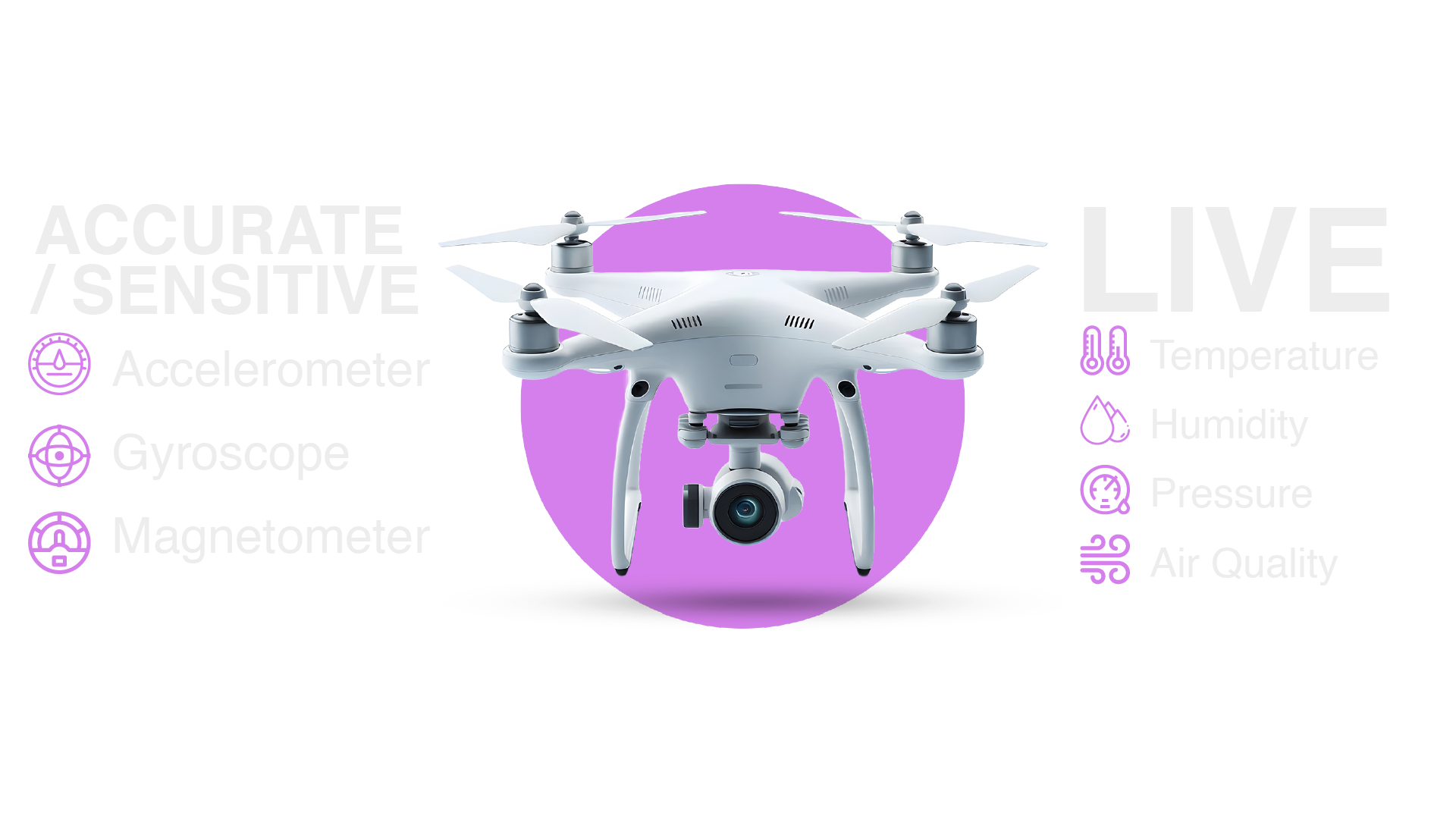
The result is real-time environmental intelligence that makes better products possible — not just cheaper ones.
Applications That Benefit Most From Integration
The sensor module vs individual sensors cost argument plays out differently depending on your use case. Here's where integrated modules deliver the most value:
Drone and UAV Platforms
Every gram and every cubic millimeter matters. Flight controllers need IMU data at 400Hz+. Environmental payload adds value to any drone mission. The MultiNav Pro+ delivers all of this in a package small enough to mount anywhere on a frame without affecting the center of gravity.
Environmental Monitoring Networks
Building a distributed sensor network means deploying multiple nodes. The cost multiplier effect of individual sensors becomes devastating at scale. At $39 per node, the MultiNav Pro+ makes dense networks economically feasible.
Robotics and Autonomous Systems
Robots need to know where they are, how they're moving, and what environment they're in. The full sensor suite in one module eliminates the multi-vendor integration nightmare and gets robots into the field faster.
Wearable and Portable Devices
Size constraints are absolute in wearables. You cannot afford the board area that individual sensors demand. The 24mm × 18mm footprint makes integration into compact enclosures straightforward.
Research and Field Instruments
Researchers deploying instruments in the field need reliability. A module that has been professionally assembled, tested, and validated is far more reliable than a hand-assembled prototype built from individual components.
Data Network Contributors
RFOXiA's data monetization network accepts verified environmental data from outdoor sensor deployments. The Sensors Module is the hardware that makes this possible — stream temperature, humidity, pressure, air quality, and GPS location, and earn daily rewards for contributing to the network. It's a sensor that pays you back.

The Ecosystem Advantage
Buying an individual sensor from a component distributor gives you a part. Buying the MultiNav Pro+ Sensors Module from RFOXiA gives you a part that fits into a complete ecosystem:
- RFOXiA Connect App — live sensor data displayed on your phone, no coding required for basic deployment
- RFOXiA Club Dev Hub — firmware examples, documentation, and community support
- AI Firmware Builder — describe your application in plain language, get production-ready firmware that reads and processes all seven sensors
- Data Network — deploy your module outdoors, earn daily rewards for verified environmental data
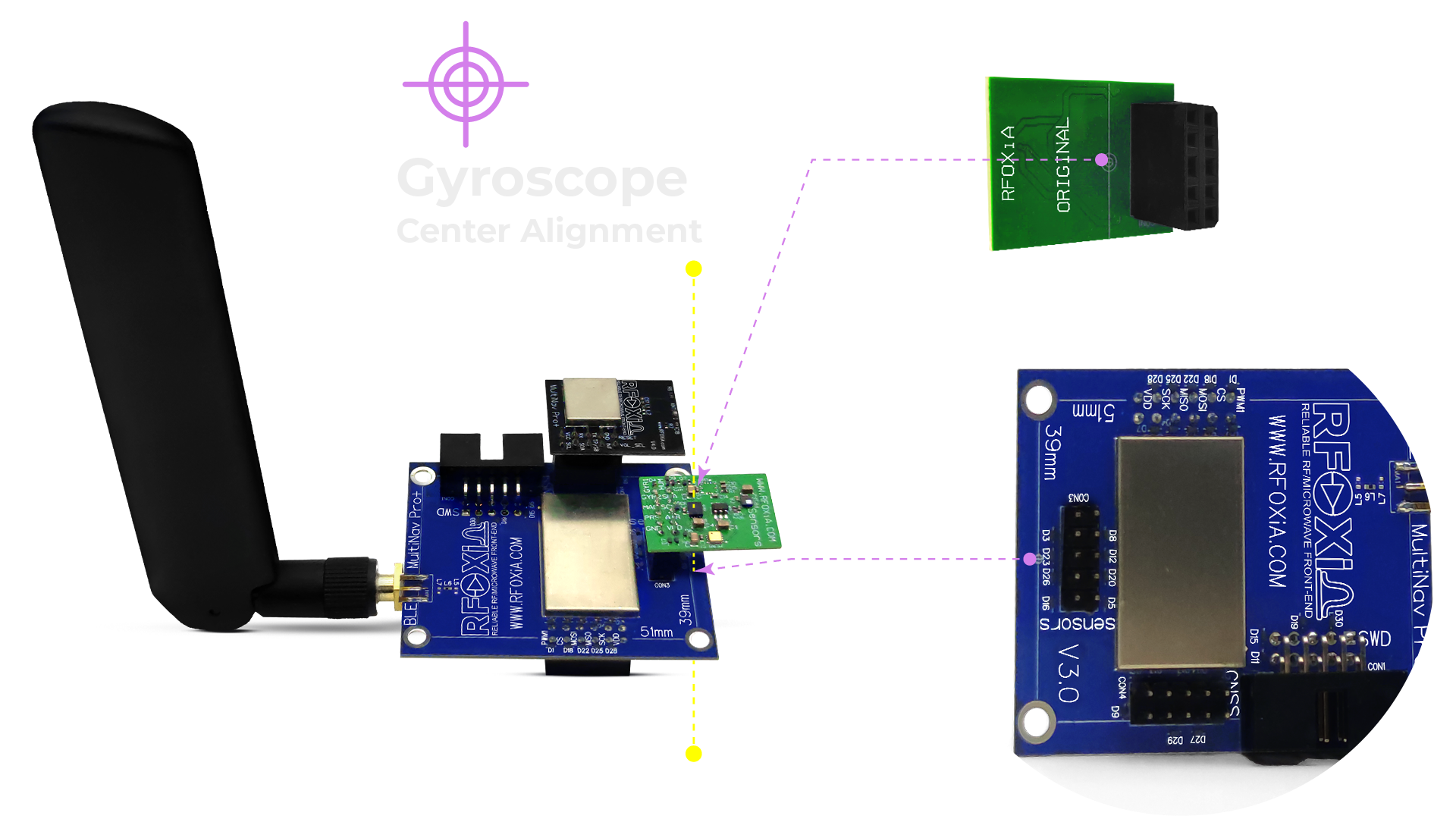
- Developer Bundle compatibility — the Sensors Module pairs with the BLE Module, GNSS Module, and Power/Program Kit for a complete wireless environmental sensing platform
This is the difference between a component and a platform. Individual sensors give you the former. The RFOXiA Integrated Sensors Module gives you the latter.
A Direct Cost Summary
| Factor | DIY Individual Sensors | MultiNav Pro+ Module |
|---|---|---|
| Component cost (1 unit) | $20–$34 | Included |
| PCB fabrication | $8–$15 | Included |
| Assembly | $15–$30 | Included |
| Engineering time (first build) | $950–$2,000 | $0 |
| Firmware development | $500–$1,000 | Drivers provided |
| Debugging and revision | $200–$500 | $0 |
| Total realistic first unit cost | $1,700–$3,600 | $39 |
| Time to first working prototype | 2–6 weeks | Same day |
| Board size | 30mm × 25mm+ | 24mm × 18mm |
| I2C conflicts | Possible | None |
| FCC certification | Your responsibility | Included |
The numbers make the case without any editorial commentary needed.
Who Should Still Consider Individual Sensors?
Fairness demands acknowledging the cases where individual sensors are the right choice:
- High-volume production (10,000+ units) where the per-unit component cost differential justifies custom PCB design
- Highly specialized applications requiring non-standard sensor combinations not available in any module
- Educational projects where the learning experience of building from scratch is the actual goal
- Custom mechanical integration requiring sensor placement in specific locations on a PCB too large for a module approach
For everyone else — for the builder with a prototype to build, a product to ship, a drone to fly, or a network to contribute to — the integrated module wins every time.
Final Verdict: Sensor Module vs Individual Sensors Cost
The real sensor module vs individual sensors cost comparison isn't about the component price tag. It's about the total cost of a working, reliable, deployable system.
When you include engineering time, PCB fabrication, assembly, debugging, firmware development, and the opportunity cost of weeks spent on sensor integration instead of building your actual product — individual sensors are dramatically more expensive than any integrated module.
The MultiNav Pro+ Sensors Module gives you seven professional-grade sensors from Bosch, Texas Instruments, STMicroelectronics, MEMSVision, and Renesas — selected, integrated, assembled, and tested — for $39. FCC certified. Ecosystem-ready. Ships today.
If you're building something that needs to know where it is, how it's moving, and what environment it's in — and you don't want to spend weeks solving problems that have already been solved — this is the module to use.
Get the MultiNav Pro+ Sensors Module from RFOXiA and start building what actually matters.
RFOXiA builds professional-grade wireless hardware and sensing systems for builders who refuse to compromise on quality or budget. Explore the full ecosystem at rfoxia.com.
Written by: Moamen Mohamed LinkedIn