
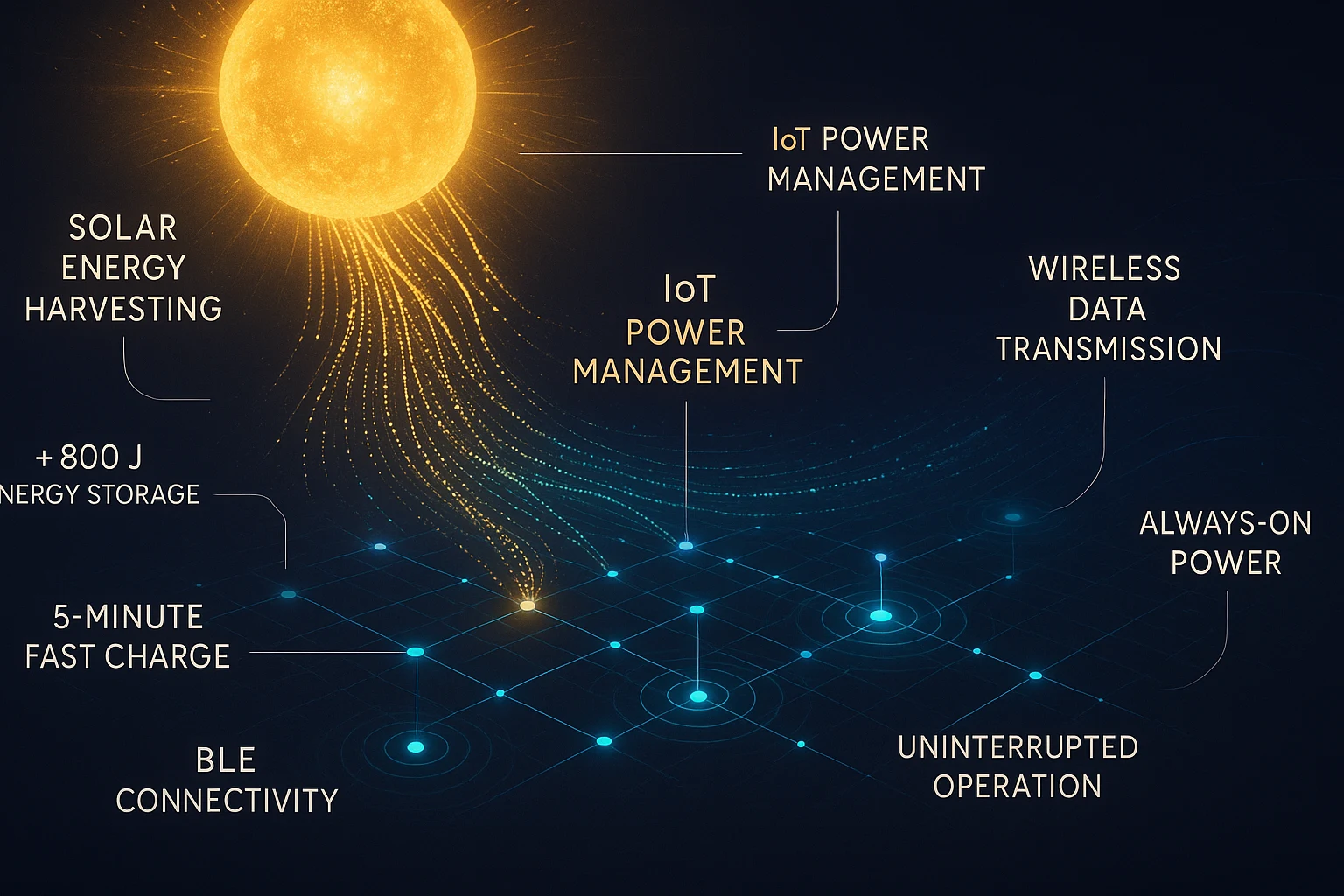
Solar IoT Power Module: Why SuperCapacitors Are Redefining Field-Ready IoT Power
RFOXiA SuperCapacitor Battery and Programmer Kit
The Solar IoT Power Module Problem Nobody Talks About
Every serious IoT developer, drone builder, or field researcher eventually runs into the same wall: power.
You build something remarkable. A long-range BLE sensor node. A drone telemetry system. A remote environmental monitor. You get it working perfectly on your bench. Then you deploy it in the field — and the power story falls apart.
Solar IoT power modules are a popular answer. Pair a small solar panel with a LiPo battery, add a charge controller, and theoretically you have unlimited runtime. But the reality is messier than the theory. Solar panels require direct sunlight. LiPo batteries degrade with every charge cycle. Charge controllers add complexity, failure points, and cost. In a forest, a warehouse, an urban deployment, or on a fast-moving drone, solar IoT power simply doesn't perform the way datasheets promise.
There is a better answer for developers who need reliable, repeatable, professional-grade power without the fragility of solar-dependent systems. And it comes from a technology that has been powering industrial and military systems for decades — supercapacitors.
This post breaks down why the RFOXiA SuperCapacitor Battery and Programmer Kit is the field-ready power solution that makers, drone operators, and IoT engineers have been waiting for — and why it outperforms traditional solar IoT power module setups in almost every real-world deployment scenario.
What Makes a Solar IoT Power Module Fall Short
Before we get into supercapacitor technology, it is worth being honest about where solar IoT power modules struggle — because the marketing around them rarely is.
Intermittency is a fundamental problem. Solar panels only generate meaningful current in direct, unobstructed sunlight. The moment you deploy in partial shade, indoors, under a canopy, on a cloudy day, or at high latitude in winter, your power budget collapses. IoT sensor nodes and BLE communication modules are not forgiving of power drops — they reset, lose connection, corrupt data logs, and in the worst cases, damage their own storage from incomplete write cycles.
LiPo degradation is real and fast. Most solar IoT power modules pair panels with lithium polymer batteries. LiPo cells are excellent for energy density, but they degrade. After 300-500 full charge cycles — which can happen within a single year of daily use — capacity drops noticeably. After 18 months of heavy field use, you may be running at 70% of original capacity without realizing it. For a developer who needs to know exactly how long their node will run, this uncertainty is a serious engineering problem.
Charge time is often impractical. Even a small LiPo pack takes 1-3 hours to charge from a standard USB source. If you are running multiple nodes, swapping batteries in the field, or working in a time-pressured environment, that wait time costs you productivity.
Solar IoT power modules add physical complexity. Panels, charge controllers, batteries, wiring harnesses — every additional component is a failure point. For drone applications especially, weight and physical simplicity are not optional concerns.
For many use cases, a solar IoT power module is a reasonable solution. But for high-performance IoT development — especially when you are working with advanced wireless modules like the MultiNav Pro+ — it is worth asking whether there is a better architecture.
Supercapacitors: The Alternative to Solar IoT Power That Engineers Trust
Supercapacitors — also called ultracapacitors or electrochemical double-layer capacitors — store energy electrostatically rather than chemically. This fundamental difference gives them properties that are extraordinary for field IoT applications:
- Charge and discharge in seconds to minutes, not hours
- Virtually unlimited cycle life — 500,000+ cycles with no measurable degradation
- No chemical aging — a supercapacitor from 5 years ago performs identically to a new one
- Extremely high power density — can deliver large bursts of current without voltage sag
- Operate across wide temperature ranges — far more tolerant of cold than LiPo
For a solar IoT power module comparison: imagine having a power source that charges in 5 minutes instead of hours, maintains 100% of its capacity for years, and never leaves you uncertain about how much runtime you have. That is the supercapacitor advantage.
Introducing the MultiNav Pro+ Power/Program Kit
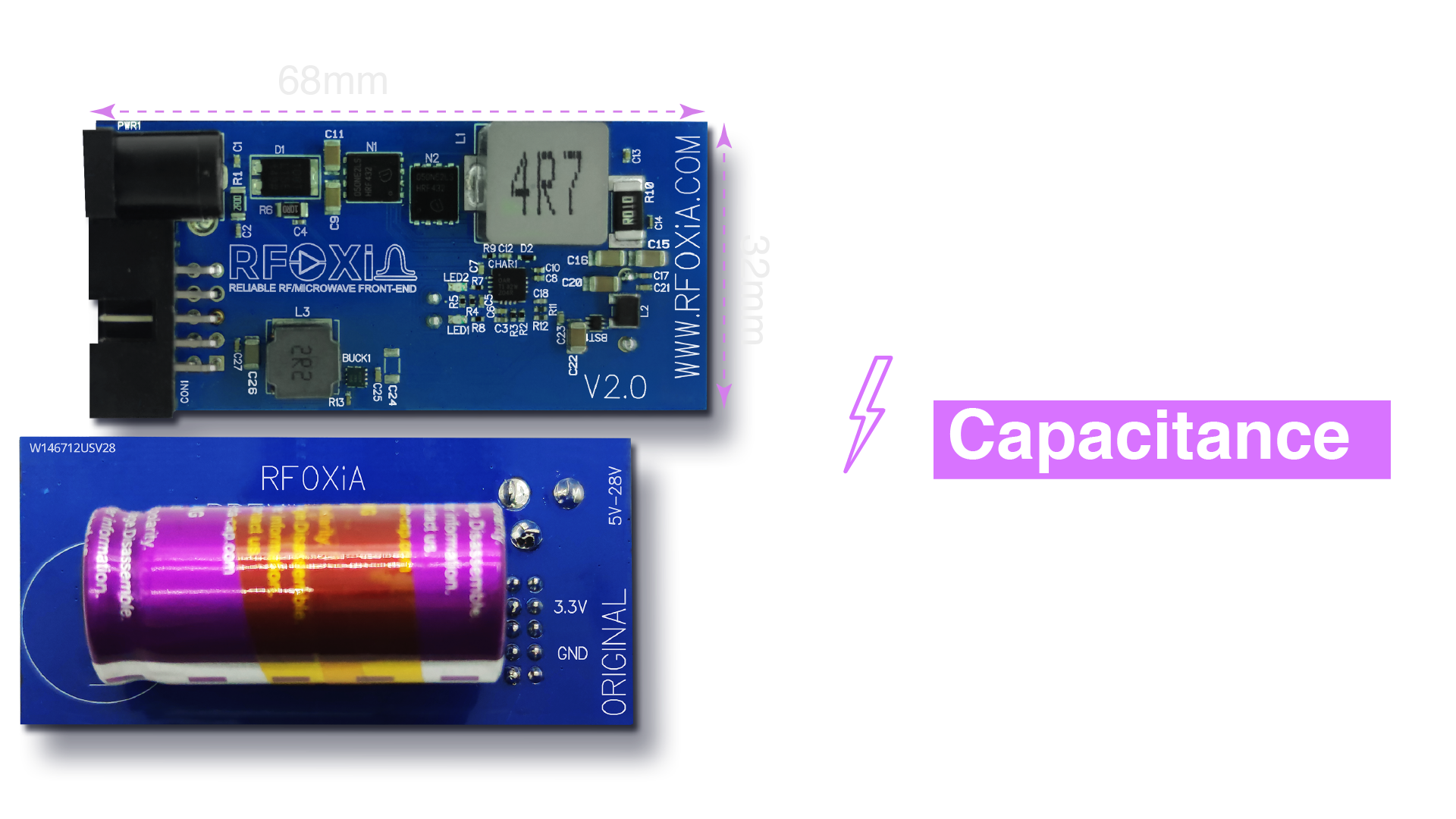
RFOXiA built the MultiNav Pro+ Power/Program Kit specifically to solve the power and programming challenges that developers face when working with the MultiNav Pro+ BLE Module ecosystem.
At its core is an 1100F supercapacitor system storing 8800 Joules of energy. That is not a modest buffer — that is enough energy to power the entire MultiNav Pro+ module stack for a full working day on a single charge. And that charge takes less than five minutes.
For context: a comparable LiPo-based solar IoT power module setup for the same use case would require a 2000-3000mAh battery pack, a solar panel of at least 5-10W, a charge controller, and ideal outdoor conditions. The supercapacitor kit requires a wall outlet and five minutes.
Key Specifications
- Capacitance: 1100F supercapacitor bank
- Energy storage: 8800 Joules
- Charge time: Under 5 minutes to full charge
- Runtime: Full day powering the complete MultiNav Pro+ module stack
- Charging input: 12V 5A adapter (included)
- Charging current to supercapacitor: 4V at 10A
- Programmer: Integrated STLink interface for MultiNav Pro+ BLE Module
- Cables: Flat ribbon cables for BLE module, power module, and programmer connections
- Certification: FCC certified
- Price: $119
Breaking Down Each Component
The 1100F SuperCapacitor Battery System
The heart of this kit is the supercapacitor bank — and it is engineered to a specification that stands apart from anything else available at this price point.
1100 farads of capacitance storing 8800 joules is not an incremental improvement over LiPo-based solar IoT power module solutions. It is a fundamentally different approach. The supercapacitor system delivers consistent voltage throughout its discharge cycle — no voltage sag as you approach depletion, which is critical for RF modules like the MultiNav Pro+ BLE where transmit power directly affects range.
The five-minute charge time transforms your development workflow. Instead of plugging in overnight or waiting through a lunch break for a LiPo to recover, you charge the supercapacitor while you review your firmware, walk to your deployment location, or brief a team member — and by the time you need it, it is ready.
High-Power Charging Adapter
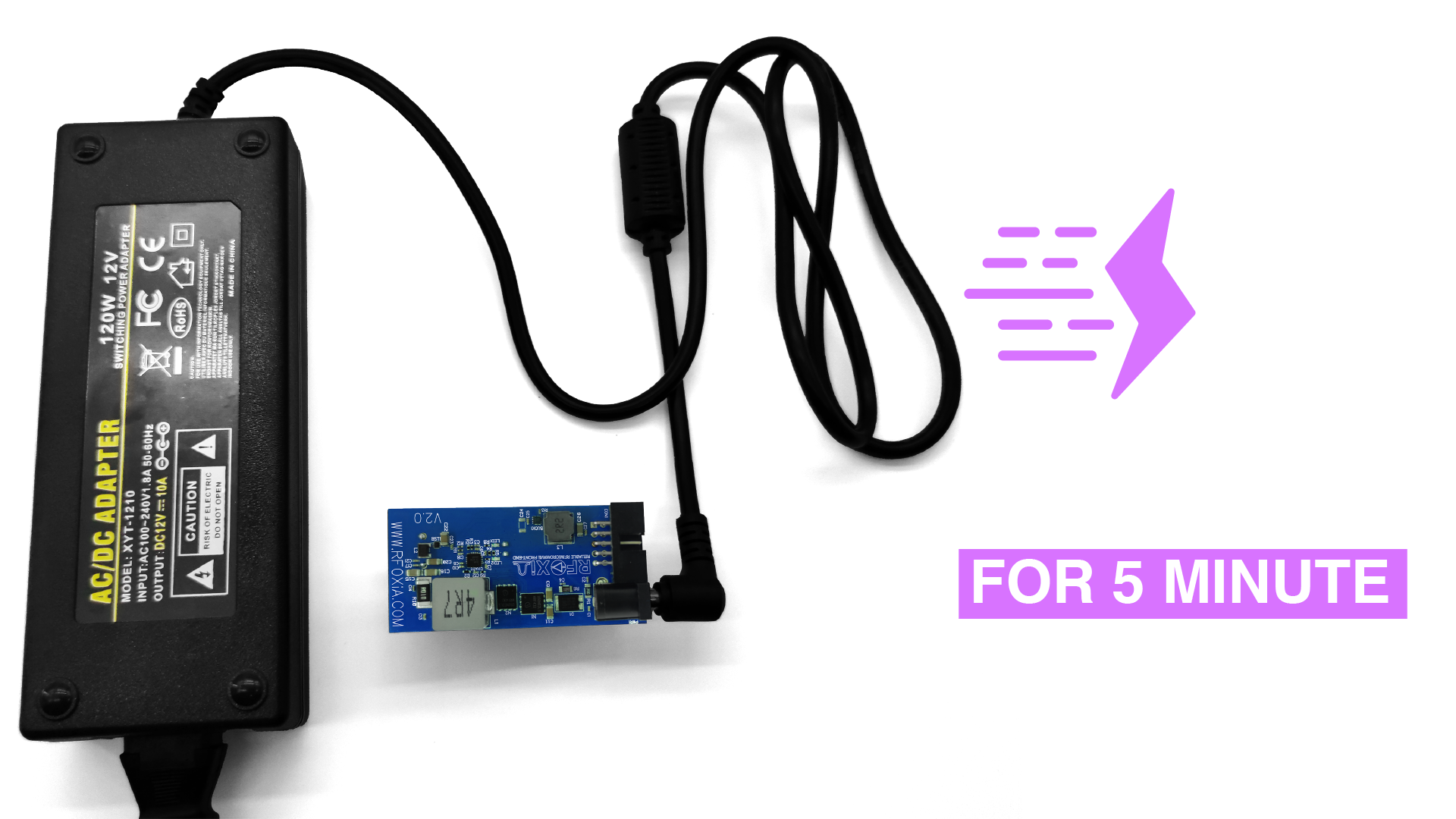
The included 12V 5A charging adapter is designed to deliver the current necessary to charge the supercapacitor bank rapidly and safely. The system steps down and manages the charge profile internally, delivering 4V at 10A to the supercapacitor bank for maximum charge speed without damaging the cells.
This is a detail that matters. Off-the-shelf supercapacitor modules often require external current limiting or custom charge circuits. The MultiNav Pro+ Power/Program Kit includes everything you need — the adapter, the charging management circuitry, and the protection systems are all integrated and tested.
Full-Day Power for All MultiNav Pro+ Modules
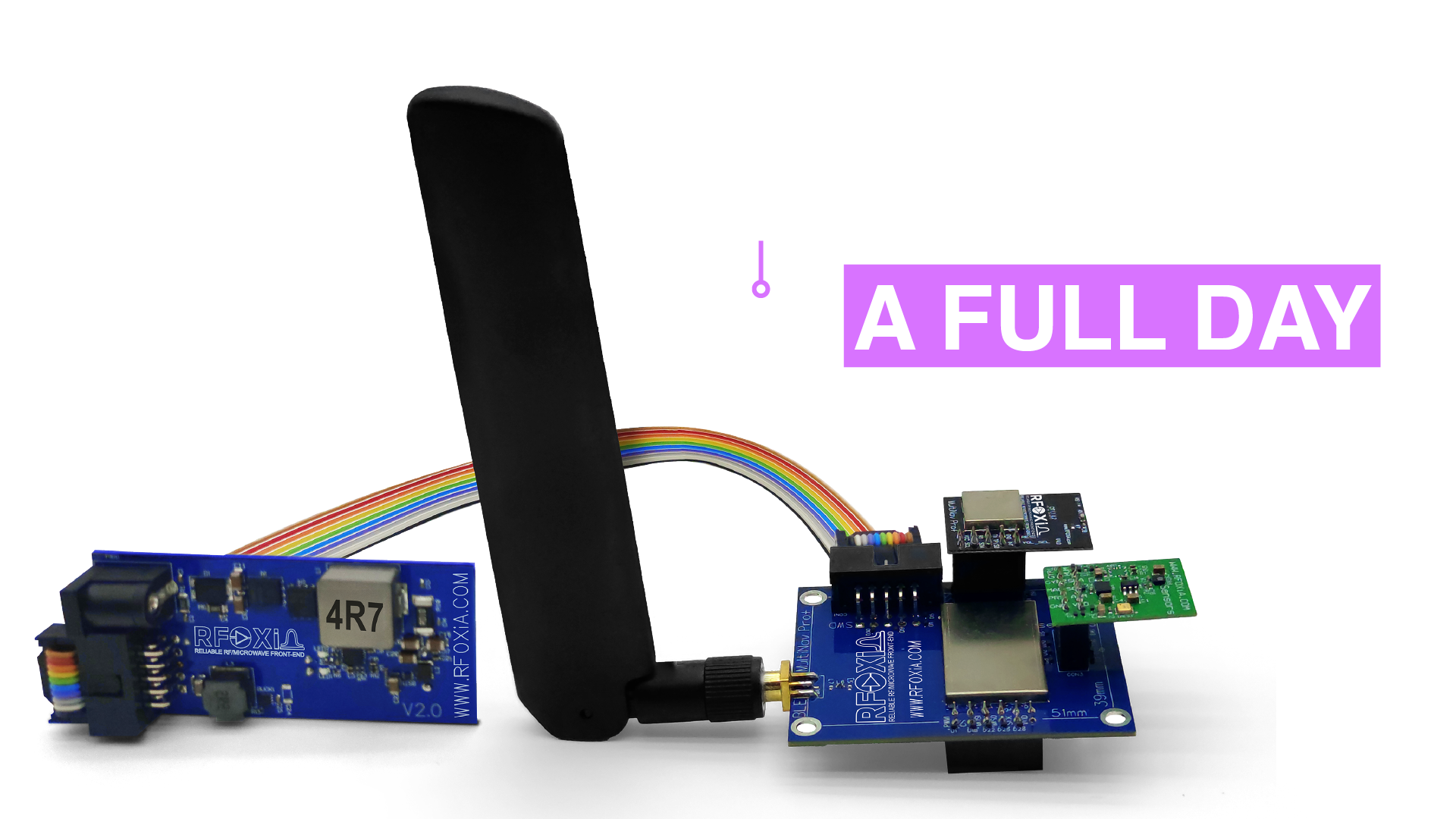
The power kit is designed to run not just the BLE module but the entire MultiNav Pro+ ecosystem — BLE Module, GNSS Module, and Sensors Module — simultaneously for a full working day.
This matters enormously if you are building a complete IoT node. A common failure mode with solar IoT power module setups is undersizing the power budget. Developers calculate for one module, then add a second sensor board, then add a GNSS receiver, and suddenly the power budget is blown and the solar panel cannot keep up. The MultiNav Pro+ Power/Program Kit is sized to handle the complete ecosystem load from the start.
For field researchers deploying sensor arrays, drone operators running multiple modules simultaneously, or IoT developers building battery-independent data logging nodes, this all-day runtime on a 5-minute charge is a practical game-changer.
Integrated STLink Programmer

The Power/Program Kit is not just a battery — it is a complete development tool. The integrated STLink programmer allows you to flash firmware directly to your MultiNav Pro+ BLE Module without any additional hardware.
This is critical for the RFOXiA development workflow. The MultiNav Pro+ BLE Module runs on the STM32WB07 microcontroller, and serious development — particularly if you are using the RFOXiA AI Firmware Builder to generate custom firmware — requires reliable, repeatable firmware flashing capability.
Having the programmer integrated into the power kit means one connection, one cable, one piece of hardware to manage in the field. You can power your module, program it, and immediately begin testing — all from the same kit.
For developers using the RFOXiA SuperCapacitor Battery and Programmer Kit alongside the AI Firmware Builder in RFOXiA Club, this integrated workflow means you can generate firmware, flash it, and test at full range in a single session.
Complete Connectivity Kit
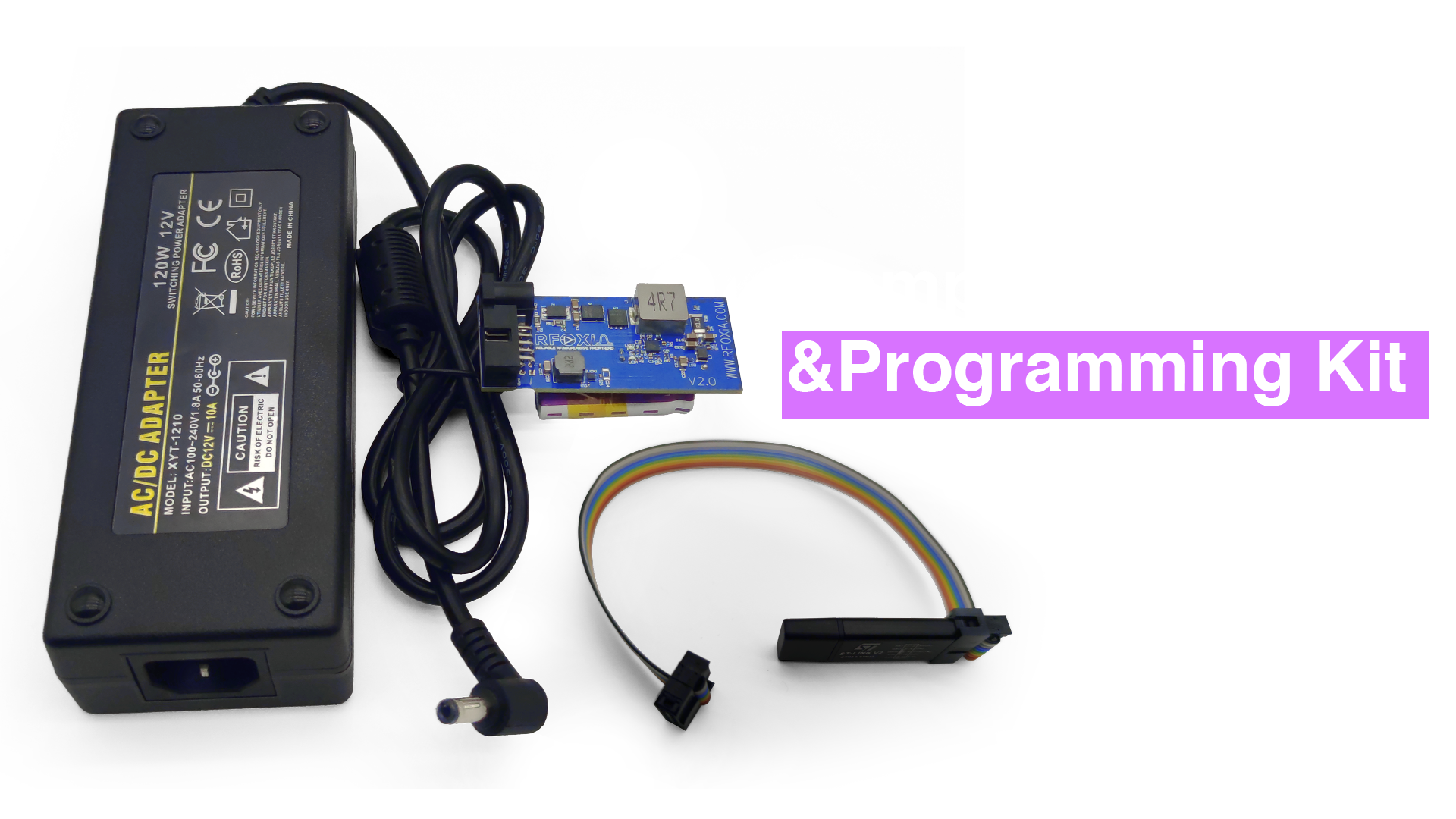
Every cable you need is in the box. Flat ribbon cables connect the BLE module to the power module and the programmer to the BLE module. There is no hunting for compatible connectors, no improvising with breadboard jumpers, no dead ends because a cable is missing.
This sounds like a small detail. Ask any hardware developer who has spent an afternoon trying to source a specific flat flex cable for a PCB connector and they will tell you it is not a small detail.
How This Compares to Solar IoT Power Module Setups
Let us be direct and compare a typical solar IoT power module configuration to the MultiNav Pro+ Power/Program Kit for a representative use case: a remote environmental sensor node running the MultiNav Pro+ ecosystem continuously.
| Factor | Solar IoT Power Module | MultiNav Pro+ Power/Program Kit |
|---|---|---|
| Charge time | 4-8 hours (sun dependent) | Under 5 minutes |
| Runtime | Variable (weather dependent) | 24 hours guaranteed |
| Cycle life | 300-500 full LiPo cycles | 500,000+ supercapacitor cycles |
| Complexity | Panel + controller + battery + wiring | Single integrated kit |
| Programmer included | No | Yes (STLink) |
| FCC certified | Varies | Yes |
| Weather dependence | High | None |
| Price (complete setup) | $80-200+ for components | $119 complete |
For indoor deployments, covered environments, drone applications, mobile nodes, or any scenario where solar access is limited or variable, the supercapacitor kit wins on every metric.
For truly off-grid permanent outdoor installations where grid access is impossible and indefinite autonomous operation is required, solar IoT power module setups still make sense — and even there, pairing a solar panel with a supercapacitor buffer (instead of LiPo) is increasingly the architecture of choice for industrial IoT designers.
Who This Kit Is Built For
Drone builders and FPV pilots deploying BLE modules for long-range telemetry and control. You need power that is light, charges fast between flights, and does not sag during RF transmission bursts.
Field researchers deploying sensor arrays in locations without convenient power access. Charge everything from a vehicle outlet or generator in five minutes before deployment.
IoT developers building prototypes that need to run all day during testing without managing multiple cables, chargers, and battery swaps.
Firmware developers who want to iterate fast — generate firmware with AI, flash it with the integrated STLink, test, and repeat — all from the same kit.
Remote IoT node operators who need a solar IoT power module alternative for environments where solar is impractical but grid power is available during setup windows.
The RFOXiA Ecosystem Advantage
The MultiNav Pro+ Power/Program Kit is designed to work seamlessly within the complete RFOXiA hardware ecosystem. When combined with the MultiNav Pro+ BLE Module (5km ground-to-ground, 15-20km man-to-drone range), the GNSS Module (1.5m accuracy at 18Hz), and the Sensors Module (7 environmental sensors), you have a complete wireless development platform that no solar IoT power module solution can replicate.
The RFOXiA Club platform extends this further — AI-generated firmware, live data streaming, environmental data monetization, and a developer community building real projects with this hardware.
If you are serious about wireless IoT development, this is the ecosystem worth investing in.
Specifications Summary
- Supercapacitor bank: 1100F
- Energy storage: 8800 Joules
- Charge time: < 5 minutes
- Runtime: Full day (all MultiNav Pro+ modules)
- Charging adapter: 12V 5A included
- Charge current: 4V 10A to supercapacitor
- Programmer: STLink (integrated)
- Cables: Flat ribbon — BLE-to-power, programmer-to-BLE
- Certification: FCC certified
- Price: $119
Final Thoughts: Rethinking IoT Power From the Ground Up
The solar IoT power module has earned its place in the IoT developer toolkit — but it is not the right tool for every application, and it is rarely the right tool for high-performance wireless module deployments.
Supercapacitor technology offers a different contract: deterministic runtime, near-instant charging, infinite cycle life, and zero dependence on weather conditions. The MultiNav Pro+ Power/Program Kit delivers that technology in a form factor that is accessible, affordable, FCC certified, and purpose-built for the MultiNav Pro+ ecosystem.
If you are building anything serious with wireless IoT hardware — and you want power that keeps up with your development pace — it is time to move beyond solar IoT power module limitations and experience what supercapacitors make possible.
Explore the RFOXiA SuperCapacitor Battery and Programmer Kit and power your next project the right way.
Have questions about the power kit or the MultiNav Pro+ ecosystem? Join RFOXiA Club — free access, $10 welcome credit, and a developer community building the future of wireless IoT.
Written by: Moamen Mohamed LinkedIn