
SPI Sensor Module Arduino: The Complete Guide to All-in-One Environmental and Motion Sensing
RFOXiA Integrated Sensors Module
Why Every Arduino Builder Needs a Smarter SPI Sensor Module Arduino Solution
If you've ever built an Arduino project that required motion tracking, environmental monitoring, and orientation sensing simultaneously, you already know the pain. You end up juggling five or six individual breakout boards, a tangle of wires, competing I2C addresses, and a rat's nest of libraries that may or may not play nicely together. The result is a prototype that works on the bench but falls apart the moment it needs to go into a drone, a wearable, or a field-deployed IoT node.
That's the exact problem the MultiNav Pro+™ Sensors Module from RFOXiA was built to solve — and it solves it completely.
This guide walks you through everything you need to know about integrating a professional-grade, all-in-one sensor array into your Arduino or embedded development workflow. We'll cover what sensors are included, why the chip choices matter, how the I2C communication architecture keeps your bus clean, real-world application scenarios, and how this module connects to a broader ecosystem that can actually pay you back for the data you collect.
Whether you're a drone builder, a robotics engineer, an environmental researcher, or a maker who's tired of piecing together sensor boards from five different manufacturers, this guide is for you.
What Is the MultiNav Pro+™ Sensors Module?
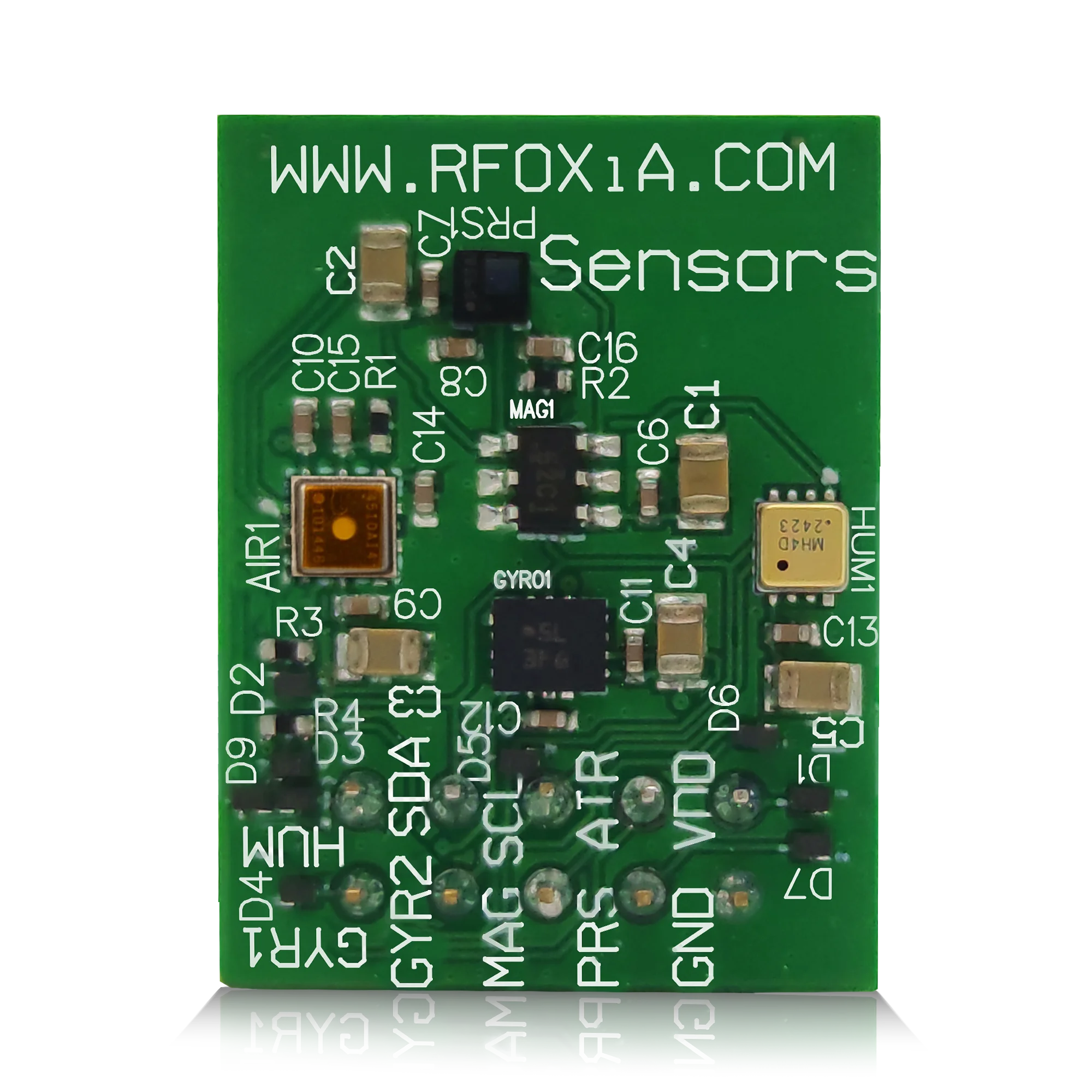
The MultiNav Pro+™ Sensors Module is a compact, professionally engineered sensor array that packs seven distinct sensors onto a single 24mm × 18mm PCB. It is designed as part of the RFOXiA wireless developer ecosystem, meaning it works seamlessly alongside the RFOXiA BLE Module, GNSS Module, and Power/Program Kit — but it is also fully usable as a standalone sensor board in any Arduino, STM32, Raspberry Pi, or embedded Linux project.
At $39, it occupies a price point that is genuinely unprecedented for the sensor combination it delivers. You are not buying seven cheap sensors thrown onto a board. Every sensor was selected from a tier-one semiconductor manufacturer for accuracy, reliability, and power efficiency — the same manufacturers supplying industrial and automotive applications.
FCC certified and ready to ship, this is not a prototype or a crowdfunding promise. It exists, it works, and it is in stock.
The Seven Sensors: What's Inside and Why It Matters
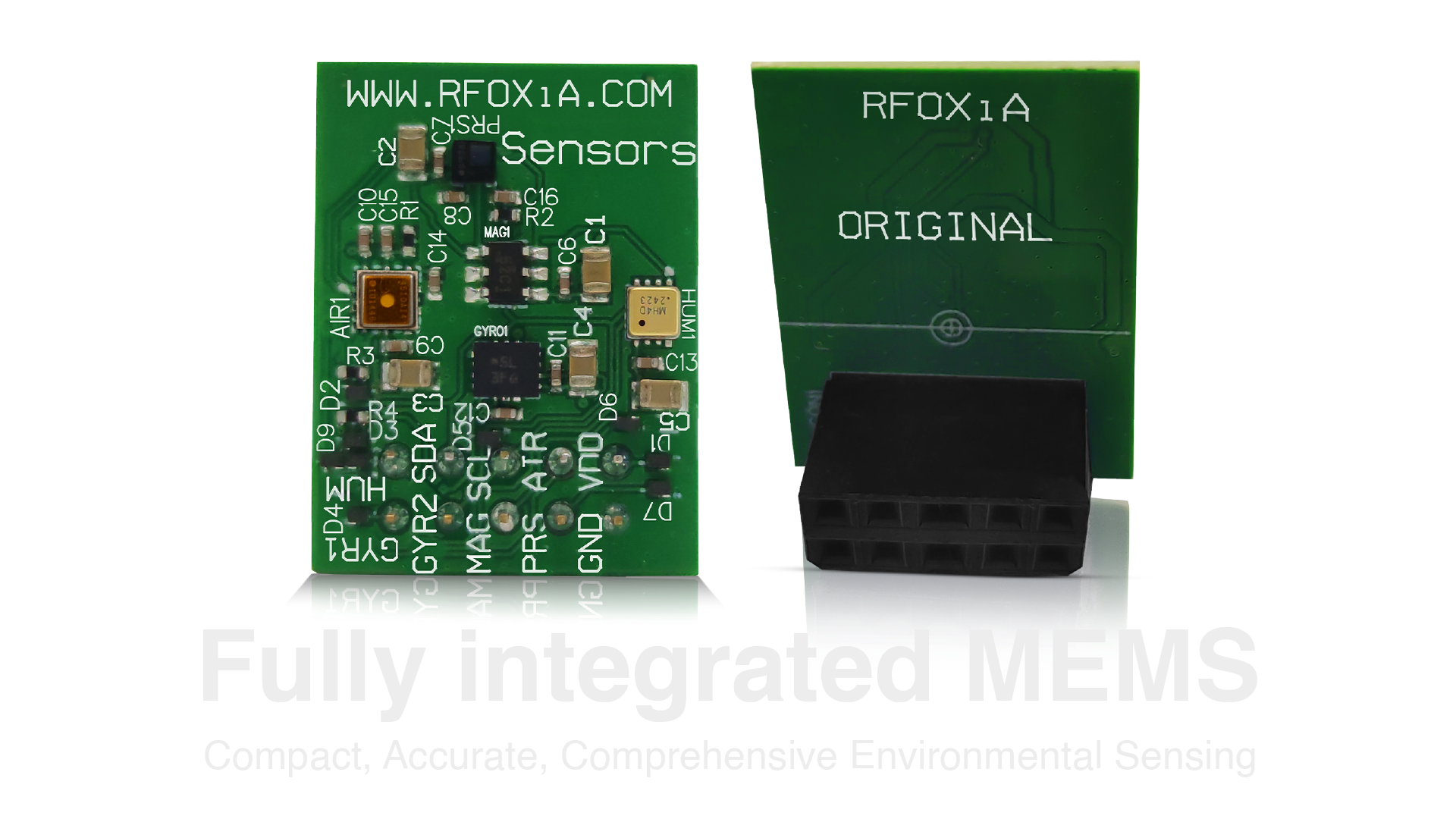
Let's break down each sensor on board and why the specific chip choice is significant for serious developers.
1. Accelerometer and Gyroscope — BMI270 (Bosch Sensortec)
The BMI270 is one of the most respected IMU chips in the embedded development world. It is the same chip family used in professional drone flight controllers and high-end wearables. Bosch Sensortec's low noise floor and excellent temperature stability make the BMI270 a significant step above the commodity MPU-6050 or MPU-6500 chips found on most maker breakout boards.
For drone builders specifically, the gyroscope's noise density and low-latency output mean your flight controller has the fast, clean attitude data it needs without filtering overhead. For robotics applications, the accelerometer enables reliable tilt compensation and step detection without additional processing.
2. Magnetometer — TMAG5273C1QDBVR (Texas Instruments)
This is a 3D Hall-effect sensor from Texas Instruments designed specifically for high-accuracy angle and position measurement. Unlike many low-cost magnetometer chips that struggle with interference rejection, the TMAG5273 delivers consistent heading data even in environments with electromagnetic noise — which matters enormously for drone navigation and robotic orientation in real-world conditions.
3. Air Pressure — LPS22HHTR (STMicroelectronics)
STMicroelectronics' LPS22HH is a 260–1260 hPa MEMS pressure sensor widely used in industrial altitude measurement, weather stations, and indoor navigation systems. Its resolution allows altitude measurement down to centimeter-level precision — critical for autonomous drone hover hold and terrain-following applications.
4. Humidity and Temperature — MVH4003D (MEMSVision)
MEMSVision's MVH4003D delivers accurate relative humidity and temperature readings with excellent long-term stability. For environmental monitoring applications — especially outdoor IoT nodes, smart agriculture deployments, and air quality stations — drift and calibration stability are the difference between data you can trust and data you have to qualify with asterisks.
5. Air Quality — ZMOD4510AI4R (Renesas)
The Renesas ZMOD4510 is a gas sensor module designed specifically for outdoor air quality monitoring. It measures ozone and nitrogen dioxide — two of the primary indicators of urban air quality degradation and environmental health risk. This is not a generic VOC sensor that can only tell you "something smells." The ZMOD4510 is the kind of chip deployed in professional air quality monitoring networks.
Precision Motion and Environmental Sensing in a Single Package
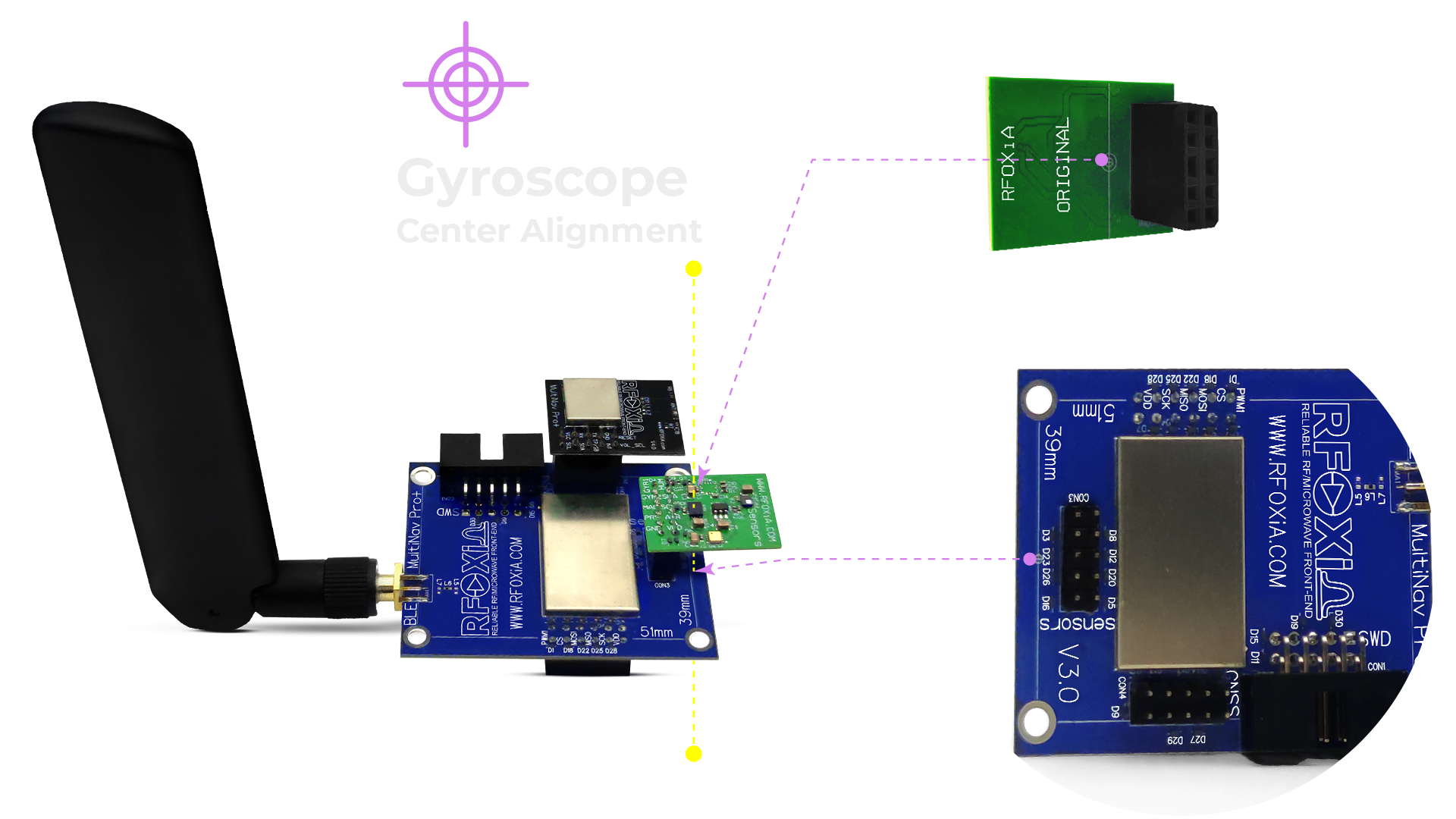
What makes the MultiNav Pro+™ genuinely different from assembling individual breakout boards is the integration. When motion data and environmental data are captured by the same hardware at the same timestamp, your application can do things that are impossible with loosely coupled sensor arrays.
Consider a drone executing a precision survey mission. The flight controller needs attitude data from the IMU at high frequency. Simultaneously, the environmental sensors are capturing air pressure for altitude hold, temperature for motor performance compensation, and air quality for the data network payload. All of this comes from a single module, on a single I2C bus, without timing ambiguity or synchronization overhead.
For robotics applications, the combination of the magnetometer and IMU enables complete 9-DOF attitude estimation without additional chips. For wearable applications, the compact footprint means the entire sensing stack fits into a form factor that was previously impossible without custom ASIC development.
This is the kind of integration that previously required either a custom board design (months of engineering work and thousands in NRE costs) or a compromise solution that sacrificed one or more sensing axes. The MultiNav Pro+™ eliminates that trade-off entirely.
Chip-Level Detail: Why Sourcing Matters
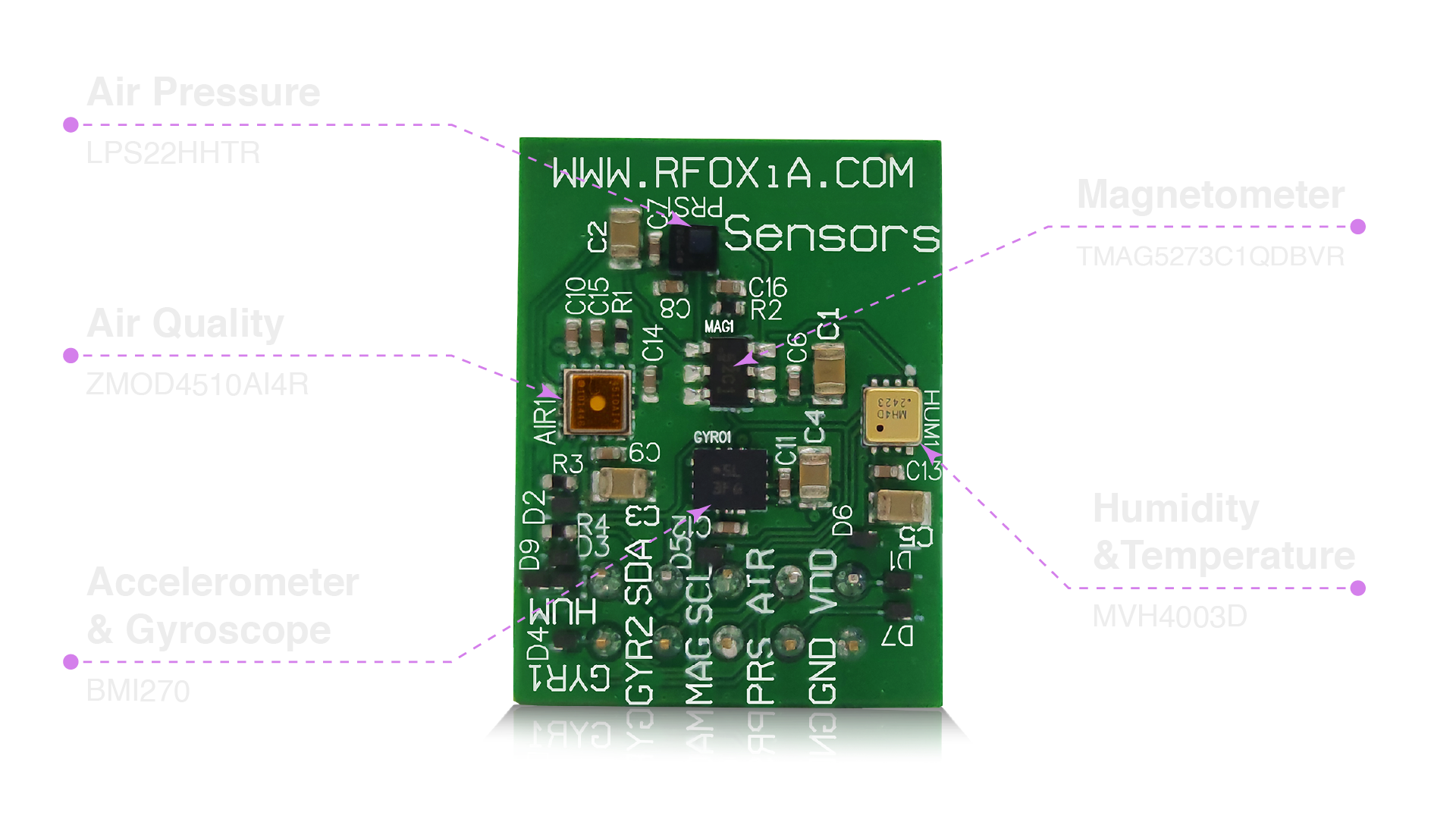
One of the most important things to understand when evaluating a sensor module — especially for anything that needs to be reliable in the field — is where the chips actually come from.
The maker market is flooded with cheap sensor breakout boards populated with unverified clones, binned-out rejects, or outright counterfeit ICs. The specs look identical on paper. The performance in production is often nowhere close.
RFOXiA sources every chip on the MultiNav Pro+™ from tier-one manufacturers with verified supply chains:
- Bosch Sensortec — global leader in MEMS sensors for consumer and industrial applications
- Texas Instruments — one of the largest semiconductor companies in the world
- STMicroelectronics — European semiconductor giant with decades of MEMS expertise
- MEMSVision — specialized MEMS manufacturer for precision environmental sensing
- Renesas — Japanese semiconductor leader, major supplier to automotive and industrial markets
When your drone is 15 kilometers away or your environmental node has been deployed in a field for three months, you want to know the chips on your board came from where they're supposed to come from.
I2C Architecture: Clean, Simple, Collision-Free
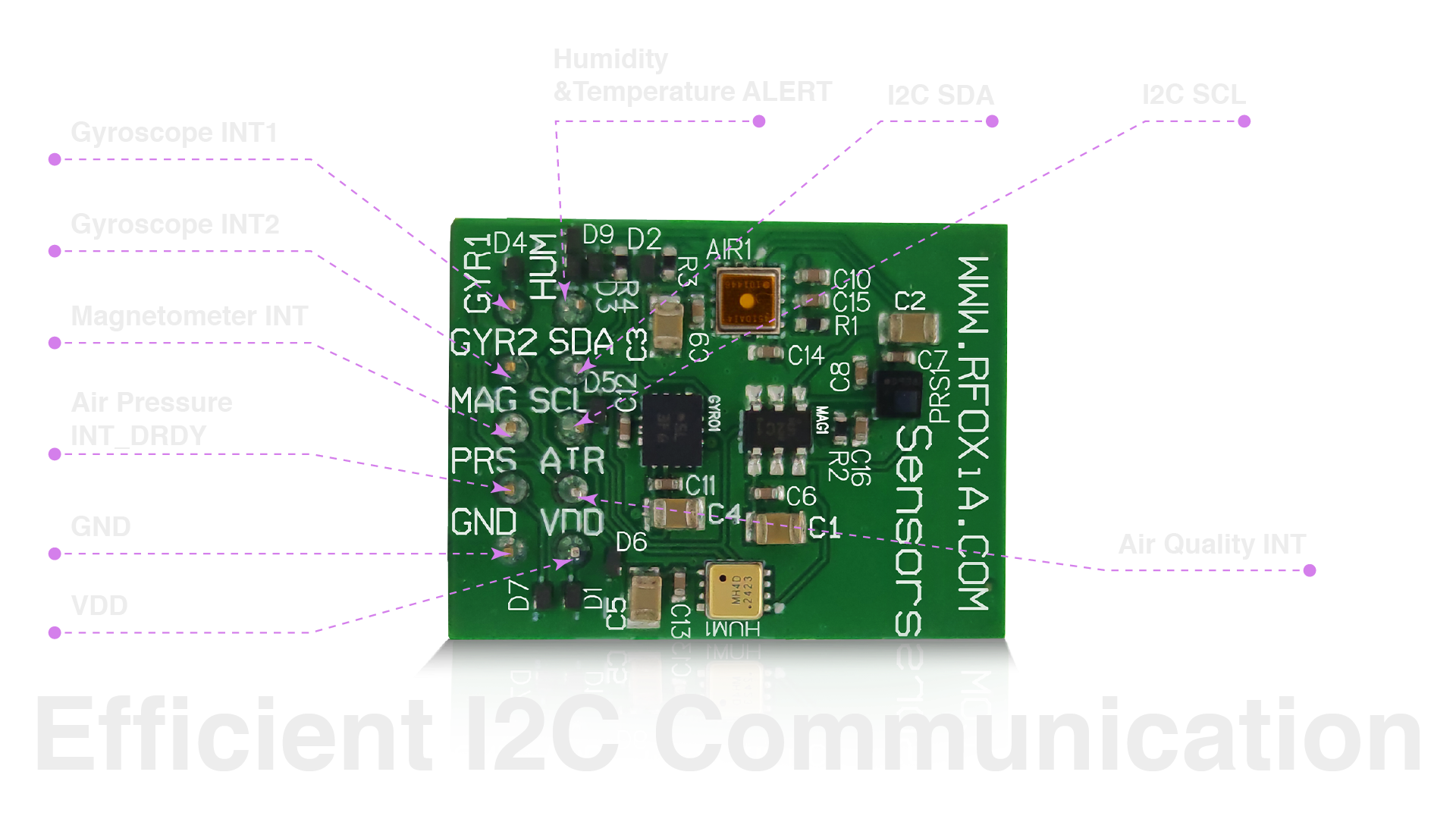
One of the most common pain points when integrating multiple sensors into a single project is I2C address conflicts. Most maker-grade sensors ship with a fixed or two-option I2C address. As soon as you try to put three or four sensors on the same bus, you start running into collisions that require hardware address remapping, additional microcontrollers, or I2C multiplexers — all of which add complexity, code overhead, and potential failure points.
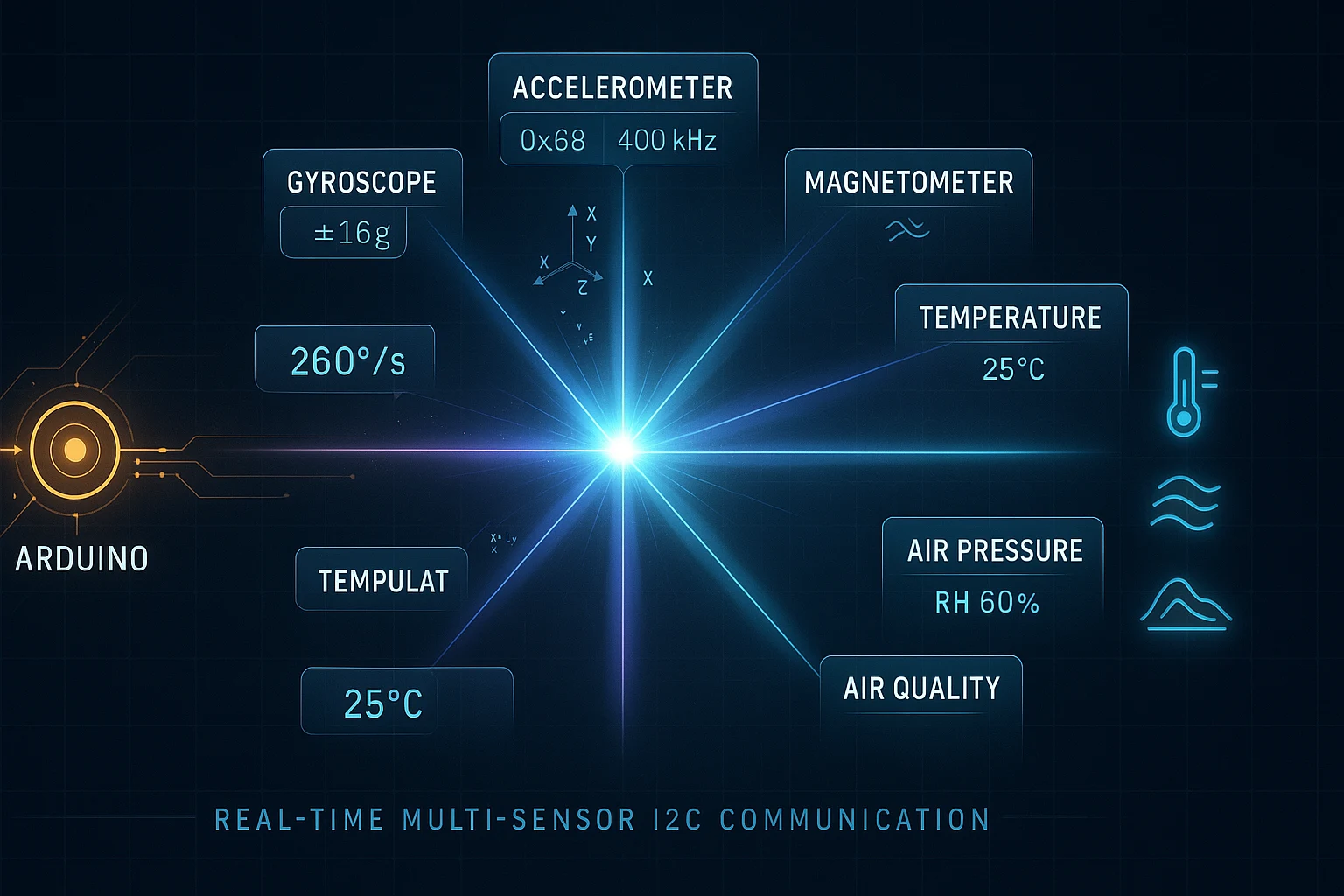
The MultiNav Pro+™ Sensors Module was designed from the ground up to eliminate this problem. Every sensor on the board has a dedicated, non-conflicting I2C address. All seven sensors share a single I2C line. Your Arduino sketch connects to one set of SDA/SCL pins and communicates with all seven sensors without any multiplexing, address remapping, or bus arbitration logic.
For a spi sensor module arduino developer looking for a streamlined integration experience, this architecture is a significant advantage. Your wiring is minimal. Your initialization code is straightforward. Your debugging surface is dramatically reduced.
The practical result: you spend time building your application, not untangling your sensor stack.
Compact Design for Space-Constrained Applications
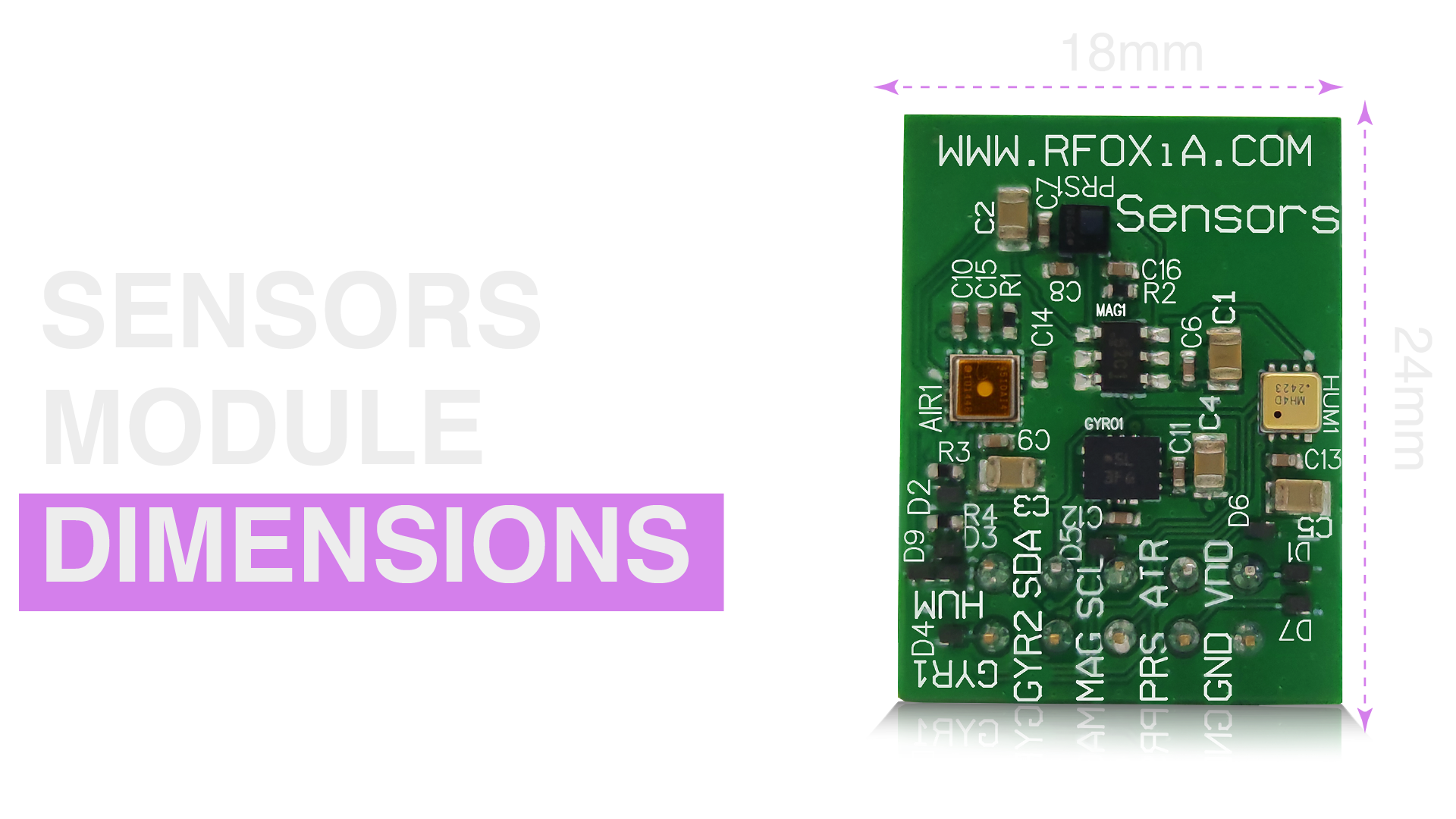
At 24mm × 18mm, the MultiNav Pro+™ Sensors Module is small enough to fit on virtually any platform where space is a constraint.
To put this in perspective: 24mm × 18mm is smaller than a postage stamp. It's smaller than most individual sensor breakout boards. And it contains seven sensors.
For drone builders, this means the sensor stack fits cleanly inside a 3-inch or 5-inch frame without requiring a custom mounting solution or compromising the weight balance of the aircraft.
For wearable developers, 24mm × 18mm means the entire environmental and motion sensing payload fits inside a watch-sized form factor.
For compact IoT nodes — the kind you'd want to deploy dozens or hundreds of across a field, a building, or a city block — the small footprint translates directly into lower enclosure costs, easier weatherproofing, and more deployment options.
This is what "designed for real applications" looks like at the hardware level.
Real-Time Environmental Data and What You Can Do With It
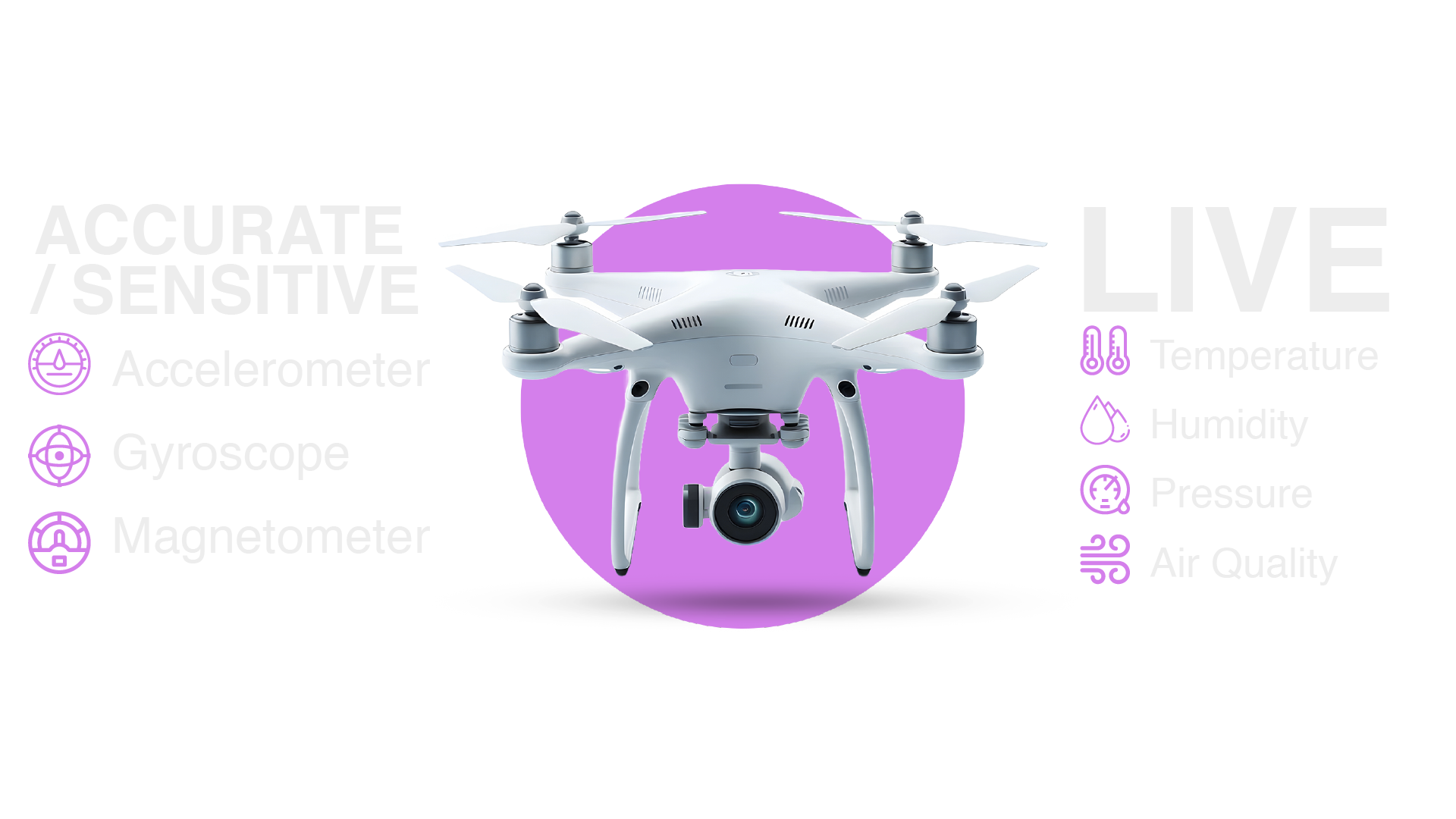
Real-time sensor data is only valuable if it's fast enough, accurate enough, and complete enough to drive real decisions. The MultiNav Pro+™ delivers on all three dimensions.
For motion applications, the BMI270 delivers attitude data fast enough for professional flight controller loop rates. For environmental applications, the combination of temperature, humidity, pressure, and air quality gives you a complete picture of the surrounding conditions at any given moment — not a partial snapshot.
This matters particularly for the RFOXiA Integrated Sensors Module data network application. When the module is deployed outdoors and connected to the RFOXiA ecosystem, it streams verified environmental data to the RFOXiA servers — and users earn daily rewards for every complete, verified data session. The reward structure pays $0.08–$0.40 per day depending on node location and network tier, with higher rates for nodes in data-sparse geographic areas.
Your sensor module doesn't just help you build better projects. Deployed as part of the RFOXiA data network, it generates passive income while contributing to a hyper-local environmental dataset that enterprise buyers — agricultural tech companies, smart city operators, insurance firms, logistics companies — pay to access.
For a maker or developer, this is a genuinely new category of value from a hardware purchase.
Application Scenarios: Where the MultiNav Pro+ Fits

The breadth of applications for a seven-sensor module at this price point is substantial. Here are the most compelling use cases:
Autonomous Drone Systems
Attitude estimation (IMU + magnetometer), altitude hold (barometric pressure), and environmental compensation (temperature for motor efficiency, humidity for aerodynamic models) — all from one module on the flight stack.
Environmental Research and Field Monitoring
Deploy multiple nodes across a study area. Each node captures temperature, humidity, pressure, and air quality at second-level resolution. Combine with the RFOXiA GNSS Module for GPS-tagged, timestamped environmental records. This is the kind of dataset that previously required purpose-built scientific instruments costing thousands of dollars per node.
Smart Agriculture
Micro-climate monitoring at field level. Soil-adjacent temperature and humidity combined with air quality gives precision agriculture operators the data they need to optimize irrigation scheduling, detect early signs of crop stress, and document environmental conditions for regulatory compliance.
Robotics and Mobile Platforms
9-DOF attitude estimation for autonomous navigation, terrain-following, and obstacle response. The BMI270 + TMAG5273 combination provides the sensor fusion inputs for full orientation tracking without additional hardware.
Wearables and Personal Monitoring Devices
Activity tracking (accelerometer + gyroscope), heading (magnetometer), altitude (barometric pressure), environmental comfort (temperature + humidity), and air quality — everything needed for a comprehensive health and environment wearable in a 24mm × 18mm package.
Industrial IoT
Remote equipment monitoring where motion data (vibration detection via accelerometer) and environmental data (temperature, humidity for condensation risk) need to be co-located on the same node. The compact form factor and clean I2C architecture make it easy to integrate into existing embedded designs.
Smart City Infrastructure
Deployment at street level for hyper-local air quality monitoring. The ZMOD4510's ozone and nitrogen dioxide measurement capabilities align directly with urban air quality monitoring regulatory frameworks.
Integrating the MultiNav Pro+ Into Your Arduino Workflow
For developers working with Arduino-compatible platforms, integration is straightforward. The module's I2C interface means it works with any microcontroller that supports the Wire library — Arduino Uno, Mega, Nano, ESP32, STM32, Teensy, and most other common platforms.
For developers using the RFOXiA ecosystem, the AI Firmware Builder in RFOXiA Club can generate complete, production-ready firmware for your specific application. Describe your project in plain language — "I need to log IMU and air quality data every 100ms and transmit it over BLE to my phone" — and the AI generates the full source code. What would normally take weeks of cross-referencing datasheets, writing register initialization sequences, and debugging sensor communication is compressed into hours.
The RFOXiA GitHub repository provides firmware examples for the BLE module (STM32WB07) as a starting reference point for the broader ecosystem.
For those looking to connect the sensors module with long-range wireless telemetry, the RFOXiA Integrated Sensors Module is designed to pair directly with the MultiNav Pro+™ BLE Module — which delivers 5km ground-to-ground range and up to 20km man-to-drone range. Your sensor data doesn't need to stay local. It can stream live to your phone, to a base station, or to the RFOXiA data network across distances that no commodity BLE chip can touch.
The Complete RFOXiA Ecosystem
The MultiNav Pro+™ Sensors Module is most powerful when deployed as part of the complete RFOXiA wireless developer ecosystem:
- MultiNav Pro+™ BLE Module — 5–50km long-range Bluetooth, FCC certified, 2Mbps, $59 for 2 units
- MultiNav Pro+™ GNSS Module — 1.5m accuracy, 18Hz fix rate, FCC certified, $49
- MultiNav Pro+™ Sensors Module — 7 sensors, compact, FCC certified, $39
- Power/Program Kit — supercapacitor power, 5-minute charge, 24-hour runtime, $119
- Developer Bundle — all four modules in one package, $199 after credits
Every component is FCC certified. Every component is in stock and ready to ship. Every component is designed to work together out of the box.
RFOXiA Club membership is free and includes $10 in welcome credits toward your first purchase, access to the AI Firmware Builder, the RFOXiA Connect mobile app (live drone control, GPS tracking, long-range mesh chat), and the full developer community and resource library.
Why Choose MultiNav Pro+ Over DIY Sensor Stacks
Let's be direct about the alternative. You can buy individual breakout boards for each of these seven sensors. You'll spend roughly $8–15 per board at maker-market prices, putting your total at $56–$105 before you've written a line of code. Then you'll spend time:
- Resolving I2C address conflicts between sensors from different manufacturers
- Troubleshooting library incompatibilities
- Managing five or six physical connections instead of one
- Dealing with inconsistent power consumption across multiple boards
- Finding enclosures large enough to fit all the hardware
- Accepting a form factor that doesn't fit in anything space-constrained
The MultiNav Pro+™ at $39 costs less than the DIY alternative, integrates in a fraction of the time, delivers a dramatically smaller footprint, uses better-quality chips than most individual maker breakout boards, and comes with FCC certification.
For a spi sensor module arduino project where you need motion and environmental data in one place, the calculation is straightforward.
Pricing, Availability, and Next Steps
The MultiNav Pro+™ Sensors Module is priced at $39 and is in stock with 150 units available for immediate shipment.
For the complete sensing, wireless, and power stack, the Developer Bundle at $199 (or $149 after applying RFOXiA Club credits) includes the Sensors Module alongside the BLE Module, GNSS Module, and Power/Program Kit — everything you need to build a complete long-range wireless sensor system from day one.
New RFOXiA Club members receive $10 in welcome credits on signup, with additional credits available through platform engagement stages that can reduce the Developer Bundle price to $149 with a time-limited coupon.
If you're building anything that requires motion sensing, environmental monitoring, or both — and you're tired of piecing together mediocre hardware from five different sources — the RFOXiA Integrated Sensors Module is the cleaner, faster, more capable solution.
Final Thoughts
The MultiNav Pro+™ Sensors Module represents what hardware development should look like in 2025: professional-grade components, thoughtful integration, a clean communication architecture, and a price point that belongs in every builder's toolkit rather than locked behind a $10,000 purchase order.
Seven sensors. One board. 24mm × 18mm. $39. FCC certified. In stock.
For any developer building with an spi sensor module arduino or I2C-based embedded platform who needs environmental and motion sensing without compromise, this is the module that belongs at the center of your design.
Join RFOXiA Club for free, claim your $10 welcome credit, and start building with the sensor stack your projects have been waiting for.
Written by: Moamen Mohamed LinkedIn