
STLink Programmer Module That Never Leaves You Stranded in the Field
RFOXiA SuperCapacitor Battery and Programmer Kit
The STLink Programmer Module Designed for Serious Wireless Builders
Every hardware developer has been there. You are deep into a firmware debug session, your module is mounted in a test rig, and your power bank dies. Or you need to flash an updated build and your ST-Link dongle is tethered to a desktop three meters away. These are not catastrophic failures. They are the slow, grinding friction that kills momentum and bleeds hours out of development schedules.
The RFOXiA SuperCapacitor Battery and Programmer Kit exists specifically to eliminate that friction. It is a single, integrated hardware solution that pairs a professional-grade STLink programmer module with a supercapacitor-based power system capable of running your entire MultiNav Pro+ module stack for a full working day — charged completely in under five minutes.
This post breaks down every component in the kit, explains the engineering decisions behind them, and shows you exactly why this combination matters for drone builders, IoT engineers, field researchers, and embedded developers who cannot afford wasted time.
Why Power Management Is the Unspoken Bottleneck in Wireless Development
When developers evaluate hardware tooling, they think about features, compatibility, and price. Power management is almost always an afterthought — until it becomes the main problem.
Consider the typical development loop for a long-range wireless project. You flash firmware, deploy the module, collect data, identify a bug, return to your bench, reflash, and redeploy. In a battery-powered setup, each cycle is constrained by charge time. A standard 2,000mAh lithium cell takes 90 minutes to two hours to reach full charge. If you are running multiple iterations in a day — which is normal during active development — you are spending significant calendar time simply waiting for power to come back.
Supercapacitors break this constraint entirely. The MultiNav Pro+ Power/Program Kit uses a 1,100F supercapacitor system that charges from zero to full in under five minutes using the included 12V 5A adapter. The capacitor bank delivers at 4V, 10A during charge, filling the system at a rate that lithium chemistry simply cannot match. Once charged, the system stores 8,800 joules — enough to power the complete MultiNav Pro+ module stack, including BLE, GNSS, and Sensors modules, for a full working day.
This is not a compromise. This is a purpose-built solution for the specific demands of hardware development workflows.
The Supercapacitor Battery System: Engineering Behind the 5-Minute Charge
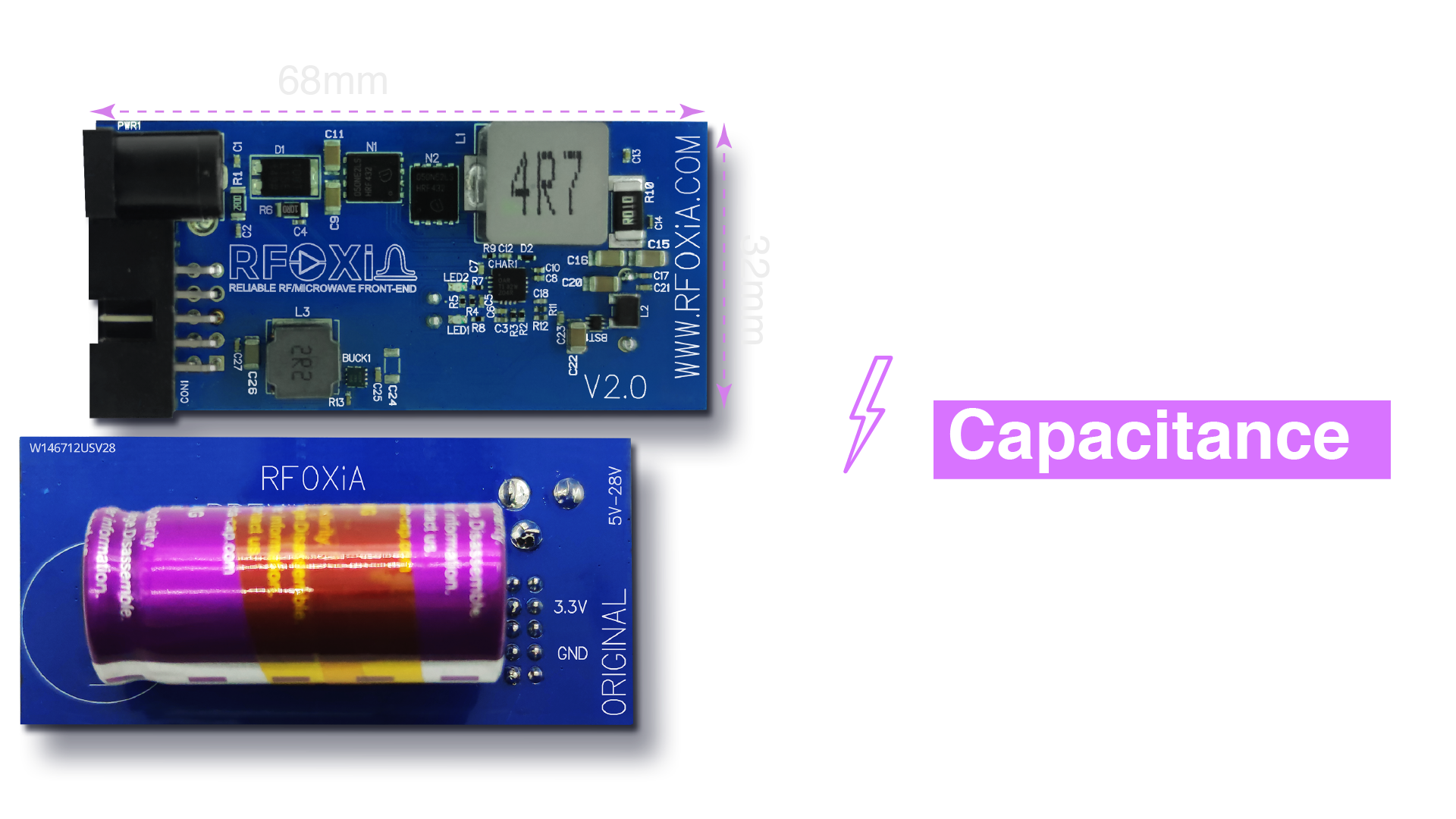
The 1,100F supercapacitor system at the core of this kit is the headline specification for good reason. To understand why it matters, it helps to understand what makes supercapacitors fundamentally different from lithium-ion batteries.
A lithium battery stores energy through electrochemical reactions. Charging and discharging involve moving lithium ions through an electrolyte, a process with physical and chemical limits on how fast it can safely occur. Push too much current in too fast and you generate heat, degrade the cell, and create safety risks. This is why fast-charging lithium systems are an engineering challenge requiring sophisticated battery management circuits and thermal management.
A supercapacitor stores energy electrostatically, in an electric field between two electrodes. There is no chemical reaction. There is no ion migration through a liquid electrolyte. Energy goes in and comes out at speeds limited primarily by the resistance of the circuit, not by chemistry. This is why 1,100 farads of capacitance can accept a 10A charge current and fill completely in under five minutes without degradation, heat stress, or safety concern.
The practical implication for developers: you are not managing a consumable. Lithium batteries have cycle life limits. A typical cell is rated for 300 to 500 charge cycles before noticeable capacity degradation. A supercapacitor is rated for hundreds of thousands of cycles. The power system in this kit will outlast every other component in your development lab.
At 8,800 joules of stored energy, the system provides genuine all-day runtime for complete module deployments. Whether you are running continuous GNSS fixes at 18Hz, streaming environmental sensor data, or maintaining a long-range BLE connection, the power budget is more than sufficient for a full working session in the field.
High-Power Charging Adapter: Matching the Supercap's Capability
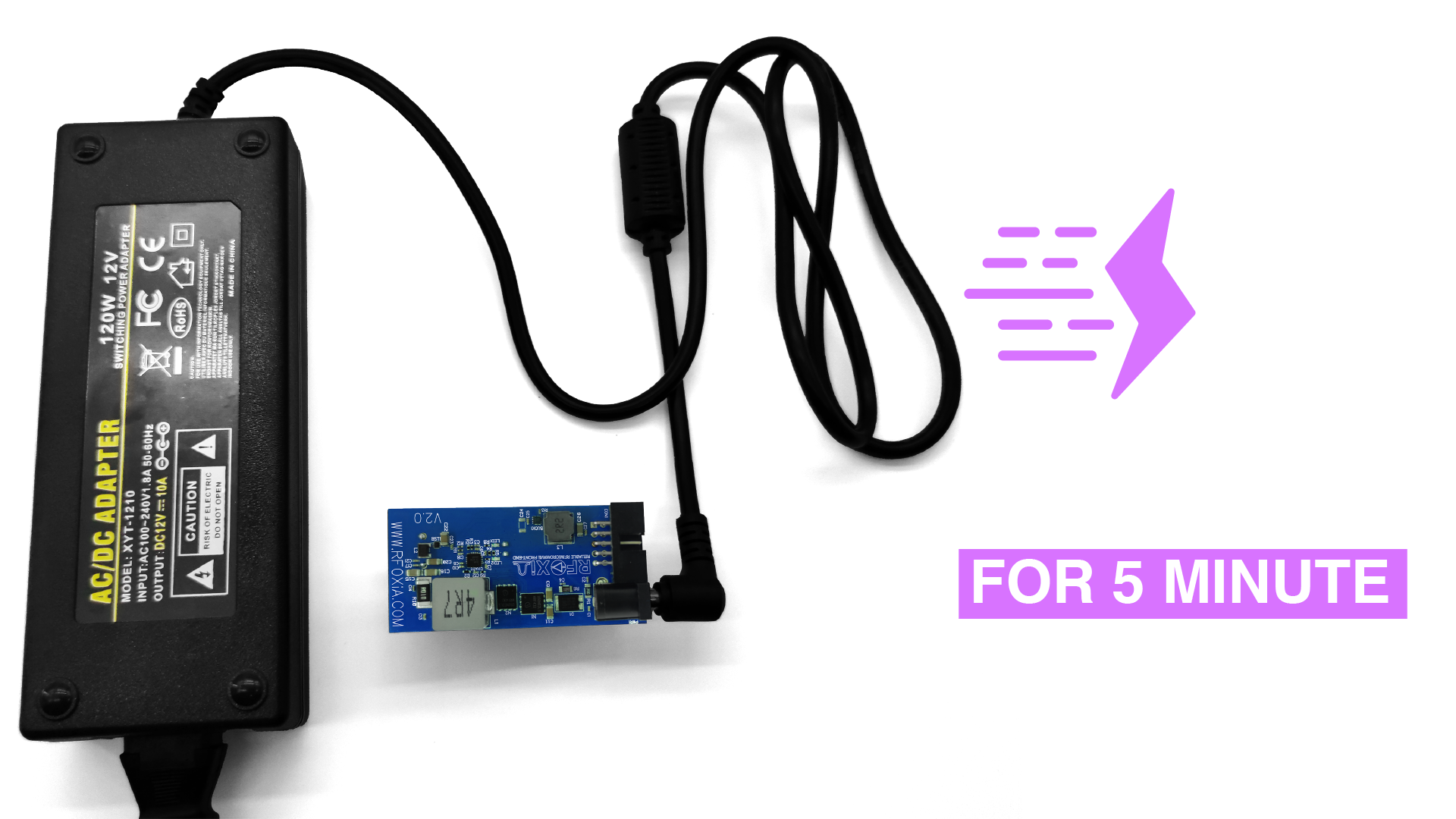
A supercapacitor that can accept rapid charge is only as useful as the charger paired with it. The kit includes a 12V 5A high-power charging adapter engineered specifically to drive the supercapacitor bank at its rated 4V, 10A charge profile.
This is a deliberate hardware pairing. Using an underpowered adapter with a large capacitor bank extends charge time significantly and defeats the purpose of the supercapacitor system. The included adapter delivers the current the capacitor can actually absorb, keeping charge time under five minutes in normal conditions.
For field deployments, this means a practical recharge window that fits into natural workflow breaks. Return from a deployment, plug in the kit, take five minutes to review your data, and the system is fully ready before you have finished your notes.
Powering the Complete MultiNav Pro+ Module Stack
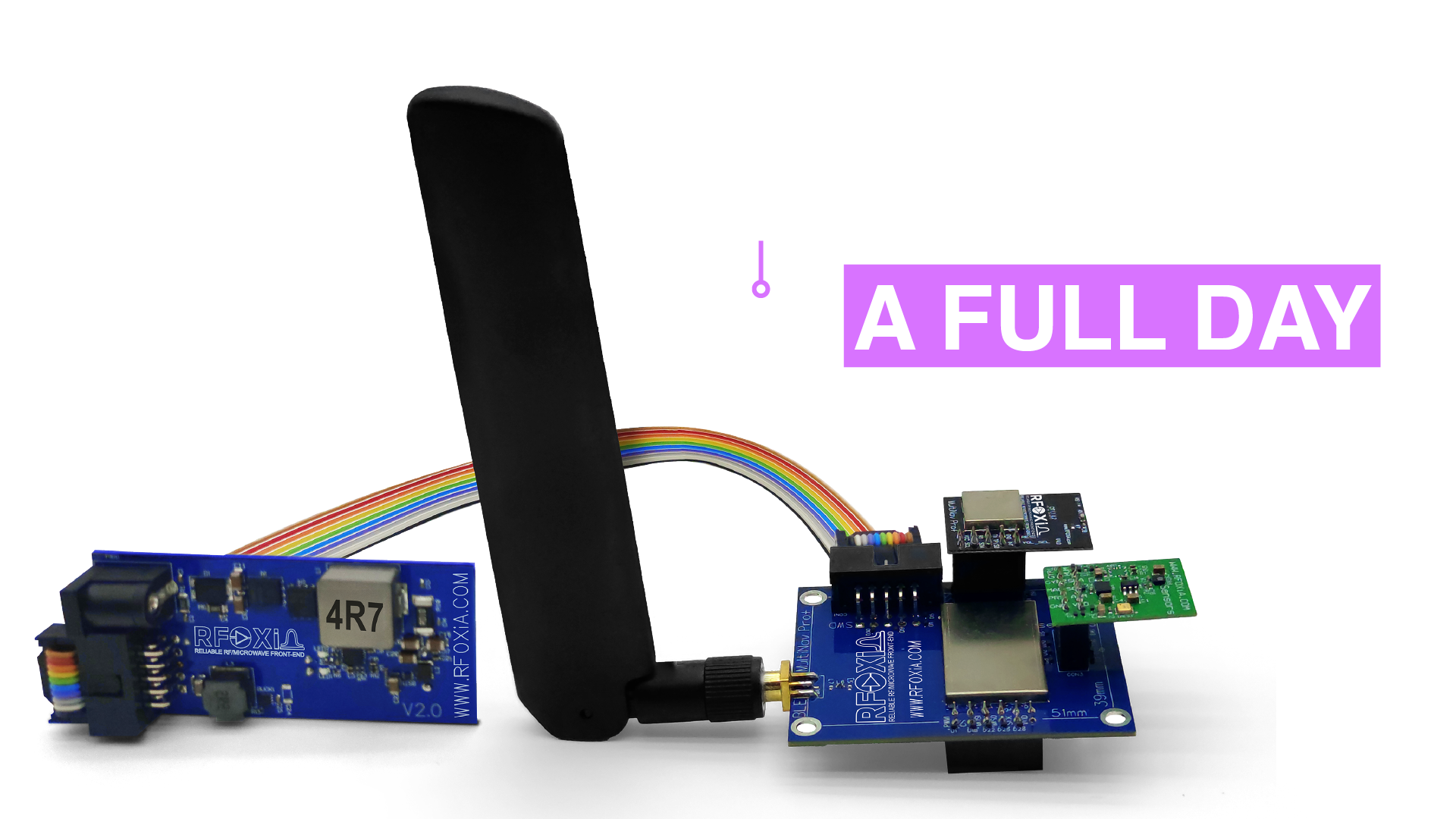
The Power/Program Kit is not designed to power a single module in isolation. It is sized and specified to power the entire MultiNav Pro+ ecosystem simultaneously — BLE Module, GNSS Module, and Sensors Module running together as a complete stack.
This matters because real projects do not run one module at a time. A drone telemetry system running the MultiNav Pro+ BLE module for long-range communication, the GNSS module for 18Hz position fixes, and the Sensors module for environmental logging is pulling power from three sources simultaneously. The supercapacitor system handles this combined load and sustains it across a full working day.
For developers building complex wireless systems, this eliminates the bookkeeping of managing multiple power sources with different capacities and different charge times. One kit, one charge, one day of operation across the complete stack.
The RFOXiA SuperCapacitor Battery and Programmer Kit is the foundation that makes the Developer Bundle truly deployable as a single integrated field system rather than a collection of modules requiring individual power management.
The Integrated STLink Programmer Module: Firmware Development Without Friction
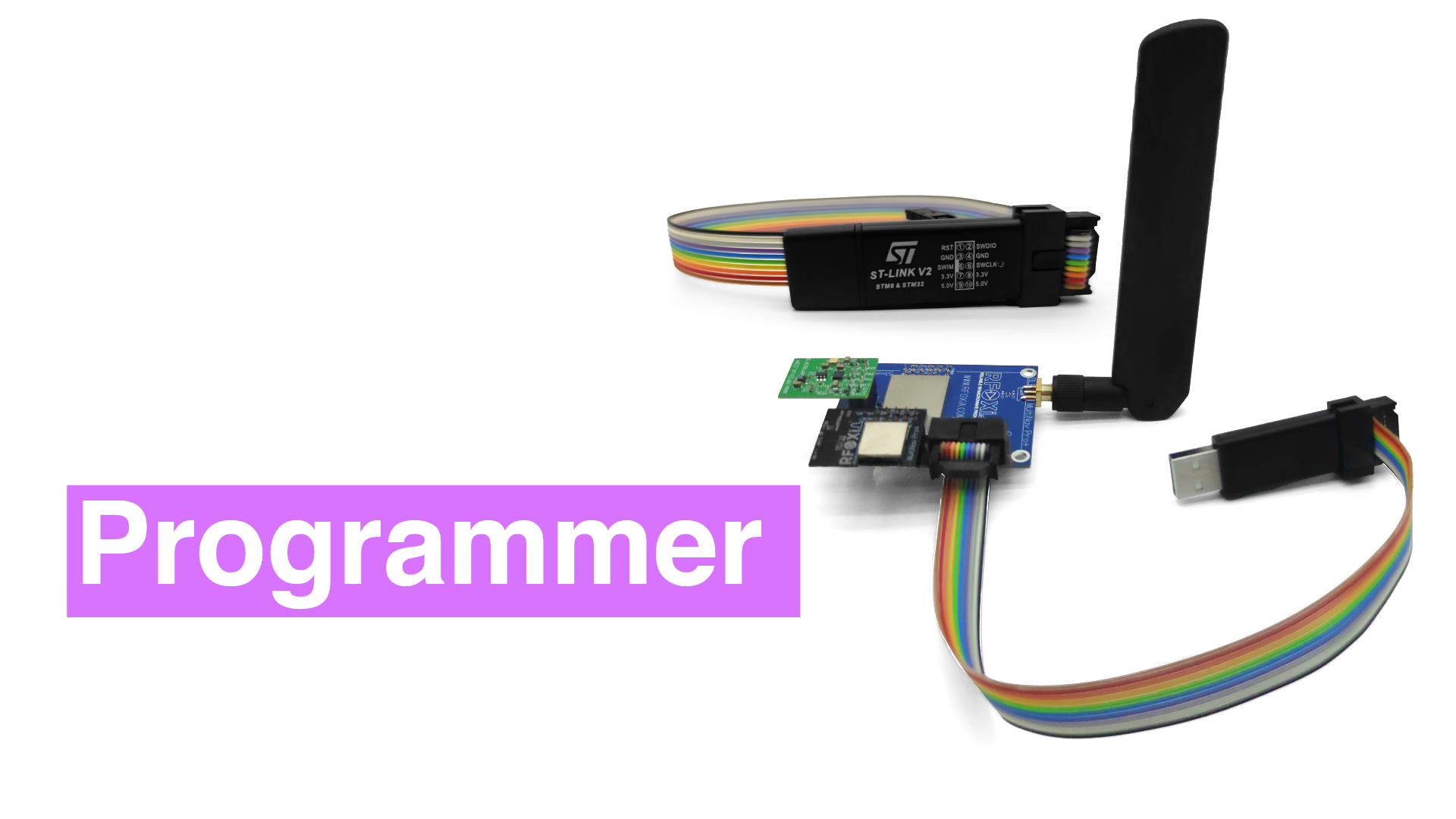
The STLink programmer module integrated into this kit is the second pillar of the product's value proposition. If the supercapacitor system solves the power problem, the STLink programmer solves the development workflow problem.
ST-Link is the standard debug and programming interface for STM32 microcontrollers — one of the most widely used microcontroller families in professional embedded development. The MultiNav Pro+ BLE Module is built around this ecosystem, and the included STLink programmer module provides direct access to the chip's JTAG/SWD interface for firmware flashing, live debugging, and hardware-level access.
What makes this implementation particularly valuable is the integration. Rather than using a separate ST-Link dongle connected to a development machine and then to the module through a rat's nest of jumper wires, the kit provides a clean, purpose-built connection path. The STLink programmer module connects directly to the BLE module via the included flat ribbon cables, creating a stable, low-noise programming interface that is appropriate for both bench development and field firmware updates.
For developers using the RFOXiA AI Firmware Builder — which generates production-ready firmware from plain language descriptions — the workflow becomes exceptionally smooth: describe your application, generate the firmware, connect the STLink programmer module, flash the build, power up the module stack, and test in the field. The full loop from idea to running hardware can happen in a single session without touching a separate programming tool or hunting for cables.
The STLink programmer module also supports live debugging through a supported IDE. If you are running STM32CubeIDE, Keil, or VS Code with the Cortex-Debug extension, you can set breakpoints, inspect register values, and step through execution on the actual hardware — critical capability for diagnosing timing-sensitive wireless issues that cannot be caught in simulation.
Complete Connectivity Kit: Every Cable You Actually Need
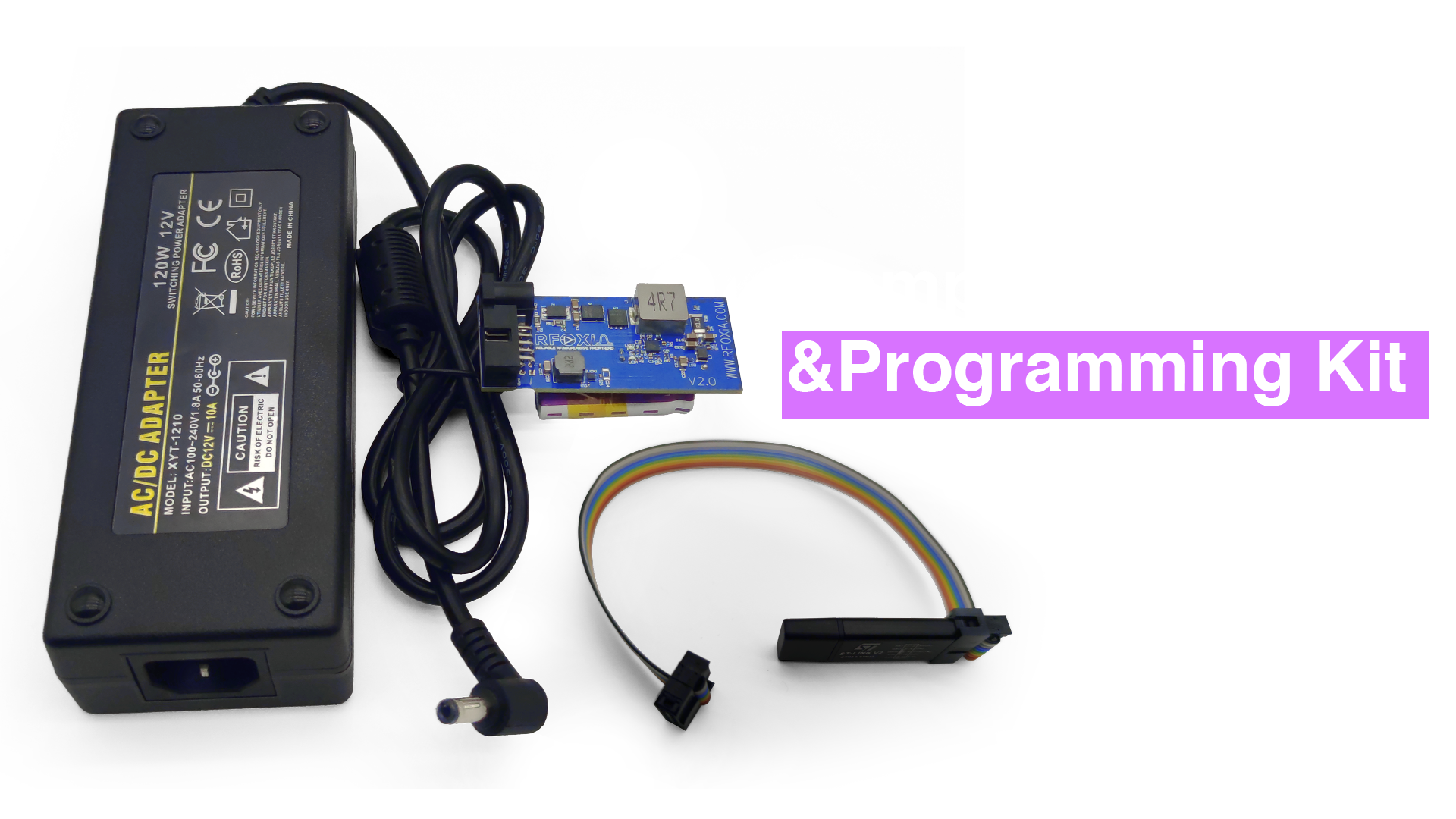
One of the small but meaningful details in the Power/Program Kit is the inclusion of a complete connectivity kit with all necessary cables for immediate setup.
Flat ribbon cables connect the BLE module to the power module and the STLink programmer module to the BLE module. These are not afterthoughts. Flat ribbon cables offer advantages over loose jumper wire connections in development contexts: lower impedance, consistent signal path geometry, physical stability during movement, and a clean assembly that is easier to work with when the hardware is mounted in an enclosure or drone frame.
Arriving at the lab or field with a kit that requires no hunting for the right cable gauge or connector pinout is a practical quality-of-life improvement that experienced developers appreciate immediately. The kit ships ready to use.
Who This Kit Is Built For
The MultiNav Pro+ Power/Program Kit is a professional tool designed for developers and deployers who have moved past the hobbyist phase and need their hardware to work reliably in real conditions.
Drone builders and FPV pilots using the MultiNav Pro+ BLE module for long-range control and telemetry need a power solution that can sustain field sessions without battery anxiety and a programming interface that lets them update firmware between flights without returning to a full bench setup.
IoT developers and embedded engineers iterating on firmware builds for wireless sensor deployments need the combination of fast recharge and integrated STLink access to maintain development velocity. The STLink programmer module paired with the AI Firmware Builder platform creates an exceptionally efficient development loop.
Field researchers deploying MultiNav Pro+ sensor networks in remote locations need all-day power with a recharge window short enough to fit into field logistics. Five minutes of charge time against a 24-hour runtime ratio is uniquely suited to this use case.
Robotics engineers building autonomous platforms with integrated wireless communication benefit from the clean power delivery and programming access during both development and periodic field maintenance.
Technical Specifications Summary
| Specification | Value |
|---|---|
| Supercapacitor Capacity | 1,100F |
| Stored Energy | 8,800 Joules |
| Charge Time | Under 5 minutes |
| Runtime (Full Stack) | 24 hours |
| Charging Adapter | 12V, 5A |
| Capacitor Charge Profile | 4V, 10A |
| Programmer Interface | STLink (SWD/JTAG) |
| Certification | FCC Certified |
| Included Cables | Flat ribbon, full connectivity kit |
| Compatible Modules | All MultiNav Pro+ modules |
How the Power/Program Kit Fits Into the MultiNav Pro+ Ecosystem
RFOXiA builds products as an integrated ecosystem rather than isolated hardware. The Power/Program Kit is specifically designed to complement the complete MultiNav Pro+ module stack.
When purchased as part of the Developer Bundle — which combines the BLE Module (5km ground-to-ground, 20km man-to-drone range), the GNSS Module (1.5m accuracy, 18Hz fix rate), and the Sensors Module (7 integrated environmental sensors) — the Power/Program Kit becomes the operational backbone that makes the entire system deployable.
Without reliable power management and integrated programming access, a module stack is a bench tool. With the Power/Program Kit, it becomes a field-deployable professional system capable of long-range wireless communication, precision positioning, environmental monitoring, and over-the-air firmware management in a single integrated package.
For developers contributing to the RFOXiA data network — where deployed Sensors Modules earn daily rewards for verified environmental data streaming — the all-day runtime and five-minute recharge profile of the Power/Program Kit directly supports the uptime requirements that maximize data network earnings.
Why Supercapacitor Technology Is the Right Choice for Professional Hardware Kits
The decision to build the Power/Program Kit around supercapacitor technology rather than lithium-ion is not a novelty choice. It reflects a genuine engineering judgment about what professional hardware development environments require.
Lithium batteries degrade with cycles, lose capacity in cold weather, require careful management to avoid damage at high and low states of charge, and carry transportation and storage restrictions for high-capacity packs. Supercapacitors have no meaningful cycle degradation, perform well across temperature extremes, tolerate full charge and full discharge without damage, and carry none of the regulatory burden associated with lithium cells.
For a kit that will sit on a development bench and be charged and discharged multiple times per day, every day, across years of use, the supercapacitor system is the correct choice. The engineering decision is visible in the specification: 8,800 joules stored, sub-five-minute charge time, indefinite cycle life. This is professional tooling designed to last as long as the projects it supports.
Get the MultiNav Pro+ Power/Program Kit
The MultiNav Pro+ Power/Program Kit is available now at $119 from the RFOXiA store. It is the essential companion for any serious MultiNav Pro+ development or deployment workflow, and it ships with everything needed to go from box to operational in minutes.
Whether you are building a long-range drone control system, deploying a field sensor network, iterating on firmware with the RFOXiA AI Firmware Builder, or contributing to the RFOXiA data network for daily passive rewards, the Power/Program Kit removes the power and programming barriers that slow down professional development.
Stop waiting for batteries to charge. Stop hunting for the right programmer cable. The RFOXiA SuperCapacitor Battery and Programmer Kit is ready when you are.
Frequently Asked Questions
Can the supercapacitor system power all MultiNav Pro+ modules simultaneously? Yes. The kit is specifically sized to power the complete module stack — BLE, GNSS, and Sensors — simultaneously for a full working day on a single charge.
Is the STLink programmer module compatible with standard development tools? Yes. The integrated STLink programmer module works with STM32CubeIDE, Keil MDK, and VS Code with Cortex-Debug, supporting both firmware flashing and live hardware debugging.
How many charge cycles can I expect from the supercapacitor system? Supercapacitors are rated for hundreds of thousands of charge and discharge cycles without meaningful capacity degradation — far beyond the useful life of any comparable lithium-based system.
Is the kit FCC certified? Yes. All MultiNav Pro+ modules and accessories, including the Power/Program Kit, are FCC certified.
Does the kit work if I only have the BLE Module without the full stack? Absolutely. The Power/Program Kit powers any combination of MultiNav Pro+ modules. The runtime will be longer than 24 hours when powering fewer modules, since the energy budget is sized for the full stack load.
Written by: Moamen Mohamed LinkedIn