
Supercapacitor Advantages in Embedded Systems: Why the MultiNav Pro+ Power/Program Kit Changes Everything
RFOXiA SuperCapacitor Battery and Programmer Kit
Supercapacitor Advantages in Embedded Systems Are Redefining How Developers Power Their Projects
If you have ever deployed a wireless embedded system in the field — a drone, a remote sensor array, a robotics platform — you already know the single most frustrating bottleneck in the entire workflow: power. Not the hardware design. Not the firmware. Not even the RF stack. Power. Waiting hours for a lithium battery to charge. Carrying spare packs. Watching a field deployment window close because your system needs another 90 minutes on the charger. These are not edge cases. They are the everyday reality of embedded development at range.
That frustration is exactly what the MultiNav Pro+ Power/Program Kit from RFOXiA was engineered to eliminate. And at the heart of its design philosophy is a technology that is finally mature enough to deliver on its long-standing promise: the supercapacitor. Understanding the supercapacitor advantages in embedded systems is not just academic — it is the key to understanding why this kit is a genuine step forward for professional wireless development.
This post goes deep. We cover the physics, the practical advantages, the real-world deployment implications, the integrated programming capabilities, and why the RFOXiA approach to supercapacitor power is uniquely suited to the MultiNav Pro+ ecosystem.
What Is a Supercapacitor and Why Does It Matter for Embedded Systems?
A supercapacitor — also called an ultracapacitor or electrochemical double-layer capacitor (EDLC) — stores energy electrostatically rather than through chemical reactions. This fundamental difference from lithium-ion or lithium-polymer batteries is the source of nearly every practical advantage the technology offers.
In a conventional battery, energy is stored via electrochemical reactions at the electrode interfaces. Those reactions are relatively slow, thermally sensitive, and degrade with each charge-discharge cycle. In a supercapacitor, charge is stored physically — as an electrostatic field in the double layer at the electrode-electrolyte interface. No chemical transformation occurs. Charge in, charge out, almost instantly, with minimal degradation over hundreds of thousands of cycles.
For embedded systems designers, the implications cascade across every dimension of the power subsystem:
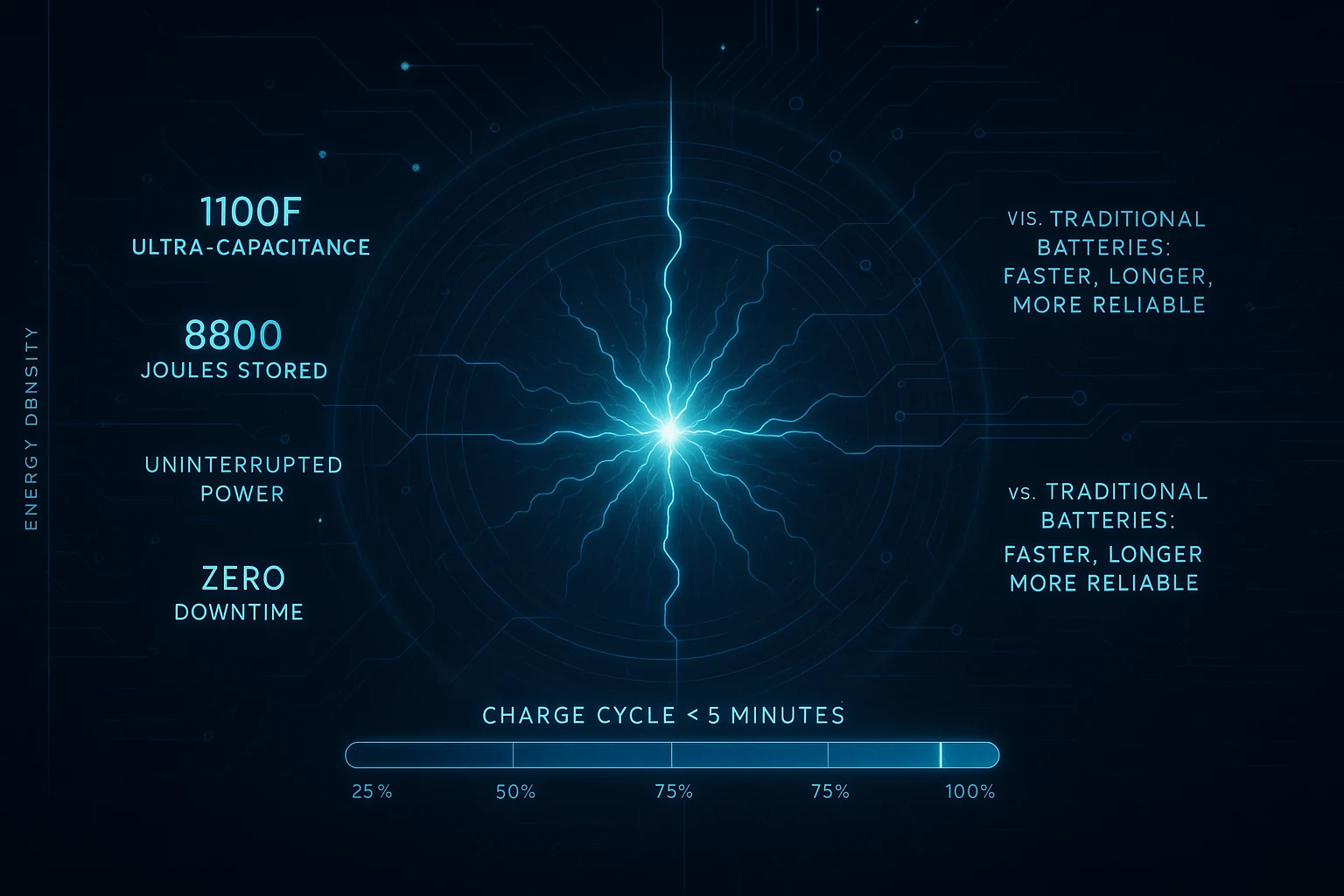
Charge rate: Supercapacitors can accept charge at rates that would destroy a lithium battery. A 1100F supercapacitor system can be fully charged in minutes rather than hours.
Cycle life: Lithium cells typically deliver 500-1000 full charge cycles before significant capacity degradation. Supercapacitors routinely achieve 500,000 to 1,000,000 cycles. The power module effectively lasts the lifetime of the product.
Temperature resilience: Supercapacitors operate across a wider temperature range than lithium chemistry. Field deployments in cold climates, high-altitude drone operations, or harsh industrial environments do not penalize the power system the way they would a battery pack.
Safety profile: No thermal runaway. No exothermic failure modes. No shipping restrictions. The elimination of lithium chemistry simplifies logistics, field handling, and storage.
Peak current delivery: Supercapacitors can deliver extremely high instantaneous current without the internal resistance penalties that cause lithium batteries to sag under pulse loads — critical for RF transmitters and motor drivers that draw sudden bursts of current.
These are not theoretical benefits. They are the reason that industrial and automotive designers have been integrating supercapacitors into power subsystems for over a decade. What the MultiNav Pro+ Power/Program Kit does is bring those same supercapacitor advantages in embedded systems down to the price point and form factor that individual developers, drone builders, and field researchers can actually access.
The MultiNav Pro+ Power/Program Kit: Technical Overview
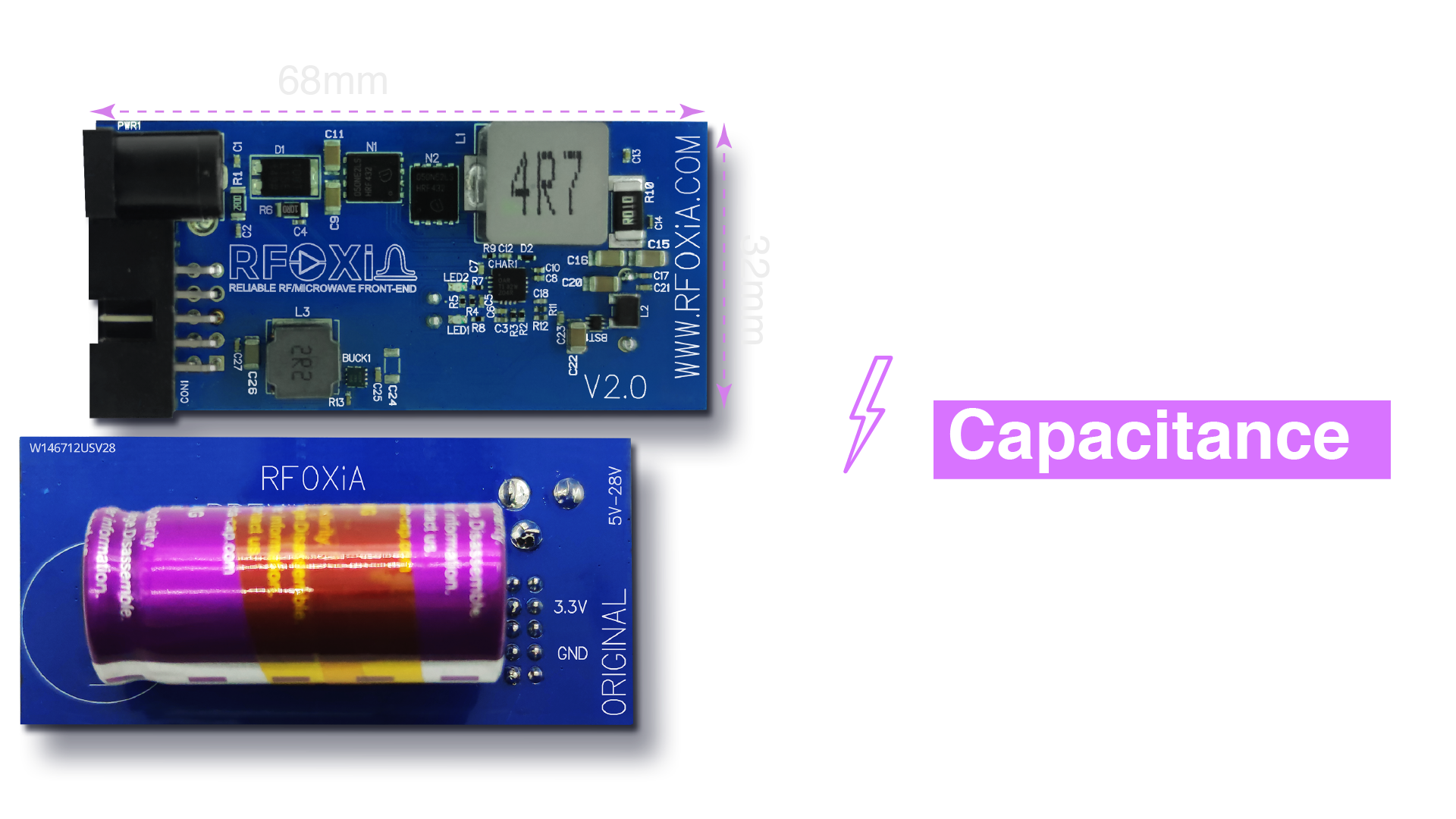
The 1100F Supercapacitor System
The core of the kit is a 1100F supercapacitor bank with a total energy storage of 8800 Joules. To put that in practical terms: 8800 Joules is enough to power the complete MultiNav Pro+ module stack — BLE Module, GNSS Module, Sensors Module — through a full 24-hour working day.
That is not a marketing estimate. That is the result of the low power architecture of the MultiNav Pro+ modules combined with the high energy density of the supercapacitor bank operating at its designed voltage window.
The charge time is what makes this genuinely disruptive: under 5 minutes from fully depleted to fully charged. In a field deployment scenario, that means you are never more than a coffee break away from a full day of runtime. Compare that to the 1.5-3 hour charge cycles typical of equivalent lithium packs, and the operational advantage in time-sensitive applications is immediately obvious.
The High-Power Charging Adapter
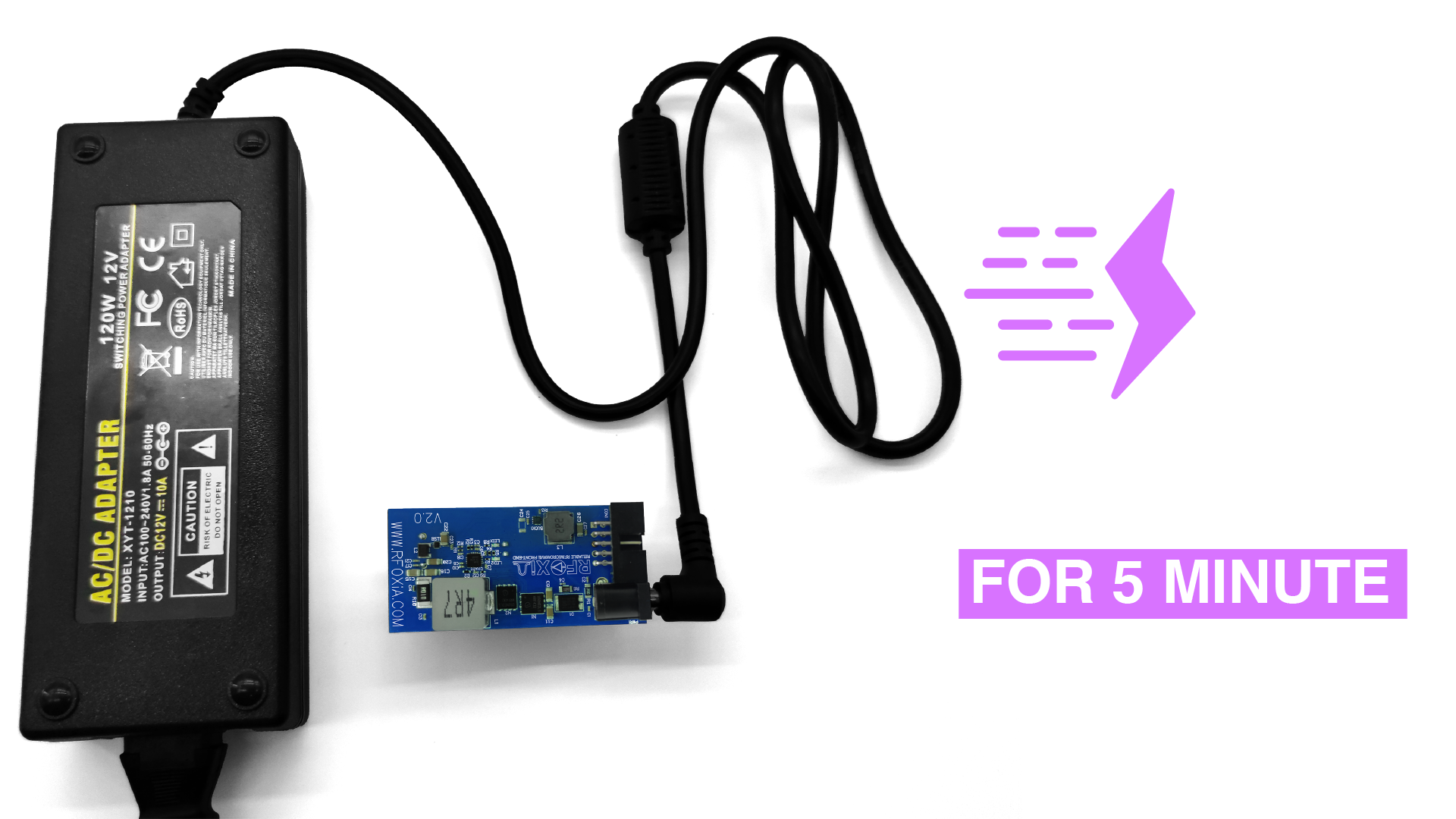
Achieving a sub-5-minute charge time requires high-rate current delivery. The included 12V 5A charging adapter feeds the supercapacitor bank at 4V 10A — 40 watts of charging power delivered directly into the capacitor bank with precision voltage regulation to prevent overvoltage.
This is not a generic wall adapter paired with a passive connector. The charging circuitry is designed to match the supercapacitor's charge acceptance profile, delivering maximum current safely through the bulk of the charge cycle and tapering appropriately as the bank approaches full voltage.
The result is a charging experience that feels more like plugging in a power tool than charging a delicate lithium pack. Plug in. Wait five minutes. Unplug. Deploy. That simplicity is one of the most underappreciated supercapacitor advantages in embedded systems when you move from the lab to actual field operations.
Full-Day Power for the Entire MultiNav Pro+ Stack
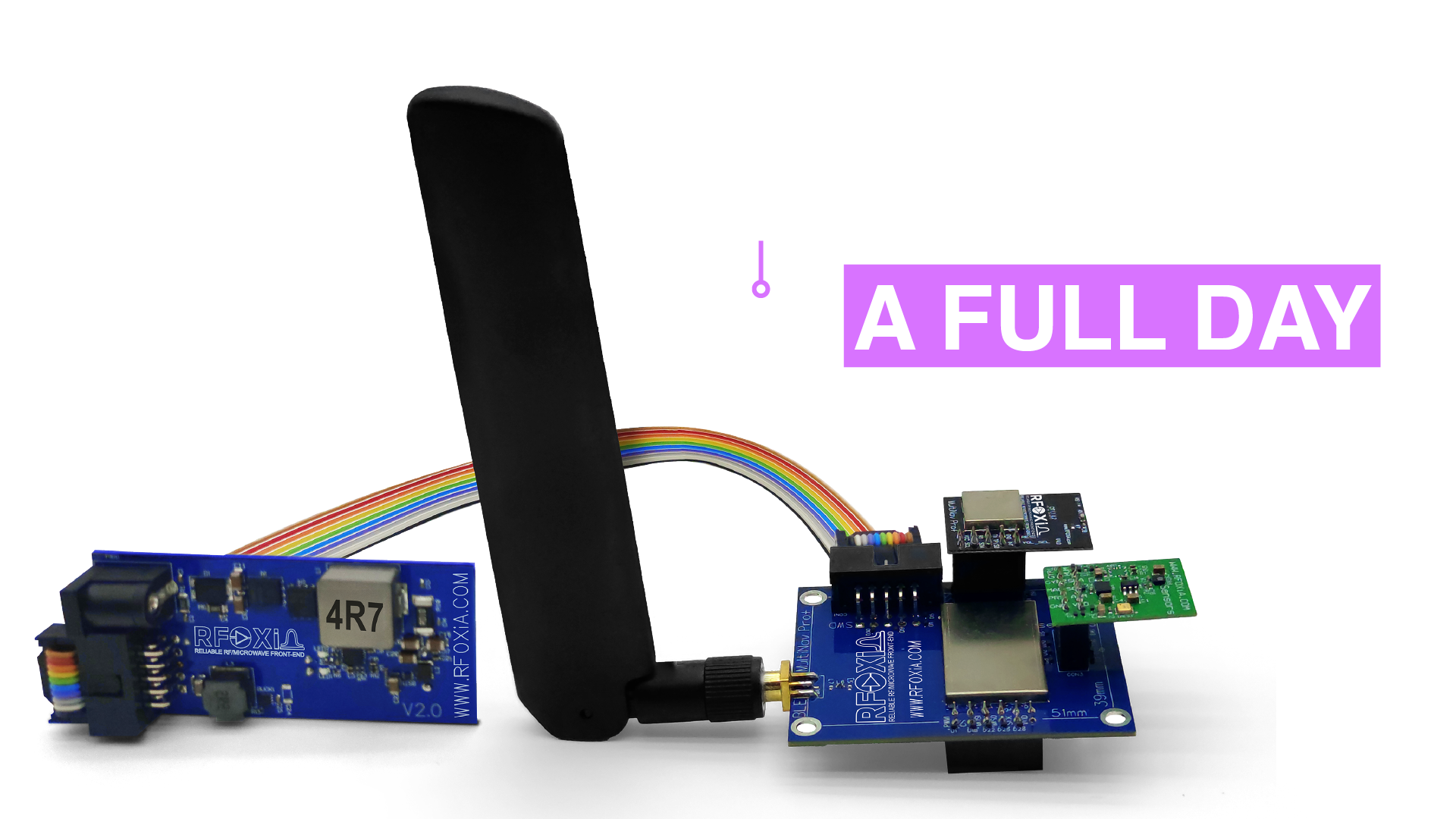
The kit is not limited to powering just the BLE Module in isolation. It is designed to supply the complete MultiNav Pro+ ecosystem simultaneously:
- MultiNav Pro+ BLE Module — long-range wireless communication, up to 20km man-to-drone
- MultiNav Pro+ GNSS Module — 18Hz precision GPS tracking at 1.5m accuracy
- MultiNav Pro+ Sensors Module — seven environmental sensors streaming live data
All three modules, running simultaneously, for a full 24-hour deployment window. This matters enormously for applications like persistent environmental monitoring, long-duration drone missions, remote field research deployments, and data network node operation where downtime directly translates to lost data and lost revenue.
For users contributing to the RFOXiA data network — where consistent uptime is rewarded with higher daily earnings — a power system that virtually eliminates unplanned downtime is not a convenience. It is a core part of the earning strategy.
The STLink Programmer
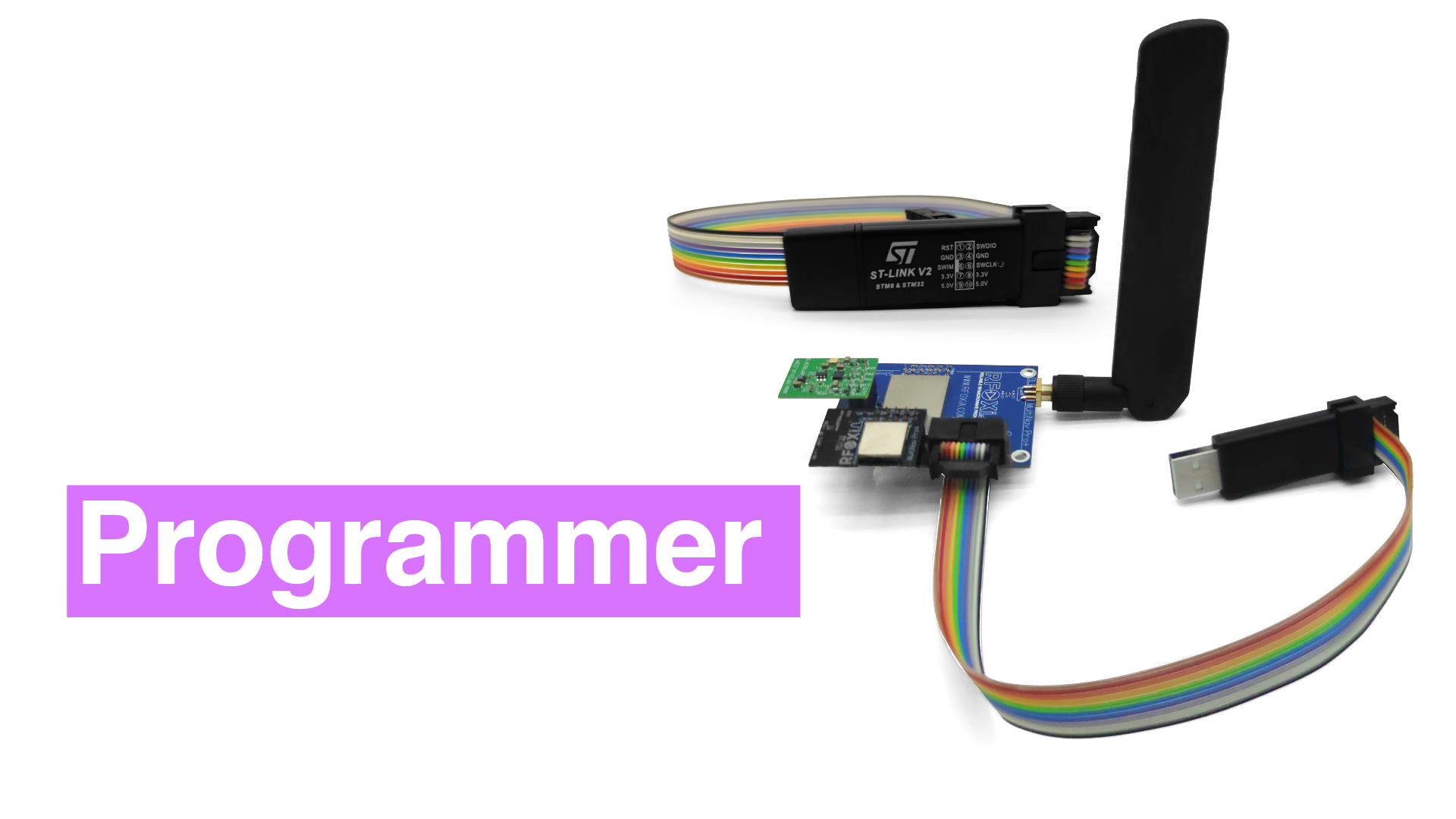
The Power/Program Kit earns the second half of its name through the integrated STLink programmer — a professional-grade interface for flashing firmware to the MultiNav Pro+ BLE Module directly.
This is a significant inclusion for developers. The STLink interface supports:
- Full firmware flashing — push complete firmware images to the BLE module
- In-circuit debugging — step through running code, inspect registers, set breakpoints
- Reliable firmware updates — update field-deployed modules without removing them from their installations
For teams using the RFOXiA AI Firmware Builder — which generates production-ready firmware from plain language descriptions in the Club Dev Hub — the STLink programmer closes the loop from AI-generated code to deployed hardware in the shortest possible path. Generate firmware in the browser, flash it to the module in minutes, and test in the field the same day.
This combination of AI-assisted firmware development and integrated hardware programming is one of the clearest expressions of RFOXiA's mission: removing every unnecessary barrier between an idea and a working wireless system.
Complete Connectivity Kit
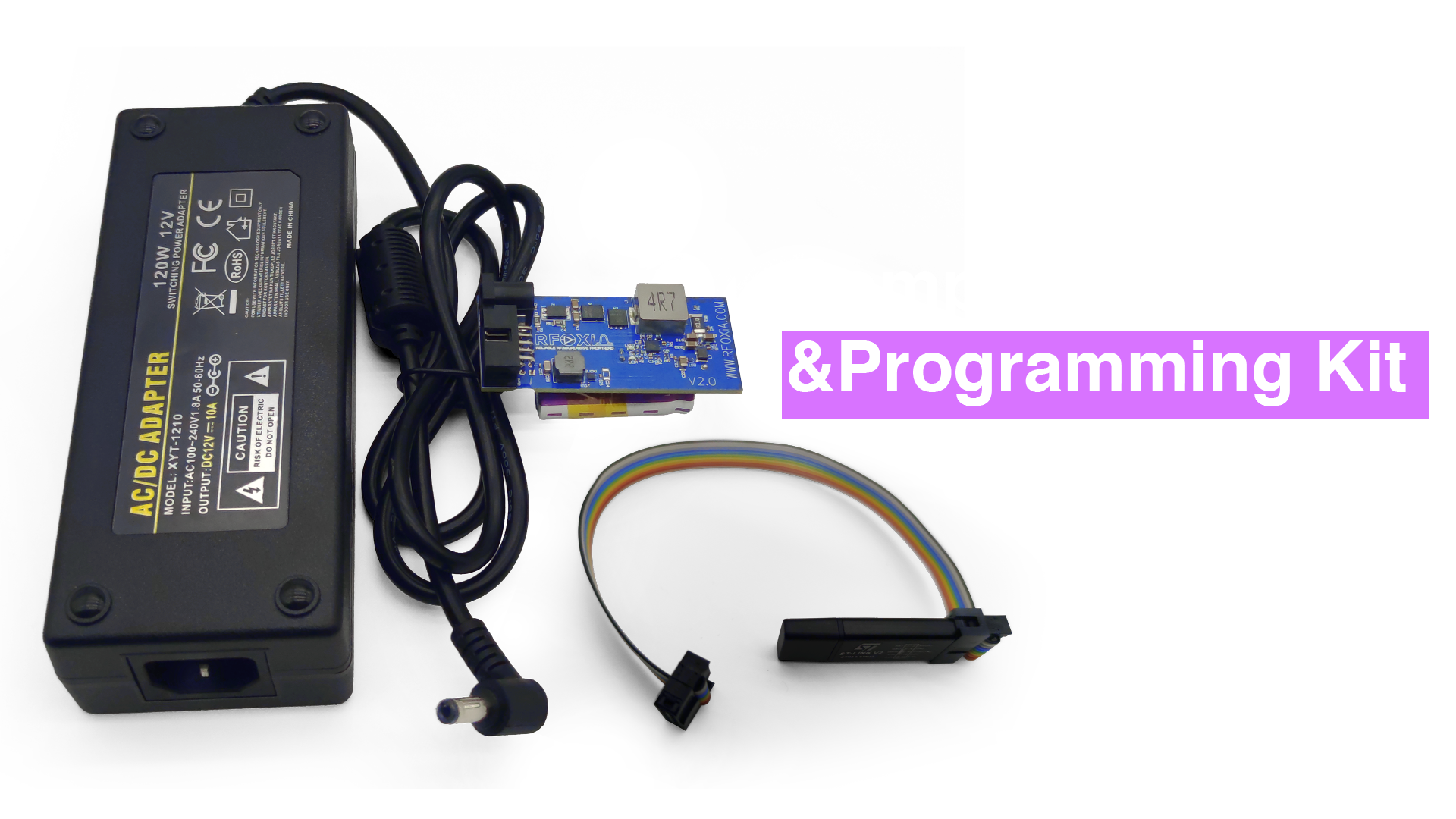
Every cable needed is included. The kit ships with flat ribbon cables for:
- Connecting the BLE Module to the Power Module
- Connecting the STLink Programmer to the BLE Module
Flat ribbon cables are the correct choice here — they are low-profile, mechanically reliable, easy to route in enclosures, and resist the vibration environments common in drone and robotics applications far better than loose individual wires. Nothing is improvised. Nothing requires sourcing additional hardware. The kit is complete out of the box.
Supercapacitor Advantages in Embedded Systems: The Deeper Technical Case
Beyond the immediate application to the MultiNav Pro+ platform, it is worth taking a broader look at why supercapacitor advantages in embedded systems are becoming increasingly relevant as the IoT, drone, and edge computing markets mature.
Peak Load Handling
Embedded wireless systems create challenging power profiles. A LoRa or BLE transmitter at maximum output can draw 10-20x its idle current in brief, sharp pulses. Poorly sized battery systems respond with voltage sag — the supply voltage drops during transmit bursts, causing brownouts, resets, or corrupted packets. Supercapacitors, with their extremely low effective series resistance (ESR), source peak currents without meaningful voltage sag. The RF system sees a stable supply regardless of transmit duty cycle.
Eliminating Battery Degradation from the Maintenance Schedule
In permanent or semi-permanent installations — environmental monitoring nodes, infrastructure sensors, agricultural monitoring arrays — battery replacement is a real operational cost. Technicians must visit sites. Batteries must be sourced, shipped, and disposed of correctly. Supercapacitors rated for 500,000+ cycles eliminate this maintenance vector almost entirely. Deploy once. The power system outlasts the application.
Cold Weather Performance
Lithium batteries lose significant capacity below 0°C. At -20°C, a lithium pack may deliver as little as 50% of its rated capacity. Supercapacitors exhibit far more graceful degradation across cold temperature ranges, making them the preferred choice for high-altitude drone operations, winter field deployments, and cold climate installations where lithium chemistry becomes unreliable.
Simplified BMS Requirements
Lithium battery management systems (BMS) are complex — they must monitor cell voltages, balance charge across cells, prevent overcharge and over-discharge, manage thermal events, and often communicate state of charge to the host system. Supercapacitor management circuits are simpler: voltage limiting on charge, voltage regulation on discharge. This translates to smaller PCB footprint, lower BOM cost, and fewer failure modes in the power subsystem.
Real-World Use Cases Where the Power/Program Kit Delivers Decisive Advantages
Long-Duration Drone Missions
A drone builder deploying the MultiNav Pro+ BLE Module for 20km telemetry control needs a ground station that stays online through the full mission — and through preparation, testing, and post-mission data review. Five-minute recharge between missions means consecutive sorties with no delay. The STLink programmer enables firmware updates at the field site without returning to the lab.
Remote Environmental Monitoring
Field researchers deploying the Sensors Module for extended environmental data collection — temperature, humidity, air pressure, air quality — need power systems that survive longer than a standard workday without requiring attention. The 24-hour runtime with 5-minute recharge means a researcher can top off the power kit each morning and trust the system to run unattended through the full deployment day.
Data Network Node Operation
RFOXiA's data network rewards consistent uptime. A node that goes offline because its power system failed earns nothing for that period. A node powered by a supercapacitor system with 24-hour runtime and 5-minute recovery charges earns consistently, maximizes the scarcity bonus for reliable nodes, and contributes verified data to the network without interruption.
Rapid Prototyping and Development Cycles
In the lab, the combination of fast charging and integrated STLink programming collapses the develop-flash-test loop dramatically. Flash firmware. Test behavior. Identify issue. Modify code in the AI Firmware Builder. Flash updated firmware. Resume testing. No waiting for charge cycles. No hunting for a separate programmer. The RFOXiA SuperCapacitor Battery and Programmer Kit is designed to accelerate this loop.
How the Power/Program Kit Fits into the Complete MultiNav Pro+ Ecosystem
The Power/Program Kit is not a standalone product — it is the power and programming backbone of the MultiNav Pro+ Developer Bundle. When paired with the BLE Module, GNSS Module, and Sensors Module, the complete ecosystem becomes a self-contained professional wireless development platform:
- Long-range wireless communication — up to 20km man-to-drone, 50km drone-to-drone
- Precision GPS tracking — 1.5m accuracy at 18Hz fix rate
- Environmental sensing — seven sensors streaming verified data
- Professional power management — 24-hour runtime, 5-minute recharge
- Integrated programming — STLink interface for firmware deployment and debugging
- AI firmware development — generate production firmware from plain language in the Club Dev Hub
- Mobile control — iOS and Android app with PS5-style controller interface and live GPS map
- Data monetization — earn daily rewards for contributing verified sensor data to the network
Every component has a defined role. Nothing is redundant. The Power/Program Kit ensures the rest of the stack is always ready to operate.
Specifications Summary
| Specification | Value |
|---|---|
| Supercapacitor Capacity | 1100F |
| Energy Storage | 8800 Joules |
| Runtime (Full Stack) | 24 hours |
| Charge Time | < 5 minutes |
| Charging Input | 12V 5A adapter |
| Charging Current to Supercapacitor | 4V 10A |
| Programmer Interface | STLink |
| Compatible Modules | All MultiNav Pro+ Modules |
| Included Cables | Flat ribbon cables (BLE-to-Power, STLink-to-BLE) |
| FCC Certification | Yes |
| Price | $119 |
Who Should Buy the MultiNav Pro+ Power/Program Kit?
If you are building or deploying any of the following, this kit belongs in your workflow:
- Drone builders and FPV pilots using the MultiNav Pro+ BLE Module for long-range telemetry or control
- Robotics engineers deploying wireless systems that need reliable all-day power in field conditions
- IoT developers prototyping and iterating rapidly on wireless embedded applications
- Field researchers running environmental monitoring deployments with the Sensors Module
- Data network contributors maximizing uptime and daily earnings from verified sensor nodes
- Embedded developers who want an integrated programming solution without managing a separate tool
If you already own MultiNav Pro+ modules or are considering the Developer Bundle, the Power/Program Kit is the piece that ties the entire platform together operationally.
The Broader Significance: Supercapacitor Advantages in Embedded Systems Are No Longer Niche
For most of the past decade, supercapacitor technology in embedded applications was either an academic subject or the domain of well-funded industrial programs with large budgets and specialized engineering teams. Component costs were high. Integration was complex. The density advantage over lithium was marginal enough that most designers defaulted to lithium chemistry out of habit and ecosystem inertia.
That calculus has changed. Supercapacitor costs have dropped significantly. High-quality cells are now accessible at price points that make consumer and prosumer hardware viable. The supercapacitor advantages in embedded systems — fast charging, cycle life, temperature resilience, peak current delivery, simplified BMS — are now accessible to individual developers and small teams building serious hardware.
The MultiNav Pro+ Power/Program Kit is a concrete example of that shift. It brings a 1100F supercapacitor bank, a precision high-current charging system, and a professional programming interface together into a $119 product that any developer can buy, deploy, and trust in the field. That is what RFOXiA means by democratizing connectivity and computing power — not just the wireless hardware, but every layer of the stack required to use it effectively.
Ready to Eliminate Power Downtime From Your Embedded Projects?
The RFOXiA SuperCapacitor Battery and Programmer Kit is available now at $119, with 140 units in stock and ready to ship. FCC certified. Fully integrated with the MultiNav Pro+ ecosystem. Complete with all cables and the STLink programmer.
If you are building the complete Developer Bundle — BLE Module, GNSS Module, Sensors Module, and Power/Program Kit — the bundle price brings everything together at $199 with RFOXiA Club credits applied.
Join RFOXiA Club free, claim your $10 welcome credit, and explore the full MultiNav Pro+ ecosystem. The power problem is already solved. Everything else is up to what you build.
Get the Power/Program Kit — rfoxia.com/power-program-kit/
Written by: Moamen Mohamed LinkedIn