
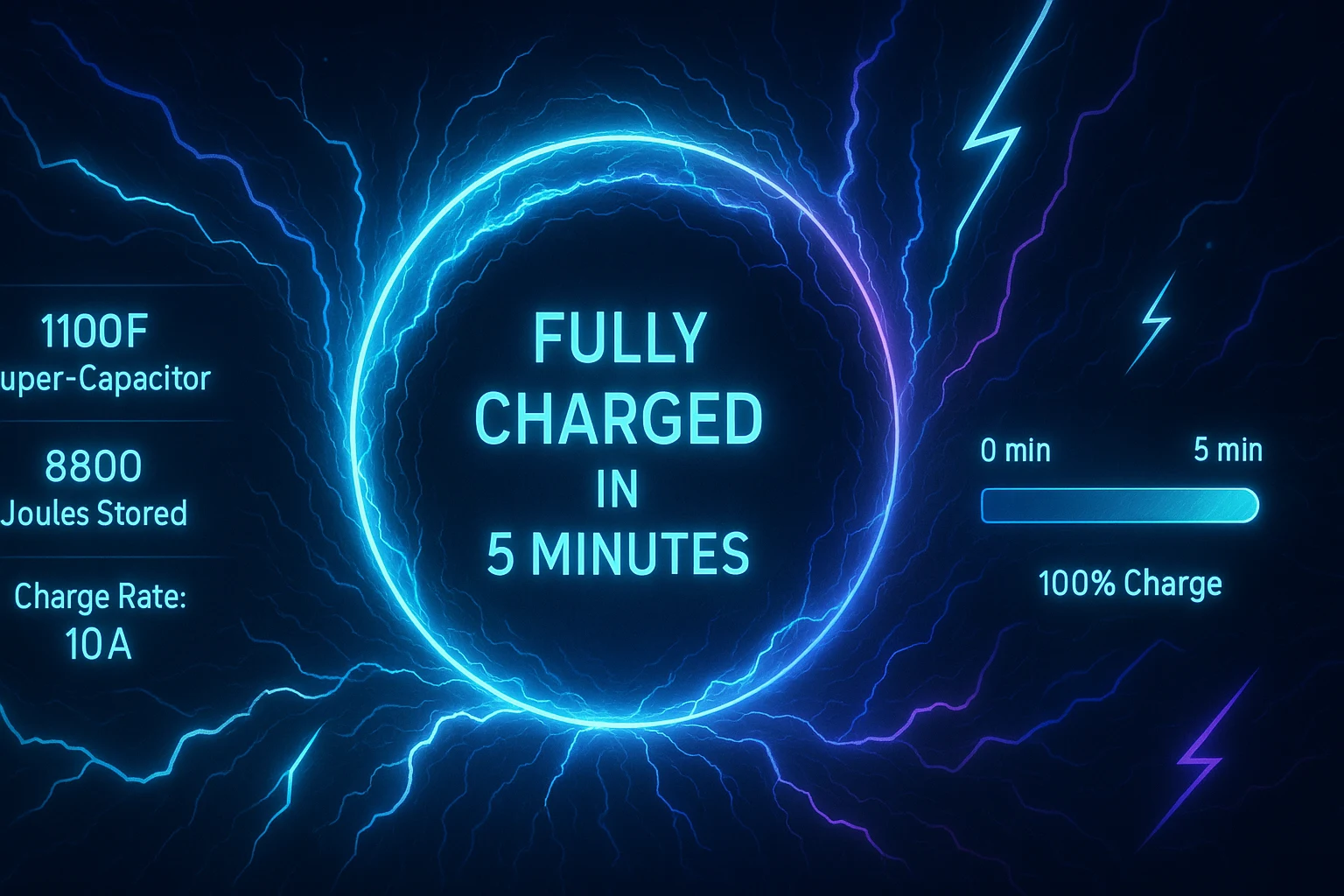
Supercapacitor Charge Time 5 Minutes: The End of Battery Downtime in Wireless Development
RFOXiA SuperCapacitor Battery and Programmer Kit
Why Supercapacitor Charge Time of 5 Minutes Changes Everything for Hardware Developers
If you have ever deployed a wireless sensor node in the field, operated a drone for extended research missions, or run a long-range IoT system for any meaningful length of time, you already know the single most frustrating bottleneck in the entire workflow: waiting for a battery to charge.
Lithium-ion cells need one to four hours. LiPo packs degrade over hundreds of cycles. Lead-acid systems are heavy and slow. Every one of these technologies forces the same compromise — you spend more time charging than building, testing, or deploying.
The RFOXiA SuperCapacitor Battery and Programmer Kit breaks this pattern entirely. With a supercapacitor charge time of 5 minutes delivering a full 24 hours of runtime, it is not an incremental improvement over conventional battery solutions. It is a fundamentally different approach to powering professional wireless hardware.
This post breaks down exactly how it works, why supercapacitor technology is the right choice for the MultiNav Pro+ ecosystem, and what a 5-minute charge time means in practical terms for drone builders, field researchers, IoT engineers, and embedded developers.
The Physics Behind a 5-Minute Supercapacitor Charge Time
To understand why the RFOXiA Power/Program Kit achieves a supercapacitor charge time of 5 minutes, you need to understand what separates a supercapacitor from a conventional battery at a fundamental level.
A lithium-ion battery stores energy electrochemically. Charging involves driving ions through a chemical reaction — a process that is inherently rate-limited by chemistry. Push too much current in too fast and you generate heat, accelerate degradation, or trigger dangerous thermal runaway. This is why fast-charging a lithium battery to 80% in 20-30 minutes is considered impressive, and charging to 100% still requires additional time at reduced current.
A supercapacitor stores energy electrostatically, at the surface of its electrodes. There is no chemical reaction. Charge moves in, charge moves out, and the limiting factor is electrical resistance — not chemistry. This is why supercapacitors can accept extremely high charge currents without damage, degradation, or safety risk.
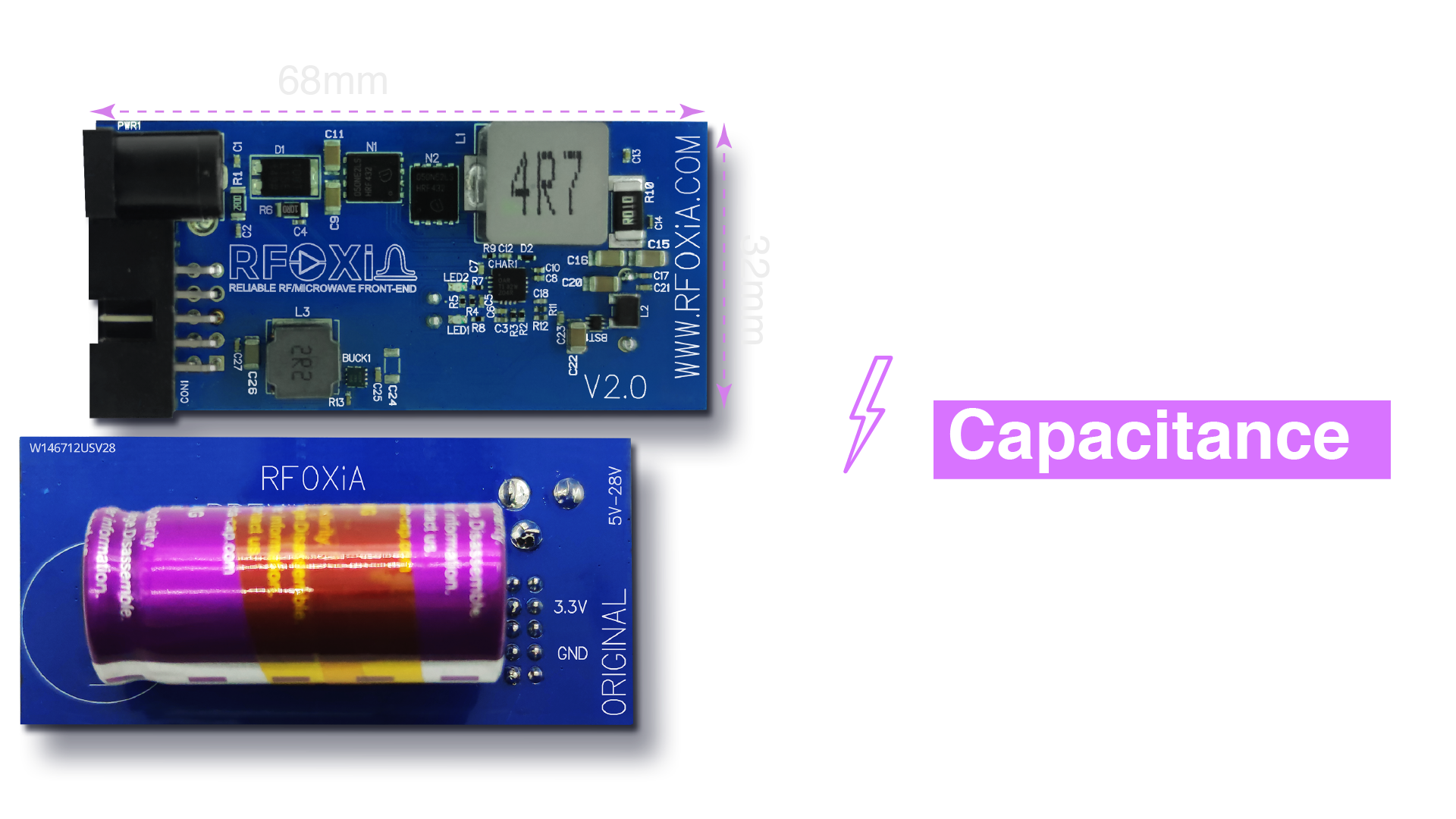
The RFOXiA Power/Program Kit uses an 1100F supercapacitor system. At 4V operating voltage, that translates to 8,800 Joules of stored energy. Charged at 4V and 10A through the included 12V 5A high-power adapter, the entire system reaches full charge in under 5 minutes. Not 20 minutes with a fast charger. Not 45 minutes with a "rapid" charger. Five minutes — and you have a full day of runtime for your complete MultiNav Pro+ module stack.
Why 8,800 Joules Is More Than Enough for a Full Working Day
Let us put 8,800 Joules in context for the hardware developers and IoT engineers reading this.
The MultiNav Pro+ BLE Module operates at low power levels optimized for long-range transmission. In active streaming mode, the BLE module draws on the order of milliwatts to low single-digit watts depending on transmission power settings. When you add the GNSS Module, Sensors Module, and the associated microcontroller logic, the total system draw of a complete MultiNav Pro+ stack remains well within what 8,800 Joules can sustain across a full 8-to-12 hour working day — with overhead to spare.
For comparison:
- A typical LiPo 3S 5000mAh pack stores approximately 55.5 Wh, or roughly 200,000 Joules. However, it takes 60-90 minutes to charge and degrades meaningfully after 300-500 charge cycles.
- The RFOXiA supercapacitor system stores 8,800 Joules — purpose-built for the power envelope of the MultiNav Pro+ ecosystem — charges in 5 minutes, and supercapacitors are rated for hundreds of thousands of charge cycles with negligible degradation.
For a developer running multiple test cycles per day, or a field researcher running continuous sensor data collection sessions, the cycle life advantage alone justifies the supercapacitor approach. You will not be replacing this power system after a year of daily use. It will outlast the hardware it powers.
The High-Power Charging Adapter: Engineered for Speed
The supercapacitor charge time of 5 minutes is not accidental — it is the result of pairing the right energy storage medium with the right charging architecture.
The included 12V 5A high-power charging adapter delivers power to the supercapacitor management circuit, which then steps down to the 4V, 10A charging profile that the 1100F supercapacitor bank requires. This is a deliberate design decision. Charging at 10A into a supercapacitor is perfectly safe — unlike attempting to charge a lithium battery at equivalent rates, which would require complex multi-stage charging algorithms and active thermal management.
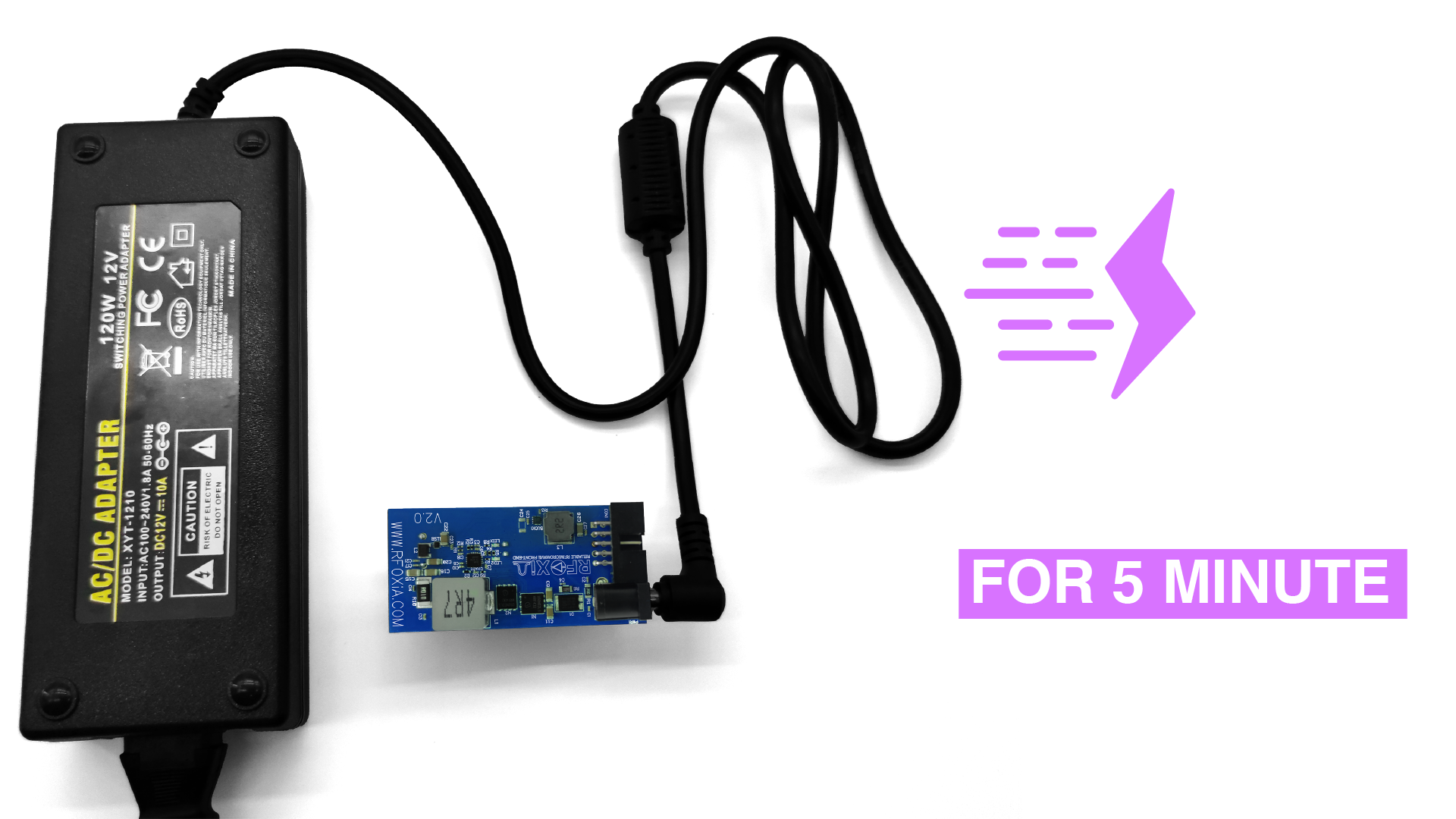
The result: plug in the adapter, wait five minutes, unplug, deploy. No monitoring required. No multi-stage charging protocols. No concern about overcharging. The simplicity of the charging process is a direct consequence of supercapacitor physics, and it translates into a charging workflow that takes less cognitive overhead than making coffee.
Powering the Complete MultiNav Pro+ Ecosystem
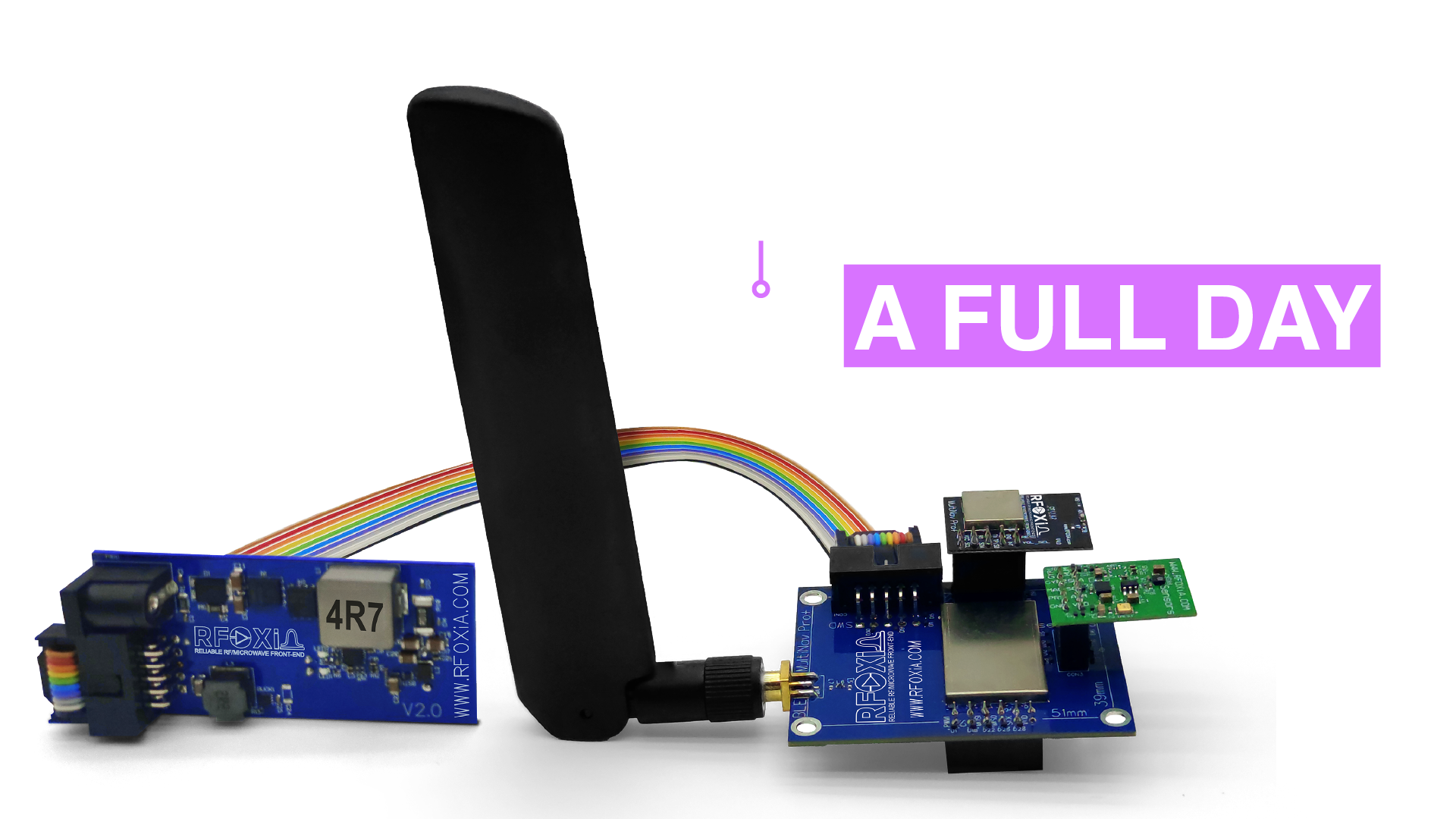
One of the key design principles behind the RFOXiA Power/Program Kit is that it does not just power a single module — it powers the entire MultiNav Pro+ stack simultaneously.
This means a single 5-minute charge supports:
- MultiNav Pro+ BLE Module — up to 20km man-to-drone range, 2Mbps data rate, active transmission
- GNSS Module — 18Hz fix rate, 1.5 meter accuracy, continuous position streaming
- Sensors Module — all seven onboard sensors (temperature, humidity, air pressure, air quality, accelerometer, gyroscope, magnetometer) running simultaneously
For IoT data network contributors using the RFOXiA platform, this is particularly significant. Earning daily data rewards through the RFOXiA data network requires continuous, verified data streaming with all five required data points active. The Power/Program Kit eliminates the scenario where your node goes offline mid-session because a conventional battery depleted unexpectedly — protecting your uptime bonus and maximizing your daily reward rate.
Integrated STLink Programmer: Development and Power in One Kit
The Power/Program Kit is not just a power solution. It is a complete developer kit that combines power management with professional firmware development capability in one compact package.
The integrated STLink programmer allows you to:
- Flash new firmware directly to the MultiNav Pro+ BLE Module
- Debug firmware in real time using standard SWD interface
- Run breakpoint debugging during active development
- Push over-the-air firmware updates through the standard STLink workflow
For developers building custom applications on top of the MultiNav Pro+ hardware — whether that is custom drone control logic, novel sensor fusion algorithms, or integration with the RFOXiA AI Firmware Builder — having the programmer integrated into the power kit means one fewer piece of equipment to carry, one fewer cable to manage, and one fewer potential point of failure in your development setup.
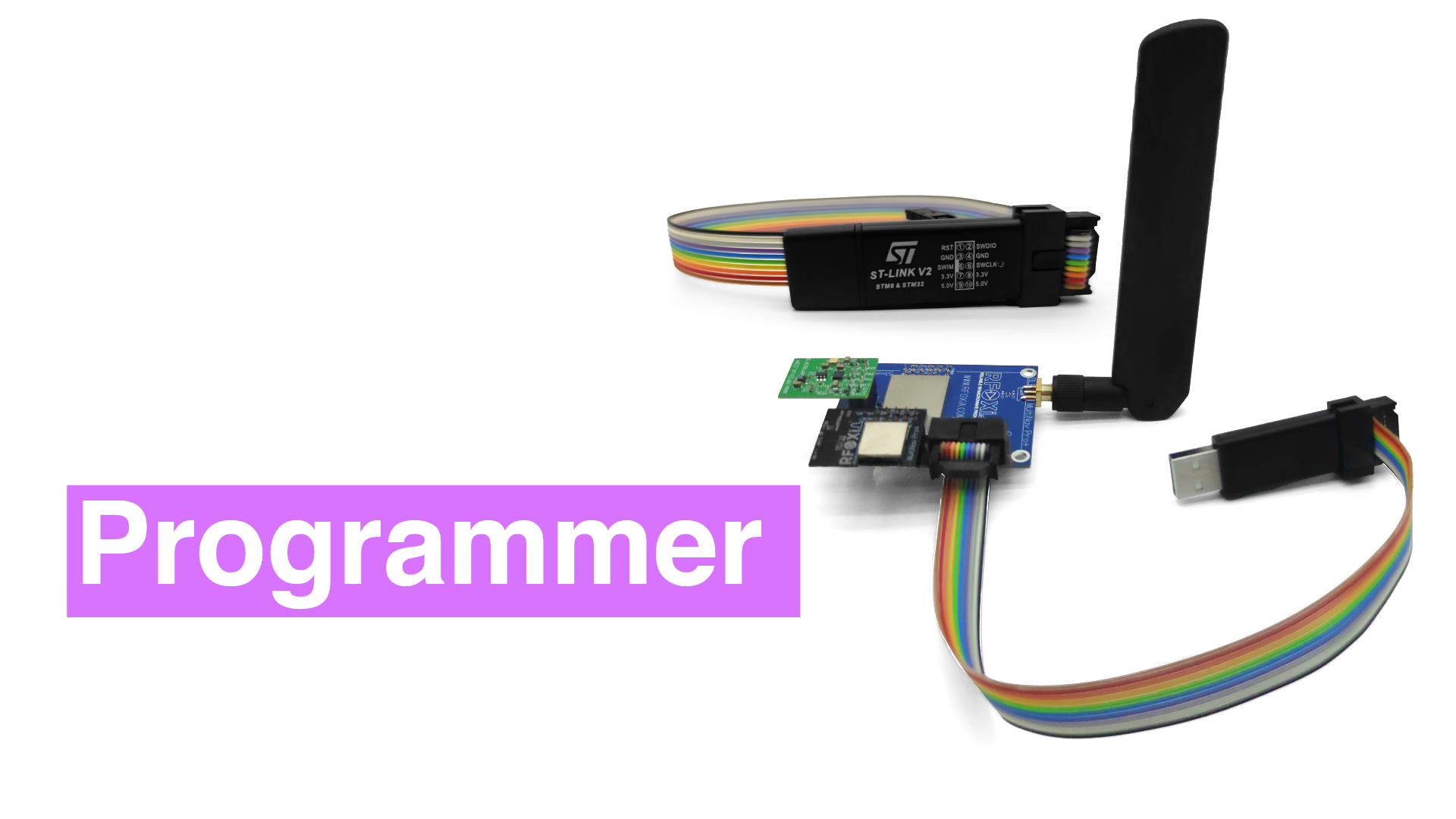
The STLink interface is compatible with the standard ARM development toolchain — STM32CubeIDE, OpenOCD, PlatformIO, Keil — so there is no vendor lock-in on your development environment. You program and debug with the tools you already know, against hardware that is already FCC certified and ready to deploy.
Complete Connectivity: Everything You Need, Nothing You Do Not
Every cable required to connect the Power/Program Kit to the MultiNav Pro+ module stack is included in the box. Flat ribbon cables connect the BLE module to the power board, and separate cables connect the STLink programmer to the BLE module's programming interface.
This matters more than it sounds. One of the most common friction points in hardware development is discovering that a new piece of equipment requires a non-standard cable that you do not have, at 11pm, when you are in the middle of a critical testing session. RFOXiA designed the Power/Program Kit to eliminate that friction entirely.
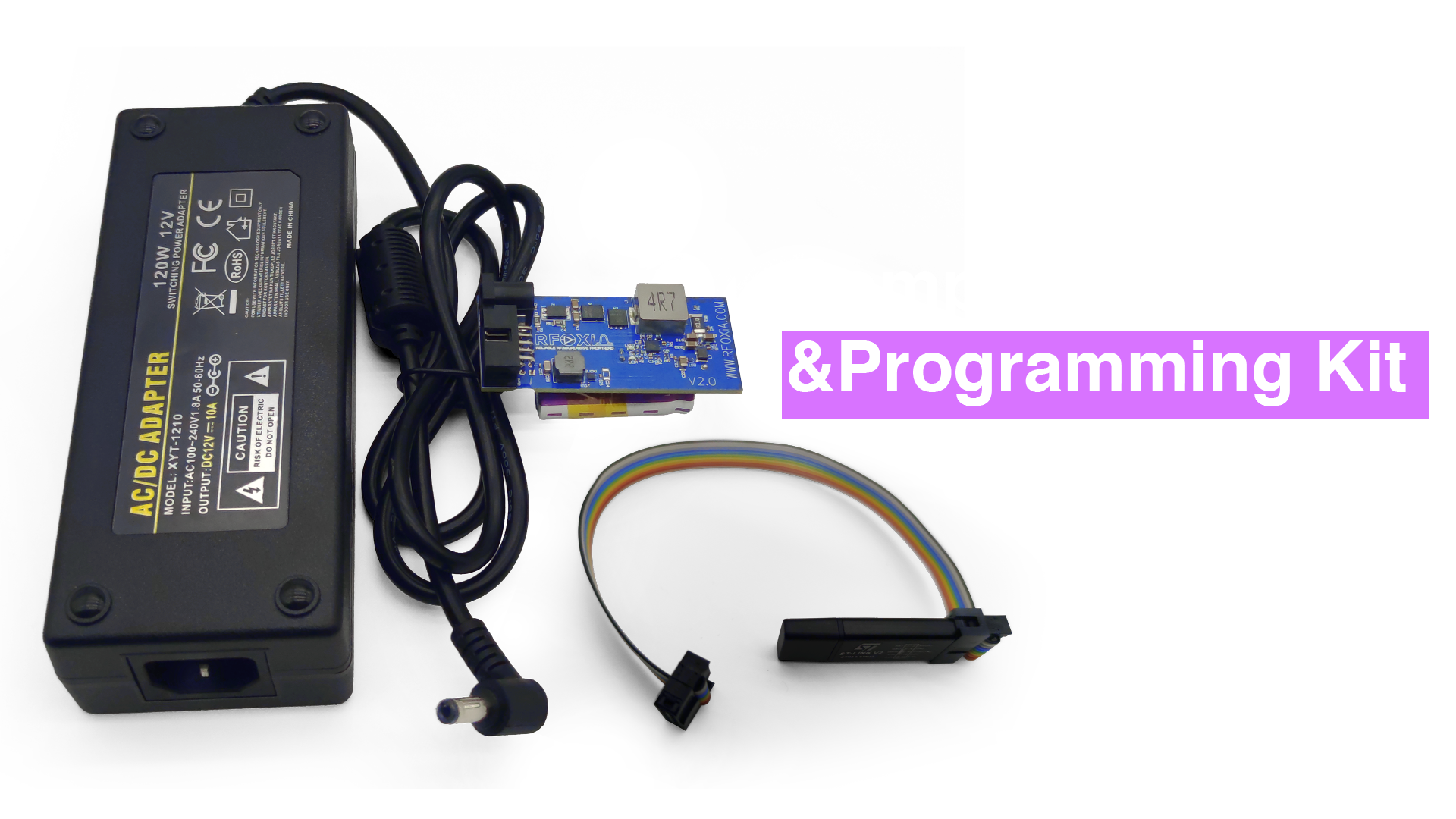
Open the box. Connect the cables. Charge in 5 minutes. Deploy. That is the intended workflow, and the included connectivity kit makes it achievable from the first use.
Real-World Use Cases: Where a 5-Minute Supercapacitor Charge Time Makes the Difference
Drone Operations and Field Testing
Drone builders and FPV pilots operating MultiNav Pro+ modules for long-range telemetry and control understand the operational tempo of field sessions. You fly a mission, land, review data, and prepare for the next flight. The power replenishment window between flights is measured in minutes — not hours.
With a conventional lithium battery, you either carry multiple battery packs (adding weight, cost, and management overhead) or you wait. With the Power/Program Kit's supercapacitor charge time of 5 minutes, you plug in while reviewing your previous flight data and are fully charged before you are ready to fly again. The power system matches the operational tempo of the mission.
Remote Environmental Monitoring
Researchers deploying RFOXiA sensor nodes for environmental data collection in remote locations — agricultural fields, forest monitoring stations, coastal weather nodes — face a different constraint. Access to the deployment site may be infrequent. The power system needs to be reliable, long-lasting in cycle terms, and quick to service when a technician does make the trip.
A supercapacitor system that charges in 5 minutes and sustains hundreds of thousands of charge cycles without capacity degradation is a fundamentally better fit for this use case than lithium batteries that degrade, swell, and need replacement after 12-18 months of daily cycling.
IoT Data Network Contributors
RFOXiA users who deploy their Sensors Module to contribute to the RFOXiA data network and earn daily rewards need consistent uptime to maximize their earnings. The platform rewards continuous verified streaming — gaps in uptime reduce reward rates. A power system that recharges in 5 minutes and runs for 24 hours minimizes the window during which a node is offline, protecting both the data quality of the network and the contributor's earning rate.
Active Firmware Development
Embedded developers iterating rapidly on firmware — flashing, testing, debugging, reflashing — benefit from the combined power and programming capability of the kit. Rather than switching between a bench power supply, a programmer dongle, and whatever battery is nearby, the Power/Program Kit consolidates everything into one device with one cable management requirement and a 5-minute recharge loop.
Technical Specifications Summary
| Parameter | Value |
|---|---|
| Supercapacitor Capacitance | 1100F |
| Energy Storage | 8,800 Joules |
| Operating Voltage | 4V |
| Charge Current | 10A |
| Charge Time | < 5 minutes |
| Runtime (full MultiNav Pro+ stack) | 24 hours |
| Charging Adapter | 12V 5A |
| Programmer Interface | STLink (SWD) |
| Certification | FCC Certified |
| Price | $119 |
How the Power/Program Kit Fits the RFOXiA Ecosystem
The Power/Program Kit is designed to be the foundation layer of the RFOXiA hardware stack — the component that makes everything else reliable, field-deployable, and developer-friendly.
Within the Developer Bundle ($199), the Power/Program Kit combines with the MultiNav Pro+ BLE Module, GNSS Module, and Sensors Module to create a complete wireless development ecosystem that:
- Achieves up to 20km man-to-drone range over Bluetooth
- Provides 18Hz precision GPS positioning
- Streams seven simultaneous environmental data streams
- Charges the entire stack in under 5 minutes
- Runs continuously for 24 hours on a single charge
- Supports real-time firmware development and debugging
This is not a collection of loosely related modules. Every component is designed to work with every other component, with power interfaces, programming interfaces, and mechanical interfaces that are purpose-built for the MultiNav Pro+ form factor.
For developers who want the complete ecosystem, the Developer Bundle is the most efficient entry point. For those who already own MultiNav Pro+ modules and need professional power and programming capability, the RFOXiA SuperCapacitor Battery and Programmer Kit is available as a standalone purchase at $119.
Comparing Supercapacitor Technology to Conventional Battery Solutions
The hardware development community is accustomed to LiPo and Li-ion as the default power source for portable electronics. Supercapacitors have historically been positioned as a supplementary technology — used for peak current buffering or energy harvesting applications — rather than as a primary energy storage medium.
The RFOXiA Power/Program Kit challenges that convention for a specific and defensible reason: the power envelope of the MultiNav Pro+ ecosystem is well-matched to what a supercapacitor system can efficiently deliver.
Cycle life: Lithium cells are typically rated for 300-500 full charge cycles before capacity degrades below 80%. Supercapacitors are rated for 500,000 to 1,000,000 cycles with negligible degradation. For a device that is charged once or twice daily, that difference is measured in years versus decades.
Charge rate: Lithium cells require careful rate limiting during charging to prevent degradation and thermal events. Supercapacitors accept maximum charge current without degradation penalties — enabling the supercapacitor charge time of 5 minutes that defines the Power/Program Kit.
Temperature performance: Lithium cells lose significant capacity at low temperatures and require thermal management in extreme environments. Supercapacitors maintain performance across a much wider temperature range — relevant for researchers and drone operators working in cold climates or at altitude.
Safety: Supercapacitors do not have thermal runaway failure modes. They do not swell, they do not vent toxic gases, and they do not present fire risk under normal operating conditions. For field deployment in remote locations, this safety profile is a meaningful advantage.
The trade-off is energy density. Supercapacitors store less energy per unit volume and weight than lithium batteries. The RFOXiA Power/Program Kit addresses this by being honest about the use case: it is designed to power the MultiNav Pro+ module stack for one working day — no more, no less. For that specific application, 8,800 Joules is sufficient, and all the advantages of supercapacitor technology come with it.
Getting Started with the RFOXiA Power/Program Kit
The Power/Program Kit ships ready to use. The supercapacitor module, high-power charging adapter, STLink programmer, and all required cables are included in the box.
First-time setup:
- Connect the flat ribbon cable from the power board to the MultiNav Pro+ BLE Module
- Connect the STLink programmer cable to the BLE module's programming header
- Plug in the 12V 5A charging adapter
- Wait 5 minutes for full charge
- Disconnect the charger and deploy
Firmware development workflow:
- Connect the STLink USB cable to your development machine
- Open your preferred development environment (STM32CubeIDE, PlatformIO, etc.)
- Flash, debug, and iterate with the Power/Program Kit providing stable regulated power throughout the development session
For AI-assisted firmware development, RFOXiA Club's AI Firmware Builder allows you to describe your application in plain language and receive complete, production-ready firmware that can be flashed directly through the included STLink programmer.
Conclusion: Supercapacitor Charge Time of 5 Minutes Is Not a Marketing Claim — It Is Physics
Every specification in the RFOXiA Power/Program Kit is a consequence of deliberate engineering decisions rooted in the physics of supercapacitor energy storage. The supercapacitor charge time of 5 minutes is not an approximation or a best-case scenario — it is what happens when you charge an 1100F capacitor bank at 10A. The 24-hour runtime is not an optimistic estimate — it is the result of matching the energy storage capacity to the actual power consumption profile of the MultiNav Pro+ module stack.
For hardware developers, drone operators, field researchers, and IoT engineers who have accepted battery charging latency as an unavoidable cost of doing business, the Power/Program Kit represents a genuine alternative — one that is faster to charge, longer-lasting across its operational life, safer in field environments, and purpose-built for the MultiNav Pro+ ecosystem.
If you are building serious wireless systems and you are tired of waiting for batteries, the answer is five minutes and it is available now.
Get the RFOXiA SuperCapacitor Battery and Programmer Kit — $119, FCC certified, ships with everything you need to power and program your complete MultiNav Pro+ stack.
Join RFOXiA Club for free and claim your $10 welcome credit. Access the AI Firmware Builder, Dev Hub community, and live data streaming platform — no hardware required to get started.
Written by: Moamen Mohamed LinkedIn