
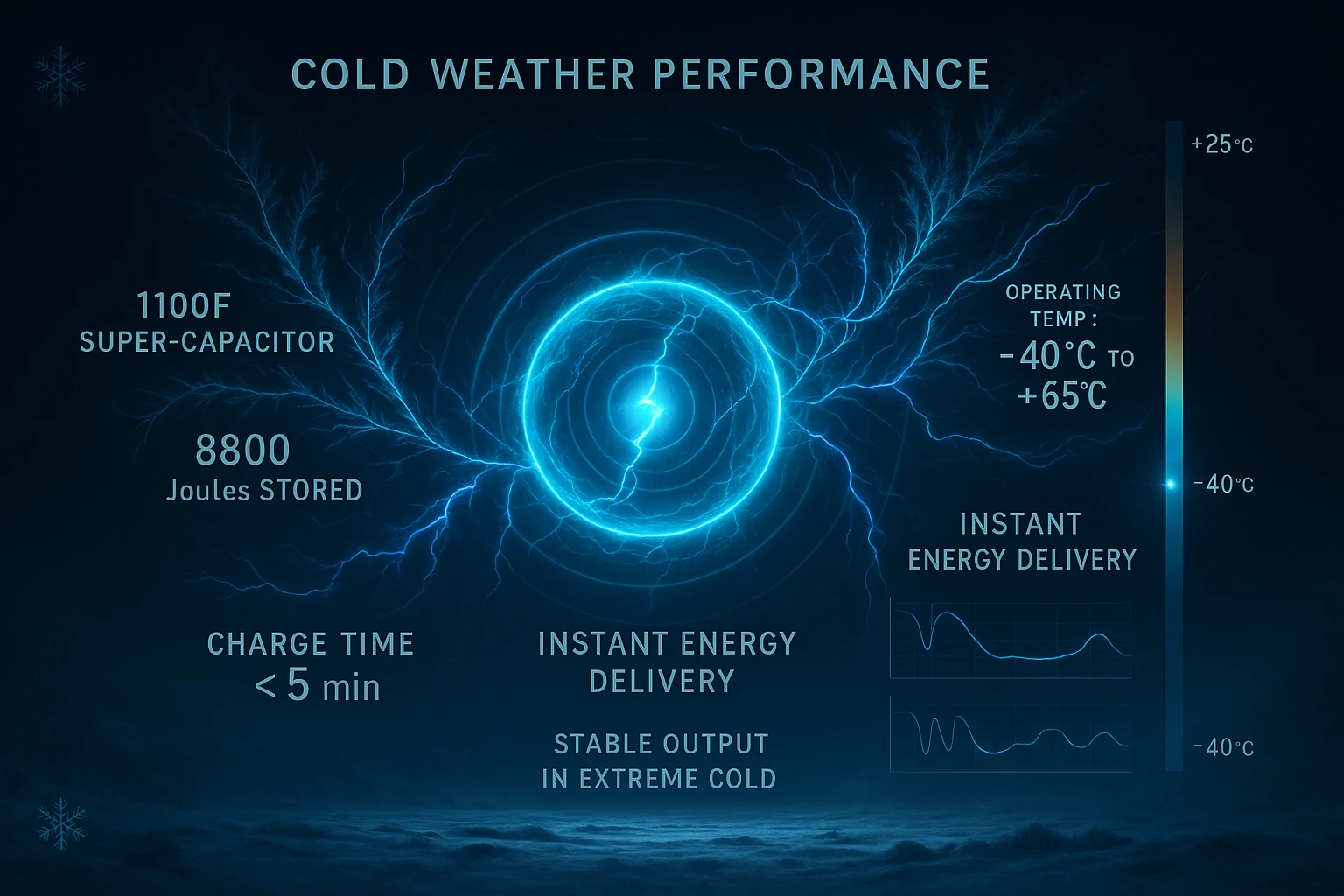
Supercapacitor Cold Weather Performance: The Real Reason Field Engineers Are Switching
RFOXiA SuperCapacitor Battery and Programmer Kit
Why Supercapacitor Cold Weather Performance Changes Everything for Serious Builders
If you have ever watched a LiPo battery die mid-flight in January, or had a lithium cell refuse to deliver its rated capacity on a cold morning in the field, you already understand the core problem this article addresses. Temperature is not just an inconvenience for battery-powered hardware — it is a fundamental physical limitation baked into electrochemical energy storage. Cold weather does not just reduce runtime. It reduces reliability, predictability, and in critical deployment scenarios, it can mean the difference between a successful mission and a failed one.
Supercapacitor cold weather performance tells a completely different story. And for drone builders, robotics engineers, IoT field deployers, and wireless systems developers working with the RFOXiA MultiNav Pro+ ecosystem, understanding that difference is not an academic exercise — it is a practical engineering decision with real consequences for every project you build.
This post is going to break down exactly why supercapacitors hold such a decisive advantage in cold conditions, how that translates into the design philosophy behind the RFOXiA SuperCapacitor Battery and Programmer Kit, and why the 5-minute charge and 24-hour runtime specs are not just marketing numbers — they are the result of choosing the right energy storage technology for the right application.
The Battery Cold Weather Problem: What Is Actually Happening
To appreciate supercapacitor cold weather performance, you need to understand why conventional batteries fail in the cold at a chemistry level.
Lithium-ion and lithium polymer cells store energy through electrochemical reactions. Those reactions depend on ion mobility — specifically, lithium ions moving through an electrolyte between the anode and cathode during charge and discharge. When temperature drops, the electrolyte becomes more viscous. Ion mobility slows dramatically. The internal resistance of the cell increases. And the effective capacity — the energy the battery can actually deliver under load — drops sharply.
The numbers are not subtle. A LiPo cell that delivers 100% of its rated capacity at 25°C (77°F) will typically deliver around 80% at 0°C (32°F) and may drop to 60% or lower at -10°C (14°F). For a drone in flight, that means a battery you expected to last 20 minutes might give you 12. For a field-deployed wireless sensor node, it means your overnight data collection run might end at 3 AM instead of sunrise.
Beyond capacity reduction, there is the voltage sag problem. Cold batteries under heavy load experience more pronounced voltage drops. For sensitive RF electronics — like the BLE modules at the core of the MultiNav Pro+ system — unstable supply voltage translates directly into degraded radio performance, reduced range, and unreliable data transmission.
And then there is the charge problem. Charging a lithium cell below 0°C risks lithium plating on the anode — a permanent degradation mechanism that reduces cell capacity and, in severe cases, creates internal short circuits. Most battery management systems will simply refuse to charge below a threshold temperature, which means that in genuinely cold field conditions, you may have a fully discharged battery with no way to replenish it until conditions warm.
Supercapacitor Cold Weather Performance: The Physics of Why It Wins
Supercapacitors — also called ultracapacitors or electrochemical double-layer capacitors (EDLCs) — store energy through an entirely different mechanism. Rather than chemical reactions, they store charge electrostatically at the interface between electrode and electrolyte. No ions are being converted. No chemical transformation is occurring. Charge separation is physical, not chemical.
This distinction has profound implications for temperature performance.
Because supercapacitor energy storage does not rely on electrochemical reaction kinetics, it is far less sensitive to temperature variation. The primary cold-weather effect on a supercapacitor is increased electrolyte viscosity, which slightly raises equivalent series resistance (ESR) and marginally reduces peak power delivery. But effective capacity — the ability to deliver stored energy — remains far more stable across temperature ranges than any lithium chemistry.
Practical supercapacitor cold weather performance data routinely shows retention of 85-95% of capacity at -20°C (-4°F), conditions under which a lithium cell might be delivering 50% or less. At the extreme end of typical field deployment temperatures (-40°C), many supercapacitor designs still function. Most lithium cells have shut down entirely.
Equally important is the charge behavior. Supercapacitors can be safely charged at low temperatures without any risk of plating or permanent degradation. The charge process is physical, not chemical. This means that in a cold-weather deployment scenario, you can recharge your supercapacitor power system in the field, at any ambient temperature, without damaging the storage system or shortening its service life.
The MultiNav Pro+ Power/Program Kit: Built Around Supercapacitor Cold Weather Performance
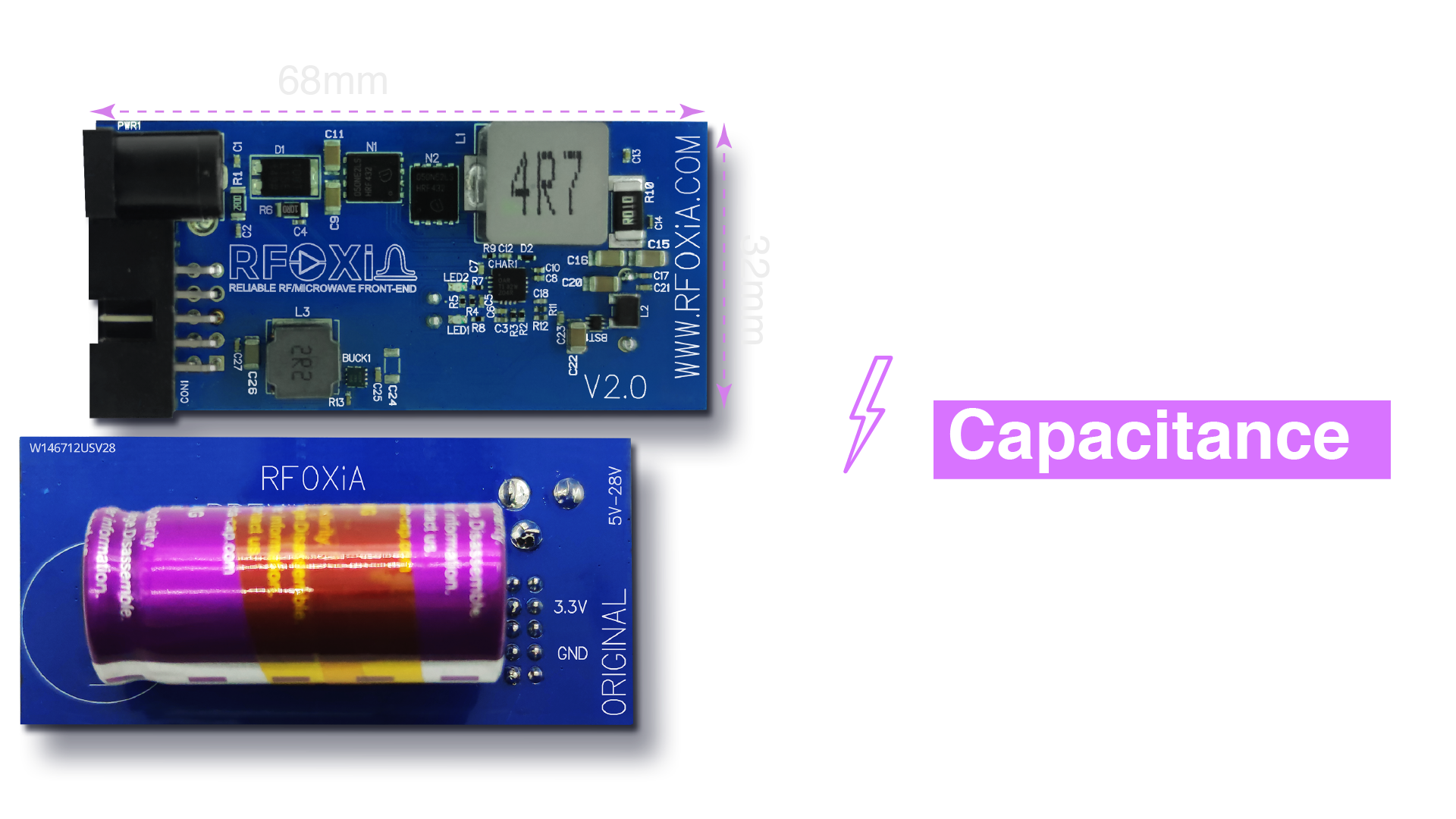
The RFOXiA MultiNav Pro+ Power/Program Kit is built around an 1100F supercapacitor system storing 8800 Joules. That is the energy budget that delivers 24 hours of runtime to the complete MultiNav Pro+ module stack — BLE module, GNSS module, and sensors module running simultaneously.
The choice to build this kit around supercapacitor technology was not arbitrary. It was an engineering decision driven exactly by the real-world deployment scenarios that MultiNav Pro+ users operate in. Drone operators fly in winter. Field researchers deploy sensor networks in environments where temperature control is not an option. IoT developers build systems that need to run unattended through cold nights without human intervention.
Supercapacitor cold weather performance is not a bonus feature of this kit. It is a core design requirement that shaped the product from the beginning.
And because supercapacitors can accept charge at rates that lithium cells simply cannot — without safety risk or degradation — the kit charges from flat to full in under 5 minutes using the included 12V 5A adapter that delivers 4V at 10A to the supercapacitor bank. That charge rate is physically impossible to achieve safely with lithium chemistry at the capacities needed to power a professional wireless development system for a full day.
5-Minute Charge: What It Actually Means in the Field
Five minutes to full charge sounds impressive on a spec sheet. But consider what it actually enables in a real deployment scenario.
You are in the field. Your data collection session has ended. You have 10 minutes before your next scheduled flight window. With a lithium battery system of equivalent capacity, you would need to have a second battery pre-charged and ready — because the one you just used will require 90 minutes to 3 hours to replenish. In cold weather, that charging time extends further, or becomes impossible until you can warm the battery.
With the MultiNav Pro+ Power/Program Kit, you plug in the 12V adapter, wait 5 minutes, and you are ready for another full day of operation. In cold conditions, the supercapacitor cold weather performance advantage means that 5-minute charge time does not extend to 8 minutes or 15 minutes because the ambient temperature dropped overnight. It remains 5 minutes, because the supercapacitor does not care about the cold the way a lithium cell does.
For anyone running multiple survey flights in a day, this is not a minor convenience. It is the difference between completing your mission profile and calling it early because your power systems cannot keep up.
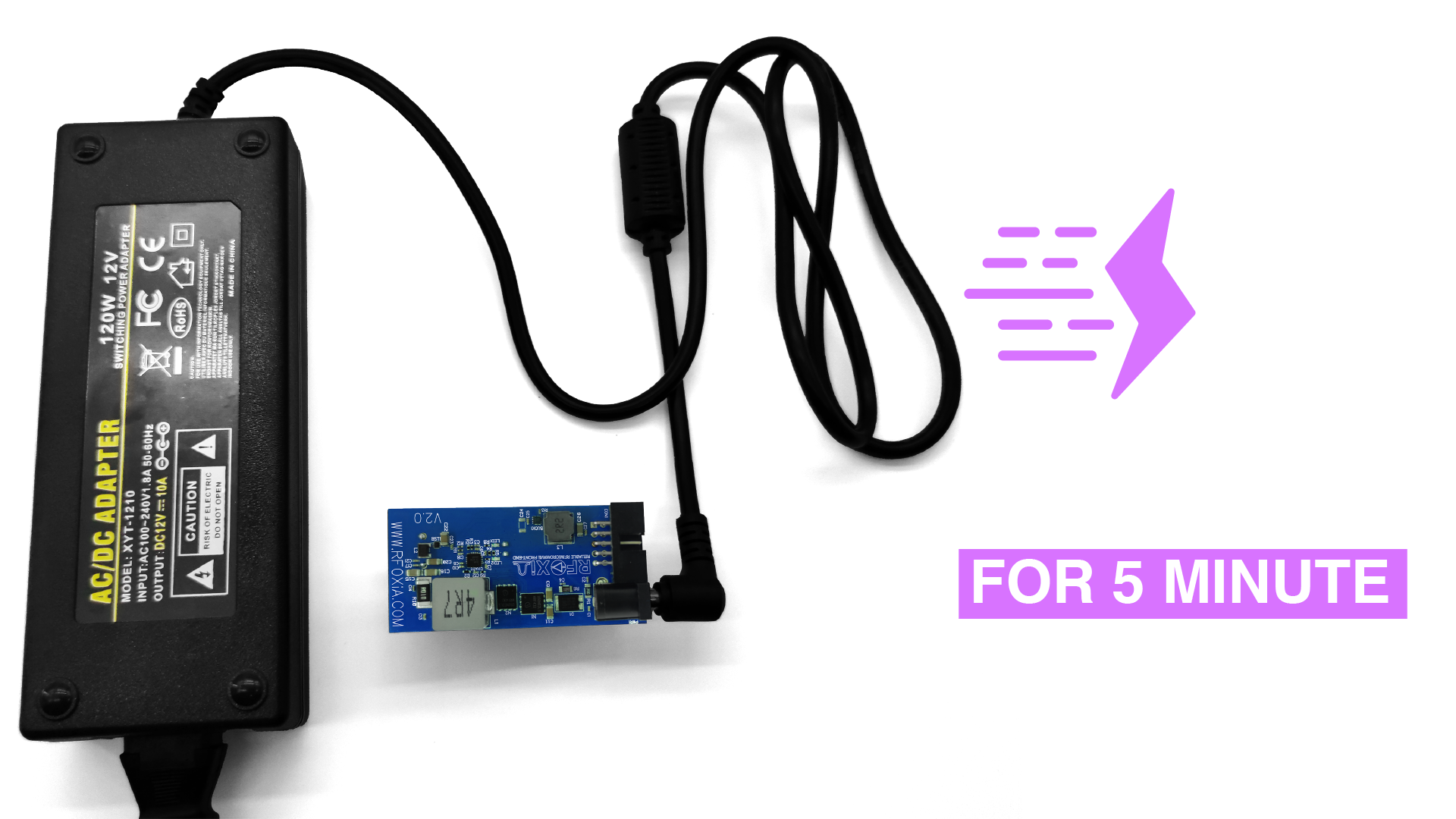
The included high-power charging adapter is engineered specifically for this charge rate. It is not an afterthought. It is the other half of what makes the 5-minute charge specification real rather than theoretical.
24-Hour Runtime: Powering the Complete MultiNav Pro+ Ecosystem
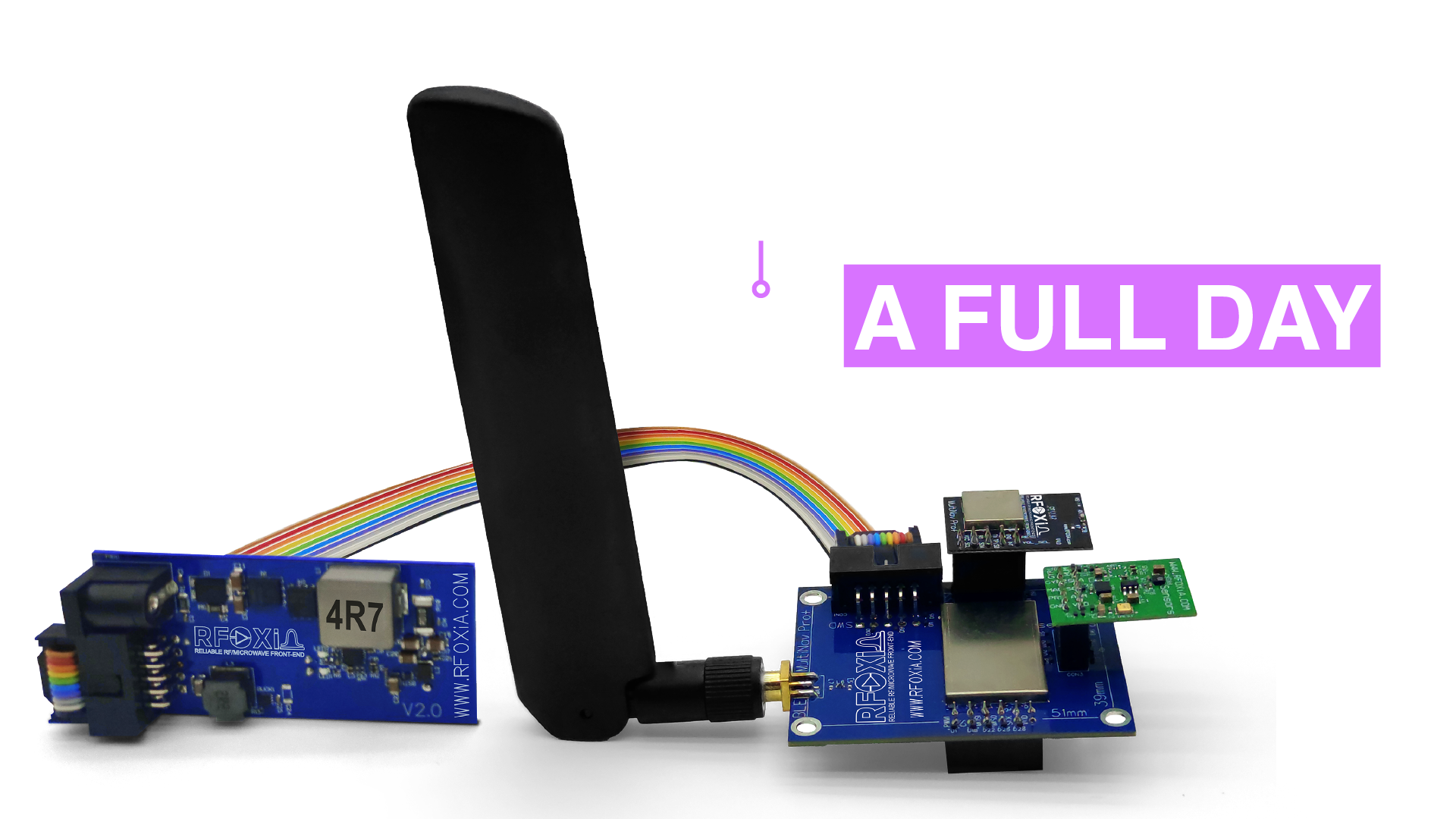
The 8800 Joules stored in the 1100F supercapacitor system is calibrated to power the complete MultiNav Pro+ module stack for a full working day. That includes the BLE module with its long-range RF frontend, the GNSS module running at 18Hz fix rate, and the sensors module with all seven onboard sensors active.
In the context of the RFOXiA data network, this runtime specification is particularly significant. The data monetization model rewards consistent uptime. A node that runs uninterrupted for 24 hours earns more than one that drops offline due to power system failures. Building your data network node on a supercapacitor power system means your uptime bonus is not at risk from a battery that decided the overnight temperature was too cold to deliver its rated capacity.
For field researchers running continuous environmental monitoring, 24-hour runtime means a single charge covers a complete diurnal cycle — capturing the full temperature, humidity, pressure, and air quality variation from day through night and back to day. No mid-cycle power interruption. No data gap in your time series.
For drone builders and robotics engineers, the runtime spec matters in a different way. The Power/Program Kit is designed as a development and bench power solution — keeping your modules powered through extended development sessions without the need to monitor battery levels or interrupt firmware testing cycles to charge.
The STLink Programmer: Why It Belongs in the Same Kit
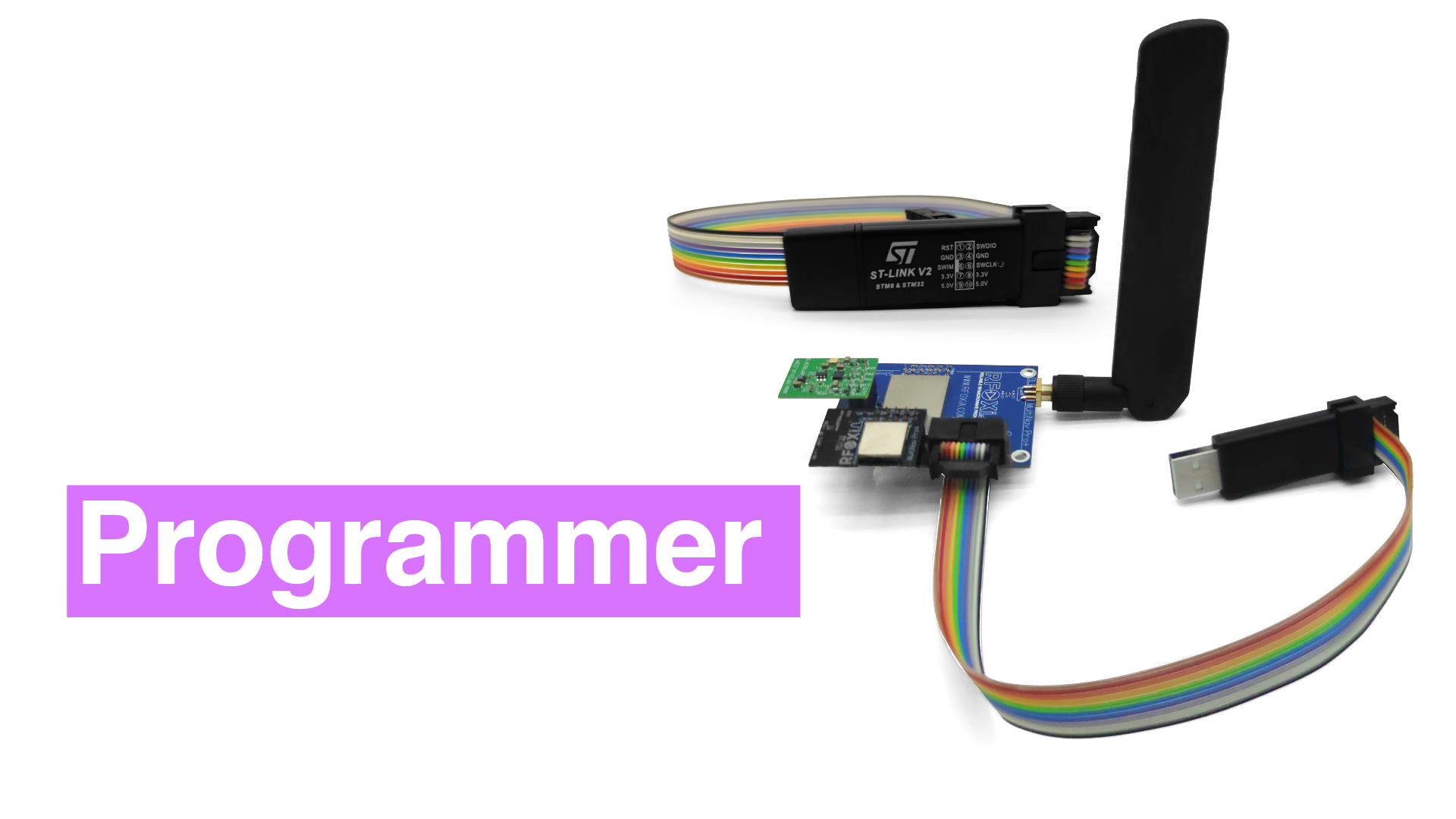
The MultiNav Pro+ Power/Program Kit is not purely a power solution. It is also the programming interface for the BLE module. The integrated STLink programmer enables direct firmware flashing, debugging, and development iteration without requiring a separate programming tool.
For developers using the RFOXiA AI Firmware Builder — which generates complete, production-ready firmware from plain-language descriptions of the application — the STLink programmer is the bridge between AI-generated code and running hardware. You describe what you want your BLE module to do, the AI writes the firmware, and the STLink programmer in this kit flashes it to the module. The entire development loop, from idea to running hardware, can happen in a single session without any additional equipment.
Bundling the programmer with the power system is a deliberate ergonomic decision. The two functions are always needed together during development. Powering the module and programming the module are not separate workflows — they happen simultaneously, at the same bench, during the same session. Having them in one kit eliminates the cable chaos and equipment juggling that slows down iterative hardware development.
Complete Connectivity: Everything Included
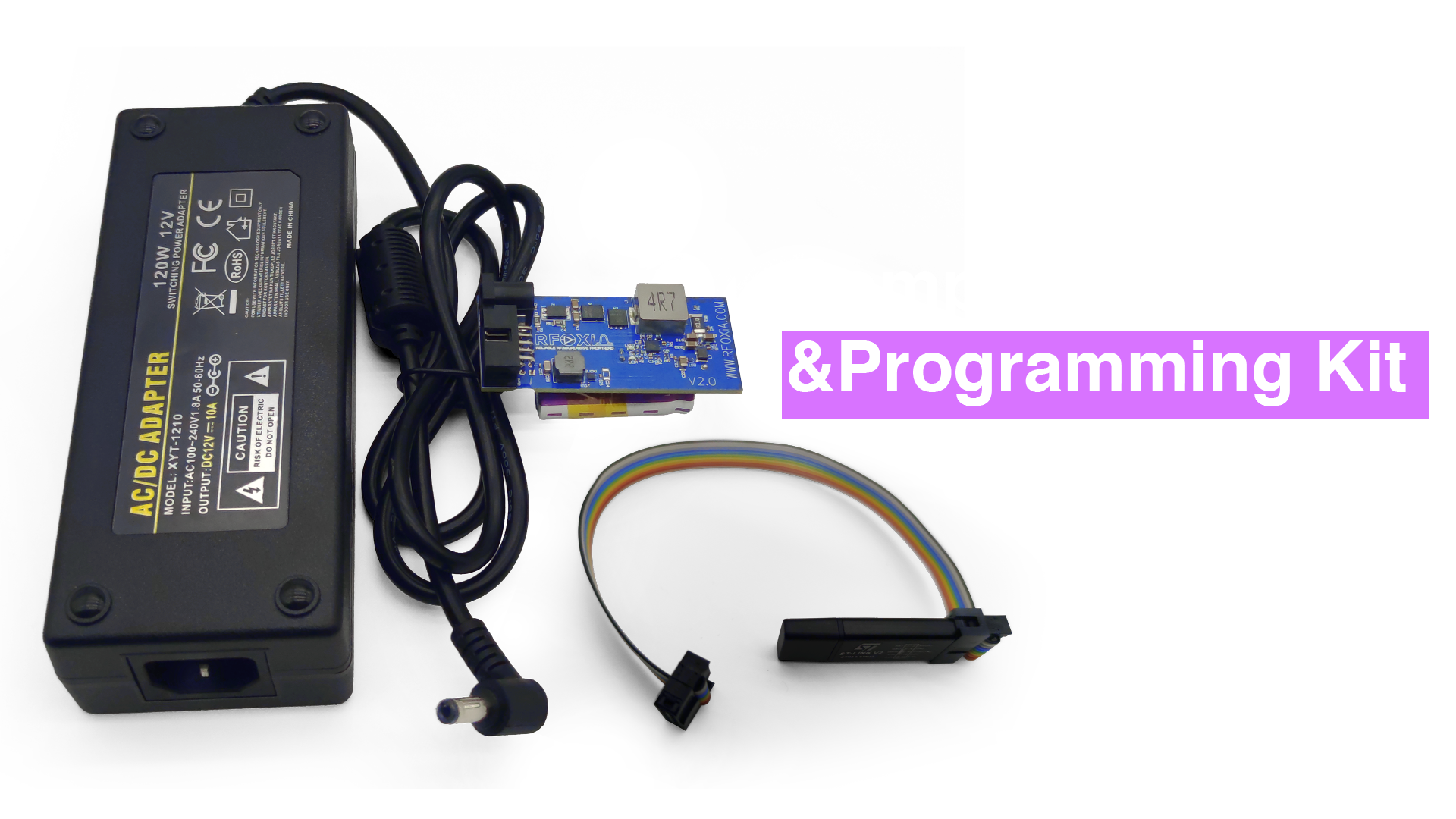
The kit ships with all necessary cables for immediate setup. Flat ribbon cables connect the BLE module to the power module, and the programmer to the BLE module. Nothing needs to be sourced separately. Open the kit, connect the cables, plug in the charger, and you are operating within 5 minutes of opening the box.
This matters more than it might seem for a hardware development workflow. The friction of finding the right cables, ordering adapters, waiting for them to arrive, and dealing with incompatible pinouts is a real productivity cost. Eliminating that friction from the first session means your development work starts immediately, not after a week of accessory procurement.
Cold Weather Deployment Scenarios: Real Applications for the MultiNav Pro+ Power Kit
Supercapacitor cold weather performance becomes most relevant in the deployment scenarios that push hardware to its limits. Here are the specific use cases where the Power/Program Kit's supercapacitor foundation matters most:
Winter Drone Operations
FPV pilots and drone builders operating in northern climates face shortened flight windows in winter not only because of reduced LiPo flight battery performance, but because ground support electronics — controllers, video receivers, data loggers — are all subject to the same cold weather degradation. Running the MultiNav Pro+ BLE module on a supercapacitor power system means your communication link remains stable and fully powered regardless of ambient temperature, while your drone's LiPo batteries are the only cold-weather variable you need to manage.
Overnight Environmental Monitoring
Sensors module deployments collecting environmental data through winter nights need power systems that maintain stable output as temperatures drop from late afternoon through early morning. A lithium-based power system would experience capacity fade and voltage sag through the coldest hours of the night — exactly the hours when your data needs to be most reliable. The supercapacitor power system maintains stable output voltage through the full thermal range, ensuring data quality is consistent from the first data point to the last.
Remote Field Research
Researchers deploying wireless data collection networks in remote locations — mountain weather stations, agricultural monitoring arrays, wildlife tracking networks — need power systems they can trust to perform without supervision. The combination of reliable cold weather performance, 24-hour runtime, and 5-minute recharge capability means field visits for maintenance are less frequent and less operationally critical.
Disaster Response Communications
The RFOXiA Connect app's mesh communication capability — enabling internet-independent communication between multiple users — is most valuable in exactly the scenarios where conditions are worst. Emergency response teams operating in winter disasters need communications hardware that works in the cold. The supercapacitor power system behind the MultiNav Pro+ ecosystem was built for these conditions.
Longevity: The Other Supercapacitor Advantage That Compounds Over Time
Supercapacitor cold weather performance is the most acute advantage in the specific scenarios described above. But there is a second advantage that compounds over the lifetime of the hardware: longevity.
Lithium cells degrade. Every charge cycle consumes a fraction of the total cycle life. Temperature stress — both hot and cold — accelerates that degradation. Most lithium cells are rated for 300-500 full charge cycles before capacity degrades to 80% of original. Professional grade cells may achieve 1,000 cycles.
Supercapacitors are rated for hundreds of thousands of cycles. The degradation mechanism is fundamentally different — and far slower. An 1100F supercapacitor system that is charged and discharged daily will outlive the project it was built for, the hardware it powers, and possibly the organization that deployed it.
For a power system that is charged every day — as would be the case for a data network node earning daily rewards — this longevity difference is not abstract. Over a two-year deployment, a lithium battery would have completed 700+ cycles and would be delivering meaningfully less than its original capacity. The supercapacitor would be functionally identical to the day it shipped.
The Complete Picture: Power, Programming, and the MultiNav Pro+ Ecosystem
The RFOXiA SuperCapacitor Battery and Programmer Kit is priced at $119 — a kit that includes the 1100F supercapacitor power system, the 12V 5A high-power charging adapter, the STLink programmer, and all necessary cables.
In the context of the complete MultiNav Pro+ ecosystem — BLE module, GNSS module, sensors module, and this power kit bundled as the Developer Bundle — the Power/Program Kit is the enabling infrastructure that makes field deployment practical. The BLE module can reach 5km on the ground and 20km to a drone. The GNSS module tracks position at 18Hz. The sensors module monitors seven environmental parameters. But all of that capability depends on reliable, stable, temperature-resilient power.
Supercapacitor cold weather performance is not a niche concern. Any builder who has worked outdoors in anything other than ideal summer conditions has already encountered the limitations of conventional battery technology. The Power/Program Kit addresses those limitations directly, with technology that is physically better suited to the task.
For builders who want to understand what the complete ecosystem can do before committing to hardware, RFOXiA Club provides free access to the platform, AI firmware development tools, and the developer community — with a $10 welcome credit on signup. But for builders who are ready to deploy real hardware in real conditions, including cold ones, the RFOXiA SuperCapacitor Battery and Programmer Kit is the power foundation the rest of the system was built on top of.
Summary: Why Supercapacitor Cold Weather Performance Matters for Your Next Build
The choice of energy storage technology is not just a spec-sheet decision. It is a decision about how reliably your hardware performs in the conditions where it actually needs to work — not the conditions in your controlled development environment.
Supercapacitors do not suffer the capacity fade that lithium cells experience as temperature drops. They charge at full rate in cold conditions. They maintain stable output voltage under load, even when the temperature is working against you. They outlast lithium alternatives by orders of magnitude in cycle count. And they can be recharged in 5 minutes rather than hours.
For the MultiNav Pro+ ecosystem — a professional-grade long-range wireless development platform built for field deployment — these are not incidental advantages. They are core design requirements. The Power/Program Kit delivers on all of them, at a price point that puts professional power management within reach of every builder who needs it.
Written by: Moamen Mohamed LinkedIn