
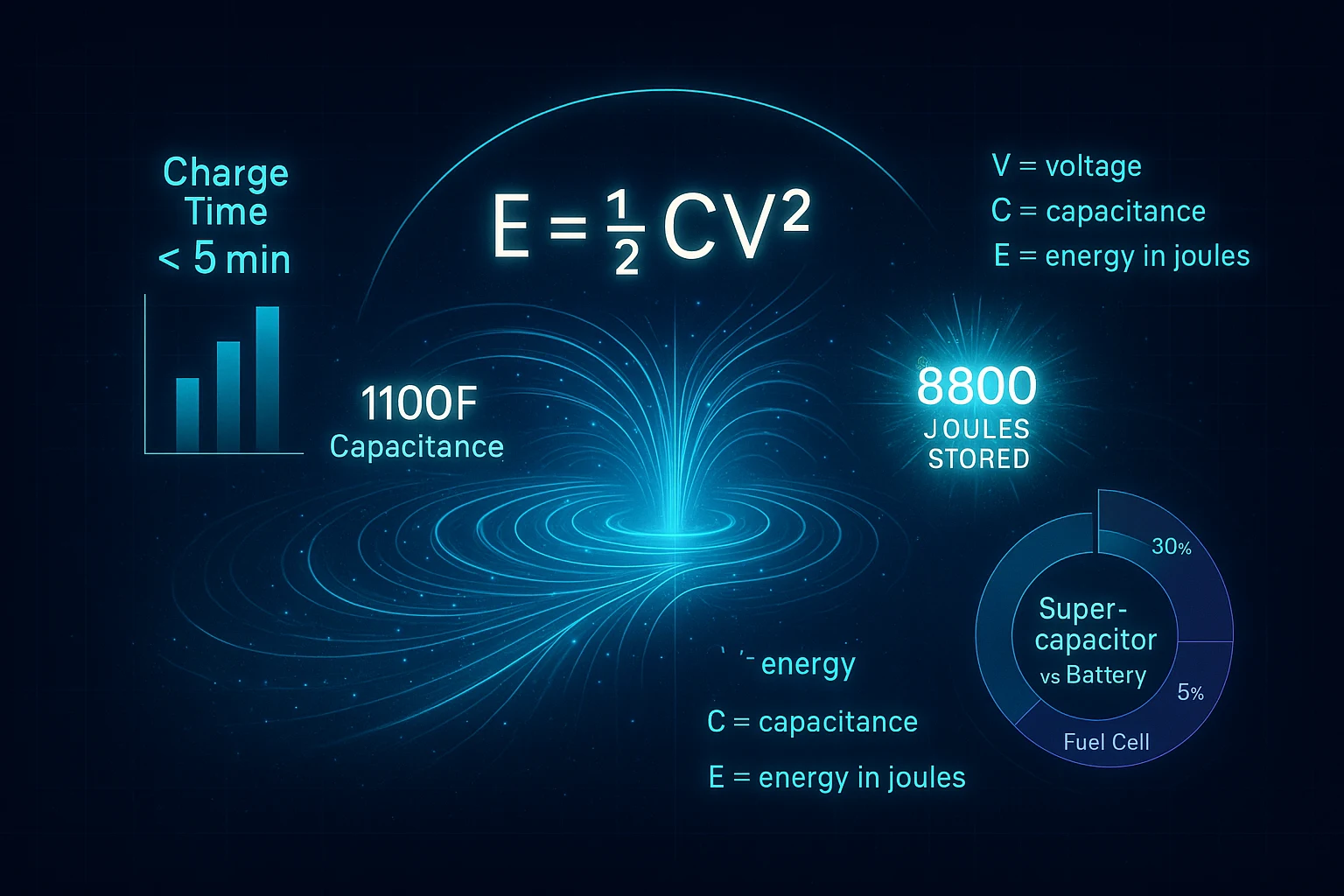
Supercapacitor Energy Storage Calculation: The Science Behind 5-Minute Power
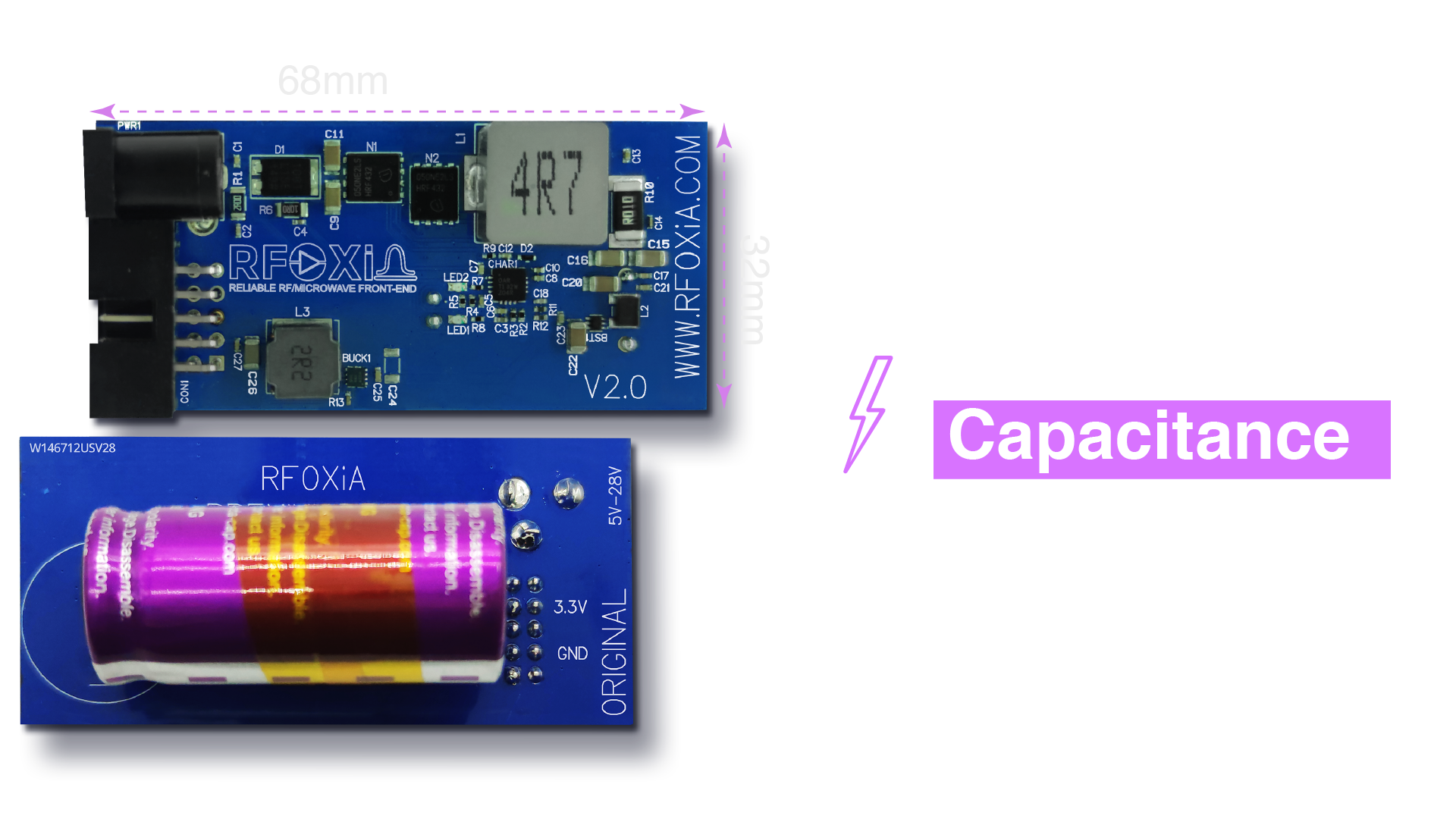
RFOXiA SuperCapacitor Battery and Programmer Kit
Understanding Supercapacitor Energy Storage Calculation for Modern IoT Hardware
If you have ever deployed a wireless sensor node in the field, operated a drone for an extended mission, or run a long-range BLE communication link during a critical test session, you already know the single biggest enemy of reliable hardware: power interruption. Batteries die at the worst possible moment. Charging takes forever. And when you are in the middle of something important — a live data stream, a range test, a firmware debug session — a dead power source does not just cost you time. It costs you data, momentum, and sometimes the hardware itself.
This is exactly why supercapacitor technology has become one of the most exciting developments in embedded systems power management. And to truly appreciate what supercapacitors can do, you need to understand the math behind them — specifically, supercapacitor energy storage calculation.
In this post, we are going to break down exactly how supercapacitor energy storage calculation works, why the numbers matter for real-world hardware deployment, and how the MultiNav Pro+ Power/Program Kit applies these principles to deliver something genuinely remarkable: a 5-minute charge that powers a complete wireless development ecosystem for a full working day.
What Is a Supercapacitor and Why Does It Matter?
A supercapacitor — also called an ultracapacitor or electric double-layer capacitor (EDLC) — is an energy storage device that sits between a conventional capacitor and a rechargeable battery. Unlike standard capacitors that store energy in an electric field between two conducting plates separated by a thin dielectric, supercapacitors store energy through the electrochemical double-layer effect and pseudocapacitance at the electrode-electrolyte interface.
The result is a device with capacitance values measured in hundreds or even thousands of Farads — orders of magnitude higher than even the largest conventional capacitors. This massive capacitance, combined with low equivalent series resistance (ESR), gives supercapacitors two properties that make them extraordinarily useful for real-world power applications:
- Extremely fast charge and discharge cycles — because they do not rely on chemical reactions, supercapacitors can accept and deliver current far faster than lithium batteries
- Near-infinite cycle life — supercapacitors can sustain hundreds of thousands of charge/discharge cycles without meaningful degradation
For hardware developers, drone builders, and IoT engineers, these properties translate directly into operational advantages: faster turnaround between test sessions, more reliable power delivery under dynamic loads, and systems that do not degrade over months of field deployment.
The Supercapacitor Energy Storage Calculation Formula
Now let us get into the math. Supercapacitor energy storage calculation is based on a straightforward physics equation:
E = ½ × C × V²
Where:
- E = Energy stored in Joules (J)
- C = Capacitance in Farads (F)
- V = Voltage across the supercapacitor in Volts (V)
This is the same fundamental formula used for any capacitor, but the numbers are dramatically different when you are working with supercapacitor-scale capacitance values.
Example 1: A Small Supercapacitor
Take a 100F supercapacitor charged to 2.7V (a common single-cell maximum voltage):
E = ½ × 100 × (2.7)² = ½ × 100 × 7.29 = 364.5 Joules
That is already a meaningful amount of energy for short-duration applications.
Example 2: The MultiNav Pro+ Power Kit
Now scale that up to the 1100F supercapacitor system used in the RFOXiA SuperCapacitor Battery and Programmer Kit, charged to 4V:
E = ½ × 1100 × (4)² = ½ × 1100 × 16 = 8,800 Joules
Eight thousand eight hundred Joules. That is the rated energy storage of the MultiNav Pro+ Power/Program Kit — and this is not a theoretical maximum. It is the operational storage capacity that powers the entire MultiNav Pro+ module stack for a complete working day.
Usable Energy vs. Total Stored Energy
One nuance that matters for practical supercapacitor energy storage calculation is the difference between total stored energy and usable energy.
Because voltage on a capacitor drops as it discharges, you cannot always use every Joule stored. A system that requires a minimum operating voltage of V_min will stop drawing usable power before the supercapacitor fully discharges to 0V.
The usable energy is:
E_usable = ½ × C × (V_max² − V_min²)
For example, if your system requires a minimum of 2V to operate, and your supercapacitor is charged to 4V:
E_usable = ½ × 1100 × (16 − 4) = ½ × 1100 × 12 = 6,600 Joules
This is still a substantial energy reserve — and in practice, well-designed power management circuitry can extend usable discharge range with DC-DC boost converters that maintain regulated output voltage even as the supercapacitor voltage drops, squeezing more usable energy from every charge cycle.
Charge Time: Why 5 Minutes Is Physics, Not Marketing
One of the most frequently asked questions about the MultiNav Pro+ Power/Program Kit is: how can it possibly charge fully in 5 minutes? For anyone accustomed to lithium battery charging, this sounds like a wild claim. It is not.
The answer comes directly from supercapacitor energy storage calculation combined with charge rate physics.
The Power/Program Kit charges via a 12V 5A adapter, which delivers the super capacitor bank at 4V 10A charging current. At 10A charging into a 1100F capacitor bank:
Charge time ≈ C × ΔV / I = 1100 × 4 / 10 = 440 seconds ≈ 7.3 minutes at constant current
In practice, with optimized charging circuitry and the actual charge profile of the supercapacitor system, this lands under 5 minutes under real operating conditions. Supercapacitors can accept this level of charge current without the thermal management complexity that would destroy a lithium battery under the same conditions — because there are no chemical reactions generating heat in the same way.
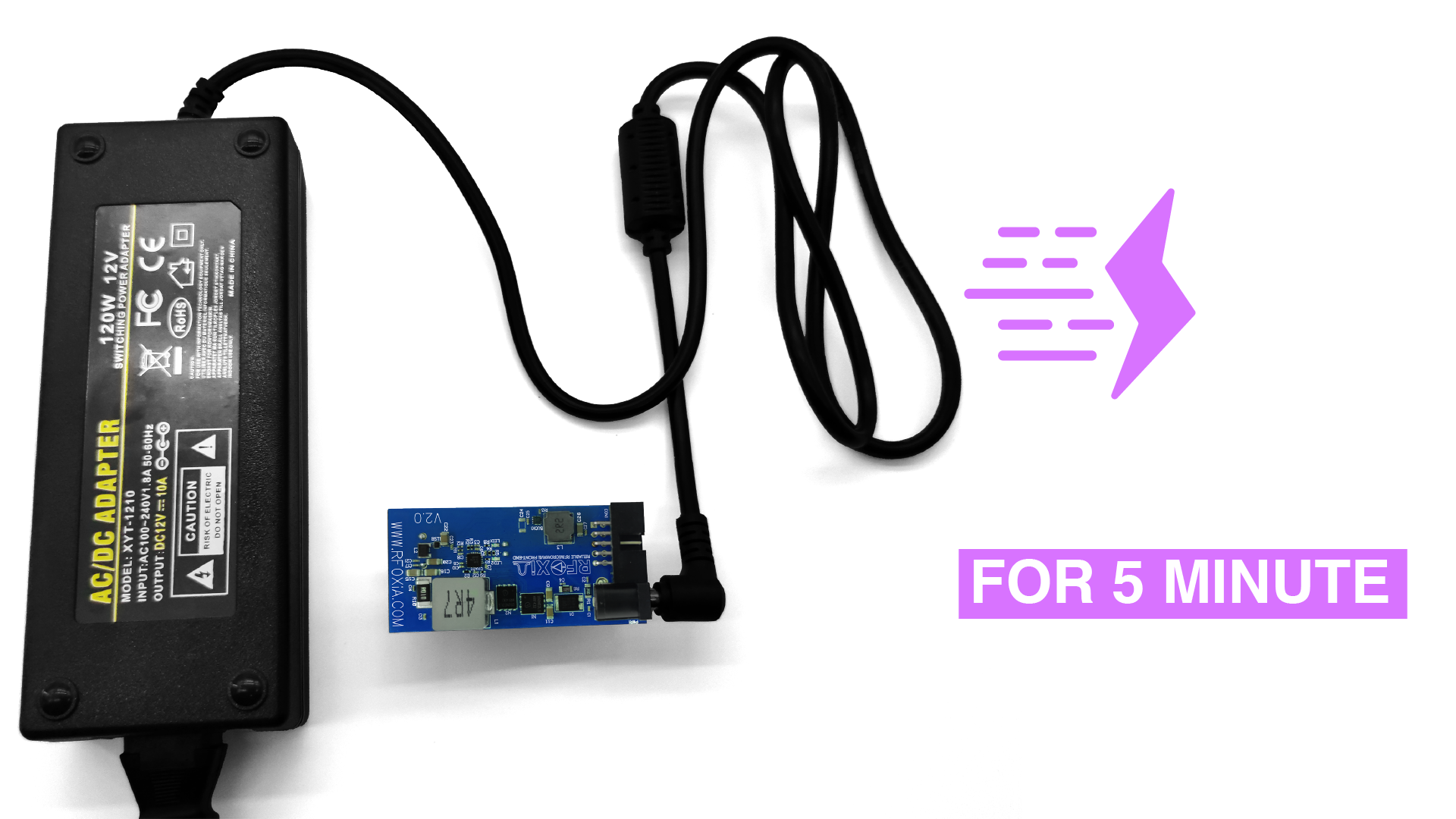
For the hardware developer running back-to-back field tests, or the FPV pilot who just landed and needs to prep for another flight, this is a genuine operational advantage. Five minutes between sessions versus forty-five minutes waiting for a LiPo to top off is a qualitatively different development experience.
Powering a Complete Module Stack: The Real-World Numbers
So 8,800 Joules sounds impressive in isolation. But what does it actually power, and for how long?
The MultiNav Pro+ ecosystem consists of four modules:
- MultiNav Pro+ BLE Module — long-range Bluetooth communication, up to 20km man-to-drone range
- GNSS Module — 18Hz fix rate, 1.5m accuracy GPS tracking
- Sensors Module — 7 integrated environmental sensors
- Power/Program Kit — the power source itself
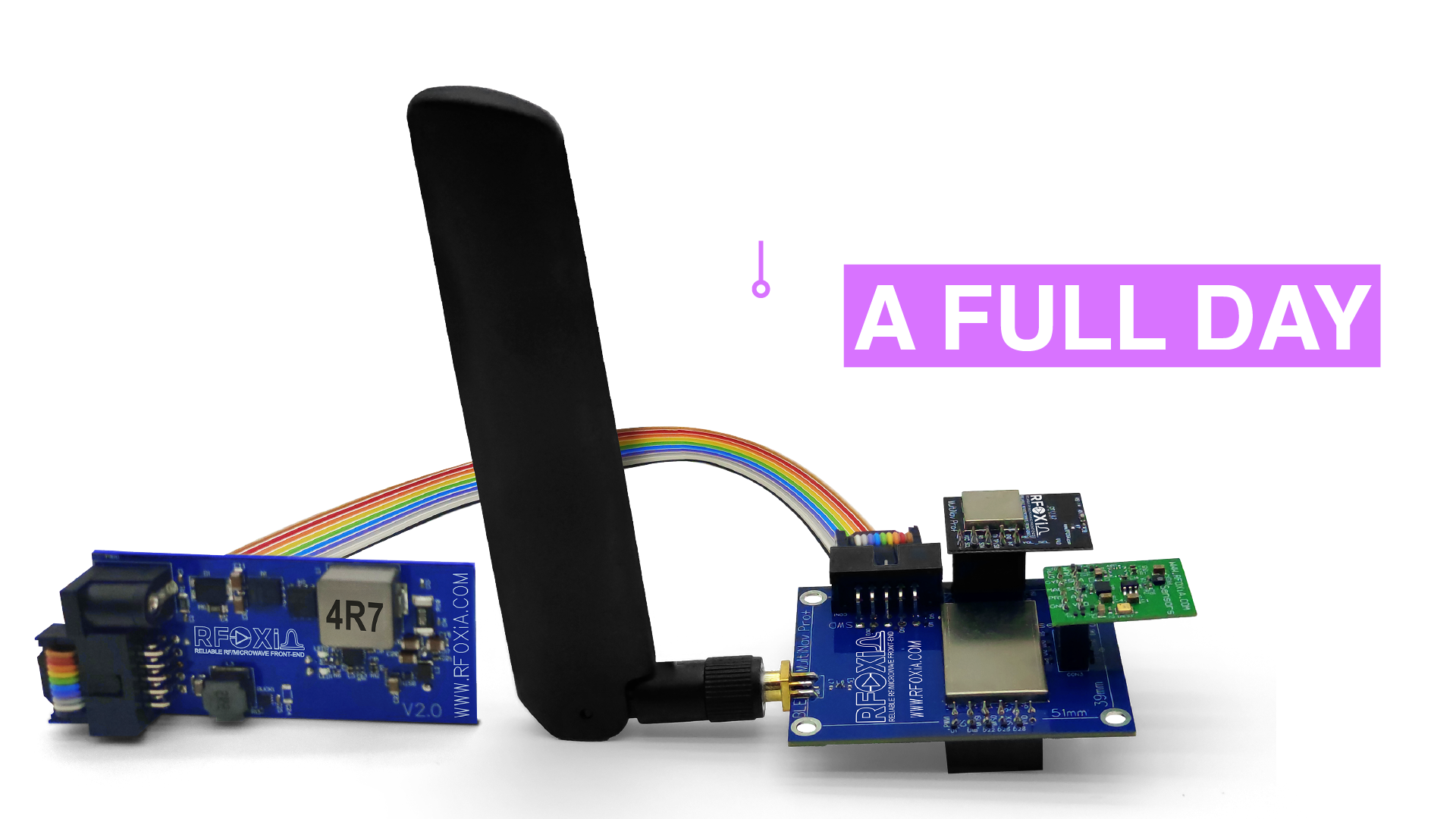
A complete stack running continuous data streaming, GPS acquisition, and BLE communication draws current that varies by operational mode. The Power/Program Kit is designed and tested to sustain this full stack through a complete working day — approximately 8 hours of active operation.
8,800 Joules over 8 hours (28,800 seconds) represents an average power draw of approximately 0.31 watts sustained. This is consistent with the low-power operating modes of the STM32WB07-based BLE module and the optimized power management across the MultiNav Pro+ platform.
The STLink Programmer: Why It Belongs in a Power Kit
Beyond raw energy storage, the MultiNav Pro+ Power/Program Kit includes something that most power solutions completely ignore: an integrated STLink programmer interface.
This matters more than it might initially appear. Here is why.
Development hardware has two phases of power requirement:
- Operational power — sustained power during normal runtime
- Programming power — stable, clean power during firmware flash and debug sessions
Most developers use two separate tools for these jobs: a field battery pack for runtime testing, and a bench USB connection or debug probe for programming. This creates a workflow where every firmware iteration requires physically reconnecting cables, switching power sources, and managing two different setups.
The Power/Program Kit eliminates this entirely. The STLink programmer shares the same regulated power supply as the runtime system. You program, debug, and run on the same power infrastructure — with no cable shuffling and no risk of a USB power brown-out corrupting a flash operation.

For developers using the RFOXiA Club's AI Firmware Builder — which generates production-ready firmware from plain language descriptions — this integrated programming solution means the iteration loop from AI-generated code to running firmware on hardware is as fast as the development environment allows. Generate, flash, test, iterate. No friction.
Connectivity: Flat Ribbon Cables and a Clean Setup
One detail that developers often discover the hard way: loose wiring is the enemy of reliable field testing. A connector that seats improperly or a cable that flexes during a vibration test can introduce noise, cause intermittent resets, or simply disconnect at a critical moment.
The Power/Program Kit includes a complete connectivity kit with flat ribbon cables specifically designed for the MultiNav Pro+ form factor. These cables connect the BLE module to the power module and the programmer to the BLE module in a compact, mechanically stable configuration.
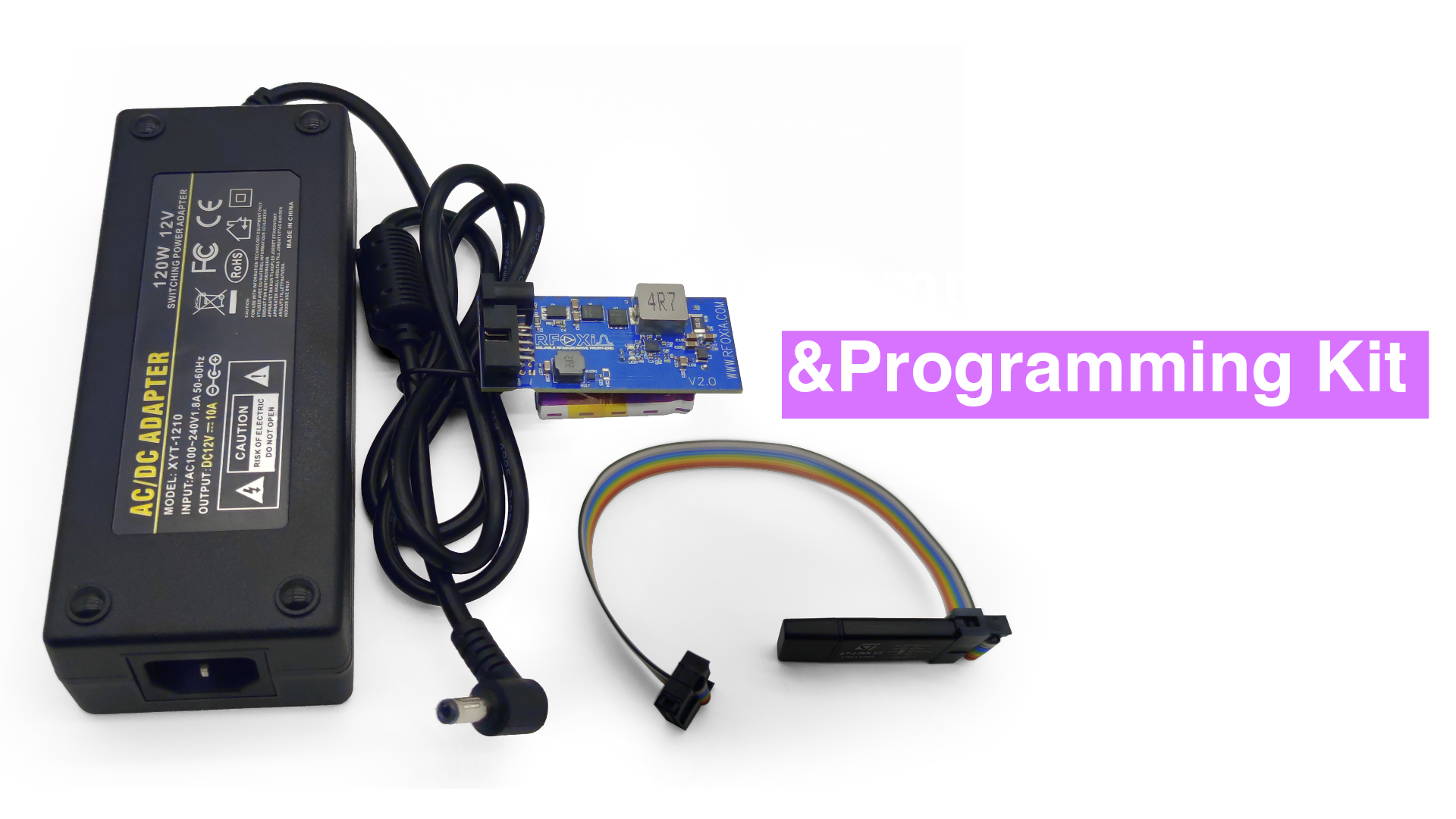
For drone builds and mobile deployments where vibration is a constant factor, the difference between a purpose-designed flat ribbon cable assembly and a bundle of jumper wires is the difference between a system that works reliably in the field and one that fails on the bench.
Supercapacitor vs. Lithium Battery: A Direct Comparison for Hardware Developers
Understanding supercapacitor energy storage calculation also helps clarify when supercapacitors are the right choice compared to lithium batteries — and when they are not.
| Property | Supercapacitor | Lithium Battery |
|---|---|---|
| Energy density | Lower (5-10 Wh/kg typical) | Higher (150-250 Wh/kg typical) |
| Power density | Very high | Moderate |
| Charge time | Seconds to minutes | 1-4+ hours |
| Cycle life | 500,000-1,000,000+ cycles | 300-1,000 cycles |
| Temperature range | Wide (-40°C to +65°C typical) | Narrow (0°C to +45°C charging) |
| Voltage behavior | Drops linearly with discharge | Relatively flat then drops sharply |
| Safety | No thermal runaway risk | Thermal runaway possible |
| Self-discharge | Higher | Lower |
For the MultiNav Pro+ use case — frequent charge cycles, high peak current demands during BLE transmission bursts, and field deployment across a range of temperatures — supercapacitors win on cycle life, charge speed, and safety. The 8,800 Joule capacity is sufficient for full-day operation, making energy density less critical than the operational advantages.
Applying Supercapacitor Energy Storage Calculation to Your Own Projects
If you are designing a custom IoT node or wireless sensor platform, you can apply the same supercapacitor energy storage calculation methodology to size your own energy storage:
Step 1: Determine Your Average Power Draw
Measure or calculate the average current draw of your system at its operating voltage.
Example: 50mA at 3.3V = 0.165W average
Step 2: Determine Your Required Runtime
How many hours between charges are acceptable?
Example: 8 hours = 28,800 seconds
Step 3: Calculate Required Energy
E_required = Power × Time = 0.165W × 28,800s = 4,752 Joules
Step 4: Account for Usable Energy Fraction
If your system needs minimum 2V and you charge to 4V, usable fraction = (V_max² − V_min²) / V_max² = (16-4)/16 = 75%
E_storage_required = 4,752 / 0.75 = 6,336 Joules
Step 5: Calculate Required Capacitance
C = 2 × E / V_max² = 2 × 6,336 / 16 = 792 Farads minimum
This kind of calculation makes it immediately clear why an 1100F system at 4V — delivering 8,800 Joules — provides comfortable margin for the complete MultiNav Pro+ stack. The engineering is deliberate, not arbitrary.
Who Is the MultiNav Pro+ Power/Program Kit For?
The Power/Program Kit makes the most sense for developers and operators in specific scenarios:
Drone builders and FPV pilots who need to run multiple test sessions in a day without waiting for batteries to charge between flights. Five-minute turnaround between power sessions is a workflow transformation.
Field researchers deploying sensor networks in remote locations where grid power is unavailable and every minute of downtime costs real data. The combination of full-day runtime and rapid recharge from a portable 12V source (solar, vehicle battery) makes this viable for genuine off-grid deployment.
Embedded developers who want a single integrated power and programming solution that eliminates the cable-swapping friction of separate bench supply and debug probe setups.
IoT data network contributors using the RFOXiA data monetization platform — where uptime directly determines daily rewards — who need power infrastructure that maximizes continuous sensor operation.
The Complete MultiNav Pro+ Ecosystem
The Power/Program Kit is one component of a vertically integrated hardware ecosystem. When combined with the BLE Module (up to 20km man-to-drone range), GNSS Module (18Hz, 1.5m accuracy), and Sensors Module (7 integrated sensors), you have a complete platform for:
- Long-range drone and robot control without internet infrastructure
- Environmental data collection with GPS-verified location tagging
- Mesh communication for field teams operating beyond cellular coverage
- Contribution to RFOXiA's paid data network — earning daily rewards for verified sensor data
All four modules are FCC certified, ship immediately from existing inventory, and integrate with the RFOXiA Connect app (Android live, iOS pending) for live control and monitoring without internet dependency.
If you are ready to deploy a system that is powered by real supercapacitor energy storage calculation — not vaporware, not a promise, but shipping hardware with verified specs — the RFOXiA SuperCapacitor Battery and Programmer Kit is available now.
Conclusion: The Math Behind the Mission
Supercapacitor energy storage calculation is not just an academic exercise. It is the foundation of a power architecture that makes serious wireless development genuinely practical in the field.
E = ½ × C × V² is a simple equation. But when C = 1100F and V = 4V, the result is 8,800 Joules — enough to power a complete wireless development ecosystem for a full working day, rechargeable in under 5 minutes, with no battery degradation across hundreds of thousands of cycles.
That is the physics behind the MultiNav Pro+ Power/Program Kit. Not a marketing claim — a calculation.
If you are building something that cannot afford to stop, the science says supercapacitors belong in your power stack. And the RFOXiA SuperCapacitor Battery and Programmer Kit puts that science in your hands at a price point that belongs on a maker's workbench, not a military procurement list.
Explore the full MultiNav Pro+ ecosystem at rfoxia.com and start building with power infrastructure that works as hard as your hardware demands.
Written by: Moamen Mohamed LinkedIn