
Supercapacitor Lifespan IoT: Why It Outlasts Every Battery in the Field
RFOXiA SuperCapacitor Battery and Programmer Kit
Supercapacitor Lifespan IoT — The Power Revolution Developers Have Been Waiting For
Every serious hardware developer has faced the same wall. You build something extraordinary — a long-range wireless node, a precision drone telemetry system, a remote environmental sensor array — and then your power system lets you down. Batteries die mid-session. Charge cycles degrade capacity over time. Lithium cells fail in extreme temperatures. You spend more time managing power than you do building.
The question that rarely gets asked loudly enough in IoT circles is this: why are we still defaulting to batteries when supercapacitor lifespan IoT performance has already proven itself superior for the majority of embedded deployment scenarios?
This post breaks down exactly why supercapacitor technology is a fundamentally different approach to IoT power — not just a marginal improvement — and how the RFOXiA SuperCapacitor Battery and Programmer Kit delivers that advantage to every developer building on the MultiNav Pro+ ecosystem.
The Hidden Cost of Battery-Powered IoT Deployments
When developers calculate the cost of a wireless module, they price the hardware. They rarely price the power lifecycle.
A standard lithium-ion battery cell is rated for somewhere between 300 and 500 full charge cycles before capacity degrades to 80% of original. Deploy a field sensor that you charge daily and you are looking at less than 18 months before the battery is performing meaningfully below spec. In high-temperature outdoor environments — rooftops, drone platforms, agricultural installations — that degradation happens faster.
There is also the safety factor. Lithium cells carry genuine fire and puncture risks. Aviation authorities, research institutions, and enterprise IoT operators have strict protocols around lithium-powered deployments. The paperwork alone adds friction to every deployment.
And then there is the dead time. A discharged lithium pack on a 1A USB charger takes 2 to 4 hours to return to full capacity. That is 2 to 4 hours of zero data, zero connectivity, zero operational value.
This is the problem that supercapacitor lifespan IoT architecture was built to solve.
What Makes Supercapacitor Lifespan in IoT So Different
Supercapacitors — also called ultracapacitors or electrochemical double-layer capacitors — store energy through electrostatic charge separation rather than electrochemical reaction. This single difference has profound consequences for every metric that matters in real-world IoT deployments.
Cycle Life: The Core Advantage
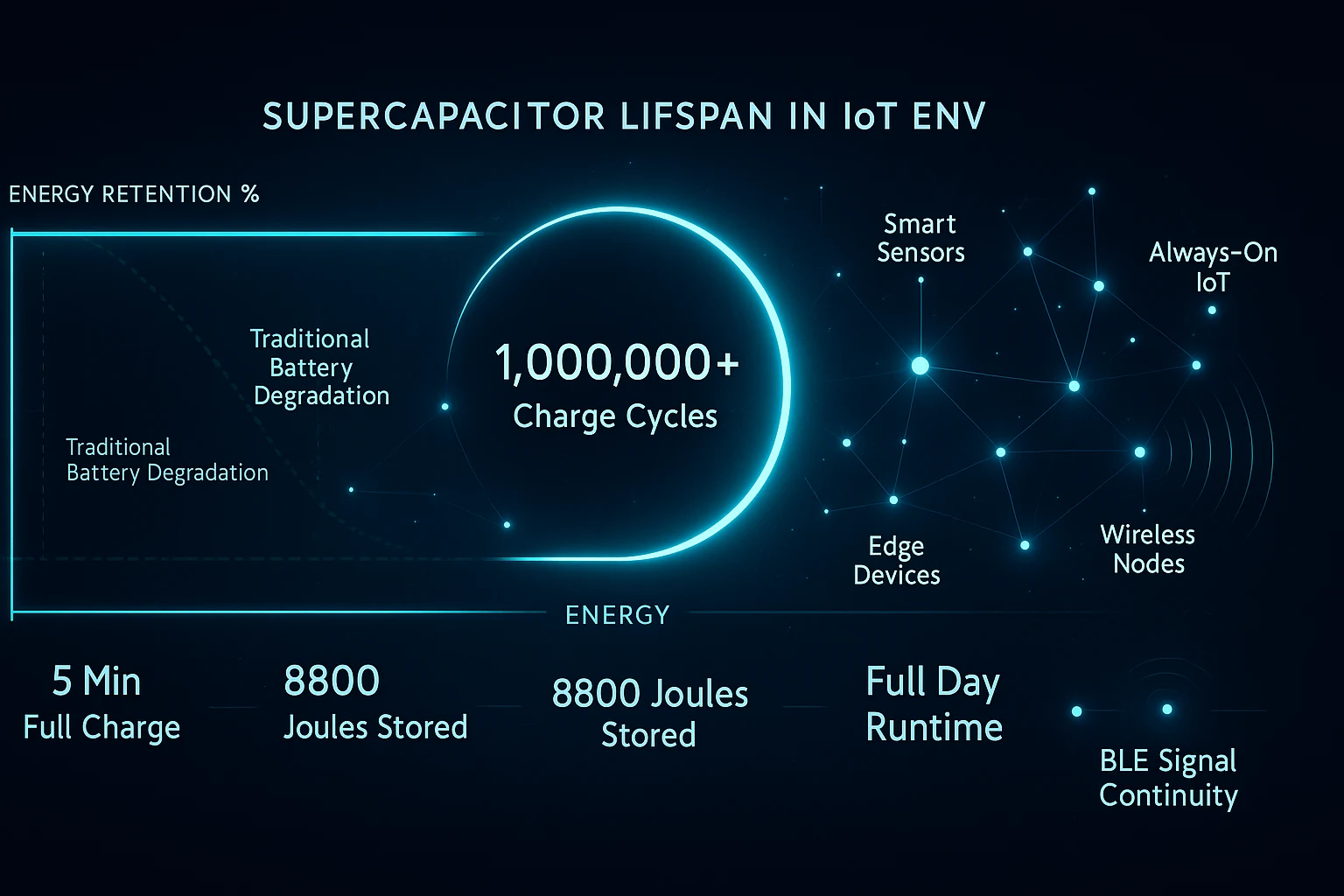
A lithium-ion battery has a cycle life measured in the hundreds. A quality supercapacitor has a cycle life measured in the hundreds of thousands. Published specifications from leading capacitor manufacturers regularly cite 500,000 to 1,000,000 cycles at rated capacity before meaningful degradation.
For IoT deployments that charge and discharge daily, that translates to operational lifespans measured in decades, not months. The supercapacitor lifespan IoT advantage is not incremental — it fundamentally changes the maintenance and replacement calculus for any long-term installation.
Charge Rate: Seconds to Minutes, Not Hours
Because supercapacitors store charge electrostatically, they accept current at rates that would destroy a lithium cell. The RFOXiA Power/Program Kit charges its 1100F supercapacitor system at 4V 10A from the included 12V 5A adapter — reaching full charge in under 5 minutes.
For a field researcher who arrives at a site with a depleted unit, that 5-minute window is the difference between a usable tool and a paperweight. For a drone operator preparing for consecutive flights, it eliminates the multi-battery rotation system that typically costs three times as much hardware.
Temperature Performance
Lithium cells lose capacity in cold and degrade faster in heat. Supercapacitors maintain performance across dramatically wider temperature ranges — typically -40°C to +65°C or beyond depending on construction. For outdoor IoT nodes in desert environments, high-altitude deployments, or arctic research stations, this is not a minor spec detail. It is the deciding factor in whether your hardware works at all.
Safety Profile
No lithium. No combustion risk. No puncture hazard. No airline shipping restrictions. Supercapacitors are chemically inert by comparison. This matters enormously for aerial platforms, for installations in enclosed spaces, and for any regulated deployment environment.
The RFOXiA Power/Program Kit: Supercapacitor Engineering for Real Developer Workflows
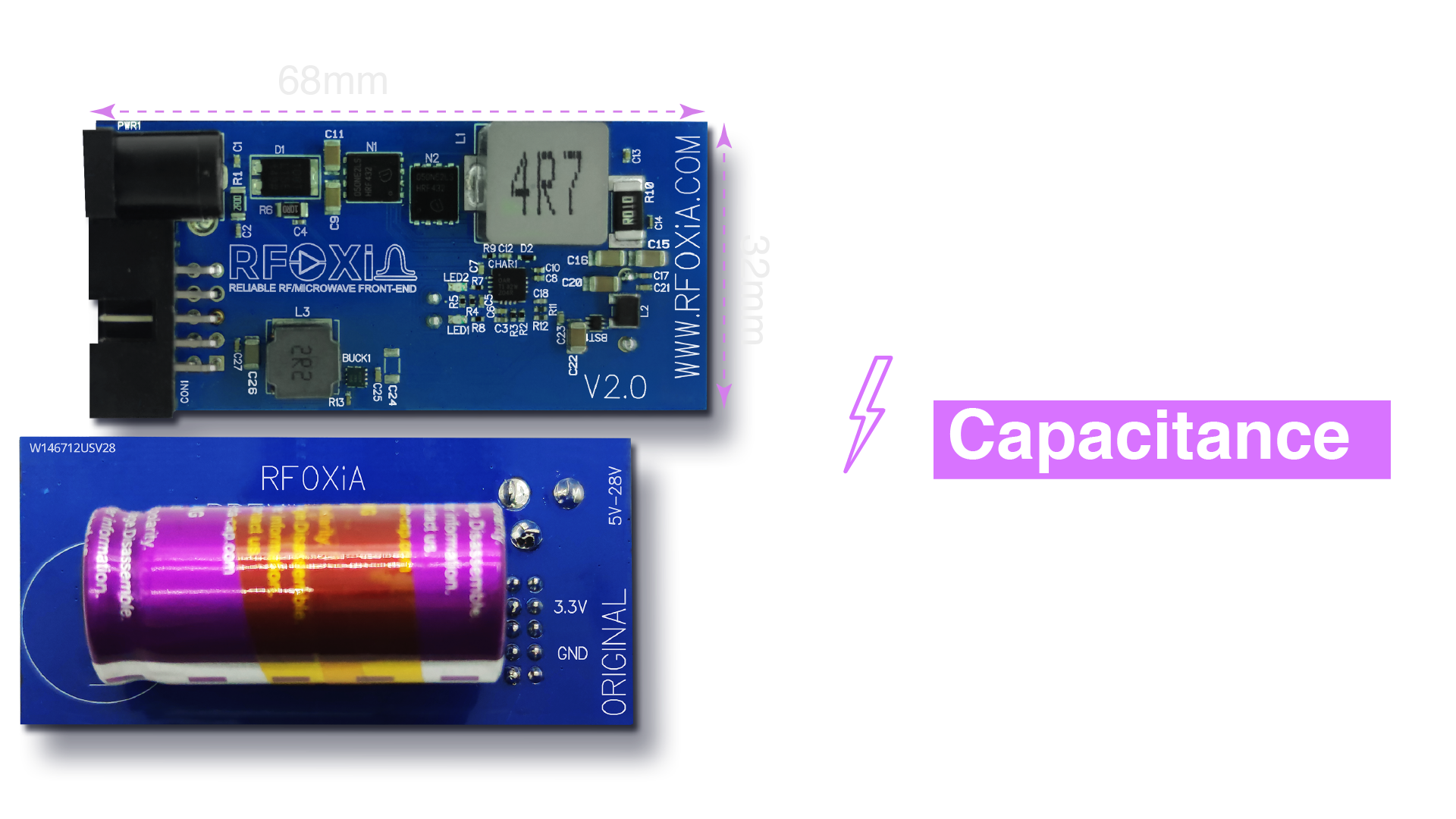
The MultiNav Pro+ Power/Program Kit was designed around one central principle: your power system should never be the thing that stops your work.
At the heart of the kit is a 1100F supercapacitor system storing 8,800 Joules of energy. That is not a marketing abstraction — it is a measurable quantity of electrical work sufficient to power the full MultiNav Pro+ module stack (BLE Module, GNSS Module, and Sensors Module) for a complete working day on a single charge.
The charge-in-5-minutes, run-for-24-hours operating profile is made possible specifically because of supercapacitor architecture. No battery chemistry on the market at this price point can match that ratio of charge time to discharge duration for the power demands of a complete wireless development stack.
For IoT developers deploying sensor nodes that need to stream verified data continuously — whether for personal projects or for the RFOXiA data monetization network — this means daily operations without compromise.
High-Power Charging: Designed for Real-World Speed
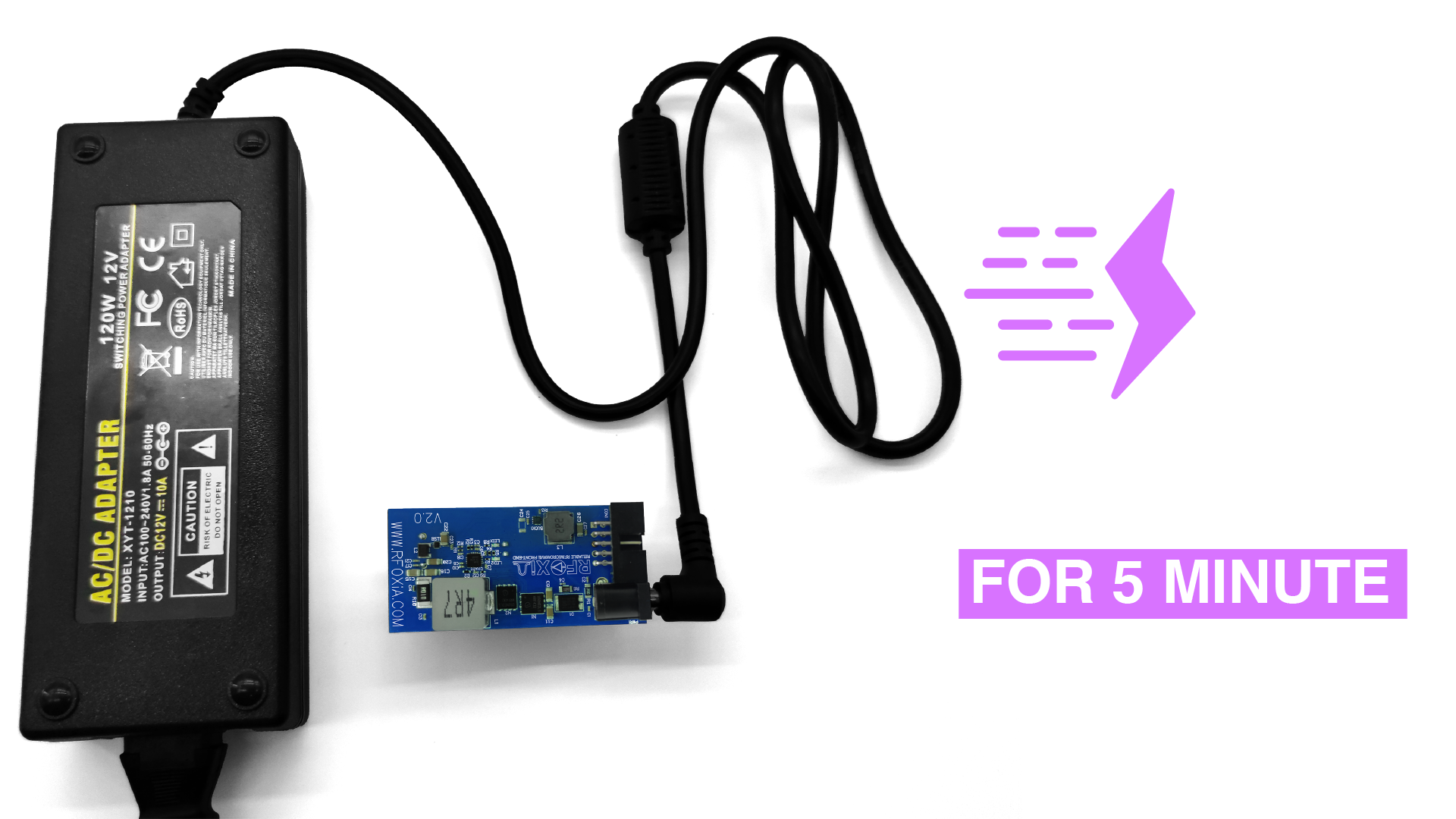
The included 12V 5A high-power charging adapter is what makes the 5-minute charge time possible. The supercapacitor bank accepts charge at 4V 10A — a current rate that would be completely unsafe with any lithium cell chemistry.
This is one of the most concrete illustrations of why supercapacitor lifespan IoT performance is not simply about longevity. It is about the entire operational rhythm of a deployment. When you can charge in under 5 minutes, you stop thinking about power management and start thinking about what you are building.
The adapter is included in the kit. There is no hunting for compatible chargers or calculating whether your existing bench supply can handle the current draw. You connect, you wait five minutes, you work for a day.
Full-Day Power for the Complete MultiNav Pro+ Ecosystem
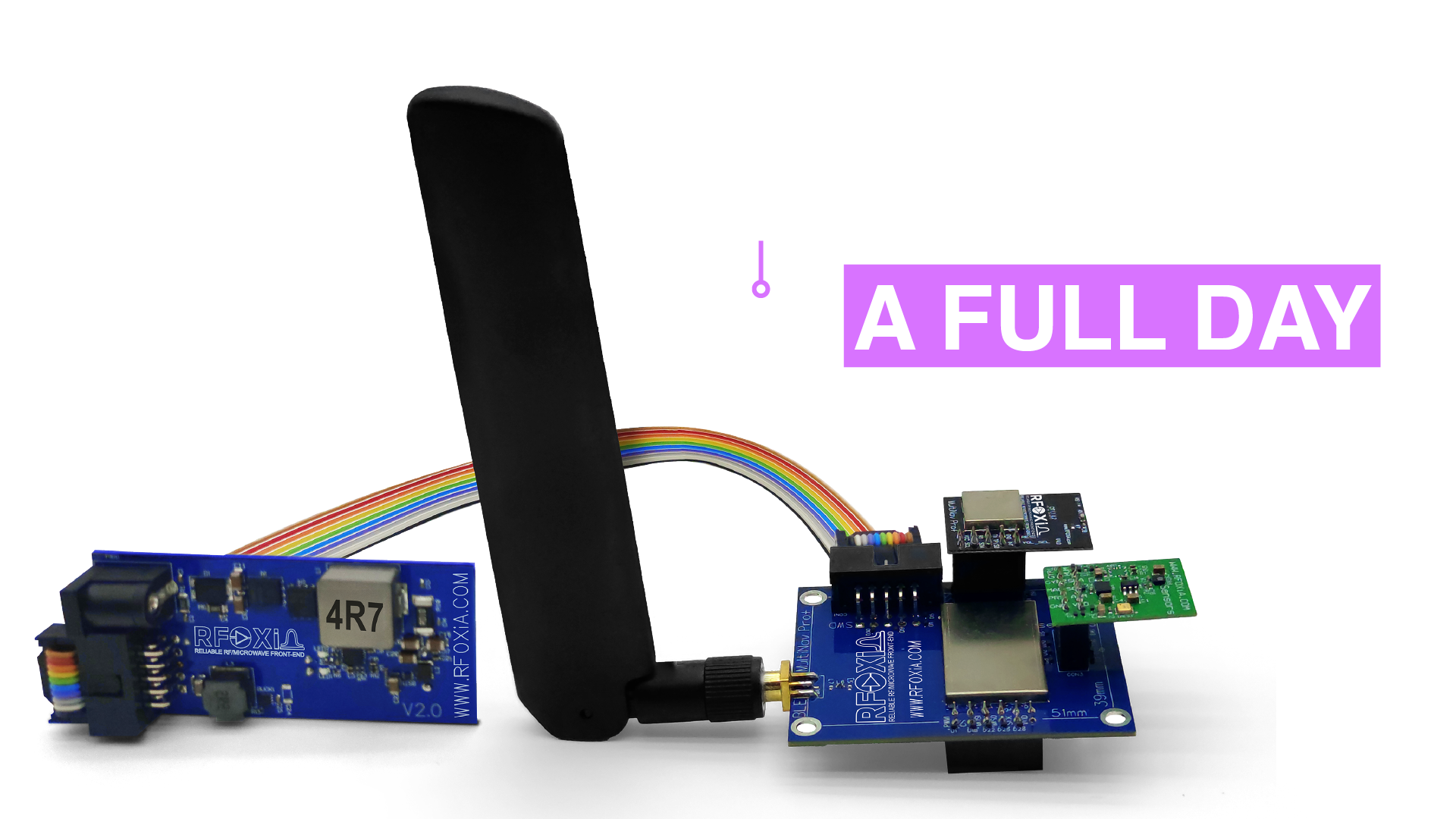
The Power/Program Kit does not just power the BLE Module in isolation. The 8,800 Joules stored in the supercapacitor bank is calculated for the full MultiNav Pro+ stack operating simultaneously — BLE Module transmitting at range, GNSS Module streaming location at 18Hz fix rate, and Sensors Module capturing all seven environmental channels.
For developers building complete telemetry systems — environmental monitoring stations, drone payload assemblies, field data collection rigs — this means one kit powers everything. No separate battery packs for separate modules. No power budgeting calculations to determine what you can and cannot run simultaneously.
This is the practical reason the Power/Program Kit is included in the Developer Bundle as the default power solution for the complete MultiNav Pro+ ecosystem. It was engineered to match the full-stack power demands, not just the lowest-power module in the lineup.
For developers contributing sensor data to the RFOXiA live data network, the 24-hour runtime is particularly valuable. Verified data sessions require continuous uptime — nodes that go offline for charging accumulate downtime that directly impacts reward earnings. A node powered by the supercapacitor kit, charged every morning in under 5 minutes, can maintain near-continuous operation with minimal operational overhead.
STLink Programmer: Development Without Interruption
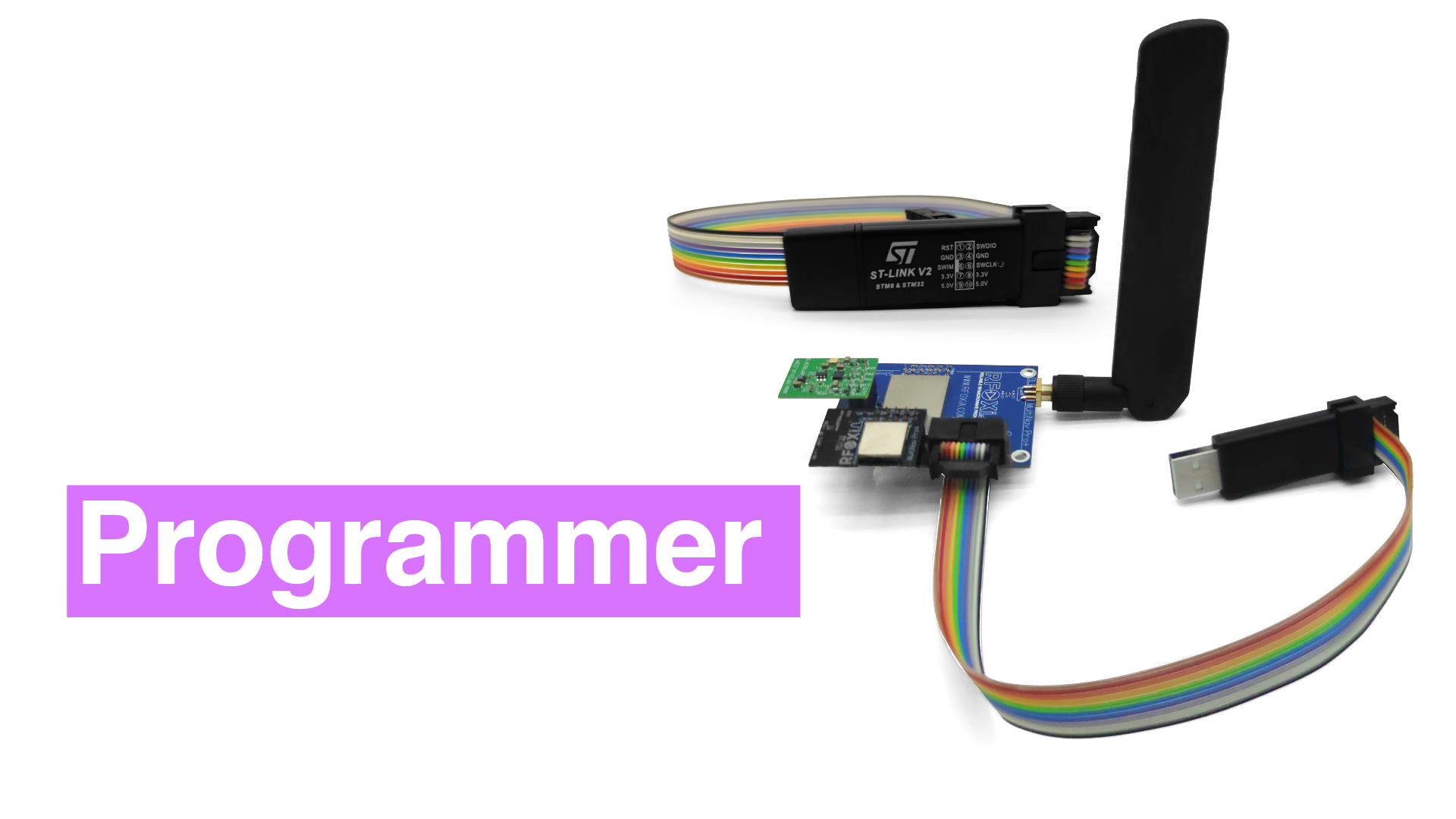
The power solution is only half of what this kit delivers. The integrated STLink programmer addresses the second major friction point in embedded wireless development: firmware iteration.
The STLink interface gives developers direct access to the BLE Module's microcontroller for flashing firmware, debugging in real time, and verifying execution without needing external hardware. For developers using the RFOXiA AI Firmware Builder — which generates complete, production-ready firmware from plain-language descriptions — the workflow becomes: describe your application, generate firmware, flash directly through the STLink, test on hardware, iterate.
Without an integrated programmer, every firmware update requires external tooling, correct cable configurations, and additional components that need to be sourced, configured, and managed separately. The Power/Program Kit eliminates that entirely by bundling the programmer directly into the kit with pre-matched cables.
This matters particularly for developers who use the RFOXiA AI Firmware Development environment, where the speed of firmware generation means the limiting factor in development iteration is no longer writing code — it is flashing and testing it. The STLink in this kit is designed to keep pace with that workflow.
Complete Connectivity: Nothing Left Out
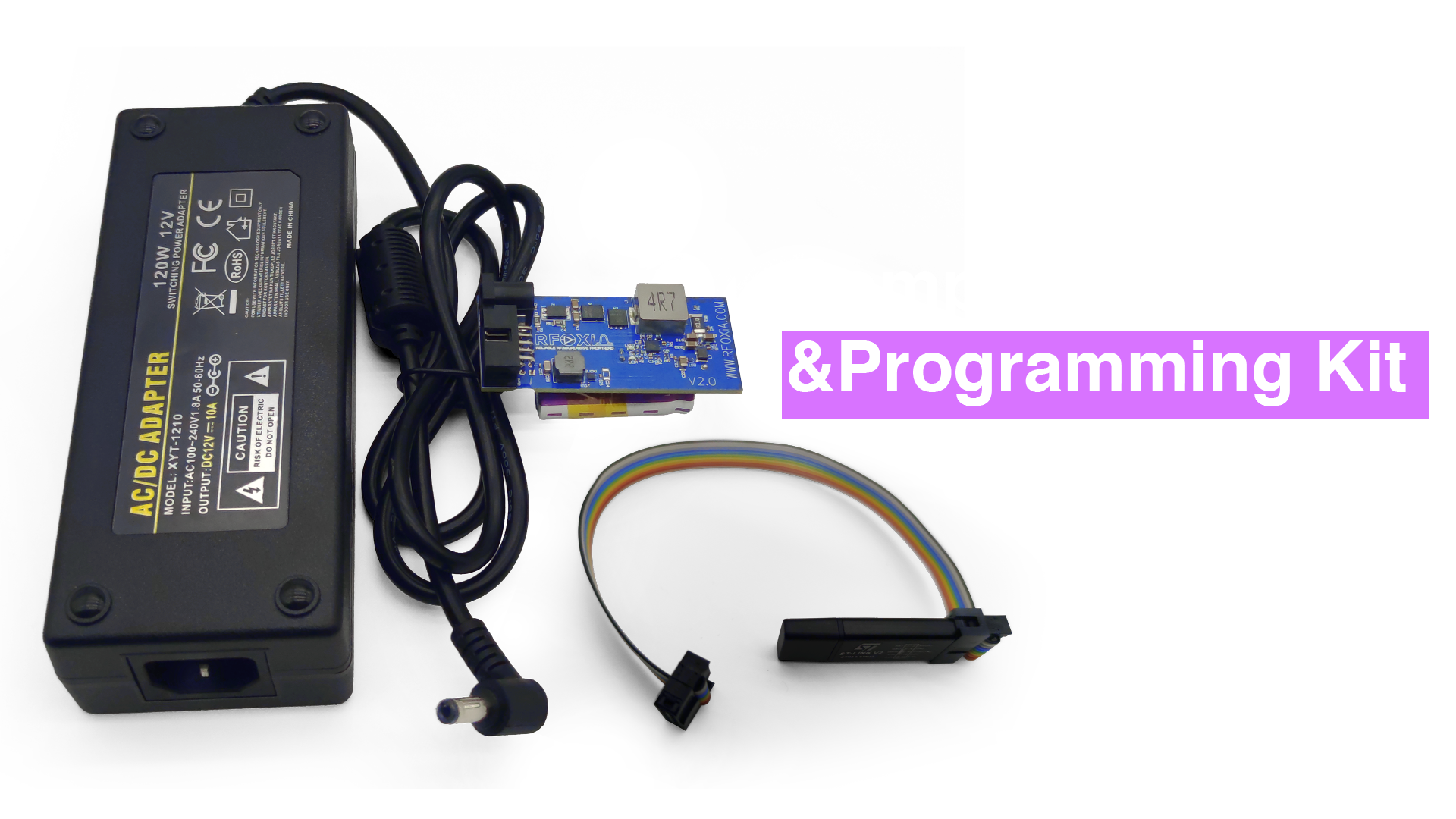
Every cable needed to connect the full MultiNav Pro+ stack to the Power/Program Kit is included. Flat ribbon cables handle BLE Module-to-power-module connections and programmer-to-BLE-module connections. There is no sourcing additional connectors or searching for compatible pinout adapters.
For developers who have experienced the frustration of receiving hardware that requires additional accessories before it is operational, this completeness is intentional. The kit is designed to be unboxed and running within minutes of arrival — not after a second parts order.
Supercapacitor Lifespan IoT: The Long-Term Economics
Let us make the long-term economic case explicit, because it is compelling.
A lithium battery pack rated for 400 cycles, deployed in a daily-charge IoT application, needs replacement within approximately 13 months. At any reasonable cost for quality lithium battery hardware, you are looking at a recurring replacement expense that compounds over a 5-year deployment lifecycle.
A supercapacitor system rated for 500,000 cycles, under identical deployment conditions, will still be operating within specification decades from now. The initial hardware cost is the total hardware cost. Maintenance reduces to zero on the power subsystem.
For enterprise IoT deployments where nodes are installed at scale — smart city environmental monitoring, precision agriculture grids, industrial condition monitoring — the supercapacitor lifespan IoT advantage translates directly into operational cost reduction at every unit of scale. The math gets more favorable the larger the deployment.
For individual developers building long-term projects, it means hardware purchased today that is still performing identically five or ten years from now.
Who the Power/Program Kit Is Built For
The RFOXiA SuperCapacitor Battery and Programmer Kit was designed for hardware developers who take their work seriously enough to refuse compromises on infrastructure.
Drone builders and FPV pilots who need clean, reliable power for wireless telemetry and control payloads without battery management overhead.
Field researchers and environmental scientists who deploy sensor arrays in remote locations where charging infrastructure is limited and downtime is expensive.
IoT developers building long-term outdoor installations where maintenance access is infrequent and power reliability is non-negotiable.
Firmware developers who need rapid iteration cycles and cannot afford to lose development momentum to power or programming toolchain issues.
RFOXiA data network contributors who need continuous sensor uptime to maximize verified data sessions and daily rewards.
If your work involves wireless hardware in the field — or on any platform where power and programming friction slows you down — this kit was designed around your constraints.
Technical Specifications Summary
| Specification | Value |
|---|---|
| Supercapacitor Capacity | 1100F |
| Energy Storage | 8,800 Joules |
| Full Charge Time | < 5 minutes |
| Runtime (full module stack) | 24 hours |
| Charging Input | 12V 5A |
| Supercapacitor Charge Rate | 4V 10A |
| Programmer Type | STLink |
| Certification | FCC |
| Price | $119 |
Why RFOXiA, Why Now
RFOXiA occupies a unique position in the wireless hardware market — filling the gap between $5-15 commodity modules that reach 80-100 meters and $5,000+ military-grade systems that most developers will never access. The Power/Program Kit reflects that same philosophy applied to power management: professional-grade supercapacitor architecture at a price point that belongs in a developer's toolkit, not a defense procurement catalog.
With FCC certification on the complete MultiNav Pro+ ecosystem and real inventory ready to ship, this is not a concept or a crowdfunding promise. It is hardware on the shelf, tested in the field, and backed by a complete development platform including mobile app control, AI firmware generation, and a live data monetization network.
If you are ready to eliminate power and programming friction from your wireless development workflow, the RFOXiA SuperCapacitor Battery and Programmer Kit is the solution built specifically for the MultiNav Pro+ ecosystem — and the most technically credible supercapacitor lifespan IoT power solution available at this price point.
Final Thoughts
The shift from battery to supercapacitor in IoT deployments is not a niche trend. It is a rational engineering decision once you understand what supercapacitor lifespan IoT deployments actually deliver: cycle life measured in hundreds of thousands of charges, charge times measured in minutes rather than hours, temperature stability across ranges that batteries cannot match, and a safety profile that removes regulatory friction from aerial and enclosed-space deployments.
The RFOXiA MultiNav Pro+ Power/Program Kit makes that technology accessible at $119 — bundled with the STLink programmer, the high-power charging adapter, and every cable needed to connect the full module stack from day one.
For developers building serious wireless systems, the question is not whether supercapacitor power is worth it. The question is why you would settle for anything less.
Written by: Moamen Mohamed LinkedIn