
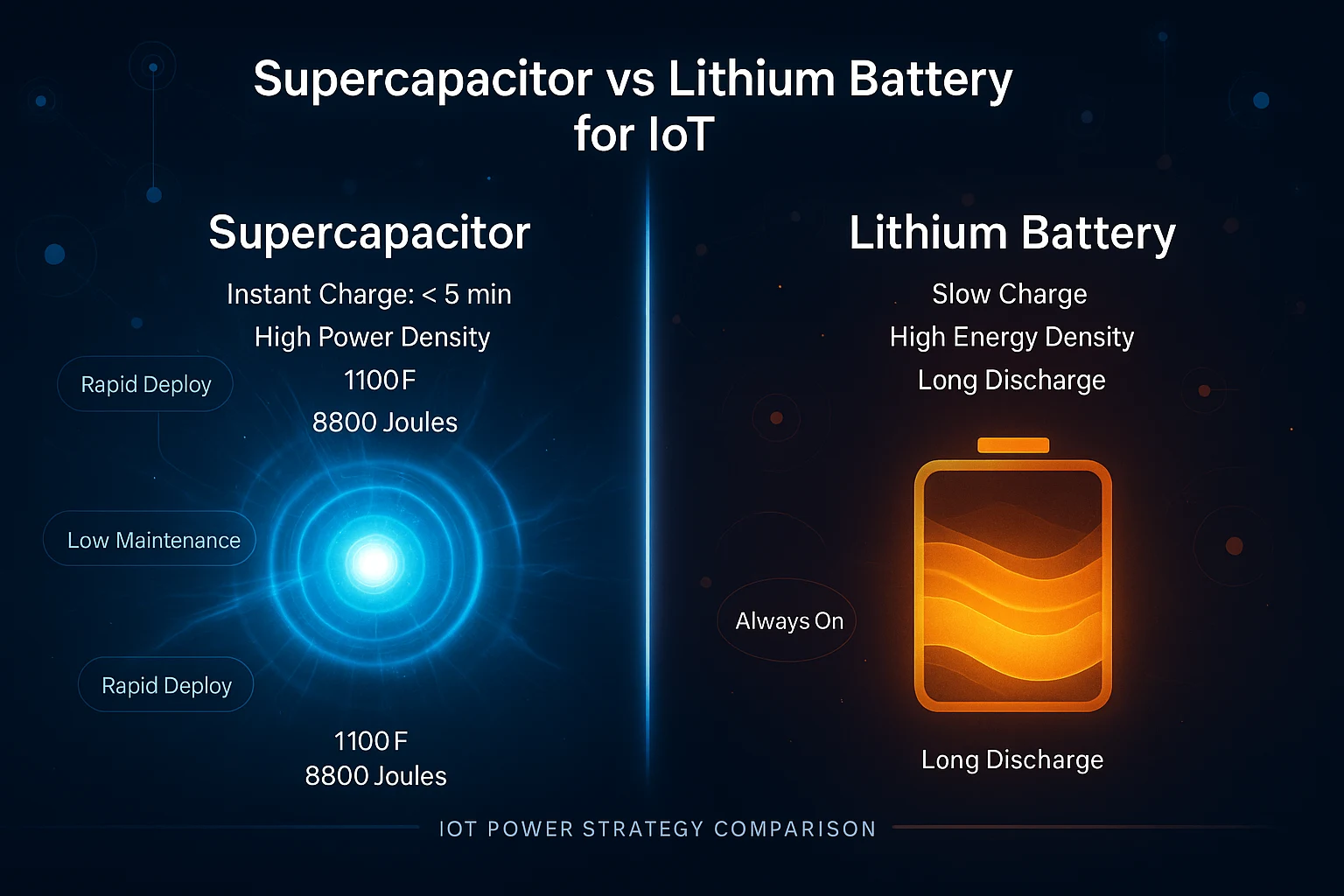
Supercapacitor vs Lithium Battery IoT: Why It Changes Everything
RFOXiA SuperCapacitor Battery and Programmer Kit
Supercapacitor vs Lithium Battery IoT Power — The Developer's Complete Guide
If you've ever been deep in a field test, a drone calibration session, or a long-range BLE experiment — and watched your lithium battery gauge crawl toward zero — you already understand the problem this guide is about to solve.
Power management is one of the most frustrating, underappreciated challenges in IoT and wireless hardware development. You can design a flawless circuit, write airtight firmware, and tune your RF front end to perfection. Then a dying battery ends your session, corrupts a data log, or grounds your drone mid-flight.
The debate around supercapacitor vs lithium battery IoT applications has quietly been gaining traction in professional development circles — and for good reason. Supercapacitors behave fundamentally differently from lithium cells. Understanding why that matters — and when it matters — is the difference between building reliable field hardware and constantly babysitting your power system.
This guide breaks down exactly how these two energy storage technologies compare, where each excels, and why RFOXiA built their Power/Program Kit around a supercapacitor system instead of the default lithium approach.
What Is a Supercapacitor? (And Why Should IoT Developers Care)
A supercapacitor — also called an ultracapacitor or electrochemical double-layer capacitor (EDLC) — stores energy electrostatically rather than through chemical reactions. This distinction is everything.
In a lithium battery, energy is stored and released through chemical oxidation-reduction reactions. Those reactions have physical limits: they generate heat, they degrade over charge cycles, they slow down dramatically in cold temperatures, and they simply cannot accept or deliver current as fast as the electrochemistry allows.
A supercapacitor stores charge at the interface between an electrolyte and a high-surface-area electrode material. There's no chemical reaction happening. Energy flows in and out as quickly as the electrical resistance of the system allows — which, in a well-designed supercapacitor, is very fast indeed.
The practical result: supercapacitors charge in seconds to minutes, not hours. They deliver high burst current without voltage sag. They survive hundreds of thousands of charge cycles without meaningful degradation. And they operate reliably across a wide temperature range that would cripple most lithium cells.
Supercapacitor vs Lithium Battery IoT: The Head-to-Head Comparison
Let's be direct about what each technology actually delivers in a real IoT deployment context.
Charge Speed
Lithium batteries typically require 1–4 hours for a full charge, even with fast-charge protocols. High-drain applications that need frequent recharging — like a sensor node that runs continuous data sessions — mean your hardware spends significant time tethered to a charger.
Supercapacitors charge in minutes. The RFOXiA Power/Program Kit charges its 1100F supercapacitor system in under 5 minutes from a 12V 5A adapter. That's not a marketing claim — it's a direct consequence of the physics. No chemical reaction is the bottleneck.
For developers running multiple test cycles per day, or field researchers who need to redeploy nodes quickly, this difference is not marginal. It's transformational.
Cycle Life
This is where the economic argument for supercapacitors becomes undeniable.
Lithium batteries typically offer 300–1,000 full charge cycles before capacity degrades to 80% of original. For a development kit used daily, that means replacing the battery — or the entire unit — within one to three years.
Supercapacitors are rated for 500,000 to 1,000,000+ charge cycles with negligible degradation. A supercapacitor-powered IoT device that charges daily will outlast the useful life of the rest of the hardware by orders of magnitude.
In the context of a long-running IoT data node or a wireless development kit that sees heavy use, this eliminates an entire category of maintenance and replacement cost.
Peak Current Delivery
This matters enormously for wireless hardware specifically.
Long-range BLE modules, GNSS receivers, and RF amplifiers create sharp current demand spikes during transmission and acquisition. Lithium batteries can struggle to source these spikes cleanly — the internal resistance causes voltage sag, which can reset microcontrollers, corrupt transmissions, or cause GPS modules to lose lock.
Supercapacitors have extremely low equivalent series resistance (ESR). They source peak current without meaningful voltage drop. For RF and wireless applications, this translates directly to more stable operation, more reliable transmission, and fewer mysterious hardware glitches that are actually power quality issues in disguise.
Energy Density
Here's where lithium wins, and it's important to be honest about it.
Lithium batteries store significantly more energy per unit of weight and volume than supercapacitors. A lithium cell the size of your thumb might store 10–15 watt-hours. An equivalently sized supercapacitor bank stores a fraction of that.
This is why supercapacitors are not appropriate for every application. A device that needs to run for weeks on a coin cell — a simple environmental sensor on a two-year deployment cycle — still wants lithium chemistry.
But for applications that can tolerate regular charging, and where charge speed, cycle life, and peak current matter more than raw capacity per gram, the supercapacitor argument is compelling.
The RFOXiA Power/Program Kit addresses the energy density gap directly: its 1100F supercapacitor system stores 8,800 Joules — enough to power a full MultiNav Pro+ module stack for a complete working day. The capacity question is answered. The charge speed advantage is preserved.
Temperature Performance
This matters for field deployments more than most developers anticipate.
Lithium batteries lose significant capacity and charge acceptance capability below 0°C. Charging a lithium cell at subfreezing temperatures can cause lithium plating, which permanently damages the battery and creates a safety risk.
Supercapacitors maintain performance across a much wider temperature range, typically -40°C to +70°C for industrial-grade components. A wireless sensor node deployed on a mountain research station, in an arctic monitoring application, or in an industrial freezer environment doesn't have to worry about cold-weather power failures.
When Does the Supercapacitor Win for IoT?
Based on the comparison above, here's the practical decision framework:
Choose supercapacitor power when:
- Your device charges frequently (daily or more)
- You need fast turnaround between sessions
- Your hardware has high peak current demands (RF, wireless, motor control)
- Long-term deployment with minimal maintenance is required
- Temperature extremes are part of the operating environment
- You're doing active development and can't afford multi-hour charge delays
Consider lithium when:
- Ultra-low power consumption over months or years without charging is the primary requirement
- Weight and volume are severely constrained
- The application truly cannot tolerate any charging events
For the large majority of IoT developers, drone builders, field researchers, and wireless hardware engineers, the supercapacitor profile is the better fit — particularly when, as in the RFOXiA system, the energy capacity has been engineered to cover a full working day.
Introducing the RFOXiA Power/Program Kit
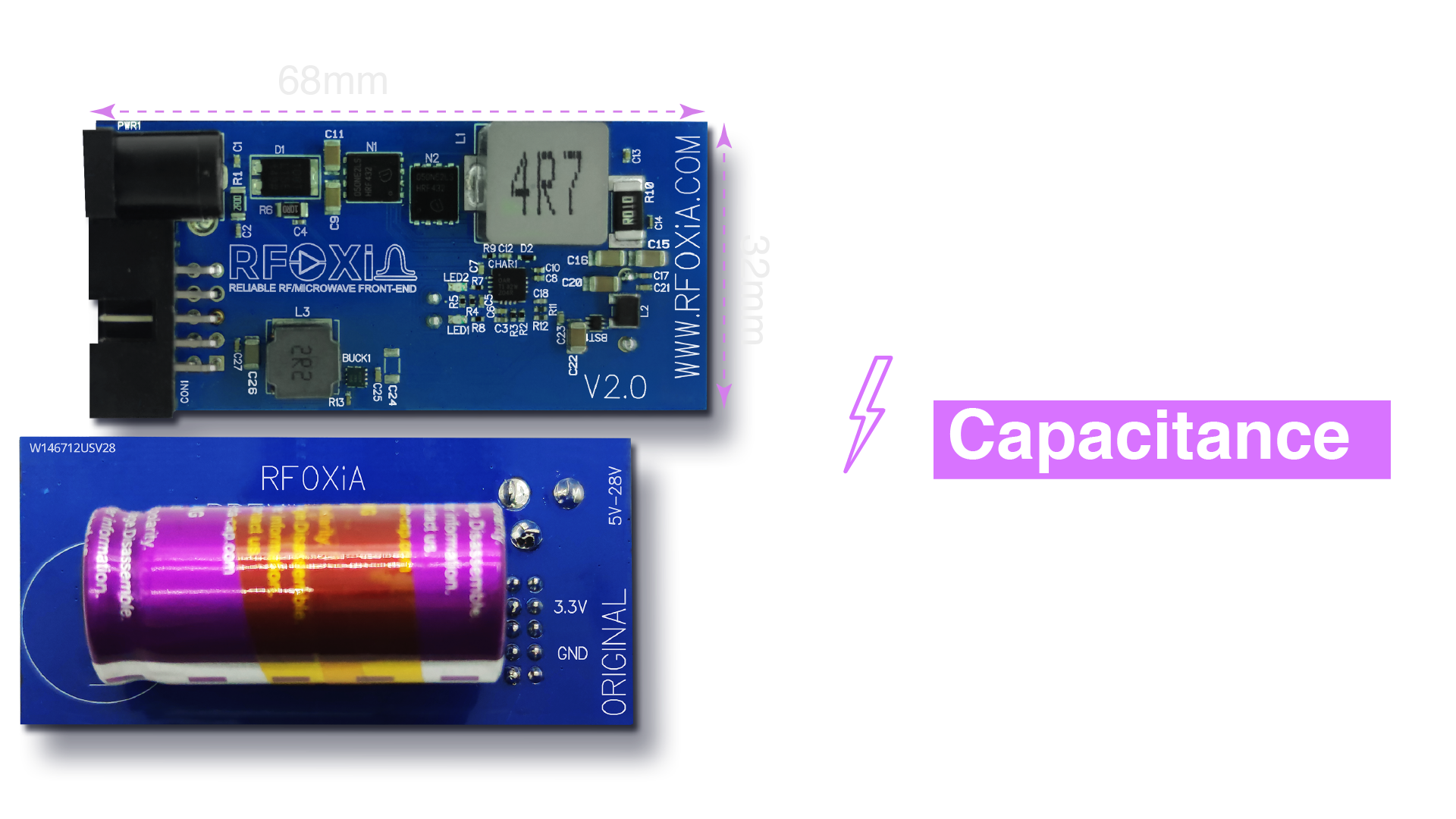
RFOXiA's approach to this problem is the RFOXiA SuperCapacitor Battery and Programmer Kit: a purpose-built power and programming companion for the MultiNav Pro+ module ecosystem that takes the supercapacitor advantage and packages it with everything a developer needs for a complete, professional-grade development session.
Let's walk through each component.
The 1100F Super-Capacitance Battery System
At the heart of the kit is an 1100F supercapacitor bank storing 8,800 Joules of energy. This is sufficient to power the full MultiNav Pro+ stack — BLE Module, GNSS Module, Sensors Module — for a complete working day.
Full charge in under 5 minutes. That's the headline number, and it's the one that matters most for developers who work in iterative cycles. You finish a test session, plug in for 5 minutes while you review your data, then redeploy. The power system is never the limiting factor.
This directly addresses the single most common complaint about development kit battery systems: the hours-long charge wait that breaks workflow and forces developers to maintain multiple charged units just to stay productive.
High-Power Charging Adapter
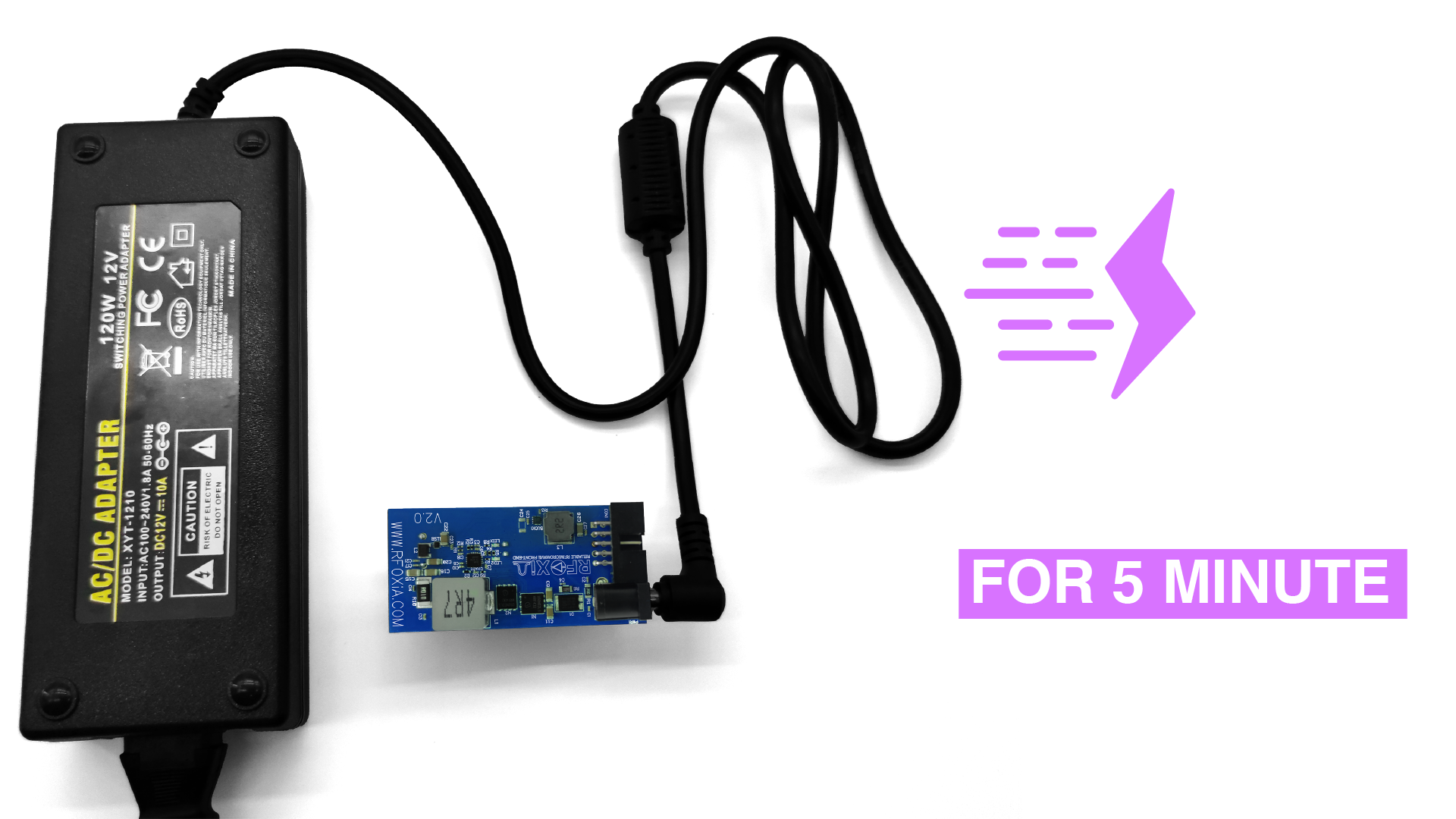
The 5-minute charge time is achieved through a 12V 5A charging adapter that delivers current to the supercapacitor bank at 4V 10A — a high-rate charging profile that lithium chemistry simply cannot safely accept, but that supercapacitors handle without stress or degradation.
The adapter is included in the kit. No hunting for compatible chargers, no worrying about whether a USB-C power delivery negotiation will work correctly. Plug in, charge in 5 minutes, deploy.
Full-Day Power for the Complete Module Stack
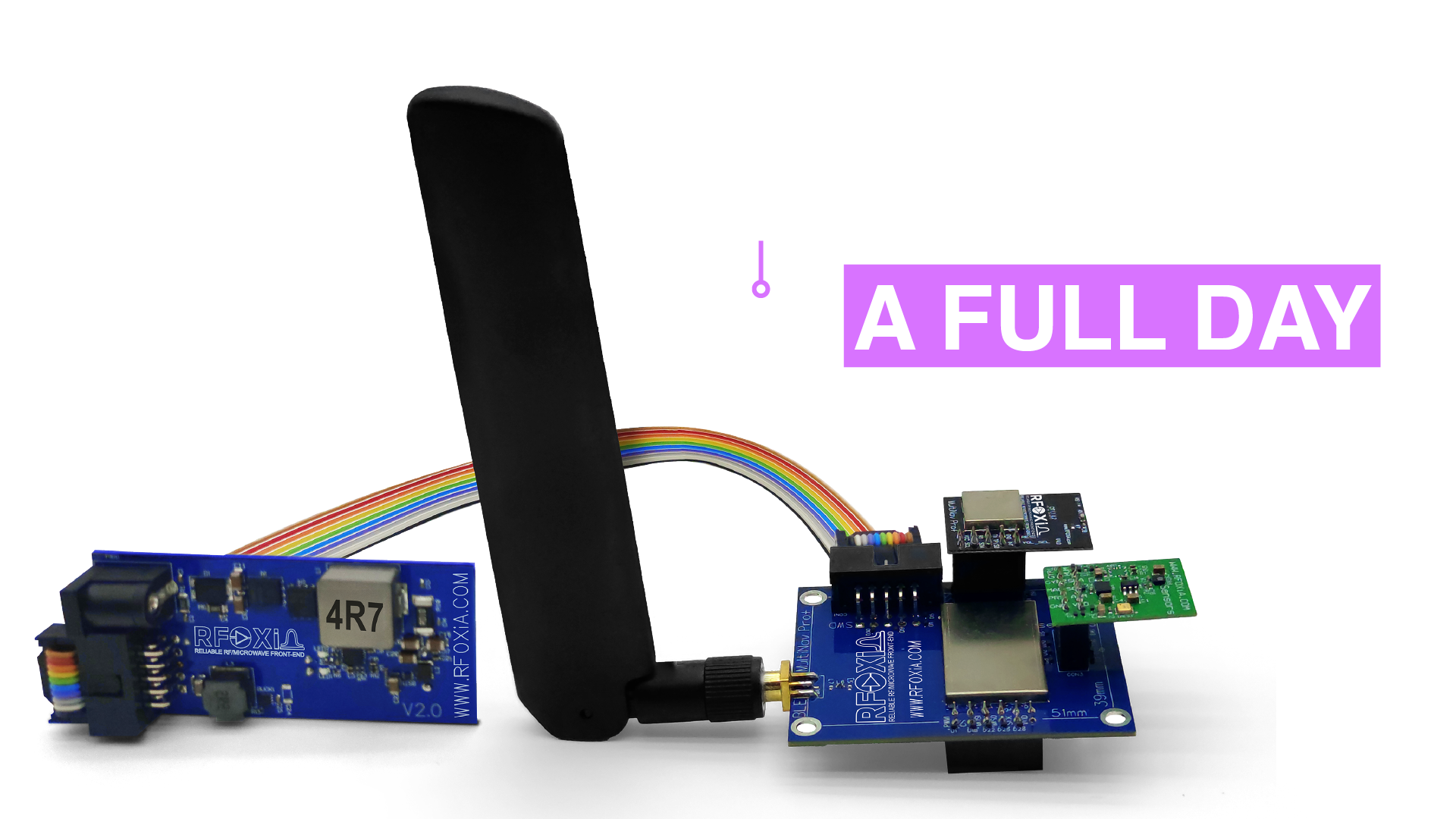
The power system is engineered to run not just the BLE module, but the entire MultiNav Pro+ ecosystem simultaneously — BLE Module, GNSS Module, and Sensors Module together for a full day of operation.
For developers running the complete stack in a long-range field test, a drone integration, or a data network deployment, this means no compromises. You don't have to choose which modules to power, or rotate devices to manage battery life. The full system runs, all day.
This is the practical answer to the energy density question in the supercapacitor vs lithium battery IoT debate: when you engineer the capacity correctly for the target application, you keep all the supercapacitor advantages without accepting a runtime penalty.
STLink Programmer
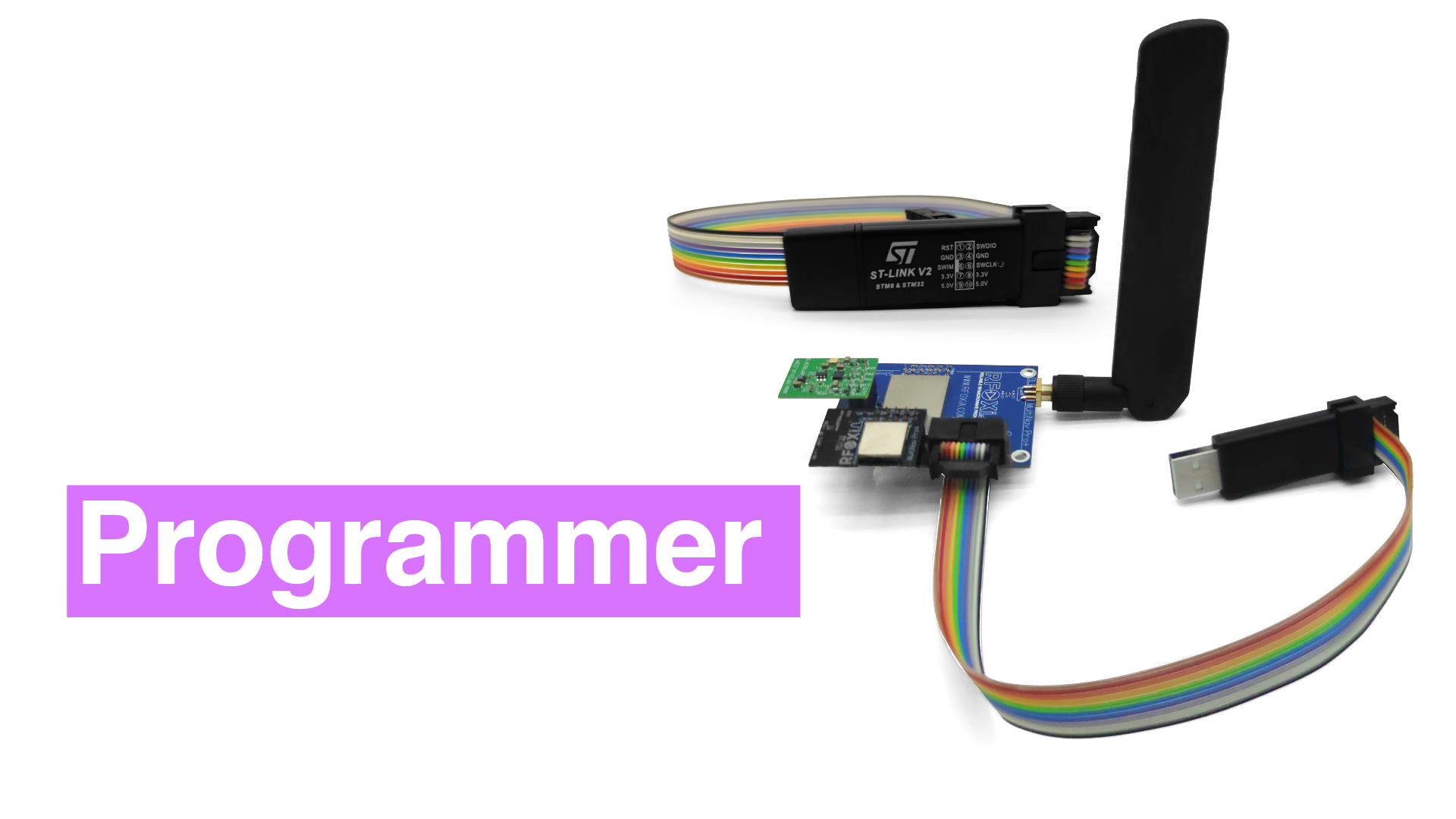
The Power/Program Kit does more than power your hardware — it programs it.
An integrated STLink programmer interface is included for direct firmware flashing and debugging of the MultiNav Pro+ BLE Module. This matters because serious hardware development isn't just deployment. It's iteration: write firmware, flash, test, observe, modify, repeat.
Having the programmer physically integrated into the same kit as the power system means one less cable to manage, one less bench item to track, and a cleaner workflow from firmware development to field testing.
For developers using RFOXiA's AI Firmware Builder — which generates complete, production-ready firmware from plain-language descriptions — the STLink interface is the last step in taking AI-generated firmware from the platform to the hardware. The loop closes here.
Complete Connectivity Kit
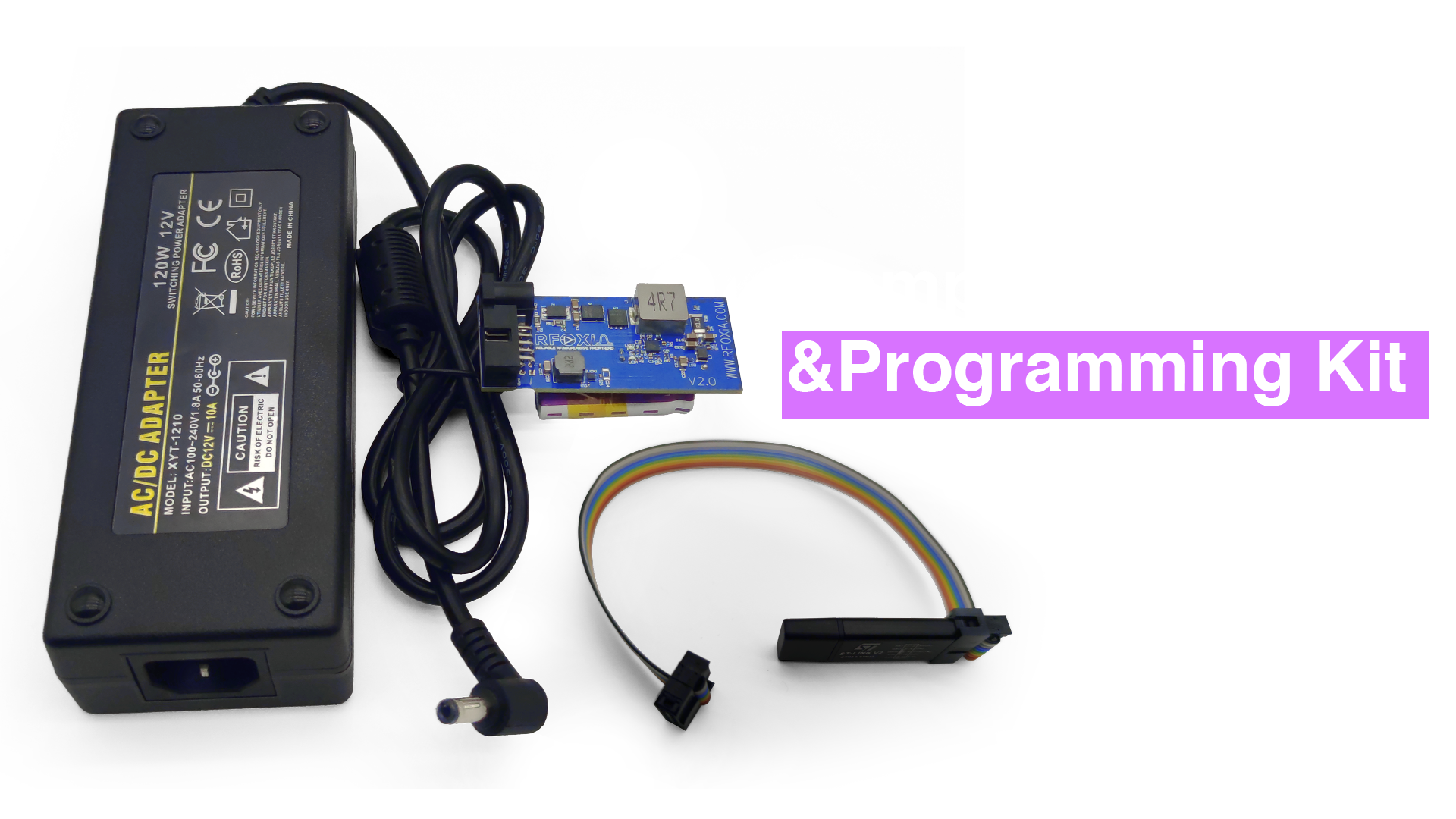
Every cable you need is included. Flat ribbon cables connect the BLE module to the power module, and the programmer to the BLE module. Nothing to source separately. No compatibility questions. Unbox and build.
This is a deliberate design choice. Professional developers have enough complexity to manage in their actual projects. The development kit infrastructure should be invisible — it should just work.
Why the Supercapacitor Approach Is the Right Call for Wireless IoT Development
Let's return to the core supercapacitor vs lithium battery IoT question and apply it specifically to the wireless development use case that RFOXiA hardware is built for.
Drone builders and FPV pilots work in iterative test cycles. You fly, you review, you adjust, you fly again. A 2-hour battery charge between sessions is a workflow killer. A 5-minute supercapacitor charge is not.
Long-range BLE testing requires consistent, clean power. The high peak current demand of RF transmission — especially at the amplifier stages that give the MultiNav Pro+ its 5–20km range — needs a power source that doesn't sag under load. Supercapacitors deliver that stability.
Field researchers deploying data network nodes need hardware that can be recharged quickly in the field, operates reliably across temperature ranges, and doesn't degrade after a year of daily charge cycles. Supercapacitors meet all three requirements where lithium struggles on all three.
IoT developers iterating on firmware need to flash, test, observe, and reflash dozens of times in a session. Having the programmer and the power system in the same kit — with 5-minute charge recovery — keeps development velocity high.
The power system is not an afterthought in professional hardware development. It's an enabling constraint. Get it right and everything else flows. Get it wrong and you spend half your time managing infrastructure instead of building.
The RFOXiA SuperCapacitor Battery and Programmer Kit exists because this problem deserved a real solution — not a compromise.
Technical Specifications Summary
| Specification | Value |
|---|---|
| Supercapacitor capacity | 1100F |
| Energy stored | 8,800 Joules |
| Charge time | Under 5 minutes |
| Runtime (full module stack) | Full working day |
| Charging adapter | 12V 5A input / 4V 10A to capacitor |
| Programmer interface | STLink (for MultiNav Pro+ BLE Module) |
| Cables included | Flat ribbon, power, programmer |
| Certification | FCC certified |
| Price | $119 |
Who This Kit Is For
The Power/Program Kit is designed for developers who are serious about their hardware workflow. Specifically:
Drone builders and FPV pilots integrating the MultiNav Pro+ BLE Module for long-range control and telemetry. You need power that keeps up with your test pace, not one that throttles it.
Robotics engineers running continuous development cycles where firmware iteration and power reliability are both critical to progress.
IoT developers and researchers deploying wireless sensor networks who need field-capable, fast-charging power management that doesn't compromise on runtime.
Data network contributors running RFOXiA Sensors Modules as environmental data nodes — the 24-hour runtime means your node streams continuously without intervention, maximizing your daily reward accumulation.
Any hardware developer who has ever lost a test session, a data log, or a firmware flash because their power system ran out at the wrong moment.
The Complete RFOXiA Ecosystem
The Power/Program Kit is most powerful as part of the complete Developer Bundle, which combines the MultiNav Pro+ BLE Module (5km ground range, 20km man-to-drone range, FCC certified), the GNSS Module (1.5m accuracy, 18Hz fix rate), the Sensors Module (7 integrated environmental sensors), and this Power/Program Kit into one integrated development ecosystem.
When you add RFOXiA Connect (the iOS/Android control app with PS5-style controller interface and live GPS mapping) and the AI Firmware Builder (plain-language firmware generation with full source code), you have a complete wireless development platform that no comparable system offers at this price point.
FCC certified. Ready to ship. Built for builders who don't want to compromise.
Explore the full kit and get started at the RFOXiA SuperCapacitor Battery and Programmer Kit product page.
Final Verdict: Supercapacitor vs Lithium Battery for IoT Development
The answer isn't that supercapacitors are universally better than lithium batteries. It's that for specific IoT and wireless development applications — frequent cycling, peak current demands, fast turnaround requirements, long-term deployment durability — supercapacitors win clearly on every relevant metric except raw energy density per gram.
When you engineer the capacity correctly, as RFOXiA has done with the 1100F / 8,800J system that powers a full module stack for a full day, even the energy density objection dissolves.
What remains is a power system that charges in 5 minutes, lasts hundreds of thousands of cycles, sources peak RF current without voltage sag, and performs reliably from the arctic cold to industrial heat — all in a professional kit that also includes your firmware programmer and every cable you need.
For wireless IoT development in 2025 and beyond, the supercapacitor vs lithium battery IoT question has a clear practical answer. RFOXiA built their development ecosystem around it.
Written by: Moamen Mohamed LinkedIn