
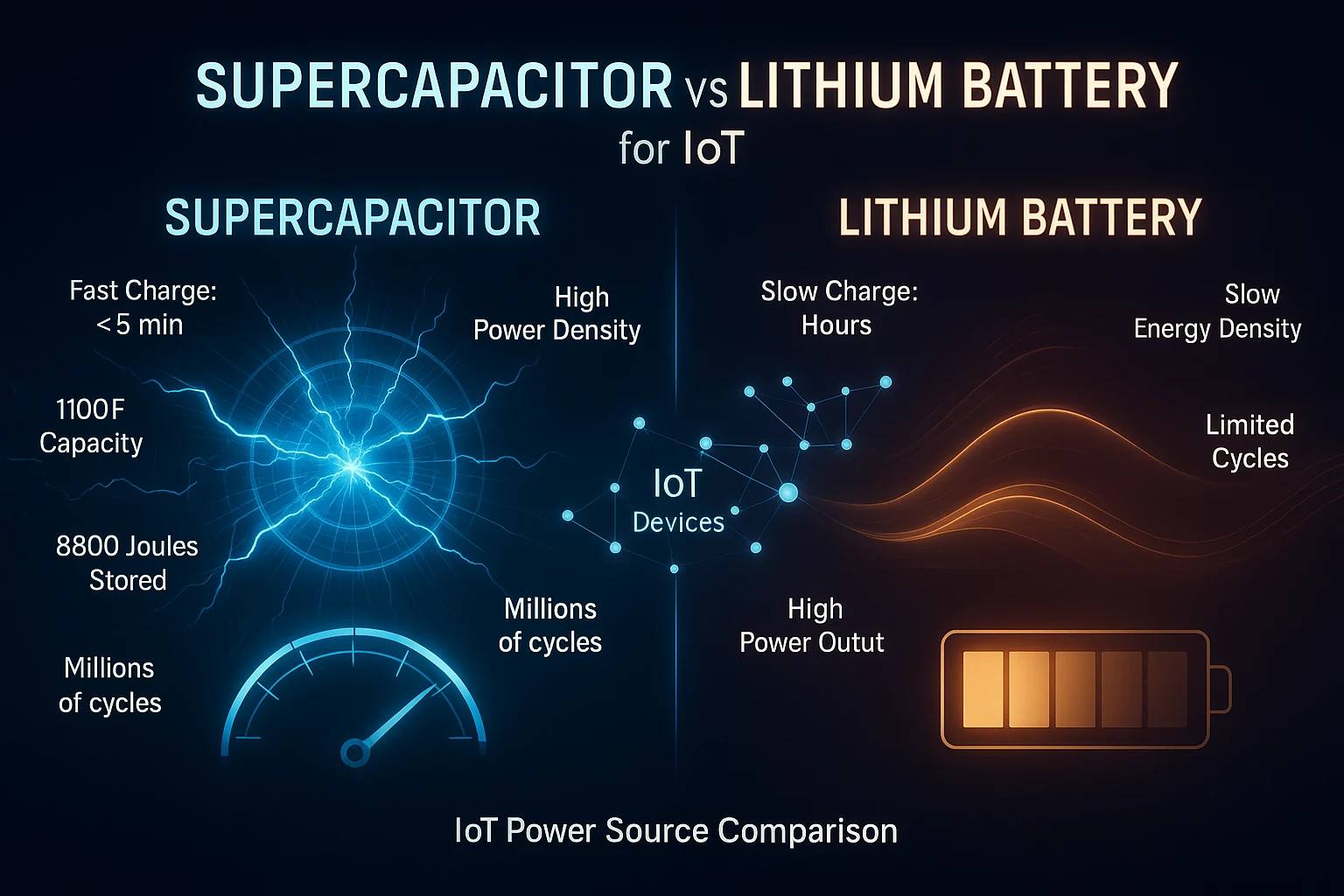
Supercapacitor vs Lithium Battery IoT: Why Supercaps Win for Serious Developers
RFOXiA SuperCapacitor Battery and Programmer Kit
The Power Problem Nobody Talks About
Every hardware developer, drone builder, and IoT engineer eventually hits the same wall. Not a firmware bug. Not a range limitation. Not even a connectivity issue. The wall is power — specifically, the maddening cycle of waiting for batteries to charge, managing battery degradation over time, and watching projects stall because the energy system simply cannot keep up with the demands of real-world field deployment.
For years, lithium-ion and lithium-polymer batteries have been the default answer. They are energy-dense, relatively affordable, and available in every shape and size imaginable. But as IoT deployments grow more demanding — longer runtimes, faster turnaround, harsher environments, and zero tolerance for downtime — the limitations of lithium chemistry are becoming impossible to ignore.
That is where the debate of supercapacitor vs lithium battery IoT power systems becomes critically important. And if you are building with long-range wireless modules, deploying field sensors, or operating drones, the outcome of that debate has real consequences for your projects.
This article breaks down both technologies honestly, explains exactly where supercapacitors outperform lithium batteries in IoT applications, and introduces a production-ready power solution engineered specifically for professional wireless developers.
What Is a Supercapacitor? (And Why It Is Different from a Battery)
A supercapacitor — also called an ultracapacitor or electrochemical double-layer capacitor — stores energy electrostatically rather than through chemical reactions. This fundamental difference in storage mechanism drives every meaningful performance difference between the two technologies.
Lithium batteries store energy in chemical bonds. Charging means driving a chemical reaction in one direction. Discharging means running it in reverse. This electrochemical process is inherently limited in speed, generates heat under high current loads, degrades the electrode materials over repeated cycles, and involves flammable electrolytes that create safety concerns in extreme conditions.
Supercapacitors store energy in an electric field between two electrode surfaces separated by an electrolyte. There is no chemical reaction. Charge and discharge happen at the speed of electrostatic physics — which is to say, nearly instantaneously compared to battery chemistry.
The practical result: supercapacitors charge and discharge in seconds to minutes rather than hours, survive hundreds of thousands of charge cycles with minimal degradation, operate safely across a much wider temperature range, and have no risk of thermal runaway.
For supercapacitor vs lithium battery IoT comparisons in field deployment scenarios, this translates directly to operational advantages that compound over time.
Head-to-Head: Supercapacitor vs Lithium Battery IoT Performance
Charge Speed
This is where supercapacitors win so decisively that the comparison almost feels unfair.
A typical lithium-ion battery pack for an IoT device or drone system requires 1 to 3 hours to reach full charge under standard charging conditions. Fast-charge protocols can reduce this, but they accelerate electrode degradation and generate significant heat, which is itself a degradation mechanism.
A supercapacitor system charges in minutes. The 1100F supercapacitor system in the RFOXiA SuperCapacitor Battery and Programmer Kit charges fully in under 5 minutes using a 12V 5A adapter delivering 4V at 10A to the capacitor bank. Five minutes from empty to full. That is not a future roadmap item — that is the current production specification.
For field researchers who cannot afford to wait for battery cycles, for drone operators running back-to-back flights, for developers doing rapid iteration where stopping to charge destroys momentum — this difference is transformative.
Cycle Life
Lithium-ion batteries are typically rated for 300 to 500 full charge cycles before capacity degrades to 80% of original. High-quality cells with careful battery management systems can extend this to 1,000 cycles in optimal conditions. But every cycle causes measurable degradation, and real-world conditions — temperature extremes, high discharge rates, partial charge states — accelerate that degradation significantly.
Supercapacitors are rated for 100,000 to 1,000,000 charge cycles. The degradation mechanism is fundamentally different and far slower. A supercapacitor system deployed in the field and cycled daily will outlast the hardware it powers by a significant margin.
In the supercapacitor vs lithium battery IoT lifecycle comparison, the total cost of ownership calculation shifts dramatically in favor of supercapacitors for any device expected to operate for years in the field.
Temperature Performance
Lithium batteries perform poorly in cold environments. Below 0°C, internal resistance rises sharply, capacity drops, and charging lithium cells below freezing can cause permanent damage through lithium plating on the anode. In hot environments above 45°C, degradation accelerates and safety risks increase.
Supercapacitors operate reliably from -40°C to +65°C with minimal performance change. For environmental monitoring nodes deployed outdoors through seasonal temperature extremes, for agricultural IoT applications in both freezing winters and desert summers, this thermal resilience is not a nice-to-have — it is a deployment requirement.
Energy Density
This is the one area where lithium batteries maintain a genuine advantage. Lithium-ion cells store approximately 150-200 Wh/kg. Supercapacitors store approximately 5-10 Wh/kg. For applications where maximum runtime with minimum weight is the primary constraint — electric vehicles, smartphones — lithium chemistry still dominates.
But for IoT sensor nodes, wireless communication modules, and field development equipment where size and weight are acceptable tradeoffs for reliability and operational speed, the 8800 Joules stored in the RFOXiA supercapacitor system provides a full day of runtime for the complete MultiNav Pro+ module stack. That is enough energy for every real-world professional use case this kit is designed for.
Safety
Lithium batteries contain flammable electrolytes and can enter thermal runaway under abuse conditions — overcharging, physical damage, or internal short circuits. This is not a hypothetical risk. It is why lithium batteries are regulated in shipping, restricted on aircraft, and a persistent concern in enclosed or unmanned deployments.
Supercapacitors fail safely. They do not contain flammable electrolytes, they cannot enter thermal runaway, and they are not restricted in shipping. For IoT deployments in remote or unmonitored locations, the safety profile of supercapacitor power systems reduces risk meaningfully.
Why the IoT and Wireless Development Use Case Favors Supercapacitors
The supercapacitor vs lithium battery IoT debate is not abstract for wireless hardware developers. The specific demands of IoT field deployment — frequent power cycling, outdoor temperature exposure, rapid iteration during development, extended unmanned deployment — map precisely onto supercapacitor strengths.
Consider a typical day for a developer working with long-range BLE modules and sensor arrays:
- Morning: power up system for field range testing, run tests, return to bench
- Midday: modify firmware, flash new build, test again
- Afternoon: second field deployment for environmental data collection
- Evening: review data, plan next iteration
With a lithium battery system, every power cycle means waiting. Forgot to charge overnight? Project stalls. Battery degraded after 6 months of daily use? Replace it. Temperature dropped below freezing overnight before your field session? Reduced capacity and potentially dangerous charging conditions.
With the supercapacitor system, you plug in for 5 minutes while reviewing the previous session's data. Full charge. Go.
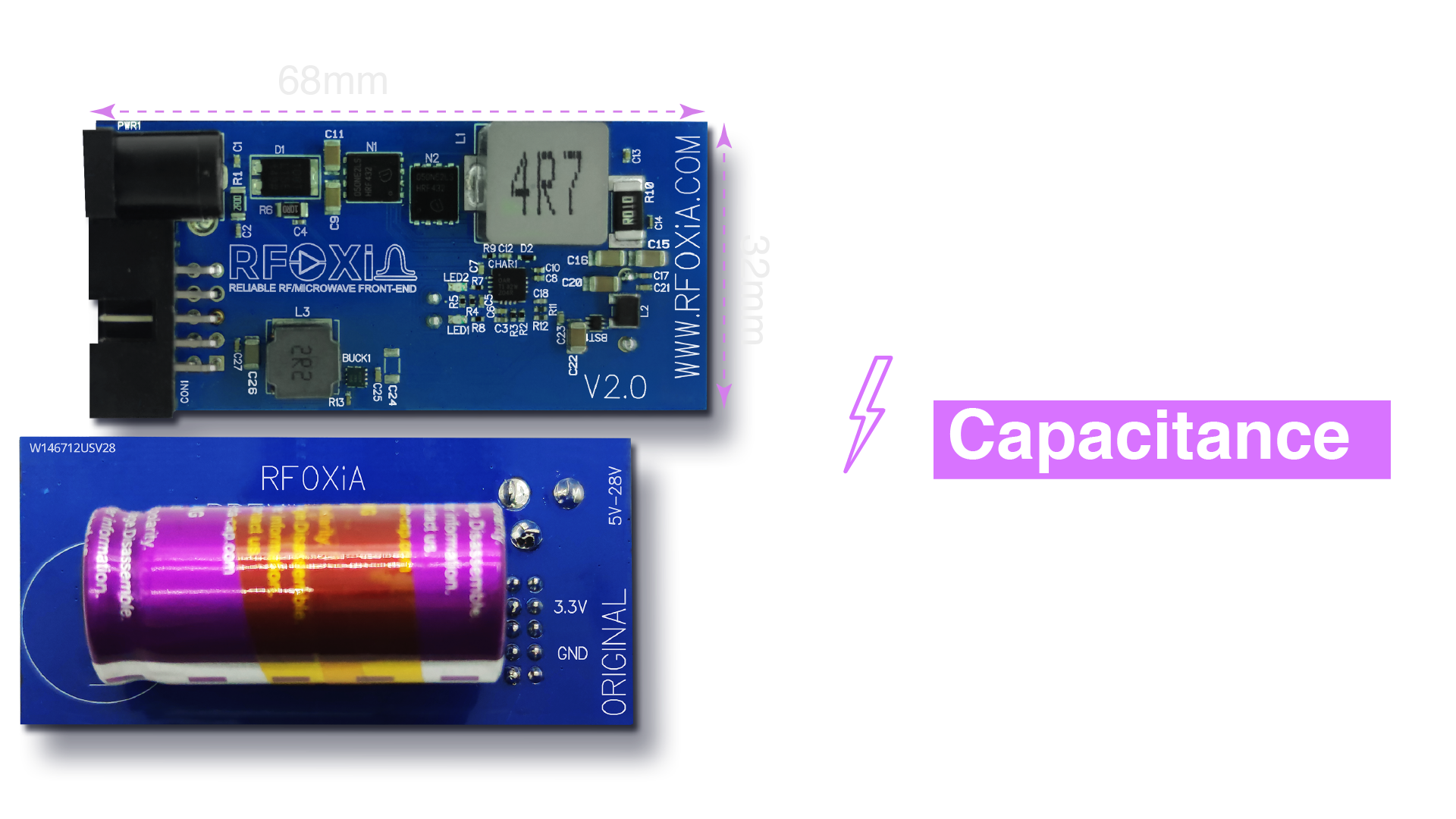
The 1100F supercapacitor system at the heart of the RFOXiA Power/Program Kit stores 8800 Joules — enough to run the complete MultiNav Pro+ module ecosystem for a full working day. This is not a compromise solution. It is a purpose-engineered power architecture designed specifically for the operational reality of professional hardware developers.
The MultiNav Pro+ Power/Program Kit: Engineering the Ideal IoT Power Solution
RFOXiA's approach to solving the IoT power problem was straightforward: build the power system that professional hardware developers actually need, not the one that is cheapest to manufacture.
The result is the MultiNav Pro+ Power/Program Kit — a complete power and programming solution built around supercapacitor technology and designed to integrate seamlessly with the entire MultiNav Pro+ ecosystem.
The High-Power Charging Adapter
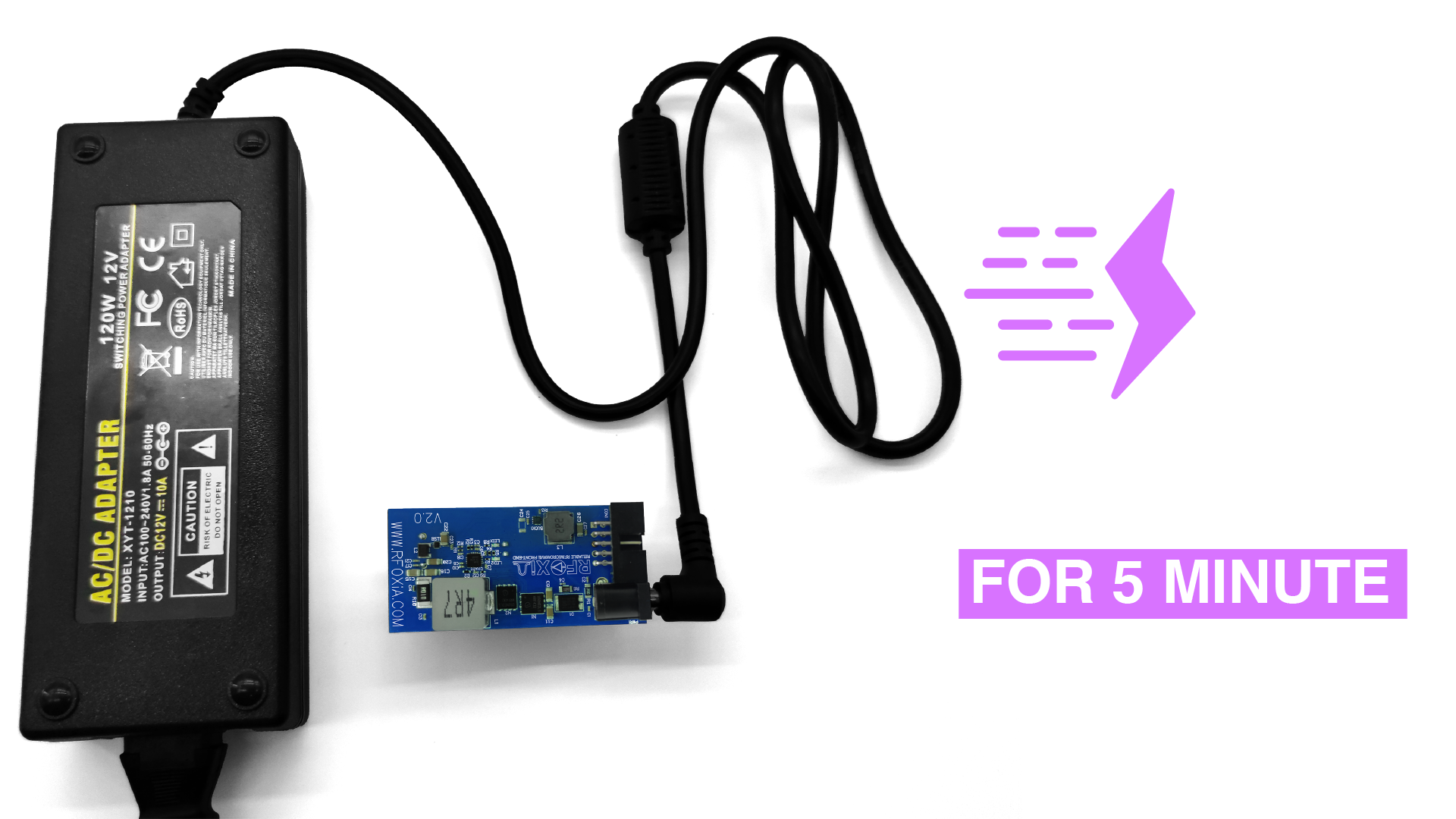
The included 12V 5A charging adapter delivers power to the supercapacitor bank at 4V and 10A — a high-current charging profile that would damage lithium cells but that supercapacitors handle without stress. This is what makes the sub-5-minute charge time possible. The adapter is included in the kit, so there is no separate power supply to source or configure.
Full-Day Power for the Complete Module Stack
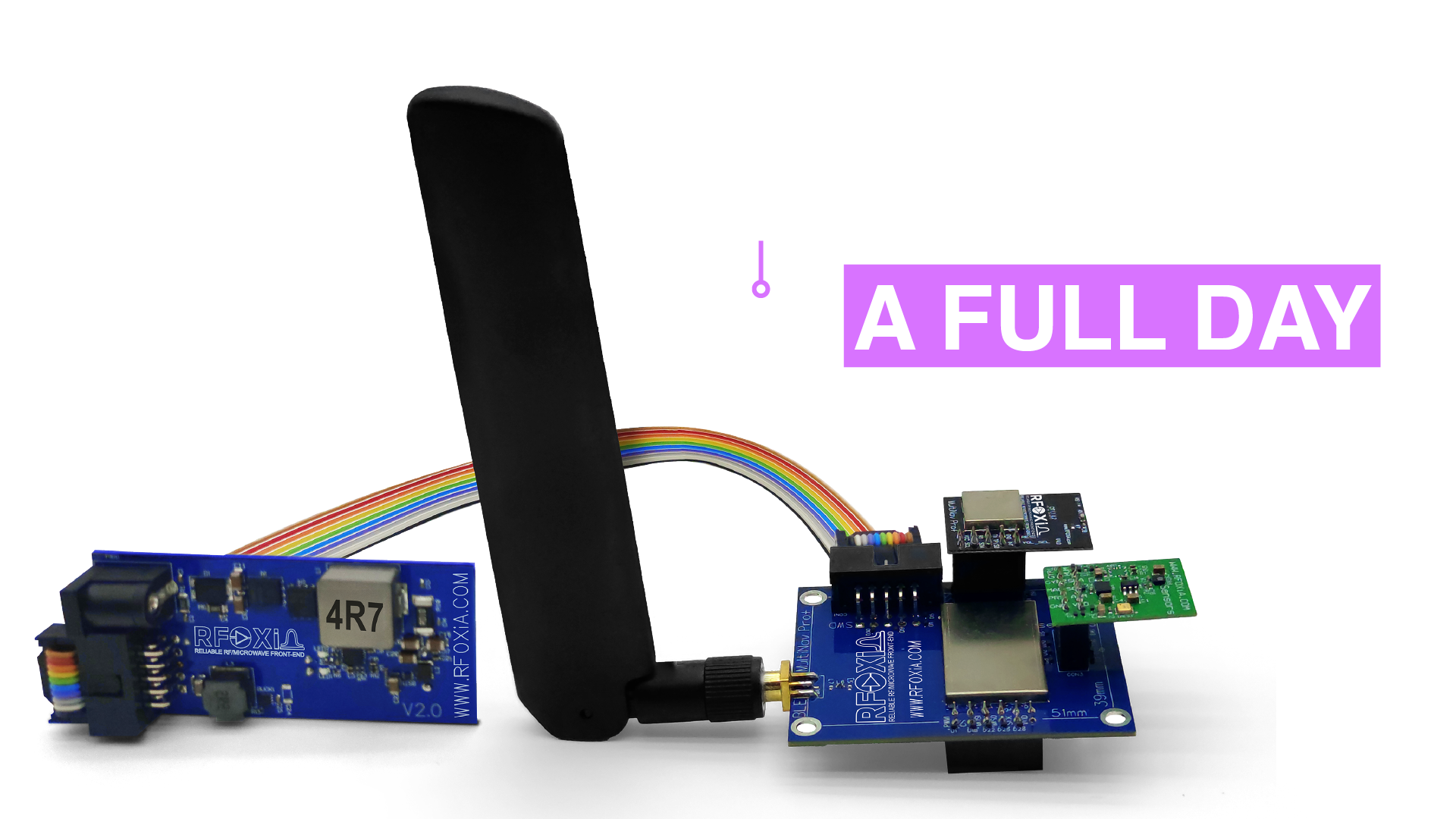
The supercapacitor system is sized to power not just the BLE module in isolation, but the complete MultiNav Pro+ module stack — BLE Module, GNSS Module, and Sensors Module — simultaneously for a full working day. This matters because real deployments are not single-module affairs. Environmental monitoring nodes, drone telemetry systems, and field research platforms run multiple modules concurrently. The power kit is engineered for that reality.
Integrated STLink Programmer
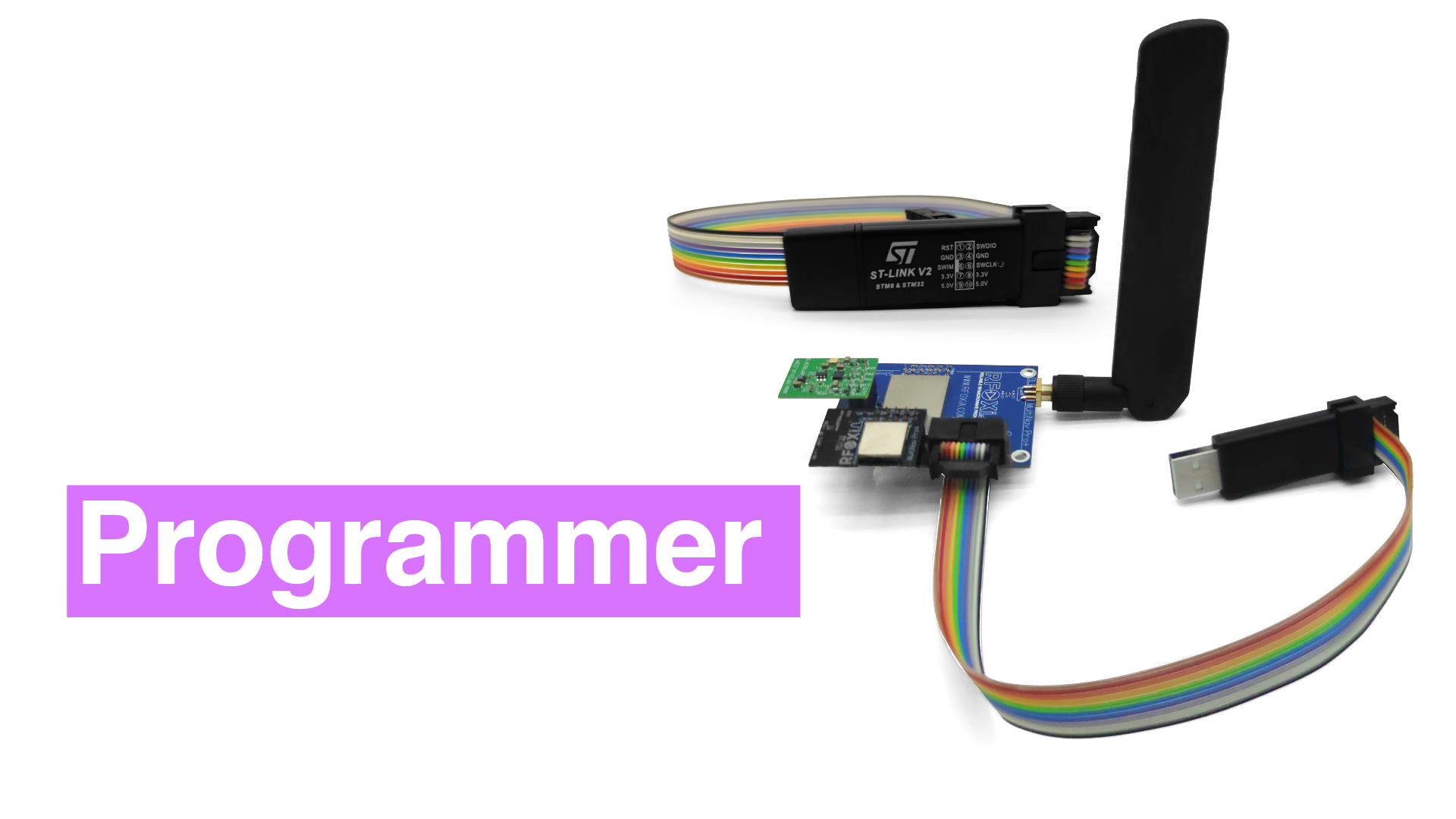
The kit includes an integrated STLink programmer interface for the MultiNav Pro+ BLE Module. This eliminates one of the most persistent friction points in embedded development: getting firmware onto the device reliably. The STLink interface provides full debug capability — not just flashing, but breakpoint debugging, memory inspection, and register access. Combined with the AI Firmware Builder in the RFOXiA Club Dev Hub, the development workflow from concept to running firmware is faster than anything else available at this price point.
Complete Connectivity
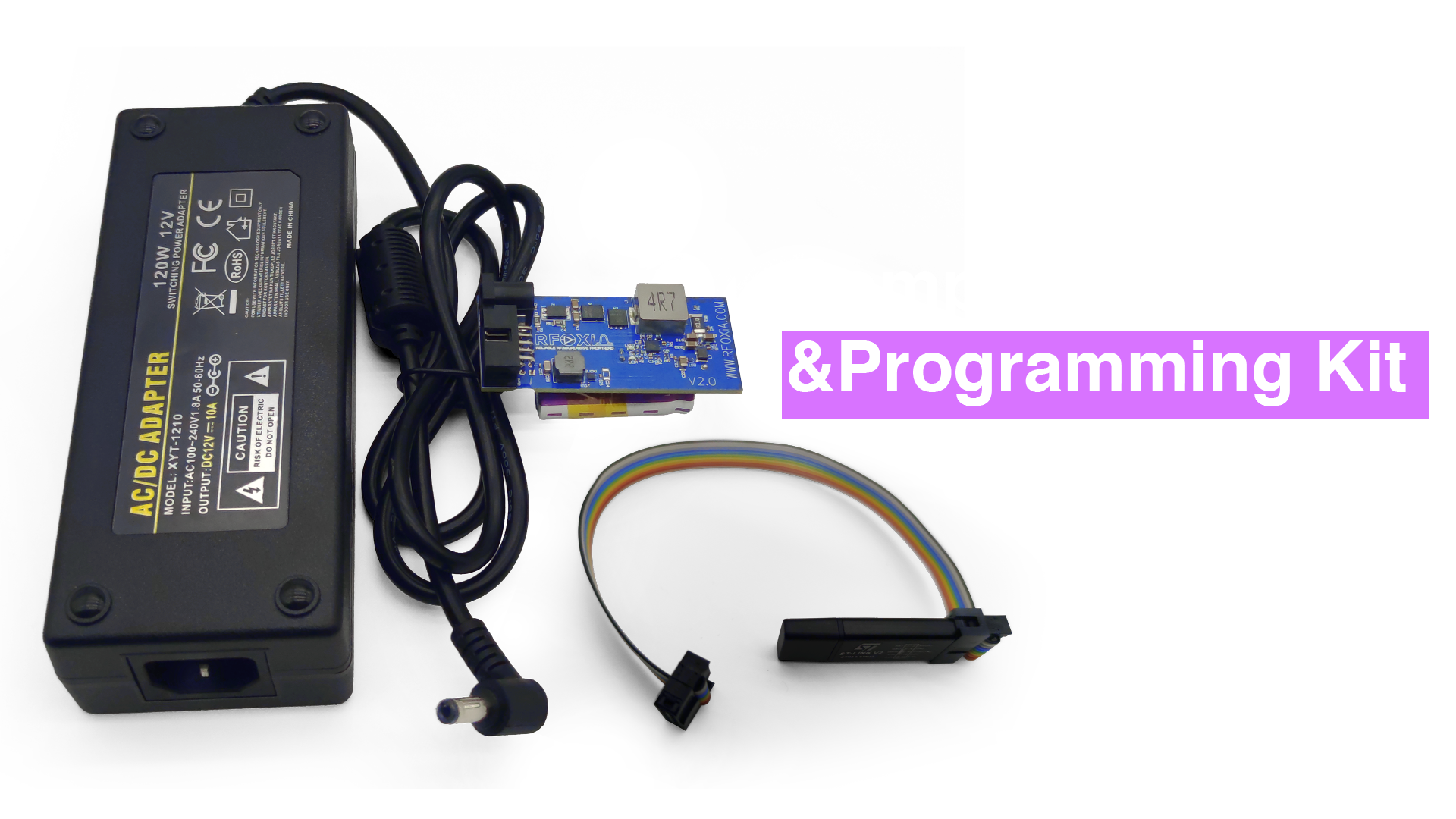
Flat ribbon cables connect the BLE module to the power module and the programmer to the BLE module. Every cable you need is in the box. This is a deliberate design choice — eliminating the "cable hunting" tax that wastes developer time and delays projects.
Supercapacitor vs Lithium Battery IoT: A Practical Decision Framework
Not every application is a supercapacitor application. Here is an honest framework for when supercapacitors are the right choice and when lithium batteries remain appropriate.
Choose supercapacitors when:
- Charge speed is operationally critical (field deployment, rapid iteration)
- Cycle life matters for total cost of ownership
- Temperature extremes are part of the deployment environment
- Safety requirements restrict lithium chemistry (shipping, remote deployment)
- The application involves frequent full discharge and recharge cycles
- Weight and form factor allow for slightly larger energy storage hardware
Stick with lithium when:
- Maximum energy density for minimum weight is the primary constraint (wearables, small UAVs with strict payload limits)
- Extended multi-day runtime without recharge access is required
- Per-unit cost is the dominant optimization target in high-volume consumer applications
For professional wireless development, environmental monitoring, drone telemetry, and IoT field research — the use cases the MultiNav Pro+ ecosystem is built for — supercapacitors are the correct engineering choice. The RFOXiA SuperCapacitor Battery and Programmer Kit represents the maturation of that engineering choice into a production-ready product.
The Complete MultiNav Pro+ Ecosystem
The Power/Program Kit is designed to work within the broader MultiNav Pro+ ecosystem. The BLE Module delivers 5km ground-to-ground range and up to 20km man-to-drone range — specifications that no commodity module can approach at anywhere near the $59 price point. The GNSS Module delivers 1.5-meter accuracy at 18Hz fix rate, enabling precision tracking of fast-moving platforms. The Sensors Module integrates seven environmental sensors in a single board.
Powering and programming this ecosystem through the Power/Program Kit completes the loop: professional-grade hardware, professional-grade power, professional-grade development tooling.
The RFOXiA Club platform connects everything — AI firmware generation, live device control through the Command Center, the data monetization network that pays developers for sensor uptime, and the developer community building on the same hardware.
What Developers Are Saying About Supercapacitor Power in the Field
The move away from lithium in professional IoT deployments is not a fringe position. Field researchers dealing with cold-weather deployments have been exploring supercapacitor alternatives for years. Drone operators frustrated with battery management logistics see the operational advantages immediately. Industrial IoT engineers working on decade-long deployment lifetimes have done the cycle-life math and reached obvious conclusions.
The supercapacitor vs lithium battery IoT conversation is shifting. As supercapacitor energy density improves and costs continue to decline, the window of applications where lithium chemistry is the unambiguous choice is narrowing.
For the MultiNav Pro+ use case — professional wireless development with a need for rapid iteration, field deployment reliability, and operational continuity — supercapacitors are already the right answer today.
Technical Specifications Summary
| Specification | Value |
|---|---|
| Supercapacitor Capacity | 1100F |
| Energy Storage | 8800 Joules |
| Charge Time | Under 5 minutes |
| Runtime (Full Module Stack) | Full working day |
| Charging Input | 12V 5A adapter (included) |
| Charging Profile | 4V at 10A to capacitor bank |
| Programmer Interface | STLink |
| Compatible Modules | Full MultiNav Pro+ ecosystem |
| Included Accessories | Flat ribbon cables, charging adapter |
| Price | $119 |
Ready to Eliminate Power Downtime?
The supercapacitor vs lithium battery IoT decision comes down to one question: what does downtime cost you? If the answer is productivity, project momentum, field deployment reliability, or long-term system viability — the supercapacitor architecture is the answer.
The MultiNav Pro+ Power/Program Kit is in stock, FCC certified, and ready to ship. It is $119 and it includes everything — the supercapacitor power system, the high-current charging adapter, the STLink programmer, and all connecting cables.
Stop waiting for batteries to charge. Visit the RFOXiA SuperCapacitor Battery and Programmer Kit page and order yours today.
RFOXiA builds professional-grade wireless hardware at maker-accessible prices. The MultiNav Pro+ ecosystem — BLE Module, GNSS Module, Sensors Module, and Power/Program Kit — is FCC certified, in stock, and shipping now. Join RFOXiA Club for $10 in welcome credits and access to the AI Firmware Builder, data monetization network, and developer community.
Written by: Moamen Mohamed LinkedIn