
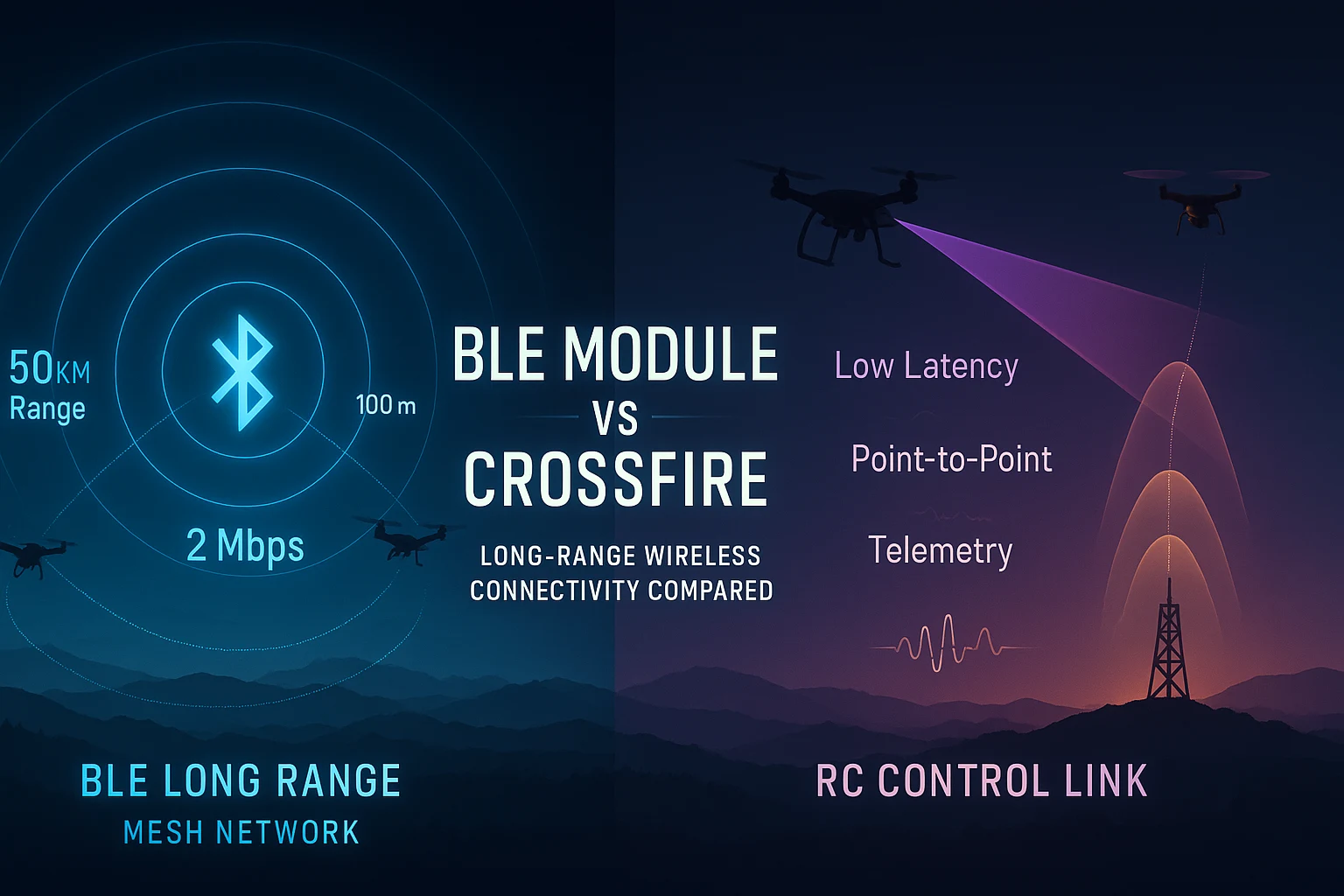
BLE Module vs Crossfire: The Long-Range Wireless Showdown Every Drone Builder Needs to Read
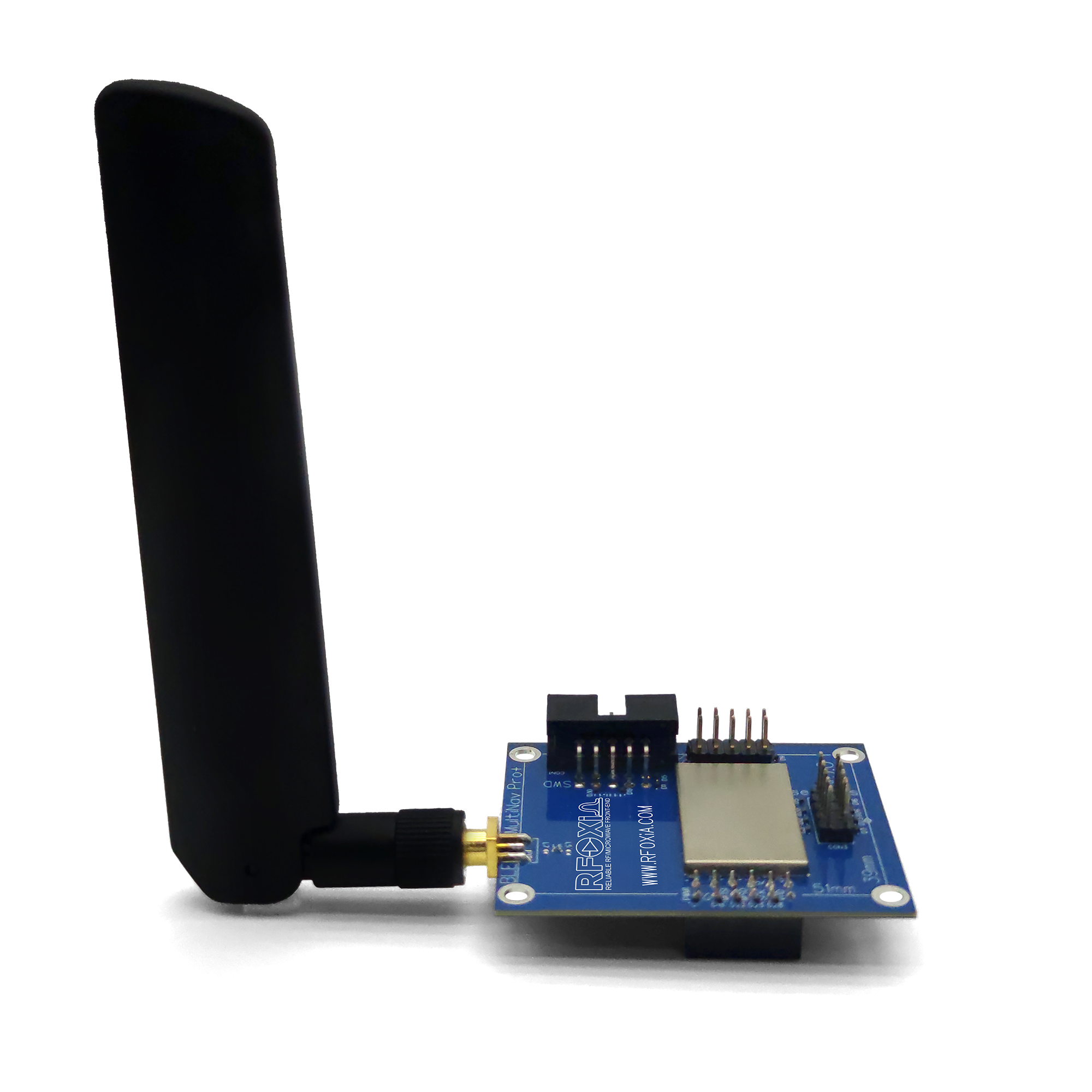
RFOXiA Long Range Bluetooth Module
BLE Module vs Crossfire — Which One Actually Belongs on Your Build?
If you've spent any time in the FPV or drone-building community, you've heard the debate: which long-range control link is worth your money and your trust at altitude? For years, TBS Crossfire has been the gold standard answer. It's robust, it's proven, and it has a massive community behind it. But the landscape of long-range wireless is changing fast — and a new contender has entered the arena that challenges not just Crossfire, but the entire assumption of what a control link can be.
This is the definitive BLE module vs Crossfire comparison. We'll break down specs, ecosystem, price, flexibility, and real-world use cases — and by the end, you'll understand why the RFOXiA Long Range Bluetooth Module is forcing the industry to rethink everything.
What Is TBS Crossfire and Why Do Builders Love It?
Team BlackSheep's Crossfire system launched in 2016 and quickly became the go-to long-range RC link for serious FPV pilots. It operates on 900MHz, uses a proprietary protocol, and delivers a reliable control link with telemetry support out to several kilometers under typical field conditions — and significantly farther under ideal ones.
Here's what Crossfire does well:
- Reliable RC control link with low latency suitable for acro flight
- Telemetry back to the transmitter module
- Wide receiver compatibility across Betaflight, ArduPilot, and iNav flight controllers
- Established community with years of firmware development
- ELRS compatibility pathway for builders who want open-source
It's a purpose-built RC link. And for pure RC control, it's hard to argue with its track record.
But here's the critical limitation: Crossfire is a control link. That's all it is.
It doesn't carry sensor data. It doesn't give you an internet-independent mesh chat network. It doesn't integrate with a GNSS module for 18Hz precision tracking. It doesn't connect to a mobile app with a live map. It doesn't include an AI firmware development platform. It doesn't let you earn passive income from your deployed hardware. And it absolutely does not achieve 50 kilometers of range.
That last point is where the BLE module vs Crossfire conversation takes a dramatic turn.
The MultiNav Pro+ BLE Module: Redefining What Bluetooth Can Do
The RFOXiA MultiNav Pro+ is not a commodity Bluetooth module. It is not a Nordic nRF52 breakout board or a Silicon Labs WSTK eval kit. It is a professionally engineered, FCC-certified long-range BLE module built on the STM32WB07CCV6 processor, featuring an optimized RF front-end, external amplifiers, and a high-gain chip antenna — all engineered specifically to push Bluetooth to ranges nobody thought were possible at this price point.
The Range Numbers — And Why They Matter
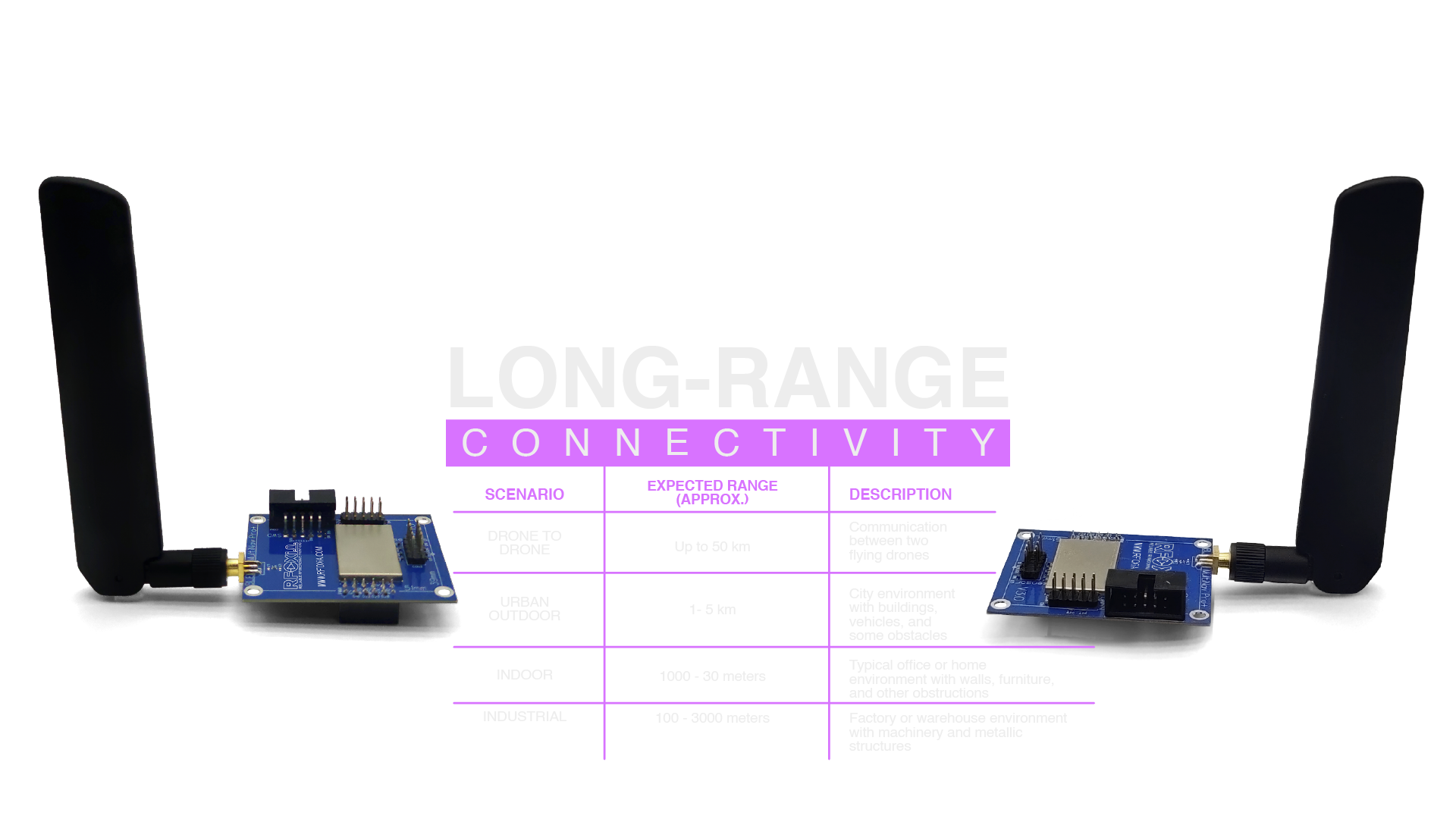
Let's be direct about what these specs mean in practice:
- Ground-to-ground (phone to phone): 5km
- Man-to-drone (phone to module on UAV): 15–20km
- Drone-to-drone (module to module, both airborne): 50km
Those drone-to-drone figures eliminate ground reflections entirely, which is why they extend so dramatically compared to ground-based deployments. For FPV wings, long-range fixed-wing platforms, aerial survey drones, or any UAV-to-UAV communication scenario, 50km of BLE range is not a marketing claim — it's an engineered result.
TBS Crossfire's actual field range under real-world conditions typically lands between 5–40km depending on antenna setup, power settings, and terrain. For pure RC control, that's competitive. But Crossfire cannot simultaneously carry 2Mbps of bidirectional data, integrate with a full sensor ecosystem, and run on a platform that also powers an internet-independent mesh communication network.
Spec-by-Spec: BLE Module vs Crossfire
| Feature | MultiNav Pro+ BLE | TBS Crossfire |
|---|---|---|
| Maximum range (drone-to-drone) | 50km | Up to ~40km (varies) |
| Man-to-drone range | 15–20km | ~10–30km (varies) |
| Data rate | 2 Mbps | ~150 bps telemetry |
| Protocol | Standard BLE 5.x | Proprietary CRSF |
| Mobile app control | ✅ iOS & Android | Limited |
| Mesh chat network | ✅ Internet-independent | ❌ |
| Sensor integration | ✅ Full ecosystem | ❌ |
| GNSS integration | ✅ 18Hz, 1.5m accuracy | Basic telemetry only |
| AI firmware development | ✅ Via RFOXiA Club | ❌ |
| FCC certified | ✅ | ✅ |
| Open source firmware | ✅ Full GitHub access | Partial |
| Price (2 units) | $59 | $80–130+ |
| Data monetization network | ✅ | ❌ |
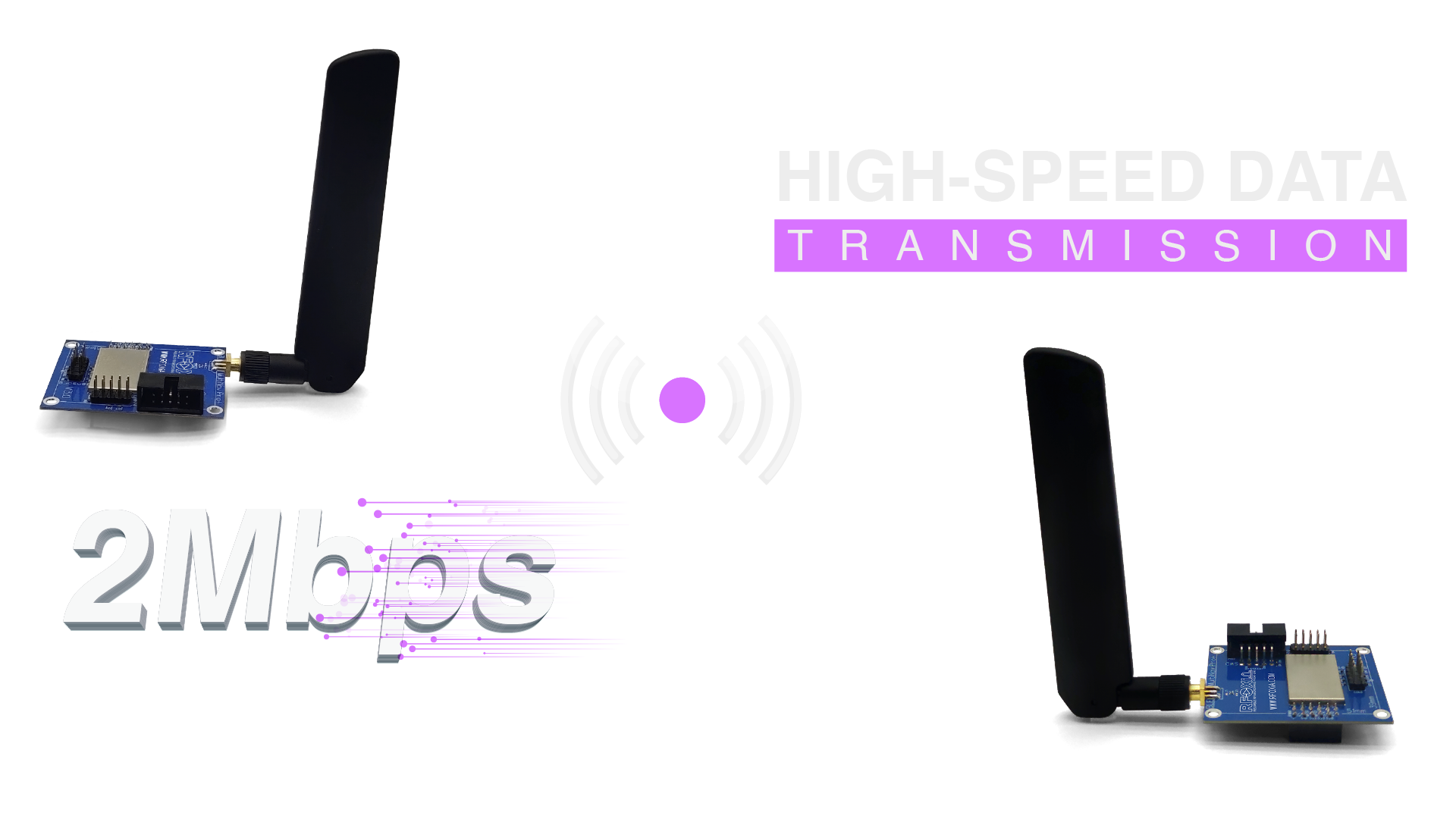
The data rate difference alone is staggering. Crossfire's telemetry bandwidth is measured in bits per second — enough for RSSI, battery voltage, GPS coordinates, and flight mode. The MultiNav Pro+ operates at 2 megabits per second, which is enough to stream rich telemetry, command data, sensor payloads, and video metadata simultaneously over the same link.
The Ecosystem Advantage: Where Crossfire Simply Cannot Compete
This is the part of the BLE module vs Crossfire comparison that Crossfire users rarely consider — because Crossfire was never designed to be anything more than a control link. The MultiNav Pro+ is the centerpiece of a vertically integrated development ecosystem.
Seamless Module Integration
The MultiNav Pro+ BLE module is designed from the ground up to integrate with the full MultiNav Pro+ hardware family:
- GNSS Module — 18Hz fix rate, 1.5m accuracy for tracking fast-moving platforms
- Sensors Module — 7 onboard sensors: temperature, humidity, air pressure, air quality, accelerometer, gyroscope, magnetometer
- Power/Program Kit — supercapacitor-based, 5-minute charge, 24-hour runtime
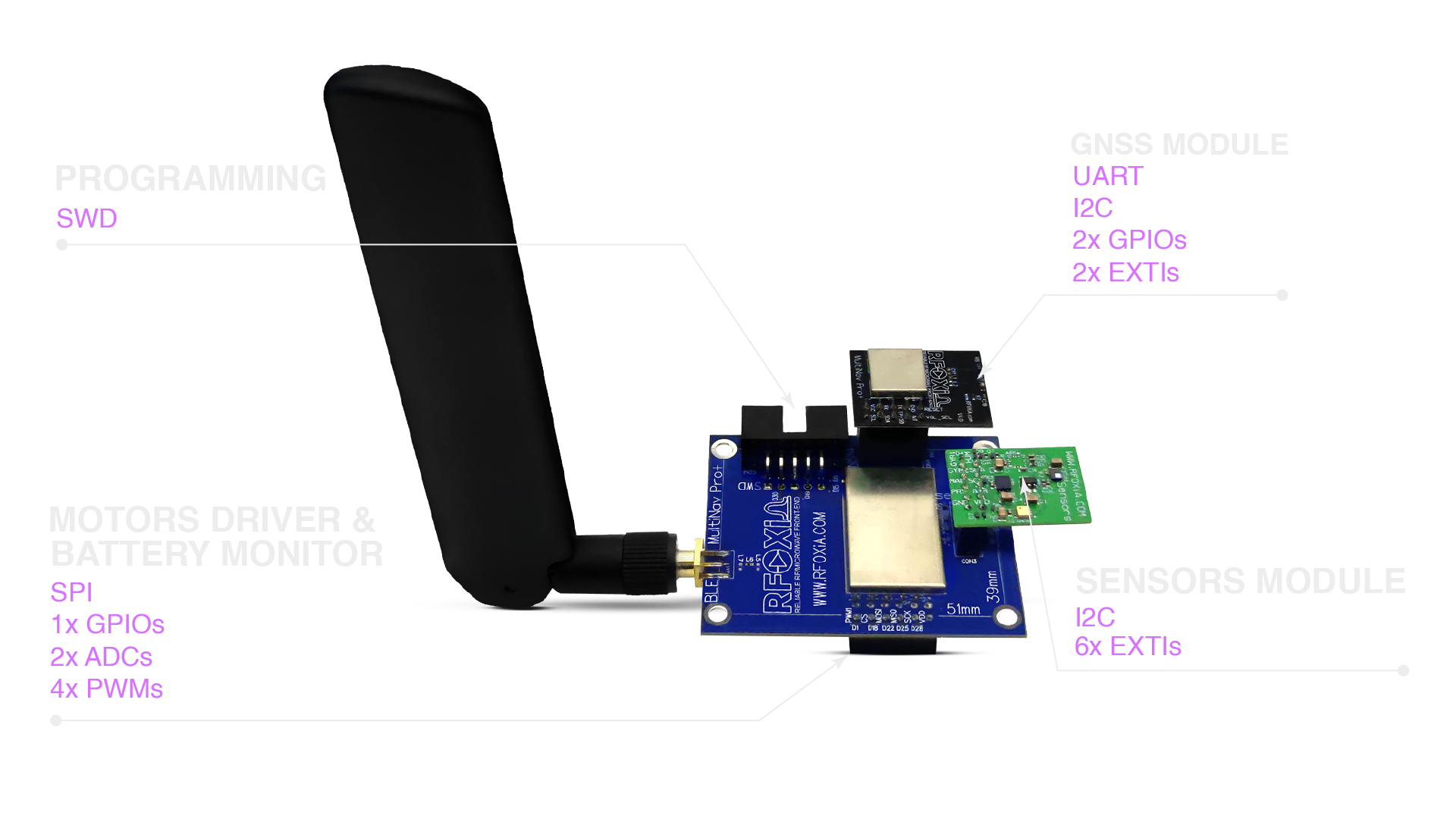
When you stack these modules together, you don't just have a control link — you have a complete autonomous system platform capable of environmental monitoring, precision navigation, long-range communication, and remote control, all in one integrated package.
The RFOXiA Connect App
Crossfire's transmitter module requires a dedicated RC radio with a module bay. The MultiNav Pro+ pairs directly with your smartphone.
The RFOXiA Connect app (iOS and Android) gives you:
- PS5-style controller interface for drone and robot control
- Live GPS map with real-time tracking of your platform
- Live sensor data display — temperature, humidity, air quality, IMU data
- Automation center for setting waypoints and automated behaviors
- Completely internet-independent operation — no cell signal needed
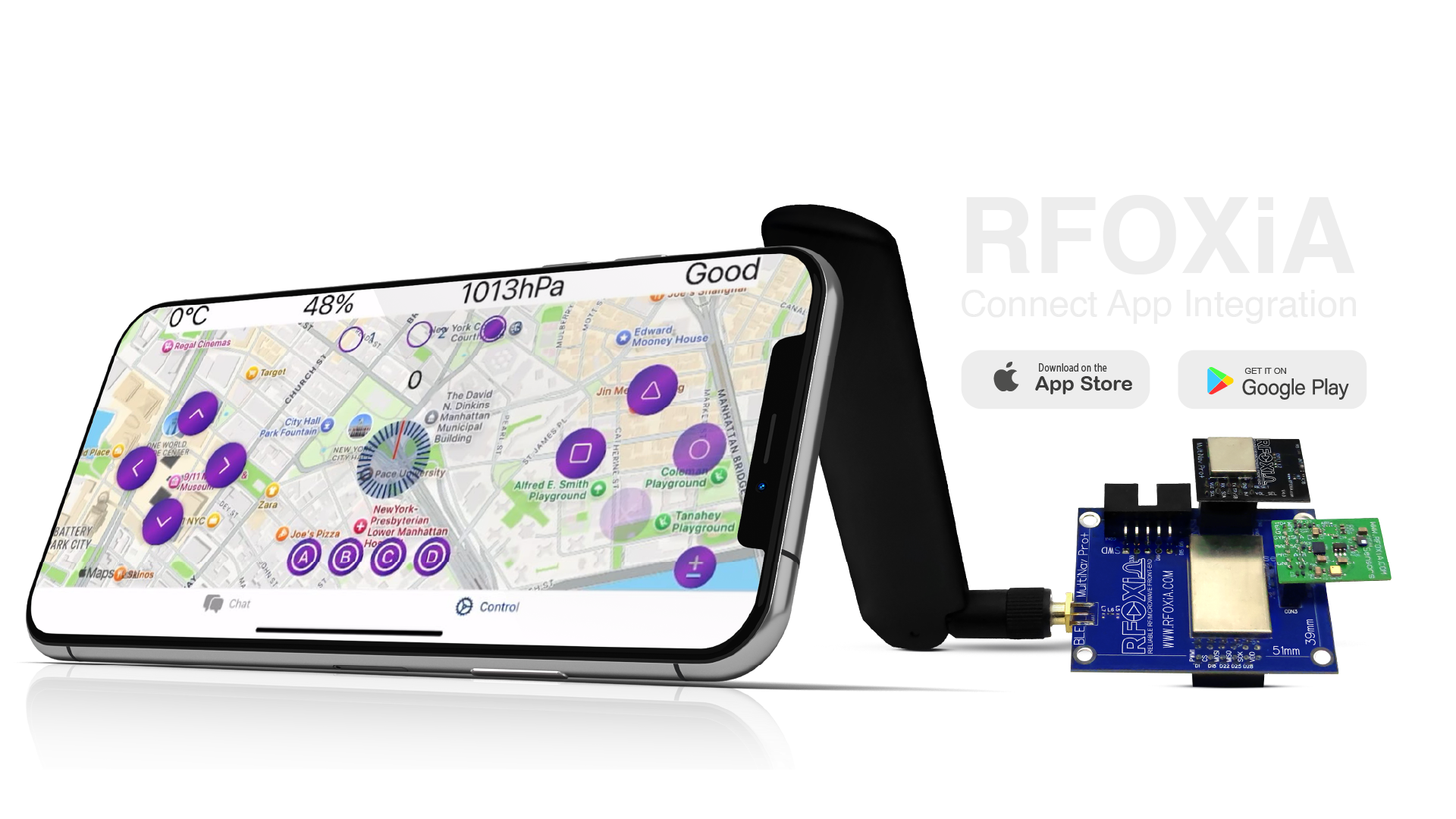
For builders who want a dedicated RC radio, that's still an option — but the ability to use a smartphone as a ground station with a live map and sensor dashboard is a capability Crossfire simply doesn't offer.
The Processing Core: Built for Real Development
At the heart of the MultiNav Pro+ BLE module is the STM32WB07CCV6 — a dual-core processor that simultaneously manages the BLE stack and user applications without interference between the two. This means your application code runs without competing with the RF protocol stack for CPU cycles.
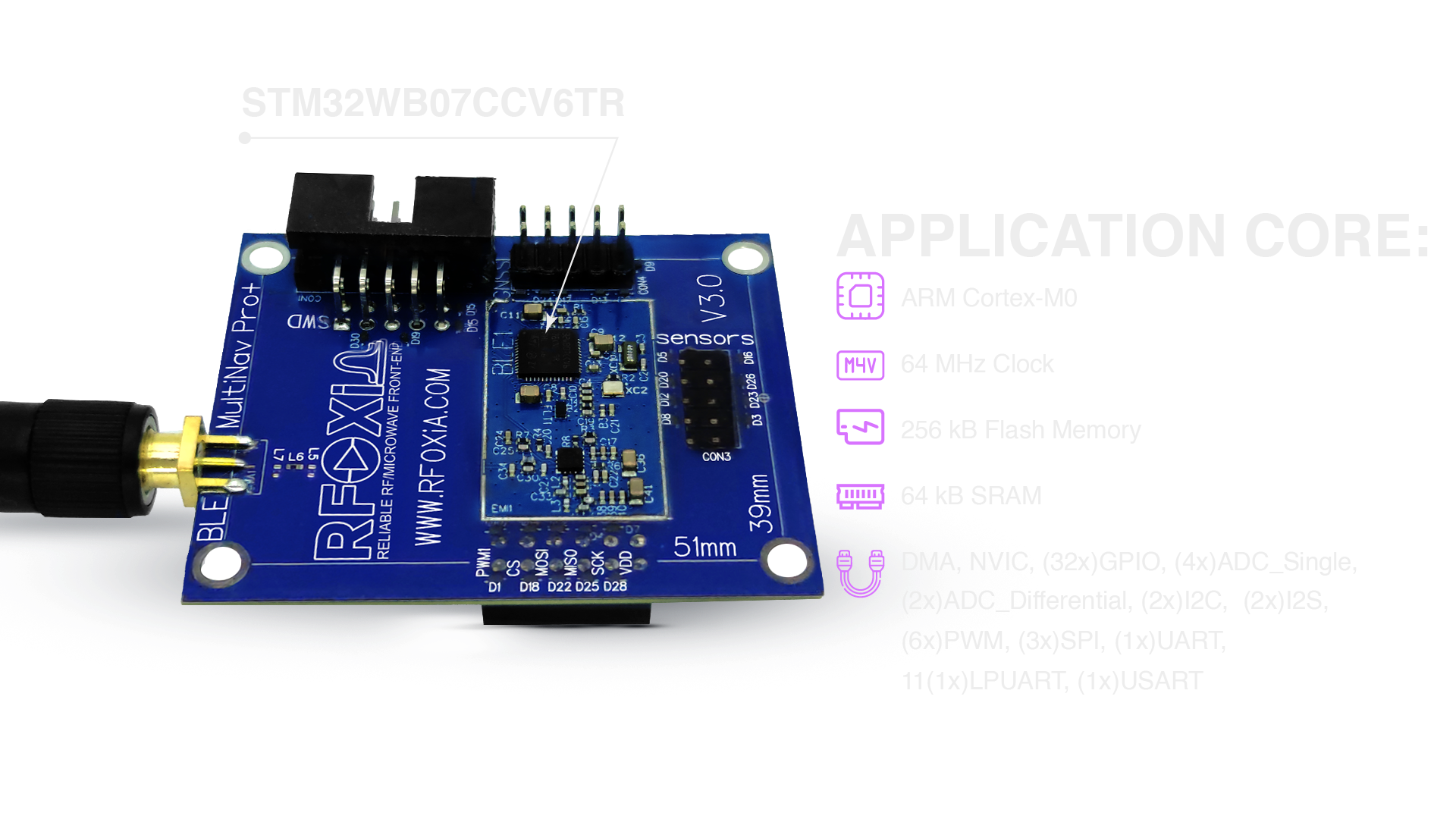
For developers building custom applications on top of the BLE link — data logging, sensor fusion, command parsing, actuator control — this processing architecture matters enormously. You're not fighting the radio stack for resources.
BLE Chat: Internet-Independent Mesh Communication
One capability the MultiNav Pro+ offers that has no equivalent in any RC link system, including Crossfire, is BLE Chat.
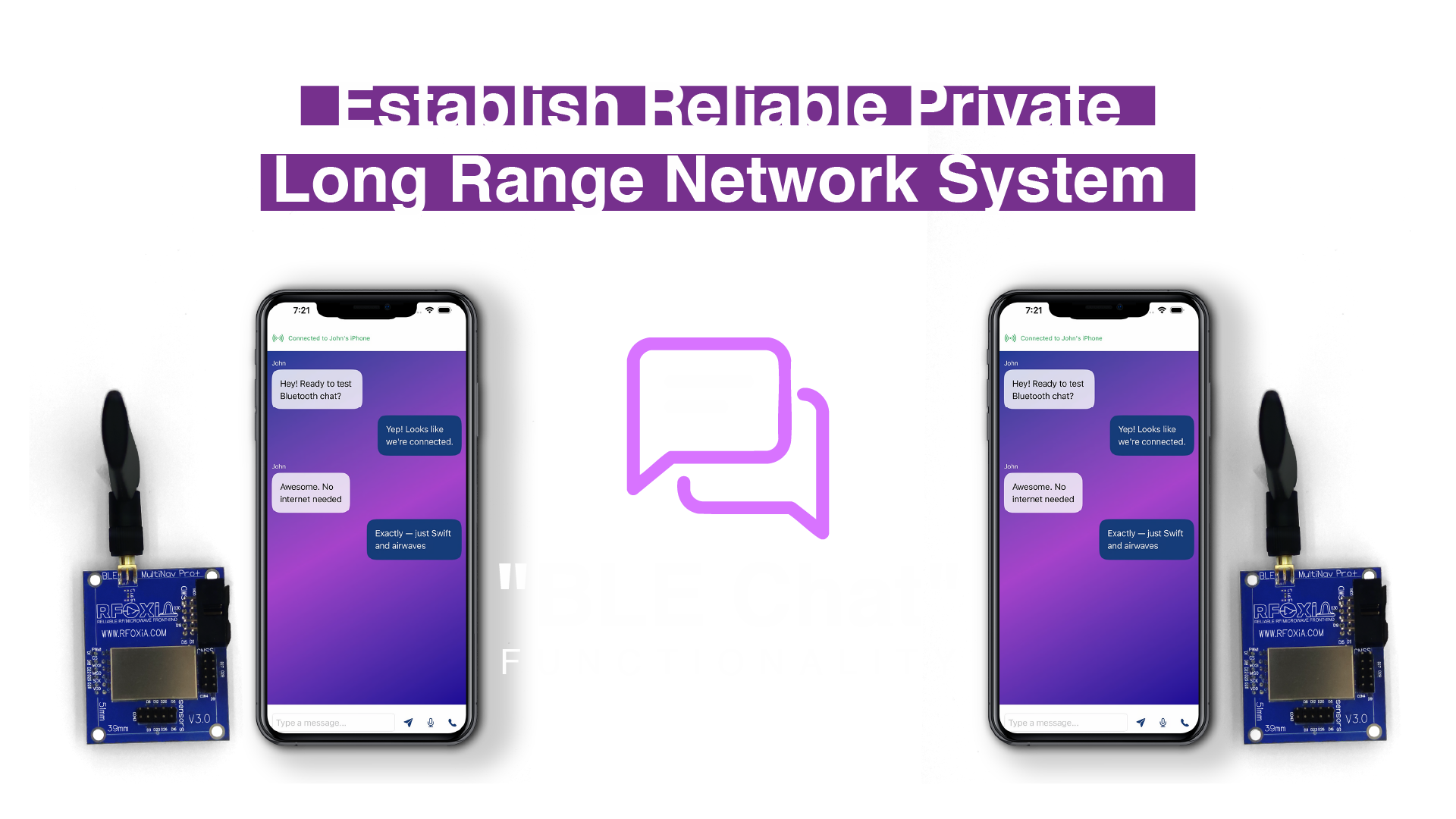
BLE Chat enables direct, internet-independent communication between MultiNav Pro+ BLE users — text, data, and voice — using the modules themselves as communication nodes. No cell towers. No Wi-Fi. No internet infrastructure of any kind.
Applications include:
- Field research teams communicating across remote terrain
- Disaster response when infrastructure is down
- Off-grid expeditions where cell coverage doesn't exist
- Multi-drone coordination without a ground control server
- Industrial sites where radio silence is required
This is a capability that exists nowhere else at this price point. Military mesh radio systems capable of this exist — at $5,000+ per node. The MultiNav Pro+ delivers it for $59 for two units.
Physical Design: Compact Without Compromise
At 57mm × 47mm with a fixing frame of 54mm × 34mm and corner mounting holes, the MultiNav Pro+ BLE is designed for real integration into real builds — not just benchtop evaluation.
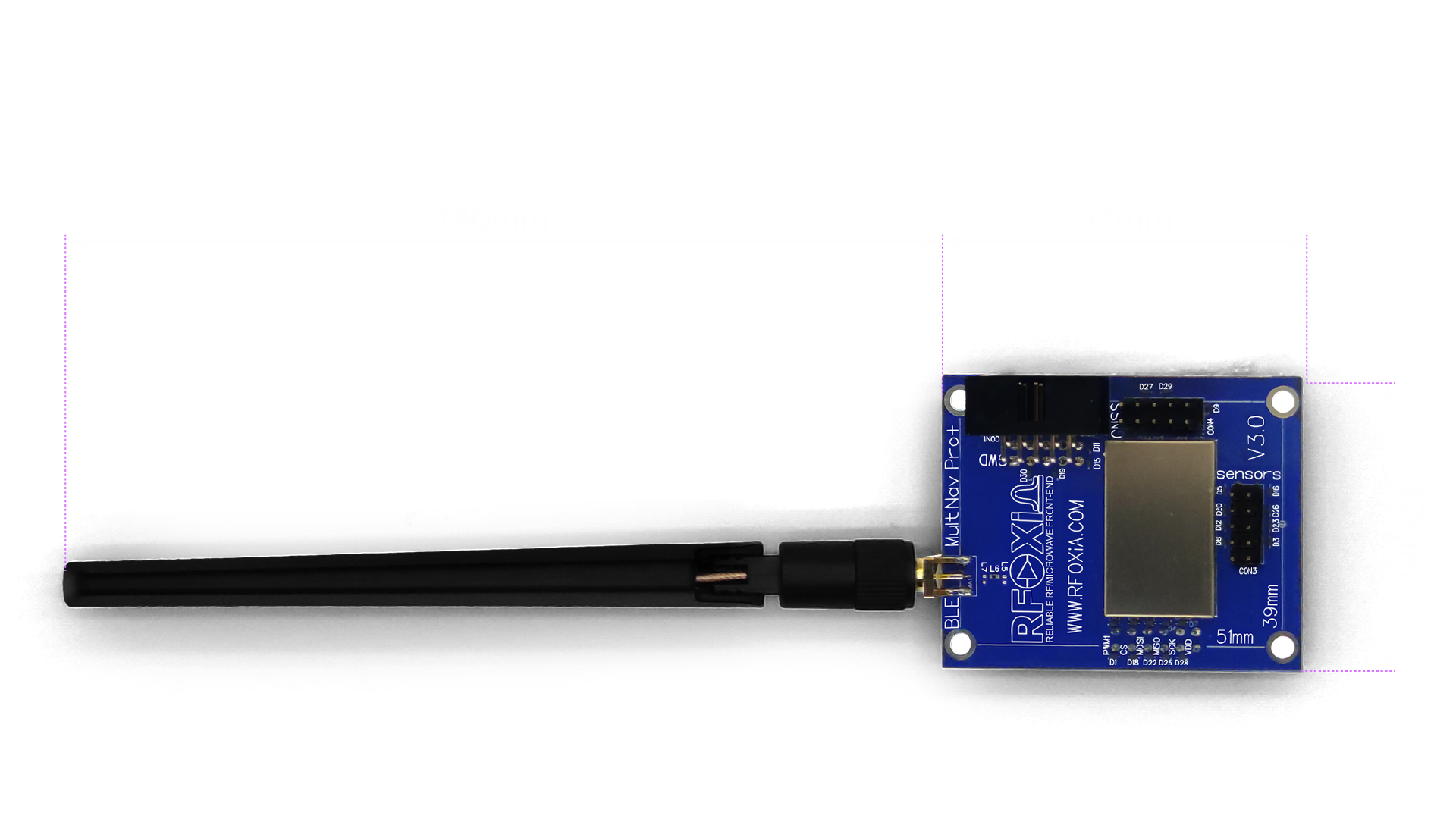
The integrated high-gain chip antenna — 140mm in length — delivers the RF performance needed for long-range operation without requiring external antenna management. For builds where space is at a premium, this matters. You're not managing SMA connectors and coaxial routing on a tight frame.
Open Source and Fully Programmable
One of the strongest arguments for ExpressLRS (the open-source successor to many proprietary RC links) is full access to source code. The MultiNav Pro+ BLE module matches this completely.
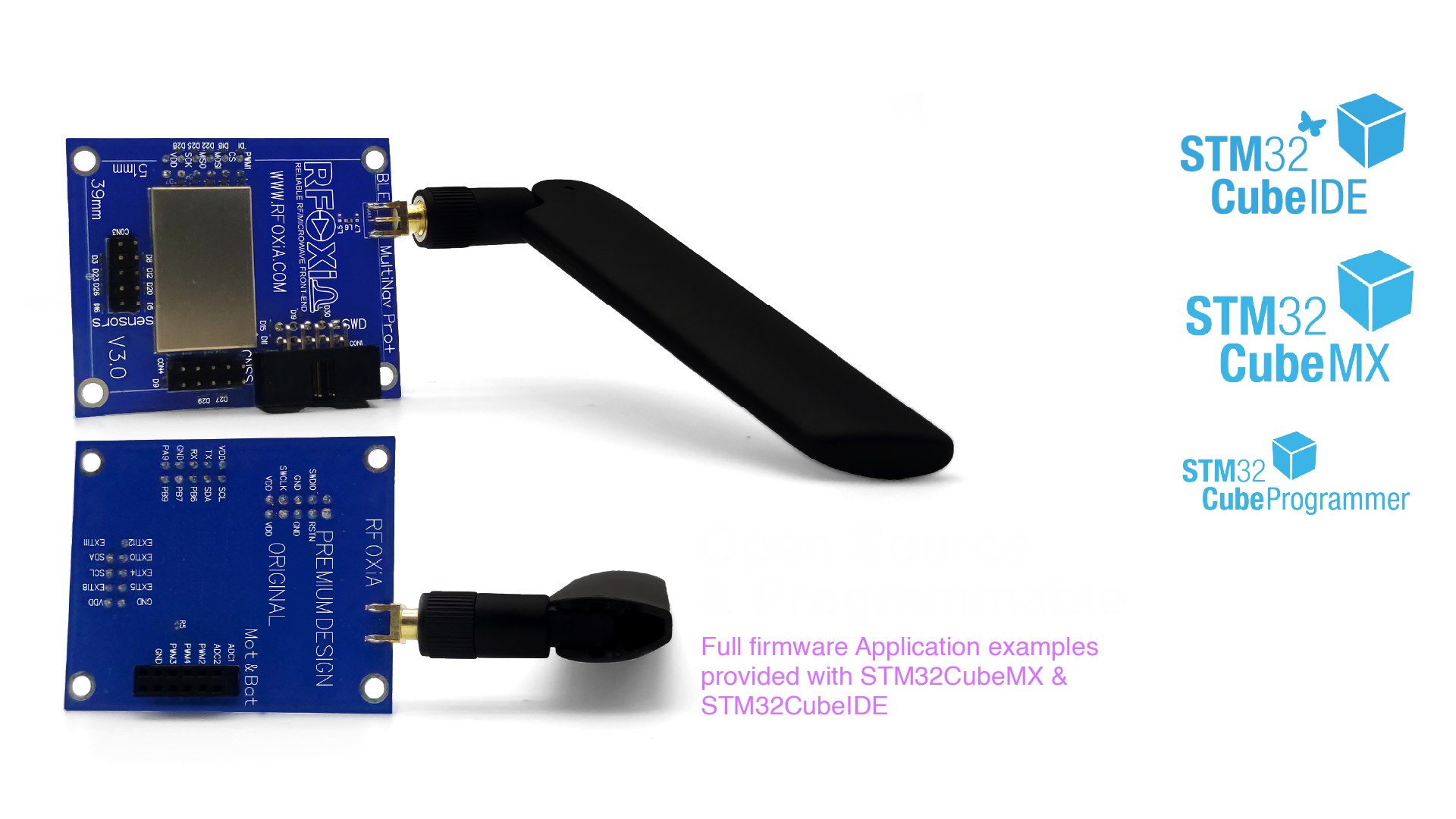
Full firmware source code is available on GitHub. The module is programmable via SWD (Serial Wire Debug), compatible with standard STLink programmers. You own your firmware. You can customize every behavior, add custom protocols, implement proprietary data formats, or extend the system in any direction your application requires.
And if you'd rather not start from scratch, the RFOXiA Club AI Firmware Builder lets you describe your application in plain language and generates production-ready firmware — dramatically compressing development time from months to hours.
Precision Timing for Synchronized Applications
For applications that require time-synchronized data across multiple nodes — whether that's flight data correlation, multi-sensor environmental monitoring, or synchronized actuator control — the MultiNav Pro+ includes an integrated RTC crystal for precise timing.
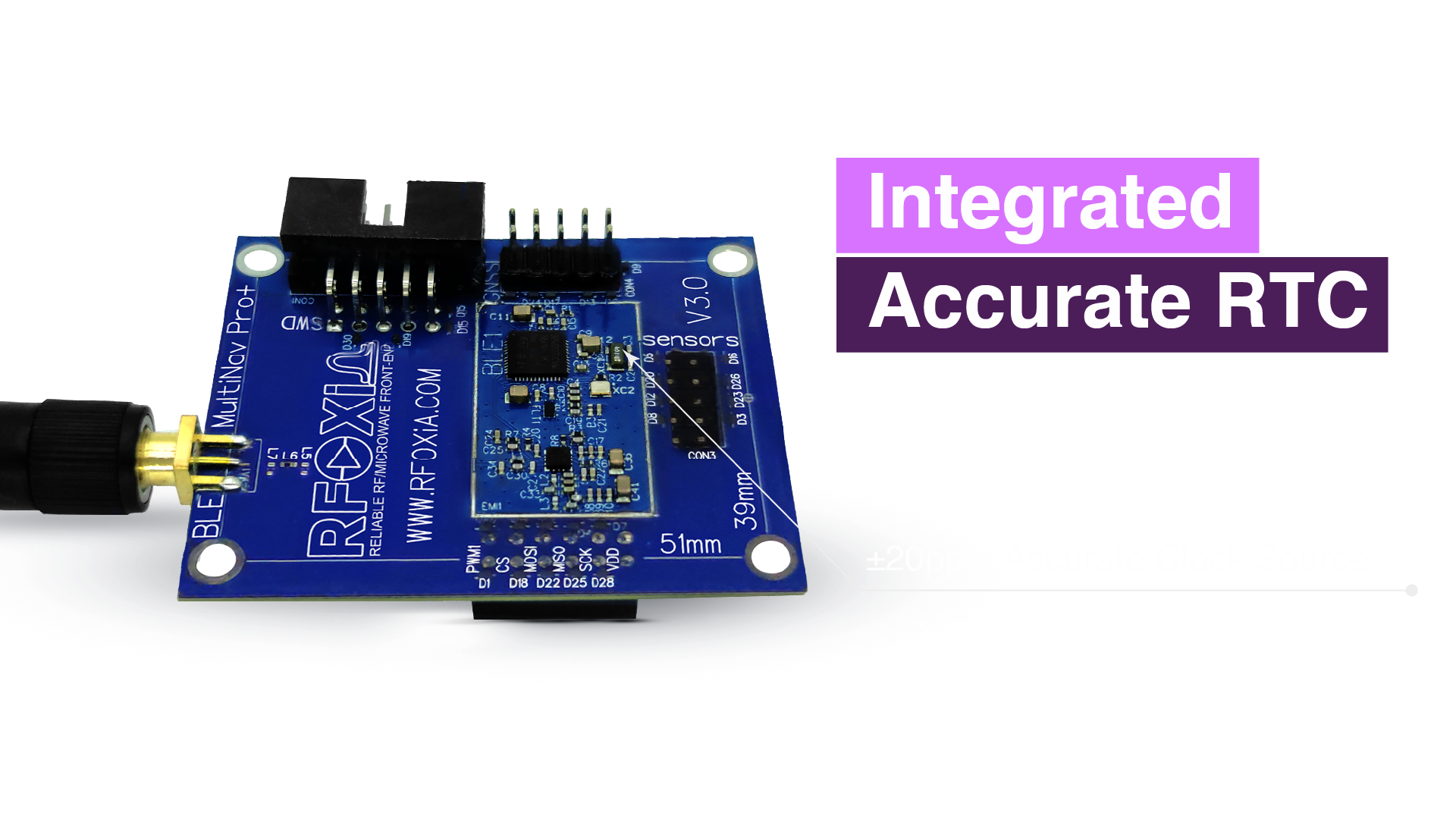
This is the kind of detail that separates a professional engineering tool from a hobbyist module. Time synchronization in distributed wireless systems is a genuinely hard problem. Having it built in rather than bolted on through a separate RTC IC simplifies your design and improves reliability.
The Price Argument: $59 vs Everything Else
Let's talk about money, because in the BLE module vs Crossfire debate, price is one of the most important factors for the majority of builders.
TBS Crossfire receiver and transmitter together cost between $80 and $130+ depending on configuration. That's for a pure RC control link with telemetry and no ecosystem.
MultiNav Pro+ is $59 for two modules — complete with 50km drone-to-drone range, 2Mbps data rate, smartphone app integration, ecosystem compatibility, open source firmware, BLE Chat capability, and access to the RFOXiA Club platform.
For builders who purchase the Developer Bundle ($199), they receive the BLE Module, GNSS Module, Sensors Module, and Power/Program Kit — effectively a complete autonomous system development platform for less than the cost of some flight controllers.
If you're comparing purely on RC control link functionality, the price difference favors the MultiNav Pro+. If you're comparing on total ecosystem value, it's not even a contest.
Get yours now: RFOXiA Long Range Bluetooth Module
Who Should Choose What?
Choose TBS Crossfire if:
- You're flying a high-performance acro quad and your only requirement is a reliable RC link
- You're deeply invested in the Crossfire/ELRS ecosystem with existing receivers across multiple builds
- You have no interest in sensor integration, data streaming, or ecosystem development
- Pure RC latency performance is your singular priority
Choose MultiNav Pro+ BLE if:
- You're building long-range fixed-wing, multirotor, or rover platforms where ecosystem integration matters
- You need bidirectional high-bandwidth data, not just a control link
- You want a smartphone-based ground station with live maps and sensor data
- You're developing custom IoT or robotics applications that require long-range wireless
- You want internet-independent mesh communication capability
- You're a researcher, developer, or serious maker who needs a platform, not just a radio link
- You want open source firmware with full customization capability
- Budget matters — $59 for two FCC-certified 50km-capable modules is simply extraordinary value
Final Verdict: BLE Module vs Crossfire
TBS Crossfire is a mature, reliable, purpose-built RC control link. For pure RC flying where that's all you need, it has earned its reputation.
But the BLE module vs Crossfire comparison ultimately reveals a fundamental difference in design philosophy. Crossfire was engineered to solve one problem: reliable RC control at range. MultiNav Pro+ was engineered to solve an entirely different problem: what does a complete, affordable, developer-grade long-range wireless ecosystem look like?
The answer RFOXiA has delivered is remarkable. 50km drone-to-drone range. 2Mbps data rate. Smartphone app integration. Internet-independent mesh communication. Full sensor ecosystem. AI firmware development. Open source. FCC certified. $59 for two units.
This is not a Crossfire replacement for your race quad. It's something more significant: a professional-grade wireless development platform that makes technology previously reserved for military budgets accessible to every builder, researcher, and developer who has a vision worth connecting.
If your build is more than a control link — and most serious projects are — the MultiNav Pro+ BLE module deserves serious consideration.
Ready to build further than you ever thought possible?
Explore the RFOXiA Long Range Bluetooth Module →
MultiNav Pro+ BLE Module: FCC Certified. Open Source. Ships Now. $59 for 2 units.
Written by: Moamen Mohamed LinkedIn